

The effect of Clostridium butyricum on symptoms and fecal microbiota in diarrhea-dominant irritable bowel syndrome: a randomized, double-blind, placebo-controlled trial
Open accessThe DOI matches its Crossref record; 40 of the 40 references it cites were found in a registry or an index.
Abstract
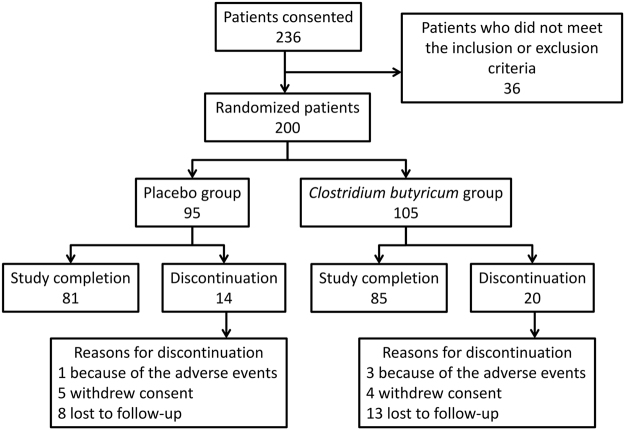
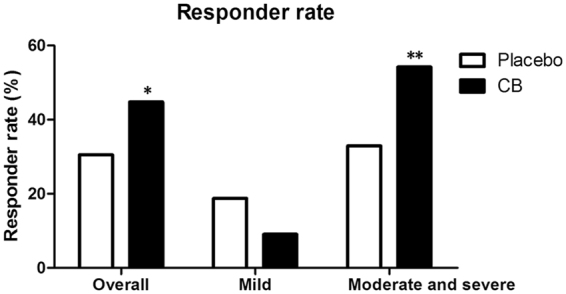
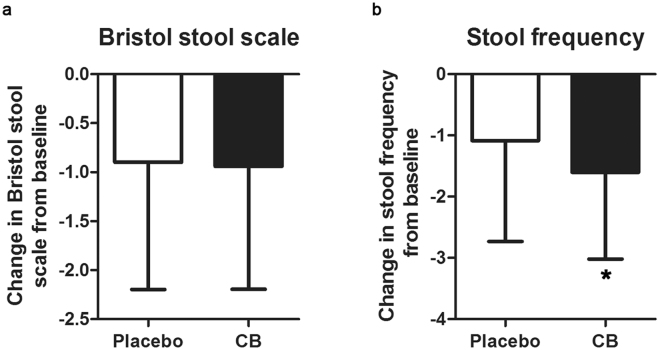
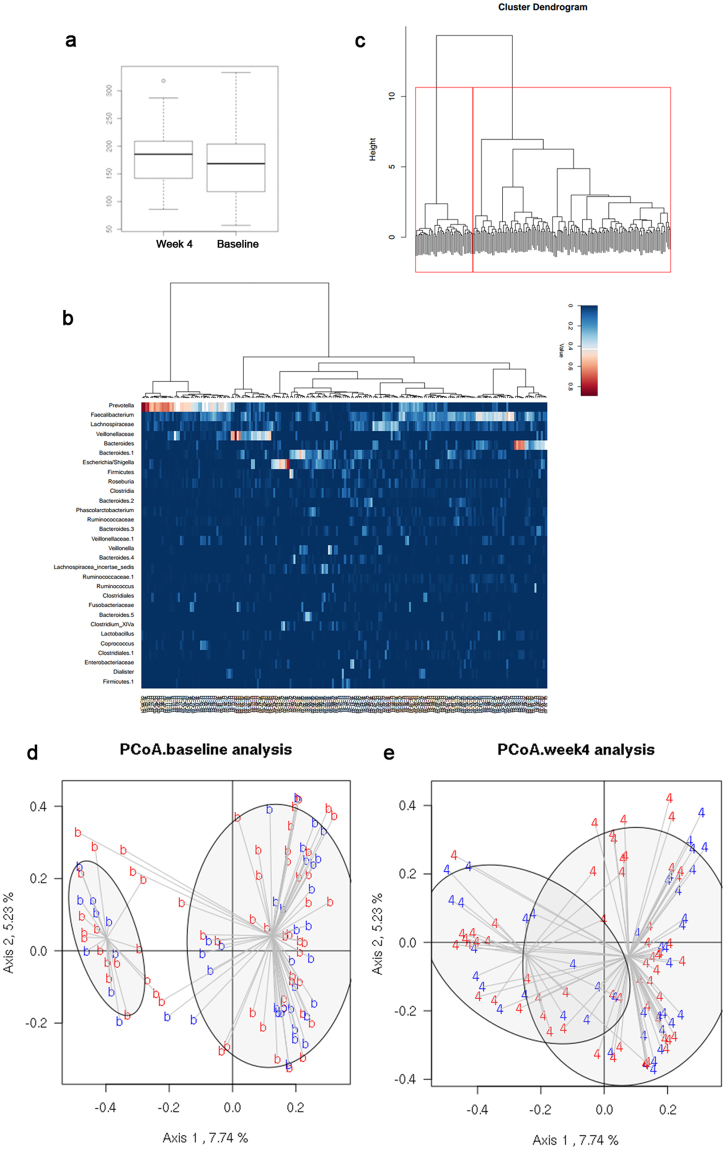
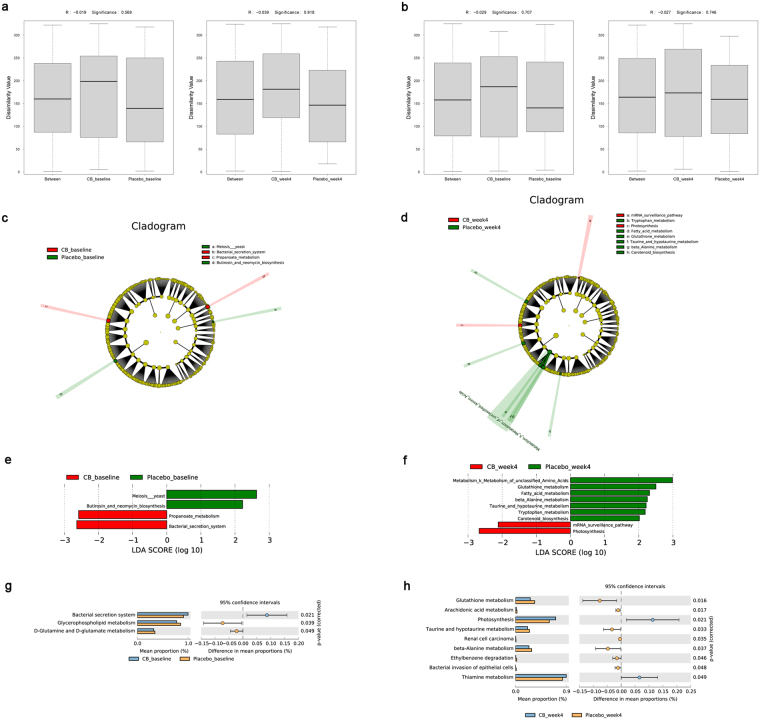
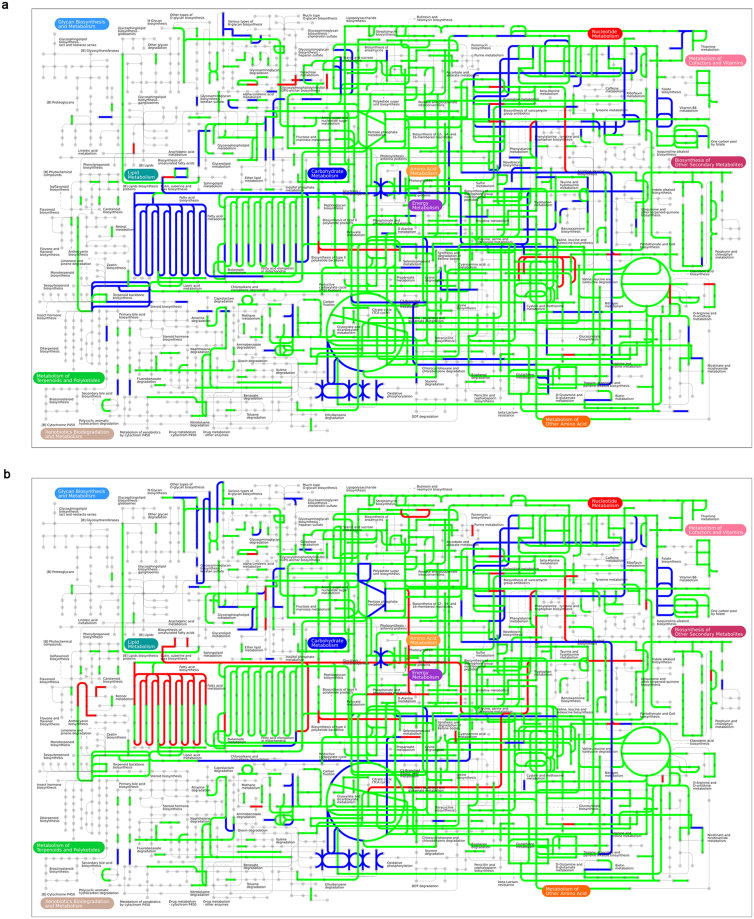
Irritable bowel syndrome (IBS) is a common disorder in gastrointestinal system and impairs the quality of life of the patients. Clostridium butyricum ( CB ) is a probiotics that has been used in several gastrointestinal diseases. The efficacy of CB in treating IBS is still unknown. This prospective, multi-centre, randomized, double-blind, placebo-controlled trial aimed to assess the efficacy and safety of CB in treating diarrhea-predominant IBS (IBS-D) and analyze the fecal microbiota after treatment. Two hundred patients with IBS-D were recruited and were given CB or placebo for 4 weeks. End points included change from baseline in IBS symptoms, quality of life, stool consistency and frequency. Compared with placebo, CB is effective in improving the overall IBS-D symptoms (−62.12 ± 74.00 vs. −40.74 ± 63.67, P = 0.038) as well as quality of life (7.232 ± 14.06 vs. 3.159 ± 11.73, P = 0.032) and stool frequency (−1.602 ± 1.416 vs. −1.086 ± 1.644, P = 0.035). The responder rates are found higher in CB compared with the placebo (44.76% vs. 30.53%, P = 0.042). The change in fecal microbiota was analyzed and function pathways of CB in treating IBS-D were predicted. In conclusion, CB improves overall symptoms, quality of life and stool frequency in IBS-D patients and is considered to be used as a probiotics in treating IBS-D clinically.
Overview
The claims and statistics of this paper haven’t been checked yet.
Free: it reads the open-access text and checks the first 5 claims that cite a source we can check. Create a free account to check every claim.
Integrity signals
Registry
Cites
Statistics
Figures
Verification
Claims the paper makes
The claims and statistics of this paper haven’t been checked yet.
Free: it reads the open-access text and checks the first 5 claims that cite a source we can check. Create a free account to check every claim.
Self-check
Percentages, sums and reported differences re-computed from the paper’s own numbers.
The self-check needs the paper’s full text.
Citations
Cites
Longstreth, G. F., Thompson, W. G., Chey, W. D., Houghton, L. A., Mearin, F., & Spiller, R. C. (2006) · Gastroenterology · doi:10.1053/j.gastro.2005.11.061 · Cited by 4,856
Stool form scale as a useful guide to intestinal transit time
Lewis, S. J., & Heaton, K. W. (1997) · Scandinavian Journal of Gastroenterology · doi:10.3109/00365529709011203 · Cited by 3,244
Peng, L., Li, Z.-R., Green, R. S., Holzmanr, I. R., & Lin, J. (2009) · The Journal of Nutrition · doi:10.3945/jn.109.104638 · Cited by 2,130
Self-citationFRANCIS, C. Y., MORRIS, J., & WHORWELL, P. J. (1997) · Alimentary Pharmacology & Therapeutics · doi:10.1046/j.1365-2036.1997.142318000.x · Cited by 1,708
O’Mahony, L., McCarthy, J., Kelly, P., Hurley, G., Luo, F., Chen, K., O’Sullivan, G. C., Kiely, B., Collins, J. K., Shanahan, F., et al. (2005) · Gastroenterology · doi:10.1053/j.gastro.2004.11.050 · Cited by 1,448
Rajilić–Stojanović, M., Biagi, E., Heilig, H. G. H. J., Kajander, K., Kekkonen, R. A., Tims, S., & de Vos, W. M. (2011) · Gastroenterology · doi:10.1053/j.gastro.2011.07.043 · Cited by 1,041
An irritable bowel syndrome subtype defined by species-specific alterations in faecal microbiota
Jeffery, I. B., O'Toole, P. W., Öhman, L., Claesson, M. J., Deane, J., Quigley, E. M. M., & Simrén, M. (2012) · Gut · doi:10.1136/gutjnl-2011-301501 · Cited by 835
From the gut to the peripheral tissues: the multiple effects of butyrate
Guilloteau, P., Martin, L., Eeckhaut, V., Ducatelle, R., Zabielski, R., & Van Immerseel, F. (2010) · Nutrition Research Reviews · doi:10.1017/s0954422410000247 · Cited by 806
Lactobacillus acidophilus modulates intestinal pain and induces opioid and cannabinoid receptors
Rousseaux, C., Thuru, X., Gelot, A., Barnich, N., Neut, C., Dubuquoy, L., Dubuquoy, C., Merour, E., Geboes, K., Chamaillard, M., et al. (2007) · Nature Medicine · doi:10.1038/nm1521 · Cited by 793
Patrick, D. L., Drossman, D. A., Frederick, I. O., Dicesare, J., & Puder, K. L. (1998) · Digestive Diseases and Sciences · doi:10.1023/a:1018831127942 · Cited by 761
Cited by
British Society of Gastroenterology guidelines on the management of irritable bowel syndrome
Vasant, D. H., Paine, P. A., Black, C. J., Houghton, L. A., Everitt, H. A., Corsetti, M., Agrawal, A., Aziz, I., Farmer, A. D., Eugenicos, M. P., et al. (2021) · Gut · doi:10.1136/gutjnl-2021-324598 · Cited by 592
Butyrate-producing human gut symbiont, Clostridium butyricum , and its role in health and disease
Stoeva, M. K., Garcia-So, J., Justice, N., Myers, J., Tyagi, S., Nemchek, M., McMurdie, P. J., Kolterman, O., & Eid, J. (2021) · Gut Microbes · doi:10.1080/19490976.2021.1907272 · Cited by 518
“did not detect a separation of study arms in their PCoA analysis.(129,134) Among the putative mechanisms, butyrate is often regarded as causal to the effects of C.”
BackgroundRoy, S., & Dhaneshwar, S. (2023) · World Journal of Gastroenterology · doi:10.3748/wjg.v29.i14.2078 · Cited by 334
Irritable Bowel Syndrome: Epidemiology, Overlap Disorders, Pathophysiology and Treatment
Huang, K.-Y., Wang, F.-Y., Lv, M., Ma, X.-X., Tang, X.-D., & Lv, L. (2023) · World Journal of Gastroenterology · doi:10.3748/wjg.v29.i26.4120 · Cited by 167
Savarino, E., Zingone, F., Barberio, B., Marasco, G., Akyuz, F., Akpinar, H., Barboi, O., Bodini, G., Bor, S., Chiarioni, G., et al. (2022) · United European Gastroenterology Journal · doi:10.1002/ueg2.12259 · Cited by 146
“Of these, four studies were performed in more than 100 patients.(151,152) In particular: (1) a study performed in 313 Rome IV IBS patients showed that specific probiotics improved”
BackgroundAGA Technical Review on the Role of Probiotics in the Management of Gastrointestinal Disorders
Preidis, G. A., Weizman, A. V., Kashyap, P. C., & Morgan, R. L. (2020) · Gastroenterology · doi:10.1053/j.gastro.2020.05.060 · Cited by 127
Efficacy of Probiotics for Irritable Bowel Syndrome: A Systematic Review and Network Meta-Analysis
Zhang, T., Zhang, C., Zhang, J., Sun, F., & Duan, L. (2022) · Frontiers in Cellular and Infection Microbiology · doi:10.3389/fcimb.2022.859967 · Cited by 125
Commercial probiotic products in public health: current status and potential limitations
Liang, D., Wu, F. L., Zhou, D., Tan, B., & Chen, T. (2023) · Critical Reviews in Food Science and Nutrition · doi:10.1080/10408398.2023.2169858 · Cited by 142
“Probiotic bacteria can modulate host gastrointestinal (GI) barrier function and immune responses to maintain health (Sun et al. 2018).”
BackgroundNielsen, E. S., Garnås, E., Jensen, K. J., Hansen, L. H., Olsen, P. S., Ritz, C., Krych, L., & Nielsen, D. S. (2018) · Food & Function · doi:10.1039/c8fo00968f · Cited by 113
Efficacy and Safety of Probiotics in Irritable Bowel Syndrome: A Systematic Review and Meta-Analysis
Li, B., Li, L., Deng, H., Guo, J., Shu, H., & Zhang, L. (2020) · Frontiers in Pharmacology · doi:10.3389/fphar.2020.00332 · Cited by 111
Self-citationAsha, M. Z., & Khalil, S. F. H. (2020) · Sultan Qaboos University medical journal · doi:10.18295/squmj.2020.20.01.003 · Cited by 100
Clostridium butyricum : a promising probiotic confers positive health benefits in aquatic animals
Tran, N. T., Li, Z., Ma, H., Zhang, Y., Zheng, H., Gong, Y., & Li, S. (2020) · Reviews in Aquaculture · doi:10.1111/raq.12459 · Cited by 81
Self-citationCangemi, D. J., & Lacy, B. E. (2019) · Therapeutic Advances in Gastroenterology · doi:10.1177/1756284819878950 · Cited by 75
Zhao, Q. P., Yang, W.-R., Wang, X.-H., Li, G., Xu, L., Cui, X., Liu, Y., & Zuo, X. (2019) · World Journal of Gastroenterology · doi:10.3748/wjg.v25.i36.5469 · Cited by 74
Self-citationShariati, A., Fallah, F., Pormohammad, A., Taghipour, A., Safari, H., Chirani, A. S., Sabour, S., Sani, M. A., & Azimi, T. (2018) · Journal of Cellular Physiology · doi:10.1002/jcp.27828 · Cited by 73
“2019;234:8550-8569.wileyonlinelibrary.com/journal/jcp8550 | © 2018 Wiley Periodicals, Inc. Sayuk, 2017; Sun et al., 2018).”
Wu, J., Wang, J., Lin, Z., Liu, C., Zhang, Y., Zhang, S., Zhou, M., Zhao, J., Liu, H., & Ma, X. (2022) · Food Chemistry · doi:10.1016/j.foodchem.2022.135014 · Cited by 72
Wu, Y., Li, Y., Zheng, Q., & Li, L. (2024) · Nutrients · doi:10.3390/nu16132114 · Cited by 82
Self-citationLiu, Y., Yu, X., Yu, L., Tian, F., Zhao, J., Zhang, H., Qian, L., Wang, Q., Xue, Z., Zhai, Q., et al. (2020) · Engineering · doi:10.1016/j.eng.2020.06.026 · Cited by 65
Selvamani, S., Mehta, V. K., Enshasy, H. A. E., Thevarajoo, S., Adawi, H. E., Zeini, I. M., Pham, K., Varzakas, T. H., & Abomoelak, B. (2022) · Saudi Journal of Biological Sciences · doi:10.1016/j.sjbs.2022.02.044 · Cited by 66
Liu, T., Gu, X., Li, L., Li, M., Li, B., Cui, X., & Zuo, X. (2020) · BMC Microbiology · doi:10.1186/s12866-020-01841-4 · Cited by 65
“In our previous study, Clostridium sensu stricto was depleted in IBS patients with improved quality of life after interfering with probiotics, suggesting its role of predicting posttreatment outcome [61].”
Self-citationChen, X., Yi, H., Liu, S., Zhang, Y., Su, Y., Liu, X., Bi, S., Lai, H., Zeng, Z., & Li, G. (2021) · Microorganisms · doi:10.3390/microorganisms9061288 · Cited by 58
Wu, J., Zhou, B., Pang, X., Song, X., Gu, Y., Xie, R., Liu, T., Xu, X. J., Wang, B., & Cao, H. (2022) · Food & Function · doi:10.1039/d2fo00478j · Cited by 52
Probiotics, Prebiotics, and Synbiotics in the Irritable Bowel Syndrome Treatment: A Review
Chlebicz-Wójcik, A., & Śliżewska, K. (2021) · Biomolecules · doi:10.3390/biom11081154 · Cited by 62
“Paper Research Type ParticipantsSelection Criteria Participants 1 IBS Subtype Preparation (Dosage) Placebo/Control (Dosage) Duration Outcomes Sun et al. (2018) [105] The prospective, multicenter, randomized, double-blind, placebocontrolled trial Rome III criteria 200 males/females18–65 y IBS-D 1.5…”
BackgroundMethodInfluentialProbiotics in Irritable Bowel Syndrome: A Review of Their Therapeutic Role
Kumar, L. S., Pugalenthi, L. S., Ahmad, M., Reddy, S., Barkhane, Z., & Elmadi, J. (2022) · Cureus · doi:10.7759/cureus.24240 · Cited by 81
“The study revealed that the overall symptoms, stool frequency, and quality of life improved in IBS-D patients when treated with probiotics containing this particular species of the Clostridium group [61].”
BackgroundInteraction between microbiota and immunity and its implication in colorectal cancer
Xing, C., Du, Y., Duan, T., Nim, K., Chu, J., Wang, H. Y., & Wang, R. (2022) · Frontiers in Immunology · doi:10.3389/fimmu.2022.963819 · Cited by 52
Irritable bowel syndrome in China: a review on the epidemiology, diagnosis, and management
Liu, Y.-L., & Liu, J.-S. (2021) · Chinese Medical Journal · doi:10.1097/cm9.0000000000001550 · Cited by 44
de Sequeira, C. L. M., Kaeber, M., Cekin, S., Enck, P., & Mack, I. (2021) · Journal of Clinical Medicine · doi:10.3390/jcm10163497 · Cited by 51
“…(2018) Martoni et al. (2020) Niv et al. (2005) O'Mahony et al. (2005) Pinto-Sanchez et al. (2017) Preston et al. (2018) Simren et al. (2010) Sisson et al. (2014) Staudacher et al. (2017) Stevenson et al. (2014) Sun et al. (2018) Thijssen et al. (2016) Whorwell et al. (2006) Wong et al. (2015) + !”
Xie, P., Luo, M., Deng, X., Fan, J., & Xiong, L. (2023) · Nutrients · doi:10.3390/nu15173856 · Cited by 50
Salinas, E., Reyes-Pavón, D., Cortes‐Perez, N. G., Torres-Maravilla, E., Bitzer-Quintero, O. K., Langella, P., & Bermúdez‐Humarán, L. G. (2021) · Microorganisms · doi:10.3390/microorganisms9081634 · Cited by 49
“butyricum may improve fatty acid metabolism (specifically, downregulating pathways linked to fatty acid metabolism, beta-alanine metabolism, tryptophan metabolism, and increasing levels of SCFAs in IBS patients) through suppressing the proliferation of Clostridium sensu stricto, a representative cluster of genus Clost…”
BackgroundPainful interactions: Microbial compounds and visceral pain
van Thiel, I. A. M., Botschuijver, S., de Jonge, W. J., & Seppen, J. (2019) · Biochimica et Biophysica Acta (BBA) - Molecular Basis of Disease · doi:10.1016/j.bbadis.2019.165534 · Cited by 47
Li, Y., Liu, M., Liu, H., Sui, X., Liu, Y., Wei, X., Liu, C., Cheng, Y., Ye, W., Gao, B., et al. (2021) · Frontiers in Cellular and Infection Microbiology · doi:10.3389/fcimb.2021.647048 · Cited by 54
Self-citationPu, Z., Yang, F., Wang, L., Diao, Y.-P., & Chen, D. (2020) · Journal of drug targeting · doi:10.1080/1061186x.2020.1864741 · Cited by 42
“bowel syndrome and various types of diarrhoea [89,90].”
BackgroundTanaka, Y., Yamashita, R., Kawashima, J., Mori, H., Kurokawa, K., Fukuda, S., Gotoh, Y., Nakamura, K., Hayashi, T., Kasahara, Y., et al. (2022) · Journal of Gastroenterology · doi:10.1007/s00535-022-01888-2 · Cited by 41
“Butyric acid-producing Clostridiales, such as Clostridium butyricum, suppress TGF-b and induce IL-10 in the intestine to improve IBS-D symptoms [41].”
BackgroundBai, T., Xu, Z., Xia, P.-J., Feng, Y., Liu, B., Liu, H., Chen, Y., Yan, G., Lü, B., Yan, Z., et al. (2022) · The American Journal of Gastroenterology · doi:10.14309/ajg.0000000000002147 · Cited by 37
“Besides, it is not clear whether the effect of probiotics on IBS and response to probiotics are related to change in microbiota diversity or fecal metabolites from existing results (15,16).”
ResultHow can probiotic improve irritable bowel syndrome symptoms?
Horvat, I. B., Gobin, I., Kresović, A., & Hauser, G. (2021) · World Journal of Gastrointestinal Surgery · doi:10.4240/wjgs.v13.i9.923 · Cited by 40
The Role of Intestinal Microbiota and Mast Cell in a Rat Model of Visceral Hypersensitivity
Li, Y., Li, J., & Dai, C. (2020) · Journal of Neurogastroenterology and Motility · doi:10.5056/jnm20004 · Cited by 32
Self-citationJiang, Y., Bao, C., Zhao, X., Chen, Y., Song, Y., & Xiao, Z. (2022) · Scientific Reports · doi:10.1038/s41598-022-09700-0 · Cited by 29
Change of the duodenal mucosa-associated microbiota is related to intestinal metaplasia
Gong, J., Li, L., Zuo, X., & Li, Y. (2019) · BMC Microbiology · doi:10.1186/s12866-019-1666-5 · Cited by 29
Self-citationIn vitro batch fermentation of (un)saturated homogalacturonan oligosaccharides
Zwolschen, J. W., Vos, A. P., Ariëns, R. M. C., & Schols, H. A. (2024) · Carbohydrate Polymers · doi:10.1016/j.carbpol.2024.121789 · Cited by 30
Gut Microbiota Modulation in IBD: From the Old Paradigm to Revolutionary Tools
Murgiano, M., Bartocci, B., Puca, P., Vincenzo, F. D., GAUDIO, A. D., Papa, A., Cammarota, G., Gasbarrini, A., Scaldaferri, F., & Lopetuso, L. R. (2025) · International Journal of Molecular Sciences · doi:10.3390/ijms26073059 · Cited by 31
“The administration of Clostridium butyricum has been associated with improved symptoms, including increased stool consistency and reduced urinary urgency in irritable bowel syndrome [88].”
Alsohaibani, F., Peedikayil, M. C., Alshahrani, A., Somily, A. M., Alsulaiman, R., Azzam, N. A., & Almadi, M. A. (2022) · Saudi Journal of Gastroenterology · doi:10.4103/sjg.sjg_288_22 · Cited by 32
Krüger, K., Myeonghyun, Y., van der Wielen, N., Kok, D. E. G., Hooiveld, G. J. E. J., Keshtkar, S., Bruin, M. D.-D., Balvers, M. G. J., Grootte-Bromhaar, M., Mudde, K., et al. (2024) · Scientific Reports · doi:10.1038/s41598-024-75477-z · Cited by 30
“Recent interest in the probiotic potential of Clostridium butyricum , one species of this cluster, may however, lead to further investigation 90,91 .”
BackgroundYang, F., Zhu, W., Edirisuriya, P., Ai, Q., Nie, K., Ji, X., Li, Y., & Zhou, K. (2021) · Nutrition · doi:10.1016/j.nut.2021.111439 · Cited by 22
Self-citationImbalance of Microbacterial Diversity Is Associated with Functional Prognosis of Stroke
Zhang, X., Wang, X., Zhao, H., Cao, R., Dang, Y., & Yu, B. (2023) · Neural Plasticity · doi:10.1155/2023/6297653 · Cited by 23
The Effect of Maternal Postpartum Practices on Infant Gut Microbiota: A Chinese Cohort Study
Wang, Y., Liu, Y., Bai, J., & Chen, X. (2019) · Microorganisms · doi:10.3390/microorganisms7110511 · Cited by 21
“Several studies have indicated that, via modulation of the gut microbiota, Clostridium butyricum effectively improved major depressive disorder [50], irritable bowel syndrome (IBS) [51], allergic rhinitis [52], and cerebral ischemia/reperfusion (I/R) injury [48].”
Backgroundvan der Geest, A. M., Schukking, I., Brummer, R. J., van de Burgwal, L., & Larsen, O. F. A. (2022) · Beneficial Microbes · doi:10.3920/bm2021.0123 · Cited by 23
Zhang, W. X., Shi, L., Zhou, M. S., Wu, J., & Shi, H. Y. (2023) · Journal of Medical Microbiology · doi:10.1099/jmm.0.001758 · Cited by 29
Efficacy and safety of probiotics in irritable bowel syndrome: A systematic review and meta-analysis
Yang, R., Jiang, J., Ouyang, J., Zhao, Y., & Xi, B. (2024) · Clinical Nutrition ESPEN · doi:10.1016/j.clnesp.2024.02.025 · Cited by 27
Impact of Enteric Nervous Cells on Irritable Bowel Syndrome: Potential Treatment Options
Pastras, P., Aggeletopoulou, I., & Triantos, C. K. (2024) · Microorganisms · doi:10.3390/microorganisms12102036 · Cited by 20
Probiotics in Irritable Bowel Syndrome: A Review Article
Sharma, S., Kumar, S., Sajjad, S., & Sharma, S. (2023) · Cureus · doi:10.7759/cureus.36565 · Cited by 24
“It has been demonstrated that the probiotics of this species of the Clostridium genus improve the overall symptoms, frequency of stools, and quality of life in IBS-D patients [37].”
BackgroundYang, Y., Shao, Y., Pei, C., Liu, Y., Zhang, M., Zhu, X., Li, J., Feng, L., Li, G., Keke, L., et al. (2024) · Genomics · doi:10.1016/j.ygeno.2024.110855 · Cited by 17
Self-citationEfficacy and safety of non-pharmacological interventions for irritable bowel syndrome in adults
Dai, Y., Wu, Y., Li, R., Chen, W., Tang, C., Lu, L., & Hu, L. (2020) · World Journal of Gastroenterology · doi:10.3748/wjg.v26.i41.6488 · Cited by 22
Wang, Y., & Hatabu, T. (2019) · Bioscience Biotechnology and Biochemistry · doi:10.1080/09168451.2019.1580135 · Cited by 17
Cazzaniga, M., Cardinali, M., Pierro, F. D., Zonzini, G. B., Palazzi, C. M., Gregoretti, A., Zerbinati, N., Guasti, L., & Bertuccioli, A. (2024) · International Journal of Molecular Sciences · doi:10.3390/ijms25042306 · Cited by 15
“There are ample data in this regard, and one of the most suitable studies confirming this aspect is a 2017 double-blind, placebo-controlled randomized controlled trial (RCT) conducted on patients suffering from inflammatory bowel disease (IBD) [37].”
BackgroundCai, K., Chen, J., Zhang, Z., Ye, Y. J., Sang, S., Luo, X., Wang, Y., Shan, K., Ou, C., & Jia, L. (2024) · Aquaculture · doi:10.1016/j.aquaculture.2024.741723 · Cited by 16
Liao, J., Liu, Y., Yao, Y., Zhang, J., Wang, H., Zhao, J., Chen, W., & Lu, W. (2023) · Nutrients · doi:10.3390/nu15204339 · Cited by 16
“Instead, it , one of the intestinal symbionts, had beneficial effects on a range of diseases, such as obesity, inflammatory bowel disease, and neurodegenerative diseases [31,32].”
BackgroundElectrospun Solid Formulation of Anaerobic Gut Microbiome Bacteria
Vass, P., Pantea, E., Domokos, A., Hirsch, E., Domján, J., Németh, Á., Molnár, M., Fehér, C., Andersen, S. K., Vígh, T., et al. (2020) · AAPS PharmSciTech · doi:10.1208/s12249-020-01769-y · Cited by 14
Methods of Determining Irritable Bowel Syndrome and Efficiency of Probiotics in Treatment: A Review
Ahlawat, G. M., & Singh, P. K. (2023) · Current Therapeutic Research · doi:10.1016/j.curtheres.2023.100721 · Cited by 17
“38 , 39 In a study investigating the effects of a multistrain probiotic containing dietary fiber on IBS, the Rome III criteria and randomization method were employed to evaluate 142 patients with IBS.”
MethodMeta-analysis of the efficacy of probiotics to treat diarrhea
Wang, F., Zhao, T., Wang, W., Dai, Q., & Ma, X. (2022) · Medicine · doi:10.1097/md.0000000000030880 · Cited by 14
“Sun et al 2018([28]) Shandong Province,”
InfluentialLei, Y., Sun, X., Ruan, T., Lu, W., Deng, B., Zhou, R., & Mu, D. (2025) · Nutrition Reviews · doi:10.1093/nutrit/nuae217 · Cited by 14
Piazzesi, A., & Putignani, L. (2022) · Frontiers in Microbiology · doi:10.3389/fmicb.2022.958346 · Cited by 14
Zeraattalab-Motlagh, S., Ranjbar, M., Mohammadi, H., & Adibi, P. (2024) · Nutrition Reviews · doi:10.1093/nutrit/nuae107 · Cited by 13
Yang, F., Zhu, W., Edirisuriya, P., Ai, Q., Nie, K., Ji, X., & Zhou, K. (2022) · European Journal of Nutrition · doi:10.1007/s00394-022-02840-z · Cited by 11
“butyricum has been found to improve not only non-antimicrobial-induced diarrhea and irritable bowel syndrome [18, 19], but also obesity and diabetes [20, 21].”
BackgroundDeng, G., Wen, B., Jia, L., Liu, J., & Yan, Q. (2024) · Archives of Microbiology · doi:10.1007/s00203-024-04001-8 · Cited by 13
Cong, J., Zhang, C., Zhou, S., Zhu, J., & Liang, C. (2022) · Cancers · doi:10.3390/cancers14153599 · Cited by 11
Nori, W., Al-kaabi, M. M., Akram, N. N., Kassim, M. A. K., & Pantazi, A. C. (2024) · Current Medicinal Chemistry · doi:10.2174/0109298673314861240429072352 · Cited by 12
Wu, X., Cao, Y., Liu, Y., & Zheng, J. (2024) · Nutrients · doi:10.3390/nu16183192 · Cited by 12
The Role and the Regulation of NLRP3 Inflammasome in Irritable Bowel Syndrome: A Narrative Review
Kasti, A. N., Katsas, K., Nikolaki, M. D., & Τriantafyllou, Κ. (2025) · Microorganisms · doi:10.3390/microorganisms13010171 · Cited by 9
“The efficacy of Clostridium butyricum in treating IBS-D was tested in a group of 200 patients for four weeks, improving symptoms overall, stool frequency, and quality of life [65].”
Pierro, F. D., Ficuccilli, F., Tessieri, L., Menasci, F., Pasquale, C., Khan, A. P., Rabbani, F., Memon, N. M., Cazzaniga, M., Bertuccioli, A., et al. (2025) · Microorganisms · doi:10.3390/microorganisms13051139 · Cited by 13
“The sample size calculation was based on the total IBS-SSS score [14].”
InfluentialLi, M., Xu, R., & Li, Y. (2020) · Scientific Reports · doi:10.1038/s41598-020-75225-z · Cited by 10
Self-citationYang, Q., Zaongo, S. D., Zhu, L., Yan, J., Yang, J., & Ouyang, J. (2024) · Probiotics and Antimicrobial Proteins · doi:10.1007/s12602-024-10227-1 · Cited by 9
“…data indicates that C. butyricum significantly suppresses the levels of secreted pro-inflammatory cytokines such as IL-1β and IL-6, and reduces the proportion of cells expressing T-cell immunoglobulin and mucin domain 3 (TIM3) in colonic DC clusters in both mice and humans with IBS [48, 50, 51].”
Gao, Y., Borjihan, Q., Zhang, W., Li, L., Wang, D., Bai, L., Zhu, S., & Chen, Y. (2025) · Nutrients · doi:10.3390/nu17050801 · Cited by 9
Self-citationIribarren, C., Maasfeh, L., Öhman, L., & Simrén, M. (2022) · Gut Microbiome · doi:10.1017/gmb.2022.6 · Cited by 9
“…symptoms except for reduction of frequencies of watery stools and abdominal pain as well as improved QoL during the active treatment Clostridium spp. Sun et al. (2018) RCT, IBS-D patients (n =200), Rome III Clostridium butyricum (5.67 107 CFU) versus placebo for 4 weeks After intervention,…”
BackgroundInfluentialProbiotics: current regulatory aspects of probiotics for use in different disease conditions
Pogačar, M. Š., Mičetić‐Turk, D., & Fijan, S. (2021) · Elsevier eBooks · doi:10.1016/b978-0-12-823733-5.00021-0 · Cited by 10
Wang, T., Li, L., Li, S., Zhao, H., Qu, J., Xia, Y., & Li, Y. (2021) · PeerJ · doi:10.7717/peerj.11585 · Cited by 11
Self-citationThe role of gut microbiota in diarrhea and its alleviation through microbiota-targeted interventions
Tian, R., Chong, C.-J., Bai, Y., Chen, N., Qiao, R.-R., Wang, K., Wang, Y., Zhao, P., Zhao, C., Tang, Y., et al. (2025) · Frontiers in Microbiology · doi:10.3389/fmicb.2025.1630823 · Cited by 9
Self-citationClostridium butyricum and Clostridium tyrobutyricum : angel or devil for necrotizing enterocolitis?
Tao, R., Zong, G., Pan, Y., Li, H., Cheng, P., Deng, R., Chen, W., Wang, A., Xia, S., Tang, W., et al. (2023) · mSystems · doi:10.1128/msystems.00732-23 · Cited by 8
Giant pandas’ staple food bamboo phyllosphere fungal community and its influencing factors
Kang, L., Luo, W., Dai, Q., Zhou, H., Wei, W., Tang, J., Han, H., Yuan, Y., Long, J., Zhang, Z., et al. (2022) · Frontiers in Microbiology · doi:10.3389/fmicb.2022.1009588 · Cited by 8
Koç, F., Atzler, J. J., Sahin, A. W., Arendt, E. K., Ross, R. P., & Stanton, C. (2024) · Innovative Food Science & Emerging Technologies · doi:10.1016/j.ifset.2024.103832 · Cited by 7
Probiotics and Prebiotics for the Treatment of Irritable Bowel Syndrome—A Narrative Review
Lopes, C. M., Monteiro, C. S. D. J., Duarte, A. P., & dos Santos, J. L. (2024) · Journal of Clinical Medicine · doi:10.3390/jcm13216337 · Cited by 8
“…in the follow-up period and the chronicity that characterizes most gastrointestinal pathologies, including IBS, it would be pertinent that new trials had longer durations of treatments and follow-up after the product discontinuation, aiming to confirm their efficacy and safety for longer periods.”
BackgroundMethodInfluentialBertuccioli, A., Sisti, D., Lazzerini, N., Palazzi, C. M., Zonzini, G. B., Ragazzini, M., & Belli, A. (2025) · Frontiers in Medicine · doi:10.3389/fmed.2025.1604319 · Cited by 7
Koike, Y., Higashi, K., Sato, Y., Yamashita, S., Nagano, Y., Shimura, T., Kitajima, T., Matsushita, K., Okugawa, Y., Okita, Y., et al. (2024) · Surgery Today · doi:10.1007/s00595-024-02984-x · Cited by 4
Rokkas, T., Ekmektzoglou, K. A., Tsanou, E., Bricca, L., Menni, A.-E., Golfakis, P., & Kotzampassi, K. E. (2025) · European Journal of Gastroenterology & Hepatology · doi:10.1097/meg.0000000000003062 · Cited by 7
Almabruk, B. A., Bajafar, A. A., Mohamed, A., Al-Zahrani, S. A., Albishi, N. M., Aljarwan, R. M., Aljaser, R. A., Alghamdi, L. I., Almutairi, T., Alsolami, A. S., et al. (2024) · Cureus · doi:10.7759/cureus.75954 · Cited by 10
Tang, M., Wu, Y., Olnood, C. G., Gao, Y., Wang, F., Zhang, Z., Peng, C., Zhou, X., Huang, C., Xiong, X., et al. (2024) · Animal nutrition · doi:10.1016/j.aninu.2024.11.015 · Cited by 6
Bang, M.-S., Jeong, H., Lee, Y.-J., Lee, S., Lee, G. S., Kim, S., Lee, H.-H., Shin, J., & Oh, C. (2020) · Microbiology Resource Announcements · doi:10.1128/mra.01341-19 · Cited by 4
“In practice, probiotics can improve the balance of the intestinal microbiota ecosystem of the host, which is beneficial in treating a variety of infant conditions, including infant diarrhea, upset stomach, and eczema, and many health conditions of preterm infants (2, 3).”
BackgroundPrimer consenso centroamericano y del Caribe del síndrome de intestino irritable
Galdámez, J., Aguilar-Paiz, L., Blanco, G. M., Monge, S. C., de Mezerville-Cantillo, L., Castillo, P. N., Quintero, I., Polanco, E. D. P. R., Hernández, M. A. S., Sandoval, E., et al. (2023) · Acta gastroenteorológica latinoamericana/Acta gastroenterológica latinoamericana · doi:10.52787/agl.v53i2.272 · Cited by 4
“164 Clostridium butyricum administrado tres veces al día durante cuatro semanas mostró una mejora en el hábito intestinal y la calidad de vida en comparación con el grupo placebo.(168) Saccharomyces boulardii fue efectivo para diarrea, dolor abdominal y flatulencia.”
BackgroundShanshal, S. A., Alsaaty, M. H., Al-Qazaz, H., & Al-Zidan, R. N. (2023) · Česká a slovenská farmacie · doi:10.5817/csf2023-5-233 · Cited by 9
Kawamoto, Y., Suzuki, M., Iwata, M., & Uehara, Y. (2024) · BMJ Case Reports · doi:10.1136/bcr-2024-261578 · Cited by 3
Ding, L., Duan, J., Hou, J., Yang, T., Yuan, M., Ma, A. H., & Qin, Y. (2025) · Journal of the American Nutrition Association · doi:10.1080/27697061.2024.2434585 · Cited by 6
van der Geest, A. M., Schukking, I., Brummer, R. J., Pieterse, H., van den Nieuwboer, M., van de Burgwal, L., & Larsen, O. F. A. (2022) · Beneficial Microbes · doi:10.3920/bm2021.0124 · Cited by 4
Potential Health Benefits of Probiotic Strains of Clostridium butyricum
Pogačar, M. Š., Pogačar, M., & Fijan, S. (2026) · Applied Microbiology · doi:10.3390/applmicrobiol6040053 · Cited by 2
Draft Genome Sequence of Clostridium butyricum Strain 16-3, Isolated from Neonatal Feces
Shin, J., Bang, M.-S., Lee, G.-S., Kim, H.-N., & Oh, C. (2022) · Microbiology Resource Announcements · doi:10.1128/mra.00163-22 · Cited by 2
Marasco, G., Cremon, C., Barbaro, M. R., Stanghellini, V., & Barbara, G. (2024) · Journal of Clinical Gastroenterology · doi:10.1097/mcg.0000000000001964 · Cited by 5
“…200 patients using a speci fi c probiotic ( Clostridium butyricum ) showed an improvement in overall symptoms, quality of life, and stool frequency, 61 while another study showed an adequate symptom relief by using a multistrain preparation ( Streptococcus thermophilus DSM24731, Bi fi - dobacterium…”
BackgroundZhu, L., Luo, Y., Liu, Y., Sun, S., Yuan, J., Zhang, L., Zhong, W., Ma, S., Yu, Z., Zhou, J., et al. (2025) · Frontiers in Microbiology · doi:10.3389/fmicb.2025.1509876 · Cited by 5
Suplementação de prebióticos e probióticos em crianças autistas: revisão integrativa
Brandão, T. L. S., Silva, J. C. L., Campos, S. É. D., & Francelino, J. O. (2022) · Research Society and Development · doi:10.33448/rsd-v11i1.24061 · Cited by 17
Wang, Z., Chen, Y., Li, X., Li, L., Chen, B., Chen, M., & Zheng, H. (2025) · Quality of Life Research · doi:10.1007/s11136-025-03927-w · Cited by 2
Self-citationBiotic therapies for irritable bowel syndrome: current interventions
Wodarczyk, G., Winte, M. F., Mastellone, D., Singh, T., DeSipio, J., & Phadtare, S. (2026) · Gastroenterology report · doi:10.1093/gastro/goag062 · Cited by 1
Yoshinaga, S., Watanabe, M., Ito, H., Hatakeyama, S., Saitou, Y., Yamamura, R., Hashimoto, N., Nanmoku, T., Ohkusu, K., & Suzuki, H. (2026) · New Microbes and New Infections · doi:10.1016/j.nmni.2026.101821 · Cited by 1
Liu, M., Hu, Y., Xu, M.-D., Chen, Y., & Meng, Q.-B. (2026) · Food & medicine homology. · doi:10.26599/fmh.2027.9420146 · Cited by 8
Metadata
- Authors
- Sun, Y.-Y., Li, M., Li, Y.-Y., Li, L.-X., Zhai, W.-Z., Wang, P., Yang, X.-X., Gu, X., Song, L.-J., Li, Z., Zuo, X.-L., & Li, Y.-Q.
- Affiliations
- Shandong University (CN)
- Venue
- Scientific Reports
- Published
- 2018-02-14
- Volume
- 8
- Issue
- 1
- Pages
- 2964-2964
- ISSN
- 2045-2322 (ISSN-L)
- PMC
- PMC5813237
- OpenAlex
- W2807514642
- Cited by
- 126
- References
- 40
- Citations by year
- 2026: 11 · 2025: 13 · 2024: 24 · 2023: 16 · 2022: 21 · 2021: 18 · 2020: 14 · 2019: 7 · 2018: 2
- FWCI
- 10.72
- Type
- journal article
- Language
- en
- Open access
- gold
- doi.org
- Licence
- cc-by
- creativecommons.org/licenses/by/4.0 (tdm)
- creativecommons.org/licenses/by/4.0 (vor)
- Locations
- Scientific Reports (publishedVersion, cc-by)
- PubMed Central (publishedVersion, cc-by)
- PubMed (publishedVersion)
- DOAJ (DOAJ: Directory of Open Access Journals) (submittedVersion)
- Funders
- National Natural Science Foundation of China (81330012)
- Natural Science Foundation of Shandong Province (ZR2015H2003)
- Topics
- Health Sciences › Medicine › Gastroenterology › Gastrointestinal motility and disorders
- Life Sciences › Biochemistry, Genetics and Molecular Biology › Molecular Biology › Gut microbiota and health
- Life Sciences › Agricultural and Biological Sciences › Food Science › Probiotics and Fermented Foods
- Keywords
- Clostridium butyricum, diarrhea-predominant irritable bowel syndrome, probiotics, fecal microbiota, IBS symptoms, quality of life, stool frequency, stool consistency, responder rate
- MeSH terms
- Fecal Microbiota Transplantation, Adult, Diarrhea, Double-Blind Method, Feces, Female, Humans, Male, Middle Aged, Placebos, Prospective Studies, Quality of Life, Treatment Outcome, Probiotics, Irritable Bowel Syndrome, Clostridium butyricum
About these checks
Registry, retraction, Cites and statistics results are computed, not judged, with one exception: a printed reference that no index lists is read once by a model before it counts as a citation error. Claims are extracted by a model and kept only when their quote appears verbatim in the text; each cited source is then checked, with a model’s help, for whether it says what the claim relies on. Those verdicts can be wrong — read the claim’s quote and the cited source before relying on one.
Statistics and arithmetic are recomputed, not judged.
Confidence bands are shown only for fields calibrated on our annotated test set. None is calibrated yet, so no band is shown.
What counts as a claim ›How we measure confidence ›How we check this ›
Are you an author, or do you see a problem with this page? Request a review
Data sources
Bibliographic data: Semantic Scholar, OpenAlex, Crossref.
Contains information from the Semantic Scholar Academic Graph Datasets, made available under the ODC Attribution License (ODC-BY 1.0).
Semantic Scholar’s data is described in: Kinney, R., et al. (2023). The Semantic Scholar Open Data Platform. arXiv:2301.10140.
