

The effect of Clostridium butyricum on symptoms and fecal microbiota in diarrhea-dominant irritable bowel syndrome: a randomized, double-blind, placebo-controlled trial
Open accessThe DOI matches its Crossref record; 40 of the 40 references it cites were found in a registry or an index.
Abstract
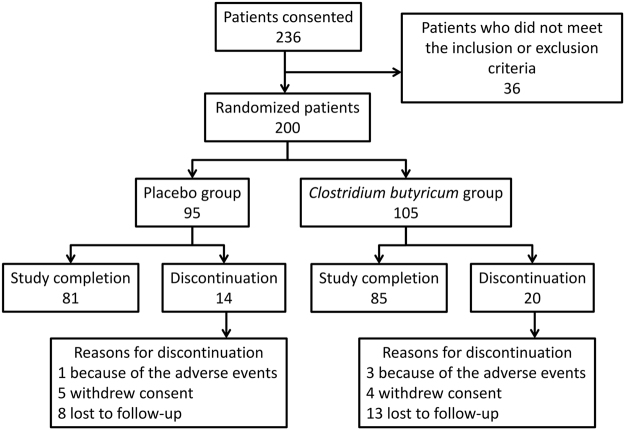
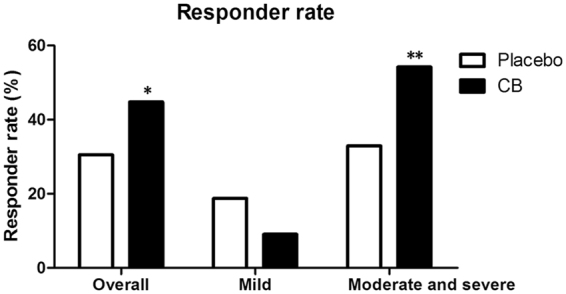
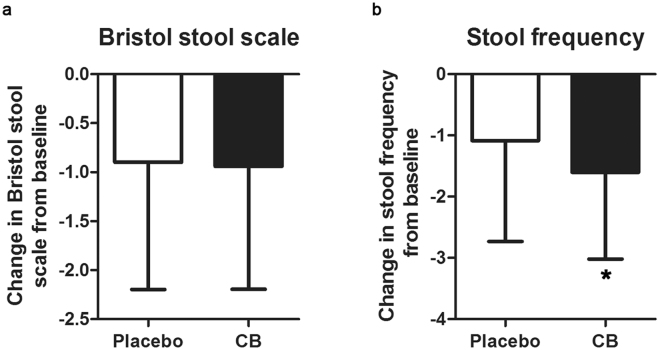
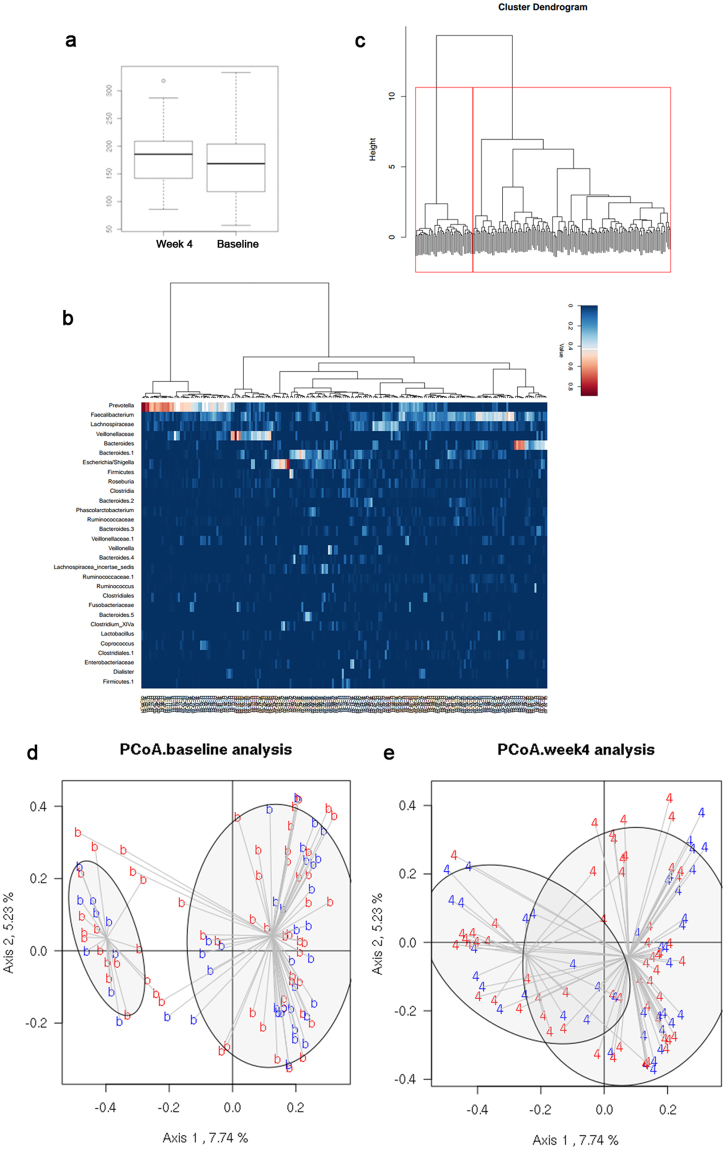
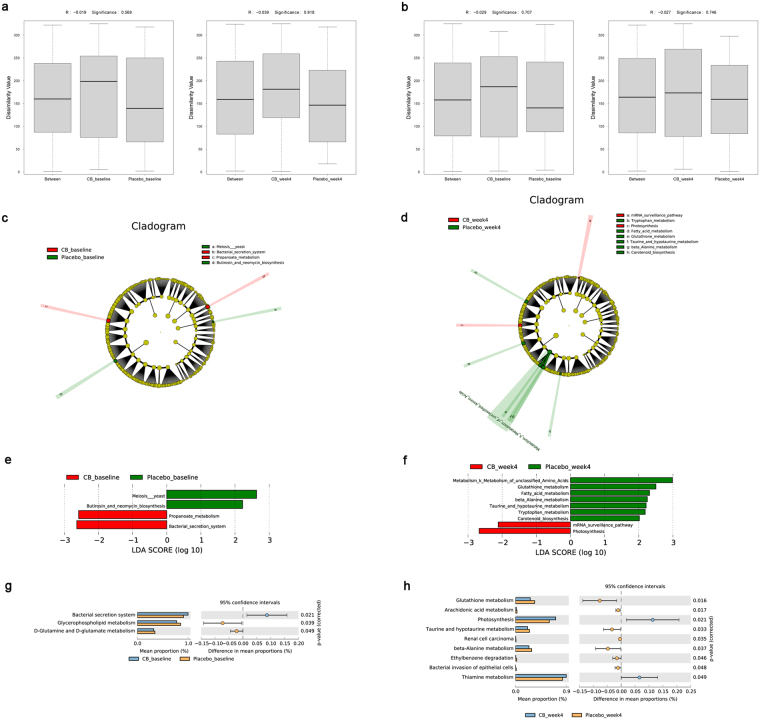
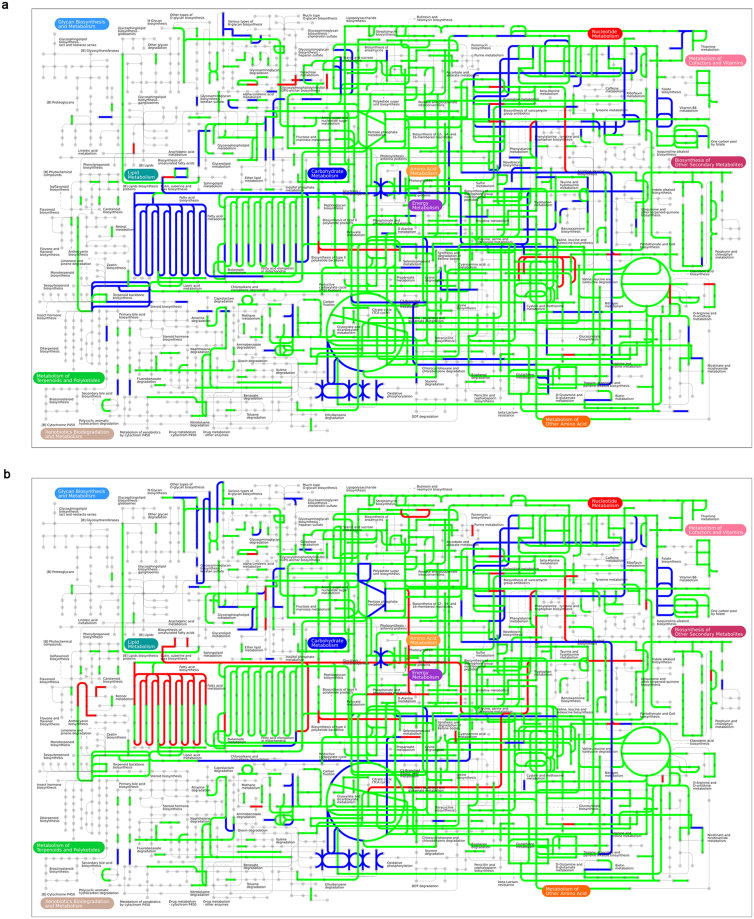
Irritable bowel syndrome (IBS) is a common disorder in gastrointestinal system and impairs the quality of life of the patients. Clostridium butyricum ( CB ) is a probiotics that has been used in several gastrointestinal diseases. The efficacy of CB in treating IBS is still unknown. This prospective, multi-centre, randomized, double-blind, placebo-controlled trial aimed to assess the efficacy and safety of CB in treating diarrhea-predominant IBS (IBS-D) and analyze the fecal microbiota after treatment. Two hundred patients with IBS-D were recruited and were given CB or placebo for 4 weeks. End points included change from baseline in IBS symptoms, quality of life, stool consistency and frequency. Compared with placebo, CB is effective in improving the overall IBS-D symptoms (−62.12 ± 74.00 vs. −40.74 ± 63.67, P = 0.038) as well as quality of life (7.232 ± 14.06 vs. 3.159 ± 11.73, P = 0.032) and stool frequency (−1.602 ± 1.416 vs. −1.086 ± 1.644, P = 0.035). The responder rates are found higher in CB compared with the placebo (44.76% vs. 30.53%, P = 0.042). The change in fecal microbiota was analyzed and function pathways of CB in treating IBS-D were predicted. In conclusion, CB improves overall symptoms, quality of life and stool frequency in IBS-D patients and is considered to be used as a probiotics in treating IBS-D clinically.
Overview
The claims and statistics of this paper haven’t been checked yet.
Free: it reads the open-access text and checks the first 5 claims that cite a source we can check. Create a free account to check every claim.
Integrity signals
Registry
Cites
Statistics
Figures
Verification
Claims the paper makes
The claims and statistics of this paper haven’t been checked yet.
Free: it reads the open-access text and checks the first 5 claims that cite a source we can check. Create a free account to check every claim.
Self-check
Percentages, sums and reported differences re-computed from the paper’s own numbers.
The self-check needs the paper’s full text.
Citations
Cites
Longstreth, G. F., Thompson, W. G., Chey, W. D., Houghton, L. A., Mearin, F., & Spiller, R. C. (2006) · Gastroenterology · doi:10.1053/j.gastro.2005.11.061 · Cited by 4,856
Stool form scale as a useful guide to intestinal transit time
Lewis, S. J., & Heaton, K. W. (1997) · Scandinavian Journal of Gastroenterology · doi:10.3109/00365529709011203 · Cited by 3,244
Peng, L., Li, Z.-R., Green, R. S., Holzmanr, I. R., & Lin, J. (2009) · The Journal of Nutrition · doi:10.3945/jn.109.104638 · Cited by 2,130
Self-citationFRANCIS, C. Y., MORRIS, J., & WHORWELL, P. J. (1997) · Alimentary Pharmacology & Therapeutics · doi:10.1046/j.1365-2036.1997.142318000.x · Cited by 1,708
O’Mahony, L., McCarthy, J., Kelly, P., Hurley, G., Luo, F., Chen, K., O’Sullivan, G. C., Kiely, B., Collins, J. K., Shanahan, F., et al. (2005) · Gastroenterology · doi:10.1053/j.gastro.2004.11.050 · Cited by 1,448
Rajilić–Stojanović, M., Biagi, E., Heilig, H. G. H. J., Kajander, K., Kekkonen, R. A., Tims, S., & de Vos, W. M. (2011) · Gastroenterology · doi:10.1053/j.gastro.2011.07.043 · Cited by 1,041
An irritable bowel syndrome subtype defined by species-specific alterations in faecal microbiota
Jeffery, I. B., O'Toole, P. W., Öhman, L., Claesson, M. J., Deane, J., Quigley, E. M. M., & Simrén, M. (2012) · Gut · doi:10.1136/gutjnl-2011-301501 · Cited by 835
From the gut to the peripheral tissues: the multiple effects of butyrate
Guilloteau, P., Martin, L., Eeckhaut, V., Ducatelle, R., Zabielski, R., & Van Immerseel, F. (2010) · Nutrition Research Reviews · doi:10.1017/s0954422410000247 · Cited by 806
Lactobacillus acidophilus modulates intestinal pain and induces opioid and cannabinoid receptors
Rousseaux, C., Thuru, X., Gelot, A., Barnich, N., Neut, C., Dubuquoy, L., Dubuquoy, C., Merour, E., Geboes, K., Chamaillard, M., et al. (2007) · Nature Medicine · doi:10.1038/nm1521 · Cited by 793
Patrick, D. L., Drossman, D. A., Frederick, I. O., Dicesare, J., & Puder, K. L. (1998) · Digestive Diseases and Sciences · doi:10.1023/a:1018831127942 · Cited by 761
An Evidence-Based Position Statement on the Management of Irritable Bowel Syndrome
American College of Gastroenterology IBS Task Force (2009) · The American Journal of Gastroenterology · doi:10.1038/ajg.2008.122 · Cited by 694
tana, C., umesaki, Y., imaoka, A., handa, T., kanazawa, M., & fukudo, S. (2009) · Neurogastroenterology & Motility · doi:10.1111/j.1365-2982.2009.01427.x · Cited by 474
Butyrate and other short-chain fatty acids as modulators of immunity: What relevance for health?
Meijer, K., de Vos, P., & Priebe, M. G. (2010) · Current Opinion in Clinical Nutrition and Metabolic Care · doi:10.1097/mco.0b013e32833eebe5 · Cited by 443
Butyrate: implications for intestinal function
Leonel, A. J., & Alvarez-Leite, J. I. (2012) · Current Opinion in Clinical Nutrition and Metabolic Care · doi:10.1097/mco.0b013e32835665fa · Cited by 361
Atkinson, W., Lockhart, S., Whorwell, P. J., Keevil, B., & Houghton, L. A. (2006) · Gastroenterology · doi:10.1053/j.gastro.2005.09.031 · Cited by 355
Hayashi, A., Sato, T., Kamada, N., Mikami, Y., Matsuoka, K., Hisamatsu, T., Hibi, T., Roers, A., Yagita, H., Ohteki, T., et al. (2013) · Cell Host & Microbe · doi:10.1016/j.chom.2013.05.013 · Cited by 331
Gut microbiota role in irritable bowel syndrome: New therapeutic strategies
Distrutti, E., Monaldi, L., Ricci, P., & Fiorucci, S. (2016) · World Journal of Gastroenterology · doi:10.3748/wjg.v22.i7.2219 · Cited by 320
Carroll, I. M., Ringel-Kulka, T., Keku, T. O., Chang, Y.-H., Packey, C. D., Sartor, R. B., & Ringel, Y. (2011) · American Journal of Physiology-Gastrointestinal and Liver Physiology · doi:10.1152/ajpgi.00154.2011 · Cited by 292
Guglielmetti, S., Mora, D., Gschwender, M., & Popp, K. (2011) · Alimentary Pharmacology & Therapeutics · doi:10.1111/j.1365-2036.2011.04633.x · Cited by 287
Role of serotonin in gastrointestinal motility and irritable bowel syndrome
Sikander, A., Rana, S. V., & Prasad, K. K. (2009) · Clinica Chimica Acta · doi:10.1016/j.cca.2009.01.028 · Cited by 279
Prevention of antibiotic‐associated diarrhea in children by Clostridium butyricum MIYAIRI
SEKI, H., SHIOHARA, M., MATSUMURA, T., MIYAGAWA, N., TANAKA, M., KOMIYAMA, A., & KURATA, S. (2003) · Pediatrics International · doi:10.1046/j.1442-200x.2003.01671.x · Cited by 253
Microbial community and metabolomic comparison of irritable bowel syndrome faeces
Ponnusamy, K., Choi, J. N., Kim, J., Lee, S.-Y., & Lee, C. H. (2011) · Journal of Medical Microbiology · doi:10.1099/jmm.0.028126-0 · Cited by 247
Ki Cha, B., Mun Jung, S., Hwan Choi, C., Song, I.-D., Woong Lee, H., Joon Kim, H., Hyuk, J., Kyung Chang, S., Kim, K., Chung, W.-S., et al. (2012) · Journal of Clinical Gastroenterology · doi:10.1097/mcg.0b013e31823712b1 · Cited by 216
Kashiwagi, I., Morita, R., Schichita, T., Komai, K., Saeki, K., Matsumoto, M., Takeda, K., Nomura, M., Hayashi, A., Kanai, T., et al. (2015) · Immunity · doi:10.1016/j.immuni.2015.06.010 · Cited by 193
NIV, E., NAFTALI, T., HALLAK, R., & VAISMAN, N. (2005) · Clinical Nutrition · doi:10.1016/j.clnu.2005.06.001 · Cited by 191
ZENG, J., LI, Y. ‐., ZUO, X. ‐., ZHEN, Y. ‐., YANG, J., & LIU, C. ‐. (2008) · Alimentary Pharmacology & Therapeutics · doi:10.1111/j.1365-2036.2008.03818.x · Cited by 189
Self-citationZhang, Y., Li, L., Guo, C., Mu, D., Feng, B., Zuo, X., & Li, Y. (2016) · BMC Gastroenterology · doi:10.1186/s12876-016-0470-z · Cited by 181
Self-citationBourdu, S., Dapoigny, M., Chapuy, E., Artigue, F., Vasson, M.-P., Dechelotte, P., Bommelaer, G., Eschalier, A., & Ardid, D. (2005) · Gastroenterology · doi:10.1053/j.gastro.2005.03.082 · Cited by 176
Asian consensus on irritable bowel syndrome
Gwee, K., Bak, Y., Ghoshal, U. C., Gonlachanvit, S., Lee, O. Y., Fock, K. M., Chua, A. S. B., Lu, C., Goh, K., Kositchaiwat, C., et al. (2010) · Journal of Gastroenterology and Hepatology · doi:10.1111/j.1440-1746.2010.06353.x · Cited by 174
Yasueda, A., Mizushima, T., Nezu, R., Sumi, R., Tanaka, M., Nishimura, J., Kai, Y., Hirota, M., Osawa, H., Nakajima, K., et al. (2015) · Surgery Today · doi:10.1007/s00595-015-1261-9 · Cited by 149
Sisson, G., Ayis, S., Sherwood, R. A., & Bjarnason, I. (2014) · Alimentary Pharmacology & Therapeutics · doi:10.1111/apt.12787 · Cited by 147
Treem, W. R., Ahsan, N., Kastoff, G., & Hyams, J. S. (1996) · Journal of Pediatric Gastroenterology & Nutrition · doi:10.1097/00005176-199610000-00013 · Cited by 146
Gupta, R. S., & Gao, B. (2009) · INTERNATIONAL JOURNAL OF SYSTEMATIC AND EVOLUTIONARY MICROBIOLOGY · doi:10.1099/ijs.0.001792-0 · Cited by 119
Wang, B., Mao, Y., Diorio, C., Pasyk, M., Wu, R. Y., Bienenstock, J., & Kunze, W. A. (2010) · The FASEB Journal · doi:10.1096/fj.09-153841 · Cited by 99
Spiller, R., Pélerin, F., Cayzeele Decherf, A., Maudet, C., Housez, B., Cazaubiel, M., & Jüsten, P. (2016) · United European Gastroenterology Journal · doi:10.1177/2050640615602571 · Cited by 87
Alterations in the Intestinal Microbiota and Functional Bowel Symptoms
Ringel, Y., & Carroll, I. M. (2009) · Gastrointestinal Endoscopy Clinics of North America · doi:10.1016/j.giec.2008.12.004 · Cited by 73
Xu, D., Wu, X., Grabauskas, G., & Owyang, C. (2012) · Gut · doi:10.1136/gutjnl-2012-302260 · Cited by 45
Probiotics in functional bowel disorders
Hod, K., & Ringel, Y. (2016) · Best Practice & Research Clinical Gastroenterology · doi:10.1016/j.bpg.2016.01.003 · Cited by 38
Wang, A., Li, M., Li, C., Kou, G., Zuo, X., & Li, Y. (2016) · Scientific Reports · doi:10.1038/srep21952 · Cited by 31
Self-citationGenome sequencing of Clostridium butyricum DKU-01, isolated from infant feces
Mo, S., Kim, B. S., Yun, S.-J., Lee, J.-J., Yoon, S.-H., & Oh, C. (2015) · Gut Pathogens · doi:10.1186/s13099-015-0055-3 · Cited by 27
Cited by
British Society of Gastroenterology guidelines on the management of irritable bowel syndrome
Vasant, D. H., Paine, P. A., Black, C. J., Houghton, L. A., Everitt, H. A., Corsetti, M., Agrawal, A., Aziz, I., Farmer, A. D., Eugenicos, M. P., et al. (2021) · Gut · doi:10.1136/gutjnl-2021-324598 · Cited by 592
Butyrate-producing human gut symbiont, Clostridium butyricum , and its role in health and disease
Stoeva, M. K., Garcia-So, J., Justice, N., Myers, J., Tyagi, S., Nemchek, M., McMurdie, P. J., Kolterman, O., & Eid, J. (2021) · Gut Microbes · doi:10.1080/19490976.2021.1907272 · Cited by 518
“did not detect a separation of study arms in their PCoA analysis.(129,134) Among the putative mechanisms, butyrate is often regarded as causal to the effects of C.”
BackgroundRoy, S., & Dhaneshwar, S. (2023) · World Journal of Gastroenterology · doi:10.3748/wjg.v29.i14.2078 · Cited by 334
Irritable Bowel Syndrome: Epidemiology, Overlap Disorders, Pathophysiology and Treatment
Huang, K.-Y., Wang, F.-Y., Lv, M., Ma, X.-X., Tang, X.-D., & Lv, L. (2023) · World Journal of Gastroenterology · doi:10.3748/wjg.v29.i26.4120 · Cited by 167
Savarino, E., Zingone, F., Barberio, B., Marasco, G., Akyuz, F., Akpinar, H., Barboi, O., Bodini, G., Bor, S., Chiarioni, G., et al. (2022) · United European Gastroenterology Journal · doi:10.1002/ueg2.12259 · Cited by 146
“Of these, four studies were performed in more than 100 patients.(151,152) In particular: (1) a study performed in 313 Rome IV IBS patients showed that specific probiotics improved”
Background
Metadata
- Authors
- Sun, Y.-Y., Li, M., Li, Y.-Y., Li, L.-X., Zhai, W.-Z., Wang, P., Yang, X.-X., Gu, X., Song, L.-J., Li, Z., Zuo, X.-L., & Li, Y.-Q.
- Affiliations
- Shandong University (CN)
- Venue
- Scientific Reports
- Published
- 2018-02-14
- Volume
- 8
- Issue
- 1
- Pages
- 2964-2964
- ISSN
- 2045-2322 (ISSN-L)
- PMC
- PMC5813237
- OpenAlex
- W2807514642
- Semantic Scholar
- 360d2d73c5a5851bb724d72621e5d331ada4c5cd
- Cited by
- 126
- References
- 40
- Citations by year
- 2026: 11 · 2025: 13 · 2024: 24 · 2023: 16 · 2022: 21 · 2021: 18 · 2020: 14 · 2019: 7 · 2018: 2
- FWCI
- 10.72
- Type
- journal article
- Language
- en
- Open access
- gold
- doi.org
- Licence
- cc-by
- creativecommons.org/licenses/by/4.0 (tdm)
- creativecommons.org/licenses/by/4.0 (vor)
- Locations
- Scientific Reports (publishedVersion, cc-by)
- PubMed Central (publishedVersion, cc-by)
- PubMed (publishedVersion)
- DOAJ (DOAJ: Directory of Open Access Journals) (submittedVersion)
- Funders
- National Natural Science Foundation of China (81330012)
- Natural Science Foundation of Shandong Province (ZR2015H2003)
- Topics
- Health Sciences › Medicine › Gastroenterology › Gastrointestinal motility and disorders
- Life Sciences › Biochemistry, Genetics and Molecular Biology › Molecular Biology › Gut microbiota and health
- Life Sciences › Agricultural and Biological Sciences › Food Science › Probiotics and Fermented Foods
- Keywords
- Clostridium butyricum, diarrhea-predominant irritable bowel syndrome, probiotics, fecal microbiota, IBS symptoms, quality of life, stool frequency, stool consistency, responder rate
- MeSH terms
- Fecal Microbiota Transplantation, Adult, Diarrhea, Double-Blind Method, Feces, Female, Humans, Male, Middle Aged, Placebos, Prospective Studies, Quality of Life, Treatment Outcome, Probiotics, Irritable Bowel Syndrome, Clostridium butyricum
About these checks
Registry, retraction, Cites and statistics results are computed, not judged, with one exception: a printed reference that no index lists is read once by a model before it counts as a citation error. Claims are extracted by a model and kept only when their quote appears verbatim in the text; each cited source is then checked, with a model’s help, for whether it says what the claim relies on. Those verdicts can be wrong — read the claim’s quote and the cited source before relying on one.
Statistics and arithmetic are recomputed, not judged.
Confidence bands are shown only for fields calibrated on our annotated test set. None is calibrated yet, so no band is shown.
What counts as a claim ›How we measure confidence ›How we check this ›
Are you an author, or do you see a problem with this page? Request a review
Data sources
Bibliographic data: Semantic Scholar, OpenAlex, Crossref.
Contains information from the Semantic Scholar Academic Graph Datasets, made available under the ODC Attribution License (ODC-BY 1.0).
Semantic Scholar’s data is described in: Kinney, R., et al. (2023). The Semantic Scholar Open Data Platform. arXiv:2301.10140.
