

The DOI matches its Crossref record; 64 of the 64 references it cites were found in a registry or an index.
Reconstructing the Neanderthal brain using computational anatomy
Open accessAbstract
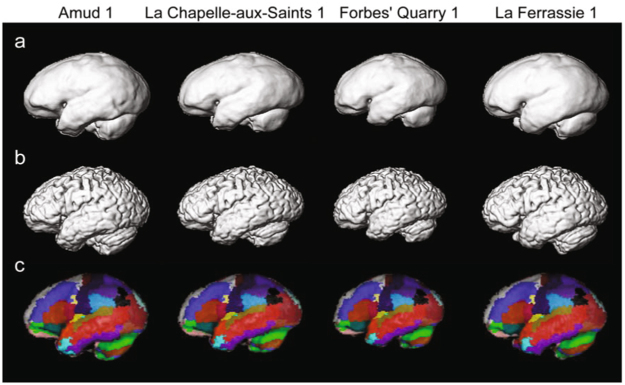
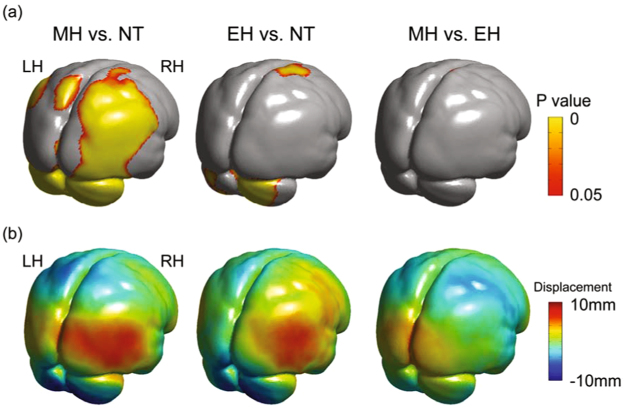
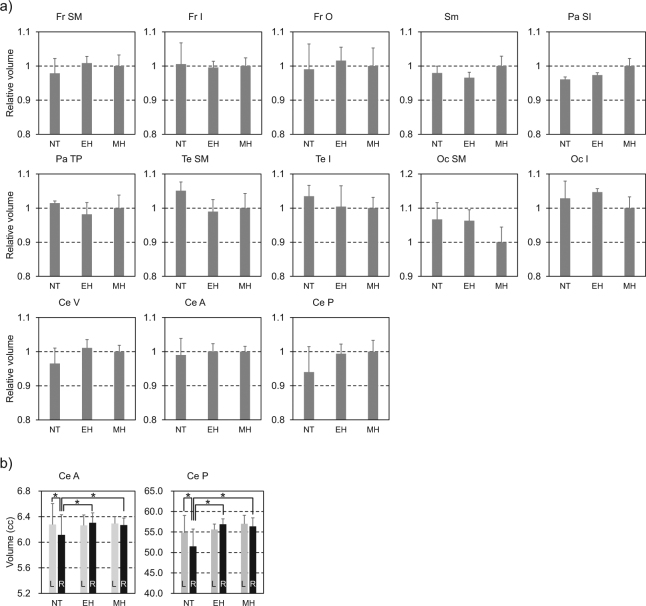
The present study attempted to reconstruct 3D brain shape of Neanderthals and early Homo sapiens based on computational neuroanatomy. We found that early Homo sapiens had relatively larger cerebellar hemispheres but a smaller occipital region in the cerebrum than Neanderthals long before the time that Neanderthals disappeared. Further, using behavioural and structural imaging data of living humans, the abilities such as cognitive flexibility, attention, the language processing, episodic and working memory capacity were positively correlated with size-adjusted cerebellar volume. As the cerebellar hemispheres are structured as a large array of uniform neural modules, a larger cerebellum may possess a larger capacity for cognitive information processing. Such a neuroanatomical difference in the cerebellum may have caused important differences in cognitive and social abilities between the two species and might have contributed to the replacement of Neanderthals by early Homo sapiens .
Overview
The claims and statistics of this paper haven’t been checked yet.
Run the check — free, no account needed. It reads the open-access text and checks the sources it cites.
Integrity signals
Registry
Cites
Statistics
Figures
Verification
Claims the paper makes
The claims and statistics of this paper haven’t been checked yet.
Run the check — free, no account needed. It reads the open-access text and checks the sources it cites.
Claims other papers make about this one
Each is checked against this paper’s own text: does it say what the citing paper says it does?
The cited source says what the claim attributes to it.
In the citing paper
“However, comparative studies indicate that the increased endocranial globularity of present-day humans as compared to Neandertals is not merely the result of absolute cerebellar enlargement [4, 5], suggesting that endocranial shape variation involves complex shifts in relative, rather than absolute, volumes of different brain structures.”
From Neandertal Introgression Sheds Light on Modern Human Endocranial Globularity (2019) · cites this paper as [5]
In the citing paper
“we find changes that might have affected the size of the cerebellum, a key contributor to our brain shape11,84, possibly even since the split from Neanderthals85”
From A catalog of single nucleotide changes distinguishing modern humans from archaic hominins (2019) · cites this paper as [84]
Self-check
Percentages, sums and reported differences re-computed from the paper’s own numbers.
The self-check needs the paper’s full text.
Citations
Cites
Tzourio-Mazoyer, N., Landeau, B., Papathanassiou, D., Crivello, F., Etard, O., Delcroix, N., Mazoyer, B., & Joliot, M. (2002) · NeuroImage · doi:10.1006/nimg.2001.0978 · Cited by 16,319
Diamond, A. (2013) · Annual Review of Psychology · doi:10.1146/annurev-psych-113011-143750 · Cited by 13,268
Fischl, B., Salat, D. H., Busa, E., Albert, M., Dieterich, M., Haselgrove, C., van der Kouwe, A., Killiany, R., Kennedy, D., Klaveness, S., et al. (2002) · Neuron · doi:10.1016/s0896-6273(02)00569-x · Cited by 8,610
A fast diffeomorphic image registration algorithm
Ashburner, J. (2007) · NeuroImage · doi:10.1016/j.neuroimage.2007.07.007 · Cited by 8,122
Zhang, Y., Brady, M., & Smith, S. M. (2001) · IEEE Transactions on Medical Imaging · doi:10.1109/42.906424 · Cited by 7,628
Ashburner, J., & Friston, K. J. (2005) · NeuroImage · doi:10.1016/j.neuroimage.2005.02.018 · Cited by 7,507
The WU-Minn Human Connectome Project: An overview
Van Essen, D. C., Smith, S. M., Barch, D. M., Behrens, T. E. J., Yacoub, E., & Ugurbil, K. (2013) · NeuroImage · doi:10.1016/j.neuroimage.2013.05.041 · Cited by 5,651
The precuneus: a review of its functional anatomy and behavioural correlates
Cavanna, A. E., & Trimble, M. R. (2006) · Brain · doi:10.1093/brain/awl004 · Cited by 5,128
Working Memory: Theories, Models, and Controversies
Baddeley, A. (2012) · Annual Review of Psychology · doi:10.1146/annurev-psych-120710-100422 · Cited by 4,271
The cerebellar cognitive affective syndrome
Schmahmann, J. (1998) · Brain · doi:10.1093/brain/121.4.561 · Cited by 3,230
Cited by
Sorted by citations
Diedrichsen, J., King, M., Hernandez-Castillo, C., Sereno, M., & Ivry, R. B. (2019) · Neuron · doi:10.1016/j.neuron.2019.04.021 · Cited by 281
The human cerebellum has almost 80% of the surface area of the neocortex
Sereno, M. I., Diedrichsen, J., Tachrount, M., Testa-Silva, G., D'Arceuil, H. E., & Zeeuw, C. I. D. (2020) · Proceedings of the National Academy of Sciences · doi:10.1073/pnas.2002896117 · Cited by 204
Are endocasts good proxies for brain size and shape in archosaurs throughout ontogeny?
Watanabe, A., Gignac, P. M., Balanoff, A. M., Green, T. L., Kley, N. J., & Norell, M. A. (2018) · Journal of Anatomy · doi:10.1111/joa.12918 · Cited by 142
Liang, K. J., & Carlson, E. S. (2019) · Neurobiology of Learning and Memory · doi:10.1016/j.nlm.2019.01.004 · Cited by 131
Neandertal Introgression Sheds Light on Modern Human Endocranial Globularity
Gunz, P., Tilot, A. K., Wittfeld, K., Teumer, A., Shapland, C. Y., van Erp, T. G. M., Dannemann, M., Vernot, B., Neubauer, S., Guadalupe, T., et al. (2019) · Current Biology · doi:10.1016/j.cub.2018.10.065 · Cited by 117
“However, comparative studies indicate that the increased endocranial globularity of present-day humans as compared to Neandertals is not merely the result of absolute cerebellar enlargement [4, 5], suggesting that endocranial shape variation involves complex shifts in relative, rather than absolute, volumes of differe…”
Metadata
- Authors
- Kochiyama, T., Ogihara, N., Tanabe, H. C., Kondo, O., Amano, H., Hasegawa, K., Suzuki, H., Ponce de León, M. S., Zollikofer, C. P. E., Bastir, M., Stringer, C., Sadato, N., & Akazawa, T.
- Affiliations
- Advanced Telecommunications Research Institute International (JP)
- Keio University (JP)
- Nagoya University (JP)
- The University of Tokyo (JP)
- National Institute of Advanced Industrial Science and Technology (JP)
- University of Zurich (CH)
- Museo Nacional de Ciencias Naturales (ES)
- Natural History Museum (GB)
- National Institute for Physiological Sciences (JP)
- Kochi University of Technology (JP)
- Corresponding author
- Ogihara, Naomichi
- Tanabe, Hiroki C.
- ORCID
- Venue
- Scientific Reports
- Published
- 2018-04-26
- Volume
- 8
- Issue
- 1
- Pages
- 6296-6296
- ISSN
- 2045-2322 (ISSN-L)
- PMC
- PMC5919901
- OpenAlex
- W2801185600
- Cited by
- 156
- References
- 64
- Citations by year
- 2026: 11 · 2025: 12 · 2024: 5 · 2023: 18 · 2022: 16 · 2021: 21 · 2020: 50 · 2019: 20 · 2018: 3
- FWCI
- 99.55
- Type
- journal article
- Language
- en
- Open access
- gold
- doi.org
- Locations
- Scientific Reports (publishedVersion, cc-by)
- Europe PMC (PubMed Central) (publishedVersion, cc-by)
- PubMed Central (publishedVersion, cc-by)
- PubMed (publishedVersion)
- Zurich Open Repository and Archive (University of Zurich) (acceptedVersion, cc-by)
- DIGITAL.CSIC (Spanish National Research Council (CSIC)) (submittedVersion, cc-by)
- DOAJ (DOAJ: Directory of Open Access Journals) (submittedVersion)
- Natural History Museum, London (submittedVersion, cc-by)
- Zurich Open Repository and Archive (University of Zurich) (submittedVersion, cc-by)
- Zurich Open Repository and Archive (University of Zurich)
- Funders
- National Science Foundation (NS092988, 1U54MH091657)
- Harvard University
- Calleva Foundation
- Ministry of Education, Culture, Sports, Science and Technology (22101006, 22101007, 22101001)
- Universität Wien
- Tel Aviv University
- Muséum National d'Histoire Naturelle
- National Institutes of Health (5u54mh091657-05, 1U54‐MH‐091657)
- McDonnell Center for Systems Neuroscience (1U54MH091657)
- Japan Society for the Promotion of Science (15H01846, 17H06381, 16K16080)
- National Institute of Mental Health (U54-MH091657)
- National Institute of Neurological Disorders and Stroke (NS‐092988, 1U54MH091657, R24NS092988)
- NIH Blueprint for Neuroscience Research (NS092988, 1U54-MH-091657)
- Topics
- Social Sciences › Anthropology › Pleistocene-Era Hominins and Archaeology
- Life Sciences › Agricultural and Biological Sciences › Ecology, Evolution, Behavior and Systematics › Primate Behavior and Ecology
- Social Sciences › Psychology › Experimental and Cognitive Psychology › Evolutionary Psychology and Human Behavior
- Keywords
- Neanderthals, early Homo sapiens, cerebellum, cerebellar volume, computational neuroanatomy, cognitive flexibility, attention, language processing, episodic memory, working memory, Neanderthal replacement, human evolution
- MeSH terms
- Algorithms, Analysis of Variance, Animals, Anthropology, Cerebellum, Cognition, Fossils, Humans, Memory, Short-Term, Skull, Tomography Scanners, X-Ray Computed, Linear Models, Computational Biology, Imaging, Three-Dimensional, Executive Function, Climate Change, Neanderthals, Social Skills
About these checks
Registry, retraction, Cites and statistics results are computed, not judged, with one exception: a printed reference that no index lists is read once by a model before it counts as a citation error. Claims are extracted by a model and kept only when their quote appears verbatim in the text; each cited source is then checked, with a model’s help, for whether it says what the claim relies on. Those verdicts can be wrong — read the claim’s quote and the cited source before relying on one.
Statistics and arithmetic are recomputed, not judged.
Confidence bands are shown only for fields calibrated on our annotated test set. None is calibrated yet, so no band is shown.
What counts as a claim ›How we measure confidence ›How we check this ›
Are you an author, or do you see a problem with this page? Request a review
