

Substance P modulates bone remodeling properties of murine osteoblasts and osteoclasts
Open accessThe DOI matches its Crossref record; 51 of the 51 references it cites were found in a registry or an index.
Abstract
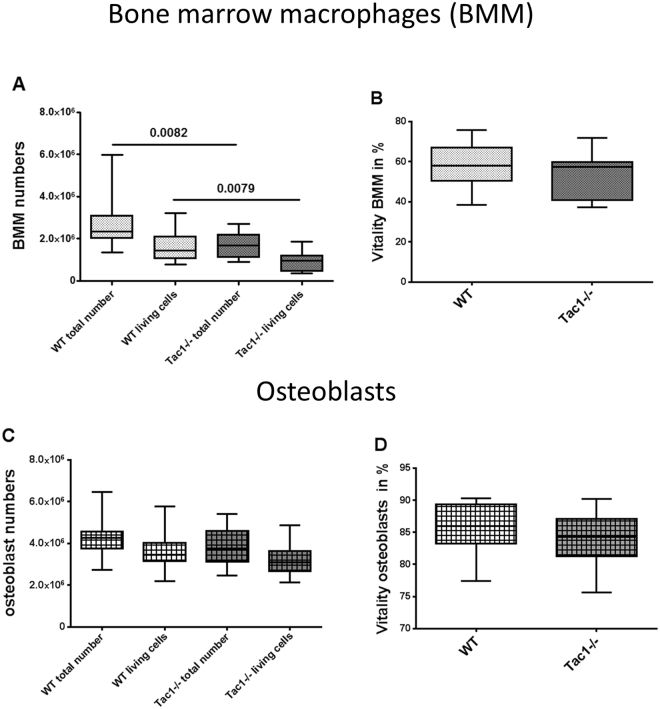
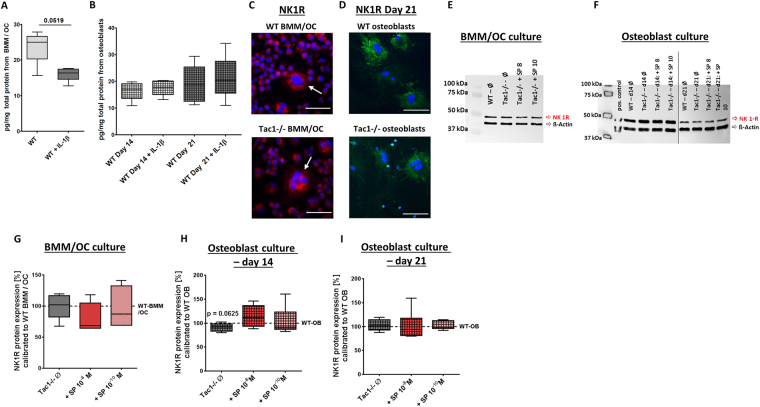
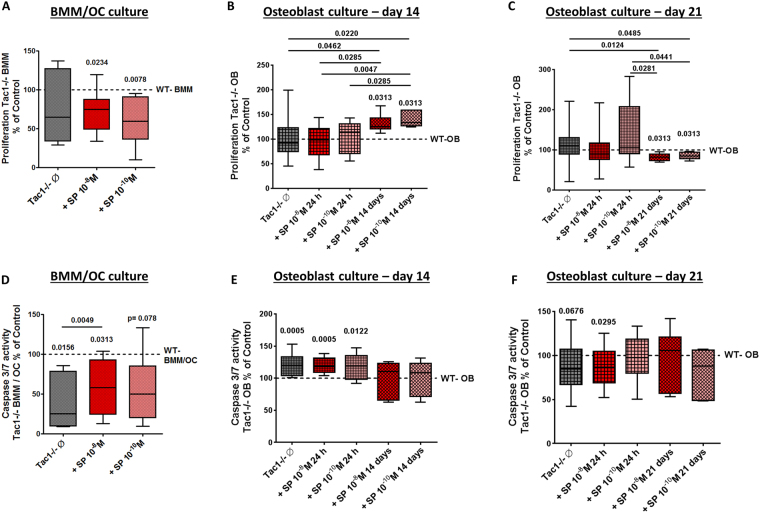
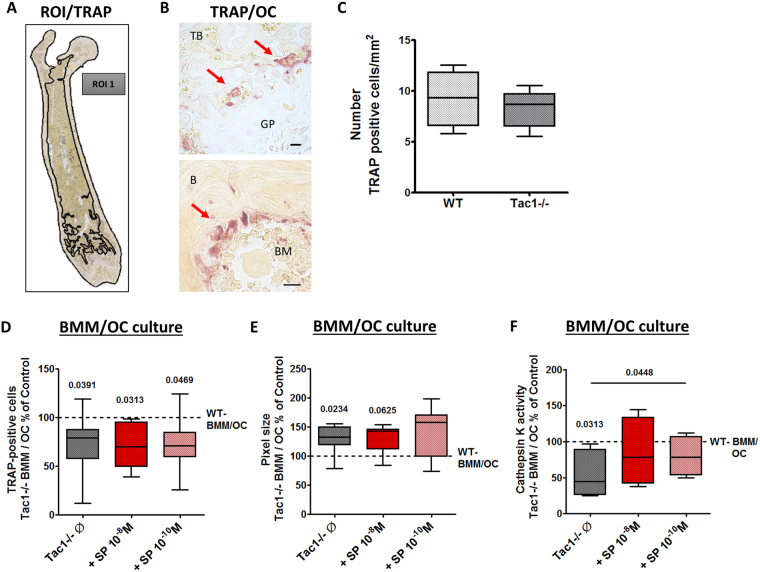
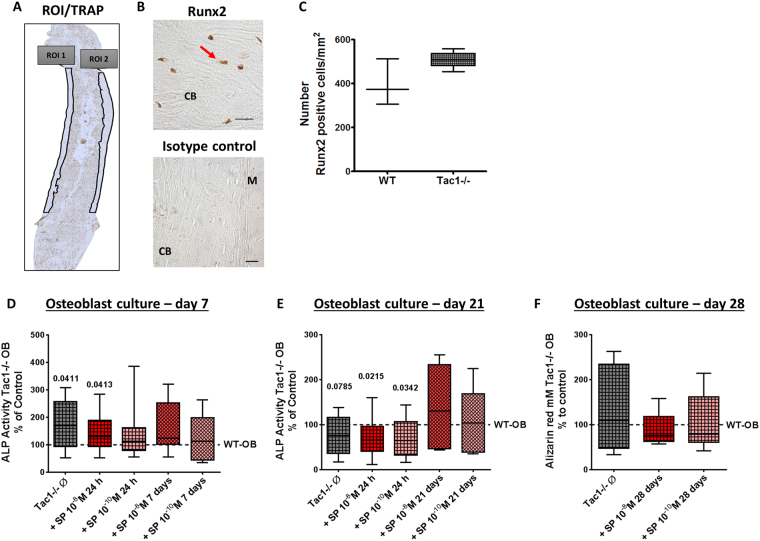
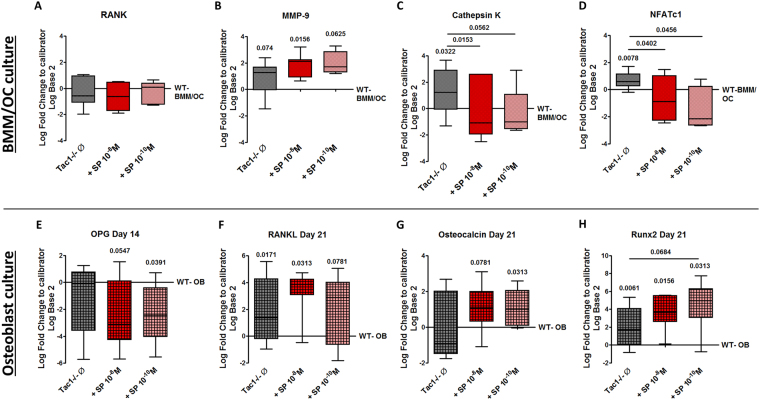
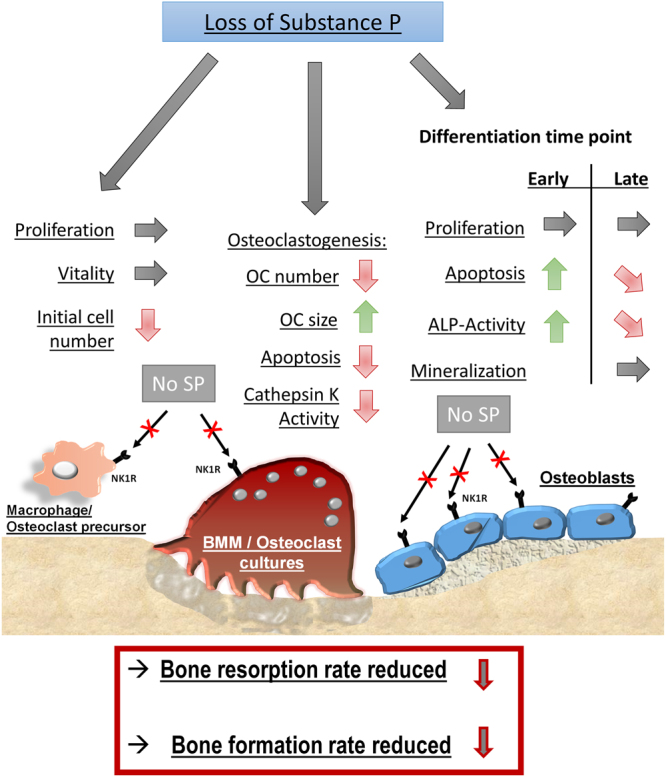
Clinical observations suggest neuronal control of bone remodeling. Sensory nerve fibers innervating bone, bone marrow and periosteum signal via neurotransmitters including substance P (SP). In previous studies we observed impaired biomechanical and structural bone parameters in tachykinin (Tac) 1-deficient mice lacking SP. Here, we aim to specify effects of SP on metabolic parameters of bone marrow macrophage (BMM)/osteoclast cultures and osteoblasts isolated from Tac1-deficient and wildtype (WT) mice. We demonstrated endogenous SP production and secretion in WT bone cells. Absence of SP reduced bone resorption rate, as we found reduced numbers of precursor cells (BMM) and multinucleated osteoclasts and measured reduced cathepsin K activity in Tac1-/- BMM/osteoclast cultures. However, this might partly be compensated by reduced apoptosis rate and increased fusion potential of Tac1-/- precursor cells to enlarged "super" osteoclasts. Contrarily, increased ALP enzyme activity and apoptosis rate during early osteoblast differentiation accelerated osteogenesis and cell death in the absence of SP together with reduced ALP activity of Tac1-/- osteoblasts during late osteogenic differentiation resulting in reduced bone formation at later stages. Therefore, we suggest that absence of SP presumably results in a slight reduction of bone resorption rate but concomitantly in a critical reduction of bone formation and mineralization rate.
Overview
The claims and statistics of this paper haven’t been checked yet.
Free: it reads the open-access text and checks the first 5 claims that cite a source we can check. Create a free account to check every claim.
Integrity signals
Registry
Cites
Statistics
Figures
Verification
Claims the paper makes
The claims and statistics of this paper haven’t been checked yet.
Free: it reads the open-access text and checks the first 5 claims that cite a source we can check. Create a free account to check every claim.
Self-check
Percentages, sums and reported differences re-computed from the paper’s own numbers.
The self-check needs the paper’s full text.
Citations
Cites
1 retracted
Baillie, G. S., Sood, A., McPhee, I., Gall, I., Perry, S. J., Lefkowitz, R. J., & Houslay, M. D. (2003) · Proceedings of the National Academy of Sciences · doi:10.1073/pnas.262787199 · Cited by 360
RetractedMultilineage potential of adult human mesenchymal stem cells
Pittenger, M. F., Mackay, A. M., Beck, S. C., Jaiswal, R. K., Douglas, R., Mosca, J. D., Moorman, M. A., Simonetti, D. W., Craig, S., & Marshak, D. R. (1999) · Science · doi:10.1126/science.284.5411.143 · Cited by 21,052
Komori, T., Yagi, H., Nomura, S., Yamaguchi, A., Sasaki, K., Deguchi, K., Shimizu, Y., Bronson, R. T., Gao, Y.-H., Inada, M., et al. (1997) · Cell · doi:10.1016/s0092-8674(00)80258-5 · Cited by 4,244
Bone Resorption by Osteoclasts
Teitelbaum, S. L. (2000) · Science · doi:10.1126/science.289.5484.1504 · Cited by 3,962
Hsu, H., Lacey, D. L., Dunstan, C. R., Solovyev, I., Colombero, A., Timms, E., Tan, H.-L., Elliott, G., Kelley, M. J., Sarosi, I., et al. (1999) · Proceedings of the National Academy of Sciences · doi:10.1073/pnas.96.7.3540 · Cited by 1,636
Cellular and molecular mechanisms of bone remodeling
Raggatt, L. J., & Partridge, N. C. (2010) · Journal of Biological Chemistry · doi:10.1074/jbc.r109.041087 · Cited by 1,402
HADJIDAKIS, D. J., & ANDROULAKIS, I. I. (2006) · Annals of the New York Academy of Sciences · doi:10.1196/annals.1365.035 · Cited by 1,360
BIOMECHANICAL AND MOLECULAR REGULATION OF BONE REMODELING
Robling, A. G., Castillo, A. B., & Turner, C. H. (2006) · Annual Review of Biomedical Engineering · doi:10.1146/annurev.bioeng.8.061505.095721 · Cited by 1,343
Cellular mechanisms of bone remodeling
Eriksen, E. F. (2010) · Reviews in Endocrine and Metabolic Disorders · doi:10.1007/s11154-010-9153-1 · Cited by 821
Steinhoff, M. S., von Mentzer, B., Geppetti, P., Pothoulakis, C., & Bunnett, N. W. (2014) · Physiological Reviews · doi:10.1152/physrev.00031.2013 · Cited by 628
Research works printed but not linked: 1
- Rubin, J. & Greenfield, E. In Bone Resorption Vol. 2 Topics in Bone Biology (eds Felix Bronner, MaryC Farach-Carson, & Janet Rubin) Ch. 1, 1–23 (Springer London, 2005).
Cited by
Functional Biomaterials for Bone Regeneration: A Lesson in Complex Biology
Armiento, A. R., Hatt, L. P., Sanchez Rosenberg, G., Thompson, K., & Stoddart, M. J. (2020) · Advanced Functional Materials · doi:10.1002/adfm.201909874 · Cited by 273
Crosstalk between Bone and Nerves within Bone
Wan, Q., Qin, W., Ma, Y., Shen, M., Li, J., Zhang, Z., Chen, J., Tay, F. R., Niu, L., & Jiao, K. (2021) · Advanced Science · doi:10.1002/advs.202003390 · Cited by 212
Nerves in Bone: Evolving Concepts in Pain and Anabolism
Brazill, J. M., Beeve, A. T., Craft, C. S., Ivanusic, J. J., & Scheller, E. L. (2019) · Journal of Bone and Mineral Research · doi:10.1002/jbmr.3822 · Cited by 205
“SP is also broadly expressed in non‐neural tissues including macrophages and neutrophils, epithelial cells, and endothelial cells,((99,100)) and SP secretion from osteoblast‐ and osteoclast‐ lineage cells has been detected in vitro.((101,102)) SP binds and activates neurokinin‐1 receptor (NK‐1R), expressed in osteobla…”
BackgroundYang, J.-X., Xie, P., Li, Y.-S., Wen, T., & Yang, X.-C. (2020) · Cellular Signalling · doi:10.1016/j.cellsig.2019.109504 · Cited by 129
Polyhedron‐Like Biomaterials for Innervated and Vascularized Bone Regeneration
Zhang, H., Zhang, M., Zhai, D., Chen, Q., Wang, Y., Ma, J., Zhuang, H., Shi, Z., Wang, L., & Wu, C. (2023) · Advanced Materials · doi:10.1002/adma.202302716 · Cited by 131
The Role of Nerves in Skeletal Development, Adaptation, and Aging
Tomlinson, R. E., Christiansen, B., Giannone, A. A., & Genetos, D. C. (2020) · Frontiers in Endocrinology · doi:10.3389/fendo.2020.00646 · Cited by 100
“SP appears to increase bone resorption as well as bone formation, although its contribution toward formation outweigh its role in bone resorption and lead to impaired material and structural bone strength (40, 41).”
BackgroundHaffner-Luntzer, M., Foertsch, S., Fischer, V., Prystaz, K., Tschaffon, M., Mödinger, Y., Bahney, C. S., Marcucio, R. S., Miclau, T., Ignatius, A., et al. (2019) · Proceedings of the National Academy of Sciences · doi:10.1073/pnas.1819218116 · Cited by 87
“Absence of the neurotransmitter substance P reduced mineralization during late osteoblast differentiation (45) and delayed fracture healing (46).”
BackgroundCrosstalk of Brain and Bone—Clinical Observations and Their Molecular Bases
Otto, E., Knapstein, P., Jahn, D., Appelt, J., Frosch, K., Tsitsilonis, S., & Keller, J. (2020) · International Journal of Molecular Sciences · doi:10.3390/ijms21144946 · Cited by 94
Ma, Y., Jiao, K., Wan, Q., Li, J., Liu, M., Zhang, Z., Qin, W., Wang, K.-Y., Wang, Y., Tay, F. R., et al. (2021) · Bioactive Materials · doi:10.1016/j.bioactmat.2021.07.016 · Cited by 109
The neural system regulates bone homeostasis via mesenchymal stem cells: a translational approach
Wang, X., Li, S., Zhang, S., Gupta, A., Zhang, C., & Wang, L. (2020) · Theranostics · doi:10.7150/thno.43771 · Cited by 87
“Furthermore, a lack of SP may lead to a decrease in bone resorption rate, as well as late bone formation and mineralization rate, resulting in a net bone loss due to a greater rate of bone resorption than bone formation [79, 81].”
BackgroundThe Role of Substance P in the Regulation of Bone and Cartilage Metabolic Activity
Li, F., Xu, F., Lin, X., Wu, F., Zhong, J., Wang, Y., Guo, B., Zheng, M., Shan, S., & Yuan, L. (2020) · Frontiers in Endocrinology · doi:10.3389/fendo.2020.00077 · Cited by 82
“(32) found that a lack of SP reduced the bone resorption rate and reduced the numbers of bone marrow precursor cells (BMMs) and multinucleated osteoclasts and reduced cathepsin K activity in tachykinin (Tac)1 BMMs/osteoclast cultures.”
BackgroundSayilekshmy, M., Hansen, R. B., Delaissé, J.-M., Rolighed, L., Andersen, T. L., & Heegaard, A.-M. (2019) · Scientific Reports · doi:10.1038/s41598-019-41779-w · Cited by 73
Crosstalk Between the Neuroendocrine System and Bone Homeostasis
Zhao, Y., Peng, X., Wang, Q., Zhang, Z., Wang, L., Xu, Y., Yang, H., Bai, J., & Geng, D. (2023) · Endocrine Reviews · doi:10.1210/endrev/bnad025 · Cited by 78
Muschter, D., Fleischhauer, L., Taheri, S., Schilling, A. F., Clausen‐Schaumann, H., & Grässel, S. (2020) · Bone · doi:10.1016/j.bone.2019.115181 · Cited by 56
Self-citationImpact of the Sensory and Sympathetic Nervous System on Fracture Healing in Ovariectomized Mice
Niedermair, T., Straub, R. H., Brochhausen, C., & Grässel, S. (2020) · International Journal of Molecular Sciences · doi:10.3390/ijms21020405 · Cited by 55
“In an in vitro study, we demonstrated that the absence of SP reduced the number of osteoclast-precursor cells and the differentiation capacity to mature osteoclasts, but no differences were observed in osteoclast number in untreated bones of Tac1−/− compared to WT mice [39].”
ResultSelf-citationChen, Y., Guo, B., Ma, G., & Cao, H. (2024) · Ageing Research Reviews · doi:10.1016/j.arr.2024.102372 · Cited by 53
Substance P participates in periodontitis by upregulating HIF-1α and RANKL/OPG ratio
Yan, K., Lin, Q., Tang, K., Liu, S., Du, Y., Yu, X., & Li, S. (2020) · BMC Oral Health · doi:10.1186/s12903-020-1017-9 · Cited by 52
Wan, Q., Qin, W., Shen, M., Ma, Y., Li, B., Liu, S., Tay, F. R., Jiao, K., & Niu, L. (2020) · Advanced Functional Materials · doi:10.1002/adfm.202003542 · Cited by 47
Kim, H., Lee, J., Mandakhbayar, N., Jin, G., Kim, S.-J., Yoon, J., Jo, S. B., Park, J.-H., Singh, R. K., Jang, J., et al. (2021) · Biomaterials · doi:10.1016/j.biomaterials.2021.120857 · Cited by 47
Hu, X., Sun, Z., Li, F., Jiang, C., Yan, W., & Sun, Y. (2021) · Cellular & Molecular Biology Letters · doi:10.1186/s11658-021-00277-6 · Cited by 41
Niedermair, T., Lukas, C., Li, S., Stöckl, S., Craiovan, B. S., Brochhausen, C., Federlin, M., Herrmann, M., & Grässel, S. (2020) · Frontiers in Bioengineering and Biotechnology · doi:10.3389/fbioe.2020.615520 · Cited by 39
Self-citationStöckl, S., Eitner, A., Bauer, R. J., König, M. A., Johnstone, B., & Grässel, S. (2021) · Frontiers in Immunology · doi:10.3389/fimmu.2021.722884 · Cited by 39
Self-citationExosome‐Hydrogel System in Bone Tissue Engineering: A Promising Therapeutic Strategy
Wang, J., Zhu, M., Hu, Y., Chen, R., Hao, Z., Wang, Y., & Li, J. (2023) · Macromolecular Bioscience · doi:10.1002/mabi.202200496 · Cited by 37
Shi, N., Kong, C., Lin, Y., Liu, L., Zhao, K., Lü, J., & Wang, X. (2023) · Biomedicine & Pharmacotherapy · doi:10.1016/j.biopha.2023.115219 · Cited by 37
Amirthalingam, S., Lee, S. S., Rajendran, A. K., Kim, I., Hwang, N. S.-Y., & Jayakumar, R. (2021) · Materials Science and Engineering C · doi:10.1016/j.msec.2021.112172 · Cited by 32
Johnson, M. B., Suptela, S. R., Sipprell, S. E., & Marriott, I. (2022) · Inflammation · doi:10.1007/s10753-022-01731-z · Cited by 28
“Previous studies have demonstrated that resident bone cells express the high affinity receptor for SP, NK-1R [24, 27].”
BackgroundSkeletal interoception and prospective application in biomaterials for bone regeneration
Bai, L., Li, J., Li, G., Zhou, D., Su, J., & Liu, C. (2025) · Bone Research · doi:10.1038/s41413-024-00378-w · Cited by 33
“…adrenergic nerves 87 Regulation NPY: produced by osteocytes and osteoblasts 88 SP Synthesis and secretion SP: secreted by sensory nerves 89,90 Regulation SP and the receptor NK-1: expressed in osteoblasts and osteocytes especially under mechanical stimulation during exercise 91 Axon…”
Lin, S., & Huang, C. (2022) · International Journal of Molecular Sciences · doi:10.3390/ijms23116322 · Cited by 26
“The primer sequences were as follows: Gapdh forward 5′-CTGCCACCCAGAAGACTGTG-3′ and reverse 5′-GGTCCTCAGTGTAGCC CAAG-3′ [43]; Mmp9 forward 5′-GAAGGCAAACCCTGTGTGTT-3′ and reverse 5′-AGAGT ACTGCTTGCCCAGGA-3′ [44]; Trap forward 5′-TCCTGGCTCAAAAAGCAGTT-3′ and reverse 5′-ACATAGCCCACACCGTTCTC-3′ [45].”
Substance P aggravates ligature-induced periodontitis in mice
Siddiqui, Y. D., Nie, X., Wang, S., Abbasi, Y., Park, L. Y., Fan, X., Thumbigere‐Math, V., & Chung, M. (2023) · Frontiers in Immunology · doi:10.3389/fimmu.2023.1099017 · Cited by 27
“However, these results should be interpreted with caution, as many SP antibodies may also detect other members of the tachykinin family (36, 46).”
BackgroundZhan, C., Dai, Q., Ren, J., Jin, L., Wang, W., Ye, Z., Tsoi, J. K. H., & Lin, Y. (2025) · Advanced Science · doi:10.1002/advs.202506438 · Cited by 34
Skeletal stem cells: origins, definitions, and functions in bone development and disease
Feng, H., Jiang, B., Xing, W., Sun, J., Greenblatt, M. B., & Zou, W. (2022) · Life Medicine · doi:10.1093/lifemedi/lnac048 · Cited by 27
“Substance P (SP) secreted by sensory nerves, can promote osteoblast differentiation by increasing cAMP production and enhancing BMP2 secretion [70, 71].”
Sensory Neuropeptides and their Receptors Participate in Mechano-Regulation of Murine Macrophages
Muschter, D., Beiderbeck, A.-S., Späth, T., Kirschneck, C., Schröder, A., & Grässel, S. (2019) · International Journal of Molecular Sciences · doi:10.3390/ijms20030503 · Cited by 23
“They are also known to express functional receptors for SP and CGRP [21,22].”
BackgroundSelf-citationThe role of sensory and sympathetic nerves in craniofacial bone regeneration
Assefa, F. (2023) · Neuropeptides · doi:10.1016/j.npep.2023.102328 · Cited by 25
Zhou, G., Zhang, X., Gu, Z., Zhao, J., Luo, M., & Liu, J. L. (2023) · Frontiers in Medicine · doi:10.3389/fmed.2023.1254086 · Cited by 19
“It has also been found that N-SP can stimulate the proliferation of osteoblast precursor cells, enhance cell activity, and influence bone formation during OB differentiation (28).”
BackgroundNeuroregulation during Bone Formation and Regeneration: Mechanisms and Strategies
Zhao, X., Yao, M., Wang, Y., Feng, C., Yang, Y., Tian, L., Bao, C., Li, X., Zhu, X., & Zhang, X. (2025) · ACS Applied Materials & Interfaces · doi:10.1021/acsami.4c16786 · Cited by 23
Niedermair, T., Schirner, S., Guaza-Lasheras, M., Straub, R. H., & Grässel, S. (2020) · Mechanisms of Ageing and Development · doi:10.1016/j.mad.2020.111265 · Cited by 18
Self-citationLiu, D., Wang, B., Qiu, M. R., & Huang, Y. (2020) · Journal of Cellular and Molecular Medicine · doi:10.1111/jcmm.16159 · Cited by 19
Wang, L., Hou, S., Sabsovich, I., Guo, T., Wei, T., & Kingery, W. S. (2020) · Bone · doi:10.1016/j.bone.2020.115806 · Cited by 15
Synergistic effects of miR-708-5p and miR-708-3p accelerate the progression of osteoporosis
Wang, R., Feng, Y., Xu, H. K., Huang, H., Zhao, S., Wang, Y., Li, H., Cao, J., Xu, G., & Huang, S. (2020) · Journal of International Medical Research · doi:10.1177/0300060520978015 · Cited by 15
“Osteoblasts, which are derived from bone marrow mesenchymal stem cells (BMSCs), are responsible for bone formation.(2) Conversely, multinucleated osteoclasts, which derive from precursors of macrophages/monocytes, are responsible for bone resorption.”
BackgroundGergues, M., Nagula, V., Bliss, S. A., Eljarrah, A., Ayer, S., Gnanavel, N., Sinha, G., Wu, Q., Yehia, G., Greco, S. J., et al. (2020) · The Journal of Immunology · doi:10.4049/jimmunol.1900582 · Cited by 11
“Indirect effects occurred through cytokine production, activators, such as HIF1a, in addition to maintaining bone homeostasis (17, 40, 51).”
BackgroundLin, Q., Zhao, B., Huang, J., Chen, R., Sun, W., Ye, Q.-Y., Yang, L., Zhu, X., Li, X., & Zhang, R. (2025) · Frontiers in Pharmacology · doi:10.3389/fphar.2025.1516038 · Cited by 14
“A de fi ciency of SP may reduce the number of osteoclasts and subsequently diminish the capacity for bone resorption (Niedermair et al., 2018).”
Zeng, X., He, S., Yang, C., Yang, Y., Zheng, G., Wang, H., Liang, L., Xu, C., Cao, P., Wu, X., et al. (2025) · Pharmacological Research · doi:10.1016/j.phrs.2025.107850 · Cited by 11
Menon, N., & Kishen, A. (2023) · Biomolecules · doi:10.3390/biom13081193 · Cited by 12
A mysterious triangle of blood, bones, and nerves
Asada, N., & Katayama, Y. (2023) · Journal of Bone and Mineral Metabolism · doi:10.1007/s00774-023-01402-5 · Cited by 8
Chen, Z., Luo, Z., Greenblatt, M. B., Wu, Z., & Xu, R. (2026) · Bone Research · doi:10.1038/s41413-026-00534-4 · Cited by 12
“126 In terms of bone resorption, SP shows context-dependent effects on osteoclasts: it can directly enhance NF-κ B signaling in precursors, amplifying RANKL-driven osteoclastogenesis and resorptive activity.”
Deciphering the skeletal interoceptive circuitry to control bone homeostasis
Wu, Y., Guo, J., Chen, Z., Zhang, F., Chow, B., Chen, Z., Yeung, K., & Qiao, W. (2025) · BMEMat · doi:10.1002/bmm2.12138 · Cited by 8
A bone to pick-cellular and molecular mechanisms of bone pain in sickle cell disease
Gollamudi, J., Karkoska, K. A., Gbotosho, O. T., Zou, W., Hyacinth, H. I., & Teitelbaum, S. L. (2024) · Frontiers in Pain Research · doi:10.3389/fpain.2023.1302014 · Cited by 11
Stöckl, S., Taheri, S., Maier, V., Asid, A., Toelge, M., Clausen‐Schaumann, H., Schilling, A. F., & Grässel, S. (2025) · Stem Cell Research & Therapy · doi:10.1186/s13287-025-04155-2 · Cited by 5
“…the absence of SP results in only a slight reduction of the bone resorption rate during murine fracture repair, but concomitantly in a critical reduction of bone formation and mineralization rate [8], whereas the absence of αCGRP leads to increased numbers of dysfunctional mature osteoblasts [9].”
Self-citationSubstance P Augments Chemokine Production by Staphylococcus aureus Infected Murine Osteoclasts
Sipprell, S. E., Krueger, Q. A., Mills, E. L., Marriott, I., & Johnson, M. B. (2025) · Inflammation · doi:10.1007/s10753-025-02280-x · Cited by 6
“Importantly, we have previously demonstrated that both osteoblasts and osteoclasts express the substance P receptor, NK-1R, and are functionally responsive to this neuropeptide such that it augments the inflammatory/ anti-osteogenic responses of these cells to S. aureus infection [12, 66–68].”
Role of FGF23 c.35C>A in Bone Remodeling during Orthodontic Tooth Movement
Ma, X., Zhu, M., Mi, X., & Chen, F. (2020) · Journal of Hard Tissue Biology · doi:10.2485/jhtb.29.55 · Cited by 4
Sun, D. Z., Ding, C., Wang, N., Ding, Q., Liu, W., Liu, X., Wei, H., Yang, J., Cheng, Z., Zhao, S., et al. (2025) · International Journal of Biological Macromolecules · doi:10.1016/j.ijbiomac.2025.148646 · Cited by 4
Editorial: Bone-organ axis: an expanding universe
Zhang, P., Wang, Y., Guo, Y., & Liu, X. (2025) · Frontiers in Endocrinology · doi:10.3389/fendo.2025.1574370 · Cited by 4
Neuro-osteo crosstalk: The sympathetic nervous system as a key driver of SCI-induced osteoporosis
Bryan, J. A., Jackson, W., Lemmens, N., & Hook, M. A. (2026) · Experimental Neurology · doi:10.1016/j.expneurol.2026.115824 · Cited by 2
Neurovascular coupling in bone regeneration: Mechanisms, advanced biomaterials and challenges
Ma, Y., Jiang, N., Chen, L., Zhang, H., Cai, X. L., Gulati, K., He, D., Cai, Z., & Liu, Y. (2026) · BMEMat · doi:10.1002/bmm2.70090 · Cited by 2
Becker, J., Jeon, C., & Wilting, J. (2025) · Cellular Signalling · doi:10.1016/j.cellsig.2025.112072 · Cited by 2
Gan, D., Qin, L., & Xiao, G. (2026) · Research · doi:10.34133/research.1319 · Cited by 1
“Mechanistically, SP can enhance osteoclastogenesis and stimulate late-stage osteoblast activity and inflammatory signaling, so its net effect depends on dose and disease state [ 33 ].”
Regulation of cortical bone formation by SLIT and NTRK-like family member 1
Shirakawa, T., Sato, T., Nagano, K., Ito, T., Inoue, M., Kaneda, H., Nakatomi, C., Nakatomi, M., Yuan, Q., Addison, W. N., et al. (2025) · iScience · doi:10.1016/j.isci.2025.112788 · Cited by 2
“Peripheral nerves and related factors such as substance P, 25 neurokinin B, 26 hemokinin-1, 27 and Sema3A 27,28 regulate bone metabolism.”
Pann, P., Kalke, P., Maier, V., Schäfer, N., Clausen‐Schaumann, H., Schilling, A. F., & Grässel, S. (2025) · Arthritis Research & Therapy · doi:10.1186/s13075-025-03693-7 · Cited by 2
“Supporting this, Niedermair et al. showed that SP deficiency reduces bone resorption by lowering the number of bone marrow precursor cells and osteoclasts in vitro [39].”
Self-citationLiu, G., Li, L., Wu, L., Pei, X., Zhang, B., Zeng, Z., Xiang, Z., Zhou, C., & Tang, S. (2026) · Materials Today Communications · doi:10.1016/j.mtcomm.2026.114970 · Cited by 1
TRPV1-linked neuropeptide axes in periodontitis and peri-implantitis
Lin, Y., He, Q., Ni, J., Ye, S., Chen, L., Wu, Y., & Zhang, C. (2026) · Frontiers in Endocrinology · doi:10.3389/fendo.2026.1825849 · Cited by 1
“Consistently, mice de fi cient in SP or NK1R display alterations in bone mineral density and microarchitecture, supporting an important regulatory role of this signaling axis in physiological bone remodeling (30).”
Lack of cortistatin drives neuroimmune and vascular dysfunction in brain ischemia
Castillo-González, J., Vargas-Rodríguez, P., Serrano-Martínez, I., Cuenca-Martagón, A., Forte‐Lago, I., Price, M., Buscemi, L., Hirt, L., Ruiz, J. L., & González‐Rey, E. (2026) · Journal of Biomedical Science · doi:10.1186/s12929-026-01271-w · Cited by 3
“This approach is consistent with foundational studies using constitutive knockouts of other neuropeptides [58–61].”
Schaible, H., Chang, H., Grässel, S., Haibel, H., Hess, A., Kamradt, T., Radbruch, A., Schett, G. A., Stein, C., & Straub, R. H. (2018) · Zeitschrift für Rheumatologie · doi:10.1007/s00393-018-0459-9 · Cited by 1
“Da insgesamt die Knochenresorption schneller verläuft als die Knochenneubildung, haben Tac1–/–Mäuse einen Nettoverlust von Knochen mit gestörten biomechanischen Eigenschaften[32].”
Self-citationPierre-Jerome, C. (2022) · Elsevier eBooks · doi:10.1016/b978-0-323-99352-4.00009-7 · Cited by 1
The effect of prenatal fumonisin B exposure on bone innervation in newborn Wistar rats
Tomaszewska, E., Dobrowolski, P., Dajnowska, A., Arbatowska, L., Puzio, I., Rudyk, H., Brezvyn, O. M., Kotsyumbas, I. Y., Donaldson, J., Śliwa, J., et al. (2024) · Journal of Veterinary Research · doi:10.2478/jvetres-2024-0056 · Cited by 1
Lee, S., Kim, M., Jung, K. I., Lee, S., & Park, M. H. (2025) · Cell Biology International · doi:10.1002/cbin.70030 · Cited by 1
“Mature osteoblasts subsequently undergo matrix mineralization via calcium deposition (Niedermair et al. 2018).”
Cullinan, K., Behrens, M., Solar, K. D., Johnson, K., James, A., James, B., & Nimmo, A. J. (2025) · Oral · doi:10.3390/oral5040088 · Cited by 1
“Substance P has also been shown to be capable of stimulating bone reabsorption [25,26].”
Boroojeni, H. S. H., Gharehdaghi, N., Moghaddasi, S., & Khojasteh, A. (2023) · Springer eBooks · doi:10.1007/978-981-19-8602-4_9
The peripheral nervous system: peripheral neuropathies in the diabetic foot
Pierre-Jerome, C. (2024) · Elsevier eBooks · doi:10.1016/b978-0-443-13328-2.00022-2
Substance P in bone metabolism
Niedermair, T., & Grässel, S. (2024) · Elsevier eBooks · doi:10.1016/b978-0-443-22194-1.00008-2 · Cited by 1
Self-citationSubstance P-neurokinin 1 receptor pathway in musculoskeletal disorders
Hilliard, B. A., & Barbe, M. F. (2024) · Elsevier eBooks · doi:10.1016/b978-0-443-22194-1.00022-7
Sipprell, S. E., & Marriott, I. (2024) · Elsevier eBooks · doi:10.1016/b978-0-443-22194-1.00019-7
Zhang, J. M., Yuan, X., Ding, H., Chen, X., & Jiang, C. (2026) · Oral Science and Homeostatic Medicine · doi:10.26599/oshm.2026.9610039
Du, L., Li, A., Tang, Z., Yang, H., Shi, X., Wang, S., Qiu, Z., Yang, X., & Huang, Y. (2026) · Stem Cell Research & Therapy · doi:10.1186/s13287-026-04950-5
“Disruption of TrkA signaling reduces sensory nerve innervation, impairing both primary and secondary bone formation - as evident in TrkA Avil-/- mice, where sensory nerve ablation leads to significant bone loss [6, 7].”
Neural crosstalk between subchondral bone and synovium in osteoarthritis
Feng, Y., Gao, Q., Liu, X., & Li, Y. (2026) · Frontiers in Medicine · doi:10.3389/fmed.2026.1971392
Metadata
- Authors
- Niedermair, T., Schirner, S., Seebröker, R., Straub, R. H., & Grässel, S.
- Affiliations
- University of Regensburg (DE)
- Corresponding author
- Grässel, Susanne
- Venue
- Scientific Reports
- Published
- 2018-06-15
- Volume
- 8
- Issue
- 1
- Pages
- 9199-9199
- ISSN
- 2045-2322 (ISSN-L)
- PMC
- PMC6003941
- OpenAlex
- W2808260193
- Cited by
- 74
- References
- 49
- Citations by year
- 2026: 10 · 2025: 15 · 2024: 7 · 2023: 9 · 2022: 5 · 2021: 6 · 2020: 16 · 2019: 5 · 2018: 1
- FWCI
- 2.49
- Type
- journal article
- Language
- en
- Open access
- gold
- doi.org
- Licence
- cc-by
- creativecommons.org/licenses/by/4.0 (tdm)
- creativecommons.org/licenses/by/4.0 (vor)
- Locations
- Scientific Reports (publishedVersion, cc-by)
- Europe PMC (PubMed Central) (publishedVersion, other-oa)
- PubMed Central (publishedVersion, cc-by)
- PubMed (publishedVersion)
- University of Regensburg Publication Server (University of Regensburg) (acceptedVersion)
- DOAJ (DOAJ: Directory of Open Access Journals) (submittedVersion)
- University of Regensburg Publication Server (University of Regensburg)
- Funders
- Bundesministerium für Bildung und Forschung (01EC1403B)
- Topics
- Life Sciences › Biochemistry, Genetics and Molecular Biology › Molecular Biology › Bone Metabolism and Diseases
- Health Sciences › Medicine › Orthopedics and Sports Medicine › Bone health and osteoporosis research
- Life Sciences › Neuroscience › Cellular and Molecular Neuroscience › Neuropeptides and Animal Physiology
- Keywords
- substance P, bone remodeling, osteoclasts, osteoblasts, bone resorption, bone formation, cathepsin K, osteoclast fusion, osteogenic differentiation, alkaline phosphatase, apoptosis, bone marrow-derived macrophages, tachykinins, bone mineralization
- MeSH terms
- Animals, Cell Differentiation, Cells, Cultured, Mice, Mutant Strains, Osteoblasts, Osteoclasts, Osteogenesis, Substance P, Bone Remodeling, Apoptosis, Mice
About these checks
Registry, retraction, Cites and statistics results are computed, not judged, with one exception: a printed reference that no index lists is read once by a model before it counts as a citation error. Claims are extracted by a model and kept only when their quote appears verbatim in the text; each cited source is then checked, with a model’s help, for whether it says what the claim relies on. Those verdicts can be wrong — read the claim’s quote and the cited source before relying on one.
Statistics and arithmetic are recomputed, not judged.
Confidence bands are shown only for fields calibrated on our annotated test set. None is calibrated yet, so no band is shown.
What counts as a claim ›How we measure confidence ›How we check this ›
Are you an author, or do you see a problem with this page? Request a review
Data sources
Bibliographic data: Semantic Scholar, OpenAlex, Crossref.
Contains information from the Semantic Scholar Academic Graph Datasets, made available under the ODC Attribution License (ODC-BY 1.0).
Semantic Scholar’s data is described in: Kinney, R., et al. (2023). The Semantic Scholar Open Data Platform. arXiv:2301.10140.
