

The DOI matches its Crossref record; 56 of the 56 references it cites were found in a registry or an index.
Immobilization stress-induced Escherichia coli causes anxiety by inducing NF-κB activation through gut microbiota disturbance
Open accessAbstract
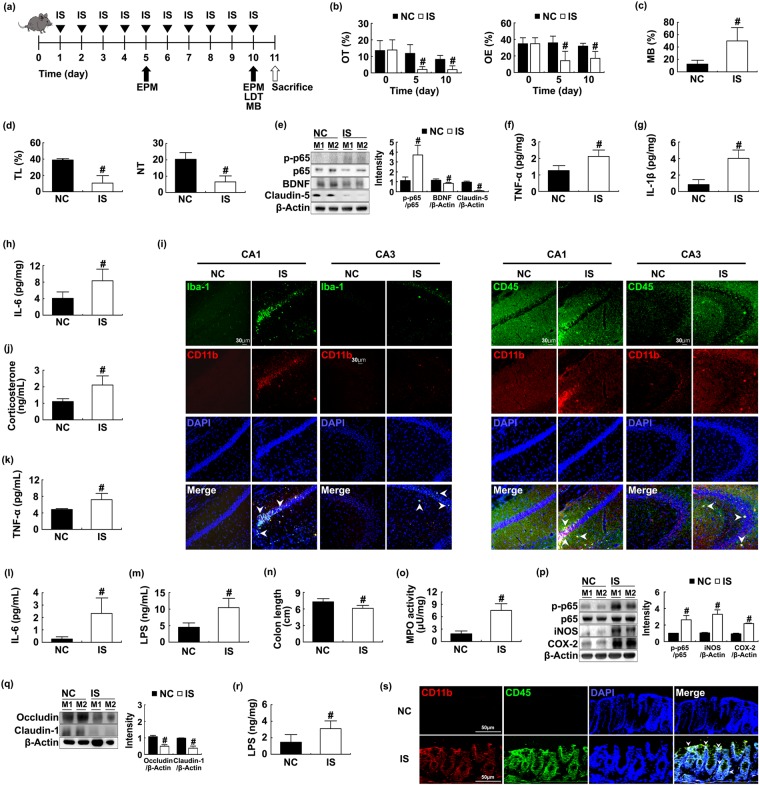
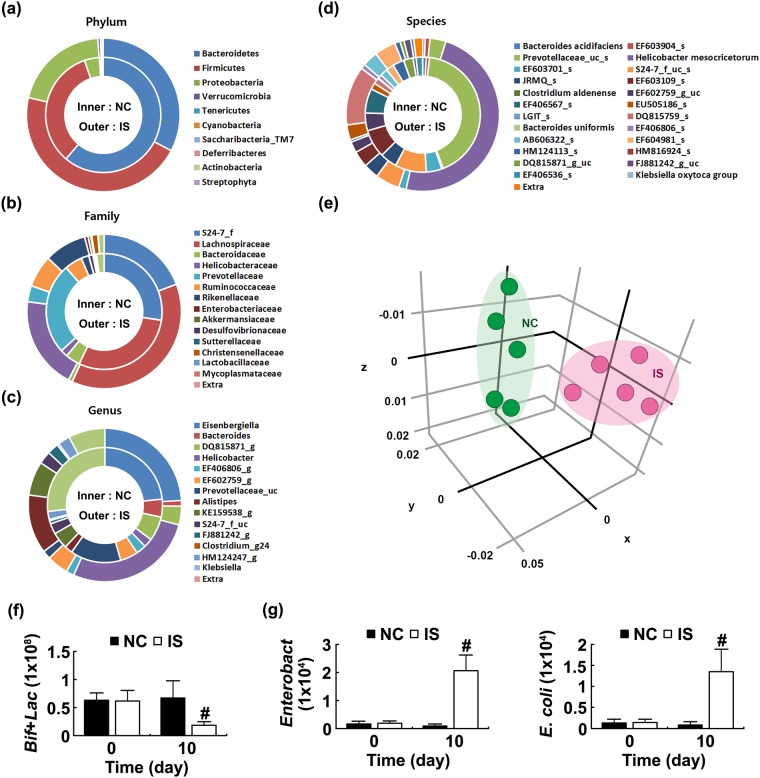
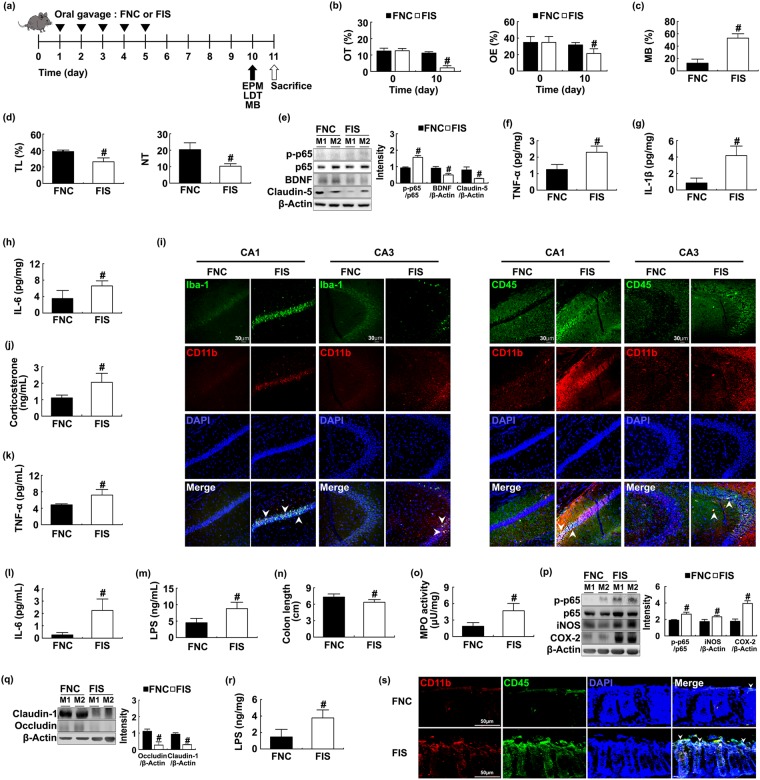
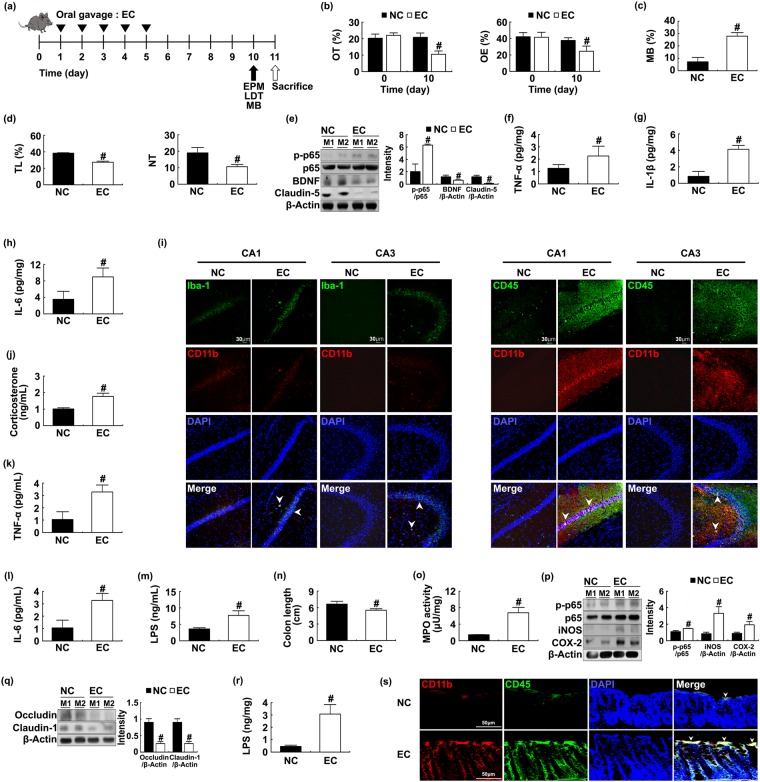
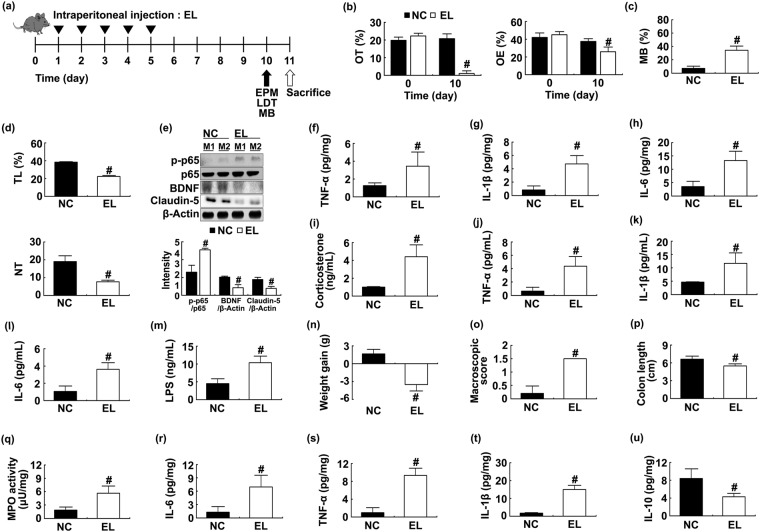
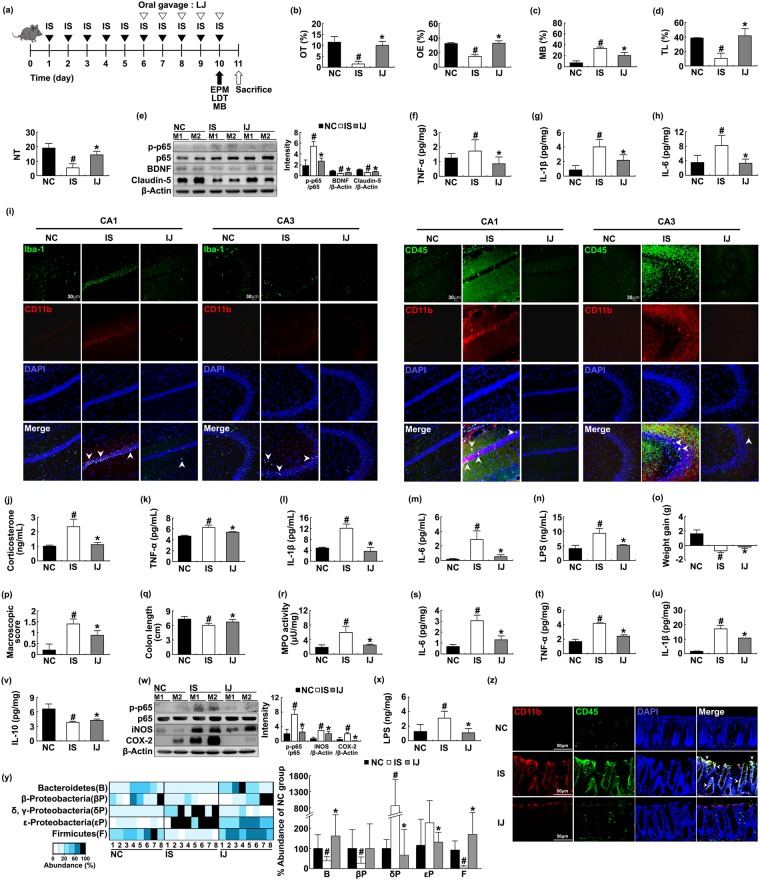
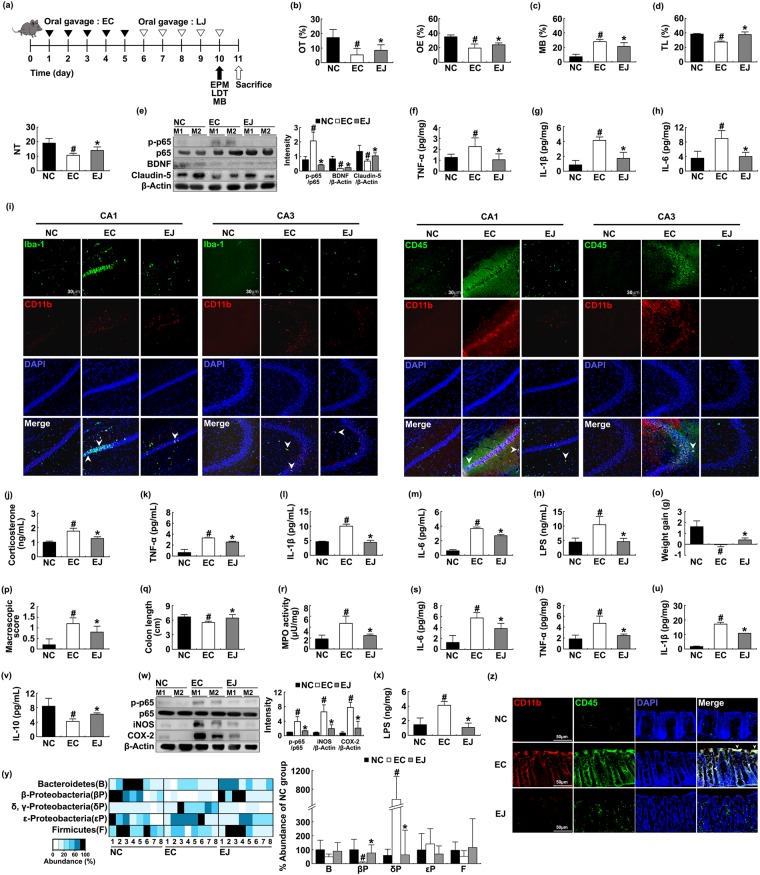
The present study aimed to understand the crosstalk between anxiety and gut microbiota. Exposure of mice to immobilization stress (IS) led to anxiety-like behaviors, increased corticosterone and tumor necrosis factor-α levels in the blood, increased nuclear factor (NF)-κB activation and microglia/monocyte populations in the hippocampus, and suppressed brain-derived neurotrophic factor (BDNF) expression in the hippocampus. Furthermore, IS exposure increased NF-κB activation and monocyte population in the colon and increased Proteobacteria and Escherichia coli populations in the gut microbiota and fecal and blood lipopolysaccharide (LPS) levels while decreasing the lactobacilli population. Oral administration of the fecal microbiota of mice treated with IS (FIS) or E. coli led to the increased NF-κB activation and monocyte population in the colon. These treatments increased blood corticosterone and LPS levels and anxiety-like behaviors, decreased BDNF expression, and induced NF-κB activation and microglia/monocyte populations in the hippocampus. Intraperitoneal injection of LPS purified from E. coli also led to anxiety and colitis in mice. Oral administration of commensal lactobacilli, particularly Lactobacillus johnsonii, attenuated IS- or E. coli-induced colitis and anxiety-like behaviors and biomarkers. These findings suggest that exposure to stressors can increase Proteobacteria populations and fecal LPS levels and cause gastrointestinal inflammation, resulting in the deterioration of anxiety through NF-κB activation. However, the amelioration of gastrointestinal inflammation by treatment with probiotics including L. johnsonii can alleviate anxiety.
Overview
The claims and statistics of this paper haven’t been checked yet.
Run the check — free, no account needed. It reads the open-access text and checks the sources it cites.
Integrity signals
Registry
Cites
Statistics
Figures
Verification
Claims the paper makes
The claims and statistics of this paper haven’t been checked yet.
Run the check — free, no account needed. It reads the open-access text and checks the sources it cites.
Claims other papers make about this one
Each is checked against this paper’s own text: does it say what the citing paper says it does?
In the citing paper
“The microbiota and HPA axis develop rapidly and profoundly in the first years of life, and environmental stressors can affect both (146–148).”
From Signalling cognition: The gut microbiota and hypothalamic-pituitary-adrenal axis (2023) · cites this paper as [148]
In the citing paper
“The microbiota and HPA axis develop rapidly and profoundly in the first years of life, and environmental stressors can affect both (146–148).”
From Signalling cognition: The gut microbiota and hypothalamic-pituitary-adrenal axis (2023) · cites this paper as [148]
Self-check
Percentages, sums and reported differences re-computed from the paper’s own numbers.
The self-check needs the paper’s full text.
Citations
Cites
Changes of Intestinal Functions in Liver Cirrhosis
Fukui, H., & Wiest, R. (2016) · Inflammatory Intestinal Diseases · doi:10.1159/000444436 · Cited by 6,820
Trends in Alternative Medicine Use in the United States, 1990-1997
Eisenberg, D. M., Davis, R. B., Ettner, S. L., Appel, S., Wilkey, S. A., Rompay, M. I. V., & Kessler, R. C. (1998) · JAMA · doi:10.1001/jama.280.18.1569 · Cited by 6,725
Host-Bacterial Mutualism in the Human Intestine
Bäckhed, F., Ley, R. E., Sonnenburg, J. L., Peterson, D. A., & Gordon, J. I. (2005) · Science · doi:10.1126/science.1104816 · Cited by 5,277
Metagenomic Analysis of the Human Distal Gut Microbiome
Gill, S. R., Pop, M., DeBoy, R. T., Eckburg, P. B., Turnbaugh, P. J., Samuel, B. S., Gordon, J. I., Relman, D. A., Fraser-Liggett, C. M., & Nelson, K. E. (2006) · Science · doi:10.1126/science.1124234 · Cited by 4,699
Normal gut microbiota modulates brain development and behavior
Heijtz, R. D., Wang, S., Anuar, F., Qian, Y., Björkholm, B., Samuelsson, A., Hibberd, M. L., Forssberg, H., & Pettersson, S. (2011) · Proceedings of the National Academy of Sciences · doi:10.1073/pnas.1010529108 · Cited by 3,228
Topping, D. L., & Clifton, P. M. (2001) · Physiological Reviews · doi:10.1152/physrev.2001.81.3.1031 · Cited by 3,091
Sudo, N., Chida, Y., Aiba, Y., Sonoda, J., Oyama, N., Yu, X., Kubo, C., & Koga, Y. (2004) · The Journal of Physiology · doi:10.1113/jphysiol.2004.063388 · Cited by 2,735
Influence of diet on the gut microbiome and implications for human health
Singh, R. K., Chang, H.-W., Yan, D., Lee, K. M., Ucmak, D., Wong, K., Abrouk, M., Farahnik, B., Nakamura, M., Zhu, T. H., et al. (2017) · Journal of Translational Medicine · doi:10.1186/s12967-017-1175-y · Cited by 2,599
The gut-brain axis: interactions between enteric microbiota, central and enteric nervous systems.
(2015) · PubMed Central · Cited by 2,540
Clarke, G., Grenham, S., Scully, P., Fitzgerald, P., Moloney, R. D., Shanahan, F., Dinan, T. G., & Cryan, J. F. (2013) · Molecular Psychiatry · doi:10.1038/mp.2012.77 · Cited by 1,893
Cited by
Sorted by citations
Cryan, J. F., O'Riordan, K. J., Cowan, C. S. M., Sandhu, K. V., Bastiaanssen, T. F. S., Boehme, M., Codagnone, M. G., Cussotto, S., Fulling, C., Golubeva, A. V., et al. (2019) · Physiological Reviews · doi:10.1152/physrev.00018.2018 · Cited by 5,286
Signalling cognition: The gut microbiota and hypothalamic-pituitary-adrenal axis
Rusch, J. A., Layden, B. T., & Dugas, L. R. (2023) · Frontiers in Endocrinology · doi:10.3389/fendo.2023.1130689 · Cited by 415
Depression's Unholy Trinity: Dysregulated Stress, Immunity, and the Microbiome
Cruz-Pereira, J. S., Rea, K., Nolan, Y. M., O'Leary, O. F., Dinan, T. G., & Cryan, J. F. (2020) · Annual Review of Psychology · doi:10.1146/annurev-psych-122216-011613 · Cited by 320
Frankiensztajn, L. M., Elliott, E., & Koren, O. (2020) · Current Opinion in Neurobiology · doi:10.1016/j.conb.2019.12.003 · Cited by 248
Jang, H.-M., Lee, K.-E., & Kim, D.-H. (2019) · Nutrients · doi:10.3390/nu11040819 · Cited by 208
Chidambaram, S. B., Essa, M. M., Rathipriya, A. G., Bishir, M., Ray, B., Mahalakshmi, A. M., Tousif, A. H., Sakharkar, M. K., Kashyap, R. S., Friedland, R. P., et al. (2022) · Pharmacology & Therapeutics · doi:10.1016/j.pharmthera.2021.107988 · Cited by 204
Leigh, S., Uhlig, F., Wilmes, L., Sánchez-Díaz, P., Gheorghe, C. E., Goodson, M. S., Kelley‐Loughnane, N., Hyland, N. P., Cryan, J. F., & Clarke, G. A. (2023) · The Journal of Physiology · doi:10.1113/jp281951 · Cited by 201
Gheorghe, C. E., Ritz, N. L., Martin, J. A., Wardill, H. R., Cryan, J. F., & Clarke, G. A. (2021) · Gut Microbes · doi:10.1080/19490976.2021.1941711 · Cited by 156
Dysbiosis and Alzheimer’s Disease: A Role for Chronic Stress?
Sharma, V., Singh, T. G., Garg, N., Dhiman, S., Gupta, S., Rahman, M. H., Najda, A., Walasek-Janusz, M., Kamel, M. S., Albadrani, G. M., et al. (2021) · Biomolecules · doi:10.3390/biom11050678 · Cited by 111
Ma, X., Shin, Y.-J., Yoo, J.-W., Park, H.-S., & Kim, D. (2023) · Journal of Advanced Research · doi:10.1016/j.jare.2023.02.006 · Cited by 105
Kim, J.-K., Lee, K., Lee, S., Jang, H., & Kim, D. (2020) · Frontiers in Immunology · doi:10.3389/fimmu.2020.00273 · Cited by 94
Han, S., & Kim, D. H. (2019) · Journal of Microbiology and Biotechnology · doi:10.4014/jmb.1907.07044 · Cited by 83
The Influence of Gut Microbiota on Neurogenesis: Evidence and Hopes
Sarubbo, F., Cavallucci, V., & Pani, G. (2022) · Cells · doi:10.3390/cells11030382 · Cited by 89
Yun, S.-W., Kim, J.-K., Lee, K., Oh, Y. J., Choi, H., Han, M. J., & Kim, D. (2020) · Nutrients · doi:10.3390/nu12113441 · Cited by 77
Lee, D.-Y., Shin, Y.-J., Kim, J.-K., Jang, H., Joo, M.-K., & Kim, D. (2021) · Food & Function · doi:10.1039/d1fo02167b · Cited by 70
Jang, H., Kim, J.-K., Joo, M.-K., Shin, Y.-J., Lee, C. K., Kim, H. J., & Kim, D. (2021) · Scientific Reports · doi:10.1038/s41598-021-00088-x · Cited by 71
Probiotics for the treatment of depression and its comorbidities: A systemic review
Gao, J., Zhao, N., Cheng, Y., Lei, W., Wang, Y., Liu, X., Zheng, N., Shao, L., Chen, X., Sun, Y., et al. (2023) · Frontiers in Cellular and Infection Microbiology · doi:10.3389/fcimb.2023.1167116 · Cited by 81
Han, S., Shin, Y.-J., Lee, D.-Y., Kim, K., Yang, S.-J., Kim, D. S., Choi, J.-W., Lee, S., & Kim, D. (2021) · BMC Microbiology · doi:10.1186/s12866-021-02192-4 · Cited by 64
Han, S., Kim, J.-K., Park, H.-S., Shin, Y.-J., & Kim, D.-H. (2021) · Chinese Medicine · doi:10.1186/s13020-021-00492-5 · Cited by 64
Han, S., Joo, M.-K., Kim, J.-K., Jeung, W., Kang, H., & Kim, D. (2020) · Nutrients · doi:10.3390/nu12040901 · Cited by 62
Gut Microbiome Dysbiosis in Alcoholism: Consequences for Health and Recovery
Day, A. W., & Kumamoto, C. A. (2022) · Frontiers in Cellular and Infection Microbiology · doi:10.3389/fcimb.2022.840164 · Cited by 63
Yoo, J.-W., Shin, Y.-J., Ma, X., Son, Y.-H., Jang, H., Lee, C. K., & Kim, D. (2022) · Nutrients · doi:10.3390/nu14102080 · Cited by 64
Jang, H., Kim, J.-K., Joo, M.-K., Shin, Y.-J., Lee, K., Lee, C. K., Kim, H. J., & Kim, D. (2022) · Scientific Reports · doi:10.1038/s41598-022-13629-9 · Cited by 59
Ma, X., Shin, Y.-J., Jang, H., Joo, M.-K., Yoo, J.-W., & Kim, D. H. (2021) · Scientific Reports · doi:10.1038/s41598-021-00096-x · Cited by 55
Ma, X., Shin, Y.-J., Park, H.-S., Jeong, J.-W., Kim, J. Y., Shim, J.-J., Lee, J.-L., & Kim, D. (2023) · Nutrients · doi:10.3390/nu15112488 · Cited by 58
Luo, A., Li, S., Wang, X., Xie, Z., Li, S., & Hua, D. (2021) · Frontiers in Aging Neuroscience · doi:10.3389/fnagi.2021.748637 · Cited by 52
Freimer, D., Yang, T. T., Ho, T. C., Tymofiyeva, O., & Leung, C. Y. (2022) · Brain Behavior & Immunity - Health · doi:10.1016/j.bbih.2022.100541 · Cited by 60
Buspirone alleviates anxiety, depression, and colitis; and modulates gut microbiota in mice
Kim, J.-K., Han, S., Joo, M.-K., & Kim, D. (2021) · Scientific Reports · doi:10.1038/s41598-021-85681-w · Cited by 50
MacKay, M., Yang, B. H., Dursun, S. M., & Baker, G. B. (2023) · Current Neuropharmacology · doi:10.2174/1570159x21666230222092029 · Cited by 52
Jang, H., Park, K., Noh, H. D., Lee, S.-H., & Kim, D.-H. (2019) · International Immunopharmacology · doi:10.1016/j.intimp.2019.05.008 · Cited by 44
Lee, K., Kim, J.-K., & Kim, D. (2020) · Frontiers in Microbiology · doi:10.3389/fmicb.2020.564271 · Cited by 44
Joo, M.-K., Lee, J.-W., Woo, J., Kim, H. J., Kim, D., & Choi, J. (2024) · Gut Microbes · doi:10.1080/19490976.2024.2319844 · Cited by 43
Chen, J., Zhao, B.-C., Dai, X., Xu, Y., Kang, J.-X., & Li, J. (2022) · Journal of Advanced Research · doi:10.1016/j.jare.2022.12.008 · Cited by 40
Hong, D., Zhang, C., Wu, W., Lu, X., & Zhang, L. (2023) · Frontiers in Neurology · doi:10.3389/fneur.2023.1133546 · Cited by 38
The Role of MicroRNA and Microbiota in Depression and Anxiety
Rosa, J. M., Formolo, D. A., Yu, J., Lee, T. H.-Y., & Yau, S. (2022) · Frontiers in Behavioral Neuroscience · doi:10.3389/fnbeh.2022.828258 · Cited by 38
Xu, M.-Y., Guo, C.-C., Li, M., Lou, Y.-H., Chen, Z., Liu, B., & Lan, L. (2022) · Frontiers in Cellular and Infection Microbiology · doi:10.3389/fcimb.2022.1040749 · Cited by 35
A Review of the Impact of Maternal Prenatal Stress on Offspring Microbiota and Metabolites
Yeramilli, V. A., Cheddadi, R., Shah, J., Brawner, K. M., & Martin, C. A. (2023) · Metabolites · doi:10.3390/metabo13040535 · Cited by 38
Hua, H., Huang, C., Liu, H., Xu, X., Xu, X., Wu, Z., Liu, C., Wang, Y. Y., & Yang, C. (2022) · Neuropharmacology · doi:10.1016/j.neuropharm.2022.109272 · Cited by 37
Shin, Y.-J., Lee, D.-Y., Kim, J. Y., Heo, K., Shim, J.-J., Lee, J.-L., & Kim, D. (2022) · Journal of Ginseng Research · doi:10.1016/j.jgr.2022.08.004 · Cited by 34
Han, S., Kim, J.-K., Joo, M.-K., Lee, K., Han, S.-W., & Kim, D. H. (2020) · Journal of Microbiology and Biotechnology · doi:10.4014/jmb.2002.02058 · Cited by 34
Colitis-associated intestinal microbiota regulates brain glycine and host behavior in mice
Morozova, M. V., Borisova, M. A., Snytnikova, O. A., Achasova, K. M., Litvinova, E. A., Tsentalovich, Y. P., & Kozhevnikova, E. N. (2022) · Scientific Reports · doi:10.1038/s41598-022-19219-z · Cited by 36
Wang, P., Ouyang, H., Bi, G., Liang, F., Wu, C., Wu, C., Jiang, X., Zhou, W., Li, D., Zhang, S., et al. (2024) · Phytomedicine · doi:10.1016/j.phymed.2024.156340 · Cited by 33
Yang, K., Jian, S., Wen, C., Guo, D., Liao, P., Wen, J., Kuang, T., Han, S., Liu, Q., & Deng, B. (2022) · Frontiers in Nutrition · doi:10.3389/fnut.2022.847966 · Cited by 35
Ma, X., Son, Y.-H., Yoo, J.-W., Joo, M.-K., & Kim, D. (2022) · Nutrients · doi:10.3390/nu14142975 · Cited by 32
Ma, X., Park, H.-S., Shin, Y.-J., Kim, J.-K., Hong, J. K., Han, S.-W., Yoon, I., & Kim, D. (2024) · Journal of Neuroinflammation · doi:10.1186/s12974-024-03211-7 · Cited by 31
Moradi, K., Ashraf‐Ganjouei, A., Tavolinejad, H., Bagheri, S., & Akhondzadeh, S. (2020) · Progress in Neuro-Psychopharmacology and Biological Psychiatry · doi:10.1016/j.pnpbp.2020.110091 · Cited by 30
Restraint stress induced anxiety and sleep in mice
Xu, Y., Liu, G., Ji, Z.-Z., Li, Y.-Y., Wang, Y., Wu, X., Liu, J.-L., Ma, D.-X., Zhong, M., Gao, C., et al. (2023) · Frontiers in Psychiatry · doi:10.3389/fpsyt.2023.1090420 · Cited by 31
Alvarado-Peña, N., Galeana-Cadena, D., Gómez-García, I. A., Mainero, X. S., & Silva‐Herzog, E. (2023) · Frontiers in Microbiology · doi:10.3389/fmicb.2023.1237998 · Cited by 29
Ginseng as a therapeutic target to alleviate gut and brain diseases via microbiome regulation
Iqbal, H., Kim, Y., Jin, M., & Rhee, D. (2024) · Journal of Ginseng Research · doi:10.1016/j.jgr.2024.04.005 · Cited by 32
Yu, S., Chun, E., Ji, Y., Lee, Y., & Jin, M. (2021) · Journal of Ginseng Research · doi:10.1016/j.jgr.2021.03.008 · Cited by 29
Bile acid signalling and its role in anxiety disorders
Chen, S., Shao, Q., Chen, J., Lv, X., Ji, J., Liu, Y., & Song, Y. (2023) · Frontiers in Endocrinology · doi:10.3389/fendo.2023.1268865 · Cited by 34
Yun, S.-W., Kim, J.-H., Han, M. J., & Kim, D.-H. (2021) · Beneficial Microbes · doi:10.3920/bm2020.0109 · Cited by 29
Du, Y., Li, L., Gong, C., Li, T., & Xia, Y. (2022) · Frontiers in Psychiatry · doi:10.3389/fpsyt.2022.1054685 · Cited by 29
Barnett, J. A., & Gibson, D. L. (2020) · Frontiers in Microbiology · doi:10.3389/fmicb.2020.556729 · Cited by 28
Ray, P., Pandey, U., Das, D., & Aich, P. (2021) · Digestive Diseases and Sciences · doi:10.1007/s10620-020-06729-x · Cited by 26
Evidence and Mechanism of Bile Acid–Mediated Gut-Brain Axis in Anxiety and Depression
Idahosa, S. O., Diarra, R., Ranu, H. K., Nasiri, R. H., & Higuchi, S. (2024) · American Journal Of Pathology · doi:10.1016/j.ajpath.2024.10.019 · Cited by 31
Probiotic effects on anxiety-like behavior in animal models
Lalonde, R., & Strazielle, C. (2022) · Reviews in the Neurosciences · doi:10.1515/revneuro-2021-0173 · Cited by 29
The microbiota-gut- hippocampus axis
Salami, M., & Soheili, M. (2022) · Frontiers in Neuroscience · doi:10.3389/fnins.2022.1065995 · Cited by 30
Butterflies in the gut: the interplay between intestinal microbiota and stress
Lai, T.-T., Liou, C.-W., Tsai, Y.-H., Lin, Y.-Y., & Wu, W. (2023) · Journal of Biomedical Science · doi:10.1186/s12929-023-00984-6 · Cited by 26
Saccharomyces boulardii attenuates lipopolysaccharide-induced anxiety-like behaviors in rats
Babaei, F., Mirzababaei, M., Mohammadi, G., Dargahi, L., & Nassiri‐Asl, M. (2022) · Neuroscience Letters · doi:10.1016/j.neulet.2022.136600 · Cited by 26
Yun, S.-W., Park, H.-S., Shin, Y.-J., Ma, X., Han, M. J., & Kim, D. (2023) · Nutrients · doi:10.3390/nu15030790 · Cited by 25
Lynch, C. M. K., Nagpal, J. K., Clarke, G. A., & Cryan, J. F. (2021) · Current Opinion in Physiology · doi:10.1016/j.cophys.2021.100468 · Cited by 25
Hu, J., Zhong, X., Liu, Y., Yan, J., Zhou, D., Qin, D., Xiao, X., Zheng, Y., Wen, L., Tan, R., et al. (2022) · BMC Nephrology · doi:10.1186/s12882-022-02762-2 · Cited by 26
Yang, J.-Z., Zhang, K.-K., He, J.-T., Chen, L., Ding, J., Liu, J.-L., Li, J.-H., Liu, Y., Li, X., Zhao, D., et al. (2023) · Toxicology · doi:10.1016/j.tox.2023.153447 · Cited by 23
Yao, Y., Qi, X., Jia, Y., Ye, J., Chu, X., Wen, Y., Cheng, B., Cheng, S., Liu, L., Liang, C., et al. (2022) · Psychological Medicine · doi:10.1017/s0033291721005092 · Cited by 19
Li, Y., Zhu, F., Li, Y., Pan, S., Wang, H., Yang, Z., Wang, Z., Hu, Z., Yu, J., Barritt, J. D., et al. (2022) · Cell Reports Methods · doi:10.1016/j.crmeth.2022.100324 · Cited by 20
Tao, W., Zhang, Y., Wang, B., Nie, S., Li, F., Xiao, J., & Wu, Y. (2024) · Journal of Advanced Research · doi:10.1016/j.jare.2024.03.023 · Cited by 21
Lee, D.-Y., Baek, J.-S., Shin, Y.-J., & Kim, D. H. (2024) · Nutrients · doi:10.3390/nu16213711 · Cited by 21
The Gut Microbiome in Anxiety Disorders
Butler, M., Kittel‐Schneider, S., Wagner‐Skacel, J., Mörkl, S., & Clarke, G. A. (2025) · Current Psychiatry Reports · doi:10.1007/s11920-025-01604-w · Cited by 21
Feng, Y., Fan, H., Liang, X., Wang, X., Gao, G., & Gun, S. (2022) · PeerJ · doi:10.7717/peerj.13068 · Cited by 17
Ibrahim, H.-I. M., Sheikh, A., Khalil, H. E., & Khalifa, A. Y. Z. (2023) · Nutrients · doi:10.3390/nu15030550 · Cited by 16
Ham, H. J., Lee, Y. S., Lee, H. P., Ham, Y. W., Yun, J., Han, S., & Hong, J. T. (2022) · Frontiers in Cellular Neuroscience · doi:10.3389/fncel.2022.793835 · Cited by 14
Norepinephrine induces growth of Desulfovibrio vulgaris in an iron dependent manner
Coffman, C. N., Varga, M. G., Alcock, J., Carroll‐Portillo, A., Singh, S., Xue, X., & Lin, H. C. (2022) · Anaerobe · doi:10.1016/j.anaerobe.2022.102582 · Cited by 15
Ma, X., Yoo, J.-W., Shin, Y.-J., Park, H.-S., Son, Y.-H., & Kim, D. (2023) · Nutrients · doi:10.3390/nu15051068 · Cited by 14
Gao, M., Zou, Z., Qiu, Y., Sumayyah, G., Jiang, X., Su, J., Duan, X., Chen, C., & Qiu, J. (2022) · Phytomedicine · doi:10.1016/j.phymed.2022.153968 · Cited by 13
Ma, X., Shin, J.-W., Cho, J., Han, S.-W., & Kim, D. (2023) · Letters in Applied Microbiology · doi:10.1093/lambio/ovad144 · Cited by 14
Impact of Toxoplasma gondii and Human Microbiome on Suicidal Behavior: A Systematic Review
Zerekidze, A., Li, M., Refisch, A., Shameya, J., Sobanski, T., Walter, M., & Wagner, G. (2024) · Journal of Clinical Medicine · doi:10.3390/jcm13020593 · Cited by 13
DW2009 Elevates the Efficacy of Donepezil against Cognitive Impairment in Mice
Lee, D.-Y., Kim, J.-K., Yun, S.-W., Han, M. J., & Kim, D. (2021) · Nutrients · doi:10.3390/nu13093273 · Cited by 13
Liu, X., Fang, H., Pan, L., Zhang, P., Lin, H., Gao, H., Ye, C., Mao, D., & Luo, Y. (2024) · Gut Microbes · doi:10.1080/19490976.2024.2316923 · Cited by 12
The Impact of Stress, Microbial Dysbiosis, and Inflammation on Necrotizing Enterocolitis
Yeramilli, V. A., Cheddadi, R., Benjamin, H., & Martin, C. A. (2023) · Microorganisms · doi:10.3390/microorganisms11092206 · Cited by 14
Yan, Y., Zhao, N., Liu, J., Zhang, S., Zhang, Y., Qin, X., Zhai, K., & Du, C. (2025) · Foods · doi:10.3390/foods14050828 · Cited by 12
Gut flora alterations due to lipopolysaccharide derived from Porphyromonas gingivalis
Sugiyama, N., Uehara, O., Morikawa, T., Paudel, D., Ebata, K., Hiraki, D., Harada, F., Yoshida, K., Kato, S., Nagasawa, T., et al. (2022) · Odontology · doi:10.1007/s10266-022-00703-x · Cited by 11
Lynch, C. M. K., Nagpal, J. K., Luczynski, P., Neufeld, K. M., Dinan, T. G., Clarke, G. A., & Cryan, J. F. (2024) · Elsevier eBooks · doi:10.1016/b978-0-323-99971-7.00012-6 · Cited by 9
Defo, S. H. T., Djaouda, M., Bouvourné, P., Nyayi, S. D. G., Camdi, G. W., Kodji, K., Wado, E. K., Abaïssou, H. H. N., & Foyet, H. S. (2024) · Journal of Ethnopharmacology · doi:10.1016/j.jep.2024.118940 · Cited by 7
Cai, M., Xue, S., Zhou, C., Feng, Y., Liu, J., Liu, R., Wang, P., Wang, H., & Peng, Z. (2025) · Journal of Affective Disorders · doi:10.1016/j.jad.2025.04.018 · Cited by 9
Baek, J.-S., Lee, D.-Y., Han, S.-W., & Kim, Y. (2024) · Letters in Applied Microbiology · doi:10.1093/lambio/ovae065 · Cited by 8
Sex-dependent differences in the gut microbiota following chronic nasal inflammation in adult mice
Mishima, Y., Osaki, T., Shimada, A., Kamiya, S., & Hasegawa‐Ishii, S. (2021) · Scientific Reports · doi:10.1038/s41598-021-83896-5 · Cited by 8
Eitan, S., Madison, C. A., & Kuempel, J. (2021) · Neuroscience & Biobehavioral Reviews · doi:10.1016/j.neubiorev.2021.04.019 · Cited by 8
Microbiota-Immune System Interactions in Human Neurological Disorders
Huang, Q., Fang, Y., Liao, D., & Xia, J. (2020) · CNS & Neurological Disorders - Drug Targets · doi:10.2174/1871527319666200726222138 · Cited by 7
Gut microbiota on anxiety and depression in primary Sjogren's syndrome: A novel insight
Ying, Z., Zhang, K., Luo, Z., Song, Y. J., & Wang, X. (2025) · Heliyon · doi:10.1016/j.heliyon.2025.e42045 · Cited by 6
Phage-Microbiota Crosstalk: Implications for Central Nervous System Disorders
Salari, V., Parrella, E., Mengoni, F., Cintra, L., Bertini, G., & Fabene, P. F. (2025) · International Journal of Molecular Sciences · doi:10.3390/ijms26136183 · Cited by 6
Oba, P. M., Carroll, M. Q., Sieja, K. M., Yang, X., Epp, T. S., Warzecha, C. M., Varney, J. L., Fowler, J. W., Coon, C. N., & Swanson, K. S. (2023) · Journal of Animal Science · doi:10.1093/jas/skad191 · Cited by 6
Oral bovine lactoferrin modulation on fecal microbiota of mice underwent immobilization stress
Molotla‐Torres, D. E., Hernández-Soto, L. M., Guzmán‐Mejía, F., Godínez‐Victoria, M., Drago-Serrano, M. E., & Garrido, J. F. A. (2022) · Journal of Functional Foods · doi:10.1016/j.jff.2022.105153 · Cited by 6
Jian, X., Zheng, D., Pang, S., Mu, P., Jiang, J., Wang, X., Yan, X., Wu, Y., & Wang, Y. (2025) · Animals · doi:10.3390/ani15131886 · Cited by 6
Li, Y., Dai, J., Wang, M., Yan, C., Xiu, M., & Qu, M. (2025) · International Journal of Neuroscience · doi:10.1080/00207454.2025.2529238 · Cited by 7
Yun, S.-W., Lee, D.-Y., Park, H.-S., & Kim, D.-H. (2024) · Nutrients · doi:10.3390/nu16162736 · Cited by 6
Rutsch, A., Iachizzi, M., Kirundi, J., Kantsjö, J. B., Planchette, A., Müller, T., Schmitz, W., Rađenović, A., Doenlen, R., de Agüero, M. G., et al. (2025) · Brain Behavior and Immunity · doi:10.1016/j.bbi.2025.106084 · Cited by 4
Unveiling the enigma of anxiety disorders and depression: from pathogenesis to treatment
Pan, H., Xia, T., Zhang, Y., Zhang, H., Xu, M., Guo, J., Liu, Y., Bai, X.-Y., Liu, Q., Liu, W.-Z., et al. (2025) · Science China Life Sciences · doi:10.1007/s11427-025-3024-y · Cited by 5
Alekseeva, A. Y., Ye, K., Mentani, J., Wolkers-Rooijackers, J. C. M., Smid, E. J., & Schoustra, S. E. (2025) · Beneficial Microbes · doi:10.1163/18762891-bja00068 · Cited by 4
Abdelbadiee, S., Yoon, G., Pearman, K., Kumar, A., & Harvey, P. (2025) · Biomedicines · doi:10.3390/biomedicines13122916 · Cited by 3
Metadata
- Authors
- Jang, H.-M., Lee, K.-E., Lee, H.-J., & Kim, D.-H.
- Affiliations
- Kyung Hee University (KR)
- Corresponding author
- Kim, Dong-Hyun
- ORCID
- Kim, Dong-Hyun
- Venue
- Scientific Reports
- Published
- 2018-09-17
- Volume
- 8
- Issue
- 1
- Pages
- 13897-13897
- ISSN
- 2045-2322 (ISSN-L)
- PMC
- PMC6141499
- OpenAlex
- W2891852769
- Cited by
- 116
- References
- 56
- Citations by year
- 2026: 7 · 2025: 11 · 2024: 15 · 2023: 21 · 2022: 28 · 2021: 20 · 2020: 9 · 2019: 5
- FWCI
- 3.02
- Type
- journal article
- Language
- en
- Open access
- gold
- doi.org
- Locations
- Scientific Reports (publishedVersion, cc-by)
- Europe PMC (PubMed Central) (publishedVersion, other-oa)
- PubMed Central (publishedVersion, cc-by)
- PubMed (publishedVersion)
- DOAJ (DOAJ: Directory of Open Access Journals) (submittedVersion)
- Funders
- National Research Foundation
- National Research Foundation of Korea (NRF-2017R1A5A2014768, 2017R1A5A2014768)
- Ministry of Science and ICT, South Korea (NRF-2017R1A5A2014768, 2017R1A5A2014768)
- Topics
- Life Sciences › Biochemistry, Genetics and Molecular Biology › Molecular Biology › Gut microbiota and health
- Life Sciences › Neuroscience › Biological Psychiatry › Tryptophan and brain disorders
- Health Sciences › Medicine › Gastroenterology › Gastrointestinal motility and disorders
- Keywords
- restraint stress, anxiety-like behavior, gut microbiota, Escherichia coli, NF-κB activation, lipopolysaccharide, Proteobacteria, Lactobacillus johnsonii, probiotics, colitis, hippocampus, microglia, monocytes, brain-derived neurotrophic factor, corticosterone, TNF-α, gut-brain axis, gastrointestinal inflammation
- MeSH terms
- Gastrointestinal Microbiome, Fecal Microbiota Transplantation, Animals, Anxiety, Colitis, Escherichia coli, Immobilization, Male, Mice, Inbred C57BL, Stress, Physiological, NF-kappa B, Probiotics, Mice
About these checks
Registry, retraction, Cites and statistics results are computed, not judged, with one exception: a printed reference that no index lists is read once by a model before it counts as a citation error. Claims are extracted by a model and kept only when their quote appears verbatim in the text; each cited source is then checked, with a model’s help, for whether it says what the claim relies on. Those verdicts can be wrong — read the claim’s quote and the cited source before relying on one.
Statistics and arithmetic are recomputed, not judged.
Confidence bands are shown only for fields calibrated on our annotated test set. None is calibrated yet, so no band is shown.
What counts as a claim ›How we measure confidence ›How we check this ›
Are you an author, or do you see a problem with this page? Request a review
