

The DOI matches its Crossref record; 56 of the 56 references it cites were found in a registry or an index.
Immobilization stress-induced Escherichia coli causes anxiety by inducing NF-κB activation through gut microbiota disturbance
Open accessAbstract
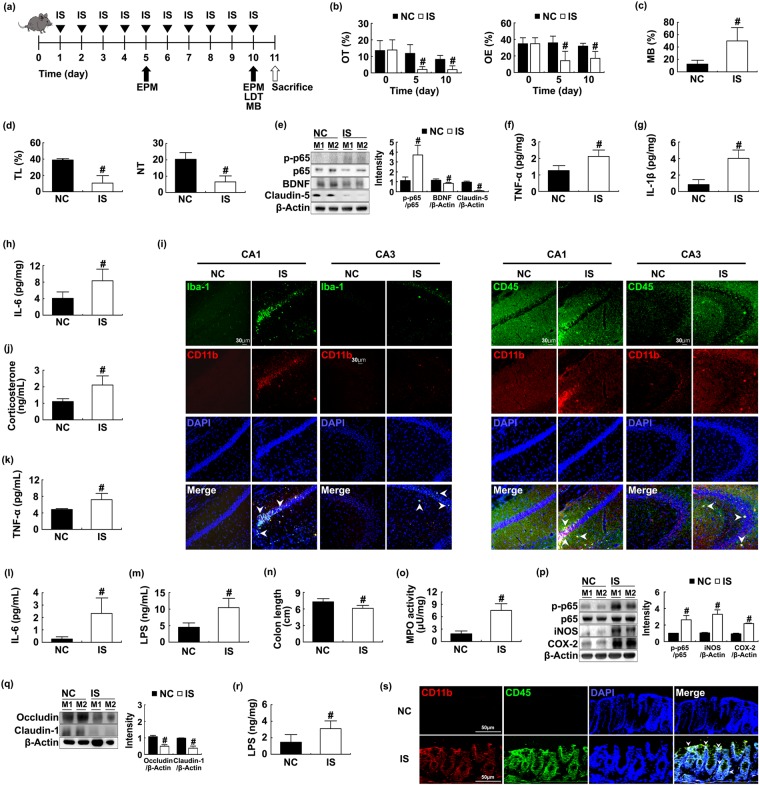
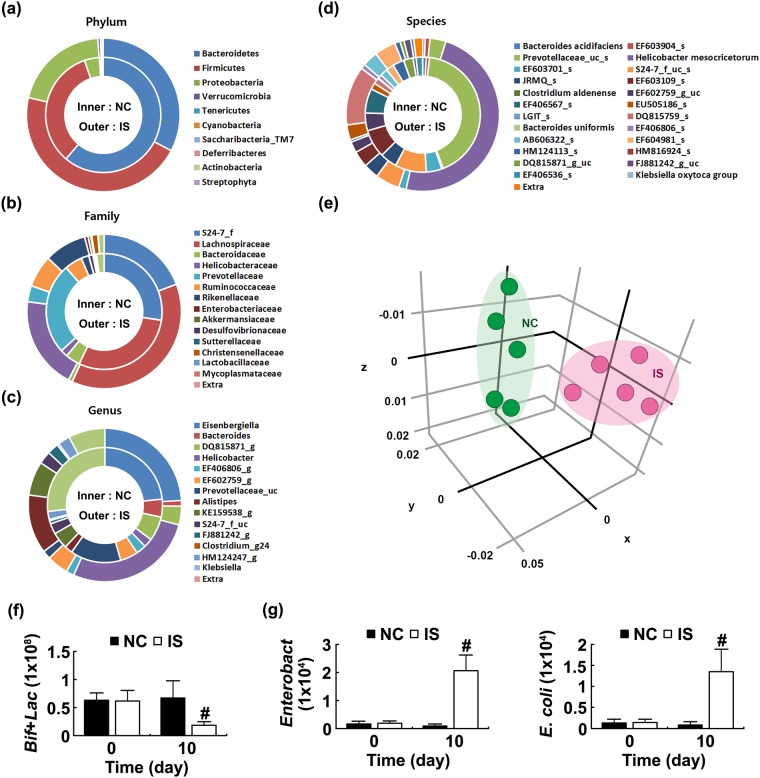
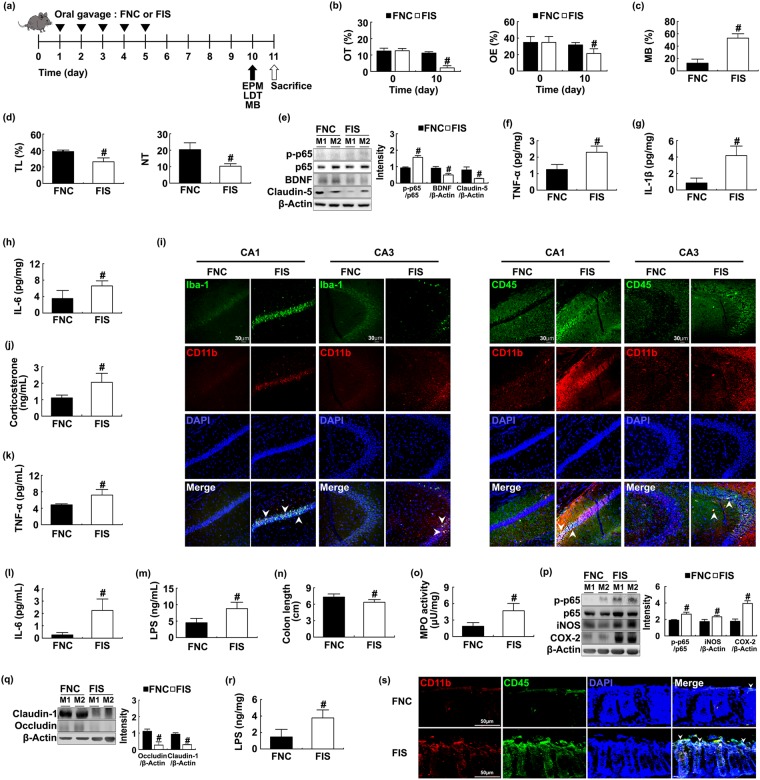
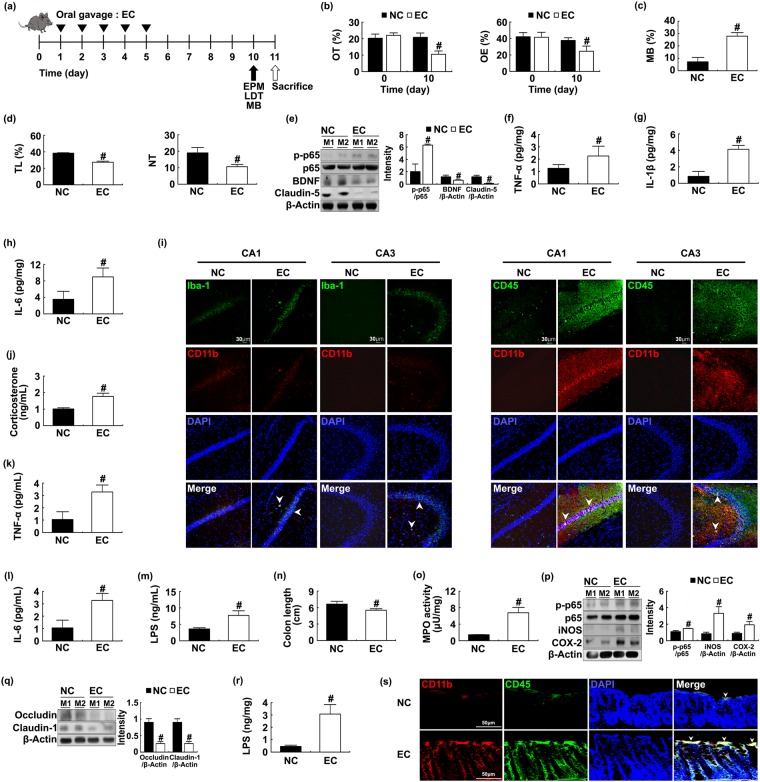
The present study aimed to understand the crosstalk between anxiety and gut microbiota. Exposure of mice to immobilization stress (IS) led to anxiety-like behaviors, increased corticosterone and tumor necrosis factor-α levels in the blood, increased nuclear factor (NF)-κB activation and microglia/monocyte populations in the hippocampus, and suppressed brain-derived neurotrophic factor (BDNF) expression in the hippocampus. Furthermore, IS exposure increased NF-κB activation and monocyte population in the colon and increased Proteobacteria and Escherichia coli populations in the gut microbiota and fecal and blood lipopolysaccharide (LPS) levels while decreasing the lactobacilli population. Oral administration of the fecal microbiota of mice treated with IS (FIS) or E. coli led to the increased NF-κB activation and monocyte population in the colon. These treatments increased blood corticosterone and LPS levels and anxiety-like behaviors, decreased BDNF expression, and induced NF-κB activation and microglia/monocyte populations in the hippocampus. Intraperitoneal injection of LPS purified from E. coli also led to anxiety and colitis in mice. Oral administration of commensal lactobacilli, particularly Lactobacillus johnsonii, attenuated IS- or E. coli-induced colitis and anxiety-like behaviors and biomarkers. These findings suggest that exposure to stressors can increase Proteobacteria populations and fecal LPS levels and cause gastrointestinal inflammation, resulting in the deterioration of anxiety through NF-κB activation. However, the amelioration of gastrointestinal inflammation by treatment with probiotics including L. johnsonii can alleviate anxiety.
Overview
The claims and statistics of this paper haven’t been checked yet.
Run the check — free, no account needed. It reads the open-access text and checks the sources it cites.
Integrity signals
Registry
Cites
Statistics
Figures
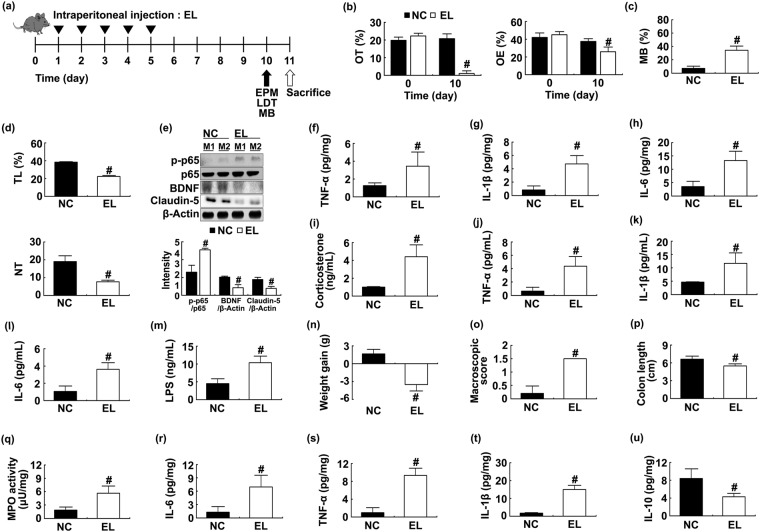
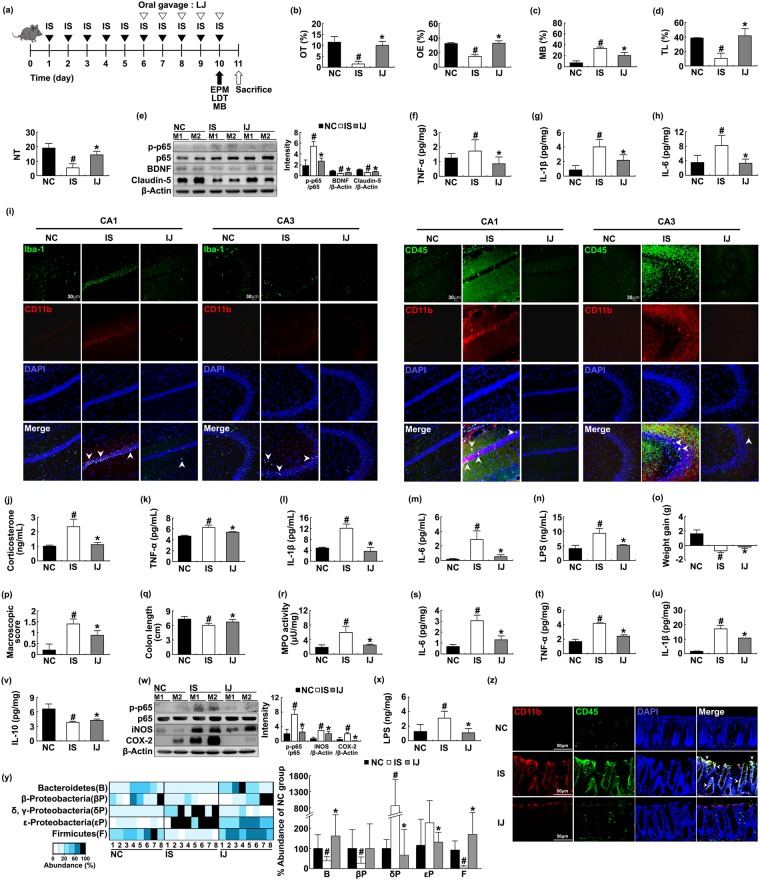
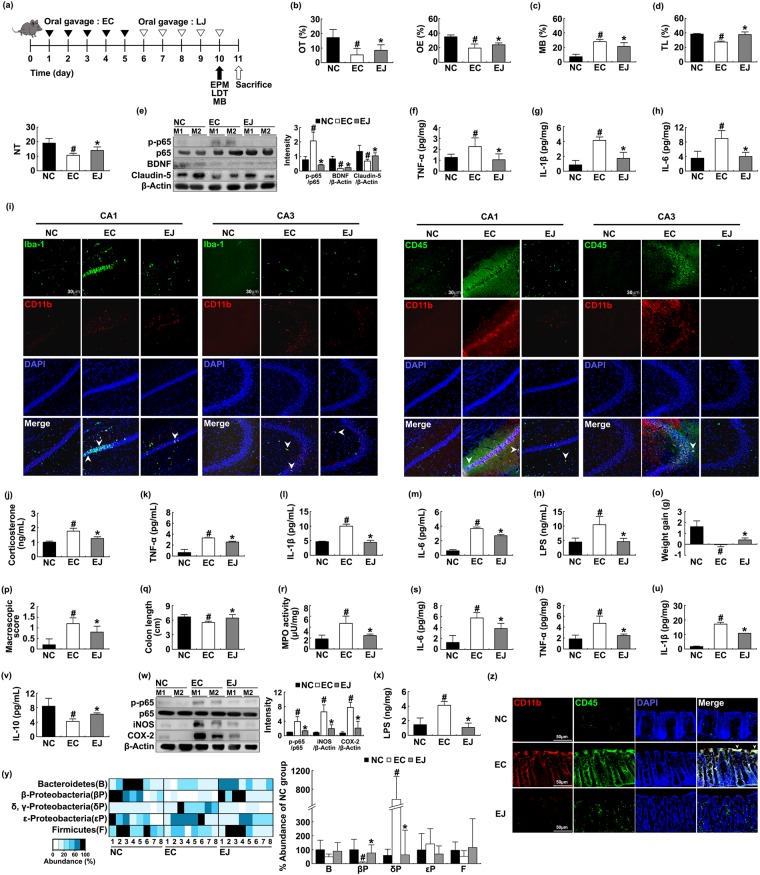
Verification
Claims the paper makes
The claims and statistics of this paper haven’t been checked yet.
Run the check — free, no account needed. It reads the open-access text and checks the sources it cites.
Claims other papers make about this one
Each is checked against this paper’s own text: does it say what the citing paper says it does?
In the citing paper
“The microbiota and HPA axis develop rapidly and profoundly in the first years of life, and environmental stressors can affect both (146–148).”
From Signalling cognition: The gut microbiota and hypothalamic-pituitary-adrenal axis (2023) · cites this paper as [148]
In the citing paper
“The microbiota and HPA axis develop rapidly and profoundly in the first years of life, and environmental stressors can affect both (146–148).”
From Signalling cognition: The gut microbiota and hypothalamic-pituitary-adrenal axis (2023) · cites this paper as [148]
Self-check
Percentages, sums and reported differences re-computed from the paper’s own numbers.
The self-check needs the paper’s full text.
Citations
Cites
Changes of Intestinal Functions in Liver Cirrhosis
Fukui, H., & Wiest, R. (2016) · Inflammatory Intestinal Diseases · doi:10.1159/000444436 · Cited by 6,820
Trends in Alternative Medicine Use in the United States, 1990-1997
Eisenberg, D. M., Davis, R. B., Ettner, S. L., Appel, S., Wilkey, S. A., Rompay, M. I. V., & Kessler, R. C. (1998) · JAMA · doi:10.1001/jama.280.18.1569 · Cited by 6,725
Host-Bacterial Mutualism in the Human Intestine
Bäckhed, F., Ley, R. E., Sonnenburg, J. L., Peterson, D. A., & Gordon, J. I. (2005) · Science · doi:10.1126/science.1104816 · Cited by 5,277
Metagenomic Analysis of the Human Distal Gut Microbiome
Gill, S. R., Pop, M., DeBoy, R. T., Eckburg, P. B., Turnbaugh, P. J., Samuel, B. S., Gordon, J. I., Relman, D. A., Fraser-Liggett, C. M., & Nelson, K. E. (2006) · Science · doi:10.1126/science.1124234 · Cited by 4,699
Normal gut microbiota modulates brain development and behavior
Heijtz, R. D., Wang, S., Anuar, F., Qian, Y., Björkholm, B., Samuelsson, A., Hibberd, M. L., Forssberg, H., & Pettersson, S. (2011) · Proceedings of the National Academy of Sciences · doi:10.1073/pnas.1010529108 · Cited by 3,228
Topping, D. L., & Clifton, P. M. (2001) · Physiological Reviews · doi:10.1152/physrev.2001.81.3.1031 · Cited by 3,091
Sudo, N., Chida, Y., Aiba, Y., Sonoda, J., Oyama, N., Yu, X., Kubo, C., & Koga, Y. (2004) · The Journal of Physiology · doi:10.1113/jphysiol.2004.063388 · Cited by 2,735
Influence of diet on the gut microbiome and implications for human health
Singh, R. K., Chang, H.-W., Yan, D., Lee, K. M., Ucmak, D., Wong, K., Abrouk, M., Farahnik, B., Nakamura, M., Zhu, T. H., et al. (2017) · Journal of Translational Medicine · doi:10.1186/s12967-017-1175-y · Cited by 2,599
The gut-brain axis: interactions between enteric microbiota, central and enteric nervous systems.
(2015) · PubMed Central · Cited by 2,540
Clarke, G., Grenham, S., Scully, P., Fitzgerald, P., Moloney, R. D., Shanahan, F., Dinan, T. G., & Cryan, J. F. (2013) · Molecular Psychiatry · doi:10.1038/mp.2012.77 · Cited by 1,893
Bercik, P., Denou, E., Collins, J., Jackson, W., Lu, J., Jury, J., Deng, Y., Blennerhassett, P., Macri, J., McCoy, K. D., et al. (2011) · Gastroenterology · doi:10.1053/j.gastro.2011.04.052 · Cited by 1,748
Kelly, J. R., Borre, Y., O' Brien, C., Patterson, E., El Aidy, S., Deane, J., Kennedy, P. J., Beers, S., Scott, K., Moloney, G., et al. (2016) · Journal of Psychiatric Research · doi:10.1016/j.jpsychires.2016.07.019 · Cited by 1,683
The central nervous system and the gut microbiome
Sharon, G., Sampson, T. R., Geschwind, D. H., & Mazmanian, S. K. (2016) · Cell · doi:10.1016/j.cell.2016.10.027 · Cited by 1,513
Kim, K., Gu, W., Lee, I., Joh, E., & Kim, D. (2012) · PLoS ONE · doi:10.1371/journal.pone.0047713 · Cited by 1,228
Bailey, M. T., Dowd, S. E., Galley, J. D., Hufnagle, A. R., Allen, R. G., & Lyte, M. (2011) · Brain, Behavior, and Immunity · doi:10.1016/j.bbi.2010.10.023 · Cited by 1,123
How stress influences the immune response
Padgett, D. A., & Glaser, R. (2003) · Trends in Immunology · doi:10.1016/s1471-4906(03)00173-x · Cited by 1,059
Bercik, P., Park, A. J., Sinclair, D., Khoshdel, A., Lu, J., Huang, X., Deng, Y., Blennerhassett, P. A., Fahnestock, M., Moine, D., et al. (2011) · Neurogastroenterology & Motility · doi:10.1111/j.1365-2982.2011.01796.x · Cited by 1,018
Effects of the probiotic Bifidobacterium infantis in the maternal separation model of depression
Desbonnet, L., Garrett, L., Clarke, G., Kiely, B., Cryan, J. F., & Dinan, T. G. (2010) · Neuroscience · doi:10.1016/j.neuroscience.2010.08.005 · Cited by 999
Bacterial infection causes stress-induced memory dysfunction in mice
Gareau, M. G., Wine, E., Rodrigues, D. M., Cho, J. H., Whary, M. T., Philpott, D. J., MacQueen, G., & Sherman, P. M. (2011) · Gut · doi:10.1136/gut.2009.202515 · Cited by 909
Lactobacillus acidophilus modulates intestinal pain and induces opioid and cannabinoid receptors
Rousseaux, C., Thuru, X., Gelot, A., Barnich, N., Neut, C., Dubuquoy, L., Dubuquoy, C., Merour, E., Geboes, K., Chamaillard, M., et al. (2007) · Nature Medicine · doi:10.1038/nm1521 · Cited by 793
Microbial genes, brain & behaviour – epigenetic regulation of the gut–brain axis
Stilling, R. M., Dinan, T. G., & Cryan, J. F. (2014) · Genes, Brain and Behavior · doi:10.1111/gbb.12109 · Cited by 637
Maes, M. H. J., Kubera, M., & Leunis, J. (2008) · PubMed · Cited by 609
Clark, A., & Mach, N. (2016) · Journal of the International Society of Sports Nutrition · doi:10.1186/s12970-016-0155-6 · Cited by 583
Crumeyrolle-Arias, M., Jaglin, M., Bruneau, A., Vancassel, S., Cardona, A., Daugé, V., Naudon, L., & Rabot, S. (2014) · Psychoneuroendocrinology · doi:10.1016/j.psyneuen.2014.01.014 · Cited by 581
Influence of gut microbiota on neuropsychiatric disorders
Cénit, M. C., Sanz, Y., & Codoñer‐Franch, P. (2017) · World Journal of Gastroenterology · doi:10.3748/wjg.v23.i30.5486 · Cited by 433
Savignac, H. M., Kiely, B., Dinan, T. G., & Cryan, J. F. (2014) · Neurogastroenterology & Motility · doi:10.1111/nmo.12427 · Cited by 418
Haddad, J. J., Saadé, N. E., & Safieh‐Garabedian, B. (2002) · Journal of Neuroimmunology · doi:10.1016/s0165-5728(02)00357-0 · Cited by 416
The microbiota-gut-brain axis: neurobehavioral correlates, health and sociality
Montiel-Castro, A. J., González-Cervantes, R. M., Bravo-Ruiseco, G., & Pacheco-López, G. (2013) · Frontiers in Integrative Neuroscience · doi:10.3389/fnint.2013.00070 · Cited by 413
Baxter, A. J., Scott, K. M., Ferrari, A. J., Norman, R. E., Vos, T., & Whiteford, H. A. (2014) · Depression and Anxiety · doi:10.1002/da.22230 · Cited by 403
Microbiota alteration is associated with the development of stress-induced despair behavior
Marin, I. A., Goertz, J. E., Ren, T., Rich, S. S., Onengut-Gumuscu, S., Farber, E., Wu, M., Overall, C. C., Kipnis, J., & Gaultier, A. (2017) · Scientific Reports · doi:10.1038/srep43859 · Cited by 369
Tannock, G. W., & Savage, D. C. (1974) · Infection and Immunity · doi:10.1128/iai.9.3.591-598.1974 · Cited by 349
Bailey, M. T., Dowd, S. E., Parry, N. M. A., Galley, J. D., Schauer, D. B., & Lyte, M. (2010) · Infection and Immunity · doi:10.1128/iai.00862-09 · Cited by 335
Kunze, W. A., Mao, Y., Wang, B., Huizinga, J. D., Ma, X., Forsythe, P., & Bienenstock, J. (2009) · Journal of Cellular and Molecular Medicine · doi:10.1111/j.1582-4934.2009.00686.x · Cited by 328
Interactions Between Commensal Bacteria and Gut Sensorimotor Function in Health and Disease
Barbara, G., Stanghellini, V., Brandi, G., Cremon, C., Nardo, G. D., De Giorgio, R., & Corinaldesi, R. (2005) · The American Journal of Gastroenterology · doi:10.1111/j.1572-0241.2005.00230.x · Cited by 325
Modulation of Gut Microbiota–Brain Axis by Probiotics, Prebiotics, and Diet
Liu, X., Cao, S., & Zhang, X. (2015) · Journal of Agricultural and Food Chemistry · doi:10.1021/acs.jafc.5b02404 · Cited by 304
Pathophysiological Mechanisms of Stress-Induced Intestina Damage
Gareau, M., Silva, M., & Perdue, M. (2008) · Current Molecular Medicine · doi:10.2174/156652408784533760 · Cited by 268
Yang, Y., Chen, M.-K., Yang, B., Huang, X.-J., Zhang, X., He, L., Zhang, J., & Hua, Z. (2015) · Applied and Environmental Microbiology · doi:10.1128/aem.01906-15 · Cited by 203
Gastrointestinal inflammation by gut microbiota disturbance induces memory impairment in mice
Jang, S.-E., Lim, S.-M., Jeong, J.-J., Jang, H.-M., Lee, H.-J., Han, M. J., & Kim, D.-H. (2018) · Mucosal Immunology · doi:10.1038/mi.2017.49 · Cited by 190
Davis, D. J., Doerr, H. M., Grzelak, A. K., Busi, S. B., Jašarević, E., Ericsson, A. C., & Bryda, E. C. (2016) · Scientific Reports · doi:10.1038/srep33726 · Cited by 159
Stress-induced sensitization: the hypothalamic–pituitary–adrenal axis and beyond
Belda, X., Fuentes, S., Daviu, N., Nadal, R., & Armario, A. (2015) · Stress · doi:10.3109/10253890.2015.1067678 · Cited by 123
Role of Corticotropin-releasing Factor in Gastrointestinal Permeability
Rodiño‐Janeiro, B. K., Alonso, C., Pigrau, M., Lobo, B., Vicario, M., & Santos, J. (2014) · Journal of Neurogastroenterology and Motility · doi:10.5056/jnm14084 · Cited by 122
GABA: homeostatic and pharmacological aspects
Schousboe, A., & Waagepetersen, H. S. (2007) · Progress in Brain Research · doi:10.1016/s0079-6123(06)60002-2 · Cited by 121
Kumari, M., & Kozyrskyj, A. L. (2016) · Obesity Reviews · doi:10.1111/obr.12484 · Cited by 111
The use of various animal models in the study of stress and stress-related phenomena
Sutanto, W., & de Kloet, E. R. (1994) · Laboratory Animals · doi:10.1258/002367794780745092 · Cited by 110
Amitai, M., Taler, M., Carmel, M., Michaelovsky, E., Eilat, T., Yablonski, M., Yosha‐Orpaz, N., Chen, A., Apter, A. S., Weizman, A., et al. (2016) · Journal of Child and Adolescent Psychopharmacology · doi:10.1089/cap.2015.0147 · Cited by 79
Experimental Models of Anxiety for Drug Discovery and Brain Research
Hart, P. C., Bergner, C., Smolinsky, A. N., Dufour, B. D., Egan, R. J., LaPorte, J. L., & Kalueff, A. V. (2009) · Methods in molecular biology · doi:10.1007/978-1-60761-058-8_18 · Cited by 74
Anti-inflammaging effects of Lactobacillus brevis OW38 in aged mice
Jeong, J.-J., Kim, K. A., Hwang, Y., Han, M. J., & Kim, D.-H. (2016) · Beneficial Microbes · doi:10.3920/bm2016.0016 · Cited by 69
Generoso, S. D. V., Viana, M. L., dos Santos, R. D. G. C., Martins, F. S., Machado, J. A. N., Arantes, R. M. E., Nicoli, J. R., Correia, M. I. T. D., & Cardoso, V. N. (2010) · Archives of Microbiology · doi:10.1007/s00203-010-0574-8 · Cited by 68
Anti-stress Effects of 20(S)-Protopanaxadiol and 20(S)-Protopanaxatriol in Immobilized Mice
Oh, H. A., Kim, D.-E., Choi, H. J., Kim, N. J., & Kim, D. (2015) · Biological and Pharmaceutical Bulletin · doi:10.1248/bpb.b14-00669 · Cited by 45
Foster, J. A. (2016) · International review of neurobiology · doi:10.1016/bs.irn.2016.07.005 · Cited by 41
A role of the adrenal gland in stress-induced up-regulation of cytokines in plasma.
Sekiyama, A., Ueda, H., Kashiwamura, S., Nishida, K., Yamaguchi, S., Sasaki, H., Kuwano, Y., Kawai, K., Teshima-Kondo, S., Rokutan, K., et al. (2006) · Journal of Neuroimmunology · doi:10.1016/j.jneuroim.2005.09.010 · Cited by 34
Tronnes, A. A., Koschnitzky, J. E., Daza, R. A. M., Hitti, J. E., Ramirez, J., & Hevner, R. F. (2015) · Reproductive Sciences · doi:10.1177/1933719115618273 · Cited by 28
Role of the Intestinal Microbiota in Host Responses to Stressor Exposure
Mackos, A. R., Varaljay, V. A., Maltz, R. M., Gur, T., & Bailey, M. T. (2016) · International review of neurobiology · doi:10.1016/bs.irn.2016.08.002 · Cited by 25
Anxiolytic-like effect of linezolid in experimental mouse models of anxiety
Jindal, A., Mahesh, R., & Kumar, B. (2012) · Progress in Neuro-Psychopharmacology and Biological Psychiatry · doi:10.1016/j.pnpbp.2012.09.006 · Cited by 23
Experimental Models of Anxiety for Drug Discovery and Brain Research
Hart, P. C., Bergner, C., Smolinsky, A. N., Dufour, B. D., Egan, R. J., LaPorte, J. L., & Kalueff, A. V. (2016) · Methods in molecular biology · doi:10.1007/978-1-4939-3661-8_16 · Cited by 17
Liu, Z., Ma, Y.-L., & Qin, H. (2011) · Annals of Surgery · doi:10.1097/sla.0b013e318235dd56 · Cited by 15
Cited by
Sorted by citations
Cryan, J. F., O'Riordan, K. J., Cowan, C. S. M., Sandhu, K. V., Bastiaanssen, T. F. S., Boehme, M., Codagnone, M. G., Cussotto, S., Fulling, C., Golubeva, A. V., et al. (2019) · Physiological Reviews · doi:10.1152/physrev.00018.2018 · Cited by 5,286
Signalling cognition: The gut microbiota and hypothalamic-pituitary-adrenal axis
Rusch, J. A., Layden, B. T., & Dugas, L. R. (2023) · Frontiers in Endocrinology · doi:10.3389/fendo.2023.1130689 · Cited by 415
Depression's Unholy Trinity: Dysregulated Stress, Immunity, and the Microbiome
Cruz-Pereira, J. S., Rea, K., Nolan, Y. M., O'Leary, O. F., Dinan, T. G., & Cryan, J. F. (2020) · Annual Review of Psychology · doi:10.1146/annurev-psych-122216-011613 · Cited by 320
Frankiensztajn, L. M., Elliott, E., & Koren, O. (2020) · Current Opinion in Neurobiology · doi:10.1016/j.conb.2019.12.003 · Cited by 248
Jang, H.-M., Lee, K.-E., & Kim, D.-H. (2019) · Nutrients · doi:10.3390/nu11040819 · Cited by 208
Metadata
- Authors
- Jang, H.-M., Lee, K.-E., Lee, H.-J., & Kim, D.-H.
- Affiliations
- Kyung Hee University (KR)
- Corresponding author
- Kim, Dong-Hyun
- ORCID
- Kim, Dong-Hyun
- Venue
- Scientific Reports
- Published
- 2018-09-17
- Volume
- 8
- Issue
- 1
- Pages
- 13897-13897
- ISSN
- 2045-2322 (ISSN-L)
- PMC
- PMC6141499
- OpenAlex
- W2891852769
- Cited by
- 116
- References
- 56
- Citations by year
- 2026: 7 · 2025: 11 · 2024: 15 · 2023: 21 · 2022: 28 · 2021: 20 · 2020: 9 · 2019: 5
- FWCI
- 3.02
- Type
- journal article
- Language
- en
- Open access
- gold
- doi.org
- Locations
- Scientific Reports (publishedVersion, cc-by)
- Europe PMC (PubMed Central) (publishedVersion, other-oa)
- PubMed Central (publishedVersion, cc-by)
- PubMed (publishedVersion)
- DOAJ (DOAJ: Directory of Open Access Journals) (submittedVersion)
- Funders
- National Research Foundation
- National Research Foundation of Korea (NRF-2017R1A5A2014768, 2017R1A5A2014768)
- Ministry of Science and ICT, South Korea (NRF-2017R1A5A2014768, 2017R1A5A2014768)
- Topics
- Life Sciences › Biochemistry, Genetics and Molecular Biology › Molecular Biology › Gut microbiota and health
- Life Sciences › Neuroscience › Biological Psychiatry › Tryptophan and brain disorders
- Health Sciences › Medicine › Gastroenterology › Gastrointestinal motility and disorders
- Keywords
- restraint stress, anxiety-like behavior, gut microbiota, Escherichia coli, NF-κB activation, lipopolysaccharide, Proteobacteria, Lactobacillus johnsonii, probiotics, colitis, hippocampus, microglia, monocytes, brain-derived neurotrophic factor, corticosterone, TNF-α, gut-brain axis, gastrointestinal inflammation
- MeSH terms
- Gastrointestinal Microbiome, Fecal Microbiota Transplantation, Animals, Anxiety, Colitis, Escherichia coli, Immobilization, Male, Mice, Inbred C57BL, Stress, Physiological, NF-kappa B, Probiotics, Mice
About these checks
Registry, retraction, Cites and statistics results are computed, not judged, with one exception: a printed reference that no index lists is read once by a model before it counts as a citation error. Claims are extracted by a model and kept only when their quote appears verbatim in the text; each cited source is then checked, with a model’s help, for whether it says what the claim relies on. Those verdicts can be wrong — read the claim’s quote and the cited source before relying on one.
Statistics and arithmetic are recomputed, not judged.
Confidence bands are shown only for fields calibrated on our annotated test set. None is calibrated yet, so no band is shown.
What counts as a claim ›How we measure confidence ›How we check this ›
Are you an author, or do you see a problem with this page? Request a review
