

Effect of coffee or coffee components on gut microbiome and short-chain fatty acids in a mouse model of metabolic syndrome
Open accessThe DOI matches its Crossref record; 59 of the 59 references it cites were found in a registry or an index.
Abstract
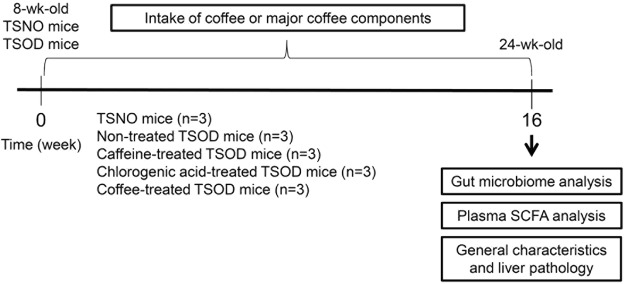
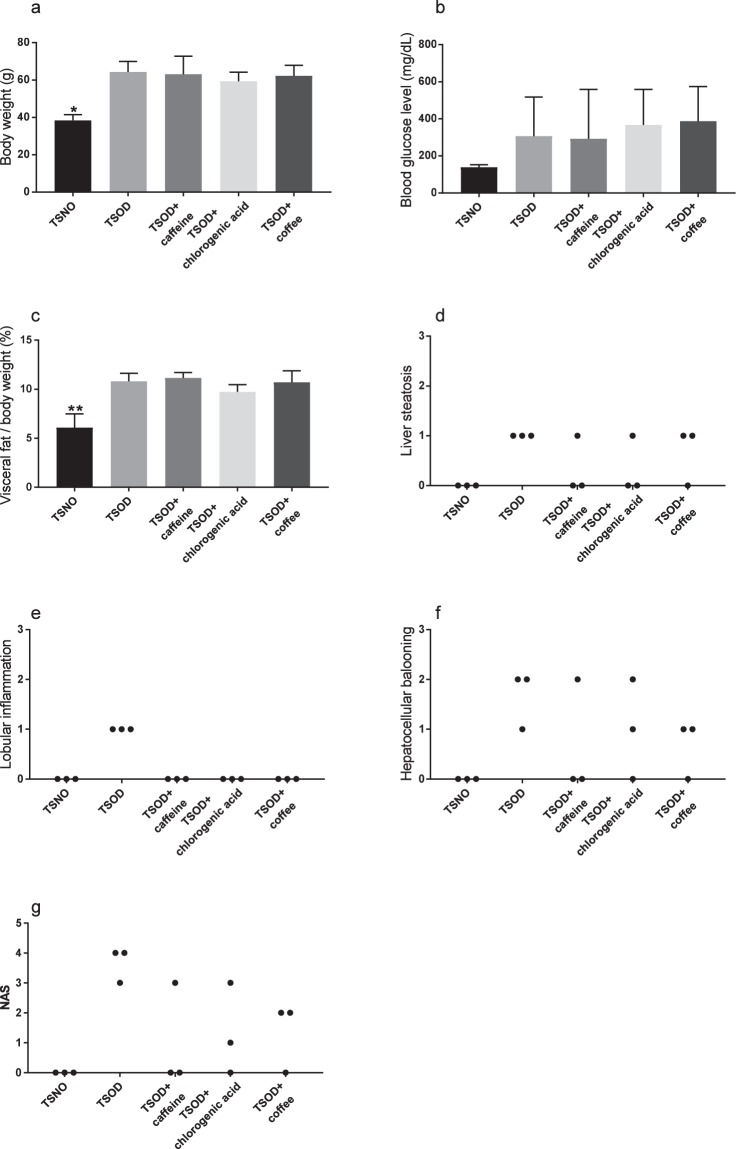
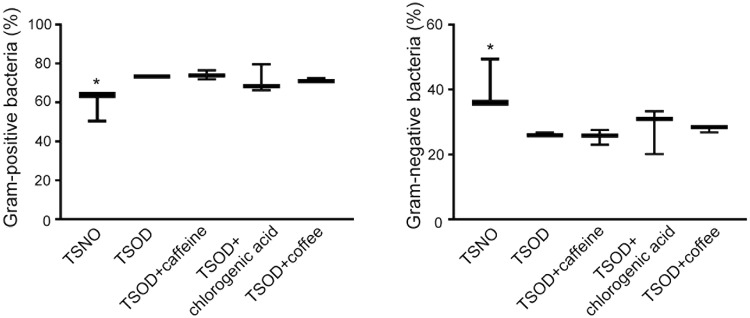
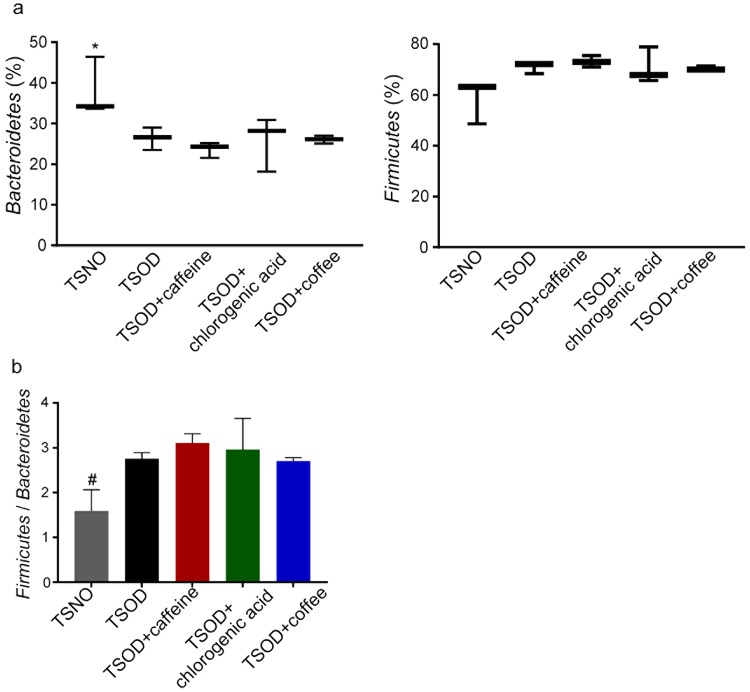
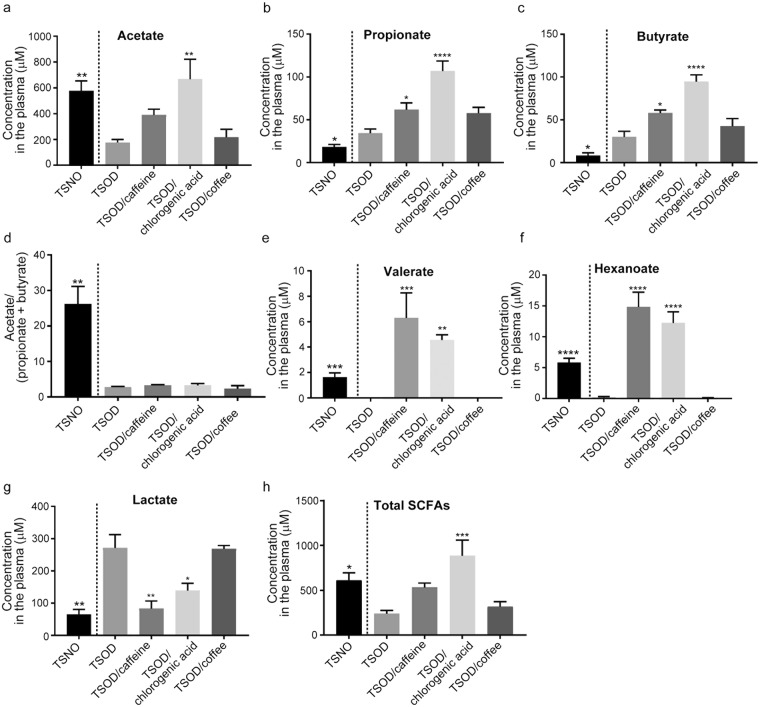
We previously showed that male Tsumura Suzuki obese diabetes (TSOD) mice, a spontaneous mouse model of metabolic syndrome, manifested gut dysbiosis and subsequent disruption of the type and quantity of plasma short-chain fatty acids (SCFAs), and daily coffee intake prevented nonalcoholic steatohepatitis in this mouse model. Here, we present a preliminary study on whether coffee and its major components, caffeine and chlorogenic acid, would affect the gut dysbiosis and the disrupted plasma SCFA profile of TSOD mice, which could lead to improvement in the liver pathology of these mice. Three mice per group were used. Daily intake of coffee or its components for 16 wk prevented liver lobular inflammation without improving obesity in TSOD mice. Coffee and its components did not repair the altered levels of Gram-positive and Gram-negative bacteria and an increased abundance of Firmicutes in TSOD mice but rather caused additional changes in bacteria in six genera. However, caffeine and chlorogenic acid partially improved the disrupted plasma SCFA profile in TSOD mice, although coffee had no effects. Whether these alterations in the gut microbiome and the plasma SCFA profile might affect the liver pathology of TSOD mice may deserve further investigation.
Overview
The claims and statistics of this paper haven’t been checked yet.
Free: it reads the open-access text and checks the first 5 claims that cite a source we can check. Create a free account to check every claim.
Integrity signals
Registry
Cites
Statistics
Figures
Verification
Claims the paper makes
The claims and statistics of this paper haven’t been checked yet.
Free: it reads the open-access text and checks the first 5 claims that cite a source we can check. Create a free account to check every claim.
Claims other papers make about this one
Each is checked against this paper’s own text: does it say what the citing paper says it does?
The source backs part of the claim, not all of it — or backs it for a different population, condition or comparison.
In the citing paper
“However, in this study coffee had no effects probably because dietary fiber content in coffee composition differs by brand [245].”
From Effects of Coffee and Its Components on the Gastrointestinal Tract and the Brain–Gut Axis (2020) · cites this paper as [245]
Experimental — accuracy not yet measuredThe cited source says what the claim attributes to it.
In the citing paper
“studies carried out in male Tsumura Suzuki obese diabetes (TSOD) mice, an accepted mouse model of metabolic syndrome, showed that caffeine and CGA improved plasma SCFA profile after 16 weeks of daily consumption of these compounds.”
From Effects of Coffee and Its Components on the Gastrointestinal Tract and the Brain–Gut Axis (2020) · cites this paper as [245]
In the citing paper
“In male Tsumura Suzuki obese diabetes mice, a spontaneous mouse model of metabolic syndrome, daily intake of coffee, caffeine or chlorogenic acid for 16 weeks prevented nonalcoholic hepatic lobular inflammation and changed the abundance of various species of the gut flora, such as Coprococcus/Blautia/Prevotella involved in the regulation of inflammation [158].”
From Effects of Coffee on the Gastro-Intestinal Tract: A Narrative Review and Literature Update (2022) · cites this paper as [158]
Self-check
Percentages, sums and reported differences re-computed from the paper’s own numbers.
The self-check needs the paper’s full text.
Citations
Cites
1 retracted
A comprehensive review on metabolic syndrome
Kaur, J. (2014) · Cardiology Research and Practice · doi:10.1155/2014/943162 · Cited by 1,889
RetractedQIIME allows analysis of high-throughput community sequencing data
Caporaso, J. G., Kuczynski, J., Stombaugh, J., Bittinger, K., Bushman, F. D., Costello, E. K., Fierer, N., Peña, A. G., Goodrich, J. K., Gordon, J. I., et al. (2010) · Nature Methods · doi:10.1038/nmeth.f.303 · Cited by 34,887
UCHIME improves sensitivity and speed of chimera detection
Edgar, R. C., Haas, B. J., Clemente, J. C., Quince, C., & Knight, R. (2011) · Bioinformatics · doi:10.1093/bioinformatics/btr381 · Cited by 15,114
An obesity-associated gut microbiome with increased capacity for energy harvest
Turnbaugh, P. J., Ley, R. E., Mahowald, M. A., Magrini, V., Mardis, E. R., & Gordon, J. I. (2006) · Nature · doi:10.1038/nature05414 · Cited by 12,444
Grundy, S. M., Cleeman, J. I., Daniels, S. R., Donato, K. A., Eckel, R. H., Franklin, B. A., Gordon, D. J., Krauss, R. M., Savage, P. J., Smith, S. C., et al. (2005) · Circulation · doi:10.1161/circulationaha.105.169404 · Cited by 11,961
Human gut microbes associated with obesity
Ley, R. E., Turnbaugh, P. J., Klein, S., & Gordon, J. I. (2006) · Nature · doi:10.1038/4441022a · Cited by 8,785
Human gut microbiome viewed across age and geography
Yatsunenko, T., Rey, F. E., Manary, M. J., Trehan, I., Dominguez-Bello, M. G., Contreras, M., Magris, M., Hidalgo, G., Baldassano, R. N., Anokhin, A. P., et al. (2012) · Nature · doi:10.1038/nature11053 · Cited by 7,815
From Dietary Fiber to Host Physiology: Short-Chain Fatty Acids as Key Bacterial Metabolites
Koh, A., De Vadder, F., Kovatcheva-Datchary, P., & Bäckhed, F. (2016) · Cell · doi:10.1016/j.cell.2016.05.041 · Cited by 7,070
A metagenome-wide association study of gut microbiota in type 2 diabetes
Qin, J., Li, Y., Cai, Z., Li, S., Zhu, J., Zhang, F., Liang, S., Zhang, W., Guan, Y., Shen, D., et al. (2012) · Nature · doi:10.1038/nature11450 · Cited by 6,762
The gut microbiota as an environmental factor that regulates fat storage
Bäckhed, F., Ding, H., Wang, T., Hooper, L. V., Koh, G. Y., Nagy, A., Semenkovich, C. F., & Gordon, J. I. (2004) · Proceedings of the National Academy of Sciences · doi:10.1073/pnas.0407076101 · Cited by 6,245
Cited by
Vallianou, N., Stratigou, T., Christodoulatos, G. S., & Dalamaga, M. (2019) · Current Obesity Reports · doi:10.1007/s13679-019-00352-2 · Cited by 316
Hughes, R. L., & Holscher, H. D. (2021) · Advances in Nutrition · doi:10.1093/advances/nmab077 · Cited by 183
“, caffeine or chlorogenic acid) on the gut microbiota and demonstrated that caffeine increased butyrate and propionate (249).”
BackgroundPhytochemicals as modifiers of gut microbial communities
Dingeo, G., Brito, A., Samouda, H., Iddir, M., La Frano, M. R., & Bohn, T. (2020) · Food & Function · doi:10.1039/d0fo01483d · Cited by 164
Caffeine and Parkinson’s Disease: Multiple Benefits and Emerging Mechanisms
Ren, X., & Chen, J. (2020) · Frontiers in Neuroscience · doi:10.3389/fnins.2020.602697 · Cited by 180
Effects of Coffee on the Gastro-Intestinal Tract: A Narrative Review and Literature Update
Nehlig, A. (2022) · Nutrients · doi:10.3390/nu14020399 · Cited by 158
A Review of the Role of the Gut Microbiome in Personalized Sports Nutrition
Hughes, R. (2020) · Frontiers in Nutrition · doi:10.3389/fnut.2019.00191 · Cited by 163
Effects of Coffee and Its Components on the Gastrointestinal Tract and the Brain–Gut Axis
Iriondo-DeHond, A., Uranga, J. A., del Castillo, M. D., & Abalo, R. (2020) · Nutrients · doi:10.3390/nu13010088 · Cited by 126
“However, in this study coffee had no effects probably because dietary fiber content in coffee composition differs by brand [245].”
BackgroundHealth Effects of Coffee: Mechanism Unraveled?
Kolb, H., Kempf, K., & Martin, S. (2020) · Nutrients · doi:10.3390/nu12061842 · Cited by 105
“However, in male Tsumura Suzuki obese diabetes mice, a mouse model of metabolic syndrome, daily coffee intake prevented nonalcoholic steatohepatitis but did not repair the altered levels of Gram-positive and Gram-negative bacteria and the increased abundance of Firmicutes, nor was there improvement of the disrupted sh…”
BackgroundChlorogenic acid: Potential source of natural drugs for the therapeutics of fibrosis and cancer
Nwafor, E.-O., Lü, P., Zhang, Y., Liu, R., Peng, H., Xing, B., Liu, Y., Li, Z., Zhang, K., Zhang, Y., et al. (2021) · Translational Oncology · doi:10.1016/j.tranon.2021.101294 · Cited by 107
Dietary compounds in modulation of gut microbiota-derived metabolites
Feng, W., Liu, J., Cheng, H., Zhang, D., Tan, Y., & Peng, C. Y. (2022) · Frontiers in Nutrition · doi:10.3389/fnut.2022.939571 · Cited by 108
Manghi, P., Bhosle, A., Wang, K., Marconi, R., Selma‐Royo, M., Ricci, L., Asnicar, F., Golzato, D., Ma, W., Hang, D., et al. (2024) · Nature Microbiology · doi:10.1038/s41564-024-01858-9 · Cited by 91
“≤50% 15 and 16.”
InfluentialAshour, E. A., El-Hack, M. E. A., Shafi, M. E., Alghamdi, W. Y., Taha, A. E.-S., Swelum, A. A., Tufarelli, V., Mulla, Z. S., El‐Ghareeb, W. R., & El‐Saadony, M. T. (2020) · Agriculture · doi:10.3390/agriculture10100457 · Cited by 89
“[80] concluded that coffee and its components had been found to affect the gut microbial load.”
BackgroundZhang, Y., Liu, Z., Choudhury, T., Cornelis, M. C., & Liu, W. (2020) · European Journal of Nutrition · doi:10.1007/s00394-020-02369-z · Cited by 86
Zhou, X., Zhang, B., Zhao, X., Lin, Y., Zhuang, Y., Guo, J., & Wang, S. (2022) · Journal of Agricultural and Food Chemistry · doi:10.1021/acs.jafc.2c03099 · Cited by 75
Caffeine and its main targets of colorectal cancer
Cui, W., Wang, S.-T., Pan, D., Chang, B., & Sang, L.-X. (2020) · World Journal of Gastrointestinal Oncology · doi:10.4251/wjgo.v12.i2.149 · Cited by 73
Ye, Z., & Liu, Y. (2022) · Food Research International · doi:10.1016/j.foodres.2022.112282 · Cited by 66
Effects of Coffee on Gut Microbiota and Bowel Functions in Health and Diseases: A Literature Review
Saygili, S., Hegde, S., & Shi, X.-Z. P. (2024) · Nutrients · doi:10.3390/nu16183155 · Cited by 71
“The coffee-mediated alleviation of metabolic syndrome was also supported in another study that looked at coffee intake in mice [28].”
BackgroundResultInfluentialDiet-Related Changes of Short-Chain Fatty Acids in Blood and Feces in Obesity and Metabolic Syndrome
Ilyés, T., Silaghi, C. N., & Craciun, A. M. (2022) · Biology · doi:10.3390/biology11111556 · Cited by 67
“In metabolic syndrome mice, caffeine and chlorogenic acid increased bAc, bProp, and bBu levels [156], while in the case of db/db mice (a type II diabetes and obese mutant mouse model), rutin (a citrus flavonoid) administration increased fSCFA [37].”
BackgroundMartins, T., Castro-Ribeiro, C., Lemos, S., Ferreira, T., Nascimento-Gonçalves, E., Rosa, E. A. S., Oliveira, P. A., & Antunes, L. M. (2022) · Obesities · doi:10.3390/obesities2020012 · Cited by 64
Occurrence of Ochratoxin A in Coffee: Threads and Solutions—A Mini-Review
Leitão, A. L. (2019) · Beverages · doi:10.3390/beverages5020036 · Cited by 63
Zhang, S. Q., Tian, D., Hu, C. Y., & Meng, Y. (2022) · Journal of Agricultural and Food Chemistry · doi:10.1021/acs.jafc.1c07479 · Cited by 54
Miao, Z., Chen, L., Feng, H., Gu, M., Yan, J., Xu, Y., & Ye, B. (2021) · Frontiers in Pharmacology · doi:10.3389/fphar.2020.531117 · Cited by 58
The role of phytochemicals in modulating the gut microbiota: Implications for health and disease
Singh, A., Kaur, P., Kumar, M., Shafi, S., Upadhyay, P. K., Tiwari, A., Tiwari, V., Rangra, N. K., Thirunavukkarasu, V., Kumari, S., et al. (2025) · Medicine in Microecology · doi:10.1016/j.medmic.2025.100125 · Cited by 55
Altered Gut Microbiota in Irritable Bowel Syndrome and Its Association with Food Components
Barandouzi, Z. A., Lee, J., Maas, K., Starkweather, A. R., & Cong, X. S. (2021) · Journal of Personalized Medicine · doi:10.3390/jpm11010035 · Cited by 42
“However, its role in the alteration of the gut microbiota remains unclear and requires further investigation [56,57].”
BackgroundDai, A., Hoffman, K. L., Xu, A. A., Gurwara, S., White, D. L., Kanwal, F., Jang, A., El‐Serag, H. B., Petrosino, J. F., & Jiao, L. (2023) · Nutrients · doi:10.3390/nu15071747 · Cited by 45
“One study showed that coffee intake decreased the relative abundance of Prevotella in fecal samples in a mouse model [9].”
BackgroundResultGu, X., Zhang, S., Ma, W., Wang, Q., Li, Y., Xia, C., Xu, Y., Zhang, T., Yang, L., & Zhou, M. (2022) · Frontiers in Microbiology · doi:10.3389/fmicb.2022.778512 · Cited by 39
Association of Coffee and Caffeine Intake With Irritable Bowel Syndrome in Adults
Koochakpoor, G., Salari-Moghaddam, A., Keshteli, A. H., Esmaillzadeh, A., & Adibi, P. (2021) · Frontiers in Nutrition · doi:10.3389/fnut.2021.632469 · Cited by 26
“Coffee is a popular beverage with well-known effects on central nervous system (12), gut microbiome (13), gastrointestinal function, and gut motility (14), however, few studies have examined the association between coffee and caffeine intake and odds of IBS.”
BackgroundXi, Y., Li, H., Yu, M., Li, X., Li, Y., Hui, B., Zeng, X., Wang, J., & Li, J. (2022) · Food & Function · doi:10.1039/d1fo03334d · Cited by 35
Hussain, S. K., Dong, T. S., Agopian, V. G., Pisegna, J. R., Durazo, F. A., Enayati, P. J., Sundaram, V., Benhammou, J. N., Noureddin, M., Choi, G., et al. (2020) · Nutrients · doi:10.3390/nu12051395 · Cited by 31
Beverages in Rheumatoid Arthritis: What to Prefer or to Avoid
Dey, M., Cutolo, M., & Nikiphorou, E. (2020) · Nutrients · doi:10.3390/nu12103155 · Cited by 35
“Chronic caffeine consumption also alters the microbiome, although it is unknown to what extent these changes are beneficial or harmful [26,27].”
BackgroundYao, N., Yang, Y., Li, X., Wang, Y., Guo, R., Wang, X., Li, J., Xie, Z., Li, B., & Cui, W. (2022) · Frontiers in Nutrition · doi:10.3389/fnut.2022.906511 · Cited by 32
“5- to 3-fold increase in butyrate, in addition to restoring the already reduced levels of acetate in mice with metabolic syndrome compared to controls (46).”
BackgroundGrzelczyk, J., Szwajgier, D., Baranowska‐Wójcik, E., Budryn, G., Zakłos‐Szyda, M., & Sosnowska, B. (2022) · Food Chemistry · doi:10.1016/j.foodchem.2022.133328 · Cited by 31
Kujawska, A., Kujawski, S., Hajec, W., Skierkowska, N., Kwiatkowska, M. M., Husejko, J., Newton, J. L., Simões, J. A., Zalewski, P., & Kędziora–Kornatowska, K. (2021) · Nutrients · doi:10.3390/nu13103372 · Cited by 33
“In addition, the results of recent studies suggested that coffee consumption might alter the gut microbiome [28], and this alternation might be clinically relevant [29].”
BackgroundDietary phytochemicals that influence gut microbiota: Roles and actions as anti-Alzheimer agents
Wang, Y., Lim, Y. Y., He, Z., Wong, W., & Lai, W. (2021) · Critical Reviews in Food Science and Nutrition · doi:10.1080/10408398.2021.1882381 · Cited by 26
“(Chen et al. 2016; Unno, Sakuma, and Mitsuhashi 2014; Ikarashi et al. 2017; Nishitsuji et al. 2018; Costantini et al. 2017; Robertson et al. 2017; Biddle et al. 2013; Davis et al. 2017; Caesar et al. 2015) Gut microbiota metabolizes phytochemicals Prebiotics are utilized by gut microbiota producing…”
BackgroundFortunato, I. M., Pereira, Q. C., Oliveira, F. D. S., Alvarez, M. C., dos Santos, T. W., & Ribeiro, M. L. (2024) · International Journal of Molecular Sciences · doi:10.3390/ijms25031803 · Cited by 26
“…acid, have been shown to partially repair the plasma SCFA profile, moderately modulating the intestinal microbiota, especially the Blautia, Coprococcus, and Prevotella bacteria, related to obesity, which suggested enabling the prevention of steatohepatitis in a model of metabolic syndrome [188].”
BackgroundCaffeine and Doping—What Have We Learned since 2004
Diel, P. R. (2020) · Nutrients · doi:10.3390/nu12082167 · Cited by 24
“However, the performance-enhancing effect of caffeine is believed to be dependent on a variety of factors, such as individual genetics [14,15], microbiome [16], nutrition [17], combination with other substances [12] and also the nature of performance [13].”
BackgroundLuo, Y., Jin, Y., Wang, H., Wang, G., Lin, Y., Chen, H., Li, X., & Wang, M. (2024) · Nutrients · doi:10.3390/nu16040493 · Cited by 20
Shared Metabolic Profile of Caffeine in Parkinsonian Disorders
Takeshige‐Amano, H., Saiki, S., Fujimaki, M., Ueno, S., Li, Y., Hatano, T., Ishikawa, K., Oji, Y., Mori, A., Okuzumi, A., et al. (2020) · Movement Disorders · doi:10.1002/mds.28068 · Cited by 21
Role of the Aryl Hydrocarbon Receptor (AhR) in Mediating the Effects of Coffee in the Colon
Chapkin, R. S., Davidson, L. A., Park, H., Jin, U., Fan, Y., Cheng, Y., Hensel, M. E., Landrock, K. K., Allred, C. D., Menon, R., et al. (2021) · Molecular Nutrition & Food Research · doi:10.1002/mnfr.202100539 · Cited by 20
Hoang, T., Kim, M. J., Park, J. W., Jeong, S., Lee, J., & Shin, A. (2022) · BMC Cancer · doi:10.1186/s12885-022-09735-6 · Cited by 21
Kang, Y., & Jin, Y. (2024) · BMC Public Health · doi:10.1186/s12889-023-17502-w · Cited by 19
“An animal model has displayed that caffeine might regulate the gut microbial community to repair the disrupted short-chain fatty acids profile [16].”
BackgroundTelmisartan induces a specific gut microbiota signature which may mediate its antiobesity effect
Beckmann, L., Künstner, A., Freschi, M. L., Huber, G., Stölting, I., Ibrahim, S. M., Hirose, M., Freitag, M., Langan, E. A., Matschl, U., et al. (2021) · Pharmacological Research · doi:10.1016/j.phrs.2021.105724 · Cited by 16
Farag, M. A., von Bergen�, M., Saleh, B. M., Homsi, M. N., & El-Al, M. S. A. (2021) · Trends in Food Science & Technology · doi:10.1016/j.tifs.2021.11.004 · Cited by 18
Does Drinking Coffee and Tea Affect Bone Metabolism in Patients with Inflammatory Bowel Diseases?
Ratajczak, A. E., Szymczak‐Tomczak, A., Zawada, A. E., Rychter, A. M., Dobrowolska, A., & Krela‐Kaźmierczak, I. (2021) · Nutrients · doi:10.3390/nu13010216 · Cited by 15
“observed, the use of coffee and chlorogenic acid restored balance of short-chain fatty acids (SCFAs) in obese mouse suffering from diabetes and, in consequence, from microbiota dysbiosis [76].”
BackgroundThe magical smell and taste: Can coffee be good to patients with cardiometabolic disease?
Ribeiro, M. M., Alvarenga, L., Cardozo, L., Kemp, J. A., Lima, L. S., de Almeida, J. S., Leal, V. D. O., Stenvinkel, P., Shiels, P. G., & Mafra, D. (2022) · Critical Reviews in Food Science and Nutrition · doi:10.1080/10408398.2022.2106938 · Cited by 15
“Bioactive compounds from coffee, such as polyphenols, fiber, caffeine, and melanoidins, can interact with the gut microbiota (González et al. 2020; Bhandarkar et al. 2020; Nishitsuji et al. 2018).”
BackgroundAscione, S., Barde, F., Artaud, F., Nguyen, Y., MacDonald, C., Mariette, X., Boutron‐Ruault, M., Salliot, C., & Séror, R. (2022) · Rheumatology · doi:10.1093/rheumatology/keac544 · Cited by 16
Karagöz, M. F., Koçyiğit, E., Koçak, T., Özturan-Şirin, A., İçer, M. A., Ağagündüz, D., & Coreta-Gomes, F. M. (2024) · Comprehensive Reviews in Food Science and Food Safety · doi:10.1111/1541-4337.13414 · Cited by 14
Li, J., Wang, Y., Shrestha, S., Gewirtz, A. T., Ding, Y., & Zou, J. (2025) · Nutrients · doi:10.3390/nu17172887 · Cited by 13
“In metabolic syndrome mouse models, caffeine improved the profile of SCFAs and BA metabolism [218,219].”
Chong, C. W., Wong, L. C., Teh, C. S. J., Ismail, N. H., Chan, P. Q., Lim, C. S., Yap, S. C., & Yap, I. K. S. (2020) · Journal of Food Biochemistry · doi:10.1111/jfbc.13535 · Cited by 12
Peña, I. D., Afable, T., Dahilig-Talan, V. R., & Cruz, P. (2023) · Brain Sciences · doi:10.3390/brainsci13060929 · Cited by 12
“syndrome, the Tsumura Suzuki obese diabetes mice [96].”
BackgroundCaffeine and rheumatoid arthritis: A complicated relationship
Ingegnoli, F., Cavalli, S., Giudice, L., & Caporali, R. F. (2022) · Autoimmunity Reviews · doi:10.1016/j.autrev.2022.103117 · Cited by 13
Effects of Caffeine Treatment on Hepatopulmonary Syndrome in Biliary Cirrhotic Rats
Chang, C.-C., Chuang, C., Tsai, M.-H., Hsin, I., Hsu, S., Huang, H., Lee, F., & Lee, S. (2019) · International Journal of Molecular Sciences · doi:10.3390/ijms20071566 · Cited by 8
Yamamoto, M., Ogura, H., Kuda, T., Xia, Y., Takahashi, H., Inoue, J., & Takayanagi, S. (2023) · Food Chemistry Advances · doi:10.1016/j.focha.2023.100376 · Cited by 9
Massahi, T., Kiani, A., Moradi, M., Soleimani, H., Omer, A. K., Habibollahi, M. H., Mansouri, B., & Sharafi, K. (2024) · Food Additives & Contaminants Part A · doi:10.1080/19440049.2024.2400697 · Cited by 8
“Coffee contains more than 1500 chemical components and special sensory and functional properties, making it one of the most valuable commodities in the world (Dórea and da Costa 2005; Nishitsuji et al. 2018).”
Rousseaux, C. G. (2023) · Elsevier eBooks · doi:10.1016/b978-0-443-16153-7.00004-6 · Cited by 8
Nutrients mediate caffeine inhibition of Escherichia coli
McConnell, M. N., & Bakermans, C. (2023) · Environmental Microbiology Reports · doi:10.1111/1758-2229.13165 · Cited by 9
“(Kim et al., 2022; Nishitsuji et al., 2018); however, coffee’s complex chemical composition makes it difficult to determine the role of caffeine.”
BackgroundCaffeine and neonatal acute kidney injury
Yang, K., Liu, J., He, T., & Dong, W. (2023) · Pediatric Nephrology · doi:10.1007/s00467-023-06122-6 · Cited by 8
“Additionally, coffee reduced hepatic lobular inflammation in mice with metabolic syndrome by altering gut microbiota [100].”
Protective Role of Coffee in Chronic Liver Disease: A Focus on Processing
Khalifa, R., Al-Naamani, K. M., Elbadry, M., Zhang, Y., Alswat, K., & El‐Kassas, M. (2025) · Journal of Viral Hepatitis · doi:10.1111/jvh.70072 · Cited by 6
“Furthermore, coffee serves as a potent modulator of the gut-liver axis by altering gut microbiota composition [28].”
InfluentialSoil Microorganisms and Quality of the Coffee Beverage
Júnior, P. P., Veloso, T. G. R., da Silva, M. D. C. S., da Luz, J. M. R., Oliveira, S. F., & Kasuya, M. C. M. (2020) · Food engineering series · doi:10.1007/978-3-030-54437-9_3 · Cited by 6
Igarashi, N., Kasai, K., Tada, Y., Kani, K., Kato, M., Takano, S., Goto, K., Matsuura, Y., Ichimura‐Shimizu, M., Watanabe, S., et al. (2024) · Inflammation Research · doi:10.1007/s00011-024-01884-7 · Cited by 6
Self-citationEstablishment of repeated liver biopsy technique in experimental mice
Shao, W., Ichimura‐Shimizu, M., Ogawa, H., Jin, S., Sutoh, M., Nakamura, S., Onodera, M., Tawara, H., Toyohara, S., HOKAO, R., et al. (2023) · Heliyon · doi:10.1016/j.heliyon.2023.e16978 · Cited by 5
Self-citationBozhkov, A. A., Ganin, V. Y., Akzhyhitov, R. A., Ivanov, E. G., Bilovetska, S. G., Dobrianska, N. I., Novikova, A. V., & Божков, А. И. (2024) · Clinical Nutrition Open Science · doi:10.1016/j.nutos.2023.12.007 · Cited by 5
“Along with this, there is evidence that CGA in the digestive tract affects the microbiome, which in turn has a pronounced regulatory effect on the entire metabolism of the body [62].”
Sarkar, A., Khan, A. S., Kaul, R., Lee, S., Kamal, I., Paul, P., Laws, S., & Châari, A. (2024) · Discover Public Health · doi:10.1186/s12982-024-00213-x · Cited by 7
The epidemiology of animal bite, scratch, and other potential rabies exposures, Louisiana.
Balsamo, G. A., Ratard, R. C., & Claudet, A. L. (2009) · PubMed · Cited by 6
Yang, J., Zhu, H., Yao, B., Zhang, W., Xing, X., Cheng, W., & Dong, C. (2025) · Biology of Sport · doi:10.5114/biolsport.2026.153312 · Cited by 3
“Our results also intersect with emerging research on athlete mi-crobiomes, which report higher microbial diversity and functional redundancy compared to sedentary individuals [18, 20].”
Eurotium cristatum-Fermented White Tea Ameliorates DSS-Induced Colitis by Multi-Scale
Wu, H., Kong, X., Shan, R., Peng, S., Zhao, M., Yu, W., Chen, C., Wang, X., & Li, Z. (2025) · Foods · doi:10.3390/foods15010072 · Cited by 3
“Lactobacillus and Bifidobacterium influence caffeine metabolism through pH changes or enzyme activity [74–76].”
The Gut Microbiota: An Essential Component in Understanding Pediatric Obesity: A Narrative Review
Lupu, V. V., Nedelcu, A. H., Balas, R. B., Anton, C., Tarnita, I., Azoicai, A. N., Forna, L., Munteanu, D., Anton, S. C., Shawais, S. K., et al. (2026) · Nutrients · doi:10.3390/nu18060952 · Cited by 4
Effects of Diet on Human Gut Microbiome and Subsequent Influence on Host Physiology and Metabolism
Rackerby, B., Grift, D. V. D., Kim, J. H., & Park, S. H. (2020) · Springer eBooks · doi:10.1007/978-3-030-47384-6_3 · Cited by 3
Liu, A., Tian, B., Qiu, C., Su, K.-J., Jiang, L., Zhao, C., Song, M., Liu, Y., Qu, G., Zhou, Z., et al. (2024) · bioRxiv (Cold Spring Harbor Laboratory) · doi:10.1101/2024.09.25.614767 · Cited by 2
Phytochemicals as alternatives of antibiotics in modulation of gut microbiota
Demirtaş, A., & Aslan, M. (2024) · Studies in natural products chemistry · doi:10.1016/b978-0-443-22214-6.00020-x · Cited by 1
Effects of coffee on gut microbiota in health and diseases
Hegde, S., & Shi, X.-Z. P. (2024) · Elsevier eBooks · doi:10.1016/b978-0-443-13868-3.00016-8 · Cited by 1
Zeng, Q., Cheng, Y., Wang, C., Chao, H., Chen, T., & Zheng, G. (2025) · Food & Function · doi:10.1039/d4fo05538a · Cited by 1
Anti-inflammatory Components from Functional Foods for Obesity
Panchal, S. K., & Brown, L. (2020) · Springer eBooks · doi:10.1007/978-3-030-35358-2_17 · Cited by 2
Efectos del consumo de café sobre la salud
Leyva, B. G., Armas, M. T. D., Cabodevilla, R. C. V., & Cruz, M. A. M. (2021) · DOAJ (DOAJ: Directory of Open Access Journals) · Cited by 1
Barakat, S. A. (2021) · Egyptian Poultry Science · doi:10.21608/epsj.2021.213308 · Cited by 3
“Also, Nishitsuji et al. (2018) recorded that coffee and its potent antibacterial components have an effect on the bacteria in mice's guts, as caffeine (a component of green coffee) which improved immunological tolerance to harmful microorganisms by increasing the focus of certain immune-competent…”
BackgroundNiederau, C. (2022) · Springer eBooks · doi:10.1007/978-3-662-62484-5_33 · Cited by 1
The effects of caffeine on pancreatic diseases: the known and possible mechanisms
Pan, L., Mei, Q., Gu, Q., Duan, M., Yan, C., Hu, Y., Zeng, Y., & Fan, J. (2024) · Food & Function · doi:10.1039/d4fo02994a · Cited by 1
Coffee and Metabolic Disorders
Frías-Toral, E., Chapela, S. P., González, V. C., Montalván, M., Llobera, N. D., Guillermet, A., & Stella, C. A. (2025) · Royal Society of Chemistry eBooks · doi:10.1039/9781839166853-00229 · Cited by 1
Welchen Einfluss haben Ernährung und Genussmittel auf die Fettleber?
Niederau, C. (2019) · Gastro-News · doi:10.1007/s15036-019-0660-y
Green Coffee Bean Extract Reduces Fat Accumulation in Drosophila melanogaster
Young, L. (2020) · ScholarWorks@UMassAmherst (University of Massachusetts Amherst) · doi:10.7275/17474700
“Another found that coffee or its components like caffeine and chlorogenic acid did not attenuate body weight or visceral fat in obese mice, but altered the microbiome and reduced liver inflammation (Nishitsuji et al., 2018).”
BackgroundFernandes, C. A. M., Oltramari, K., Nardo, N., & Westphal, G. (2021) · Revista Contexto & Saúde · doi:10.21527/2176-7114.2021.43.11623
Fernandes, A., Pereira, A. I., Fernandes, A., & Salselas, V. (2022) · Egitania Sciencia · doi:10.46691/es.v1i30.44
Hoang, T., Kim, M. J., Park, J. W., Jeong, S., Lee, J., & Shin, A. (2022) · Figshare · doi:10.6084/m9.figshare.20070840
Coffee, the Metabolome and the Gut Microbiome
Favari, C., Moreno-Ortega, A., Cruz‐Carrión, Á., Rio, D. D., & Mena, P. R. (2025) · Royal Society of Chemistry eBooks · doi:10.1039/9781839166853-00153
What Are the Effects of Coffee at the Different Levels of the Digestive Tract?
Nehlig, A. (2025) · Springer eBooks · doi:10.1007/978-3-031-93459-9_12 · Cited by 1
Bacil, G. P., Romualdo, G. R., & Barbisan, L. F. (2025) · Springer eBooks · doi:10.1007/978-3-031-93459-9_21
Xu, M., Zhang, X., xin, H., Daoming, L., Xiao, X., Zhang, X., & Tang, S. (2025) · International Journal of Cardiology Cardiovascular Risk and Prevention · doi:10.1016/j.ijcrp.2025.200529
“Moreover, coffee ’ s benefits extend beyond its bioactive phytochemicals to reshaping gut microbial composition and diversity [46].”
Rabelo Bezerra, J., & Andrade, G. (2023) · LA Referencia (Red Federada de Repositorios Institucionales de Publicaciones Científicas) · doi:10.5281/zenodo.13799392
Hoang, T., Kim, M. J., Park, J. W., Jeong, S.-Y., Lee, J., & Shin, A. (2022) · Figshare · doi:10.6084/m9.figshare.20070837
Timekeepers of the gut: host circadian rhythms and microbial modulators
Ma, X., Yu, Q., & Kuang, Z. (2026) · Life Metabolism · doi:10.1093/lifemeta/loag003 · Cited by 1
Li, W., Jiang, H.-B., Wei, F., Lin, Z., Wu, Y., Wang, Y., & Song, L. (2026) · Food & Function · doi:10.1039/d6fo01189f
Qattan, S. Y. A. (2026) · Tropical Animal Health and Production · doi:10.1007/s11250-026-05320-2
“Previous studies have shown that coffee-derived compounds can influence gut microbial ecology and alter microbial composition (Nishitsuji et al. 2018 ).”
Yang, L., Wang, C., Cui, L., Zhu, Y., & Wang, X. (2026) · Metabolites · doi:10.3390/metabo16090680 · Cited by 1
“The combined actions of caffeine, chlorogenic acids (CGAs), and microbiota-derived metabolites may further modulate energy intake and appetite regulation.”
Influential
Metadata
- Authors
- Nishitsuji, K., Watanabe, S., Xiao, J., Nagatomo, R., Ogawa, H., Tsunematsu, T., Umemoto, H., Morimoto, Y., Akatsu, H., Inoue, K., & Tsuneyama, K.
- Affiliations
- Wakayama Medical University (JP)
- Tokushima University (JP)
- Ritsumeikan University (JP)
- Nagoya City University (JP)
- Corresponding author
- Tsuneyama, Koichi
- Venue
- Scientific Reports
- Published
- 2018-11-01
- Volume
- 8
- Issue
- 1
- Pages
- 16173-16173
- ISSN
- 2045-2322 (ISSN-L)
- PMC
- PMC6212590
- OpenAlex
- W2898321008
- Cited by
- 90
- References
- 59
- Citations by year
- 2026: 5 · 2025: 9 · 2024: 16 · 2023: 7 · 2022: 17 · 2021: 15 · 2020: 16 · 2019: 4
- FWCI
- 3.11
- Type
- journal article
- Language
- en
- Open access
- gold
- doi.org
- Licence
- cc-by
- creativecommons.org/licenses/by/4.0 (tdm)
- creativecommons.org/licenses/by/4.0 (vor)
- Locations
- Scientific Reports (publishedVersion, cc-by)
- Europe PMC (PubMed Central) (publishedVersion, cc-by)
- PubMed Central (publishedVersion, cc-by)
- PubMed (publishedVersion)
- Institutional Repositories DataBase (IRDB) (acceptedVersion, cc-by)
- DOAJ (DOAJ: Directory of Open Access Journals) (submittedVersion)
- Funders
- Morinaga Milk Industry
- University of Tokushima
- All Japan Coffee Association
- Japan Society for the Promotion of Science (25340121, 15K15098, 18K07069, 24390181, 17K16123)
- Topics
- Life Sciences › Biochemistry, Genetics and Molecular Biology › Molecular Biology › Gut microbiota and health
- Health Sciences › Medicine › Pharmacology (medical) › Coffee research and impacts
- Health Sciences › Medicine › Gastroenterology › Gastrointestinal motility and disorders
- Keywords
- coffee, caffeine, chlorogenic acid, gut microbiota, short-chain fatty acids, metabolic syndrome, nonalcoholic steatohepatitis, gut dysbiosis, Firmicutes, Gram-positive and Gram-negative bacteria
- MeSH terms
- Gastrointestinal Microbiome, Animals, Caffeine, Chlorogenic Acid, Coffee, Disease Models, Animal, Fatty Acids, Volatile, Humans, Inflammation, Liver, Mice, Obese, Obesity, Metabolic Syndrome, Mice, Dysbiosis
About these checks
Registry, retraction, Cites and statistics results are computed, not judged, with one exception: a printed reference that no index lists is read once by a model before it counts as a citation error. Claims are extracted by a model and kept only when their quote appears verbatim in the text; each cited source is then checked, with a model’s help, for whether it says what the claim relies on. Those verdicts can be wrong — read the claim’s quote and the cited source before relying on one.
Statistics and arithmetic are recomputed, not judged.
Confidence bands are shown only for fields calibrated on our annotated test set. None is calibrated yet, so no band is shown.
What counts as a claim ›How we measure confidence ›How we check this ›
Are you an author, or do you see a problem with this page? Request a review
Data sources
Bibliographic data: Semantic Scholar, OpenAlex, Crossref.
Contains information from the Semantic Scholar Academic Graph Datasets, made available under the ODC Attribution License (ODC-BY 1.0).
Semantic Scholar’s data is described in: Kinney, R., et al. (2023). The Semantic Scholar Open Data Platform. arXiv:2301.10140.
