

Effect of coffee or coffee components on gut microbiome and short-chain fatty acids in a mouse model of metabolic syndrome
Open accessThe DOI matches its Crossref record; 59 of the 59 references it cites were found in a registry or an index.
Abstract
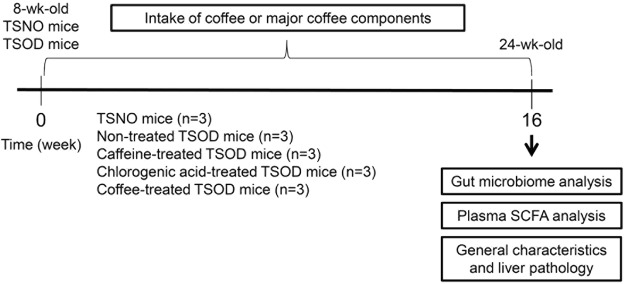
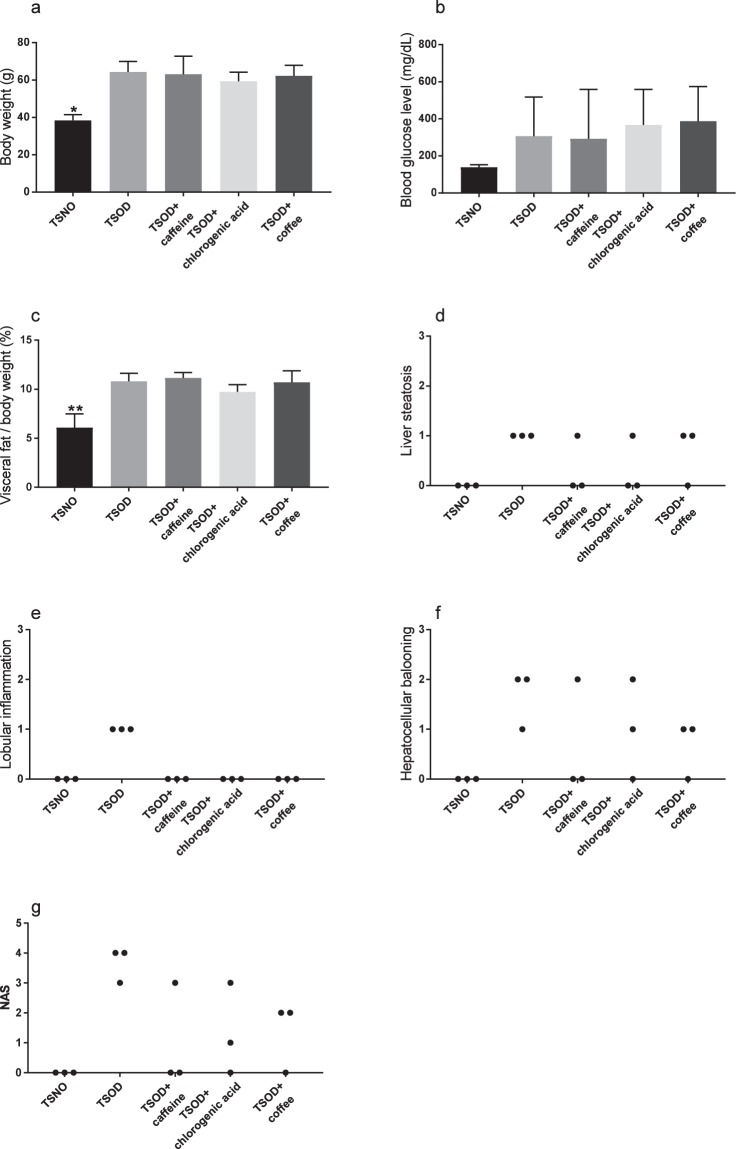
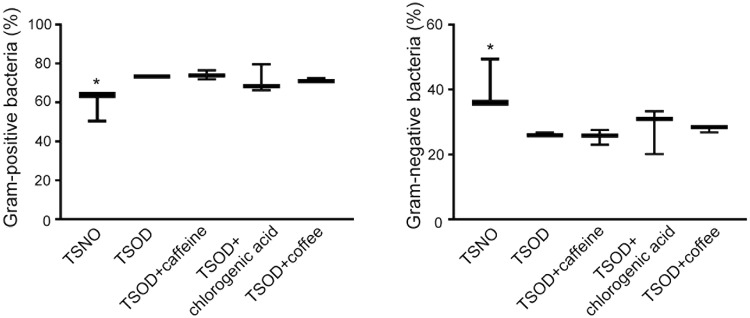
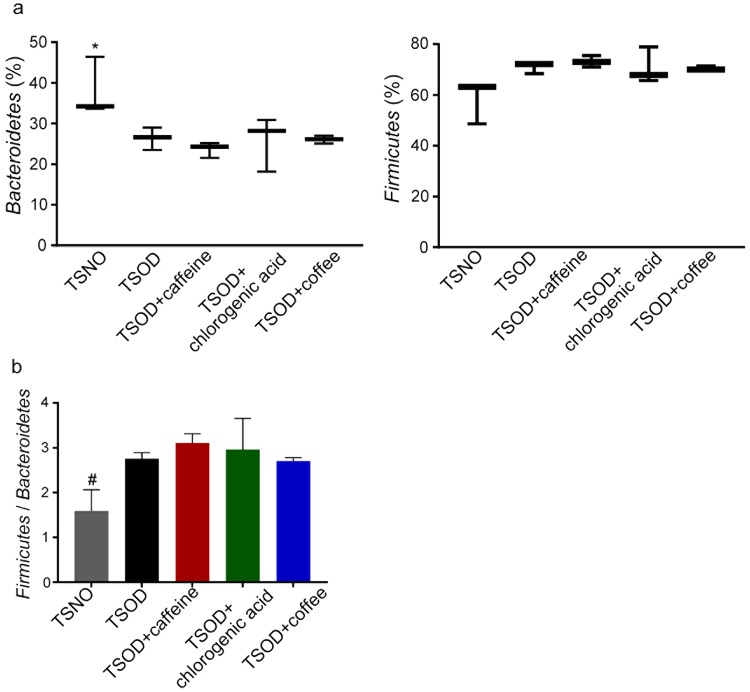
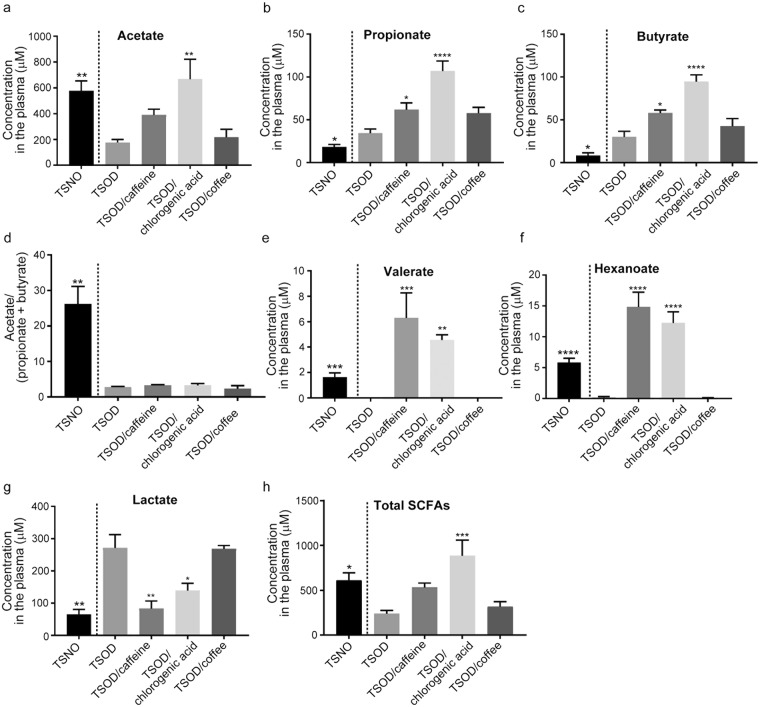
We previously showed that male Tsumura Suzuki obese diabetes (TSOD) mice, a spontaneous mouse model of metabolic syndrome, manifested gut dysbiosis and subsequent disruption of the type and quantity of plasma short-chain fatty acids (SCFAs), and daily coffee intake prevented nonalcoholic steatohepatitis in this mouse model. Here, we present a preliminary study on whether coffee and its major components, caffeine and chlorogenic acid, would affect the gut dysbiosis and the disrupted plasma SCFA profile of TSOD mice, which could lead to improvement in the liver pathology of these mice. Three mice per group were used. Daily intake of coffee or its components for 16 wk prevented liver lobular inflammation without improving obesity in TSOD mice. Coffee and its components did not repair the altered levels of Gram-positive and Gram-negative bacteria and an increased abundance of Firmicutes in TSOD mice but rather caused additional changes in bacteria in six genera. However, caffeine and chlorogenic acid partially improved the disrupted plasma SCFA profile in TSOD mice, although coffee had no effects. Whether these alterations in the gut microbiome and the plasma SCFA profile might affect the liver pathology of TSOD mice may deserve further investigation.
Overview
The claims and statistics of this paper haven’t been checked yet.
Free: it reads the open-access text and checks the first 5 claims that cite a source we can check. Create a free account to check every claim.
Integrity signals
Registry
Cites
Statistics
Figures
Verification
Claims the paper makes
The claims and statistics of this paper haven’t been checked yet.
Free: it reads the open-access text and checks the first 5 claims that cite a source we can check. Create a free account to check every claim.
Claims other papers make about this one
Each is checked against this paper’s own text: does it say what the citing paper says it does?
The source backs part of the claim, not all of it — or backs it for a different population, condition or comparison.
In the citing paper
“However, in this study coffee had no effects probably because dietary fiber content in coffee composition differs by brand [245].”
From Effects of Coffee and Its Components on the Gastrointestinal Tract and the Brain–Gut Axis (2020) · cites this paper as [245]
Experimental — accuracy not yet measuredThe cited source says what the claim attributes to it.
In the citing paper
“studies carried out in male Tsumura Suzuki obese diabetes (TSOD) mice, an accepted mouse model of metabolic syndrome, showed that caffeine and CGA improved plasma SCFA profile after 16 weeks of daily consumption of these compounds.”
From Effects of Coffee and Its Components on the Gastrointestinal Tract and the Brain–Gut Axis (2020) · cites this paper as [245]
In the citing paper
“In male Tsumura Suzuki obese diabetes mice, a spontaneous mouse model of metabolic syndrome, daily intake of coffee, caffeine or chlorogenic acid for 16 weeks prevented nonalcoholic hepatic lobular inflammation and changed the abundance of various species of the gut flora, such as Coprococcus/Blautia/Prevotella involved in the regulation of inflammation [158].”
From Effects of Coffee on the Gastro-Intestinal Tract: A Narrative Review and Literature Update (2022) · cites this paper as [158]
Self-check
Percentages, sums and reported differences re-computed from the paper’s own numbers.
The self-check needs the paper’s full text.
Citations
Cites
1 retracted
A comprehensive review on metabolic syndrome
Kaur, J. (2014) · Cardiology Research and Practice · doi:10.1155/2014/943162 · Cited by 1,889
RetractedQIIME allows analysis of high-throughput community sequencing data
Caporaso, J. G., Kuczynski, J., Stombaugh, J., Bittinger, K., Bushman, F. D., Costello, E. K., Fierer, N., Peña, A. G., Goodrich, J. K., Gordon, J. I., et al. (2010) · Nature Methods · doi:10.1038/nmeth.f.303 · Cited by 34,887
UCHIME improves sensitivity and speed of chimera detection
Edgar, R. C., Haas, B. J., Clemente, J. C., Quince, C., & Knight, R. (2011) · Bioinformatics · doi:10.1093/bioinformatics/btr381 · Cited by 15,114
An obesity-associated gut microbiome with increased capacity for energy harvest
Turnbaugh, P. J., Ley, R. E., Mahowald, M. A., Magrini, V., Mardis, E. R., & Gordon, J. I. (2006) · Nature · doi:10.1038/nature05414 · Cited by 12,444
Grundy, S. M., Cleeman, J. I., Daniels, S. R., Donato, K. A., Eckel, R. H., Franklin, B. A., Gordon, D. J., Krauss, R. M., Savage, P. J., Smith, S. C., et al. (2005) · Circulation · doi:10.1161/circulationaha.105.169404 · Cited by 11,961
Human gut microbes associated with obesity
Ley, R. E., Turnbaugh, P. J., Klein, S., & Gordon, J. I. (2006) · Nature · doi:10.1038/4441022a · Cited by 8,785
Human gut microbiome viewed across age and geography
Yatsunenko, T., Rey, F. E., Manary, M. J., Trehan, I., Dominguez-Bello, M. G., Contreras, M., Magris, M., Hidalgo, G., Baldassano, R. N., Anokhin, A. P., et al. (2012) · Nature · doi:10.1038/nature11053 · Cited by 7,815
From Dietary Fiber to Host Physiology: Short-Chain Fatty Acids as Key Bacterial Metabolites
Koh, A., De Vadder, F., Kovatcheva-Datchary, P., & Bäckhed, F. (2016) · Cell · doi:10.1016/j.cell.2016.05.041 · Cited by 7,070
A metagenome-wide association study of gut microbiota in type 2 diabetes
Qin, J., Li, Y., Cai, Z., Li, S., Zhu, J., Zhang, F., Liang, S., Zhang, W., Guan, Y., Shen, D., et al. (2012) · Nature · doi:10.1038/nature11450 · Cited by 6,762
The gut microbiota as an environmental factor that regulates fat storage
Bäckhed, F., Ding, H., Wang, T., Hooper, L. V., Koh, G. Y., Nagy, A., Semenkovich, C. F., & Gordon, J. I. (2004) · Proceedings of the National Academy of Sciences · doi:10.1073/pnas.0407076101 · Cited by 6,245
Obesity alters gut microbial ecology
Ley, R. E., Bäckhed, F., Turnbaugh, P., Lozupone, C. A., Knight, R. D., & Gordon, J. I. (2005) · Proceedings of the National Academy of Sciences · doi:10.1073/pnas.0504978102 · Cited by 6,176
Cani, P. D., Bibiloni, R., Knauf, C., Waget, A., Neyrinck, A. M., Delzenne, N. M., & Burcelin, R. (2008) · Diabetes · doi:10.2337/db07-1403 · Cited by 4,819
Host-gut microbiota metabolic interactions
Nicholson, J. K., Holmes, E., Kinross, J., Burcelin, R., Gibson, G., Jia, W., & Pettersson, S. (2012) · Science · doi:10.1126/science.1223813 · Cited by 4,760
The gut microbiota--masters of host development and physiology
Sommer, F., & Bäckhed, F. (2013) · Nature Reviews Microbiology · doi:10.1038/nrmicro2974 · Cited by 3,681
Gut microbiota, metabolites and host immunity
Rooks, M. G., & Garrett, W. S. (2016) · Nature reviews. Immunology · doi:10.1038/nri.2016.42 · Cited by 3,409
Nonalcoholic fatty liver disease: a spectrum of clinical and pathological severity.
MATTEONI, C., YOUNOSSI, Z., GRAMLICH, T., BOPARAI, N., LIU, Y., & MCCULLOUGH, A. (1999) · Gastroenterology · doi:10.1016/s0016-5085(99)70506-8 · Cited by 3,345
Microbial degradation of complex carbohydrates in the gut
Flint, H. J., Scott, K. P., Duncan, S. H., Louis, P., & Forano, E. (2012) · Gut Microbes · doi:10.4161/gmic.19897 · Cited by 2,331
Metabolic Syndrome as a Precursor of Cardiovascular Disease and Type 2 Diabetes Mellitus
Wilson, P. W. F., D’Agostino, R. B., Parise, H., Sullivan, L., & Meigs, J. B. (2005) · Circulation · doi:10.1161/circulationaha.105.539528 · Cited by 2,064
Zhu, L., Baker, S. S., Gill, C., Liu, W., Alkhouri, R., Baker, R. D., & Gill, S. R. (2013) · Hepatology · doi:10.1002/hep.26093 · Cited by 1,708
Odamaki, T., Kato, K., Sugahara, H., Hashikura, N., Takahashi, S., Xiao, J.-Z., Abe, F., & Osawa, R. (2016) · BMC Microbiology · doi:10.1186/s12866-016-0708-5 · Cited by 1,521
Self-citationComparison of Sequencing Utility Programs
Aronesty, E. (2013) · The Open Bioinformatics Journal · doi:10.2174/1875036201307010001 · Cited by 1,150
Symbiotic gut microbes modulate human metabolic phenotypes
Li, M., Wang, B., Zhang, M., Rantalainen, M., Wang, S., Zhou, H., Zhang, Y., Shen, J., Pang, X., Zhang, M., et al. (2008) · Proceedings of the National Academy of Sciences · doi:10.1073/pnas.0712038105 · Cited by 1,144
Dumas, M.-E., Barton, R. H., Toye, A., Cloarec, O., Blancher, C., Rothwell, A., Fearnside, J., Tatoud, R., Blanc, V., Lindon, J. C., et al. (2006) · Proceedings of the National Academy of Sciences · doi:10.1073/pnas.0601056103 · Cited by 1,042
In vitro and in vivo antioxidant properties of chlorogenic acid and caffeic acid
Sato, Y., Itagaki, S., Kurokawa, T., Ogura, J., Kobayashi, M., Hirano, T., Sugawara, M., & Iseki, K. (2011) · International Journal of Pharmaceutics · doi:10.1016/j.ijpharm.2010.09.035 · Cited by 965
Role of oxidative stress in the pathogenesis of nonalcoholic steatohepatitis
Rolo, A. P., Teodoro, J. S., & Palmeira, C. M. (2012) · Free Radical Biology and Medicine · doi:10.1016/j.freeradbiomed.2011.10.003 · Cited by 955
Gut microorganisms, mammalian metabolism and personalized health care
Nicholson, J. K., Holmes, E., & Wilson, I. D. (2005) · Nature Reviews Microbiology · doi:10.1038/nrmicro1152 · Cited by 945
Gut microbiome, obesity, and metabolic dysfunction
Tilg, H., & Kaser, A. (2011) · Journal of Clinical Investigation · doi:10.1172/jci58109 · Cited by 860
Intestinal microbiota in patients with nonalcoholic fatty liver disease
Mouzaki, M., Comelli, E. M., Arendt, B. M., Bonengel, J., Fung, S. K., Fischer, S. E., McGilvray, I. D., & Allard, J. P. (2013) · Hepatology · doi:10.1002/hep.26319 · Cited by 749
Using QIIME to Analyze 16S rRNA Gene Sequences from Microbial Communities
Kuczynski, J., Stombaugh, J., Walters, W. A., González, A., Caporaso, J. G., & Knight, R. (2012) · Current Protocols in Microbiology · doi:10.1002/9780471729259.mc01e05s27 · Cited by 660
Gut microbiome composition is linked to whole grain-induced immunological improvements
Martínez, I., Lattimer, J. M., Hubach, K. L., Case, J. A., Yang, J., Weber, C. G., Louk, J. A., Rose, D. J., Kyureghian, G., Peterson, D. A., et al. (2013) · The ISME Journal · doi:10.1038/ismej.2012.104 · Cited by 614
Kasai, C., Sugimoto, K., Moritani, I., Tanaka, J., Oya, Y., Inoue, H., Tameda, M., Shiraki, K., Ito, M., Takei, Y., et al. (2015) · BMC Gastroenterology · doi:10.1186/s12876-015-0330-2 · Cited by 581
Probiotics, Prebiotics and Immunomodulation of Gut Mucosal Defences: Homeostasis and Immunopathology
Hardy, H., Harris, J., Lyon, E., Beal, J., & Foey, A. (2013) · Nutrients · doi:10.3390/nu5061869 · Cited by 546
The gut microbiota and its relationship to diet and obesity: New insights
Clarke, S. F., Murphy, E. F., Nilaweera, K., Ross, P. R., Shanahan, F., O’Toole, P. W., & Cotter, P. D. (2012) · Gut Microbes · doi:10.4161/gmic.20168 · Cited by 458
The role of the gut microbiota in nonalcoholic fatty liver disease
Abu-Shanab, A., & Quigley, E. M. M. (2010) · Nature Reviews Gastroenterology & Hepatology · doi:10.1038/nrgastro.2010.172 · Cited by 457
Lecomte, V., Kaakoush, N. O., Maloney, C. A., Raipuria, M., Huinao, K. D., Mitchell, H. M., & Morris, M. J. (2015) · PLOS ONE · doi:10.1371/journal.pone.0126931 · Cited by 418
Gomez-Arango, L. F., Barrett, H. L., McIntyre, H. D., Callaway, L. K., Morrison, M., & Dekker Nitert, M. (2016) · Diabetes · doi:10.2337/db16-0278 · Cited by 287
Dysbiosis contributes to fibrogenesis in the course of chronic liver injury in mice
De Minicis, S., Rychlicki, C., Agostinelli, L., Saccomanno, S., Candelaresi, C., Trozzi, L., Mingarelli, E., Facinelli, B., Magi, G., Palmieri, C., et al. (2014) · Hepatology · doi:10.1002/hep.26695 · Cited by 279
Pathway engineering and synthetic biology using acetogens
Schiel-Bengelsdorf, B., & Dürre, P. (2012) · FEBS Letters · doi:10.1016/j.febslet.2012.04.043 · Cited by 265
Vitaglione, P., Morisco, F., Mazzone, G., Amoruso, D. C., Ribecco, M. T., Romano, A., Fogliano, V., Caporaso, N., & D'Argenio, G. (2010) · Hepatology · doi:10.1002/hep.23902 · Cited by 232
Dórea, J. G., & da Costa, T. H. M. (2005) · British Journal of Nutrition · doi:10.1079/bjn20051370 · Cited by 232
Gastric Inhibitory Polypeptide: the neglected incretin revisited
Meier, J. J., Nauck, M. A., Schmidt, W. E., & Gallwitz, B. (2002) · Regulatory Peptides · doi:10.1016/s0167-0115(02)00039-3 · Cited by 226
Chlorogenic Acid Improves High Fat Diet-Induced Hepatic Steatosis and Insulin Resistance in Mice
Ma, Y., Gao, M., & Liu, D. (2015) · Pharmaceutical Research · doi:10.1007/s11095-014-1526-9 · Cited by 220
Gut Microbiota, Low-grade Inflammation, and Metabolic Syndrome
Chassaing, B., & Gewirtz, A. T. (2014) · Toxicologic Pathology · doi:10.1177/0192623313508481 · Cited by 172
Ucar, F., Sezer, S., Erdogan, S., Akyol, S., Armutcu, F., & Akyol, O. (2013) · Redox Report · doi:10.1179/1351000213y.0000000050 · Cited by 143
Mechanistic links between gut microbial community dynamics, microbial functions and metabolic health
Ha, C. W. (2014) · World Journal of Gastroenterology · doi:10.3748/wjg.v20.i44.16498 · Cited by 137
Implication of Gut Microbiota in Nonalcoholic Fatty Liver Disease
Boursier, J., & Diehl, A. M. (2015) · PLOS Pathogens · doi:10.1371/journal.ppat.1004559 · Cited by 132
Epidemic Inflammation: Pondering Obesity
Nathan, C. (2008) · Molecular Medicine · doi:10.2119/2008-00038.nathan · Cited by 119
Panchal, S. K., Poudyal, H., Waanders, J., & Brown, L. (2012) · Journal of Nutrition · doi:10.3945/jn.111.153577 · Cited by 118
Nishitsuji, K., Xiao, J., Nagatomo, R., Umemoto, H., Morimoto, Y., Akatsu, H., Inoue, K., & Tsuneyama, K. (2017) · Scientific Reports · doi:10.1038/s41598-017-16189-5 · Cited by 118
Self-citationHigashi, T., Ichikawa, T., Inagaki, S., Min, J. Z., Fukushima, T., & Toyo’oka, T. (2010) · Journal of Pharmaceutical and Biomedical Analysis · doi:10.1016/j.jpba.2010.03.001 · Cited by 112
Dietary fiber from coffee beverage: Degradation by human fecal microbiota
Gniechwitz, D., Reichardt, N., Blaut, M., Steinhart, H., & Bunzel, M. (2007) · Journal of Agricultural and Food Chemistry · doi:10.1021/jf070646b · Cited by 106
Review article: possible beneficial effects of coffee on liver disease and function
Cadden, I. S., Partovi, N., & Yoshida, E. M. (2007) · Alimentary Pharmacology & Therapeutics · doi:10.1111/j.1365-2036.2007.03319.x · Cited by 87
Miura, T., Suzuki, W., Ishihara, E., Arai, I., Ishida, H., Seino, Y., & Tanigawa, K. (2001) · European Journal of Endocrinology · doi:10.1530/eje.0.1450785 · Cited by 78
Review article: coffee consumption, the metabolic syndrome and non-alcoholic fatty liver disease
Yesil, A., & Yilmaz, Y. (2013) · Alimentary Pharmacology & Therapeutics · doi:10.1111/apt.12489 · Cited by 61
Nishida, T., Tsuneyama, K., Fujimoto, M., Nomoto, K., Hayashi, S., Miwa, S., Nakajima, T., Nakanishi, Y., Sasaki, Y., Suzuki, W., et al. (2012) · Laboratory Investigation · doi:10.1038/labinvest.2012.155 · Cited by 58
Self-citationTakahashi, A., Tabuchi, M., Suzuki, W., Iizuka, S., Nagata, M., Ikeya, Y., Takeda, S., Shimada, T., & Aburada, M. (2006) · Metabolism · doi:10.1016/j.metabol.2006.08.007 · Cited by 49
Watanabe, S., Takahashi, T., Ogawa, H., Uehara, H., Tsunematsu, T., Baba, H., Morimoto, Y., & Tsuneyama, K. (2017) · Metabolic Syndrome and Related Disorders · doi:10.1089/met.2016.0114 · Cited by 40
Self-citationThe microbiome and its pharmacological targets: therapeutic avenues in cardiometabolic diseases
Neves, A. L., Chilloux, J., Sarafian, M. H., Rahim, M. B. A., Boulangé, C. L., & Dumas, M.-E. (2015) · Current Opinion in Pharmacology · doi:10.1016/j.coph.2015.09.013 · Cited by 36
Animal models for analyzing metabolic syndrome‐associated liver diseases
Tsuneyama, K., Nishitsuji, K., Matsumoto, M., Kobayashi, T., Morimoto, Y., Tsunematsu, T., & Ogawa, H. (2017) · Pathology International · doi:10.1111/pin.12600 · Cited by 36
Self-citation
Cited by
Vallianou, N., Stratigou, T., Christodoulatos, G. S., & Dalamaga, M. (2019) · Current Obesity Reports · doi:10.1007/s13679-019-00352-2 · Cited by 316
Hughes, R. L., & Holscher, H. D. (2021) · Advances in Nutrition · doi:10.1093/advances/nmab077 · Cited by 183
“, caffeine or chlorogenic acid) on the gut microbiota and demonstrated that caffeine increased butyrate and propionate (249).”
BackgroundPhytochemicals as modifiers of gut microbial communities
Dingeo, G., Brito, A., Samouda, H., Iddir, M., La Frano, M. R., & Bohn, T. (2020) · Food & Function · doi:10.1039/d0fo01483d · Cited by 164
Caffeine and Parkinson’s Disease: Multiple Benefits and Emerging Mechanisms
Ren, X., & Chen, J. (2020) · Frontiers in Neuroscience · doi:10.3389/fnins.2020.602697 · Cited by 180
Effects of Coffee on the Gastro-Intestinal Tract: A Narrative Review and Literature Update
Nehlig, A. (2022) · Nutrients · doi:10.3390/nu14020399 · Cited by 158
Metadata
- Authors
- Nishitsuji, K., Watanabe, S., Xiao, J., Nagatomo, R., Ogawa, H., Tsunematsu, T., Umemoto, H., Morimoto, Y., Akatsu, H., Inoue, K., & Tsuneyama, K.
- Affiliations
- Wakayama Medical University (JP)
- Tokushima University (JP)
- Ritsumeikan University (JP)
- Nagoya City University (JP)
- Corresponding author
- Tsuneyama, Koichi
- Venue
- Scientific Reports
- Published
- 2018-11-01
- Volume
- 8
- Issue
- 1
- Pages
- 16173-16173
- ISSN
- 2045-2322 (ISSN-L)
- PMC
- PMC6212590
- OpenAlex
- W2898321008
- Cited by
- 90
- References
- 59
- Citations by year
- 2026: 5 · 2025: 9 · 2024: 16 · 2023: 7 · 2022: 17 · 2021: 15 · 2020: 16 · 2019: 4
- FWCI
- 3.11
- Type
- journal article
- Language
- en
- Open access
- gold
- doi.org
- Licence
- cc-by
- creativecommons.org/licenses/by/4.0 (tdm)
- creativecommons.org/licenses/by/4.0 (vor)
- Locations
- Scientific Reports (publishedVersion, cc-by)
- Europe PMC (PubMed Central) (publishedVersion, cc-by)
- PubMed Central (publishedVersion, cc-by)
- PubMed (publishedVersion)
- Institutional Repositories DataBase (IRDB) (acceptedVersion, cc-by)
- DOAJ (DOAJ: Directory of Open Access Journals) (submittedVersion)
- Funders
- Morinaga Milk Industry
- University of Tokushima
- All Japan Coffee Association
- Japan Society for the Promotion of Science (25340121, 15K15098, 18K07069, 24390181, 17K16123)
- Topics
- Life Sciences › Biochemistry, Genetics and Molecular Biology › Molecular Biology › Gut microbiota and health
- Health Sciences › Medicine › Pharmacology (medical) › Coffee research and impacts
- Health Sciences › Medicine › Gastroenterology › Gastrointestinal motility and disorders
- Keywords
- coffee, caffeine, chlorogenic acid, gut microbiota, short-chain fatty acids, metabolic syndrome, nonalcoholic steatohepatitis, gut dysbiosis, Firmicutes, Gram-positive and Gram-negative bacteria
- MeSH terms
- Gastrointestinal Microbiome, Animals, Caffeine, Chlorogenic Acid, Coffee, Disease Models, Animal, Fatty Acids, Volatile, Humans, Inflammation, Liver, Mice, Obese, Obesity, Metabolic Syndrome, Mice, Dysbiosis
About these checks
Registry, retraction, Cites and statistics results are computed, not judged, with one exception: a printed reference that no index lists is read once by a model before it counts as a citation error. Claims are extracted by a model and kept only when their quote appears verbatim in the text; each cited source is then checked, with a model’s help, for whether it says what the claim relies on. Those verdicts can be wrong — read the claim’s quote and the cited source before relying on one.
Statistics and arithmetic are recomputed, not judged.
Confidence bands are shown only for fields calibrated on our annotated test set. None is calibrated yet, so no band is shown.
What counts as a claim ›How we measure confidence ›How we check this ›
Are you an author, or do you see a problem with this page? Request a review
Data sources
Bibliographic data: Semantic Scholar, OpenAlex, Crossref.
Contains information from the Semantic Scholar Academic Graph Datasets, made available under the ODC Attribution License (ODC-BY 1.0).
Semantic Scholar’s data is described in: Kinney, R., et al. (2023). The Semantic Scholar Open Data Platform. arXiv:2301.10140.
