

Cancer associated fibroblasts sculpt tumour microenvironment by recruiting monocytes and inducing immunosuppressive PD-1+ TAMs
Open accessThe DOI matches its Crossref record; 56 of the 56 references it cites were found in a registry or an index.
Abstract
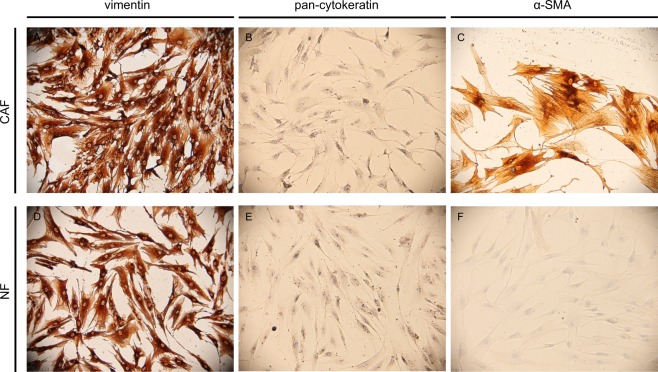
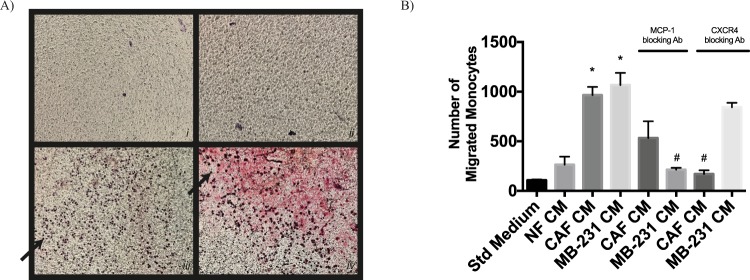
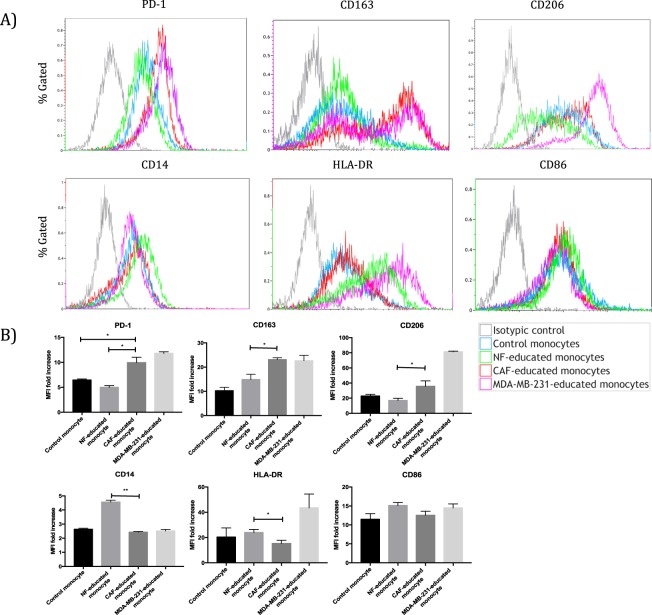
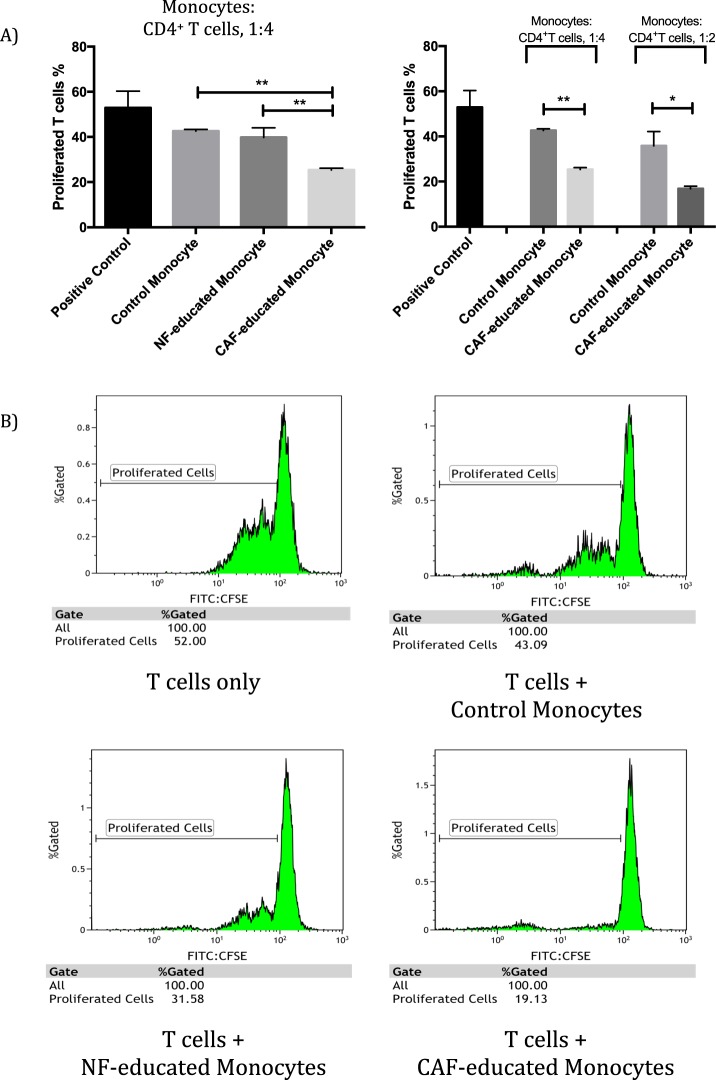
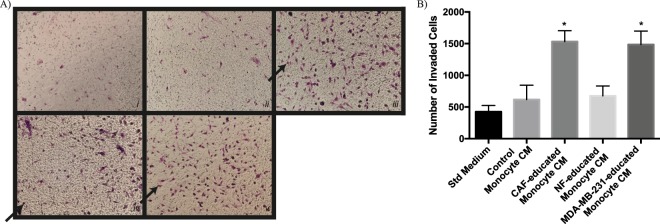
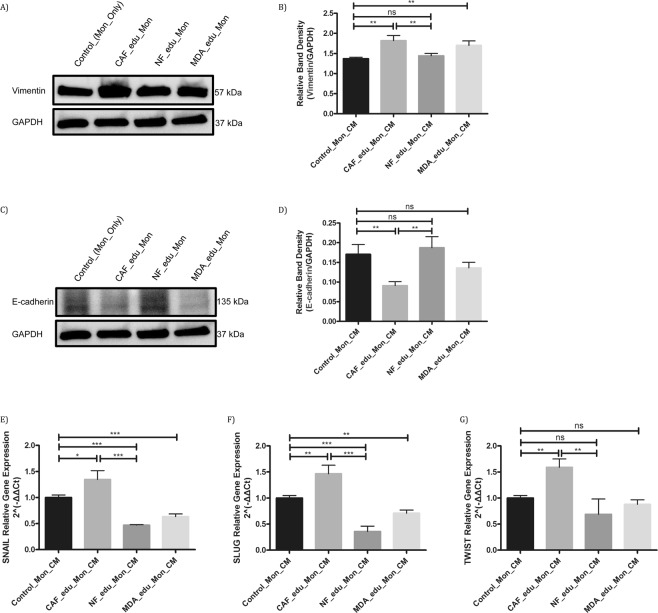
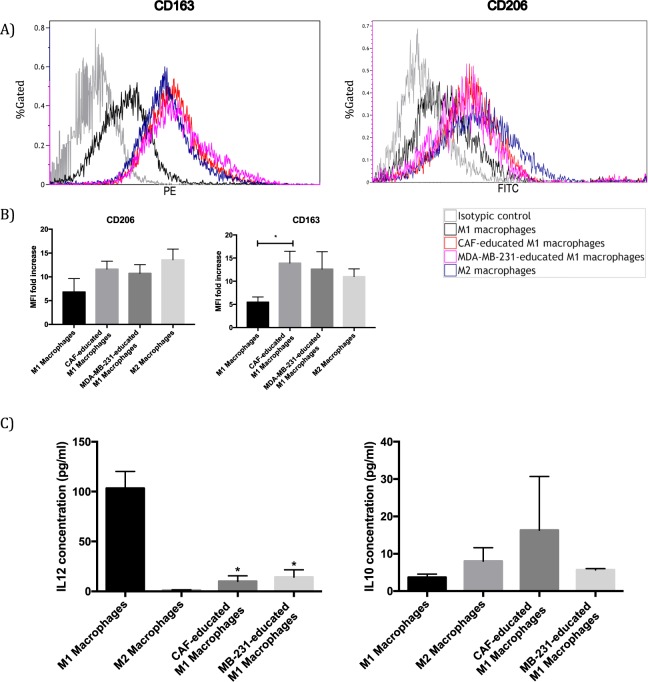
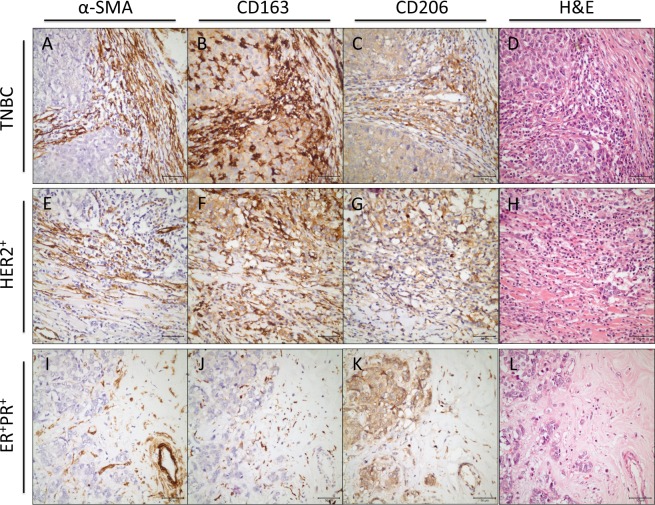
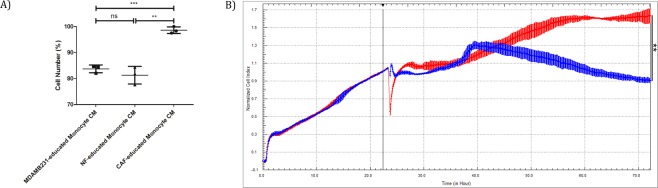
Fibroblasts turn into cancer associated fibroblasts (CAFs) in the tumour microenvironment. CAFs have recently attracted attention for their function as a regulator of immune cell recruitment and function in addition to their tumour-promoting roles. In this study, we aimed to determine the role of CAFs on monocyte recruitment and macrophage polarization in breast cancer. CAFs, which were α-SMA expressing fibroblasts in contrast to normal fibroblasts (NFs), effectively recruited monocytes. Recruitment of monocytes by CAFs might be mediated by monocyte chemotactic protein-1 (MCP-1) as well as stromal cell-derived factor-1 (SDF-1) cytokines. CAFs differentiated the recruited monocytes into M2-like macrophages which are capable of exerting their immunosuppressive roles via the PD-1 axis. CAF-educated monocytes exhibited strong immune suppression unlike NF-educated monocytes and enhanced the motility/invasion of breast cancer cells in addition to increasing the expressions of epithelial–mesenchymal transition (EMT)-related genes and vimentin protein in cancer cells. CAF-educated M1 macrophages displayed increased expression of M2 markers and production of anti-inflammatory cytokine IL-10 in contrast to decreased production of pro-inflammatory cytokine IL-12 compared with control M1 macrophages; suggesting that CAFs were also able to induce the trans-differentiation of M1 macrophages to M2 macrophages. We then investigated the relationship between the infiltration of CAFs and tumour associated macrophages (TAMs) using tissue samples obtained from breast cancer patients. High grade of CAFs significantly correlated with the number of TAMs in human breast cancer tissue samples. It was also associated with higher Ki-67 proliferation index, and higher tumour volume. This result is in line with our finding of increased breast cancer cell proliferation due to the effects of CAF-educated monocytes in vitro. Our results concluded that CAFs play pivotal roles in sculpturing the tumour microenvironment in breast cancer, and therapeutic strategies to reverse the CAF-mediated immunosuppressive microenvironment should be taken into consideration.
Overview
The claims and statistics of this paper haven’t been checked yet.
Free: it reads the open-access text and checks the first 5 claims that cite a source we can check. Create a free account to check every claim.
Integrity signals
Registry
Cites
Statistics
Figures
Verification
Claims the paper makes
The claims and statistics of this paper haven’t been checked yet.
Free: it reads the open-access text and checks the first 5 claims that cite a source we can check. Create a free account to check every claim.
Claims other papers make about this one
Each is checked against this paper’s own text: does it say what the citing paper says it does?
The cited source says what the claim attributes to it.
In the citing paper
“CAFs produce ECM proteins, which prompts immunosuppression of tumor cells by recruiting immunosuppressive cells [64, 65] such as monocytes and inducing immunosuppressive PD-1+ TAMs, as recently shown in breast cancer cells in vitro [66].”
From Tumor microenvironment complexity and therapeutic implications at a glance (2020) · cites this paper as [66]
The check wasn’t confident either way, so it gives no verdict — never disputed.
In the citing paper
“Multiple circulating cytokines and chemokines decreased after FMT in Rs, including CCL2 (MCP1), CXCL8 (IL-8), and IL-18 that have been associated with negative outcomes to anti–PD-1 (32, 33), and IL-12p70 and IFN-γ (Fig. 4A, heatmap).”
From Fecal microbiota transplant overcomes resistance to anti–PD-1 therapy in melanoma patients (2021) · cites this paper as [32]
Experimental — accuracy not yet measured
Self-check
Percentages, sums and reported differences re-computed from the paper’s own numbers.
The self-check needs the paper’s full text.
Citations
Cites
PD-1 and PD-L1 Immune Checkpoint Blockade to Treat Breast Cancer
Hartkopf, A. D., Taran, F.-A., Wallwiener, M., Walter, C. B., Krämer, B., Grischke, E.-M., & Brucker, S. Y. (2016) · Breast Care · doi:10.1159/000453569 · Cited by 30,845
Adverse Renal Effects of Immune Checkpoint Inhibitors: A Narrative Review
Wanchoo, R., Karam, S., Uppal, N. N., Barta, V. S., Deray, G., Devoe, C., Launay-Vacher, V., Jhaveri, K. D., & on behalf of Cancer and Kidney International Network Workgroup on Immune Checkpoint Inhibitors (2017) · American Journal of Nephrology · doi:10.1159/000455014 · Cited by 15,256
Safety, activity, and immune correlates of anti–PD-1 antibody in cancer
Topalian, S. L., Hodi, F. S., Brahmer, J. R., Gettinger, S. N., Smith, D. C., McDermott, D. F., Powderly, J. D., Carvajal, R. D., Sosman, J. A., Atkins, M. B., et al. (2012) · New England Journal of Medicine · doi:10.1056/nejmoa1200690 · Cited by 12,628
Exploring the full spectrum of macrophage activation
Mosser, D. M., & Edwards, J. P. (2008) · Nature Reviews Immunology · doi:10.1038/nri2448 · Cited by 9,144
Inflammation and cancer: back to Virchow?
Balkwill, F., & Mantovani, A. (2001) · The Lancet · doi:10.1016/s0140-6736(00)04046-0 · Cited by 7,746
The chemokine system in diverse forms of macrophage activation and polarization
MANTOVANI, A., SICA, A., SOZZANI, S., ALLAVENA, P., VECCHI, A., & LOCATI, M. (2004) · Trends in Immunology · doi:10.1016/j.it.2004.09.015 · Cited by 6,534
Macrophage activation and polarization: nomenclature and experimental guidelines
Murray, P. J., Allen, J. E., Biswas, S. K., Fisher, E. A., Gilroy, D. W., Goerdt, S., Gordon, S., Hamilton, J. A., Ivashkiv, L. B., Lawrence, T., et al. (2014) · Immunity · doi:10.1016/j.immuni.2014.06.008 · Cited by 6,337
Macrophage plasticity and polarization: in vivo veritas
Sica, A., & Mantovani, A. (2012) · Journal of Clinical Investigation · doi:10.1172/jci59643 · Cited by 6,335
Freeman, G. J., Long, A. J., Iwai, Y., Bourque, K., Chernova, T., Nishimura, H., Fitz, L. J., Malenkovich, N., Okazaki, T., Byrne, M. C., et al. (2000) · The Journal of Experimental Medicine · doi:10.1084/jem.192.7.1027 · Cited by 5,294
Macrophage biology in development, homeostasis and disease
Wynn, T. A., Chawla, A., & Pollard, J. W. (2013) · Nature · doi:10.1038/nature12034 · Cited by 4,684
Cited by
Items 101–200 of 308
Zhong, H., Zhou, S., Yin, S., Qiu, Y., Liu, B., & Yu, H. (2024) · Journal of Advanced Research · doi:10.1016/j.jare.2024.06.014 · Cited by 46
Strnadová, K., Pfeiferová, L., Přikryl, P., Dvořánková, B., Vlčák, E., Frýdlová, J., Vokurka, M., Novotný, J., Šáchová, J., Hradilová, M., et al. (2021) · Histochemistry and Cell Biology · doi:10.1007/s00418-021-02052-2 · Cited by 41
Казакова, А., Sudarskikh, T., Kovalev, O. I., Kzhyshkowska, J. G., & Larionova, I. (2023) · International Journal of Oncology · doi:10.3892/ijo.2023.5480 · Cited by 38
Cancer‐Associated Fibroblasts: Heterogeneity, Cancer Pathogenesis, and Therapeutic Targets
Li, Y., Liu, Q., Jing, X., Wang, Y., Jia, X., Yang, X., & Chen, K. (2025) · MedComm · doi:10.1002/mco2.70292 · Cited by 45
“CAFs produce high levels of CXCL12 in the TME, and the CXCL12–CXCR4 axis plays a crucial role in recruiting monocytes to the tumor tissues [163].”
Wu, C., Xu, T., Zhang, H., Hu, Y., Jiao, J., Qiu, K. L., Gu, J. L., Li, W., & Sun, L. (2025) · Cancer Letters · doi:10.1016/j.canlet.2025.217913 · Cited by 42
Walterskirchen, N., Müller, C., Ramos, C., Zeindl, S., Stang, S., Herzog, D., Sachet, M., Schimek, V., Unger, L. W., Gerakopoulos, V., et al. (2022) · Cancer Letters · doi:10.1016/j.canlet.2022.215737 · Cited by 39
Tumor microenvironment manipulates chemoresistance in ovarian cancer (Review)
Zhang, Q., Ding, J., Wang, Y., He, L., & Xue, F. (2022) · Oncology Reports · doi:10.3892/or.2022.8313 · Cited by 38
Advances in targeted therapy and immunotherapy for melanoma (Review)
Qin, Z., & Zheng, M. (2023) · Experimental and Therapeutic Medicine · doi:10.3892/etm.2023.12115 · Cited by 37
The Application of Nanoparticles Targeting Cancer-Associated Fibroblasts
Huang, Q., Ge, Y., He, Y. T., Wu, J., Tong, Y., Shang, H., Liu, X., Ba, X., Xia, D., Peng, E., et al. (2024) · International Journal of Nanomedicine · doi:10.2147/ijn.s447350 · Cited by 37
Mukaida, N., Zhang, D., & Sasaki, S. (2020) · Cancers · doi:10.3390/cancers12102896 · Cited by 39
“Prostate cancer cells at primary sites released exosomes containing pyruvate kinase M2, which enhanced CXCL12 production by bone marrow stromal cells in a hypoxic inducible factor (HIF)-1α-dependent manner, giving rise to pre-metastatic niche [99].”
BackgroundInfluentialRong, X., Jin-yu, L., Liu, Y., Wang, Z., Zeng, D., Li, Y., Li, S., Wu, J., Shen, Z., Shi, M., et al. (2022) · Frontiers in Oncology · doi:10.3389/fonc.2021.802257 · Cited by 37
“CAFs, for example, helped recruit monocytes to differentiate into M2-like macrophages, which could affect PD-1 pathways to perform immunosuppressive functions (52).”
BackgroundShi, F., Sun, M., Zhou, Z., Wu, L., Zhu, Z., Xia, S., Han, B., Zhao, Y., Jing, Y., & Cui, D. (2022) · International Journal of Biological Sciences · doi:10.7150/ijbs.73141 · Cited by 36
“Also fibroblasts in the tumor also could induce trans-differentiation, from anti-tumorigenic macrophages to pro-tumor TAMs [24].”
BackgroundEffects of glycolysis on the polarization and function of tumor‑associated macrophages (Review)
Cao, J., Zeng, F., Liao, S., Cao, L., & Zhou, Y. (2023) · International Journal of Oncology · doi:10.3892/ijo.2023.5518 · Cited by 37
Chen, J., Huang, Z., Liao, C.-J., Hu, X., Li, S., Qi, M., Fan, X., & Huang, Y. (2020) · Cellular Signalling · doi:10.1016/j.cellsig.2020.109738 · Cited by 35
AKT3 Is a Novel Regulator of Cancer-Associated Fibroblasts in Head and Neck Squamous Cell Carcinoma
Takahashi, H., Rokudai, S., Kawabata‐Iwakawa, R., Sakakura, K., Oyama, T., Nishiyama, M., & Chikamatsu, K. (2021) · Cancers · doi:10.3390/cancers13061233 · Cited by 36
Hu, X., Li, Z., Muyayalo, K. P., Wang, L., Liu, C., Mor, G., & Liao, A. (2021) · The FASEB Journal · doi:10.1096/fj.202101306r · Cited by 41
Interferon Signaling in Estrogen Receptor–positive Breast Cancer: A Revitalized Topic
Fu, X., Angelis, C. D., & Schiff, R. (2021) · Endocrinology · doi:10.1210/endocr/bqab235 · Cited by 37
Immunobiology of cancer-associated fibroblasts in the context of radiotherapy
Hellevik, T., Berzaghi, R., Lode, K., Islam, A., & Martínez-Zubiaurre, I. (2021) · Journal of Translational Medicine · doi:10.1186/s12967-021-03112-w · Cited by 33
Targeting Tumour-Associated Fibroblasts in Cancers
Shah, K., Mallik, S. B., Gupta, P. K., & Iyer, A. (2022) · Frontiers in Oncology · doi:10.3389/fonc.2022.908156 · Cited by 37
Ding, H., Zhang, J., Zhang, F., Xu, Y., Yu, Y., Liang, W., & Li, Q. (2022) · International Immunopharmacology · doi:10.1016/j.intimp.2022.109052 · Cited by 33
Liu, L., Wan, W., Chang, Y., Ao, L., Xu, Y., & Xu, X. (2025) · Journal of Experimental & Clinical Cancer Research · doi:10.1186/s13046-025-03527-z · Cited by 36
“Even existing M1 macrophages exhibit increased expression of M2 markers under the action of CAFs [115].”
Sharpe, B. P., Hayden, A. L., Manousopoulou, A., Cowie, A., Walker, R., Harrington, J., Izadi, F., Breininger, S. P., Gibson, J., Pickering, O. J., et al. (2022) · Cell Reports Medicine · doi:10.1016/j.xcrm.2022.100541 · Cited by 31
Zhan, C., Jin, Y. H., Xu, X., Shao, J., & Jin, C. (2023) · Cancer Medicine · doi:10.1002/cam4.5489 · Cited by 33
Tumor-instructed glutamine synthesis in cancer-associated fibroblasts promotes pro-tumor macrophages
Li, X., Møller, S. H., Park, J., Chuang, Y., Hsueh, P., Chang, T.-H., Kao, K., Gallart‐Ayala, H., Wang, Y., Peng, J.-J., et al. (2025) · The Journal of Experimental Medicine · doi:10.1084/jem.20241426 · Cited by 34
Makutani, Y., Kawakami, H., Tsujikawa, T., Yoshimura, K., Chiba, Y., Ito, A., Kawamura, J., Haratani, K., & Nakagawa, K. (2022) · Frontiers in Oncology · doi:10.3389/fonc.2022.956270 · Cited by 31
Thiery, J. (2022) · Exploration of Targeted Anti-tumor Therapy · doi:10.37349/etat.2022.00103 · Cited by 33
Stromal circuits involving tumor-associated macrophages and cancer-associated fibroblasts
Timperi, E., & Romano, E. (2023) · Frontiers in Immunology · doi:10.3389/fimmu.2023.1194642 · Cited by 30
“CAFs produce high levels of CXCL12 in the TME and CXCL12-CXCR4 CAF-TAM axis is responsible for mono recruitment at the tissue (69).”
BackgroundAvnet, S., Lemma, S., Cortini, M., Di Pompo, G., Perut, F., & Baldini, N. (2019) · Frontiers in Oncology · doi:10.3389/fonc.2019.00305 · Cited by 29
Macrophage heterogeneity and its interactions with stromal cells in tumour microenvironment
Cao, L., Meng, X., Zhang, Z., Liu, Z., & He, Y. (2024) · Cell & Bioscience · doi:10.1186/s13578-024-01201-z · Cited by 32
“Another study found that fibroblast–macrophage interactions were mediated by stromal cell-derived factor-1 (SDF-1, also called CXCL12), and CAF-educated TAMs markedly suppressed T-cell proliferation [107].”
BackgroundBlood Vessels and Peripheral Nerves as Key Players in Cancer Progression and Therapy Resistance
Roda, N., Blandano, G., & Pelicci, P. G. (2021) · Cancers · doi:10.3390/cancers13174471 · Cited by 33
Shimizu, D., Yuge, R., Kitadai, Y., Ariyoshi, M., Miyamoto, R., Hiyama, Y., Takigawa, H., Urabe, Y., & Oka, S. (2024) · International Journal of Molecular Sciences · doi:10.3390/ijms25137001 · Cited by 30
“They promote monocyte recruitment to tumors and promote differentiation into tumor-associated macrophages (TAMs) in CRC, oral squamous cell carcinoma, and breast cancer [8–11].”
BackgroundWang, M., Zhao, Y., Xu, K., Liu, C., Zhong, H., Wu, Y., Zhang, K., & Wei, S. (2025) · Frontiers in Immunology · doi:10.3389/fimmu.2025.1617968 · Cited by 34
Kim, S., Chun, S. H., Kim, J. R., Kim, S., Seo, J. Y., Jung, C. K., Gil, B. M., Kim, J.-O., Ko, Y. H., Woo, I. S., et al. (2021) · BMC Cancer · doi:10.1186/s12885-020-07727-y · Cited by 29
Understanding the Immune-Stroma Microenvironment in B Cell Malignancies for Effective Immunotherapy
Apollonio, B., Ioannou, N., Papazoglou, D., & Ramsay, A. G. (2021) · Frontiers in Oncology · doi:10.3389/fonc.2021.626818 · Cited by 31
Breast Cancer Tumor Microenvironment and Molecular Aberrations Hijack Tumoricidal Immunity
Lin, H.-J. L., Liu, Y., Lofland, D., & Lin, J. (2022) · Cancers · doi:10.3390/cancers14020285 · Cited by 29
Ravi, K., Zhang, Y., Sakala, L., Manoharan, T. J. M., Pockaj, B. A., LaBaer, J., Park, J. G., & Nikkhah, M. (2025) · Advanced Science · doi:10.1002/advs.202413457 · Cited by 29
Tian, L., Long, F., Hao, Y., Li, B., Li, Y., Tang, Y., Li, J., Zhao, Q., Chen, J., & Liu, M. (2022) · Frontiers in Medicine · doi:10.3389/fmed.2022.880326 · Cited by 28
“CAFs have been proved to recruit monocytes and induce their differentiation into M2 type via monocyte chemotactic protein 1 (MCP-1) and chemokine CXCL-12 (12).”
BackgroundCharacterization of immune cell populations in syngeneic murine tumor models
Snipstad, S., Bremnes, F., Haugum, M. D., & Sulheim, E. (2023) · Cancer Medicine · doi:10.1002/cam4.5784 · Cited by 26
Li, P., Cao, J., Li, J., Yao, Z., Han, D., Ying, L., Wang, Z., & Tian, J. (2020) · Cancer Medicine · doi:10.1002/cam4.3372 · Cited by 29
Bark, J. M., Kulasinghe, A., Amenábar, J. M., & Punyadeera, C. (2020) · Advances in clinical chemistry · doi:10.1016/bs.acc.2020.06.006 · Cited by 30
Lepland, A., Malfanti, A., Haljasorg, U., Asciutto, E. K., Pickholz, M., Bringas, M., Đorđević, S., Salumäe, L., Peterson, P., Teesalu, T., et al. (2022) · Cancer Research Communications · doi:10.1158/2767-9764.crc-22-0043 · Cited by 26
The cross-talk between macrophages and tumor cells as a target for cancer treatment
Aizaz, M., Khan, A. U., Khan, F., Khan, M., Saleh, E. A. M., Nisar, M., & Baran, N. (2023) · Frontiers in Oncology · doi:10.3389/fonc.2023.1259034 · Cited by 25
Jang, S.-D., Song, J., Kim, H., Im, C., Khawar, I. A., Park, J. K., & Kuh, H. (2021) · Cancers · doi:10.3390/cancers13235955 · Cited by 25
“CAFs recruit monocytes into tumors and promote their polarization toward the M2 phenotype, which facilitates cancer progression via promoting an immunosuppressive microenvironment [45].”
BackgroundImmune Regulatory Function of Cancer- Associated Fibroblasts in Non-small Cell Lung Cancer
Lee, H., Hwang, M., Jang, S., & Um, S. (2023) · Tuberculosis & respiratory diseases · doi:10.4046/trd.2022.0129 · Cited by 24
“CAFs also promote immune suppression thorough their interactions with M2-like tumor-associated macrophages or myeloid-derived suppressor cells 10-12 .”
Clerici, S. P., Peppelenbosch, M. P., Fuhler, G. M., Consonni, S. R., & Ferreira‐Halder, C. V. (2021) · Frontiers in Cell and Developmental Biology · doi:10.3389/fcell.2021.696373 · Cited by 25
Li, M., Wu, B., Li, L., Lv, C., & Tian, Y. (2023) · Biochimica et Biophysica Acta (BBA) - Reviews on Cancer · doi:10.1016/j.bbcan.2023.188945 · Cited by 25
Role of exosomes in the development of the immune microenvironment in hepatocellular carcinoma
Li, T., Jiao, J., Ke, H., Ouyang, W., Wang, L., Pan, J., & Li, X. (2023) · Frontiers in Immunology · doi:10.3389/fimmu.2023.1200201 · Cited by 26
“Moreover, CSFs induce TAM to express PD-1, and PD-1 expression on the surface of TAMs leads to innate and adaptive antitumor immune response suppression (159).”
BackgroundRole of Biological Mediators of Tumor-Associated Macrophages in Breast Cancer Progression
Li, Y., Ganesan, K., & Chen, J. (2022) · Current Medicinal Chemistry · doi:10.2174/0929867329666220520121711 · Cited by 24
Cancer-associated fibroblasts: Versatile mediators in remodeling the tumor microenvironment
Zhang, Q., Wang, Y., & Liu, F. (2022) · Cellular Signalling · doi:10.1016/j.cellsig.2022.110567 · Cited by 23
Kim, S. H., Kim, S., Park, J., Joe, Y., Lee, S. E., Saeidi, S., Zhong, X., Kim, S. H., Park, S., Na, H., et al. (2021) · Antioxidants · doi:10.3390/antiox10030470 · Cited by 26
“Cancer-associated fibroblasts, one of the most abundant cell types in the tumor stroma, play key roles in the macrophage reprogramming to instruct the immunosuppressive TME [13].”
BackgroundLiu, J., Yu, F., Tan, Y., Huo, J.-P., Liu, Z., Wang, X., & Li, J. (2022) · Cancer Biotherapy and Radiopharmaceuticals · doi:10.1089/cbr.2020.4118 · Cited by 25
“37,38 It also could be the reason why stage N2 tumor had both significantly higher immune and stromal score than stage N0 and N1 tumor (Fig.”
de Porras, V. R., Pardo, J. C., Notario, L., Etxániz, O., & Pous, A. F. (2021) · International Journal of Molecular Sciences · doi:10.3390/ijms22094712 · Cited by 24
Rethinking the chemokine cascade in brain metastasis: Preventive and therapeutic implications
Maurya, S. K., Κhan, P., Rehman, A. U., Kanchan, R. K., Perumal, N., Mahapatra, S., Chand, H. S., Santamaria‐Barria, J. A., Batra, S. K., & Nasser, M. W. (2021) · Seminars in Cancer Biology · doi:10.1016/j.semcancer.2021.12.009 · Cited by 23
Cell-specific drug targeting in the lung
Abed, S., Turner, R. A., Serniuck, N. J., Tat, V., Naiel, S., Hayat, A. I., Mekhael, O., Vierhout, M., Ask, K., & Rullo, A. F. (2021) · Biochemical Pharmacology · doi:10.1016/j.bcp.2021.114577 · Cited by 21
CCL2/CCR2 signaling pathway in tumorigenesis and metastasis (Review)
Zhang, Y., Fan, B., Yang, H., Chen, G., Huang, Z., Li, Y., Ma, X., Wang, T., Wang, W., Cai, L., et al. (2025) · Oncology Letters · doi:10.3892/ol.2025.15344 · Cited by 22
“CAFs constitute one of the most prevalent cell types in the tumor stroma (105), and evidence has highlighted their tumor‑promoting functions, including accelerating tumor proliferation, facilitating metastatic progression and shielding tumors from therapeutic agent penetration (106‑108).”
Cartilage oligomeric matrix protein acts as a molecular biomarker in multiple cancer types
Guo, B., Wang, Y., Liu, W., & Zhang, S. (2022) · Clinical & Translational Oncology · doi:10.1007/s12094-022-02968-8 · Cited by 23
“CAF, one of the abundant cell species in TME, could reshape the TME through collagen deposition and matrix metalloproteinase secretion [38, 39].”
BackgroundRoshani, M., Baniebrahimi, G., Mousavi, M., Zare, N., Sadeghi, R., Salarinia, R., Sheida, A., Molavizadeh, D., Sadeghi, S., Moammer, F., et al. (2022) · Frontiers in Oncology · doi:10.3389/fonc.2022.1014949 · Cited by 20
CCL2-Mediated Stromal Interactions Drive Macrophage Polarization to Increase Breast Tumorigenesis
Archer, M., Bernhardt, S. M., Hodson, L. J., Woolford, L., der Hoek, M. B. V., Dasari, P., Evdokiou, A., & Ingman, W. V. (2023) · International Journal of Molecular Sciences · doi:10.3390/ijms24087385 · Cited by 20
“Cancer-associated fibroblasts (CAFs) recruit macrophages to the tumour site through the expression of chemoattractant signals such as CCL2 [33,34] and regulate the immune response to tumour cells by driving the polarization of macrophages with pro- or anti-tumorigenic phenotypes [35,36].”
BackgroundZhao, Z., Hu, Y., Li, H., Lü, T., He, X., Ma, Y., Huang, M., Li, M., Yang, L., & Shi, C. (2025) · Journal for ImmunoTherapy of Cancer · doi:10.1136/jitc-2024-010555 · Cited by 21
The Role of Tumor Microenvironment in Triple-Negative Breast Cancer and Its Therapeutic Targeting
Vuletić, A. M., Martinović, K. M., & Jurišić, V. (2025) · Cells · doi:10.3390/cells14171353 · Cited by 20
“Furthermore, it was reported that CAFs contribute to immunosuppressive PD-1+ M2 phenotype and increased production of anti-inflammatory cytokine IL-10 by monocytes recruited into breast tumor [126].”
The Impact of Cancer-Associated Fibroblasts on the Biology and Progression of Colorectal Carcinomas
Henrich, L. M., Greimelmaier, K., Wessolly, M., Klopp, N., Mairinger, E., Krause, Y., Berger, S., Wohlschlaeger, J., Schildhaus, H., Baba, H. A., et al. (2024) · Genes · doi:10.3390/genes15020209 · Cited by 19
“This occurs by releasing cytokines and growth factors that can stimulate inflammatory responses and thereby support tumour growth, which is particularly prevalent in the desmoplastic response [28,29].”
BackgroundReimche, I., Yu, H., Ariantari, N. P., Liu, Z., Merkens, K., Rotfuß, S., Peter, K., Jungwirth, U., Bauer, N., Kiefer, F., et al. (2022) · International Journal of Molecular Sciences · doi:10.3390/ijms231810319 · Cited by 19
Cui, C., Zhang, T., Lin, Q., Huang, T., Rao, E., Du, J., & Fu, L. (2024) · MedComm – Oncology · doi:10.1002/mog2.70004 · Cited by 20
Li, Y., & Wang, L. (2026) · Immunology · doi:10.1111/imm.70103 · Cited by 22
Du, Y., Wang, B., Jiang, X. W., Cao, J., Yu, J., Wang, Y., Wang, X., & Liu, H. (2021) · Frontiers in Oncology · doi:10.3389/fonc.2021.620674 · Cited by 24
Shojaee, P., Mornata, F., Deutsch, A., Locati, M., & Hatzikirou, H. (2022) · Frontiers in Immunology · doi:10.3389/fimmu.2022.1050067 · Cited by 19
“In particular, it has been demonstrated that, in the context of breast cancers, the proliferation rate of tumour cells is increased based on the increased number of CAF-educated monocytes, highlighting the role of the interplay between TAMs and CAFS in promoting tumor cells proliferation and invasion (34, 35).”
BackgroundMarco, M. D., Papa, N. D., Reppucci, F., Iorio, V., Basile, A. M., Falco, A., Iaccarino, R., Brongo, S., Caro, F. D., Capunzo, M., et al. (2021) · Journal of Cellular Biochemistry · doi:10.1002/jcb.30171 · Cited by 18
“Human recombinant BAG3 protein was produced as previously described by Gok Yavuz et al.14 Briefly, human bag3 CDS (Accession Number NM_004281.”
MethodFibroblast heterogeneity in pancreatic ductal adenocarcinoma: Perspectives in immunotherapy
Luong, T., Golivi, Y., Nagaraju, G. P., & El‐Rayes, B. F. (2022) · Cytokine & Growth Factor Reviews · doi:10.1016/j.cytogfr.2022.09.001 · Cited by 18
Gulia, S., Chandra, P., & Das, A. (2023) · Cell Biochemistry and Biophysics · doi:10.1007/s12013-023-01179-4 · Cited by 17
“As shown in breast cancer studies, CAFs contribute to tumor immuno-suppression by producing ECM proteins that draw immunosuppressive cells like monocytes and trigger immunosuppressive PD-1 + tumor-associated macrophages (TAMs) [288].”
BackgroundMuteeb, G., Khafaga, D. S. R., El-Morsy, M. T., Farhan, M., Aatif, M., & Hosney, M. (2024) · Heliyon · doi:10.1016/j.heliyon.2024.e37217 · Cited by 17
“TAMs are repolarized towards TAM2, which is a tumor inhibitor and proinflammatory [88].”
BackgroundImmunotherapy in the Fight Against Bone Metastases: A Review of Recent Developments and Challenges
Peng, Z., Huang, W. P., Xiao, Z., Wang, J., Zhu, Y., Zhang, F., Lan, D., & He, F. (2024) · Current Treatment Options in Oncology · doi:10.1007/s11864-024-01256-7 · Cited by 18
Li, H., Lin, X., Yang, D., Chen, Z., Wang, X., Re, F., Wei, J., & Chen, J. (2020) · Neoplasma · doi:10.4149/neo_2020_200905n951 · Cited by 22
Suveges, S., Eftimie, R., & Trucu, D. (2022) · Frontiers in Applied Mathematics and Statistics · doi:10.3389/fams.2021.799650 · Cited by 18
“Moreover, beyond the current modelling approach, considering the time evolution of the vasculature would also allow us to gain a more comprehensive insight into the effects of nutrients on other immune cells (such as T cells), the interplay between different cells [such as cancer, TAMs and cancer-associated fibroblast…”
BackgroundAmino Acid Metabolism-Related lncRNA Signature Predicts the Prognosis of Breast Cancer
Dai, Y., Wen, Z.-K., Wu, Z., Wu, H., Lv, L., Yan, C., Liu, C., Wang, Z.-Q., & Chen, Z. (2022) · Frontiers in Genetics · doi:10.3389/fgene.2022.880387 · Cited by 21
Updates on mechanistic insights and targeting of tumour metastasis
Feng, Z., Yu, Q., Zhang, T., Tie, W., Li, J., & Zhou, X. (2020) · Journal of Cellular and Molecular Medicine · doi:10.1111/jcmm.14931 · Cited by 17
Sánchez-Ramírez, D., Mendoza-Rodríguez, M., Alemán, O. R., Candanedo-González, F., Rodríguez‐Sosa, M., Montesinos, J. J., Salcedo, M., Brito-Toledo, I., Vaca‐Paniagua, F., & Terrazas, L. I. (2024) · World Journal of Gastrointestinal Oncology · doi:10.4251/wjgo.v16.i5.1705 · Cited by 16
Ye, Y.-H., Xin, H., Li, J.-L., Li, N., Pan, S.-Y., Chen, L., Pan, J.-Y., Hu, Z., Wang, P., Luo, C., et al. (2024) · Clinical and Molecular Hepatology · doi:10.3350/cmh.2024.0296 · Cited by 18
Patni, H., Chaudhary, R., & Kumar, A. (2024) · Nanoscale · doi:10.1039/d4nr02795g · Cited by 16
Kimura, Y., Sumiyoshi, M., Kiyoi, T., & Baba, K. (2020) · European Journal of Pharmacology · doi:10.1016/j.ejphar.2020.173445 · Cited by 17
Blaye, C., Boyer, T., Peyraud, F., Domblides, C., & Larmonier, N. (2022) · Frontiers in Immunology · doi:10.3389/fimmu.2022.838040 · Cited by 16
“In turn, these TAMs upregulate the expression of Vimentin, decrease the expression of E-cadherin, and induce Twists, Snail and Slug expression by breast cancer cells, thereby promoting the acquisition of mesenchymal and stemness properties by the latter (30).”
BackgroundDar, T. B., Biteghe, F. A. N., Kakar, R., Aniogo, E. C., Malindi, Z., Akinrinmade, O. A., Chalomie, N. E. T., Kombe, A. J. K., Angone, S. A., Ndong, J. M. N., et al. (2022) · Clinical & Translational Oncology · doi:10.1007/s12094-022-02888-7 · Cited by 15
Veenstra, J. J., Ozog, D., Loveless, I. M., Adrianto, I., Dimitrion, P. M., Subedi, K., Friedman, B. J., Zhou, L., & Mi, Q. (2023) · Journal of Investigative Dermatology · doi:10.1016/j.jid.2023.06.192 · Cited by 15
Engineering stromal heterogeneity in cancer
Tang, L. J. W., Zaseela, A., Toh, C. C. M., Adine, C., Aydar, A. O., Iyer, N. G., & Fong, E. L. S. (2021) · Advanced Drug Delivery Reviews · doi:10.1016/j.addr.2021.05.027 · Cited by 17
Evidence of the Link between Stroma Remodeling and Prostate Cancer Prognosis
Vecchiotti, D., Clementi, L., Cornacchia, E., Nolfi, M. D. V., Verzella, D., Capece, D., Zazzeroni, F., & Angelucci, A. (2024) · Cancers · doi:10.3390/cancers16183215 · Cited by 16
“CAFs produce several factors (i.e., IL-6, CXCL8, TGF monocyte chemo-tactic protein-1 (MCP-1) and stromal-derived growth factor-1 (SDF-1)) that regulate the macrophage polarization toward the M2-like phenotype and, consequently, their functions [192–195].”
BackgroundSomma, S. D., Napolitano, F., Portella, G., & Malfitano, A. M. (2021) · Biomedicines · doi:10.3390/biomedicines9101309 · Cited by 14
Discoidin Domain Receptor 2 Expression as Worse Prognostic Marker in Invasive Breast Cancer
Romayor, I., García‐Vaquero, M. L., Márquez, J., Arteta, B., Barceló, R., & Benedicto, A. (2022) · The Breast Journal · doi:10.1155/2022/5169405 · Cited by 14
“Even though the heterogeneity of CAFs in the TME cannot be described using a single marker, α-SMA expression has been extensively analyzed as one of the main myofibroblast markers of the tumor stroma [45, 46].”
BackgroundXu, Y., Zhang, Z., Zhang, L., & Zhang, C. (2020) · Breast Cancer · doi:10.1007/s12282-020-01101-3 · Cited by 14
Exosomes—Promising Carriers for Regulatory Therapy in Oncology
Jóźwicka, T. M., Erdmańska, P. M., Stachowicz-Karpińska, A., Olkiewicz, M., & Jóźwicki, W. (2024) · Cancers · doi:10.3390/cancers16050923 · Cited by 13
Cheung, E. C., Strathdee, D., Stevenson, D., Coomes, J., Blyth, K., & Vousden, K. H. (2024) · Proceedings of the National Academy of Sciences · doi:10.1073/pnas.2416076121 · Cited by 13
Lu, M., Zou, Y., Fu, P., Li, Y., Wang, P., Li, G., Luo, S., Chen, Y., Guan, G., Zhang, S., et al. (2023) · Discover Oncology · doi:10.1007/s12672-023-00744-w · Cited by 16
Bidan, N., Dunsmore, G., Ugrinic, M., Bied, M., Moreira, M., Deloménie, C., Ginhoux, F., Blériot, C., de la Fuente, M., & Mura, S. (2023) · Drug Delivery and Translational Research · doi:10.1007/s13346-023-01479-5 · Cited by 14
“Cancer cells, CAFs, and TAMs are known to secrete molecules involved in tumor cell survival and the maintenance of an immunosuppressive microenvironment [50–52].”
Çakır, U., Hajdara, A., Széky, B., Mayer, B., Kárpáti, S., Mezey, É., Silló, P., Szakács, G., Füredi, A., Pós, Z., et al. (2021) · Cancers · doi:10.3390/cancers13246173 · Cited by 13
Zhang, R., Zhang, Y., Xiao, H., Liu, Q., & Zhao, M. (2025) · Journal of Translational Medicine · doi:10.1186/s12967-024-06028-3 · Cited by 12
Koch, R. M., Principe, D. R., Cataneo, J. L., & Rana, A. (2021) · Cancers · doi:10.3390/cancers13112543 · Cited by 12
Gao, F., Dong, J., Xue, C., An, L., Zhang, T., Wang, W.-J., Ou, C., & Dong, X. (2023) · Nano Today · doi:10.1016/j.nantod.2023.101831 · Cited by 12
Snyder, C. M., & Gill, S. I. (2023) · Immunological Reviews · doi:10.1111/imr.13231 · Cited by 14
Tumor microenvironment in non-melanoma skin cancer resistance to photodynamic therapy
Cerro, P. A., Mascaraque, M., Gallego-Rentero, M., Almenara‐Blasco, M., Morala, J. N., Santiago, J. L., González, S., Gracia‐Cazaña, T., Juarranz, Á., & Gilaberte, Y. (2022) · Frontiers in Oncology · doi:10.3389/fonc.2022.970279 · Cited by 11
Yeu, T. H., Omar, I. S., Sani, S. F. A., Pathmanathan, D., Goh, B. T., Ravindran, N., Teo, I. H., Gunasagran, Y., Adenan, N. A. M., Chung, I., et al. (2023) · Applied Spectroscopy · doi:10.1177/00037028231182721 · Cited by 10
Amosu, M., Jankowski, A. M., McCright, J., Yang, B. E., Fernandez, J. G. D. O., Moore, K. A., Gadde, H. S., Donthi, M., Kaluzienski, M. L., Sriram, V., et al. (2024) · American Journal of Respiratory Cell and Molecular Biology · doi:10.1165/rcmb.2023-0410oc · Cited by 10
The multi-faceted roles of cancer-associated fibroblasts in pancreatic cancer
Kwon, J. Y., Vera, R. E., & Fernández-Zapico, M. E. (2025) · Cellular Signalling · doi:10.1016/j.cellsig.2024.111584 · Cited by 11
Metadata
- Authors
- Gok Yavuz, B., Gunaydin, G., Gedik, M. E., Kosemehmetoglu, K., Karakoc, D., Ozgur, F., & Guc, D.
- Affiliations
- Hacettepe University (TR)
- Venue
- Scientific Reports
- Published
- 2019-02-28
- Volume
- 9
- Issue
- 1
- Pages
- 3172-3172
- ISSN
- 2045-2322 (ISSN-L)
- PMC
- PMC6395633
- OpenAlex
- W2916860038
- Semantic Scholar
- d39f486d6d7e35d28adf8c6a26081e738d3f2db3
- Cited by
- 292
- References
- 56
- Citations by year
- 2026: 31 · 2025: 28 · 2024: 46 · 2023: 49 · 2022: 52 · 2021: 50 · 2020: 31 · 2019: 5
- FWCI
- 13.79
- Type
- journal article
- Language
- en
- Open access
- gold
- doi.org
- Licence
- cc-by
- creativecommons.org/licenses/by/4.0 (tdm)
- creativecommons.org/licenses/by/4.0 (vor)
- Locations
- Scientific Reports (publishedVersion, cc-by)
- Europe PMC (PubMed Central) (publishedVersion, other-oa)
- PubMed Central (publishedVersion, cc-by)
- PubMed (publishedVersion)
- DOAJ (DOAJ: Directory of Open Access Journals) (submittedVersion)
- Funders
- Hacettepe University Scientific Research Projects Coordination Unit
- Topics
- Life Sciences › Immunology and Microbiology › Immunology › Immune cells in cancer
- Health Sciences › Medicine › Oncology › Cancer Cells and Metastasis
- Life Sciences › Biochemistry, Genetics and Molecular Biology › Molecular Biology › TGF-β signaling in diseases
- Keywords
- cancer-associated fibroblasts, tumor microenvironment, monocyte recruitment, macrophage polarization, tumour-associated macrophages, PD-1, immunosuppression, breast cancer, M2 macrophages, MCP-1, CXCL12, epithelial-mesenchymal transition, tumor invasion, IL-10, IL-12, Ki-67 proliferation index
- MeSH terms
- Cancer-Associated Fibroblasts, Breast Neoplasms, Cell Differentiation, Cell Movement, Female, Humans, Macrophage Activation, Macrophages, Monocytes, Gene Expression Regulation, Neoplastic, Interleukin-10, Interleukin-12, Chemokine CCL2, Ki-67 Antigen, Cell Proliferation, Chemokine CXCL12, Epithelial-Mesenchymal Transition, Tumor Microenvironment, Programmed Cell Death 1 Receptor
About these checks
Registry, retraction, Cites and statistics results are computed, not judged, with one exception: a printed reference that no index lists is read once by a model before it counts as a citation error. Claims are extracted by a model and kept only when their quote appears verbatim in the text; each cited source is then checked, with a model’s help, for whether it says what the claim relies on. Those verdicts can be wrong — read the claim’s quote and the cited source before relying on one.
Statistics and arithmetic are recomputed, not judged.
Confidence bands are shown only for fields calibrated on our annotated test set. None is calibrated yet, so no band is shown.
What counts as a claim ›How we measure confidence ›How we check this ›
Are you an author, or do you see a problem with this page? Request a review
Data sources
Bibliographic data: Semantic Scholar, OpenAlex, Crossref.
Contains information from the Semantic Scholar Academic Graph Datasets, made available under the ODC Attribution License (ODC-BY 1.0).
Semantic Scholar’s data is described in: Kinney, R., et al. (2023). The Semantic Scholar Open Data Platform. arXiv:2301.10140.
