

Cancer associated fibroblasts sculpt tumour microenvironment by recruiting monocytes and inducing immunosuppressive PD-1+ TAMs
Open accessThe DOI matches its Crossref record; 56 of the 56 references it cites were found in a registry or an index.
Abstract
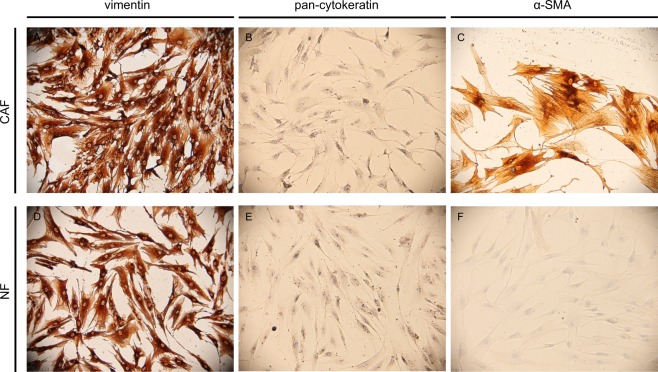
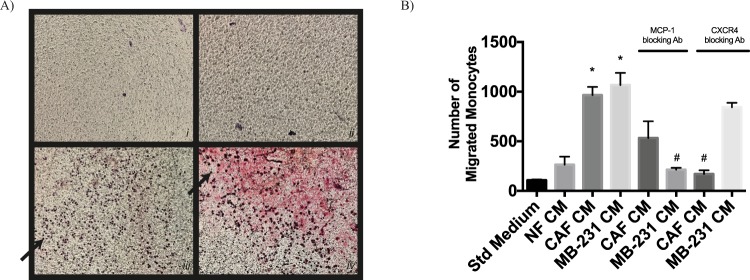
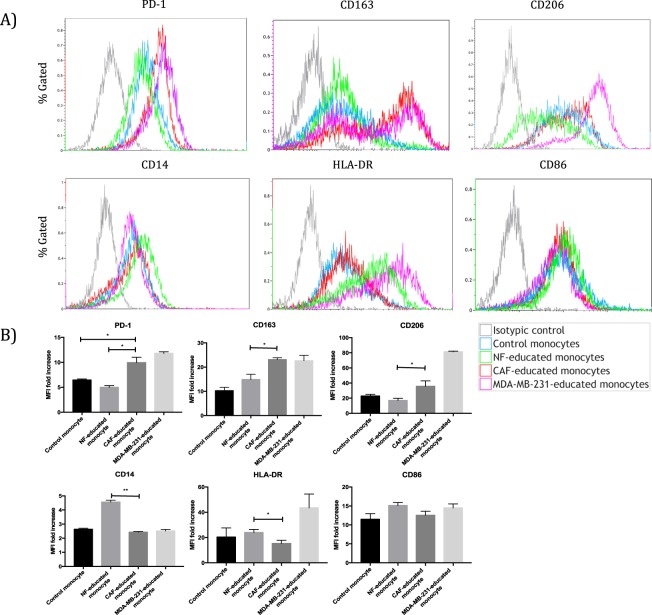
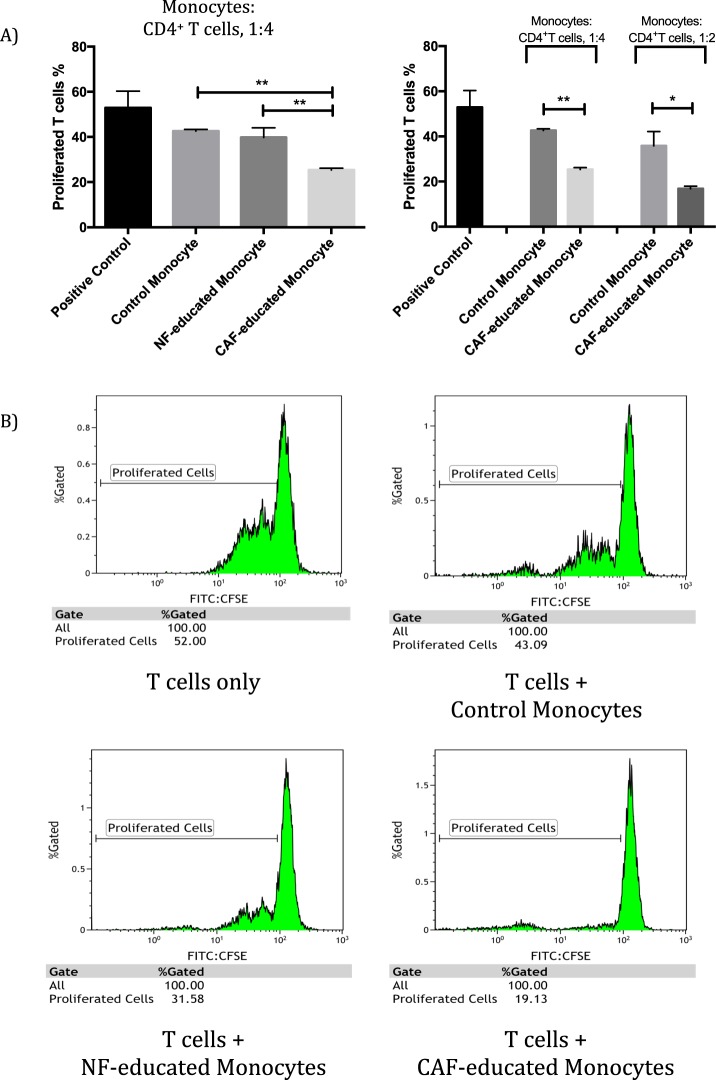
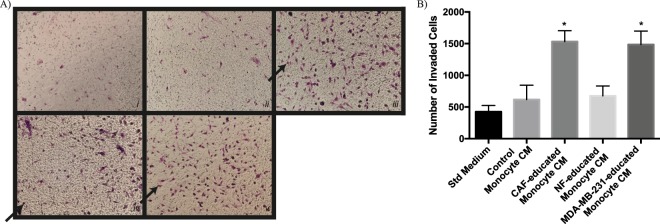
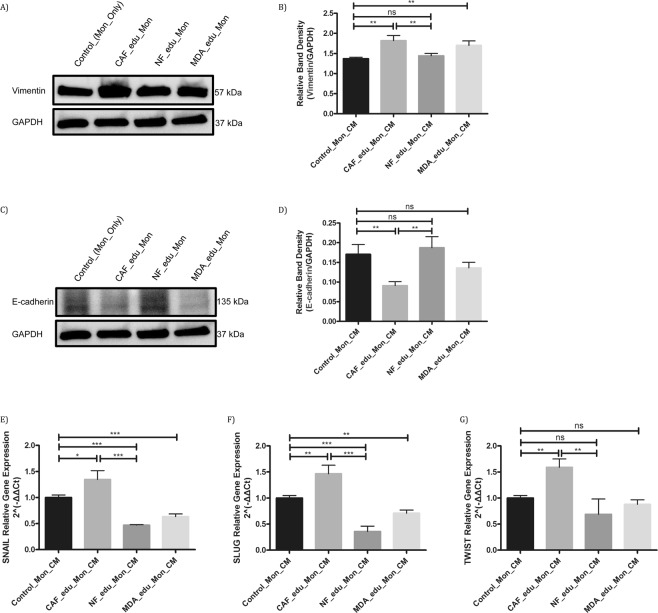
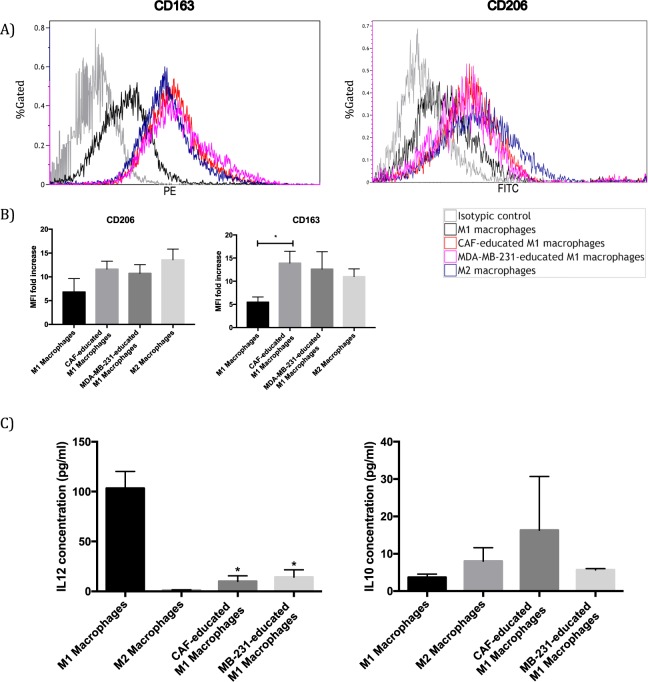
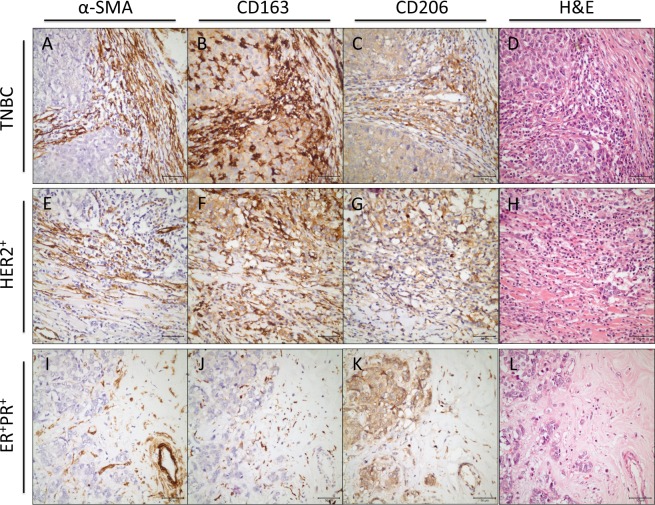
Fibroblasts turn into cancer associated fibroblasts (CAFs) in the tumour microenvironment. CAFs have recently attracted attention for their function as a regulator of immune cell recruitment and function in addition to their tumour-promoting roles. In this study, we aimed to determine the role of CAFs on monocyte recruitment and macrophage polarization in breast cancer. CAFs, which were α-SMA expressing fibroblasts in contrast to normal fibroblasts (NFs), effectively recruited monocytes. Recruitment of monocytes by CAFs might be mediated by monocyte chemotactic protein-1 (MCP-1) as well as stromal cell-derived factor-1 (SDF-1) cytokines. CAFs differentiated the recruited monocytes into M2-like macrophages which are capable of exerting their immunosuppressive roles via the PD-1 axis. CAF-educated monocytes exhibited strong immune suppression unlike NF-educated monocytes and enhanced the motility/invasion of breast cancer cells in addition to increasing the expressions of epithelial–mesenchymal transition (EMT)-related genes and vimentin protein in cancer cells. CAF-educated M1 macrophages displayed increased expression of M2 markers and production of anti-inflammatory cytokine IL-10 in contrast to decreased production of pro-inflammatory cytokine IL-12 compared with control M1 macrophages; suggesting that CAFs were also able to induce the trans-differentiation of M1 macrophages to M2 macrophages. We then investigated the relationship between the infiltration of CAFs and tumour associated macrophages (TAMs) using tissue samples obtained from breast cancer patients. High grade of CAFs significantly correlated with the number of TAMs in human breast cancer tissue samples. It was also associated with higher Ki-67 proliferation index, and higher tumour volume. This result is in line with our finding of increased breast cancer cell proliferation due to the effects of CAF-educated monocytes in vitro. Our results concluded that CAFs play pivotal roles in sculpturing the tumour microenvironment in breast cancer, and therapeutic strategies to reverse the CAF-mediated immunosuppressive microenvironment should be taken into consideration.
Overview
The claims and statistics of this paper haven’t been checked yet.
Free: it reads the open-access text and checks the first 5 claims that cite a source we can check. Create a free account to check every claim.
Integrity signals
Registry
Cites
Statistics
Figures
Verification
Claims the paper makes
The claims and statistics of this paper haven’t been checked yet.
Free: it reads the open-access text and checks the first 5 claims that cite a source we can check. Create a free account to check every claim.
Claims other papers make about this one
Each is checked against this paper’s own text: does it say what the citing paper says it does?
The cited source says what the claim attributes to it.
In the citing paper
“CAFs produce ECM proteins, which prompts immunosuppression of tumor cells by recruiting immunosuppressive cells [64, 65] such as monocytes and inducing immunosuppressive PD-1+ TAMs, as recently shown in breast cancer cells in vitro [66].”
From Tumor microenvironment complexity and therapeutic implications at a glance (2020) · cites this paper as [66]
The check wasn’t confident either way, so it gives no verdict — never disputed.
In the citing paper
“Multiple circulating cytokines and chemokines decreased after FMT in Rs, including CCL2 (MCP1), CXCL8 (IL-8), and IL-18 that have been associated with negative outcomes to anti–PD-1 (32, 33), and IL-12p70 and IFN-γ (Fig. 4A, heatmap).”
From Fecal microbiota transplant overcomes resistance to anti–PD-1 therapy in melanoma patients (2021) · cites this paper as [32]
Experimental — accuracy not yet measured
Self-check
Percentages, sums and reported differences re-computed from the paper’s own numbers.
The self-check needs the paper’s full text.
Citations
Cites
PD-1 and PD-L1 Immune Checkpoint Blockade to Treat Breast Cancer
Hartkopf, A. D., Taran, F.-A., Wallwiener, M., Walter, C. B., Krämer, B., Grischke, E.-M., & Brucker, S. Y. (2016) · Breast Care · doi:10.1159/000453569 · Cited by 30,845
Adverse Renal Effects of Immune Checkpoint Inhibitors: A Narrative Review
Wanchoo, R., Karam, S., Uppal, N. N., Barta, V. S., Deray, G., Devoe, C., Launay-Vacher, V., Jhaveri, K. D., & on behalf of Cancer and Kidney International Network Workgroup on Immune Checkpoint Inhibitors (2017) · American Journal of Nephrology · doi:10.1159/000455014 · Cited by 15,256
Safety, activity, and immune correlates of anti–PD-1 antibody in cancer
Topalian, S. L., Hodi, F. S., Brahmer, J. R., Gettinger, S. N., Smith, D. C., McDermott, D. F., Powderly, J. D., Carvajal, R. D., Sosman, J. A., Atkins, M. B., et al. (2012) · New England Journal of Medicine · doi:10.1056/nejmoa1200690 · Cited by 12,628
Exploring the full spectrum of macrophage activation
Mosser, D. M., & Edwards, J. P. (2008) · Nature Reviews Immunology · doi:10.1038/nri2448 · Cited by 9,144
Inflammation and cancer: back to Virchow?
Balkwill, F., & Mantovani, A. (2001) · The Lancet · doi:10.1016/s0140-6736(00)04046-0 · Cited by 7,746
The chemokine system in diverse forms of macrophage activation and polarization
MANTOVANI, A., SICA, A., SOZZANI, S., ALLAVENA, P., VECCHI, A., & LOCATI, M. (2004) · Trends in Immunology · doi:10.1016/j.it.2004.09.015 · Cited by 6,534
Macrophage activation and polarization: nomenclature and experimental guidelines
Murray, P. J., Allen, J. E., Biswas, S. K., Fisher, E. A., Gilroy, D. W., Goerdt, S., Gordon, S., Hamilton, J. A., Ivashkiv, L. B., Lawrence, T., et al. (2014) · Immunity · doi:10.1016/j.immuni.2014.06.008 · Cited by 6,337
Macrophage plasticity and polarization: in vivo veritas
Sica, A., & Mantovani, A. (2012) · Journal of Clinical Investigation · doi:10.1172/jci59643 · Cited by 6,335
Freeman, G. J., Long, A. J., Iwai, Y., Bourque, K., Chernova, T., Nishimura, H., Fitz, L. J., Malenkovich, N., Okazaki, T., Byrne, M. C., et al. (2000) · The Journal of Experimental Medicine · doi:10.1084/jem.192.7.1027 · Cited by 5,294
Macrophage biology in development, homeostasis and disease
Wynn, T. A., Chawla, A., & Pollard, J. W. (2013) · Nature · doi:10.1038/nature12034 · Cited by 4,684
Tumors: Wounds That Do Not Heal
Flier, J. S., Underhill, L. H., & Dvorak, H. F. (1986) · New England Journal of Medicine · doi:10.1056/nejm198612253152606 · Cited by 4,391
Tumor-Associated Macrophages: From Mechanisms to Therapy
Noy, R., & Pollard, J. W. (2014) · Immunity · doi:10.1016/j.immuni.2014.06.010 · Cited by 4,089
Orimo, A., Gupta, P. B., Sgroi, D. C., Arenzana-Seisdedos, F., Delaunay, T., Naeem, R., Carey, V. J., Richardson, A. L., & Weinberg, R. A. (2005) · Cell · doi:10.1016/j.cell.2005.02.034 · Cited by 3,759
Tumour-educated macrophages promote tumour progression and metastasis
Pollard, J. W. (2004) · Nature Reviews Cancer · doi:10.1038/nrc1256 · Cited by 3,367
CCL2 recruits inflammatory monocytes to facilitate breast-tumour metastasis
Qian, B.-Z., Li, J., Zhang, H., Kitamura, T., Zhang, J., Campion, L. R., Kaiser, E. A., Snyder, L. A., & Pollard, J. W. (2011) · Nature · doi:10.1038/nature10138 · Cited by 2,874
Nishimura, H., Nose, M., Hiai, H., Minato, N., & Honjo, T. (1999) · Immunity · doi:10.1016/s1074-7613(00)80089-8 · Cited by 2,749
Macrophages: Obligate Partners for Tumor Cell Migration, Invasion, and Metastasis
Condeelis, J., & Pollard, J. W. (2006) · Cell · doi:10.1016/j.cell.2006.01.007 · Cited by 2,695
A Lineage of Myeloid Cells Independent of Myb and Hematopoietic Stem Cells
Schulz, C., Perdiguero, E. G., Chorro, L., Szabo-Rogers, H., Cagnard, N., Kierdorf, K., Prinz, M., Wu, B., Jacobsen, S. E. W., Pollard, J. W., et al. (2012) · Science · doi:10.1126/science.1219179 · Cited by 2,578
PD-1 expression by tumour-associated macrophages inhibits phagocytosis and tumour immunity
Gordon, S. R., Maute, R. L., Dulken, B. W., Hutter, G., George, B. M., McCracken, M. N., Gupta, R., Tsai, J. M., Sinha, R., Corey, D., et al. (2017) · Nature · doi:10.1038/nature22396 · Cited by 2,247
Bingle, L., Brown, N. J., & Lewis, C. E. (2002) · The Journal of Pathology · doi:10.1002/path.1027 · Cited by 2,022
Sica, A., Schioppa, T., Mantovani, A., & Allavena, P. (2006) · European Journal of Cancer · doi:10.1016/j.ejca.2006.01.003 · Cited by 1,451
CXCL12 (SDF-1)/CXCR4 Pathway in Cancer
Teicher, B. A., & Fricker, S. P. (2010) · Clinical Cancer Research · doi:10.1158/1078-0432.ccr-09-2329 · Cited by 1,449
The cellular and molecular origin of tumor-associated macrophages
Franklin, R. A., Liao, W., Sarkar, A., Kim, M. V., Bivona, M. R., Liu, K., Pamer, E. G., & Li, M. O. (2014) · Science · doi:10.1126/science.1252510 · Cited by 1,393
Movahedi, K., Laoui, D., Gysemans, C., Baeten, M., Stangé, G., Van den Bossche, J., Mack, M., Pipeleers, D., In't Veld, P., De Baetselier, P., et al. (2010) · Cancer Research · doi:10.1158/0008-5472.can-09-4672 · Cited by 1,239
Neutralizing Tumor-Promoting Chronic Inflammation: A Magic Bullet?
Coussens, L. M., Zitvogel, L., & Palucka, A. K. (2013) · Science · doi:10.1126/science.1232227 · Cited by 1,079
Macrophage activation switching: an asset for the resolution of inflammation
Porcheray, F., Viaud, S., Rimaniol, A.-C., Léone, C., Samah, B., Dereuddre-Bosquet, N., Dormont, D., & Gras, G. (2005) · Clinical and Experimental Immunology · doi:10.1111/j.1365-2249.2005.02934.x · Cited by 840
Su, S., Liu, Q., Chen, J., Chen, J., Chen, F., He, C., Huang, D., Wu, W., Lin, L., Huang, W., et al. (2014) · Cancer Cell · doi:10.1016/j.ccr.2014.03.021 · Cited by 772
Gocheva, V., Wang, H.-W., Gadea, B. B., Shree, T., Hunter, K. E., Garfall, A. L., Berman, T., & Joyce, J. A. (2010) · Genes & Development · doi:10.1101/gad.1874010 · Cited by 740
Stromal myofibroblasts are drivers of invasive cancer growth
De Wever, O., Demetter, P., Mareel, M., & Bracke, M. (2008) · International Journal of Cancer · doi:10.1002/ijc.23925 · Cited by 722
Cancer-related inflammation: Common themes and therapeutic opportunities
Balkwill, F. R., & Mantovani, A. (2012) · Seminars in Cancer Biology · doi:10.1016/j.semcancer.2011.12.005 · Cited by 685
Medrek, C., Pontén, F., Jirström, K., & Leandersson, K. (2012) · BMC Cancer · doi:10.1186/1471-2407-12-306 · Cited by 647
Karagiannis, G. S., Poutahidis, T., Erdman, S. E., Kirsch, R., Riddell, R. H., & Diamandis, E. P. (2012) · Molecular Cancer Research · doi:10.1158/1541-7786.mcr-12-0307 · Cited by 507
Mannose Receptor-Mediated Regulation of Serum Glycoprotein Homeostasis
Lee, S. J., Evers, S., Roeder, D., Parlow, A. F., Risteli, J., Risteli, L., Lee, Y. C., Feizi, T., Langen, H., & Nussenzweig, M. C. (2002) · Science · doi:10.1126/science.1069540 · Cited by 484
Human breast cancer cells educate macrophages toward the M2 activation status
Sousa, S., Brion, R., Lintunen, M., Kronqvist, P., Sandholm, J., Mönkkönen, J., Kellokumpu-Lehtinen, P.-L., Lauttia, S., Tynninen, O., Joensuu, H., et al. (2015) · Breast Cancer Research · doi:10.1186/s13058-015-0621-0 · Cited by 415
Macrophages orchestrate breast cancer early dissemination and metastasis
Linde, N., Casanova-Acebes, M., Sosa, M. S., Mortha, A., Rahman, A., Farias, E., Harper, K., Tardio, E., Reyes Torres, I., Jones, J., et al. (2018) · Nature Communications · doi:10.1038/s41467-017-02481-5 · Cited by 413
Systematic validation of specific phenotypic markers for in vitro polarized human macrophages
Ambarus, C. A., Krausz, S., van Eijk, M., Hamann, J., Radstake, T. R. D. J., Reedquist, K. A., Tak, P. P., & Baeten, D. L. P. (2012) · Journal of Immunological Methods · doi:10.1016/j.jim.2011.10.013 · Cited by 411
Three pathways to mature macrophages in the early mouse yolk sac
Bertrand, J. Y., Jalil, A., Klaine, M., Jung, S., Cumano, A., & Godin, I. (2005) · Blood · doi:10.1182/blood-2005-02-0461 · Cited by 314
The Macrophage Growth Factor CSF-1 in Mammary Gland Development and Tumor Progression
Lin, E. Y., Gouon-Evans, V., Nguyen, A. V., & Pollard, J. W. (2002) · Journal of Mammary Gland Biology and Neoplasia · doi:10.1023/a:1020399802795 · Cited by 294
Cohen, N., Shani, O., Raz, Y., Sharon, Y., Hoffman, D., Abramovitz, L., & Erez, N. (2017) · Oncogene · doi:10.1038/onc.2017.65 · Cited by 292
Herrera, M., Herrera, A., Domínguez, G., Silva, J., García, V., García, J. M., Gómez, I., Soldevilla, B., Muñoz, C., Provencio, M., et al. (2013) · Cancer Science · doi:10.1111/cas.12096 · Cited by 289
Cytokine regulation of angiogenesis in breast cancer: the role of tumor-associated macrophages
Lewis, C. E., Leek, R., Harris, A., & McGee, J. O. (1995) · Journal of Leukocyte Biology · doi:10.1002/jlb.57.5.747 · Cited by 286
Zheng, X., Turkowski, K., Mora, J., Brüne, B., Seeger, W., Weigert, A., & Savai, R. (2017) · Oncotarget · doi:10.18632/oncotarget.17061 · Cited by 277
Regulation of the anti-tumour immune response by cancer-associated fibroblasts
Harper, J., & Sainson, R. C. A. (2014) · Seminars in Cancer Biology · doi:10.1016/j.semcancer.2013.12.005 · Cited by 268
Kellermann, M. G., Sobral, L. M., da Silva, S. D., Zecchin, K. G., Graner, E., Lopes, M. A., Kowalski, L. P., & Coletta, R. D. (2007) · Oral Oncology · doi:10.1016/j.oraloncology.2007.07.001 · Cited by 168
CD163+ M2c-like macrophages predominate in renal biopsies from patients with lupus nephritis
Olmes, G., Büttner-Herold, M. J., Ferrazzi, F., Distel, L. V., Amann, K., & Daniel, C. (2016) · Arthritis Research & Therapy · doi:10.1186/s13075-016-0989-y · Cited by 152
Heterogeneity of stromal fibroblasts in tumor
Orimo, A., & Weinberg, R. A. (2007) · Cancer Biology & Therapy · doi:10.4161/cbt.6.4.4255 · Cited by 143
In Vivo Depletion of CD206+ M2 Macrophages Exaggerates Lung Injury in Endotoxemic Mice
Kambara, K., Ohashi, W., Tomita, K., Takashina, M., Fujisaka, S., Hayashi, R., Mori, H., Tobe, K., & Hattori, Y. (2014) · American Journal Of Pathology · doi:10.1016/j.ajpath.2014.09.005 · Cited by 99
Helm, O., Mennrich, R., Petrick, D., Goebel, L., Freitag‐Wolf, S., Röder, C., Kalthoff, H., Röcken, C., Sipos, B., Kabelitz, D., et al. (2014) · PLoS ONE · doi:10.1371/journal.pone.0094357 · Cited by 83
Behavior of immune players in the tumor microenvironment
Pittet, M. J. (2009) · Current Opinion in Oncology · doi:10.1097/cco.0b013e32831bc38a · Cited by 83
Phenotypic Skewing of Macrophages In Vitro by Secreted Factors from Colorectal Cancer Cells
Edin, S., Wikberg, M. L., Rutegård, J., Oldenborg, P.-A., & Palmqvist, R. (2013) · PLoS ONE · doi:10.1371/journal.pone.0074982 · Cited by 78
Ksiazkiewicz, M., Gottfried, E., Kreutz, M., Mack, M., Hofstaedter, F., & Kunz-Schughart, L. A. (2010) · Immunobiology · doi:10.1016/j.imbio.2010.05.019 · Cited by 76
Ohlsson, S. M., Linge, P., Gullstrand, B., Lood, C., Johansson, Å. C. M., Ohlsson, S., Lundqvist, A., Bengtsson, A. A., Carlsson, F., & Hellmark, T. (2014) · Clinical Immunology · doi:10.1016/j.clim.2014.02.016 · Cited by 65
Gunaydin, G., Kesikli, S. A., & Guc, D. (2015) · OncoImmunology · doi:10.1080/2162402x.2015.1034918 · Cited by 59
Increased circulating M2-like monocytes in patients with breast cancer
Zhang, B., Cao, M., He, Y., Liu, Y., Zhang, G., Yang, C., Du, Y., Xu, J., Hu, J., & Gao, F. (2017) · Tumor Biology · doi:10.1177/1010428317711571 · Cited by 47
High ASMA+ Fibroblasts and Low Cytoplasmic HMGB1+ Breast Cancer Cells Predict Poor Prognosis
Amornsupak, K., Jamjuntra, P., Warnnissorn, M., O‐charoenrat, P., Sa-nguanraksa, D., Thuwajit, P., Eccles, S. A., & Thuwajit, C. (2017) · Clinical Breast Cancer · doi:10.1016/j.clbc.2017.04.007 · Cited by 39
Günaydın, G., Dölen, Y., Ünver, N., Altug, K. S., & Güç, D. (2013) · Frontiers in Immunology · doi:10.3389/conf.fimmu.2013.02.01132 · Cited by 3
Cited by
Mao, X., Xu, J., Wang, W., Liang, C., Hua, J., Liu, J., Zhang, B., Meng, Q., Yu, X., & Shi, S. (2021) · Molecular Cancer · doi:10.1186/s12943-021-01428-1 · Cited by 2,290
“A high level of PD-1 expression in TAMs was proven to be involved in both innate and adaptive antitumor immune response suppression by subsequent studies, including decreasing their own phagocytic potency against tumor cells and inhibiting T-cell infiltration and proliferation [140].”
BackgroundTumor microenvironment complexity and therapeutic implications at a glance
Baghban, R., Roshangar, L., Jahanban-Esfahlan, R., Seidi, K., Ebrahimi-Kalan, A., Jaymand, M., Kolahian, S., Javaheri, T., & Zare, P. (2020) · Cell Communication and Signaling · doi:10.1186/s12964-020-0530-4 · Cited by 1,784
“CAFs produce ECM proteins, which prompts immunosuppression of tumor cells by recruiting immunosuppressive cells [64, 65] such as monocytes and inducing immunosuppressive PD-1+ TAMs, as recently shown in breast cancer cells in vitro [66].”
BackgroundFecal microbiota transplant overcomes resistance to anti–PD-1 therapy in melanoma patients
Davar, D., Dzutsev, A. K., McCulloch, J. A., Rodrigues, R. R., Chauvin, J.-M., Morrison, R. M., Deblasio, R. N., Menna, C., Ding, Q., Pagliano, O., et al. (2021) · Science · doi:10.1126/science.abf3363 · Cited by 1,781
Cold and hot tumors: from molecular mechanisms to targeted therapy
Wu, B., Zhang, B., Li, B., Wu, H., & Jiang, M. (2024) · Signal Transduction and Targeted Therapy · doi:10.1038/s41392-024-01979-x · Cited by 682
Activated fibroblasts in cancer: Perspectives and challenges
Caligiuri, G., & Tuveson, D. A. (2023) · Cancer Cell · doi:10.1016/j.ccell.2023.02.015 · Cited by 424
Metadata
- Authors
- Gok Yavuz, B., Gunaydin, G., Gedik, M. E., Kosemehmetoglu, K., Karakoc, D., Ozgur, F., & Guc, D.
- Affiliations
- Hacettepe University (TR)
- Venue
- Scientific Reports
- Published
- 2019-02-28
- Volume
- 9
- Issue
- 1
- Pages
- 3172-3172
- ISSN
- 2045-2322 (ISSN-L)
- PMC
- PMC6395633
- OpenAlex
- W2916860038
- Semantic Scholar
- d39f486d6d7e35d28adf8c6a26081e738d3f2db3
- Cited by
- 292
- References
- 56
- Citations by year
- 2026: 31 · 2025: 28 · 2024: 46 · 2023: 49 · 2022: 52 · 2021: 50 · 2020: 31 · 2019: 5
- FWCI
- 13.79
- Type
- journal article
- Language
- en
- Open access
- gold
- doi.org
- Licence
- cc-by
- creativecommons.org/licenses/by/4.0 (tdm)
- creativecommons.org/licenses/by/4.0 (vor)
- Locations
- Scientific Reports (publishedVersion, cc-by)
- Europe PMC (PubMed Central) (publishedVersion, other-oa)
- PubMed Central (publishedVersion, cc-by)
- PubMed (publishedVersion)
- DOAJ (DOAJ: Directory of Open Access Journals) (submittedVersion)
- Funders
- Hacettepe University Scientific Research Projects Coordination Unit
- Topics
- Life Sciences › Immunology and Microbiology › Immunology › Immune cells in cancer
- Health Sciences › Medicine › Oncology › Cancer Cells and Metastasis
- Life Sciences › Biochemistry, Genetics and Molecular Biology › Molecular Biology › TGF-β signaling in diseases
- Keywords
- cancer-associated fibroblasts, tumor microenvironment, monocyte recruitment, macrophage polarization, tumour-associated macrophages, PD-1, immunosuppression, breast cancer, M2 macrophages, MCP-1, CXCL12, epithelial-mesenchymal transition, tumor invasion, IL-10, IL-12, Ki-67 proliferation index
- MeSH terms
- Cancer-Associated Fibroblasts, Breast Neoplasms, Cell Differentiation, Cell Movement, Female, Humans, Macrophage Activation, Macrophages, Monocytes, Gene Expression Regulation, Neoplastic, Interleukin-10, Interleukin-12, Chemokine CCL2, Ki-67 Antigen, Cell Proliferation, Chemokine CXCL12, Epithelial-Mesenchymal Transition, Tumor Microenvironment, Programmed Cell Death 1 Receptor
About these checks
Registry, retraction, Cites and statistics results are computed, not judged, with one exception: a printed reference that no index lists is read once by a model before it counts as a citation error. Claims are extracted by a model and kept only when their quote appears verbatim in the text; each cited source is then checked, with a model’s help, for whether it says what the claim relies on. Those verdicts can be wrong — read the claim’s quote and the cited source before relying on one.
Statistics and arithmetic are recomputed, not judged.
Confidence bands are shown only for fields calibrated on our annotated test set. None is calibrated yet, so no band is shown.
What counts as a claim ›How we measure confidence ›How we check this ›
Are you an author, or do you see a problem with this page? Request a review
Data sources
Bibliographic data: Semantic Scholar, OpenAlex, Crossref.
Contains information from the Semantic Scholar Academic Graph Datasets, made available under the ODC Attribution License (ODC-BY 1.0).
Semantic Scholar’s data is described in: Kinney, R., et al. (2023). The Semantic Scholar Open Data Platform. arXiv:2301.10140.
