

Misophonia is associated with altered brain activity in the auditory cortex and salience network
Open accessThe DOI matches its Crossref record; 41 of the 42 references it cites were found in a registry or an index.
Abstract
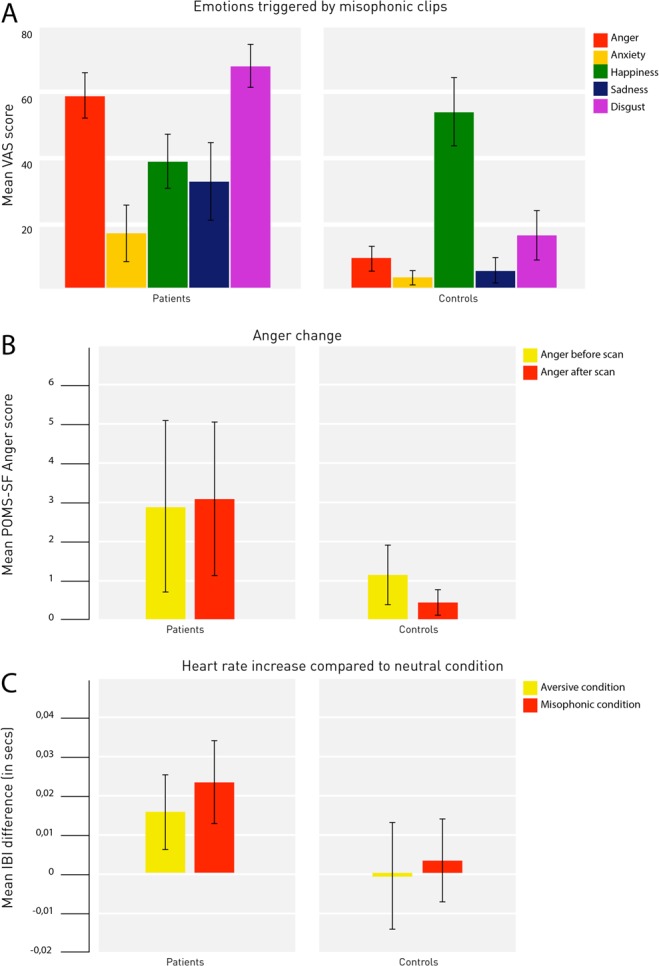
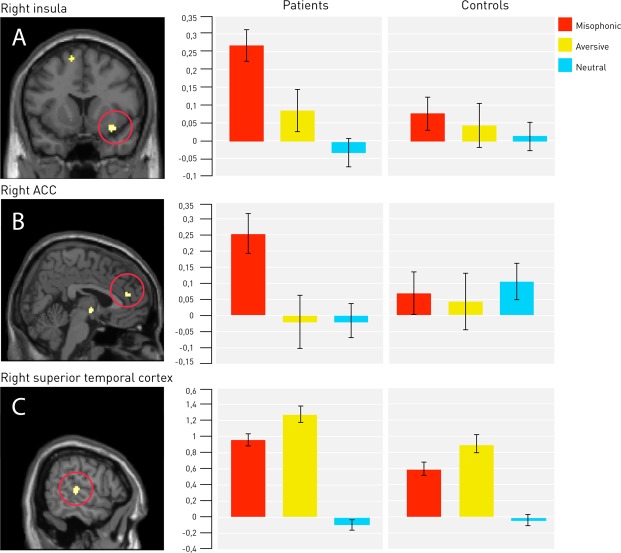
Misophonia is characterized by intense rage and disgust provoked by hearing specific human sounds resulting in social isolation due to avoidance. We exposed patients with symptom provoking audiovisual stimuli to investigate brain activity of emotional responses. 21 patients with misophonia and 23 matched healthy controls were recruited at the psychiatry department of the Amsterdam UMC. Participants were presented with three different conditions, misophonia related cues (video clips with e.g. lip smacking and loud breathing), aversive cues (violent or disgusting clips from movies), and neutral cues (video clips of e.g. someone meditating) during fMRI. Electrocardiography was recorded to determine physiological changes and self-report measures were used to assess emotional changes. Misophonic cues elicited anger, disgust and sadness in patients compared to controls. Emotional changes were associated with increases in heart rate. The neuroimaging data revealed increased activation of the right insula, right anterior cingulate cortex and right superior temporal cortex during viewing of the misophonic video clips compared to neutral clips. Our results demonstrate that audiovisual stimuli trigger anger and physiological arousal in patients with misophonia, associated with activation of the auditory cortex and salience network.
Overview
The claims and statistics of this paper haven’t been checked yet.
Free: it reads the open-access text and checks the first 5 claims that cite a source we can check. Create a free account to check every claim.
Integrity signals
Registry
Cites
Statistics
Figures
Verification
Claims the paper makes
The claims and statistics of this paper haven’t been checked yet.
Free: it reads the open-access text and checks the first 5 claims that cite a source we can check. Create a free account to check every claim.
Claims other papers make about this one
Each is checked against this paper’s own text: does it say what the citing paper says it does?
The check wasn’t confident either way, so it gives no verdict — never disputed.
In the citing paper
“Although it appears that this system functions adequately in misophonic patients, there are cases in which a neurological disorder coexists and overlaps the symptoms [2,44,46].”
From Misophonia: A Systematic Review of Current and Future Trends in This Emerging Clinical Field (2022) · cites this paper as [46]
Experimental — accuracy not yet measured
Self-check
Percentages, sums and reported differences re-computed from the paper’s own numbers.
The self-check needs the paper’s full text.
Citations
Cites
Hamilton, M. (1960) · Journal of Neurology, Neurosurgery & Psychiatry · doi:10.1136/jnnp.23.1.56 · Cited by 32,817
Tzourio-Mazoyer, N., Landeau, B., Papathanassiou, D., Crivello, F., Etard, O., Delcroix, N., Mazoyer, B., & Joliot, M. (2002) · NeuroImage · doi:10.1006/nimg.2001.0978 · Cited by 16,319
The assessment of anxiety states by rating
HAMILTON, M. (1959) · British Journal of Medical Psychology · doi:10.1111/j.2044-8341.1959.tb00467.x · Cited by 11,455
Dissociable intrinsic connectivity networks for salience processing and executive control
Seeley, W. W., Menon, V., Schatzberg, A. F., Keller, J., Glover, G. H., Kenna, H., Reiss, A. L., & Greicius, M. D. (2007) · The Journal of Neuroscience · doi:10.1523/jneurosci.5587-06.2007 · Cited by 7,426
How do you feel? Interoception: The sense of the physiological condition of the body
Craig, A. D. (2002) · Nature Reviews Neuroscience · doi:10.1038/nrn894 · Cited by 6,006
Saliency, switching, attention and control: a network model of insula function
Menon, V., & Uddin, L. Q. (2010) · Brain Structure and Function · doi:10.1007/s00429-010-0262-0 · Cited by 5,592
Buss, A. H., & Perry, M. (1992) · Journal of Personality and Social Psychology · doi:10.1037/0022-3514.63.3.452 · Cited by 4,693
SCL-90: an outpatient psychiatric rating scale--preliminary report.
Derogatis, L. R., Lipman, R. S., & Covi, L. (1973) · PubMed · Cited by 4,633
Functional neuroanatomy of emotion: A meta-analysis of emotion activation studies in PET and fMRI
Phan, K. L., Wager, T., Taylor, S. F., & Liberzon, I. (2002) · NeuroImage · doi:10.1006/nimg.2002.1087 · Cited by 3,502
A cortical area selective for visual processing of the human body
Downing, P. E., Jiang, Y., Shuman, M., & Kanwisher, N. (2001) · Science · doi:10.1126/science.1063414 · Cited by 2,043
Cited by
Consensus Definition of Misophonia: A Delphi Study
Swedo, S. E., Baguley, D. M., Denys, D., Dixon, L. J., Erfanian, M., Fioretti, A., Jastreboff, P. J., Kumar, S., Rosenthal, M. Z., Rouw, R., et al. (2022) · Frontiers in Neuroscience · doi:10.3389/fnins.2022.841816 · Cited by 249
Self-citationWilliams, Z. J., He, J. L., Cascio, C. J., & Woynaroski, T. G. (2021) · Neuroscience & Biobehavioral Reviews · doi:10.1016/j.neubiorev.2020.11.030 · Cited by 175
“Furthermore, preliminary neuroimaging studies of misophonia indicate that misophonic triggers elicit intense emotional responses that are coupled with hyperactivation of anterior insular cortex (Kumar et al., 2017; Schröder et al., 2019), a key node of the brain’s salience network (Menon & Uddin, 2010; Uddin, 2015).”
BackgroundDevelopment and Psychometric Properties of MisoQuest—A New Self-Report Questionnaire for Misophonia
Siepsiak, M., Śliwerski, A., & Łukasz Dragan, W. (2020) · International Journal of Environmental Research and Public Health · doi:10.3390/ijerph17051797 · Cited by 103
“At the same time, the data shows that most cases of misophonia develop in childhood [5,8,9,11,37].”
BackgroundRinaldi, L. J., Simner, J., Koursarou, S., & Ward, J. (2022) · Journal of Autism and Developmental Disorders · doi:10.1007/s10803-022-05623-x · Cited by 86
“For people with misophonia, trigger-sounds are associated with increased activation in anterior insular cortex (Kumar et al., 2017; Schroder et al., 2019), within the brain’s “salience network” (Menon and Uddin, 2010; Uddin 2015).”
BackgroundThe Motor Basis for Misophonia
Kumar, S., Dheerendra, P., Erfanian, M., Benzaquén, E., Sedley, W., Gander, P. E., Lad, M., Bamiou, D. E., & Griffiths, T. D. (2021) · The Journal of Neuroscience · doi:10.1523/jneurosci.0261-21.2021 · Cited by 85
“Using a similar paradigm with video clips as stimuli, Schroder et al. (2019) replicated the findings of hyperactivity in anterior insula to trigger stimuli in subjects with misophonia.”
MethodHow everyday sounds can trigger strong emotions: ASMR, misophonia and the feeling of wellbeing
McGeoch, P. D., & Rouw, R. (2020) · BioEssays · doi:10.1002/bies.202000099 · Cited by 81
“[50] While different proposals have been advanced to explain misopho-nia, there is currently no generally agreed upon theory.”
InfluentialPrevalence of Misophonia and Correlates of Its Symptoms among Inpatients with Depression
Siepsiak, M., Sobczak, A. M., Bohaterewicz, B., Cichocki, Ł., & Dragan, W. Ł. (2020) · International Journal of Environmental Research and Public Health · doi:10.3390/ijerph17155464 · Cited by 76
“At the same time, there is also significant data on the role of increased neuroticism in misophonia [14,41].”
BackgroundThe neurophysiological approach to misophonia: Theory and treatment
Jastreboff, P. J., & Jastreboff, M. M. (2023) · Frontiers in Neuroscience · doi:10.3389/fnins.2023.895574 · Cited by 71
Vitoratou, S., Uglik-Marucha, N., Hayes, C., & Gregory, J. (2021) · Psych · doi:10.3390/psych3040041 · Cited by 70
The neurobiology of misophonia and implications for novel, neuroscience-driven interventions
Neacsiu, A. D., Szymkiewicz, V., Galla, J. T., Li, B., Kulkarni, Y., & Spector, C. W. (2022) · Frontiers in Neuroscience · doi:10.3389/fnins.2022.893903 · Cited by 68
“Using a similar paradigm but changing the stimuli to include both video and audio, Schröder et al. (2019) compared 21 adults with misophonia with 23 controls.”
BackgroundMethodInfluentialDaniels, E. C., Rodriguez, A., & Zabelina, D. L. (2020) · PLOS ONE · doi:10.1371/journal.pone.0227118 · Cited by 65
“Based on prior literature showing that misophonia in general is linked with negative affect [9], we hypothesized that there would be a significant link between higher misophonia symptomatology and elevated anxiety levels after exposure to both the misophonia trigger sounds, and to the universally unpleasant sounds.”
BackgroundResultInfluentialMisophonia: A Systematic Review of Current and Future Trends in This Emerging Clinical Field
Ferrer-Torres, A., & Giménez-Llort, L. (2022) · International Journal of Environmental Research and Public Health · doi:10.3390/ijerph19116790 · Cited by 64
“The results indicated that misophonic audiovisual stimuli caused anger, disgust, and sadness among patients with misophonia, accompanied by physiological arousal and increased activity of the right insula, right anterior cingulate cortex, and right superior temporal cortex [46].”
BackgroundMethodInfluentialWhat sound sources trigger misophonia? Not just chewing and breathing
Hansen, H. A., Leber, A. B., & Saygin, Z. M. (2021) · Journal of Clinical Psychology · doi:10.1002/jclp.23196 · Cited by 63
Rinaldi, L. J., Smees, R., Ward, J., & Simner, J. (2022) · Frontiers in Psychology · doi:10.3389/fpsyg.2022.808379 · Cited by 56
A psychoacoustic test for misophonia assessment
Enzler, F., Loriot, C., Fournier, P., & Noreña, A. J. (2021) · Scientific Reports · doi:10.1038/s41598-021-90355-8 · Cited by 54
Does context matter in misophonia? A multi-method experimental investigation
Siepsiak, M., Vrana, S. R., Rynkiewicz, A., Rosenthal, M. Z., & Dragan, W. Ł. (2023) · Frontiers in Neuroscience · doi:10.3389/fnins.2022.880853 · Cited by 53
Aazh, H., Erfanian, M., Danesh, A. A., & Moore, B. C. J. (2022) · Frontiers in Neuroscience · doi:10.3389/fnins.2022.900065 · Cited by 53
A systematic review of treatments for misophonia
Mattson, S. A., D’Souza, J. M., Wojcik, K. D., Guzick, A. G., Goodman, W. K., & Storch, E. A. (2023) · Personalized Medicine in Psychiatry · doi:10.1016/j.pmip.2023.100104 · Cited by 47
A symptom network model of misophonia: From heightened sensory sensitivity to clinical comorbidity
Andermane, N., Bauer, M., Simner, J., & Ward, J. (2023) · Journal of Clinical Psychology · doi:10.1002/jclp.23552 · Cited by 43
Structural and functional brain abnormalities in misophonia
Eijsker, N., Schröder, A., Smit, D. J. A., van Wingen, G. A., & Denys, D. A. J. P. (2021) · European Neuropsychopharmacology · doi:10.1016/j.euroneuro.2021.05.013 · Cited by 42
Self-citationSpecificity of Affective Responses in Misophonia Depends on Trigger Identification
Savard, M.-A., Sares, A. G., Coffey, E. B. J., & Deroche, M. L. D. (2022) · Frontiers in Neuroscience · doi:10.3389/fnins.2022.879583 · Cited by 39
Neural Basis of Response Bias on the Stop Signal Task in Misophonia
Eijsker, N., Schröder, A., Smit, D. J. A., van Wingen, G., & Denys, D. (2019) · Frontiers in Psychiatry · doi:10.3389/fpsyt.2019.00765 · Cited by 39
Self-citationGrossini, E., Stecco, A., Gramaglia, C. M., Zanet, D. D., Cantello, R. M., Gori, B., Negroni, D., Azzolina, D., Ferrante, D., Feggi, A., et al. (2022) · Frontiers in Neuroscience · doi:10.3389/fnins.2022.827998 · Cited by 40
“A similar kind of experimental protocol was executed by Schröder et al. (2019), who conducted psychometric assessments and fMRI analysis in 21 participants with misophonia and 23 HCs.”
BackgroundMethodInfluentialAn Automated Online Measure for Misophonia: The Sussex Misophonia Scale for Adults
Simner, J., Rinaldi, L. J., & Ward, J. (2024) · Assessment · doi:10.1177/10731911241234104 · Cited by 35
“1 Misophonia symptoms have been linked to subtle organizational differences in the brain, including increased functional and structural connectivity in regions related to threat, emotion, and salience (Kumar et al., 2017; Schro¨der et al., 2019).”
White matter abnormalities in misophonia
Eijsker, N., Schröder, A., Liebrand, L. C., Smit, D. J. A., van Wingen, G. A., & Denys, D. A. J. P. (2021) · NeuroImage Clinical · doi:10.1016/j.nicl.2021.102787 · Cited by 35
“, 2017) and when setting the threshold for clinical significance based on symptom severity generally reported by help-seeking misophonia samples (Jager et al., 2020; Schröder et al., 2019), approximately 12% of undergraduates would report clinically significant symptoms (Naylor et al.”
BackgroundMethodSelf-citationSimner, J., Koursarou, S., Rinaldi, L. J., & Ward, J. (2021) · Journal of Clinical and Experimental Neuropsychology · doi:10.1080/13803395.2022.2056581 · Cited by 34
“…or adolescence (Rouw & Erfanian, 2018), but see also Cavanna & Seri (2015), and are related to subtle organizational differences in the brain, including increased functional and structural connectivity in regions related to threat, emotion, and salience (Kumar et al., 2017; Schröder et al., 2019).”
BackgroundBrain function effects of autonomous sensory meridian response (ASMR) video viewing
Sakurai, N., Nagasaka, K., Takahashi, S., Kasai, S., Onishi, H., & Kodama, N. (2023) · Frontiers in Neuroscience · doi:10.3389/fnins.2023.1025745 · Cited by 33
A social cognition perspective on misophonia
Berger, J. I., Gander, P. E., & Kumar, S. (2024) · Philosophical Transactions of the Royal Society B Biological Sciences · doi:10.1098/rstb.2023.0257 · Cited by 32
“[26] did not find any differences in amygdala activation between misophonia and control participants.”
InfluentialUnderstanding misophonia from an audiological perspective: a systematic review
Aryal, S., & Prabhu, P. (2022) · European Archives of Oto-Rhino-Laryngology · doi:10.1007/s00405-022-07774-0 · Cited by 27
“The right superior temporal cortex, right anterior insular cortex, and right anterior cingulate showed greater activity in the misophonic group than in the control group [10].”
BackgroundYektatalab, S., Mohammadi, A., & Zarshenas, L. (2022) · PubMed Central · doi:10.30476/ijcbnm.2022.92902.1888 · Cited by 26
Neural evidence for non-orofacial triggers in mild misophonia
Hansen, H. A., Stefancin, P. L., Leber, A. B., & Saygin, Z. M. (2022) · Frontiers in Neuroscience · doi:10.3389/fnins.2022.880759 · Cited by 26
“For instance, Schröder et al. (2019) defined and analyzed activation in the entire insula but spoke of their significant results as “confirming” the Kumar et al. (2017) anterior insula finding.”
BackgroundResultInfluentialToward a Multidimensional Understanding of Misophonia Using Cluster-Based Phenotyping
Norris, J. E., Kimball, S. H., Nemri, D. C., & Ethridge, L. E. (2022) · Frontiers in Neuroscience · doi:10.3389/fnins.2022.832516 · Cited by 25
“Recent work has demonstrated that misophonia triggers eliciting emotional reactions are accompanied by autonomic arousal with altered neural activity in the auditory cortex and the salience network (Schroder et al., 2019).”
BackgroundBodo, C. R., Sălcudean, A., Nirestean, A. P., Lukács, E., Lica, M. M., Muntean, D.-L., Anculia, R. C., Popovici, R. A., Neda-Stepan, O., ENĂTESCU, V. R., et al. (2024) · Children · doi:10.3390/children11060699 · Cited by 25
A Phenomenological Cartography of Misophonia and Other Forms of Sound Intolerance
Andermane, N., Bauer, M., Sohoglu, E., Simner, J., & Ward, J. (2022) · iScience · doi:10.1016/j.isci.2023.106299 · Cited by 24
“, in the insular cortex) but not for other kinds of sounds.(4,5) However, an absence of a group difference for non-trigger sounds should be interpreted”
BackgroundIncreased orbitofrontal connectivity in misophoniaPreprint
Cerliani, L., & Rouw, R. (2020) · bioRxiv (Cold Spring Harbor Laboratory) · doi:10.1101/2020.10.29.346650 · Cited by 22
“Only one study examining a specifically selected region of the secondary auditory cortex (lateral superior temporal gyrus) reported significantly increased brain activity during trigger vs. generic aversive stimuli in people with misophonia (Schröder et al., 2019).”
BackgroundMethodResultInfluentialVitoratou, S., Wang, J., Hayes, C., Wang, Q., Stefanatou, P., & Gregory, J. E. (2022) · Frontiers in Psychology · doi:10.3389/fpsyg.2022.879881 · Cited by 21
“Lip smacking was also reported as eliciting the most intense reaction in a Dutch study (Schröder et al., 2019).”
BackgroundJager, I., Vulink, N. C. C., van Loon, A. J., van der Pol, M. M., Schröder, A., Slaghekke, S., & Denys, D. A. J. P. (2022) · Frontiers in Psychiatry · doi:10.3389/fpsyt.2022.794343 · Cited by 19
“Two functional magnetic resonance imaging studies found evidence for this vigilance by showing increased activity in the auditory cortex and left amygdala in misophonia patients (5, 6).”
BackgroundSelf-citationNeacsiu, A. D., Beynel, L., Gerlus, N., LaBar, K. S., Bukhari‐Parlakturk, N., & Rosenthal, M. Z. (2024) · Journal of Affective Disorders · doi:10.1016/j.jad.2024.01.120 · Cited by 19
“…that misophonia may be an independent disorder (Neacsiu et al., 2022a), characterized by hyperactivity of the anterior insular cortex (AIC) in response to misophonic trigger stimuli (Kumar et al., 2017; Schr ¨ oder et al., 2019), and altered activity and connectivity of prefrontal structures.”
Auditory cortical functioning in individuals with misophonia: an electrophysiological investigation
Aryal, S., & Prabhu, P. (2023) · European Archives of Oto-Rhino-Laryngology · doi:10.1007/s00405-023-08318-w · Cited by 18
“Functional magnetic resonance imaging (fMRI) neuroimaging data, acquired while subjects were exposed to misophonic video clips as opposed to neutral ones, showcased increased activity in the right insula, right anterior cingulate cortex, and right superior temporal lobe [12, 13].”
Rinaldi, L. J., & Simner, J. (2023) · Child Psychiatry & Human Development · doi:10.1007/s10578-023-01569-y · Cited by 17
“Misophonia symptoms have been linked to subtle organisational differences in the brain, including increased functional and structural connectivity in regions related to threat, emotion, and salience [ 4 , 5].”
Murphy, N., Lijffijt, M., Guzick, A. G., Cervin, M., Clinger, J. W., Smith, E. E. A., Draper, I. A., Rast, C. E., Goodman, W. K., Schneider, S. C., et al. (2023) · Journal of Affective Disorders · doi:10.1016/j.jad.2023.11.088 · Cited by 17
Did Kant suffer from misophonia?
Noreña, A. J. (2024) · Frontiers in Psychology · doi:10.3389/fpsyg.2024.1242516 · Cited by 17
Ferrer-Torres, A., & Giménez-Llort, L. (2021) · Frontiers in Psychiatry · doi:10.3389/fpsyt.2021.638949 · Cited by 16
Toward cognitive models of misophonia
Savard, M., & Coffey, E. B. J. (2025) · Hearing Research · doi:10.1016/j.heares.2025.109184 · Cited by 16
Aazh, H. (2025) · Brain Sciences · doi:10.3390/brainsci15050526 · Cited by 15
Misophonia: An Evidence-Based Case Report
Vanaja, C. S., & Abigail, M. S. (2020) · American Journal of Audiology · doi:10.1044/2020_aja-19-00111 · Cited by 14
Examining the role of emotion regulation, anger, and anxiety in misophonia: A network model
Hanna, M. R., Collins, A. C., Shan, Y., Chen, B. B., Wang, S., & Rosenthal, M. Z. (2025) · PLoS ONE · doi:10.1371/journal.pone.0329920 · Cited by 14
“Neuroimaging research has revealed atypical connectivity in brain regions associated with emotion regulation and sensory processing, notably the anterior insular cortex (AIC) and the pre-frontal cortex [19,20].”
InfluentialAn evolutionary account of impairment of self in cognitive disorders
Benítez‐Burraco, A., Adornetti, I., Ferretti, F., & Progovac, L. (2022) · Cognitive Processing · doi:10.1007/s10339-022-01110-4 · Cited by 14
Hozaki, D., Ezaki, T., Poerio, G. L., & Kondo, H. M. (2025) · Neuroscience of Consciousness · doi:10.1093/nc/niaf012 · Cited by 14
“Insular cortex activation has also been observed in individuals with misophonia when they hear their trigger sounds, similar to what occurs during ASMR video viewing (Schröder et al. 2019).”
Uglik‐Marucha, N., Siepsiak, M., Zielińska, J., Dragan, W. Ł., Gregory, J. E., & Vitoratou, S. (2024) · Frontiers in Psychology · doi:10.3389/fpsyg.2024.1372870 · Cited by 13
Misophonia Is a Newly Defined Disorder, but Is It an Anxiety Disorder?
Rosenthal, M. Z., Shan, Y., & Hanna, M. R. (2026) · Annual Review of Clinical Psychology · doi:10.1146/annurev-clinpsy-061324-071140 · Cited by 12
Armstrong, G. M., Greenberg, R. L., Smárason, O., Frederick, R. M., Guzick, A. G., Schneider, S. C., Spencer, S. D., Cervin, M., & Storch, E. A. (2023) · Journal of Obsessive-Compulsive and Related Disorders · doi:10.1016/j.jocrd.2023.100831 · Cited by 12
Ward, R. T., Gilbert, F. E., Pouliot, J. J., Chiasson, P., McIlvanie, S., Traiser, C. M., Riels, K. M., Mears, R. P., & Keil, A. (2022) · Frontiers in Neuroscience · doi:10.3389/fnins.2022.899476 · Cited by 11
The Impact of Disgusting Sounds on Pupil Diameter of Misophonic and Non‐Misophonic Listeners
Oszczapinska, U., Park, S., Qiu, Y., Nance, B., Julien, M. M., & Heller, L. M. (2025) · Psychophysiology · doi:10.1111/psyp.70014 · Cited by 12
“Our findings provide support for Schröder et al. (2019) in that repeated exposure to trigger sounds does not diminish the emotional or physiological response that occurs.”
Urs, B. R. S., Nisha, K. V., & Prabhu, P. (2023) · European Archives of Oto-Rhino-Laryngology · doi:10.1007/s00405-023-08273-6 · Cited by 10
“Imaging studies have revealed increased activity while listening to a trigger stimulus in the right superior temporal cortex, right insula, right anterior cingulate cortex, left amygdala and right auditory cortex in misophonics [15–17].”
Preliminary validation of the Norwegian version of misophonia questionnaire (MQ-NOR)
Larsen, E.-A., Hovland, T., Nielsen, G. E., & Larsen, L. (2022) · International Journal of Audiology · doi:10.1080/14992027.2022.2111372 · Cited by 9
“However, some studies support an underlying neurobiological mechanism with evidence from functional magnetic resonance imaging of abnormal functional connectivity of the anterior insula (Kumar et al. 2017, 2021; Schr € oder et al. 2019) and a significantly smaller mean peak amplitude of the N1 event-related brain pote…”
BackgroundSpencer, S. D., Petersen, J. M., Schneider, R. L., Guzick, A. G., & Mcguire, J. F. (2024) · Research on Child and Adolescent Psychopathology · doi:10.1007/s10802-024-01247-0 · Cited by 9
“Concerning the former, a robust line of research has implicated a range of neurobiological and neurophysiological correlates of misophonia (e.g., Hansen et al., 2022; Kumar et al., 2017, 2021; Schröder et al., 2019; see Neacsiu et al., 2022 for a recent review).”
Misophonia symptom severity is linked to impaired flexibility and heightened rumination
Black, V. K., Allen, J. D., Aazh, H., Johnson, S. L., & Erfanian, M. (2025) · British Journal of Psychology · doi:10.1111/bjop.70025 · Cited by 10
“…are accompanied by autonomic nervous system arousal (de Gee et al., 2024; Edelstein et al., 2013; Kumar et al., 2017; Oszczapinska et al., 2024; Schröder et al., 2019) and altered neural activity in areas including those related to emotion processing, the salience of sensory stimuli and motor…”
Herdi, O., & Yıldırım, F. (2023) · Nöro Psikiyatri Arşivi · doi:10.29399/npa.28630 · Cited by 8
“Specifically, previous research has documented heightened anterior insular cortex activity (37) and salience network responses (47) in misophonic individuals following exposure to triggering stimuli.”
Brain circuits in autonomous sensory meridian response and related phenomena
Lin, I.-F., & Kondo, H. M. (2024) · Philosophical Transactions of the Royal Society B Biological Sciences · doi:10.1098/rstb.2023.0252 · Cited by 8
“Furthermore, misophonia is linked to increased functional connectivity between the insula and the mPFC, the key hubs in the SN and the DMN [114,115,117], indicating the link between the SN and the DMN.”
BackgroundAuditory affective processing, musicality, and the development of misophonic reactions
Mednicoff, S. D., Barashy, S., Gonzales, D., Benning, S. D., Snyder, J. S., & Hannon, E. E. (2022) · Frontiers in Neuroscience · doi:10.3389/fnins.2022.924806 · Cited by 8
“A few of the regions of the brain implicated in the pathology of ASD include the insula, amygdala, and salience network (Uddin and Menon, 2009; Dziobek et al., 2010; Green et al., 2016), which are also regions implicated in misophonia (Kumar et al., 2017; Schröder et al., 2019).”
InfluentialDugre, J. R., Hopfer, C. J., & Winters, D. E. (2025) · Aggression and Violent Behavior · doi:10.1016/j.avb.2025.102035 · Cited by 8
Opening a window into the riddle of misophonia, sensory over-responsiveness, and pain
Kaufman, A. E., Weissman‐Fogel, I., Rosenthal, M. Z., Kaplan‐Neeman, R., & Bar‐Shalita, T. (2022) · Frontiers in Neuroscience · doi:10.3389/fnins.2022.907585 · Cited by 8
“…reports on sensory hyper-sensitivity in other modalities beyond audition in individuals with misophonia (Edelstein et al., 2013; Wu et al., 2014; Schröder et al., 2019), and since pain perception has not been reported in misophonia, it is worthy to study SOR and pain perception in individuals…”
BackgroundMDMA for the treatment of misophonia, a proposal
Webb, J., & Keane, S. (2022) · Frontiers in Psychiatry · doi:10.3389/fpsyt.2022.983285 · Cited by 7
Mednicoff, S. D., Barashy, S., Vollweiler, D. J., Benning, S. D., Snyder, J. S., & Hannon, E. E. (2024) · Philosophical Transactions of the Royal Society B Biological Sciences · doi:10.1098/rstb.2023.0253 · Cited by 8
Humolli, M., Poerio, G. L., & Simner, J. (2025) · Hearing Research · doi:10.1016/j.heares.2025.109512 · Cited by 7
Dozier, T. H., & Mitchell, N. (2023) · F1000Research · doi:10.12688/f1000research.133506.3 · Cited by 7
Treatment of Misophonia with Risperidone in a Patient with Autism Spectrum Disorder
Pan, E. J., Weleff, J., Anand, A., & Barnett, B. S. (2022) · Case Reports in Psychiatry · doi:10.1155/2022/3169834 · Cited by 7
“The specific sound cue is believed to activate the right insula, right anterior cingulate cortex, and the right superior temporal cortex, resulting in the intense negative reaction experienced by the individual [11].”
BackgroundAbdallah, Y. K. (2025) · Architecture · doi:10.3390/architecture5040085 · Cited by 7
“Similarly, Schröder et al., 2019, exhibited statistical maps showing increased activation in patients during a Misophonic event in three regions of interest: the Right Insula, Right Anterior Cingulate Cortex, and Right Superior Temporal Cortex.”
Early maladaptive schemas in misophonia
Stalias-Mantzikos, M. E., Barahmand, U., Aguero, K., Peters, L., & Shamsina, N. (2023) · Clinical Psychologist · doi:10.1080/13284207.2023.2171786 · Cited by 7
Xie, L., Martín, R. D.-S., Fink, S., Singer, W., Wolpert, S., Rüttiger, L., & Knipper, M. (2025) · Hearing Research · doi:10.1016/j.heares.2025.109305 · Cited by 6
Visual disgust constricts pupils in response to misophonic movies
Qiu, Y., Park, S., Oszczapinska, U., & Heller, L. M. (2025) · Frontiers in Psychology · doi:10.3389/fpsyg.2025.1569598 · Cited by 6
Shan, Y., Chen, B., Moskovich, A. A., Siepsiak, M., Wang, S., & Rosenthal, M. Z. (2026) · Journal of Affective Disorders · doi:10.1016/j.jad.2026.121429 · Cited by 7
Curation of FOAMS: a Free Open-Access Misophonia Stimuli Database
Orloff, D., Benesch, D., & Hansen, H. A. (2023) · Journal of Open Psychology Data · doi:10.5334/jopd.94 · Cited by 7
“Additionally, given the individual differences in misophonic experiences, researchers could benefit from individually tailoring their experiments to each individual’s trigger sounds, an ideal put forth by Schröder et al. (2019).”
Hansen, H. A., Norris, J. E., Bain, C. M., Ethridge, L. E., & Tardif, C. L. (2026) · Human Brain Mapping · doi:10.1002/hbm.70468 · Cited by 6
“A study shortly thereafter showed increased activation in the insula and in the anterior cingulate cortex in individuals with misopho-nia ( N = 21) compared to controls ( N = 23) when presented with audiovisual triggers (Schröder et al. 2019).”
Investigating Neurophysiological, Perceptual, and Cognitive Mechanisms in Misophonia
Patro, C., Wasko, E., Prabhu, P., & Srinivasan, N. K. (2025) · Biology · doi:10.3390/biology14030238 · Cited by 6
“Furthermore, the anterior cingulate cortex (ACC; involved with top-down executive control) and superior temporal cortex have also shown hyperactivity, indicating a broader network dysfunction in response to misophonic stimuli [6].”
Sound-evoked pupil dilation quantifies misophonic symptoms
de Gee, J. W., Marmelstein, L. A., Schwarz-Roman, K., & Rouw, R. (2026) · PLoS ONE · doi:10.1371/journal.pone.0348278 · Cited by 6
“Other physiological measures, such as galvanic skin response and heart rate variability [1,4,11,39], suffer from practical issues in the context of misophonia: these methods are relatively noisy and sluggish [40] and require and reproduction in any medium, provided the original author and source…”
InfluentialPrevalence of Misophonia and Its Characteristics among Amity University Students in India
Yadav, N., Aryal, S., Gupta, D. K., Kaushik, C., & Prabhu, P. (2024) · Indian Journal of Otology · doi:10.4103/indianjotol.indianjotol_117_23 · Cited by 5
Treatment challenges for Misophonia with comorbid mood and anxiety disorders, a case report
Karalis, P., Carter, C., Coplan, B. M., & Olabisi, J. L. (2022) · Psychiatry Research Case Reports · doi:10.1016/j.psycr.2022.100012 · Cited by 5
Transdiagnostic mechanisms of decreased sound tolerance
Scheerer, N. E., Rosenthal, M. Z., Birmingham, E., Carson, T. B., Esch, N. V., Williams, Z., Iarocci, G., & Jahn, K. N. (2026) · Nature Reviews Psychology · doi:10.1038/s44159-026-00565-y · Cited by 4
“Instead, higher-order regions such as the superior temporal sulcus — implicated in social processing and mimicry 116 — were found to differentiate people with misophonia from controls 103 .”
InfluentialCivilization of manners and misophoniaPreprint
Noreña, A. J. (2023) · PsyArXiv (OSF Preprints) · doi:10.31234/osf.io/b3pxn · Cited by 4
Dozier, T. H., & Mitchell, N. (2023) · F1000Research · doi:10.12688/f1000research.133506.1 · Cited by 4
Cognitive-Behavioural Therapy applied to Misophonia, a scoping review
Detroy, N., & Noreña, A. J. (2026) · Hearing Research · doi:10.1016/j.heares.2026.109661 · Cited by 4
The Effect of Misophonia on the Severity of Depression and Anxiety in Multiple Sclerosis
Kenar, S. G., Yüksel, H., Şendur, N. K., & Mungan, S. (2022) · Turkish Journal Of Neurology · doi:10.4274/tnd.2022.93892 · Cited by 4
Altered intrinsic brain connectivity in misophonia, with and without hyperacusis
Ajmera, S., Khan, R. A., Kim, G., Jain, N., Castro, A., Berenbaum, H., & Husain, F. T. (2025) · Hearing Research · doi:10.1016/j.heares.2025.109521 · Cited by 4
Manning, S., Esch, N. V., & Scheerer, N. E. (2025) · PLoS ONE · doi:10.1371/journal.pone.0334689 · Cited by 4
Vuoskoski, J. K., & Peltola, H. (2024) · Psychology of Music · doi:10.1177/03057356241239336 · Cited by 4
“…to music-evoked aversion have a higher risk for anxiety or depression, for example, since previous studies have found a positive association between misophonia and these mental health disorders (e.g., Beutel et al., 2016; Erfanian et al., 2019; Rouw & Erfanian, 2018; Schröder et al., 2019).”
BackgroundResultBang, P., & Igelström, K. M. (2024) · Autism in Adulthood · doi:10.1089/aut.2023.0198 · Cited by 4
“…reactions to sounds in misophonia have been found to involve altered engagement of the salience network, recruitment of the limbic system, and activation of the autonomic nervous system 29,30 — systems that have also been identi fi ed as atypical in autism and relevant for sensory hyperreactivity.”
The influence of oxytocin, progesterone and estrogen on disgust and its neurophysiological mechanism
Zhang, X., Lei, Y., & Wang, F. (2022) · Advances in Psychological Science · doi:10.3724/sp.j.1042.2022.00085 · Cited by 3
Ward, J., Agbude, R., Smees, R., Simner, J., & Ronen, I. (2025) · Hearing Research · doi:10.1016/j.heares.2025.109440 · Cited by 3
Hanna, M. R., & Rosenthal, M. Z. (2026) · Clinical Psychology & Psychotherapy · doi:10.1002/cpp.70291 · Cited by 4
Linking misophonia and tinnitus: Common and divergent neurobiological mechanisms
Melanthiou, D., Panayiotou, G., Paraskevopoulos, E., Chatzittofis, A., Koumas, M., Onisiforou, A., & Zanos, P. (2026) · Neuroscience & Biobehavioral Reviews · doi:10.1016/j.neubiorev.2026.106584 · Cited by 3
“…interaction manifests primarily through altered connectivity between the auditory cortex and amygdala (Chen et al., 2017a; Rauschecker et al., 2010), while in misophonia, the ACC-insula circuit shows heightened response to specific trigger sounds (Kumar et al., 2017; Schr ¨ oder et al., 2019b).”
InfluentialObjective measures of sensory gating capacity do not predict the severity of misophonia symptoms
Du, Y. K., Raymond, K. E., Lodol, F. F., Mitchell, D. G. V., & Butler, B. E. (2026) · Hearing Research · doi:10.1016/j.heares.2026.109595 · Cited by 3
Gumus, M. C., Aydın, E. P., Demirci, H., & Özer, Ö. A. (2026) · BMC Psychology · doi:10.1186/s40359-026-04390-z · Cited by 3
“In particular, heightened activity in the anterior insula, amygdala, and orbitofrontal cortex (OFC) has been associated with difficulties regulating emotional responses, increased excitability, and compulsive–impulsive tendencies [30–33].”
Misophonia matters: A case study of the role of brain imaging in debates over new diagnoses
Perez, V. W., & Friedman, A. (2023) · Sociology of Health & Illness · doi:10.1111/1467-9566.13679 · Cited by 3
Misophonia in Urological Patients: Our Experience of Management
Banyra, O., Jourkiv, O., Nikitin, O., Ventskivska, I., Kechur, Z., & Didkovskiy, V. L. (2022) · Archives of Psychiatry Research · doi:10.20471/may.2022.58.01.13 · Cited by 3
Abraham, K. L., Rast, C. E., Storch, E. A., & Guzick, A. G. (2025) · Personalized Medicine in Psychiatry · doi:10.1016/j.pmip.2025.100160 · Cited by 3
“This is a burgeoning area of research [35 – 38], which one day may help aid in diagnosis and treatment.”
Dozier, T. H. (2022) · Psychological Thought · doi:10.37708/psyct.v15i1.622 · Cited by 3
Jaswal, S. M., & Handy, T. C. (2024) · PLoS ONE · doi:10.1371/journal.pone.0306464 · Cited by 3
“…the strong negatively-valenced affective responses to auditory triggers in misophonia may modulate with the identity of the individual making the sound [e.g., a family member vs. a stranger; see 3–6] heightened affective reactivity itself is a core defining feature of the misophonic response [7–9].”
BackgroundIdentifying the acoustic fingerprints of trigger sounds and predicting discomfort for misophonia
Clonan, A. C., Stevenson, I. H., & Escabí, M. A. (2025) · Hearing Research · doi:10.1016/j.heares.2025.109478 · Cited by 3
Metadata
- Authors
- Schröder, A., van Wingen, G., Eijsker, N., San Giorgi, R., Vulink, N. C., Turbyne, C., & Denys, D.
- Affiliations
- Amsterdam Neuroscience (NL)
- Netherlands Institute for Neuroscience (NL)
- Corresponding author
- Schröder, Arjan
- Denys, Damiaan
- Venue
- Scientific Reports
- Published
- 2019-05-17
- Volume
- 9
- Issue
- 1
- Pages
- 7542-7542
- ISSN
- 2045-2322 (ISSN-L)
- PMC
- PMC6525165
- OpenAlex
- W2945711062
- Semantic Scholar
- dcdff831259ac273b036283779d626d4159185a4
- Cited by
- 141
- References
- 42
- Citations by year
- 2026: 22 · 2025: 30 · 2024: 16 · 2023: 22 · 2022: 30 · 2021: 12 · 2020: 7 · 2019: 1
- FWCI
- 7.14
- Type
- journal article
- Language
- en
- Update notices
- correction (2020-02-28)
- Open access
- gold
- doi.org
- Licence
- cc-by
- creativecommons.org/licenses/by/4.0 (tdm)
- creativecommons.org/licenses/by/4.0 (vor)
- Locations
- Scientific Reports (publishedVersion, cc-by)
- PubMed Central (publishedVersion, cc-by)
- PubMed (publishedVersion)
- KNAW Research Portal (The Royal Netherlands Academy of Arts and Sciences) (publishedVersion, other-oa)
- Pure Amsterdam UMC (submittedVersion, cc-by)
- Data Archiving and Networked Services (DANS) (submittedVersion, other-oa)
- DOAJ (DOAJ: Directory of Open Access Journals) (submittedVersion)
- KNAW research portal (Royal Academy of Art and Sciences (KNAW)) (submittedVersion, other-oa)
- Topics
- Life Sciences › Neuroscience › Sensory Systems › Hearing, Cochlea, Tinnitus, Genetics
- Life Sciences › Neuroscience › Cognitive Neuroscience › Neuroscience and Music Perception
- Physical Sciences › Physics and Astronomy › Acoustics and Ultrasonics › Noise Effects and Management
- Keywords
- misophonia, auditory cortex, salience network, insula, anterior cingulate cortex, superior temporal cortex, audiovisual stimuli, anger, disgust, heart rate, emotional arousal, social isolation, avoidance behavior
- MeSH terms
- Disgust, Adult, Affective Symptoms, Aggression, Auditory Cortex, Electrocardiography, Emotions, Female, Gyrus Cinguli, Heart Rate, Humans, Magnetic Resonance Imaging, Male, Surveys and Questionnaires, Rage, Hyperacusis, Temporal Lobe
About these checks
Registry, retraction, Cites and statistics results are computed, not judged, with one exception: a printed reference that no index lists is read once by a model before it counts as a citation error. Claims are extracted by a model and kept only when their quote appears verbatim in the text; each cited source is then checked, with a model’s help, for whether it says what the claim relies on. Those verdicts can be wrong — read the claim’s quote and the cited source before relying on one.
Statistics and arithmetic are recomputed, not judged.
Confidence bands are shown only for fields calibrated on our annotated test set. None is calibrated yet, so no band is shown.
What counts as a claim ›How we measure confidence ›How we check this ›
Are you an author, or do you see a problem with this page? Request a review
Data sources
Bibliographic data: Semantic Scholar, OpenAlex, Crossref.
Contains information from the Semantic Scholar Academic Graph Datasets, made available under the ODC Attribution License (ODC-BY 1.0).
Semantic Scholar’s data is described in: Kinney, R., et al. (2023). The Semantic Scholar Open Data Platform. arXiv:2301.10140.
