

Social and Physiological Context can Affect the Meaning of Physiological Synchrony
Open accessThe DOI matches its Crossref record; 29 of the 30 references it cites were found in a registry or an index.
Abstract
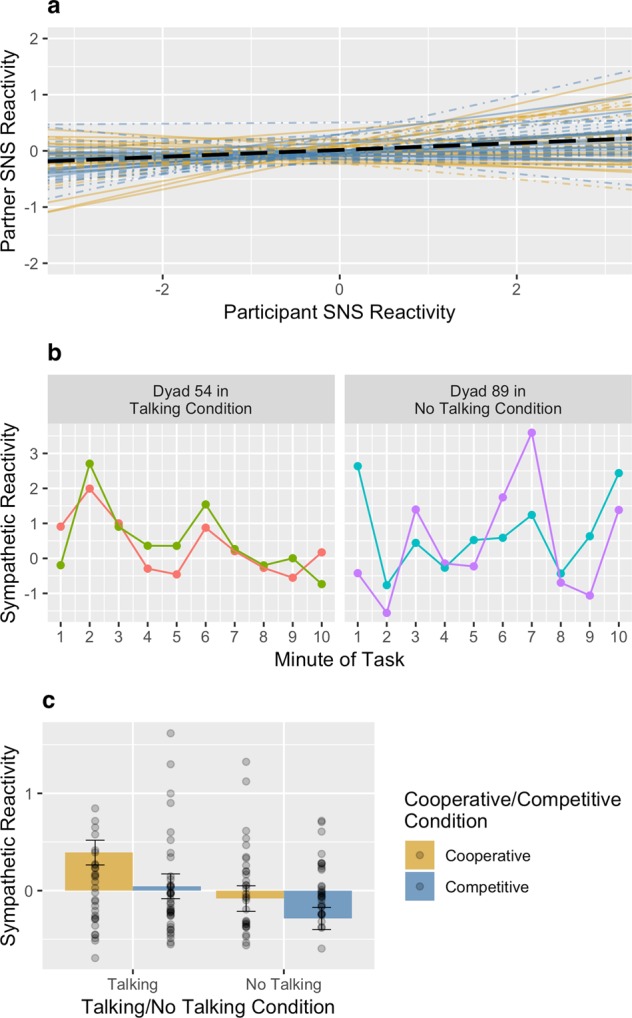
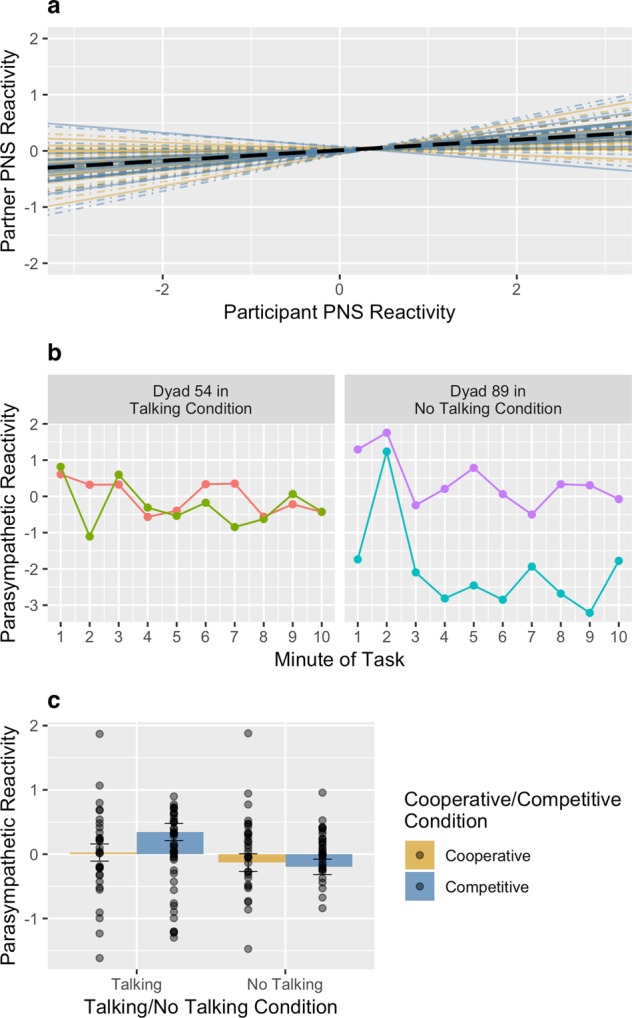
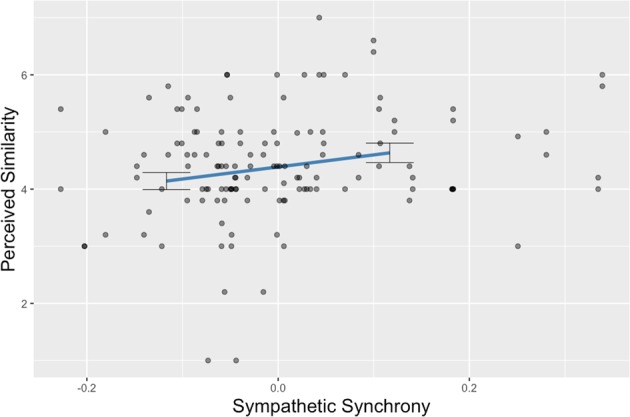
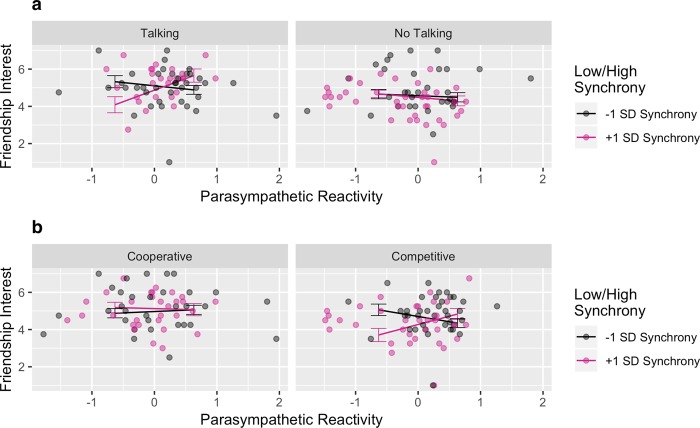
Survival of many species, from insects and birds to human and non-human mammals, requires synchronized activity. Among humans, synchrony occurs even at the level of autonomic functioning; people interacting often show mutual, simultaneous changes in activity of the sympathetic or parasympathetic branches of the autonomic nervous system. Critically, autonomic reactivity predicts many mental states and, when synchronized, may reflect higher-order social processes like affiliation. Here, using data from 134 strangers interacting in pairs, we manipulated two features of social context to test their impact on synchrony in sympathetic and parasympathetic reactivity. Participants completed a knot-tying task within a collective reward (“cooperation”) or individual reward (“competition”) framework while conversing or not (“talking” condition). Autonomic reactivity varied by features of social context. Synchrony occurred across social contexts in both autonomic branches. We then examined how synchrony predicted affiliation. Sympathetic synchrony alone predicted affiliation yet social context and parasympathetic reactivity moderated associations between parasympathetic synchrony and affiliation. Thus, social and physiological context of parasympathetic synchrony predicted affiliation better than parasympathetic synchrony alone. We argue that social context and the degree of physiological reactivity underlying physiological synchrony, not the mere existence of physiological synchrony, are key to interpreting physiological synchrony as a social process.
Overview
The claims and statistics of this paper haven’t been checked yet.
Free: it reads the open-access text and checks the first 5 claims that cite a source we can check. Create a free account to check every claim.
Integrity signals
Registry
Cites
Statistics
Figures
Verification
Claims the paper makes
The claims and statistics of this paper haven’t been checked yet.
Free: it reads the open-access text and checks the first 5 claims that cite a source we can check. Create a free account to check every claim.
Claims other papers make about this one
Each is checked against this paper’s own text: does it say what the citing paper says it does?
The cited source doesn’t support the claim as written.
In the citing paper
“Autonomic synchrony during joint action seems to be modulated by task‐related constraints, such as whether the task is presented as competitive or cooperative (Chanel et al. 2012; Danyluck and Page‐Gould 2019; Järvelä et al. 2014).”
From Interpersonal Physiological Synchrony During Dyadic Joint Action Is Increased by Task Novelty and Reduced by Social Anxiety (2025) · cites this paper as Danyluck and Page‐Gould 2019
Checked by a reasoning model — may be wrong.
Experimental — accuracy not yet measuredThe source backs part of the claim, not all of it — or backs it for a different population, condition or comparison.
In the citing paper
“Yet, to date, much of the existing research on IPS has focused on contexts where individuals are explicitly instructed to perform a social task.”
From Interpersonal Synchronization of Autonomic Physiology via Mere Visual Contact (2026) · cites this paper as [27]
Experimental — accuracy not yet measuredThe source backs part of the claim, not all of it — or backs it for a different population, condition or comparison.
In the citing paper
“In task-based stranger dyads, talking during interaction increased the physiologic attunement corresponding to the sympathetic branch and improved social outcomes, compared to no-talking conditions (77).”
From Physiological attunement and flourishing: understanding the influence of relationships on health (2025) · cites this paper as [77]
Experimental — accuracy not yet measuredThe cited source says what the claim attributes to it.
In the citing paper
“Conversation and cooperation elicited the greatest sympathetic reactivity while conversation and competition elicited the greatest parasympathetic reactivity.”
From Physiological attunement and flourishing: understanding the influence of relationships on health (2025) · cites this paper as [77]
The cited source says what the claim attributes to it.
In the citing paper
“Physiological synchrony was observed across both social contexts with variations in sympathetic and parasympathetic reactivity.”
From Physiological attunement and flourishing: understanding the influence of relationships on health (2025) · cites this paper as [77]
Self-check
Percentages, sums and reported differences re-computed from the paper’s own numbers.
The self-check needs the paper’s full text.
Citations
Cites
Faul, F., Erdfelder, E., Lang, A.-G., & Buchner, A. (2007) · Behavior Research Methods · doi:10.3758/bf03193146 · Cited by 65,971
Development and validation of brief measures of positive and negative affect: The PANAS scales.
Watson, D., Clark, L. A., & Tellegen, A. (1988) · Journal of Personality and Social Psychology · doi:10.1037/0022-3514.54.6.1063 · Cited by 32,433
Heart Rate Variability: Standards of Measurement, Physiological Interpretation, and Clinical Use
Electrophysiology, T. F. O. T. E. S. O. C. T. N. A. (1996) · Circulation · doi:10.1161/01.cir.93.5.1043 · Cited by 17,159
Heart rate variability: Standards of measurement, physiological interpretation, and clinical use
Malik, M., Bigger, J. T., Camm, A. J., Kleiger, R. E., Malliani, A., Moss, A. J., & Schwartz, P. J. (1996) · European Heart Journal · doi:10.1093/oxfordjournals.eurheartj.a014868 · Cited by 15,289
The polyvagal theory: phylogenetic substrates of a social nervous system.
Porges, S. W. (2001) · International Journal of Psychophysiology · doi:10.1016/s0167-8760(01)00162-3 · Cited by 1,582
Marital interaction: Physiological linkage and affective exchange.
Levenson, R. W., & Gottman, J. M. (1983) · Journal of Personality and Social Psychology · doi:10.1037/0022-3514.45.3.587 · Cited by 855
Menstrual Synchrony and Suppression
MCCLINTOCK, M. K. (1971) · Nature · doi:10.1038/229244a0 · Cited by 777
Interpersonal autonomic physiology: a systematic review of the literature
Palumbo, R. V., Marraccini, M. E., Weyandt, L. L., Wilder-Smith, O., McGee, H. A., Liu, S., & Goodwin, M. S. (2017) · Personality and Social Psychology Review · doi:10.1177/1088868316628405 · Cited by 566
The many metrics of cardiac chronotropy: A pragmatic primer and a brief comparison of metrics
Allen, J. J. B., Chambers, A. S., & Towers, D. N. (2007) · Biological Psychology · doi:10.1016/j.biopsycho.2006.08.005 · Cited by 491
Kashdan, T. B., & Steger, M. F. (2006) · Psychological Science · doi:10.1111/j.1467-9280.2006.01674.x · Cited by 458
Research works printed but not linked: 1
- Lenth R emmeans: Estimated Marginal Means, aka Least-Squares Means R package version 1.2.4. 2019 34 216 221
Cited by
Physiological synchrony is associated with cooperative success in real-life interactions
Behrens, F., Snijdewint, J. A., Moulder, R. G., Prochazkova, E., Sjak-Shie, E. E., Boker, S. M., & Kret, M. E. (2020) · Scientific Reports · doi:10.1038/s41598-020-76539-8 · Cited by 93
Strangers, Friends, and Lovers Show Different Physiological Synchrony in Different Emotional States
Bizzego, A., Azhari, A., Campostrini, N., Truzzi, A., Ng, L. Y., Gabrieli, G., Bornstein, M. H., Setoh, P., & Esposito, G. (2019) · Behavioral Sciences · doi:10.3390/bs10010011 · Cited by 85
“arousal has been observed in strangers who shared the same immediate social environment [9,10].”
BackgroundMayo, O., Lavidor, M., & Gordon, I. (2021) · Physiology & Behavior · doi:10.1016/j.physbeh.2021.113391 · Cited by 73
How and why people synchronize: An integrated perspective
daSilva, E. B., & Wood, A. (2025) · Personality and Social Psychology Review · doi:10.1177/10888683241252036 · Cited by 56
“Among adults who were previously unacquainted, higher levels of physiological synchrony of heart rate (HR) and electrodermal activity (EDA) have been linked to greater cooperation, affiliation, and consensus (Behrens et al., 2020; Danyluck & Page-Gould, 2019; Thorson et al., 2021).”
Gordon, I., Wallot, S., & Berson, Y. (2021) · Psychophysiology · doi:10.1111/psyp.13857 · Cited by 45
“It is important to note, that research has shown physiological synchrony to emerge not only in cooperation but also in competitive and conflictual experiences (Danyluck & Page- Gould, 2018, 2019; Levenson & Gottman, 1983).”
BackgroundInterpersonal Physiological Synchrony Predicts Group Cohesion
Tomashin, A., Gordon, I., & Wallot, S. (2022) · Frontiers in Human Neuroscience · doi:10.3389/fnhum.2022.903407 · Cited by 45
A Review of Using Wearable Technology to Assess Team Functioning and Performance
Hałgas, E. A., van Eijndhoven, K. H. J., Gevers, J., Wiltshire, T. J., Westerink, J. H. D. M., & Rispens, S. (2022) · Small Group Research · doi:10.1177/10464964221125717 · Cited by 47
“…findings of different modalities were often inconsistent in relation to team performance, perhaps due to the influence of contextual factors (Danyluck & Page-Gould, 2019), researchers and practitioners are advised to consider including multiple modalities when assessing team coordination…”
BackgroundMethodHaataja, E., Malmberg, J., Dindar, M., & Järvelä, S. (2021) · Metacognition and Learning · doi:10.1007/s11409-021-09279-3 · Cited by 51
Forms and Functions of Affective Synchrony
Wood, A., Lipson, J., Zhao, O., & Niedenthal, P. M. (2021) · Springer eBooks · doi:10.1007/978-3-030-78471-3_17 · Cited by 39
Boukarras, S., Placidi, V., Rossano, F., Era, V., Aglioti, S. M., & Candidi, M. (2025) · Psychophysiology · doi:10.1111/psyp.70031 · Cited by 23
“…or cooperative tasks involving both verbal and nonverbal communication (Asher et al. 2021; Coutinho et al. 2021; Prochazkova et al. 2021; Danyluck and Page-Gould 2019), the emergence of physiological synchrony in purely nonverbal tasks remains less explored (e.g., Noy et al. 2015;…”
The intergroup perspective on cross-group friendship
Page‐Gould, E., Harris, K., MacInnis, C. C., Danyluck, C. M., & Miller, I. D. (2022) · Advances in experimental social psychology · doi:10.1016/bs.aesp.2021.10.001 · Cited by 33
Self-citationSened, H., Zilcha‐Mano, S., & Shamay‐Tsoory, S. (2022) · Frontiers in Human Neuroscience · doi:10.3389/fnhum.2022.955238 · Cited by 32
“A prominent explanation behind these more mixed results is context dependence (Danyluck and Page-Gould, 2019).”
BackgroundShared hearts and minds: physiological synchrony during empathy
Qaiser, J., Leonhardt, N. D., Le, B. M., Gordon, A. M., Impett, E. A., & Stellar, J. E. (2023) · Affective Science · doi:10.1007/s42761-023-00210-4 · Cited by 21
“Physiological synchrony is considered an interpersonal process (Helm et al., 2018; Palumbo et al., 2017) that reflects higher-level psychological processes (Danyluck & Page-Gould, 2019) and attunement to another person (Gates et al., 2015).”
InfluentialZerwas, F. K., Springstein, T., Karnilowicz, H. R., Lam, P., Butler, E. A., John, O. P., & Mauss, I. B. (2021) · Biological Psychology · doi:10.1016/j.biopsycho.2021.108079 · Cited by 19
Meyer (2020) · doi:10.1016/j.psyneuen.2020.104834 · Cited by 18
When two hearts beat as one: Heart-rate synchrony in social anxiety disorder
Asher, M., Barthel, A. L., Hofmann, S. G., Okon-Singer, H., & Aderka, I. M. (2021) · Behaviour Research and Therapy · doi:10.1016/j.brat.2021.103859 · Cited by 17
Social and nonsocial synchrony are interrelated and romantically attractive
Cohen, M., Abargil, M., Ahissar, M., & Atzil, S. (2024) · Communications Psychology · doi:10.1038/s44271-024-00109-1 · Cited by 23
“I have detailed my concerns below.”
Influence of stress on physiological synchrony in a stressful versus non-stressful group setting
Denk, B., Dimitroff, S. J., Meier, M., Benz, A. B. E., Bentele, U. U., Unternaehrer, E., Popovic, N. F., Gaissmaier, W., & Pruessner, J. C. (2021) · Journal of Neural Transmission · doi:10.1007/s00702-021-02384-2 · Cited by 15
Computational Methods for the Assessment of Empathic Synchrony
Bizzego, A., Gabrieli, G., Azhari, A., Setoh, P., & Esposito, G. (2020) · Smart innovation, systems and technologies · doi:10.1007/978-981-15-5093-5_47 · Cited by 15
Fu, D., Incio-Serra, N., Motta‐Ochoa, R., & Blain‐Moraes, S. (2021) · Frontiers in Psychology · doi:10.3389/fpsyg.2021.749710 · Cited by 16
“, 2019); friends and strangers (Slovák et al., 2014; Danyluck and Page-Gould, 2019; Bizzego et al., 2020); therapist-patient dyads (Marci and Orr, 2006; Marci et al.”
BackgroundCosta‐Cordella, S., Grasso‐Cladera, A., & Parada, F. J. (2024) · Review of General Psychology · doi:10.1177/10892680231224399 · Cited by 13
“These interactions naturally lead to sensorimotor and physiological synchronization (Bell, 2020; Danyluck & Page-Gould, 2019; Dikker et al., 2017; Dumas et al., 2010; Heggli et al., 2020; Konvalinka et al., 2011; Reinero et al., 2021), which has implications for psychotherapy (Atzil-Slonim et al.,…”
Background4D Bioprinted Self‐Folding Scaffolds Enhance Cartilage Formation in the Engineering of Trachea
Chiesa, I., Esposito, A., Vozzi, G., Gottardi, R., & Maria, C. D. (2024) · Advanced Materials Technologies · doi:10.1002/admt.202401210 · Cited by 25
Thorson, K. R., McKernan, S. M., West, T. V., Woolley, J. D., Mendes, W. B., & Stauffer, C. S. (2021) · Scientific Reports · doi:10.1038/s41598-021-99957-8 · Cited by 15
Coherence of emotional response systems: Theory, measurement, and benefits
Mauss, I. B., Zerwas, F. K., Wilhelm, F. H., & John, O. P. (2024) · Advances in experimental social psychology · doi:10.1016/bs.aesp.2023.11.002 · Cited by 16
Social bonding through shared experiences: the role of emotional intensity
Chung, V., Mennella, R., Pacherie, É., & Grèzes, J. (2024) · Royal Society Open Science · doi:10.1098/rsos.240048 · Cited by 18
“For example, Danyluck & Page-Gould [59] found that the social context (cooperation versus competition, verbal communication) modulated the relation of affiliation with parasympathetic synchrony but not with sympathetic synchrony.”
BackgroundInterpersonal Synchrony Research in Human Groups
Gordon, I. (2025) · Social and Personality Psychology Compass · doi:10.1111/spc3.70068 · Cited by 18
Tamminen, K. A., Danyluck, C., Bonk, D., & Chen, R. (2023) · Journal of Sports Sciences · doi:10.1080/02640414.2023.2259205 · Cited by 8
“Physiological synchrony has also been related to increased affiliation (Danyluck & Page-Gould, 2018, 2019), which may predict collective efficacy (Cuadrado et al., 2016) and team morale (Britt et al., 2004).”
BackgroundSelf-citationCatching That Playful Beat: Social Anxiety and Synchronous Group Functioning
Gordon, I., Gilboa-Schechtman, E., Gilboa, A., Cohen, S., & Kivity, Y. (2023) · Journal of Nonverbal Behavior · doi:10.1007/s10919-023-00436-7 · Cited by 7
“Distinct types of physiological functions are related to different types of social outcomes, and the context in which physiological synchrony is measured directly influences its meaning for social processes (Danyluck & Page-Gould, 2019).”
BackgroundCorrelates of interpersonal physiological synchrony and sources of empirical heterogeneity
Gordon, I., & Bartsch, R. P. (2026) · Nature Reviews Psychology · doi:10.1038/s44159-026-00535-4 · Cited by 20
Kawakami, K., Friesen, J. P., Williams, A., Vingilis‐Jaremko, L., Sidhu, D. M., Rodríguez‐Bailón, R., Cañadas, E., & Hugenberg, K. (2021) · Cognitive Research Principles and Implications · doi:10.1186/s41235-021-00336-8 · Cited by 12
“…in contexts when racism is openly endorsed by authorities (Crandall et al., 2018), even manipulations of interpersonal similarity may be associated with intergroup processes, backfire, and decrease affiliative actions such as attending to the eyes of outgroups (Danyluck & Page-Gould, 2018, 2019).”
BackgroundPhysiological attunement and flourishing: understanding the influence of relationships on health
Bastos, M. A. V., Braz, D. F., Porto, A. L. M., Cordeiro, K. S. D. S., Portella, R. B., & Granger, D. A. (2025) · Frontiers in Psychiatry · doi:10.3389/fpsyt.2025.1614379 · Cited by 7
“In task-based stranger dyads, talking during interaction increased the physiologic attunement corresponding to the sympathetic branch and improved social outcomes, compared to no-talking conditions (77).”
Marheinecke, R., Blasberg, J. U., Heilmann, K., Imrie, H., Wesarg, C., & Engert, V. (2024) · Psychoneuroendocrinology · doi:10.1016/j.psyneuen.2024.107216 · Cited by 7
Greenberg, D. M., Milstein, N., Gilboa, A., Cohen, S., Haimovich, N., Siegman, S., Pinhasi, S., & Gordon, I. (2023) · Psychophysiology · doi:10.1111/psyp.14307 · Cited by 4
An Exploratory Study of Physiological Linkage Among Strangers
Boyd, S. M., Kuelz, A., Page‐Gould, E., Butler, E. A., & Danyluck, C. M. (2022) · Frontiers in Neuroergonomics · doi:10.3389/fnrgo.2021.751354 · Cited by 8
Self-citationSelf-disclosure is associated with adrenocortical attunement between new acquaintances
Thorson, K. R., Ketay, S., Roy, A. R. K., & Welker, K. M. (2021) · Psychoneuroendocrinology · doi:10.1016/j.psyneuen.2021.105323 · Cited by 3
Heart rate synchrony as a marker of real-world social engagement
He, H., Christensen, J. H., Sørensen, A. J. M., & Konvalinka, I. (2026) · PNAS Nexus · doi:10.1093/pnasnexus/pgag181 · Cited by 10
“Furthermore, as seen in studies of strangers tasked with cooperating or competing, the meaning of this synchrony is tied to the social context and how much individuals ’ bodies are actually reacting to the situation (51).”
Chien, W.-S., Chou, H.-C., & Lee, C.-C. (2021) · Companion Publication of the International Conference on Multimodal Interaction (ICMI Companion) · doi:10.1145/3461615.3485410 · Cited by 5
“Other studies proposed autocorrelation [14] and cross-correlation function [4, 22] to calculate PS for behavior analyses during interactions.”
BackgroundCook, E. C., & Stroud, L. R. (2022) · Biological Psychology · doi:10.1016/j.biopsycho.2022.108447 · Cited by 4
Volpert‐Esmond, H. I., Bray, J. R., Pages, S. M., & Danyluck, C. M. (2024) · Scientific Reports · doi:10.1038/s41598-024-76795-y · Cited by 4
Self-citationPhysiological Synchrony Evoked by Attentional Engagement: A Systematic Review Based on CiteSpace
Liu, Q., Yang, X., & Zhang, W. (2024) · SAGE Open · doi:10.1177/21582440241298400 · Cited by 2
“…are difficult to reliably describe or quantify using exclusively behavioral measures, prior studies have shown that individuals sharing the same stimulus situations have similar physiological signals (Danyluck & Page-Gould, 2019; Palumbo et al., 2017); this is known as physiological synchrony (PS).”
Chatterjee, I., Goršič, M., Kaya, R. A., Clapp, J. D., & Novak, D. (2025) · Frontiers in Neuroergonomics · doi:10.3389/fnrgo.2025.1671311 · Cited by 3
Coupled hearts – effect of partner stress on cardiac synchronization
Denk, B., Meier, M., Ocklenburg, S., Packheiser, J., Wienhold, S., Volkmer, N., Gaertner, R. J., Klink, E. S. C., Ashcraft, S. J., Benz, A., et al. (2026) · Biological Psychology · doi:10.1016/j.biopsycho.2026.109205 · Cited by 2
Moffat, R., Naudszus, L. A., & Cross, E. S. (2026) · Annals of the New York Academy of Sciences · doi:10.1111/nyas.70272 · Cited by 3
“Dyadic differences in social closeness decreased across sessions substantially for same generation dyads and showed the same trend for intergenerational dyads.”
InfluentialGilbert, P., Griner, D., Morter, K., Plowright, P., Basran, J. K., Gilbert, H., Nithsdale, V., Rogers, E. N., Giglio, Y., & Gale, C. (2026) · OBM Integrative and Complementary Medicine · doi:10.21926/obm.icm.2601005 · Cited by 1
Denk, B., Pruessner, J. C., Farah, S., Barth, C., Putra, P. U., Lenggenhager, B., & Grütter, J. (2026) · Scientific Reports · doi:10.1038/s41598-026-41275-y · Cited by 2
“Tracking moment-to-moment changes in synchrony during social interactions offers a window into the evolving dynamics of peer groups and the interpersonal processes that shape children’s social development 45,81 .”
Franz, K. S., Rezaei, S., & Chau, T. T. (2024) · IEEE Access · doi:10.1109/access.2024.3512353 · Cited by 1
“As heartrate is regulated by the autonomic nervous system (ANS), HRV can elucidate an individual’s physiological response during social tasks [18].”
Parent-Child Autonomic Synchrony During Vicarious Extinction Learning in Pediatric PTSDPreprint
George, G. C., Heyn, S. A., Konishi, S., Marin, M., & Herringa, R. J. (2022) · bioRxiv (Cold Spring Harbor Laboratory) · doi:10.1101/2022.01.12.476063 · Cited by 2
Editorial: Physical and psychological proximity in humans: From the body to the mind and vice-versa
Fini, C., Bolis, D., Moreau, Q., & Era, V. (2023) · Frontiers in Psychology · doi:10.3389/fpsyg.2023.1113851 · Cited by 2
“Research on this phenomenon, conceptualized as the relationship between pairs or groups of individuals’ physiological dynamics, has shown how interacting with others results in interpersonal synchrony in cardiac (Danyluck and Page-Gould, 2019), electrodermal (Zeevi et al.”
BackgroundCognitive load dissonance and personality factors: an empirical analysis in organizational settingsPreprint
Gruttola, F. D., Antonio, M., Orfei, M. D., D’Arcangelo, S., Lattanzi, N., Ricciardi, E., & Malizia, A. P. (2023) · bioRxiv (Cold Spring Harbor Laboratory) · doi:10.1101/2023.12.05.570254 · Cited by 1
Interpersonal Synchronization of Autonomic Physiology via Mere Visual Contact
Koul, A., & Novembre, G. (2026) · Annals of the New York Academy of Sciences · doi:10.1111/nyas.70322 · Cited by 1
Intra- and inter-specific cortisol coregulation
Solman, C. L. (2023) · Cronfa (Swansea University) · doi:10.23889/suthesis.62704
Boukarras, S., Placidi, V., Rossano, F., Era, V., Aglioti, S. M., & Candidi, M. (2024) · doi:10.31219/osf.io/mr8j9
Lai, J., Otero, M. C., Chen, K., Wells, J. L., LEVENSON, R. W., & Fredrickson, B. L. (2025) · Personal Relationships · doi:10.1111/pere.70008 · Cited by 1
“…have also been mixed (Timmons et al. 2015), with more recent evidence suggesting that the types of emotion, interactions, and interaction partners that contextualize such linkage may shape whether and to what degree linkage is beneficial (Bizzego et al. 2019; Danyluck and Page-Gould 2019).”
Kawakami, K., Friesen, J. P., Williams, A., Vingilis‐Jaremko, L., Sidhu, D. M., Rodriguez-Bailón, R., Cañadas, E., & Hugenberg, K. (2021) · Figshare · doi:10.6084/m9.figshare.16921643
Ohayon, S., Erez, C., & Gordon, I. (2026) · Scientific Reports · doi:10.1038/s41598-026-35806-w · Cited by 2
Heart Rate Variability Synchronization relates to Trust Decisions during an Economic Investment GamePreprint
Wienhold, S., Volkmer, N., Denk, B., Gaertner, R., Klink, E. S. C., Meier, M., Gaissmaier, W., & Pruessner, J. C. (2026) · Research Square · doi:10.21203/rs.3.rs-8927804/v1
Denk, B., Wienhold, S., Volkmer, N., Troje, N. F., Meier, M., & Pruessner, J. C. (2026) · Frontiers in Network Physiology · doi:10.3389/fnetp.2026.1869004 · Cited by 1
Metadata
- Authors
- Danyluck, C., & Page-Gould, E.
- Affiliations
- Colorado School of Public Health (US)
- Corresponding author
- Danyluck, Chad
- ORCID
- Danyluck, Chad
- Venue
- Scientific Reports
- Published
- 2019-06-03
- Volume
- 9
- Issue
- 1
- Pages
- 8222-8222
- ISSN
- 2045-2322 (ISSN-L)
- PMC
- PMC6547677
- OpenAlex
- W2946911389
- Cited by
- 56
- References
- 30
- Citations by year
- 2026: 9 · 2025: 5 · 2024: 11 · 2023: 7 · 2022: 7 · 2021: 13 · 2020: 3 · 2019: 1
- FWCI
- 4.34
- Type
- journal article
- Language
- en
- Update notices
- correction (2019-08-15)
- Open access
- gold
- doi.org
- Licence
- cc-by
- creativecommons.org/licenses/by/4.0 (tdm)
- creativecommons.org/licenses/by/4.0 (vor)
- Locations
- Scientific Reports (publishedVersion, cc-by)
- PubMed Central (publishedVersion, cc-by)
- PubMed (publishedVersion)
- Carleton University's Institutional Repository (MacOdrum Library, Carleton University) (submittedVersion, other-oa)
- DOAJ (DOAJ: Directory of Open Access Journals) (submittedVersion)
- Funders
- Gouvernement du Canada | Social Sciences and Humanities Research Council of Canada (435130767, 410101498)
- The reference does not have a grant number. It was a doctoral fellowship provided to the first author.
- Topics
- Health Sciences › Medicine › Cardiology and Cardiovascular Medicine › Heart Rate Variability and Autonomic Control
- Social Sciences › Psychology › Social Psychology › Action Observation and Synchronization
- Social Sciences › Psychology › Experimental and Cognitive Psychology › Evolutionary Psychology and Human Behavior
- Keywords
- physiological synchrony, autonomic nervous system, sympathetic response, parasympathetic reactivity, affiliation, social environment, cooperation, competition, conversation, individual rewards
- MeSH terms
- Female, Humans, Male, Models, Biological, Parasympathetic Nervous System, Social Behavior, Sympathetic Nervous System, Multivariate Analysis, Friends, Young Adult
About these checks
Registry, retraction, Cites and statistics results are computed, not judged, with one exception: a printed reference that no index lists is read once by a model before it counts as a citation error. Claims are extracted by a model and kept only when their quote appears verbatim in the text; each cited source is then checked, with a model’s help, for whether it says what the claim relies on. Those verdicts can be wrong — read the claim’s quote and the cited source before relying on one.
Statistics and arithmetic are recomputed, not judged.
Confidence bands are shown only for fields calibrated on our annotated test set. None is calibrated yet, so no band is shown.
What counts as a claim ›How we measure confidence ›How we check this ›
Are you an author, or do you see a problem with this page? Request a review
Data sources
Bibliographic data: Semantic Scholar, OpenAlex, Crossref.
Contains information from the Semantic Scholar Academic Graph Datasets, made available under the ODC Attribution License (ODC-BY 1.0).
Semantic Scholar’s data is described in: Kinney, R., et al. (2023). The Semantic Scholar Open Data Platform. arXiv:2301.10140.
