

Introducing a Bayesian model of selective attention based on active inference
Open accessThe DOI matches its Crossref record; 68 of the 69 references it cites were found in a registry or an index.
Abstract
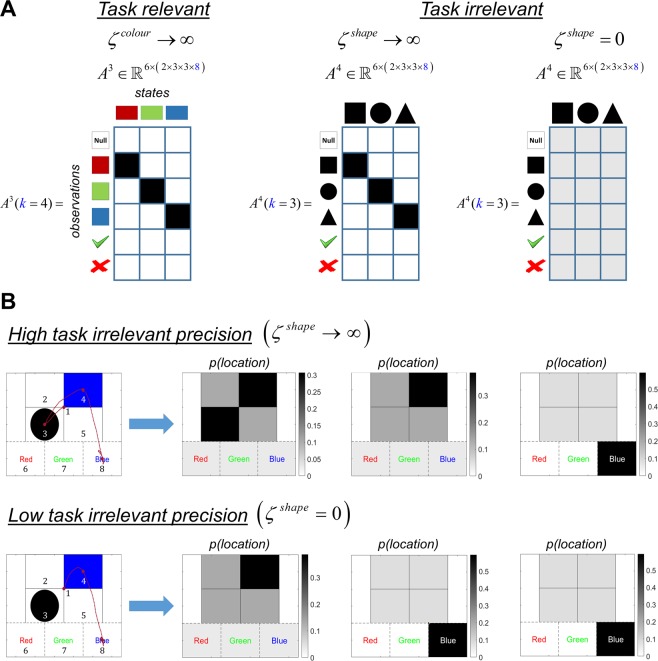
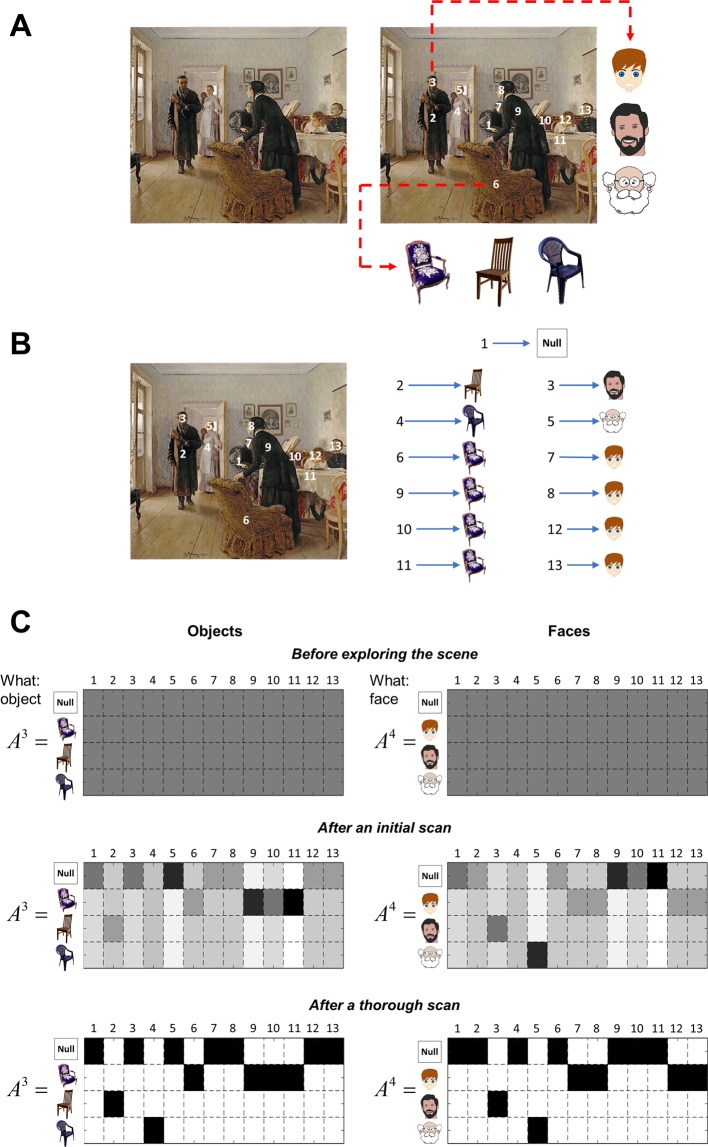
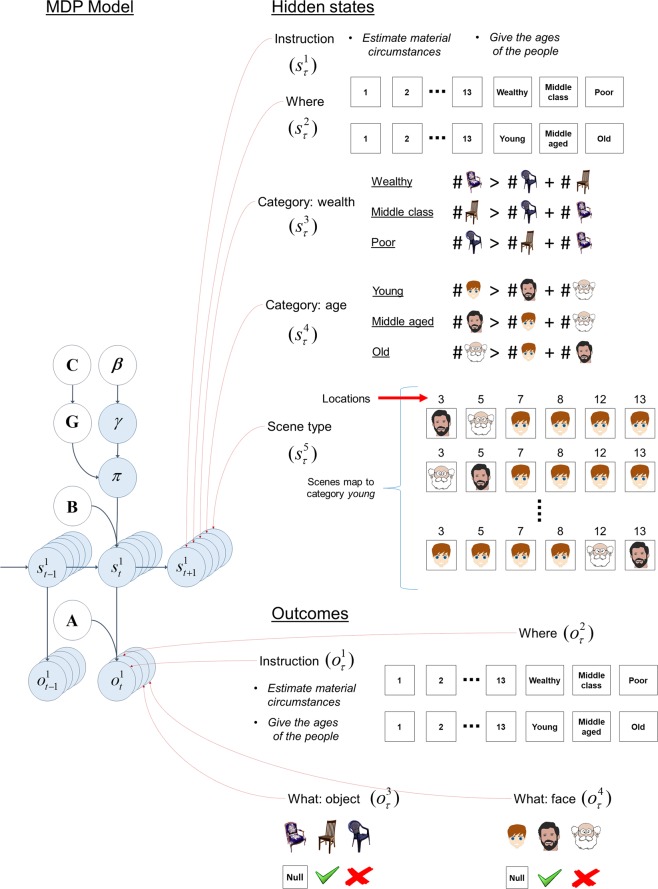
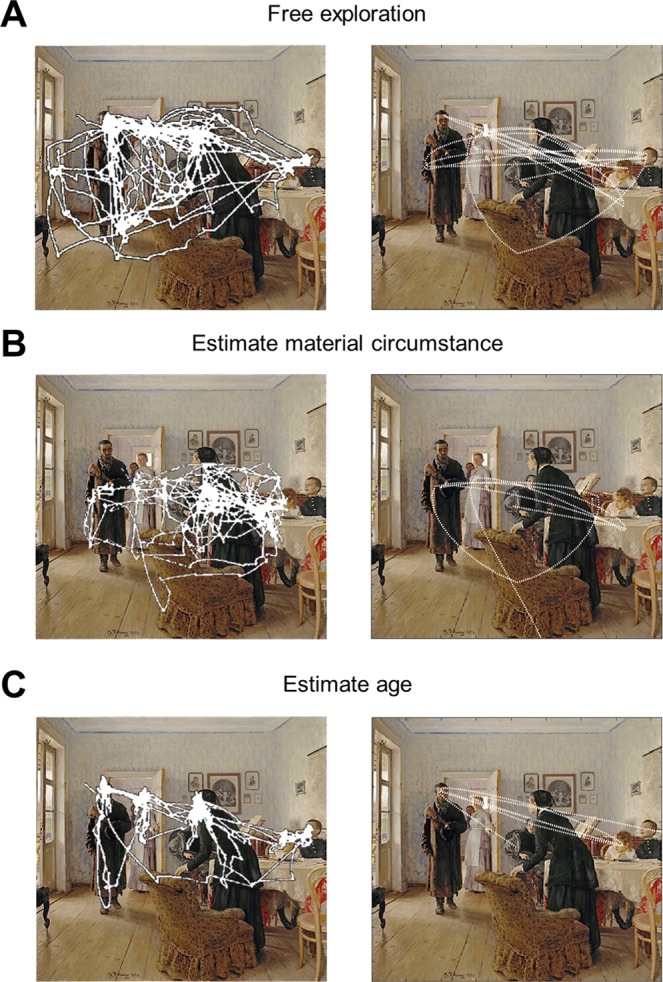
Information gathering comprises actions whose (sensory) consequences resolve uncertainty (i.e., are salient). In other words, actions that solicit salient information cause the greatest shift in beliefs (i.e., information gain) about the causes of our sensations. However, not all information is relevant to the task at hand: this is especially the case in complex, naturalistic scenes. This paper introduces a formal model of selective attention based on active inference and contextual epistemic foraging. We consider a visual search task with a special emphasis on goal-directed and task-relevant exploration. In this scheme, attention modulates the expected fidelity (precision) of the mapping between observations and hidden states in a state-dependent or context-sensitive manner. This ensures task-irrelevant observations have little expected information gain, and so the agent – driven to reduce expected surprise (i.e., uncertainty) – does not actively seek them out. Instead, it selectively samples task-relevant observations, which inform (task-relevant) hidden states. We further show, through simulations, that the atypical exploratory behaviours in conditions such as autism and anxiety may be due to a failure to appropriately modulate sensory precision in a context-specific way.
Overview
The claims and statistics of this paper haven’t been checked yet.
Free: it reads the open-access text and checks the first 5 claims that cite a source we can check. Create a free account to check every claim.
Integrity signals
Registry
Cites
Statistics
Figures
Verification
Claims the paper makes
The claims and statistics of this paper haven’t been checked yet.
Free: it reads the open-access text and checks the first 5 claims that cite a source we can check. Create a free account to check every claim.
Claims other papers make about this one
Each is checked against this paper’s own text: does it say what the citing paper says it does?
The source backs part of the claim, not all of it — or backs it for a different population, condition or comparison.
In the citing paper
“What the AIF gives us is a detailed framework for interpreting these effects in terms of the minimization of prediction errors by action, the tuning of precision, the role of affect and interoceptive feedback and the automatic shifting between exploit/explore dynamics (e.g. [217,218]).”
From Active inference goes to school: the importance of active learning in the age of large language models (2024) · cites this paper as [218]
Experimental — accuracy not yet measured
Self-check
Percentages, sums and reported differences re-computed from the paper’s own numbers.
The self-check needs the paper’s full text.
Citations
Cites
A Mathematical Theory of Communication
Shannon, C. E. (1948) · Bell System Technical Journal · doi:10.1002/j.1538-7305.1948.tb01338.x · Cited by 88,486
On Information and Sufficiency
Kullback, S., & Leibler, R. A. (1951) · The Annals of Mathematical Statistics · doi:10.1214/aoms/1177729694 · Cited by 20,193
A model of saliency-based visual attention for rapid scene analysis
Itti, L., Koch, C., & Niebur, E. (1998) · IEEE Transactions on Pattern Analysis and Machine Intelligence · doi:10.1109/34.730558 · Cited by 11,271
The free-energy principle: a unified brain theory?
Friston, K. (2010) · Nature Reviews Neuroscience · doi:10.1038/nrn2787 · Cited by 8,120
Self-citationInformation theory and statistics
(1959) · Journal of the Franklin Institute · doi:10.1016/0016-0032(59)90368-0 · Cited by 7,094
Frequency-tuned salient region detection
Achanta, R., Hemami, S., Estrada, F., & Susstrunk, S. (2009) · 2009 IEEE Conference on Computer Vision and Pattern Recognition · doi:10.1109/cvpr.2009.5206596 · Cited by 4,167
Shifts in Selective Visual Attention: Towards the Underlying Neural Circuitry
Koch, C., & Ullman, S. (1987) · Matters of Intelligence · doi:10.1007/978-94-009-3833-5_5 · Cited by 3,722 · cited 1×
“These features include orientation, intensity, colour information 38–41 , luminance 42 , contrast 43 and motion 44 .”
BackgroundGuided Search 2.0 A revised model of visual search
Wolfe, J. M. (1994) · Psychonomic Bulletin & Review · doi:10.3758/bf03200774 · Cited by 3,504 · cited 1×
“…evaluate the similarity (or dissimilarity) of the features of the object of interest, with the features in the scene that is being explored 45 , there are other models that either modulate or select feature outputs – such that the features of the object of interest become more salient 46,47 .”
BackgroundYarbus, A. L. (1967) · doi:10.1007/978-1-4899-5379-7 · Cited by 3,304
A saliency-based search mechanism for overt and covert shifts of visual attention
Itti, L., & Koch, C. (2000) · Vision Research · doi:10.1016/s0042-6989(99)00163-7 · Cited by 3,156 · cited 1×
“These features include orientation, intensity, colour information 38–41 , luminance 42 , contrast 43 and motion 44 .”
Background
Research works printed but not linked: 4
- Achanta, R., Hemami, S., Estrada, F. & Susstrunk, S. In Computer vision and pattern recognition, 2009. cvpr 2009. ieee conference on. 1597–1604 (IEEE).
- Ma, Y.-F. & Zhang, H.-J. In Proceedings of the eleventh ACM international conference on Multimedia. 374–381 (ACM).
- Navalpakkam, V. & Itti, L. In Computer Vision and Pattern Recognition, 2006 IEEE Computer Society Conference on. 2049–2056 (IEEE).
- Gao, D. & Vasconcelos, N. In Advances in neural information processing systems. 481–488 (2005).
Cited by
Attention in Psychology, Neuroscience, and Machine Learning
Lindsay, G. W. (2020) · Frontiers in Computational Neuroscience · doi:10.3389/fncom.2020.00029 · Cited by 309
Smith, R., Badcock, P., & Friston, K. J. (2021) · Psychiatry and Clinical Neurosciences · doi:10.1111/pcn.13138 · Cited by 174
“In this instance, attention can be construed as affording precision to neuronal signals conveying various Bayesian beliefs or prediction errors (38-43); such that they have greater influence on belief updating than other levels of the cortical hierarchy.”
BackgroundSelf-citationPrediction in autism spectrum disorder: A systematic review of empirical evidence
Cannon, J., O'Brien, A. M., Bungert, L., & Sinha, P. (2021) · Autism Research · doi:10.1002/aur.2482 · Cited by 168
Reconsidering autistic ‘camouflaging’ as transactional impression management
Ai, W., Cunningham, W. A., & Lai, M.-C. (2022) · Trends in Cognitive Sciences · doi:10.1016/j.tics.2022.05.002 · Cited by 140
Davis, R., & Crompton, C. J. (2021) · Perspectives on Psychological Science · doi:10.1177/1745691620958010 · Cited by 136
Play in predictive minds: A cognitive theory of play.
Andersen, M. M., Kiverstein, J., Miller, M., & Roepstorff, A. (2023) · Psychological Review · doi:10.1037/rev0000369 · Cited by 122
Extended active inference: Constructing predictive cognition beyond skulls
Constant, A., Clark, A., Kirchhoff, M. D., & Friston, K. J. (2020) · Mind & Language · doi:10.1111/mila.12330 · Cited by 130
“…in silico simulations of affordance production and leveraging could then be compared with empirical data (cf., Cullen, Davey, Friston & Moran, 2018; Mirza, Adams, Friston & Parr, 2019) to test hypotheses about EAI as an emergent property of cognitive niche construction under active inference…”
ResultSelf-citationA World Unto Itself: Human Communication as Active Inference
Vasil, J., Badcock, P. B., Constant, A., Friston, K., & Ramstead, M. J. D. (2020) · Frontiers in Psychology · doi:10.3389/fpsyg.2020.00417 · Cited by 94
Self-citationHowes, O. D., Hird, E. J., Adams, R. A., Corlett, P. R., & McGuire, P. (2020) · Biological Psychiatry · doi:10.1016/j.biopsych.2020.03.012 · Cited by 110
“how much an individual’s beliefs change on acquiring some information) from sampling a stimulu s(95).”
BackgroundSelf-citationSandved-Smith, L., Hesp, C., Mattout, J., Friston, K., Lutz, A., & Ramstead, M. J. D. (2021) · Neuroscience of Consciousness · doi:10.1093/nc/niab018 · Cited by 110
Self-citationTschantz, A., Barca, L., Maisto, D., Buckley, C. L., Seth, A. K., & Pezzulo, G. (2022) · Biological Psychology · doi:10.1016/j.biopsycho.2022.108266 · Cited by 124
Tschantz, A., Baltieri, M., Seth, A. K., & Buckley, C. L. (2020) · International Joint Conference on Neural Networks (IJCNN) · doi:10.1109/ijcnn48605.2020.9207382 · Cited by 94
“Alternatively, parameter epistemic value could be rewritten as the (expected) Bayesian surprise of the distribution over parameters and then calculated analytically [36], [37], [40], [41].”
BackgroundThe empirical status of predictive coding and active inference
Hodson, R., Mehta, M., & Smith, R. (2024) · Neuroscience & Biobehavioral Reviews · doi:10.1016/j.neubiorev.2023.105473 · Cited by 69
An Introduction to Predictive Processing Models of Perception and Decision‐Making
Sprevak, M. D., & Smith, R. S. (2023) · Topics in Cognitive Science · doi:10.1111/tops.12704 · Cited by 82
“To date, simulation experiments of this type have used active inference to propose formal models of selective attention and working memory (Mirza, Adams, Friston, & Parr, 2019; Parr & Friston, 2017; Parr & Friston, 2019; Parr & Friston, 2018; Parr, Rikhye, Halassa, & Friston 2020), cardiac…”
MethodHarris, D., Wilkinson, S., & Ellmers, T. J. (2023) · Neuroscience & Biobehavioral Reviews · doi:10.1016/j.neubiorev.2023.105115 · Cited by 60
“With attention cast as a mechanism of precision modulation of error signalling (Brown et al., 2011; Mirza et al., 2019; Parr, Sajid, et al., 2021) it is clear that attention will influence both motor predictions and how prediction errors affect moment-to-moment motor adjustments (Brown et al.”
BackgroundMethodTop-Down Visual Attention from Analysis by Synthesis
Shi, B., Darrell, T., & Wang, X. (2023) · IEEE Computer Society Conference on Computer Vision and Pattern Recognition/Proceedings - IEEE Computer Society Conference on Computer Vision and Pattern Recognition/Proceedings · doi:10.1109/cvpr52729.2023.00209 · Cited by 65
“Still, existing works [10, 46, 73] are conceptual and hardly guide model designs in practice.”
BackgroundThe Thalamus as a Blackboard for Perception and Planning
Worden, R., Bennett, M. S., & Neacsu, V. (2021) · Frontiers in Behavioral Neuroscience · doi:10.3389/fnbeh.2021.633872 · Cited by 50
Riva, G., Serino, S., Lernia, D. D., & Pagnini, F. (2021) · Frontiers in Systems Neuroscience · doi:10.3389/fnsys.2021.749268 · Cited by 48
Pennartz, C. M. A. (2022) · Behavioural Brain Research · doi:10.1016/j.bbr.2022.113969 · Cited by 40
Parvizi-Wayne, D., Sandved-Smith, L., Pitliya, R. J., Limanowski, J., Tufft, M. R. A., & Friston, K. J. (2024) · Frontiers in Psychology · doi:10.3389/fpsyg.2024.1354719 · Cited by 43
Self-citationMotor “laziness” constrains fixation selection in real-world tasks
Burlingham, C. S., Sendhilnathan, N., Komogortsev, O. V., Murdison, T. S., & Proulx, M. J. (2024) · Proceedings of the National Academy of Sciences · doi:10.1073/pnas.2302239121 · Cited by 38
“In general, models of gaze behavior at many levels of abstraction can incorporate oculomotor costs by considering fixation eccentricity as a proxy for effort (for head-fixed observers) and treating this as a (negative) reward, including active inference models of gaze behavior [3] and reinforcement learning models [4].”
BackgroundSandved-Smith, L., Bogotá, J. D., Hohwy, J., Kiverstein, J. D., & Lutz, A. (2025) · Neuroscience of Consciousness · doi:10.1093/nc/niaf016 · Cited by 36
“The canonical example of relating this type of parameter to phenomenology is the mapping between the likelihood precision and attention (Parr and Friston 2017b, 2019, Mirza et al. 2019).”
Deep Active Inference and Scene Construction
Heins, R. C., Mirza, M. B., Parr, T., Friston, K. J., Kagan, I., & Pooresmaeili, A. (2020) · Frontiers in Artificial Intelligence · doi:10.3389/frai.2020.509354 · Cited by 32
“…natural emergence via the minimization of expected free energy, is integral to accounts of exploratory behavior, curiosity, salience, and related active-sensing phenomena under active inference (FitzGerald et al., 2015; Friston et al., 2017b,d; Parr and Friston, 2017, 2018b; Mirza et al., 2019b).”
BackgroundMethodInfluentialSelf-citationModeling Neurotransmission: Computational Tools to Investigate Neurological Disorders
Gandolfi, D., Boiani, G. M., Bigiani, A., & Mapelli, J. (2021) · International Journal of Molecular Sciences · doi:10.3390/ijms22094565 · Cited by 32
Active inference, selective attention, and the cocktail party problem
Holmes, E., Parr, T., Griffiths, T. D., & Friston, K. J. (2021) · Neuroscience & Biobehavioral Reviews · doi:10.1016/j.neubiorev.2021.09.038 · Cited by 29
Self-citationStructure learning enhances concept formation in synthetic Active Inference agents
Neacsu, V., Mirza, M. B., Adams, R. A., & Friston, K. J. (2022) · PLoS ONE · doi:10.1371/journal.pone.0277199 · Cited by 27
Self-citationConsciousness, (meta)cognition, and culture
Frith, C. (2023) · Quarterly Journal of Experimental Psychology · doi:10.1177/17470218231164502 · Cited by 26
“In other words, “We weight sensory inputs from different sensory channels in proportion to their precision, given our goals” (Mirza et al., 2019).”
BackgroundSocial and Affective Neuroscience of Everyday Human Interaction: From Theory to Methodology
Boggio, P. S., Wingenbach, T. S. H., Coêlho, M. L. D. S., Comfort, W. E., Marques, L. M., & Alves, M. V. (2022) · Springer eBooks · doi:10.1007/978-3-031-08651-9 · Cited by 31
Frith, C., & Frith, U. (2023) · The MIT Press eBooks · doi:10.7551/mitpress/10400.001.0001 · Cited by 43
A New Look at Young Children’s Referential Informativeness
Vasil, J. (2022) · Perspectives on Psychological Science · doi:10.1177/17456916221112072 · Cited by 21
“Collaboration motivates epistemic behavior that searches further for contextually relevant cues to CG that resolve uncertainty about CG (e.g., Mirza et al., 2019) before exploiting updated beliefs about CG to secure preferred sensory exchanges (i.e., cues to CG that indicate that mental states are…”
BackgroundBistable perception, precision and neuromodulation
Novický, F., Parr, T., Friston, K. J., Mirza, M. B., & Sajid, N. (2023) · Cerebral Cortex · doi:10.1093/cercor/bhad401 · Cited by 21
Self-citationYoung, H. A., Gaylor, C. M., de‐Kerckhove, D., & Benton, D. (2021) · Scientific Reports · doi:10.1038/s41598-021-89417-8 · Cited by 20
Active inference and the two-step task
Gijsen, S., Grundei, M., & Blankenburg, F. (2022) · Scientific Reports · doi:10.1038/s41598-022-21766-4 · Cited by 19
“Although active inference often receives a (generative) model-based treatment in the literature 21,57,58 and is therefore the focus of the current work, the framework is not incompatible with multi-system theories (such as the co-existence of separate model-free and model-based inference under the…”
BackgroundReclaiming saliency: Rhythmic precision-modulated action and perception
Meera, A. A., Novický, F., Parr, T., Friston, K. J., Lanillos, P., & Sajid, N. (2022) · Frontiers in Neurorobotics · doi:10.3389/fnbot.2022.896229 · Cited by 18
“Consistent with gain control, these fluctuations in neural responses across trials can be explained by precision engineered message passing (Clark, 2013) via (i) normalization models (Reynolds and Heeger, 2009; Ruff and Cohen, 2016), (ii) temperature parameter manipulation (Feldman and Friston, 2010; Parr and Friston,…”
Self-citationParvizi-Wayne, D. (2024) · Phenomenology and the Cognitive Sciences · doi:10.1007/s11097-024-10028-5 · Cited by 17
“As Mirza et al., (2019, p. 18) put it: “an agent can selectively attend to information that is useful – under a particular context – by inferring the appropriate attentional targets.””
InfluentialOn the minimal theory of consciousness implicit in active inference
Whyte, C. J., Corcoran, A. W., Robinson, J., Smith, R., Moran, R. J., Parr, T., Friston, K. J., Seth, A. K., & Hohwy, J. (2026) · Physics of Life Reviews · doi:10.1016/j.plrev.2025.11.002 · Cited by 15
Self-citationContextual perception under active inference
Mirza, M. B., Cullen, M., Parr, T., Shergill, S. S., & Moran, R. (2021) · Scientific Reports · doi:10.1038/s41598-021-95510-9 · Cited by 18
“(15) is a precision (or inverse temperature) parameter applied to the likelihood matrix”
MethodSelf-citationDi Paolo, L. D., White, B., Guénin-Carlut, A., Constant, A., & Clark, A. (2024) · Philosophical Transactions of the Royal Society B: Biological Sciences · doi:10.1098/rstb.2023.0148 · Cited by 14
Toward a neuroinclusive culture: designing neuroinclusivity with Triple Empathy Theory
Josefson, C. (2024) · Disability & Society · doi:10.1080/09687599.2024.2424193 · Cited by 17
“Davis and Crompton (2021) explain DMH is grounded in the Bayesian brain hypothesis (Lawson, Rees, and Friston 2014; Pellicano and Burr 2012) and predictive-coding and active-inference accounts (e.g. Mirza et al. 2019).”
RDoC Framework Through the Lens of Predictive Processing: Focusing on Cognitive Systems Domain
Banaraki, A. K., Toghi, A., & Mohammadzadeh, A. (2024) · Computational Psychiatry · doi:10.5334/cpsy.119 · Cited by 12
Emergent human-like covert attention in feedforward convolutional neural networks
Srivastava, S., Wang, W. Y., & Eckstein, M. P. (2024) · Current Biology · doi:10.1016/j.cub.2023.12.058 · Cited by 10
Trust in Social Interaction: From Dyads to Civilizations
Christov‐Moore, L., Bolis, D., Kaplan, J., Schilbach, L., & Iacoboni, M. (2022) · Springer eBooks · doi:10.1007/978-3-031-08651-9_8 · Cited by 13
Expectation-driven sensory adaptations support enhanced acuity during categorical perception
Sainburg, T., McPherson, T., Arneodo, E. M., Rudraraju, S., Turvey, M., Theilman, B. H., Tostado-Marcos, P., Thielk, M., & Gentner, T. Q. (2025) · Nature Neuroscience · doi:10.1038/s41593-025-01899-1 · Cited by 9
“For example, prior expectations drive attention and active sensing 36,37 , which modulates sensory encoding 11,15,38,39 and improves sensory acuity 12–14,”
Improved emotion differentiation under reduced acoustic variability of speech in autism
Duville, M. M., Alonso-Valerdi, L. M., & Ibarra-Zárate, D. I. (2024) · BMC Medicine · doi:10.1186/s12916-024-03341-y · Cited by 8
“In that respect, actions sample sensory inputs via controlling the precision (i.e., confidence for information) to conform predictions and maximize the likelihood [14].”
BackgroundDuville, M. M., Ibarra-Zárate, D. I., & Alonso-Valerdi, L. M. (2023) · Scientific Reports · doi:10.1038/s41598-023-35013-x · Cited by 7
Selective Attention in Exchange Rate Forecasting
Kapounek, S., Kučerová, Z., & Evžen Kočenda, A. (2021) · Journal of Behavioral Finance · doi:10.1080/15427560.2020.1865355 · Cited by 7
“Furthermore, a growing body of literature on attention adopts Bayes’ rules (Schwartzstein, 2014; Whiteley and Sahani, 2012; Mirza et al., 2019) and the cognitive role of the Bayesian model averaging approach (FitzGerald et al.”
BackgroundGuan, Z., Meng, L., Wu, Q., Wu, J., Chen, K., Han, H., Chui, D., Zhang, X., & Li, C. (2023) · Brain Science Advances · doi:10.26599/bsa.2023.9050008 · Cited by 10
“The current Bayesian framework of selective attention based on causal inference [52, 53] highlights how selective attention can be state-dependent or context-dependent to modulate the accuracy of sensory perception in goal-oriented and taskdependent search tasks, while sensory reliability has been shown to be an impor…”
BackgroundWiest, M. C., & Puniani, A. S. (2025) · Computational and Structural Biotechnology Journal · doi:10.1016/j.csbj.2025.09.017 · Cited by 6
“The framework has been applied to model oculo-motor behavior in a number of simple contexts [45,95,98], and has been suggested as a general theory of attention [91,97].”
The role of interoception in age-related obesity: A structural equation modelling study
Brennan, A., Benton, D., Gaylor, C. M., & Young, H. A. (2023) · Appetite · doi:10.1016/j.appet.2023.107045 · Cited by 5
Solving the relevance problem with predictive processing
Darling, T., Corcoran, A. W., & Hohwy, J. (2025) · Philosophical Psychology · doi:10.1080/09515089.2025.2460502 · Cited by 7
“Precision is aligned with attention in predictive frameworks (e.g., Mirza et al., 2019; Parr et al., 2019; Sandved-Smith et al., 2021).”
Negative affect-driven impulsivity as hierarchical model-based overgeneralization
Okan, A., & Hallquist, M. N. (2025) · Trends in Cognitive Sciences · doi:10.1016/j.tics.2025.01.002 · Cited by 5
Fox, S. (2022) · Systems · doi:10.3390/systems10060260 · Cited by 5
Triple equivalence for the emergence of biological intelligence
Isomura, T. (2025) · Communications Physics · doi:10.1038/s42005-025-02059-4 · Cited by 6
“Selecting an appropriate transition mapping by moving a header position is associated with an attentional switch 41,52 , which may be encoded by neuromodulators such as dopaminergic neurons 53 .”
A computational approach to selective attention in embodied approaches to cognitive archaeology
Constant, A., Paolo, L. D. D., GUÉNIN--CARLUT, A., Martínez, L. M., Criado-Boado, F., Müeller, J., & Clark, A. (2024) · Journal of The Royal Society Interface · doi:10.1098/rsif.2024.0508 · Cited by 3
“Taken together, action and perception form the kind of loop characteristic of selective attention [42].”
BackgroundPain and Fear in the Eyes: Gaze Dynamics Predicts Social Anxiety from Fear Generalisation
Patania, S., D’Amelio, A., Cuculo, V., Limoncini, M., Ghezzi, M., Conversano, V., & Boccignone, G. (2024) · Lecture notes in computer science · doi:10.1007/978-3-031-51023-6_12 · Cited by 3
Séguin, P., Maby, E., Perrin, F., Farnè, A., & Mattout, J. (2023) · HAL · doi:10.48550/arxiv.2310.00266 · Cited by 5
“, 2011), attention is considered as adjusting the weights of stimuli according to their expected reliance (precision) (Mirza et al., 2019; Parr & Friston, 2019).”
BackgroundThe Effects of Divided Attention and Selective Attention on the Accuracy of Memory
Ji, Z., Huang, H., & Wang, Z. (2021) · Advances in Social Science, Education and Humanities Research/Advances in social science, education and humanities research · doi:10.2991/assehr.k.211220.263 · Cited by 2
“[3-6] However, divided attention (DA) can integrate into multiple parallel stimuli.”
BackgroundThe interplay of uncertainty, relevance and learning influences auditory categorization
Sheth, J. K., Collina, J. S., Piasini, E., Kording, K. P., Cohen, Y. E., & Geffen, M. N. (2025) · Scientific Reports · doi:10.1038/s41598-025-86856-5 · Cited by 2
Parvizi-Wayne, D. (2024) · PsyArXiv (OSF Preprints) · doi:10.31234/osf.io/b3h2e · Cited by 2
Interoception and Emotion Regulation
Lee, S. J., & Huh, H. J. (2024) · 신경정신의학 · doi:10.4306/jknpa.2024.63.4.199 · Cited by 1
Deep Active Inference with Generative Actions and Diversity-Based Action Choice
Benabderrahmane, Y., Clair, G., Dufourmantelle, J., & Ky, C. (2025) · International Conference on Mechanical Engineering and Robotics Research (ICMERR) · doi:10.1109/icmerr64601.2025.10950010 · Cited by 1
“In the context of DAIF, [24] uses context-dependent precision parameters to generate top-down, task-dependent, selective attention.”
Dhanis, H., Potheegadoo, J., Faivre, N., Hara, M., Bernasconi, F., & Blanke, O. (2026) · Cortex · doi:10.1016/j.cortex.2026.03.018 · Cited by 1
Voluntary Attention Selectively Modulates Omission Responses
Dercksen, T., Widmann, A., & Wetzel, N. (2026) · Human Brain Mapping · doi:10.1002/hbm.70518 · Cited by 1
Reviewing Structure Learning in and Out of the Active Inference Framework
Neacsu, V., So, W. Y., Rutar, D., Costa, L. D., Adams, R. A., & Friston, K. J. (2026) · Minds and Machines · doi:10.1007/s11023-026-09787-8 · Cited by 1
“7 as information gain (decomposed in terms of novelty and salience), and it has also been referred to as epistemic value or mutual information (Friston, Rigoli et al. 2015 , Mirza, Adams et al. 2019 ).”
Self-citationSilva, A. M., Truelove, R., Millán, A. C., & Limongi, R. (2026) · Brain Sciences · doi:10.3390/brainsci16080771 · Cited by 1
“In the neural process theory of active inference [47], the brain implements belief updating through a prediction-error formulation of message-passing [46,48].”
Interoceptive Attention as Dynamic Homeostatic Prioritization in a Foraging Agent
Grimbly, S. J., Kuske, N., Boonstra, E., Bassett, B. A., van Hoof, C., Hodson, R., Rosman, B., Smith, R., Solms, M., & Shock, J. P. (2026) · Lecture notes in computer science · doi:10.1007/978-3-032-39953-3_16 · Cited by 1
Active inference for action-unaware agents
Torresan, F., Suzuki, K., Kanai, R., & Baltieri, M. (2026) · Neurocomputing · doi:10.1016/j.neucom.2026.134399 · Cited by 1
Decoding Predictions and Violations of Object Position and Category in Time-resolved EEGPreprint
Whyte, C. J., Robinson, A. K., Grootswagers, T., Hogendoorn, H., & Carlson, T. A. (2020) · bioRxiv (Cold Spring Harbor Laboratory) · doi:10.1101/2020.04.08.032888 · Cited by 3
Selective Attention in Exchange Rate ForecastingPreprint
Kapounek, S., Kučerová, Z., & Evžen Kočenda, A. (2021) · RePEc: Research Papers in Economics · Cited by 1
Deep reinforcement learning for diagnosing various types of cancer by TP53 mutation patternsPreprint
Rahmani, A., Bidgoli, B. M., & Ahangaran, M. (2021) · Research Square · doi:10.21203/rs.3.rs-744748/v1 · Cited by 2
Computational dissection of schizotypy: differential contingency weighting
Castiello, S. (2022) · Oxford University Research Archive (ORA) (University of Oxford) · doi:10.5287/ora-2rerbaz1g · Cited by 1
Modelling and Measuring the Predictive Brain
Whyte, C. J. (2020) · The Sydney eScholarship Repository (The University of Sydney)
Giving centre stage to top-down inhibitory mechanisms for selective attention
Low, S. C. (2020) · Repositori digital de la UPF (Universitat Pompeu Fabra)
The Bayesian Brain hypothesis: an evolutionary approach to cognition?Preprint
Daunizeau, J. (2022) · PsyArXiv (OSF Preprints) · doi:10.31234/osf.io/vgw6q
Baruah, M., Banerjee, B., Nagar, A. K., & Marois, R. (2023) · Scientific Reports · doi:10.1038/s41598-023-29880-7
“This hypothesis leads to minimization of uncertainty over the classes (environmental states) which is a well-known principle guiding action 24 , including eye movements 25 .”
BackgroundThe path forward for modeling action-oriented cognition as active inference
Smith, R. S. (2023) · Physics of Life Reviews · doi:10.1016/j.plrev.2023.06.010
Frith, C., & Frith, U. (2023) · The MIT Press eBooks · doi:10.7551/mitpress/10400.003.0029
Age differences in eating traits associated with risk of obesity: The role of interoception
Brennan, A. (2024) · Cronfa (Swansea University) · doi:10.23889/suthesis.66724
Contextual History Guides Spatial Attention During SearchPreprint
Mizuno, J., Ueda, Y., de Brecht, M., Hagura, N., & Saiki, J. (2024) · PsyArXiv (OSF Preprints) · doi:10.31234/osf.io/k4sha
A New Approach for Knowledge Generation Using Active InferencePreprint
Ghasimi, J., & Movarraei, N. (2025) · arXiv (Cornell University) · doi:10.48550/arxiv.2501.15105
Contextual History Guides Spatial Attention During SearchPreprint
Mizuno, J., Ueda, Y., de Brecht, M., Hagura, N., & Saiki, J. (2024) · PsyArXiv (OSF Preprints) · doi:10.31234/osf.io/k4sha_v1
Linson, A., Anderson, H., Markham, S., Friston, K. J., & Moutoussis, M. (2025) · bioRxiv (Cold Spring Harbor Laboratory) · doi:10.1101/2025.07.07.663473
“Our case is not about alternative perceptual targets, but the interpretation is similar [93].”
Self-citationThe experience of anxiety and courage through an autistic lens: An Autoethnography
Coker, R. M. (2024) · Sheffield Hallam University · doi:10.7190/shu-thesis-00695
An Active Inference Model of Covert and Overt Visual Attention
Mišić, T., Koledić, K., Bonsignorio, F., Petrovic, I. K., & Marković, I. (2026) · Communications in computer and information science · doi:10.1007/978-3-032-16955-6_10 · Cited by 1
“…of Electrical Engineering and Computing, Croatia; Correspondence: tin.misic@fer.hr, ivan.markovic@fer.hr active saccades in visual search [9]–[12], the integration of visual attention and bottom-up action from raw two-dimensional visual data within the active inference framework remains…”
Load-dependent processing of prediction violations in task-irrelevant space
Orbe, U., Hogendoorn, H., Bode, S., Fink, G. R., Weidner, R., & Vossel, S. (2025) · Journal of Vision · doi:10.1167/jov.25.14.6
“Predictive coding schemes offer plausible theoretical frameworks to integrate the relationship between attention and prediction (Friston, 2010; Mirza, Adams, Friston, & Parr, 2019; Schröger, Marzecová, & SanMiguel, 2015).”
Hierarchical active inference for cognitive architectures
Proietti, R. (2023) · AMS Dottorato Institutional Doctoral Theses Repository (University of Bologna) · doi:10.48676/unibo/amsdottorato/10920
von Werder, D. (2025) · Electronic Theses of LMU Munich (Ludwig-Maximilians-Universität München) · doi:10.5282/edoc.35513
Duville, M. M., Alonso-Valerdi, L. M., & Ibarra-Zarate, D. I. (2024) · Figshare · doi:10.6084/m9.figshare.26693548
Nazir, A. H. (2024) · Open Archive (Karolinska Institutet)
The Emergence of Human-like Covert Visual Attention in Convolutional Neural Networks
Srivastava, S. (2024) · eScholarship (California Digital Library)
Building better than we know: Maintenance, eye movements, and social trust
McAleavey, D., O’Gorman, R., & Foulsham, T. (2026) · Journal of Environmental Psychology · doi:10.1016/j.jenvp.2026.102940
Parisot, K. (2020) · theses.fr (ABES) · doi:10.70675/1e5dba3bz106az4dcdz83ddz44b9b2461ee9 · Cited by 1
Evaluation de la conscience de soi et de l'environnement chez des patients non répondant
Séguin, P. (2024) · theses.fr (ABES) · doi:10.70675/385644f3zf67bz412aza1bdzd06ab4394b67
Parvizi-Wayne, D., Pedersen, R., & Rankin, J. (2026) · Review of Philosophy and Psychology · doi:10.1007/s13164-026-00828-w
“…level (Moran et al. 2013), leading to the further claim that attention is the consequence of post-synaptic gain (precision-weight) being deployed onto prediction error units (Feldman and Friston 2010; Friston 2009 ; Mirza et al. 2019; although cf., Parvizi-Wayne, 2024; Ransom and Fazelpour 2020 ).”
State-Dependent Observation Noise Reintroduces Epistemic Value in Linear-Gaussian Active InferencePreprint
Corva, D. (2026) · arXiv (Cornell University) · doi:10.48550/arxiv.2607.20306
McIntosh, A., Griffiths, A. R., Brennan, A., & Young, H. A. (2026) · Frontiers in Psychology · doi:10.3389/fpsyg.2026.1779626
Unveiling the Aha! moment: A computational account of insight in active inference
Doulfoukar, Y., Pezzulo, G., & Stuyck, H. (2026) · Psychonomic Bulletin & Review · doi:10.3758/s13423-026-02983-8
“This framework has been employed to account for various brain phenomena, including attention (Mirza et al., 2019), affect (Hesp et al., 2021) psychopathologies (Bad-cock&Davey,2024;Jeganathan&Breakspear,2021;Linson & Friston, 2019; Paulus et al., 2019) and neuromodulation (Friston et al., 2012;…”
The phantastic organ: predictive processing in the brain
Friston, K. J., & Parr, T. (2026) · Frontiers in Psychology · doi:10.3389/fpsyg.2026.1901293
“This speaks to a nice convergence of machine learning and computational neuroscience on the mechanisms of attentional selection (Feldman and Friston, 2010; Vaswani et al., 2017; Mirza et al., 2019).”
Self-citationValiño, A. J., Constant, A., González-García, A. C., Paolo, L. D. D., Verdonkschot, J., Criado-Boado, F., Clark, A., & Martínez, L. M. (2026) · bioRxiv (Cold Spring Harbor Laboratory) · doi:10.64898/2026.09.24.751665
“However, whereas language compresses and structures information into reusable conceptual forms, attention dynamically regulates access to the perceptual information in the first place (53).”
Metadata
- Authors
- Mirza, M. B., Adams, R. A., Friston, K., & Parr, T.
- Affiliations
- Wellcome Centre for Human Neuroimaging (GB)
- University College London (GB)
- Corresponding author
- Mirza, M. Berk
- Venue
- Scientific Reports
- Published
- 2019-09-26
- Volume
- 9
- Issue
- 1
- Pages
- 13915-13915
- ISSN
- 2045-2322 (ISSN-L)
- PMC
- PMC6763492
- OpenAlex
- W2976482801
- Semantic Scholar
- f093c343638dc8d81a2349b724e3a045a8744dfc
- Cited by
- 83
- References
- 69
- Citations by year
- 2026: 10 · 2025: 10 · 2024: 14 · 2023: 14 · 2022: 12 · 2021: 12 · 2020: 11
- FWCI
- 5.09
- Type
- journal article
- Language
- en
- Open access
- gold
- doi.org
- Licence
- cc-by
- creativecommons.org/licenses/by/4.0 (tdm)
- creativecommons.org/licenses/by/4.0 (vor)
- Locations
- Scientific Reports (publishedVersion, cc-by)
- Europe PMC (PubMed Central) (publishedVersion, cc-by)
- PubMed Central (publishedVersion, cc-by)
- PubMed (publishedVersion)
- DOAJ (DOAJ: Directory of Open Access Journals) (submittedVersion)
- UCL Discovery (University College London) (submittedVersion)
- MPG.PuRe (Max Planck Society) (submittedVersion)
- Funders
- Wellcome Trust (088130, 088130/Z/09/Z)
- National Institute for Health and Care Research (CL-2013-18-003)
- Academy of Medical Sciences (SGCL13, AMS-SGCL13, AMS‐SGCL13‐Adams)
- European Commission (642961, HORIZON2020)
- Rosetrees Trust (173346)
- University College London Hospitals NHS Foundation Trust
- Medical Research Council (MR/S007806/1)
- Research Executive Agency
- Topics
- Life Sciences › Neuroscience › Cognitive Neuroscience › Embodied and Extended Cognition
- Physical Sciences › Computer Science › Computer Vision and Pattern Recognition › Visual Attention and Saliency Detection
- Life Sciences › Neuroscience › Cognitive Neuroscience › Visual perception and processing mechanisms
- Keywords
- selective attention, active inference, visual search, information gain, goal-directed exploration, autism spectrum disorder, anxiety, Bayesian model
About these checks
Registry, retraction, Cites and statistics results are computed, not judged, with one exception: a printed reference that no index lists is read once by a model before it counts as a citation error. Claims are extracted by a model and kept only when their quote appears verbatim in the text; each cited source is then checked, with a model’s help, for whether it says what the claim relies on. Those verdicts can be wrong — read the claim’s quote and the cited source before relying on one.
Statistics and arithmetic are recomputed, not judged.
Confidence bands are shown only for fields calibrated on our annotated test set. None is calibrated yet, so no band is shown.
What counts as a claim ›How we measure confidence ›How we check this ›
Are you an author, or do you see a problem with this page? Request a review
Data sources
Bibliographic data: Semantic Scholar, OpenAlex, Crossref.
Contains information from the Semantic Scholar Academic Graph Datasets, made available under the ODC Attribution License (ODC-BY 1.0).
Semantic Scholar’s data is described in: Kinney, R., et al. (2023). The Semantic Scholar Open Data Platform. arXiv:2301.10140.
