

Tracing the fate of microplastic carbon in the aquatic food web by compound-specific isotope analysis
Open accessThe DOI matches its Crossref record; 81 of the 81 references it cites were found in a registry or an index.
Abstract
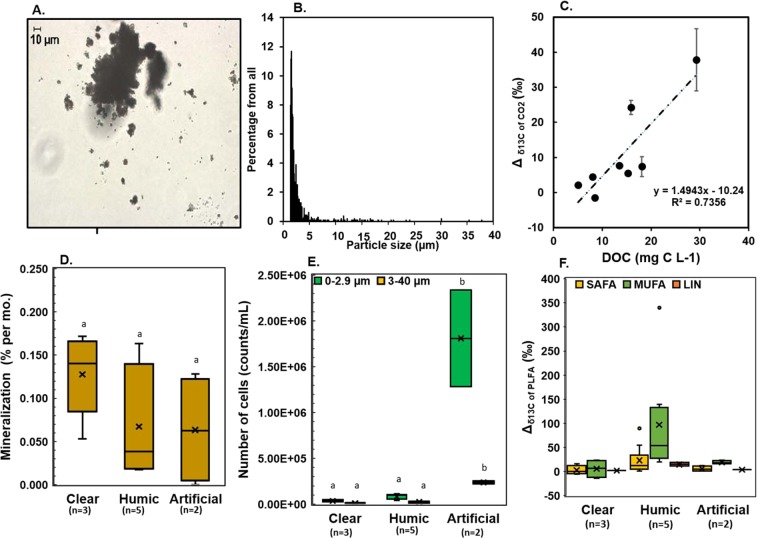
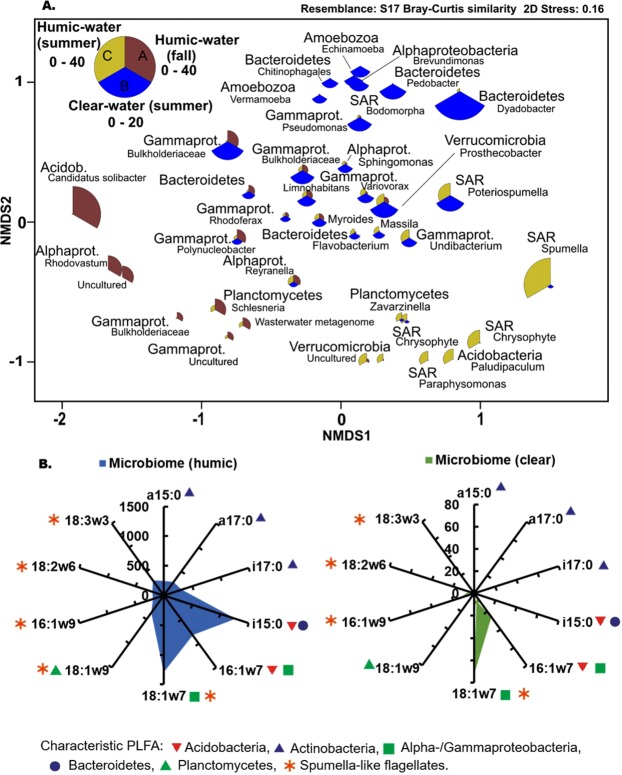
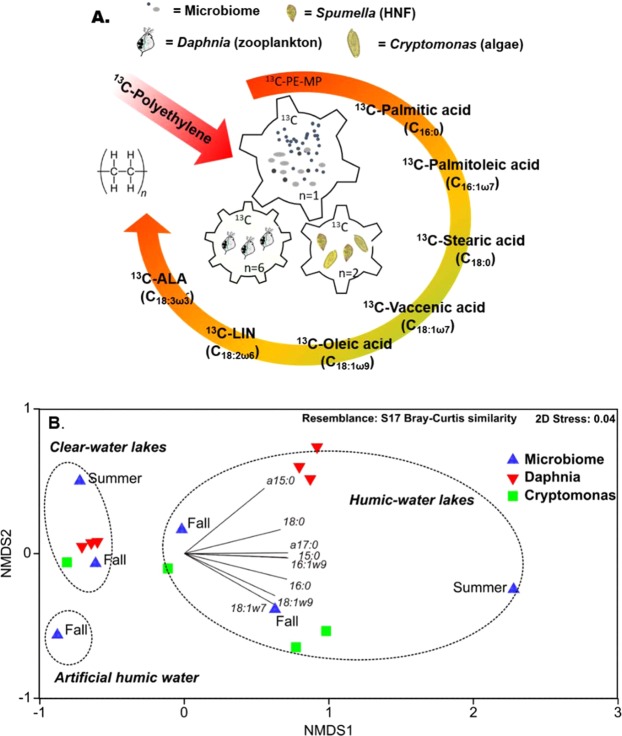
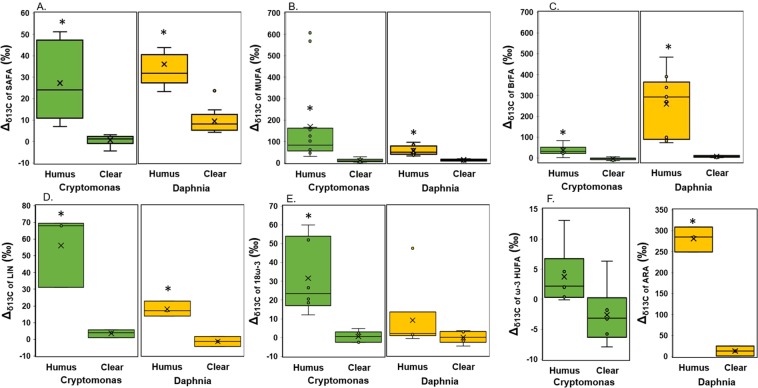
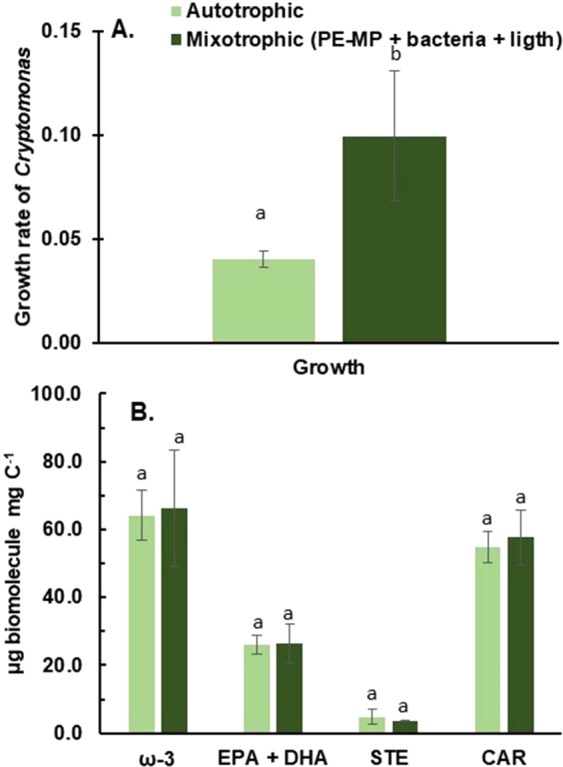
Increasing abundance of microplastics (MP) in marine and freshwaters is currently one of the greatest environmental concerns. Since plastics are fairly resistant to chemical decomposition, breakdown and reutilization of MP carbon complexes requires microbial activity. Currently, only a few microbial isolates have been shown to degrade MPs, and direct measurements of the fate of the MP carbon are still lacking. We used compound-specific isotope analysis to track the fate of fully labelled 13 C-polyethylene (PE) MP carbon across the aquatic microbial-animal interface. Isotopic values of respired CO 2 and membrane lipids showed that MP carbon was partly mineralized and partly used for cell growth. Microbial mineralization and assimilation of PE-MP carbon was most active when inoculated microbes were obtained from highly humic waters, which contain recalcitrant substrate sources. Mixotrophic algae (Cryptomonas sp.) and herbivorous zooplankton (Daphnia magna) used microbial mediated PE-MP carbon in their cell membrane fatty acids. Moreover, heteronanoflagellates and mixotrophic algae sequestered MP carbon for synthesizing essential ω-6 and ω-3 polyunsaturated fatty acids. Thus, this study demonstrates that aquatic micro-organisms can produce, biochemically upgrade, and trophically transfer nutritionally important biomolecules from PE-MP.
Overview
The claims and statistics of this paper haven’t been checked yet.
Free: it reads the open-access text and checks the first 5 claims that cite a source we can check. Create a free account to check every claim.
Integrity signals
Registry
Cites
Statistics
Figures
Verification
Claims the paper makes
The claims and statistics of this paper haven’t been checked yet.
Free: it reads the open-access text and checks the first 5 claims that cite a source we can check. Create a free account to check every claim.
Self-check
Percentages, sums and reported differences re-computed from the paper’s own numbers.
The self-check needs the paper’s full text.
Citations
Cites
The SILVA ribosomal RNA gene database project: improved data processing and web-based tools
Quast, C., Pruesse, E., Yilmaz, P., Gerken, J., Schweer, T., Yarza, P., Peplies, J., & Glöckner, F. O. (2012) · Nucleic Acids Research · doi:10.1093/nar/gks1219 · Cited by 33,055
Non‐parametric multivariate analyses of changes in community structure
CLARKE, K. R. (1993) · Australian Journal of Ecology · doi:10.1111/j.1442-9993.1993.tb00438.x · Cited by 14,128
Microplastics as contaminants in the marine environment: A review
Cole, M., Lindeque, P., Halsband, C., & Galloway, T. S. (2011) · Marine Pollution Bulletin · doi:10.1016/j.marpolbul.2011.09.025 · Cited by 6,023
Hidalgo-Ruz, V., Gutow, L., Thompson, R. C., & Thiel, M. (2012) · Environmental Science & Technology · doi:10.1021/es2031505 · Cited by 5,440
Culture of Phytoplankton for Feeding Marine Invertebrates
Guillard, R. R. L. (1975) · Culture of Marine Invertebrate Animals · doi:10.1007/978-1-4615-8714-9_3 · Cited by 5,229
Eriksen, M., Lebreton, L. C. M., Carson, H. S., Thiel, M., Moore, C. J., Borerro, J. C., Galgani, F., Ryan, P. G., & Reisser, J. (2014) · PLoS ONE · doi:10.1371/journal.pone.0111913 · Cited by 4,710
Weishaar, J. L., Aiken, G. R., Bergamaschi, B. A., Fram, M. S., Fujii, R., & Mopper, K. (2003) · Environmental Science & Technology · doi:10.1021/es030360x · Cited by 4,580
The Physical Impacts of Microplastics on Marine Organisms: A Review
Wright, S. L., Thompson, R. C., & Galloway, T. S. (2013) · Environmental Pollution · doi:10.1016/j.envpol.2013.02.031 · Cited by 4,524
Horton, A. A., Walton, A., Spurgeon, D. J., Lahive, E., & Svendsen, C. (2017) · Science of The Total Environment · doi:10.1016/j.scitotenv.2017.01.190 · Cited by 3,756
A bacterium that degrades and assimilates poly(ethylene terephthalate)
Yoshida, S., Hiraga, K., Takehana, T., Taniguchi, I., Yamaji, H., Maeda, Y., Toyohara, K., Miyamoto, K., Kimura, Y., & Oda, K. (2016) · Science · doi:10.1126/science.aad6359 · Cited by 3,367
Plastic debris in the open ocean
Cózar, A., Echevarría, F., González-Gordillo, J. I., Irigoien, X., Úbeda, B., Hernández-León, S., Palma, Á. T., Navarro, S., García-de-Lomas, J., Ruiz, A., et al. (2014) · Proceedings of the National Academy of Sciences · doi:10.1073/pnas.1314705111 · Cited by 3,133
Fry, B. (2006) · Springer eBooks · doi:10.1007/0-387-33745-8 · Cited by 3,113
Auta, H. S., Emenike, C. U., & Fauziah, S. H. (2017) · Environment International · doi:10.1016/j.envint.2017.02.013 · Cited by 2,649
Pathways for degradation of plastic polymers floating in the marine environment
Gewert, B., Plassmann, M. M., & MacLeod, M. (2015) · Environmental Science: Processes & Impacts · doi:10.1039/c5em00207a · Cited by 2,168
Duis, K., & Coors, A. (2016) · Environmental Sciences Europe · doi:10.1186/s12302-015-0069-y · Cited by 1,782
Plastics on the Sargasso Sea Surface
Carpenter, E. J., & Smith, K. L. (1972) · Science · doi:10.1126/science.175.4027.1240 · Cited by 1,652
Chandra, R. (1998) · Progress in Polymer Science · doi:10.1016/s0079-6700(97)00039-7 · Cited by 1,462
Plastic accumulation in the North Atlantic subtropical gyre
Law, K. L., Morét-Ferguson, S., Maximenko, N. A., Proskurowski, G., Peacock, E. E., Hafner, J., & Reddy, C. M. (2010) · Science · doi:10.1126/science.1192321 · Cited by 1,377
Stable-isotope probing as a tool in microbial ecology
Radajewski, S., Ineson, P., Parekh, N. R., & Murrell, J. C. (2000) · Nature · doi:10.1038/35001054 · Cited by 1,252
Microplastics in Taihu Lake, China
Su, L., Xue, Y., Li, L., Yang, D., Kolandhasamy, P., Li, D., & Shi, H. (2016) · Environmental Pollution · doi:10.1016/j.envpol.2016.06.036 · Cited by 1,211
YELLOW‐GREEN ALGAE WITH CHLOROPHYLLIDE C1,2
Guillard, R. R. L., & Lorenzen, C. J. (1972) · Journal of Phycology · doi:10.1111/j.1529-8817.1972.tb03995.x · Cited by 1,151
Leslie, H. A., Brandsma, S. H., van Velzen, M. J. M., & Vethaak, A. D. (2017) · Environment International · doi:10.1016/j.envint.2017.01.018 · Cited by 1,149
(Nano)plastics in the environment - Sources, fates and effects
da Costa, J. P., Santos, P. S. M., Duarte, A. C., & Rocha-Santos, T. (2016) · Science of The Total Environment · doi:10.1016/j.scitotenv.2016.05.041 · Cited by 1,139
Microplastic contamination of river beds significantly reduced by catchment-wide flooding
Hurley, R., Woodward, J., & Rothwell, J. J. (2018) · Nature Geoscience · doi:10.1038/s41561-018-0080-1 · Cited by 1,003
Webb, H., Arnott, J., Crawford, R., & Ivanova, E. (2012) · Polymers · doi:10.3390/polym5010001 · Cited by 958
(2009) · doi:10.1007/978-0-387-89366-2 · Cited by 790
Self-citationAuta, H. S., Emenike, C. U., Jayanthi, B., & Fauziah, S. H. (2018) · Marine Pollution Bulletin · doi:10.1016/j.marpolbul.2017.11.036 · Cited by 782
Biodegradation of polyethylene microplastics by the marine fungus Zalerion maritimum
Paço, A., Duarte, K., da Costa, J. P., Santos, P. S. M., Pereira, R., Pereira, M. E., Freitas, A. C., Duarte, A. C., & Rocha-Santos, T. A. P. (2017) · Science of The Total Environment · doi:10.1016/j.scitotenv.2017.02.017 · Cited by 724
ADaM, an artificial freshwater for the culture of zooplankton
Klüttgen, B., Dülmer, U., Engels, M., & Ratte, H. T. (1994) · Water Research · doi:10.1016/0043-1354(94)90157-0 · Cited by 682
Nanoplastics in the Aquatic Environment. Critical Review
Koelmans, A. A., Besseling, E., & Shim, W. J. (2015) · Marine Anthropogenic Litter · doi:10.1007/978-3-319-16510-3_12 · Cited by 648
Stable isotopes and biomarkers in microbial ecology
Boschker, H. (2002) · FEMS Microbiology Ecology · doi:10.1016/s0168-6496(02)00194-0 · Cited by 640
Microplastics in aquatic environments: implications for Canadian ecosystems
Anderson, J. C., Park, B. J., & Palace, V. P. (2016) · Environmental Pollution · doi:10.1016/j.envpol.2016.06.074 · Cited by 624
RNA Stable Isotope Probing, a Novel Means of Linking Microbial Community Function to Phylogeny
Manefield, M., Whiteley, A. S., Griffiths, R. I., & Bailey, M. J. (2002) · Applied and Environmental Microbiology · doi:10.1128/aem.68.11.5367-5373.2002 · Cited by 595
Whole-lake carbon-13 additions reveal terrestrial support of aquatic food webs
Pace, M. L., Cole, J. J., Carpenter, S. R., Kitchell, J. F., Hodgson, J. R., Van de Bogert, M. C., Bade, D. L., Kritzberg, E. S., & Bastviken, D. (2004) · Nature · doi:10.1038/nature02227 · Cited by 583
Weinstein, J. E., Crocker, B. K., & Gray, A. D. (2016) · Environmental Toxicology and Chemistry · doi:10.1002/etc.3432 · Cited by 553
Biodegradation of polyesters containing aromatic constituents
Müller, R.-J., Kleeberg, I., & Deckwer, W.-D. (2001) · Journal of Biotechnology · doi:10.1016/s0168-1656(00)00407-7 · Cited by 497
FATTY ACID CONTENT AND CHEMICAL COMPOSITION OF FRESHWATER MICROALGAE1
Ahlgren, G., Gustafsson, I., & Boberg, M. (1992) · Journal of Phycology · doi:10.1111/j.0022-3646.1992.00037.x · Cited by 485
Nolte, T. M., Hartmann, N. B., Kleijn, J. M., Garnæs, J., van de Meent, D., Jan Hendriks, A., & Baun, A. (2017) · Aquatic Toxicology · doi:10.1016/j.aquatox.2016.12.005 · Cited by 438
Willers, C., Jansen van Rensburg, P. J., & Claassens, S. (2015) · Journal of Applied Microbiology · doi:10.1111/jam.12902 · Cited by 423
Microplastic ingestion by Daphnia magna and its enhancement on algal growth
Canniff, P. M., & Hoang, T. C. (2018) · Science of The Total Environment · doi:10.1016/j.scitotenv.2018.03.176 · Cited by 411
Current Browning of Surface Waters Will Be Further Promoted by Wetter Climate
de Wit, H. A., Valinia, S., Weyhenmeyer, G. A., Futter, M. N., Kortelainen, P., Austnes, K., Hessen, D. O., Räike, A., Laudon, H., & Vuorenmaa, J. (2016) · Environmental Science & Technology Letters · doi:10.1021/acs.estlett.6b00396 · Cited by 374
Microplastic-associated bacterial assemblages in the intertidal zone of the Yangtze Estuary
Jiang, P., Zhao, S., Zhu, L., & Li, D. (2018) · Science of The Total Environment · doi:10.1016/j.scitotenv.2017.12.105 · Cited by 365
Bacterivory in algae: A survival strategy during nutrient limitation
Nygaard, K., & Tobiesen, A. (1993) · Limnology and Oceanography · doi:10.4319/lo.1993.38.2.0273 · Cited by 363
The influence of humic substances on lacustrine planktonic food chains
Jones, R. I. (1992) · Hydrobiologia · doi:10.1007/bf00006992 · Cited by 363
Trophic upgrading of food quality by protozoans enhancing copepod growth: Role of essential lipids
Klein Breteler, W. C. M., Schogt, N., Baas, M., Schouten, S., & Kraay, G. W. (1999) · Marine Biology · doi:10.1007/s002270050616 · Cited by 359
The influence of humic substances on lacustrine planktonic food chains
Jones, R. I. (1992) · Dissolved Organic Matter in Lacustrine Ecosystems: Energy Source and System Regulator · doi:10.1007/978-94-011-2474-4_6 · Cited by 354
Terrestrial carbon and intraspecific size-variation shape lake ecosystems
Jansson, M., Persson, L., De Roos, A. M., Jones, R. I., & Tranvik, L. J. (2007) · Trends in Ecology & Evolution · doi:10.1016/j.tree.2007.02.015 · Cited by 319
Biochemistry of lipids and membranes
(1986) · International Journal of Biochemistry · doi:10.1016/0020-711x(86)90300-9 · Cited by 301
Gehara, M., Crawford, A. J., Orrico, V. G. D., Rodríguez, A., Lötters, S., Fouquet, A., Barrientos, L. S., Brusquetti, F., De la Riva, I., Ernst, R., et al. (2014) · PLoS ONE · doi:10.1371/journal.pone.0103958 · Cited by 301
Stable Isotope Ratios as Tracers in Marine Food Webs: An Update
Michener, R. H., & Kaufman, L. (2007) · Stable Isotopes in Ecology and Environmental Science · doi:10.1002/9780470691854.ch9 · Cited by 289
Cui, R., Kim, S. W., & An, Y.-J. (2017) · Scientific Reports · doi:10.1038/s41598-017-12299-2 · Cited by 255
Microplastics in a freshwater environment receiving treated wastewater effluent
Lasee, S., Mauricio, J., Thompson, W. A., Karnjanapiboonwong, A., Kasumba, J., Subbiah, S., Morse, A. N., & Anderson, T. A. (2017) · Integrated Environmental Assessment and Management · doi:10.1002/ieam.1915 · Cited by 225
Micro(nanoplastics) in the marine environment: Current knowledge and gaps
Rios Mendoza, L. M., Karapanagioti, H., & Álvarez, N. R. (2018) · Current Opinion in Environmental Science & Health · doi:10.1016/j.coesh.2017.11.004 · Cited by 213
Micro- and Nanoplastic Pollution of Freshwater and Wastewater Treatment Systems
Blair, R. M., Waldron, S., Phoenix, V., & Gauchotte-Lindsay, C. (2017) · Springer Science Reviews · doi:10.1007/s40362-017-0044-7 · Cited by 181
Taipale, S. J., Kainz, M. J., & Brett, M. T. (2011) · Oikos · doi:10.1111/j.1600-0706.2011.19415.x · Cited by 176
Self-citationElshahed, M. S., Youssef, N. H., Luo, Q., Najar, F. Z., Roe, B. A., Sisk, T. M., Bühring, S. I., Hinrichs, K., & Krumholz, L. R. (2007) · Applied and Environmental Microbiology · doi:10.1128/aem.00591-07 · Cited by 136
Docherty, K. M., Young, K. C., Maurice, P. A., & Bridgham, S. D. (2006) · Microbial Ecology · doi:10.1007/s00248-006-9089-x · Cited by 135
Nimchua, T., Punnapayak, H., & Zimmermann, W. (2007) · Biotechnology Journal · doi:10.1002/biot.200600095 · Cited by 129
Vicinamibacteraceae fam. nov., the first described family within the subdivision 6 Acidobacteria
Huber, K. J., & Overmann, J. (2018) · INTERNATIONAL JOURNAL OF SYSTEMATIC AND EVOLUTIONARY MICROBIOLOGY · doi:10.1099/ijsem.0.002841 · Cited by 119
Suitability of Phytosterols Alongside Fatty Acids as Chemotaxonomic Biomarkers for Phytoplankton
Taipale, S. J., Hiltunen, M., Vuorio, K., & Peltomaa, E. (2016) · Frontiers in Plant Science · doi:10.3389/fpls.2016.00212 · Cited by 114
Self-citationNIES-Collection, list of strains : Microalgae and Protozoa
国立環境研究所微生物系統保存施設, 渡辺, 信., & 広木, 幹. (1991) · National Institute for Environmental Studies eBooks · Cited by 110
Chapter 7 Fatty acid desaturation and chain elongation in eukaryotes
Cook, H. W., & McMaster, C. R. (2002) · New comprehensive biochemistry · doi:10.1016/s0167-7306(02)36009-5 · Cited by 110
Assessing the reliability of fatty acid–specific stable isotope analysis for trophic studies
Bec, A., Perga, M., Koussoroplis, A., Bardoux, G., Desvilettes, C., Bourdier, G., & Mariotti, A. A. (2011) · Methods in Ecology and Evolution · doi:10.1111/j.2041-210x.2011.00111.x · Cited by 107
Taipale, S. J., Brett, M. T., Pulkkinen, K., & Kainz, M. J. (2012) · FEMS Microbiology Ecology · doi:10.1111/j.1574-6941.2012.01406.x · Cited by 104
Self-citationFood quality of heterotrophic bacteria for Daphnia magna: evidence for a limitation by sterols
Martin‐Creuzburg, D., Beck, B., & Freese, H. M. (2011) · FEMS Microbiology Ecology · doi:10.1111/j.1574-6941.2011.01076.x · Cited by 103
The Importance of Phytoplankton Biomolecule Availability for Secondary Production
Peltomaa, E. T., Aalto, S. L., Vuorio, K. M., & Taipale, S. J. (2017) · Frontiers in Ecology and Evolution · doi:10.3389/fevo.2017.00128 · Cited by 99
Self-citationJones, H. L. J., Leadbeater, B. S. C., & Green, J. C. (1993) · Journal of the Marine Biological Association of the United Kingdom · doi:10.1017/s0025315400032859 · Cited by 96
Railo, S., Talvitie, J., Setälä, O., Koistinen, A. P., & Lehtiniemi, M. (2018) · Marine Pollution Bulletin · doi:10.1016/j.marpolbul.2018.03.022 · Cited by 91
Kulichevskaya, I. S., Suzina, N. E., Rijpstra, W. I. C., Damsté, J. S. S., & Dedysh, S. N. (2014) · International Journal of Systematic and Evolutionary Microbiology · doi:10.1099/ijs.0.066175-0 · Cited by 88
Terrestrial carbohydrates support freshwater zooplankton during phytoplankton deficiency
Taipale, S. J., Galloway, A. W. E., Aalto, S. L., Kahilainen, K. K., Strandberg, U., & Kankaala, P. (2016) · Scientific Reports · doi:10.1038/srep30897 · Cited by 85
Self-citationForaging behavior by Daphnia in stoichiometric gradients of food quality
Schatz, G. S., & McCauley, E. (2007) · Oecologia · doi:10.1007/s00442-007-0793-0 · Cited by 71
Keskitalo, J. (1999) · Cited by 67
Taipale, S. J., & Sonninen, E. (2009) · Rapid Communications in Mass Spectrometry · doi:10.1002/rcm.4072 · Cited by 61
Self-citationALGAE AS COMPETITORS FOR GLUCOSE WITH HETEROTROPHIC BACTERIA 1
Kamjunke, N., Köhler, B., Wannicke, N., & Tittel, J. (2008) · Journal of Phycology · doi:10.1111/j.1529-8817.2008.00520.x · Cited by 56
Dynamic birefringence of polymethylacrylate
Read, B. E. (1964) · Polymer · doi:10.1016/0032-3861(64)90111-9 · Cited by 51
Transformation of humic substances by the freshwater Ascomycete Cladosporium sp.
Rojas-Jiménez, K., Fonvielle, J., Ma, H., & Grossart, H. (2017) · Limnology and Oceanography · doi:10.1002/lno.10545 · Cited by 41
Fatty acid composition of freshwater heterotrophic flagellates: an experimental study
Véra, A., Desvilettes, C., Bec, A., & Bourdier, G. (2001) · Aquatic Microbial Ecology · doi:10.3354/ame025271 · Cited by 38
Eutrophication and browning influenceDaphnianutritional ecology
Taipale, S. J., Aalto, S. L., Galloway, A. W. E., Kuoppamäki, K., Nzobeuh, P., & Peltomaa, E. (2019) · Inland Waters · doi:10.1080/20442041.2019.1574177 · Cited by 31
Self-citationResponse of a microbial food web to prolonged seasonal hypoxia in a boreal lake
Bręk-Laitinen, G., Bellido, J. L., & Ojala, A. (2011) · Aquatic Biology · doi:10.3354/ab00379 · Cited by 28
Kisand, V., Gebhardt, S., Rullkötter, J., & Simon, M. (2012) · Marine Chemistry · doi:10.1016/j.marchem.2012.12.003 · Cited by 23
Directional High-Throughput Sequencing of RNAs Without Gene-Specific Primers
Mäki, A., & Tiirola, M. (2018) · BioTechniques · doi:10.2144/btn-2018-0082 · Cited by 10
Self-citation
Research works printed but not linked: 3
- GESAMP Proceedings of the GESAMP International Workshop on Plastic Particles as a Vector in Transporting Persistent, Bio-Accumulating and Toxic Substances in the Oceans GESAMP Rep. Stud. 2010 82 68
- Ratledge, C. & Wilkinson, S. G. Microbial Lipids. (Academy Press, London, (1989).
- Guillard RRL Lorenzen CJ Yellow-green algae with chlorophyllide c J. Phycol. 1972 8 10 14
Cited by
Chemical Analysis of Microplastics and Nanoplastics: Challenges, Advanced Methods, and Perspectives
Ivleva, N. P. (2021) · Chemical Reviews · doi:10.1021/acs.chemrev.1c00178 · Cited by 1,172
Marine Plastic Debris: A New Surface for Microbial Colonization
Wright, R. J., Erni-Cassola, G., Zadjelovic, V., Latva, M., & Christie-Oleza, J. A. (2020) · Environmental Science & Technology · doi:10.1021/acs.est.0c02305 · Cited by 513
Chia, W. Y., Ying Tang, D. Y., Khoo, K. S., Kay Lup, A. N., & Chew, K. W. (2020) · Environmental Science and Ecotechnology · doi:10.1016/j.ese.2020.100065 · Cited by 477
“[62]; mixotrophic algae (Cryptomonas sp.”
BackgroundThe global odyssey of plastic pollution
Rochman, C. M., & Hoellein, T. (2020) · Science · doi:10.1126/science.abc4428 · Cited by 466
Microplastic-associated bacterial assemblages in the intertidal zone of the Yangtze Estuary
Jiang, P., Zhao, S., Zhu, L., & Li, D. (2018) · Science of The Total Environment · doi:10.1016/j.scitotenv.2017.12.105 · Cited by 365
Metadata
- Authors
- Taipale, S. J., Peltomaa, E., Kukkonen, J. V. K., Kainz, M. J., Kautonen, P., & Tiirola, M.
- Affiliations
- University of Jyväskylä (FI)
- University of Helsinki (FI)
- University of Eastern Finland (FI)
- Universität für Weiterbildung Krems (AT)
- Corresponding author
- Taipale, S. J.
- Venue
- Scientific Reports
- Published
- 2019-12-27
- Volume
- 9
- Issue
- 1
- Pages
- 19894-19894
- ISSN
- 2045-2322 (ISSN-L)
- PMC
- PMC6934716
- OpenAlex
- W2998062589
- Cited by
- 115
- References
- 81
- Citations by year
- 2026: 9 · 2025: 21 · 2024: 16 · 2023: 16 · 2022: 20 · 2021: 23 · 2020: 9
- FWCI
- 3.89
- Type
- journal article
- Language
- en
- Open access
- gold
- doi.org
- Licence
- cc-by
- creativecommons.org/licenses/by/4.0 (tdm)
- creativecommons.org/licenses/by/4.0 (vor)
- Locations
- Scientific Reports (publishedVersion, cc-by)
- PubMed Central (publishedVersion, cc-by)
- PubMed (publishedVersion)
- Jyväskylä University Digital Archive (University of Jyväskylä) (submittedVersion, cc-by)
- DOAJ (DOAJ: Directory of Open Access Journals) (submittedVersion)
- Työväentutkimus Vuosikirja (submittedVersion)
- Funders
- European Commission (2007–2013, FP/2007/2013)
- Jyväskylän Yliopisto
- Directorate for Biological Sciences
- FP7 Ideas: European Research Council (615146)
- Topics
- Physical Sciences › Environmental Science › Pollution › Microplastics and Plastic Pollution
- Physical Sciences › Environmental Science › Ecology › Isotope Analysis in Ecology
- Physical Sciences › Earth and Planetary Sciences › Oceanography › Marine Plankton and Biogeochemistry
- Keywords
- microplastics, polyethylene, microbial mineralization, aquatic food webs, trophic transfer, mixotrophic algae, Cryptomonas, Daphnia magna, zooplankton, cell membrane fatty acids, polyunsaturated fatty acids, humic water, compound-specific isotope analysis
- MeSH terms
- Microplastics, Animals, Carbon Isotopes, Daphnia, Zooplankton, Food Chain, Cryptophyta, Microalgae
About these checks
Registry, retraction, Cites and statistics results are computed, not judged, with one exception: a printed reference that no index lists is read once by a model before it counts as a citation error. Claims are extracted by a model and kept only when their quote appears verbatim in the text; each cited source is then checked, with a model’s help, for whether it says what the claim relies on. Those verdicts can be wrong — read the claim’s quote and the cited source before relying on one.
Statistics and arithmetic are recomputed, not judged.
Confidence bands are shown only for fields calibrated on our annotated test set. None is calibrated yet, so no band is shown.
What counts as a claim ›How we measure confidence ›How we check this ›
Are you an author, or do you see a problem with this page? Request a review
Data sources
Bibliographic data: Semantic Scholar, OpenAlex, Crossref.
Contains information from the Semantic Scholar Academic Graph Datasets, made available under the ODC Attribution License (ODC-BY 1.0).
Semantic Scholar’s data is described in: Kinney, R., et al. (2023). The Semantic Scholar Open Data Platform. arXiv:2301.10140.
