

Direct exposure of the head to solar heat radiation impairs motor-cognitive performance
Open accessThe DOI matches its Crossref record; 55 of the 55 references it cites were found in a registry or an index.
Abstract
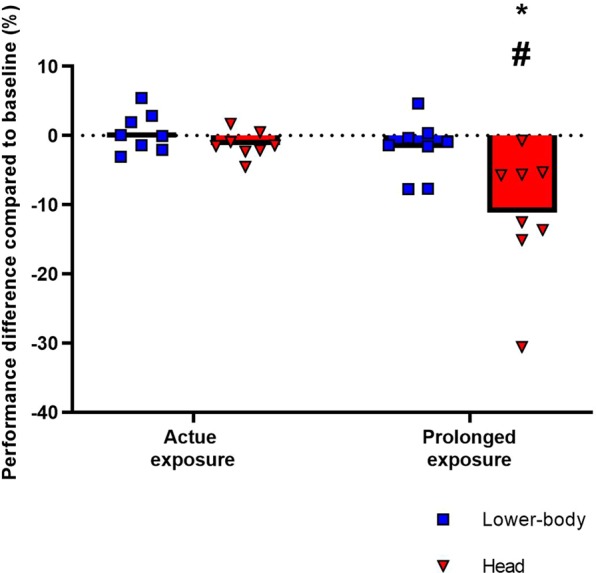
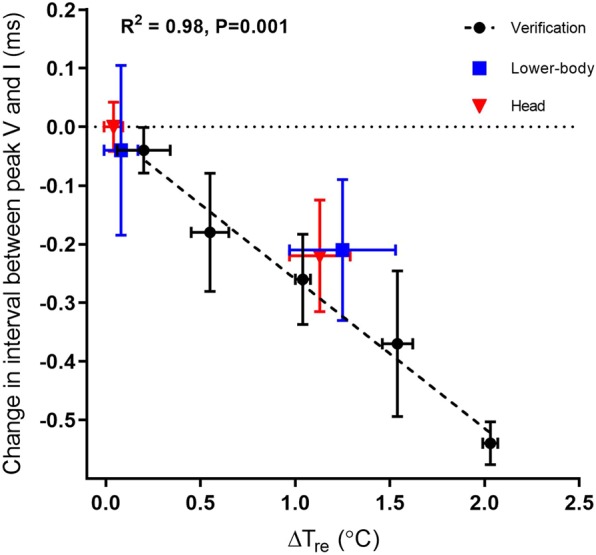
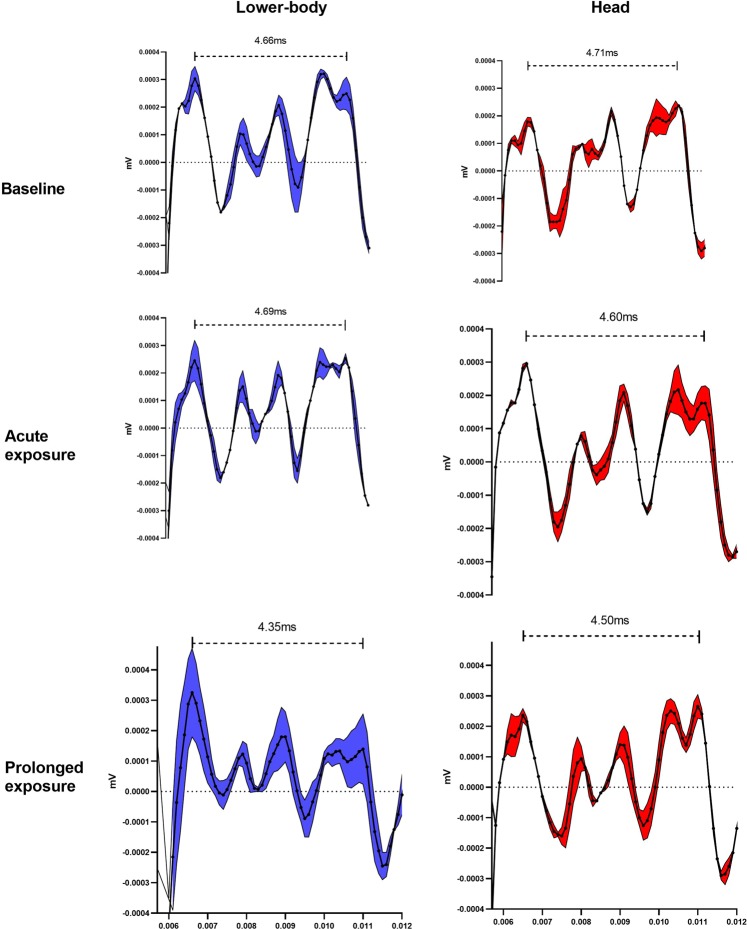
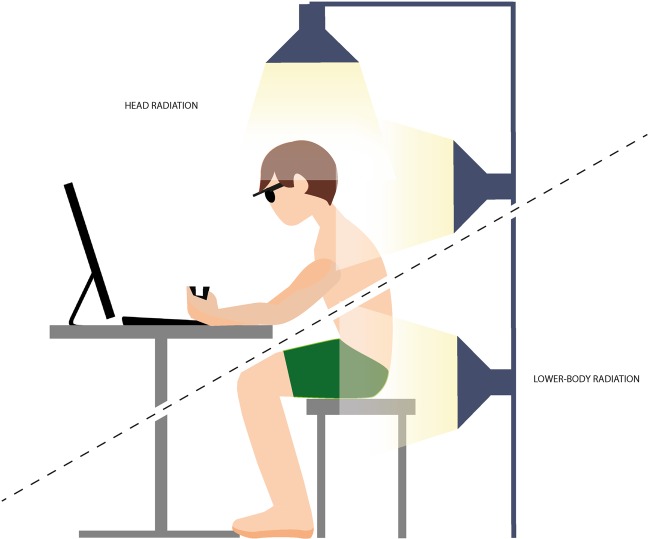
Health and performance impairments provoked by thermal stress are societal challenges geographically spreading and intensifying with global warming. Yet, science may be underestimating the true impact, since no study has evaluated effects of sunlight exposure on human brain temperature and function. Accordingly, performance in cognitively dominated and combined motor-cognitive tasks and markers of rising brainstem temperature were evaluated during exposure to simulated sunlight (equal to ~1000 watt/m 2). Acute exposure did not affect any performance measures, whereas prolonged exposure of the head and neck provoked an elevation of the core temperature by 1 °C and significant impairments of cognitively dominated and motor task performances. Importantly, impairments emerged at considerably lower hyperthermia levels compared to previous experiments and to the trials in the presents study without radiant heating of the head. These findings highlight the importance of including the effect of sunlight radiative heating of the head and neck in future scientific evaluations of environmental heat stress impacts and specific protection of the head to minimize detrimental effects.
Overview
The claims and statistics of this paper haven’t been checked yet.
Free: it reads the open-access text and checks the first 5 claims that cite a source we can check. Create a free account to check every claim.
Integrity signals
Registry
Cites
Statistics
Figures
Verification
Claims the paper makes
The claims and statistics of this paper haven’t been checked yet.
Free: it reads the open-access text and checks the first 5 claims that cite a source we can check. Create a free account to check every claim.
Self-check
Percentages, sums and reported differences re-computed from the paper’s own numbers.
The self-check needs the paper’s full text.
Citations
Cites
A new weighting system for mean surface temperature of the human body
Ramanathan, N. L. (1964) · Journal of Applied Physiology · doi:10.1152/jappl.1964.19.3.531 · Cited by 1,883
Mora, C., Dousset, B., Caldwell, I. R., Powell, F. E., Geronimo, R. C., Bielecki, C. R., Counsell, C. W. W., Dietrich, B. S., Johnston, E. T., Louis, L. V., et al. (2017) · Nature Climate Change · doi:10.1038/nclimate3322 · Cited by 1,746
Bashkatov, A. N., Genina, E. A., Kochubey, V. I., & Tuchin, V. V. (2005) · Journal of Physics D: Applied Physics · doi:10.1088/0022-3727/38/15/004 · Cited by 1,720
Anderson, G. B., & Bell, M. L. (2011) · Environmental Health Perspectives · doi:10.1289/ehp.1002313 · Cited by 1,191
Ash, C., Dubec, M., Donne, K., & Bashford, T. (2017) · Lasers in Medical Science · doi:10.1007/s10103-017-2317-4 · Cited by 1,040
Kjellstrom, T., Holmer, I., & Lemke, B. (2009) · Global Health Action · doi:10.3402/gha.v2i0.2047 · Cited by 802
Deadly heat waves projected in the densely populated agricultural regions of South Asia
Im, E.-S., Pal, J. S., & Eltahir, E. A. B. (2017) · Science Advances · doi:10.1126/sciadv.1603322 · Cited by 673
Flouris, A. D., Dinas, P. C., Ioannou, L. G., Nybo, L., Havenith, G., Kenny, G. P., & Kjellstrom, T. (2018) · The Lancet Planetary Health · doi:10.1016/s2542-5196(18)30237-7 · Cited by 579
Self-citationInvited Review: Aging and human temperature regulation
Kenney, W. L., & Munce, T. A. (2003) · Journal of Applied Physiology · doi:10.1152/japplphysiol.00202.2003 · Cited by 577
Cited by
Current and projected regional economic impacts of heatwaves in Europe
García-León, D., Casanueva, A., Standardi, G., Burgstall, A., Flouris, A. D., & Nybo, L. (2021) · Nature Communications · doi:10.1038/s41467-021-26050-z · Cited by 279
Self-citationOccupational heat strain in outdoor workers: A comprehensive review and meta-analysis
Ioannou, L. G., Foster, J., Morris, N. B., Piil, J. F., Havenith, G., Mekjavic, I. B., Kenny, G. P., Nybo, L., & Flouris, A. D. (2022) · Temperature · doi:10.1080/23328940.2022.2030634 · Cited by 208
Self-citationFatima, S. H., Rothmore, P., Giles, L. C., Varghese, B. M., & Bi, P. (2021) · Environment International · doi:10.1016/j.envint.2021.106384 · Cited by 154
IOC consensus statement on recommendations and regulations for sport events in the heat
Racinais, S., Hosokawa, Y., Akama, T., Bermon, S., Bigard, X. A., Casa, D. J., Grundstein, A., Jay, O., Massey, A., Migliorini, S., et al. (2022) · British Journal of Sports Medicine · doi:10.1136/bjsports-2022-105942 · Cited by 178
“55 56 Shading, provided by lightweight utility canopies/awning or customised sails, is a simple and effective intervention that mitigates the negative effects of the additional heat load from thermal radiation.”
Occupational Heat Stress: Multi-Country Observations and Interventions
Ioannou, L. G., Mantzios, K., Tsoutsoubi, L., Nintou, E., Vliora, M., Gkiata, P., Dallas, C. N., Gkikas, G., Agaliotis, G., Sfakianakis, K., et al. (2021) · International Journal of Environmental Research and Public Health · doi:10.3390/ijerph18126303 · Cited by 107
“For example, job task requirements and complexities, self-pacing, and sun exposure are only some of the parameters that are difficult to consider in laboratory settings and are known to affect the physiological heat strain experienced by someone [7,28].”
BackgroundSelf-citationIoannou, L. G., Tsoutsoubi, L., Mantzios, K., Gkikas, G., Piil, J. F., Dinas, P. C., Notley, S. R., Kenny, G. P., Nybo, L., & Flouris, A. D. (2021) · International Journal of Environmental Research and Public Health · doi:10.3390/ijerph18147698 · Cited by 91
“For instance, a laboratory study showed marked negative effects of solar radiation on human cognitive performance [1], but we do not know if the heat from the sun can affect the physiology and cognition of people working outdoors [2,3].”
BackgroundSelf-citationMcDonald, R. I., Biswas, T., Chakraborty, T., Kroeger, T., Cook‐Patton, S. C., & Fargione, J. (2024) · npj Urban Sustainability · doi:10.1038/s42949-024-00150-3 · Cited by 94
“It is important to note that while air temperature is correlated withhealthimpacts,thereareotherheatstressmetricsthattakeintoaccount factorsthatarealsoimportantforthermalcomfort,likehumidity 15 and direct solar radiation 16,17 .”
Impact of occupational heat stress on worker productivity and economic cost
Morrissey, M. C., Brewer, G. J., Williams, W. J., Quinn, T. D., & Casa, D. J. (2021) · American Journal of Industrial Medicine · doi:10.1002/ajim.23297 · Cited by 83
“22 Zander et al. 24 reported that approximately 1214 workers surveyed were 35% less productive on days they indicated experiencing heat stress.”
Future cooling gap in shared socioeconomic pathways
Andrijevic, M., Byers, E. A., Mastrucci, A., Smits, J. P. J. M., & Fuss, S. (2021) · Environmental Research Letters · doi:10.1088/1748-9326/ac2195 · Cited by 74
Foster, J., Smallcombe, J. W., Hodder, S., Jay, O., Flouris, A. D., Nybo, L., & Havenith, G. (2021) · International Journal of Biometeorology · doi:10.1007/s00484-021-02205-x · Cited by 60
“, 2016), cognitive function (Piil et al., 2020), and thermal comfort (Hodder and Parsons, 2007) have also been investigated with SOLAR simulation lamps, a source of artificial, non-ionizing radiation with total energy intensity up to 1 kW·m−2.”
BackgroundSelf-citationEffect of a Simulated Heat Wave on Physiological Strain and Labour Productivity
Ioannou, L. G., Mantzios, K., Tsoutsoubi, L., Panagiotaki, Z., Kapnia, A. K., Ciuha, U., Nybo, L., Flouris, A. D., & Mekjavic, I. B. (2021) · International Journal of Environmental Research and Public Health · doi:10.3390/ijerph18063011 · Cited by 51
“Although in the near future countries are expected to start moving away from the primary sector of agriculture towards the industries of manufacturing and services, the results of this study could not be generalized to all industrial sectors since they do not reflect what happens in agriculture and construction where…”
BackgroundSelf-citationThe HEAT-SHIELD project — Perspectives from an inter-sectoral approach to occupational heat stress
Morris, N. B., Piil, J. F., Morabito, M., Messeri, A., Levi, M., Ioannou, L. G., Ciuha, U., Pogačar, T., Kajfež Bogataj, L., Kingma, B., et al. (2021) · Journal of Science and Medicine in Sport · doi:10.1016/j.jsams.2021.03.001 · Cited by 47
Self-citationEvaluation of cognitive performance in high temperature with heart rate: A pilot study
Chen, Y., Wang, Z., Tian, X., & Liu, W. (2022) · Building and Environment · doi:10.1016/j.buildenv.2022.109801 · Cited by 55
Ma, L., Ma, Y., Ou, Y., Chen, S.-D., Liu, Y., Dong, Q., Cheng, W., Tan, L., & Yu, J. (2022) · BMC Medicine · doi:10.1186/s12916-022-02331-2 · Cited by 49
“Longterm exposure of head and neck to sunlight causes a 1 °C increase in core temperature, which will cause worse cognitive performance [34].”
BackgroundGibbons, T. D., Ainslie, P. N., Thomas, K. N., Wilson, L. C., Akerman, A. P., Donnelly, J., Campbell, H. A., & Cotter, J. (2021) · The Journal of Physiology · doi:10.1113/jp280970 · Cited by 45
“…manifests as reduced orthostatic tolerance (Wilson et al. 2011; Schlader et al. 2016), then an impaired ability to complete complex cognitive tasks (Piil et al. 2017, 2020), andwhen approaching thermal tolerance, impaired central motor drive, i.e. central fatigue (Caputa et al. 1986; Nybo &…”
BackgroundProlonged facemask use in the heat worsens dyspnea without compromising motor-cognitive performance
Morris, N. B., Piil, J. F., Christiansen, L., Flouris, A. D., & Nybo, L. (2020) · Temperature · doi:10.1080/23328940.2020.1826840 · Cited by 44
“Assessed with an experimental design and test array sufficiently sensitive to detect performance impairment due to dehydration [14] or solar radiation [13] (with similar sample sizes), the current conditions with aggravation of dyspnea and in combination with elevated thermal discomfort did not result in significant p…”
BackgroundMethodSelf-citationMorris, N. B., Levi, M., Morabito, M., Messeri, A., Ioannou, L. G., Flouris, A. D., Samoutis, G., Pogačar, T., Bogataj, L. K., Piil, J. F., et al. (2021) · Temperature · doi:10.1080/23328940.2020.1852049 · Cited by 36
Self-citationShortridge, A., William Walker, V. I., White, D. D., Guardaro, M., Hondula, D. M., & Vanos, J. (2021) · Climate Risk Management · doi:10.1016/j.crm.2022.100437 · Cited by 44
Guzmán-Echavarría, G., Middel, A., & Vanos, J. (2022) · Temperature · doi:10.1080/23328940.2022.2149024 · Cited by 41
“In general, future PHE research should strengthen the representation of groups of concern for adaptation and resilience plans, also helping with input information to understand cognitive impacts [87], productivity [30], and sleep [88], and to further implement evidence-based cooling strategies at personal (e.”
BackgroundMasuda, Y. J., Garg, T., Anggraeni, I., Wolff, N. H., Ebi, K. L., Game, E. T., Krenz, J. E., & Spector, J. T. (2020) · Environmental Research Letters · doi:10.1088/1748-9326/abb96c · Cited by 38
“Radiative heating from a lack of shade may especially be detrimental to cognitive performance, as recent research [61] suggests that radiative heating from direct solar radiation rather than hyperthermia is an earlier predictor of adverse effects on cognitive performance.”
BackgroundImpact of elevated core temperature on cognition in hot environments within a military context
Ashworth, E. T., Cotter, J. D., & Kilding, A. E. (2021) · European Journal of Applied Physiology · doi:10.1007/s00421-020-04591-3 · Cited by 35
Moving in a hotter world: Maintaining adequate childhood fitness as a climate change countermeasure
Morrison, S. A. (2022) · Temperature · doi:10.1080/23328940.2022.2102375 · Cited by 34
Efficacy of cooling vests based on different heat-extraction concepts: The HEAT-SHIELD project
Ciuha, U., Valenčič, T., Ioannou, L. G., & Mekjavić, I. B. (2023) · Journal of Thermal Biology · doi:10.1016/j.jtherbio.2022.103442 · Cited by 27
Self-citationThe exposome from neurodevelopment to neurodegeneration: A narrative review
Dallere, S., Rasà, D. M., Pavarino, G., Schellino, R., Vercelli, A., & Boido, M. (2025) · Neuroscience & Biobehavioral Reviews · doi:10.1016/j.neubiorev.2025.106247 · Cited by 23
“In 2020, Piil and colleagues conducted a study showing that prolonged, non-acute, direct exposure of adult heads to solar heat radiation is capable of increasing internal temperature by 1 ◦ C, consequently impairing cognitive performances (Piil et al., 2020).”
Piil, J. F., Kingma, B., Morris, N. B., Christiansen, L., Ioannou, L. G., Flouris, A. D., & Nybo, L. (2021) · Temperature · doi:10.1080/23328940.2021.1957367 · Cited by 20
“[47–50,52,56–59,61,80] ○ with increasing solar radiation levels high cognitive impact can occur at Trectal � 39:5C ○ for high solar radiation Qsolar � 800 W/ m(2), the Trectal � 38:5C [73] The above model is based on numerous observations, where baseline conditions are compared with moderate hyperthermia (references #…”
BackgroundInfluentialSelf-citationIndependent dual-responsive Janus chromic fibers
Wei, Y., Zhang, W., Hou, C., Zhang, Q., Li, Y., & Wang, H. (2021) · Science China Materials · doi:10.1007/s40843-020-1563-y · Cited by 16
Doohan, M. A., Watzek, J. T., King, N. A., White, M. J., & Stewart, I. B. (2023) · Journal of Applied Physiology · doi:10.1152/japplphysiol.00070.2023 · Cited by 23
Wei, Y., She, D., Xia, J., Wang, G., Zhang, Q., Huang, S., Zhang, Y., & Wang, T. (2024) · Climate Dynamics · doi:10.1007/s00382-024-07199-x · Cited by 29
“Exposure to direct solar radiation at lower temperatures may also be hazardous to human health (Piil et al. 2020).”
Cross-modal interaction between temperature and light color temperature on reading comprehension
Guo, X., Luo, W., Mangoubi, O., & Liu, S. (2025) · Building and Environment · doi:10.1016/j.buildenv.2025.112751 · Cited by 16
The usability of ClimApp: A personalized thermal stress warning tool
Eggeling, J., Rydenfält, C., Kingma, B., Toftum, J., & Gao, C. (2022) · Climate Services · doi:10.1016/j.cliser.2022.100310 · Cited by 17
Donnan, K. J., Williams, E. L., & Bargh, M. J. (2023) · Temperature · doi:10.1080/23328940.2022.2157645 · Cited by 21
“It is also important to address the impact of a rising environmental temperature for the wider population, as even passive exposure to hot climates can have negative implications for cognitively dominated performance (CP) [35,36].”
BackgroundIoannou, L. G., Tsoutsoubi, L., Gkiata, P., Brown, H. A., Périard, J. D., Mekjavić, I. B., Kenny, G. P., Nybo, L., & Flouris, A. D. (2023) · Scandinavian Journal of Medicine and Science in Sports · doi:10.1111/sms.14520 · Cited by 18
“As such, future studies should consider accounting for sun exposure given its impacts on human physiology and cognition, 23,57 as well as the potential for light-colored clothing to reduce skin temperature in sunny conditions.”
BackgroundSelf-citationFlouris, A. D., Ioannou, L. G., Notley, S. R., & Kenny, G. P. (2021) · Journal of Occupational and Environmental Hygiene · doi:10.1080/15459624.2021.2001475 · Cited by 12
“In addition, radiant heat sources such as the sun, worksite vehicles, and mechanized equipment can contribute substantially to environmental heat stress (Piil et al. 2020; Ioannou et al. 2021c).”
BackgroundSelf-citationWork–rest regimens for work in hot environments: A scoping review
Deshayes, T. A., Hsouna, H., Braham, M. A. A., Arvisais, D., Pageaux, B., Ouellet, C., Jay, O., Maso, F. D., Begon, M., Saïdi, A., et al. (2024) · American Journal of Industrial Medicine · doi:10.1002/ajim.23569 · Cited by 19
Barry, H., Gendron, P., Gagnon, C., Bherer, L., & Gagnon, D. (2021) · Applied Physiology, Nutrition, and Metabolism · doi:10.1139/apnm-2021-0243 · Cited by 16
Wardenaar, F. C., Vento, K. A., Ortega-Santos, C. P., Connolly, J., & Vanos, J. (2022) · International Journal of Sports Science & Coaching · doi:10.1177/17479541221089748 · Cited by 13
Shan, L., Wang, N., Duan, F., Zhang, S., Duan, L., Zhang, Q., Zhu, L., Wang, S., Jiang, J., Ma, Y., et al. (2025) · Environmental Research · doi:10.1016/j.envres.2025.122976 · Cited by 16
Uchiyama, K., King, J., Wallman, K. E., Taggart, S. M., Dugan, C., & Girard, O. (2022) · European Journal of Applied Physiology · doi:10.1007/s00421-022-04979-3 · Cited by 12
“One additional limitation is the absence of solar radiation in our study, which is considered one of the biggest contributors to cognitive impairment (Piil et al. 2020; Ioannou et al. 2021).”
BackgroundThe impact of sunlight exposure on brain structural markers in the UK Biobank
Li, H., Cui, F., Wang, T., Wang, W., & Zhang, D. (2024) · Scientific Reports · doi:10.1038/s41598-024-59633-z · Cited by 16
“It may be as follows: (1) Sunlight increases brain temperature by affecting cerebral blood flow and blood temperature, and broad-spectrum light may also penetrate the skin and heat tissues, also increasing brain temperature 12,13,17 .”
BackgroundTaggart, S. M., Girard, O., Landers, G. J., Ecker, U. K. H., & Wallman, K. E. (2023) · Temperature · doi:10.1080/23328940.2023.2208516 · Cited by 14
“Thermal sensation (0 [very cold] to 20 [very hot]) and thermal comfort (0 [very comfortable] to 20 [very uncomfortable]) were recorded using visual analogue scales ranging from green to red and white to black, respectively [10].”
BackgroundMethodKomulainen, K., Hakulinen, C. A., Lipsanen, J. O., Partonen, T., Pulkki-Råbäck, L., Kähönen, M. A. P., Virtanen, M., Ruuhela, R., Raitakari, O. T., Rovio, S., et al. (2022) · Scientific Reports · doi:10.1038/s41598-022-25336-6 · Cited by 9
Impact of roofing materials on school temperatures in tropical Africa
Amankwaa, E. F., Roberts, B. M., Mensah, P. A., & Gough, K. V. (2025) · Buildings and Cities · doi:10.5334/bc.581 · Cited by 6
Mete, F., Eyüboğlu, S., Vitrinel, A., Kılıç, Ü., Erdogan, C. S., Kılıç, E., & Yılmaz, B. (2023) · International Journal of Developmental Neuroscience · doi:10.1002/jdn.10258 · Cited by 7
“However, previously, a study in rats reported reduced exploratory activity and increased anxiety-like behavior in prepubertal rats upon hyperthermic stimuli and attributed this to a delay in the decrease in corticosterone levels (Piil et al., 2020).”
BackgroundPerspective on the Next Ten Years of Wearable Passive Radiative Thermoregulation
Higueros, G., Li, Q., & Hsu, P. (2025) · ACS Materials Letters · doi:10.1021/acsmaterialslett.5c00231 · Cited by 5
He, M., Liu, H., Guo, J., He, B., Fang, Z., & Li, B. (2024) · Energy and Buildings · doi:10.1016/j.enbuild.2024.114910 · Cited by 6
Impact of Reflective Roadways on Simulated Heat Strain at the Tokyo, Paris and Los Angeles Olympics
Vanos, J., Joshi, A., Guzmán-Echavarría, G., Rykaczewski, K., & Hosokawa, Y. (2024) · Journal of Science in Sport and Exercise · doi:10.1007/s42978-024-00294-9 · Cited by 9
“The incorporation of solar radiation, and thus T MRT , is often ignored within common thermal indices, yet must be accounted for in outdoor scenarios given the strong relationship with heat stress [17, 27, 53, 55] and cognition [65].”
Piffer, D. (2023) · Qeios · doi:10.32388/hdjk5p · Cited by 4
Khalil, M. H., & Steemers, K. (2026) · Buildings · doi:10.3390/buildings16030637 · Cited by 7
The psychology of thermoregulation: A coordinating mechanisms approach
Acevedo, E. C., White, K. P., & Al-Shawaf, L. (2025) · Physiology & Behavior · doi:10.1016/j.physbeh.2025.114865 · Cited by 7
Gordon, R. J. F. H., Tillin, N. A., Diss, C. E., & Tyler, C. J. (2023) · Experimental Physiology · doi:10.1113/ep090644 · Cited by 4
Heat Shock Alters the Proteomic Profile of Equine Mesenchymal Stem Cells
Abd‐El‐Aziz, A., Riveroll, A. L., Gonzalez, B. P. E., McDuffee, L. A., Cohen, A., Fenech, A., & Montelpare, W. J. (2022) · International Journal of Molecular Sciences · doi:10.3390/ijms23137233 · Cited by 4
“Signs and symptoms of heat-related stress can include excessive sweating as well as cognitive impairment [3].”
BackgroundMercurio, M., Galasso, O., de Filippis, R., Familiari, F., & Gasparini, G. (2023) · Surgeries · doi:10.3390/surgeries4040054 · Cited by 4
“…some evidence that hyperthermia of the head plays a key role in impairing cognitive performance in highly specialized and precise activities [10,21,39], just as there are results of studies demonstrating that lowering the head temperature in conditions of stress and high ambient temperature can…”
BackgroundKhalil, M. H., & Steemers, K. (2026) · Brain Sciences · doi:10.3390/brainsci16010085 · Cited by 7
“…(approximately 1000 watt/m 2 ) provokes core temperature elevation of 1 ◦ C and significant impairments of cognitively dominated and motor task performances, with impairments emerging at considerably lower hyperthermia levels compared to experiments without radiant heating of the head [116].”
InfluentialGarcia, M. D. S., Oliveira, I. C. F., de Souza, R. V. G., & Reis, I. A. (2021) · Revista da Universidade Federal de Minas Gerais · doi:10.35699/2316-770x.2021.26714 · Cited by 4
Tetzlaff, E. J., Kirby, N. V., Ioannou, L. G., Meade, R. D., O’Connor, F. K., Flouris, A. D., & Kenny, G. P. (2025) · Journal of Occupational and Environmental Hygiene · doi:10.1080/15459624.2025.2449947 · Cited by 3
“…and in related plants (e.g., smelters, mills) can experience substantial heat stress in the form of high ambient temperatures, elevated humidity, and exposure to radiant heat sources, such as the sun and mechanized equipment (Piil et al. 2020; Flouris et al. 2021; Ioannou, Tsoutsoubi, et al. 2021).”
Self-citationIndependent dual-responsive luminous composite fibers with controllable full-color emissions
Shen, X., Hu, Q., Zhai, S., Jin, Y., & Ge, M. (2022) · Journal of Luminescence · doi:10.1016/j.jlumin.2022.119550 · Cited by 3
Zhao, Y., Xu, Q., Wu, X., Song, Y., Yang, X., & Liu, W. (2026) · Building Simulation · doi:10.1007/s12273-026-1422-3 · Cited by 2
“Similar findings have been reported in some existing literature at higher temperatures exceeding 35 °C (Piil et al. 2020; Zhang et al. 2021a, 2021b), where performance on tests like the Motor test and Anfimov table test, reflecting visuomotor tracking and mental work efficiency, was significantly…”
InfluentialCiuha, U., Podgornik, S., Fisher, J. T., Marolt, B., & Mekjavić, I. B. (2024) · Journal of Thermal Biology · doi:10.1016/j.jtherbio.2024.104014 · Cited by 3
Luo, A., Wu, X., Yuan, C., Lu, X., Shao, Y., & Li, Y. (2025) · Case Studies in Thermal Engineering · doi:10.1016/j.csite.2025.107435 · Cited by 1
Ambient heat and early childhood development: a cross‐national analysis
Cuartas, J. A., Balza, L. H., Camacho, A. F., & Gómez‐Parra, N. (2025) · Journal of Child Psychology and Psychiatry · doi:10.1111/jcpp.70081 · Cited by 4
“Excessive heat can impact cognitive development directly (Piil et al., 2020) and indirectly through several mechanisms, including dehydration, increased activation of the stress response system, neuroinflam-mation, damage to nerve cells due to inadequate heat dissipation, and disrupted sleep (Berger…”
Yamashita, N., Masashi, K. U. M. E., Fujita, Y., & Yoshida, T. (2026) · Physiology & Behavior · doi:10.1016/j.physbeh.2026.115292 · Cited by 1
Ebisuda, Y., Kitaoka, Y., Takahashi, Y., Sugiyama, F., Yoshida, T., & Mukai, K. (2026) · American Journal of Physiology-Regulatory, Integrative and Comparative Physiology · doi:10.1152/ajpregu.00284.2025 · Cited by 2
No large effects on cognitive performance in high versus low solar green-flag WBGT conditions
Klous, L., Reinten, J., Mol, D., Roijendijk, L., van Beurden, M. H. P. H., & Kingma, B. (2023) · Ergonomics · doi:10.1080/00140139.2023.2218625 · Cited by 1
“…radiation, and WBGT is an aggregate thermal stress index, we hypothesised that potential cognitive performance deterioration is larger in a high compared to a low solar radiation condition whilst WBGT eff is similar (Piil et al. 2021; Ioannou et al. 2021; Gibbons et al. 2021; Piil et al. 2020).”
BackgroundInfluentialLi, H., Cui, F., Wang, T., Wang, W., & Zhang, D. (2023) · medRxiv · doi:10.1101/2023.10.12.23296944 · Cited by 1
The influence of exercise-induced dehydration on cognitive performance in women
Doohan, M. A. (2024) · Queensland University of Technology · doi:10.5204/thesis.eprints.249218 · Cited by 2
Aoki, M., Yamazaki, Y., Otsuka, J., Okamoto, Y., Takada, S., Shirai, N., Fujimoto, T., Ochi, G., Yamashiro, K., Sato, D., et al. (2022) · International Journal of Environmental Research and Public Health · doi:10.3390/ijerph191912328 · Cited by 1
“Heat exposure with a high elevation of core temperatures attenuates cognitive motor performance with a large effect [4,25].”
BackgroundOsypov, A. A., Крохалева, В. К., Romshin, A. M., & Popova, I. Y. (2024) · bioRxiv (Cold Spring Harbor Laboratory) · doi:10.1101/2024.12.08.627392
Kokubun, K., Nemoto, K., Yamamoto, Y., Mitera, A., & Yamakawa, Y. (2025) · Brain Sciences · doi:10.3390/brainsci15121324
“Mechanistically, sunlight and ambient heat elevate brain temperature via effects on blood temperature and cerebral blood flow [24–26].”
Ma, L.-Z., Ma, Y.-H., Ou, Y.-N., Chen, S.-D., Yang, L., Dong, Q., Cheng, W., Tan, L., & Yu, J. (2022) · Figshare · doi:10.6084/m9.figshare.19646269
Kolbe, G., Bau, M., & Altepost, A. (2026) · Zeitschrift für Arbeitswissenschaft · doi:10.1007/s41449-026-00542-4
Stevenson, A. C., & Dibben, C. J. L. (2026) · Photochemical & Photobiological Sciences · doi:10.1007/s43630-026-00990-1
“Conversely, in an experimental study, acute exposure to simulated sunlight equal to 1000 W/m 2 for 15 min did not affect cognitive performance, whereas prolonged exposure (~ 2 h) impaired function, which the authors mainly attribute to heat stress [39].”
刘, S.-Y. 硕. L., & Asawa, T. (2026) · Building and Environment · doi:10.1016/j.buildenv.2026.115388
Zhao, Y., Huang, Y., & Liu, W. (2026) · Building and Environment · doi:10.1016/j.buildenv.2026.115408
Metadata
- Authors
- Piil, J. F., Christiansen, L., Morris, N. B., Mikkelsen, C. J., Ioannou, L. G., Flouris, A. D., Lundbye-Jensen, J., & Nybo, L.
- Affiliations
- University of Copenhagen (DK)
- University of Thessaly (GR)
- Corresponding author
- Piil, Jacob F.
- ORCID
- Venue
- Scientific Reports
- Published
- 2020-05-08
- Volume
- 10
- Issue
- 1
- Pages
- 7812-7812
- ISSN
- 2045-2322 (ISSN-L)
- PMC
- PMC7210303
- OpenAlex
- W3021798562
- Semantic Scholar
- 7cb69d1c309dcc92ef6676e54d9e040af853688d
- Cited by
- 74
- References
- 55
- Citations by year
- 2026: 9 · 2025: 10 · 2024: 9 · 2023: 11 · 2022: 15 · 2021: 17 · 2020: 3
- FWCI
- 6.92
- Type
- journal article
- Language
- en
- Open access
- gold
- doi.org
- Licence
- cc-by
- creativecommons.org/licenses/by/4.0 (tdm)
- creativecommons.org/licenses/by/4.0 (vor)
- Locations
- Scientific Reports (publishedVersion, cc-by)
- PubMed Central (publishedVersion, cc-by)
- PubMed (publishedVersion)
- Research at the University of Copenhagen (University of Copenhagen) (publishedVersion, cc-by)
- University of Thessaly Institutional Repository (University of Thessaly) (submittedVersion)
- Funders
- European Commission (668786, HORIZON2020)
- Topics
- Health Sciences › Medicine › Physiology (medical) › Thermoregulation and physiological responses
- Life Sciences › Agricultural and Biological Sciences › Animal Science and Zoology › Effects of Environmental Stressors on Livestock
- Social Sciences › Psychology › Experimental and Cognitive Psychology › Sleep and Work-Related Fatigue
- Keywords
- head exposure, thermal stress (biology), hyperthermia, brain temperature, core body temperature, motor performance, cognitive performance, simulated sunlight, heat protection, global warming
- MeSH terms
- Adult, Body Temperature, Body Temperature Regulation, Cognition, Fever, Head, Hot Temperature, Humans, Male, Solar Energy, Sunlight, Task Performance and Analysis, Exercise, Heat-Shock Response, Heat Stress Disorders
About these checks
Registry, retraction, Cites and statistics results are computed, not judged, with one exception: a printed reference that no index lists is read once by a model before it counts as a citation error. Claims are extracted by a model and kept only when their quote appears verbatim in the text; each cited source is then checked, with a model’s help, for whether it says what the claim relies on. Those verdicts can be wrong — read the claim’s quote and the cited source before relying on one.
Statistics and arithmetic are recomputed, not judged.
Confidence bands are shown only for fields calibrated on our annotated test set. None is calibrated yet, so no band is shown.
What counts as a claim ›How we measure confidence ›How we check this ›
Are you an author, or do you see a problem with this page? Request a review
Data sources
Bibliographic data: Semantic Scholar, OpenAlex, Crossref.
Contains information from the Semantic Scholar Academic Graph Datasets, made available under the ODC Attribution License (ODC-BY 1.0).
Semantic Scholar’s data is described in: Kinney, R., et al. (2023). The Semantic Scholar Open Data Platform. arXiv:2301.10140.
