

HIF1α is not a target of 14q deletion in clear cell renal cancer
Open accessThe DOI matches its Crossref record; 59 of the 59 references it cites were found in a registry or an index.
Abstract
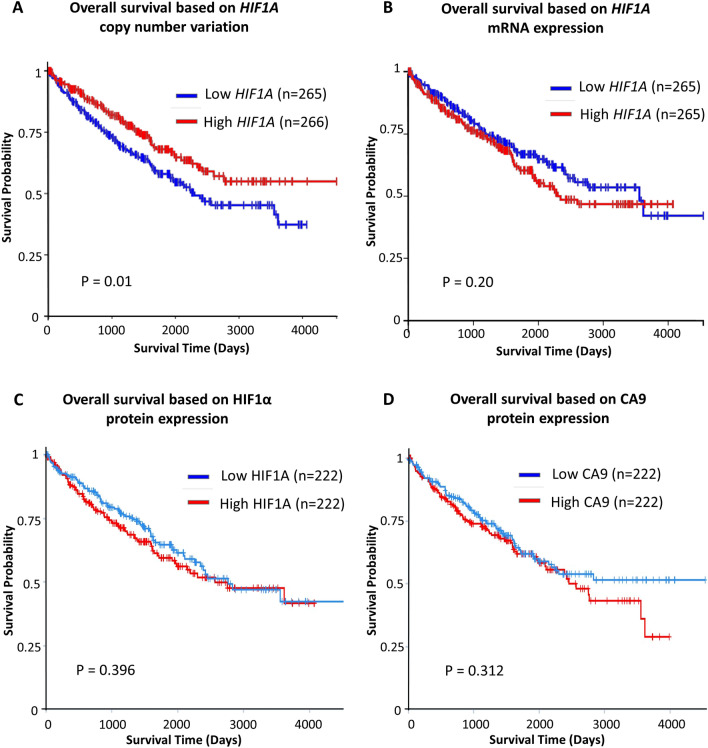
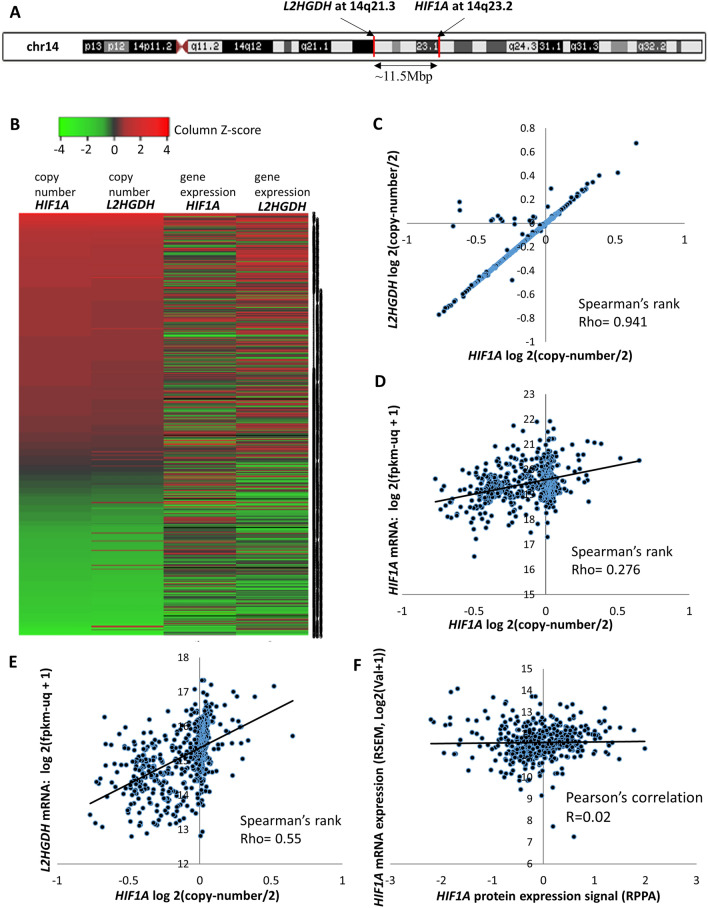
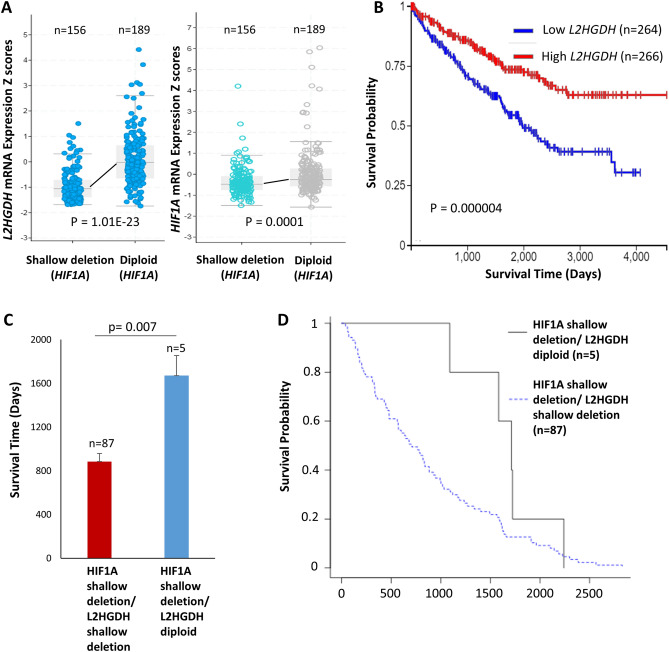
HIF1α has been termed a tumor-suppressor in clear cell renal cell carcinoma (ccRCC), primarily based on functional proliferation studies in cell lines (in vitro and in vivo) with genetic manipulation, and the adverse prognosis of 14q-deleted ccRCC patients. In other malignancies, however, HIF1α has an established tumor-promoting role. Therefore, this study sought to further examine the role of HIF1α in ccRCC using bioinformatic analyses of 530 ccRCC patients from The Cancer Genome Atlas (TCGA) and The Cancer Proteome Atlas (TCPA) registries. Although lower copy numbers of HIF1A (encoding HIF1α, located at 14q23.2) was associated with worse survival, there was no survival difference based on either HIF1A mRNA or HIF1α protein expression. Interestingly, L2HGDH (L-2-Hydroxyglutarate Dehydrogenase), a recently characterized epigenetic modulating ccRCC tumor-suppressor with a marked impact on survival, was found to be located only ~ 11.5Mbp from HIF1A on 14q (at 14q21.3). L2HGDH was therefore co-deleted in ~ 95% of 14q deletions involving HIF1A locus. Remarkably, HIF1A CNV had a markedly stronger correlation with L2HGDH expression (Rho = 0.55) than its own gene expression (Rho = 0.27), indicating high preserved-allele compensation of HIF1A. Genetic loss of HIF1A was therefore associated with a much greater reduction of L2HGDH gene expression than its own gene expression, providing a possible explanation for survival differences based on HIF1A CNV and mRNA expression. Furthermore, in 14q-deleted ccRCC patients with complete (uncensored) survival data, in the relatively rare cases where genetic loss of HIF1A occurred without genetic loss of L2HGDH (n = 5), the survival was significantly greater than where there was simultaneous genetic loss of both (n = 87) (mean survival 1670.8 ± 183.5 days vs 885.1 ± 78.4 days; p = 0.007). In addition, there was no correlation between HIF1A mRNA and HIF1α protein expression in ccRCC (R = 0.02), reflecting the primarily post-translational regulation of HIF1α. Lastly, even between L2HGDH and HIF1A loci, 14q was found to have several other yet-to-be-characterized potential ccRCC tumor-suppressors. Taken together, the data indicate that HIF1α is not a target of 14q deletion in ccRCC and that it is not a tumor-suppressor in this malignancy.
Overview
The claims and statistics of this paper haven’t been checked yet.
Free: it reads the open-access text and checks the first 5 claims that cite a source we can check. Create a free account to check every claim.
Integrity signals
Registry
Cites
Statistics
Figures
Verification
Claims the paper makes
The claims and statistics of this paper haven’t been checked yet.
Free: it reads the open-access text and checks the first 5 claims that cite a source we can check. Create a free account to check every claim.
Claims other papers make about this one
Each is checked against this paper’s own text: does it say what the citing paper says it does?
The check wasn’t confident either way, so it gives no verdict — never disputed.
In the citing paper
“Indeed, PT2399 significantly inhibited the growth of 786–0 and A498 tumor xenografts, but did not inhibit the growth of UMRC2 or 769P cells despite inhibiting HIF-2α-dependent transcription in these cells with IC50s comparable to those seen in 786-O and A498 cells [29].”
From Revisiting the HIF switch in the tumor and its immune microenvironment. (2022) · cites this paper as [29]
Experimental — accuracy not yet measured
Self-check
Percentages, sums and reported differences re-computed from the paper’s own numbers.
The self-check needs the paper’s full text.
Citations
Cites
Integrative Analysis of Complex Cancer Genomics and Clinical Profiles Using the cBioPortal
Gao, J., Aksoy, B. A., Dogrusoz, U., Dresdner, G., Gross, B., Sumer, S. O., Sun, Y., Jacobsen, A., Sinha, R., Larsson, E., et al. (2013) · Science Signaling · doi:10.1126/scisignal.2004088 · Cited by 15,160
The Human Genome Browser at UCSC
Kent, W. J., Sugnet, C. W., Furey, T. S., Roskin, K. M., Pringle, T. H., Zahler, A. M., & Haussler, A. D. (2002) · Genome Research · doi:10.1101/gr.229102 · Cited by 10,400
GEPIA: a web server for cancer and normal gene expression profiling and interactive analyses
Tang, Z., Li, C., Kang, B., Gao, G., Li, C., & Zhang, Z. (2017) · Nucleic Acids Research · doi:10.1093/nar/gkx247 · Cited by 9,849
Targeting HIF-1 for cancer therapy
Semenza, G. L. (2003) · Nature Reviews Cancer · doi:10.1038/nrc1187 · Cited by 6,717
Wang, G. L., Jiang, B. H., Rue, E. A., & Semenza, G. L. (1995) · Proceedings of the National Academy of Sciences · doi:10.1073/pnas.92.12.5510 · Cited by 6,212
Jaakkola, P., Mole, D. R., Tian, Y.-M., Wilson, M. I., Gielbert, J., Gaskell, S. J., Kriegsheim, A. V., Hebestreit, H. F., Mukherji, M., Schofield, C. J., et al. (2001) · Science · doi:10.1126/science.1059796 · Cited by 5,535
Hypoxia — a key regulatory factor in tumour growth
Harris, A. L. (2002) · Nature Reviews Cancer · doi:10.1038/nrc704 · Cited by 5,177
HIFα Targeted for VHL-Mediated Destruction by Proline Hydroxylation: Implications for O 2 Sensing
Ivan, M., Kondo, K., Yang, H., Kim, W., Valiando, J., Ohh, M., Salic, A., Asara, J. M., Lane, W. S., & Kaelin Jr., W. G. (2001) · Science · doi:10.1126/science.1059817 · Cited by 4,735
Epstein, A. C. R., Gleadle, J. M., McNeill, L. A., Hewitson, K. S., O'Rourke, J., Mole, D. R., Mukherji, M., Metzen, E., Wilson, M. I., Dhanda, A., et al. (2001) · Cell · doi:10.1016/s0092-8674(01)00507-4 · Cited by 3,333
Semenza, G. L., & Wang, G. L. (1992) · Molecular and Cellular Biology · doi:10.1128/mcb.12.12.5447 · Cited by 2,617
Role of HIF-1α in hypoxia-mediated apoptosis, cell proliferation and tumour angiogenesis
Carmeliet, P., Dor, Y., Herbert, J.-M., Fukumura, D., Brusselmans, K., Dewerchin, M., Neeman, M., Bono, F., Abramovitch, R., Maxwell, P., et al. (1998) · Nature · doi:10.1038/28867 · Cited by 2,502
LinkedOmics: analyzing multi-omics data within and across 32 cancer types
Vasaikar, S. V., Straub, P., Wang, J., & Zhang, B. (2018) · Nucleic Acids Research · doi:10.1093/nar/gkx1090 · Cited by 2,312
Purification and Characterization of Hypoxia-inducible Factor 1
Wang, G. L., & Semenza, G. L. (1995) · Journal of Biological Chemistry · doi:10.1074/jbc.270.3.1230 · Cited by 2,073
Transcriptional regulation of genes encoding glycolytic enzymes by hypoxia-inducible factor 1.
Semenza, G. L., Roth, P. H., Fang, H. M., & Wang, G. L. (1994) · Journal of Biological Chemistry · doi:10.1016/s0021-9258(17)31580-6 · Cited by 1,897
Defining the role of hypoxia-inducible factor 1 in cancer biology and therapeutics
Semenza, G. L. (2010) · Oncogene · doi:10.1038/onc.2009.441 · Cited by 1,712
General involvement of hypoxia-inducible factor 1 in transcriptional response to hypoxia.
Wang, G. L., & Semenza, G. L. (1993) · Proceedings of the National Academy of Sciences · doi:10.1073/pnas.90.9.4304 · Cited by 1,468
Tian, H., McKnight, S. L., & Russell, D. W. (1997) · Genes & Development · doi:10.1101/gad.11.1.72 · Cited by 1,351
HIF-1 mediates metabolic responses to intratumoral hypoxia and oncogenic mutations
Semenza, G. L. (2013) · Journal of Clinical Investigation · doi:10.1172/jci67230 · Cited by 1,335
Masson, N., Willam, C., Maxwell, P. H., Pugh, C. W., & Ratcliffe, P. J. (2001) · The EMBO Journal · doi:10.1093/emboj/20.18.5197 · Cited by 1,014
Raval, R. R., Lau, K. W., Tran, M. G. B., Sowter, H. M., Mandriota, S. J., Li, J.-L., Pugh, C. W., Maxwell, P. H., Harris, A. L., & Ratcliffe, P. J. (2005) · Molecular and Cellular Biology · doi:10.1128/mcb.25.13.5675-5686.2005 · Cited by 940
Characterization of hypoxia-inducible factor 1 and regulation of DNA binding activity by hypoxia.
Wang, G. L., & Semenza, G. L. (1993) · Journal of Biological Chemistry · doi:10.1016/s0021-9258(20)80571-7 · Cited by 862
Tumor Cell Biodiversity Drives Microenvironmental Reprogramming in Liver Cancer
Ma, L., Hernandez, M. O., Zhao, Y., Mehta, M., Tran, B., Kelly, M., Rae, Z., Hernandez, J. M., Davis, J. L., Martin, S. P., et al. (2019) · Cancer Cell · doi:10.1016/j.ccell.2019.08.007 · Cited by 844
An Integrated Metabolic Atlas of Clear Cell Renal Cell Carcinoma
Hakimi, A. A., Reznik, E., Lee, C.-H., Creighton, C. J., Brannon, A. R., Luna, A., Aksoy, B. A., Liu, E. M., Shen, R., Lee, W., et al. (2016) · Cancer Cell · doi:10.1016/j.ccell.2015.12.004 · Cited by 798
HIF-1α binding to VHL is regulated by stimulus-sensitive proline hydroxylation
Yu, F., White, S. B., Zhao, Q., & Lee, F. S. (2001) · Proceedings of the National Academy of Sciences · doi:10.1073/pnas.181341498 · Cited by 796
HIF-2α Promotes Hypoxic Cell Proliferation by Enhancing c-Myc Transcriptional Activity
Gordan, J. D., Bertout, J. A., Hu, C.-J., Diehl, J. A., & Simon, M. C. (2007) · Cancer Cell · doi:10.1016/j.ccr.2007.02.006 · Cited by 781
Targeting renal cell carcinoma with a HIF-2 antagonist
Chen, W., Hill, H., Christie, A., Kim, M. S., Holloman, E., Pavia-Jimenez, A., Homayoun, F., Ma, Y., Patel, N., Yell, P., et al. (2016) · Nature · doi:10.1038/nature19796 · Cited by 709
HIF-1α induces cell cycle arrest by functionally counteracting Myc
Koshiji, M., Kageyama, Y., Pete, E. A., Horikawa, I., Barrett, J. C., & Huang, L. E. (2004) · The EMBO Journal · doi:10.1038/sj.emboj.7600196 · Cited by 652
TCPA: a resource for cancer functional proteomics data
Li, J., Lu, Y., Akbani, R., Ju, Z., Roebuck, P. L., Liu, W., Yang, J.-Y., Broom, B. M., Verhaak, R. G. W., Kane, D. W., et al. (2013) · Nature Methods · doi:10.1038/nmeth.2650 · Cited by 512
HIF-α effects on c-Myc distinguish two subtypes of sporadic VHL-deficient clear cell renal carcinoma
Gordan, J. D., Lal, P., Dondeti, V. R., Letrero, R., Parekh, K. N., Oquendo, C. E., Greenberg, R. A., Flaherty, K. T., Rathmell, W. K., Keith, B., et al. (2008) · Cancer Cell · doi:10.1016/j.ccr.2008.10.016 · Cited by 493
On-target efficacy of a HIF-2α antagonist in preclinical kidney cancer models
Cho, H., Du, X., Rizzi, J. P., Liberzon, E., Chakraborty, A. A., Gao, W., Carvo, I., Signoretti, S., Bruick, R. K., Josey, J. A., et al. (2016) · Nature · doi:10.1038/nature19795 · Cited by 451
Chiu, D. K.-C., Tse, A. P.-W., Xu, I. M.-J., Di Cui, J., Lai, R. K.-H., Li, L. L., Koh, H.-Y., Tsang, F. H.-C., Wei, L. L., Wong, C.-M., et al. (2017) · Nature Communications · doi:10.1038/s41467-017-00530-7 · Cited by 448
The UCSC Xena platform for public and private cancer genomics data visualization and interpretation
Goldman, M., Craft, B., Hastie, M., Repečka, K., Kamath, A., McDade, F., Rogers, D., Brooks, A. N., Zhu, J., & Haussler, D. (2018) · bioRxiv (Cold Spring Harbor Laboratory) · doi:10.1101/326470 · Cited by 448
Sowter, H., Raval, R. R., Moore, J. W., Ratcliffe, P. J., & Harris, A. L. (2003) · PubMed · Cited by 426
Genetic and Functional Studies Implicate HIF1 α as a 14q Kidney Cancer Suppressor Gene
Shen, C., Beroukhim, R., Schumacher, S. E., Zhou, J., Chang, M., Signoretti, S., & Kaelin, W. G. (2011) · Cancer Discovery · doi:10.1158/2159-8290.cd-11-0098 · Cited by 413
HIF-1α Induces Genetic Instability by Transcriptionally Downregulating MutSα Expression
Koshiji, M., To, K. K.-W., Hammer, S., Kumamoto, K., Harris, A. L., Modrich, P., & Huang, L. E. (2005) · Molecular Cell · doi:10.1016/j.molcel.2005.02.015 · Cited by 346
l -2-Hydroxyglutarate: An Epigenetic Modifier and Putative Oncometabolite in Renal Cancer
Shim, E.-H., Livi, C. B., Rakheja, D., Tan, J., Benson, D., Parekh, V., Kho, E.-Y., Ghosh, A. P., Kirkman, R., Velu, S., et al. (2014) · Cancer Discovery · doi:10.1158/2159-8290.cd-13-0696 · Cited by 280
Wanderer, an interactive viewer to explore DNA methylation and gene expression data in human cancer
Díez-Villanueva, A., Mallona, I., & Peinado, M. A. (2015) · Epigenetics & Chromatin · doi:10.1186/s13072-015-0014-8 · Cited by 229
Ortiz-Barahona, A., Villar, D., Pescador, N., Amigo, J., & del Peso, L. (2010) · Nucleic Acids Research · doi:10.1093/nar/gkp1205 · Cited by 202
Moore, L. E., Nickerson, M. L., Brennan, P., Toro, J. R., Jaeger, E., Rinsky, J., Han, S. S., Zaridze, D., Matveev, V., Janout, V., et al. (2011) · PLoS Genetics · doi:10.1371/journal.pgen.1002312 · Cited by 199
Hypoxia-Inducible Factor 1α in Clear Cell Renal Cell Carcinoma
Klatte, T., Seligson, D. B., Riggs, S. B., Leppert, J. T., Berkman, M. K., Kleid, M. D., Yu, H., Kabbinavar, F. F., Pantuck, A. J., & Belldegrun, A. S. (2007) · Clinical Cancer Research · doi:10.1158/1078-0432.ccr-07-0411 · Cited by 181
VHL Deficiency Drives Enhancer Activation of Oncogenes in Clear Cell Renal Cell Carcinoma
Yao, X., Tan, J., Lim, K. J., Koh, J., Ooi, W. F., Li, Z., Huang, D., Xing, M., Chan, Y. S., Qu, J. Z., et al. (2017) · Cancer Discovery · doi:10.1158/2159-8290.cd-17-0375 · Cited by 166
Lidgren, A., Hedberg, Y., Grankvist, K., Rasmuson, T., Vasko, J., & Ljungberg, B. (2005) · PubMed · Cited by 139
Lidgren, A., Hedberg, Y., Grankvist, K., Rasmuson, T., Vasko, J., & Ljungberg, B. (2005) · Clinical Cancer Research · doi:10.1158/1078-0432.1129.11.3 · Cited by 117
A compendium of proteins that interact with HIF-1α
Semenza, G. L. (2017) · Experimental Cell Research · doi:10.1016/j.yexcr.2017.03.041 · Cited by 115
The role of HIF1α in renal cell carcinoma tumorigenesis
Gudas, L. J., Fu, L., Minton, D. R., Mongan, N. P., & Nanus, D. M. (2014) · Journal of Molecular Medicine · doi:10.1007/s00109-014-1180-z · Cited by 105
Shenoy, N. K., Bhagat, T. D., Cheville, J. C., Lohse, C. M., Bhattacharyya, S., Tischer, A., Machha, V. R., Gordon-Mitchell, S., Choudhary, G. S., Wong, L.-F., et al. (2019) · Journal of Clinical Investigation · doi:10.1172/jci98747 · Cited by 99
Self-citationFu, L., Wang, G., Shevchuk, M. M., Nanus, D. M., & Gudas, L. J. (2011) · Cancer Research · doi:10.1158/0008-5472.can-11-1745 · Cited by 98
Shelar, S. B., Shim, E., Brinkley, G. J., Kundu, A., Carobbio, F., Poston, T. L., Tan, J. C., Parekh, V., Benson, D. G., Crossman, D. K., et al. (2018) · Clinical Cancer Research · doi:10.1158/1078-0432.ccr-18-1727 · Cited by 95
Shenoy, N. K., & Pagliaro, L. C. (2016) · Annals of Oncology · doi:10.1093/annonc/mdw241 · Cited by 92
Self-citationSchultz, L., Chaux, A., Albadine, R., Hicks, J. L., Kim, J., Marzo, A. M. D., Allaf, M. E., Carducci, M. A., Rodríguez, R., Hammers, H.-J., et al. (2011) · The American Journal of Surgical Pathology · doi:10.1097/pas.0b013e31822895e5 · Cited by 79
Hypoxia-Inducible Factor 1α Expression in Renal Cell Carcinoma Analyzed by Tissue Microarray
Lidgren, A., Hedberg, Y., Grankvist, K., Rasmuson, T., Bergh, A. R. J., & Ljungberg, B. (2006) · European Urology · doi:10.1016/j.eururo.2006.05.043 · Cited by 78
CRISPR-Mediated VHL Knockout Generates an Improved Model for Metastatic Renal Cell Carcinoma
Schokrpur, S., Hu, J., Moughon, D. L., Liu, P., Lin, L. C., Hermann, K., Mangul, S., Guan, W., Pellegrini, M., Xu, H., et al. (2016) · Scientific Reports · doi:10.1038/srep29032 · Cited by 69
orević, G., Matušan‐Ilijaš, K., Babarović, E., Hadžisejdić, I., Grahovac, M., Grahovac, B., & Jonjić, N. (2009) · Journal of Experimental & Clinical Cancer Research · doi:10.1186/1756-9966-28-40 · Cited by 64
Deletions of chromosomes 3p and 14q molecularly subclassify clear cell renal cell carcinoma
Kroeger, N., Klatte, T., Chamie, K., Rao, P. N., Birkhäuser, F. D., Sonn, G. A., Riss, J., Kabbinavar, F. F., Belldegrun, A. S., & Pantuck, A. J. (2013) · Cancer · doi:10.1002/cncr.27947 · Cited by 60
Minardi, D., Lucarini, G., Filosa, A., Milanese, G., Zizzi, A., Primio, R. D., Montironi, R., & Muzzonigro, G. (2008) · International Journal of Immunopathology and Pharmacology · doi:10.1177/039463200802100225 · Cited by 52
Cristofano, C. D., Minervini, A., Menicagli, M., Salinitri, G., Bertacca, G., Pefanis, G., Masieri, L., Lessi, F., Collecchi, P., Minervini, R., et al. (2007) · The American Journal of Surgical Pathology · doi:10.1097/pas.0b013e318094fed8 · Cited by 48
Kuo, C., Lin, C., & Hsu, T. (2017) · Cancer Research · doi:10.1158/0008-5472.can-16-3196 · Cited by 47
Shenoy, N. K., Shrivastava, M. S., Sukrithan, V., Papaspyridi, D., & Darbinyan, K. (2015) · Journal of Cancer Therapy · doi:10.4236/jct.2015.66055 · Cited by 7
Self-citationRe: Targeting Renal Cell Carcinoma with a HIF-2 Antagonist
Shenoy, N. K., & Pagliaro, L. C. (2017) · European Urology · doi:10.1016/j.eururo.2017.10.007 · Cited by 2
Self-citation
Cited by
Revisiting the HIF switch in the tumor and its immune microenvironment.
Cowman, S. J., & Koh, M. Y. (2022) · Trends in Cancer · doi:10.1016/j.trecan.2021.10.004 · Cited by 256
Functional succinate dehydrogenase deficiency is a common adverse feature of clear cell renal cancer
Aggarwal, R. K., Luchtel, R. A., Machha, V. R., Tischer, A., Zou, Y., Pradhan, K., Ashai, N., Ramachandra, N., Albanese, J. M., Yang, J., et al. (2021) · Proceedings of the National Academy of Sciences · doi:10.1073/pnas.2106947118 · Cited by 97
Self-citationBall, A. T., Mohammed, S., Doigneaux, C., Gardner, R. M., Easton, J. W., Turner, S. J., Essex, J. W., Pairaudeau, G., & Tavassoli, A. (2024) · Journal of the American Chemical Society · doi:10.1021/jacs.3c10508 · Cited by 35
Neurological applications of belzutifan in von Hippel-Lindau disease
Zhang, Y., Nguyen, C. C., Zhang, N., Fink, N. S., John, J. D., Venkatesh, O., Roe, J., Hoffman, S. C., Lesniak, M. S., Wolinsky, J., et al. (2022) · Neuro-Oncology · doi:10.1093/neuonc/noac234 · Cited by 26
Self-citationGoyal-Naqvi Syndrome (Concurrent Trisomy 10p and Terminal 14q Deletion): A Review of the Literature
Goyal, C., Goyal, V., & Naqvi, W. M. (2021) · Cureus · doi:10.7759/cureus.16652 · Cited by 25
Metadata
- Authors
- Shenoy, N.
- Affiliations
- Albert Einstein College of Medicine (US)
- Corresponding author
- Shenoy, Niraj
- ORCID
- Shenoy, Niraj
- Venue
- Scientific Reports
- Published
- 2020-10-19
- Volume
- 10
- Issue
- 1
- Pages
- 17642-17642
- ISSN
- 2045-2322 (ISSN-L)
- PMC
- PMC7573601
- OpenAlex
- W3092968756
- Cited by
- 14
- References
- 59
- Citations by year
- 2026: 1 · 2025: 2 · 2024: 2 · 2023: 2 · 2022: 2 · 2021: 5
- FWCI
- 1.27
- Type
- journal article
- Language
- en
- Open access
- gold
- doi.org
- Licence
- cc-by
- creativecommons.org/licenses/by/4.0 (tdm)
- creativecommons.org/licenses/by/4.0 (vor)
- Locations
- Scientific Reports (publishedVersion, cc-by)
- PubMed Central (publishedVersion, cc-by)
- PubMed (publishedVersion)
- Funders
- Albert Einstein Cancer Center (2P30CA013330-47)
- Topics
- Health Sciences › Medicine › Oncology › Renal cell carcinoma treatment
- Life Sciences › Biochemistry, Genetics and Molecular Biology › Cancer Research › Cancer, Hypoxia, and Metabolism
- Life Sciences › Biochemistry, Genetics and Molecular Biology › Molecular Biology › Chromatin Remodeling and Cancer
- Keywords
- clear cell renal cell carcinoma, HIF-1α, 14q deletion, copy number variation, tumor suppressor, tumor promoters, gene expression, survival, prognostic factors, epigenetic regulation, TCGA, tcpA
- MeSH terms
- Carcinoma, Renal Cell, Chromosome Deletion, Chromosomes, Human, Pair 14, Female, Humans, Kidney Neoplasms, Male, Prognosis, Registries, Gene Expression Regulation, Neoplastic, Survival Rate, Genes, Tumor Suppressor, Computational Biology, Databases, Genetic, Hypoxia-Inducible Factor 1, alpha Subunit
About these checks
Registry, retraction, Cites and statistics results are computed, not judged, with one exception: a printed reference that no index lists is read once by a model before it counts as a citation error. Claims are extracted by a model and kept only when their quote appears verbatim in the text; each cited source is then checked, with a model’s help, for whether it says what the claim relies on. Those verdicts can be wrong — read the claim’s quote and the cited source before relying on one.
Statistics and arithmetic are recomputed, not judged.
Confidence bands are shown only for fields calibrated on our annotated test set. None is calibrated yet, so no band is shown.
What counts as a claim ›How we measure confidence ›How we check this ›
Are you an author, or do you see a problem with this page? Request a review
Data sources
Bibliographic data: Semantic Scholar, OpenAlex, Crossref.
Contains information from the Semantic Scholar Academic Graph Datasets, made available under the ODC Attribution License (ODC-BY 1.0).
Semantic Scholar’s data is described in: Kinney, R., et al. (2023). The Semantic Scholar Open Data Platform. arXiv:2301.10140.
