

COVID-19 predictability in the United States using Google Trends time series
Open accessPublished version of a preprint
The DOI matches its Crossref record; 48 of the 48 references it cites were found in a registry or an index.
Abstract
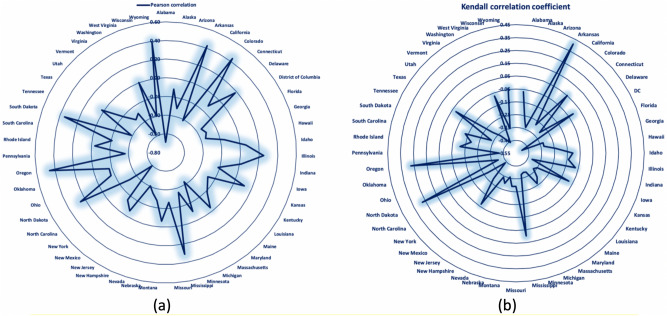
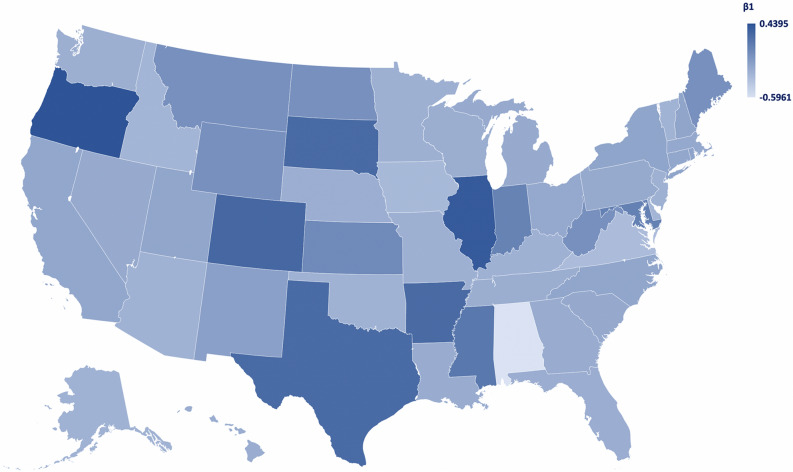
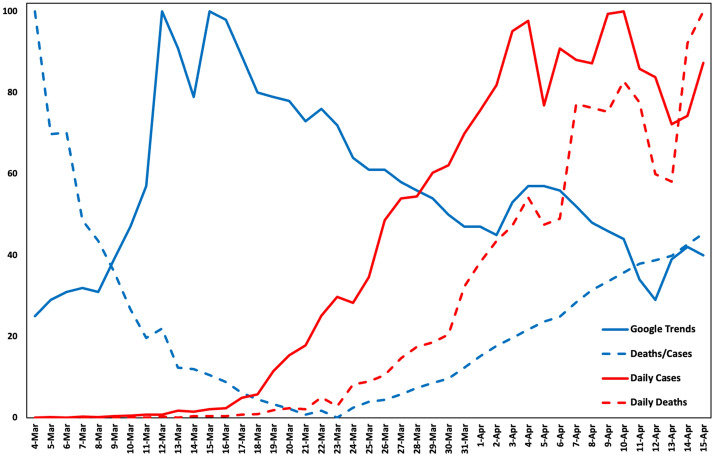
During the unprecedented situation that all countries around the globe are facing due to the Coronavirus disease 2019 (COVID-19) pandemic, which has also had severe socioeconomic consequences, it is imperative to explore novel approaches to monitoring and forecasting regional outbreaks as they happen or even before they do so. To that end, in this paper, the role of Google query data in the predictability of COVID-19 in the United States at both national and state level is presented. As a preliminary investigation, Pearson and Kendall rank correlations are examined to explore the relationship between Google Trends data and COVID-19 data on cases and deaths. Next, a COVID-19 predictability analysis is performed, with the employed model being a quantile regression that is bias corrected via bootstrap simulation, i.e., a robust regression analysis that is the appropriate statistical approach to taking against the presence of outliers in the sample while also mitigating small sample estimation bias. The results indicate that there are statistically significant correlations between Google Trends and COVID-19 data, while the estimated models exhibit strong COVID-19 predictability. In line with previous work that has suggested that online real-time data are valuable in the monitoring and forecasting of epidemics and outbreaks, it is evident that such infodemiology approaches can assist public health policy makers in addressing the most crucial issues: flattening the curve, allocating health resources, and increasing the effectiveness and preparedness of their respective health care systems.
Overview
The claims and statistics of this paper haven’t been checked yet.
Free: it reads the open-access text and checks the first 5 claims that cite a source we can check. Create a free account to check every claim.
Integrity signals
Registry
Cites
Statistics
Figures
Verification
Claims the paper makes
The claims and statistics of this paper haven’t been checked yet.
Free: it reads the open-access text and checks the first 5 claims that cite a source we can check. Create a free account to check every claim.
Claims other papers make about this one
Each is checked against this paper’s own text: does it say what the citing paper says it does?
The cited source says what the claim attributes to it.
In the citing paper
“Google Trends is a valuable tool for investigating the level of interest of the general public in a specific topic.”
From Public and Research Interest in Telemedicine From 2017 to 2022: Infodemiology Study of Google Trends Data and Bibliometric Analysis of Scientific Literature (2024) · cites this paper as [30]
Self-check
Percentages, sums and reported differences re-computed from the paper’s own numbers.
The self-check needs the paper’s full text.
Citations
Cites
Testing for a unit root in time series regression
PHILLIPS, P. C. B., & PERRON, P. (1988) · Biometrika · doi:10.1093/biomet/75.2.335 · Cited by 19,155
Koenker, R., & Bassett, G. (1978) · Econometrica · doi:10.2307/1913643 · Cited by 13,316
Efron, B., & Tibshirani, R. (1986) · Statistical Science · doi:10.1214/ss/1177013815 · Cited by 6,033
Unconditional Quantile Regressions
(2009) · Econometrica · doi:10.3982/ecta6822 · Cited by 2,226
Digital technology and COVID-19
Ting, D. S. W., Carin, L., Dzau, V., & Wong, T. Y. (2020) · Nature Medicine · doi:10.1038/s41591-020-0824-5 · Cited by 1,413
Eysenbach, G. (2009) · Journal of Medical Internet Research · doi:10.2196/jmir.1157 · Cited by 1,351 · cited 1×
“Infodemiology, i.e., information epidemiology, is a concept that was introduced by Gunther Eysenbach 11,12 .”
BackgroundCoronavirus Goes Viral: Quantifying the COVID-19 Misinformation Epidemic on Twitter
Kouzy, R., Abi Jaoude, J., Kraitem, A., El Alam, M. B., Karam, B., Adib, E., Zarka, J., Traboulsi, C., Akl, E., & Baddour, K. (2020) · Cureus · doi:10.7759/cureus.7255 · Cited by 899
Top concerns of tweeters during the COVID-19 pandemic: Infoveillance study
Abd-Alrazaq, A., Alhuwail, D., Househ, M., Hamdi, M., & Shah, Z. (2020) · Journal of Medical Internet Research · doi:10.2196/19016 · Cited by 774
Quantile regression: applications and current research areas
Yu, K., Lu, Z., & Stander, J. (2003) · Journal of the Royal Statistical Society: Series D (The Statistician) · doi:10.1111/1467-9884.00363 · Cited by 686
Google Trends in Infodemiology and Infoveillance: Methodology Framework
Mavragani, A., & Ochoa, G. (2019) · JMIR Public Health and Surveillance · doi:10.2196/13439 · Cited by 520
Self-citation
Research works printed but not linked: 3
- Google Trends & COVID Advanced Search. Pubmed. https://www.ncbi.nlm.nih.gov/pubmed/ (2020).
- Koenker R Hallock KF Quantile regression J. Econ. Percepct. 2001 15 4 143 156
- Rufai RS Bunce C World leaders’ usage of Twitter in response to the COVID-19 pandemic: A content analysis J. Public Health. 2020 42 3 510 516 10.1093/pubmed/fdaa049 PMC7188178 32309854 · DOI · Paper page
Cited by
Rovetta, A. (2021) · Frontiers in Research Metrics and Analytics · doi:10.3389/frma.2021.670226 · Cited by 162
Mangono, T., Smittenaar, P., Caplan, Y., Huang, V., Sutermaster, S., Kemp, H., & Sgaier, S. K. (2021) · Journal of Medical Internet Research · doi:10.2196/22933 · Cited by 108
Addressing bias in artificial intelligence for public health surveillance
Flores, L., Kim, S., & Young, S. D. (2023) · Journal of Medical Ethics · doi:10.1136/jme-2022-108875 · Cited by 75
Characterizing all-cause excess mortality patterns during COVID-19 pandemic in Mexico
Dahal, S., Banda, J. M., Bento, A. I., Mizumoto, K., & Chowell, G. (2021) · BMC Infectious Diseases · doi:10.1186/s12879-021-06122-7 · Cited by 52
van Kessel, R., Kyriopoulos, I., Wong, B. L. H., & Mossialos, E. (2023) · Journal of Medical Internet Research · doi:10.2196/42401 · Cited by 49
Using Google Trends as a proxy for occupant behavior to predict building energy consumption
Fu, C., & Miller, C. (2022) · Applied Energy · doi:10.1016/j.apenergy.2021.118343 · Cited by 48
The searchscape of fear: A global analysis of internet search trends for biophobias
Correia, R. A., & Mammola, S. (2023) · People and Nature · doi:10.1002/pan3.10497 · Cited by 44
Kardeş, S., Kuzu, A. S., Raiker, R., Pakhchanian, H. H., & Karagülle, M. (2020) · Rheumatology International · doi:10.1007/s00296-020-04728-9 · Cited by 40
Katz, A., Tepper, Y., Birk, O. S., & Eran, A. (2022) · Scientific Reports · doi:10.1038/s41598-022-20844-x · Cited by 39
Forecasting and Surveillance of COVID-19 Spread Using Google Trends: Literature Review
Saegner, T., & Austys, D. (2022) · International Journal of Environmental Research and Public Health · doi:10.3390/ijerph191912394 · Cited by 36
Infectious Disease Surveillance in the Era of Big Data and AI: Opportunities and Pitfalls
Idahor, C. O., Esomu, E.-J. O., Ogbonna, N., Momoh, Z., Ogbeide, O. A., Ikhu-Omoregbe, O., Adigwe, A., Erhabor, O. M., Osaghae, O., & Orons, N. (2025) · Cureus · doi:10.7759/cureus.93929 · Cited by 36
Tseng, Y., Olson, K. L., Bloch, D., & Mandl, K. D. (2023) · JAMA Network Open · doi:10.1001/jamanetworkopen.2023.16190 · Cited by 36
Setiawati, S. M. (2024) · Frontiers in Political Science · doi:10.3389/fpos.2024.1304108 · Cited by 31
Olukanmi, S. O., Nelwamondo, F. V., & Nwulu, N. I. (2021) · IEEE Access · doi:10.1109/access.2021.3110972 · Cited by 31
Wang, A., McCarron, R. M., Azzam, D., Stehli, A., Xiong, G. L., & DeMartini, J. (2022) · JMIR Mental Health · doi:10.2196/35253 · Cited by 31
Maugeri, A., Barchitta, M., & Agodi, A. (2022) · Vaccines · doi:10.3390/vaccines10010119 · Cited by 30
Revealing the spatial shifting pattern of COVID-19 pandemic in the United States
Zhu, D., Ye, X., & Manson, S. M. (2021) · Scientific Reports · doi:10.1038/s41598-021-87902-8 · Cited by 29
A Systematic Review of COVID-19 Geographical Research: Machine Learning and Bibliometric Approach
Xi, J., Liu, X., Wang, J., Yao, L., & Zhou, C. (2022) · Annals of the American Association of Geographers · doi:10.1080/24694452.2022.2130143 · Cited by 28
Modeling COVID-19 incidence with Google Trends
Amusa, L. B., Twinomurinzi, H., & Okonkwo, C. W. (2022) · Frontiers in Research Metrics and Analytics · doi:10.3389/frma.2022.1003972 · Cited by 27
Modelling Covid-19 infections in Zambia using data mining techniques
Kalezhi, J., Chibuluma, M., Chembe, C., Chama, V., Lungo, F., & Kunda, D. (2022) · Results in Engineering · doi:10.1016/j.rineng.2022.100363 · Cited by 27
Maximum generable interest: A universal standard for Google Trends search queries
Springer, S., Strzelecki, A., & Zieger, M. (2023) · Healthcare Analytics · doi:10.1016/j.health.2023.100158 · Cited by 27
COVID-19 Open-Data a global-scale spatially granular meta-dataset for coronavirus disease
Wahltinez, O., Cheung, A., Alcantara, R., Cheung, D., Daswani, M., Erlinger, A., Lee, M., Yawalkar, P., Lê, P., Navarro, O. P., et al. (2022) · Scientific Data · doi:10.1038/s41597-022-01263-z · Cited by 26
Exploring the use of web searches for risk communication during COVID-19 in Germany
Kristensen, K., Lorenz, E., May, J., & Strauss, R. A. (2021) · Scientific Reports · doi:10.1038/s41598-021-85873-4 · Cited by 25
COVID-19 forecasts using Internet search information in the United States
Ma, S., & Yang, S. (2022) · Scientific Reports · doi:10.1038/s41598-022-15478-y · Cited by 25
Cuomo, R. E., Purushothaman, V. L., Li, J., Cai, M., & Mackey, T. K. (2021) · BMC Public Health · doi:10.1186/s12889-021-10827-4 · Cited by 25
Fortifying Health Care Intellectual Property Transactions With Blockchain
Liang, H.-W., Chu, Y.-C., & Han, T.-H. (2023) · Journal of Medical Internet Research · doi:10.2196/44578 · Cited by 22
Díaz, F., & Henríquez, P. A. (2021) · PLoS ONE · doi:10.1371/journal.pone.0254638 · Cited by 21
Maugeri, A., Barchitta, M., Basile, G., & Agodi, A. (2024) · Journal of Medical Internet Research · doi:10.2196/50088 · Cited by 20
Big Data and Infectious Disease Epidemiology: Bibliometric Analysis and Research Agenda
Amusa, L. B., Twinomurinzi, H., Phalane, E., & Phaswana-Mafuya, N. R. (2023) · Interactive Journal of Medical Research · doi:10.2196/42292 · Cited by 20
Sotis, C. (2021) · Quality & Quantity · doi:10.1007/s11135-020-01089-0 · Cited by 19
Google Trends as a predictive tool in the era of COVID-19: a scoping review
Zayed, B. A., Talaia, A. M., Gaaboobah, M. A., Amer, S. M., & Mansour, F. R. (2023) · Postgraduate Medical Journal · doi:10.1093/postmj/qgad012 · Cited by 20
Uncertainty Due to Infectious Diseases and Stock–Bond Correlation
Γκίλλας, Κ., Konstantatos, C., & Siriopoulos, C. (2021) · Econometrics · doi:10.3390/econometrics9020017 · Cited by 18
Chu, A. M. Y., Chong, A. C. Y., Lai, N. H. T., Tiwari, A., & So, M. K. P. (2023) · JMIR Public Health and Surveillance · doi:10.2196/42446 · Cited by 18
Donar, G. B., & Aydan, S. (2021) · The International Journal of Health Planning and Management · doi:10.1002/hpm.3342 · Cited by 15
Punyapornwithaya, V., Thanapongtharm, W., Jainonthee, C., Chinsorn, P., Sagarasaeranee, O., Salvador, R. T., & Arjkumpa, O. (2023) · Frontiers in Veterinary Science · doi:10.3389/fvets.2023.1294049 · Cited by 14
Maugeri, A., Barchitta, M., Basile, G., & Agodi, A. (2022) · Antibiotics · doi:10.3390/antibiotics11030379 · Cited by 13
McCarthy, A. D., & McGoldrick, D. J. (2021) · Cureus · doi:10.7759/cureus.15715 · Cited by 13
Husnayain, A., Chuang, T., Fuad, A., & Su, E. C. (2021) · International Journal of Infectious Diseases · doi:10.1016/j.ijid.2021.07.031 · Cited by 13
Xie, J., Zhang, Z., Zeng, S., Hilliard, J., An, G., Tang, X., Jiang, L., Yu, Y., Wan, X., & Xu, D. H. (2025) · Journal of Medical Internet Research · doi:10.2196/63190 · Cited by 12
Ma, M. Z., & Ye, S. S. (2021) · International Journal of Intercultural Relations · doi:10.1016/j.ijintrel.2021.07.010 · Cited by 12
Houghton, S., Boy, F., Bradley, A. P., James, R. J. E., Wardle, H., & Dymond, S. (2023) · Journal of Behavioral Addictions · doi:10.1556/2006.2023.00055 · Cited by 11
Predicting COVID-19 new cases in California with Google Trends data and a machine learning approach
Habibdoust, A., Seifaddini, M., Tatar, M., Araz, Ö. M., & Wilson, F. A. (2024) · Informatics for Health and Social Care · doi:10.1080/17538157.2024.2315246 · Cited by 11
Consumer information in a market for expert services: Experimental evidence
Schneider, T., Meub, L., & Bizer, K. (2021) · Journal of Behavioral and Experimental Economics · doi:10.1016/j.socec.2021.101754 · Cited by 11
The Effect of Twitter App Policy Changes on the Sharing of Spatial Information through Twitter Users
Cao, J., Hochmair, H. H., & Basheeh, F. (2022) · Geographies · doi:10.3390/geographies2030033 · Cited by 11
Use of Google Trends database during the COVID-19 pandemic: systematic review
Kornellia, E., & Syakurah, R. A. (2023) · Multidisciplinary Reviews · doi:10.31893/multirev.2023017 · Cited by 11
van Kessel, R., Kyriopoulos, I., Mastylak, A., & Mossialos, E. A. (2023) · PLOS Digital Health · doi:10.1371/journal.pdig.0000241 · Cited by 11
Porcu, G., Chen, Y. X., Bonaugurio, A. S., Villa, S., Riva, L., Messina, V., Bagarella, G., Maistrello, M., Leoni, O., Cereda, D., et al. (2023) · Frontiers in Public Health · doi:10.3389/fpubh.2023.1141688 · Cited by 10
Guzman, H. P., Zhao, L., Swain, M. J., Faust, R. A., & Xagoraraki, I. (2024) · ACS ES&T Water · doi:10.1021/acsestwater.4c00611 · Cited by 10
Nagai, S., Kotani, A., MARUYA, Y., & Gavrilyeva, T. N. (2022) · Polar Science · doi:10.1016/j.polar.2022.100871 · Cited by 10
Forecasting dengue cases through time-series modeling with Google Trends and deep neural networks
Cheong, K. H., Li, K., Yu, D., & Zhao, X. (2025) · Chaos Solitons & Fractals · doi:10.1016/j.chaos.2025.117290 · Cited by 9
Ma, M. Z., Chen, S. X., & Wang, X. (2023) · Applied Psychology Health and Well-Being · doi:10.1111/aphw.12519 · Cited by 9
Lan, R., Campana, F., Tardivo, D., Catherine, J., Vergnes, J., & Saïd, M. H. (2021) · BMC Oral Health · doi:10.1186/s12903-021-02022-z · Cited by 9
Rao, A., Sharma, G. D., Pereira, V. E., Shahzad, U., & Jabeen, F. (2022) · IEEE Transactions on Engineering Management · doi:10.1109/tem.2022.3147375 · Cited by 9
Monitoring of cherry flowering phenology with Google Trends
Nagai, S., Kotani, A., Tei, S., & Tsutsumida, N. (2022) · PLoS ONE · doi:10.1371/journal.pone.0271648 · Cited by 9
Historical Roots of Dissemination and Implementation Science
Dearing, J. W., Kee, K. F., & Peng, T. (2023) · Oxford University Press eBooks · doi:10.1093/oso/9780197660690.003.0003 · Cited by 9
Ma, M. Z. (2021) · Computers in Human Behavior · doi:10.1016/j.chb.2021.107059 · Cited by 8
Díaz, F., Henríquez, P. A., & Winkelried, D. (2022) · Scientific Reports · doi:10.1038/s41598-022-18514-z · Cited by 8
Google Search Trends to assess public interest in and concern about Vuity for treating presbyopia
Wakabayashi, T., Mansour, H. A., Abishek, R. M., Sridhar, J. S., Cohen, M. N., Xu, D. N., Deaner, J. D., Yonekawa, Y., Hsu, J., & Kuriyan, A. E. (2023) · PLoS ONE · doi:10.1371/journal.pone.0293066 · Cited by 8
An infodemiological framework for tracking the spread of SARS-CoV-2 using integrated public data
Liu, Z., Jiang, Z., Kip, G., Snigdha, K., Xu, J., Wu, X., Khan, N. S., & Schultz, T. (2022) · Pattern Recognition Letters · doi:10.1016/j.patrec.2022.04.030 · Cited by 8
Maugeri, A., Barchitta, M., Perticone, V., & Agodi, A. (2023) · International Journal of Environmental Research and Public Health · doi:10.3390/ijerph20031976 · Cited by 8
The COVID-19 pandemic and seeking information about condoms online: an infodemiology approach
Ma, M. Z., & Ye, S. S. (2021) · Psychology and Health · doi:10.1080/08870446.2021.2005794 · Cited by 8
Searching for the Peak Google Trends and the COVID-19 Outbreak in Italy
Serlenga, L., Resce, G., & Brunori, P. (2020) · International Journal of Computational Economics and Econometrics · doi:10.1504/ijcee.2022.10047365 · Cited by 9
A Novel Framework to Forecast COVID-19 Incidence Based on Google Trends Search Data
Wang, Y., Shi, W., Sun, Y., & Yeh, C.-H. (2023) · IEEE Transactions on Computational Social Systems · doi:10.1109/tcss.2023.3255256 · Cited by 7
Noroozi-Ghaleini, E., & Shaibani, M. J. (2023) · Heliyon · doi:10.1016/j.heliyon.2023.e13672 · Cited by 7
Rathke, B. H., Yu, H., & Huang, H. (2023) · Disaster Medicine and Public Health Preparedness · doi:10.1017/dmp.2023.101 · Cited by 7
Arai, T., Tsubaki, H., Wakano, A., & Shimizu, Y. (2024) · Journal of Medical Internet Research · doi:10.2196/51710 · Cited by 6
Mavragani, A., & Γκίλλας, Κ. (2021) · Scientific Reports · doi:10.1038/s41598-021-90293-5 · Cited by 6
Self-citationChen, J., Mi, H., Fu, J., Zheng, H., Zhao, H., Yuan, R. S., Guo, H., Zhu, K., Zhang, Y., Lyu, H., et al. (2022) · Frontiers in Public Health · doi:10.3389/fpubh.2022.1025658 · Cited by 6
Assessing the online search behavior for COVID-19 outbreak: Evidence from Iran
Samadbeik, M., Garavand, A., Aslani, N., Ebrahimzadeh, F., & Fatehi, F. (2022) · PLoS ONE · doi:10.1371/journal.pone.0267818 · Cited by 6
Díaz, F., & Henríquez, P. A. (2024) · BMC Public Health · doi:10.1186/s12889-024-19341-9 · Cited by 5
Social Data: An Underutilized Metric for Determining Participation in COVID-19 Vaccinations
McCarthy, A. D., McGoldrick, D. J., Holubeck, P. A., Cohoes, C., & Bilek, L. D. (2021) · Cureus · doi:10.7759/cureus.16379 · Cited by 5
Lo, K. L., Zhang, M., Chen, Y., & Mi, J. J. (2021) · Journal of Healthcare Informatics Research · doi:10.1007/s41666-021-00103-w · Cited by 5
Nagai, S., Saitoh, T. M., Kotani, A., Miura, T., Nakagawa, H., Katsumata, C., Morimoto, H., & Ōnishi, H. (2024) · Frontiers in Environmental Science · doi:10.3389/fenvs.2024.1236664 · Cited by 5
Time series analysis for financial indices using optical reservoir computing
Qu, Y., Lian, H., Shao, R., Liu, J., Liu, L., & Yang, J. (2024) · Optical Engineering · doi:10.1117/1.oe.63.5.054108 · Cited by 5
Chayinska, M., Uluğ, Ö. M., Adam‐Troian, J., Woo, Y. T., Ayanian, A. H., Gratzel, J. C., Paladino, M. P., & Vaes, J. (2023) · Group Processes & Intergroup Relations · doi:10.1177/13684302231194553 · Cited by 4
Engaging a national-scale cohort of smart thermometer users in participatory surveillance
Tseng, Y., Olson, K. L., Bloch, D., & Mandl, K. D. (2023) · npj Digital Medicine · doi:10.1038/s41746-023-00917-5 · Cited by 4
Gleize, M., Mulligan, N., Bari, A. D., & Bettencourt‐Silva, J. H. (2021) · Studies in health technology and informatics · doi:10.3233/shti210271 · Cited by 4
Soto‐Ferrari, M. (2025) · Journal of Forecasting · doi:10.1002/for.70006 · Cited by 3
Trends of public interest in chronic traumatic encephalopathy (CTE) from 2004 to 2022
Eggleston, B. A., Wenske, C., Sweat, C., Nolan, D., Sajjadi, N. B., Mazur, A., & Hartwell, M. L. (2024) · Journal of Osteopathic Medicine · doi:10.1515/jom-2024-0015 · Cited by 3
Alibudbud, R. C. (2023) · The Journal of Nervous and Mental Disease · doi:10.1097/nmd.0000000000001691 · Cited by 3
Alibudbud, R. C. (2025) · Frontiers in Digital Health · doi:10.3389/fdgth.2025.1425684 · Cited by 3
Review of Successful Practices of Applying Nowcasting in Socio-Economic Forecasting
Firsov, D. V., & Chernysheva, T. K. (2021) · Journal of Applied Economic Research · doi:10.15826/vestnik.2021.20.2.012 · Cited by 3
Sen, A. (2021) · Canadian Journal of Regional Science · doi:10.7202/1086217ar · Cited by 3
Pandemic and precocious puberty - a Google trends study
Tselebis, A., Zabulienė, L., Milionis, C., & Ilias, Ι. (2023) · World Journal of Methodology · doi:10.5662/wjm.v13.i1.1 · Cited by 3
OWUOR, I., & Hochmair, H. H. (2023) · Geographies · doi:10.3390/geographies3030031 · Cited by 3
Piercing the Fog of War: Measuring Russian Public Opinion via Online Search Data
Foa, R., & Nezi, R. (2023) · Apollo (University of Cambridge) · doi:10.17863/cam.96803 · Cited by 3
Leveraging Artificial Intelligence for Pandemic Management: Case of COVID‐19 in the United States
Ahmadi, E., & Maihami, R. (2025) · Big Data Research · doi:10.1016/j.bdr.2025.100529 · Cited by 2
Basheer, A., Jentner, W., & Ebert, D. (2025) · Hawaii International Conference on System Sciences (HICSS) · doi:10.24251/hicss.2025.181 · Cited by 2
HAL-Net: A Historical Analogy Learning Network for Adaptive and Interpretable Pandemic Forecasting
Zhang, C., & Ji, D. (2025) · Expert Systems with Applications · doi:10.1016/j.eswa.2025.130038 · Cited by 2
The impact of Search Volume Index on FDI outflow: the moderating role of uncertainty avoidance
Mammadrzayev, V., Nadirov, O., & Pavelková, D. (2025) · Journal of Business Economics and Management · doi:10.3846/jbem.2025.25505 · Cited by 2
Lyu, S., Adegboye, O. A., Adhinugraha, K. M., Emeto, T. I., & Taniar, D. (2024) · Scandinavian Journal of Infectious Diseases · doi:10.1080/23744235.2024.2311281 · Cited by 2
Social Reactions to the Pandemic: Rising Interest in Pandemic Movies
Özkent, Y. (2021) · Advances in finance, accounting, and economics book series · doi:10.4018/978-1-6684-3374-4.ch014 · Cited by 2
Fitzpatrick, K. M., Harris, C. T., Drawve, G. R., & Tidwell, C. (2022) · Medical Research Archives · doi:10.18103/mra.v10i10.3154 · Cited by 2
Impact of External Factors on Air Passenger Demand Prediction Using Machine Learning
Lertyongphati, S. (2023) · doi:10.1145/3628454.3628462 · Cited by 2
Teaching Students to Read COVID-19 Journal Articles in Statistics Courses
Ye, L., & Jin, Y. (2024) · Journal of Statistics and Data Science Education · doi:10.1080/26939169.2024.2302185 · Cited by 2
Chang, M.-C., & Wen, T. (2024) · JMIR Public Health and Surveillance · doi:10.2196/55183 · Cited by 2
A Google Trends analysis of people's sense of seasons in Hokkaido
Nagai, S., Nakagawa, H., Morimoto, H., & Kotani, A. (2024) · Frontiers in Sustainable Tourism · doi:10.3389/frsut.2024.1446528 · Cited by 2
Using Google Trends to improve monitoring of the invasive spotted lanternfly in the United States
Maciejewski, C., Lippitt, K., Ringholm, E., Katzenmoyer, J., & Huynh, A. V. (2025) · Biological Invasions · doi:10.1007/s10530-025-03611-7 · Cited by 2
Ahmed, M. U., Ahamad, M. G., Hasan, M. M., & Amin, S. K. (2025) · BMC Research Notes · doi:10.1186/s13104-025-07381-2 · Cited by 2
Fuzzy Time Series using Chen and Lee Model to Predict COVID-19 in Aceh Indonesia
Saadah, S., & Permana, M. A. (2021) · International Conference of Computer and Informatics Engineering (IC2IE) · doi:10.1109/ic2ie53219.2021.9649283 · Cited by 2
Metadata
- Authors
- Mavragani, A., & Gkillas, K.
- Affiliations
- University of Stirling (GB)
- Corresponding author
- Mavragani, Amaryllis
- ORCID
- Mavragani, Amaryllis
- Venue
- Scientific Reports
- Published
- 2020-11-26
- Volume
- 10
- Issue
- 1
- Pages
- 20693-20693
- ISSN
- 2045-2322 (ISSN-L)
- PMC
- PMC7692493
- OpenAlex
- W3108491385
- Cited by
- 140
- References
- 48
- Citations by year
- 2026: 7 · 2025: 14 · 2024: 21 · 2023: 31 · 2022: 31 · 2021: 32 · 2020: 4
- FWCI
- 17.55
- Type
- journal article
- Language
- en
- Open access
- gold
- doi.org
- Licence
- cc-by
- creativecommons.org/licenses/by/4.0 (tdm)
- creativecommons.org/licenses/by/4.0 (vor)
- Locations
- Scientific Reports (publishedVersion, cc-by)
- Research Square (acceptedVersion, cc-by)
- PubMed Central (publishedVersion, cc-by)
- PubMed (publishedVersion)
- Stirling Online Research Repository (University of Stirling) (submittedVersion, cc-by)
- Informationszentrum Lebenswissenschaften (ZB MED) (submittedVersion, cc-by)
- Topics
- Health Sciences › Medicine › Epidemiology › Data-Driven Disease Surveillance
- Physical Sciences › Mathematics › Modeling and Simulation › COVID-19 epidemiological studies
- Social Sciences › Transportation › Human Mobility and Location-Based Analysis
- Keywords
- COVID-19 pandemic, Google Trends, search data, infodemiology, epidemic forecasting, quantile regression, bootstrap bias correction, COVID-19 case counts, COVID-19 mortality, United States
- MeSH terms
- COVID-19, SARS-CoV-2, Forecasting, Humans, Prognosis, Public Health, United States, Models, Statistical, Information Dissemination, Search Engine, Pandemics, Social Media, Public Health Surveillance
About these checks
Registry, retraction, Cites and statistics results are computed, not judged, with one exception: a printed reference that no index lists is read once by a model before it counts as a citation error. Claims are extracted by a model and kept only when their quote appears verbatim in the text; each cited source is then checked, with a model’s help, for whether it says what the claim relies on. Those verdicts can be wrong — read the claim’s quote and the cited source before relying on one.
Statistics and arithmetic are recomputed, not judged.
Confidence bands are shown only for fields calibrated on our annotated test set. None is calibrated yet, so no band is shown.
What counts as a claim ›How we measure confidence ›How we check this ›
Are you an author, or do you see a problem with this page? Request a review
Data sources
Bibliographic data: Semantic Scholar, OpenAlex, Crossref.
Contains information from the Semantic Scholar Academic Graph Datasets, made available under the ODC Attribution License (ODC-BY 1.0).
Semantic Scholar’s data is described in: Kinney, R., et al. (2023). The Semantic Scholar Open Data Platform. arXiv:2301.10140.
