

COVID-19 predictability in the United States using Google Trends time series
Open accessPublished version of a preprint
The DOI matches its Crossref record; 48 of the 48 references it cites were found in a registry or an index.
Abstract
During the unprecedented situation that all countries around the globe are facing due to the Coronavirus disease 2019 (COVID-19) pandemic, which has also had severe socioeconomic consequences, it is imperative to explore novel approaches to monitoring and forecasting regional outbreaks as they happen or even before they do so. To that end, in this paper, the role of Google query data in the predictability of COVID-19 in the United States at both national and state level is presented. As a preliminary investigation, Pearson and Kendall rank correlations are examined to explore the relationship between Google Trends data and COVID-19 data on cases and deaths. Next, a COVID-19 predictability analysis is performed, with the employed model being a quantile regression that is bias corrected via bootstrap simulation, i.e., a robust regression analysis that is the appropriate statistical approach to taking against the presence of outliers in the sample while also mitigating small sample estimation bias. The results indicate that there are statistically significant correlations between Google Trends and COVID-19 data, while the estimated models exhibit strong COVID-19 predictability. In line with previous work that has suggested that online real-time data are valuable in the monitoring and forecasting of epidemics and outbreaks, it is evident that such infodemiology approaches can assist public health policy makers in addressing the most crucial issues: flattening the curve, allocating health resources, and increasing the effectiveness and preparedness of their respective health care systems.
Overview
The claims and statistics of this paper haven’t been checked yet.
Free: it reads the open-access text and checks the first 5 claims that cite a source we can check. Create a free account to check every claim.
Integrity signals
Registry
Cites
Statistics
Figures
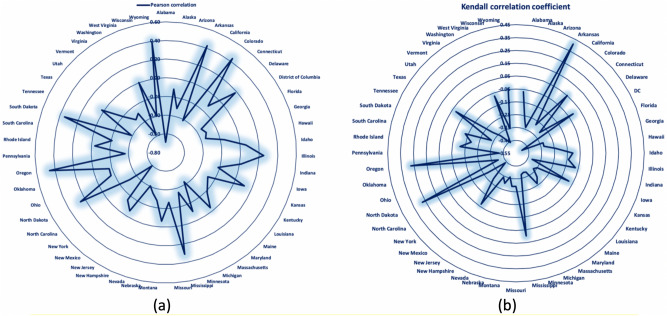
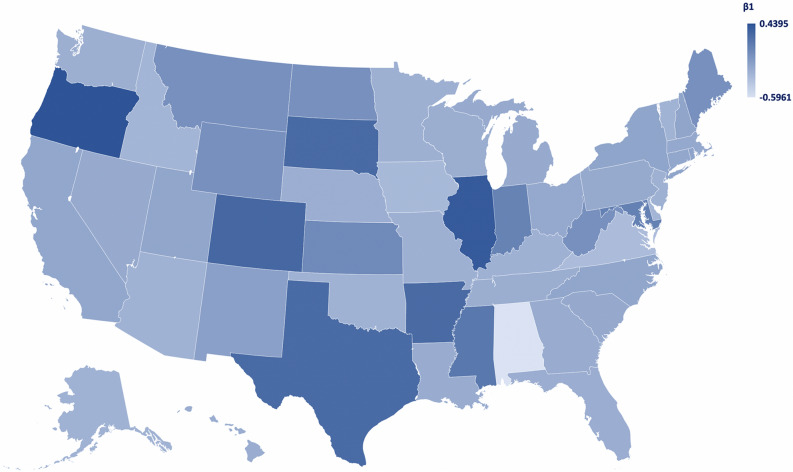
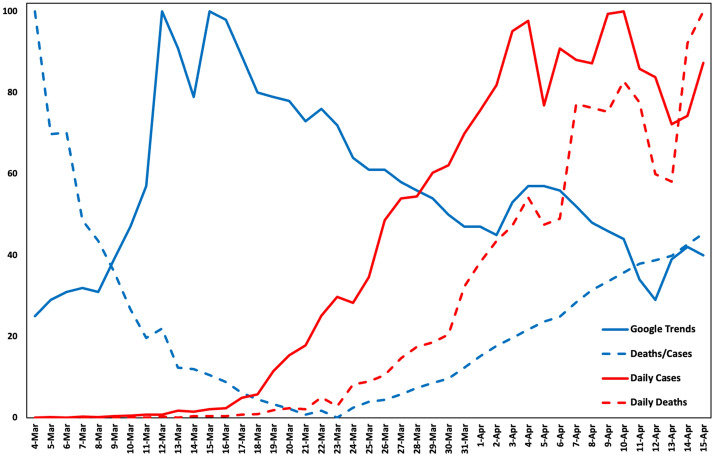
Verification
Claims the paper makes
The claims and statistics of this paper haven’t been checked yet.
Free: it reads the open-access text and checks the first 5 claims that cite a source we can check. Create a free account to check every claim.
Claims other papers make about this one
Each is checked against this paper’s own text: does it say what the citing paper says it does?
The cited source says what the claim attributes to it.
In the citing paper
“Google Trends is a valuable tool for investigating the level of interest of the general public in a specific topic.”
From Public and Research Interest in Telemedicine From 2017 to 2022: Infodemiology Study of Google Trends Data and Bibliometric Analysis of Scientific Literature (2024) · cites this paper as [30]
Self-check
Percentages, sums and reported differences re-computed from the paper’s own numbers.
The self-check needs the paper’s full text.
Citations
Cites
Testing for a unit root in time series regression
PHILLIPS, P. C. B., & PERRON, P. (1988) · Biometrika · doi:10.1093/biomet/75.2.335 · Cited by 19,155
Koenker, R., & Bassett, G. (1978) · Econometrica · doi:10.2307/1913643 · Cited by 13,316
Efron, B., & Tibshirani, R. (1986) · Statistical Science · doi:10.1214/ss/1177013815 · Cited by 6,033
Unconditional Quantile Regressions
(2009) · Econometrica · doi:10.3982/ecta6822 · Cited by 2,226
Digital technology and COVID-19
Ting, D. S. W., Carin, L., Dzau, V., & Wong, T. Y. (2020) · Nature Medicine · doi:10.1038/s41591-020-0824-5 · Cited by 1,413
Eysenbach, G. (2009) · Journal of Medical Internet Research · doi:10.2196/jmir.1157 · Cited by 1,351 · cited 1×
“Infodemiology, i.e., information epidemiology, is a concept that was introduced by Gunther Eysenbach 11,12 .”
BackgroundCoronavirus Goes Viral: Quantifying the COVID-19 Misinformation Epidemic on Twitter
Kouzy, R., Abi Jaoude, J., Kraitem, A., El Alam, M. B., Karam, B., Adib, E., Zarka, J., Traboulsi, C., Akl, E., & Baddour, K. (2020) · Cureus · doi:10.7759/cureus.7255 · Cited by 899
Top concerns of tweeters during the COVID-19 pandemic: Infoveillance study
Abd-Alrazaq, A., Alhuwail, D., Househ, M., Hamdi, M., & Shah, Z. (2020) · Journal of Medical Internet Research · doi:10.2196/19016 · Cited by 774
Quantile regression: applications and current research areas
Yu, K., Lu, Z., & Stander, J. (2003) · Journal of the Royal Statistical Society: Series D (The Statistician) · doi:10.1111/1467-9884.00363 · Cited by 686
Google Trends in Infodemiology and Infoveillance: Methodology Framework
Mavragani, A., & Ochoa, G. (2019) · JMIR Public Health and Surveillance · doi:10.2196/13439 · Cited by 520
Self-citation
Research works printed but not linked: 3
- Google Trends & COVID Advanced Search. Pubmed. https://www.ncbi.nlm.nih.gov/pubmed/ (2020).
- Koenker R Hallock KF Quantile regression J. Econ. Percepct. 2001 15 4 143 156
- Rufai RS Bunce C World leaders’ usage of Twitter in response to the COVID-19 pandemic: A content analysis J. Public Health. 2020 42 3 510 516 10.1093/pubmed/fdaa049 PMC7188178 32309854 · DOI · Paper page
Cited by
Items 101–156 of 156
Sebayang, A. A., Antonius, E., Pravitama, E. V., Irianto, J., Widijanto, S., & Syamsuddin, M. (2021) · Communication in Biomathematical Sciences · doi:10.5614/cbms.2021.4.2.1 · Cited by 2
Furletti, L. A., Carvalho, Í. L. D., da Silva, H. B., & Peixoto, L. D. C. (2022) · Exacta · doi:10.5585/exactaep.2022.20401 · Cited by 2
Language Barriers to Online Search Interest for COVID-19: A Global Infodemiological Study
Shee, V., & Louis, C. (2022) · Cureus · doi:10.7759/cureus.25574 · Cited by 2
A hospital demand and capacity intervention approach for COVID-19
Yperen, J. V., Campillo-Funollet, E., Inkpen, R., Memon, A., & Madzvamuse, A. (2023) · PLoS ONE · doi:10.1371/journal.pone.0283350 · Cited by 2
Ma, M. Z., & Chen, S. X. (2023) · BMC Public Health · doi:10.1186/s12889-023-16384-2 · Cited by 2
Каширина, И. Л., Азарнова, Т. В., & Бондаренко, Ю. В. (2022) · Modelirovanie, optimizaciâ i informacionnye tehnologii. · doi:10.26102/2310-6018/2022.36.1.004 · Cited by 2
Lindell, M., & Schwerin, C. (2023) · Lund University Publications Student Papers (Lund University) · Cited by 2
Kovács, L., & Büki, F. (2025) · Regional Statistics · doi:10.15196/rs150602 · Cited by 1
Hutchinson, D., Lee, L., Stone, H., Moa, A., Seale, H., & MacIntyre, C. R. (2026) · Online Journal of Public Health Informatics · doi:10.2196/80824 · Cited by 1
Farnam, A., Mousavi, S. B., & Khanli, L. M. (2021) · Research and Development in Medical Education · doi:10.34172/rdme.2021.015 · Cited by 1
COVID-19 and thyroid disease: An infodemiological pilot study
Ilias, Ι., Milionis, C., & Koukkou, E. G. (2022) · World Journal of Methodology · doi:10.5662/wjm.v12.i3.99 · Cited by 1
The COVID-19 pandemic and Google Search Trends
Alam, M., Aziz, T., & Ansari, V. A. (2024) · Journal of Public Mental Health · doi:10.1108/jpmh-07-2023-0058 · Cited by 1
gtrendsAPI: An R wrapper for the Google Trends API
Correia, R. A. (2024) · Software Impacts · doi:10.1016/j.simpa.2024.100634 · Cited by 1
Yperen, J. V., Campillo-Funollet, E., & Madzvamuse, A. (2020) · arXiv (Cornell University) · Cited by 1
System approach to data analysis of pandemic development and forecasting
Bakhrushyn, V. (2021) · System technologies · doi:10.34185/1562-9945-4-135-2021-12
Modeling the Impact of Climate Factors on COVID-19 Transmission in Nigeria
Mabu, A. M., Modu, B., Bukar, B. I., & Dagona, M. I. (2022) · International Journal of Data Science and Analysis · doi:10.11648/j.ijdsa.20220802.12
THE PREDICTABILITY OF COVID-19 CRISIS
Masevski, S. (2022) · Security Dialogues /Безбедносни дијалози · doi:10.47054/sd22131081m
Erigüç, G., Kartal, N., & ARIKAN, G. (2022) · Ankara Hacı Bayram Veli Üniversitesi İktisadi ve İdari Bilimler Fakültesi Dergisi
Covid Data Analytics Repository: An interdisciplinary look into the COVID-19 pandemic in Brazil
Franco, R. A. S., Alzamora, P. L., Guiginski, J., Cunha, E. L. T. P., Bernardes, T., Galindo, J. F., Passos, L., Schneider, R., Chagas, B., Ferreguetti, K., et al. (2022) · Journal of Information and Data Management · doi:10.5753/jidm.2022.2266
Drachal, K., & Cortés, D. G. (2022) · International Journal of Environmental Research and Public Health · doi:10.3390/ijerph20010421
Google Trends en Gastroenterología
Mijal Sabah, V., & Juan Carlos Weitz, V. (2022) · Revista Gastroenterología Latinoamericana · doi:10.46613/gastrolat2022001-03
Vavilala, H., Mopuri, R., & Mutheneni, S. R. (2023) · medRxiv · doi:10.1101/2023.06.08.23291183
Uso de Google Trends como herramienta infodemiológica en el campo de la Salud Laboral
Llinares, R. P., & Sánchez-Tormo, J. (2023) · Medicina y Seguridad del Trabajo · doi:10.4321/s0465-546x2023000100001
Wijnhoven, F., Bruijn, N. D., & Effing, R. (2023) · Research Square · doi:10.21203/rs.3.rs-3673015/v1
Jianmo, L., Adnan, H. M., & al., F. A. E. (2023) · Mediaobrazovanie · doi:10.13187/me.2023.4.531
Gabaldi, C. Q., Cypriano, A. S., Pedrotti, C. H. S., Malheiro, D. T., Laselva, C. R., Cendoroglo, M., & Teich, V. (2024) · Einstein (São Paulo) · doi:10.31744/einstein_journal/2024ao0328
Mansour, H. A., Xu, D. N., Cohen, M. N., Deaner, J. D., Hsu, J., Yonekawa, Y., Orlin, A., Sivalingam, M. D., Sridhar, J. S., & Kuriyan, A. E. (2024) · Ophthalmic surgery, lasers & imaging retina · doi:10.3928/23258160-20240409-04
Detecting pyramid scheme activity with Google trends data
Bosley, S. A., & Nelson, T. (2024) · Applied Economics Letters · doi:10.1080/13504851.2024.2405657
Ma, M. Z. (2024) · Social and Personality Psychology Compass · doi:10.1111/spc3.70023
Yoon, M., Yi, J., Jeong, K., & Cho, H. J. (2025) · Journal of Men s Health · doi:10.22514/jomh.2025.036
Spatio-temporal forecasting of COVID-19 cases in the Netherlands for source and contact tracing
Keuken, M. C., Bosdriesz, J. R., Boyd, A. C., den Boogert, E. M., Joore, I. K., Dukers–Muijrers, N. H. T. M., van Rijckevorsel, G. G. C., Götz, H. M., Goverse, I. E., Petrignani, M. W. F., et al. (2025) · International Journal for Population Data Science · doi:10.23889/ijpds.v10i1.2703
Building Pandemic Resiliency in the Wake of COVID-19
Marshall, M., & Gardner, L. (2025) · Springer eBooks · doi:10.1007/978-3-031-93623-4_6
Shishkin, A., Kuzmin, K., Chowell, G., Gankin, Y. V., Tchernov, A. P., Skums, P., & Kirpich, A. (2025) · Data & Policy · doi:10.1017/dap.2025.10036
Forecasting with Machine Learning methods: a case study with unemployment
Jeremias, G. (2023) · Portuguese National Funding Agency for Science, Research and Technology (RCAAP Project by FCT) · doi:10.34626/nqfx-j887
Lan, R., Campana, F., Tardivo, D., Catherine, J., Vergnes, J.-N., & Saïd, M. H. (2021) · Figshare · doi:10.6084/m9.figshare.17273274
Sedat, E. R. O. L. (2024) · Dspace Repository (Marmara Üniversitesi)
A COVID-19 prediction Model based on symptomatology google trends and its optimization
Ma, Y., Lyu, K., Xu, H., Jiao, C., Ren, L., Lyu, H., Zhang, A., Yang, Y., Li, Z., Zhu, K., et al. (2026) · BMC Infectious Diseases · doi:10.1186/s12879-026-13089-w
La santé publique comme nouvelle approche clinique de dépistage et de diagnostic du cancer oral
Lan, R. (2021) · theses.fr (ABES) · doi:10.70675/4ddb3800z1c27z48dbza352zadb4fd1346fa
オンライン情報を用いた自殺サーベイランスシステムにおける補助的指標に関する研究 (本文)
アライ, タ., Arai, T., & 新井, 崇. (2025) · Institutional Repositories DataBase (IRDB)
Public Information-Seeking Behavior in Primary Care: A National Case Study of Türkiye
İnan, M., & Aypak, C. (2026) · Cureus · doi:10.7759/cureus.111486
Istianah, S., & Nasution, S. (2026) · Indonesian Journal of Innovation Multidisipliner Research · doi:10.69693/ijim.v4i3.1236
Han, S. H., & Soulakis, N. D. (2026) · Journal of Public Health Research · doi:10.1177/22799036261474138
González-Diez, D. T., Cabalín, C., & Borzutzky, A. (2026) · medRxiv · doi:10.64898/2026.08.02.26359336
Google Trends Crisis Sentiment and Bank-Specific Conditions in Indonesian Deposit Dynamics
Maulana, M. I., & Wulandari, P. (2026) · Journal of Business Social and Technology · doi:10.59261/bustechno.v7i4.776
Issue 4 (135). System technologies
(2021) · ТРАНСПОРТНІ СИСТЕМИ ТА ТЕХНОЛОГІЇ ПЕРЕВЕЗЕНЬ (ЗБІРНИК НАУКОВИХ ПРАЦЬ ДНІПРОПЕТРОВСЬКОГО НАЦІОНАЛЬНОГО УНІВЕРСИТЕТУ ЗАЛІЗНИЧНОГО ТРАНСПОРТУ ІМЕНІ АКАДЕМІКА В. ЛАЗАРЯНА)
Revisiting Google Search Data and Tree-based Regression for WeeklyUnemployment Predictions
Manley, H. (2022) · eCommons (Cornell University)
Velichko, A., & Mahmoud, I. (2026) · arXiv (Cornell University) · doi:10.48550/arxiv.2610.28563
Computational Analysis of Public Attention to Art Auction Events Using Google Trends
Tojima, T., & Yoshida, M. (2026) · Procedia Computer Science · doi:10.1016/j.procs.2026.09.469
Punyapornwithaya, V., Thanapongtharm, W., Jainonthee, C., Chinsorn, P., Sagarasaeranee, O., Salvador, R., & Arjkumpa, O. (2023) · doi:10.3389/fvets.2023.1294049.s001
Metadata
- Authors
- Mavragani, A., & Gkillas, K.
- Affiliations
- University of Stirling (GB)
- Corresponding author
- Mavragani, Amaryllis
- ORCID
- Mavragani, Amaryllis
- Venue
- Scientific Reports
- Published
- 2020-11-26
- Volume
- 10
- Issue
- 1
- Pages
- 20693-20693
- ISSN
- 2045-2322 (ISSN-L)
- PMC
- PMC7692493
- OpenAlex
- W3108491385
- Cited by
- 140
- References
- 48
- Citations by year
- 2026: 7 · 2025: 14 · 2024: 21 · 2023: 31 · 2022: 31 · 2021: 32 · 2020: 4
- FWCI
- 17.55
- Type
- journal article
- Language
- en
- Open access
- gold
- doi.org
- Licence
- cc-by
- creativecommons.org/licenses/by/4.0 (tdm)
- creativecommons.org/licenses/by/4.0 (vor)
- Locations
- Scientific Reports (publishedVersion, cc-by)
- Research Square (acceptedVersion, cc-by)
- PubMed Central (publishedVersion, cc-by)
- PubMed (publishedVersion)
- Stirling Online Research Repository (University of Stirling) (submittedVersion, cc-by)
- Informationszentrum Lebenswissenschaften (ZB MED) (submittedVersion, cc-by)
- Topics
- Health Sciences › Medicine › Epidemiology › Data-Driven Disease Surveillance
- Physical Sciences › Mathematics › Modeling and Simulation › COVID-19 epidemiological studies
- Social Sciences › Transportation › Human Mobility and Location-Based Analysis
- Keywords
- COVID-19 pandemic, Google Trends, search data, infodemiology, epidemic forecasting, quantile regression, bootstrap bias correction, COVID-19 case counts, COVID-19 mortality, United States
- MeSH terms
- COVID-19, SARS-CoV-2, Forecasting, Humans, Prognosis, Public Health, United States, Models, Statistical, Information Dissemination, Search Engine, Pandemics, Social Media, Public Health Surveillance
About these checks
Registry, retraction, Cites and statistics results are computed, not judged, with one exception: a printed reference that no index lists is read once by a model before it counts as a citation error. Claims are extracted by a model and kept only when their quote appears verbatim in the text; each cited source is then checked, with a model’s help, for whether it says what the claim relies on. Those verdicts can be wrong — read the claim’s quote and the cited source before relying on one.
Statistics and arithmetic are recomputed, not judged.
Confidence bands are shown only for fields calibrated on our annotated test set. None is calibrated yet, so no band is shown.
What counts as a claim ›How we measure confidence ›How we check this ›
Are you an author, or do you see a problem with this page? Request a review
Data sources
Bibliographic data: Semantic Scholar, OpenAlex, Crossref.
Contains information from the Semantic Scholar Academic Graph Datasets, made available under the ODC Attribution License (ODC-BY 1.0).
Semantic Scholar’s data is described in: Kinney, R., et al. (2023). The Semantic Scholar Open Data Platform. arXiv:2301.10140.
