

Multimodal fusion with deep neural networks for leveraging CT imaging and electronic health record: a case-study in pulmonary embolism detection
Open accessThe DOI matches its Crossref record; 35 of the 38 references it cites were found in a registry or an index.
Abstract
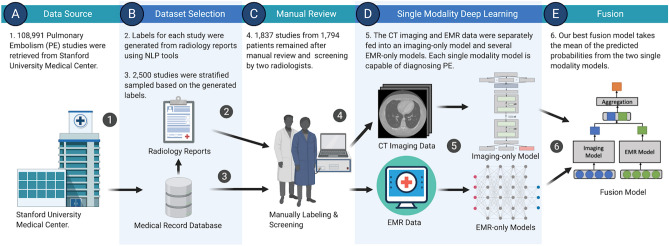
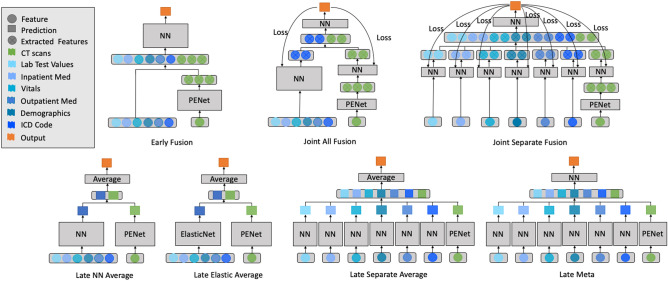
Recent advancements in deep learning have led to a resurgence of medical imaging and Electronic Medical Record (EMR) models for a variety of applications, including clinical decision support, automated workflow triage, clinical prediction and more. However, very few models have been developed to integrate both clinical and imaging data, despite that in routine practice clinicians rely on EMR to provide context in medical imaging interpretation. In this study, we developed and compared different multimodal fusion model architectures that are capable of utilizing both pixel data from volumetric Computed Tomography Pulmonary Angiography scans and clinical patient data from the EMR to automatically classify Pulmonary Embolism (PE) cases. The best performing multimodality model is a late fusion model that achieves an AUROC of 0.947 [95% CI: 0.946–0.948] on the entire held-out test set, outperforming imaging-only and EMR-only single modality models.
Overview
The claims and statistics of this paper haven’t been checked yet.
Free: it reads the open-access text and checks the first 5 claims that cite a source we can check. Create a free account to check every claim.
Integrity signals
Registry
Cites
Statistics
Figures
Verification
Claims the paper makes
The claims and statistics of this paper haven’t been checked yet.
Free: it reads the open-access text and checks the first 5 claims that cite a source we can check. Create a free account to check every claim.
Claims other papers make about this one
Each is checked against this paper’s own text: does it say what the citing paper says it does?
The source backs part of the claim, not all of it — or backs it for a different population, condition or comparison.
In the citing paper
“Huang et al. [83] found that averaging-based late fusion with regularized DNNs as sub-models outperforms early, intermediate and other late fusion strategies on the prediction of pulmonary embolism detection utilizing CT scans and EHR data.”
From Multimodal deep learning for biomedical data fusion: a review (2022) · cites this paper as [83]
Experimental — accuracy not yet measuredThe cited source says what the claim attributes to it.
In the citing paper
“Huang et al. created seven different fusion architectures. These included, early, joint, and late fusion. The architecture that performed the best was the late elastic average fusion for the diagnosis of pulmonary embolism using computed tomography and EHR data159.”
From Multimodal machine learning in precision health: A scoping review (2022) · cites this paper as [159]
The cited source says what the claim attributes to it.
In the citing paper
“Imaging and EHR-based data have been fused to improve detection of pulmonary embolism, outperforming single-modality models 99”
From Multimodal biomedical AI (2022) · cites this paper as [99]
The cited source says what the claim attributes to it.
In the citing paper
“Huang et al. [83] applied an FCNN for fusing sub-model predictions”
From Multimodal deep learning for biomedical data fusion: a review (2022) · cites this paper as [83]
The cited source says what the claim attributes to it.
In the citing paper
“recent work has demonstrated that the combination of imaging and EHR data outperforms each of these modalities alone to identify pulmonary embolism 99”
From Multimodal biomedical AI (2022) · cites this paper as [99]
Self-check
Percentages, sums and reported differences re-computed from the paper’s own numbers.
The self-check needs the paper’s full text.
Citations
Cites
Focal Loss for Dense Object Detection
Lin, T.-Y., Goyal, P., Girshick, R., He, K., & Dollar, P. (2017) · 2017 IEEE International Conference on Computer Vision (ICCV) · doi:10.1109/iccv.2017.324 · Cited by 30,581
Regularization and Variable Selection Via the Elastic Net
Zou, H., & Hastie, T. (2005) · Journal of the Royal Statistical Society Series B: Statistical Methodology · doi:10.1111/j.1467-9868.2005.00503.x · Cited by 20,957
CheXNet: Radiologist-Level Pneumonia Detection on Chest X-Rays with Deep Learning
Rajpurkar, P., Irvin, J., Zhu, K., Yang, B., Mehta, H., Duan, T., Ding, D. Y., Bagul, A., Langlotz, C. P., Shpanskaya, K. S., et al. (2017) · arXiv (Cornell University) · doi:10.48550/arxiv.1711.05225 · Cited by 1,219
Self-citationA Deep Learning Mammography-based Model for Improved Breast Cancer Risk Prediction
Yala, A., Lehman, C., Schuster, T., Portnoi, T., & Barzilay, R. (2019) · Radiology · doi:10.1148/radiol.2019182716 · Cited by 758
Bien, N., Rajpurkar, P., Ball, R. L., Irvin, J., Park, A., Jones, E., Bereket, M., Patel, B. N., Yeom, K. W., Shpanskaya, K., et al. (2018) · PLOS Medicine · doi:10.1371/journal.pmed.1002699 · Cited by 734
Self-citationHorlander, K. T., Mannino, D. M., & Leeper, K. V. (2003) · Archives of Internal Medicine · doi:10.1001/archinte.163.14.1711 · Cited by 657
Seven-point checklist and skin lesion classification using multitask multimodal neural nets
Kawahara, J., Daneshvar, S., Argenziano, G., & Hamarneh, G. (2019) · IEEE Journal of Biomedical and Health Informatics · doi:10.1109/jbhi.2018.2824327 · Cited by 584
CheXpert: A Large Chest Radiograph Dataset with Uncertainty Labels and Expert Comparison
Irvin, J., Rajpurkar, P., Ko, M., Yu, Y., Ciurea-Ilcus, S., Chute, C., Marklund, H., Haghgoo, B., Ball, R., Shpanskaya, K., et al. (2019) · Proceedings of the AAAI Conference on Artificial Intelligence · doi:10.1609/aaai.v33i01.3301590 · Cited by 392
Self-citationCheXpert: A Large Chest Radiograph Dataset with Uncertainty Labels and Expert Comparison
Irvin, J., Rajpurkar, P., Ko, M., Yu, Y., Ciurea-Ilcus, S., Chute, C., Marklund, H., Haghgoo, B., Ball, R., Shpanskaya, K., et al. (2019) · arXiv · doi:10.48550/arxiv.1901.07031 · Cited by 392
Self-citationMultimodal skin lesion classification using deep learning
Yap, J., Yolland, W., & Tschandl, P. (2018) · Experimental Dermatology · doi:10.1111/exd.13777 · Cited by 326
Research works printed but not linked: 1
- Rajan D Beymer D Abedin S Dehghan E Pi-PE: A pipeline for pulmonary embolism detection using sparsely annotated 3D CT images Mach. Learn. Health NeurIPS Workshop 2020 116 220 232
Cited by
Acosta, J. N., Falcone, G. J., Rajpurkar, P., & Topol, E. J. (2022) · Nature Medicine · doi:10.1038/s41591-022-01981-2 · Cited by 1,365
Artificial intelligence for multimodal data integration in oncology
Lipkova, J., Chen, R. J., Chen, B., Lu, M. Y., Barbieri, M., Shao, D., Vaidya, A. J., Chen, C., Zhuang, L., Williamson, D. F. K., et al. (2022) · Cancer Cell · doi:10.1016/j.ccell.2022.09.012 · Cited by 777
Multimodal deep learning for biomedical data fusion: a review
Stahlschmidt, S. R., Ulfenborg, B., & Synnergren, J. (2022) · Briefings in Bioinformatics · doi:10.1093/bib/bbab569 · Cited by 766
“[83] applied an FCNN for fusing sub-model predictions, while Reda et al.”
BackgroundMethodMultimodal machine learning in precision health: A scoping review
Kline, A., Wang, H., Li, Y., Dennis, S., Hutch, M., Xu, Z., Wang, F., Cheng, F., & Luo, Y. (2022) · npj Digital Medicine · doi:10.1038/s41746-022-00712-8 · Cited by 528
The current and future state of AI interpretation of medical images
Rajpurkar, P., & Lungren, M. P. (2023) · New England Journal of Medicine · doi:10.1056/nejmra2301725 · Cited by 443
Self-citationIntegrated multimodal artificial intelligence framework for healthcare applications
Soenksen, L. R., Ma, Y., Zeng, C., Boussioux, L., Villalobos Carballo, K., Na, L., Wiberg, H. M., Li, M. L., Fuentes, I., & Bertsimas, D. (2022) · npj Digital Medicine · doi:10.1038/s41746-022-00689-4 · Cited by 380
Deep learning based multimodal biomedical data fusion: an overview and comparative review
Duan, J., Xiong, J., Li, Y., & Ding, W. (2024) · Information Fusion · doi:10.1016/j.inffus.2024.102536 · Cited by 284
Li, Y., El Habib Daho, M., Conze, P.-H., Zeghlache, R., Le Boité, H., Tadayoni, R., Cochener, B., Lamard, M., & Quellec, G. (2024) · Computers in Biology and Medicine · doi:10.1016/j.compbiomed.2024.108635 · Cited by 274
“…out of 114 reviewed papers, 27 incorporate non-image contextual information in various forms, often structured demographic and clinical metadata extracted from electronic health records (Huang et al., 2020; Zhou et al., 2021a; Yan et al., 2021; Venugopalan et al., 2021; Prabhu et al., 2022).”
BackgroundArtificial intelligence-based methods for fusion of electronic health records and imaging data
Mohsen, F., Ali, H., El Hajj, N., & Shah, Z. (2022) · Scientific Reports · doi:10.1038/s41598-022-22514-4 · Cited by 250
Review of multimodal machine learning approaches in healthcare
Krones, F., Marikkar, U., Parsons, G., Szmul, A., & Mahdi, A. (2025) · Information Fusion · doi:10.1016/j.inffus.2024.102690 · Cited by 235
Deep multimodal fusion of image and non-image data in disease diagnosis and prognosis: a review
Cui, C., Yang, H., Wang, Y., Zhao, S., Asad, Z., Coburn, L. A., Wilson, K. T., Landman, B. A., & Huo, Y. (2023) · Progress in Biomedical Engineering · doi:10.1088/2516-1091/acc2fe · Cited by 218
“Huang et al. [65] showed that decision-level fusion also outperformed feature-level fusion in their experiments of pulmonary embolism detection.”
InfluentialUse of Multi-Modal Data and Machine Learning to Improve Cardiovascular Disease Care
Amal, S., Safarnejad, L., Omiye, J. A., Ghanzouri, I., Cabot, J. H., & Ross, E. G. (2022) · Frontiers in Cardiovascular Medicine · doi:10.3389/fcvm.2022.840262 · Cited by 172
“One benefit of using joint fusion compared to other fusion levels is that models can better approximate real-world interactions between data points; and thus, joint fusion can potentially lead to improved accuracy of model predictions for complex diseases or tasks (32).”
BackgroundSoffer, S., Klang, E., Shimon, O., Barash, Y., Cahan, N., Greenspana, H., & Konen, E. (2021) · Scientific Reports · doi:10.1038/s41598-021-95249-3 · Cited by 150
Schouten, D., Nicoletti, G., Dille, B., Chia, C., Vendittelli, P., Schuurmans, M., Litjens, G., & Khalili, N. (2025) · Medical Image Analysis · doi:10.1016/j.media.2025.103621 · Cited by 162
Multi-modality approaches for medical support systems: A systematic review of the last decade
Salvi, M., Loh, H. W., Seoni, S., Barua, P. D., García, S., Molinari, F., & Acharya, U. R. (2024) · Information Fusion · doi:10.1016/j.inffus.2023.102134 · Cited by 144
“Huang et al. [93] developed a multimodal fusion model for classifying Pulmonary Embolism, showing superior performance compared to single-modality approaches when combining CT scans and clinical patient data.”
MethodHaruna, Y., Qin, S., Chukkol, A. H. A., Yusuf, A. A., Bello, I., & Lawan, A. (2025) · Engineering Applications of Artificial Intelligence · doi:10.1016/j.engappai.2025.110057 · Cited by 141
Teoh, J. R., Dong, J., Zuo, X., Lai, K. W., Hasikin, K. B., & Wu, X. (2024) · PeerJ Computer Science · doi:10.7717/peerj-cs.2298 · Cited by 143
“The convergence of various data types consistently demonstrates improved diagnostic accuracy across multiple medical imaging tasks ( Huang et al., 2020b ; Mammoottil et al., 2022 ; Sun et al., 2023 ).”
Wang, W., Liang, H., Zhang, Z., Xu, C., Wei, D., Li, W., Ye, Q., Zhang, L., Liu, J., & Lei, D. (2024) · EClinicalMedicine · doi:10.1016/j.eclinm.2023.102385 · Cited by 122
M3Care: Learning with Missing Modalities in Multimodal Healthcare Data
Zhang, C., Chu, X., Ma, L., Zhu, Y., Wang, Y., Wang, J., & Zhao, J. (2022) · Proceedings of the 28th ACM SIGKDD Conference on Knowledge Discovery and Data Mining · doi:10.1145/3534678.3539388 · Cited by 102
“[24] develop and compare different multimodal fusion architectures to classify Pulmonary Embolism (PE) cases.”
BackgroundMultimodal deep learning approaches for single-cell multi-omics data integration
Athaya, T., Ripan, R. C., Li, X., & Hu, H. (2023) · Briefings in Bioinformatics · doi:10.1093/bib/bbad313 · Cited by 109
“[57] fused clinical and imaging data using FCNN during the final decision stage.”
MethodA systematic review of intermediate fusion in multimodal deep learning for biomedical applications
Guarrasi, V., Aksu, F., Caruso, C. M., Di Feola, F., Rofena, A., Ruffini, F., & Soda, P. (2025) · Image and Vision Computing · doi:10.1016/j.imavis.2025.105509 · Cited by 95
Automated detection of pulmonary embolism from CT-angiograms using deep learning
Huhtanen, H., Nyman, M. J., Mohsen, T., Virkki, A., Karlsson, A., & Hirvonen, J. (2022) · BMC Medical Imaging · doi:10.1186/s12880-022-00763-z · Cited by 97
“Our best model also had better specificity with almost similar sensitivity than a multimodal fusion model combining information from CT images and electronic health records, which had a specificity of 90.2% and a sensitivity of 87.3% [37].”
BackgroundInfluentialOpen challenges and opportunities in federated foundation models towards biomedical healthcare
Li, X., Peng, L., Wang, Y., & Zhang, W. (2025) · BioData Mining · doi:10.1186/s13040-024-00414-9 · Cited by 108
“Furthermore, meta-learning approaches are utilized to dynamically adjust these weights for optimal performance [119], thus enhancing the fusion’s effectiveness by incorporating learning-based adjustments.”
Yao, W., Yin, K., Cheung, W. K., Liu, J., & Qin, J. (2024) · Proceedings of the AAAI Conference on Artificial Intelligence · doi:10.1609/aaai.v38i15.29578 · Cited by 171
Recent advancements in deep learning based lung cancer detection: A systematic review
Dodia, S. J., Annappa, B., & Mahesh, P. A. (2022) · Engineering Applications of Artificial Intelligence · doi:10.1016/j.engappai.2022.105490 · Cited by 93
Reviewing Multimodal Machine Learning and Its Use in Cardiovascular Diseases Detection
Moshawrab, M., Adda, M., Bouzouane, A., Ibrahim, H., & Raad, A. (2023) · Electronics · doi:10.3390/electronics12071558 · Cited by 85
AI in radiology: From promise to practice − A guide to effective integration
Katal, S., York, B. R., & Gholamrezanezhad, A. (2024) · European Journal of Radiology · doi:10.1016/j.ejrad.2024.111798 · Cited by 82
Multimodal deep learning enhances diagnostic precision in left ventricular hypertrophy
Soto, J. T., Weston Hughes, J., Sanchez, P. A., Perez, M., Ouyang, D., & Ashley, E. A. (2022) · European Heart Journal - Digital Health · doi:10.1093/ehjdh/ztac033 · Cited by 76
Mentis, A.-F. A., Lee, D., & Roussos, P. (2024) · Molecular Psychiatry · doi:10.1038/s41380-023-02047-6 · Cited by 75
“In a similar vein, multi-modal fusion [60] Collecting and analyzing a large number of samples while minimizing missing data (e.g., numerical values) are critical to improving the ef fi ciency and performance of the classi fi er or prediction model.”
Simon, B. D., Ozyoruk, K. B., Gelikman, D. G., Harmon, S. A., & Türkbey, B. (2024) · Diagnostic and Interventional Radiology · doi:10.4274/dir.2024.242631 · Cited by 73
“With evidence that multimodal AI may be more accurate for some AI applications 27,59-69, 80 , 93 and that multimodal Considering the dynamic medical environment and its quickly changing technology and guidelines, AI and the data on which it is trained will have to change as quickly as the clinic.”
BackgroundMultimodality Fusion Aspects of Medical Diagnosis: A Comprehensive Review
Kumar, S., Rani, S., Sharma, S., & Min, H. (2024) · Bioengineering · doi:10.3390/bioengineering11121233 · Cited by 101
A scoping review on multimodal deep learning in biomedical images and texts
Sun, Z., Lin, M., Zhu, Q., Xie, Q., Wang, F., Lu, Z., & Peng, Y. (2023) · Journal of Biomedical Informatics · doi:10.1016/j.jbi.2023.104482 · Cited by 69
“This approach has been proven to improve the accuracy and e ffi ciency of various tasks in clinical decision-making with imaging and structured EHR (i.e., -omics data, lab test data, demographic data) [47, 51, 137].”
A multitask deep learning approach for pulmonary embolism detection and identification
Ma, X., Ferguson, E. C., Jiang, X., Savitz, S. I., & Shams, S. (2022) · Scientific Reports · doi:10.1038/s41598-022-16976-9 · Cited by 80
Multimodal risk prediction with physiological signals, medical images and clinical notes
Wang, Y., Yin, C., & Zhang, P. (2024) · Heliyon · doi:10.1016/j.heliyon.2024.e26772 · Cited by 66
“Huang et al. [21] utilized Electronic Medical Record (EMR) and CT scan images to detect pulmonary embolism with three fusion methods and found that late fusion modal outperformed others.”
BackgroundZhou, Y., Huang, S.-C., Fries, J., Youssef, A., Amrhein, T. J., Chang, M., Banerjee, I., Rubin, D. L., Xing, L., Shah, N. H., et al. (2021) · arXiv (Cornell University) · doi:10.48550/arxiv.2111.11665 · Cited by 80
“In our prior study [24], we show that late fusion works best for fusing CT and EHR to diagnose PE.”
Self-citationBourcier, S., Klug, J., & Nguyen, L. S. (2021) · World Journal of Gastroenterology · doi:10.3748/wjg.v27.i26.4088 · Cited by 65
Holste, G., Partridge, S. C., Rahbar, H., Biswas, D., Lee, C. I., & Alessio, A. M. (2021) · 2021 IEEE/CVF International Conference on Computer Vision Workshops (ICCVW) · doi:10.1109/iccvw54120.2021.00368 · Cited by 58
Multimodal fusion models for pulmonary embolism mortality prediction
Cahan, N., Klang, E., Marom, E. M., Soffer, S., Barash, Y., Burshtein, E., Konen, E., & Greenspan, H. (2023) · Scientific Reports · doi:10.1038/s41598-023-34303-8 · Cited by 58
Wang, S., He, X., Jian, Z., Li, J., Xu, C., Chen, Y., Liu, Y., Chen, H., Huang, C., Hu, J., et al. (2024) · Eye and Vision · doi:10.1186/s40662-024-00405-1 · Cited by 85
“Examples include the utilization of CT images and electronic health records for pulmonary metabolism detection [85], the generation of chest X-ray reports based on cross-modal multiscale feature fusion for pulmonary imaging [86], and the prediction of mortality rates in the ICU through the analysis…”
BackgroundMachine Learning Augmented Interpretation of Chest X-rays: A Systematic Review
Ahmad, H. K., Milne, M., Buchlak, Q. D., Ektas, N., Sanderson, G., Chamtie, H., Karunasena, S., Chiang, J., Holt, X., Tang, C. H. M., et al. (2023) · Diagnostics · doi:10.3390/diagnostics13040743 · Cited by 69
“The application of multimodal AI systems is a developing trend in medicine [104].”
Khader, F., Kather, J. N., Müller-Franzes, G., Wang, T., Han, T., Tayebi Arasteh, S., Hamesch, K., Bressem, K., Haarburger, C., Stegmaier, J., et al. (2023) · Scientific Reports · doi:10.1038/s41598-023-37835-1 · Cited by 57
An overview of methods and techniques in multimodal data fusion with application to healthcare
Chaabene, S., Boudaya, A., Bouaziz, B., & Chaâri, L. (2025) · International Journal of Data Science and Analytics · doi:10.1007/s41060-025-00715-0 · Cited by 72
“By integrating the extracted information on both feature and decision levels from various modalities, hybrid fusion can gather more complete information complementarily, hence delivering superior performance in prediction [133].”
Evaluating ChatGPT-4’s Diagnostic Accuracy: Impact of Visual Data Integration
Hirosawa, T., Harada, Y., Tokumasu, K., Ito, T., Suzuki, T., & Shimizu, T. (2024) · JMIR Medical Informatics · doi:10.2196/55627 · Cited by 59
“For example, a multimodal model developed from the combination of images and health records could classify pulmonary embolism [20].”
BackgroundTang, S., Tariq, A., Dunnmon, J., Sharma, U., Elugunti, P., Rubin, D. L., Patel, B. N., & Banerjee, I. (2023) · IEEE Journal of Biomedical and Health Informatics · doi:10.1109/jbhi.2023.3236888 · Cited by 71
“We chose to incorporate imaging in addition to EHR data based on prior studies showing added diagnostic performance compared to either modality alone [44], [45], [46], [47].”
MethodSelf-citationDeep learning methods improve genomic prediction of wheat breeding
Montesinos‐López, A., Crespo‐Herrera, L., Dreisigacker, S., Gerard, G., Vitale, P., Pierre, C. S., Govindan, V., Tadesse, Z., Flores, M. C., Pérez‐Rodríguez, P., et al. (2024) · Frontiers in Plant Science · doi:10.3389/fpls.2024.1324090 · Cited by 59
Deep Learning-Based Algorithm for Automatic Detection of Pulmonary Embolism in Chest CT Angiograms
Greniér, P., Ayobi, A., Quenet, S., Tassy, M., Marx, M., Chow, D. S., Weinberg, B. D., Chang, P., & Chaibi, Y. (2023) · Diagnostics · doi:10.3390/diagnostics13071324 · Cited by 48
Pratihar, R., & Sankar, R. T. (2024) · Computers · doi:10.3390/computers13110293 · Cited by 53
Medfuse: multi-modal fusion with clinical time-series data and chest x-ray images
Hayat, N., Geras, K. J., & Shamout, F. E. (2022) · arXiv · doi:10.48550/arxiv.2207.07027
“Therefore, most studies rely on a single data modality to perform clinical prediction tasks (Harutyunyan et al., 2019), or use privately curated multi-modal datasets (Huang et al., 2020a).”
BackgroundResultInfluentialDeveloping medical imaging AI for emerging infectious diseases
Huang, S.-C., Chaudhari, A. S., Langlotz, C. P., Shah, N., Yeung, S., & Lungren, M. P. (2022) · Nature Communications · doi:10.1038/s41467-022-34234-4 · Cited by 42
Self-citationMultimodal deep learning methods enhance genomic prediction of wheat breeding
Montesinos-López, A., Rivera, C., Pinto, F., Piñera, F., Gonzalez, D., Reynolds, M., Pérez-Rodríguez, P., Li, H., Montesinos-López, O. A., & Crossa, J. (2023) · G3: Genes, Genomes, Genetics · doi:10.1093/g3journal/jkad045 · Cited by 41
Modern imaging of acute pulmonary embolism
de Jong, C. M. M., Kroft, L. J. M., van Mens, T. E., Huisman, M. V., Stöger, J. L., & Klok, F. A. (2024) · Thrombosis Research · doi:10.1016/j.thromres.2024.04.016 · Cited by 41
Transformer enabled multi-modal medical diagnosis for tuberculosis classification
Kumar, S., Sharma, S., & Megra, K. T. (2025) · Journal Of Big Data · doi:10.1186/s40537-024-01054-w · Cited by 39
“Huang et al. [11] attempted various fusion models, including early, late, and hybrid models, to classify cases of pulmonary embolism.”
Application of Hyperledger in the Hospital Information Systems: A Survey
Leng, Z., Tan, Z., & Wang, K. (2021) · IEEE Access · doi:10.1109/access.2021.3112608 · Cited by 42
“The development of medical image models can integrate clinical and imaging data [60], and pixel-based medical imaging models can also process EHR context data and pixel data capabilities [61].”
BackgroundAdvancements in Medical Radiology Through Multimodal Machine Learning: A Comprehensive Overview
Haq, I. U., Mhamed, M., Alharbi, M., Osman, H., Hamd, Z. Y., & Liu, Z. (2025) · Bioengineering · doi:10.3390/bioengineering12050477 · Cited by 41
“Nonetheless, constraints emerge when structured data are either scarce or poorly temporally linked with imaging investigations.”
Shetty, S., Ananthanarayana, V. S., & Mahale, A. R. (2023) · Multimedia Tools and Applications · doi:10.1007/s11042-023-14940-x · Cited by 37
“Huang et al. [32] presented neural network-based text and image retrieval model to detect Pulmonary Embolism from CT images.”
MethodMissing-modality enabled multi-modal fusion architecture for medical data
Wang, M., Fan, S., Li, Y., Xie, Z., & Chen, H. (2025) · Journal of Biomedical Informatics · doi:10.1016/j.jbi.2025.104796 · Cited by 31
Future Directions in Artificial Intelligence
Saboury, B., Morris, M. A., & Siegel, E. L. (2021) · Radiologic Clinics of North America · doi:10.1016/j.rcl.2021.07.008 · Cited by 30
Ali, M. M., Hashim, N., Aziz, S. A., & Lasekan, O. (2023) · Agronomy · doi:10.3390/agronomy13020401 · Cited by 31
Li, J., Chao, C., Jeong, J., Farina, J., Seri, A. R., Barry, T., Newman, H. R., Campany, M. E., Abdou, M. M., O’Shea, M., et al. (2023) · Journal of Imaging · doi:10.3390/jimaging9020048 · Cited by 30
“Our group has proposed a fusion architecture that has the potential to improve the overall model performance [17,18] by incorporating 6-standard echocardiography views (apical 2–,3–,4–chamber, parasternal long axis, parasternal short axis at the mitral valve, and the mid-ventricle levels) from TTE.”
BackgroundSelf-citationWu, J., He, K., Mao, R., Shang, X., & Cambria, E. (2025) · Information Fusion · doi:10.1016/j.inffus.2025.103283 · Cited by 40
Ouyang, Y., Wu, Y., Wang, H., Zhang, C., Cheng, F., Jiang, C., Jin, L., Cao, Y., & Li, Q. (2023) · IEEE Transactions on Visualization and Computer Graphics · doi:10.1109/tvcg.2023.3326929 · Cited by 31
“[31] used PENet and a feedforward neural network on CT scans and electronic medical records (EMR) to detect pulmonary embolism, while Kawahara et al.”
MethodBeyond Medical Imaging - A Review of Multimodal Deep Learning in RadiologyPreprint
Heiliger, L., Sekuboyina, A., Menze, B. H., Egger, J., & Kleesiek, J. (2022) · doi:10.36227/techrxiv.19103432.v1 · Cited by 38
AI Applications to Breast MRI : Today and Tomorrow
Gullo, R. L., Brunekreef, J., Marcus, E., Han, L. K., Eskreis‐Winkler, S., Thakur, S. B., Mann, R. M., Lipman, K. B. W. G., Teuwen, J., & Pinker, K. (2024) · Journal of Magnetic Resonance Imaging · doi:10.1002/jmri.29358 · Cited by 27
Zhang, M., Xue, M., Li, S., Zou, Y. L., & Zhu, Q. (2023) · Biomedical Optics Express · doi:10.1364/boe.486292 · Cited by 27
Li, F., & Xu, J. (2025) · IEEE Access · doi:10.1109/access.2025.3552039 · Cited by 44
“For businesses, it promotes novelty by aiding investments in AI technologies and ensuring that implementation methods are evidence-enabled and scalable [72].”
Enhancing clinical trial outcome prediction with artificial intelligence: a systematic review
Qian, L., Lu, X., Haris, P. I., Zhu, J., Li, S., & Yang, Y. (2025) · Drug Discovery Today · doi:10.1016/j.drudis.2025.104332 · Cited by 29
Comprehensive Review of Multimodal Medical Data Analysis: Open Issues and Future Research Directions
Shetty, S., Ananthanarayana, V. S., & Mahale, A. R. (2022) · Acta Informatica Pragensia · doi:10.18267/j.aip.202 · Cited by 29
Siam, K., Faruk, M. J. H., He, B., Cheng, J. Q., & Gu, H. (2025) · Information · doi:10.3390/info16110971 · Cited by 37
“X-rays, when combined with clinical data, enhance the detection of pulmonary diseases [16], whereas CT enables detailed anatomical analysis in oncology and cardiology [17,18].”
Abdulaal, L., Maiter, A., Salehi, M., Sharkey, M. J., Alnasser, T. N., Garg, P., Rajaram, S., Hill, C., Johns, C., Rothman, A. M. K., et al. (2024) · Frontiers in Radiology · doi:10.3389/fradi.2024.1335349 · Cited by 25
WavFace: A Multimodal Transformer-Based Model for Depression Screening
Flores, R., Tlachac, M., Shrestha, A., & Rundensteiner, E. A. (2025) · IEEE Journal of Biomedical and Health Informatics · doi:10.1109/jbhi.2025.3529348 · Cited by 28
“The explicit alignment task can be solved through unsupervised [54] or supervised methods [55]. c) Fusion: There are three standard types of fusion strategies [56], [57]: early fusion, joint fusion, and late fusion.”
Karandikar, P. V., Massaad, E., Hadzipasic, M., Kiapour, A., Joshi, R. S., Shankar, G. M., & Shin, J. H. (2022) · Neurosurgery · doi:10.1227/neu.0000000000001853 · Cited by 25
Bhattacharya, A., Sadasivuni, S., Chao, C., Agasthi, P., Ayoub, C., Holmes, D. R., Arsanjani, R., Sanyal, A., & Banerjee, I. (2022) · Physiological Measurement · doi:10.1088/1361-6579/ac9e8a · Cited by 24
“However, only about 10%of publishedwork adopts this approach (Huang et al 2020a).”
BackgroundMethodSelf-citationBushra, F., Chowdhury, M. E. H., Sarmun, R., Kabir, S., Said, M., Zoghoul, S. B. M., Mushtak, A., Al‐Hashimi, I., Alqahtani, A., & Hasan, A. (2024) · Expert Systems with Applications · doi:10.1016/j.eswa.2023.123029 · Cited by 26
“Another research developed fusion models that combined CT scans and Electronic Medical Records (EMRs) for automated PE classification (Huang et al., 2020).”
MethodMulti-modal lifelog data fusion for improved human activity recognition: A hybrid approach
Oh, Y., & Kim, S. (2024) · Information Fusion · doi:10.1016/j.inffus.2024.102464 · Cited by 25
Srisuwananukorn, A., Salama, M. E., & Pearson, A. T. (2023) · Haematologica · doi:10.3324/haematol.2021.280209 · Cited by 23
Cai, W., Wu, X. M., Guo, K., Chen, Y., Shi, Y., & Lin, X. (2024) · Journal of Inflammation Research · doi:10.2147/jir.s484485 · Cited by 20
“58 When choosing a fusion approach for a specific medical issue, relying solely on past experience is not recommended.”
BackgroundSun, Q., Yu, L., Song, Z., Wang, C., Li, W., Chen, W., Xu, J., & Han, S. (2025) · Scientific Reports · doi:10.1038/s41598-025-13447-9 · Cited by 24
“Similarly, a study combining CT and electronic health records for pulmonary embolism prediction identified the late fusion model as the most effective among the fusion strategies evaluated 35 .”
Xu, H., Li, H., Xu, Q., Zhang, Z., WANG, P. H., Li, D., & Guo, L. (2023) · Medical Physics · doi:10.1002/mp.16218 · Cited by 20
Anatomically aware dual-hop learning for pulmonary embolism detection in CT pulmonary angiograms
Condrea, F., Rapaka, S., Lucian Mihai, I. T. U., Sharma, P. K., Sperl, J. I., Ali, A. M., & Leordeanu, M. (2024) · Computers in Biology and Medicine · doi:10.1016/j.compbiomed.2024.108464 · Cited by 22
“…a Computer Assisted Detection (CAD) system for Pulmonary Embolisms (PE), through traditional image processing techniques, based on segmentation and thresholding [102, 4, 71, 59], or through Deep Learning approaches [10, 83, 61, 44, 45, 94, 85], specifically convolutional neural networks (CNNs).”
MethodKanwal, S., Khan, F. A., & Alamri, S. (2022) · Journal of King Saud University - Computer and Information Sciences · doi:10.1016/j.jksuci.2022.03.011 · Cited by 23
Multimodal Wearable Biosensing Meets Multidomain AI: A Pathway to Decentralized Healthcare
Liu, C., Fan, H., Kim, M., Zhou, T., Yang, P., Zhao, L., Wang, Y., Che, Z., Liu, C., Li, B., et al. (2026) · Advanced Science · doi:10.1002/advs.202522900 · Cited by 32
Survey of deep learning techniques for disease prediction based on omics data
Yu, X., Zhou, S., Zou, H., Wang, Q., Liu, C., Zang, M., & Liu, T. (2022) · Human Gene · doi:10.1016/j.humgen.2022.201140 · Cited by 19
Lanza, E., Ammirabile, A., & Francone, M. (2024) · European Journal of Radiology · doi:10.1016/j.ejrad.2024.111592 · Cited by 18
Multimodal artificial intelligence models for radiology
Tariq, A., Banerjee, I., Trivedi, H., & Gichoya, J. W. (2025) · BJR|Artificial Intelligence · doi:10.1093/bjrai/ubae017 · Cited by 22
Self-citationXi, L., Han, K., Deng, M., Xu, W., Xu, F., Gao, Q., Xie, W., Zhang, R., Liu, M., Zhai, Z., et al. (2023) · Chinese Medical Journal · doi:10.1097/cm9.0000000000002837 · Cited by 17
“[32] Similarly, the ML model in our study can be combined with CT imaging data to further improve the diagnostic accuracy of APE; however, this needs further research.”
MethodTrofimov, V., Xu, S., Dong, Z., Hu, G., Zou, Y., Yang, Y., & Han, C. (2024) · Virtual and Physical Prototyping · doi:10.1080/17452759.2024.2424463 · Cited by 17
Zhu, H., Tao, G., Jiang, Y., Sun, L., Chen, J., Guo, J., Wang, N., Wei, H., Liu, X., Chen, Y., et al. (2024) · European Journal of Radiology · doi:10.1016/j.ejrad.2024.111586 · Cited by 16
Gan, Y., Hu, Q., Shen, Q., Peng, L., Qian, Q., Zhuo, M., Xue, E., & Chen, Z. (2024) · Annals of Surgical Oncology · doi:10.1245/s10434-024-16697-5 · Cited by 15
“37 Therefore, when selecting a fusion approach for a specific medical problem, it is recommended to conduct preliminary experiments using multiple methods and select the optimal method.”
Zhang, M., Li, S., Xue, M., & Zhu, Q. (2023) · Journal of Biomedical Optics · doi:10.1117/1.jbo.28.8.086002 · Cited by 14
Multimodal and multi-omics-based deep learning model for screening of optic neuropathy
Lin, Y.-T., Zhou, Q., Tan, J., & Tao, Y. (2023) · Heliyon · doi:10.1016/j.heliyon.2023.e22244 · Cited by 14
“Kihara et al. and Huang et al. [29] utilized the late fusion method to analyze IR images of patients with glaucoma.”
BackgroundMethodMeta-analysis of AI-based pulmonary embolism detection: How reliable are deep learning models?
Lanza, E., Ammirabile, A., & Francone, M. (2025) · Computers in Biology and Medicine · doi:10.1016/j.compbiomed.2025.110402 · Cited by 15
AI-ENABLED NEUROBIOLOGICAL DIAGNOSTIC MODELS FOR EARLY DETECTION OF PTSD AND TRAUMA DISORDERS
Hossain, M. A., & Ara, S. (2025) · American Journal of Interdisciplinary Studies · doi:10.63125/64hftc92 · Cited by 15
Sun, Y., Salerno, S. M., He, X., Pan, Z., Yang, E. J., Sujimongkol, C., Song, J., Wang, X., Han, P., Kang, J., et al. (2023) · Scientific Reports · doi:10.1038/s41598-023-34559-0 · Cited by 15
Beyond Medical Imaging - A Review of Multimodal Deep Learning in Radiology
Heiliger, L., Sekuboyina, A., Menze, B., Egger, J., & Kleesiek, J. (2022) · doi:10.36227/techrxiv.19103432 · Cited by 13
Wang, R., Chen, L.-C., Moukheiber, L., Seastedt, K. P., Moukheiber, M., Moukheiber, D., Zaiman, Z., Moukheiber, S., Litchman, T., Trivedi, H., et al. (2023) · International Journal of Medical Informatics · doi:10.1016/j.ijmedinf.2023.105211 · Cited by 11
Hibi, A., Cusimano, M. D., Bilbily, A., Krishnan, R. G., & Tyrrell, P. N. (2024) · Journal of Neurotrauma · doi:10.1089/neu.2023.0446 · Cited by 15
“22 However, as subsequently demonstrated, the conventional early fusion approach underperformed in the context of TBI prognostication.”
Deployment and validation of the CLL treatment infection model adjoined to an EHR system
Agius, R., Riis-Jensen, A. C., Wimmer, B., da Cunha‐Bang, C., Murray, D. D., Poulsen, C. B., Bertelsen, M. B., Schwartz, B., Lundgren, J. D., Langberg, H., et al. (2024) · npj Digital Medicine · doi:10.1038/s41746-024-01132-6 · Cited by 14
“…for a number of domain-speci fi c challenges that EHR and disease modeling present us with are being developed; including models that handle diverse modalities 4 , high-missingness 5 , data-shifts 6 , underrepresented patient subgroups 7 , privacy limitations 8 and small patient cohorts 9 .”
Machine Learning in Cardiovascular Imaging: A Scoping Review of Published Literature
Rouzrokh, P., Khosravi, B., Vahdati, S., Moassefi, M., Faghani, S., Mahmoudi, E., Chalian, H., & Erickson, B. J. (2022) · Current Radiology Reports · doi:10.1007/s40134-022-00407-8 · Cited by 15
“Angiography examinations while also leveraging information from the patient’s electronic health records [22].”
BackgroundTwo-Dimensional Attentive Fusion for Multi-Modal Learning of Neuroimaging and Genomics Data
Rahaman, M. A., Garg, Y., Iraji, A., Fu, Z., Chen, J., & Calhoun, V. D. (2022) · Machine learning for signal processing ... · doi:10.1109/mlsp55214.2022.9943519 · Cited by 17
Hemalakshmi, G. R., Murugappan, M., Sikkandar, M. Y., Santhi, D., Prakash, N. B., & Mohanarathinam, A. (2024) · Physical and Engineering Sciences in Medicine · doi:10.1007/s13246-024-01410-3 · Cited by 14
“Using PENet and EMR-Net, a Neural Network (NN) trained with Electronic Medical Records (EMR), a multi-modal fusion network is constructed for PE detection [26].”
Metadata
- Authors
- Huang, S.-C., Pareek, A., Zamanian, R., Banerjee, I., & Lungren, M. P.
- Affiliations
- Stanford University (US)
- Stanford Medicine (US)
- Emory University (US)
- Corresponding author
- Huang, Shih-Cheng
- Venue
- Scientific Reports
- Published
- 2020-12-17
- Volume
- 10
- Issue
- 1
- Pages
- 22147-22147
- ISSN
- 2045-2322 (ISSN-L)
- PMC
- PMC7746687
- OpenAlex
- W3112990870
- Semantic Scholar
- 95a702faa61532ddca0a593404c6e60817be66a5
- Cited by
- 246
- References
- 38
- Citations by year
- 2026: 38 · 2025: 56 · 2024: 62 · 2023: 49 · 2022: 31 · 2021: 9
- FWCI
- 8.75
- Type
- journal article
- Language
- en
- Open access
- gold
- doi.org
- Licence
- cc-by
- creativecommons.org/licenses/by/4.0 (tdm)
- creativecommons.org/licenses/by/4.0 (vor)
- Locations
- Scientific Reports (publishedVersion, cc-by)
- PubMed Central (publishedVersion, cc-by)
- PubMed (publishedVersion)
- DOAJ (DOAJ: Directory of Open Access Journals) (submittedVersion, cc-by-sa)
- Funders
- U.S. National Library of Medicine (R01LM012966)
- Topics
- Physical Sciences › Computer Science › Artificial Intelligence › Machine Learning in Healthcare
- Health Sciences › Medicine › Radiology, Nuclear Medicine and Imaging › Radiomics and Machine Learning in Medical Imaging
- Physical Sciences › Computer Science › Computer Vision and Pattern Recognition › Multimodal Machine Learning Applications
- Keywords
- multimodal fusion, pulmonary embolism detection, CT pulmonary angiography, electronic health records, decision fusion, automated diagnosis, deep neural network
- MeSH terms
- Clinical Decision-Making, Machine Learning, Humans, Image Interpretation, Computer-Assisted, Image Processing, Computer-Assisted, Pulmonary Embolism, Sensitivity and Specificity, Tomography, X-Ray Computed, Neural Networks, Computer, Disease Management, Workflow, Electronic Health Records
About these checks
Registry, retraction, Cites and statistics results are computed, not judged, with one exception: a printed reference that no index lists is read once by a model before it counts as a citation error. Claims are extracted by a model and kept only when their quote appears verbatim in the text; each cited source is then checked, with a model’s help, for whether it says what the claim relies on. Those verdicts can be wrong — read the claim’s quote and the cited source before relying on one.
Statistics and arithmetic are recomputed, not judged.
Confidence bands are shown only for fields calibrated on our annotated test set. None is calibrated yet, so no band is shown.
What counts as a claim ›How we measure confidence ›How we check this ›
Are you an author, or do you see a problem with this page? Request a review
Data sources
Bibliographic data: Semantic Scholar, OpenAlex, Crossref.
Contains information from the Semantic Scholar Academic Graph Datasets, made available under the ODC Attribution License (ODC-BY 1.0).
Semantic Scholar’s data is described in: Kinney, R., et al. (2023). The Semantic Scholar Open Data Platform. arXiv:2301.10140.
