

The DOI matches its Crossref record; 110 of the 112 references it cites were found in a registry or an index.
A review of some techniques for inclusion of domain-knowledge into deep neural networks
Open accessAbstract
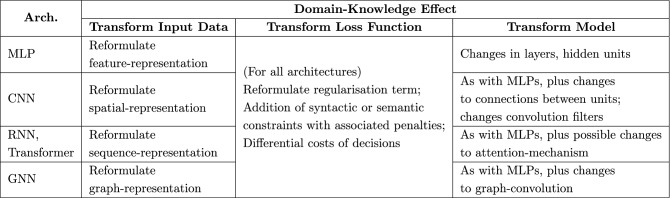
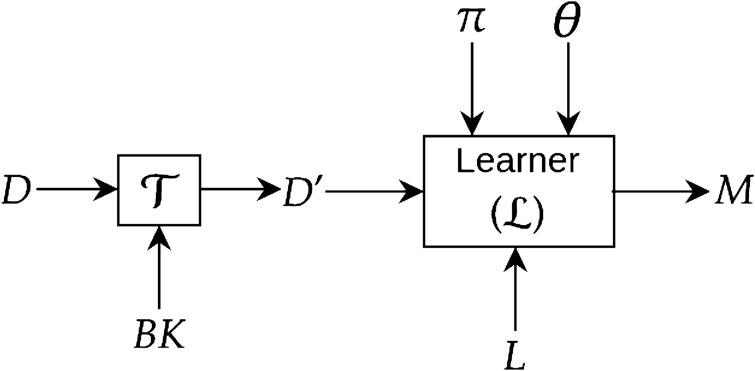
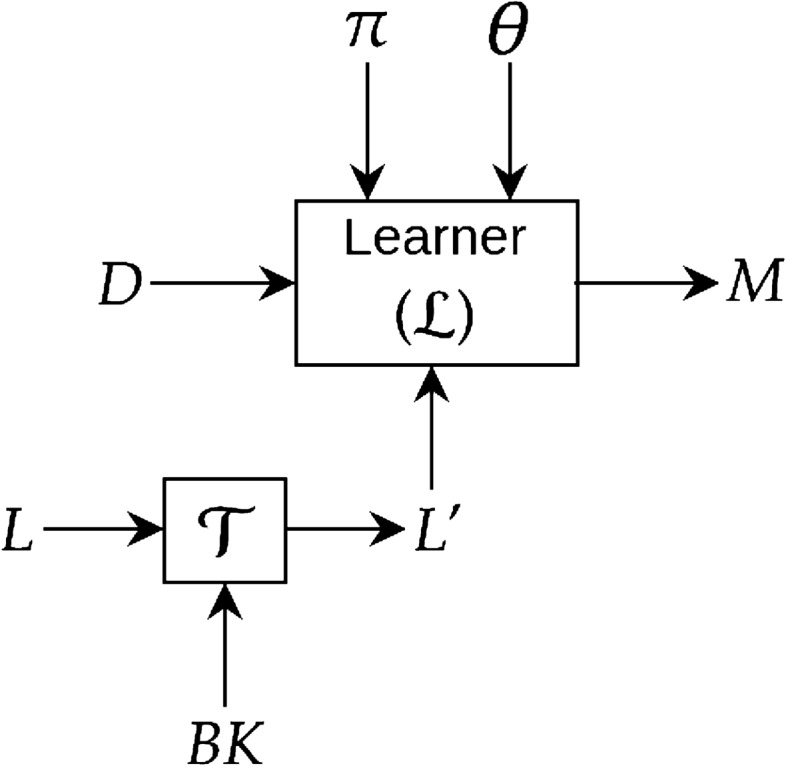
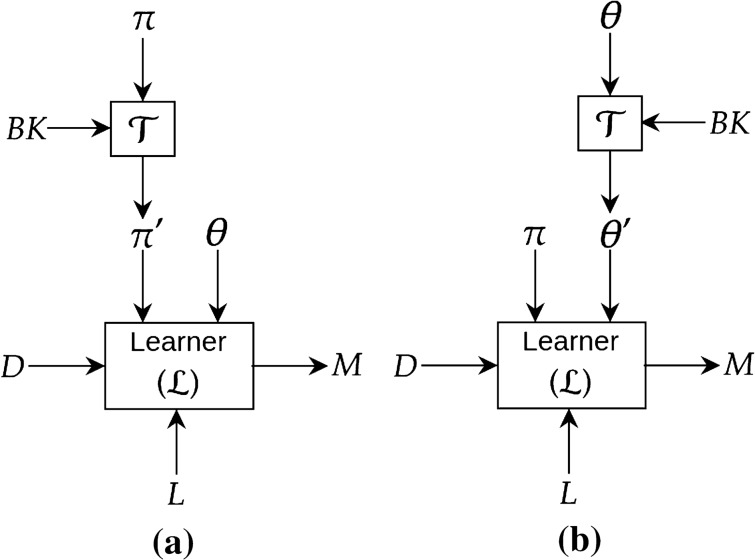
We present a survey of ways in which existing scientific knowledge are included when constructing models with neural networks. The inclusion of domain-knowledge is of special interest not just to constructing scientific assistants, but also, many other areas that involve understanding data using human-machine collaboration. In many such instances, machine-based model construction may benefit significantly from being provided with human-knowledge of the domain encoded in a sufficiently precise form. This paper examines the inclusion of domain-knowledge by means of changes to: the input, the loss-function, and the architecture of deep networks. The categorisation is for ease of exposition: in practice we expect a combination of such changes will be employed. In each category, we describe techniques that have been shown to yield significant changes in the performance of deep neural networks.
Overview
The claims and statistics of this paper haven’t been checked yet.
Run the check — free, no account needed. It reads the open-access text and checks the sources it cites.
Integrity signals
Registry
Cites
Statistics
Figures
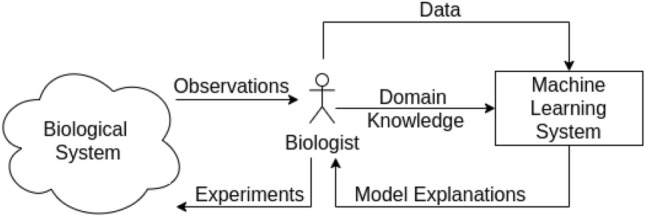
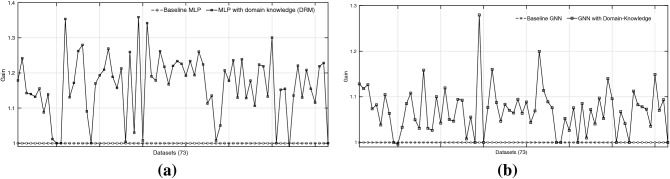
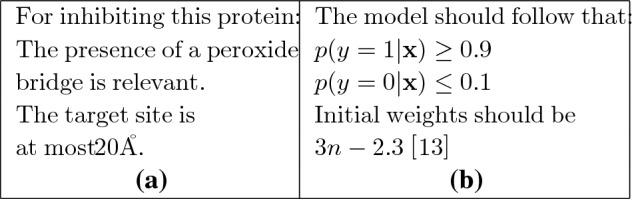
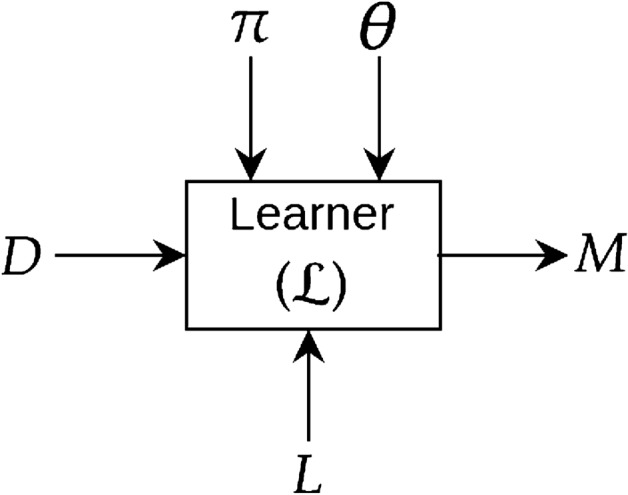
Verification
Claims the paper makes
The claims and statistics of this paper haven’t been checked yet.
Run the check — free, no account needed. It reads the open-access text and checks the sources it cites.
Claims other papers make about this one
Each is checked against this paper’s own text: does it say what the citing paper says it does?
The source backs part of the claim, not all of it — or backs it for a different population, condition or comparison.
In the citing paper
“However, integrating external domain knowledge into emotion recognition models is usually a complex and timeconsuming process [19].”
From Emotion Classification With Visibility Graphs (2025) · cites this paper as [19]
Experimental — accuracy not yet measured
Self-check
Percentages, sums and reported differences re-computed from the paper’s own numbers.
The self-check needs the paper’s full text.
Citations
Cites
Vaswani, A., Shazeer, N., Parmar, N., Uszkoreit, J., Jones, L., Gomez, A. N., Kaiser, L., & Polosukhin, I. (2017) · arXiv · doi:10.48550/arxiv.1706.03762 · Cited by 120,404
Jakubův, J., Chvalovský, K., Goertzel, Z., et al. (2023) · DROPS (Schloss Dagstuhl – Leibniz Center for Informatics) · doi:10.4230/lipics.itp.2023.19 · Cited by 76,648
Language Models are Few-Shot Learners
Brown, T. B., Mann, B., Ryder, N., Subbiah, M., Kaplan, J., Dhariwal, P., Neelakantan, A., Shyam, P., Sastry, G., Askell, A., et al. (2020) · arXiv · doi:10.48550/arxiv.2005.14165 · Cited by 23,372
Advances in neural information processing systems 7
Cios, K. J., & Shields, M. E. (1997) · Neurocomputing · doi:10.1016/s0925-2312(97)90018-7 · Cited by 22,093
Distilling the Knowledge in a Neural Network
Hinton, G., Vinyals, O., & Dean, J. (2015) · arXiv · doi:10.48550/arxiv.1503.02531 · Cited by 14,204 · cited 1×
“This is done via a modifica-tion to the knowledge-distillation loss proposed by Hinton et al. [65].”
Barredo Arrieta, A., Díaz-Rodríguez, N., Del Ser, J., Bennetot, A., Tabik, S., Barbado, A., Garcia, S., Gil-Lopez, S., Molina, D., Benjamins, R., et al. (2020) · Information Fusion · doi:10.1016/j.inffus.2019.12.012 · Cited by 10,423 · cited 1×
“Understanding models constructed by deep neural networks is an area of intense research activity, and good summaries exist elsewhere [3; 4].”
A Comprehensive Survey on Transfer Learning
Zhuang, F., Qi, Z., Duan, K., Xi, D., Zhu, Y., Zhu, H., Xiong, H., & He, Q. (2021) · Proceedings of the IEEE · doi:10.1109/jproc.2020.3004555 · Cited by 6,678
The global landscape of AI ethics guidelines
Jobin, A., Ienca, M., & Vayena, E. (2019) · Nature Machine Intelligence · doi:10.1038/s42256-019-0088-2 · Cited by 6,220 · cited 1×
“It is now accepted that trust comes through understanding of how decisions are made by the machine-constructed models [112], and what are the determining factors in these decisions.”
BackgroundA Survey on Bias and Fairness in Machine Learning
Mehrabi, N., Morstatter, F., Saxena, N., Lerman, K., & Galstyan, A. (2022) · ACM Computing Surveys · doi:10.1145/3457607 · Cited by 5,812 · cited 1×
“Domain-knowledge can also be used to correct biases [114] built into a deep network either declaratively, through the use of constraints, or through the use of loss functions that include “ethical penalty” terms.”
BackgroundModeling Relational Data with Graph Convolutional Networks
Schlichtkrull, M., Kipf, T. N., Bloem, P., van den Berg, R., Titov, I., & Welling, M. (2018) · Lecture Notes in Computer Science · doi:10.1007/978-3-319-93417-4_38 · Cited by 5,570 · cited 2×
“The computational machinery available in GNN then aggregates and combines the information available in the knowledge graph (an example of this kind of aggregation and pooling of relational information is in [46]).”
Method
Research works printed but not linked: 9
- Lipton, Z. C. The mythos of model interpretability. arXiv preprint arXiv:1606.03490 (2016). · arXiv
- Garcez, A. S. d., Broda, K. B. & Gabbay, D. M. Neural-symbolic learning systems: foundations and applications (Springer, 2012).
- Radford, A. et al. Language models are unsupervised multitask learners. OpenAI Blog. 1, 9 (2019).
- Ellis, K., Morales, L., Meyer, M. S., Solar-Lezama, A. & Tenenbaum, J. B. Dreamcoder: Bootstrapping domain-specific languages for neurally-guided bayesian program learning. In Proceedings of the 2nd Workshop on Neural Abstract Machines and Program Induction (2018).
- Hogan, A. et al. Knowledge graphs. arXiv preprint arXiv:2003.02320 (2020). · arXiv
- Devlin, J., Chang, M.-W., Lee, K. & Toutanova, K. Bert: Pre-training of deep bidirectional transformers for language understanding. In NAACL-HLT (1), 4171–4186 (2019). https://aclweb.org/anthology/papers/N/N19/N19-1423/.
- Vishwanathan, S. V. N., Schraudolph, N. N., Kondor, R. & Borgwardt, K. M. Graph kernels. J. Mach. Learn. Res. 11, 1201–1242 (2010).
- Sourek, G., Aschenbrenner, V., Zelezny, F., Schockaert, S. & Kuzelka, O. Lifted relational neural networks: Efficient learning of latent relational structures. J. Artif. Intell. Res. 62, 69–100 (2018). · DOI
- Anderson, M., Anderson, S. & Armen, C. Medethex: Toward a medical ethics advisor (Caring Machines, In AAAI Fall Symposium, 2005).
Cited by
Sorted by citations
Items 101–196 of 196
Enhancing Machine Learning Predictions Through Knowledge Graph Embeddings
Llugiqi, M., Ekaputra, F. J., & Sabou, M. (2024) · Lecture notes in computer science · doi:10.1007/978-3-031-71167-1_15 · Cited by 3
Neumark, T. (2024) · American Ethnologist · doi:10.1111/amet.13351 · Cited by 3
Complex Words as Shortest Paths in the Network of Lexical Knowledge
Monakhov, S., & Diessel, H. (2024) · Cognitive Science · doi:10.1111/cogs.70005 · Cited by 3
Emotion Classification With Visibility Graphs
Şimşek, E., Topcu, A., Koç, E., Saritas, E. U., & Koç, A. (2025) · IEEE Signal Processing Letters · doi:10.1109/lsp.2025.3567033 · Cited by 2
Chang, H., & Lin, C. (2024) · Journal of Computer Assisted Learning · doi:10.1111/jcal.13003 · Cited by 2
Addressing Quality Challenges in Deep Learning: The Role of MLOps and Domain Knowledge
del Rey, S., Medina, A., Franch, X., & Martínez‐Fernández, S. (2025) · IEEE/ACM International Conference on AI Engineering – Software Engineering for AI (CAIN) · doi:10.1109/cain66642.2025.00029 · Cited by 2
“Most current approaches using domain knowledge in DL systems focus on the DL component by altering the input data or the model [12].”
The missing puzzle piece: contextual insights for enhanced pharmaceutical supply chain forecasting
Bilal, A. I., Rostami-Tabar, B., Hewage, H. H., et al. (2025) · International Journal of Production Research · doi:10.1080/00207543.2025.2546028 · Cited by 2
“This integration is particularly beneficial in fields like healthcare, where expert insights can align algorithms with real-world applications (Dash et al. 2022).”
Rieger, I., Pahl, J., & Schmid, U. (2025) · Applied Intelligence · doi:10.1007/s10489-025-07017-9 · Cited by 3
Modeling Patterns for Neural-Symbolic Reasoning Using Energy-based Models
Dickens, C., Pryor, C., & Getoor, L. C. (2024) · Proceedings of the AAAI Symposium Series · doi:10.1609/aaaiss.v3i1.31187 · Cited by 2
Domain Knowledge Injection Guidance for Predictive Maintenance
Afroze, L., Merkelbach, S., von Enzberg, S., & Dumitrescu, R. (2024) · Technologien für die intelligente Automation · doi:10.1007/978-3-031-47062-2_8 · Cited by 2
Zeng, S., Cai, Y., Zhang, R., & Lyu, X. (2024) · IEEE Access · doi:10.1109/access.2024.3422134 · Cited by 2
Böhnke, B. H., Eismont, A., Zimmerling, C., et al. (2024) · Procedia CIRP · doi:10.1016/j.procir.2024.10.069 · Cited by 2
Singh, P., Thakare, U., & Hivarkar, U. (2024) · SAE technical papers on CD-ROM/SAE technical paper series · doi:10.4271/2024-28-0172 · Cited by 2
Rieger, I. (2025) · Lecture notes in computer science · doi:10.1007/978-3-031-81542-3_10 · Cited by 3
Zhao, A., Ren, Q., Quan, W., et al. (2025) · Energy and Buildings · doi:10.1016/j.enbuild.2025.115939 · Cited by 2
Mondal, A., Anirudh, R., & Selvaraj, P. (2025) · PLoS Computational Biology · doi:10.1371/journal.pcbi.1013330 · Cited by 2
Khuzaie, Z. M. A., Albermany, S. A., & AbdlNibe, M. A. (2022) · International Conference on Computer Science, Engineering and Applications (ICCSEA) · doi:10.1109/iccsea54677.2022.9936228 · Cited by 2
“The RNNs algorithm can be made deeper by adding extra layers between the hidden layers, input layers, and the output layers as necessary [51][52][91][92].”
MethodChen, C., Ke, B., & Zhao, Q. (2023) · SSRN Electronic Journal · doi:10.2139/ssrn.4434498 · Cited by 2
Mobile Device-Based Video Screening for Infant Head Lag: An Exploratory Study
Chung, H., Chang, C.-K., Huang, T., Chen, L., Chen, H., Yang, S., Chen, C.-C., & Wang, K. (2023) · Children · doi:10.3390/children10071239 · Cited by 1
“The details of the Python environments for DcPose [34] and EvoSkeleton [35] can be found on their GitHub websites.”
MethodResultInfluentialCell-Level Pathway Scoring Comparison with a Biologically Constrained Variational Autoencoder
Gundogdu, P., Payá‐Milans, M., Álamo-Álvarez, I., et al. (2023) · Lecture notes in computer science · doi:10.1007/978-3-031-42697-1_5 · Cited by 1
CIML-R: Causally Informed Machine Learning Based on Feature Relevance
Surner, M., & Khelil, A. (2024) · IEEE Swiss Conference on Data Science (SDS) · doi:10.1109/sds60720.2024.00018 · Cited by 1
“Approaches to deep neural networks can be categorized into three main classes, where either the data, the loss function or the network structure is transformed by the knowledge [12].”
BackgroundA thermodynamics-consistent machine learning approach for ammonia-water thermal cycles
Chen, X., Zhang, L., Huang, J., Jin, L., Song, Y., Zheng, X., & Zou, Z. (2025) · Energy · doi:10.1016/j.energy.2025.134443 · Cited by 1
Toward trustworthy AI with integrative explainable AI frameworks
Finzel, B. (2025) · it - Information Technology · doi:10.1515/itit-2025-0007 · Cited by 4
Challenges in Integrating Conversational AI and GUI-Based Applications
Ziegler, J. (2025) · Lecture notes in computer science · doi:10.1007/978-3-031-91760-8_11 · Cited by 1
Alsalami, Z. A., Reddy, L. C. S., Saritha, K., Ranitha, I. B., Nageshwari, R., & Govindaram, A. (2025) · International Conference on Metaverse and Current Trends in Computing (ICMCTC) · doi:10.1109/icmctc62214.2025.11196460 · Cited by 1
“It is a neural memory network that encodes task specific and generalized knowledge instead of dependency on task specific labeled data [10].”
Pelaez, M. B. L., Dhondt, J., Bertels, J., et al. (2025) · International Journal of Pharmaceutics · doi:10.1016/j.ijpharm.2025.126313 · Cited by 1
Domain consistent industrial decarbonisation of global coal power plants
Ashraf, W. M., Dua, V., & Debnath, R. (2026) · Communications Sustainability · doi:10.1038/s44458-025-00010-w · Cited by 1
Song, J., Dong, Y., Shen, L. D., et al. (2026) · CATENA · doi:10.1016/j.catena.2026.109835 · Cited by 1
Hybrid learning framework to enable recency-aware attention
Chen, M., & Etemadi, A. H. (2026) · Neural Computing and Applications · doi:10.1007/s00521-026-11972-w · Cited by 1
Clinical Knowledge Representation in Data Science
Nguyen, T. A., Su, W., Rajagopalan, A. S., Abdurezak, N., Hewryk, O. S. I., & Romano, J. D. (2026) · Annual Review of Biomedical Data Science · doi:10.1146/annurev-biodatasci-092724-050810 · Cited by 2
Rafanelli, A. (2023) · Electronic Proceedings in Theoretical Computer Science · doi:10.4204/eptcs.385.51 · Cited by 2
“There are various techniques for integrating neural and symbolic systems (for a better understanding c.f., e.g., [6, 12, 21]).”
MethodZhao, G., Zhao, S., & Xie, X. (2023) · Springer eBooks · doi:10.1007/978-981-99-1284-1_32 · Cited by 1
A General Model for Side Information in Neural Networks
Adel, T., & Mark Levene, A. (2023) · Algorithms · doi:10.3390/a16110526 · Cited by 2
“In addition, there are different ways of incorporating the knowledge into an ML algorithm, say an NN, for example, by modifying the input, the loss function, and/or the network architecture [9].”
MethodImproving System Configurations Using Domain Knowledge Assisted Semi-Supervised Learning
Koushki, N. M., Sondur, S., & Kant, K. (2023) · International Conference on Network and Service Management (CNSM) · doi:10.23919/cnsm59352.2023.10327877 · Cited by 1
“In addition, ML and AI are generally domain-agnostic and treat the data-sets in the same way [3].”
BackgroundIntegrating Expert Knowledge into Fuzzy Reinforcement Learning
Tompa, T., & Kovács, S. (2024) · IEEE International Symposium on Applied Computational Intelligence and Informatics (SACI) · doi:10.1109/saci60582.2024.10619888 · Cited by 1
“Injecting external expert knowledge can improve the learning efficiency [9], The aim of the paper is to briefly discuss integrating expert knowledge into fuzzy the potential for reinforcement learning.”
BackgroundWolff, M. K., Steinert, M., Fougner, A. L., et al. (2024) · IEEE International Conference on Real-time Computing and Robotics (RCAR) · doi:10.1109/rcar61438.2024.10671342 · Cited by 1
“For usage of ML models in practical applications, domain-specific information may shape the input data, the loss function, and the model architecture [18].”
MethodCONCURRENT PREDICTION OF DIABETES AND HYPERTENSION USING DEEP LEARNING
Bada, A. B., Garko, A. B., Gabi, D., & Argungu, M. S. (2025) · FUDMA Journal of Sciences · doi:10.33003/fjs-2025-0903-3206 · Cited by 1
Monakhov, S., Diessel, H., & Balthes, B. (2025) · Cognition · doi:10.1016/j.cognition.2025.106292 · Cited by 1
Назаров, Т. Р., Nazarov, T., Mamedova, N. A., et al. (2023) · Международный журнал Программные продукты и системы · doi:10.15827/0236-235x.141.144-158 · Cited by 1
Zhung, W., Kim, H., & Kim, W. Y. (2023) · ChemRxiv · doi:10.26434/chemrxiv-2023-jsjwx
A Proposal of Response Continuity Prediction Model for Attentive Listening Agents
Xing, Y., & Den, Y. (2023) · Transactions of the Japanese Society for Artificial Intelligence · doi:10.1527/tjsai.38-4_c-mb5
Framework for Learning and Control in the Classical and Quantum DomainsPreprint
Vedaie, S. S., Dalal, A., Paez, E. J., & Sanders, B. C. (2023) · arXiv (Cornell University) · doi:10.48550/arxiv.2307.04256
Ki-Cook: clustering multimodal cooking representations through knowledge-infused learning
Venkataramanan, R., Padhee, S., Rao, S. R., Kaoshik, R., Rajan, A. S., & Sheth, A. (2023) · Frontiers in Big Data · doi:10.3389/fdata.2023.1200840
“With promising results, knowledge-infused learning approaches (Dash et al., 2022) are making advances in various research fields such as autonomous driving (Wickramarachchi et al.”
BackgroundJo, M., Lee, S.-R., Kim, B., Lee, K.-H., & Jung, I.-J. (2023) · IEEE Vehicular Technology Conference · doi:10.1109/vtc2023-spring57618.2023.10200685
“…has been included to enhance the performance of deep learning models in various fields of science and engineering by means of some techniques [9]: transforming input data to the NN, introducing penalty terms into the loss function, and/or changing structure or parameters of NN. Incorporating…”
MethodIs Machine Learning a Necessity? A Regression-Based Approach for Stock Return PredictionPreprint
Cheng, T., Zhao, J., Zhao, A. B., et al. (2024) · SSRN Electronic Journal · doi:10.2139/ssrn.4690875
Domain Knowledge Transfer for Feature Exploration
Aryal, K., & Jha, M. (2023) · IEEE Asia-Pacific Conference on Computer Science and Data Engineering (CSDE) · doi:10.1109/csde59766.2023.10487758
“Our work focuses on the aspect of modifying input data or introducing attributes to the input datasets based on associative rules generated during the exploration of domain knowledge [21, 28].”
BackgroundMethodInfluentialImage Classification Network Enhancement Methods Based on Knowledge Injection
Tian, Y., Wang, N., & Zhang, L. (2023) · International Conference on Sensing, Measurement & Data Analytics in the era of Artificial Intelligence (ICSMD) · doi:10.1109/icsmd60522.2023.10490544 · Cited by 1
Smith, D., Baumgartner, P., McGinness, L. P., Kapoor, R., Rana, M., Rahman, A., Schutt, A., & Tartaglia, E. (2024) · SSRN Electronic Journal · doi:10.2139/ssrn.4792141
Park, K., Kim, K., Kim, D., Kim, K., Seo, W.-Y., Shin, J.-M., Kim, J., & Kim, S. (2024) · doi:10.36227/techrxiv.171779115.51311145/v1
Deep Neural Network for Constraint Acquisition Through Tailored Loss Function
Vyhmeister, E., Paez, R. A., & Castañé, G. G. (2024) · Lecture notes in computer science · doi:10.1007/978-3-031-63775-9_4
Enhancing Cyber-Physical System Analysis with Structure-Aware Modular Neural Networks
Vranješ, D., & Niggemann, O. (2024) · IEEE International Conference on Industrial Cyber-Physical Systems (ICPS) · doi:10.1109/icps59941.2024.10640056 · Cited by 1
“Hence, in IML prior knowledge can be integrated, e.g. into the data preprocessing, the hypothesis set and the learning algorithm to create a hybrid approach of data and semantic knowledge [10], [16].”
BackgroundMethodGupta, S., Robles‐Kelly, A., Bouadjenek, M. R., Nazari, A., & Thiruvady, D. (2024) · International Joint Conference on Neural Networks (IJCNN) · doi:10.1109/ijcnn60899.2024.10651532
“IML consists of methods or algorithms proposed to combine prior knowledge [17] about the pattern recognition task with a machine learning model [4], [29].”
BackgroundMethodLiu, Y., Zhao, L., Chen, E. Z., et al. (2024) · Lecture notes in computer science · doi:10.1007/978-3-031-72089-5_7
LRNN: A Formal Logic Rules-Based Neural Network for Software Defect Prediction
Shang, Y., & Liu, S. (2024) · Lecture notes in computer science · doi:10.1007/978-981-96-0617-7_7
Extending Knowledge Transfer in Data Analytics Through Cross-Domain AnalysisPreprint
Ghosh, M., Amrit, C., & Gromicho, J. A. S. (2025) · SSRN Electronic Journal · doi:10.2139/ssrn.5016889 · Cited by 1
Artificial Intelligence with Domain Knowledge Improves the Accuracy of Automated Strain MeasurementPreprint
Huang, K., Lin, C.-E., Lin, T., et al. (2025) · SSRN Electronic Journal · doi:10.2139/ssrn.5214410
Evaluating embedding models for text classification in apartment management
Lee, C. (2025) · International Journal of Strategic Property Management · doi:10.3846/ijspm.2025.23637
Semantic-Based Data Augmentation for Machine Learning Prediction Enhancement
Llugiqi, M., Ekaputra, F. J., & Sabou, M. (2025) · Neurosymbolic Artificial Intelligence · doi:10.1177/29498732251340160 · Cited by 1
“Dash et al. Dash et al. (2022) categorise methods for integrating domain-specific knowledge into deep neural networks into three main approaches: enhancing input data, modifying the loss function and adjusting the network architecture.”
Domain Knowledge Based Temporal-Spatial Graph Convolution Network for ECG Recognition
Ma, W., Zhang, Z., Yuan, X., Xie, N., Xie, Y., Wang, X., Guo, M., Chai, X., & Yao, Z. (2025) · Lecture notes in computer science · doi:10.1007/978-981-96-6588-4_7
“Complex deep learning models require a large amount of labeled data for training, which not only limits the interpretability of the models but also makes it difficult to effectively model rare categories[4,30].”
Machine confirming: Validating financial theories with transfer learning
Zhao, X., Li, Y., & Wang, T. (2025) · International Review of Financial Analysis · doi:10.1016/j.irfa.2025.104485
MC-LRNN: A logic-based neural network for multi-class software vulnerability prediction
Shang, Y., & Liu, S. (2025) · Journal of Systems and Software · doi:10.1016/j.jss.2025.112627
Ontology pre-training improves machine learning-based predictions for metabolitesPreprint
Tumescheit, C., Glauer, M., Flügel, S., Larralde, M. F., Neuhaus, F., Mossakowski, T., & Hastings, J. (2025) · bioRxiv (Cold Spring Harbor Laboratory) · doi:10.1101/2025.09.30.679573
Strength prediction of circular CFST columns with Hybrid IMFS-DKNN ModelPreprint
Wang, D., Wang, Q., Kondo, G., Bai, S., & Zhang, Y. (2025) · SSRN Electronic Journal · doi:10.2139/ssrn.5704266
Prediction-Driven Task Assignment for Multiagent Systems: Rapid Adaptation to Opponent Strategy
Wang, Z., Zhou, R., Li, X., et al. (2025) · IEEE Transactions on Aerospace and Electronic Systems · doi:10.1109/taes.2025.3631435
Enhancing Performance Models with Intelligent Configuration Space Coverage
Koushki, N. M., Sondur, S., & Kant, K. (2025) · Journal of Network and Systems Management · doi:10.1007/s10922-025-10007-4
NuGraph2 with context-aware inputs: physics-inspired improvements in semantic segmentation
Grizzi, V. F., Voetberg, M., Hewes, V., et al. (2026) · Journal of High Energy Physics · doi:10.1007/jhep03(2026)149
“Recent work has leveraged this flexibility to inject domain knowledge at various stages of the learning pipeline [5].”
Leveraging Inductive Logic Programming and Deep Learning for Trustworthy Vision
Chaghazardi, Z., Fallah, S., & Tamaddoni‐Nezhad, A. (2025) · Lecture notes in computer science · doi:10.1007/978-3-032-09087-4_12
Energy-efficient meta-classifier model for log access anomaly detection in healthcare systems
Matos, M., Gomes, F., Nogueira, F., & Almeida, F. L. (2025) · International Journal of Intelligent Computing and Cybernetics · doi:10.1108/ijicc-08-2025-0548
Mensah, E. A., & Swortzel, K. A. (2026) · Journal of Agricultural Education · doi:10.5032/jae.v67i1.3289 · Cited by 3
Hybrid Intelligence: The Fusion of Science-Based and Machine Learning Models
Lavasa, E., Chrysoula, T., Gkolemis, V., Sinnis, C., Dalamagas, T., Koussouris, S., Bountouni, N., Perakis, Κ., Daropoulos, V., Keranidis, S. D., et al. (2026) · Springer eBooks · doi:10.1007/978-3-032-10561-5_7 · Cited by 1
Constraint-biased transformers: attention bias injection for rule-compliant course recommendation
Ibrahim, A. (2026) · International Journal of Data Science and Analytics · doi:10.1007/s41060-026-01078-w
Enforcing domain constraints through Lagrangian primal-dual learning
Monaco, S., Giobergia, F., Koudounas, A., et al. (2026) · Neural Computing and Applications · doi:10.1007/s00521-026-11880-z
Transmission Duty Cycle Derivation Using AI/ML Algorithm from Telemetry Data
Kushwaha, R. K., & Patel, H. (2025) · IEEE International Transportation Electrification Conference (ITEC-India) · doi:10.1109/itec-india67626.2025.11439599
Deep learning for incidence rate prediction and radiation risk assessment of solid tumors
Liu, Z., Nakamizo, T., Misumi, M., Ono, S., Shuryak, I., & Ullrich, R. L. (2026) · Scientific Reports · doi:10.1038/s41598-026-46756-8
Runtime safety monitoring of ML-based perception functions in autonomous systems
Ferreira, R. (2023) · theses.fr (ABES) · doi:10.70675/e815126ezfd23z4ebczabcdz5fb529197cf6 · Cited by 1
Park, K., Kim, K., Kim, K., Kim, K., Seo, W.-Y., Shin, J.-M., Kim, J., & Kim, S. (2026) · Expert Systems with Applications · doi:10.1016/j.eswa.2026.132394
A domain knowledge-augmented satellite image segmentation approach for global landfill detection
Yuan, L., Li, M., Lu, W., et al. (2026) · Engineering Applications of Artificial Intelligence · doi:10.1016/j.engappai.2026.114721
“…to prior or tacit knowledge of a specific subject, is an increasingly used solution for enhancing deep learning-based image recognition performance (Dash et al., 2022; Xie et al., 2021), because deep learning-based object recognition still faces many challenges when training datasets are small or…”
Yazidi, Y., Garmani, H., & Baslam, M. (2026) · SSRN Electronic Journal · doi:10.2139/ssrn.6580122
Adel, T. (2025) · International Conference on Advances in Artificial Intelligence (ICAAI) · doi:10.1145/3787279.3787281
Neural Networks in Electrical Engineering Applications: A Review
Khan, F. (2026) · Global Trends in Science and Technology · doi:10.70445/gtst.2.2.2026.219-239
Chen, R., Tong, J., Zhang, X., Zhang, T., Shen, X., & Zhang, W. (2026) · Expert Systems with Applications · doi:10.1016/j.eswa.2026.132658
Lee, E., Bak, G.-M., & Bae, Y. (2026) · Desalination and Water Treatment · doi:10.1016/j.dwt.2026.101796
Zheng, H., Zheng, H., & Giannopoulos, G. (2026) · Transportation Research Part C Emerging Technologies · doi:10.1016/j.trc.2026.105710
Sun, H., Cai, J., Yang, J., Zheng, Y., Zhang, C., & Wang, Q. (2026) · Sustainable Cities and Society · doi:10.1016/j.scs.2026.107592
Liu, K., Mengyue, Z., Wang, Z. H., et al. (2026) · Electronics · doi:10.3390/electronics15122597
A Hybrid Bayesian Network Building Model for AI Risk Analysis
Yan, L., & Zhou, Y. (2026) · Lecture notes in computer science · doi:10.1007/978-981-92-2859-1_25
Heuristic Algorithm for Conceptual Learning
Minkov, D., Trifonov, R. I., & Budakova, D. (2026) · doi:10.3390/engproc2026150057
Maghsoodi, A. I., Kurz, J., Lawrenson, R. A., Parsons, M. J. G., Walker, C. G., O’Sullivan, M., & Rouse, P. (2026) · Health Policy and Technology · doi:10.1016/j.hlpt.2026.101292
Measurement-Driven Deep Learning for Uplink RF Exposure Assessment in Urban Environments
Sun, Q., Wang, S., Zhang, Y., Liu, J., Wiart, J., & Naït‐Abdesselam, F. (2026) · European Conference on Antennas and Propagation · doi:10.23919/eucap68105.2026.11612471
“In [9], a comprehensive review of techniques for incorporating domain knowledge into deep neural networks was provided.”
Leveraging Domain Requirements in Concept Based Models via Differentiable Fuzzy Logic
Reichmann, E., de Araujo, J. P. C., & Grunske, L. (2026) · IEEE/ACM International Conference on AI Engineering – Software Engineering for AI (CAIN) · doi:10.1145/3793653.3793790
Anvari, Z., Aftabi, P., Ayyoubzadeh, S. M., Negahdari, R., Kazemi, M., Masoudifar, R., Masoumi, N., Ahmadi, M., Pouyanfar, N., & Ghorbani‐Bidkorbeh, F. (2026) · Results in Engineering · doi:10.1016/j.rineng.2026.113300
Xiao-jie, L., Zhao, J., Li, H., et al. (2026) · SSRN Electronic Journal · doi:10.2139/ssrn.7601376
Leveraging AI for e-Learning Platforms
Parahonco, A., Petic, M., & Scutelnicu, L.-A. (2026) · Smart innovation, systems and technologies · doi:10.1007/978-3-032-11456-3_27
Gan, Q., Shang, J., Wei, L., et al. (2026) · doi:10.1109/ijcnn69854.2026.11729018
Metadata
- Authors
- Dash, T., Chitlangia, S., Ahuja, A., & Srinivasan, A.
- Affiliations
- Birla Institute of Technology and Science, Pilani - Goa Campus (IN)
- Corresponding author
- Dash, Tirtharaj
- Venue
- Scientific Reports
- Published
- 2022-01-20
- Volume
- 12
- Issue
- 1
- Pages
- 1040-1040
- ISSN
- 2045-2322 (ISSN-L)
- PMC
- PMC8776800
- OpenAlex
- W4205511145
- Semantic Scholar
- 8f00fca03482af9c7aaf3c5ff60f8a0f69178935
- Cited by
- 196
- References
- 112
- Citations by year
- 2026: 30 · 2025: 52 · 2024: 52 · 2023: 49 · 2022: 11
- FWCI
- 13.49
- Type
- journal article
- Language
- en
- Open access
- gold
- doi.org
- Locations
- Scientific Reports (publishedVersion, cc-by)
- PubMed Central (publishedVersion, cc-by)
- PubMed (publishedVersion)
- arXiv (Cornell University) (submittedVersion)
- DOAJ (DOAJ: Directory of Open Access Journals) (submittedVersion, cc-by-sa)
- arXiv (Cornell University)
- Funders
- University of New South Wales
- Birla Institute of Technology and Science, Pilani
- Topics
- Physical Sciences › Computer Science › Artificial Intelligence › Neural Networks and Applications
- Physical Sciences › Computer Science › Artificial Intelligence › Domain Adaptation and Few-Shot Learning
- Physical Sciences › Physics and Astronomy › Statistical and Nonlinear Physics › Model Reduction and Neural Networks
- Keywords
- domain knowledge, deep neural network, loss functions, network architecture, input encoding, human-machine collaboration
About these checks
Registry, retraction, Cites and statistics results are computed, not judged, with one exception: a printed reference that no index lists is read once by a model before it counts as a citation error. Claims are extracted by a model and kept only when their quote appears verbatim in the text; each cited source is then checked, with a model’s help, for whether it says what the claim relies on. Those verdicts can be wrong — read the claim’s quote and the cited source before relying on one.
Statistics and arithmetic are recomputed, not judged.
Confidence bands are shown only for fields calibrated on our annotated test set. None is calibrated yet, so no band is shown.
What counts as a claim ›How we measure confidence ›How we check this ›
Are you an author, or do you see a problem with this page? Request a review
