

Polar lipidomic profile shows Chlorococcum amblystomatis as a promising source of value-added lipids
Open accessThe DOI matches its Crossref record; 112 of the 113 references it cites were found in a registry or an index.
Abstract
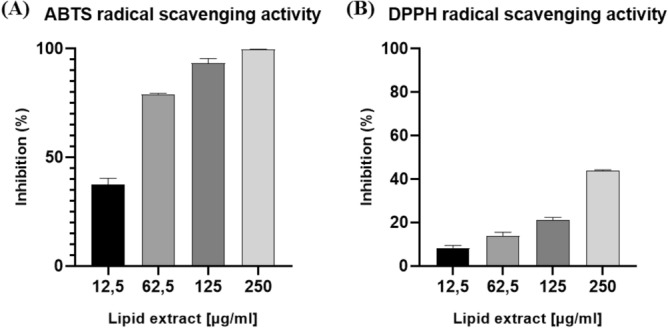
There is a growing trend to explore microalgae as an alternative resource for the food, feed, pharmaceutical, cosmetic and fuel industry. Moreover, the polar lipidome of microalgae is interesting because of the reports of bioactive polar lipids which could foster new applications for microalgae. In this work, we identified for the first time the Chlorococcum amblystomatis lipidome using hydrophilic interaction liquid chromatography-high resolution electrospray ionization- tandem mass spectrometry (HILIC-HR-ESI-MS/MS). The Chlorococcum amblystomatis strain had a lipid content of 20.77% and the fatty acid profile, determined by gas chromatography-mass spectrometry, has shown that this microalga contains high amounts of omega-3 polyunsaturated fatty acids (PUFAs). The lipidome identified included 245 molecular ions and 350 lipid species comprising 15 different classes of glycolipids (6), phospholipids (7) and betaine lipids (2). Of these, 157 lipid species and the main lipid species of each class were esterified with omega-3 PUFAs. The lipid extract has shown antioxidant activity and anti-inflammatory potential. Lipid extracts also had low values of atherogenic (0.54) and thrombogenic index (0.27). In conclusion, the lipid extracts of Chlorococcum amblystomatis have been found to be a source of lipids rich in omega-3 PUFAs for of great value for the food, feed, cosmetic, nutraceutical and pharmaceutical industries.
Overview
The claims and statistics of this paper haven’t been checked yet.
Free: it reads the open-access text and checks the first 5 claims that cite a source we can check. Create a free account to check every claim.
Integrity signals
Registry
Cites
Statistics
Figures
Verification
Claims the paper makes
The claims and statistics of this paper haven’t been checked yet.
Free: it reads the open-access text and checks the first 5 claims that cite a source we can check. Create a free account to check every claim.
Claims other papers make about this one
Each is checked against this paper’s own text: does it say what the citing paper says it does?
The source backs part of the claim, not all of it — or backs it for a different population, condition or comparison.
In the citing paper
“The FAs profiled for these different microalgae were consistent with what has been reported in previous studies for each alga, concerning FA, but with differences in the FA contents [31,51,52,53,54,55,56], namely the present work reports higher amounts of ω-3 FA.”
From Microalgae as Sustainable Bio-Factories of Healthy Lipids: Evaluating Fatty Acid Content and Antioxidant Activity (2021) · cites this paper as [31]
Experimental — accuracy not yet measuredThe check wasn’t confident either way, so it gives no verdict — never disputed.
In the citing paper
“Nevertheless, published work focused on the study of microalgae FA is scattered because different authors have used different extraction methods, FA derivatization techniques, and data acquisition [31,32,41,42,43].”
From Microalgae as Sustainable Bio-Factories of Healthy Lipids: Evaluating Fatty Acid Content and Antioxidant Activity (2021) · cites this paper as [31]
Experimental — accuracy not yet measuredIn the citing paper
“Nevertheless, individual studies on microalgae have highlighted and recognized the antioxidant potential of their healthy lipids [31,32,33], for example, FA from different microalgae from different phyla.”
From Microalgae as Sustainable Bio-Factories of Healthy Lipids: Evaluating Fatty Acid Content and Antioxidant Activity (2021) · cites this paper as [31]
Self-check
Percentages, sums and reported differences re-computed from the paper’s own numbers.
The self-check needs the paper’s full text.
Citations
Cites
A SIMPLE METHOD FOR THE ISOLATION AND PURIFICATION OF TOTAL LIPIDES FROM ANIMAL TISSUES
Folch, J., Lees, M., & Stanley, G. H. S. (1957) · Journal of Biological Chemistry · doi:10.1016/s0021-9258(18)64849-5 · Cited by 65,189
Microalgae for biodiesel production and other applications: A review
Mata, T. M., Martins, A. A., & Caetano, N. S. (2010) · Renewable and Sustainable Energy Reviews · doi:10.1016/j.rser.2009.07.020 · Cited by 5,685 · cited 1×
“(8) Relative quantification classes% = ∑”
Pluskal, T., Castillo, S., Villar-Briones, A., & Orešič, M. (2010) · BMC Bioinformatics · doi:10.1186/1471-2105-11-395 · Cited by 3,845
Prostaglandins and Inflammation
Ricciotti, E., & FitzGerald, G. A. (2011) · Arteriosclerosis, Thrombosis, and Vascular Biology · doi:10.1161/atvbaha.110.207449 · Cited by 3,803
Coronary heart disease: seven dietary factors
Ulbricht, T. L. V., & Southgate, D. A. T. (1991) · The Lancet · doi:10.1016/0140-6736(91)91846-m · Cited by 3,623
Valuable Products from Biotechnology of Microalgae
Pulz, O., & Gross, W. (2004) · Applied Microbiology and Biotechnology · doi:10.1007/s00253-004-1647-x · Cited by 2,132 · cited 1×
“(9) Relative quantification of ω−3/ω−6 polar lipids = ∑”
Khan, M. I., Shin, J. H., & Kim, J. D. (2018) · Microbial Cell Factories · doi:10.1186/s12934-018-0879-x · Cited by 2,082
Use of NeuroEyeCoach™ to Improve Eye Movement Efficacy in Patients with Homonymous Visual Field Loss
Sahraie, A., Smania, N., & Zihl, J. (2016) · BioMed Research International · doi:10.1155/2016/5186461 · Cited by 1,772
Natural Antioxidants in Foods and Medicinal Plants: Extraction, Assessment and Resources
Xu, D.-P., Li, Y., Meng, X., Zhou, T., Zhou, Y., Zheng, J., Zhang, J.-J., & Li, H.-B. (2017) · International Journal of Molecular Sciences · doi:10.3390/ijms18010096 · Cited by 1,252
Comparative Influences of Precipitation and River Stage on Groundwater Levels in Near-River Areas
Kim, I., Park, D., Kyung, D., Kim, G., Kim, S., & Lee, J. (2015) · Sustainability · doi:10.3390/su8010001 · Cited by 1,060
Research works printed but not linked: 1
- Antioxidant MS Applications I Res. Rev. J. Pharmacol. Toxicol. Stud. 2016 4 4 1 10
Cited by
Conde, T. A., Neves, B. F., Couto, D., Melo, T., Neves, B., Costa, M., Silva, J., Domingues, P., & Domingues, M. R. (2021) · Marine Drugs · doi:10.3390/md19070357 · Cited by 147
Self-citationApplications of lipidomics in marine organisms: progress, challenges and future perspectives
Rey, F., Melo, T., Lopes, D., Couto, D., Marques, F., & Domingues, M. R. (2022) · Molecular Omics · doi:10.1039/d2mo00012a · Cited by 74
Self-citationMicroalgal Lipid Extracts Have Potential to Modulate the Inflammatory Response: A Critical Review
Conde, T., Zabetakis, I., Τσούπρας, Α., Medina, I., Costa, M., Silva, J., Neves, B. M., Domingues, P. M., & Domingues, M. R. (2021) · International Journal of Molecular Sciences · doi:10.3390/ijms22189825 · Cited by 63
Self-citationPlant and algal lipidomes: Analysis, composition, and their societal significance
Jouhet, J., Alves, E., Boutté, Y., Darnet, S. H., Domergue, F., Durand, T., Fischer, P. J., Fouillen, L., Grūbe, M., Joubès, J., et al. (2024) · Progress in Lipid Research · doi:10.1016/j.plipres.2024.101290 · Cited by 57
Self-citationRegueiras, A., Huguet, Á., Conde, T., Couto, D., Domingues, P. M., Domingues, M. R., Costa, A. M., Silva, J., Vasconcelos, V. M., & Urbatzka, R. (2021) · Marine Drugs · doi:10.3390/md20010009 · Cited by 55
Self-citationAlgal Lipids as Modulators of Skin Disease: A Critical Review
Conde, T., Lopes, D., Łuczaj, W., Neves, B. M., Pinto, B., Maurício, T., Domingues, P. M., Skrzydlewska, E., & Domingues, M. R. (2022) · Metabolites · doi:10.3390/metabo12020096 · Cited by 51
Self-citationMelo, T., Figueiredo, A. R. P., da Costa, E. V., Couto, D., Silva, J., Domingues, M. R., & Domingues, P. M. (2021) · Marine Drugs · doi:10.3390/md19110593 · Cited by 38
Self-citationRusso, G. L., Langellotti, A. L., Verardo, V., Martín-García, B., Pierro, P. D., Sorrentino, A., Baselice, M., Oliviero, M., Sacchi, R., & Masi, P. (2021) · Marine Drugs · doi:10.3390/md20010039 · Cited by 36
Alpural, A., Dincoglu, B., & İmamoğlu, E. (2024) · Chemical Engineering and Processing - Process Intensification · doi:10.1016/j.cep.2024.110035 · Cited by 31
The chemodiversity of polar lipidomes of microalgae from different taxa
Couto, D., Conde, T., Melo, T., Neves, B., Costa, M., Silva, J., Domingues, R., & Domingues, P. M. (2023) · Algal Research · doi:10.1016/j.algal.2023.103006 · Cited by 29
Self-citationConde, T., Neves, B., Couto, D., Melo, T., Lopes, D., Pais, R., Batista, J., Cardoso, H., Silva, J. L., Domingues, P., et al. (2023) · Marine Drugs · doi:10.3390/md21120629 · Cited by 25
“The lipid composition of each fraction was con fi rmed via RP-HPLC-MS and MS/MS, and the polar lipids identi fi ed for each alga and each class were in accordance with the lipidome identi fi cation from these microalgae previously reported (Supplementary Table S1) [16–18].”
BackgroundMethodInfluentialSelf-citationJastrząb, A., Conde, T., Gęgotek, A., Domingues, M. R., Domingues, P. M., & Skrzydlewska, E. (2023) · International Journal of Molecular Sciences · doi:10.3390/ijms241411302 · Cited by 24
Self-citationRusso, G. L., Langellotti, A. L., Martín-García, B., Verardo, V., Romano, R., Sacchi, R., & Masi, P. (2023) · Sustainability · doi:10.3390/su15021147 · Cited by 21
Leitner, P. D., Jakschitz, T. A. E., Gstir, R., Stuppner, S. E., Perkams, S., Kruus, M., Trockenbacher, A., Griesbeck, C., Bonn, G. K., Huber, L. A., et al. (2022) · Cells · doi:10.3390/cells11091407 · Cited by 22
“Various polar lipids have previously been reported with biological activity, for example, some species of DGTS, SQDG, MGDG and DGDG [60].”
BackgroundMoreira, A. S. P., Gonçalves, J., Conde, T., Couto, D., Melo, T., Maia, I. B., Pereira, H., Silva, J., Domingues, M. R., & Nunes, C. (2022) · Algal Research · doi:10.1016/j.algal.2022.102756 · Cited by 20
Self-citationRusso, G. L., Langellotti, A. L., Verardo, V., Martín-García, B., Oliviero, M., Baselice, M., Pierro, P. D., Sorrentino, A., Viscardi, S., Marileo, L. G., et al. (2023) · Marine Drugs · doi:10.3390/md21030190 · Cited by 21
Biernacki, M., Conde, T., Jastrząb, A., Surażyński, A., Domingues, M. R., Domingues, P. M., & Skrzydlewska, E. (2023) · International Journal of Molecular Sciences · doi:10.3390/ijms241814323 · Cited by 18
Self-citationFan, H., Li, J., Wu, W., Chen, R., Yang, M., Zhang, Y., Cong, L., Dai, L., Deng, Y., Cheng, L., et al. (2022) · Systematic and Applied Microbiology · doi:10.1016/j.syapm.2022.126376 · Cited by 16
Cross-stress lipid response of Tetraselmis striata CTP4 to temperature and salinity variation
Conde, T., Aveiro, S. S., Melo, T., Santos, T., Neves, B. M., Domingues, P. M., Varela, J. C. S., Pereira, H., & Domingues, M. R. (2023) · Algal Research · doi:10.1016/j.algal.2023.103218 · Cited by 15
Self-citationProliferation of mammalian cells with Chlorococcum littorale algal compounds without serum support
Ghosh, J., Akiyama, Y., Haraguchi, Y., Yamanaka, K., Asahi, T., Nakao, Y., & Shimizu, T. (2023) · Biotechnology Progress · doi:10.1002/btpr.3402 · Cited by 13
“45 The nutrient analysis test was performed to understand the nutritional properties of the CW extract from C. littorale .”
MethodWang, X., Wang, Y., Zuo, L., Guo, S., Song, P., Kong, W., & Shen, B. (2024) · Biomass Conversion and Biorefinery · doi:10.1007/s13399-024-05510-8 · Cited by 14
Russo, G. L., Langellotti, A. L., Verardo, V., Martín-García, B., Oliviero, M., & Masi, P. (2024) · Biocatalysis and Agricultural Biotechnology · doi:10.1016/j.bcab.2024.103341 · Cited by 12
Conde, T., Lopes, D., Pais, R., Batista, J. N., Maurício, T., Rey, F., Melo, T., Domingues, P. M., & Domingues, R. (2024) · Algal Research · doi:10.1016/j.algal.2024.103764 · Cited by 13
Self-citationLipidomic analysis of moss species Bryum pseudotriquetrum and Physcomitrium patens under cold stress
Lu, Y., Eiríksson, F. F., Þorsteinsdóttir, M., & Simonsen, H. T. (2022) · Plant-Environment Interactions · doi:10.1002/pei3.10095 · Cited by 10
“…SL, sulfonolipid; SQDG, sulfoquinovosyldiacylglycerol; TG, triglyceride higher plants, and other bryophytes (Chen et al., 2013; Conde et al., 2021; Okazaki & Saito, 2018; Vu et al., 2014), and the change observed here (Figure 4) is not unusual, though some for plants unusual…”
BackgroundLu, Y., Eiríksson, F. F., Þorsteinsdóttir, M., Cronberg, N., & Simonsen, H. T. (2022) · Phytochemistry · doi:10.1016/j.phytochem.2022.113560 · Cited by 9
Algal lipids: structural diversity, analysis and applications
Lopes, D., Aveiro, S. S., Conde, T., Rey, F., Couto, D., Melo, T., Moreira, A. S. P., & Domingues, M. R. (2023) · Elsevier eBooks · doi:10.1016/b978-0-323-98819-3.00002-x · Cited by 11
Self-citationWood, P. L., Wood, M. D., & Kunigelis, S. C. (2022) · Life · doi:10.3390/life13122335 · Cited by 8
“There are also a number of betaine lipids that have been reported for bacteria, fungi, and microalgae [69,70].”
BackgroundJastrząb, A., Conde, T., Domingues, M. R., Domingues, P. M., Biernacki, M., & Skrzydlewska, E. (2024) · Antioxidants · doi:10.3390/antiox13030276 · Cited by 9
“However, C.a. has a stronger effect, significantly increasing the levels of both phospholipids and free EPA and DHA [26,27,30].”
BackgroundMethodInfluentialSelf-citationNonthermal high-pressure microalgae extracts: A new source of natural ingredients for cosmetics
Garcia, M. P., Regueiras, A., Lopes, G., Matos, G., da Silva, L. P., Cerqueira, M. T., Cardoso, H., Correia, N., Saraiva, J. A., Silva, J., et al. (2024) · Algal Research · doi:10.1016/j.algal.2024.103591 · Cited by 11
Self-citationTargeting of gallbladder megalin receptors with DHA-conjugated limonene albumin nanoparticles
Zou, Y., Zhou, Z., Yin, S., Huang, C., Tang, H., & Yin, Z. (2022) · Nanoscale · doi:10.1039/d1nr07767h · Cited by 8
Nutritional lipidomics for the characterization of lipids in food
Calderón, C., & Lämmerhofer, M. (2023) · Advances in food and nutrition research · doi:10.1016/bs.afnr.2022.12.002 · Cited by 6
Marine lipids: A review of sources, extraction methods, characterization, and food applications
John, R. M., Raj, A. L. T., Dinakarkumar, Y., Romauld, S. I., Arokiyaraj, S., Siddiqui, N., & Radhakrishnan, M. (2025) · Food and Humanity · doi:10.1016/j.foohum.2025.100945 · Cited by 5
Conde, T., Lopes, D., Pinho, M., Melo, T., Coelho, N., Rodrigues, A. M. C., Pereira, H., Domingues, P. M., & Domingues, R. (2025) · Journal of Applied Phycology · doi:10.1007/s10811-024-03420-w · Cited by 6
“…et al. 2020; Vicente et al. 2021), and lipid extracts from Chlorella vulgaris (86.5 ± 4.5% at 125 µg mL −1 ), Chlorococcus amblystomatis (~ 85% at 125 µg mL −1 ), and the cyanobacterium Gloeothece sp. (~ 40% at 100 µg.mL −1 ) (Da Costa et al. 2020; Conde et al. 2021a, b; Couto et al. 2021).”
InfluentialSelf-citationConde, T., Couto, D., Melo, T., Moreira, A. S. P., Ferreira, P., Costa, M., Silva, J., Neves, B. M., Domingues, P. M., & Domingues, M. R. (2022) · Journal of Applied Phycology · doi:10.1007/s10811-022-02820-0 · Cited by 5
Self-citationde Oliveira, F. L., Conde, T., Pinho, M., Melo, T., Hentschke, G. S., Urbatzka, R., Pereira, H., Costa, M. M., Vasconcelos, V. M., & Domingues, M. R. (2025) · Molecules · doi:10.3390/molecules30122504 · Cited by 5
“Polar lipids, in particular, are considered not only excellent transporters of essential FAs, thus having great nutritional value [35,36,81], but also an excellent source of bioactive compounds with health-promoting properties [26,35].”
InfluentialSelf-citationAtalay, S., Gęgotek, A., Domingues, P. M., Domingues, M. R., & Skrzydlewska, E. (2024) · Marine Drugs · doi:10.3390/md22110509 · Cited by 4
“…lipid extract, the ability to increase the scavenging of free radicals (exhibited by 1,1-diphenyl-2-picrylhydrazyl (DPPH) and 2,2 ′ -azino-bis-3-ethylbenzthiazoline-6- sulphonic acid (ABTS) radical scavenging assays) as well as the inhibition of human COX-2 have also been demonstrated [22].”
InfluentialSelf-citationPotato starch production side stream is a suitable medium for microalgae cultivation
Šupraha, L., Costa, M., Dale, T., Kahala, M. M., Joutsjoki, V. V., Pihlanto, A., Wood, E., & Li, Y. (2025) · Algal Research · doi:10.1016/j.algal.2025.104328 · Cited by 6
Self-citationKaraś, M. A., Turska-Szewczuk, A., Komaniecka, I., & Łotocka, B. (2023) · Pathogens · doi:10.3390/pathogens12030411 · Cited by 3
“The existence of oxidized subclass of DGTS among polar lipids was confirmed for microalgae Chlorococcum amblystomatis [27].”
BackgroundAtalay, S., Gęgotek, A., Domingues, M. R., Domingues, P. M., & Skrzydlewska, E. (2025) · Antioxidants · doi:10.3390/antiox14050545 · Cited by 3
Self-citationAlgal lipids, lipidomics, and biosurfactants
Reddy, M. M. S., Tiwari, S., & Chauhan, V. S. (2023) · Elsevier eBooks · doi:10.1016/b978-0-443-18816-9.00019-8 · Cited by 4
Gęgotek, A., Conde, T., Domingues, M. R., Domingues, P. M., & Skrzydlewska, E. (2024) · Cells · doi:10.3390/cells13231934 · Cited by 3
“Their metabolic products are known for their antioxidant, anti-inflammatory, anti-obesity, anti-tumour, and anti-microbial/viral properties [68].”
Self-citationFerreira, D., de Alkimin, G. D., Neves, B., Conde, T., Domingues, M. R., & Nunes, B. (2022) · The Science of The Total Environment · doi:10.1016/j.scitotenv.2022.154677 · Cited by 4
Self-citationLee, Y. M., Kwak, Y., Lee, Y. B., Seo, E. Y., & Lee, J. H. (2024) · ALGAE · doi:10.4490/algae.2024.39.8.23 · Cited by 3
“…Chlorella is a well-known rich source of metabolites, including dietary fiber, vitamins, carbohydrates, lipids, chlorophylls, and proteins, with a variety of health benefits (Ando et al. 2004, Kotrbá č ek et al. 2015, Pantami et al. 2020, Conde et al. 2021, Kim et al. 2022, Ferdous et al. 2023).”
BackgroundAntioxidant potential of microalgae
Pintea, A., & Rugin, D. A. (2025) · Elsevier eBooks · doi:10.1016/b978-0-443-22080-7.00038-7 · Cited by 2
Exploring the nutritional potential of soil green microalgae for food security applications
Jiji, M. G., THOMAS, V. P., & Thomas, B. T. (2025) · European Journal of Phycology · doi:10.1080/09670262.2025.2568137 · Cited by 2
Neves, B. B., Pinto, S., Batista, J. N., Maurício, T., Bonciarelli, S., Goracci, L., Neves, B. M., Domingues, P. M., Domingues, M. R., & Melo, T. (2026) · European Food Research and Technology · doi:10.1007/s00217-025-04947-z · Cited by 1
Self-citationBeta-ray measurements and units.
Blau, M., & SMITH, J. E. (1948) · PubMed · Cited by 2
Lee, Y. M., Kwak, Y., Lee, Y., Seo, E. Y., & Lee, J. H. (2023) · SSRN Electronic Journal · doi:10.2139/ssrn.4474292
Microalgae as a neuroprotective agent: potential and applications
Fagundes, M. B., & Solidade, L. S. (2025) · Elsevier eBooks · doi:10.1016/b978-0-443-22080-7.00039-9
Antiinflammatory molecules in microalgae
Zubía, E., Ortega, M. J., & Reyes, C. D. L. (2025) · Elsevier eBooks · doi:10.1016/b978-0-443-22080-7.00043-0
Bioactivity and Chemical Profiling of the Sea-Ice Microalga Microglena antarctica (Chlorophyceae)
Trentin, R., Moschin, E., Custódio, L. M. B., & Moro, I. (2025) · Biomolecules · doi:10.3390/biom15121658
Biolipid production from sewage-cultivated microalgal-bacterial sludge
Zhang, X., Zhang, T., Ji, B., & Liu, Y. (2026) · Elsevier eBooks · doi:10.1016/b978-0-443-29127-2.00001-8
Microalgae and cyanobacteria-based processes and products: where are we going?
Aguilar-Magallanes, H. N., Cabello-Galindo, A., Machado-Cepeda, S., Cid-Ibarra, G. P., Mendoza-Nerio, A., Barboza-Rodríguez, R., Rosales-Aguado, M. L., Sampaio, I. C. F., Rodríguez‐Jasso, R. M., & Ruíz, H. A. (2026) · Elsevier eBooks · doi:10.1016/b978-0-443-34082-6.00058-1
Adaptation to free-living drives loss of beneficial endosymbiosis through metabolic trade-offsPreprint
Hansson, E. M., Vitonytė, I., Leonard, G., Smith, R., Malumphy-Montesdeoca, D., Savory, F. R., Barran, P. E., Dunning, L. T., Slate, J., Richards, T. A., et al. (2026) · bioRxiv (Cold Spring Harbor Laboratory) · doi:10.64898/2026.04.16.718893
Correia, N., Machado, M., Ferreira, A., Simões, B., Ferreira, S., Metzner, B., Nunes, C., Pais, R., Conde, T., Lopes, D., et al. (2026) · Research Square · doi:10.21203/rs.3.rs-9794362/v1
Self-citationLbouhmadi, R., Attaoui, H., & Mir, Y. (2026) · Next research. · doi:10.1016/j.nexres.2026.101985 · Cited by 1
Correia, N., Trovão, M., Santo, G. E., Guerra, I., Cunha, P., Fonseca, J., Pereira, H., Costa, M. M., Ferreira, S., Santos, T., et al. (2026) · Journal of Applied Phycology · doi:10.1007/s10811-026-03969-8
Self-citationCorreia, N., Machado, M., Alice, F., Gama, F., Vieira, J., Pereira, H., Cardoso, H., Silva, J. L., Gouveia, L., & Varela, J. C. S. (2026) · Journal of Applied Phycology · doi:10.1007/s10811-026-04023-3
Self-citation
Metadata
- Authors
- Conde, T. A., Couto, D., Melo, T., Costa, M., Silva, J., Domingues, M. R., & Domingues, P.
- Affiliations
- LAQV Requimte (PT)
- Centro de Estudos do Ambiente e do Mar (PT)
- Corresponding author
- Domingues, Pedro
- ORCID
- Venue
- Scientific Reports
- Published
- 2021-02-23
- Volume
- 11
- Issue
- 1
- Pages
- 4355-4355
- ISSN
- 2045-2322 (ISSN-L)
- PMC
- PMC7902829
- OpenAlex
- W3132058271
- Cited by
- 58
- References
- 113
- Citations by year
- 2026: 8 · 2025: 10 · 2024: 10 · 2023: 14 · 2022: 10 · 2021: 5
- FWCI
- 1.83
- Type
- journal article
- Language
- en
- Open access
- gold
- doi.org
- Licence
- cc-by
- creativecommons.org/licenses/by/4.0 (tdm)
- creativecommons.org/licenses/by/4.0 (vor)
- Locations
- Scientific Reports (publishedVersion, cc-by)
- PubMed Central (publishedVersion, cc-by)
- PubMed (publishedVersion)
- DOAJ (DOAJ: Directory of Open Access Journals) (submittedVersion, cc-by-sa)
- Funders
- Portugal 2020 program (POCI-01-0247-FEDER-035234, LISBOA-01-0247-FEDER-035234, ALG-01-0247-FEDER-035234)
- Topics
- Physical Sciences › Energy › Renewable Energy, Sustainability and the Environment › Algal biology and biofuel production
- Life Sciences › Agricultural and Biological Sciences › Aquatic Science › Seaweed-derived Bioactive Compounds
- Health Sciences › Nursing › Nutrition and Dietetics › Fatty Acid Research and Health
- Keywords
- microalgae, omega-3 polyunsaturated fatty acids, glycolipids, phospholipids, betaine lipids, antioxidant activity, anti-inflammatory activity, atherogenic index, thrombogenic index, nutraceuticals
- MeSH terms
- Lipidomics, Chlorophyta, Glycolipids, Phospholipids, Fatty Acids, Omega-3
About these checks
Registry, retraction, Cites and statistics results are computed, not judged, with one exception: a printed reference that no index lists is read once by a model before it counts as a citation error. Claims are extracted by a model and kept only when their quote appears verbatim in the text; each cited source is then checked, with a model’s help, for whether it says what the claim relies on. Those verdicts can be wrong — read the claim’s quote and the cited source before relying on one.
Statistics and arithmetic are recomputed, not judged.
Confidence bands are shown only for fields calibrated on our annotated test set. None is calibrated yet, so no band is shown.
What counts as a claim ›How we measure confidence ›How we check this ›
Are you an author, or do you see a problem with this page? Request a review
Data sources
Bibliographic data: Semantic Scholar, OpenAlex, Crossref.
Contains information from the Semantic Scholar Academic Graph Datasets, made available under the ODC Attribution License (ODC-BY 1.0).
Semantic Scholar’s data is described in: Kinney, R., et al. (2023). The Semantic Scholar Open Data Platform. arXiv:2301.10140.
