

Long-term cancer survival prediction using multimodal deep learning
Open accessPublished version of a preprint
The DOI matches its Crossref record; 59 of the 60 references it cites were found in a registry or an index.
Abstract
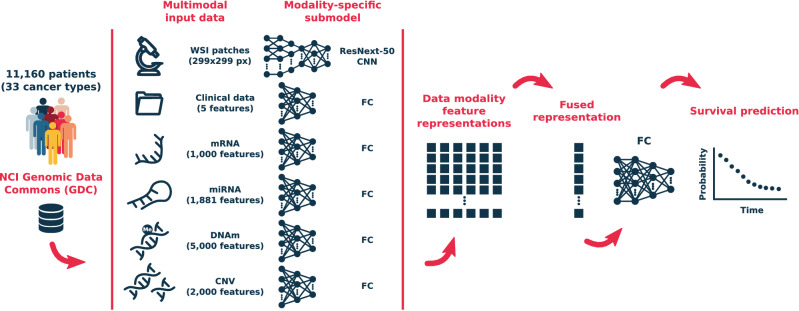
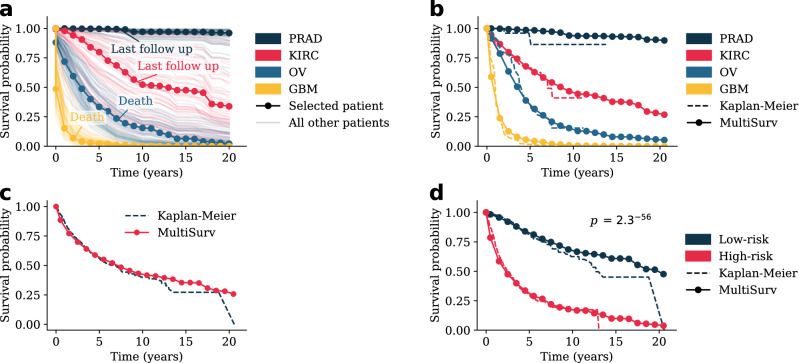
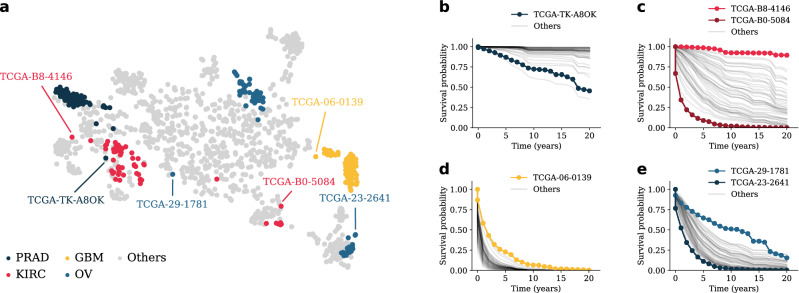
The age of precision medicine demands powerful computational techniques to handle high-dimensional patient data. We present MultiSurv, a multimodal deep learning method for long-term pan-cancer survival prediction. MultiSurv uses dedicated submodels to establish feature representations of clinical, imaging, and different high-dimensional omics data modalities. A data fusion layer aggregates the multimodal representations, and a prediction submodel generates conditional survival probabilities for follow-up time intervals spanning several decades. MultiSurv is the first non-linear and non-proportional survival prediction method that leverages multimodal data. In addition, MultiSurv can handle missing data, including single values and complete data modalities. MultiSurv was applied to data from 33 different cancer types and yields accurate pan-cancer patient survival curves. A quantitative comparison with previous methods showed that Multisurv achieves the best results according to different time-dependent metrics. We also generated visualizations of the learned multimodal representation of MultiSurv, which revealed insights on cancer characteristics and heterogeneity.
Overview
The claims and statistics of this paper haven’t been checked yet.
Free: it reads the open-access text and checks the first 5 claims that cite a source we can check. Create a free account to check every claim.
Integrity signals
Registry
Cites
Statistics
Figures
Verification
Claims the paper makes
The claims and statistics of this paper haven’t been checked yet.
Free: it reads the open-access text and checks the first 5 claims that cite a source we can check. Create a free account to check every claim.
Claims other papers make about this one
Each is checked against this paper’s own text: does it say what the citing paper says it does?
The source backs part of the claim, not all of it — or backs it for a different population, condition or comparison.
In the citing paper
“Vale-Silva et al. [74] compared these methods, although they did not find large differences in performance for predicting long-term cancer survival.”
From Multimodal deep learning for biomedical data fusion: a review (2022) · cites this paper as [74]
Experimental — accuracy not yet measuredThe source backs part of the claim, not all of it — or backs it for a different population, condition or comparison.
In the citing paper
“Lastly, Vale-Silva and Rohr (2021) presented a multimodal deep learning method for longterm pan-cancer survival prediction that was applied to data from 33 different cancer types, the highest number of organs of the category.”
From Navigating the landscape of multimodal AI in medicine: A scoping review on technical challenges and clinical applications (2025) · cites this paper as Vale-Silva and Rohr, 2021
Experimental — accuracy not yet measuredThe check wasn’t confident either way, so it gives no verdict — never disputed.
In the citing paper
“In addition to element-wise aggregation, attention-based fusion methods can be applied in order to weight different latent features by their importance [74, 79, 81].”
From Multimodal deep learning for biomedical data fusion: a review (2022) · cites this paper as [74]
Experimental — accuracy not yet measured
Self-check
Percentages, sums and reported differences re-computed from the paper’s own numbers.
The self-check needs the paper’s full text.
Citations
Cites
Adam: A Method for Stochastic Optimization
Kingma, D. P., & Ba, J. (2014) · arXiv · doi:10.48550/arxiv.1412.6980 · Cited by 98,946
LeCun, Y., Bengio, Y., & Hinton, G. (2015) · Nature · doi:10.1038/nature14539 · Cited by 84,126
Bray, F., Ferlay, J., Soerjomataram, I., Siegel, R. L., Torre, L. A., & Jemal, A. (2018) · CA: A Cancer Journal for Clinicians · doi:10.3322/caac.21492 · Cited by 84,109
Scikit-learn: Machine Learning in Python
Pedregosa, F., Varoquaux, G., Gramfort, A., Michel, V., Thirion, B., Grisel, O., Blondel, M., Müller, A., Nothman, J., Louppe, G., et al. (2012) · arXiv · doi:10.48550/arxiv.1201.0490 · Cited by 71,016
Regression Models and Life-Tables
Cox, D. R. (1972) · Journal of the Royal Statistical Society Series B: Statistical Methodology · doi:10.1111/j.2517-6161.1972.tb00899.x · Cited by 39,793
ImageNet Large Scale Visual Recognition Challenge
Russakovsky, O., Deng, J., Su, H., Krause, J., Satheesh, S., Ma, S., Huang, Z., Karpathy, A., Khosla, A., Bernstein, M., et al. (2015) · International Journal of Computer Vision · doi:10.1007/s11263-015-0816-y · Cited by 39,380
SciPy 1.0: fundamental algorithms for scientific computing in Python
Virtanen, P., Gommers, R., Oliphant, T. E., Haberland, M., Reddy, T., Cournapeau, D., Burovski, E., Peterson, P., Weckesser, W., Bright, J., et al. (2020) · Nature Methods · doi:10.1038/s41592-019-0686-2 · Cited by 38,430
(2008) · Journal of Machine Learning Research · Cited by 33,051
PyTorch: An Imperative Style, High-Performance Deep Learning Library
Paszke, A., Gross, S., Massa, F., Lerer, A., Bradbury, J., Chanan, G., Killeen, T., Lin, Z., Gimelshein, N., Antiga, L., et al. (2019) · arXiv · doi:10.48550/arxiv.1912.01703 · Cited by 31,473
Regression Models and Life-Tables
Cox, D. R. (1992) · Springer Series in Statistics · doi:10.1007/978-1-4612-4380-9_37 · Cited by 26,297
Research works printed but not linked: 1
- Oliphant TE A Guide to NumPy 2006 Trelgol Publishing
Cited by
Artificial intelligence for multimodal data integration in oncology
Lipkova, J., Chen, R. J., Chen, B., Lu, M. Y., Barbieri, M., Shao, D., Vaidya, A. J., Chen, C., Zhuang, L., Williamson, D. F. K., et al. (2022) · Cancer Cell · doi:10.1016/j.ccell.2022.09.012 · Cited by 777
Multimodal deep learning for biomedical data fusion: a review
Stahlschmidt, S. R., Ulfenborg, B., & Synnergren, J. (2022) · Briefings in Bioinformatics · doi:10.1093/bib/bbab569 · Cited by 766
Pan-cancer integrative histology-genomic analysis via multimodal deep learning
Chen, R. J., Lu, M. Y., Williamson, D. F. K., Chen, T. Y., Lipkova, J., Noor, Z., Shaban, M., Shady, M., Williams, M., Joo, B., et al. (2022) · Cancer Cell · doi:10.1016/j.ccell.2022.07.004 · Cited by 660
Shaik, T., Tao, X., Li, L., Xie, H., & Velásquez, J. D. (2024) · Information Fusion · doi:10.1016/j.inffus.2023.102040 · Cited by 196
Shaban, A., & Yousefi, S. (2024) · Springer Optimization and Its Applications · doi:10.1007/978-3-031-53092-0_10 · Cited by 189
Deep learning for survival analysis: a review
Wiegrebe, S., Kopper, P., Sonabend, R., Bischl, B., & Bender, A. (2024) · Artificial Intelligence Review · doi:10.1007/s10462-023-10681-3 · Cited by 175
“Another four methods — CNN-Survival [72], MultiSurv [73], SurvCNN [74], and Tho2022 [75] — use the same loss and parametrization as Nnet-survival .”
Jaume, G., Vaidya, A., Chen, R. J., Williamson, D. F. K., Liang, P. P., & Mahmood, F. (2024) · 2024 IEEE/CVF Conference on Computer Vision and Pattern Recognition (CVPR) · doi:10.1109/cvpr52733.2024.01100 · Cited by 150
Cross-Modal Translation and Alignment for Survival Analysis
Zhou, F., & Chen, H. (2023) · IEEE/CVF International Conference on Computer Vision (ICCV) · doi:10.1109/iccv51070.2023.01964 · Cited by 209
“Traditional survival analysis relies on single-modal clinical data, such as short-term clinical indicators [15, 18, 20, 44], long-term follow-up reports [1, 4, 35], various radiological images [14, 32, 28, 36] and gigapixel pathological images [46, 40, 42, 7, 30].”
BackgroundSchouten, D., Nicoletti, G., Dille, B., Chia, C., Vendittelli, P., Schuurmans, M., Litjens, G., & Khalili, N. (2025) · Medical Image Analysis · doi:10.1016/j.media.2025.103621 · Cited by 162
Machine and Deep Learning for Tuberculosis Detection on Chest X-Rays: Systematic Literature Review
Hansun, S., Argha, A., Liaw, S., Celler, B. G., & Marks, G. B. (2023) · Journal of Medical Internet Research · doi:10.2196/43154 · Cited by 158
CustOmics: A versatile deep-learning based strategy for multi-omics integration
Benkirane, H., Pradat, Y., Michiels, S., & Cournède, P.-H. (2023) · PLoS Computational Biology · doi:10.1371/journal.pcbi.1010921 · Cited by 125
A Comprehensive Review on Deep Learning-Based Data Fusion
Hussain, M., O’Nils, M., Lundgren, J., & Mousavirad, S. J. (2024) · IEEE Access · doi:10.1109/access.2024.3508271 · Cited by 142
Jiang, L., Xu, C., Bai, Y., Liu, A., Gong, Y., Wang, Y., & Deng, H. (2024) · npj Precision Oncology · doi:10.1038/s41698-023-00494-6 · Cited by 106
Artificial Intelligence Advancements in Oncology: A Review of Current Trends and Future Directions
Huhulea, E. N., Huang, L., Eng, S., Sumawi, B., Huang, A., Aifuwa, E., Hirani, R., Tiwari, R. K., & Etienne, M. (2025) · Biomedicines · doi:10.3390/biomedicines13040951 · Cited by 74
“Genomics information has also been used in tandem with histology for improved survival prediction in multiple types of cancer [36].”
Hou, W., Lin, C., Yu, L., Qin, J., Yu, R., & Wang, L. (2023) · IEEE Transactions on Medical Imaging · doi:10.1109/tmi.2023.3253760 · Cited by 74
Keyl, J., Keyl, P., Montavon, G., Hosch, R., Brehmer, A., Mochmann, L. H., Jurmeister, P. S., Dernbach, G., Kim, M., Koitka, S., et al. (2025) · Nature Cancer · doi:10.1038/s43018-024-00891-1 · Cited by 100
“Previous studies have started to show the potential of utilizing multimodal data to predict individual patient prognosis using public databases 7,8,18 .”
Combining Molecular, Imaging, and Clinical Data Analysis for Predicting Cancer Prognosis
Lobato-Delgado, B., Priego, B., & Morillo, D. (2022) · Cancers · doi:10.3390/cancers14133215 · Cited by 79
Multimodality Fusion Aspects of Medical Diagnosis: A Comprehensive Review
Kumar, S., Rani, S., Sharma, S., & Min, H. (2024) · Bioengineering · doi:10.3390/bioengineering11121233 · Cited by 101
Predicting lung cancer survival based on clinical data using machine learning: A review
Altuhaifa, F. A., Win, K. T., & Su, G. (2023) · Computers in Biology and Medicine · doi:10.1016/j.compbiomed.2023.107338 · Cited by 69
Deep Learning-Based Multi-Modal Ensemble Classification Approach for Human Breast Cancer Prognosis
Jadoon, E. K., Khan, F. G., Shah, S., Khan, A., & ElAffendi, M. (2023) · IEEE Access · doi:10.1109/access.2023.3304242 · Cited by 67
Publicly available datasets of breast histopathology H&E whole-slide images: A scoping review
Tafavvoghi, M., Bongo, L. A., Shvetsov, N., Busund, L., & Møllersen, K. (2024) · Journal of Pathology Informatics · doi:10.1016/j.jpi.2024.100363 · Cited by 70
Fan, L., Sowmya, A., Meijering, E. H. W., & Song, Y. (2022) · IEEE Transactions on Medical Imaging · doi:10.1109/tmi.2022.3228275 · Cited by 67
Deep-learning-enabled multimodal data fusion for lung disease classification
Kumar, S., Ivanova, O., Melyokhin, A., & Tiwari, P. (2023) · Informatics in Medicine Unlocked · doi:10.1016/j.imu.2023.101367 · Cited by 52
Multi-omics based artificial intelligence for cancer research
Li, L., Sun, M., Wang, J., & Wan, S. (2024) · Advances in cancer research · doi:10.1016/bs.acr.2024.06.005 · Cited by 58
Artificial intelligence and machine learning in cell-free-DNA-based diagnostics
Tsui, W., Ding, S. C., Jiang, P., & Lo, Y. M. D. (2025) · Genome Research · doi:10.1101/gr.278413.123 · Cited by 57
Multimodal Deep Learning-Based Prognostication in Glioma Patients: A Systematic Review
Alleman, K., Knecht, E. M., Huang, J., Zhang, L., Lam, S. K., & DeCuypere, M. G. (2023) · Cancers · doi:10.3390/cancers15020545 · Cited by 55
Automatic Segmentation with Deep Learning in Radiotherapy
Isaksson, L. J., Summers, P. E., Mastroleo, F., Marvaso, G., Corrao, G., Vincini, M. G., Zaffaroni, M., Ceci, F., Petralia, G., Orecchia, R., et al. (2023) · Cancers · doi:10.3390/cancers15174389 · Cited by 55
Shao, Z., Chen, Y., Bian, H., Zhang, J., Liu, G., & Zhang, Y. (2023) · Proceedings of the AAAI Conference on Artificial Intelligence · doi:10.1609/aaai.v37i2.25315 · Cited by 63
Vollmer, A., Hartmann, S., Vollmer, M., Shavlokhova, V., Brands, R. C., Kübler, A. C., Wollborn, J., Hassel, F., Couillard‐Després, S., Lang, G. M., et al. (2024) · Scientific Reports · doi:10.1038/s41598-024-56172-5 · Cited by 52
“This approach, relatively unexplored in OSCC, has shown potential in other cancer types for improving survival prediction accuracy 9,12 .”
A machine learning approach for multimodal data fusion for survival prediction in cancer patients
Νικολάου, Ν., Salazar, D., RaviPrakash, H., Gonçalves, M., Mulla, R., Burlutskiy, N., Markuzon, N., & Jacob, E. (2025) · npj Precision Oncology · doi:10.1038/s41698-025-00917-6 · Cited by 65
TMSS: An End-to-End Transformer-Based Multimodal Network for Segmentation and Survival Prediction
Saeed, N., Sobirov, I., Majzoub, R. A., & Yaqub, M. K. (2022) · Lecture notes in computer science · doi:10.1007/978-3-031-16449-1_31 · Cited by 55
Gomaa, A., Huang, Y., Hagag, A., Schmitter, C., Höfler, D., Weißmann, T., Breininger, K., Schmidt, M. A., Stritzelberger, J., Delev, D., et al. (2024) · Neuro-Oncology Advances · doi:10.1093/noajnl/vdae122 · Cited by 60
Li, L. Y., Isaksen, A. A., Lebiecka-Johansen, B., Funck, K. L., Thambawita, V. L., Byberg, S., Andersen, T. H., Nørgaard, O., & Hulmán, Á. (2024) · European Heart Journal - Digital Health · doi:10.1093/ehjdh/ztae068 · Cited by 49
“61,62 However, none of the identified studies applied such a time-to-event framework.”
Multi-transSP: Multimodal Transformer for Survival Prediction of Nasopharyngeal Carcinoma Patients
Zheng, H., Lin, Z., Zhou, Q., Peng, X., Xiao, J., Zu, C., Jiao, Z., & Wang, Y. (2022) · Lecture notes in computer science · doi:10.1007/978-3-031-16449-1_23 · Cited by 51
Nakhli, R., Moghadam, P. A., Mi, H., Farahani, H., Baras, A. S., Gilks, C. B., & Bashashati, A. (2023) · IEEE Computer Society Conference on Computer Vision and Pattern Recognition/Proceedings - IEEE Computer Society Conference on Computer Vision and Pattern Recognition/Proceedings · doi:10.1109/cvpr52729.2023.01111 · Cited by 53
Multimodal deep learning improves recurrence risk prediction in pediatric low-grade gliomas
Mahootiha, M., Tak, D., Ye, Z., Zapaishchykova, A., Likitlersuang, J., Pardo, J. C., Boyd, A., Vajapeyam, S., Chopra, R., Prabhu, S. P., et al. (2024) · Neuro-Oncology · doi:10.1093/neuonc/noae173 · Cited by 43
Wu, Y., Chen, J., Hu, L., Xu, H., Liang, H., & Wu, J. (2024) · Information Fusion · doi:10.1016/j.inffus.2024.102890 · Cited by 50
Yao, I. Z., Dong, M., & Hwang, W. Y. K. (2025) · Mayo Clinic Proceedings Digital Health · doi:10.1016/j.mcpdig.2025.100253 · Cited by 63
“113 Molecular data present complexities and pose challenges to cancer detection, especially in multiomics, with major challenges including the presence of high-dimensional data, gene redundancy, and the fact that different omics types behave differently.”
DeepASD: a deep adversarial-regularized graph learning method for ASD diagnosis with multimodal data
Chen, W., Yang, J., Sun, Z., Zhang, X., Tao, G., Ding, Y., Gu, J., Bu, J., & Wang, H. (2024) · Translational Psychiatry · doi:10.1038/s41398-024-02972-2 · Cited by 39
Transformer enabled multi-modal medical diagnosis for tuberculosis classification
Kumar, S., Sharma, S., & Megra, K. T. (2025) · Journal Of Big Data · doi:10.1186/s40537-024-01054-w · Cited by 39
“Additionally, Valc-Silva and Rohr [13] developed a multimodal approach they named MultiSurv, targeting the diagnosis of 33 types of cancers.”
Caruso, C. M., Guarrasi, V., Cordelli, E., Sicilia, R., Gentile, S., Messina, L., Fiore, M., Piccolo, C., Beomonte Zobel, B., Iannello, G., et al. (2022) · Journal of Imaging · doi:10.3390/jimaging8110298 · Cited by 31
Li, L. K., Pan, H., Liang, Y., Shao, M., Xie, S., Lu, S., & Liao, S. (2024) · Knowledge-Based Systems · doi:10.1016/j.knosys.2024.111502 · Cited by 33
Mondol, R. K., Millar, E. K. A., Sowmya, A., & Meijering, E. (2024) · IEEE Journal of Biomedical and Health Informatics · doi:10.1109/jbhi.2024.3418341 · Cited by 29
“A common critical clinical dilemma is the selection of those early ER + breast cancer patients at high risk of recurrence who may benefit from the addition of chemotherapy to endocrine therapy.”
Turkestani, N. N. A., Li, T., Bianchi, J., Gurgel, M., Prieto, J. C., Shah, H., Benavides, E., Soki, F. N., Mishina, Y. M., Fontana, M., et al. (2024) · Proceedings of the National Academy of Sciences · doi:10.1073/pnas.2306132121 · Cited by 37
Milewski, D., Jung, H. M., Brown, G. T., Liu, Y., Somerville, B. J., Lisle, C. R., Ladanyi, M., Rudzinski, E. R., Choo‐Wosoba, H., Barkauskas, D. A., et al. (2022) · Clinical Cancer Research · doi:10.1158/1078-0432.ccr-22-1663 · Cited by 33
“Other machine learning studies use multimodal approaches and incorporate clinical information, known molecular characteristics, and/or other imaging modalities into their predictive models (43 – 46).”
Multimodal analysis methods in predictive biomedicine
Qoku, A., Katsaouni, N., Flinner, N., Buettner, F., & Schulz, M. H. (2023) · Computational and Structural Biotechnology Journal · doi:10.1016/j.csbj.2023.11.011 · Cited by 29
Systematic comparison of multi-omics survival models reveals a widespread lack of noise resistance
Wissel, D., Rowson, D., & Boeva, V. (2023) · Cell Reports Methods · doi:10.1016/j.crmeth.2023.100461 · Cited by 35
Lee, M. (2022) · Biology · doi:10.3390/biology11040586 · Cited by 26
Artificial intelligence based personalized predictive survival among colorectal cancer patients
Susič, D., Syed-Abdul, S., Dovgan, E., Jonnagaddala, J., & Gradišek, A. (2023) · Computer Methods and Programs in Biomedicine · doi:10.1016/j.cmpb.2023.107435 · Cited by 30
Pathogenomics for accurate diagnosis, treatment, prognosis of oncology: a cutting edge overview
Feng, X., Shu, W., Li, M., Li, J., Xu, J., & He, M. (2024) · Journal of Translational Medicine · doi:10.1186/s12967-024-04915-3 · Cited by 36
Woźniacki, A., Książek, W., & Mrowczyk, P. (2024) · Cancers · doi:10.3390/cancers16183205 · Cited by 29
“Advanced machine learning techniques address this challenge by analyzing complex relationships between variables, enabling more accurate life expectancy predictions [15].”
BackgroundBotros, J., Mourad-Chehade, F., & Laplanche, D. (2024) · Biomedical Signal Processing and Control · doi:10.1016/j.bspc.2024.106997 · Cited by 27
CoxNAM: An interpretable deep survival analysis model
Xu, L., & Guo, C. (2023) · Expert Systems with Applications · doi:10.1016/j.eswa.2023.120218 · Cited by 24
Autoencoder-based multimodal prediction of non-small cell lung cancer survival
Ellen, J., Jacob, E., Νικολάου, Ν., & Markuzon, N. (2023) · Scientific Reports · doi:10.1038/s41598-023-42365-x · Cited by 32
Hou, J., Jia, X., Xie, Y., & Qin, W. (2022) · Genes · doi:10.3390/genes13101770 · Cited by 26
Volinsky-Fremond, S., Koelzer, V. H., Horeweg, N., & Bosse, T. (2022) · Frontiers in Oncology · doi:10.3389/fonc.2022.928977 · Cited by 27
Li, Y., Herold, T., Mansmann, U., & Hornung, R. (2024) · BMC Medical Informatics and Decision Making · doi:10.1186/s12911-024-02642-9 · Cited by 27
“They have almost exclusively either considered very few [2, 3, 15] or a limited number of block combinations [13, 14, 16].”
InfluentialMultimodal integration strategies for clinical application in oncology
Zhang, B., Wan, Z., Luo, Y., Zhao, X., Samayoa, J., Zhao, W., & Wu, S. (2025) · Frontiers in Pharmacology · doi:10.3389/fphar.2025.1609079 · Cited by 30
GAN-Based Data Augmentation for Prediction Improvement Using Gene Expression Data in Cancer
Moreno-Barea, F. J., Jerez, J. M., & Franco, L. (2022) · Lecture notes in computer science · doi:10.1007/978-3-031-08757-8_3 · Cited by 21
Yan, R., Zhang, X., Jiang, Z.-H., Wang, B.-Z., Bian, X., Ren, F., & Zhou, S. (2025) · IEEE Transactions on Pattern Analysis and Machine Intelligence · doi:10.1109/tpami.2025.3611531 · Cited by 26
Kanwal, S., Khan, F. A., & Alamri, S. (2022) · Journal of King Saud University - Computer and Information Sciences · doi:10.1016/j.jksuci.2022.03.011 · Cited by 23
CrossAttOmics: multiomics data integration with cross-attention
Beaude, A., Augé, F., Zehraoui, F., & Hanczar, B. (2025) · Bioinformatics · doi:10.1093/bioinformatics/btaf302 · Cited by 25
“MLP have also been combined with an intermediate fusion approach (Sharifi-Noghabi et al. 2019, Vale-Silva and Rohr 2021).”
TIP: Tabular-Image Pre-training for Multimodal Classification with Incomplete Data
Du, S., Zheng, S., Wang, Y., Bai, W., O’Regan, D. P., & Qin, C. (2024) · Lecture notes in computer science · doi:10.1007/978-3-031-72633-0_27 · Cited by 59
Choi, S. R., & Lee, M. (2022) · Biology · doi:10.3390/biology11101462 · Cited by 17
Fang, C., Arango-Argoty, G., Kagiampakis, I., Khalid, M. H., Jacob, E., Bulusu, K. C., & Markuzon, N. (2024) · Journal of Translational Medicine · doi:10.1186/s12967-024-05509-9 · Cited by 21
“Improving patient-level survival prediction involves combining multiple modalities, [1, 2] incorporating nonlinear models, [2, 3] or performing individual biomarker hypothesis testing [4].”
BackgroundElforaici, M. E. A., Montagnon, E., Romero, F., Le, W., Azzi, F., Trudel, D., Nguyen, B., Turcotte, S., Tang, A., & Kadoury, S. (2024) · Medical Image Analysis · doi:10.1016/j.media.2024.103346 · Cited by 24
Rai, H. M., Yoo, J., Agarwal, S., & Agarwal, N. (2025) · Bioengineering · doi:10.3390/bioengineering12010073 · Cited by 24
“A multimodal strategy, which incorporates information from both USI and MGI, has unique advantages over relying on just a single modality [4,13].”
MGCM: Multi-modal graph convolutional mamba for cancer survival prediction
Cui, J., Li, Y., Shen, D. G., & Wang, Y. (2025) · Pattern Recognition · doi:10.1016/j.patcog.2025.111991 · Cited by 26
Karampuri, A., & Perugu, S. (2024) · Frontiers in Bioinformatics · doi:10.3389/fbinf.2023.1328262 · Cited by 19
An Improved Deep Learning Framework for Multimodal Medical Data Analysis
Kumar, S., & Sharma, S. (2024) · Big Data and Cognitive Computing · doi:10.3390/bdcc8100125 · Cited by 21
Yeghaian, M., Bodalal, Z., van den Broek, D., Haanen, J. B. A. G., Beets‐Tan, R. G. H., Trebeschi, S., & van Gerven, M. A. J. (2025) · Journal of the American Medical Informatics Association · doi:10.1093/jamia/ocaf074 · Cited by 23
Cross-modal alignment and contrastive learning for enhanced cancer survival prediction
Li, T., Zhou, X., Xue, J., Zeng, L., Zhu, Q., Wang, R., Yu, H., & Xia, J. (2025) · Computer Methods and Programs in Biomedicine · doi:10.1016/j.cmpb.2025.108633 · Cited by 22
Engelke, M., Baldini, G., Kleesiek, J., Nensa, F., & Dada, A. (2025) · Journal of the American Medical Informatics Association · doi:10.1093/jamia/ocaf165 · Cited by 20
Kopper, P., Wiegrebe, S., Bischl, B., Bender, A., & Rügamer, D. (2022) · Lecture notes in computer science · doi:10.1007/978-3-031-05936-0_20 · Cited by 31
Gross, B., Dauvin, A., Cabeli, V., Kmetzsch, V., Khoury, J. E., Dissez, G., Ouardini, K., Grouard, S., Davi, A., Loeb, R., et al. (2024) · Scientific Reports · doi:10.1038/s41598-024-67023-8 · Cited by 19
“Additionally model performance varies greatly between cohorts because of difference in datasets quality and low prognosis signal in transcriptomic data compared to other modalities for certain cohorts 2,42 .”
BackgroundMethodInfluentialAharonu, M., & Ramasamy, L. K. (2024) · IEEE Access · doi:10.1109/access.2024.3484495 · Cited by 16
Azher, Z., Vaickus, L. J., Salas, L. A., Christensen, B. C., & Levy, J. (2022) · ACM Symposium on Applied Computing · doi:10.1145/3477314.3507032 · Cited by 18
Asadi, F., Rahimi, M., Ramezanghorbani, N., & Almasi, S. (2025) · Cancer Reports · doi:10.1002/cnr2.70138 · Cited by 21
Cui, J., Xu, Y., Zheng, H., Wu, X., Zhou, J., Liu, Y., & Wang, Y. (2025) · IEEE Transactions on Radiation and Plasma Medical Sciences · doi:10.1109/trpms.2025.3539739 · Cited by 14
“Early efforts in survival prediction focus on single-modal data, such as short-term clinical indicators [21], [22], long-term follow-up reports [23], [24], and radiological images [25], [26], [27].”
Interpretable deep learning for improving cancer patient survival based on personal transcriptomes
(2023) · doi:10.1038/s41598-023-38429-7 · Cited by 13
Breaking Barriers: AI’s Influence on Pathology and Oncology in Resource-Scarce Medical Systems
Vigdorovits, A., Köteles, M. M., Olteanu, G., & Pop, O. L. (2023) · Cancers · doi:10.3390/cancers15235692 · Cited by 13
Thedinga, K., & Herwig, R. (2021) · iScience · doi:10.1016/j.isci.2021.103617 · Cited by 15
Wang, R., Huang, Z., Wang, H., & Wu, H. (2021) · IEEE International Conference on Bioinformatics and Biomedicine (BIBM) · doi:10.1109/bibm52615.2021.9669382 · Cited by 12
Parvaiz, A., Nasir, E. S., & Fraz, M. M. (2024) · Journal of Imaging Informatics in Medicine · doi:10.1007/s10278-024-01049-2 · Cited by 14
Mutual-Assistance Learning for Standalone Mono-Modality Survival Analysis of Human Cancers
Ning, Z., Zhao, Z., Feng, Q., Chen, W., Xiao, Q., & Zhang, Y. (2022) · IEEE Transactions on Pattern Analysis and Machine Intelligence · doi:10.1109/tpami.2022.3222732 · Cited by 15
Multimodal AI for prediction of distant metastasis in carcinoma patients
Olatunji, I., & Cui, F. (2023) · Frontiers in Bioinformatics · doi:10.3389/fbinf.2023.1131021 · Cited by 14
Hao, Y., Jing, X., & Sun, Q. (2023) · BMC Bioinformatics · doi:10.1186/s12859-023-05392-z · Cited by 16
Wissel, D., Rowson, D., & Boeva, V. (2021) · bioRxiv (Cold Spring Harbor Laboratory) · doi:10.1101/2021.09.16.460589 · Cited by 15
“…the performance of all integration techniques when integrating only clinical data and gene expression, an arguably much simpler task, on which many multi-omics models perform as good or better than when integrating all available modalities [Hornung and Wright, 2019a, Vale-Silva and Rohr, 2021].”
MethodFrom organs to algorithms: Redefining cancer classification in the age of artificial intelligence
Khozin, S. (2024) · Clinical and Translational Science · doi:10.1111/cts.70001 · Cited by 12
“14,15 Advanced dimensionality reduction techniques, including self-organizing maps (SOMs), t-distributed stochastic neighbor embedding (t-SNE), and uniform manifold approximation and projection (UMAP) have been successfully applied to visualize high-dimensional omics data.”
An efficient interpretable stacking ensemble model for lung cancer prognosis
Arif, U., Zhang, C., Hussain, S., & Abbasi, A. R. (2024) · Computational Biology and Chemistry · doi:10.1016/j.compbiolchem.2024.108248 · Cited by 13
AI-Driven insights in pancreatic cancer imaging: from pre-diagnostic detection to prognostication
Antony, A., Mukherjee, S., Bi, Y., Collisson, E. A., Nagaraj, M., Murlidhar, M., Wallace, M. B., & Goenka, A. H. (2024) · Abdominal Radiology · doi:10.1007/s00261-024-04775-x · Cited by 18
Towards an interpretable deep learning model of cancer
Nilsson, A., Meimetis, N., & Lauffenburger, D. A. (2025) · npj Precision Oncology · doi:10.1038/s41698-025-00822-y · Cited by 14
Baheti, B., Rai, S., Innani, S., Mehdiratta, G., Bell, R., Guntuku, S. C., Nasrallah, M. P., & Bakas, S. (2025) · Modern Pathology · doi:10.1016/j.modpat.2025.100797 · Cited by 17
A Stack Based Multimodal Machine Learning Model for Breast Cancer Diagnosis
Kayıkçı, Ş., & Khoshgoftaar, T. M. (2022) · International Congress on Human-Computer Interaction, Optimization and Robotic Applications (ICHORA) · doi:10.1109/hora55278.2022.9800004 · Cited by 11
Deep learning to predict progression independent of relapse activity at a first demyelinating event
Coll, L., Pareto, D., Aparicio-Serrano, F., Otero‐Romero, S., Cobo‐Calvo, Á., Reinders, E., Alberich, M., Arévalo, M. J., Arrambide, G., Auger, C., et al. (2025) · Brain Communications · doi:10.1093/braincomms/fcaf243 · Cited by 12
“34 Indeed, our study is the first one using that approach for MS data, whereas it has been used in other conditions such as cancer 51 or coronavirus disease 2019 (COVID-19).”
SurvBoard: standardized benchmarking for multi-omics cancer survival models
Wissel, D., Janakarajan, N., Grover, A., Toniato, E., Martínez, M. R., & Boeva, V. (2025) · Briefings in Bioinformatics · doi:10.1093/bib/bbaf521 · Cited by 27
Demrozi, F., Farmanbar, M., & Engan, K. (2025) · Current Opinion in Biomedical Engineering · doi:10.1016/j.cobme.2025.100632 · Cited by 21
Theis, M., Block, W., Luetkens, J. A., Attenberger, U. I., Nowak, S., & Sprinkart, A. M. (2023) · European Journal of Radiology · doi:10.1016/j.ejrad.2023.111150 · Cited by 11
Survival Prediction in Lung Cancer through Multi-Modal Representation Learning
Farooq, A., Mishra, D., & Chaudhury, S. (2025) · IEEE Winter Conference on Applications of Computer Vision · doi:10.1109/wacv61041.2025.00384 · Cited by 14
Cai, H., Liao, Y., Zhu, L., Wang, Z., & Song, J. (2023) · IEEE Journal of Biomedical and Health Informatics · doi:10.1109/jbhi.2023.3332640 · Cited by 13
Metadata
- Authors
- Vale-Silva, L. A., & Rohr, K.
- Affiliations
- Heidelberg University (DE)
- Corresponding author
- Vale-Silva, Luís A.
- ORCID
- Vale-Silva, Luís A.
- Venue
- Scientific Reports
- Published
- 2021-06-29
- Volume
- 11
- Issue
- 1
- Pages
- 13505-13505
- ISSN
- 2045-2322 (ISSN-L)
- PMC
- PMC8242026
- OpenAlex
- W3176016422
- Cited by
- 268
- References
- 60
- Citations by year
- 2026: 47 · 2025: 78 · 2024: 67 · 2023: 43 · 2022: 26 · 2021: 7
- FWCI
- 12.63
- Type
- journal article
- Language
- en
- Open access
- gold
- doi.org
- Licence
- cc-by
- creativecommons.org/licenses/by/4.0 (tdm)
- creativecommons.org/licenses/by/4.0 (vor)
- Locations
- Scientific Reports (publishedVersion, cc-by)
- medRxiv (acceptedVersion, cc-by-nc)
- PubMed Central (publishedVersion, cc-by)
- PubMed (publishedVersion)
- DOAJ (DOAJ: Directory of Open Access Journals) (submittedVersion, cc-by-sa)
- Funders
- Chica and Heinz Schaller Foundation (Personal fellowship to L.A.V.S.)
- Ruprecht-Karls-Universität Heidelberg
- Topics
- Physical Sciences › Computer Science › Artificial Intelligence › Machine Learning in Healthcare
- Health Sciences › Medicine › Radiology, Nuclear Medicine and Imaging › Radiomics and Machine Learning in Medical Imaging
- Physical Sciences › Computer Science › Artificial Intelligence › AI in cancer detection
- Keywords
- cancer survival prediction, pan-cancer, multimodal deep learning, non-proportional hazards, conditional survival probability, data fusion, missing data, tumor heterogeneity
- MeSH terms
- Cancer Survivors, Deep Learning, Humans, Models, Biological, Neoplasms, Predictive Value of Tests, Survival Rate, Databases, Factual
About these checks
Registry, retraction, Cites and statistics results are computed, not judged, with one exception: a printed reference that no index lists is read once by a model before it counts as a citation error. Claims are extracted by a model and kept only when their quote appears verbatim in the text; each cited source is then checked, with a model’s help, for whether it says what the claim relies on. Those verdicts can be wrong — read the claim’s quote and the cited source before relying on one.
Statistics and arithmetic are recomputed, not judged.
Confidence bands are shown only for fields calibrated on our annotated test set. None is calibrated yet, so no band is shown.
What counts as a claim ›How we measure confidence ›How we check this ›
Are you an author, or do you see a problem with this page? Request a review
Data sources
Bibliographic data: Semantic Scholar, OpenAlex, Crossref.
Contains information from the Semantic Scholar Academic Graph Datasets, made available under the ODC Attribution License (ODC-BY 1.0).
Semantic Scholar’s data is described in: Kinney, R., et al. (2023). The Semantic Scholar Open Data Platform. arXiv:2301.10140.
