

Long-term cancer survival prediction using multimodal deep learning
Open accessPublished version of a preprint
The DOI matches its Crossref record; 59 of the 60 references it cites were found in a registry or an index.
Abstract
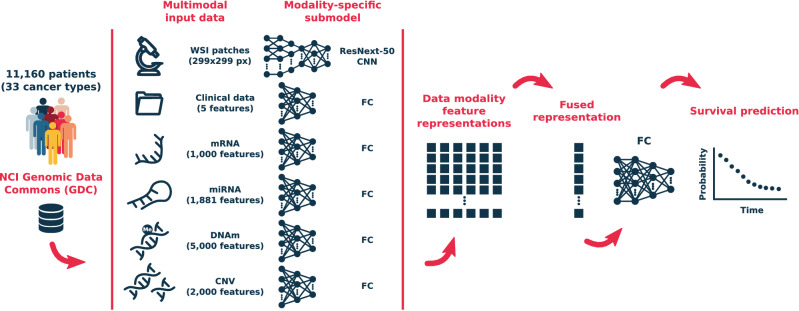
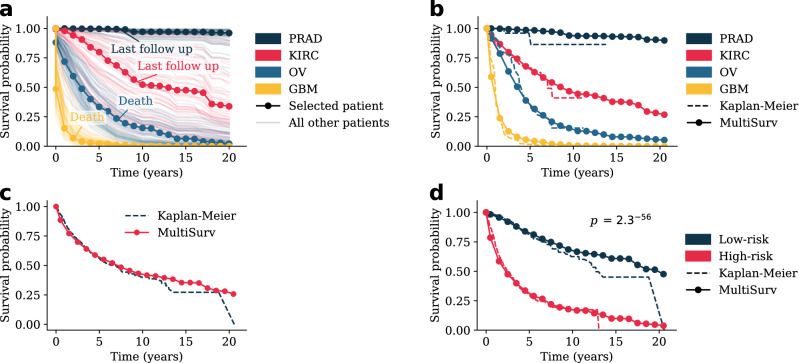
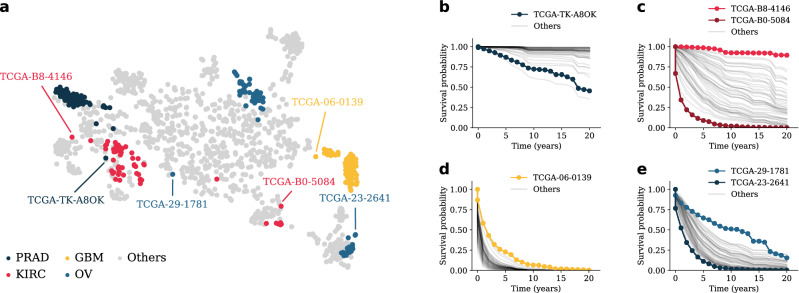
The age of precision medicine demands powerful computational techniques to handle high-dimensional patient data. We present MultiSurv, a multimodal deep learning method for long-term pan-cancer survival prediction. MultiSurv uses dedicated submodels to establish feature representations of clinical, imaging, and different high-dimensional omics data modalities. A data fusion layer aggregates the multimodal representations, and a prediction submodel generates conditional survival probabilities for follow-up time intervals spanning several decades. MultiSurv is the first non-linear and non-proportional survival prediction method that leverages multimodal data. In addition, MultiSurv can handle missing data, including single values and complete data modalities. MultiSurv was applied to data from 33 different cancer types and yields accurate pan-cancer patient survival curves. A quantitative comparison with previous methods showed that Multisurv achieves the best results according to different time-dependent metrics. We also generated visualizations of the learned multimodal representation of MultiSurv, which revealed insights on cancer characteristics and heterogeneity.
Overview
The claims and statistics of this paper haven’t been checked yet.
Free: it reads the open-access text and checks the first 5 claims that cite a source we can check. Create a free account to check every claim.
Integrity signals
Registry
Cites
Statistics
Figures
Verification
Claims the paper makes
The claims and statistics of this paper haven’t been checked yet.
Free: it reads the open-access text and checks the first 5 claims that cite a source we can check. Create a free account to check every claim.
Claims other papers make about this one
Each is checked against this paper’s own text: does it say what the citing paper says it does?
The source backs part of the claim, not all of it — or backs it for a different population, condition or comparison.
In the citing paper
“Vale-Silva et al. [74] compared these methods, although they did not find large differences in performance for predicting long-term cancer survival.”
From Multimodal deep learning for biomedical data fusion: a review (2022) · cites this paper as [74]
Experimental — accuracy not yet measuredThe source backs part of the claim, not all of it — or backs it for a different population, condition or comparison.
In the citing paper
“Lastly, Vale-Silva and Rohr (2021) presented a multimodal deep learning method for longterm pan-cancer survival prediction that was applied to data from 33 different cancer types, the highest number of organs of the category.”
From Navigating the landscape of multimodal AI in medicine: A scoping review on technical challenges and clinical applications (2025) · cites this paper as Vale-Silva and Rohr, 2021
Experimental — accuracy not yet measuredThe check wasn’t confident either way, so it gives no verdict — never disputed.
In the citing paper
“In addition to element-wise aggregation, attention-based fusion methods can be applied in order to weight different latent features by their importance [74, 79, 81].”
From Multimodal deep learning for biomedical data fusion: a review (2022) · cites this paper as [74]
Experimental — accuracy not yet measured
Self-check
Percentages, sums and reported differences re-computed from the paper’s own numbers.
The self-check needs the paper’s full text.
Citations
Cites
Adam: A Method for Stochastic Optimization
Kingma, D. P., & Ba, J. (2014) · arXiv · doi:10.48550/arxiv.1412.6980 · Cited by 98,946
LeCun, Y., Bengio, Y., & Hinton, G. (2015) · Nature · doi:10.1038/nature14539 · Cited by 84,126
Bray, F., Ferlay, J., Soerjomataram, I., Siegel, R. L., Torre, L. A., & Jemal, A. (2018) · CA: A Cancer Journal for Clinicians · doi:10.3322/caac.21492 · Cited by 84,109
Scikit-learn: Machine Learning in Python
Pedregosa, F., Varoquaux, G., Gramfort, A., Michel, V., Thirion, B., Grisel, O., Blondel, M., Müller, A., Nothman, J., Louppe, G., et al. (2012) · arXiv · doi:10.48550/arxiv.1201.0490 · Cited by 71,016
Regression Models and Life-Tables
Cox, D. R. (1972) · Journal of the Royal Statistical Society Series B: Statistical Methodology · doi:10.1111/j.2517-6161.1972.tb00899.x · Cited by 39,793
ImageNet Large Scale Visual Recognition Challenge
Russakovsky, O., Deng, J., Su, H., Krause, J., Satheesh, S., Ma, S., Huang, Z., Karpathy, A., Khosla, A., Bernstein, M., et al. (2015) · International Journal of Computer Vision · doi:10.1007/s11263-015-0816-y · Cited by 39,380
SciPy 1.0: fundamental algorithms for scientific computing in Python
Virtanen, P., Gommers, R., Oliphant, T. E., Haberland, M., Reddy, T., Cournapeau, D., Burovski, E., Peterson, P., Weckesser, W., Bright, J., et al. (2020) · Nature Methods · doi:10.1038/s41592-019-0686-2 · Cited by 38,430
(2008) · Journal of Machine Learning Research · Cited by 33,051
PyTorch: An Imperative Style, High-Performance Deep Learning Library
Paszke, A., Gross, S., Massa, F., Lerer, A., Bradbury, J., Chanan, G., Killeen, T., Lin, Z., Gimelshein, N., Antiga, L., et al. (2019) · arXiv · doi:10.48550/arxiv.1912.01703 · Cited by 31,473
Regression Models and Life-Tables
Cox, D. R. (1992) · Springer Series in Statistics · doi:10.1007/978-1-4612-4380-9_37 · Cited by 26,297
Research works printed but not linked: 1
- Oliphant TE A Guide to NumPy 2006 Trelgol Publishing
Cited by
Items 101–200 of 268
Pan, L., Peng, Y., Li, Y., Wang, X., Liu, W., Xu, L., Liang, Q., & Peng, S. (2024) · Computers in Biology and Medicine · doi:10.1016/j.compbiomed.2024.108301 · Cited by 9
“For multimodal performance comparison, we employed state-of-the-art methods, namely GSCNN [29], MultiSurv [30], Pathomic [28], Metric learning [31], MCAT [26], and HGCN.”
Multi-modal deep learning for automated assembly of periapical radiographs
Pfänder, L., Schneider, L., Büttner, M., Krois, J., Meyer‐Lueckel, H., & Schwendicke, F. (2023) · Journal of Dentistry · doi:10.1016/j.jdent.2023.104588 · Cited by 9
Data Augmentation with Cross-Modal Variational Autoencoders (DACMVA) for Cancer Survival Prediction
Rajaram, S., & Mitchell, C. S. (2023) · Information · doi:10.3390/info15010007 · Cited by 11
Zhi, Z., Liu, Z., Elbadawi, M., Daneshmend, A., Orlu, M., Basit, A. W., Demosthenous, A., & Rodrigues, M. R. D. (2025) · Neurocomputing · doi:10.1016/j.neucom.2025.130502 · Cited by 25
Moon, J. W., Yang, E., Kim, J., Kwon, O. J., Park, M., & Yi, C. A. (2023) · Diagnostics · doi:10.3390/diagnostics13152555 · Cited by 8
Deep learning-assisted survival prognosis in renal cancer: A CT scan-based personalized approach
Mahootiha, M., Qadir, H. A., Aghayan, D. L., Fretland, Å. A., Edwin, B., & Balasingham, I. (2024) · Heliyon · doi:10.1016/j.heliyon.2024.e24374 · Cited by 8
In Silico Strategies for Cancer Model Development and Anticancer Drug Testing
Shyam, P. (2025) · Springer eBooks · doi:10.1007/978-981-97-5742-8_7 · Cited by 10
Pham, T. D. (2023) · IEEE Transactions on Computational Biology and Bioinformatics · doi:10.1109/tcbb.2023.3274211 · Cited by 7
“tion fusion to estimate conditional probabilities for the prognosis [15].”
Spherical Convolutional Neural Networks for Survival Rate Prediction in Cancer Patients
Sinzinger, F. L., Astaraki, M., Smedby, Ö., & Moreno, R. (2022) · Frontiers in Oncology · doi:10.3389/fonc.2022.870457 · Cited by 8
Interpretable prognostic modeling of endometrial cancer
Zagidullin, B., Pasanen, A. M., Loukovaara, M. J., Bützow, R. C., & Tang, J. P. (2022) · Scientific Reports · doi:10.1038/s41598-022-26134-w · Cited by 9
Optimizing lung cancer prediction: leveraging Kernel PCA with dendritic neural models
Arif, U., Zhang, C., Chaudhary, M., & Khalid, H. H. (2024) · Computer Methods in Biomechanics & Biomedical Engineering · doi:10.1080/10255842.2024.2374949 · Cited by 10
“Resulting in 1.8 million deaths in 2020, with 2.20 million new cases annually, it presents a dire prognosis, affecting 75% within five years of diagnosis (Thai et al. 2018; Vale-Silva and Rohr 2021).”
InfluentialQuantifying the advantage of multimodal data fusion for survival prediction in cancer patientsPreprint
Νικολάου, Ν., Salazar, D., RaviPrakash, H., Gonçalves, M., Mulla, R., Burlutskiy, N., Markuzon, N., & Jacob, E. (2024) · bioRxiv (Cold Spring Harbor Laboratory) · doi:10.1101/2024.01.08.574756 · Cited by 7
BulkRNABert: Cancer prognosis from bulk RNA-seq based language modelsPreprint
Gélard, M., Richard, G., Pierrot, T., & Cournède, P.-H. (2024) · bioRxiv (Cold Spring Harbor Laboratory) · doi:10.1101/2024.06.18.599483 · Cited by 14
“[ 11] also consider a multi-modal model, including especially RNA-seq and whole slide images for survival analysis.”
BackgroundA Multi-information Dual-Layer Cross-Attention Model for Esophageal Fistula Prognosis
Zhang, J., Xiong, H., Jin, Q., Feng, T., Ma, J., Xuan, P., Cheng, P., Ning, Z., Ning, Z., Li, C., et al. (2024) · Lecture notes in computer science · doi:10.1007/978-3-031-72086-4_3 · Cited by 7
DRIM: Learning Disentangled Representations from Incomplete Multimodal Healthcare Data
Robinet, L., Berjaoui, A., Kheil, Z., & Moyal, E. C. (2024) · Lecture notes in computer science · doi:10.1007/978-3-031-72384-1_16 · Cited by 17
“030 Max [29] 0.766 ± 0.006 0 .”
InfluentialOrthogonal Sequential Fusion in Multimodal Learning
Labbaki, S., & Mináry, P. (2025) · International Conference on Information Fusion (FUSION) · doi:10.23919/fusion65864.2025.11124022 · Cited by 9
“For the TCGA-KIRP dataset, our data processing aligns with the approach described in [25].”
Padegal, G., Rao, M. K., Amitesh, O., Acharya, S., Athri, P., & Srinivasa, G. (2023) · BMC Bioinformatics · doi:10.1186/s12859-023-05347-4 · Cited by 9
A deep attention LSTM embedded aggregation network for multiple histopathological images
Kim, S., & Lee, E. (2023) · PLoS ONE · doi:10.1371/journal.pone.0287301 · Cited by 6
Dietrich, E., Fuhlert, P., Ernst, A., Sauter, G., Lennartz, M., Stiehl, H. S., Zimmermann, M., & Bonn, S. (2021) · arXiv (Cornell University) · doi:10.48550/arxiv.2111.13439 · Cited by 10
Multi-view co-occurrence and dual-modality framework for breast cancer classification
Su, C., Gong, Z., & Cao, J. (2025) · Journal of King Saud University - Computer and Information Sciences · doi:10.1007/s44443-025-00096-1 · Cited by 8
Zhu, S., & Cai, J. (2026) · Multimedia Systems · doi:10.1007/s00530-026-02376-w · Cited by 8
Multimodal Deep Learning for Cancer Survival Prediction: A Review
Zhang, G., Ma, C., Yan, C., Luo, H., Wang, J., Liang, W., & Luo, J. (2024) · Current Bioinformatics · doi:10.2174/0115748936289033240424071522 · Cited by 8
Zhong, Z., Zhang, H., Fayad, F. H., Lancaster, A. C., Sollee, J., Kulkarni, S., Lin, C. T., Li, J., Gao, X., Collins, S., et al. (2025) · Journal of Thoracic Imaging · doi:10.1097/rti.0000000000000831 · Cited by 6
Prompt-guided orthogonal multimodal fusion for cancer survival prediction
Huang, L., Guo, S., Bai, T., Zhao, R., & Tao, K. (2025) · Information Sciences · doi:10.1016/j.ins.2025.122242 · Cited by 6
Qiu, L., Zhao, L., Zhao, W., & Zhao, J. (2024) · Physics in Medicine and Biology · doi:10.1088/1361-6560/ad37ec · Cited by 9
ETRC-net: Efficient transformer for grading renal cell carcinoma in histopathological images
Raza, M., Farwa, U. E., Mozumder, M. A. I., Mon-il, J., & Kim, H.-C. (2025) · Computers & Electrical Engineering · doi:10.1016/j.compeleceng.2025.110747 · Cited by 6
Wei, Q., Zuo, X., Anjum, O., Hu, Y., Denlinger, R., Bernstam, E. V., Citardi, M. J., & Xu, H. (2022) · IEEE International Conference on Big Data (BigData) · doi:10.1109/bigdata55660.2022.10020569 · Cited by 10
Majji, R., Maram, B., & Rajeswari, R. (2023) · Biomedical Signal Processing and Control · doi:10.1016/j.bspc.2023.104696 · Cited by 5
Time Series Prediction of Lung Cancer Death Rates on the Basis of SEER Data
Altuhaifa, F. A. (2023) · JCO Clinical Cancer Informatics · doi:10.1200/cci.23.00011 · Cited by 5
Robust Multimodal Fusion for Survival Prediction in Cancer Patients
Flack, D., Tripathi, A. G., Waqas, A., Rasool, G., & Dera, D. (2025) · Cancer Informatics · doi:10.1177/11769351251376192 · Cited by 6
PathDiff: Histopathology Image Synthesis with Unpaired Text and Mask Conditions
Bhosale, M., Wasi, A., Zhai, Y., Tian, Y., Border, S. P., Xi, N., Sarder, P., Yuan, J., Doermann, D., & Gong, X. (2025) · IEEE/CVF International Conference on Computer Vision (ICCV) · doi:10.1109/iccv51701.2025.02081 · Cited by 15
“These augmented datasets were generated from the training split, conditioned on mask, and evaluated on the real test split.”
Predicting gastric cancer survival using machine learning: A systematic review
Wang, H.-N., An, J.-H., Wang, F., Hu, W., & Zong, L. (2025) · World Journal of Gastrointestinal Oncology · doi:10.4251/wjgo.v17.i5.103804 · Cited by 9
Xie, T., Xue, H., Huang, A., Yan, H., & Yuan, J. (2025) · Pathology - Research and Practice · doi:10.1016/j.prp.2025.156035 · Cited by 6
Li, Q., Wang, S., Safari, M., Hu, X. Y., Qiu, R. L. J., Roper, J. R., Lin, M., Lin, J. Y., Torres, M. A., & Yang, X. (2025) · Physics in Medicine and Biology · doi:10.1088/1361-6560/ae0be6 · Cited by 5
Smart Biosensor for Breast Cancer Survival Prediction Based on Multi-View Multi-Way Graph Learning
Ma, W., Li, M., Chu, Z., & Chen, H. (2024) · Sensors · doi:10.3390/s24113289 · Cited by 4
“Another notable advantage of deep learning is its innate capability to amalgamate multi-modal features into a cohesive representation, thereby harnessing all pertinent information from diverse data types [19].”
BackgroundOgundipe, O., Kurt, Z., & Woo, W. L. (2024) · PLoS ONE · doi:10.1371/journal.pone.0305268 · Cited by 5
Deep Learning for Cancer Prognosis Prediction Using Portrait Photos by StyleGAN Embedding
Hagag, A., Gomaa, A., Kornek, D., Maier, A., Fietkau, R., Bert, C., Huang, Y., & Putz, F. (2024) · Lecture notes in computer science · doi:10.1007/978-3-031-72086-4_19 · Cited by 9
Multi-Scale Anomaly Detection in Fiber Optic Current Transformers
Xu, Z., Yue, C., Yan, X., Fan, J., & Pang, F. (2023) · IEEE International Electrical and Energy Conference (CIEEC) · doi:10.1109/cieec58067.2023.10166023 · Cited by 4
Robben, M., Hajighasemi, A., Nasr, M. S., Veerla, J. P., Alsup, A., Rout, B., Shang, H. H., Fowlds, K., Malidarreh, P. B., Koomey, P., et al. (2023) · F1000Research · doi:10.12688/f1000research.139210.1 · Cited by 5
Ahmad, I., & Riaz, S. (2024) · Applied Intelligence · doi:10.1007/s10489-024-05794-3 · Cited by 4
“This implies that the anticipated survival curves for distinct patients do not inter-sect, a supposition that is impractical in clinical practice [6].”
InfluentialFKG-MM: A multi-modal fuzzy knowledge graph with data integration in healthcare
Tan, N. H., Tuấn, T. M., Chuan, P. M., Hoang, N. D., Thanh, L. Q., & Son, L. H. (2026) · PLoS ONE · doi:10.1371/journal.pone.0339864 · Cited by 6
Flannery, B. T., DeSilvio, T., Hariri, M., Sadri, A. R., Heller, N., Weight, C. J., & Viswanath, S. E. (2026) · Computers in Biology and Medicine · doi:10.1016/j.compbiomed.2026.111603 · Cited by 4
Shou, Y., Cao, X., Yan, P., Qiaohui, Zhao, Q., & Meng, D. (2025) · IEEE/CVF International Conference on Computer Vision (ICCV) · doi:10.1109/iccv51701.2025.01853 · Cited by 28
“Traditional survival analysis methods usually rely on short-term clinical indicators [19, 52] and long-term follow-up reports [4, 40], which are often very time-consuming in practical applications.”
Integrated noninvasive diagnostics for prediction of survival in immunotherapy
Yeghaian, M., Bodalal, Z., Bucho, T. M. T., Kurilova, I., Blank, C. U., Smit, E. F., van der Heijden, M. S., Nguyen‐Kim, T. D. L., van den Broek, D. A., Beets‐Tan, R. G. H., et al. (2024) · Immuno-Oncology Technology · doi:10.1016/j.iotech.2024.100723 · Cited by 8
“52,55 A similar trend was observed in our study with the inclusion of clinical parameters (Supplementary Table S2, available at https://doi.org/10.1016/j.iotech.2 024.100723).”
InfluentialWang, Y., Griva, A., & Hassan, U. U. (2025) · International Journal of Medical Informatics · doi:10.1016/j.ijmedinf.2025.106219 · Cited by 3
Cui, J., Zheng, H., Liu, Y., Wu, X., & Wang, Y. (2024) · IEEE Signal Processing Letters · doi:10.1109/lsp.2024.3453196 · Cited by 3
Deep Learning-Based Survival Prediction for Breast Cancer Using Multi-Modal Data
Ning, T., Kui, X., & Ma, B. (2024) · International Conference on Computer Science and Network Technology (ICCSNT) · doi:10.1109/iccsnt62291.2024.10776668 · Cited by 3
Tan, X., Wu, D., Wang, H., Zhao, Z., Ge, Y., & Hu, S. (2025) · International Journal of Imaging Systems and Technology · doi:10.1002/ima.70051 · Cited by 3
“Vale et al. introduced MultiSurv, which employs dedicated submodels to represent each modality as a one-dimensional feature and conducts row-wise maximum operations to fuse these features and predict survival outcomes [18].”
An Adaptive Dendritic Neural Model for Lung Cancer Prediction
Arif, U., Zhang, C., Chaudhary, M., & Hussain, S. (2025) · Computer Methods in Biomechanics & Biomedical Engineering · doi:10.1080/10255842.2025.2472013 · Cited by 3
“This malignancy caused 1.8 million deaths in 2020, with about 2.20 million new cases yearly (Vale-Silva and Rohr 2021; Kong et al. 2023).”
InfluentialAssessing the role of volumetric brain information in multiple sclerosis progression
Shen, A. A., McLoughlin, A., Vernon, Z., Lin, J. T., Carano, R. A. D., Bickel, P. J., Song, Z., & Huang, H. (2025) · Computational and Structural Biotechnology Journal · doi:10.1016/j.csbj.2025.05.003 · Cited by 3
Yang, X., & Qiu, H. (2025) · Neurocomputing · doi:10.1016/j.neucom.2025.131053 · Cited by 2
Wang, C., Liu, L., Fan, C., Zhang, Y., Mai, Z., Li, L., Liu, Z., Tian, Y., Hu, J., & Elazab, A. (2025) · Scientific Reports · doi:10.1038/s41598-025-13818-2 · Cited by 5
“By leveraging state-of-the-art multimodal approaches 35,37–39 , rather than relying solely on CT images, we substantially enhanced accuracy.”
Machine Learning in Rehabilitation Training: Traditional and Deep Learning Approaches
Li, Y. (2025) · ITM Web of Conferences · doi:10.1051/itmconf/20257802026 · Cited by 3
Cancer survival prediction based on soft-label guided contrastive learning and global feature fusion
Jiang, H., Chen, W., Guo, F., & Liang, C. (2025) · Bioinformatics · doi:10.1093/bioinformatics/btaf552 · Cited by 3
“To overcome this challenge, deep learning methods (Vale-Silva and Rohr 2021, Hou et al. 2023) have emerged.”
Thematic Bottleneck Models for Multimodal Analysis of School Attendance
Qiao, T., Walker, C. G., Cunningham, C. W., Jang-Jones, A., Morton, S., Meissel, K., & Koh, Y. S. (2025) · ACM International Conference on Information and Knowledge Management (CIKM) · doi:10.1145/3746252.3761544 · Cited by 2
“Existing multimodal machine learning methods [21, 30, 31, 37, 41, 46] typically employ fusion techniques [3] to combine information from different modalities to create a unified representation for predictive tasks.”
Zobolas, J., George, A.-M., Lopez, A., Fischer, S., Becker, M., & Aittokallio, T. A. (2026) · BioData Mining · doi:10.1186/s13040-026-00546-0 · Cited by 6
“Focusing on clinical data combined with gene expression (GEX)—a combination previously shown to be effective [47, 71, 88, 89]— substantially improved discriminatory performance.”
InfluentialMcLoughlin, A., YinHo, H., Zhao, X., Hakansson, A. K., Moradi, A., Xu, Q. J., & Liu, Y. (2025) · IEEE International Conference on Computer Vision Workshops · doi:10.1109/iccvw69036.2025.00097 · Cited by 2
“The survival models are primarily constructed around the discrete-time framework [51, 60], such that the predictor module of any given survival architecture only needs to output discrete hazard logits.”
Bappi, M. I., Richter, D. J., Kolekar, S. S., & Kim, K. (2026) · PLoS ONE · doi:10.1371/journal.pone.0316509 · Cited by 6
“The Cross-Attention–LSTM [26] model balanced The constructed HCLmNet model achieves the best trade-off between computational efficiency and predictive robustness.”
Jennings, C., Broad, A., Godson, L., Clarke, E. L., Westhead, D. R., & Treanor, D. E. (2026) · Cancer Informatics · doi:10.1177/11769351261434523 · Cited by 15
“53 The relatively modest performance gain observed for most multimodal models over unimodal comparators suggest that WSI and -omic data may carry signals with significant overlap rather than distinct contributions.”
De-Biased Disentanglement Learning for Pulmonary Embolism Survival Prediction on Multimodal Data
Zhong, Z., Li, J., Kulkarni, S., Zhang, H., Fayad, F. H., Yang, L., Collins, S., Bai, H. X., Ahn, S. H., Atalay, M. K., et al. (2024) · IEEE Journal of Biomedical and Health Informatics · doi:10.1109/jbhi.2024.3384848 · Cited by 5
Zhouyou, L., Lifan, L., Cui, J., Deng, X., Yuanjun, L., Hao, Y., & Yan, W. (2024) · IEEE Conference on Cybernetics and Intelligent Systems · doi:10.1109/cis-ram61939.2024.10673062 · Cited by 3
Farooq, A., Sharma, U., & Mishra, D. (2025) · Lecture notes in computer science · doi:10.1007/978-981-96-2644-1_20 · Cited by 2
AMF-MedIT: An efficient align-modulation-fusion framework for medical image–tabular data
Yu, C., Ye, J., Liu, Y. J., Zhang, Z., & Zhang, Z. (2026) · Biomedical Signal Processing and Control · doi:10.1016/j.bspc.2026.109772 · Cited by 5
Multi-Modal Deep Learning for the Thickness Prediction of Blood Clot
Moon, J., Ahn, S.-I., Joo, M. G., Baac, H. W., & Shin, J. (2023) · International Conference on Advanced Communication Technology · doi:10.23919/icact56868.2023.10079491 · Cited by 2
“For the 2D visualized data, in order to extract the meaningful features related to the thickness information, We conduct a 2D In a bid to improve the thickness prediction performance, we employ multi-modal mechanism which can corroborate the difference types of features to make a synergy [7].”
MethodBappi, M. I., Richter, D. J., Kolekar, S. S., & Kim, K. (2024) · medRxiv · doi:10.1101/2024.12.14.24319041 · Cited by 2
Koo, B., Lee, D., Lee, S., Sung, I., Kim, S., & Lee, S. (2022) · Cancers · doi:10.3390/cancers14174120 · Cited by 1
Attention-based Multiple Instance Learning for Survival Prediction on Lung Cancer Tissue Microarrays
Ammeling, J., Schmidt, L., Ganz, J., Niedermair, T., Brochhausen-Delius, C., Schulz, C., Breininger, K., & Aubreville, M. (2023) · Informatik aktuell · doi:10.1007/978-3-658-41657-7_48 · Cited by 3
Case-Base Neural Network: Survival analysis with time-varying, higher-order interactions
Islam, J., Turgeon, M., SLADEK, R. M., & Bhatnagar, S. (2024) · Machine Learning with Applications · doi:10.1016/j.mlwa.2024.100535 · Cited by 3
survivalContour: visualizing predicted survival via colored contour plots
Shi, Y., Zhang, L., Do, K.-A., Jenq, R. R., & Peterson, C. B. (2024) · Bioinformatics Advances · doi:10.1093/bioadv/vbae105 · Cited by 2
Kang, Z., Nah, F. F., & Siau, K. L. (2024) · Lecture notes in computer science · doi:10.1007/978-3-031-76821-7_6 · Cited by 1
An Improved Deep Learning Algorithm for Breast Cancer Survival Prediction Based on Multi-Omics Data
Nasarudin, N. A., Al-Jasmi, F. A., Aziz, N. H. A., Aziz, N. A. A., Khan, W., Hendrawan, Y., Riza, D. F. A., Manzoor, A., Ali, B. R., & Mohamad, M. S. (2025) · F1000Research · doi:10.12688/f1000research.166682.1 · Cited by 3
Jiang, S., Cai, L., Gan, Z., Wang, Y., Tang, G., & Zhang, Y. (2025) · IEEE Transactions on Medical Imaging · doi:10.1109/tmi.2025.3601892 · Cited by 8
“To enhance survival prediction, a common approach is to discretize the observation time into discrete intervals [35].”
AI in Modular Concepts of Natural Killer Cell Therapy
Vogt, Y., Kalweit, G., Alieva, M., Ullrich, E., Boedecker, J., & Kalweit, G. (2025) · Springer eBooks · doi:10.1007/978-3-662-68816-8_68-1 · Cited by 1
Zhou, S. (2025) · International Conference on Energy Systems and Electrical Power (ICESEP) · doi:10.1109/icesep66633.2025.11155229 · Cited by 1
Pan-cancer gene set discovery via scRNA-seq for optimal deep learning based downstream tasks
Kim, J. H., Lee, S. Y., & Jang, J. (2025) · Scientific Reports · doi:10.1038/s41598-025-27296-z · Cited by 3
Automatic discovery of robust risk groups from limited survival data across biomedical modalities
Alzaid, E., Wright, G., Eastwood, M., Keller, P., & Minhas, F. (2025) · Machine Learning with Applications · doi:10.1016/j.mlwa.2025.100814 · Cited by 2
Gene-guided multimodal data fusion for cancer patient survival analysis
Xu, M., Cai, L., Yang, Z., Wang, R., & Zhang, H. (2025) · Neurocomputing · doi:10.1016/j.neucom.2025.132365 · Cited by 2
Liu, Y., Hu, B., Hao, X., Huang, J., & Huang, J. (2026) · Biomedical Signal Processing and Control · doi:10.1016/j.bspc.2026.109527 · Cited by 1
Multimodal learning for scalable representation of high-dimensional medical data
Alsaafin, A., Shafique, A., Alfasly, S., Kalari, K. R., & Tizhoosh, H. R. (2026) · Frontiers in Digital Health · doi:10.3389/fdgth.2025.1709277 · Cited by 6
“…that encapsulates the entirety of image I and effectively represents its rich content, a widely adopted practice involves computing the average of the patch-level feature vectors [34], resulting in a single feature vector f ∈ R l × 1 that serves as a holistic representation of the entire image I .”
Zhang, C., Qu, L., Liu, X., & Song, Z. (2026) · Computerized Medical Imaging and Graphics · doi:10.1016/j.compmedimag.2026.102733 · Cited by 3
Decouple, Reorganize, and Fuse: A Multimodal Framework for Cancer Survival Prediction
Wang, H., Ying, H., Xu, Y., Qiu, Q., Zhang, C., Chen, D. Z., Sun, Y., & Wu, J. (2026) · IEEE Transactions on Medical Imaging · doi:10.1109/tmi.2026.3668773 · Cited by 5
“Their integration o ff ers a comprehensive view of tumor biology, which has shown potential to improve prognostic accuracy and support personalized treatment decisions [8], [9], [10], [11].”
A Contrastive Variational AutoEncoder for NSCLC Survival Prediction with Missing Modalities
Zanitti, M., Miskovic, V., Trovò, F., Pedrocchi, A., Shen, M., Tun, Y. K., Prelaj, A., & Kosta, S. (2025) · IEEE International Conference on Big Data (BigData) · doi:10.1109/bigdata66926.2025.11401431 · Cited by 2
“MultiSurv [5] uses modality masking during training to handle missingness, but its concatenation-based fusion weights all available modalities equally, regardless of their informativeness.”
A multimodal deep learning-based dynamic prediction model for colorectal cancer liver metastasis
Zheng, H., Wen, D., Zhang, L., Lu, H., Li, X., & Li, Y. (2026) · Advances in Differential Equations and Control Processes · doi:10.59400/adecp3902 · Cited by 1
“…level of spatiotemporal joint modeling, graph learning and self-supervised learning methods have shown potential in modeling pathological progression [14,15], but systematic research on quantifying the “tumor-immune” spatial interaction mechanisms and their closed-loop optimization remains lacking.”
Kim, Y., Park, S.-J., Park, J.-S., Seo, Y.-G., Choi, S., Chung, M. J., Yoo, H., & Kang, D.-H. (2026) · European Spine Journal · doi:10.1007/s00586-026-09893-2 · Cited by 1
“Moreover, combining imaging data with genomic profiles has proven effective for grading gliomas and predicting survival out - comes across multiple cancer types [25].”
Jang, Y., Kwon, J. H., Kim, H., Joung, Y.-J., Nang, J., & Kim, C. H. (2026) · Journal of Medical Internet Research · doi:10.2196/86087 · Cited by 1
“In addition, evaluating these models through external verification is essential for their application in clinical settings [4].”
A heterogeneous multimodal ensemble framework for multi-omics breast cancer prognosis
Bozorgpour, R., & Sadrabadi, M. S. (2026) · Clinical Cancer Bulletin · doi:10.1007/s44272-026-00068-0 · Cited by 1
Survival Prediction in Patients with Nasopharyngeal Cancer Using some Machine Learning Methods
Idrissi, A., Lakrim, H., & Bouskri, M. (2023) · Studies in computational intelligence · doi:10.1007/978-3-031-33309-5_13 · Cited by 1
ArchBERT: Bi-Modal Understanding of Neural Architectures and Natural Languages
Akbari, M., Alvar, S. R., Kamranian, B., Banitalebi-Dehkordi, A., & Zhang, Y. (2023) · Conference on Computational Natural Language Learning · doi:10.18653/v1/2023.conll-1.7 · Cited by 2
Exploring Mental Fatigue and Burnout in the Workplace: A Survival Analysis Approach
Reddy, R. E., & Santhi, K. (2024) · EAI Endorsed Transactions on Pervasive Health and Technology · doi:10.4108/eetpht.10.5719 · Cited by 1
“Hence, there is a gap in the survival time[10] series on the right side of the observational period.”
Parvaiz, A., & Fraz, M. M. (2024) · Communications in computer and information science · doi:10.1007/978-981-97-5937-8_7 · Cited by 1
Fan, C., Liu, L., Wang, Y., Li, D., Liang, Q., Elazab, A., Liu, Z., Hu, J., Tian, Y., Zhang, Y., et al. (2025) · IEEE International Symposium on Biomedical Imaging (ISBI) · doi:10.1109/isbi60581.2025.10980792 · Cited by 1
“Vale-Silva et al. [12] proposed MultiSurv to investigate this approach across 33 different types of cancer.”
Sinsomboonthong, J., & Sinsomboonthong, S. (2021) · Advances in Science Technology and Engineering Systems Journal · doi:10.25046/aj060419 · Cited by 1
“Missing data are frequently found in many fields of research [1,2].”
Wissel, D., Rowson, D., & Boeva, V. (2022) · bioRxiv (Cold Spring Harbor Laboratory) · doi:10.1101/2022.02.07.479388 · Cited by 1
Prospects and Challenges of Deep Learning in Gynaecological MalignanciesPreprint
Zhang, Y., & Zeng, L. (2024) · SSRN Electronic Journal · doi:10.2139/ssrn.4868537 · Cited by 1
Gu, J., & Chen, J. Y. (2024) · bioRxiv (Cold Spring Harbor Laboratory) · doi:10.1101/2024.09.13.612988 · Cited by 2
Towards dynamic multi-modal phenotyping using chest radiographs and physiological dataPreprint
Hayat, N., Geras, K. J., & Shamout, F. E. (2021) · arXiv (Cornell University) · doi:10.48550/arxiv.2111.02710 · Cited by 5
Prabhakar, T., Vairamuthu, S., Rani, B. S., & Maram, B. (2022) · Concurrency and Computation Practice and Experience · doi:10.1002/cpe.7206
Predicting Lung Cancer Survival after Curative Surgery Using Deep Learning of Diffusion MRIPreprint
Moon, J. W., Yang, E., Kim, J., Kwon, O., Park, M., & Yi, C. A. (2022) · Research Square · doi:10.21203/rs.3.rs-2158284/v1
Intelligent injury prediction for traumatic airway obstruction
Han, Y., Pan, F., Song, H., Luo, R., Li, C., Pi, H., Wang, J., & Li, T. (2022) · Medical & Biological Engineering & Computing · doi:10.1007/s11517-022-02706-w
PREDICT SURVIVAL PROBABILITY FOR CANCER PATIENTSUSING DEEP LEARNING
Gupta, A., Aggarwal, K., Kumar, R., Saxena, K., & Gupta, D. (2023) · INTERANTIONAL JOURNAL OF SCIENTIFIC RESEARCH IN ENGINEERING AND MANAGEMENT · doi:10.55041/ijsrem17670 · Cited by 1
Metadata
- Authors
- Vale-Silva, L. A., & Rohr, K.
- Affiliations
- Heidelberg University (DE)
- Corresponding author
- Vale-Silva, Luís A.
- ORCID
- Vale-Silva, Luís A.
- Venue
- Scientific Reports
- Published
- 2021-06-29
- Volume
- 11
- Issue
- 1
- Pages
- 13505-13505
- ISSN
- 2045-2322 (ISSN-L)
- PMC
- PMC8242026
- OpenAlex
- W3176016422
- Cited by
- 268
- References
- 60
- Citations by year
- 2026: 47 · 2025: 78 · 2024: 67 · 2023: 43 · 2022: 26 · 2021: 7
- FWCI
- 12.63
- Type
- journal article
- Language
- en
- Open access
- gold
- doi.org
- Licence
- cc-by
- creativecommons.org/licenses/by/4.0 (tdm)
- creativecommons.org/licenses/by/4.0 (vor)
- Locations
- Scientific Reports (publishedVersion, cc-by)
- medRxiv (acceptedVersion, cc-by-nc)
- PubMed Central (publishedVersion, cc-by)
- PubMed (publishedVersion)
- DOAJ (DOAJ: Directory of Open Access Journals) (submittedVersion, cc-by-sa)
- Funders
- Chica and Heinz Schaller Foundation (Personal fellowship to L.A.V.S.)
- Ruprecht-Karls-Universität Heidelberg
- Topics
- Physical Sciences › Computer Science › Artificial Intelligence › Machine Learning in Healthcare
- Health Sciences › Medicine › Radiology, Nuclear Medicine and Imaging › Radiomics and Machine Learning in Medical Imaging
- Physical Sciences › Computer Science › Artificial Intelligence › AI in cancer detection
- Keywords
- cancer survival prediction, pan-cancer, multimodal deep learning, non-proportional hazards, conditional survival probability, data fusion, missing data, tumor heterogeneity
- MeSH terms
- Cancer Survivors, Deep Learning, Humans, Models, Biological, Neoplasms, Predictive Value of Tests, Survival Rate, Databases, Factual
About these checks
Registry, retraction, Cites and statistics results are computed, not judged, with one exception: a printed reference that no index lists is read once by a model before it counts as a citation error. Claims are extracted by a model and kept only when their quote appears verbatim in the text; each cited source is then checked, with a model’s help, for whether it says what the claim relies on. Those verdicts can be wrong — read the claim’s quote and the cited source before relying on one.
Statistics and arithmetic are recomputed, not judged.
Confidence bands are shown only for fields calibrated on our annotated test set. None is calibrated yet, so no band is shown.
What counts as a claim ›How we measure confidence ›How we check this ›
Are you an author, or do you see a problem with this page? Request a review
Data sources
Bibliographic data: Semantic Scholar, OpenAlex, Crossref.
Contains information from the Semantic Scholar Academic Graph Datasets, made available under the ODC Attribution License (ODC-BY 1.0).
Semantic Scholar’s data is described in: Kinney, R., et al. (2023). The Semantic Scholar Open Data Platform. arXiv:2301.10140.
