

Long-term cancer survival prediction using multimodal deep learning
Open accessPublished version of a preprint
The DOI matches its Crossref record; 59 of the 60 references it cites were found in a registry or an index.
Abstract
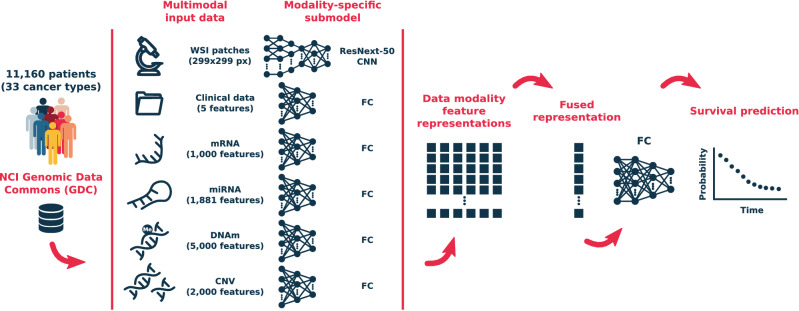
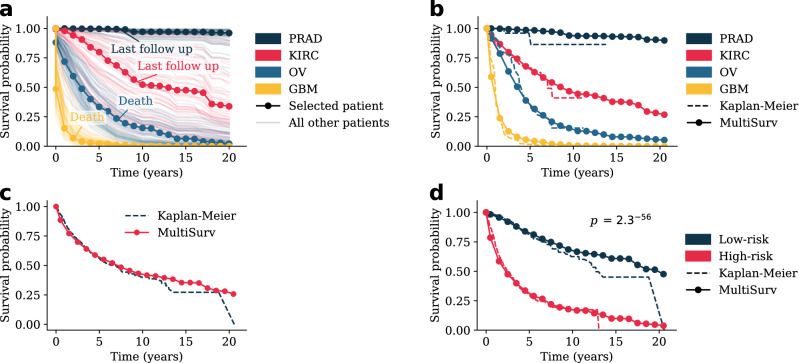
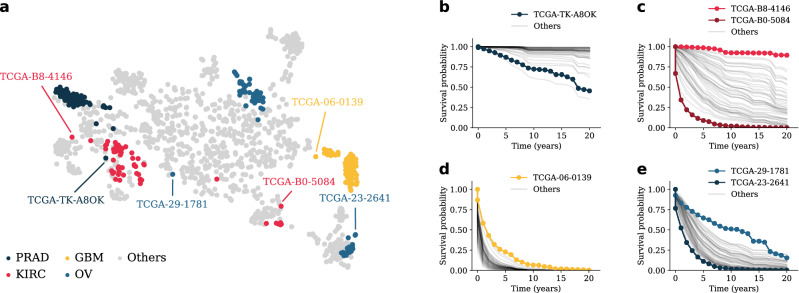
The age of precision medicine demands powerful computational techniques to handle high-dimensional patient data. We present MultiSurv, a multimodal deep learning method for long-term pan-cancer survival prediction. MultiSurv uses dedicated submodels to establish feature representations of clinical, imaging, and different high-dimensional omics data modalities. A data fusion layer aggregates the multimodal representations, and a prediction submodel generates conditional survival probabilities for follow-up time intervals spanning several decades. MultiSurv is the first non-linear and non-proportional survival prediction method that leverages multimodal data. In addition, MultiSurv can handle missing data, including single values and complete data modalities. MultiSurv was applied to data from 33 different cancer types and yields accurate pan-cancer patient survival curves. A quantitative comparison with previous methods showed that Multisurv achieves the best results according to different time-dependent metrics. We also generated visualizations of the learned multimodal representation of MultiSurv, which revealed insights on cancer characteristics and heterogeneity.
Overview
The claims and statistics of this paper haven’t been checked yet.
Free: it reads the open-access text and checks the first 5 claims that cite a source we can check. Create a free account to check every claim.
Integrity signals
Registry
Cites
Statistics
Figures
Verification
Claims the paper makes
The claims and statistics of this paper haven’t been checked yet.
Free: it reads the open-access text and checks the first 5 claims that cite a source we can check. Create a free account to check every claim.
Claims other papers make about this one
Each is checked against this paper’s own text: does it say what the citing paper says it does?
The source backs part of the claim, not all of it — or backs it for a different population, condition or comparison.
In the citing paper
“Vale-Silva et al. [74] compared these methods, although they did not find large differences in performance for predicting long-term cancer survival.”
From Multimodal deep learning for biomedical data fusion: a review (2022) · cites this paper as [74]
Experimental — accuracy not yet measuredThe source backs part of the claim, not all of it — or backs it for a different population, condition or comparison.
In the citing paper
“Lastly, Vale-Silva and Rohr (2021) presented a multimodal deep learning method for longterm pan-cancer survival prediction that was applied to data from 33 different cancer types, the highest number of organs of the category.”
From Navigating the landscape of multimodal AI in medicine: A scoping review on technical challenges and clinical applications (2025) · cites this paper as Vale-Silva and Rohr, 2021
Experimental — accuracy not yet measuredThe check wasn’t confident either way, so it gives no verdict — never disputed.
In the citing paper
“In addition to element-wise aggregation, attention-based fusion methods can be applied in order to weight different latent features by their importance [74, 79, 81].”
From Multimodal deep learning for biomedical data fusion: a review (2022) · cites this paper as [74]
Experimental — accuracy not yet measured
Self-check
Percentages, sums and reported differences re-computed from the paper’s own numbers.
The self-check needs the paper’s full text.
Citations
Cites
Adam: A Method for Stochastic Optimization
Kingma, D. P., & Ba, J. (2014) · arXiv · doi:10.48550/arxiv.1412.6980 · Cited by 98,946
LeCun, Y., Bengio, Y., & Hinton, G. (2015) · Nature · doi:10.1038/nature14539 · Cited by 84,126
Bray, F., Ferlay, J., Soerjomataram, I., Siegel, R. L., Torre, L. A., & Jemal, A. (2018) · CA: A Cancer Journal for Clinicians · doi:10.3322/caac.21492 · Cited by 84,109
Scikit-learn: Machine Learning in Python
Pedregosa, F., Varoquaux, G., Gramfort, A., Michel, V., Thirion, B., Grisel, O., Blondel, M., Müller, A., Nothman, J., Louppe, G., et al. (2012) · arXiv · doi:10.48550/arxiv.1201.0490 · Cited by 71,016
Regression Models and Life-Tables
Cox, D. R. (1972) · Journal of the Royal Statistical Society Series B: Statistical Methodology · doi:10.1111/j.2517-6161.1972.tb00899.x · Cited by 39,793
ImageNet Large Scale Visual Recognition Challenge
Russakovsky, O., Deng, J., Su, H., Krause, J., Satheesh, S., Ma, S., Huang, Z., Karpathy, A., Khosla, A., Bernstein, M., et al. (2015) · International Journal of Computer Vision · doi:10.1007/s11263-015-0816-y · Cited by 39,380
SciPy 1.0: fundamental algorithms for scientific computing in Python
Virtanen, P., Gommers, R., Oliphant, T. E., Haberland, M., Reddy, T., Cournapeau, D., Burovski, E., Peterson, P., Weckesser, W., Bright, J., et al. (2020) · Nature Methods · doi:10.1038/s41592-019-0686-2 · Cited by 38,430
(2008) · Journal of Machine Learning Research · Cited by 33,051
PyTorch: An Imperative Style, High-Performance Deep Learning Library
Paszke, A., Gross, S., Massa, F., Lerer, A., Bradbury, J., Chanan, G., Killeen, T., Lin, Z., Gimelshein, N., Antiga, L., et al. (2019) · arXiv · doi:10.48550/arxiv.1912.01703 · Cited by 31,473
Regression Models and Life-Tables
Cox, D. R. (1992) · Springer Series in Statistics · doi:10.1007/978-1-4612-4380-9_37 · Cited by 26,297
Research works printed but not linked: 1
- Oliphant TE A Guide to NumPy 2006 Trelgol Publishing
Cited by
Items 201–268 of 268
Milewski, D., Jung, H. M., Brown, G. T., Liu, Y., Somerville, B. J., Lisle, C. R., Ladanyi, M., Rudzinski, E. R., Choo‐Wosoba, H., Barkauskas, D. A., et al. (2023) · doi:10.1158/1078-0432.c.6532878.v1
Adversarial Learning for Improved Patient Representations
Shankar, B., & Hargreaves, C. A. (2023) · Lecture notes in computer science · doi:10.1007/978-3-031-32883-1_42
Risk Prediction of Cardioembolic Stroke using Clinical Data and Non-contrast CT
Jakkrawankul, P., Chunharas, C., Akarathanawat, W., Vorasayan, P., Chunamchai, S., Pratanwanich, P. N., Punyabukkana, P., & Chuangsuwanich, E. (2023) · IEEE Statistical Signal Processing Workshop (SSP) · doi:10.1109/ssp53291.2023.10207950
The Survival Analysis of Mental Fatigue Utilizing the Estimator of Kaplan-Meier and Nelson-Aalen
Reddy, R. E., & Santhi, K. (2024) · Lecture notes of the Institute for Computer Sciences, Social Informatics and Telecommunications Engineering · doi:10.1007/978-3-031-48888-7_19
Fang, C., Arango-Argoty, G., Kagiampakis, I., Khalid, M. H., Jacob, E., Bulusu, K. C., & Markuzon, N. (2024) · bioRxiv (Cold Spring Harbor Laboratory) · doi:10.1101/2024.02.29.582842
Cancer survival prediction using artificial intelligence: current status and future prospects
Shaikh, H., & Ali, R. (2024) · Elsevier eBooks · doi:10.1016/b978-0-443-24028-7.00016-7
Li, P.-Y., Huang, Y.-W., Wu, V., Chueh, S., Tseng, C., & Chen, C. (2024) · Artificial Intelligence in Medicine · doi:10.1016/j.artmed.2024.103028
Alawad, T. A. M., Xue, F., Hu, X., Tian, Z., Zhao, Y., Li, X., Guan, L., Guan, Y., Liu, J., & Ahmad, I. (2024) · SSRN Electronic Journal · doi:10.2139/ssrn.5038729
Explainable Survival Analysis of Censored Clinical Data Using a Neural Network Approach
Santi, L. A. D., Orlandini, F., Positano, V., Pistoia, L., Sorrentino, F., Messina, G., Roberti, M. G., Missere, M., Schicchi, N., Vallone, A., et al. (2025) · BioMedInformatics · doi:10.3390/biomedinformatics5020017
Multi-Scale Context-Aware Survival Prediction Network Based on Whole Slide Images
Hao, Y., Wei, M., Zhao, S., Duan, X., & Yao, Y. (2024) · International Conference on Vision, Image and Signal Processing (ICVISP) · doi:10.1109/icvisp64524.2024.10959355
“To enhance survival prediction accuracy, we implement a discrete time survival model [11].”
Analogue information processing in NF-κB gene regulatory system
Gautam, P., Kashyap, D., Biswas, D., & Sinha, S. K. (2025) · Royal Society Open Science · doi:10.1098/rsos.241487
Multi-Scale Hierarchical Context-Aware Survival Prediction Network based on whole slide images
Song, J., Hao, Y., Zhai, H., Zhao, S., Tao, N. P., Huang, S., & Duan, X. (2025) · Biomedical Signal Processing and Control · doi:10.1016/j.bspc.2025.108159 · Cited by 3
Bimodal masked language modeling for bulk RNA-seq and DNA methylation representation learningPreprint
Gélard, M., Benkirane, H., Pierrot, T., Richard, G., & Cournède, P.-H. (2025) · bioRxiv (Cold Spring Harbor Laboratory) · doi:10.1101/2025.06.25.661237 · Cited by 1
“We apply this aggregation method across all down-stream tasks, including those beyond survival analysis, but retain the identifier MultiSurv to refer to this specific integration technique.”
Clinical Stage Prompt Induced Multi-Modal Prognosis
Jin, T., Xie, X., Li, Q., Li, X., & Wang, Y. (2025) · IEEE Transactions on Medical Imaging · doi:10.1109/tmi.2025.3588836 · Cited by 1
“…prognostic methods, including 1) competitors using only pathological and genetic data as input, PORPOISE [10], Pathomic Fusion [11], MCAT [13], GPDBN [29], CMTA [43] and SURVPATH [44], and 2) methods further incorporating clinical data, Metric Learning [12], MultiSurv [45], MMD [46] and HGCN [16].”
An Improved Deep Learning Algorithm for Breast Cancer Survival Prediction Based on Multi-Omics Data
Nasarudin, N. A., Al-Jasmi, F. A., Aziz, N. H. A., Aziz, N. A. A., Khan, W., Hendrawan, Y., Riza, D. F. A., Manzoor, A., Ali, B. R., & Mohamad, M. S. (2025) · F1000Research · doi:10.12688/f1000research.166682.2
AI-Driven Survival Prediction in Cancer: The Role of Artificial Neural Networks
Yan, J. (2025) · ITM Web of Conferences · doi:10.1051/itmconf/20257802025
Yue, H., Kuang, H., Liu, J., Li, J., Wang, L., He, M., & Wang, J. (2025) · Lecture notes in computer science · doi:10.1007/978-3-032-05162-2_10 · Cited by 1
Fan, C., Elazab, A., Zhang, S., Wang, Y., Liang, Q., Li, D., Zhang, Y., Xiang, Y., Liu, B., & Wang, C. (2025) · Lecture notes in computer science · doi:10.1007/978-3-032-05182-0_8
RegScore: Scoring Systems for Regression Tasks
Grzeszczyk, M. K., Szczepański, T., Renc, P., Yoon, S., Charton, J., Trzcinski, T. P., & Sitek, A. (2025) · Lecture notes in computer science · doi:10.1007/978-3-032-05185-1_50 · Cited by 1
“Such methods have surpassed naïve approaches for merging both modalities based on concatenation [22], maximum value selection [24] or multiplication [5].”
Singh, R., Pandey, P., Kumar, A., & Mishra, M. K. (2025) · Current Bioinformatics · doi:10.2174/0115748936370246250903052830
Li, Y. (2025) · Journal of Ambient Intelligence and Humanized Computing · doi:10.1007/s12652-025-05003-0
Masood, F., Ahmad, J. E., Alasbali, N. A., Nafea, I. T., Saeed, F., & Ullah, R. (2025) · Journal of Intelligent Systems · doi:10.1515/jisys-2024-0417 · Cited by 1
Duran, J., Zou, Y., Vallières, M., & Enger, S. A. (2025) · Machine Learning with Applications · doi:10.1016/j.mlwa.2025.100789
MultCPM: a multi-omics cancer recurrence prediction model utilizing a multi-head attention mechanism
Liu, X., Cui, H., Que, T., Zhao, S., Zhong, S., Liu, W., & Hu, Y. (2025) · PeerJ Computer Science · doi:10.7717/peerj-cs.3294 · Cited by 1
Vision transformer supported Kolmogorov-Arnold networks for survival prediction in lung cancer
Gökpınar, M., Almalıoğlu, Y., Kocyigit, M. T., Kahveci, T., Demir, D., Başak, K., & Turan, M. (2025) · ACM International Conference on Bioinformatics, Computational Biology, and Health Informatics (ACM-BCB) · doi:10.1145/3765612.3767200
Padegal, G., Rao, M. K., Boggaram Ravishankar, O. A., Acharya, S., Athri, P., & Srinivasa, G. (2023) · Figshare · doi:10.6084/m9.figshare.23354439
Fang, C., Arango-Argoty, G., Kagiampakis, I., Khalid, M. H., Jacob, E., Bulusu, K. C., & Markuzon, N. (2024) · Figshare · doi:10.6084/m9.figshare.26757769
Li, Y., Herold, T., Mansmann, U., & Hornung, R. (2024) · Figshare · doi:10.6084/m9.figshare.26945304
MADSurv: An Uncertainty-Aware Framework for Multimodal Cancer Survival Analysis
Zhang, E., Raigir, V. S., Poellabauer, C., Kohut, A., Templeton, J. M., Mondal, A. M., & Weintraub, L. (2025) · ACM International Conference on Bioinformatics, Computational Biology, and Health Informatics (ACM-BCB) · doi:10.1145/3765612.3767227 · Cited by 6
“Tensor-based methods typically construct joint representations by applying operations such as concatenation, weighted summation, Kronecker products, or bilinear pooling [3, 4, 17, 30, 35, 36, 41].”
Healthcare Informatics: Transforming Patient Care with Multimodal Machine Learning
Achan, P., Nair, N., & Narayanan, S. (2025) · Springer handbooks · doi:10.1007/978-3-031-81728-1_40
Manzoor, A., & Amin, M. K. (2026) · bioRxiv (Cold Spring Harbor Laboratory) · doi:10.64898/2026.01.04.697565
Lyu, C., Zhao, L., Xie, Y., Zhao, W., Zhou, Y., Ting, H.-N., Zhang, P.-M., & Zhao, J. (2026) · Biomedical Physics & Engineering Express · doi:10.1088/2057-1976/ae3b46 · Cited by 1
“…and five state-of-the-art methods including multimodal co-attention transformer ( MCAT ) [ 17 ] , multimodal survival network ( MultiSurv ) [ 18 ] ,dual-spacedisentangled-multimodal network ( DDM-net ) [ 19 ] , hybrid graph convolutional network ( HGCN ) [ 20 ] and prototypical Information…”
InfluentialHybrid Stacking–Bagging Ensembles for Robust Multi-Omics Breast Cancer PrognosisPreprint
Bozorgpour, R. (2026) · bioRxiv (Cold Spring Harbor Laboratory) · doi:10.64898/2026.01.21.700935
“Finally, scalable multimodal survival models such as MultiSurv extended these approaches across multiple cancer types and data modalities, demonstrating robust long-term survival prediction even with missing data [22].”
A Flow Model with Low-Rank Transformers for Incomplete Multimodal Survival Analysis
Yin, Y., Shou, Y., Dai, Z., Peng, Y., Meng, T., Ai, W., & Li, K. (2025) · IEEE International Conference on Bioinformatics and Biomedicine (BIBM) · doi:10.1109/bibm66473.2025.11356098 · Cited by 1
“Multimodal survival prediction is a critical task in clinical oncology, offering clinicians quantitative insights into disease progression and treatment outcomes [7].”
Multimodal Survival Prediction Framework with Contrastive Learning Guided by Pathological Reports
Wang, Y., Shi, J., Sun, D., Liu, B., Wu, Z., & Zheng, Y. (2025) · IEEE International Conference on Bioinformatics and Biomedicine (BIBM) · doi:10.1109/bibm66473.2025.11356311
A Hybrid Framework for Multimodal Cancer Survival Prediction
Peng, H., Qu, A., & Zeng, Y. (2025) · IEEE International Conference on Bioinformatics and Biomedicine (BIBM) · doi:10.1109/bibm66473.2025.11356286
Aravinda, C. V., Raja, J. E., & Alasmari, S. (2026) · Scientific Reports · doi:10.1038/s41598-026-35951-2 · Cited by 3
“AI systems are now used to forecast disease outcomes, treatment responses, and survival rates, especially when combined with multimodal inputs such as patient metadata 9,10 .”
Deep Survival Analysis for Field Failure Prediction With Reporting Delays and Uncertain Retirement
Nie, R., Zhou, L., Jiang, Z., Li, H., Li, Y., & Wu, L. (2025) · International Conference on Big Data and Data Mining (BDDM) · doi:10.1109/bddm68348.2025.11442049
“Multimodal frameworks like MultiSurv leverage heterogeneous data sources [28], while recent work has explored omics and clinical data integration [29], [30].”
Risk stratification in HER2 breast cancer via a foundation model initialized multimodal transformer
Li, Q., Wang, S., Safari, M., Hu, X., Qiu, R., Roper, J. R., Lin, M., Lin, J., Torres, M. A., & Yang, X. (2026) · SPIE Medical Imaging: Imaging Informatics for Healthcare, Research, and Applications · doi:10.1117/12.3085343
“9,10 Deep learning enables personalized survival analysis from high-dimensional data, 11,12 but often overlooks the spatial and morphological information in whole-slide images (WSIs) and the tumor microenvironment (TME).”
Developping and exploring the interest of deep learning approaches in the field of multi-omics data
Beaude, A. (2024) · theses.fr (ABES) · doi:10.70675/717fb1ffz8eaaz47d6z88c4zec38f96c9ae2
Wang, T., Alfaro, J. A., Brennan, P. M., & Rajan, A. (2026) · Scientific Reports · doi:10.1038/s41598-026-48666-1
“We compared it against two representative multimodal survival baselines, MultiSurv 13 and an implementation adapted from Steyaert et al 20 with different modalities fusion methods.”
InfluentialFusing imaging and metabolic modeling via multimodal deep learning in ovarian cancer
Eftekhari, N., Verma, S., Saha, A., Zampieri, G., Sawan, S., Occhipinti, A., & Angione, C. (2026) · Cell Systems · doi:10.1016/j.cels.2026.101594
Artificial intelligence in ovarian cancer: advancing in precision diagnosis and clinical management
Shao, M., Wang, T., Ji, L., Xu, L., Zhang, Y., Wang, D. Q., Jia, C., Chen, L., Zhang, H., Yan, W., et al. (2026) · Frontiers in Immunology · doi:10.3389/fimmu.2026.1795144
Reddy, K. R., & Chandre, S. (2026) · International Conference on Inventive Computation Technologies (ICICT) · doi:10.1109/icict68280.2026.11511031
“Most of the existing multimodal survival methods employ static fusion and are rarely compared with standard survival models under the same experimental conditions [7].”
Raz, N. R., Nafissi, N., Babaee, E., & Fadavi, P. (2026) · BMC Cancer · doi:10.1186/s12885-026-16283-w
“Multimodal data, including clinical, imaging, and molecular data, is another aspect of using ML in survival analysis, as seen in deep learning-based Cox survival methods [6].”
ChronoSurv: A Clinical Pathway-Guided Graph Framework for Multimodal Survival Analysis
Miccinilli, H., & Piazza, T. D. (2026) · Lecture notes in computer science · doi:10.1007/978-3-032-38172-9_13
HLPL: H epatic Evaluation for L ife P rediction based on Machine and Deep L earning
Chang, C. H., Lin, T.-J., Chen, Y., Kuo, C.-H., & Roy, D. S. (2026) · Intelligent Data Analysis · doi:10.1177/1088467x261453570 · Cited by 1
M3FusionNet: Cross-cohort multimodal prediction of breast cancer biomarkers
Shah, V., & Patel, M. (2026) · Computational Biology and Chemistry · doi:10.1016/j.compbiolchem.2026.109228
Ling, F., Zeng, H., Li, M., Huang, G., Yuan, X., Pun, C., Liao, X., Liang, J.-L., Li, H., & Yang, Q. (2026) · IEEE Transactions on Computational Social Systems · doi:10.1109/tcss.2025.3631651
“Early work on multimodal survival analysis mainly relied on late fusion techniques with relatively simple fusion strategies [2], [14], [15], [18].”
Long short-term memory network with adapted attention mechanism for credit risk modeling
Wang, H., & Bellotti, A. G. (2026) · International Journal of Forecasting · doi:10.1016/j.ijforecast.2026.07.002 · Cited by 1
Kareem, M. S., Amjad, M., Aslam, S., Rasool, A., Jamil, M., & Ali, H. (2026) · Bioengineering · doi:10.3390/bioengineering13080891
YiJiang, D., Yuanwei, J., & Zhang, W. (2026) · Frontiers in Oncology · doi:10.3389/fonc.2026.1825286
“Tri-modal Methods: We further compared our model against methods incorporating clinical data, including Metric Learning (36), MultiSurv (37), MMD (38), and HGCN (39).”
FORESEE: Multimodal and multiview representation learning for robust cancer survival prediction
Pan, L., Nie, C., Wang, X., & Peng, S. (2026) · Biomedical Signal Processing and Control · doi:10.1016/j.bspc.2026.111196
FusionSurv: A multi-modal fusion representation network for pan-cancer survival analysis
Gao, R., Yang, Z., & Liu, Z. (2026) · Biomedical Signal Processing and Control · doi:10.1016/j.bspc.2026.111197
Yang, L., Zhang, H., Zhang, Y., Wu, B., Wang, J., Tang, J., & Zhang, H. (2026) · Applied Soft Computing · doi:10.1016/j.asoc.2026.116228
Artificial intelligence in oncology: linking biological discovery to clinical utility
Kuchana, S. K., Alahari, N. V., Kode, R., Jalapu, K. R., & Alahari, S. K. (2026) · Molecular Cancer · doi:10.1186/s12943-026-02771-x
“Pathomic Fusion, pan-cancer histology–genomic integration, and multimodal survival models combine morphology with molecular profiles to improve risk stratification [4, 8, 26, 66].”
Liang, L., Xu, J., & Zhang, Y. (2026) · Physics in Medicine and Biology · doi:10.1088/1361-6560/ae9e80
TIMF: TabPFN-integrated multimodal framework for robust tabular-image learning
Luo, J., Yuan, Y., & Xu, S. (2026) · Neurocomputing · doi:10.1016/j.neucom.2026.134975 · Cited by 16
Saravia, F. H. V., Huanca-Frías, J. O., Huanca-Frias, R. E., Mamani, V. E., Calisaya, L. A. F., Paredes-Quispe, J. R., & Tumi-Figueroa, A. (2026) · Journal Of Advanced Pharmacy Education And Research · doi:10.51847/fwl7k3bfxf
Liu, K., Xie, R., Yang, X., Li, S., Lin, X., Li, K., & Li, L. (2026) · Biomedical Signal Processing and Control · doi:10.1016/j.bspc.2026.111443
The impact of deep learning and omics data in transforming precision therapy for brain cancer
Munquad, S., Upadhyay, A., & Das, A. B. (2026) · Frontiers in Bioinformatics · doi:10.3389/fbinf.2026.1811813
Medical Knowledge-Guided Fusion of Holistic Hospital Data for Tumor Survival Analysis
Guan, J., Chen, Q., Zheng, Z., Cai, Y., Huang, Z., Chen, J., & Xie, Y. (2026) · Lecture notes in computer science · doi:10.1007/978-3-032-38172-9_41
Zhang, J., Imamura, K., Shibutani, T., Watanabe, S., & Nakajima, K. (2026) · Electronics · doi:10.3390/electronics15194394
BAYDİLİ, I., Taşçı, B., Taşçı, G., Doğan, Ş., & Tuncer, T. (2026) · Bioengineering · doi:10.3390/bioengineering13101175 · Cited by 1
Ding, L., Staskiewicz, A., Kao, J., & Wang, X. (2026) · Frontiers in Pharmacology · doi:10.3389/fphar.2026.1960752
Nguyen, D. P. Q., Ho, N. T., & Ta, H. D. K. (2026) · Computational Biology and Chemistry · doi:10.1016/j.compbiolchem.2026.109513
Missing-Modality Robustness in Clinical Multimodal Prediction: A Mechanism-Level Review
Xu, Z., 张, 天., & Gu, Y. (2026) · Big Data and Cognitive Computing · doi:10.3390/bdcc10110367
Metadata
- Authors
- Vale-Silva, L. A., & Rohr, K.
- Affiliations
- Heidelberg University (DE)
- Corresponding author
- Vale-Silva, Luís A.
- ORCID
- Vale-Silva, Luís A.
- Venue
- Scientific Reports
- Published
- 2021-06-29
- Volume
- 11
- Issue
- 1
- Pages
- 13505-13505
- ISSN
- 2045-2322 (ISSN-L)
- PMC
- PMC8242026
- OpenAlex
- W3176016422
- Cited by
- 268
- References
- 60
- Citations by year
- 2026: 47 · 2025: 78 · 2024: 67 · 2023: 43 · 2022: 26 · 2021: 7
- FWCI
- 12.63
- Type
- journal article
- Language
- en
- Open access
- gold
- doi.org
- Licence
- cc-by
- creativecommons.org/licenses/by/4.0 (tdm)
- creativecommons.org/licenses/by/4.0 (vor)
- Locations
- Scientific Reports (publishedVersion, cc-by)
- medRxiv (acceptedVersion, cc-by-nc)
- PubMed Central (publishedVersion, cc-by)
- PubMed (publishedVersion)
- DOAJ (DOAJ: Directory of Open Access Journals) (submittedVersion, cc-by-sa)
- Funders
- Chica and Heinz Schaller Foundation (Personal fellowship to L.A.V.S.)
- Ruprecht-Karls-Universität Heidelberg
- Topics
- Physical Sciences › Computer Science › Artificial Intelligence › Machine Learning in Healthcare
- Health Sciences › Medicine › Radiology, Nuclear Medicine and Imaging › Radiomics and Machine Learning in Medical Imaging
- Physical Sciences › Computer Science › Artificial Intelligence › AI in cancer detection
- Keywords
- cancer survival prediction, pan-cancer, multimodal deep learning, non-proportional hazards, conditional survival probability, data fusion, missing data, tumor heterogeneity
- MeSH terms
- Cancer Survivors, Deep Learning, Humans, Models, Biological, Neoplasms, Predictive Value of Tests, Survival Rate, Databases, Factual
About these checks
Registry, retraction, Cites and statistics results are computed, not judged, with one exception: a printed reference that no index lists is read once by a model before it counts as a citation error. Claims are extracted by a model and kept only when their quote appears verbatim in the text; each cited source is then checked, with a model’s help, for whether it says what the claim relies on. Those verdicts can be wrong — read the claim’s quote and the cited source before relying on one.
Statistics and arithmetic are recomputed, not judged.
Confidence bands are shown only for fields calibrated on our annotated test set. None is calibrated yet, so no band is shown.
What counts as a claim ›How we measure confidence ›How we check this ›
Are you an author, or do you see a problem with this page? Request a review
Data sources
Bibliographic data: Semantic Scholar, OpenAlex, Crossref.
Contains information from the Semantic Scholar Academic Graph Datasets, made available under the ODC Attribution License (ODC-BY 1.0).
Semantic Scholar’s data is described in: Kinney, R., et al. (2023). The Semantic Scholar Open Data Platform. arXiv:2301.10140.
