

Lipid accumulation by Coelastrella multistriata (Scenedesmaceae, Sphaeropleales) during nitrogen and phosphorus starvation
Open accessThe DOI matches its Crossref record; 46 of the 46 references it cites were found in a registry or an index.
Abstract
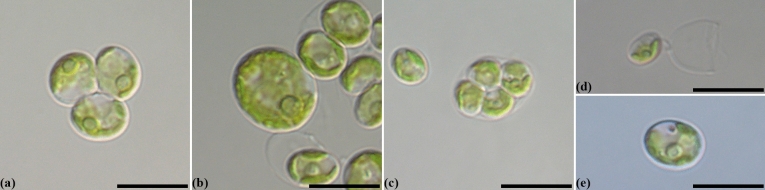
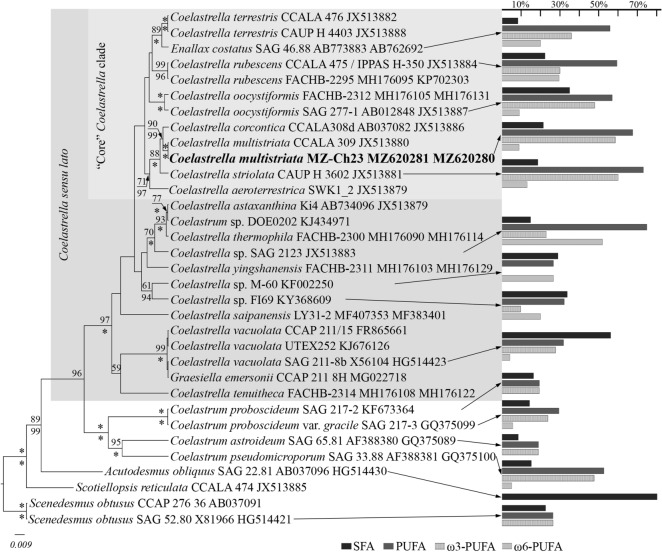
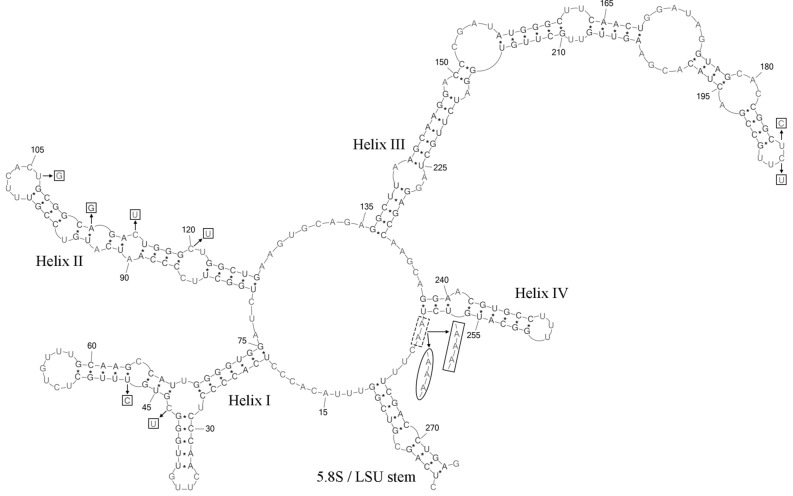
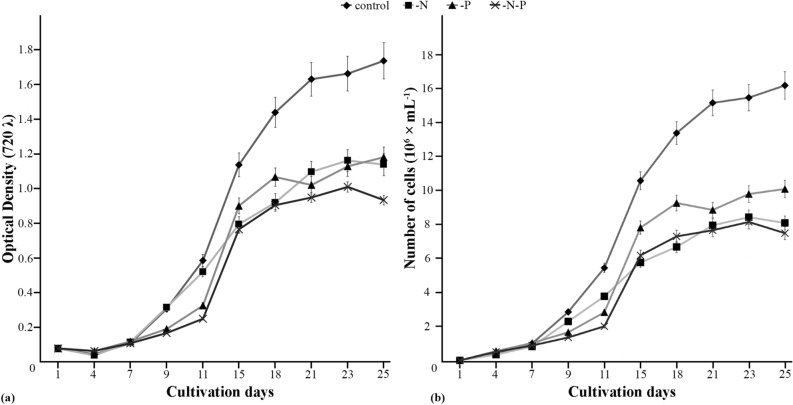
A novel freshwater strain of Coelastrella multistriata MZ–Ch23 was discovered in Tula region, Russia. The identification is based on morphological features, phylogenetic analysis of SSU rDNA gene and ITS1–5.8S rDNA–ITS2 region and predicted secondary structure of the ITS2. Phylogenetic analysis places the novel strain in the “core” Coelastrella clade within the Chlorophyceae. This is the first record of Coelastrella multistriata in the algal flora of Russia. Cultivation experiments were carried out to evaluate growth dynamics of the newly identified strain and the impact of nitrogen and/or phosphorus depletion on the fatty acid profiles and lipid productivity. On the fully supplemented Bold’s basal medium and under phosphorus-depleted conditions as well, the fatty acid profiles were dominated by α-linolenic acid (29.4–38.1% of total fatty acids). Depletion of either nitrogen or both nitrogen and phosphorus was associated with increased content of oleic acid (32.9–33.7%) and linoleic acid (11.9%). Prolongation of the growth to two months (instead of 25 days) resulted in increased content and diversity of very long-chain fatty acids including saturated species. The total very long-chain fatty acid content of 9.99% achieved in these experiments was 1.9–12.3-fold higher than in stress experiments. The highest variation was observed for oleic acid (3.4–33.7%). The novel strain showed the ability to accumulate lipids in amounts up to 639.8 mg L−1 under nitrogen and phosphorus starvation, which exceeds the previously obtained values for most Coelastrella strains. Thus, the newly identified MZ–Ch23 strain can be considered as a potential producer of omega-3 fatty acids on fully supplemented Bold’s basal medium or as a source of biomass with high content of saturated and monounsaturated fatty acids after nitrogen and phosphorus starvation.
Overview
The claims and statistics of this paper haven’t been checked yet.
Free: it reads the open-access text and checks the first 5 claims that cite a source we can check. Create a free account to check every claim.
Integrity signals
Registry
Cites
Statistics
Figures
Verification
Claims the paper makes
The claims and statistics of this paper haven’t been checked yet.
Free: it reads the open-access text and checks the first 5 claims that cite a source we can check. Create a free account to check every claim.
Claims other papers make about this one
Each is checked against this paper’s own text: does it say what the citing paper says it does?
The source backs part of the claim, not all of it — or backs it for a different population, condition or comparison.
In the citing paper
“It has been found that phosphorus deficiency can increase the accumulation of lipids and FAs [113, 119, 124], and the changes of FAs composition were similar to that under nitrogen deficiency.”
From Microalgae biofuels: illuminating the path to a sustainable future amidst challenges and opportunities (2024) · cites this paper as [113]
Experimental — accuracy not yet measuredThe cited source says what the claim attributes to it.
In the citing paper
“It is known that the FAs compositions of N. oceanica [112], Coelastrella multistriata [113], Scenedesmus sp. and C. sorokiniana [114], Nannochloropsis gaditana and Coccomyxa elongata [115, 116] indeed altered under nitrogen deficiency.”
From Microalgae biofuels: illuminating the path to a sustainable future amidst challenges and opportunities (2024) · cites this paper as [113]
The cited source says what the claim attributes to it.
In the citing paper
“In general, these changes involved notable increases in SFA and MUFA, accompanied by a decrease in PUFA.”
From Microalgae biofuels: illuminating the path to a sustainable future amidst challenges and opportunities (2024) · cites this paper as [113]
Self-check
Percentages, sums and reported differences re-computed from the paper’s own numbers.
The self-check needs the paper’s full text.
Citations
Cites
A RAPID METHOD OF TOTAL LIPID EXTRACTION AND PURIFICATION
Bligh, E. G., & Dyer, W. J. (1959) · Canadian Journal of Biochemistry and Physiology · doi:10.1139/o59-099 · Cited by 54,751
MEGA7: Molecular Evolutionary Genetics Analysis Version 7.0 for Bigger Datasets
Kumar, S., Stecher, G., & Tamura, K. (2016) · Molecular Biology and Evolution · doi:10.1093/molbev/msw054 · Cited by 44,059
Amplification and direct sequencing of fungal ribosomal RNA genes for phylogenetics
White, T. J., Bruns, T., Lee, S., & Taylor, J. (1990) · PCR Protocols · doi:10.1016/b978-0-12-372180-8.50042-1 · Cited by 36,648
jModelTest 2: more models, new heuristics and parallel computing
Darriba, D., Taboada, G. L., Doallo, R., & Posada, D. (2012) · Nature Methods · doi:10.1038/nmeth.2109 · Cited by 16,785
Mfold web server for nucleic acid folding and hybridization prediction
Zuker, M. (2003) · Nucleic Acids Research · doi:10.1093/nar/gkg595 · Cited by 13,404
BEAST: Bayesian evolutionary analysis by sampling trees
Drummond, A. J., & Rambaut, A. (2007) · BMC Evolutionary Biology · doi:10.1186/1471-2148-7-214 · Cited by 12,919
A Rapid Bootstrap Algorithm for the RAxML Web Servers
Stamatakis, A., Hoover, P., & Rougemont, J. (2008) · Systematic Biology · doi:10.1080/10635150802429642 · Cited by 7,028
The importance of the ratio of omega-6/omega-3 essential fatty acids
Simopoulos, A. P. (2002) · Biomedicine & Pharmacotherapy · doi:10.1016/s0753-3322(02)00253-6 · Cited by 4,131
Prostaglandins and Leukotrienes: Advances in Eicosanoid Biology
Funk, C. D. (2001) · Science · doi:10.1126/science.294.5548.1871 · Cited by 3,817
HEALTH BENEFITS OF DOCOSAHEXAENOIC ACID (DHA)
HORROCKS, L. A., & YEO, Y. K. (1999) · Pharmacological Research · doi:10.1006/phrs.1999.0495 · Cited by 1,031
Research works printed but not linked: 2
- Tsarenko PM Wasser S Nevo E Algae of Ukraine: diversity, nomenclature, taxonomy, ecology and geography 2011 Chlorophyta (ARG Gantner Verlag K-G, Rugell
- Mikhailyuk T Lichens, mosses, and terrestrial algae of granite canyons of Ukraine 2011 Alterpress
Cited by
Maltsev, Y., Maltseva, K., Kulikovskiy, M., & Maltseva, S. (2021) · Biology · doi:10.3390/biology10101060 · Cited by 511
Self-citationWang, M., Ye, X., Bi, H., & Shen, Z. (2024) · Biotechnology for Biofuels and Bioproducts · doi:10.1186/s13068-024-02461-0 · Cited by 201
“It is known that the FAs compositions of N. oce-anica [112], Coelastrella multistriata [113], Scenedesmus sp. and C. sorokiniana [114], Nannochloropsis gaditana and Coccomyxa elongata [115, 116] indeed altered under nitrogen deficiency.”
BackgroundNitrogen and phosphorus stress as a tool to induce lipid production in microalgae
Maltsev, Y., Kulikovskiy, M., & Maltseva, S. (2023) · Microbial Cell Factories · doi:10.1186/s12934-023-02244-6 · Cited by 174
“It is, for example, the use of abiotic stress factors during cultivation [30, 31], including nutrient restriction.”
BackgroundSelf-citationBiorefinery potential of Coelastrella biomass for fuel and bioproducts—a review
Nayana, K., Sudhakar, M. P., & Arunkumar, K. (2022) · Biomass Conversion and Biorefinery · doi:10.1007/s13399-022-02519-9 · Cited by 39
“Another two essential nutrients are nitrogen and phosphorus [29].”
InfluentialCorato, A., Le, T. T., Baurain, D., Jacques, P., Remacle, C., & Franck, F. (2022) · Life · doi:10.3390/life12030334 · Cited by 33
Boutarfa, S., Senoussi, M. M., González‐Silvera, D., López‐Jiménez, J. Á., & Aboal, M. (2022) · Life · doi:10.3390/life12040560 · Cited by 27
“96% GLA by the studied strain seemed relatively higher than the values recorded in other Coelastrella strains (Table 2) [10,16,19,26,47] and other thermophilic green microalgae [52].”
BackgroundResultInfluentialKurniawan, K. I. A., Susanti, H., Rani, D. S., Harahap, B. M., Firmansyah, E. A., Ishizaki, R., Demura, M., Ahamed, T., & Noguchi, R. (2024) · Journal of Cleaner Production · doi:10.1016/j.jclepro.2024.143857 · Cited by 25
Maltseva, I. А., Yakoviichuk, O. V., MALTSEVA, S. Y., Черкашина, С. П., Kulikovskiy, M. S., & Maltsev, Y. (2024) · Plants · doi:10.3390/plants13172413 · Cited by 19
“Recent studies show that many types of microalgae are sources of valuable compounds in demand for different economic activities [1–3].”
BackgroundSelf-citationTalhami, M., Mussa, A., Thaher, M. I., Das, P., Abouelela, A. R., & Hawari, A. H. (2023) · Biochemical Engineering Journal · doi:10.1016/j.bej.2023.108902 · Cited by 19
Krivina, E. S., Sinetova, M. A., Zadneprovskaya, E. V., Ivanova, M. O., Starikov, A., Shibzukhova, K. A., Lobakova, E. S., Bukin, Y. S., Portnov, A., & Temraleeva, A. D. (2024) · Antonie van Leeuwenhoek · doi:10.1007/s10482-024-02008-1 · Cited by 17
“The high lipid content, however, is characteristic of cells accumulating triacylglycerol (TAG) under unfavorable conditions (Hu et al. 2013; Minyuk et al. 2016, 2017; Maltsev et al. 2021; Corato et al. 2022).”
InfluentialValorization of Algal Biomass to Biofuel: A Review
Amalapridman, V., Ofori, P. A., & Abbey, L. (2025) · Biomass · doi:10.3390/biomass5020026 · Cited by 17
Phylogeny and Fatty Acid Profiles of New Pinnularia (Bacillariophyta) Species from Soils of Vietnam
Kezlya, E. M., Maltsev, Y., Генкал, С. И., Krivova, Z. V., & Kulikovskiy, M. S. (2022) · Cells · doi:10.3390/cells11152446 · Cited by 20
Self-citationIndigenous microalgae strains characterization for a sustainable biodiesel production
Amouri, M., Aziza, M., Kaidi, F., Vian, M. A., Chemat, F., Amrane, A., Assunção, M. F. G., Santos, L. M. A., Ounnar, A., Zitouni, D., et al. (2023) · Biotechnology Journal · doi:10.1002/biot.202300096 · Cited by 17
“[44] The optimal pH range for microalgae growth is strain-specific, while a range from 7.0 to 9.5 can yield a higher lipid accumulation in most microalgae species.”
BackgroundInfluentialSuh, H., Do, J., Yeo, H.-T., & Yoon, H. (2024) · Water Science & Technology · doi:10.2166/wst.2024.015 · Cited by 15
Yakoviichuk, O. V., Krivova, Z. V., MALTSEVA, S. Y., Kochubey, A., Kulikovskiy, M. S., & Maltsev, Y. (2023) · Antioxidants · doi:10.3390/antiox12030654 · Cited by 13
“Biomass preparation for determining the fatty acid methyl ester (FAME) profiles was performed according to Maltsev et al. [50].”
MethodSelf-citationKhan, S., Das, P., Radwan, A. B., Thaher, M. I., AbdulQuadir, M., Faisal, M., Kasák, P., Hawari, A. H., & Jabri, H. M. S. J. A. (2024) · ACS Sustainable Chemistry & Engineering · doi:10.1021/acssuschemeng.3c08324 · Cited by 13
Silva, S., Melo, L. B. U., Borrego, B. B., Gracioso, L. H., Perpetuo, E. A., & do Nascimento, C. A. O. (2023) · Brazilian Journal of Chemical Engineering · doi:10.1007/s43153-023-00399-8 · Cited by 11
“As in the current work, Maltsev et al. (2021) also noticed significant lipids production in a medium with nitrogen and phosphorus stringency, in which 57% dry weight content was reached.”
Complete plastome of Coelastrum microporum Nägeli (Scenedesmaceae, Sphaeropleales)
Lee, C., Cooper, J. T., Moroni, F., Salim, A. M., Lee, C., Spanbauer, T., & Theriot, E. C. (2023) · Mitochondrial DNA Part B · doi:10.1080/23802359.2023.2252941 · Cited by 8
Nutrient and salinity stress induced biodiesel production from a green alga, Monoraphidium neglectum
Sinha, T. S. P., Borah, D., Ravi, S., Mudliar, S. N., Chauhan, V. S., Sen, R., & Rout, J. (2024) · Biocatalysis and Agricultural Biotechnology · doi:10.1016/j.bcab.2024.103090 · Cited by 8
Loureiro, L., Morais, J., Silva, R., Martins, J. T., Geada, P., Vasconcelos, V. M., & Vicente, A. A. (2024) · Foods · doi:10.3390/foods13111759 · Cited by 6
“The selection of sequences chosen to perform this analysis was based on the most recent studies on these genera [29–33].”
MethodFunctional State of Coelastrella multistriata (Sphaeropleales, Chlorophyta) in an Enrichment Culture
MALTSEVA, S. Y., Kulikovskiy, M. S., & Maltsev, Y. (2022) · Microbiology · doi:10.1134/s0026261722601385 · Cited by 6
“Unicellular green algae may be successfully used due to their rapid phototrophic growth, high content of saturated and monounsaturated fatty acids, and ability to produce high amounts of triglycerides (Hu et al., 2013; Maltsev et al., 2019, 2021c).”
BackgroundMethodSelf-citationNovakovskaya, I. V., Дымова, О. В., Шадрин, Д. М., Parshukov, V. S., & Патова, Е. Н. (2025) · Russian Journal of Plant Physiology · doi:10.1134/s1021443725602289 · Cited by 5
Kezlya, E. M., Kapustin, D., Krivova, Z. V., Maltsev, Y., Nguyen-Ngoc, L., Huynh, D. T. N., Doan-Nhu, H., & Kulikovskiy, M. S. (2025) · Frontiers in Microbiology · doi:10.3389/fmicb.2025.1701605 · Cited by 4
Self-citationCoelastrella laevis sp. nov . (Chlorophyta, Sphaeropleales) from the soils of the Russian Far East
Nikulin, V. Y., Sushchenko, R. Z., Раисович, А. Ш., Nikulin, A. Y., & Gontcharov, A. A. (2025) · Phycologia · doi:10.1080/00318884.2025.2562622 · Cited by 4
“…and lutein, with antioxidant properties valuable for food, pharmaceutical, and cosmetic industries (Wang et al ., 2019), while others accumulate lipids suitable for biodiesel production and demonstrate potential for bioremediation (Aburai et al ., 2013; Hu et al ., 2013; Maltsev et al ., 2021).”
Maltseva, I. А., Yakoviichuk, O. V., MALTSEVA, S. Y., Cherkashina, S., Kulikovskiy, M. S., & Maltsev, Y. (2026) · Archives of Microbiology · doi:10.1007/s00203-026-04923-5 · Cited by 4
“…was based on morphology studies, phylogeny reconstruction using nucleotide sequences of 18S rRNA, and rbc L genes and prediction of the secondary structure of ITS2 (Maltsev and Konovalenko 2017 ; Maltsev et al. 2018 , 2019a, 2019b, 2020, 2021 ; Mamaeva et al. 2018; Maltseva et al. 2022 ).”
Self-citationBaldanta, S., Ferreira, A., Gouveia, L., Lloréns, J. M. N., & Guevara, G. (2024) · bioRxiv (Cold Spring Harbor Laboratory) · doi:10.1101/2024.01.24.576708 · Cited by 5
Maltseva, I. А., Kochubey, A., Yakoviichuk, O. V., MALTSEVA, S. Y., Kulikovskiy, M. S., & Maltsev, Y. (2025) · International Journal of Molecular Sciences · doi:10.3390/ijms262110740 · Cited by 3
“…have reported that high amounts of lipids and carotenoids accumulate in the various representatives of the Sphaeropleales: Coelastrella Chodat [28,29], Scenedesmus Meyen, Dictyochloris Vischer [30–32], Monoraphidium Komarkova-Legnerova, Pseudomuriella N. Hanagata [33,34], Nephrochlamys…”
Self-citationMansurova, I. M., Dantsyuk, N., Chubchikova, I. N., Bocharova, E., & Krivenko, O. (2026) · Phycology · doi:10.3390/phycology6010008 · Cited by 3
“Efficient regulation of intracellular biochemical pathways requires maintaining an optimal balance between growth-promoting conditions and controlled induction of stress responses [31,34,69,72].”
InfluentialBioprospecting Microalgae from Sewage Water: Assessment of Biochemicals for Biomass Utilization
Halder, N., Goyal, D., & Aneja, R. K. (2023) · Molecular Biotechnology · doi:10.1007/s12033-023-00969-8 · Cited by 5
Phylogeny and fatty acid profiles of new Coccomyxa (Chlorophyta) species from soils of Vietnam
Maltsev, Y., Kezlya, E. M., MALTSEVA, S. Y., Krivova, Z. V., Định, C. N., & Kulikovskiy, M. S. (2025) · Frontiers in Microbiology · doi:10.3389/fmicb.2025.1517865 · Cited by 2
Self-citationBaldanta, S., Ferreira, A., Vinuesa, A. M., García, I. G., Gouveia, L., Lloréns, J. M. N., & Guevara, G. (2025) · Applied Microbiology and Biotechnology · doi:10.1007/s00253-025-13618-8 · Cited by 2
“This genus includes mainly unicellular, ellipsoidal cells with peculiar apical wart-like wall thicken-ings (Goecke et al. 2020; John 2002; Maltsev et al. 2021; Wang et al. 2019a).”
Tuning lipid accumulation and fitness of motile algae via hydrodynamic cues
Kakavand, N., & Sengupta, A. (2026) · Frontiers in Bioengineering and Biotechnology · doi:10.3389/fbioe.2025.1722499 · Cited by 1
Study of three Scenedesmaceae strains: morphology, molecular phylogeny, growth and carotenogenesis
Chubchikova, I. N., Dantsyuk, N. V., Drobetskaya, I. V., Kuleshova, O. N., & Chelebieva, E. S. (2025) · World Journal of Microbiology and Biotechnology · doi:10.1007/s11274-025-04331-9 · Cited by 1
“A similar cell wall was detected on the SEM images of various Coelastrella species, such as Coelastrella spp. for biotechnological applications, especially in high-value carotenoid production (Serive et al. 2017 ; Maltsev et al. 2021; Nayana et al. 2022).”
Lakshmikandan, M., Li, B., Tian, Y., Liu, Y., Yang, Y., Ye, S., Wen, H., Chang, C., & Li, M. (2025) · Process Safety and Environmental Protection · doi:10.1016/j.psep.2025.107548 · Cited by 1
Role of elevated CO2 and nutrient availability in shaping metabolic response of Scenedesmus sp.
Sangtani, R., Saket, P., Parida, D., Kothari, R., & Bala, K. (2025) · International Journal of Advances in Engineering Sciences and Applied Mathematics · doi:10.1007/s12572-025-00387-w
Microalgal Technology Challenges
Zaharieva, M. M., Scheifelle, F. B., Kroumov, A. D., & Najdenski, H. M. (2026) · Sustainable materials and technology · doi:10.1007/978-981-95-2597-3_4
Qiao, K., Meng, C., Huang, Y., & Peng, B. (2026) · Food Research International · doi:10.1016/j.foodres.2026.118623 · Cited by 1
Lbouhmadi, R., Attaoui, H., & Mir, Y. (2026) · Next research. · doi:10.1016/j.nexres.2026.101985 · Cited by 1
., V., & Prasad, R. (2026) · SSRN Electronic Journal · doi:10.2139/ssrn.7345270
Dantsyuk, N., Krivenko, O., Mansurova, I. M., Degtyar, I., Данцюк, Н. В., Krivenko, O. V., & Degtyar, I. V. (2025) · Marine Biological Journal · doi:10.21072/mbj.2025.10.4.01
Nikulin, V. Y., Sushchenko, R. Z., Nikulin, A. Y., Bagmet, V. B., Раисович, А. Ш., & Gontcharov, A. A. (2026) · Phycologia · doi:10.1080/00318884.2026.2739890
Metadata
- Authors
- Maltsev, Y., Krivova, Z., Maltseva, S., Maltseva, K., Gorshkova, E., & Kulikovskiy, M.
- Affiliations
- Timiryazev Institute of Plant Physiology (RU)
- Bogdan Khmelnitsky Melitopol State Pedagogical University (UA)
- Corresponding author
- Maltsev, Yevhen
- ORCID
- Venue
- Scientific Reports
- Published
- 2021-10-06
- Volume
- 11
- Issue
- 1
- Pages
- 19818-19818
- ISSN
- 2045-2322 (ISSN-L)
- PMC
- PMC8494790
- OpenAlex
- W3202440401
- Cited by
- 40
- References
- 45
- Citations by year
- 2026: 7 · 2025: 11 · 2024: 9 · 2023: 7 · 2022: 5 · 2021: 1
- FWCI
- 1.03
- Type
- journal article
- Language
- en
- Open access
- gold
- doi.org
- Licence
- cc-by
- creativecommons.org/licenses/by/4.0 (tdm)
- creativecommons.org/licenses/by/4.0 (vor)
- Locations
- Scientific Reports (publishedVersion, cc-by)
- Europe PMC (PubMed Central) (publishedVersion, other-oa)
- PubMed Central (publishedVersion, cc-by)
- PubMed (publishedVersion)
- DOAJ (DOAJ: Directory of Open Access Journals) (submittedVersion, cc-by-sa)
- Funders
- Russian Science Foundation (20-74-10076)
- Topics
- Physical Sciences › Energy › Renewable Energy, Sustainability and the Environment › Algal biology and biofuel production
- Life Sciences › Biochemistry, Genetics and Molecular Biology › Biochemistry › Lipid metabolism and biosynthesis
- Physical Sciences › Environmental Science › Environmental Chemistry › Aquatic Ecosystems and Phytoplankton Dynamics
- Keywords
- Scenedesmaceae, nitrogen starvation, phosphorus deficiency, lipid accumulation, fatty acid composition, very long chain fatty acids, oleic acid, alpha-linolenic acid, omega-3 fatty acids, microalgae, phylogenetic identification, ITS2 secondary structure, algal biomass
- MeSH terms
- Chlorophyceae, DNA, Ribosomal, Fresh Water, Nitrogen, Nucleic Acid Conformation, Phosphorus, Phylogeny, Water Microbiology, Lipid Metabolism
About these checks
Registry, retraction, Cites and statistics results are computed, not judged, with one exception: a printed reference that no index lists is read once by a model before it counts as a citation error. Claims are extracted by a model and kept only when their quote appears verbatim in the text; each cited source is then checked, with a model’s help, for whether it says what the claim relies on. Those verdicts can be wrong — read the claim’s quote and the cited source before relying on one.
Statistics and arithmetic are recomputed, not judged.
Confidence bands are shown only for fields calibrated on our annotated test set. None is calibrated yet, so no band is shown.
What counts as a claim ›How we measure confidence ›How we check this ›
Are you an author, or do you see a problem with this page? Request a review
Data sources
Bibliographic data: Semantic Scholar, OpenAlex, Crossref.
Contains information from the Semantic Scholar Academic Graph Datasets, made available under the ODC Attribution License (ODC-BY 1.0).
Semantic Scholar’s data is described in: Kinney, R., et al. (2023). The Semantic Scholar Open Data Platform. arXiv:2301.10140.
