

The DOI matches its Crossref record; 49 of the 57 references it cites were found in a registry or an index.
Evaluation of domain generalization and adaptation on improving model robustness to temporal dataset shift in clinical medicine
Open accessPublished version of a preprint
Abstract
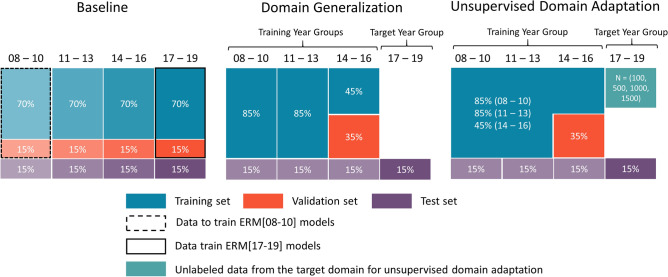
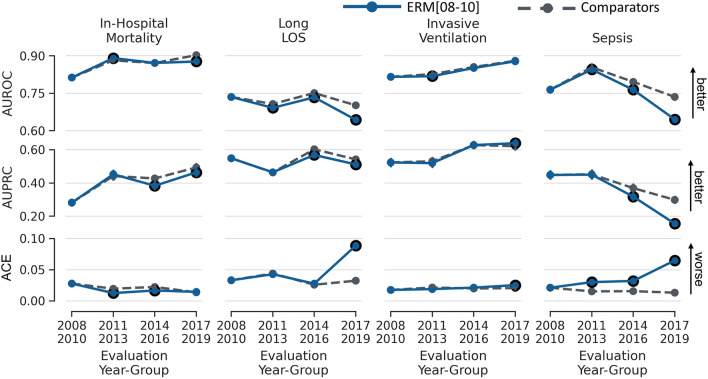
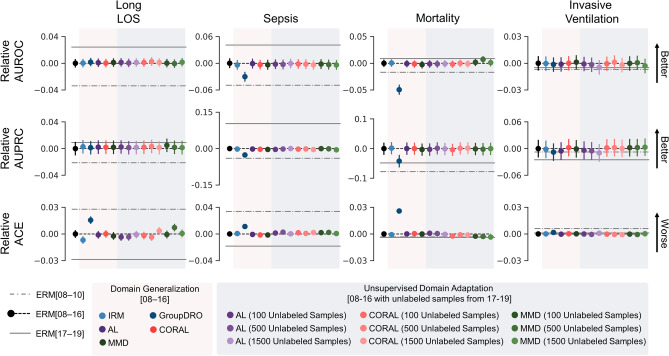
Temporal dataset shift associated with changes in healthcare over time is a barrier to deploying machine learning-based clinical decision support systems. Algorithms that learn robust models by estimating invariant properties across time periods for domain generalization (DG) and unsupervised domain adaptation (UDA) might be suitable to proactively mitigate dataset shift. The objective was to characterize the impact of temporal dataset shift on clinical prediction models and benchmark DG and UDA algorithms on improving model robustness. In this cohort study, intensive care unit patients from the MIMIC-IV database were categorized by year groups (2008–2010, 2011–2013, 2014–2016 and 2017–2019). Tasks were predicting mortality, long length of stay, sepsis and invasive ventilation. Feedforward neural networks were used as prediction models. The baseline experiment trained models using empirical risk minimization (ERM) on 2008–2010 (ERM[08–10]) and evaluated them on subsequent year groups. DG experiment trained models using algorithms that estimated invariant properties using 2008–2016 and evaluated them on 2017–2019. UDA experiment leveraged unlabelled samples from 2017 to 2019 for unsupervised distribution matching. DG and UDA models were compared to ERM[08–16] models trained using 2008–2016. Main performance measures were area-under-the-receiver-operating-characteristic curve (AUROC), area-under-the-precision-recall curve and absolute calibration error. Threshold-based metrics including false-positives and false-negatives were used to assess the clinical impact of temporal dataset shift and its mitigation strategies. In the baseline experiments, dataset shift was most evident for sepsis prediction (maximum AUROC drop, 0.090; 95% confidence interval (CI), 0.080–0.101). Considering a scenario of 100 consecutively admitted patients showed that ERM[08–10] applied to 2017–2019 was associated with one additional false-negative among 11 patients with sepsis, when compared to the model applied to 2008–2010. When compared with ERM[08–16], DG and UDA experiments failed to produce more robust models (range of AUROC difference, − 0.003 to 0.050). In conclusion, DG and UDA failed to produce more robust models compared to ERM in the setting of temporal dataset shift. Alternate approaches are required to preserve model performance over time in clinical medicine.
Overview
The claims and statistics of this paper haven’t been checked yet.
Run the check — free, no account needed. It reads the open-access text and checks the sources it cites.
Integrity signals
Registry
Cites
Statistics
Figures
Verification
Claims the paper makes
The claims and statistics of this paper haven’t been checked yet.
Run the check — free, no account needed. It reads the open-access text and checks the sources it cites.
Claims other papers make about this one
Each is checked against this paper’s own text: does it say what the citing paper says it does?
The cited source says what the claim attributes to it.
In the citing paper
“When it comes to the concrete behaviour change of the DL algorithm, most of the DL papers in the literature corpus investigate the robustness of a model, i.e. the stable behaviour of a model when facing erroneous or a limited amount of inputs. Only few records investigate generalisability119,144,145 or distribution shift139,192, a model’s capability of coping with new, unseen data.”
From The METRIC-framework for assessing data quality for trustworthy AI in medicine: A systematic review (2024) · cites this paper as [192]
Self-check
Percentages, sums and reported differences re-computed from the paper’s own numbers.
The self-check needs the paper’s full text.
Citations
Cites
PyTorch: An Imperative Style, High-Performance Deep Learning Library
Paszke, A., Gross, S., Massa, F., Lerer, A., Bradbury, J., Chanan, G., Killeen, T., Lin, Z., Gimelshein, N., Antiga, L., et al. (2019) · arXiv · doi:10.48550/arxiv.1912.01703 · Cited by 31,473
The third international consensus definitions for sepsis and septic shock (Sepsis-3).
Singer, M., Deutschman, C. S., Seymour, C. W., Shankar-Hari, M., Annane, D., Bauer, M., Bellomo, R., Bernard, G. R., Chiche, J.-D., Coopersmith, C. M., et al. (2016) · JAMA · doi:10.1001/jama.2016.0287 · Cited by 28,250 · cited 1×
“Sepsis corresponded to the development of sepsis according to the Sepsis-3 criteria 14 within 7 days from the prediction time.”
MethodGoldberger, A. L., Amaral, L. A. N., Glass, L., Hausdorff, J. M., Ivanov, P. C., Mark, R. G., Mietus, J. E., Moody, G. B., Peng, C.-K., & Stanley, H. E. (2000) · Circulation · doi:10.1161/01.cir.101.23.e215 · Cited by 14,809
Scikit-learn: Machine Learning in Python
(2011) · Journal of Machine Learning Research · doi:10.5555/1953048.2078195 · Cited by 8,539
Domain-Adversarial Training of Neural Networks
Ganin, Y., Ustinova, E., Ajakan, H., Germain, P., Larochelle, H., Laviolette, F., Marchand, M., & Lempitsky, V. (2017) · Advances in Computer Vision and Pattern Recognition · doi:10.1007/978-3-319-58347-1_10 · Cited by 8,318
Domain Adaptation via Transfer Component Analysis
Pan, S. J., Tsang, I. W.-H., Kwok, J. T.-Y., & Yang, Q. (2010) · IEEE Transactions on Neural Networks · doi:10.1109/tnn.2010.2091281 · Cited by 4,809 · cited 1×
“…the target environment 43 , data augmentation including the use of adversarial examples 44 , similarities between the source and target environments 45,46 , and semi-supervised learning that alternatively generate pseudo labels and incorporate them into re-training the model 47,48 have all…”
BackgroundDeep CORAL: Correlation Alignment for Deep Domain Adaptation
Sun, B., & Saenko, K. (2016) · Lecture Notes in Computer Science · doi:10.1007/978-3-319-49409-8_35 · Cited by 3,757
On the Opportunities and Risks of Foundation Models
Bommasani, R., Hudson, D. A., Adeli, E., Altman, R., Arora, S., von Arx, S., Bernstein, M. S., Bohg, J., Bosselut, A., Brunskill, E., et al. (2021) · arXiv · doi:10.48550/arxiv.2108.07258 · Cited by 2,676 · cited 1×
“For instance, models adapted from foundation models pre-trained on diverse datasets have displayed impressive performance gains in addition to robustness to various types of dataset shifts 42 .”
MethodScalable and accurate deep learning with electronic health records
Rajkomar, A., Oren, E., Chen, K., Dai, A. M., Hajaj, N., Hardt, M., Liu, P. J., Liu, X., Marcus, J., Sun, M., et al. (2018) · npj Digital Medicine · doi:10.1038/s41746-018-0029-1 · Cited by 2,648
Self-citationKhot, P. P., & Satav, S. (2015) · doi:10.21275/v4i11.nov151644 · Cited by 2,449
Research works printed but not linked: 3
- Varnik, V. Principles of risk minimization for learning theory. In Advances in Neural Information Processing Systems Vol. 4 (eds Moody, J. E. et al.) 831–838 (NeurIPS, 1991).
- Efron, B. & Tibshirani, R. An Introduction to the Bootstrap (Chapman & Hall, 1993). · DOI · Paper page
- Zhao, H., Combes, R. T. D., Zhang, K. & Gordon, G. On learning invariant representations for domain adaptation. In 36th International Conference on Machine Learning, ICML 2019 7523–7532 (PMLR, 2019).
Cited by
Sorted by citations
Items 101–138 of 138
CausalShift: A Modular, Plugin-Based Framework for Dataset Shift Handling in Machine Learning
Song, S., Pozi, M. S. M., & Farid, N. (2026) · Applied Sciences · doi:10.3390/app16157604
Tamanna, F. F., Arefin, K. M. M., & Masud, M. A. (2026) · arXiv (Cornell University) · doi:10.48550/arxiv.2607.19020
“Clinical machine learning models deployed in intensive care units (ICUs) suffer performance degradation over time due to temporal distribution shift driven by evolving clinical guidelines, changing documentation practices, and shifting patient acuity [3, 7, 8, 23].”
Jang, Y., Kwon, J. H., Kim, H., Joung, Y.-J., Nang, J., & Kim, C. H. (2026) · Journal of Medical Internet Research · doi:10.2196/86087 · Cited by 1
“The low absolute performance of AUPRC is likely the result of a complex interplay of various factors, including moderate class imbalance, a limited feature set, and domain differences between synthetic and hospital data [36].”
Narvaez, R. A. (2026) · Environmental Disease · doi:10.4103/ed.ed_16_26
EXPLORATORY DATA ANALYSIS AS A FOUNDATION FOR TRUSTWORTHY CLINICAL MACHINE LEARNING
Kunichik, V., & Salykova, O. (2026) · Scientific Journal of Astana IT University · doi:10.37943/jxdb7524
PSP: Harnessing Position and Shape Priors for Cross-Domain Few-Shot Medical Image Segmentation
Xu, B., Zhu, Y.-Z., & Zhang, H.-F. (2026) · arXiv.org · doi:10.48550/arxiv.2606.28799
“However, practical deployment faces a critical challenge: the domain shift [4] (e.g., training on MRI vs. inferring on CT).”
Zheng, K. (2026) · arXiv (Cornell University) · doi:10.48550/arxiv.2606.21885
“We hypothesise that the divergence between the deployment-time and training-time cohort distributions will serve as an earlier indicator of distribution shift than conventional performance-based monitoring [25, 112].”
Nona, P. J., Firos, J. R. B., Zografos, C., Schuuring, M. J., Bhatt, A., & Andrikopoulou, E. (2026) · Current Heart Failure Reports · doi:10.1007/s11897-026-00766-9
“In medicine—and particularly in HF care-overfitting undermines the in clinical validity of AI tools and impedes safe deployment across diverse populations [ 9, 43 ].”
Ardiawan, N. L., Wibowo, G. M., Mulyati, S., Mulyantoro, D. K., & Rasyid, R. (2026) · MEDICA (International Medical Scientific Journal) · doi:10.53770/medica.v8i5.955
“Other studies also show a decrease in the performance of sepsis prediction models due to temporal dataset shift in electronic medical record data (Guo et al., 2022) .”
Artificial Intelligence in Rare Diseases: Workflow-Integrated Precision Kidney Care
Thongprayoon, C., Pesce, F., & Cheungpasitporn, W. (2026) · Clinics and Practice · doi:10.3390/clinpract16060101
“In such environments, model performance may drift over time as local data distributions evolve, institutions join or leave networks, or clinical practices change [97,98].”
Domain adaptive uplift modeling across heterogeneous mental health cohorts
Emran, A., & Islam, A. A. A. (2026) · iScience · doi:10.1016/j.isci.2026.116027
“For example, Guo et al. 31 found that several domain generalization Overall, RQ2 is answered cautiously.”
InfluentialZhu, M.-L., Wu, T., Yang, Y., Chen, B.-R., Dong, Y., Jing, Y., Huang, R., & Liu, X. (2026) · International Conference on Remote Sensing, Surveying, and Mapping · doi:10.1117/12.3112671
“Furthermore, models trained on specific areas often perform poorly when applied to other locations, showing limited ability to generalize and adapt[22-23].”
Rouhollahi, A., & Nezami, F. R. (2026) · bioRxiv (Cold Spring Harbor Laboratory) · doi:10.64898/2026.05.06.722409
“Under this shift, Cadence sustained the smallest structured-feature degradation ( − 6.67 pp) among all tabular-augmented models, con-766 sistent with foundation-model representations degrading more gracefully than standard feature sets [33, 20].”
InfluentialVillena, F., Bravo-Marquez, F., & Dunstan, J. (2026) · BMC Medical Informatics and Decision Making · doi:10.1186/s12911-026-03538-6
“Auxiliary methods such as feature selection, domain adaptation, and retraining on new data have also been investigated to extend model robustness over time [8, 9].”
Artificial intelligence in ovarian cancer: advancing in precision diagnosis and clinical management
Shao, M., Wang, T., Ji, L., Xu, L., Zhang, Y., Wang, D. Q., Jia, C., Chen, L., Zhang, H., Yan, W., et al. (2026) · Frontiers in Immunology · doi:10.3389/fimmu.2026.1795144
Wang, S., & Boutelle, M. G. (2026) · Computer Methods and Programs in Biomedicine · doi:10.1016/j.cmpb.2026.109461
Soria-Cruz, J., Luna-Ramírez, E., Castillo-Zúñiga, I., López-Veyna, J., Estrada-Ramírez, M. E., & González-Morales, J. A. (2026) · Diseases · doi:10.3390/diseases14050155
“This dataset was used because machine learning models developed using more recent data exhibit less model drift and, therefore, yield more reliable predictions [18,19].”
Lu, H.-D., & Xu, J. (2026) · Scientific Reports · doi:10.1038/s41598-026-50146-5
“Guo et al 25 . systematically evaluated multiple clinical tasks and demonstrated that traditional models experience substantial performance degradation under temporal distribution shifts, underscoring the importance of domain generalization in healthcare applications.”
Dual knowledge-guided data augmentation for robust clinical prediction models
Moon, S., Park, P. G., Choi, N.-Y., Kim, J., Lim, S.-H., Lee, J. H., Park, M., Baek, H., Cho, M., Lee, K., et al. (2026) · Scientific Reports · doi:10.1038/s41598-026-46459-0
“To address this, recent research has focused on domain generalization 10 and other robust learning approaches designed to enhance model stability across diverse environments.”
Frutuoso, J., Pina, A. F., Maria, A. R., Pereira, M., Neves, B. D., Donato, H., & Carneiro, A. V. (2026) · Acta Médica Portuguesa · doi:10.20344/amp.24483
Sleep Disorder Classification Using Ensemble Stacking and Genetic Algorithm-Based Feature Selection
Rahmadhani, B., Purwono, P., Ma'arif, A., & Suwarno, I. (2026) · International Seminar on Intelligent Business and Edge-Computing Research (ISIBER) · doi:10.1109/isiber68248.2026.11469881
“In addition to classification evaluation, probability reliability is evaluated using two calibration metrics, namely Expected Calibration Error (ECE) and Brier Score [37].”
Zhang, J., Wang, R., Xu, Z., Liu, H., Rodríguez, J., Cos, H. F., Srivastava, R., Raper, L., Sanford, D., Hammill, C. W., et al. (2026) · ACM Transactions on Computing for Healthcare · doi:10.1145/3788681
“Current methodologies primarily rely on maintenance strategies such as performance monitoring, model updating, and calibration at predefined time intervals [14, 15, 25, 71].”
Zhang, B., Su, S., Ma, N., Wang, Y., & Li, W. (2026) · PHM Society Asia-Pacific Conference · doi:10.36001/phmap.2025.v5i1.4570
“However, its effectiveness heavily depends on stable operating conditions(H. Li et al., 2024; Guo et al., 2021; Yan et al., 2020).”
Wang, J., Zhao, M., Zhou, H., Liu, M., Zhao, M., & Zhang, X. (2026) · Scientific Reports · doi:10.1038/s41598-025-30936-z
Bring-Your-Own-Agent: Extending Copilot Across Enterprise and Healthcare Platforms
Krishnamurthy, S. K. G. (2025) · IEEE Pune Section International Conference (PuneCon) · doi:10.1109/punecon67554.2025.11378399
“It is important to make sure AI agents safely operate in environments, especially when they’re dealing with PII or health data, as per research[15].”
Ferri, P., Sáez, C., Castro, A. F.-D., Sánchez-Cuesta, P., & Garcia-Gomez, J. M. (2025) · Health Information Science and Systems · doi:10.1007/s13755-025-00395-x · Cited by 1
“…of previous works addressing the training and deployment of Machine Learning models in the context of medical data with temporal dataset shifts [11, 13, 14, 17–19], to our knowledge, this is the first study facing evolving clinical features within the domain of out-of-hospital emergencies.”
InfluentialTracking Temporal Variations in Predictive Models for Healthcare Claims Data
Ghantasala, K. K. (2025) · 2025 Artificial Intelligence x Humanities, Education, and Art (AIxHEART) · doi:10.1109/aixheart65685.2025.00015
Challenges and Applications of Integrating Artificial Intelligence in Orthodontics
Obaidat, L., Mohawesh, R., Salameh, H. B., Al-Khatib, R. M., & Dwaeikat, T. (2025) · International Conference on Intelligent Computing, Communication, Networking and Services (ICCNS) · doi:10.1109/iccns66249.2025.11428343
“This could happen, for instance, if orthodontic practices become more digital, if corporate practices become more prevalent, or if the demographics of patients seeking orthodontic care change [19], [20], [21], [22].”
Driever, J., Lentzen, M., Madan, S., & Fröhlich, H. (2025) · medRxiv · doi:10.1101/2025.06.02.25328621
“[7] While these works highlight the increasing interest in DA for structured EHR data, they are limited in the diversity of DA algorithms considered and do not incorporate recent transformer models for structured EHR data .”
Marelli, C., Giacobbe, D. R., Limongelli, A., Guastavino, S., Campi, C., Piana, M., & Bassetti, M. (2025) · Journal of Chemotherapy · doi:10.1080/1120009x.2025.2492960
Deep continual multitask severity assessment from changing clinical features
Ferri, P., Sáez, C., Castro, A. F., Sánchez-Cuesta, P., & García-Gómez, J. M. (2024) · medRxiv · doi:10.1101/2024.02.20.24303094
“Finally, while there are studies addressing the training and deployment of Machine Learning models in the context of medical data with temporal shifts [12, 13, 43–45], it is challenging to find similar studies for out-of-hospital emergencies.”
BackgroundResultAn Artificial Intelligence Outlook for Colorectal Cancer Screening
Katrakazas, P., Ballas, A., Anisetti, M., & Spais, I. (2022) · IEEE International Conference on Big Data Computing Service and Applications (BigDataService) · doi:10.1109/bigdataservice55688.2022.00018 · Cited by 3
“To this end, several Domain Generalization (DG) [30]–[32] methods have been proposed.”
MethodAdvanced Multimodal AI for Resilient Healthcare: Enhancing Early Risk Assessment in Critical Care
Wu, S.-W., Li, C., Chien, T.-N., & Zhang, Y. (2026) · International Journal of Advanced Computer Science and Applications · doi:10.14569/ijacsa.2026.0170121
“Overcoming these challenges will be essential for developing predictive models that are both accurate and robust, enabling their effective deployment in critical care environments [59].”
Uncertainty dual-model adaptation for state of health estimation of retired lithium-ion batteries
Chen, S.-J., Xiao, Y., Zhu, X., Shen, C., & Chen, W.-H. (2026) · Journal of Energy Storage · doi:10.1016/j.est.2026.124233
Morales, D., Gutiérrez, A., Navarro, L., & Rios, P. (2026) · Journal of Artificial Intelligence for Healthcare Systems · doi:10.68159/z485520280
A feature-transfer-model based domain generalization method with a mixed contrastive loss
Wang, Y., & Zhang, H. (2024) · JUSTC · doi:10.52396/justc-2023-0010
Johnson, E., Smith, R. P., Brown, L., & Miller, K. (2024) · Journal of Artificial Intelligence for Healthcare Systems · doi:10.68159/h674523636
Kowalska, A., Nowak, P., Zielinski, T., & Mazur, K. (2023) · Journal of Health Informatics and Digital Systems · doi:10.68159/u679026846
Metadata
- Authors
- Guo, L. L., Pfohl, S. R., Fries, J., Johnson, A. E. W., Posada, J., Aftandilian, C., Shah, N., & Sung, L.
- Affiliations
- Hospital for Sick Children (CA)
- Stanford University (US)
- Corresponding author
- Sung, Lillian
- ORCID
- Venue
- Scientific Reports
- Published
- 2022-02-17
- Volume
- 12
- Issue
- 1
- Pages
- 2726-2726
- ISSN
- 2045-2322 (ISSN-L)
- PMC
- PMC8854561
- OpenAlex
- W4221077687
- Cited by
- 103
- References
- 57
- Citations by year
- 2026: 34 · 2025: 29 · 2024: 15 · 2023: 15 · 2022: 9
- FWCI
- 5.59
- Type
- journal article
- Language
- en
- Open access
- gold
- doi.org
- Locations
- Scientific Reports (publishedVersion, cc-by)
- medRxiv (acceptedVersion, cc-by)
- PubMed Central (publishedVersion, cc-by)
- PubMed (publishedVersion)
- DOAJ (DOAJ: Directory of Open Access Journals) (submittedVersion, cc-by-sa)
- Topics
- Physical Sciences › Computer Science › Artificial Intelligence › Machine Learning in Healthcare
- Physical Sciences › Computer Science › Artificial Intelligence › Domain Adaptation and Few-Shot Learning
- Health Sciences › Medicine › Critical Care and Intensive Care Medicine › Sepsis Diagnosis and Treatment
- Keywords
- domain generalization, unsupervised domain adaptation, model robustness, clinical prediction model, intensive care unit patients, MIMIC-IV, sepsis prediction, mortality prediction, length of stay prediction, empirical risk minimization, clinical decision support systems, model calibration, feedforward neural networks
- MeSH terms
- Aged, Aged, 80 and over, Female, Humans, Intensive Care Units, Length of Stay, Male, Middle Aged, Models, Biological, Databases, Factual, Neural Networks, Computer, Sepsis
About these checks
Registry, retraction, Cites and statistics results are computed, not judged, with one exception: a printed reference that no index lists is read once by a model before it counts as a citation error. Claims are extracted by a model and kept only when their quote appears verbatim in the text; each cited source is then checked, with a model’s help, for whether it says what the claim relies on. Those verdicts can be wrong — read the claim’s quote and the cited source before relying on one.
Statistics and arithmetic are recomputed, not judged.
Confidence bands are shown only for fields calibrated on our annotated test set. None is calibrated yet, so no band is shown.
What counts as a claim ›How we measure confidence ›How we check this ›
Are you an author, or do you see a problem with this page? Request a review
