

Wearable sensors during drawing tasks to measure the severity of essential tremor
Open accessThe DOI matches its Crossref record; 64 of the 64 references it cites were found in a registry or an index; 13 of the 40 sources its claims cite were checked for support.
Abstract
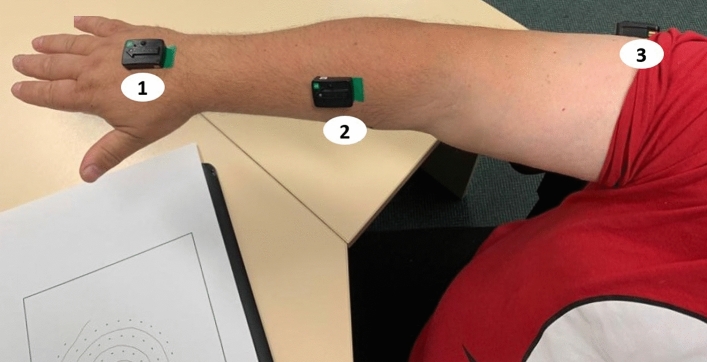
Commonly used methods to assess the severity of essential tremor (ET) are based on clinical observation and lack objectivity. This study proposes the use of wearable accelerometer sensors for the quantitative assessment of ET. Acceleration data was recorded by inertial measurement unit (IMU) sensors during sketching of Archimedes spirals in 17 ET participants and 18 healthy controls. IMUs were placed at three points (dorsum of hand, posterior forearm, posterior upper arm) of each participant’s dominant arm. Movement disorder neurologists who were blinded to clinical information scored ET patients on the Fahn–Tolosa–Marin rating scale (FTM) and conducted phenotyping according to the recent Consensus Statement on the Classification of Tremors. The ratio of power spectral density of acceleration data in 4–12 Hz to 0.5–4 Hz bands and the total duration of the action were inputs to a support vector machine that was trained to classify the ET subtype. Regression analysis was performed to determine the relationship of acceleration and temporal data with the FTM scores. The results show that the sensor located on the forearm had the best classification and regression results, with accuracy of 85.71% for binary classification of ET versus control. There was a moderate to good correlation (r2 = 0.561) between FTM and a combination of power spectral density ratio and task time. However, the system could not accurately differentiate ET phenotypes according to the Consensus classification scheme. Potential applications of machine-based assessment of ET using wearable sensors include clinical trials and remote monitoring of patients.
Overview
CoChat Summary
TL;DR
This study used wearable IMU accelerometers during Archimedes spiral drawing to quantify essential tremor severity and classify ET versus controls. Forearm sensor data combined with task time correlated with clinical FTM scores and classified ET vs control with 85.71% accuracy, but ET subtype classification was poor.
Key findings
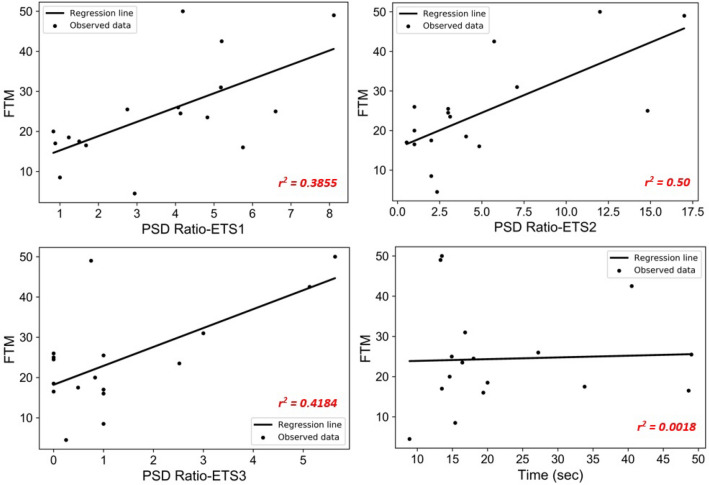
- The forearm sensor (Sensor-2) gave the best results: binary ET versus control classification accuracy was 85.71%, and PSD ratio versus FTM regression had r² = 0.50; Sensor-1 and Sensor-3 had r² = 0.3855 and 0.4184, respectively.
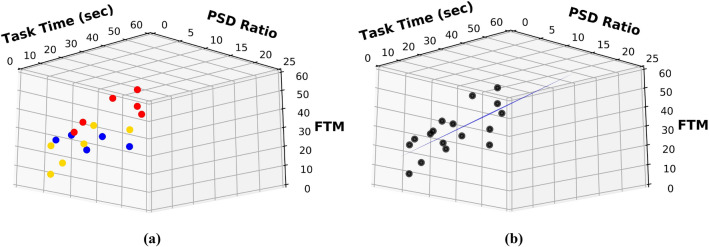
- Combining PSD ratio and task time estimated clinical FTM scores with r² = 0.561 and RMSE = 8.158.
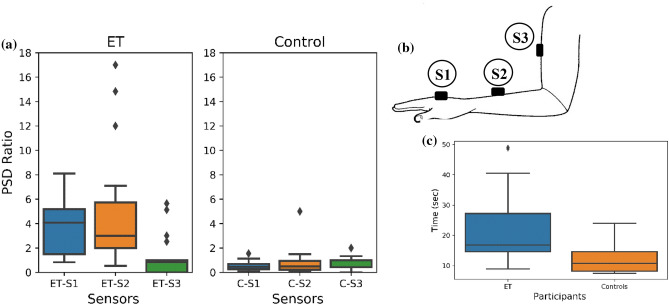
- ET participants had higher mean PSD ratios at all three sensor locations and longer mean task times; Mann–Whitney U testing showed significant ET-control differences for Sensor-2 PSD ratio (U = 25.00, p = 0.00) and task time (U = 52.00, p = 0.001).
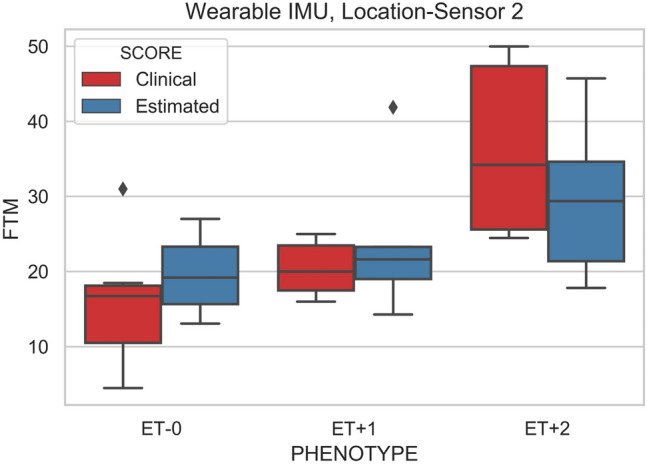
- The 4-class SVM separating controls, ET − 0, ET + 1, and ET + 2 achieved only 57.14% accuracy using time plus PSD ratio, so the system could not accurately differentiate ET phenotypes.
Methods
- Seventeen ET participants and 18 healthy controls had analysable recordings; ET participants were recruited from Monash Health, with mean age 67.2 ± 13.0 years and mean tremor duration 21.7 ± 19.0 years. Two ET and two control participants were excluded for noisy or incomplete IMU data.
- IMU sensors were placed at three points on the dominant arm: dorsum of hand, mid-forearm, and posterior upper arm. Accelerometer data were recorded during drawing of a predefined Archimedes spiral on a digital tablet; vector magnitude was derived, and the PSD ratio of 4–12 Hz to 0.5–4 Hz plus task time T were used as features.
- Blinded movement disorder neurologists scored FTM and classified ET/ET plus per the Consensus Statement. Analysis used Mann–Whitney U tests, Kruskal–Wallis tests, linear regression, and SVM with leave-one-out cross-validation in Python 3.8.
Limitations
- Stated in the paper: each participant was investigated only once, so repeatability was not tested; the sample size was not large enough to perform a detailed analysis of differences within ET subgroups.
- Evident from the results: the system’s ability to separate ET phenotypes was poor, with only 57.14% accuracy for the 4-class classification, and the paper notes this may reflect the Consensus classification’s emphasis on clinical features other than tremor.
Model-written summary. Check it against the paper before relying on it.
Integrity signals
Registry
Cites
Statistics
Figures
Verification
Claims the paper makes
9 Valid · 0 Not valid · 16 Not checked · 44 Own results and interpretations
The sources with a verdict support this claim; the rest weren’t checked yet, have no full text we could read, or their verdicts aren’t rated yet.
In the paper
“While there is evidence that ET patients have a degree of slowness of movement34–38, this is not captured by the FTM scale, or by other clinical rating scales for ET.”
§ Wearable sensors during drawing tasks to measure the severity of essential tremor > Discussion > Task execution time
What the sources say
- Not checked yetcites [34] Montgomery EB Jr Baker KB Lyons K Koller WC Motor initiation and execution in essential tremor and Parkinson's disease Mov. Disord. 2000 15 511 515 10.1002/1531-8257(200005)15:3<511::Aid-mds1014>3.0.Co;2-r 10830417
- Supportedcites [35] Goubault E Nguyen HP Ayachi FS Bogard S Duval C Do Bradykinesia and tremor interfere in voluntary movement of essential tremor patients? preliminary findings Tremor Other Hyperkinet. Mov. (New York, N.Y.) 2017 7 459 459 10.7916/D822319X PMC5499257 28690920 source
The Results section 'RAM performance' states that ET participants had a significantly longer mean pronation–supination cycle duration (W=136, p=0.042) with significantly reduced mean, maximal and instantaneous angular velocity (p<0.001), 'indicative of core bradykinesia' — i.e., slowness of movement. The Discussion and Abstract reiterate that patients with ET presented with core bradykinesia/slowed fast repetitive movements, and the Introduction defines core bradykinesia as exactly 'the slowness of movement detected during fast repetitive movements'. The paper's own caveat (task completion time and error rate similar between groups in the dexterity task) bounds the degree, consistent with the citing sentence's 'a degree of'. (LLM, conf=0.90)
- Not checked yetcites [36] Duval C Sadikot AF Panisset M Bradykinesia in patients with essential tremor Brain Res. 2006 1115 213 216 10.1016/j.brainres.2006.07.066 16920079 source
- Not checked yetcites [37] Bologna M Is there evidence of bradykinesia in essential tremor? Eur. J. Neurol. 2020 27 1501 1509 10.1111/ene.14312 32396976 source
- Not checked yetcites [38] Costa J Nonlinear dynamic analysis of oscillatory repetitive movements in Parkinson's disease and essential tremor Mov. Disord. 2010 25 2577 2586 10.1002/mds.23334 20818605 source
plainstates an association- Asserted: passes — The authors put it forward as true.
- Checkable: passes — It can be checked against evidence.
- Load-bearing: passes — The paper’s conclusions depend on it.
- Based: passes — The paper gives a reason why it holds.
Every source the paper cites for this claim was checked and supports it.
In the paper
“All complied with the Axis 1 definition of ET in the 2018 Consensus Statement on the Classification of Tremors6.”
§ Wearable sensors during drawing tasks to measure the severity of essential tremor > Methodology > Participants and clinical assessments
What the sources say
- Supportedcites [6] Bhatia KP Consensus Statement on the classification of tremors from the task force on tremor of the International Parkinson and Movement Disorder Society Mov. Disord. 2018 33 75 87 10.1002/mds.27121 29193359 PMC6530552 source
The Results section (“Essential Tremor”) defines ET as an Axis 1 syndrome and sets out its criteria, including a tremor history of at least three years. The citation identifies the source of the definition; whether the citing paper’s participants met it is the citing authors’ own assessment, not a finding attributed to the consensus statement. (LLM, conf=0.91)
plainn = 9- Asserted: passes — The authors put it forward as true.
- Checkable: passes — It can be checked against evidence.
- Load-bearing: passes — The paper’s conclusions depend on it.
- Based: passes — The paper gives a reason why it holds.
- Supported
The cited sources support only part of this claim — read each source’s verdict below.
In the paper
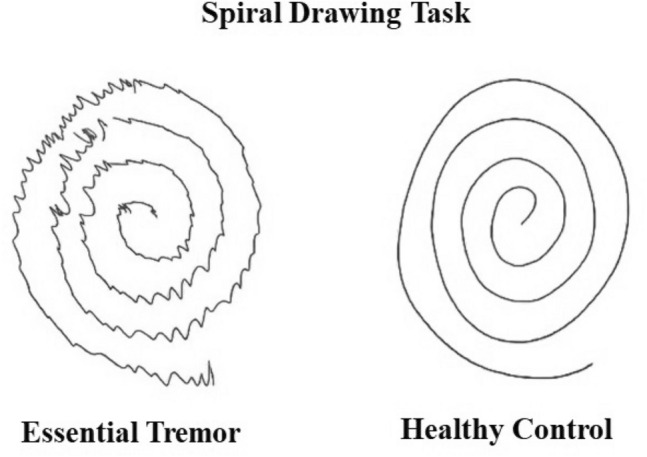
“Spiral drawing involves greater proximal muscle use than writing, though wrist flexion–extension motion produces much of the tracing oscillation that can be seen in Fig. 625.”
§ Wearable sensors during drawing tasks to measure the severity of essential tremor > Discussion > Placement of wearable sensors
What the sources say
- Partly supportedcites [25] Alty J Cosgrove J Thorpe D Kempster P How to use pen and paper tasks to aid tremor diagnosis in the clinic Pract. Neurol. 2017 17 456 463 10.1136/practneurol-2017-001719 28844041 PMC5739823 sourceExperimental — accuracy not yet measured
Our copy never compares the muscular demands of spiral drawing with those of writing: the only 'proximal' statement (Dystonic tremor section) concerns dystonic tremor's pathophysiology—co-contraction of agonist/antagonist muscles affecting proximal (shoulder/elbow) as well as distal (wrist/digits) parts—not a task difference. The paper's spiral-versus-writing contrast (Archimedes spiral section) is about the spiral demanding one continuous pen movement without the brief breaks between words, and about removing stylistic handwriting confounds, not about proximal muscle use. The concessive half of the citing sentence is supported: the Essential tremor section attributes the spiral's unidirectional oscillation to distal flexion–extension movements predominantly involving the wrists and fingers. So the proximal-use attribution is not this source's claim. (LLM, conf=0.72)
plainstates a cause- Asserted: passes — The authors put it forward as true.
- Checkable: passes — It can be checked against evidence.
- Load-bearing: unclear — It is unclear whether the paper’s conclusions depend on it.
- Based: passes — The paper gives a reason why it holds.
- Partly supported
The cited sources support only part of this claim — read each source’s verdict below.
In the paper
“A sensor's location can affect the accuracy of detection22,23,42.”
§ Wearable sensors during drawing tasks to measure the severity of essential tremor > Discussion > Placement of wearable sensors
What the sources say
- Supportedcites [22] Janidarmian M Roshan Fekr A Radecka K Zilic Z A comprehensive analysis on wearable acceleration sensors in human activity recognition Sensors (Basel). 2017 10.3390/s17030529 28272362 PMC5375815 source
Section 3 (Datasets) states that 'the performance of HAR systems strongly depends on sensor placement since the number and the placement of inertial sensors have direct effects on the measurement of bodily motions', and that each placement suits particular activities better. Section 4 (Experimental Results and Discussions) bears this out with per-position accuracies (e.g., 98.85% RUL and 98.03% LUL vs. 94.06% LLA under 10-fold; 92.35% LUL vs. 64.62% RLA under LOSO). The hedged claim ('can affect') is matched by the source's own findings; the single remark that there is 'no strong relation between the sensor position and classification performance' concerns the runtime-accuracy Pareto front of classifiers, not whether placement affects accuracy. (LLM, conf=0.90)
- Partly supportedcites [23] Mahadevan N Development of digital biomarkers for resting tremor and bradykinesia using a wrist-worn wearable device NPJ. Digit. Med. 2020 3 5 5 10.1038/s41746-019-0217-7 31970290 PMC6962225 sourceExperimental — accuracy not yet measured
Our copy treats sensor location as consequential but never in terms of detection accuracy. The Discussion (limitations paragraph) states that because PD motor symptoms 'can manifest across the body', a single wrist-worn sensor 'may be limited to monitoring patients who have not developed axial symptoms' and that 'multiple devices and sensing modalities ... might be essential', and the Results (Patient acceptance) and Methods (Instrumentation) sections discuss the 11 devices at multiple body locations and the choice of the wrist (most affected/dominant side) for analysis. The Methods also note PCA projections and vector magnitude were used 'to reduce dependence on device orientation' — orientation, not location. No passage in our copy compares detection accuracy across sensor placements or states that location affects accuracy, so that part of the claim is not supported by this source. (LLM, conf=0.65)
- Not checked yetcites [42] Sztyler, T. & Stuckenschmidt, H. in 2016 IEEE International Conference on Pervasive Computing and Communications (PerCom). 1–9.
plainstates a possible cause- Asserted: passes — The authors put it forward as true.
- Checkable: passes — It can be checked against evidence.
- Load-bearing: passes — The paper’s conclusions depend on it.
- Based: passes — The paper gives a reason why it holds.
- Supported
The sources with a verdict support this claim; the rest weren’t checked yet, have no full text we could read, or their verdicts aren’t rated yet.
In the paper
“Rapid alternating limb movements are performed abnormally slowly35–37, and the rhythmicity of repetitive hand movements is impaired by ET38.”
§ Wearable sensors during drawing tasks to measure the severity of essential tremor > Discussion > Task execution time
What the sources say
- Supportedcites [35] Goubault E Nguyen HP Ayachi FS Bogard S Duval C Do Bradykinesia and tremor interfere in voluntary movement of essential tremor patients? preliminary findings Tremor Other Hyperkinet. Mov. (New York, N.Y.) 2017 7 459 459 10.7916/D822319X PMC5499257 28690920 source
The Results (RAM performance; page not provided) report significantly longer pronation–supination cycles and lower angular velocities in participants with ET than in controls. The Discussion likewise states that patients were slower at rapid alternating movements. (LLM, conf=0.93)
- Not checked yetcites [36] Duval C Sadikot AF Panisset M Bradykinesia in patients with essential tremor Brain Res. 2006 1115 213 216 10.1016/j.brainres.2006.07.066 16920079 source
- Not checked yetcites [37] Bologna M Is there evidence of bradykinesia in essential tremor? Eur. J. Neurol. 2020 27 1501 1509 10.1111/ene.14312 32396976 source
plainstates a cause- Asserted: passes — The authors put it forward as true.
- Checkable: passes — It can be checked against evidence.
- Load-bearing: unclear — It is unclear whether the paper’s conclusions depend on it.
- Based: passes — The paper gives a reason why it holds.
- Supported
28 more claims · 2 with their cited sources checked
Create a free account to see all 69 claims and to verify the 27 references still open.
- It may state two separate claims as one. 20
- Probably not a substantial claim. 22
Claims other papers make about this one
Each is checked against this paper’s own text: does it say what the citing paper says it does?
The cited source says what the claim attributes to it.
In the citing paper
“We previously reported a moderate correlation between the spectral parameters of the accelerometer and FTM score [46].”
From Wearable Accelerometer and Gyroscope Sensors for Estimating the Severity of Essential Tremor (2024) · cites this paper as [46]
The cited source says what the claim attributes to it.
In the citing paper
“The suitable location of the sensors has been reported in our previous study, selected experimentally based on the highest performance in detecting the tremor during spiral drawin [46].”
From Wearable Accelerometer and Gyroscope Sensors for Estimating the Severity of Essential Tremor (2024) · cites this paper as [46]
Citations
Cites
Lecture Notes in Computer Science 1205
(1999) · Industrial Robot: An International Journal · doi:10.1108/ir.1999.04926fae.001 · Cited by 38,662
The Montreal Cognitive Assessment, MoCA: a brief screening tool for mild cognitive impairment
Nasreddine, Z. S., Phillips, N. A., Bédirian, V., Charbonneau, S., Whitehead, V., Collin, I., Cummings, J. L., & Chertkow, H. (2005) · Journal of the American Geriatrics Society · doi:10.1111/j.1532-5415.2005.53221.x · Cited by 25,553
Normality Tests for Statistical Analysis: A Guide for Non-Statisticians
Ghasemi, A., & Zahediasl, S. (2012) · International Journal of Endocrinology and Metabolism · doi:10.5812/ijem.3505 · Cited by 4,368
Adams, J. L., Dinesh, K., Xiong, M., Tarolli, C. G., Sharma, S., Sheth, N., Aranyosi, A. J., Zhu, W., Goldenthal, S., Biglan, K. M., et al. (2017) · Digital Biomarkers · doi:10.1159/000479018 · Cited by 3,171
Bhatia, K. P., Bain, P., Bajaj, N., Elble, R. J., Hallett, M., Louis, E. D., Raethjen, J., Stamelou, M., Testa, C. M., Deuschl, G., et al. (2018) · Movement Disorders · doi:10.1002/mds.27121 · Cited by 1,575
Performance evaluation of classification algorithms by k-fold and leave-one-out cross validation
Wong, T.-T. (2015) · Pattern Recognition · doi:10.1016/j.patcog.2015.03.009 · Cited by 1,562
Technology in Parkinson’s disease: challenges and opportunities
Espay, A. J., Bonato, P., Nahab, F. B., Maetzler, W., Dean, J. M., Klucken, J., Eskofier, B. M., Merola, A., Horak, F., Lang, A. E., et al. (2016) · Movement Disorders · doi:10.1002/mds.26642 · Cited by 654
Parkinson's Disease and Movement Disorders
Kieburtz, K. (1994) · Archives of Neurology · doi:10.1001/archneur.1994.00540220013003 · Cited by 616
Bain, P. G., Findley, L. J., Atchison, P., Behari, M., Vidailhet, M., Gresty, M., Rothwell, J. C., Thompson, P. D., & Marsden, C. D. (1993) · Journal of Neurology, Neurosurgery & Psychiatry · doi:10.1136/jnnp.56.8.868 · Cited by 437
Salarian, A., Russmann, H., Wider, C., Burkhard, P. R., Vingerhoets, F. J. G., & Aminian, K. (2007) · IEEE Transactions on Biomedical Engineering · doi:10.1109/tbme.2006.886670 · Cited by 416
The role of radiotracer imaging in Parkinson disease
Ravina, B., Eidelberg, D., Ahlskog, J. E., Albin, R. L., Brooks, D. J., Carbon, M., Dhawan, V., Feigin, A., Fahn, S., Guttman, M., et al. (2005) · Neurology · doi:10.1212/01.wnl.0000149403.14458.7f · Cited by 374
Which clinical sign of Parkinson's disease best reflects the nigrostriatal lesion?
Vingerhoets, F. J. G., Schulzer, M., Calne, D. B., & Snow, B. J. (1997) · Annals of Neurology · doi:10.1002/ana.410410111 · Cited by 359
Cohen, O., Pullman, S., Jurewicz, E., Watner, D., & Louis, E. D. (2003) · Archives of Neurology · doi:10.1001/archneur.60.3.405 · Cited by 298
A Comprehensive Analysis on Wearable Acceleration Sensors in Human Activity Recognition
Janidarmian, M., Roshan Fekr, A., Radecka, K., & Zilic, Z. (2017) · Sensors · doi:10.3390/s17030529 · Cited by 217
Task force report: Scales for screening and evaluating tremor: Critique and recommendations
Elble, R., Bain, P., João Forjaz, M., Haubenberger, D., Testa, C., Goetz, C. G., Leentjens, A. F. G., Martinez‐Martin, P., Pavy‐Le Traon, A., Post, B., et al. (2013) · Movement Disorders · doi:10.1002/mds.25648 · Cited by 185
Essential tremor frequency decreases with time
Elble, R. J. (2000) · Neurology · doi:10.1212/wnl.55.10.1547 · Cited by 166
Automatic Classification of Tremor Severity in Parkinson’s Disease Using a Wearable Device
Jeon, H., Lee, W., Park, H., Lee, H., Kim, S., Kim, H., Jeon, B., & Park, K. (2017) · Sensors · doi:10.3390/s17092067 · Cited by 144
Mahadevan, N., Demanuele, C., Zhang, H., Volfson, D., Ho, B., Erb, M. K., & Patel, S. (2020) · npj Digital Medicine · doi:10.1038/s41746-019-0217-7 · Cited by 138
Handbook of clinical neurology
Özkara, Ç. (2012) · Cited by 134
Meigal, A. Y., Rissanen, S. M., Tarvainen, M. P., Karjalainen, P. A., Vassel, I. A., Airaksinen, O., & Kankaanpaa, M. J. (2008) · Journal of Electromyography and Kinesiology · doi:10.1016/j.jelekin.2008.02.008 · Cited by 127
Core assessment program for intracerebral transplantation in Huntington's disease (CAPIT‐HD)
Quinn, N. P., Brown, R. G., Craufurd, D., Goldman, S., Hodges, J. R., Kieburtz, K. D., Lindvall, O., MacMillan, J., & Roos, R. A. C. (1996) · Movement Disorders · doi:10.1002/mds.870110205 · Cited by 126
Kim, H. B., Lee, W. W., Kim, A., Lee, H. J., Park, H. Y., Jeon, H. S., Kim, S. K., Jeon, B., & Park, K. S. (2018) · Computers in Biology and Medicine · doi:10.1016/j.compbiomed.2018.02.007 · Cited by 124
Validation of digital spiral analysis as outcome parameter for clinical trials in essential tremor
Haubenberger, D., Kalowitz, D., Nahab, F. B., Toro, C., Ippolito, D., Luckenbaugh, D. A., Wittevrongel, L., & Hallett, M. (2011) · Movement Disorders · doi:10.1002/mds.23808 · Cited by 120
Novel Methods and Technologies for 21st-Century Clinical Trials: A Review
Dorsey, E. R., Venuto, C., Venkataraman, V., Harris, D. A., & Kieburtz, K. (2015) · JAMA Neurology · doi:10.1001/jamaneurol.2014.4524 · Cited by 118
Quantification of essential tremor in writing and drawing
Elble, R. J., Brilliant, M., Leffler, K., & Higgins, C. (1996) · Movement Disorders · doi:10.1002/mds.870110113 · Cited by 117
Effects of Aging on the Regularity of Physiological Tremor
Sturman, M. M., Vaillancourt, D. E., & Corcos, D. M. (2005) · Journal of Neurophysiology · doi:10.1152/jn.01218.2004 · Cited by 111
Louis, E. D., & Ottman, R. (2014) · PubMed · doi:10.7916/d8tt4p4b · Cited by 109
Barrantes, S., Sánchez Egea, A. J., González Rojas, H. A., Martí, M. J., Compta, Y., Valldeoriola, F., Simo Mezquita, E., Tolosa, E., & Valls-Solè, J. (2017) · PLoS ONE · doi:10.1371/journal.pone.0183843 · Cited by 106
Findley, L. J. (1996) · Journal of Clinical Neurophysiology · doi:10.1097/00004691-199603000-00003 · Cited by 104
Essential tremor—the most common movement disorder in older people
Thanvi, B., Lo, N., & Robinson, T. (2006) · Age and Ageing · doi:10.1093/ageing/afj072 · Cited by 102
Using Portable Transducers to Measure Tremor Severity
Elble, R. J., & McNames, J. (2016) · Tremor and Other Hyperkinetic Movements · doi:10.5334/tohm.320 · Cited by 95
Comparison of FP-CIT SPECT with F-DOPA PET in patients with de novo and advanced Parkinson’s disease
Eshuis, S., Maguire, R., Leenders, K., Jonkman, S., & Jager, P. (2006) · European Journal of Nuclear Medicine and Molecular Imaging · doi:10.1007/s00259-005-1904-y · Cited by 88
Using a smart phone as a standalone platform for detection and monitoring of pathological tremors
Daneault, J.-F., Carignan, B., Codère, C. É., Sadikot, A. F., & Duval, C. (2013) · Frontiers in Human Neuroscience · doi:10.3389/fnhum.2012.00357 · Cited by 85
How to use pen and paper tasks to aid tremor diagnosis in the clinic
Alty, J., Cosgrove, J., Thorpe, D., & Kempster, P. (2017) · Practical Neurology · doi:10.1136/practneurol-2017-001719 · Cited by 78
Self-citationNeuropathological findings in benign tremulous Parkinsonism
Selikhova, M., Kempster, P. A., Revesz, T., Holton, J. L., & Lees, A. J. (2013) · Movement Disorders · doi:10.1002/mds.25220 · Cited by 77
Self-citationAnalysis of surface EMG signal morphology in Parkinson's disease
Rissanen, S. M., Kankaanpaa, M. J., Tarvainen, M. P., Nuutinen, J., Tarkka, I. M., Airaksinen, O., & Karjalainen, P. A. (2007) · Physiological Measurement · doi:10.1088/0967-3334/28/12/005 · Cited by 69
Velocity-Based Signal Features for the Assessment of Parkinsonian Handwriting
Impedovo, D. (2019) · IEEE Signal Processing Letters · doi:10.1109/lsp.2019.2902936 · Cited by 67
Heida, T., Wentink, E., & Marani, E. (2013) · Journal of NeuroEngineering and Rehabilitation · doi:10.1186/1743-0003-10-70 · Cited by 66
A new approach in the assessment of motor activity in Parkinson's disease.
van Hilten, J. J., Middelkoop, H. A., Kerkhof, G. A., & Roos, R. A. (1991) · Journal of Neurology, Neurosurgery & Psychiatry · doi:10.1136/jnnp.54.11.976 · Cited by 66
Hoff, J. I., van der Meer, V., & van Hilten, J. J. (2004) · Clinical Neuropharmacology · doi:10.1097/00002826-200403000-00002 · Cited by 64
Linear and nonlinear tremor acceleration characteristics in patients with Parkinson's disease
Meigal, A. Y., Rissanen, S. M., Tarvainen, M. P., Georgiadis, S. D., Karjalainen, P. A., Airaksinen, O., & Kankaanpää, M. (2012) · Physiological Measurement · doi:10.1088/0967-3334/33/3/395 · Cited by 63
Dunnewold, R. J. W., Hoff, J. I., van Pelt, H. C. J., Fredrikze, P. Q., Wagemans, E. A. H., & van Hilten, B. J. J. (1998) · Journal of Clinical Neurophysiology · doi:10.1097/00004691-199805000-00007 · Cited by 60
Elble, R. J. (2013) · Current Neuropharmacology · doi:10.2174/157015913804999478 · Cited by 60
Quantitative Analysis of Parkinsonian Tremor in a Clinical Setting Using Inertial Measurement Units
Lukšys, D., Jonaitis, G., & Griškevičius, J. (2018) · Parkinson s Disease · doi:10.1155/2018/1683831 · Cited by 56
Bradykinesia in patients with essential tremor
Duval, C., Sadikot, A. F., & Panisset, M. (2006) · Brain Research · doi:10.1016/j.brainres.2006.07.066 · Cited by 50
Development of a System for Measurement and Analysis of Tremor Using a Three-axis Accelerometer
Iizuka, T., Takeuchi, A., Shirataka, M., Ikeda, N., & Mamorita, N. (2009) · Methods of Information in Medicine · doi:10.3414/me9243 · Cited by 49
Continuous Monitoring of Essential Tremor Using a Portable System Based on Smartwatch
Zheng, X., Vieira Campos, A., Ordieres-Meré, J., Balseiro, J., Labrador Marcos, S., & Aladro, Y. (2017) · Frontiers in Neurology · doi:10.3389/fneur.2017.00096 · Cited by 44
Using Portable Transducers to Measure Tremor Severity
Elble, R., & McNames, J. (2016) · Tremor and Other Hyperkinetic Movements · doi:10.7916/d8dr2vcc · Cited by 43
Louis, E. D. (2020) · Neuroepidemiology · doi:10.1159/000502862 · Cited by 41
Is there evidence of bradykinesia in essential tremor?
Bologna, M., Paparella, G., Colella, D., Cannavacciuolo, A., Angelini, L., Alunni‐Fegatelli, D., Guerra, A., & Berardelli, A. (2020) · European Journal of Neurology · doi:10.1111/ene.14312 · Cited by 40
Wearable Accelerometer and sEMG-Based Upper Limb BSN for Tele-Rehabilitation
Baraka, A., Shaban, H. A., El-Nasr, M. A., & Attallah, O. (2019) · Applied Sciences · doi:10.3390/app9142795 · Cited by 36
Thanawattano, C., Pongthornseri, R., Anan, C., Dumnin, S., & Bhidayasiri, R. (2015) · BioMedical Engineering OnLine · doi:10.1186/s12938-015-0098-1 · Cited by 35
Costa, J., González, H. A., Valldeoriola, F., Gaig, C., Tolosa, E., & Valls‐Solé, J. (2010) · Movement Disorders · doi:10.1002/mds.23334 · Cited by 33
Lang, A. E., Benabid, A., Koller, W. C., Lozano, A. M., Obeso, J. A., Olanow, C. W., Pollak, P., Macucci, M., Dotti, M. T., & Federico, A. (1995) · Movement Disorders · doi:10.1002/mds.870100426 · Cited by 31
Evaluating factors that can influence spirography ratings in patients with essential tremor
Ondo, W. G., Wang, A., Thomas, M., & Vuong, K. D. (2004) · Parkinsonism & Related Disorders · doi:10.1016/j.parkreldis.2004.07.005 · Cited by 30
Luft, F., Sharifi, S., Mugge, W., Schouten, A., Bour, L., van Rootselaar, A.-F., Veltink, P., & Heida, T. (2019) · Sensors · doi:10.3390/s19194301 · Cited by 27
How to Tackle Tremor – Systematic Review of the Literature and Diagnostic Work-Up
Buijink, A. W. G., Contarino, M. F., Koelman, J. H. T. M., Speelman, J. D., & van Rootselaar, A. F. (2012) · Frontiers in Neurology · doi:10.3389/fneur.2012.00146 · Cited by 24
Could Wearable and Mobile Technology Improve the Management of Essential Tremor?
Daneault, J.-F. (2018) · Frontiers in Neurology · doi:10.3389/fneur.2018.00257 · Cited by 21
Hossen, A., Deuschl, G., Groppa, S., Heute, U., & Muthuraman, M. (2020) · Technology and Health Care · doi:10.3233/thc-191947 · Cited by 18
Validity of family history in essential tremor
Prakash, K. M., & Tan, E.-K. (2008) · Parkinsonism & Related Disorders · doi:10.1016/j.parkreldis.2007.05.007 · Cited by 17
Tremor analysis with wearable sensors correlates with outcome after thalamic deep brain stimulation
Rüegge, D., Mahendran, S., Stieglitz, L. H., Oertel, M. F., Gassert, R., Lambercy, O., Baumann, C. R., & Imbach, L. (2020) · Clinical Parkinsonism & Related Disorders · doi:10.1016/j.prdoa.2020.100066 · Cited by 16
Goubault, E., Nguyen, H. P., Ayachi, F. S., Bogard, S., & Duval, C. (2017) · Tremor and Other Hyperkinetic Movements · doi:10.7916/d822319x · Cited by 15
Hypokinesia in Parkinson's disease: Influence of age, disease severity, and disease duration
van Hilten, J. J., Braat, E. A. M., van der Velde, E. A., Middelkoop, H. A. M., van Dijk, J. G., Ligthart, G. J., & Roos, R. A. C. (1995) · Movement Disorders · doi:10.1002/mds.870100404 · Cited by 15
(2000) · doi:10.1002/1531-8257(200005)15:3<511::aid-mds1014>3.0.co;2-r
Research works printed but not linked: 1
- Sztyler, T. & Stuckenschmidt, H. in 2016 IEEE International Conference on Pervasive Computing and Communications (PerCom). 1–9.
Cited by
Assessment of movement disorders using wearable sensors during upper limb tasks: A scoping review
Vanmechelen, I., Haberfehlner, H., Vleeschhauwer, J. D., Wonterghem, E. V., Feys, H., Desloovere, K., Aerts, J., & Monbaliu, E. (2023) · Frontiers in Robotics and AI · doi:10.3389/frobt.2022.1068413 · Cited by 61
Machine Learning in Tremor Analysis: Critique and Directions
De, A., Bhatia, K. P., Volkmann, J., Peach, R. L., & Schreglmann, S. R. (2023) · Movement Disorders · doi:10.1002/mds.29376 · Cited by 47
Prieto-Avalos, G., Sánchez-Morales, L. N., Alor‐Hernández, G., & Sánchez-Cervantes, J. L. (2022) · Biosensors · doi:10.3390/bios13010072 · Cited by 25
Wearable Accelerometer and Gyroscope Sensors for Estimating the Severity of Essential Tremor
Ali, S. M., Arjunan, S. P., Peter, J., Perju-Dumbrava, L., Ding, C., Eller, M., Raghav, S., Kempster, P., Motin, M. A., Radcliffe, P. J., et al. (2024) · IEEE Journal of Translational Engineering in Health and Medicine · doi:10.1109/jtehm.2023.3329344 · Cited by 22
Self-citationUpper limb intention tremor assessment: opportunities and challenges in wearable technology
Paredes-Acuña, N., Utpadel-Fischler, D., Ding, K., Thakor, N. V., & Cheng, G. (2024) · Journal of NeuroEngineering and Rehabilitation · doi:10.1186/s12984-023-01302-9 · Cited by 27
Metadata
- Authors
- Ali, S. M., Arjunan, S. P., Peters, J., Perju-Dumbrava, L., Ding, C., Eller, M., Raghav, S., Kempster, P., Motin, M. A., Radcliffe, P. J., & Kumar, D. K.
- Affiliations
- RMIT University (AU)
- SRM Institute of Science and Technology (IN)
- Monash Health (AU)
- Corresponding author
- Kumar, Dinesh Kant
- ORCID
- Venue
- Scientific Reports
- Published
- 2022-03-28
- Volume
- 12
- Issue
- 1
- Pages
- 5242-5242
- ISSN
- 2045-2322 (ISSN-L)
- PMC
- PMC8960784
- OpenAlex
- W4220988247
- Cited by
- 35
- References
- 63
- Citations by year
- 2026: 5 · 2025: 5 · 2024: 10 · 2023: 13 · 2022: 2
- FWCI
- 3.95
- Type
- journal article
- Language
- en
- Open access
- gold
- doi.org
- Licence
- cc-by
- creativecommons.org/licenses/by/4.0 (tdm)
- creativecommons.org/licenses/by/4.0 (vor)
- Locations
- Scientific Reports (publishedVersion, cc-by)
- PubMed Central (publishedVersion, cc-by)
- PubMed (publishedVersion)
- RMIT Research Repository (RMIT University Library) (submittedVersion)
- DOAJ (DOAJ: Directory of Open Access Journals) (submittedVersion)
- Figshare (submittedVersion, cc-by)
- Topics
- Health Sciences › Medicine › Clinical Neurology › Deep Brain Stimulation and Movement Disorders
- Life Sciences › Neuroscience › Cognitive Neuroscience › Motor Control and Adaptation
- Physical Sciences › Computer Science › Computer Vision and Pattern Recognition › Context-Aware Activity Recognition Systems
- Keywords
- essential tremor, wearable sensors, inertial measurement unit, accelerometer, tremor severity assessment, tremor classification, power spectral density, drawing tasks, remote patient monitoring
- MeSH terms
- Acceleration, Wearable Electronic Devices, Hand, Humans, Tremor, Essential Tremor
About these checks
Registry, retraction, Cites and statistics results are computed, not judged, with one exception: a printed reference that no index lists is read once by a model before it counts as a citation error. Claims are extracted by a model and kept only when their quote appears verbatim in the text; each cited source is then checked, with a model’s help, for whether it says what the claim relies on. Those verdicts can be wrong — read the claim’s quote and the cited source before relying on one.
The claim verdicts this report counts are experimental: their accuracy is not yet measured.
A language model drew the claims from the paper on 2026-10-04, under version 3 of the claim definition (model deepseek-v4.1-flash, prompt extract-v3).
A second model labelled each claim on 2026-10-04 (model jev-1.13-20260917, definition revision gold-guideline-v0.2).
Cited sources are checked with a language model’s help (qwen3.8-omni-flash and gpt-6-sol).
Statistics and arithmetic are recomputed, not judged.
Confidence bands are shown only for fields calibrated on our annotated test set. None is calibrated yet, so no band is shown.
What counts as a claim ›How we measure confidence ›How we check this ›
Are you an author, or do you see a problem with this page? Request a review
Data sources
Bibliographic data: Semantic Scholar, OpenAlex, Crossref.
Contains information from the Semantic Scholar Academic Graph Datasets, made available under the ODC Attribution License (ODC-BY 1.0).
Semantic Scholar’s data is described in: Kinney, R., et al. (2023). The Semantic Scholar Open Data Platform. arXiv:2301.10140.
