

Artificial intelligence-based methods for fusion of electronic health records and imaging data
Open accessThe DOI matches its Crossref record; 72 of the 72 references it cites were found in a registry or an index.
Abstract
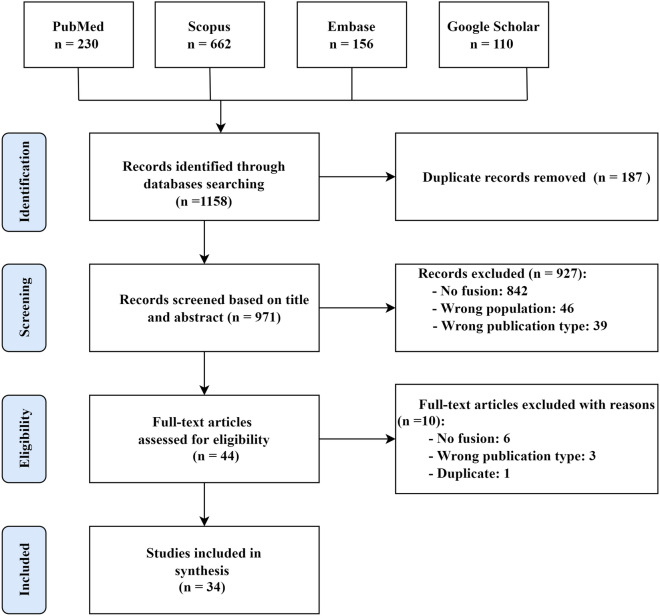
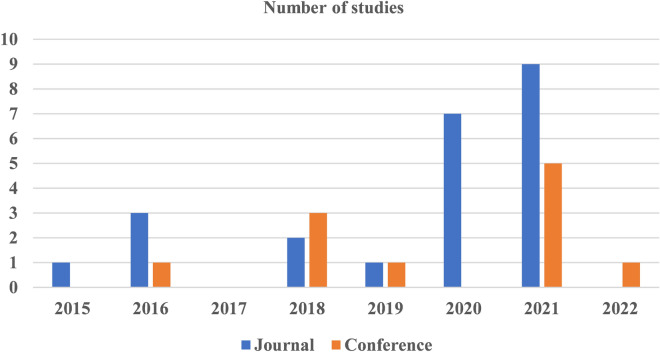
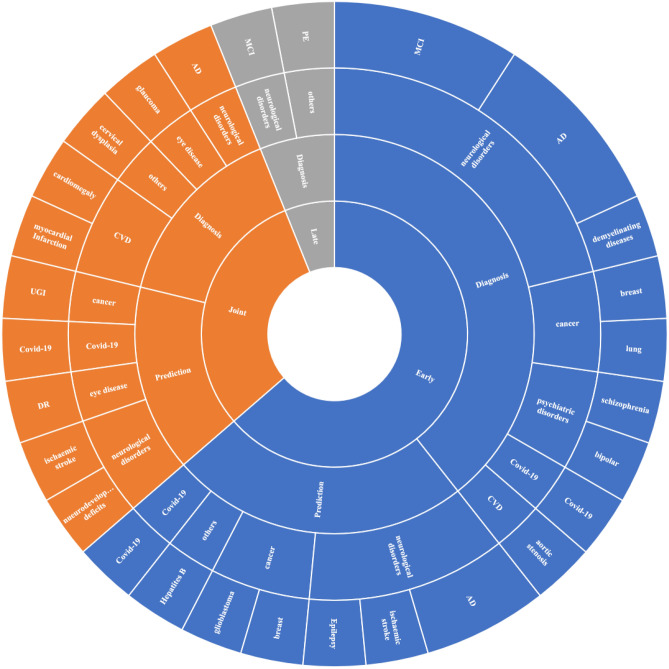
Healthcare data are inherently multimodal, including electronic health records (EHR), medical images, and multi-omics data. Combining these multimodal data sources contributes to a better understanding of human health and provides optimal personalized healthcare. The most important question when using multimodal data is how to fuse them—a field of growing interest among researchers. Advances in artificial intelligence (AI) technologies, particularly machine learning (ML), enable the fusion of these different data modalities to provide multimodal insights. To this end, in this scoping review, we focus on synthesizing and analyzing the literature that uses AI techniques to fuse multimodal medical data for different clinical applications. More specifically, we focus on studies that only fused EHR with medical imaging data to develop various AI methods for clinical applications. We present a comprehensive analysis of the various fusion strategies, the diseases and clinical outcomes for which multimodal fusion was used, the ML algorithms used to perform multimodal fusion for each clinical application, and the available multimodal medical datasets. We followed the PRISMA-ScR (Preferred Reporting Items for Systematic Reviews and Meta-Analyses Extension for Scoping Reviews) guidelines. We searched Embase, PubMed, Scopus, and Google Scholar to retrieve relevant studies. After pre-processing and screening, we extracted data from 34 studies that fulfilled the inclusion criteria. We found that studies fusing imaging data with EHR are increasing and doubling from 2020 to 2021. In our analysis, a typical workflow was observed: feeding raw data, fusing different data modalities by applying conventional machine learning (ML) or deep learning (DL) algorithms, and finally, evaluating the multimodal fusion through clinical outcome predictions. Specifically, early fusion was the most used technique in most applications for multimodal learning (22 out of 34 studies). We found that multimodality fusion models outperformed traditional single-modality models for the same task. Disease diagnosis and prediction were the most common clinical outcomes (reported in 20 and 10 studies, respectively) from a clinical outcome perspective. Neurological disorders were the dominant category (16 studies). From an AI perspective, conventional ML models were the most used (19 studies), followed by DL models (16 studies). Multimodal data used in the included studies were mostly from private repositories (21 studies). Through this scoping review, we offer new insights for researchers interested in knowing the current state of knowledge within this research field.
Overview
The claims and statistics of this paper haven’t been checked yet.
Free: it reads the open-access text and checks the first 5 claims that cite a source we can check. Create a free account to check every claim.
Integrity signals
Registry
Cites
Statistics
Figures
Verification
Claims the paper makes
The claims and statistics of this paper haven’t been checked yet.
Free: it reads the open-access text and checks the first 5 claims that cite a source we can check. Create a free account to check every claim.
Claims other papers make about this one
Each is checked against this paper’s own text: does it say what the citing paper says it does?
The source backs part of the claim, not all of it — or backs it for a different population, condition or comparison.
In the citing paper
“AI in healthcare typically uses electronic health records to identify patients at risk for chronic diseases such as heart disease and diabetes [24,25].”
From Edge AI for Early Detection of Chronic Diseases and the Spread of Infectious Diseases: Opportunities, Challenges, and Future Directions (2023) · cites this paper as [24]
Experimental — accuracy not yet measuredThe source backs part of the claim, not all of it — or backs it for a different population, condition or comparison.
In the citing paper
“AI algorithms can efficiently analyze data and uncover hidden patterns and correlations that indicate potential diseases [24].”
From Edge AI for Early Detection of Chronic Diseases and the Spread of Infectious Diseases: Opportunities, Challenges, and Future Directions (2023) · cites this paper as [24]
Experimental — accuracy not yet measured
Self-check
Percentages, sums and reported differences re-computed from the paper’s own numbers.
The self-check needs the paper’s full text.
Citations
Cites
PRISMA Extension for Scoping Reviews (PRISMA-ScR): Checklist and Explanation
Tricco, A. C., Lillie, E., Zarin, W., O'Brien, K. K., Colquhoun, H., Levac, D., Moher, D., Peters, M. D. J., Horsley, T., Weeks, L., et al. (2018) · Annals of Internal Medicine · doi:10.7326/m18-0850 · Cited by 43,565
Scoping studies: towards a methodological framework
Arksey, H., & O'Malley, L. (2005) · International Journal of Social Research Methodology · doi:10.1080/1364557032000119616 · Cited by 36,742
Rayyan-a web and mobile app for systematic reviews.
Ouzzani, M., Hammady, H., Fedorowicz, Z., & Elmagarmid, A. (2016) · Systematic Reviews · doi:10.1186/s13643-016-0384-4 · Cited by 26,092
A typology of reviews: an analysis of 14 review types and associated methodologies
Grant, M. J., & Booth, A. (2009) · Health Information & Libraries Journal · doi:10.1111/j.1471-1842.2009.00848.x · Cited by 10,817
Federated learning: Challenges, methods, and future directions
Li, T., Sahu, A. K., Talwalkar, A., & Smith, V. (2020) · IEEE Signal Processing Magazine · doi:10.1109/msp.2020.2975749 · Cited by 6,210
Predicting the future - big data, machine learning, and clinical medicine
Obermeyer, Z., & Emanuel, E. J. (2016) · New England Journal of Medicine · doi:10.1056/nejmp1606181 · Cited by 3,652
MIMIC-CXR, a de-identified publicly available database of chest radiographs with free-text reports
Johnson, A. E. W., Pollard, T. J., Berkowitz, S. J., Greenbaum, N. R., Lungren, M. P., Deng, C.-Y., Mark, R. G., & Horng, S. (2019) · Scientific Data · doi:10.1038/s41597-019-0322-0 · Cited by 1,816
The Inevitable Application of Big Data to Health Care
Murdoch, T. B., & Detsky, A. S. (2013) · JAMA · doi:10.1001/jama.2013.393 · Cited by 1,664
The Alzheimer's Disease Neuroimaging Initiative
Mueller, S. G., Weiner, M. W., Thal, L. J., Petersen, R. C., Jack, C., Jagust, W., Trojanowski, J. Q., Toga, A. W., & Beckett, L. (2005) · Neuroimaging Clinics of North America · doi:10.1016/j.nic.2005.09.008 · Cited by 1,525
Jonas, J. B., Aung, T., Bourne, R. R., Bron, A. M., Ritch, R., & Panda-Jonas, S. (2017) · The Lancet · doi:10.1016/s0140-6736(17)31469-1 · Cited by 1,322
Research works printed but not linked: 2
- Alistair, J. et al. Mimic-iv (version 0.4). PhysioNet 10.13026/a3wn-hq05 (2020). · DOI
- Goodfellow I Bengio Y Courville A Deep Learning 2016 MIT press
Cited by
Items 201–251 of 251
Sekhri, R., Boufenara, M. N., & Boufaïda, Z. (2025) · International Conference on Research in Computing at Feminine (RIF) · doi:10.1109/rif68108.2025.11406767
“With this definition, we propose a taxonomy with three principal types: A. Radiological data [5] states that radiological data (commonly known as medical imaging) refers to visual representations in both 2D and 3D acquired from clinical practice.”
Generative Artificial Intelligence to Tackle Visual Data Accessibility Challenges
Goetschalckx, L., Wang, K., Willems, S., & Schepper, T. D. (2026) · Springer eBooks · doi:10.1007/978-3-032-10561-5_6 · Cited by 1
Reshanjana, R. M. U., & Asanka, D. (2025) · International Conference on Innovations in Engineering, Science and Technology for Sustainable Development (ICEST) · doi:10.1109/icest65883.2025.11428516
“In ML, Supervised learning and unsupervised learning methods could be employed to utilize decese prediction and diagnoses in multimodal approach [53], [54].”
Suryanarayanaraju, S., Naik, M. C., & Mohan, R. N. V. J. (2026) · Computational Intelligence · doi:10.1111/coin.70216
“In 2022, Mohsen et al. [18] have designed a novel framework to integrate AI methods with heterogeneous health data for health-care usage.”
Healthcare Record Optimization using Natural Language Processing and Computer Vision
Singh, S. K., Mehrotra, M., & Rosaline, R. A. A. (2025) · IEEE Global Conference on Wireless Computing and Networking (GCWCN) · doi:10.1109/gcwcn66157.2025.11448513
Transformative Roles of Artificial Intelligence in Clinical Trials
Jie, C. H. E. N. (2026) · Statistics in Biosciences · doi:10.1007/s12561-026-09517-9
Athercare: Unified AI System for Health Intelligence in Real Time
Pandurang, Mareeswari, V., Kesh, S., Navyashree, N., T, N. P., & Siddalingaswamy, S. M. (2025) · International Conference on Smart Electronics and Communication (ICOSEC) · doi:10.1109/icosec67334.2025.11459636
Intelligent Meeting Insights Pipeline: A Multi-Modal AI System for Automated Analysis
Korade, A., Choudhary, M., Thoria, M., & Patil, P. (2026) · International Conference on Communication, Computing and Emerging Technologies (IC3ET) · doi:10.1109/ic3et64989.2026.11467472
“…the high computational demand associated with large Transformer models (Whisper/BART derivatives) [8], the recurrent neural diarization engine of pyannote.audio [2], and the storage of large intermediate tensor outputs (embeddings, attentions) inherent to multi-modal deep learning systems [26].”
Artificial Intelligence Across the PSMA Theranostic Continuum in Prostate Cancer
Murugesan, G., Moore, S., Chang, A. C., Mancini, B. R., & Kulkarni, H. R. (2026) · PET Clinics · doi:10.1016/j.cpet.2026.02.005
Transforming Healthcare with Electronic Health Records: AI Integration, Evolution, and Future
Chakraborty, P., & Kamila, S. (2026) · Springer optimization and its applications · doi:10.1007/978-3-032-15092-9_10 · Cited by 1
From pixels to precision: Artificial intelligence in diabetic eye disease screening and management
Cappellani, F., Capobianco, M., Visalli, F., Khouyyi, M., Musa, M., Avitabile, A., Inferrera, L., Giglio, R., Tognetto, D., Gagliano, C., et al. (2026) · World Journal of Diabetes · doi:10.4239/wjd.v17.i4.117094
The Role of Artificial Intelligence for Drug Repurposing in Alzheimer’s Disease
Guntupalli, S., Bykova, M., Martin, W., & Cheng, F. (2026) · Topics in medicinal chemistry · doi:10.1007/7355_2026_191
Miao, R.-Z., Hao-rui, Z., Li, T.-Y., Zhou, J., & Yang, X.-R. (2026) · Hepatoma Research · doi:10.20517/2394-5079.2025.92
MyDigitalHealth: Rethinking the health data management
Zeiser, F. A., de Mello, B. H., Vanin, F. N. D. S., Righi, R. D. R., Rigo, S. J., Ramos, G. D. O., Antunes, R. S., & da Costa, C. A. (2026) · Smart Health · doi:10.1016/j.smhl.2026.100660
Design and Evaluation of a Multi-Modal AI Diagnostic System with Real-Time Human-AI Feedback
Amirthamani, D. H. V., Hemavathy, P., Kalpana, S., Usha, P., GulMohamed, R. B., & Parimala, A. B. (2026) · International Conference on Inventive Computation Technologies (ICICT) · doi:10.1109/icict68280.2026.11511100
“An example is the radiology imaging coupled with electronic health records (EHRs), which have been relatively accurate as compared to other radiology systems [6].”
AI-Driven Ultrasound: Automation, Image Interpretation and Decision Support
Sarkar, N., Stancliff, H., & Srinivasareddy, S. (2026) · IntechOpen eBooks · doi:10.5772/intechopen.1015391
Transforming surgical decisions: the rise of predictive and personalized digital tools
Eitah, H. E., Kamel, M. S., Alharbi, A. A., Almagharbeh, W. T., Altayar, M. A., & El-Shiekh, R. A. (2026) · Expert Review of Medical Devices · doi:10.1080/17434440.2026.2678899
“Owing to the integration of these diverse data, AI technology can achieve a synoptic analysis of a patient’s status, and the decision-making of medical practitioners can be significantly improved [104].”
AI-Based Evaluation of Survivorship Quality Metrics from Healthcare Data
Varshita, G., Ashwan, D., & M, A. S. (2026) · International Conference on Signal, Systems, and Computing for Next-Gen Automation (ICSSCNA) · doi:10.1109/icsscna68616.2026.11546801
Multimodal data fusion in deep learning for diabetic retinopathy detection: A systematic review
Wardhani, K. D. K., Kasim, S. B., hassan, R. B., Hidayat, R., Sujon, K. M., & Samad, M. A. (2026) · ICT Express · doi:10.1016/j.icte.2026.06.001 · Cited by 1
Synthetic data generation: challenges and perspectives for gastrointestinal medicine
Gatoula, P., Iakovidis, D. K., Diamantis, D. E., Thambawita, V. L., de Lange, T., & Koulaouzidis, A. (2026) · Nature Reviews Gastroenterology & Hepatology · doi:10.1038/s41575-026-01216-6
“Gastrointestinal diagnostics, for example, often involve the integration of different types of data, such as imaging data with histopathological findings, and patient history 89 .”
Ansari, A., Ansari, N. M., Zaheer, S., Khalid, U., Bechev, K. I., Markov, D., Aleksiev, V., Markov, G., & Poryazova, E. (2026) · Journal of Clinical Medicine · doi:10.3390/jcm15134988 · Cited by 1
“AI-driven multimodal fusion models have demonstrated the capacity to integrate these datasets into a single analytical framework, allowing for more comprehensive vascular evaluation [30].”
Multimodal clinical data integration for prognosis of pulmonary embolism: A comparative study
Paolo, D., Soda, P., Tortora, M., Bria, A., & Sicilia, R. (2026) · Computerized Medical Imaging and Graphics · doi:10.1016/j.compmedimag.2026.102794
Pan, J., Chang, T., Lyu, M., Meng, W., Wang, Q., Ma, Y., Chen, Z., Li, X., Sun, C., Liang, R., et al. (2026) · Journal of Healthcare Informatics Research · doi:10.1007/s41666-026-00248-6 · Cited by 1
Harishna, S., Rani, D. G. N., Nandhini, A. N., & Shanmugavalli, T. (2026) · International Conference on Next Generation Electronics (NELEX) · doi:10.1109/nelex69209.2026.11590198
“Three categories of multimodal learning approaches include early fusion, intermediate fusion, and late fusion [2].”
Aşık, S., Yazıcı, A. T., Aşçı, M., & Okumuser, I. (2026) · Journal of Clinical Medicine · doi:10.3390/jcm15145525
Machine Learning in Drug Repurposing
Amin, S. A., Sessa, L., Sottile, E., Concilio, S., & Piotto, S. (2026) · Royal Society of Chemistry eBooks · doi:10.1039/9781837070206-00490
Computer Vision in Healthcare: A Hybrid PLS-SEM and Neural Network MCDM Framework
Duc, M. L. (2026) · Fudan Journal of the Humanities and Social Sciences · doi:10.1007/s40647-026-00471-w
Chen, Z., Lin, X., Lou, K., Zheng, J., Chen, H., Xu, G., Ren, F., Hu, H., Dong, H., & Huang, S. (2026) · Academic Radiology · doi:10.1016/j.acra.2026.07.008
Yusof, U. K., Ward, J., Lyall, L. M., & Strawbridge, R. J. (2026) · Frontiers in Psychiatry · doi:10.3389/fpsyt.2026.1883424
Janssen, L., Kelst, S. V., Cokelaere, H., Terrasson, J., Smedt, J. D., Bohyn, A., Diricx, B., Vylder, J. D., Kimpe, T. R. L., Papeleu, J., et al. (2026) · Dermatology Practical & Conceptual · doi:10.5826/dpc.1603a6981
“To optimize the lesion risk scoring performance, three state-of-the-art strategies were combined: ensembling [12,13], incorporation of metadata [14-16], and test time augmentation [10,17].”
A Multi-modal Framework for Early Disease Detection Using Clinical and Sensor Data
Dash, R., Goswami, S., Pandey, A., Sethi, S., & Jabar, Z. S. (2026) · Lecture notes in networks and systems · doi:10.1007/978-3-032-27666-7_21
Do More Modalities Really Help? Evidence from Controlled Multimodal Clinical Prediction
Patel, S. B., Gupta, M., & Chu, M.-T. (2026) · Lecture notes in computer science · doi:10.1007/978-3-032-35387-0_28
Li, H., Cai, J., Zhou, X., Zhou, L., Li, Y., & Song, T. (2026) · International Journal of Radiation Oncology*Biology*Physics · doi:10.1016/j.ijrobp.2026.07.060
Prasetya, R. R. P., Ashar, M., & Zaeni, I. A. E. (2026) · SSRN Electronic Journal · doi:10.2139/ssrn.7416942
Kumar, R., Sharma, N., Deshmukh, A., Nair, A., & Pillai, M. (2022) · Journal of Artificial Intelligence for Healthcare Systems · doi:10.68159/z613962324
Ricci, P., Luca, M. D., Ferraro, G., & Russo, A. (2023) · Journal of Health Informatics and Digital Systems · doi:10.68159/z771636283
Effective Implementation of XAI in Healthcare: Results from a Survey with Non-Technical Users
Inayat, Z., Açıl, O., Daneva, M., Sinderen, M. J. V., Guizzardi, G., & Santos, L. B. D. S. (2026) · IEEE International Requirements Engineering Conference Workshops (REW) · doi:10.1109/rew72749.2026.00086
“In turn, AI applications are expected to accelerate diagnoses and enable personalized treat-ment approaches [3][4].”
Alfattni, G. (2026) · Healthcare · doi:10.3390/healthcare14193216 · Cited by 1
Strategy for early diagnosis of pancreatic cancer
Sharma, R. K., Singh, A., Sharma, G., Dawra, S., & Rana, S. S. (2026) · Frontiers in Gastroenterology · doi:10.3389/fgstr.2026.1731223
Raza, W. H., Schiess, M. C., Lemus, J. M., Ellmore, T. M., Green, C. E., Soto, C., Fu, X., & Hu, R. (2026) · doi:10.1109/cvprf71909.2026.00555
“Each modality captures a distinct yet complementary view of patient health: imaging reflects structural or functional changes in organs, genomics encodes molecular risk factors, and clinical notes capture unstructured physician observations [24].”
Kong, S., Chen, L., Lyu, H., Lai, Q., Li, X., Wang, Y., & Lyu, J. (2026) · Journal of Translational Critical Care Medicine · doi:10.14218/jtccm.2026.00011
Bakir, M., Masri, M. K. A., Mushtaha, Y., Shaikh, N., Raddaoui, M., & Mohammad, K. S. (2026) · Frontiers in Oncology · doi:10.3389/fonc.2026.1960963
Systematic Review: Prescription Decoding with OCR Technologies Using Deep Learning in Healthcare
Kaur, S., Gupta, S., & Garg, S. (2026) · International Conference on Advancements in Smart, Secure and Intelligent Computing (ASSIC) · doi:10.1109/assic70037.2026.11716992
Zhan, H., Liang, Q., 赵赞栋, Liao, C., Yang, Z., Kang, X., Zheng, J., & Zhang, L. (2026) · Arthroscopy The Journal of Arthroscopic and Related Surgery · doi:10.1002/arj.70584
Foundation Models and Multimodal Learning for Medical Data with Applications in Oncology
Waqas, A., Tripathi, A., Sivaram, S., Ali, F., Kuanar, S., Singh, Y., Ajami, H., Ünal, O., Huo, Y., Elhanashi, A., et al. (2026) · Journal of Imaging Informatics in Medicine · doi:10.1007/s10278-026-02319-x
Li, Q., Mao, Z., He, Y., Wang, J., & Yang, Z. (2026) · Computer Methods and Programs in Biomedicine · doi:10.1016/j.cmpb.2026.109698
Bakmeedeniya, T., Thuseethan, S., Ragel, R., Vigneshwaran, P., & Nishankar, S. (2026) · Knowledge-Based Systems · doi:10.1016/j.knosys.2026.117256
Yi, L., Wang, J., Li, X., He, L., & Liu, L. (2026) · Ultrasound in Medicine & Biology · doi:10.1016/j.ultrasmedbio.2026.09.027
The Evolution of Artificial Intelligence in Diagnostic Imaging: Challenges and Perspectives
Ribeiro, L. P., Ribeiro, S. D., & da Silva, W. G. (2026) · RCMOS - Revista Científica Multidisciplinar O Saber · doi:10.51473/rcmos.v1i2.2026.3112
Subhalakshmi, R. T., Nivaashini, M., Dhanasekaran, V., & Nayaka, R. J. (2026) · Advances in computational intelligence and robotics book series · doi:10.4018/979-8-2600-1985-6.ch017
Metadata
- Authors
- Mohsen, F., Ali, H., El Hajj, N., & Shah, Z.
- Affiliations
- Hamad bin Khalifa University (QA)
- Corresponding author
- Shah, Zubair
- Venue
- Scientific Reports
- Published
- 2022-10-26
- Volume
- 12
- Issue
- 1
- Pages
- 17981-17981
- ISSN
- 2045-2322 (ISSN-L)
- PMC
- PMC9605975
- OpenAlex
- W4307539314
- Semantic Scholar
- 4f3c2c93d5e12a4d96e4bdcaf5ae6f393a808d17
- Cited by
- 250
- References
- 68
- Citations by year
- 2026: 75 · 2025: 101 · 2024: 49 · 2023: 23 · 2022: 2
- FWCI
- 14.40
- Type
- journal article
- Language
- en
- Open access
- gold
- doi.org
- Licence
- cc-by
- creativecommons.org/licenses/by/4.0 (tdm)
- creativecommons.org/licenses/by/4.0 (vor)
- Locations
- Scientific Reports (publishedVersion, cc-by)
- PubMed Central (publishedVersion, cc-by)
- PubMed (publishedVersion)
- arXiv (Cornell University) (submittedVersion)
- DOAJ (DOAJ: Directory of Open Access Journals) (submittedVersion, cc-by-sa)
- Figshare (submittedVersion, cc-by)
- arXiv (Cornell University) (cc-by)
- Funders
- Qatar National Library
- Topics
- Physical Sciences › Computer Science › Artificial Intelligence › Machine Learning in Healthcare
- Health Sciences › Medicine › Health Informatics › Artificial Intelligence in Healthcare and Education
- Physical Sciences › Computer Science › Computer Vision and Pattern Recognition › Multimodal Machine Learning Applications
- Keywords
- multimodal fusion, electronic health records, diagnostic imaging, multimodal learning, feature-level fusion, disease diagnosis, clinical outcome prediction, neurological disorders, deep learning, machine learning
- MeSH terms
- Machine Learning, Algorithms, Artificial Intelligence, Diagnostic Imaging, Humans, Electronic Health Records
About these checks
Registry, retraction, Cites and statistics results are computed, not judged, with one exception: a printed reference that no index lists is read once by a model before it counts as a citation error. Claims are extracted by a model and kept only when their quote appears verbatim in the text; each cited source is then checked, with a model’s help, for whether it says what the claim relies on. Those verdicts can be wrong — read the claim’s quote and the cited source before relying on one.
Statistics and arithmetic are recomputed, not judged.
Confidence bands are shown only for fields calibrated on our annotated test set. None is calibrated yet, so no band is shown.
What counts as a claim ›How we measure confidence ›How we check this ›
Are you an author, or do you see a problem with this page? Request a review
Data sources
Bibliographic data: Semantic Scholar, OpenAlex, Crossref.
Contains information from the Semantic Scholar Academic Graph Datasets, made available under the ODC Attribution License (ODC-BY 1.0).
Semantic Scholar’s data is described in: Kinney, R., et al. (2023). The Semantic Scholar Open Data Platform. arXiv:2301.10140.
