

Artificial intelligence-based methods for fusion of electronic health records and imaging data
Open accessThe DOI matches its Crossref record; 72 of the 72 references it cites were found in a registry or an index.
Abstract
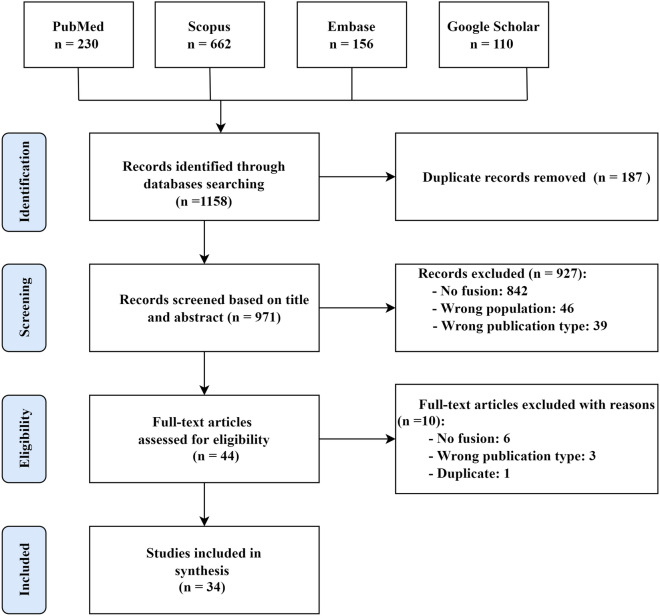
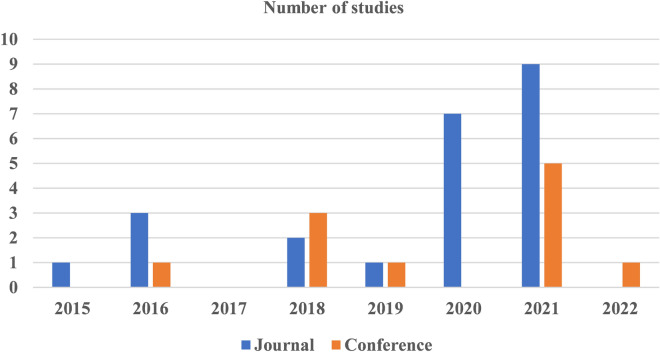
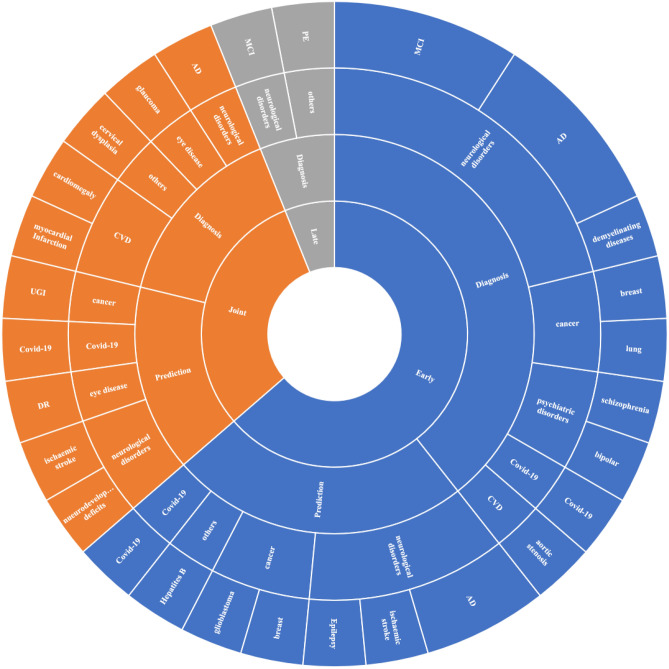
Healthcare data are inherently multimodal, including electronic health records (EHR), medical images, and multi-omics data. Combining these multimodal data sources contributes to a better understanding of human health and provides optimal personalized healthcare. The most important question when using multimodal data is how to fuse them—a field of growing interest among researchers. Advances in artificial intelligence (AI) technologies, particularly machine learning (ML), enable the fusion of these different data modalities to provide multimodal insights. To this end, in this scoping review, we focus on synthesizing and analyzing the literature that uses AI techniques to fuse multimodal medical data for different clinical applications. More specifically, we focus on studies that only fused EHR with medical imaging data to develop various AI methods for clinical applications. We present a comprehensive analysis of the various fusion strategies, the diseases and clinical outcomes for which multimodal fusion was used, the ML algorithms used to perform multimodal fusion for each clinical application, and the available multimodal medical datasets. We followed the PRISMA-ScR (Preferred Reporting Items for Systematic Reviews and Meta-Analyses Extension for Scoping Reviews) guidelines. We searched Embase, PubMed, Scopus, and Google Scholar to retrieve relevant studies. After pre-processing and screening, we extracted data from 34 studies that fulfilled the inclusion criteria. We found that studies fusing imaging data with EHR are increasing and doubling from 2020 to 2021. In our analysis, a typical workflow was observed: feeding raw data, fusing different data modalities by applying conventional machine learning (ML) or deep learning (DL) algorithms, and finally, evaluating the multimodal fusion through clinical outcome predictions. Specifically, early fusion was the most used technique in most applications for multimodal learning (22 out of 34 studies). We found that multimodality fusion models outperformed traditional single-modality models for the same task. Disease diagnosis and prediction were the most common clinical outcomes (reported in 20 and 10 studies, respectively) from a clinical outcome perspective. Neurological disorders were the dominant category (16 studies). From an AI perspective, conventional ML models were the most used (19 studies), followed by DL models (16 studies). Multimodal data used in the included studies were mostly from private repositories (21 studies). Through this scoping review, we offer new insights for researchers interested in knowing the current state of knowledge within this research field.
Overview
The claims and statistics of this paper haven’t been checked yet.
Free: it reads the open-access text and checks the first 5 claims that cite a source we can check. Create a free account to check every claim.
Integrity signals
Registry
Cites
Statistics
Figures
Verification
Claims the paper makes
The claims and statistics of this paper haven’t been checked yet.
Free: it reads the open-access text and checks the first 5 claims that cite a source we can check. Create a free account to check every claim.
Claims other papers make about this one
Each is checked against this paper’s own text: does it say what the citing paper says it does?
The source backs part of the claim, not all of it — or backs it for a different population, condition or comparison.
In the citing paper
“AI in healthcare typically uses electronic health records to identify patients at risk for chronic diseases such as heart disease and diabetes [24,25].”
From Edge AI for Early Detection of Chronic Diseases and the Spread of Infectious Diseases: Opportunities, Challenges, and Future Directions (2023) · cites this paper as [24]
Experimental — accuracy not yet measuredThe source backs part of the claim, not all of it — or backs it for a different population, condition or comparison.
In the citing paper
“AI algorithms can efficiently analyze data and uncover hidden patterns and correlations that indicate potential diseases [24].”
From Edge AI for Early Detection of Chronic Diseases and the Spread of Infectious Diseases: Opportunities, Challenges, and Future Directions (2023) · cites this paper as [24]
Experimental — accuracy not yet measured
Self-check
Percentages, sums and reported differences re-computed from the paper’s own numbers.
The self-check needs the paper’s full text.
Citations
Cites
PRISMA Extension for Scoping Reviews (PRISMA-ScR): Checklist and Explanation
Tricco, A. C., Lillie, E., Zarin, W., O'Brien, K. K., Colquhoun, H., Levac, D., Moher, D., Peters, M. D. J., Horsley, T., Weeks, L., et al. (2018) · Annals of Internal Medicine · doi:10.7326/m18-0850 · Cited by 43,565
Scoping studies: towards a methodological framework
Arksey, H., & O'Malley, L. (2005) · International Journal of Social Research Methodology · doi:10.1080/1364557032000119616 · Cited by 36,742
Rayyan-a web and mobile app for systematic reviews.
Ouzzani, M., Hammady, H., Fedorowicz, Z., & Elmagarmid, A. (2016) · Systematic Reviews · doi:10.1186/s13643-016-0384-4 · Cited by 26,092
A typology of reviews: an analysis of 14 review types and associated methodologies
Grant, M. J., & Booth, A. (2009) · Health Information & Libraries Journal · doi:10.1111/j.1471-1842.2009.00848.x · Cited by 10,817
Federated learning: Challenges, methods, and future directions
Li, T., Sahu, A. K., Talwalkar, A., & Smith, V. (2020) · IEEE Signal Processing Magazine · doi:10.1109/msp.2020.2975749 · Cited by 6,210
Predicting the future - big data, machine learning, and clinical medicine
Obermeyer, Z., & Emanuel, E. J. (2016) · New England Journal of Medicine · doi:10.1056/nejmp1606181 · Cited by 3,652
MIMIC-CXR, a de-identified publicly available database of chest radiographs with free-text reports
Johnson, A. E. W., Pollard, T. J., Berkowitz, S. J., Greenbaum, N. R., Lungren, M. P., Deng, C.-Y., Mark, R. G., & Horng, S. (2019) · Scientific Data · doi:10.1038/s41597-019-0322-0 · Cited by 1,816
The Inevitable Application of Big Data to Health Care
Murdoch, T. B., & Detsky, A. S. (2013) · JAMA · doi:10.1001/jama.2013.393 · Cited by 1,664
The Alzheimer's Disease Neuroimaging Initiative
Mueller, S. G., Weiner, M. W., Thal, L. J., Petersen, R. C., Jack, C., Jagust, W., Trojanowski, J. Q., Toga, A. W., & Beckett, L. (2005) · Neuroimaging Clinics of North America · doi:10.1016/j.nic.2005.09.008 · Cited by 1,525
Jonas, J. B., Aung, T., Bourne, R. R., Bron, A. M., Ritch, R., & Panda-Jonas, S. (2017) · The Lancet · doi:10.1016/s0140-6736(17)31469-1 · Cited by 1,322
Deep multimodal learning: a survey on recent advances and trends
Ramachandram, D., & Taylor, G. W. (2017) · IEEE Signal Processing Magazine · doi:10.1109/msp.2017.2738401 · Cited by 1,139
A Review of Data Fusion Techniques
Castanedo, F. (2013) · The Scientific World Journal · doi:10.1155/2013/704504 · Cited by 1,027
Huang, S.-C., Pareek, A., Seyyedi, S., Banerjee, I., & Lungren, M. P. (2020) · npj Digital Medicine · doi:10.1038/s41746-020-00341-z · Cited by 934
Multimodal deep learning for biomedical data fusion: a review
Stahlschmidt, S. R., Ulfenborg, B., & Synnergren, J. (2022) · Briefings in Bioinformatics · doi:10.1093/bib/bbab569 · Cited by 766
Fransen, P. S., Beumer, D., Berkhemer, O. A., van den Berg, L. A., Lingsma, H., van der Lugt, A., van Zwam, W. H., van Oostenbrugge, R. J., Roos, Y. B., Majoie, C. B., et al. (2014) · Trials · doi:10.1186/1745-6215-15-343 · Cited by 551
Johnson, A., Bulgarelli, L., Pollard, T., Gow, B., Moody, B., Horng, S., Celi, L. A., & Mark, R. (2024) · PhysioNet · doi:10.13026/07hj-2a80 · Cited by 524
Johnson, A., Bulgarelli, L., Pollard, T., Horng, S., Celi, L. A., & Mark, R. (2023) · PhysioNet · doi:10.13026/s6n6-xd98 · Cited by 524
(1990) · Springer eBooks · doi:10.1007/978-1-4613-8997-2 · Cited by 515
Advances in multimodal data fusion in neuroimaging: Overview, challenges, and novel orientation
Zhang, Y.-D., Dong, Z., Wang, S.-H., Yu, X., Yao, X., Zhou, Q., Hu, H., Li, M., Jiménez-Mesa, C., Ramirez, J., et al. (2020) · Information Fusion · doi:10.1016/j.inffus.2020.07.006 · Cited by 453
Azam, M. A., Khan, K. B., Salahuddin, S., Rehman, E., Khan, S. A., Khan, M. A., Kadry, S., & Gandomi, A. H. (2022) · Computers in Biology and Medicine · doi:10.1016/j.compbiomed.2022.105253 · Cited by 449
The National Alzheimer's Coordinating Center (NACC) Database: an Alzheimer disease database.
Beekly, D. L., Ramos, E. M., van Belle, G., Deitrich, W. D., Clark, A. D., Jacka, M. E., & Kukull, W. A. (2004) · PubMed · Cited by 438
A review on machine learning principles for multi-view biological data integration
Li, Y., Wu, F.-X., & Ngom, A. (2016) · Briefings in Bioinformatics · doi:10.1093/bib/bbw113 · Cited by 421
Creating Value In Health Care Through Big Data: Opportunities And Policy Implications
Roski, J., Bo-Linn, G. W., & Andrews, T. A. (2014) · Health Affairs · doi:10.1377/hlthaff.2014.0147 · Cited by 320
A comprehensive survey on multimodal medical signals fusion for smart healthcare systems
Muhammad, G., Alshehri, F., Karray, F., Saddik, A. E., Alsulaiman, M., & Falk, T. H. (2021) · Information Fusion · doi:10.1016/j.inffus.2021.06.007 · Cited by 287
Huang, S.-C., Pareek, A., Zamanian, R., Banerjee, I., & Lungren, M. P. (2020) · Scientific Reports · doi:10.1038/s41598-020-78888-w · Cited by 246
Blockchain vehicles for efficient Medical Record management
Vazirani, A. A., O’Donoghue, O., Brindley, D., & Meinert, E. (2020) · npj Digital Medicine · doi:10.1038/s41746-019-0211-0 · Cited by 245
End-to-End Learning of Driving Models with Surround-View Cameras and Route Planners
Hecker, S., Dai, D., & Van Gool, L. (2018) · Lecture Notes in Computer Science · doi:10.1007/978-3-030-01234-2_27 · Cited by 191
Brugnara, G., Neuberger, U., Mahmutoglu, M. A., Foltyn, M., Herweh, C., Nagel, S., Schönenberger, S., Heiland, S., Ulfert, C., Ringleb, P. A., et al. (2020) · Stroke · doi:10.1161/strokeaha.120.030287 · Cited by 190
Huang, S.-C., Kothari, T., Banerjee, I., Chute, C., Ball, R. L., Borus, N., Huang, A., Patel, B. N., Rajpurkar, P., Irvin, J., et al. (2020) · npj Digital Medicine · doi:10.1038/s41746-020-0266-y · Cited by 189
Multimodal Deep Learning for Cervical Dysplasia Diagnosis
Xu, T., Zhang, H., Huang, X., Zhang, S., & Metaxas, D. N. (2016) · Lecture Notes in Computer Science · doi:10.1007/978-3-319-46723-8_14 · Cited by 187
Hyun, S. H., Ahn, M. S., Koh, Y. W., & Lee, S. J. (2019) · Clinical Nuclear Medicine · doi:10.1097/rlu.0000000000002810 · Cited by 185
An overview of deep learning methods for multimodal medical data mining
Behrad, F., & Saniee Abadeh, M. (2022) · Expert Systems with Applications · doi:10.1016/j.eswa.2022.117006 · Cited by 159
Deep learning for predicting COVID-19 malignant progression
Fang, C., Bai, S., Chen, Q., Zhou, Y., Xia, L., Qin, L., Gong, S., Xie, X., Zhou, C., Tu, D., et al. (2021) · Medical Image Analysis · doi:10.1016/j.media.2021.102096 · Cited by 153
Deep Learning Role in Early Diagnosis of Prostate Cancer
Reda, I., Khalil, A., Elmogy, M., Abou El-Fetouh, A., Shalaby, A., Abou El-Ghar, M., Elmaghraby, A., Ghazal, M., & El-Baz, A. (2018) · Technology in Cancer Research & Treatment · doi:10.1177/1533034618775530 · Cited by 119
Qiu, S., Chang, G. H., Panagia, M., Gopal, D. M., Au, R., & Kolachalama, V. B. (2018) · Alzheimer's & Dementia: Diagnosis, Assessment & Disease Monitoring · doi:10.1016/j.dadm.2018.08.013 · Cited by 110
TADPOLE Challenge: Prediction of Longitudinal Evolution in Alzheimer's Disease
Marinescu, R. V., Oxtoby, N. P., Young, A. L., Bron, E. E., Toga, A. W., Weiner, M. W., Barkhof, F., Fox, N. C., Klein, S., Alexander, D. C., et al. (2018) · arXiv (Cornell University) · doi:10.48550/arxiv.1805.03909 · Cited by 92
Richer fusion network for breast cancer classification based on multimodal data
Yan, R., Zhang, F., Rao, X., Lv, Z., Li, J., Zhang, L., Liang, S., Li, Y., Ren, F., Zheng, C., et al. (2021) · BMC Medical Informatics and Decision Making · doi:10.1186/s12911-020-01340-6 · Cited by 82
Deep learning for predicting COVID-19 malignant progressionPreprint
Fang, C., Bai, S., Chen, Q., et al. (2020) · medRxiv · doi:10.1101/2020.03.20.20037325 · Cited by 71
Peeken, J. C., Goldberg, T., Pyka, T., Bernhofer, M., Wiestler, B., Kessel, K. A., Tafti, P. D., Nüsslin, F., Braun, A. E., Zimmer, C., et al. (2019) · Cancer Medicine · doi:10.1002/cam4.1908 · Cited by 67
Xu, M., Ouyang, L., Han, L., Sun, K., Yu, T., Li, Q., Tian, H., Safarnejad, L., Zhang, H., Gao, Y., et al. (2021) · Journal of Medical Internet Research · doi:10.2196/25535 · Cited by 65
Accuracy of Information on Imaging Requisitions: Does It Matter?
Cohen, M. D. (2007) · Journal of the American College of Radiology · doi:10.1016/j.jacr.2007.02.003 · Cited by 57
Forouzannezhad, P., Abbaspour, A., Li, C., Cabrerizo, M., & Adjouadi, M. (2018) · International Conference on Machine Learning and Applications · doi:10.1109/icmla.2018.00218 · Cited by 52
Achalia, R. M., Sinha, A., Jacob, A., Achalia, G., Kaginalkar, V. R., Venkatasubramanian, G., & Rao, N. P. (2020) · Asian Journal of Psychiatry · doi:10.1016/j.ajp.2020.101984 · Cited by 47
He, L., Li, H., Chen, M., Wang, J., Altaye, M., Dillman, J. R., & Parikh, N. A. (2021) · Frontiers in Neuroscience · doi:10.3389/fnins.2021.753033 · Cited by 47
Aljouie, A., Almazroa, A. A., Bokhari, Y., Alawad, M., Mahmoud, E., Alawad, E., Alsehawi, A., Rashid, M., Alomair, L., Almozaai, S., et al. (2021) · Journal of Multidisciplinary Healthcare · doi:10.2147/jmdh.s322431 · Cited by 42
Chai, Y., Bian, Y., Liu, H., Li, J., & Xu, J. (2020) · Information Processing & Management · doi:10.1016/j.ipm.2020.102454 · Cited by 41
Comfere, N. I., Peters, M. S., Jenkins, S., Lackore, K., Yost, K., & Tilburt, J. (2015) · Journal of Cutaneous Pathology · doi:10.1111/cup.12485 · Cited by 40
Prediction of Thrombectomy Functional Outcomes Using Multimodal Data
Samak, Z. A., Clatworthy, P. L., & Mirmehdi, M. (2020) · Communications in computer and information science · doi:10.1007/978-3-030-52791-4_21 · Cited by 39
Marco, M. D., Beltrachini, L., Biancardi, A., Frangi, A. F., & Venneri, A. (2017) · Alzheimer Disease & Associated Disorders · doi:10.1097/wad.0000000000000208 · Cited by 37
Liu, Z., Zhang, J., Hou, Y., Zhang, X., Li, G., & Xiang, Y. (2023) · Communications in computer and information science · doi:10.1007/978-981-19-9865-2_10 · Cited by 36
Diagnosis and prognosis of Alzheimer's disease using brain morphometry and white matter connectomes
Wang, Y., Xu, C., Park, J.-H., Lee, S., Stern, Y., Yoo, S., Kim, J. H., Kim, H. S., & Cha, J. (2019) · NeuroImage: Clinical · doi:10.1016/j.nicl.2019.101859 · Cited by 35
Hsu, M., Chiou, J., Liu, J.-T., Lee, C.-M., Lee, Y.-W., Chou, C.-C., Lo, S.-C., Kornelius, E., Yang, Y., Chang, S.-Y., et al. (2021) · Translational Vision Science & Technology · doi:10.1167/tvst.10.9.18 · Cited by 33
Comfere, N. I., Sokumbi, O., Montori, V. M., LeBlanc, A., Prokop, L. J., Murad, M. H., & Tilburt, J. C. (2014) · International Journal of Dermatology · doi:10.1111/ijd.12330 · Cited by 32
Ebdrup, B. H., Axelsen, M. C., Bak, N., Fagerlund, B., Oranje, B., Raghava, J. M., Nielsen, M. Ø., Rostrup, E., Hansen, L. K., & Glenthøj, B. Y. (2019) · Psychological Medicine · doi:10.1017/s0033291718003781 · Cited by 32
P., M. N. K., & Thiyagarajan, P. (2021) · Biomedical Signal Processing and Control · doi:10.1016/j.bspc.2021.102729 · Cited by 31
SCNET: A Novel UGI Cancer Screening Framework Based on Semantic-Level Multimodal Data Fusion
Ding, S., Huang, H. M., Li, Z., Liu, X., & Yang, S. (2020) · IEEE Journal of Biomedical and Health Informatics · doi:10.1109/jbhi.2020.2983126 · Cited by 30
Distant metastasis prediction via a multi-feature fusion model in breast cancer
Ma, W., Wang, X., Xu, G., Liu, Z., Yin, Z., Xu, Y., Wu, H., Baklaushev, V. P., Peltzer, K., Sun, H., et al. (2020) · Aging · doi:10.18632/aging.103630 · Cited by 28
Early MCI‐to‐AD Conversion Prediction Using Future Value Forecasting of Multimodal Features
Minhas, S., Khanum, A., Alvi, A., Riaz, F., Khan, S. A., Alsolami, F. J., & Khan, M. A. (2021) · Computational Intelligence and Neuroscience · doi:10.1155/2021/6628036 · Cited by 28
Deep Learning Classification of Cardiomegaly Using Combined Imaging and Non-imaging ICU Data
Grant, D., Papież, B. W., Parsons, G., Tarassenko, L., & Mahdi, A. (2021) · Lecture notes in computer science · doi:10.1007/978-3-030-80432-9_40 · Cited by 25
Federated Learning and Internet of Medical Things – Opportunities and Challenges
Ali, H., Alam, T., Househ, M. S., & Shah, Z. (2022) · Studies in health technology and informatics · doi:10.3233/shti220697 · Cited by 21
Self-citationAkramifard, H., Balafar, M. A., Razavi, S. N., & Ramli, A. R. (2021) · Journal of Medical Signals & Sensors · doi:10.4103/jmss.jmss_11_20 · Cited by 19
Early Diagnosis of Mild Cognitive Impairment Using Random Forest Feature Selection
Forouzannezhad, P., Abbaspour, A., Cabrerizo, M., & Adjouadi, M. (2018) · IEEE Biomedical Circuits and Systems Conference (BioCAS) · doi:10.1109/biocas.2018.8584773 · Cited by 18
Alim‐Marvasti, A., Pérez‐García, F., Dahele, K., Romagnoli, G., Diehl, B., Sparks, R. E., Sebastien Ourselin, A., Clarkson, M. J., & Duncan, J. S. (2021) · Frontiers in Digital Health · doi:10.3389/fdgth.2021.559103 · Cited by 15
Huang, S.-C., Kothari, T., Banerjee, I., et al. (2019) · SSRN Electronic Journal · doi:10.2139/ssrn.3384889 · Cited by 15
Fusing Heterogeneous Data for Alzheimer's Disease Classification
Sudhir, P. P., Tze-Yun, L., & Initiative, A. D. N. (2015) · Studies in Health Technology and Informatics · doi:10.3233/978-1-61499-564-7-731 · Cited by 13
Interpretation on Deep Multimodal Fusion for Diagnostic Classification
Xin, B., Huang, J., Zhou, Y., Lu, J., & Wang, X. (2021) · International Joint Conference on Neural Networks (IJCNN) · doi:10.1109/ijcnn52387.2021.9534148 · Cited by 12
Sharma, R., Eick, C. F., & Tsekos, N. V. (2021) · Lecture notes in computer science · doi:10.1007/978-3-030-68107-4_35 · Cited by 10
A Multimodal Diagnosis Predictive Model of Alzheimer’s Disease with Few-shot Learning
Chen, D., Zhang, L., & Ma, C. (2020) · International Conference on Public Health and Data Science (ICPHDS) · doi:10.1109/icphds51617.2020.00060 · Cited by 9
Morar, U., Martin, H., Izquierdo, W., Forouzannezhad, P., Zarafshan, E., Curiel, R. E., Roselli, M., Loewenstein, D., Duara, R., Unger, E., et al. (2020) · International Conference on Computational Science and Computational Intelligence (CSCI) · doi:10.1109/csci51800.2020.00144 · Cited by 9
Identifying Patients at Risk for Aortic Stenosis Through Learning from Multimodal Data
Syeda-Mahmood, T. F., Guo, Y., Moradi, M., Beymer, D., Rajan, D., Cao, Y., Gur, Y., & Negahdar, M. (2016) · Lecture notes in computer science · doi:10.1007/978-3-319-46726-9_28 · Cited by 8
Bai, Y., Chen, X., Dong, C., Liu, Y., & Zhang, Z. (2016) · Annual International Conference of the IEEE Engineering in Medicine and Biology Society (EMBC) · doi:10.1109/embc.2016.7591225 · Cited by 6
Liu, Z., Zhang, J., Hou, Y., et al. (2021) · arXiv (Cornell University) · doi:10.48550/arxiv.2111.04898 · Cited by 5
Research works printed but not linked: 2
- Alistair, J. et al. Mimic-iv (version 0.4). PhysioNet 10.13026/a3wn-hq05 (2020). · DOI
- Goodfellow I Bengio Y Courville A Deep Learning 2016 MIT press
Cited by
The Role of AI in Hospitals and Clinics: Transforming Healthcare in the 21st Century
Maleki Varnosfaderani, S., & Forouzanfar, M. (2024) · Bioengineering · doi:10.3390/bioengineering11040337 · Cited by 931
“As an example, a scoping review focused on AI techniques for fusing multimodal medical data, particularly EHR with medical imaging, to develop AI methods for various clinical applications [110].”
BackgroundFahim, Y. A., Hasani, I. W., Kabba, S., & Ragab, W. M. (2025) · European Journal of Medical Research · doi:10.1186/s40001-025-03196-w · Cited by 329
“Nonetheless, several challenges hinder the seamless integration of AI into EHR systems.”
The shaky foundations of large language models and foundation models for electronic health records
Wornow, M., Xu, Y., Thapa, R., Patel, B., Steinberg, E., Fleming, S., Pfeffer, M. A., Fries, J., & Shah, N. H. (2023) · npj Digital Medicine · doi:10.1038/s41746-023-00879-8 · Cited by 324
A scoping review of artificial intelligence-based methods for diabetes risk prediction
Mohsen, F., Al-Absi, H. R. H., Yousri, N. A., El Hajj, N., & Shah, Z. (2023) · npj Digital Medicine · doi:10.1038/s41746-023-00933-5 · Cited by 125
Self-citationChen, X., Xie, H., Tao, X., Wang, F. L., Leng, M., & Lei, B. (2024) · Artificial Intelligence Review · doi:10.1007/s10462-024-10712-7 · Cited by 180
Metadata
- Authors
- Mohsen, F., Ali, H., El Hajj, N., & Shah, Z.
- Affiliations
- Hamad bin Khalifa University (QA)
- Corresponding author
- Shah, Zubair
- Venue
- Scientific Reports
- Published
- 2022-10-26
- Volume
- 12
- Issue
- 1
- Pages
- 17981-17981
- ISSN
- 2045-2322 (ISSN-L)
- PMC
- PMC9605975
- OpenAlex
- W4307539314
- Semantic Scholar
- 4f3c2c93d5e12a4d96e4bdcaf5ae6f393a808d17
- Cited by
- 250
- References
- 68
- Citations by year
- 2026: 75 · 2025: 101 · 2024: 49 · 2023: 23 · 2022: 2
- FWCI
- 14.40
- Type
- journal article
- Language
- en
- Open access
- gold
- doi.org
- Licence
- cc-by
- creativecommons.org/licenses/by/4.0 (tdm)
- creativecommons.org/licenses/by/4.0 (vor)
- Locations
- Scientific Reports (publishedVersion, cc-by)
- PubMed Central (publishedVersion, cc-by)
- PubMed (publishedVersion)
- arXiv (Cornell University) (submittedVersion)
- DOAJ (DOAJ: Directory of Open Access Journals) (submittedVersion, cc-by-sa)
- Figshare (submittedVersion, cc-by)
- arXiv (Cornell University) (cc-by)
- Funders
- Qatar National Library
- Topics
- Physical Sciences › Computer Science › Artificial Intelligence › Machine Learning in Healthcare
- Health Sciences › Medicine › Health Informatics › Artificial Intelligence in Healthcare and Education
- Physical Sciences › Computer Science › Computer Vision and Pattern Recognition › Multimodal Machine Learning Applications
- Keywords
- multimodal fusion, electronic health records, diagnostic imaging, multimodal learning, feature-level fusion, disease diagnosis, clinical outcome prediction, neurological disorders, deep learning, machine learning
- MeSH terms
- Machine Learning, Algorithms, Artificial Intelligence, Diagnostic Imaging, Humans, Electronic Health Records
About these checks
Registry, retraction, Cites and statistics results are computed, not judged, with one exception: a printed reference that no index lists is read once by a model before it counts as a citation error. Claims are extracted by a model and kept only when their quote appears verbatim in the text; each cited source is then checked, with a model’s help, for whether it says what the claim relies on. Those verdicts can be wrong — read the claim’s quote and the cited source before relying on one.
Statistics and arithmetic are recomputed, not judged.
Confidence bands are shown only for fields calibrated on our annotated test set. None is calibrated yet, so no band is shown.
What counts as a claim ›How we measure confidence ›How we check this ›
Are you an author, or do you see a problem with this page? Request a review
Data sources
Bibliographic data: Semantic Scholar, OpenAlex, Crossref.
Contains information from the Semantic Scholar Academic Graph Datasets, made available under the ODC Attribution License (ODC-BY 1.0).
Semantic Scholar’s data is described in: Kinney, R., et al. (2023). The Semantic Scholar Open Data Platform. arXiv:2301.10140.
