

Improvement in OCD symptoms associated with serotoninergic psychedelics: a retrospective online survey
Open accessThe DOI matches its Crossref record; 49 of the 49 references it cites were found in a registry or an index.
Abstract
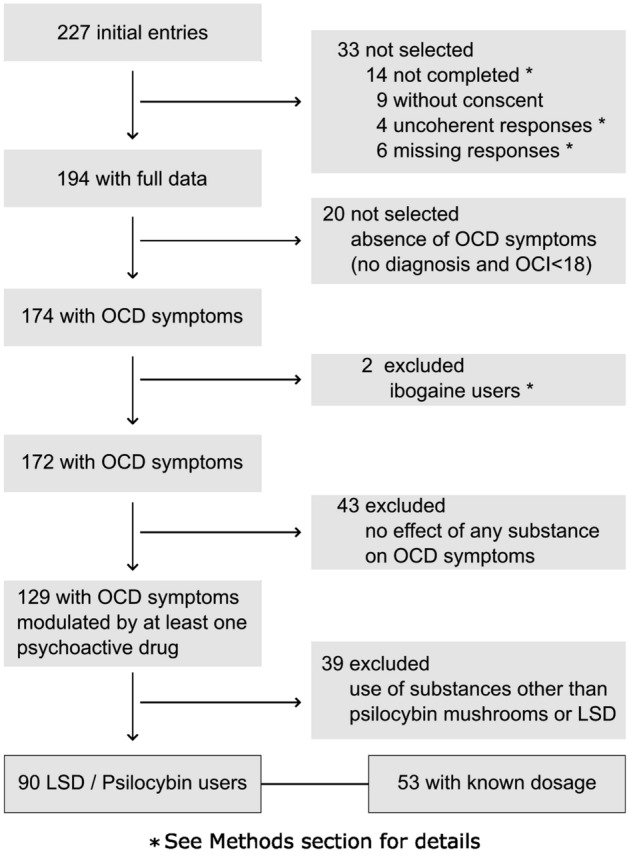
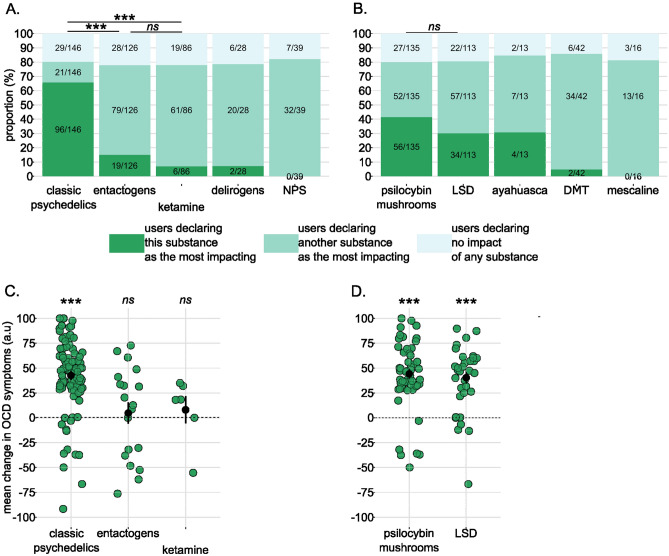
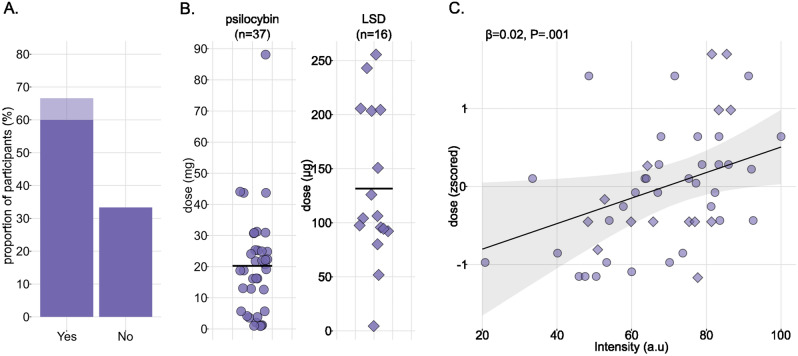
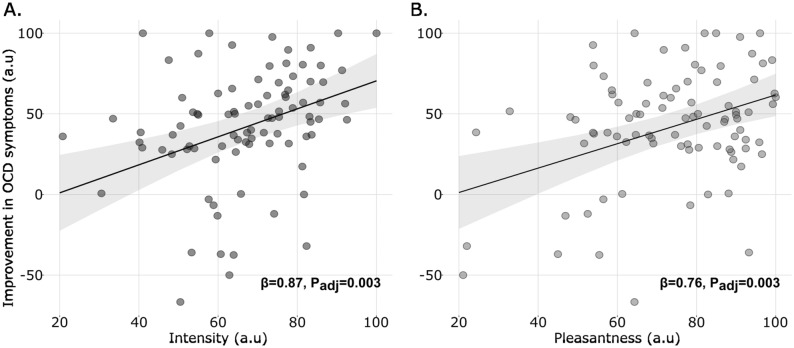
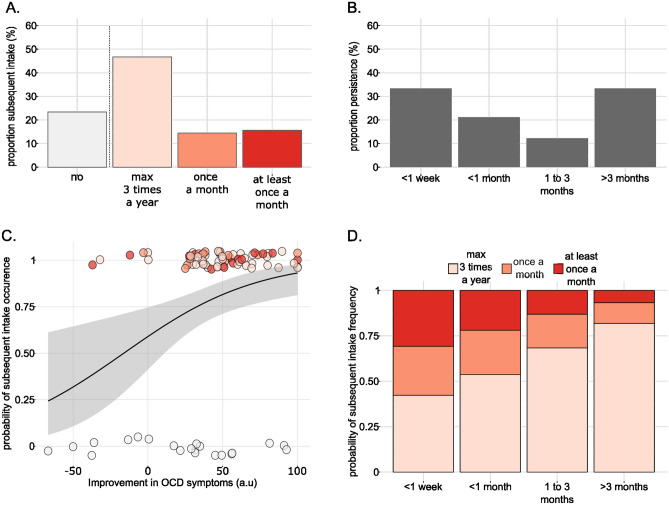
A renewed interest in the use of psychedelics for treating obsessive compulsive disorder (OCD) has emerged in the last 20 years. But pre-clinical and clinical evidence remain scarce, and little is known about the factor determining the magnitude and persistence of the therapeutic effect. We therefore designed a retrospective online survey to explore, in the general population using psychoactive drugs, their impact on OCD symptoms. We also assessed the attitude of the participants towards the substance in term of frequency of intakes. In a sample of 174 participants, classic psychedelics were reported as the only substances effective at reducing OCD symptoms. In classic psychedelics users, symptoms reduction was associated with the intensity of acute effects, itself correlated to the dose. Reports on the persistence of the therapeutic effect varied from weeks to months, but we could not find any predicting factor. Finally, the occurrence and frequency of subsequent intakes, which seemed to be limited in our sample, were predicted by the magnitude and persistence of the therapeutic effect, respectively. Our observations support the hypothesis of classic psychedelics efficacy in reducing OCD symptoms but a careful evaluation of the persistence of this effect is still needed.
Overview
The claims and statistics of this paper haven’t been checked yet.
Free: it reads the open-access text and checks the first 5 claims that cite a source we can check. Create a free account to check every claim.
Integrity signals
Registry
Cites
Statistics
Figures
Verification
Claims the paper makes
The claims and statistics of this paper haven’t been checked yet.
Free: it reads the open-access text and checks the first 5 claims that cite a source we can check. Create a free account to check every claim.
Claims other papers make about this one
Each is checked against this paper’s own text: does it say what the citing paper says it does?
The cited source says what the claim attributes to it.
In the citing paper
“A recent retrospective online survey also found OCD symptom improvement to be uniquely associated with personal serotonergic psychedelic use (30).”
Self-check
Percentages, sums and reported differences re-computed from the paper’s own numbers.
The self-check needs the paper’s full text.
Citations
Cites
The REDCap consortium: building an international community of software platform partners
Harris, P. A., Taylor, R., Minor, B. L., Elliott, V., Fernandez, M., O'Neal, L., McLeod, L., Delacqua, G., Delacqua, F., Kirby, J., et al. (2019) · Journal of Biomedical Informatics · doi:10.1016/j.jbi.2019.103208 · Cited by 24,013
Diagnostic and Statistical Manual of Mental Disorders
American Psychiatric Association (2022) · doi:10.1176/appi.books.9780890425787 · Cited by 23,476
The Obsessive-Compulsive Inventory: Development and validation of a short version.
Foa, E. B., Huppert, J. D., Leiberg, S., Langner, R., Kichic, R., Hajcak, G., & Salkovskis, P. M. (2002) · Psychological Assessment · doi:10.1037/1040-3590.14.4.485 · Cited by 2,959 · cited 1×
“Participants then had to fill in the short version of the Obsessive Compulsive Inventory (OCI-r) 29 to get a severity score.”
MethodThe epidemiology of obsessive-compulsive disorder in the National Comorbidity Survey Replication
Ruscio, A. M., Stein, D. J., Chiu, W. T., & Kessler, R. C. (2010) · Molecular Psychiatry · doi:10.1038/mp.2008.94 · Cited by 2,771
Griffiths, R. R., Johnson, M. W., Carducci, M. A., Umbricht, A., Richards, W. A., Richards, B. D., Cosimano, M. P., & Klinedinst, M. A. (2016) · Journal of Psychopharmacology · doi:10.1177/0269881116675513 · Cited by 2,201 · cited 1×
“But this is coherent with studies in other pathologies such as depression showing effects persisting from multiple weeks to several months 41,45,46 .”
ResultTrial of Psilocybin versus Escitalopram for Depression
Carhart-Harris, R., Giribaldi, B., Watts, R., Baker-Jones, M., Murphy-Beiner, A., Murphy, R., Martell, J., Blemings, A., Erritzoe, D., & Nutt, D. J. (2021) · New England Journal of Medicine · doi:10.1056/nejmoa2032994 · Cited by 1,391 · cited 1×
“This observation further suggests that moderate to high doses are necessary to obtain a therapeutic effect, which is coherent with preliminary data in OCD 17 , as well as in other pathologies 39–41 .”
ResultNichols, D. E. (2004) · Pharmacology & Therapeutics · doi:10.1016/j.pharmthera.2003.11.002 · Cited by 1,211
Psychedelics promote structural and functional neural plasticity
Ly, C., Greb, A. C., Cameron, L. P., Wong, J. M., Barragan, E. V., Wilson, P. C., Burbach, K. F., Soltanzadeh Zarandi, S., Sood, A., Paddy, M. R., et al. (2018) · Cell Reports · doi:10.1016/j.celrep.2018.05.022 · Cited by 1,207 · cited 2×
“In rodent, these structural modifications lasted up to a month, but were not specific to classic psychedelics since it was observed with multiple components including ketamine 47 .”
BackgroundAbramowitz, J. S., Taylor, S., & McKay, D. (2009) · The Lancet · doi:10.1016/s0140-6736(09)60240-3 · Cited by 1,002
Psilocybin with psychological support for treatment-resistant depression: six-month follow-up
Carhart-Harris, R. L., Bolstridge, M., Day, C. M. J., Rucker, J., Watts, R., Erritzoe, D. E., Kaelen, M., Giribaldi, B., Bloomfield, M., Pilling, S., et al. (2018) · Psychopharmacology · doi:10.1007/s00213-017-4771-x · Cited by 970 · cited 1×
“But this is coherent with studies in other pathologies such as depression showing effects persisting from multiple weeks to several months 41,45,46 .”
ResultSafety, tolerability, and efficacy of psilocybin in 9 patients with obsessive-compulsive disorder
Moreno, F. A., Wiegand, C. B., Taitano, E. K., & Delgado, P. L. (2006) · The Journal of Clinical Psychiatry · doi:10.4088/jcp.v67n1110 · Cited by 789
Bogenschutz, M. P., Ross, S., Bhatt, S., Baron, T., Forcehimes, A. A., Laska, E., Mennenga, S. E., O’Donnell, K., Owens, L. T., Podrebarac, S., et al. (2022) · JAMA Psychiatry · doi:10.1001/jamapsychiatry.2022.2096 · Cited by 711
Psilocybin induces rapid and persistent growth of dendritic spines in frontal cortex in vivo
Shao, L.-X., Liao, C., Gregg, I., Davoudian, P. A., Savalia, N. K., Delagarza, K., & Kwan, A. C. (2021) · doi:10.1101/2021.02.17.431629 · Cited by 628
Psilocybin induces rapid and persistent growth of dendritic spines in frontal cortex in vivo
Shao, L.-X., Liao, C., Gregg, I., Davoudian, P. A., Savalia, N. K., Delagarza, K., & Kwan, A. C. (2021) · Neuron · doi:10.1016/j.neuron.2021.06.008 · Cited by 626
Carbonaro, T. M., Bradstreet, M. P., Barrett, F. S., MacLean, K. A., Jesse, R., Johnson, M. W., & Griffiths, R. R. (2016) · Journal of Psychopharmacology · doi:10.1177/0269881116662634 · Cited by 553
Obsessive-Compulsive Disorder: Advances in Diagnosis and Treatment
Hirschtritt, M. E., Bloch, M. H., & Mathews, C. A. (2017) · JAMA · doi:10.1001/jama.2017.2200 · Cited by 493
Psychedelics promote neuroplasticity through the activation of intracellular 5-HT2A receptors
Vargas, M. V., Dunlap, L. E., Dong, C., Carter, S. J., Tombari, R. J., Jami, S. A., Cameron, L. P., Patel, S. D., Hennessey, J. J., Saeger, H. N., et al. (2023) · Science · doi:10.1126/science.adf0435 · Cited by 489 · cited 1×
“One candidate is the neuroplastic property of psychedelics, with increased neuronal growth and synaptogenesis observed both in vivo in rodents and in vitro in different species 47–49 .”
BackgroundConstructing drug effects: a history of set and setting
Hartogsohn, I. (2017) · Drug Science Policy and Law · doi:10.1177/2050324516683325 · Cited by 472
Predicting responses to psychedelics: a prospective study
Haijen, E. C. H. M., Kaelen, M., Roseman, L., Timmermann, C., Kettner, H., Russ, S., Nutt, D., Daws, R. E., Hampshire, A. D. G., Lorenz, R., et al. (2018) · Frontiers in Pharmacology · doi:10.3389/fphar.2018.00897 · Cited by 417
Multiple receptors contribute to the behavioral effects of indoleamine hallucinogens
Halberstadt, A. L., & Geyer, M. A. (2011) · Neuropharmacology · doi:10.1016/j.neuropharm.2011.01.017 · Cited by 411 · cited 1×
“Mescaline on the other side, seems to have combined psychedelic and entactogenic properties 35 and does not act on raphe neurons 36 .”
BackgroundPrediction of Psilocybin Response in Healthy Volunteers
Studerus, E., Gamma, A., Kometer, M., & Vollenweider, F. X. (2012) · PLoS ONE · doi:10.1371/journal.pone.0030800 · Cited by 369 · cited 1×
“However, the observation of an already described and therefore expected link between the intensity of acute effects and the dose 38 , suggests that their evaluations were somewhat trustful.”
BackgroundEffects of Schedule I drug laws on neuroscience research and treatment innovation
Nutt, D. J., King, L. A., & Nichols, D. E. (2013) · Nature Reviews Neuroscience · doi:10.1038/nrn3530 · Cited by 337 · cited 1×
“Since psychedelics have been classified under Schedule I in the 1971 conventions of the United Nations 21 and remain illegal in many countries, observational studies such as anonymous online surveys have been used to assess the use, misuse and potential therapeutic properties of psychedelics 22–26 .”
BackgroundPsilocybin – Summary of knowledge and new perspectives
Tylš, F., Páleníček, T., & Horáček, J. (2014) · European Neuropsychopharmacology · doi:10.1016/j.euroneuro.2013.12.006 · Cited by 276
The behavioral pharmacology of hallucinogens
Fantegrossi, W. E., Murnane, K. S., & Reissig, C. J. (2008) · Biochemical Pharmacology · doi:10.1016/j.bcp.2007.07.018 · Cited by 225
Cessation and reduction in alcohol consumption and misuse after psychedelic use
Garcia-Romeu, A., Davis, A. K., Erowid, F., Erowid, E., Griffiths, R. R., & Johnson, M. W. (2019) · Journal of Psychopharmacology · doi:10.1177/0269881119845793 · Cited by 225
Brakoulias, V., Starcevic, V., Belloch, A., Brown, C., Ferrao, Y. A., Fontenelle, L. F., Lochner, C., Marazziti, D., Matsunaga, H., Miguel, E. C., et al. (2017) · Comprehensive Psychiatry · doi:10.1016/j.comppsych.2017.04.002 · Cited by 218
Pharmacokinetics and Pharmacodynamics of Lysergic Acid Diethylamide in Healthy Subjects
Dolder, P. C., Schmid, Y., Steuer, A. E., Kraemer, T., Rentsch, K. M., Hammann, F., & Liechti, M. E. (2017) · Clinical Pharmacokinetics · doi:10.1007/s40262-017-0513-9 · Cited by 133 · cited 1×
“However, this association should be investigated further in patients since one of the most prevalent adverse effects reported during the acute experience is anxiety 42 , a symptom for which OCD patients might be particularly at risk.”
BackgroundAn online survey of tobacco smoking cessation associated with naturalistic psychedelic use
Johnson, M. W., Garcia-Romeu, A., Johnson, P. S., & Griffiths, R. R. (2017) · Journal of Psychopharmacology · doi:10.1177/0269881116684335 · Cited by 129
Agin-Liebes, G., Haas, T. F., Lancelotta, R., Uthaug, M. V., Ramaekers, J. G., & Davis, A. K. (2021) · ACS Pharmacology & Translational Science · doi:10.1021/acsptsci.1c00018 · Cited by 124 · cited 1×
“Since psychedelics have been classified under Schedule I in the 1971 conventions of the United Nations 21 and remain illegal in many countries, observational studies such as anonymous online surveys have been used to assess the use, misuse and potential therapeutic properties of psychedelics 22–26 .”
BackgroundExpectancy in placebo-controlled trials of psychedelics: if so, so what?
Butler, M., Jelen, L., & Rucker, J. (2022) · Psychopharmacology · doi:10.1007/s00213-022-06221-6 · Cited by 100 · cited 1×
“Also placebo or expectation effects, which are important confounding factors in psychedelic assisted psychotherapy 14 , were not assessed.”
BackgroundDeep brain stimulation for obsessive–compulsive disorder: a crisis of access
Visser-Vandewalle, V. E. R. M., Andrade, P., Mosley, P. E., Greenberg, B. D., Schuurman, R., McLaughlin, N. C. R., Voon, V., Krack, P., Foote, K. D., Mayberg, H. S., et al. (2022) · Nature Medicine · doi:10.1038/s41591-022-01879-z · Cited by 96
Self-citationThe association of psychedelic use and opioid use disorders among illicit users in the United States
Pisano, V. D., Putnam, N. P., Kramer, H. M., Franciotti, K. J., Halpern, J. H., & Holden, S. C. (2017) · Journal of Psychopharmacology · doi:10.1177/0269881117691453 · Cited by 86 · cited 1×
“Since psychedelics have been classified under Schedule I in the 1971 conventions of the United Nations 21 and remain illegal in many countries, observational studies such as anonymous online surveys have been used to assess the use, misuse and potential therapeutic properties of psychedelics 22–26 .”
BackgroundHallucinogen-induced relief of obsessions and compulsions
Moreno, F., & Delgado, P. L. (1997) · American Journal of Psychiatry · doi:10.1176/ajp.154.7.1037b · Cited by 85 · cited 2×
“There is, to our knowledge, no reported data on the persistence of the psyche-delic-induced therapeutic effects in OCD apart from case studies 7,10,11,43,44 .”
BackgroundRelief of obsessive-compulsive symptoms by LSD and psilocin
Leonard, H. L., & RAPOPORT, J. L. (1987) · American Journal of Psychiatry · doi:10.1176/ajp.144.9.1239b · Cited by 81
Swierkosz-Lenart, K., Santos, J. F. A. D., Elowe, J., Clair, A.-H., Bally, J. F., Riquier, F., Bloch, J., Draganski, B., Clerc, M.-T., Moyano, B. P., et al. (2023) · Frontiers in Psychiatry · doi:10.3389/fpsyt.2023.1065812 · Cited by 81
Self-citationEffects of Psilocybe argentipes on Marble-Burying Behavior in Mice
MATSUSHIMA, Y., SHIROTA, O., KIKURA-HANAJIRI, R., GODA, Y., & EGUCHI, F. (2009) · Bioscience, Biotechnology, and Biochemistry · doi:10.1271/bbb.90095 · Cited by 71
Hallucinogens, Serotonin and Obsessive-Compulsive Disorder
Delgado, P. L., & Moreno, F. A. (1998) · Journal of Psychoactive Drugs · doi:10.1080/02791072.1998.10399711 · Cited by 64 · cited 1×
“There is, to our knowledge, no reported data on the persistence of the psyche-delic-induced therapeutic effects in OCD apart from case studies 7,10,11,43,44 .”
BackgroundPsilocybin and Obsessive Compulsive Disorder
Wilcox, J. A. (2014) · Journal of Psychoactive Drugs · doi:10.1080/02791072.2014.963754 · Cited by 54 · cited 1×
“There is, to our knowledge, no reported data on the persistence of the psyche-delic-induced therapeutic effects in OCD apart from case studies 7,10,11,43,44 .”
BackgroundSerotonin, Psilocybin, and Body Dysmorphic Disorder: A Case Report
Hanes, K. R. (1996) · Journal of Clinical Psychopharmacology · doi:10.1097/00004714-199604000-00011 · Cited by 52
LSD treatment in a severe case of compulsive neurosis
Brandrup, E., & Vanggaard, T. (1977) · Acta Psychiatrica Scandinavica · doi:10.1111/j.1600-0447.1977.tb00149.x · Cited by 49 · cited 1×
“Some evidence of the therapeutic property of classic psychedelics came from clinical studies from the 70’s 6–8 but also from more recent case reports 9–11 and an online survey 12 .”
BackgroundPassie, T., & Benzenhöfer, U. (2018) · Drug Testing and Analysis · doi:10.1002/dta.2292 · Cited by 44
Lugo-Radillo, A., & Cortés-López, J. L. (2020) · Journal of Psychoactive Drugs · doi:10.1080/02791072.2020.1849879 · Cited by 41
Ketamine in the Treatment of Obsessive-Compulsive Disorder: A Systematic Review
Bandeira, I. D., Lins-Silva, D. H., Cavenaghi, V. B., Dorea-Bandeira, I., Faria-Guimarães, D., Barouh, J. L., Jesus-Nunes, A. P., Beanes, G., Souza, L. S., Leal, G. C., et al. (2022) · Harvard Review of Psychiatry · doi:10.1097/hrp.0000000000000330 · Cited by 39
Effects of LSD on grooming behavior in serotonin transporter heterozygous (Sert) mice
Kyzar, E. J., Stewart, A., & Kalueff, A. V. (2015) · Behavioural Brain Research · doi:10.1016/j.bbr.2015.08.018 · Cited by 38
Odland, A. U., Jessen, L., Kristensen, J. L., Fitzpatrick, C. M., & Andreasen, J. T. (2019) · Neuropharmacology · doi:10.1016/j.neuropharm.2019.107838 · Cited by 37 · cited 1×
“Evidence from preclinical studies is also scarce, with some studies assessing the effect of psychedelics in animal models of compulsive behavior such as the serotonin transporter heterozygous (Sert + / − ) mice 18 or on the marble burying test 19,20 .”
BackgroundLSD: Therapeutic Effects of the Psychedelic Experience
Savage, C., Savage, E., Fadiman, J., & Harman, W. W. (1964) · Psychological Reports · doi:10.2466/pr0.1964.14.1.111 · Cited by 35
Psilocybin for the Treatment of Obsessive-Compulsive Disorders
Ehrmann, K., Allen, J. J. B., & Moreno, F. (2021) · Current topics in behavioral neurosciences · doi:10.1007/7854_2021_279 · Cited by 30
Pharmacologic Similarities and Differences Among Hallucinogens
Waters, K. (2021) · The Journal of Clinical Pharmacology · doi:10.1002/jcph.1917 · Cited by 22 · cited 1×
“Despite being categorized as serotoninergic hallucinogens, DMT and mescaline have phenomenological and pharmacological profiles that seem to differ from LSD or psilocybin 33 .”
BackgroundMoreton, S. G., Burden-Hill, A., & Menzies, R. E. (2022) · Clinical Psychologist · doi:10.1080/13284207.2022.2086793 · Cited by 20
Research works printed but not linked: 1
- Griffiths RR Psilocybin produces substantial and sustained decreases in depression and anxiety in patients with life-threatening cancer: A randomized double-blind trial J. Psychopharmacol. 2016 30 1181 1197 27909165 PMC5367557 · DOI · Paper page
Cited by
Psychedelics for the Treatment of Obsessive–Compulsive Disorder: Efficacy and Proposed Mechanisms
Collins, H. M. (2024) · The International Journal of Neuropsychopharmacology · doi:10.1093/ijnp/pyae057 · Cited by 29
Kinderlehrer, D. A. (2025) · Neuropsychiatric Disease and Treatment · doi:10.2147/ndt.s500337 · Cited by 18
Existential feelings as a phenomenological framework for psychedelic therapy
Tijhuis, F. B., Coninx, S., & de Bruin, L. C. (2024) · Philosophical Psychology · doi:10.1080/09515089.2024.2412195 · Cited by 10
“For example, there is some evidence for the applicability of psychedelic therapy for people with obsessive-compulsive disorder and eating disorders (Buot et al., 2023; Moreno et al., 2006; Renelli et al., 2020).”
Moreno, F. A., Ehrmann, K., Wiegand, C. B., Dunne, R., Prickett, J. I., Bayze, B., & Allen, J. J. B. (2026) · Journal of Psychopharmacology · doi:10.1177/02698811261424214 · Cited by 10
“…have also reported initial signals of safety and efficacy (Kelmendi et al., 2022); A large retrospective survey of 174 participants with OCD who have used psycho-active drugs identified improvements in OCD associated with classic psychedelic use, particularly psilocybin (Buot et al., 2023).”
Roméo, B., Kervadec, E., Fauvel, B., Strika-Bruneau, L., Amirouche, A., Verroust, V., Piolino, P., & Benyamina, A. (2025) · Progress in Neuro-Psychopharmacology and Biological Psychiatry · doi:10.1016/j.pnpbp.2025.111300 · Cited by 10
Self-citation
Metadata
- Authors
- Buot, A., Pallares, C., Oganesyan, A., Dauré, C., Bonnelle, V., Burguière, E., Dos Santos, J. F. A., N’Diaye, K., Ljuslin, M., Smith, P., Verroust, V., Wyplosz, B., Morgiève, M., & Mallet, L.
- Affiliations
- Centre National de la Recherche Scientifique (FR)
- Beckley Foundation (GB)
- University Hospital of Geneva (CH)
- Georgetown University (US)
- Hôpital Paul-Brousse (FR)
- Assistance Publique – Hôpitaux de Paris (FR)
- University of Geneva (CH)
- Corresponding author
- Buot, Anne
- ORCID
- Venue
- Scientific Reports
- Published
- 2023-08-17
- Volume
- 13
- Issue
- 1
- Pages
- 13378-13378
- ISSN
- 2045-2322 (ISSN-L)
- PMC
- PMC10435518
- OpenAlex
- W4385954214
- Semantic Scholar
- 4bc6aa3840f99bf0ce0f50139e39a83217f3af8a
- Cited by
- 28
- References
- 47
- Citations by year
- 2026: 5 · 2025: 15 · 2024: 8
- FWCI
- 8.16
- Type
- journal article
- Language
- en
- Open access
- gold
- doi.org
- Licence
- cc-by
- creativecommons.org/licenses/by/4.0 (tdm)
- creativecommons.org/licenses/by/4.0 (vor)
- Locations
- Scientific Reports (publishedVersion, cc-by)
- PubMed Central (publishedVersion, cc-by)
- PubMed (publishedVersion)
- HAL (submittedVersion, other-oa)
- DOAJ (DOAJ: Directory of Open Access Journals) (submittedVersion, cc-by-sa)
- Archive ouverte UNIGE (University of Geneva) (submittedVersion, other-oa)
- Topics
- Social Sciences › Psychology › Clinical Psychology › Psychedelics and Drug Studies
- Social Sciences › Psychology › Clinical Psychology › Obsessive-Compulsive Spectrum Disorders
- Health Sciences › Medicine › Psychiatry and Mental health › Schizophrenia research and treatment
- Keywords
- obsessive-compulsive disorder, classic psychedelics, acute effects, dose-response relationship, attitudes toward psychedelics, psychedelic therapy
- MeSH terms
- Hallucinogens, Humans, Obsessive-Compulsive Disorder, Retrospective Studies, Plastic Surgery Procedures
About these checks
Registry, retraction, Cites and statistics results are computed, not judged, with one exception: a printed reference that no index lists is read once by a model before it counts as a citation error. Claims are extracted by a model and kept only when their quote appears verbatim in the text; each cited source is then checked, with a model’s help, for whether it says what the claim relies on. Those verdicts can be wrong — read the claim’s quote and the cited source before relying on one.
Statistics and arithmetic are recomputed, not judged.
Confidence bands are shown only for fields calibrated on our annotated test set. None is calibrated yet, so no band is shown.
What counts as a claim ›How we measure confidence ›How we check this ›
Are you an author, or do you see a problem with this page? Request a review
Data sources
Bibliographic data: Semantic Scholar, OpenAlex, Crossref.
Contains information from the Semantic Scholar Academic Graph Datasets, made available under the ODC Attribution License (ODC-BY 1.0).
Semantic Scholar’s data is described in: Kinney, R., et al. (2023). The Semantic Scholar Open Data Platform. arXiv:2301.10140.
