

Chelate facilitated phytoextraction of Pb, Cd, and Zn from a lead–zinc mine contaminated soil by three accumulator plants
Open accessThe DOI matches its Crossref record; 101 of the 102 references it cites were found in a registry or an index, and 1 are not checked yet; 1 of the 58 sources its claims cite were checked for support.
Abstract
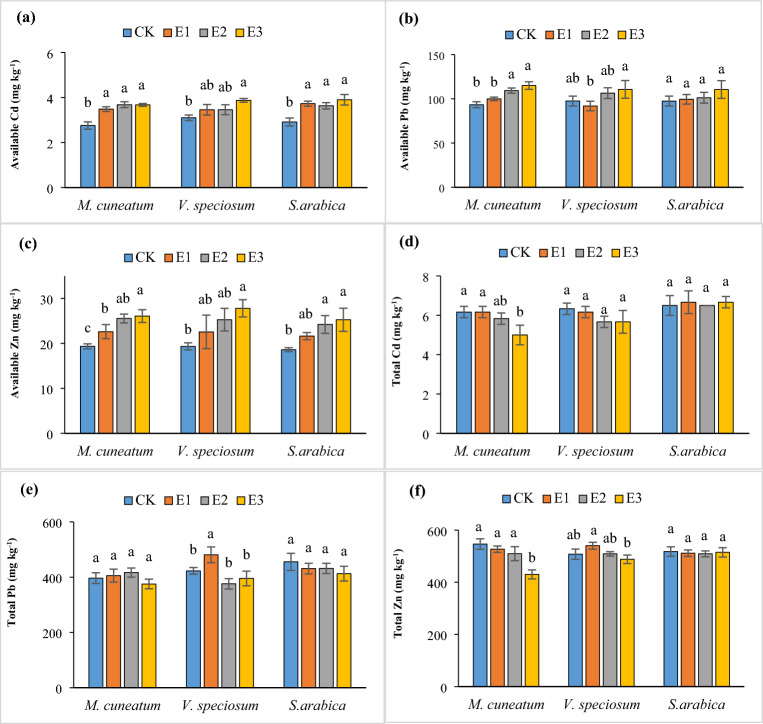
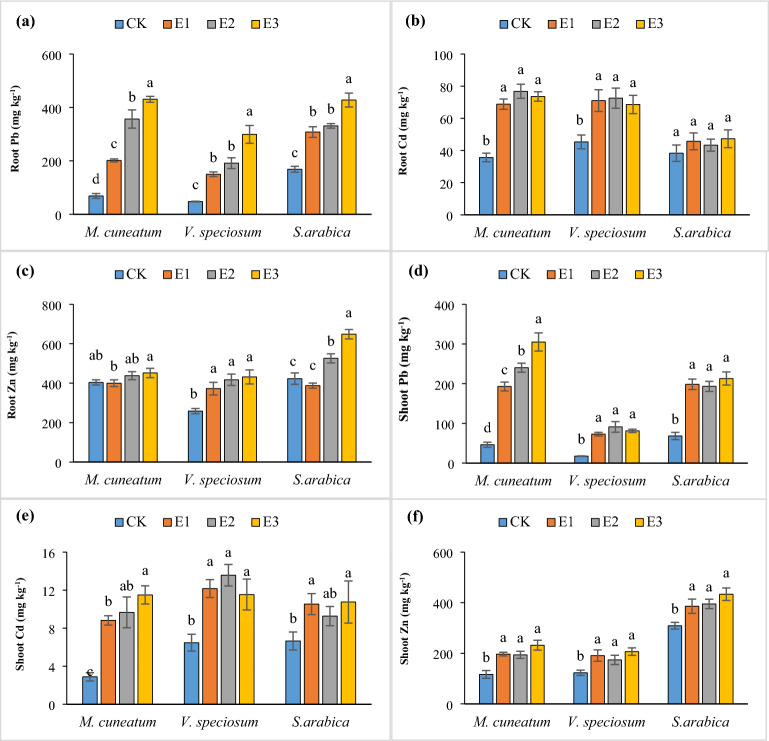
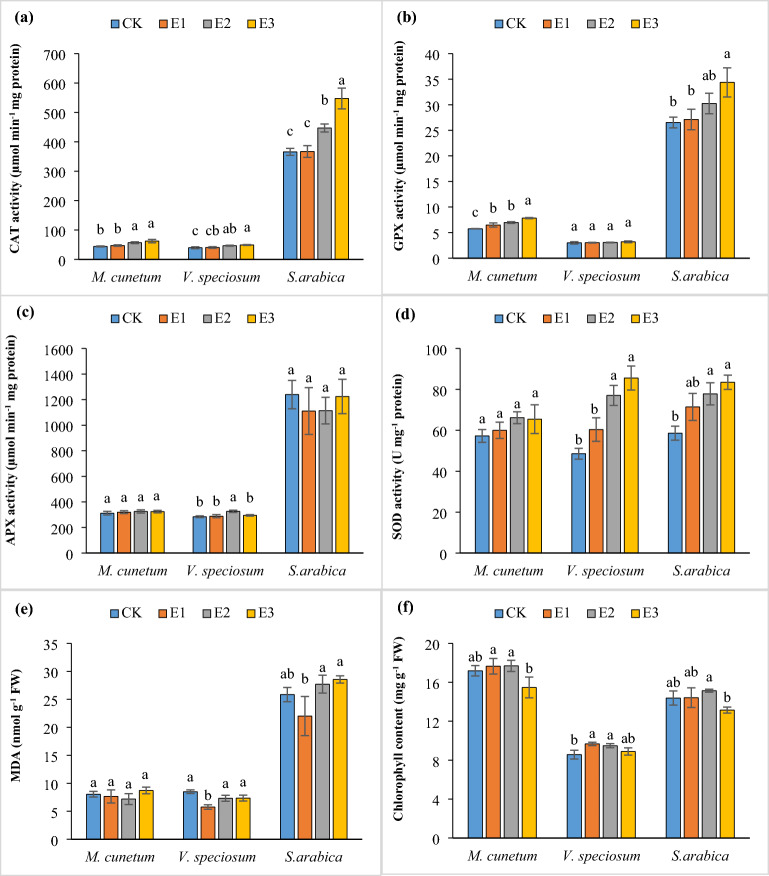
This study aims to evaluate the enhancement of phytoextraction of heavy metals (Pb, Cd, and Zn) by species Marrubium cuneatum,Stipa arabica, and Verbascum speciosum, through EDTA amendment. Assisted phytoextraction pot experiments were performed at different EDTA dosages (0, 1, 3, and 5 mmol kg−1 soil). The DTPA-extractable metal content increased in the presence of EDTA, followed by their contents in the tissues of all three studied species. Resulting from oxidative stress, the activity of antioxidant enzymes such as glutathione peroxidase (GPX), superoxide dismutase (SOD), and catalase (CAT) increased when the chelating agent was added. EDTA in higher doses partially decreased chlorophyll concentration, and 5 mmol kg−1 of that reduced the biomass of the studied species. The bioconcentration factor (BCF) for Cd was notably high in all studied plants and considerably elevated for Zn and Pb with the addition of EDTA in M. cuneatum and S. arabica(BCF > 1), whilst an accumulation factor greater than one (AF > 1) was found for Cd in all species and for Pb in the case of S. arabica. In general, the results demonstrated that EDTA can be an effective amendment for phytoextraction of Cd, Zn, and Pb by M. cuneatum,V. speciosum and S. arabica in contaminated soils.
Verified 2026-11-25 · 1 reference not checked yet
Overview
CoChat Summary
TL;DR
In a six-month greenhouse pot experiment, EDTA amendment increased DTPA-extractable Pb, Cd, and Zn and their accumulation in *Marrubium cuneatum*, *Stipa arabica*, and *Verbascum speciosum*, while 5 mmol kg−1 EDTA caused phytotoxicity and biomass reduction. The authors conclude EDTA-assisted phytoextraction is effective for these metals and species, with predicted optimum EDTA doses of about 7–9 mmol kg−1 depending on species and metal.
Key findings
- EDTA increased DTPA-extractable soil metals. Available Cd increased by 25%, 19%, and 34% for *M. cuneatum*, *S. arabica*, and *V. speciosum*; available Pb was highest at 5 mmol kg−1 EDTA (+23%, +13%, and +13%); available Zn at 5 mmol kg−1 increased by 34%, 43%, and 35%, respectively, compared with untreated soil.
- Tissue metal concentrations rose with EDTA. At 5 mmol kg−1, root Pb increased by 154%, 536%, and 525% in *S. arabica*, *V. speciosum*, and *M. cuneatum*, and shoot Pb increased by 563%, 376%, and 211%; shoot Cd increased from 6.65 to 10.75, 6.47 to 13.5, and 2.88 to 11.49 mg kg−1 (increases of 61%, 109%, and 298% for *S. arabica*, *V. speciosum*, and *M. cuneatum*). Zn increases were 53%, 67%, and 12% in roots and 40%, 67%, and 99% in shoots, respectively.
- At 5 mmol kg−1 EDTA, root biomass decreased by 30%, 20%, and 22% and shoot biomass by 17%, 6%, and 11% in *S. arabica*, *V. speciosum*, and *M. cuneatum*. CAT activity increased by 49%, 23%, and 40%; GPX by 23%, 7%, and 26%; SOD increased up to 77% and 43% in *V. speciosum* and *S. arabica* but not significantly in *M. cuneatum*.
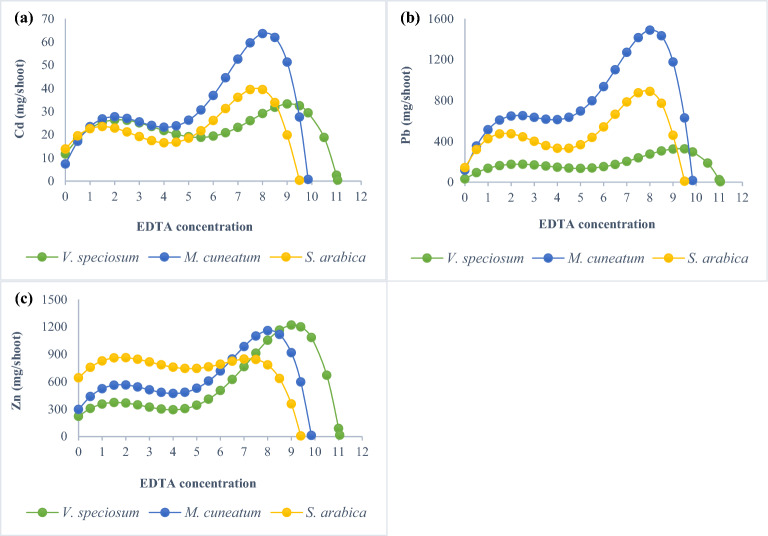
- BCF for Cd was high in all species, reaching maxima at 5 mmol kg−1 of 7.10, 12.26, and 14.77 for *S. arabica*, *V. speciosum*, and *M. cuneatum*. BCF > 1 occurred for Pb in *M. cuneatum* and *S. arabica* and for Zn in *M. cuneatum* (1.06) and *S. arabica* (1.03). AF > 1 was found for Cd in all species and for Pb in *S. arabica*. Predicted optimum EDTA doses were 9.1, 8.15, and 7.8 mmol kg−1 for Cd; 9.2, 8.1, and 7.8 mmol kg−1 for Pb; and 9.1, 8.1, and 1.8 mmol kg−1 for Zn in *V. speciosum*, *M. cuneatum*, and *S. arabica*, respectively. The highest capability was *S. arabica* for Zn, *M. cuneatum* for Pb, and *V. speciosum* for Cd.
Methods
- Pot experiment using soil from the Angouran Pb–Zn mine, Iran (loamy, pH 7.12, EC 0.31 dS m−1; total Zn 568.42, Pb 472, and Cd 6.85 mg kg−1). *M. cuneatum*, *S. arabica*, and *V. speciosum* were grown for six months in a greenhouse; 36 pots were arranged in a completely randomized design with three replications, and EDTA was applied at 0, 1, 3, and 5 mmol kg−1 soil 50 days before harvest.
- Total and DTPA-extractable soil metals and root/shoot metal concentrations were measured by ICP-OES. TF, BCF, and AF were calculated, along with chlorophyll, MDA, and CAT, GPX, APX, and SOD activities. One-way ANOVA with Tukey tests (P < 0.05) was used, and quadratic/cubic regression predicted optimal EDTA doses from shoot biomass and shoot metal concentration.
Limitations
- The authors state that further studies are needed under various ecological field conditions to validate the findings, and they note EDTA’s low biodegradability and potential toxicity to plants and soil microorganisms. They also state that greenhouse/pot data may not definitively classify plants as accumulators or excluders and that long-term field accumulation should be studied.
- Evident from the text: the study used a single contaminated mine soil and one greenhouse pot trial with three replications, with no field validation. The predicted optimal EDTA doses (about 7–9 mmol kg−1) exceed the tested range of 0–5 mmol kg−1, so those optima are extrapolations from the regression models.
Model-written summary. Check it against the paper before relying on it.
Integrity signals
Registry
Cites
Statistics
Figures
Verification
Claims the paper makes
1 Valid · 0 Not valid · 40 Not checked · 110 Own results and interpretations
The sources with a verdict support this claim; the rest weren’t checked yet, have no full text we could read, or their verdicts aren’t rated yet.
In the paper
“the decrease in plant growth due to the application of the above doses of the chelating agent is the result of the high accumulation of potentially toxic metals, which is greater than the plant's capacity to activate the”
§ Chelate facilitated phytoextraction of Pb, Cd, and Zn from a lead–zinc mine contaminated soil by three accumulator plants > Results and discussion > The effects of various EDTA doses on plant biomass
What the sources say
- Supportedcites [35] Kamal MA Effect of different levels of EDTA on phytoextraction of heavy metal and growth of Brassica juncea L Front. Microbiol. 2023 14 1228117 10.3389/fmicb.2023.1228117 37601347 PMC10435890 source
The Abstract of our copy states that high EDTA levels (above 3 mM kg−1) reduced root and shoot biomass, photosynthetic area and chlorophyll, and that with increasing EDTA concentration heavy-metal accumulation rose, driving H2O2, superoxide anion and lipid-peroxidation generation and 'interrupting mechanisms of the antioxidant defense system' — i.e., hyperaccumulation outrunning the plant's defenses. The Discussion reinforces this ('enhanced Cd and Pb bioavailability also reduced plant growth'; 'the decrease in biomass in seedlings in the presence of heavy metals could be attributed to overproduction of ROS'). The causal chain in the citing sentence (chelant dose → metal hyperaccumulation → defense capacity exceeded → growth decline) is thus stated in the source, with the same dose-dependent qualifier. (LLM, conf=0.85)
- Not checked yetcites [36] Wei T Effects of salicylic acid, Fe (II) and plant growth-promoting bacteria on Cd accumulation and toxicity alleviation of Cd tolerant and sensitive tomato genotypes J. Environ. Manag. 2018 24 164 171 10.1016/j.jenvman.2018.02.100 29525748 source
Checked before — its earlier verdict is held back until a new check runs.
plainstates a cause- Asserted: passes — The authors put it forward as true.
- Checkable: passes — It can be checked against evidence.
- Load-bearing: passes — The paper’s conclusions depend on it.
- Based: passes — The paper gives a reason why it holds.
- Supported
A result the paper reports from its own data — it cites no other source for it, so there is none to check. The quote shows it is in the paper.
In the paper
“during the increase in dose to 5 mmol kg−1, the root biomass of S. arabica, V. speciosum, and M. cuneatum decreased by 30, 20, and 22%, respectively, compared with those grown in untreated conditions”
§ Chelate facilitated phytoextraction of Pb, Cd, and Zn from a lead–zinc mine contaminated soil by three accumulator plants > Results and discussion > The effects of various EDTA doses on plant biomass
plainstates a cause- Asserted: passes — The authors put it forward as true.
- Checkable: passes — It can be checked against evidence.
- Load-bearing: unclear — It is unclear whether the paper’s conclusions depend on it.
- Based: passes — The paper gives a reason why it holds.
A result the paper states — it cites no source for it, so there is none to check. The quote shows it is in the paper.
In the paper
“the negative effect of EDTA on root growth was more severe than that of the shoot”
§ Chelate facilitated phytoextraction of Pb, Cd, and Zn from a lead–zinc mine contaminated soil by three accumulator plants > Results and discussion > The effects of various EDTA doses on plant biomass
plainstates a cause- Asserted: passes — The authors put it forward as true.
- Checkable: passes — It can be checked against evidence.
- Load-bearing: unclear — It is unclear whether the paper’s conclusions depend on it.
- Based: passes — The paper gives a reason why it holds.
A result the paper reports from its own data — it cites no other source for it, so there is none to check. The quote shows it is in the paper.
In the paper
“EDTA in higher doses partially decreased chlorophyll concentration”
§ Chelate facilitated phytoextraction of Pb, Cd, and Zn from a lead–zinc mine contaminated soil by three accumulator plants > Abstract
plainstates a cause- Asserted: passes — The authors put it forward as true.
- Checkable: passes — It can be checked against evidence.
- Load-bearing: unclear — It is unclear whether the paper’s conclusions depend on it.
- Based: passes — The paper gives a reason why it holds.
A result the paper reports from its own data — it cites no other source for it, so there is none to check. The quote shows it is in the paper.
In the paper
“considerably elevated for Zn and Pb with the addition of EDTA in M. cuneatum and S. arabica (BCF > 1)”
§ Chelate facilitated phytoextraction of Pb, Cd, and Zn from a lead–zinc mine contaminated soil by three accumulator plants > Abstract
plainstates a cause- Asserted: passes — The authors put it forward as true.
- Checkable: passes — It can be checked against evidence.
- Load-bearing: passes — The paper’s conclusions depend on it.
- Based: passes — The paper gives a reason why it holds.
55 more claims
Create a free account to see all 151 claims and to verify the 55 references still open.
- It may state two separate claims as one. 76
- Probably not a substantial claim. 23
Self-check
Percentages, sums and reported differences re-computed from the paper’s own numbers.
Each contradiction between two passages listed here was confirmed by an independent check.
Rated minor: it would not touch a result — a value no result rests on, a p-value that stays on the same side of the significance level, or a conflict that is clerical, resolved elsewhere in the paper, or outside its own findings.
In the paper
§ Chelate facilitated phytoextraction of Pb, Cd, and Zn from a lead–zinc mine contaminated soil by three accumulator plants > Abstract
“an accumulation factor greater than one (AF > 1) was found for Cd in all species and for Pb in the case of S. arabica.”
§ Chelate facilitated phytoextraction of Pb, Cd, and Zn from a lead–zinc mine contaminated soil by three accumulator plants > Results and discussion > Phytoremediation efficiency of Pb, Zn, and Cd by studied plants
“S. arabica | Pb | 0.40c ± 0.07 | 0.64a ± 0.005 | 0.58ab ± 0.03 | 0.50bc ± 0.06 | 0.37c ± 0.02 | 0.71b ± 0.06 | 0.77b ± 0.09 | 1.04a ± 0.10 | 0.15b ± 0.03 | 0.46a ± 0.04 | 0.45a ± 0.07 | 0.51a ± 0.02”
Rated minor: it would not touch a result — a value no result rests on, a p-value that stays on the same side of the significance level, or a conflict that is clerical, resolved elsewhere in the paper, or outside its own findings.
In the paper
§ Chelate facilitated phytoextraction of Pb, Cd, and Zn from a lead–zinc mine contaminated soil by three accumulator plants > Results and discussion > Phytoremediation efficiency of Pb, Zn, and Cd by studied plants
“The BCF value of Zn by adding 5 mmol kg−1 EDTA for M. cuneatum and S. arabica reached 1.06 and 1.03 (BCF > 1), respectively”
§ Chelate facilitated phytoextraction of Pb, Cd, and Zn from a lead–zinc mine contaminated soil by three accumulator plants > Results and discussion > Phytoremediation efficiency of Pb, Zn, and Cd by studied plants
“S. arabica | Zn | 0.73b ± 0.07 | 0.99a ± 0.09 | 0.75b ± 0.06 | 0.66b ± 0.03 | 0.81c ± 0.01 | 0.75c ± 0.04 | 1.03b ± 0.06 | 1.26a ± 0.08”
Rated minor: it would not touch a result — a value no result rests on, a p-value that stays on the same side of the significance level, or a conflict that is clerical, resolved elsewhere in the paper, or outside its own findings.
In the paper
§ Chelate facilitated phytoextraction of Pb, Cd, and Zn from a lead–zinc mine contaminated soil by three accumulator plants > Results and discussion > Phytoremediation efficiency of Pb, Zn, and Cd by studied plants
“The value of BCF for Cd was considerably high in all three studied species and reached its maximum value at 5 mmol kg−1 EDTA with 7.10, 12.26, and 14.77 for S. arabica, V. speciosum, and M. cuneatum, respectively.”
§ Chelate facilitated phytoextraction of Pb, Cd, and Zn from a lead–zinc mine contaminated soil by three accumulator plants > Results and discussion > Phytoremediation efficiency of Pb, Zn, and Cd by studied plants
“V. speciosum | Cd | 0.14a ± 0.03 | 0.17a ± 0.02 | 0.18a ± 0.03 | 0.16a ± 0.02 | 7.17b ± 0.81 | 11.55a ± 1.53 | 12.80a ± 0.85 | 12.26a ± 2.36”
Rated minor: it would not touch a result — a value no result rests on, a p-value that stays on the same side of the significance level, or a conflict that is clerical, resolved elsewhere in the paper, or outside its own findings.
In the paper
“Three replications of each treatment were conducted in a completely randomized design, and 36 pots were divided into nine experimental groups randomly.”
§ Chelate facilitated phytoextraction of Pb, Cd, and Zn from a lead–zinc mine contaminated soil by three accumulator plants > Material and methods > Growth conditions and treatments
Reported 9 · recomputed 12
Cited works that were retracted
Works this paper cites that were later retracted, from the retraction notices publishers deposit. Major when the notice came out before this paper was published.
Rated major: it would touch a result — a value a result rests on, reported and recomputed p-values on opposite sides of the significance level, two passages that conflict with no sign which is right, or a cited work retracted before this paper was published.
In the paper
“Liu, S. et al. RETRACTED: The interplay between reactive oxygen and nitrogen species contributes in the regulatory mechanism of the nitro-oxidative stress induced by cadmium in Arabidopsis. J. Hazard. Mater. 344, 1007–1024 (2018).”
Cited work 10.1016/j.jhazmat.2017.12.004 · retracted 2020-10-23 · notice 10.1016/j.jhazmat.2020.123740 · this paper published 2023-12-01
Citations
Cites
1 retracted
Liu, S., Yang, R., Tripathi, D. K., Li, X., He, W., Wu, M., Ali, S., Ma, M., Cheng, Q., & Pan, Y. (2018) · Journal of Hazardous Materials · doi:10.1016/j.jhazmat.2017.12.004 · Cited by 59
RetractedCOPPER ENZYMES IN ISOLATED CHLOROPLASTS. POLYPHENOLOXIDASE IN BETA VULGARIS
Arnon, D. I. (1949) · Plant Physiology · doi:10.1104/pp.24.1.1 · Cited by 22,451
Photoperoxidation in isolated chloroplasts
Heath, R. L., & Packer, L. (1968) · Archives of Biochemistry and Biophysics · doi:10.1016/0003-9861(68)90654-1 · Cited by 11,413
Total Carbon, Organic Carbon, and Organic Matter
Nelson, D. W., & Sommers, L. E. (1996) · SSSA Book Series · doi:10.2136/sssabookser5.3.c34 · Cited by 10,491
Development of a DTPA Soil Test for Zinc, Iron, Manganese, and Copper
Lindsay, W. L., & Norvell, W. A. (1978) · Soil Science Society of America Journal · doi:10.2136/sssaj1978.03615995004200030009x · Cited by 9,983
Methods of soil analysis. Part 3 - chemical methods.
Sparks, D. L., Page, A. L., Helmke, P. A., Loeppert, R. H., Soltanpour, P. N., Tabatabai, M. A., Johnston, C. T., & Sumner, M. E. (1996) · Cited by 8,502
Santos, A. G., da Rocha, G. O., & de Andrade, J. B. (2019) · Scientific Reports · doi:10.1038/s41598-018-37186-2 · Cited by 8,495
Distribution of the Elements in Some Major Units of the Earth's Crust
TUREKIAN, K. K., & WEDEPOHL, K. H. (1961) · Geological Society of America Bulletin · doi:10.1130/0016-7606(1961)72[175:doteis]2.0.co;2 · Cited by 5,630
DHINDSA, R. S., PLUMB-DHINDSA, P., & THORPE, T. A. (1981) · Journal of Experimental Botany · doi:10.1093/jxb/32.1.93 · Cited by 4,421
The Assay of Catalases and Peroxidases
Maehly, A. C. (1954) · Methods of Biochemical Analysis · doi:10.1002/9780470110171.ch14 · Cited by 3,303
Bremner, J. M., & Mulvaney, C. S. (1982) · Agronomy Monographs · doi:10.2134/agronmonogr9.2.2ed.c31 · Cited by 3,264
Olsen, S. R., & Sommers, L. E. (1982) · Agronomy Monographs · doi:10.2134/agronmonogr9.2.2ed.c24 · Cited by 3,042
Accumulators and excluders ‐strategies in the response of plants to heavy metals
Baker, A. J. M. (1981) · Journal of Plant Nutrition · doi:10.1080/01904168109362867 · Cited by 2,233
Sarwar, N., Imran, M., Shaheen, M. R., Ishaque, W., Kamran, M. A., Matloob, A., Rehim, A., & Hussain, S. (2017) · Chemosphere · doi:10.1016/j.chemosphere.2016.12.116 · Cited by 1,402
Shahid, M., Dumat, C., Khalid, S., Schreck, E., Xiong, T., & Niazi, N. K. (2017) · Journal of Hazardous Materials · doi:10.1016/j.jhazmat.2016.11.063 · Cited by 1,181
Making the life of heavy metal-stressed plants a little easier
Gratão, P. L., Polle, A., Lea, P. J., & Azevedo, R. A. (2005) · Functional Plant Biology · doi:10.1071/fp05016 · Cited by 1,156
Bremner, J. M. (1996) · SSSA Book Series · doi:10.2136/sssabookser5.3.c37 · Cited by 1,008
A global database for plants that hyperaccumulate metal and metalloid trace elements
Reeves, R. D., Baker, A. J. M., Jaffré, T., Erskine, P. D., Echevarria, G., & van der Ent, A. (2018) · New Phytologist · doi:10.1111/nph.14907 · Cited by 769
(1989) · Plant and Cell Physiology · doi:10.1093/oxfordjournals.pcp.a077844 · Cited by 741
Copper environmental toxicology, recent advances, and future outlook: a review
Rehman, M., Liu, L., Wang, Q., Saleem, M. H., Bashir, S., Ullah, S., & Peng, D. (2019) · Environmental Science and Pollution Research · doi:10.1007/s11356-019-05073-6 · Cited by 561
Kalbitz, K., & Wennrich, R. (1998) · Science of The Total Environment · doi:10.1016/s0048-9697(97)00302-1 · Cited by 452
Phytoremediation of mine tailings in temperate and arid environments
Mendez, M. O., & Maier, R. M. (2008) · Reviews in Environmental Science and Bio/Technology · doi:10.1007/s11157-007-9125-4 · Cited by 435
McLaughlin, M. J., Hamon, R. E., McLaren, R. G., Speir, T. W., & Rogers, S. L. (2000) · Australian Journal of Soil Research · doi:10.1071/sr99128 · Cited by 434
EDTA enhanced heavy metal phytoextraction: metal accumulation, leaching and toxicity
Grčman, H., Velikonja-Bolta, Š., Vodnik, D., Kos, B., & Leštan, D. (2001) · Plant and Soil · doi:10.1023/a:1011857303823 · Cited by 392
Weber, R., Watson, A., Forter, M., & Oliaei, F. (2011) · Waste Management & Research: The Journal for a Sustainable Circular Economy · doi:10.1177/0734242x10390730 · Cited by 317
Adsorption and Migration of Heavy Metals in Soil
Dube, A., Zbytniewski, R., Kowalkowski, T., Cukrowska, E., & Buszewski, B. (2001) · Polish Journal of Environmental Studies · Cited by 284
do Nascimento, C. W. A., Amarasiriwardena, D., & Xing, B. (2006) · Environmental Pollution · doi:10.1016/j.envpol.2005.06.017 · Cited by 280
Phytoremediation of heavy metals by Alternanthera bettzickiana: Growth and physiological response
Tauqeer, H. M., Ali, S., Rizwan, M., Ali, Q., Saeed, R., Iftikhar, U., Ahmad, R., Farid, M., & Abbasi, G. H. (2016) · Ecotoxicology and Environmental Safety · doi:10.1016/j.ecoenv.2015.12.031 · Cited by 270
EDTA-assisted Pb phytoextraction
Saifullah, Meers, E., Qadir, M., de Caritat, P., Tack, F. M. G., Du Laing, G., & Zia, M. H. (2009) · Chemosphere · doi:10.1016/j.chemosphere.2008.11.007 · Cited by 267
EDTA-Enhanced Phytoremediation of Heavy Metals: A Review
Shahid, M., Austruy, A., Echevarria, G., Arshad, M., Sanaullah, M., Aslam, M., Nadeem, M., Nasim, W., & Dumat, C. (2014) · Soil and Sediment Contamination: An International Journal · doi:10.1080/15320383.2014.831029 · Cited by 244
Yang, L. P., Zhu, J., Wang, P., Zeng, J., Tan, R., Yang, Y. Z., & Liu, Z. M. (2018) · Ecotoxicology and Environmental Safety · doi:10.1016/j.ecoenv.2018.05.026 · Cited by 214
Epelde, L., Hernández-Allica, J., Becerril, J. M., Blanco, F., & Garbisu, C. (2008) · The Science of The Total Environment · doi:10.1016/j.scitotenv.2008.03.024 · Cited by 178
The effect of cadmium on the growth and antioxidant response for freshwater algae Chlorella vulgaris
Cheng, J., Qiu, H., Chang, Z., Jiang, Z., & Yin, W. (2016) · SpringerPlus · doi:10.1186/s40064-016-2963-1 · Cited by 175
Chen, J., Shafi, M., Li, S., Wang, Y., Wu, J., Ye, Z., Peng, D., Yan, W., & Liu, D. (2015) · Scientific Reports · doi:10.1038/srep13554 · Cited by 174
Screening of native plant species for phytoremediation potential at a Hg-contaminated mining site
Marrugo‐Negrete, J., Marrugo-Madrid, S., Pinedo‐Hernández, J., Durango-Hernández, J., & Díez, S. (2015) · The Science of The Total Environment · doi:10.1016/j.scitotenv.2015.10.117 · Cited by 169
Anning, A. K., & Akoto, R. (2017) · Ecotoxicology and Environmental Safety · doi:10.1016/j.ecoenv.2017.10.014 · Cited by 158
Wei, B., Yu, J., Cao, Z., Meng, M., Yang, L., & Chen, Q. (2020) · International Journal of Environmental Research and Public Health · doi:10.3390/ijerph17155359 · Cited by 153
Ibrahim, M., Chee Kong, Y., & Mohd Zain, N. (2017) · Molecules · doi:10.3390/molecules22101623 · Cited by 143
Wu, B., Peng, H., Sheng, M., Luo, H., Wang, X., Zhang, R., Xu, F., & Xu, H. (2021) · Ecotoxicology and Environmental Safety · doi:10.1016/j.ecoenv.2021.112368 · Cited by 137
Xiao, R., Ali, A., Wang, P., Li, R., Tian, X., & Zhang, Z. (2019) · Chemosphere · doi:10.1016/j.chemosphere.2019.05.121 · Cited by 127
Najeeb, U., Ahmad, W., Zia, M. H., Zaffar, M., & Zhou, W. (2017) · Arabian Journal of Chemistry · doi:10.1016/j.arabjc.2014.01.009 · Cited by 120
Some factors influencing the estimation of dehydrogenase activities of some soils under pasture
Ross, D. J. (1971) · Soil Biology and Biochemistry · doi:10.1016/0038-0717(71)90002-2 · Cited by 116
Ruf, A., Kuzyakov, Y. V., & Lopatovskaya, O. G. (2006) · Soil Biology and Biochemistry · doi:10.1016/j.soilbio.2006.03.008 · Cited by 115
Lam, E. J., Cánovas, M., Gálvez, M. E., Montofré, Í. L., Keith, B. F., & Faz, Á. (2017) · Journal of Geochemical Exploration · doi:10.1016/j.gexplo.2017.06.015 · Cited by 115
Chakraborty, U., & Pradhan, D. (2011) · Journal of Plant Interactions · doi:10.1080/17429145.2010.513484 · Cited by 110
Mercury bioaccumulation and phytotoxicity in two wild plant species of Almadén area
Moreno-Jiménez, E., Gamarra, R., Carpena-Ruiz, R. O., Millán, R., Peñalosa, J. M., & Esteban, E. (2006) · Chemosphere · doi:10.1016/j.chemosphere.2005.09.043 · Cited by 106
Aihemaiti, A., Jiang, J., Li, D., Liu, N., Yang, M., Meng, Y., & Zou, Q. (2018) · Journal of Environmental Management · doi:10.1016/j.jenvman.2018.05.081 · Cited by 101
Din, B. U., Amna, Rafique, M., Javed, M. T., Kamran, M. A., Mehmood, S., Khan, M., Sultan, T., Hussain Munis, M. F., & Chaudhary, H. J. (2020) · Plant Physiology and Biochemistry · doi:10.1016/j.plaphy.2019.11.010 · Cited by 99
Guo, D., Ali, A., Ren, C., Du, J., Li, R., Lahori, A. H., Xiao, R., Zhang, Z., & Zhang, Z. (2019) · Ecotoxicology and Environmental Safety · doi:10.1016/j.ecoenv.2018.10.038 · Cited by 96
Jiang, M., Liu, S., Li, Y., Li, X., Luo, Z., Song, H., & Chen, Q. (2019) · Ecotoxicology and Environmental Safety · doi:10.1016/j.ecoenv.2018.12.020 · Cited by 96
Kaurin, A., Cernilogar, Z., & Leštan, D. (2017) · Chemosphere · doi:10.1016/j.chemosphere.2017.11.082 · Cited by 93
Phytoremediation of polluted soils and waters by native Qatari plants: Future perspectives
Al-Thani, R. F., & Yasseen, B. T. (2020) · Environmental Pollution · doi:10.1016/j.envpol.2019.113694 · Cited by 93
Ghazaryan, K., Movsesyan, H., Ghazaryan, N., & Watts, B. A. (2019) · Environmental Pollution · doi:10.1016/j.envpol.2019.03.070 · Cited by 90
Liphadzi, M. S., & Kirkham, M. B. (2006) · South African Journal of Botany · doi:10.1016/j.sajb.2005.10.010 · Cited by 88
Li, F.-L., Qiu, Y., Xu, X., Yang, F., Wang, Z., Feng, J., & Wang, J. (2020) · Ecotoxicology and Environmental Safety · doi:10.1016/j.ecoenv.2020.110185 · Cited by 87
Kaurin, A., Gluhar, S., Tilikj, N., & Leštan, D. (2020) · Chemosphere · doi:10.1016/j.chemosphere.2020.127673 · Cited by 84
Wei, T., Lv, X., Jia, H., Hua, L., Xu, H., Zhou, R., Zhao, J., Ren, X., & Guo, J. (2018) · Journal of Environmental Management · doi:10.1016/j.jenvman.2018.02.100 · Cited by 83
Marchiol, L., Fellet, G., Boscutti, F., Montella, C., Mozzi, R., & Guarino, C. (2012) · Ecological Engineering · doi:10.1016/j.ecoleng.2012.12.072 · Cited by 82
Du, J., Guo, Z., Li, R., Ali, A., Guo, D., Lahori, A. H., Wang, P., Liu, X., Wang, X., & Zhang, Z. (2020) · Environmental Pollution · doi:10.1016/j.envpol.2020.114213 · Cited by 82
Findings on the Phytoextraction and Phytostabilization of Soils Contaminated with Heavy Metals
Cheraghi, M., Lorestani, B., Khorasani, N., Yousefi, N., & Karami, M. (2011) · Biological Trace Element Research · doi:10.1007/s12011-009-8359-0 · Cited by 79
Qureshi, F. F., Ashraf, M. A., Rasheed, R., Ali, S., Hussain, I., Ahmed, A., & Iqbal, M. (2020) · Science of The Total Environment · doi:10.1016/j.scitotenv.2020.137061 · Cited by 79
EDTA-induced heavy metal accumulation and phytotoxicity in cardoon plants
Hernández-Allica, J., Garbisu, C., Barrutia, O., & Becerril, J. M. (2007) · Environmental and Experimental Botany · doi:10.1016/j.envexpbot.2006.06.006 · Cited by 76
Cadmium, copper, lead and zinc accumulation in wild plant species near a lead smelter
Xing, W., Liu, H., Banet, T., Wang, H., Ippolito, J. A., & Li, L. (2020) · Ecotoxicology and Environmental Safety · doi:10.1016/j.ecoenv.2020.110683 · Cited by 74
Ren, X., Yan, R., Wang, H., Kou, Y., Chae, K.-J., Kim, I. S., Park, Y.-J., & Wang, A.-J. (2015) · Waste Management · doi:10.1016/j.wasman.2015.07.021 · Cited by 71
Copper Accumulation and Tolerance in Chrysanthemum coronarium L. and Sorghum sudanense L.
Wei, L., Luo, C., Li, X. D., & Shen, Z. (2008) · Archives of Environmental Contamination and Toxicology · doi:10.1007/s00244-007-9114-1 · Cited by 71
Bell, P. F., McLaughlin, M. J., Cozens, G., Stevens, D. P., Owens, G., & South, H. (2003) · Plant and Soil · doi:10.1023/a:1024836032584 · Cited by 70
Attinti, R., Barrett, K. R., Datta, R., & Sarkar, D. (2017) · Environmental Pollution · doi:10.1016/j.envpol.2017.01.088 · Cited by 69
Principles of classification of medicinal plants as hyperaccumulators or excluders
Masarovičová, E., Kráľová, K., & Kummerová, M. (2010) · Acta Physiologiae Plantarum · doi:10.1007/s11738-010-0474-1 · Cited by 67
Sajad, M. A., Khan, M. S., Bahadur, S., Naeem, A., Ali, H., Batool, F., Shuaib, M., Khan, M. A. S., & Batool, S. (2020) · Acta Ecologica Sinica · doi:10.1016/j.chnaes.2019.12.002 · Cited by 66
Arshad, M., Naqvi, N., Gul, I., Yaqoob, K., Bilal, M., & Kallerhoff, J. (2020) · Science of The Total Environment · doi:10.1016/j.scitotenv.2020.141496 · Cited by 66
Rathika, R., Srinivasan, P., Alkahtani, J., Al-Humaid, L. A., Alwahibi, M. S., Mythili, R., & Selvankumar, T. (2021) · Chemosphere · doi:10.1016/j.chemosphere.2020.129513 · Cited by 63
Cadmium in edible plants from Silesia, Poland, and its implications for health risk in populations
Dziubanek, G., Baranowska, R., Ćwieląg‐Drabek, M., Spychała, A., Piekut, A., Rusin, M., & Hajok, I. (2017) · Ecotoxicology and Environmental Safety · doi:10.1016/j.ecoenv.2017.03.048 · Cited by 59
Combined application of selected heavy metals and EDTA reduced the growth of Petunia hybrida L.
Khan, A. H. A., Butt, T. A., Mirza, C. R., Yousaf, S., Nawaz, I., & Iqbal, M. (2019) · Scientific Reports · doi:10.1038/s41598-019-40540-7 · Cited by 59
Efficient adsorption of multiple heavy metals with tailored silica aerogel-like materials
Vareda, J. P., & Durães, L. (2019) · Environmental Technology · doi:10.1080/09593330.2017.1397766 · Cited by 56
Bonanno, G., & Vymazal, J. (2017) · Journal of Geochemical Exploration · doi:10.1016/j.gexplo.2017.06.018 · Cited by 55
Afonso, T. F., Demarco, C. F., Pieniz, S., Quadro, M. S., Camargo, F. A. D. O., & Andreazza, R. (2019) · Journal of Environmental Management · doi:10.1016/j.jenvman.2019.109953 · Cited by 54
Debnath, S., Patra, A. K., Ahmed, N., Kumar, S., & Dwivedi, B. S. (2015) · Journal of soil science and plant nutrition · doi:10.4067/s0718-95162015005000059 · Cited by 50
Saleem, M. H., Ali, S., Rehman, M., Rizwan, M., Kamran, M., Mohamed, I. A. A., khan, Z., Bamagoos, A. A., Alharby, H. F., Hakeem, K. R., et al. (2020) · Environmental Technology & Innovation · doi:10.1016/j.eti.2020.100895 · Cited by 50
Lead Uptake and Translocation by Willows in Pot and Field Experiments
Zhivotovsky, O. P., Kuzovkina, Y. A., Schulthess, C. P., Morris, T., & Pettinelli, D. (2011) · International Journal of Phytoremediation · doi:10.1080/15226514.2010.525555 · Cited by 49
XU, W., LI, W., HE, J., Singh, B., & XIONG, Z. (2009) · Journal of Environmental Sciences · doi:10.1016/s1001-0742(08)62249-4 · Cited by 49
EDTA-enhanced phytoremediation of lead contaminated soil by Bidens maximowicziana
Wang, H., Lu, S., Li, H., & Yao, Z.-H. (2007) · Journal of Environmental Sciences · doi:10.1016/s1001-0742(07)60243-5 · Cited by 48
Balázs, H. E., Schmid, C. A. O., Feher, I., Podar, D., Szatmari, P.-M., Marincaş, O., Balázs, Z. R., & Schröder, P. (2018) · Journal of Environmental Management · doi:10.1016/j.jenvman.2018.06.018 · Cited by 36
Hosseinniaee, S., Jafari, M., Tavili, A., Zare, S., Cappai, G., & De Giudici, G. (2022) · Journal of Environmental Management · doi:10.1016/j.jenvman.2022.115184 · Cited by 36
Self-citationKamal, M. A., Perveen, K., Khan, F., Sayyed, R. Z., Hock, O. G., Bhatt, S. C., Singh, J., & Qamar, M. O. (2023) · Frontiers in Microbiology · doi:10.3389/fmicb.2023.1228117 · Cited by 36
Le, V. T., Chau, T. B., Ngan, T. T. K., Vu, T. X., Nguyen, D. D., Nguyen, M.-H., Thao, D. T. T., Hoai, N. T., & Sinh, L. H. (2017) · Environmental Technology · doi:10.1080/09593330.2017.1337236 · Cited by 33
Pongamia pinnata (L.) Pierre tree seedlings offer a model species for arsenic phytoremediation
Kumar, D., Tripathi, D. K., Liu, S., Singh, V. K., Sharma, S., Dubey, N. K., Prasad, S. M., & Chauhan, D. K. (2017) · Plant Gene · doi:10.1016/j.plgene.2017.06.002 · Cited by 33
Han, Y., Huang, S., Yuan, H., Zhao, J., & Gu, J. (2013) · Ecotoxicology · doi:10.1007/s10646-013-1089-2 · Cited by 30
Mkumbo, S., Mwegoha, W. J. S., & Renman, G. (2012) · KTH Publication Database DiVA (KTH Royal Institute of Technology) · Cited by 28
Gul, I., Manzoor, M., Hashim, N., Yaqoob, K., Kallerhoff, J., & Arshad, M. (2019) · Journal of Soils and Sediments · doi:10.1007/s11368-018-2202-1 · Cited by 27
HAMASHA, H. R., & HENSEN, I. (2009) · Plant Species Biology · doi:10.1111/j.1442-1984.2009.00247.x · Cited by 26
Li, C.-W., Hu, N., Ding, D.-X., Hu, J.-S., Li, G.-Y., & Wang, Y.-D. (2015) · Environmental Science and Pollution Research · doi:10.1007/s11356-014-3803-x · Cited by 23
Malayeri, B. E., Chehregani, A., Mohsenzadeh, F., Kazemeini, F., & Asgari, M. (2013) · Toxicological & Environmental Chemistry · doi:10.1080/02772248.2013.788701 · Cited by 19
Tananonchai, A., Sampanpanish, P., Chanpiwat, P., Tancharakorn, S., & Sukkha, U. (2019) · Environmental Science and Pollution Research · doi:10.1007/s11356-018-04103-z · Cited by 17
You, X., Liu, S., Dai, C., Zhong, G., Duan, Y., Guo, Y., Makhinov, A. N., Júnior, J. T. A., Tu, Y., & Leong, K. H. (2020) · Environmental Science and Pollution Research · doi:10.1007/s11356-020-10149-9 · Cited by 16
Hosseinniaee, S., Jafari, M., Tavili, A., Zare, S., & Cappai, G. (2023) · Environmental Monitoring and Assessment · doi:10.1007/s10661-023-11551-9 · Cited by 16
Self-citationLiu, S., Yang, R., Ren, B., Wang, M., & Ma, M. (2016) · Botany · doi:10.1139/cjb-2016-0026 · Cited by 15
Collins, R. N., Merrington, G., McLaughlin, M. J., & Knudsen, C. (2002) · Environmental Toxicology and Chemistry · doi:10.1002/etc.5620210923 · Cited by 14
Elemental composition of Marrubium astracanicum Jacq. growing in tungsten-contaminated sites
Güleryüz, G., Erdemir, Ü. S., Arslan, H., & Güçer, Ş. (2016) · Environmental Science and Pollution Research · doi:10.1007/s11356-016-7028-z · Cited by 13
Chelate-assisted extraction of lead by Brassica juncea in contaminated soil
Chen, D., Soroma, M., Ibrahim, M., Danjaji, H. A., Tian, R., & Wang, C. (2023) · International Journal of Environmental Science and Technology · doi:10.1007/s13762-023-04890-0 · Cited by 10
Response of Lupinus albus to Pb–EDTA indicates relatively high tolerance
García, S., Zornoza, P., Hernández, L. E., Esteban, E., & Carpena, R. O. (2017) · Toxicological & Environmental Chemistry · doi:10.1080/02772248.2017.1387263 · Cited by 7
Phytochemical Screening and Evaluation of Heavy Metals in a Medicinal Plant Marrubium Vulgare L
Ahmed, A. B., & Kebi, T. (2023) · International Journal of Circuits, Systems and Signal Processing · doi:10.46300/9106.2023.17.13 · Cited by 4
Collins, R. N., Merrington, G., McLaughlin, M. J., & Knudsen, C. (2002) · Environmental Toxicology and Chemistry · doi:10.1897/1551-5028(2002)021<1940:uoizea>2.0.co;2
Research works printed but not linked: 3
- Mohamed H Mohamed H Mostefa T Yasmina B Ayoub K Phytoremediation potential of spontaneous plant species in soils contaminated by hexavalent chromium in Djelfa city (Algeria) Res. J. Chem. Environ. 2022 26 66 74
- Tananonchai A Sampanpanish P Chanpiwat P Tancharakorn S Sukkha U Effect of EDTA and NTA on cadmium distribution and translocation in Pennisetum purpureum Schum cv Mott. Environ. Sci. Pollut. Res. 2019 26 9851 9860 10.1007/s11356-018-04103-z 30737718 · DOI · Paper page
- Lorestani B Cheraghi M Yousefi N Phytoremediation potential of native plants growing on a heavy metals contaminated soil of copper mine in Iran Int. J. Geol. Earth Environ. Sci. 2011 5 299 304
Cited by
Phytoremediation strategies for mitigating environmental toxicants
Aryal, M. (2024) · Heliyon · doi:10.1016/j.heliyon.2024.e38683 · Cited by 164
Towards sustainable recycling of critical metals from e-waste: Bioleaching and phytomining
Erkmen, A. N., Ulber, R., Jüstel, T., & Altendorfner, M. (2024) · Resources Conservation and Recycling · doi:10.1016/j.resconrec.2024.108057 · Cited by 70
Advancing Phytoremediation: A Review of Soil Amendments for Heavy Metal Contamination Management
Tamma, A. A., Lejcuś, K., Fialkiewicz, W., & Marczak, D. (2025) · Sustainability · doi:10.3390/su17135688 · Cited by 60
Krówczyńska, N., & Pietrowska‐Borek, M. (2025) · Environmental and Experimental Botany · doi:10.1016/j.envexpbot.2025.106240 · Cited by 19
Vocciante, M., Franchi, E., Fusini, D., Pedron, F., Barbafieri, M., Petruzzelli, G., & Reverberi, A. P. (2024) · Applied Sciences · doi:10.3390/app14020582 · Cited by 18
Metadata
- Authors
- Hosseinniaee, S., Jafari, M., Tavili, A., Zare, S., & Cappai, G.
- Affiliations
- University of Tehran (IR)
- University of Cagliari (IT)
- Corresponding author
- Hosseinniaee, Sadegh
- Jafari, Mohammad
- Venue
- Scientific Reports
- Published
- 2023-12-01
- Volume
- 13
- Issue
- 1
- Pages
- 21185-21185
- ISSN
- 2045-2322 (ISSN-L)
- PMC
- PMC10692180
- OpenAlex
- W4389224971
- Semantic Scholar
- 12fc21ebcbceee470af20d33cdae3802644736b3
- Cited by
- 22
- References
- 101
- Citations by year
- 2026: 9 · 2025: 3 · 2024: 9 · 2023: 1
- FWCI
- 1.40
- Type
- journal article
- Language
- en
- Open access
- gold
- doi.org
- Licence
- cc-by
- creativecommons.org/licenses/by/4.0 (tdm)
- creativecommons.org/licenses/by/4.0 (vor)
- Locations
- Scientific Reports (publishedVersion, cc-by)
- Research Square (submittedVersion, cc-by)
- PubMed Central (publishedVersion, cc-by)
- PubMed (publishedVersion)
- UNICA IRIS Institutional Research Information System (University of Cagliari) (submittedVersion, other-oa)
- DOAJ (DOAJ: Directory of Open Access Journals) (submittedVersion, cc-by-sa)
- Topics
- Physical Sciences › Environmental Science › Pollution › Heavy metals in environment
- Physical Sciences › Environmental Science › Water Science and Technology › Environmental and Analytical Chemistry Studies
- Physical Sciences › Chemistry › Analytical Chemistry › Heavy Metals in Plants
- Keywords
- phytoextraction, heavy metal remediation, EDTA chelation, lead, cadmium, zinc, mine-contaminated soil, Stipa arabica, Verbascum speciosum, antioxidant enzymes, oxidative stress, bioconcentration factor, accumulation factor, chelating agents
- MeSH terms
- Biodegradation, Environmental, Cadmium, Edetic Acid, Lead, Plants, Soil, Soil Pollutants, Zinc, Metals, Heavy
About these checks
Registry, retraction, Cites and statistics results are computed, not judged, with one exception: a printed reference that no index lists is read once by a model before it counts as a citation error. Claims are extracted by a model and kept only when their quote appears verbatim in the text; each cited source is then checked, with a model’s help, for whether it says what the claim relies on. Those verdicts can be wrong — read the claim’s quote and the cited source before relying on one.
A language model drew the claims from the paper on 2026-11-15, under version 3 of the claim definition (model deepseek-v4.1-flash, prompt extract-v3).
A second model labelled each claim on 2026-11-15 (model jev-1.13-20260917, definition revision gold-guideline-v0.2).
Cited sources are checked with a language model’s help (qwen3.8-omni-flash).
Statistics and arithmetic are recomputed, not judged.
Confidence bands are shown only for fields calibrated on our annotated test set. None is calibrated yet, so no band is shown.
What counts as a claim ›How we measure confidence ›How we check this ›
Are you an author, or do you see a problem with this page? Request a review
Data sources
Bibliographic data: Semantic Scholar, OpenAlex, Crossref.
Contains information from the Semantic Scholar Academic Graph Datasets, made available under the ODC Attribution License (ODC-BY 1.0).
Semantic Scholar’s data is described in: Kinney, R., et al. (2023). The Semantic Scholar Open Data Platform. arXiv:2301.10140.
