

The DOI matches its Crossref record; 77 of the 77 references it cites were found in a registry or an index.
The potential of generative AI for personalized persuasion at scale
Open accessAbstract
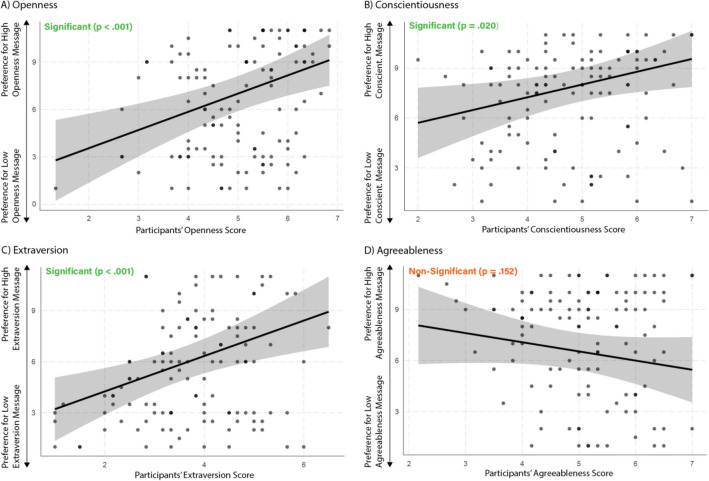
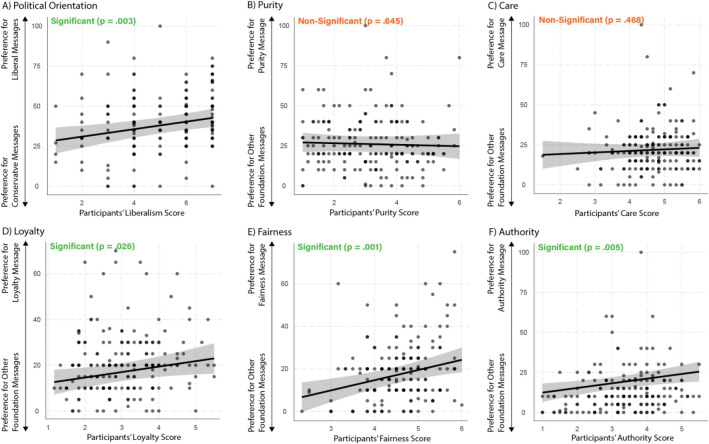
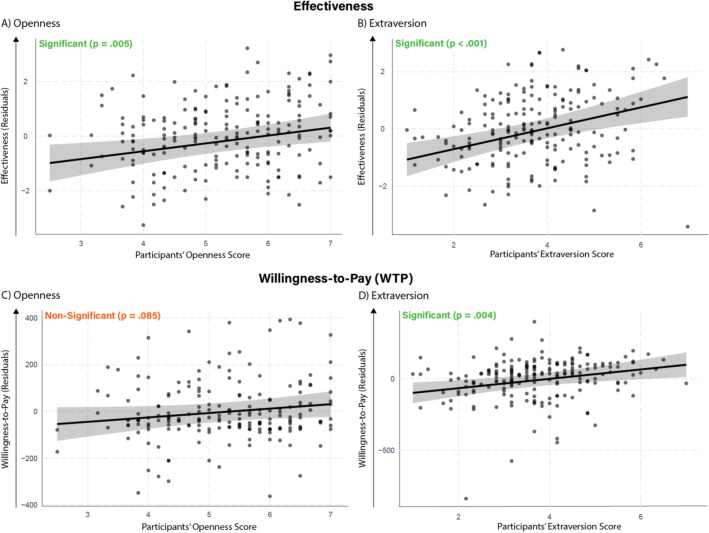
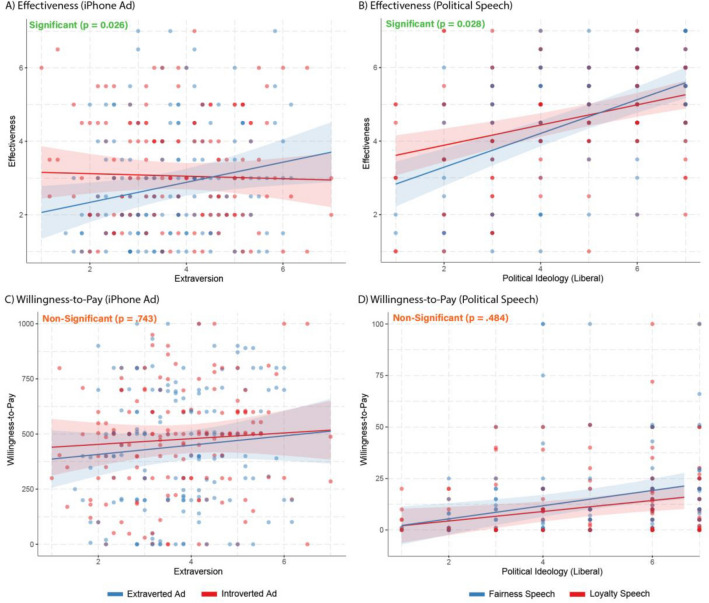
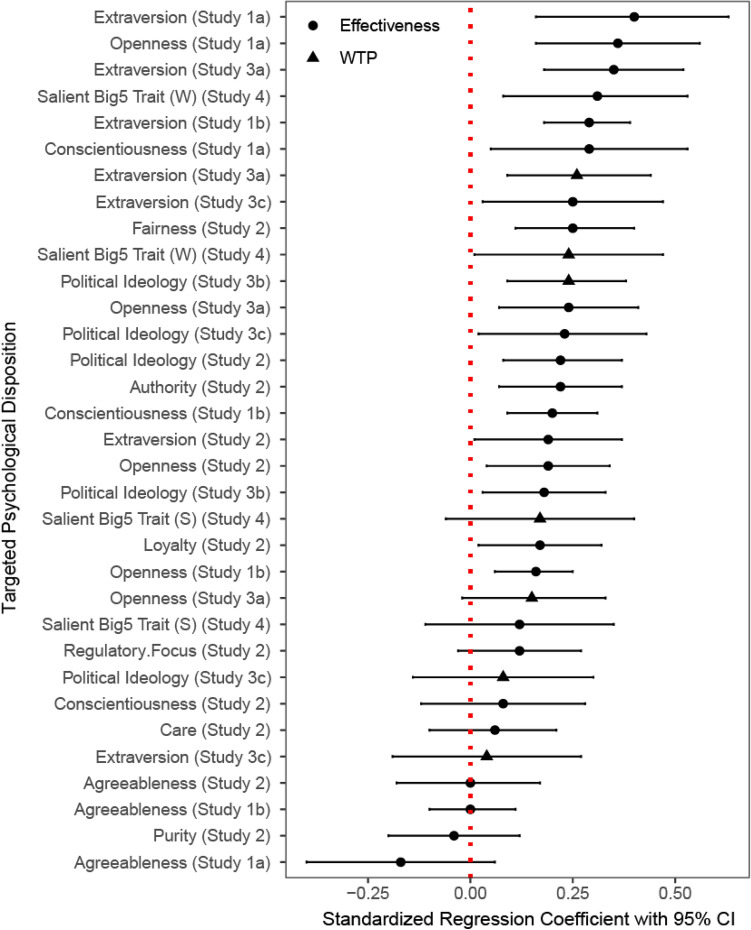
Matching the language or content of a message to the psychological profile of its recipient (known as “personalized persuasion”) is widely considered to be one of the most effective messaging strategies. We demonstrate that the rapid advances in large language models (LLMs), like ChatGPT, could accelerate this influence by making personalized persuasion scalable. Across four studies (consisting of seven sub-studies; total N = 1788), we show that personalized messages crafted by ChatGPT exhibit significantly more influence than non-personalized messages. This was true across different domains of persuasion (e.g., marketing of consumer products, political appeals for climate action), psychological profiles (e.g., personality traits, political ideology, moral foundations), and when only providing the LLM with a single, short prompt naming or describing the targeted psychological dimension. Thus, our findings are among the first to demonstrate the potential for LLMs to automate, and thereby scale, the use of personalized persuasion in ways that enhance its effectiveness and efficiency. We discuss the implications for researchers, practitioners, and the general public.
Overview
The claims and statistics of this paper haven’t been checked yet.
Run the check — free, no account needed. It reads the open-access text and checks the sources it cites.
Integrity signals
Registry
Cites
Statistics
Figures
Verification
Claims the paper makes
The claims and statistics of this paper haven’t been checked yet.
Run the check — free, no account needed. It reads the open-access text and checks the sources it cites.
Claims other papers make about this one
Each is checked against this paper’s own text: does it say what the citing paper says it does?
The cited source says what the claim attributes to it.
In the citing paper
“AI chatbots can craft hyper-tailored messages using psychographic and behavioral data (Costello, Pennycook, and Rand 2024; Matz et al. 2024)”
From Emotional Manipulation by AI Companions (2025) · cites this paper as Matz et al. 2024
The cited source says what the claim attributes to it.
In the citing paper
“On the other hand, LLMs can influence and persuade humans26, with research demonstrating that LLM-based writing assistants are capable of swaying people’s views27.”
From Generative language models exhibit social identity biases (2024) · cites this paper as [26]
Self-check
Percentages, sums and reported differences re-computed from the paper’s own numbers.
The self-check needs the paper’s full text.
Citations
Cites
Vaswani, A., Shazeer, N., Parmar, N., Uszkoreit, J., Jones, L., Gomez, A. N., Kaiser, L., & Polosukhin, I. (2017) · arXiv · doi:10.48550/arxiv.1706.03762 · Cited by 120,404 · cited 1×
“LLMs are advanced generative AI systems that use transformer neural network architectures 36 to learn language representations from vast corpora of text data.”
BackgroundThe theory of planned behavior
Ajzen, I. (1991) · Organizational Behavior and Human Decision Processes · doi:10.1016/0749-5978(91)90020-t · Cited by 90,587
Podsakoff, P. M., MacKenzie, S. B., Lee, J.-Y., & Podsakoff, N. P. (2003) · Journal of Applied Psychology · doi:10.1037/0021-9010.88.5.879 · Cited by 82,194
Jakubův, J., Chvalovský, K., Goertzel, Z., et al. (2023) · DROPS (Schloss Dagstuhl – Leibniz Center for Informatics) · doi:10.4230/lipics.itp.2023.19 · Cited by 76,648
Advances In Experimental Social Psychology
(2022) · Advances in experimental social psychology · doi:10.1016/s0065-2601(22)x0002-6 · Cited by 22,559
A very brief measure of the Big-Five personality domains
Gosling, S. D., Rentfrow, P. J., & Swann, W. B. (2003) · Journal of Research in Personality · doi:10.1016/s0092-6566(03)00046-1 · Cited by 8,307 · cited 1×
“…and quiet) were taken from the language used to identify personality traits (e.g., Introversion) in the Ten-Item-Personality-Inventory (TIPI 54 ), but were adjusted in a few instances to reflect more positive versions of the same characteristics (e.g., competitive rather than quarrelsome…”
MethodAn Introduction to the Five‐Factor Model and Its Applications
McCrae, R. R., & John, O. P. (1992) · Journal of Personality · doi:10.1111/j.1467-6494.1992.tb00970.x · Cited by 6,835 · cited 3×
“The Big Five model posits that individual differences in cognition, affect, and behavior can be pragmatically described using the following five dimensions: Openness, Conscientiousness, Extraversion, Agreeableness and Neuroticism 48,53 .”
BackgroundMethodLLaMA: Open and Efficient Foundation Language Models
Touvron, H., Lavril, T., Izacard, G., Martinet, X., Lachaux, M.-A., Lacroix, T., Rozière, B., Goyal, N., Hambro, E., Azhar, F., et al. (2023) · arXiv · doi:10.48550/arxiv.2302.13971 · Cited by 4,602
The international personality item pool and the future of public-domain personality measures
Goldberg, L. R., Johnson, J. A., Eber, H. W., Hogan, R., Ashton, M. C., Cloninger, C. R., & Gough, H. G. (2006) · Journal of Research in Personality · doi:10.1016/j.jrp.2005.08.007 · Cited by 3,185 · cited 1×
“The Big Five model posits that individual differences in cognition, affect, and behavior can be pragmatically described using the following five dimensions: Openness, Conscientiousness, Extraversion, Agreeableness and Neuroticism 48,53 .”
MethodPrivate traits and attributes are predictable from digital records of human behavior
Kosinski, M., Stillwell, D., & Graepel, T. (2013) · Proceedings of the National Academy of Sciences · doi:10.1073/pnas.1218772110 · Cited by 2,829 · cited 1×
“…(e.g., personality), predictive algorithms can estimate these traits directly from their digital behaviors 17–19 , including their Facebook Likes 19,20 , the language used in their social media posts 21–25 , their profile pictures 26 , their credit card spending 27,28 , and their smartphone…”
Background
Research works printed but not linked: 3
- Matz, S. C., Kosinski, M., Nave, G. & Stillwell, D. Psychological targeting as an effective approach to digital mass persuasion. Proc. Natl. Acad. Sci. 20, 20 (2017).
- Park, G. et al. Automatic personality assessment through social media language. J. Pers. Soc. Psychol. 108, 934 (2015). · DOI · Paper page
- Fazio, R. H. & Olson, M. A. The MODE Model: Attitude-Behavior Processes as a Function of Motivation and Opportunity. In Dual-Process Theories of the Social Mind 155–171 (The Guilford Press, 2014).
Cited by
Sorted by citations
Items 101–200 of 316
Zettler, I., & Strandsbjerg, C. F. (2025) · Current Opinion in Psychology · doi:10.1016/j.copsyc.2025.102147 · Cited by 5
The fundamental rights risks of countering cognitive warfare with artificial intelligence
Lahmann, H., Custers, B. H. M., & Scott, B. I. (2025) · Ethics and Information Technology · doi:10.1007/s10676-025-09868-9 · Cited by 12
“…the use of generative AI may indeed amplify the effects of ‘cognitive warfare’ campaigns thanks to expanded possibilities to deploy “personalized persua - sion” at scale, i.e., by “matching the content of a persua - sive message to the psychological profile of its recipient” (Matz et al., 2024 ).”
Addressing Autonomy Risks in Generative Chatbots with the Socratic Method
Lu, W., & Hu, Z. (2025) · Science and Engineering Ethics · doi:10.1007/s11948-025-00567-8 · Cited by 8
“Due to its sophisticated interactive capabilities, ChatGPT has been proposed as a vehicle for persuasive strategies designed to foster behavioral change or enhance the quality of our (moral) decision-making through “nudging” (Salvi et al., 2025; Matz et al., 2024).”
Must Read: A Comprehensive Survey of Computational Persuasion
Bozdag, N. B., Mehri, S., Yang, X., Ha, H., Cheng, Z., Durmus, E., You, J., Ji, H., Tür, G., & Hakkani-Tur, D. Z. (2026) · ACM Computing Surveys · doi:10.1145/3800687 · Cited by 32
“…[145] – PersuasionForGood [163] Trains persuasive models in an RL setting [141] Empathy PersuasionForGood [163] Trains empathetic persuasive models in an RL setting [160] Personalization DevPVA [160] Rewards persuasion based on persona of the user [113] Empathy PersuasionForGood [163] Trains…”
Knowledge-Based Design Requirements for Persuasive Generative Social Robots in Eldercare
Vonschallen, S., Zumthor, E., Simon, M., Schmiedel, T., & Eyssel, F. (2025) · Lecture notes in computer science · doi:10.1007/978-981-95-2379-5_15 · Cited by 4
The adoption and efficacy of large language models in US consumer financial complaints
Shin, M., Kim, J., & Shin, J. (2026) · Nature Human Behaviour · doi:10.1038/s41562-026-02409-4 · Cited by 7
Looking Under the Hood: How LLMs Attempt Political Persuasion and Microtargeting
Lyman, A., Busby, E. C., Argyle, L. P., Gubler, J. R., Hepner, B., & Wingate, D. (2026) · Chinese Political Science Review · doi:10.1007/s41111-026-00336-3 · Cited by 5
Persuading large language models to comply with objectionable requests
Meincke, L., Shapiro, D., Duckworth, A. L., Mollick, E., Mollick, L., den Bulte, C. V., & Cialdini, R. B. (2026) · Proceedings of the National Academy of Sciences · doi:10.1073/pnas.2535868123 · Cited by 9
Personality traits of the small and medium oil palm farmer and crop productivity
Martínez-Carvajal, F., Rojas-Ortega, L. F., Zapata, R. E., & Ortega, N. I. D. (2024) · Salud Ciencia y Tecnología · doi:10.56294/saludcyt2024.970 · Cited by 5
Impact of Agent-Generated Rationales on Online Social Conformity
de Jong, S., Jacobsen, R. M., Wester, J., Wijenayake, S., Gonçalves, J., & van Berkel, N. (2025) · ACM Conference on Fairness, Accountability, and Transparency (FAccT) · doi:10.1145/3715275.3732217 · Cited by 11
“Furthermore, there are efforts focused on scalable personalised persuasion that have implications for areas such as politics and marketing [60]—while others suggest that LLMs are better at general generic persuasion rather than person-alised persuasion [31].”
Doudkin, A. A., Pataranutaporn, P., & Maes, P. (2025) · ACM Conference on Conversational User Interfaces (CUI) · doi:10.1145/3719160.3736610 · Cited by 4
“The underlying rationale for this two-tiered approach is grounded in the recognition that personalization—specifically employed through LLMs—is a crucial driver for shifting human behavior [48].”
Zhang, W., Xie, C., Jiang, L., Li, Y., Hu, Z., & Hao, N. (2025) · Social Cognitive and Affective Neuroscience · doi:10.1093/scan/nsaf071 · Cited by 9
Debelak, R., Koch, T. K., Aßenmacher, M., & Stachl, C. (2025) · Advances in Methods and Practices in Psychological Science · doi:10.1177/25152459251351285 · Cited by 5
“On a larger scale, LLM-generated content allows for personalized persuasive messaging (Matz et al., 2024).”
Towards Personality-Aware Explanations for Music Recommendations Using Generative AI
Alves, G., Jannach, D., de Souza, L. S., & Manzato, M. G. (2025) · ACM Conference on Recommender Systems (RecSys) · doi:10.1145/3705328.3748032 · Cited by 6
Chen, Z., Liu, C., Ren, Y., Song, G., & Zhang, X. (2025) · Computers in Human Behavior Reports · doi:10.1016/j.chbr.2025.100827 · Cited by 5
Exploring artificial intelligence for sustainable business development: a review
Yu, J., Zhan, X., & Bojja, G. R. (2025) · Data Science and Management · doi:10.1016/j.dsm.2025.10.001 · Cited by 11
Gou, H., Sun, Q., Xiang, L., Hu, C., Fang, Y., & Fan, F. (2026) · Frontiers in Public Health · doi:10.3389/fpubh.2026.1754288 · Cited by 4
“As the purest form of AM, IM provides lasting intrinsic motivation for behavior persistence by fulfilling an individual’s needs for autonomy, competence, and relatedness (92).”
Jones, C., & Bergen, B. K. (2026) · Artificial Intelligence Review · doi:10.1007/s10462-026-11517-6 · Cited by 48
Terwiesch, C., Meincke, L., Girotra, K., Mollick, E., Nave, G., & Ulrich, K. T. (2026) · Production and Operations Management · doi:10.1177/10591478261474243 · Cited by 227
Habib, F., Ali, Z., Azam, A., Kamran, K., & Pasha, F. M. (2024) · Frontiers in Big Data · doi:10.3389/fdata.2024.1387325 · Cited by 5
“Several studies indicate that Automated Personality Prediction (APP) with LLMs can significantly improve the accuracy and responsiveness of computing decisions, resulting in valuable insights (Juki´c et al., 2022; Matz et al., 2023; Peters and Matz, 2023).”
BackgroundBauer, B. W., & Sappenfield, C. A. (2024) · Current Opinion in Psychology · doi:10.1016/j.copsyc.2024.101935 · Cited by 6
Technology's Role in Fostering Therapist-Client Collaboration and Engagement with Goals
Oewel, B., Azizan, N., Areán, P. A., & Agapie, E. (2024) · Proceedings of the ACM on Human-Computer Interaction · doi:10.1145/3687055 · Cited by 4
Zeng, D., Legaspi, R., Sun, Y., Dong, X., Ikeda, K., Spirtes, P., & Zhang, K. (2025) · ACM Conference on User Modeling, Adaptation and Personalization (UMAP) · doi:10.1145/3699682.3728318 · Cited by 4
Shou-fen, J., Zheng, W., & Kong, H. (2025) · Journal of theoretical and applied electronic commerce research · doi:10.3390/jtaer20040339 · Cited by 6
“…personalized by generative AI based on psychological profiles were significantly more persuasive than generic ads, partly because the personalized content simultaneously enhanced the adver-tisement’s perceived relevance (aligning with PU) and its intrinsic appeal (aligning with PE) [45].”
Learning with ArtificialIntelligence at the higher level. The case of Distant Reading
Andrés, U. D. S., Artopoulos, A., & Argentina. (2025) · Praxis Educativa · doi:10.19137/praxiseducativa-2025-290203 · Cited by 3
Personalizing LLM Responses to Combat Political Misinformation
Proma, A. M., Pate, N., Druckman, J. N., Ghoshal, G., & Hoque, M. E. (2025) · ACM Conference on User Modeling, Adaptation and Personalization (UMAP) · doi:10.1145/3699682.3728349 · Cited by 7
“This aligns with work that shows targeting is often more effective than non-targeted persuasion [21].”
InfluentialThe Risks of AI-Generated, Hyper-Personalized Digital Advertisements
LeBrun, A. (2025) · Philosophy & Technology · doi:10.1007/s13347-025-00935-z · Cited by 6
“These studies were, like Matz et al. (2024), tailoring messages based on a person’s scores on the Big Five personality tests.)”
The persuasive potential of AI-paraphrased information at scale
Dash, S., Xu, Y., Jalbert, M. C., & Spiro, E. S. (2025) · PNAS Nexus · doi:10.1093/pnasnexus/pgaf207 · Cited by 6
A Scenario-Based Design Pack for Exploring Multimodal Human–GenAI Relations
Andrés, J., Danta, C., Bianchi, A., Farzanfar, S., Fernandez-Nieto, G. M., Becker, A., Capel, T., Liddell, F., Hagemann, S., Cooper, N., et al. (2025) · INTERNATIONAL CONFERENCE ON MULTIMODAL INTERACTION · doi:10.1145/3716553.3750749 · Cited by 3
Phuong, D. P. T., Cuu, L. H., Minh, A. H., & Phuc, K. N. (2025) · International Journal of Human-Computer Interaction · doi:10.1080/10447318.2025.2596304 · Cited by 3
Rosenfelder, A., Levitin, M., & Gilead, M. (2025) · Comput. Hum. Behav. Artif. Humans · doi:10.1016/j.chbah.2025.100228 · Cited by 4
Karanja, J. M., & Musili, M. M. (2026) · Social Science Computer Review · doi:10.1177/08944393261416781 · Cited by 6
Watson, S., & Ennion, M. (2026) · Learning Media and Technology · doi:10.1080/17439884.2026.2642199 · Cited by 5
Sharma, R., & Singhal, E. (2026) · FIIB Business Review · doi:10.1177/23197145261425820 · Cited by 3
How Generative AI Empowers Attackers and Defenders Across the Trust & Safety Landscape
Kelley, P. G., Rousso-Schindler, S., Shelby, R. M., Thomas, K., & Woodruff, A. (2026) · CHI Conference on Human Factors in Computing Systems · doi:10.1145/3772318.3791363 · Cited by 3
“Risks cited include promoting conspiracy theories [50], producing highly-believable fabricated media [84], increasing the quantity and quality of phishing scams [49], generating synthetic, non-consensual sexually explicit imagery or CSAM [37, 56, 134], or otherwise co-ercing users [9, 73].”
AI Realtor: Towards Grounded Persuasive Language Generation for Automated Copywriting
Wu, J., Yang, C., Wu, Y., Mahns, S., Wang, C., Zhu, H., Fang, F., & Xu, H. (2026) · ACM Conference on AI and Agentic Systems (CAIS) · doi:10.1145/3786335.3813172 · Cited by 4
“For example, Hackenburg & Margetts (2024) and Matz et al. (2024) reached conflicting conclusions using similar experimental designs.”
Ahn, H., & Haley, E. (2024) · Journal of Current Issues & Research in Advertising · doi:10.1080/10641734.2024.2413599 · Cited by 3
“Predictive analytics-based personalization has also resulted in far superior consumer engagement and conversion rates (Matz et al. 2024; Bleier and Eisenbeiss 2015).”
Hauser, O., Greene, M. A., & DeCelles, K. A. (2025) · Behavioural Public Policy · doi:10.1017/bpp.2024.50 · Cited by 3
“Recent advances with generative AI technology, such as large language models, further add to the possibility of greater personalization of persuasive messages (Matz et al. , 2024) or other uses of creative outputs co-created with AI (Doshi and Hauser, 2024).”
Towards Personalized and Contextualized Code Explanations
Brachman, M., Goldberg, A., Anderson, A. W., Houde, S., Muller, M. J., & Weisz, J. D. (2025) · ACM Conference on User Modeling, Adaptation and Personalization (UMAP) · doi:10.1145/3708319.3733681 · Cited by 3
Engagement-Driven Content Generation with Large Language Models
Coppolillo, E., Cinus, F., Minici, M., Bonchi, F., & Manco, G. (2025) · ACM SIGKDD Conference on Knowledge Discovery and Data Mining (KDD) · doi:10.1145/3711896.3736932 · Cited by 11
“These micro-level behaviors can correspond to opinion dynamics models [16], and the resulting macro-level patterns can lead to known universal laws such as scale-free networks [19].”
AI-Driven Personalization: Shaping the Future of Gen Z’s E-commerce Decisions
Chitra, R., Sathish, M., & Abraham, R. K. G. (2025) · Lecture notes in networks and systems · doi:10.1007/978-981-96-5784-1_23 · Cited by 2
Self-driving labs: The new frontier for GenAI-driven marketing research
Hermann, E. (2025) · Business Horizons · doi:10.1016/j.bushor.2025.06.001 · Cited by 4
Valz, D. (2023) · SSRN Electronic Journal · doi:10.2139/ssrn.4468899 · Cited by 7
Debelak, R., Koch, T. K., Aßenmacher, M., & Stachl, C. (2024) · PsyArXiv (OSF Preprints) · doi:10.31234/osf.io/bc56a · Cited by 4
Narratives of Divide: The Polarizing Power of Large Language Models in a Turbulent WorldPreprint
Saqr, K. M. (2025) · SSRN Electronic Journal · doi:10.2139/ssrn.5124882 · Cited by 3
Cohen, J., & Liu, L. T. (2025) · ACM Journal on Responsible Computing · doi:10.1145/3718989 · Cited by 3
“In addition, technical analyses by Liu et al. [61] and Corbett-Davies et al. [29] showed that formal fairness criteria can sometimes fail to achieve intended outcomes when considering the desired allocative impact and downstream effects of algorithmic decisions.”
Al-Naser, Y., Sharma, S., Niure, K., Ibach, K., Khosa, F., & Yong-Hing, C. J. (2025) · Journal of medical imaging and radiation sciences · doi:10.1016/j.jmir.2025.102122 · Cited by 2
Artificial Intelligence in Vaccine Communication
Sabahelzain, M. M., Leask, J., & Dunn, A. G. (2025) · Journal of Health Communication · doi:10.1080/10810730.2025.2581986 · Cited by 2
“…in creating personalized persuasive strategies, enabling customized counterarguments and facilitating in-depth conversations that challenge deeply held conspiracy beliefs over time, contrary to research suggesting such beliefs are resistant to change (Costello et al., 2024; Matz et al., 2024).”
Exploring the Commercial Trajectories of LLMs: Business Models and Advertising Perspectives
Chodak, G., Kazienko, P., Mieleszczenko-Kowszewicz, W., & Cambria, E. (2025) · IEEE Intelligent Systems · doi:10.1109/mis.2025.3636023 · Cited by 2
“11 They do this by adjusting the language content used in the prompt output, i.e., using more anxiety-related words for individuals with high neuroticism or achievement-related words for those with high conscientiousness.”
Personality pairing improves human–AI collaboration
Ju, H., & Aral, S. (2026) · Proceedings of the National Academy of Sciences · doi:10.1073/pnas.2530627123 · Cited by 12
Zhang, R., Liu, Y., & Li, B. (2025) · Information Communication & Society · doi:10.1080/1369118x.2025.2606100 · Cited by 2
“In interpersonal contexts, personalization signals that the sender understands and values the recipient (Matz et al., 2024).”
Xu, S., Zhou, Z.-L., & Zhao, N. (2026) · Frontiers in Psychiatry · doi:10.3389/fpsyt.2026.1756792 · Cited by 2
The seven roles of generative AI: Potential & pitfalls in combatting misinformation
Nygren, T., Spearing, E. R., Fay, N., Vega, D., Hardwick, I. I., Roozenbeek, J., & Ecker, U. K. H. (2026) · Behavioral Science & Policy · doi:10.1177/23794607261417815 · Cited by 6
“AI systems can rapidly synthesize diverse knowledge sources to generate persuasive messages at scale, 26,43,59,60 even in domains perceived as hallmarks of human interaction, such as social dilemma situations requiring expressions of empathy.”
On using large language models to support social research for climate action
Nabavi, E., Maier, H. R., Razavi, S., Hindes, A., Howden, M. S., Grant, W. J., & Raman, S. (2026) · npj Climate Action · doi:10.1038/s44168-026-00375-1 · Cited by 2
Pumpo, M. D., Villani, L., Maio, V., Gualano, M. R., Marziali, E., Maio, L. D., Mancini, R., Boccia, S., Ricciardi, W., & Laurenti, P. (2026) · Public Health · doi:10.1016/j.puhe.2026.106359 · Cited by 2
Yang, G., Zhou, Y., & Li, M. (2026) · Journal of Retailing and Consumer Services · doi:10.1016/j.jretconser.2026.104927 · Cited by 2
Misinformation as strategy: Epistemic consequences and the undermining of shared truth.
Ecker, U. K. H., Spearing, E. R., DiResta, R., & Lewandowsky, S. (2026) · Trends in Cognitive Sciences · doi:10.1016/j.tics.2026.06.009 · Cited by 3
Israfilzade, K. (2026) · Sustainability · doi:10.3390/su18147270 · Cited by 6
Zeng, D., Legaspi, R., Sun, Y., Dong, X., Ikeda, K., Spirtes, P., & Zhang, K. (2024) · Lecture notes in computer science · doi:10.1007/978-3-031-58226-4_22 · Cited by 2
“Personalization in persuasion [3, 5, 8, 10, 14] is important for the per-suasive system to adapt to individual scenarios.”
BackgroundAshraf, H. (2024) · Advances in web technologies and engineering book series · doi:10.4018/979-8-3693-3703-5.ch012 · Cited by 2
OpenAI and Bain & Company: A Strategic Alliance to Optimize Technology and Its Applicability
Rodríguez, M., Sacristán, I. A. V., & González, M. B. (2025) · Research series on responsible enterprise ecosystems · doi:10.1007/978-3-031-80411-3_2 · Cited by 2
Detecting Jailbreaking Prompts: an Anti-Persuasion Filter Framework
Fenza, G., Gallo, M., Loia, V., Nicolosi, A., & Stanzione, C. (2025) · Lecture notes in social networks · doi:10.1007/978-3-031-85240-4_14 · Cited by 2
Lodoen, S., & Orchard, A. (2025) · IEEE International Symposium on Ethics in Engineering, Science, and Technology (ETHICS) · doi:10.1109/ethics65148.2025.11098367 · Cited by 5
“Furthermore, AI chatbots can inhabit specific personas or be molded to the exacting specifications of the user [69] (although Character.AI did claim that it uses an “unbiased language model” [63], which might limit the user from certain extremes in the character creation).”
From digital divide to equity-enhancing diffusion: Generative AI and writing quality
Forster, R. T., Kee, K. F., & Li, G. M. (2025) · AI & Society · doi:10.1007/s00146-025-02739-3 · Cited by 2
“Matz et al. (2024) found that AI can be used effectively to generate persuasive messages tailored to particular psychological profiles of audiences (Matz et al. 2024).”
Schimmelpfennig, R., Díaz, M., Prabhakaran, V., & Davani, A. (2025) · arXiv · doi:10.48550/arxiv.2512.17898 · Cited by 2
Automated Propaganda: Labeling AI ‐Generated Political Content Should Not be Required by Law
Chomanski, B., & Lauwaert, L. (2025) · Journal of Applied Philosophy · doi:10.1111/japp.70002 · Cited by 6
Paltaratskaya, V., Ji, A., Mazumdar, P., & Wise, K. R. (2025) · Journal of Current Issues & Research in Advertising · doi:10.1080/10641734.2025.2498996 · Cited by 1
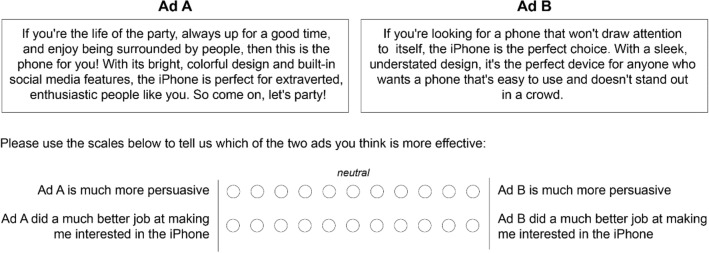
“For example, Matz et al. (2024) used this approach to tailor iPhone and Nike ads based on participants’ Big Five personality traits.”
Goethals, S., Luther, J., & Matz, S. (2025) · ACM Conference on User Modeling, Adaptation and Personalization (UMAP) · doi:10.1145/3708319.3733689 · Cited by 3
Self-citationPush and Pull: A Framework for Measuring Attentional Agency on Digital Platforms
Wojtowicz, Z., Jain, S., & Vincent, N. (2025) · ACM Conference on Fairness, Accountability, and Transparency (FAccT) · doi:10.1145/3715275.3732043 · Cited by 3
“Indeed, recent work shows that frontier models are capable of greater persuasion precisely because they are better at “matching the language or content of a message to the psychological profile of its recipi-ent” [44], increasing the stakes of strategic misalignment between agents and advocates.”
Muñoz-Araneda, R. A., & Sagredo, A. V. (2025) · Revista de Investigación Desarrollo e Innovación · doi:10.19053/uptc.20278306.v15.n2.2025.19627 · Cited by 1
Human Choice Prediction in Language-based Persuasion Games: Simulation-based Off-Policy Evaluation
Shapira, E., Madmon, O., Apel, R., Tennenholtz, M., & Reichart, R. (2025) · Transactions of the Association for Computational Linguistics · doi:10.1162/tacl.a.16 · Cited by 2
Müller, L., & Sütterlin, S. (2025) · Mensch und Computer (MuC) · doi:10.1145/3743049.3748562 · Cited by 1
Determinants of Indonesian Tourism Commercial Acceptance in AI Ad Conversion
Christian, M., Pardede, R., Nan, G., Dewantara, Y. F., Geng, B., & Fransisca, T. (2025) · International Conference on Creative Communication and Innovative Technology (ICCIT) · doi:10.1109/iccit65724.2025.11166758 · Cited by 1
“Nonetheless, the influence of AI on behavior in tourist destination choices encompasses both beneficial and detrimental effects [21].”
Efficacy of Personality-Labeled Prompts in Generating Trait-Specific Persuasive Messages
Xu, S., & Zhao, N. (2025) · Lecture notes in electrical engineering · doi:10.1007/978-981-95-2113-5_15 · Cited by 1
Sussman, K. L., Atkinson, L., Anderson, J. T. L., Williamson, L. D., Upshaw, S. J., & Ntang-Beb, J.-L. (2025) · Journal of Interactive Advertising · doi:10.1080/15252019.2025.2576174 · Cited by 1
“As with extant literature examining AI-generated content (Crabtree et al. 2025; Matz et al. 2024), when LLMs are tasked with writing new copy, the wording across conditions is not identical.”
When is political advocacy effective? Understanding the goals and actors of political advocacy
Hussein, M. A., & Catapano, R. (2025) · Consumer Psychology Review · doi:10.1002/arcp.70002 · Cited by 1
Devereaux, A. N. (2025) · Mind & Society · doi:10.1007/s11299-025-00358-5 · Cited by 2
“Assistive AI can track personal data like social media use, online reading habits, purchases, searches, real-world position, estimated car and transit use, and exercise habits to tailor (micro-target) messages to millions of individuals at once (Matz et al 2024).”
AI in Marketing and Consumer Behavior
Armutçu, B. (2025) · Contributions to management science · doi:10.1007/978-3-032-02526-5_13 · Cited by 1
Yoon, S., Shin, H., & Choi, J. (2026) · International Journal of Human-Computer Interaction · doi:10.1080/10447318.2025.2602717 · Cited by 1
“Regulatory focus was treated as a continuous moderator, operationalized as the difference between participants’ promotion and prevention focus scores (Lockwood et al., 2002; Matz et al., 2024).”
Interactive perceptions and persuasion: how AI-generated content influences users
Sun, Y., Fan, Z., Sheng, D., Zhang, X., & Xu, F. (2026) · The Electronic Library · doi:10.1108/el-05-2025-0172 · Cited by 1
Maqsood, F., Mazhar, B., & Haq, I. U. (2026) · Atlantic Journal of Communication · doi:10.1080/15456870.2026.2630679 · Cited by 1
Artificial Intelligence Propaganda Factories with Language Models
Olejnik, L. (2026) · Applied Cybersecurity & Internet Governance · doi:10.60097/acig/215416 · Cited by 4
“While we do not evaluate persuasion directly, prior studies have already demonstrated such applications [ 16, 18 ], highlighting that the same capacity for coherent output across diverse topics and framings can be used in ideological or rhetorical settings.”
Iorga, A. M., Berceanu, D. C.-A., & Lepar, A. M. (2026) · Advances in computational intelligence and robotics book series · doi:10.4018/979-8-3373-1152-4.ch012 · Cited by 1
New parameters of power: On LLM-based manipulation and control and the spectre of strategic AI
Chaudhary, Y., & Penn, J. (2026) · Big Data & Society · doi:10.1177/20539517261426450 · Cited by 19
The opportunities and limits of microtargeting cross-pressured voters
Moniz, P., Endres, K., & Panagopoulos, C. (2026) · Research & Politics · doi:10.1177/20531680261432765 · Cited by 1
“Research has shown that identifying individuals who would be most receptive to certain messages — microtargeting — can be more effective than a generic but popular message (Matz et al., 2024; Simchon et al. 2024 but see Hersh and Schaffner 2013; Hackenburg and Margetts 2024).”
Hwang, Y.-Y., Fahrner, V. M., Horstmann, K. T., & Hassenzahl, M. (2026) · International Conference on Human Factors in Computing Systems · doi:10.1145/3772318.3790737 · Cited by 2
“So far, LLM-based CAs have been shown to facilitate self-disclosure [61] and to influence users’ attitudes and intentions in domains such as politics, health, and social issues [59, 87, 92, 113, 119].”
The Epistemic Costs of Super-Persuasive AI
Deller, A. (2026) · Philosophy & Technology · doi:10.1007/s13347-026-01106-4 · Cited by 2
“19 It is not surprising, then, to see this dynamic borne out empirically; personalisa - tion is a key factor in persuasion (see Yeo et al. 2025; Noar et al. 2007), particularly online (see Lustria et al. 2013 ; Matz et al. 2017; Matz et al. 2024 ).”
The Anthropomimetic Turn in Contemporary AI
Shevlin, H. (2026) · Springer eBooks · doi:10.1007/978-3-032-11814-1_26 · Cited by 3
Li, J., Wu, Y., Li, H., & Xu, L. (2026) · International Journal of Human-Computer Interaction · doi:10.1080/10447318.2026.2674290 · Cited by 1
Almufarreh, A. (2026) · Sustainability · doi:10.3390/su18115759 · Cited by 1
Saadé, A., & Sabri, O. (2026) · Journal of Innovation & Knowledge · doi:10.1016/j.jik.2026.101073 · Cited by 2
Tao, Y., Viberg, O., Dennison, D. V., Wu, Z., & Kizilcec, R. F. (2026) · ACM Conference on Learning @ Scale (L@S) · doi:10.1145/3774398.3811616 · Cited by 1
Generative Artificial Intelligence in Marketing Communication: A Stakeholder Effects Model
Eisend, M., & Hermann, E. (2026) · Journal of Advertising · doi:10.1080/00913367.2026.2686658 · Cited by 1
Zhu, R., Markowitz, D. M., & Heide, B. L. V. D. (2026) · Annals of the International Communication Association · doi:10.1093/anncom/wlag029 · Cited by 1
Evaluating AI models’ capability to automate voice phishing attacks
Heiding, F., Verdun, C. M., Lermen, S., Kao, A., Albiero, V., Deason, L., Veliche, I.-E., & Lehane, C. M. (2026) · Expert Systems with Applications · doi:10.1016/j.eswa.2026.133620 · Cited by 1
Human preferences are susceptible to covertly misaligned AI advice
Sabour, S., Liu, J. M., Liu, S., Yao, C. Z., Cui, S., Zhang, W., Zhang, X., Cao, Y., Bhat, A., Guan, J., et al. (2026) · Proceedings of the National Academy of Sciences · doi:10.1073/pnas.2600684123 · Cited by 2
The Promise of Generative AI for Personalized Persuasion
Teeny, J. D., Klugescheid, K., Luther, J., & Matz, S. (2026) · Current Directions in Psychological Science · doi:10.1177/09637214261424859 · Cited by 3
Self-citationFlexible Demand ManipulationPreprint
Dai, Y., & Koh, A. (2024) · SSRN Electronic Journal · doi:10.2139/ssrn.4724126 · Cited by 1
“This reflects the increasing persuasiveness of new technologies such as artificial intelligence, especially for marketing consumer products (Matz et al., 2024).”
BackgroundDo Large Language Models Understand Verbal Indicators of Romantic Attraction?Preprint
Matz, S., Peters, H., Eastwick, P. W., Cerf, M., & Finkel, E. J. (2024) · doi:10.31234/osf.io/fqkgn · Cited by 1
Self-citationReply to Teeny and Matz: Toward the robust measurement of personalized persuasion with generative AI
Hackenburg, K., & Margetts, H. Z. (2024) · Proceedings of the National Academy of Sciences · doi:10.1073/pnas.2418817121 · Cited by 1
Metadata
- Authors
- Matz, S. C., Teeny, J. D., Vaid, S. S., Peters, H., Harari, G. M., & Cerf, M.
- Affiliations
- Columbia University (US)
- Northwestern University (US)
- Harvard University (US)
- Stanford University (US)
- Corresponding author
- Matz, S. C.
- Venue
- Scientific Reports
- Published
- 2024-02-26
- Volume
- 14
- Issue
- 1
- Pages
- 4692-4692
- ISSN
- 2045-2322 (ISSN-L)
- PMC
- PMC10897294
- OpenAlex
- W4392153984
- Cited by
- 315
- References
- 74
- Citations by year
- 2026: 133 · 2025: 120 · 2024: 59
- FWCI
- 222.98
- Type
- journal article
- Language
- en
- Open access
- gold
- doi.org
- Locations
- Scientific Reports (publishedVersion, cc-by)
- PubMed Central (publishedVersion, cc-by)
- PubMed (publishedVersion)
- DOAJ (DOAJ: Directory of Open Access Journals) (submittedVersion)
- OSF Preprints (OSF Preprints) (submittedVersion)
- PsyArXiv (OSF Preprints) (submittedVersion)
- PsyArXiv (OSF Preprints) (submittedVersion, cc-by)
- Topics
- Social Sciences › Psychology › Social Psychology › Psychology of Social Influence
- Social Sciences › Business, Management and Accounting › Marketing › AI in Service Interactions
- Physical Sciences › Computer Science › Artificial Intelligence › Ethics and Social Impacts of AI
- Keywords
- personalized persuasion, generative AI, large language models, ChatGPT, message tailoring, psychological profiling, persuasiveness, political appeal, climate action, political ideology, moral foundations, personality traits
- MeSH terms
- Climate, Language, Morals, Persuasive Communication, Marketing
About these checks
Registry, retraction, Cites and statistics results are computed, not judged, with one exception: a printed reference that no index lists is read once by a model before it counts as a citation error. Claims are extracted by a model and kept only when their quote appears verbatim in the text; each cited source is then checked, with a model’s help, for whether it says what the claim relies on. Those verdicts can be wrong — read the claim’s quote and the cited source before relying on one.
Statistics and arithmetic are recomputed, not judged.
Confidence bands are shown only for fields calibrated on our annotated test set. None is calibrated yet, so no band is shown.
What counts as a claim ›How we measure confidence ›How we check this ›
Are you an author, or do you see a problem with this page? Request a review
