

The DOI matches its Crossref record; 77 of the 77 references it cites were found in a registry or an index.
The potential of generative AI for personalized persuasion at scale
Open accessAbstract
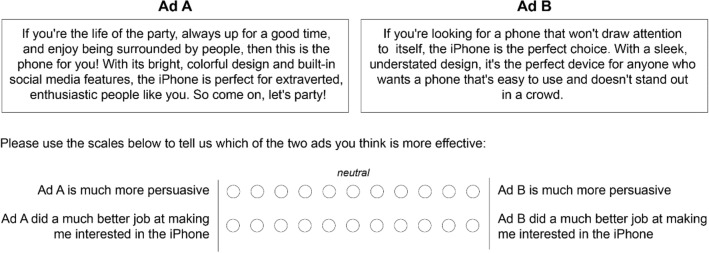
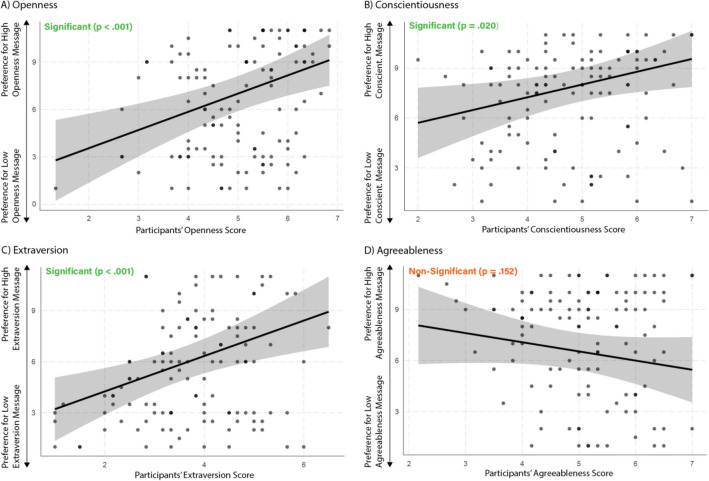
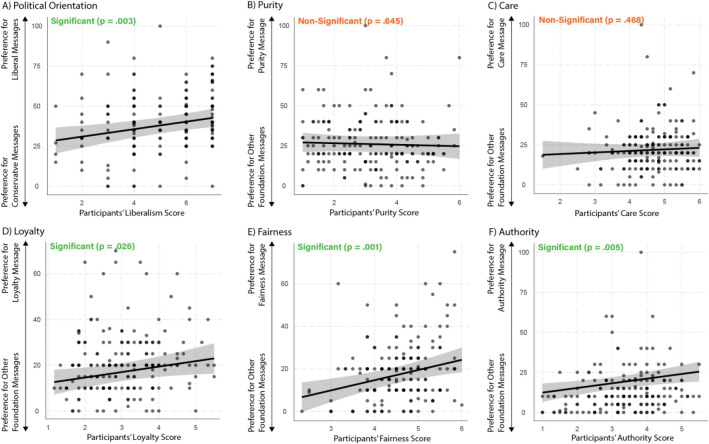
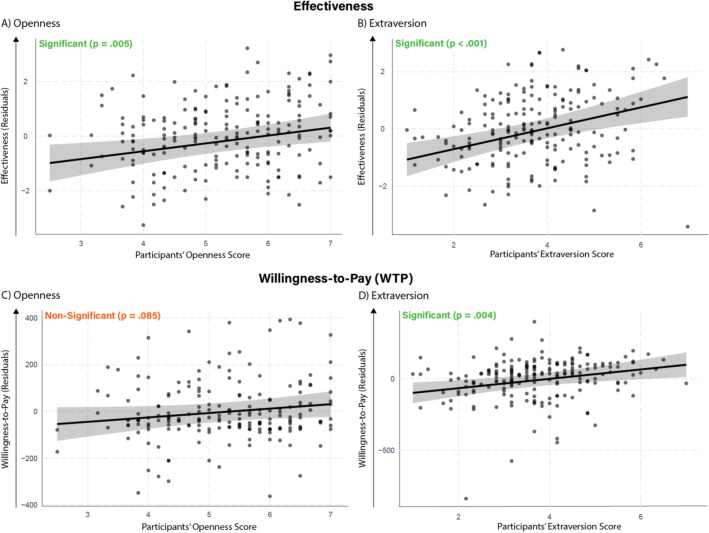
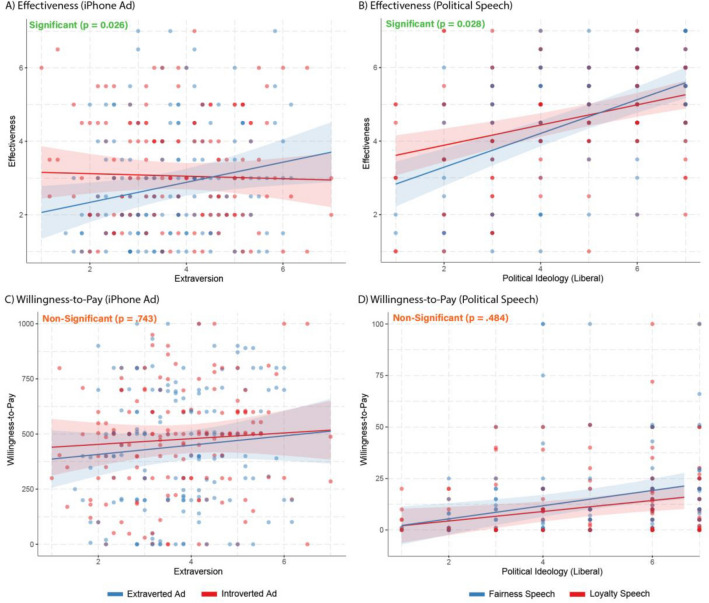
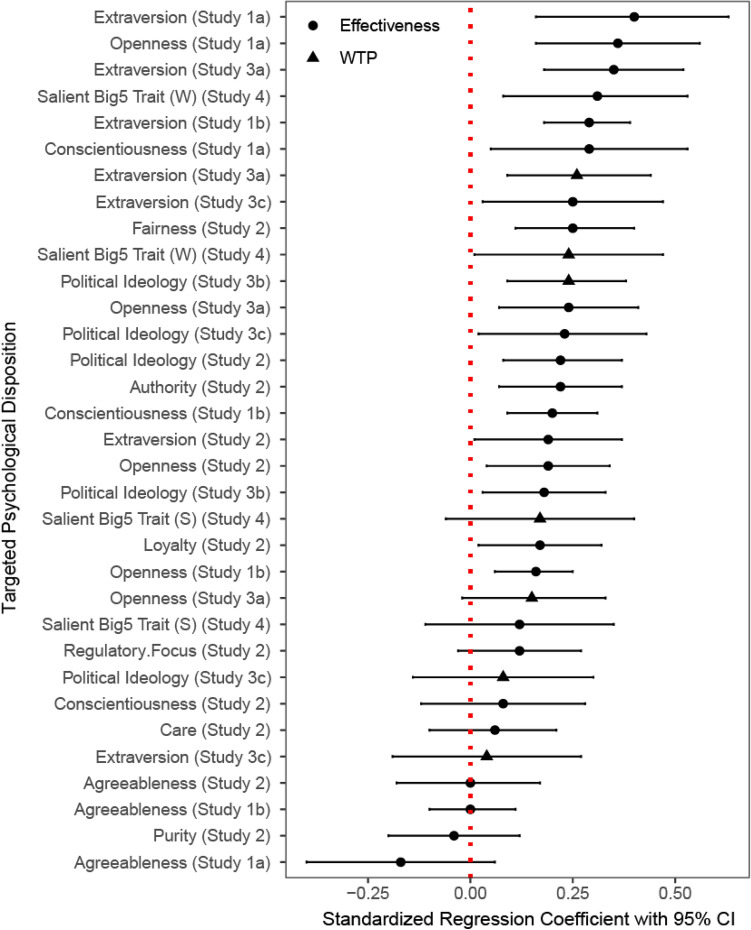
Matching the language or content of a message to the psychological profile of its recipient (known as “personalized persuasion”) is widely considered to be one of the most effective messaging strategies. We demonstrate that the rapid advances in large language models (LLMs), like ChatGPT, could accelerate this influence by making personalized persuasion scalable. Across four studies (consisting of seven sub-studies; total N = 1788), we show that personalized messages crafted by ChatGPT exhibit significantly more influence than non-personalized messages. This was true across different domains of persuasion (e.g., marketing of consumer products, political appeals for climate action), psychological profiles (e.g., personality traits, political ideology, moral foundations), and when only providing the LLM with a single, short prompt naming or describing the targeted psychological dimension. Thus, our findings are among the first to demonstrate the potential for LLMs to automate, and thereby scale, the use of personalized persuasion in ways that enhance its effectiveness and efficiency. We discuss the implications for researchers, practitioners, and the general public.
Overview
The claims and statistics of this paper haven’t been checked yet.
Run the check — free, no account needed. It reads the open-access text and checks the sources it cites.
Integrity signals
Registry
Cites
Statistics
Figures
Verification
Claims the paper makes
The claims and statistics of this paper haven’t been checked yet.
Run the check — free, no account needed. It reads the open-access text and checks the sources it cites.
Claims other papers make about this one
Each is checked against this paper’s own text: does it say what the citing paper says it does?
The cited source says what the claim attributes to it.
In the citing paper
“AI chatbots can craft hyper-tailored messages using psychographic and behavioral data (Costello, Pennycook, and Rand 2024; Matz et al. 2024)”
From Emotional Manipulation by AI Companions (2025) · cites this paper as Matz et al. 2024
The cited source says what the claim attributes to it.
In the citing paper
“On the other hand, LLMs can influence and persuade humans26, with research demonstrating that LLM-based writing assistants are capable of swaying people’s views27.”
From Generative language models exhibit social identity biases (2024) · cites this paper as [26]
Self-check
Percentages, sums and reported differences re-computed from the paper’s own numbers.
The self-check needs the paper’s full text.
Citations
Cites
Vaswani, A., Shazeer, N., Parmar, N., Uszkoreit, J., Jones, L., Gomez, A. N., Kaiser, L., & Polosukhin, I. (2017) · arXiv · doi:10.48550/arxiv.1706.03762 · Cited by 120,404 · cited 1×
“LLMs are advanced generative AI systems that use transformer neural network architectures 36 to learn language representations from vast corpora of text data.”
BackgroundThe theory of planned behavior
Ajzen, I. (1991) · Organizational Behavior and Human Decision Processes · doi:10.1016/0749-5978(91)90020-t · Cited by 90,587
Podsakoff, P. M., MacKenzie, S. B., Lee, J.-Y., & Podsakoff, N. P. (2003) · Journal of Applied Psychology · doi:10.1037/0021-9010.88.5.879 · Cited by 82,194
Jakubův, J., Chvalovský, K., Goertzel, Z., et al. (2023) · DROPS (Schloss Dagstuhl – Leibniz Center for Informatics) · doi:10.4230/lipics.itp.2023.19 · Cited by 76,648
Advances In Experimental Social Psychology
(2022) · Advances in experimental social psychology · doi:10.1016/s0065-2601(22)x0002-6 · Cited by 22,559
A very brief measure of the Big-Five personality domains
Gosling, S. D., Rentfrow, P. J., & Swann, W. B. (2003) · Journal of Research in Personality · doi:10.1016/s0092-6566(03)00046-1 · Cited by 8,307 · cited 1×
“…and quiet) were taken from the language used to identify personality traits (e.g., Introversion) in the Ten-Item-Personality-Inventory (TIPI 54 ), but were adjusted in a few instances to reflect more positive versions of the same characteristics (e.g., competitive rather than quarrelsome…”
MethodAn Introduction to the Five‐Factor Model and Its Applications
McCrae, R. R., & John, O. P. (1992) · Journal of Personality · doi:10.1111/j.1467-6494.1992.tb00970.x · Cited by 6,835 · cited 3×
“The Big Five model posits that individual differences in cognition, affect, and behavior can be pragmatically described using the following five dimensions: Openness, Conscientiousness, Extraversion, Agreeableness and Neuroticism 48,53 .”
BackgroundMethodLLaMA: Open and Efficient Foundation Language Models
Touvron, H., Lavril, T., Izacard, G., Martinet, X., Lachaux, M.-A., Lacroix, T., Rozière, B., Goyal, N., Hambro, E., Azhar, F., et al. (2023) · arXiv · doi:10.48550/arxiv.2302.13971 · Cited by 4,602
The international personality item pool and the future of public-domain personality measures
Goldberg, L. R., Johnson, J. A., Eber, H. W., Hogan, R., Ashton, M. C., Cloninger, C. R., & Gough, H. G. (2006) · Journal of Research in Personality · doi:10.1016/j.jrp.2005.08.007 · Cited by 3,185 · cited 1×
“The Big Five model posits that individual differences in cognition, affect, and behavior can be pragmatically described using the following five dimensions: Openness, Conscientiousness, Extraversion, Agreeableness and Neuroticism 48,53 .”
MethodPrivate traits and attributes are predictable from digital records of human behavior
Kosinski, M., Stillwell, D., & Graepel, T. (2013) · Proceedings of the National Academy of Sciences · doi:10.1073/pnas.1218772110 · Cited by 2,829 · cited 1×
“…(e.g., personality), predictive algorithms can estimate these traits directly from their digital behaviors 17–19 , including their Facebook Likes 19,20 , the language used in their social media posts 21–25 , their profile pictures 26 , their credit card spending 27,28 , and their smartphone…”
Background
Research works printed but not linked: 3
- Matz, S. C., Kosinski, M., Nave, G. & Stillwell, D. Psychological targeting as an effective approach to digital mass persuasion. Proc. Natl. Acad. Sci. 20, 20 (2017).
- Park, G. et al. Automatic personality assessment through social media language. J. Pers. Soc. Psychol. 108, 934 (2015). · DOI · Paper page
- Fazio, R. H. & Olson, M. A. The MODE Model: Attitude-Behavior Processes as a Function of Motivation and Opportunity. In Dual-Process Theories of the Social Mind 155–171 (The Guilford Press, 2014).
Cited by
Sorted by citations
Items 201–300 of 316
Can LLMs Infer Conversational Agent Users' Personality Traits from Chat History?
Cögendez, D., Zimmermann, V., & Zufferey, N. (2026) · arXiv · doi:10.48550/arxiv.2604.19785
“Prior work already showed how LLMs could be used to generate personalized content to influence individuals, for example, how personality traits can be leveraged to make CAs more convincing and improve their chances of persuading users (e.g., for targeted marketing [18]).”
Shin, M., Kim, J., & Shin, J. (2024) · PsyArXiv (OSF Preprints) · doi:10.31234/osf.io/fdzqg · Cited by 1
Palnau, J.-F., Ziegler, M. D., & Lämmle, L. (2024) · doi:10.31234/osf.io/57t3b
A Practical Approach to Deploying LLM Chatbots for Human-AI Interaction ResearchPreprint
Peters, H. (2024) · PsyArXiv (OSF Preprints) · doi:10.31234/osf.io/mhs37
Self-citationHutchens, J. (2024) · Wiley eBooks · doi:10.1002/9781394277148.ref
Epstein, R. (2024) · SSRN Electronic Journal · doi:10.2139/ssrn.5013507
Laux, J. M. (2024) · Springer eBooks · doi:10.1007/978-3-658-45724-2_13
Narratives of Divide: The Polarizing Power of Large Language Models in a Turbulent WorldPreprint
Saqr, K. M. (2025) · Research Square · doi:10.21203/rs.3.rs-5950965/v1
Challenges in Personalising AI: From Uniformity to UniquenessPreprint
Lukáč, M. (2025) · SocArXiv (OSF Preprints) · doi:10.31235/osf.io/hu4ev_v1
Grey, L., & Li, Y. (2025) · SSRN Electronic Journal · doi:10.2139/ssrn.5262183
Towards a Proof-of-Principle of an LLM-Powered Low Resource Social Engineering Attack Coach
Müller, L., Sütterlin, S., & Morgenstern, H. (2025) · Lecture notes in computer science · doi:10.1007/978-3-031-93724-8_16
HuPer: Human Factors Integrated Persuasive Dialogue Models
Kong, L., Jin, C., Song, R., Wang, X., & Chen, Y. (2025) · Lecture notes in computer science · doi:10.1007/978-981-96-8197-6_22
Accounting research in the age of AI *Preprint
Keloharju, M., & Keloharju, R. (2025) · SSRN Electronic Journal · doi:10.2139/ssrn.5335894
Utilizing Generative AI to Boost Public Support for Carbon Pricing
Molnár, A., & Mermelstein, I. (2026) · Hawaii International Conference on System Sciences (HICSS) · doi:10.24251/hicss.2026.090
Utilizing Generative AI to Boost Public Support for Carbon PricingPreprint
Molnár, A., & Mermelstein, I. (2025) · SSRN Electronic Journal · doi:10.2139/ssrn.5325959
Survey of Search Engine Safeguards and their Applicability for AIPreprint
Murphy, E. R., Madkour, N., Raman, D., Jackson, K., & Newman, J. C. (2025) · SSRN Electronic Journal · doi:10.2139/ssrn.5372880
Future prospects, challenges and ethics of cutting-edge technologies in smart healthcare system
Maroufi, Y. K. E., Sánchez, T. A., Sánchez, L. M. F., & Mahmoud, N. S. B. (2025) · Elsevier eBooks · doi:10.1016/b978-0-443-36434-1.00039-2
Generative AI in Marketing Innovation:Applications and Research Outlook
Shen, Q., Hu, D., & Xie, H. (2025) · 中国科学基金 · doi:10.3724/bnsfc-2025-0013 · Cited by 1
Die Rolle Generativer Künstlicher Intelligenz im Umgang mit Kund:innen
Jeschke, K. (2025) · Springer eBooks · doi:10.1007/978-3-658-46709-8_64-1
Interventions that reduce willful ignorance of policy-relevant information
Thunström, L., Veld, K. V. ’., & Shogren, J. F. (2025) · Current Opinion in Psychology · doi:10.1016/j.copsyc.2025.102209
Personalizing Dialog Policy in Health Guidance via Model-based Multitask Reinforcement Learning
Sano, T., Kohjima, M., Takahashi, M., Fujimura, K., Sato, T., & Katagiri, Y. (2025) · International Joint Conference on Neural Networks (IJCNN) · doi:10.1109/ijcnn64981.2025.11228619
Prompt engineering experiment on ChatGPT’s ability to recommend orthopedic surgeons
Haupt, M. R., Massillon, D. R., Yang, L., Chen, Y., Natarajan, A., Ward, S. R., & Mackey, T. K. (2026) · International Journal of Medical Informatics · doi:10.1016/j.ijmedinf.2026.106581
Muir, K., Dewdney, N., Walker, F., & Joinson, A. (2025) · Social Influence · doi:10.1080/15534510.2025.2590842 · Cited by 1
“…where people converse with others, and the increasing use of large language models (such as ChatGPT: OpenAI, 2023) have the potential for social interactions that can be persuasive or manipulative for both positive and malicious ends (El-Sayed et al., 2024; Matz et al., 2024; Teeny & Matz, 2024).”
Cebrián, M. (2025) · Mètode: Revista de difusió de la investigació de la Universitat de Valencia · doi:10.7203/metode.15.30429
Takizawa, Y. (2025) · AI & Society · doi:10.1007/s00146-025-02776-y
“Unlike traditional, rule-based systems, generative AI chatbots adapt their conversations based on the user's needs, modifying response length, format, detail, and tone to create more personalized and context-aware exchanges (Matz et al. 2024).”
LLM-Generated Personalized Persuasive Narratives for Health Promotion
Iwasaki, S., Iida, T., Chikano, M., Konno, T., & Okuhara, T. (2025) · IEEE Global Conference on Consumer Electronics (GCCE) · doi:10.1109/gcce65946.2025.11275494
“Matz et al. [5] demonstrated LLMs' capability to personalize advertising messages.”
Qualified, N., & Kashyap, K. (2025) · Exploresearch. · doi:10.62823/exre/2025/02/04.129
From one, many: How can nudges be personalized?
Péer, E., & Mills, S. (2026) · Behavioral Science & Policy · doi:10.1177/23794607251403327
“65–67 For instance, concerns have been raised about the risk of personalized information and fraud tactics.”
LLM-Powered Recommendations: a Case Study in Renewable Energy Communities
Deconcini, B. M., Coucourde, G., Console, L., Anouti, M., Gaudio, G., & Visciòla, M. (2026) · Communications in computer and information science · doi:10.1007/978-3-032-13342-7_9
Bring Wisdom into AI Education (Before it’s Too Late)
Williams‐Ceci, S., & Williams, W. M. (2026) · Roeper Review · doi:10.1080/02783193.2025.2593014
“However, other studies have found a persuasive advantage when LLMs use participants’ data, specifically data about personality traits and broader beliefs (Matz et al., 2024).”
Gu, S.-Y., Yao, D., Yao, Y., Cen, X., & Yuan, J.-Y. (2026) · BMC Medical Informatics and Decision Making · doi:10.1186/s12911-026-03340-4 · Cited by 1
“Unlike traditional predictive AI approaches such as machine learning (ML), generative AI can create original content—including text, images, and speech [12, 13].”
Data Privacy and Consumer Rights in AI-Driven Medico Apps
Sneha, Mohanta, A., Sinha, A. K., & Gouda, S. (2026) · IGI Global eBooks · doi:10.4018/979-8-3373-9680-4.ch003
A Global Framework for Emerging Global AI Challenges
Cass-Beggs, D., & Samson, P. (2026) · Frontiers of artificial intelligence, ethics and multidisciplinary applications. · doi:10.1007/978-3-032-05588-0_12
Rosli, R. M. K. R., & Zakaria, A. F. (2025) · IEEE International Conference on Engineering Education (ICEED) · doi:10.1109/iceed66794.2025.11400468
“As exemplified by [21], one can generate tailored messages for millions of users with minimal effort.”
Anonymous, He, G., Rieger, A., & Gadiraju, U. (2026) · Conference on Human Information Interaction and Retrieval · doi:10.1145/3786304.3787942
AI-Native Persuasion Strategies for Structured Persuasion Message Design
Chen, Y., Ma, G., & Zhuang, X. (2026) · International Journal of Human-Computer Interaction · doi:10.1080/10447318.2026.2638547
Simple Beats Complex: Self-Monitoring Data Mining Pipelines for Robust AI Text Detection
Sicard-Noel, L., & Wu, C. (2025) · IEEE ... International Conference on Data Mining workshops · doi:10.1109/icdmw69685.2025.00050
“The ability of LLMs to generate credible misinformation at scale [3], coupled with their capacity for personalized persuasion [4] and systematic biases [5] [6], risks perpetuating societal inequalities when AI-generated content enters information ecosystems undetected.”
The Risk of Manipulation and Deception in sXAI
Alpsancar, S., & Klenk, M. (2026) · Springer eBooks · doi:10.1007/978-981-96-5290-7_30
Kirti, R., Deshmukh, A., Dugana, K. K., Rathore, Y., Shriparn, S., Saha, S., Ramnani, R., & Maitra, A. (2026) · Computer Speech & Language · doi:10.1016/j.csl.2026.101991
Elhissoufi, M., Nfaoui, E., Alla, L., & Ed-Daakouri, I. (2025) · IEEE International Conference on Advanced Technologies in Supply Chain Management (ATSCM) · doi:10.1109/atscm67505.2025.11473646
“These automated predictions facilitate the implementation of personalized persuasion [23].”
Cao, H. J., Chen, M., Peng, W., & Lee, H. R. (2026) · CHI Conference on Human Factors in Computing Systems · doi:10.1145/3772318.3791602
Kim, K., Choi, J., Yang, H., Choi, H., Kim, M., Shin, M., & Suh, B. (2026) · CHI Conference on Human Factors in Computing Systems · doi:10.1145/3772318.3791932
“Generative AI offers the technical capacity to synthesize such personalized narratives at scale [71, 95, 128].”
Vonschallen, S., Häusler, R., Schmiedel, T., & Eyssel, F. (2026) · Frontiers in Artificial Intelligence · doi:10.3389/frai.2026.1810725 · Cited by 1
“The importance of personalization in this study could have been deemed less relevant as in other research [34, 37], as variations were not strong enough.”
Vonschallen, S., Häuser, R., Schmiedel, T., & Eyssel, F. (2026) · Zürcher Hochschule für Angewandte Wissenschaften digital collection (Zurich University of Applied Sciences) · doi:10.21256/zhaw-36347
Is your AI chatbot manipulating you? Subtly reshaping your opinions?
Lachman, R. (2026) · The Conversation · doi:10.64628/aam.hkx3fttm3
Selective Persuasion: Structural Stance Bias of Generative AI in Controversial Issues
黎, 樟., & 塔, 娜. (2026) · Global Journal of Media Studies · doi:10.26599/gjms.2026.9330009 · Cited by 1
The Homily in the Algorithmic Age: Mediation, Delegation, and the Irreducibility of the Subject
Freitas, T. A. F. (2026) · Religions · doi:10.3390/rel17060630 · Cited by 1
Romero, B. A. C., Romero, W. G. C., Montoya, L. C. M., & Romero, L. M. C. (2026) · ASCE MAGAZINE · doi:10.70577/asce.v5i2.868
Imomotebegha, T. (2026) · ACM Conference on User Modeling, Adaptation and Personalization (UMAP) · doi:10.1145/3774935.3803065
Real-Time, Real Creepy? Transparency Cues and the Perils of Hyper-Personalization
Schechner, F. J., Ramadan, S., & Steusloff, T. (2026) · Springer eBooks · doi:10.1007/978-3-658-51635-2_6
Möller, J., & Herm, S. (2026) · Springer eBooks · doi:10.1007/978-3-658-51635-2_5
Chen, Z., Kalla, J., Le, Q., Nakamura-Sakai, S., Sekhon, J., & Wang, R. (2026) · Journal of Experimental Political Science · doi:10.1017/xps.2026.10032 · Cited by 20
Do Users Prefer Personality-Aligned Explanations? A Generative OCEAN Approach to Recommender Systems
Alves, G., Jannach, D., de Souza, L. S., & Manzato, M. G. (2026) · ACM Symposium on Applied Computing · doi:10.1145/3748522.3779806 · Cited by 1
Platform Competition and Market Tipping with Preference Alignment
Katsamakas, E. G., & Sanchez-Cartas, J. M. (2026) · Computational Economics · doi:10.1007/s10614-026-11379-8
Exploring Personality-Aware Explanations for Recommender Systems
Alves, G., Jannach, D., de Souza, L. S., & Manzato, M. G. (2026) · ACM Transactions on Recommender Systems · doi:10.1145/3820894 · Cited by 2
Vonschallen, S., Thür, A., Schmiedel, T., & Eyssel, F. (2026) · Computers in Human Behavior Artificial Humans · doi:10.1016/j.chbah.2026.100337
Mitsui, C., & Kawamura, Y. (2026) · Computers in Human Behavior Artificial Humans · doi:10.1016/j.chbah.2026.100331
Keivandarian, M., Noorbehbahani, F., & Mohammadi, A. (2026) · Electronic Commerce Research · doi:10.1007/s10660-026-10162-z
Shin, J., Moon, W.-K., Nam, J., & Nam, G. (2026) · Journal of Broadcasting & Electronic Media · doi:10.1080/08838151.2026.2694043 · Cited by 1
“Compared to conventional media, AI interfaces offer unique features, such as personalization, which can shape how users evaluate factual information and construct beliefs (Matz et al., 2024; Sundar, 2020).”
Artificial Intelligence and Digital Marketing
Achoukhi, N., & Akesbi, M. (2026) · Advances in computational intelligence and robotics book series · doi:10.4018/979-8-3373-5067-7.ch009
Herbold, S., Trautsch, A., Kikteva, Z., & Hautli-Janisz, A. (2026) · PLoS ONE · doi:10.1371/journal.pone.0347757
“…Models (LLMs) influencing the political opinion of humans [12], purporting political bias [13] and successfully generating targeted persuasive communication [14,15] clearly signals that the technological advancement is reaching a critical stage where harm to societies is only a prompt away.”
Vonschallen, S., Thür, A., Schmiedel, T., & Eyssel, F. (2026) · Zürcher Hochschule für Angewandte Wissenschaften digital collection (Zurich University of Applied Sciences) · doi:10.21256/zhaw-36869
Personalized Persuasive Design of AI-Based Cognitive Training Agents for Older Adults
Guo, Y. O., & Wang, J. (2026) · Lecture notes in computer science · doi:10.1007/978-3-032-30414-8_13
Wu, L. (2026) · Journal of Product & Brand Management · doi:10.1108/jpbm-09-2025-6302 · Cited by 3
From Words to Decisions: The Cognitive Impact of AI Answer Framing in Higher Education
Leiba, M. (2026) · Lecture notes in computer science · doi:10.1007/978-3-032-30784-2_2
Zhang, Z. W., Morgan, A. J., Armstrong, G., & Reavley, N. J. (2026) · Human Behavior and Emerging Technologies · doi:10.1155/hbe2/9069016
Defending against AI-driven social engineering: a conceptual framework
Zeller, J. C. (2026) · AI and Ethics · doi:10.1007/s43681-026-01265-2
“Controlled experiments show that models such as GPT-4 can tailor arguments to individual profiles and match or outperform human baselines in persuasive tasks across domains including public policy and con - sumer decision-making [ 24, 34 ].”
The personalization paradox in AI-driven social media advertising: a tripartite framework
Haq, I. U., Mazhar, B., Tareen, H. K., Maqsood, F., & Welhenage, U. A. P. (2026) · International Journal of Advertising · doi:10.1080/02650487.2026.2704450 · Cited by 1
Adaptive Heterogeneous Model Scheduling for Federated LoRA Fine-Tuning
Li, B., Jiang, J., Lu, R., Lin, Y., Zhang, W., Yang, W., Wang, F., & Wang, Z. (2026) · IEEE Transactions on Mobile Computing · doi:10.1109/tmc.2026.3715159
“While using the heterogeneous method, lower ranks are assigned to the 4 users with limited computational and communication capabilities, and higher ranks are assigned to the remaining users (e.g., the ranks held by users are [1,1,1,1,8,8,8,8]).”
Logical consistency as a foundation for emotional persuasion by AI
Tsumura, T., & Terada, K. (2026) · Computers in Human Behavior Artificial Humans · doi:10.1016/j.chbah.2026.100363
Yin, Q., & Ma, X. (2026) · Journal of Health Communication · doi:10.1080/10810730.2026.2706638
Raveendhran, R., Jago, A. S., Gratch, J. S., & Fast, N. J. (2026) · Computers in Human Behavior · doi:10.1016/j.chb.2026.109139
Rivas, P., & Liang, Z. (2026) · AI · doi:10.3390/ai7080281 · Cited by 1
He, H.-Z., Yao, S., Ruiz, M., Paro, F., Zhang, W., & Chu, H.-R. (2026) · Patient Education and Counseling · doi:10.1016/j.pec.2026.109807
How reliance on GenAI might limit human creativity and critical thinking in different fields
Cabrero‐Daniel, B. (2026) · Information and Software Technology · doi:10.1016/j.infsof.2026.108277
A Research Agenda for Studying LLM-Powered Persuasion Technology to Mitigate Misinformation
Wardle, C., Brown, P., & Scales, D. A. (2026) · Media and Communication · doi:10.17645/mac.12442
“These constructs vary not only across individuals but within interactions, as users update their perceptions in response to the chatbot’s behavior (Matz et al., 2024; Salvi et al., 2025).”
Koscelny, S. N., Sadralashrafi, S., & Neyens, D. M. (2026) · Computers in Human Behavior Artificial Humans · doi:10.1016/j.chbah.2026.100370
MacKay, M., Gosselin, S., Sonier, K., Wong, J., Zamani, S., Zarrinkalam, F., & McWhirter, J. E. (2026) · Journal of Health Communication · doi:10.1080/10810730.2026.2709807
Generative AI in the Workplace: Workers’ Experiences and Competence Development
Larsen, A. G., Skjuve, M. B., & Følstad, A. (2026) · Lecture notes in computer science · doi:10.1007/978-3-032-26717-7_17
Bragazzi, N. L., Ceylan, H. İ., & Garbarino, S. (2026) · doi:10.2196/preprints.108858
Balaha, H. M., El-Gendy, E. M., & Balaha, M. H. (2026) · Advances in computational intelligence and robotics book series · doi:10.4018/979-8-2600-1990-0.ch010
Orji, F. A., Ataguba, G., Rudzicz, F., & Orji, R. (2026) · SeGAH ... IEEE ... International Conference on Serious Games and Applications for Health/IEEE International Conference on Serious Games and Applications for Health · doi:10.1109/segah69272.2026.11653328
Persuasive Artificial Intelligence and Emotional Attachment to AI
Toplu, S. (2026) · Springer eBooks · doi:10.1007/978-3-031-52643-5_265-1
Wójcik, S., Rulkiewicz, A., & Domienik‐Karłowicz, J. (2026) · doi:10.2196/preprints.110249
AI-enabled health communication to address misinformation on social media: a mini review
Hu, Y. (2026) · Frontiers in Communication · doi:10.3389/fcomm.2026.1907956
Migliore, L. (2026) · Advances in computational intelligence and robotics book series · doi:10.4018/979-8-3373-7709-4.ch002
From Advertisements to Ad Agents: A Relational Inference Framework for Agentic Advertising
Wu, G. (2026) · Journal of Advertising · doi:10.1080/00913367.2026.2717524
I Made the Choice, Did I? Exploring the Influence of Goal-Directed AI on Human Decision-Making
Wen, R., Cao, J., Gupta, K., Hoermann, S., Billinghurst, M., Nassani, A., Baghaei, N., Allan, D. D., & Piumsomboon, T. (2026) · International Journal of Human-Computer Interaction · doi:10.1080/10447318.2026.2719171
Muralidhar, L. B., Shilpa, R., & Jayalakshmi, N. A. (2026) · Advances in computational intelligence and robotics book series · doi:10.4018/979-8-2600-0512-5.ch003
From AI Persuasion to Impulse‐Compulsive Buying: The Mediating Role of Addictive Shopping
Kulal, A., Irfana, S., & Vincent, M. T. P. (2026) · International Journal of Consumer Studies · doi:10.1111/ijcs.70249
Nagao, S., Nakamura, M., Sano, S., Oku, Y., Hattori, M., Hayamizu, S., & Terada, K. (2026) · ACM International Conference on Intelligent Virtual Agents (IVA) · doi:10.1145/3806774.3827994
Jurmu, M., Naumanen, M., Westerstrand, S., Lämsä, A., Myllymaa, K., & Ailisto, H. J. (2026) · Applied Artificial Intelligence · doi:10.1080/08839514.2026.2721301
Understanding Consumer Responses and Campaign Productivity in Generative AI-Powered Advertising
Yang, J. (2026) · Springer eBooks · doi:10.1007/978-3-031-75316-9_162-1
Yuan, T., & Rau, P. P. (2026) · International Journal of Human-Computer Studies · doi:10.1016/j.ijhcs.2026.103939
AI as an Insider Threat: A Vision of the Future and Conceptual Risk Assessment Model
Claycomb, W. R., & Costa, D. (2026) · IEEE Annual International Computer Software and Applications Conference (COMPSAC) · doi:10.1109/compsac69091.2026.11677022
“Generative AI has also been shown to be effective at mimicking certain psychological conditions [11], and could be useful for representing those conditions accurately in synthetic datasets.”
Influencing Minds in the Machine: A Brief Review of Online Persuasion Techniques
Fagan, P. (2026) · Springer eBooks · doi:10.1007/978-3-031-52643-5_132-1
Kim, S., Kim, H., & Lee, S. W. (2026) · International Journal of Human-Computer Interaction · doi:10.1080/10447318.2026.2728933
Corpus-level behavioral intensity in human–AI conversations
Mera-Navarrete, A., Revelo-Tapia, S., Beltrán-Morales, J., & Villegas-Ch, W. E. (2026) · Frontiers in Artificial Intelligence · doi:10.3389/frai.2026.1914081
“Evidence on personalized persuasion indicates that these models can adapt messages to individual profiles and modify beliefs with high communicative effectiveness (Matz et al., 2024; Teeny and Matz, 2024).”
Ayre, J., Hudson, C., Hudson-Barton, M., Gallagher, K., Smith, J., Bamgboje‐Ayodele, A., Scott, A., Woods, A., Ng, C., Wickramasinghe, Y., et al. (2026) · Patient Education and Counseling · doi:10.1016/j.pec.2026.109874
Metadata
- Authors
- Matz, S. C., Teeny, J. D., Vaid, S. S., Peters, H., Harari, G. M., & Cerf, M.
- Affiliations
- Columbia University (US)
- Northwestern University (US)
- Harvard University (US)
- Stanford University (US)
- Corresponding author
- Matz, S. C.
- Venue
- Scientific Reports
- Published
- 2024-02-26
- Volume
- 14
- Issue
- 1
- Pages
- 4692-4692
- ISSN
- 2045-2322 (ISSN-L)
- PMC
- PMC10897294
- OpenAlex
- W4392153984
- Cited by
- 315
- References
- 74
- Citations by year
- 2026: 133 · 2025: 120 · 2024: 59
- FWCI
- 222.98
- Type
- journal article
- Language
- en
- Open access
- gold
- doi.org
- Locations
- Scientific Reports (publishedVersion, cc-by)
- PubMed Central (publishedVersion, cc-by)
- PubMed (publishedVersion)
- DOAJ (DOAJ: Directory of Open Access Journals) (submittedVersion)
- OSF Preprints (OSF Preprints) (submittedVersion)
- PsyArXiv (OSF Preprints) (submittedVersion)
- PsyArXiv (OSF Preprints) (submittedVersion, cc-by)
- Topics
- Social Sciences › Psychology › Social Psychology › Psychology of Social Influence
- Social Sciences › Business, Management and Accounting › Marketing › AI in Service Interactions
- Physical Sciences › Computer Science › Artificial Intelligence › Ethics and Social Impacts of AI
- Keywords
- personalized persuasion, generative AI, large language models, ChatGPT, message tailoring, psychological profiling, persuasiveness, political appeal, climate action, political ideology, moral foundations, personality traits
- MeSH terms
- Climate, Language, Morals, Persuasive Communication, Marketing
About these checks
Registry, retraction, Cites and statistics results are computed, not judged, with one exception: a printed reference that no index lists is read once by a model before it counts as a citation error. Claims are extracted by a model and kept only when their quote appears verbatim in the text; each cited source is then checked, with a model’s help, for whether it says what the claim relies on. Those verdicts can be wrong — read the claim’s quote and the cited source before relying on one.
Statistics and arithmetic are recomputed, not judged.
Confidence bands are shown only for fields calibrated on our annotated test set. None is calibrated yet, so no band is shown.
What counts as a claim ›How we measure confidence ›How we check this ›
Are you an author, or do you see a problem with this page? Request a review
