

The DOI matches its Crossref record; 77 of the 77 references it cites were found in a registry or an index.
The potential of generative AI for personalized persuasion at scale
Open accessAbstract
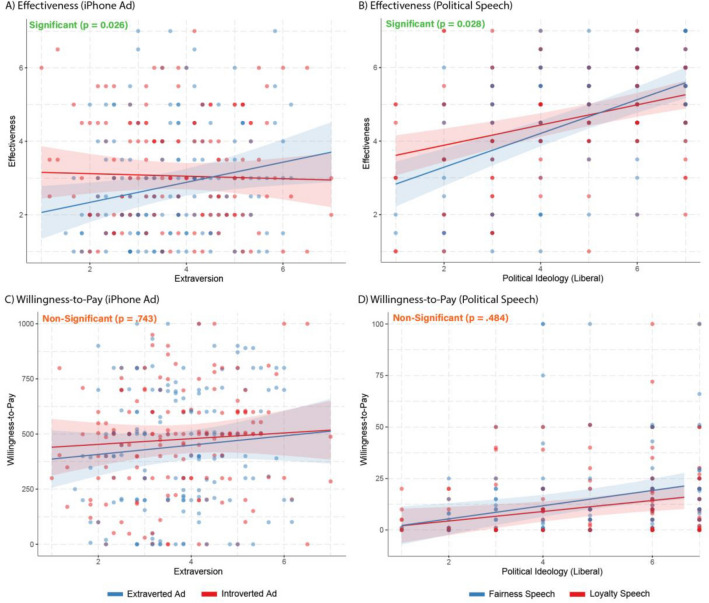
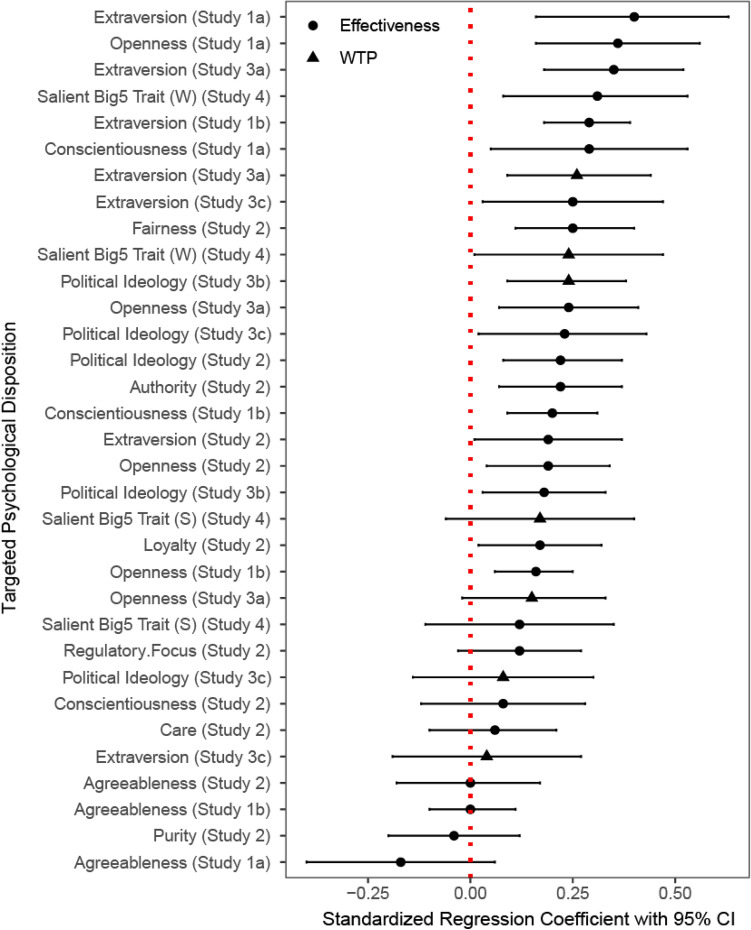
Matching the language or content of a message to the psychological profile of its recipient (known as “personalized persuasion”) is widely considered to be one of the most effective messaging strategies. We demonstrate that the rapid advances in large language models (LLMs), like ChatGPT, could accelerate this influence by making personalized persuasion scalable. Across four studies (consisting of seven sub-studies; total N = 1788), we show that personalized messages crafted by ChatGPT exhibit significantly more influence than non-personalized messages. This was true across different domains of persuasion (e.g., marketing of consumer products, political appeals for climate action), psychological profiles (e.g., personality traits, political ideology, moral foundations), and when only providing the LLM with a single, short prompt naming or describing the targeted psychological dimension. Thus, our findings are among the first to demonstrate the potential for LLMs to automate, and thereby scale, the use of personalized persuasion in ways that enhance its effectiveness and efficiency. We discuss the implications for researchers, practitioners, and the general public.
Overview
The claims and statistics of this paper haven’t been checked yet.
Run the check — free, no account needed. It reads the open-access text and checks the sources it cites.
Integrity signals
Registry
Cites
Statistics
Figures
Verification
Claims the paper makes
The claims and statistics of this paper haven’t been checked yet.
Run the check — free, no account needed. It reads the open-access text and checks the sources it cites.
Claims other papers make about this one
Each is checked against this paper’s own text: does it say what the citing paper says it does?
The cited source says what the claim attributes to it.
In the citing paper
“AI chatbots can craft hyper-tailored messages using psychographic and behavioral data (Costello, Pennycook, and Rand 2024; Matz et al. 2024)”
From Emotional Manipulation by AI Companions (2025) · cites this paper as Matz et al. 2024
The cited source says what the claim attributes to it.
In the citing paper
“On the other hand, LLMs can influence and persuade humans26, with research demonstrating that LLM-based writing assistants are capable of swaying people’s views27.”
From Generative language models exhibit social identity biases (2024) · cites this paper as [26]
Self-check
Percentages, sums and reported differences re-computed from the paper’s own numbers.
The self-check needs the paper’s full text.
Citations
Cites
Vaswani, A., Shazeer, N., Parmar, N., Uszkoreit, J., Jones, L., Gomez, A. N., Kaiser, L., & Polosukhin, I. (2017) · arXiv · doi:10.48550/arxiv.1706.03762 · Cited by 120,404 · cited 1×
“LLMs are advanced generative AI systems that use transformer neural network architectures 36 to learn language representations from vast corpora of text data.”
BackgroundThe theory of planned behavior
Ajzen, I. (1991) · Organizational Behavior and Human Decision Processes · doi:10.1016/0749-5978(91)90020-t · Cited by 90,587
Podsakoff, P. M., MacKenzie, S. B., Lee, J.-Y., & Podsakoff, N. P. (2003) · Journal of Applied Psychology · doi:10.1037/0021-9010.88.5.879 · Cited by 82,194
Jakubův, J., Chvalovský, K., Goertzel, Z., et al. (2023) · DROPS (Schloss Dagstuhl – Leibniz Center for Informatics) · doi:10.4230/lipics.itp.2023.19 · Cited by 76,648
Advances In Experimental Social Psychology
(2022) · Advances in experimental social psychology · doi:10.1016/s0065-2601(22)x0002-6 · Cited by 22,559
A very brief measure of the Big-Five personality domains
Gosling, S. D., Rentfrow, P. J., & Swann, W. B. (2003) · Journal of Research in Personality · doi:10.1016/s0092-6566(03)00046-1 · Cited by 8,307 · cited 1×
“…and quiet) were taken from the language used to identify personality traits (e.g., Introversion) in the Ten-Item-Personality-Inventory (TIPI 54 ), but were adjusted in a few instances to reflect more positive versions of the same characteristics (e.g., competitive rather than quarrelsome…”
MethodAn Introduction to the Five‐Factor Model and Its Applications
McCrae, R. R., & John, O. P. (1992) · Journal of Personality · doi:10.1111/j.1467-6494.1992.tb00970.x · Cited by 6,835 · cited 3×
“The Big Five model posits that individual differences in cognition, affect, and behavior can be pragmatically described using the following five dimensions: Openness, Conscientiousness, Extraversion, Agreeableness and Neuroticism 48,53 .”
BackgroundMethodLLaMA: Open and Efficient Foundation Language Models
Touvron, H., Lavril, T., Izacard, G., Martinet, X., Lachaux, M.-A., Lacroix, T., Rozière, B., Goyal, N., Hambro, E., Azhar, F., et al. (2023) · arXiv · doi:10.48550/arxiv.2302.13971 · Cited by 4,602
The international personality item pool and the future of public-domain personality measures
Goldberg, L. R., Johnson, J. A., Eber, H. W., Hogan, R., Ashton, M. C., Cloninger, C. R., & Gough, H. G. (2006) · Journal of Research in Personality · doi:10.1016/j.jrp.2005.08.007 · Cited by 3,185 · cited 1×
“The Big Five model posits that individual differences in cognition, affect, and behavior can be pragmatically described using the following five dimensions: Openness, Conscientiousness, Extraversion, Agreeableness and Neuroticism 48,53 .”
MethodPrivate traits and attributes are predictable from digital records of human behavior
Kosinski, M., Stillwell, D., & Graepel, T. (2013) · Proceedings of the National Academy of Sciences · doi:10.1073/pnas.1218772110 · Cited by 2,829 · cited 1×
“…(e.g., personality), predictive algorithms can estimate these traits directly from their digital behaviors 17–19 , including their Facebook Likes 19,20 , the language used in their social media posts 21–25 , their profile pictures 26 , their credit card spending 27,28 , and their smartphone…”
Background
Research works printed but not linked: 3
- Matz, S. C., Kosinski, M., Nave, G. & Stillwell, D. Psychological targeting as an effective approach to digital mass persuasion. Proc. Natl. Acad. Sci. 20, 20 (2017).
- Park, G. et al. Automatic personality assessment through social media language. J. Pers. Soc. Psychol. 108, 934 (2015). · DOI · Paper page
- Fazio, R. H. & Olson, M. A. The MODE Model: Attitude-Behavior Processes as a Function of Motivation and Opportunity. In Dual-Process Theories of the Social Mind 155–171 (The Guilford Press, 2014).
Cited by
Sorted by citations
Items 301–316 of 316
Kao, C.-Y. (2026) · Journal of Global Marketing · doi:10.1080/08911762.2026.2734798
Rosenberg, L. B. (2026) · SSRN Electronic Journal · doi:10.2139/ssrn.7498938
Zhang, R., Chen, Y., Fu, L., Qiu, Q., & Chen, L. (2026) · International Journal of Human-Computer Interaction · doi:10.1080/10447318.2026.2734664
Roberts, D. L. (2026) · IntechOpen eBooks · doi:10.5772/intechopen.1016795
Confidence Amplification in Human–AI Moral Decision-Making
Li, M., Patten, T., Lekhi, N., & Alsaid, A. (2026) · Proceedings of the Human Factors and Ergonomics Society Annual Meeting · doi:10.1177/10711813261493608
Obrębska, M., Konat, B., Kleka, P., Kiljan, K., & Dembska, N. (2026) · Acta Psychologica · doi:10.1016/j.actpsy.2026.107915
Hu, W., Sundie, J. M., & Guadagno, R. E. (2026) · De Gruyter eBooks · doi:10.1515/9783111574462-007
Caper: Context-Aware Persuasion by Modeling Cognition and Action
Park, S., & Singh, M. P. (2026) · International Conference on Information Technology for Social Good (GoodIT) · doi:10.1145/3794786.3830738
“Other work leverages linguistic features for personalization [1, 25], whereas Caper focuses on observable behavior mapped to latent cognition.”
Bentameur, K., Zineb, H., & Bouaici, R. (2026) · Frontiers in Communication · doi:10.3389/fcomm.2026.1935069
Haque, M. N. (2025) · Research journal in business and economics. · doi:10.61424/rjbe.v3i4.1082
“Recent studies show that large language models are capable of producing personalized messages that are superior to non-personalized messages in commercial and political settings (Matz et al., 2024).”
Shaminja, T. S., & Barkhuizen, M. (2026) · Frontiers in Sociology · doi:10.3389/fsoc.2026.1964645
“AI systems can take advantage of features inherent in human decision-making, such as bounded rationality and heuristics and biases, including confirmation bias, to influence judgment (Matz et al., 2024).”
Can ChatGPT be skeptical? A case-based evaluation of generative AI in financial statement auditing
Grey, L., & Li, Y. (2026) · Accounting Research Journal · doi:10.1108/arj-12-2025-0527
Nassar, M., Al-Kwifi, O. S., El-Alfy, A., Sakka, G., & Ahmed, Z. U. (2026) · Journal of Global Marketing · doi:10.1080/08911762.2026.2747186
Die Rolle der künstlichen Intelligenz bei der Gestaltung der zukünftigen Kommunikationsfähigkeiten
Hoffmann, O. (2026) · Springer eBooks · doi:10.1007/978-3-658-52150-9_25
Navigating GenAI in the workplace: skills transformation & tension
Chen, S. M., & Cassidy, K. J. (2026) · Information Communication & Society · doi:10.1080/1369118x.2026.2736814
Guan, Y. (2026) · Frontiers in Psychology · doi:10.3389/fpsyg.2026.1918225
“Generative systems also raise persuasion, disclosure, and privacy concerns because users may treat fluent outputs as personally meaningful feedback (Matz et al., 2024; Register et al., 2025; Reif et al., 2025).”
Metadata
- Authors
- Matz, S. C., Teeny, J. D., Vaid, S. S., Peters, H., Harari, G. M., & Cerf, M.
- Affiliations
- Columbia University (US)
- Northwestern University (US)
- Harvard University (US)
- Stanford University (US)
- Corresponding author
- Matz, S. C.
- Venue
- Scientific Reports
- Published
- 2024-02-26
- Volume
- 14
- Issue
- 1
- Pages
- 4692-4692
- ISSN
- 2045-2322 (ISSN-L)
- PMC
- PMC10897294
- OpenAlex
- W4392153984
- Cited by
- 315
- References
- 74
- Citations by year
- 2026: 133 · 2025: 120 · 2024: 59
- FWCI
- 222.98
- Type
- journal article
- Language
- en
- Open access
- gold
- doi.org
- Locations
- Scientific Reports (publishedVersion, cc-by)
- PubMed Central (publishedVersion, cc-by)
- PubMed (publishedVersion)
- DOAJ (DOAJ: Directory of Open Access Journals) (submittedVersion)
- OSF Preprints (OSF Preprints) (submittedVersion)
- PsyArXiv (OSF Preprints) (submittedVersion)
- PsyArXiv (OSF Preprints) (submittedVersion, cc-by)
- Topics
- Social Sciences › Psychology › Social Psychology › Psychology of Social Influence
- Social Sciences › Business, Management and Accounting › Marketing › AI in Service Interactions
- Physical Sciences › Computer Science › Artificial Intelligence › Ethics and Social Impacts of AI
- Keywords
- personalized persuasion, generative AI, large language models, ChatGPT, message tailoring, psychological profiling, persuasiveness, political appeal, climate action, political ideology, moral foundations, personality traits
- MeSH terms
- Climate, Language, Morals, Persuasive Communication, Marketing
About these checks
Registry, retraction, Cites and statistics results are computed, not judged, with one exception: a printed reference that no index lists is read once by a model before it counts as a citation error. Claims are extracted by a model and kept only when their quote appears verbatim in the text; each cited source is then checked, with a model’s help, for whether it says what the claim relies on. Those verdicts can be wrong — read the claim’s quote and the cited source before relying on one.
Statistics and arithmetic are recomputed, not judged.
Confidence bands are shown only for fields calibrated on our annotated test set. None is calibrated yet, so no band is shown.
What counts as a claim ›How we measure confidence ›How we check this ›
Are you an author, or do you see a problem with this page? Request a review
