

The DOI matches its Crossref record; 77 of the 77 references it cites were found in a registry or an index.
The potential of generative AI for personalized persuasion at scale
Open accessAbstract
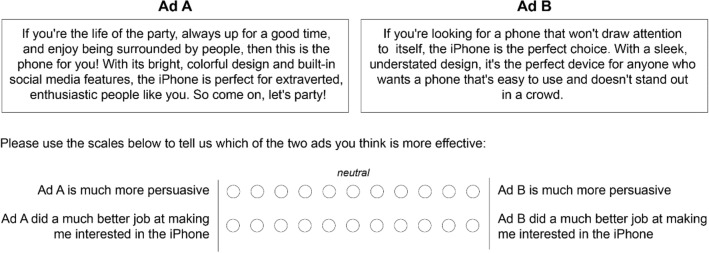
Matching the language or content of a message to the psychological profile of its recipient (known as “personalized persuasion”) is widely considered to be one of the most effective messaging strategies. We demonstrate that the rapid advances in large language models (LLMs), like ChatGPT, could accelerate this influence by making personalized persuasion scalable. Across four studies (consisting of seven sub-studies; total N = 1788), we show that personalized messages crafted by ChatGPT exhibit significantly more influence than non-personalized messages. This was true across different domains of persuasion (e.g., marketing of consumer products, political appeals for climate action), psychological profiles (e.g., personality traits, political ideology, moral foundations), and when only providing the LLM with a single, short prompt naming or describing the targeted psychological dimension. Thus, our findings are among the first to demonstrate the potential for LLMs to automate, and thereby scale, the use of personalized persuasion in ways that enhance its effectiveness and efficiency. We discuss the implications for researchers, practitioners, and the general public.
Overview
The claims and statistics of this paper haven’t been checked yet.
Run the check — free, no account needed. It reads the open-access text and checks the sources it cites.
Integrity signals
Registry
Cites
Statistics
Figures
Verification
Claims the paper makes
The claims and statistics of this paper haven’t been checked yet.
Run the check — free, no account needed. It reads the open-access text and checks the sources it cites.
Claims other papers make about this one
Each is checked against this paper’s own text: does it say what the citing paper says it does?
The cited source says what the claim attributes to it.
In the citing paper
“AI chatbots can craft hyper-tailored messages using psychographic and behavioral data (Costello, Pennycook, and Rand 2024; Matz et al. 2024)”
From Emotional Manipulation by AI Companions (2025) · cites this paper as Matz et al. 2024
The cited source says what the claim attributes to it.
In the citing paper
“On the other hand, LLMs can influence and persuade humans26, with research demonstrating that LLM-based writing assistants are capable of swaying people’s views27.”
From Generative language models exhibit social identity biases (2024) · cites this paper as [26]
Self-check
Percentages, sums and reported differences re-computed from the paper’s own numbers.
The self-check needs the paper’s full text.
Citations
Cites
Vaswani, A., Shazeer, N., Parmar, N., Uszkoreit, J., Jones, L., Gomez, A. N., Kaiser, L., & Polosukhin, I. (2017) · arXiv · doi:10.48550/arxiv.1706.03762 · Cited by 120,404 · cited 1×
“LLMs are advanced generative AI systems that use transformer neural network architectures 36 to learn language representations from vast corpora of text data.”
BackgroundThe theory of planned behavior
Ajzen, I. (1991) · Organizational Behavior and Human Decision Processes · doi:10.1016/0749-5978(91)90020-t · Cited by 90,587
Podsakoff, P. M., MacKenzie, S. B., Lee, J.-Y., & Podsakoff, N. P. (2003) · Journal of Applied Psychology · doi:10.1037/0021-9010.88.5.879 · Cited by 82,194
Jakubův, J., Chvalovský, K., Goertzel, Z., et al. (2023) · DROPS (Schloss Dagstuhl – Leibniz Center for Informatics) · doi:10.4230/lipics.itp.2023.19 · Cited by 76,648
Advances In Experimental Social Psychology
(2022) · Advances in experimental social psychology · doi:10.1016/s0065-2601(22)x0002-6 · Cited by 22,559
A very brief measure of the Big-Five personality domains
Gosling, S. D., Rentfrow, P. J., & Swann, W. B. (2003) · Journal of Research in Personality · doi:10.1016/s0092-6566(03)00046-1 · Cited by 8,307 · cited 1×
“…and quiet) were taken from the language used to identify personality traits (e.g., Introversion) in the Ten-Item-Personality-Inventory (TIPI 54 ), but were adjusted in a few instances to reflect more positive versions of the same characteristics (e.g., competitive rather than quarrelsome…”
MethodAn Introduction to the Five‐Factor Model and Its Applications
McCrae, R. R., & John, O. P. (1992) · Journal of Personality · doi:10.1111/j.1467-6494.1992.tb00970.x · Cited by 6,835 · cited 3×
“The Big Five model posits that individual differences in cognition, affect, and behavior can be pragmatically described using the following five dimensions: Openness, Conscientiousness, Extraversion, Agreeableness and Neuroticism 48,53 .”
BackgroundMethodLLaMA: Open and Efficient Foundation Language Models
Touvron, H., Lavril, T., Izacard, G., Martinet, X., Lachaux, M.-A., Lacroix, T., Rozière, B., Goyal, N., Hambro, E., Azhar, F., et al. (2023) · arXiv · doi:10.48550/arxiv.2302.13971 · Cited by 4,602
The international personality item pool and the future of public-domain personality measures
Goldberg, L. R., Johnson, J. A., Eber, H. W., Hogan, R., Ashton, M. C., Cloninger, C. R., & Gough, H. G. (2006) · Journal of Research in Personality · doi:10.1016/j.jrp.2005.08.007 · Cited by 3,185 · cited 1×
“The Big Five model posits that individual differences in cognition, affect, and behavior can be pragmatically described using the following five dimensions: Openness, Conscientiousness, Extraversion, Agreeableness and Neuroticism 48,53 .”
MethodPrivate traits and attributes are predictable from digital records of human behavior
Kosinski, M., Stillwell, D., & Graepel, T. (2013) · Proceedings of the National Academy of Sciences · doi:10.1073/pnas.1218772110 · Cited by 2,829 · cited 1×
“…(e.g., personality), predictive algorithms can estimate these traits directly from their digital behaviors 17–19 , including their Facebook Likes 19,20 , the language used in their social media posts 21–25 , their profile pictures 26 , their credit card spending 27,28 , and their smartphone…”
BackgroundLlama 2: Open Foundation and Fine-Tuned Chat Models
Touvron, H., Martin, L., Stone, K., Albert, P., Almahairi, A., Babaei, Y., Bashlykov, N., Batra, S., Bhargava, P., Bhosale, S., et al. (2023) · arXiv · doi:10.48550/arxiv.2307.09288 · Cited by 2,604
Personality and the Prediction of Consequential Outcomes
Ozer, D. J., & Benet‐Martínez, V. (2005) · Annual Review of Psychology · doi:10.1146/annurev.psych.57.102904.190127 · Cited by 2,307
Lockwood, P., Jordan, C. H., & Kunda, Z. (2002) · Journal of Personality and Social Psychology · doi:10.1037/0022-3514.83.4.854 · Cited by 1,749 · cited 1×
“We measured regulatory focus (promotion versus prevention) using an adapted measure of the original 18-item scale 64 .”
MethodPersonality, Gender, and Age in the Language of Social Media: The Open-Vocabulary Approach
Schwartz, H. A., Eichstaedt, J. C., Kern, M. L., Dziurzynski, L., Ramones, S. M., Agrawal, M., Shah, A., Kosinski, M., Stillwell, D., Seligman, M. E. P., et al. (2013) · PLoS ONE · doi:10.1371/journal.pone.0073791 · Cited by 1,700
Compulsive Buying: A Phenomenological Exploration
O’Guinn, T. C., & Faber, R. J. (1989) · Journal of Consumer Research · doi:10.1086/209204 · Cited by 1,529
Higgins, E. T., Friedman, R., Harlow, R. E., Idson, L. C., Ayduk, Ö. N., & Taylor, A. M. (2001) · European Journal of Social Psychology · doi:10.1002/ejsp.27 · Cited by 1,516 · cited 1×
“Regulatory focus captures individual differences in people’s dispositional motivation to pursue their goals by focusing on the attainment of desired outcomes (i.e., promotion focus) or the prevention of undesirable outcomes (i.e., prevention focus, e.g., 59 ).”
BackgroundComputer-based personality judgments are more accurate than those made by humans
Youyou, W., Kosinski, M., & Stillwell, D. (2015) · Proceedings of the National Academy of Sciences · doi:10.1073/pnas.1418680112 · Cited by 1,086
The Moral Roots of Environmental Attitudes
Feinberg, M., & Willer, R. (2013) · Psychological Science · doi:10.1177/0956797612449177 · Cited by 928 · cited 2×
“On the one hand, such personalization offers tremendous opportunities to promote desired behaviors, including a healthy lifestyle 6–8 , financial saving 9 , or support for environmentalism 10 .”
BackgroundShort and extra-short forms of the Big Five Inventory–2: The BFI-2-S and BFI-2-XS
Soto, C. J., & John, O. P. (2017) · Journal of Research in Personality · doi:10.1016/j.jrp.2017.02.004 · Cited by 927
Psychological targeting as an effective approach to digital mass persuasion
Matz, S. C., Kosinski, M., Nave, G., & Stillwell, D. J. (2017) · Proceedings of the National Academy of Sciences · doi:10.1073/pnas.1710966114 · Cited by 892 · cited 2×
“Compared to non-personalized communication, matching the content of a persuasive message (e.g., its language or visuals) to the psychological profile of its recipient enhances its effectiveness (e.g., 4,5 ).”
BackgroundSelf-citationAnil, R., Dai, A. M., Firat, O., Johnson, M., Lepikhin, D., Passos, A., Shakeri, S., Taropa, E., Bailey, P., Chen, Z., et al. (2023) · arXiv · doi:10.48550/arxiv.2305.10403 · Cited by 834
Personality and Political Attitudes: Relationships across Issue Domains and Political Contexts
Gerber, A. S., Huber, G. A., Doherty, D., Dowling, C. M., & Ha, S. E. (2010) · American Political Science Review · doi:10.1017/s0003055410000031 · Cited by 832 · cited 1×
“We focused on the Big Five personality traits as an established marker of personality 48 that has been: (1) validated across different contexts 49 , (2) shown to predict a wide range of preferences and life outcomes 41,42 , and (3) used in past research on personalized persuasion (e.g., 50–52 ).”
MethodAdvances in Experimental Social Psychology, Vol. 7.
Fink, E. L., & Berkowitz, L. J. (1976) · Contemporary Sociology A Journal of Reviews · doi:10.2307/2062988 · Cited by 824
Automatic personality assessment through social media language.
Park, G., Schwartz, H. A., Eichstaedt, J. C., Kern, M. L., Kosinski, M., Stillwell, D. J., Ungar, L. H., & Seligman, M. E. P. (2015) · Journal of Personality and Social Psychology · doi:10.1037/pspp0000020 · Cited by 802 · cited 14×
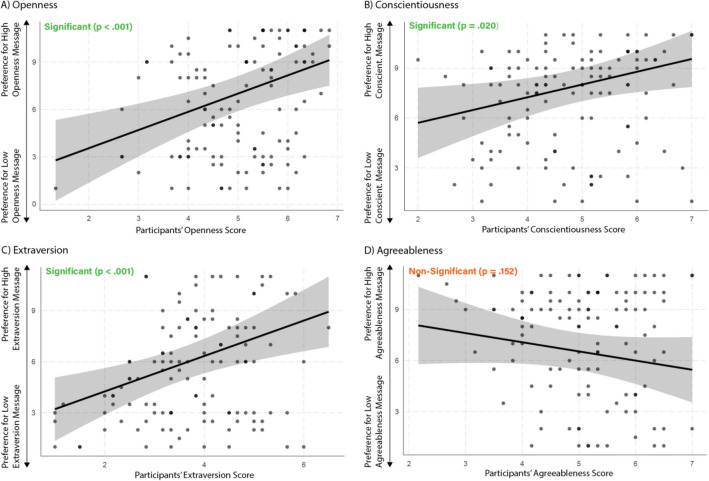
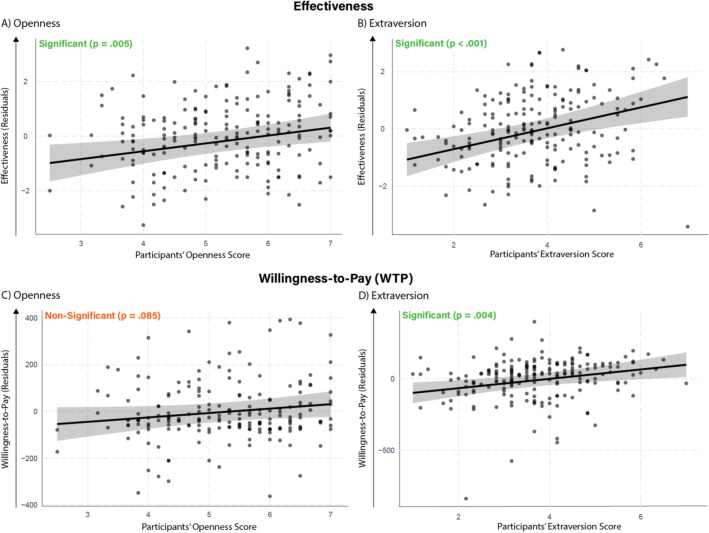
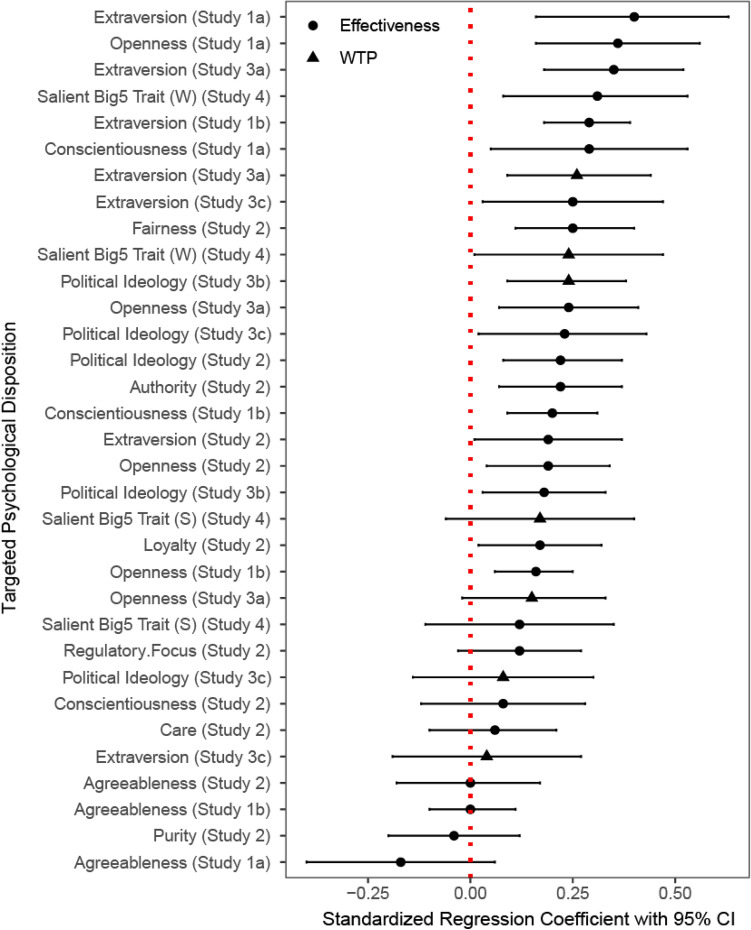
“For example, while some psychological traits produced consistent and relatively pronounced matching effects (e.g., Openness and Extra-version), others failed to produce robust effects or reach statistical levels of significance (e.g., Agreeableness).”
BackgroundInfluentialThe Five-Factor Model of Personality Across Cultures
McCrae, R., & Allik, J. (2002) · Springer eBooks · doi:10.1007/978-1-4615-0763-5 · Cited by 652
Online behavioral advertising: A literature review and research agenda
Boerman, S. C., Kruikemeier, S., & Zuiderveen Borgesius, F. J. (2017) · Journal of Advertising · doi:10.1080/00913367.2017.1339368 · Cited by 607
Using cognitive psychology to understand GPT-3
Binz, M., & Schulz, E. (2023) · Proceedings of the National Academy of Sciences · doi:10.1073/pnas.2218523120 · Cited by 559 · cited 1×
“First, LLMs have been shown to bear an uncanny resemblance to humans in how they process information and respond to external stimuli (e.g., 44 ).”
Background(2012) · Advances in experimental social psychology · Cited by 507
Hirsh, J. B., Kang, S. K., & Bodenhausen, G. V. (2012) · Psychological Science · doi:10.1177/0956797611436349 · Cited by 506
Boutyline, A., & Willer, R. (2017) · Political Psychology · doi:10.1111/pops.12337 · Cited by 491 · cited 1×
“Social media platforms have already been accused of situating people in information ecologies that serve as “echo chambers”, only showing them content that reinforces their interests or worldviews 77 .”
BackgroundRegulating ChatGPT and other Large Generative AI Models
Hacker, P., Engel, A., & Mauer, M. (2023) · 2023 ACM Conference on Fairness Accountability and Transparency · doi:10.1145/3593013.3594067 · Cited by 466 · cited 1×
“For example, academic proposals to regulate generative AI have collectively argued that regulation should occur at the stage of deployment (e.g., at the advertiser and platform level), rather than at the level of message reception (e.g., at the time point consumers are seeing the specific ad) 79 .”
BackgroundAdvances in Experimental Social Psychology, Vol. 19
Fine, G. A., & Berkowitz, L. J. (1987) · Contemporary Sociology A Journal of Reviews · doi:10.2307/2070758 · Cited by 461
Miller, K. M., Hofstetter, R., Krohmer, H., & Zhang, Z. J. (2011) · Journal of Marketing Research · doi:10.1509/jmkr.48.1.172 · Cited by 443 · cited 1×
“Previous research has found that self-reported WTP is both an interpretable outcome 66 and a reflection of people’s actual, in-market demand and pricing decisions 67 .”
BackgroundPredicting personality from patterns of behavior collected with smartphones
Stachl, C., Au, Q., Schoedel, R., Gosling, S. D., Harari, G. M., Buschek, D., Völkel, S. T., Schuwerk, T., Oldemeier, M., Ullmann, T., et al. (2020) · Proceedings of the National Academy of Sciences · doi:10.1073/pnas.1920484117 · Cited by 401
Self-citationFeinberg, M., & Willer, R. (2015) · Personality and Social Psychology Bulletin · doi:10.1177/0146167215607842 · Cited by 399
Regulatory Fit and Persuasion: Basic Principles and Remaining Questions
Cesario, J., Higgins, E. T., & Scholer, A. A. (2007) · Social and Personality Psychology Compass · doi:10.1111/j.1751-9004.2007.00055.x · Cited by 371 · cited 1×
“Matching messages to people’s dominant regulatory focus has previously been shown to enhance the effectiveness of personalized persuasion, especially in the health domain 6,60 .”
BackgroundAccurately measuring willingness to pay for consumer goods: a meta-analysis of the hypothetical bias
Schmidt, J., & Bijmolt, T. H. A. (2019) · Journal of the Academy of Marketing Science · doi:10.1007/s11747-019-00666-6 · Cited by 340 · cited 1×
“Previous research has found that self-reported WTP is both an interpretable outcome 66 and a reflection of people’s actual, in-market demand and pricing decisions 67 .”
BackgroundEvaluating Large Language Models in Theory of Mind Tasks
Kosinski, M. (2023) · arXiv · doi:10.48550/arxiv.2302.02083 · Cited by 339 · cited 1×
“For example, recent work suggests that a central psychological process in personalized persuasion, theory of mind (e.g., representing other people’s mental states), may have spontaneously emerged in LLMs (e.g., 45,46 ).”
BackgroundEvaluating large language models in theory of mind tasks
Kosinski, M. (2024) · Proceedings of the National Academy of Sciences · doi:10.1073/pnas.2405460121 · Cited by 339
Moral reframing: A technique for effective and persuasive communication across political divides
Feinberg, M., & Willer, R. (2019) · Social and Personality Psychology Compass · doi:10.1111/spc3.12501 · Cited by 302
Hauser, J. R., Urban, G. L., Liberali, G., & Braun, M. I. (2009) · Marketing Science · doi:10.1287/mksc.1080.0459 · Cited by 291 · cited 2×
“This proportion of significant effects is higher than chance ( t = 8.30, p 0.001).”
BackgroundInfluentialA Review and Conceptual Framework for Understanding Personalized Matching Effects in Persuasion
Teeny, J. D., Siev, J. J., Briñol, P., & Petty, R. E. (2020) · Journal of Consumer Psychology · doi:10.1002/jcpy.1198 · Cited by 287 · cited 2×
“Compared to non-personalized communication, matching the content of a persuasive message (e.g., its language or visuals) to the psychological profile of its recipient enhances its effectiveness (e.g., 4,5 ).”
BackgroundSelf-citationHiggins, E. T. (2019) · doi:10.1093/oso/9780190948054.001.0001 · Cited by 212
Targeted Campaign Appeals and the Value of Ambiguity
Hersh, E. D., & Schaffner, B. F. (2013) · The Journal of Politics · doi:10.1017/s0022381613000182 · Cited by 203
Lukito, J. (2019) · Political Communication · doi:10.1080/10584609.2019.1661889 · Cited by 199 · cited 1×
“On the other hand, it can have a pernicious effect on societies 11 , for example, increasing the spread of disinformation 12 , manipulating political preferences 13,14 , or promoting maladaptive consumer decision-making 15,16 .”
BackgroundA field experiment testing the utility of regulatory fit messages for promoting physical activity
Latimer‐Cheung, A. E., Rivers, S. E., Rench, T. A., Katulak, N. A., Hicks, A., Hodorowski, J. K., Higgins, E. T., & Salovey, P. (2007) · Journal of Experimental Social Psychology · doi:10.1016/j.jesp.2007.07.013 · Cited by 182 · cited 2×
“Matching messages to people’s dominant regulatory focus has previously been shown to enhance the effectiveness of personalized persuasion, especially in the health domain 6,60 .”
BackgroundChristian, H., Suhartono, D., Chowanda, A., & Zamli, K. Z. (2021) · Journal Of Big Data · doi:10.1186/s40537-021-00459-1 · Cited by 169
Karinshak, E., Liu, S. X., Park, J. S., & Hancock, J. T. (2023) · Proceedings of the ACM on Human-Computer Interaction · doi:10.1145/3579592 · Cited by 167 · cited 1×
“Scientists and practitioners have been quick to acknowledge the potential power of LLMs in the context of persuasion 39–41 .”
BackgroundSegalin, C., Perina, A., Cristani, M., & Vinciarelli, A. (2016) · IEEE Transactions on Affective Computing · doi:10.1109/taffc.2016.2516994 · Cited by 139 · cited 1×
“…predictive algorithms can estimate these traits directly from their digital behaviors 17–19 , including their Facebook Likes 19,20 , the language used in their social media posts 21–25 , their profile pictures 26 , their credit card spending 27,28 , and their smartphone sensing data 29 .”
BackgroundPrivacy in the age of psychological targeting
Matz, S., Appel, R. E., & Kosiński, M. (2019) · Current Opinion in Psychology · doi:10.1016/j.copsyc.2019.08.010 · Cited by 137 · cited 2×
“On the other hand, it can have a pernicious effect on societies 11 , for example, increasing the spread of disinformation 12 , manipulating political preferences 13,14 , or promoting maladaptive consumer decision-making 15,16 .”
BackgroundSelf-citationLarge language models can infer psychological dispositions of social media users
Peters, H., & Matz, S. (2024) · PNAS Nexus · doi:10.1093/pnasnexus/pgae231 · Cited by 131 · cited 1×
“…predictive algorithms can estimate these traits directly from their digital behaviors 17–19 , including their Facebook Likes 19,20 , the language used in their social media posts 21–25 , their profile pictures 26 , their credit card spending 27,28 , and their smartphone sensing data 29 .”
BackgroundSelf-citationGerber, A. S., Huber, G. A., Doherty, D., Dowling, C. M., & Panagopoulos, C. (2012) · Political Behavior · doi:10.1007/s11109-012-9216-y · Cited by 117
Morally Reframed Arguments Can Affect Support for Political Candidates
Voelkel, J. G., & Feinberg, M. (2017) · Social Psychological and Personality Science · doi:10.1177/1948550617729408 · Cited by 114
Can Psychological Traits Be Inferred From Spending? Evidence From Transaction Data
Gladstone, J. J., Matz, S., & Lemaire, A. (2019) · Psychological Science · doi:10.1177/0956797619849435 · Cited by 112 · cited 1×
“…predictive algorithms can estimate these traits directly from their digital behaviors 17–19 , including their Facebook Likes 19,20 , the language used in their social media posts 21–25 , their profile pictures 26 , their credit card spending 27,28 , and their smartphone sensing data 29 .”
BackgroundSelf-citationJoyal‐Desmarais, K., Scharmer, A., Madzelan, M. K., See, J. V., Rothman, A. J., & Snyder, M. (2022) · Psychological Bulletin · doi:10.1037/bul0000377 · Cited by 99 · cited 2×
“While prior work has established reliable matching effects (e.g. 4 ), some authors have argued that various methodological factors have contributed to the strength of these findings 3 .”
BackgroundResultRoutledge International Handbook of Consumer Psychology
(2016) · Routledge eBooks · doi:10.4324/9781315727448 · Cited by 99
The impact of individual differences on influence strategies
Alkış, N., & Temizel, T. T. (2015) · Personality and Individual Differences · doi:10.1016/j.paid.2015.07.037 · Cited by 89 · cited 1×
“In contrast, the consistent null effect that was observed for AI-generated messages matched to participants’ level of Agreeableness might be explained by the association of the trait with a broad susceptibility to persuasion 72 .”
ResultMotivating Cancer Prevention and Early Detection Behaviors using Psychologically Tailored Messages
Latimer‐Cheung, A. E., Katulak, N. A., Mowad, L. Z., & Salovey, P. (2005) · Journal of Health Communication · doi:10.1080/10810730500263364 · Cited by 84 · cited 1×
“On the one hand, such personalization offers tremendous opportunities to promote desired behaviors, including a healthy lifestyle 6–8 , financial saving 9 , or support for environmentalism 10 .”
BackgroundQuantifying the potential persuasive returns to political microtargeting
Tappin, B. M., Wittenberg, C., Hewitt, L. B., Berinsky, A. J., & Rand, D. G. (2023) · Proceedings of the National Academy of Sciences · doi:10.1073/pnas.2216261120 · Cited by 83
Transformed Facial Similarity as a Political Cue: A Preliminary Investigation
Bailenson, J. N., Garland, P., Iyengar, S., & Yee, N. (2006) · Political Psychology · doi:10.1111/j.1467-9221.2006.00505.x · Cited by 81 · cited 3×
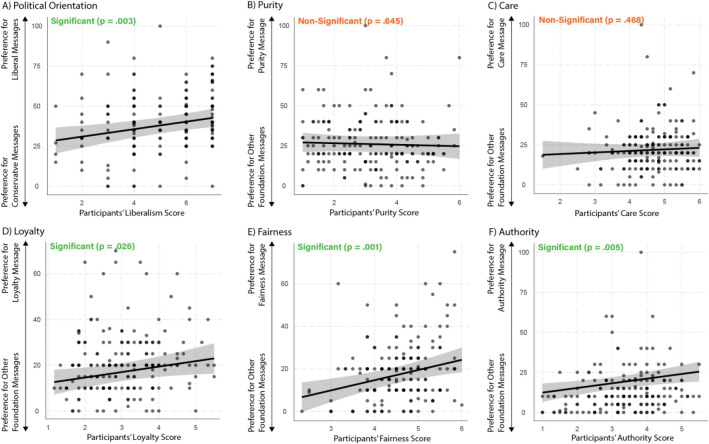
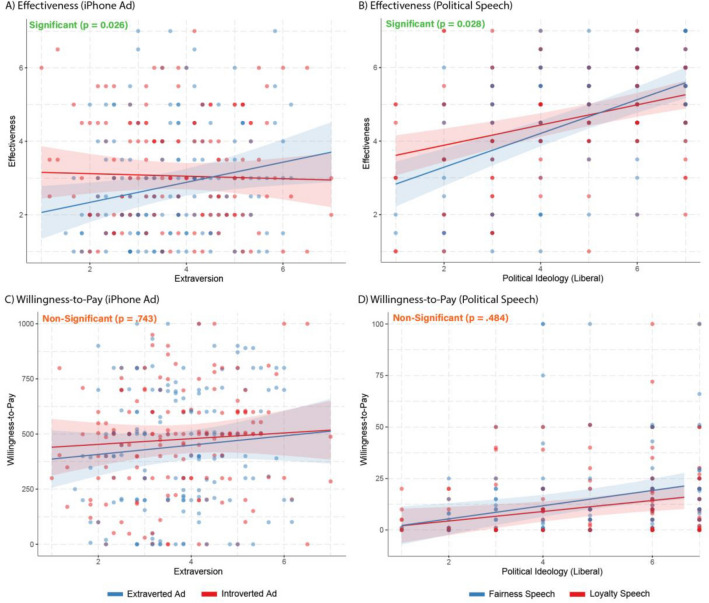
“Table 1 shows two political speeches tailored to the moral foundations of Fairness and Loyalty (see Tables S11–13 in the Supplementary Information for all prompts and messages, and Tables S14–16 for the results of a pre-validation study supporting the intended psychological affinity of all stimuli).”
BackgroundMoral Foundations Questionnaire
Graham, J., Nosek, B. A., Haidt, J., Iyer, R., Koleva, S. P., & Ditto, P. H. (2011) · PsycTESTS Dataset · doi:10.1037/t05651-000 · Cited by 73
Deep lexical hypothesis: Identifying personality structure in natural language.
Cutler, A., & Condon, D. M. (2022) · Journal of Personality and Social Psychology · doi:10.1037/pspp0000443 · Cited by 71
Can stated measures of willingness-to-accept be valid? Evidence from laboratory experiments
Lloyd-Smith, P. R., & Adamowicz, W. (2018) · Journal of Environmental Economics and Management · doi:10.1016/j.jeem.2018.07.003 · Cited by 70
Artificial Intelligence Can Persuade Humans on Political IssuesPreprint
Bai, H., Voelkel, J. G., Eichstaedt, J. C., & Willer, R. (2023) · OSF Preprints (OSF Preprints) · doi:10.31219/osf.io/stakv · Cited by 58
Asking Willingness-to-Accept Questions in Stated Preference Surveys: A Review and Research Agenda
Whittington, D., Adamowicz, W., & Lloyd-Smith, P. R. (2017) · Annual Review of Resource Economics · doi:10.1146/annurev-resource-121416-125602 · Cited by 50 · cited 1×
“First, while behavioral intentions and participants’ willingness to pay are predictive of actual behavior 82,83 , the research does not demonstrate their effects outside of self-report measures which are known to be prone to a variety of response biases 84 .”
BackgroundRamon, Y., Farrokhnia, R. A., Matz, S., & Martens, D. (2021) · Information · doi:10.3390/info12120518 · Cited by 50 · cited 1×
“…predictive algorithms can estimate these traits directly from their digital behaviors 17–19 , including their Facebook Likes 19,20 , the language used in their social media posts 21–25 , their profile pictures 26 , their credit card spending 27,28 , and their smartphone sensing data 29 .”
BackgroundSelf-citationBehavioral Patterns in Smartphone Usage Predict Big Five Personality TraitsPreprint
Stachl, C., Au, Q., Schoedel, R., et al. (2019) · doi:10.31234/osf.io/ks4vd · Cited by 49
Computational personality assessment
Stachl, C., Boyd, R. L., Horstmann, K. T., Khambatta, P., Matz, S., & Harari, G. M. (2021) · Personality Science · doi:10.5964/ps.6115 · Cited by 48
Self-citationThinking Fast and Slow in Large Language Models
Hagendorff, T., Fabi, S., & Kosiński, M. (2022) · PubMed Central · doi:10.48550/arxiv.2212.05206 · Cited by 36 · cited 1×
“For example, recent work suggests that a central psychological process in personalized persuasion, theory of mind (e.g., representing other people’s mental states), may have spontaneously emerged in LLMs (e.g., 45,46 ).”
BackgroundGRAHAM, M. H., & Coppock, A. (2021) · Public Opinion Quarterly · doi:10.1093/poq/nfab009 · Cited by 34 · cited 1×
“The bi-polar measure minimizes biased evaluations via “response substitution” 56 .”
BackgroundAutonomy and Manipulation: Refining the Argument Against Persuasive Advertising
Aylsworth, T. (2020) · Journal of Business Ethics · doi:10.1007/s10551-020-04590-6 · Cited by 33
Automatic Product Copywriting for E-commerce
Zhang, X., Zou, Y., Zhang, H., Zhou, J., Diao, S., Chen, J., Ding, Z., He, Z., He, X., Xiao, Y., et al. (2022) · Proceedings of the AAAI Conference on Artificial Intelligence · doi:10.1609/aaai.v36i11.21508 · Cited by 24
When Does Psychological Fit Matter? The Moderating Role of Price on Self-Brand Congruity
Gladstone, J. J., Garbinsky, E. N., & Matz, S. (2021) · Social Psychological and Personality Science · doi:10.1177/19485506211028390 · Cited by 15
Self-citationLeveraging psychological fit to encourage saving behavior.
Matz, S., Gladstone, J. J., & Farrokhnia, R. A. (2023) · American Psychologist · doi:10.1037/amp0001128 · Cited by 14 · cited 1×
“On the one hand, such personalization offers tremendous opportunities to promote desired behaviors, including a healthy lifestyle 6–8 , financial saving 9 , or support for environmentalism 10 .”
BackgroundSelf-citationLarge Language Models Can Infer Psychological Dispositions of Social Media UsersPreprint
Peters, H., & Matz, S. (2023) · arXiv (Cornell University) · doi:10.48550/arxiv.2309.08631 · Cited by 13 · cited 1×
“…predictive algorithms can estimate these traits directly from their digital behaviors 17–19 , including their Facebook Likes 19,20 , the language used in their social media posts 21–25 , their profile pictures 26 , their credit card spending 27,28 , and their smartphone sensing data 29 .”
BackgroundSelf-citationBogg, T., & Vo, P. T. (2022) · Journal of American College Health · doi:10.1080/07448481.2022.2103382 · Cited by 3
Personality-customized advertising in the digital environment
Matz, S. (2016) · Dialnet (Universidad de la Rioja) · doi:10.4324/9781315727448.ch34 · Cited by 3 · cited 7×
“With Cronbach’s alphas ranging from 0.81 to 0.89, the scale reliabilities were found to be good (Openness = 0.81, Conscientiousness = 0.89, Extraversion = 0.82, Agreeableness = 0.82 and Neuroticism = 0.86).”
BackgroundInfluentialSelf-citation
Research works printed but not linked: 3
- Matz, S. C., Kosinski, M., Nave, G. & Stillwell, D. Psychological targeting as an effective approach to digital mass persuasion. Proc. Natl. Acad. Sci. 20, 20 (2017).
- Park, G. et al. Automatic personality assessment through social media language. J. Pers. Soc. Psychol. 108, 934 (2015). · DOI · Paper page
- Fazio, R. H. & Olson, M. A. The MODE Model: Attitude-Behavior Processes as a Function of Motivation and Opportunity. In Dual-Process Theories of the Social Mind 155–171 (The Guilford Press, 2014).
Cited by
Sorted by citations
Feuerriegel, S., Hartmann, J., Janiesch, C., & Zschech, P. (2024) · Business & Information Systems Engineering · doi:10.1007/s12599-023-00834-7 · Cited by 2,267
“…generative AI can automate the creation of personalized marketing content, for instance, different sales slogans for introverts vs. extroverts (Matz et al. 2017) or other personality traits as personalized marketing content is more effective than a one-content-fits-all approach (Matz et al. 2023).”
Generative artificial intelligence enhances creativity but reduces the diversity of novel content
Doshi, A., & Hauser, O. (2023) · doi:10.2139/ssrn.4535536 · Cited by 1,350
“That a tightly controlled prompt requesting a generative AI idea shows sizable effects on creativity in our study provides a promising starting point for future researchers to delve deeper into customization and personalization of generative AI for different writers ( 8 ).”
Bengesi, S., El-Sayed, H., Sarker, M. K., Houkpati, Y., Irungu, J., & Oladunni, T. (2024) · IEEE Access · doi:10.1109/access.2024.3397775 · Cited by 470
Durably reducing conspiracy beliefs through dialogues with AI
Costello, T. H., Pennycook, G., & Rand, D. G. (2024) · Science · doi:10.1126/science.adq1814 · Cited by 354
Brüns, J. D., & Meißner, M. (2024) · Journal of Retailing and Consumer Services · doi:10.1016/j.jretconser.2024.103790 · Cited by 400
Metadata
- Authors
- Matz, S. C., Teeny, J. D., Vaid, S. S., Peters, H., Harari, G. M., & Cerf, M.
- Affiliations
- Columbia University (US)
- Northwestern University (US)
- Harvard University (US)
- Stanford University (US)
- Corresponding author
- Matz, S. C.
- Venue
- Scientific Reports
- Published
- 2024-02-26
- Volume
- 14
- Issue
- 1
- Pages
- 4692-4692
- ISSN
- 2045-2322 (ISSN-L)
- PMC
- PMC10897294
- OpenAlex
- W4392153984
- Cited by
- 315
- References
- 74
- Citations by year
- 2026: 133 · 2025: 120 · 2024: 59
- FWCI
- 222.98
- Type
- journal article
- Language
- en
- Open access
- gold
- doi.org
- Locations
- Scientific Reports (publishedVersion, cc-by)
- PubMed Central (publishedVersion, cc-by)
- PubMed (publishedVersion)
- DOAJ (DOAJ: Directory of Open Access Journals) (submittedVersion)
- OSF Preprints (OSF Preprints) (submittedVersion)
- PsyArXiv (OSF Preprints) (submittedVersion)
- PsyArXiv (OSF Preprints) (submittedVersion, cc-by)
- Topics
- Social Sciences › Psychology › Social Psychology › Psychology of Social Influence
- Social Sciences › Business, Management and Accounting › Marketing › AI in Service Interactions
- Physical Sciences › Computer Science › Artificial Intelligence › Ethics and Social Impacts of AI
- Keywords
- personalized persuasion, generative AI, large language models, ChatGPT, message tailoring, psychological profiling, persuasiveness, political appeal, climate action, political ideology, moral foundations, personality traits
- MeSH terms
- Climate, Language, Morals, Persuasive Communication, Marketing
About these checks
Registry, retraction, Cites and statistics results are computed, not judged, with one exception: a printed reference that no index lists is read once by a model before it counts as a citation error. Claims are extracted by a model and kept only when their quote appears verbatim in the text; each cited source is then checked, with a model’s help, for whether it says what the claim relies on. Those verdicts can be wrong — read the claim’s quote and the cited source before relying on one.
Statistics and arithmetic are recomputed, not judged.
Confidence bands are shown only for fields calibrated on our annotated test set. None is calibrated yet, so no band is shown.
What counts as a claim ›How we measure confidence ›How we check this ›
Are you an author, or do you see a problem with this page? Request a review
