

Twitter users perceptions of AI-based e-learning technologies
The DOI matches its Crossref record; 56 of the 56 references it cites were found in a registry or an index.
Abstract
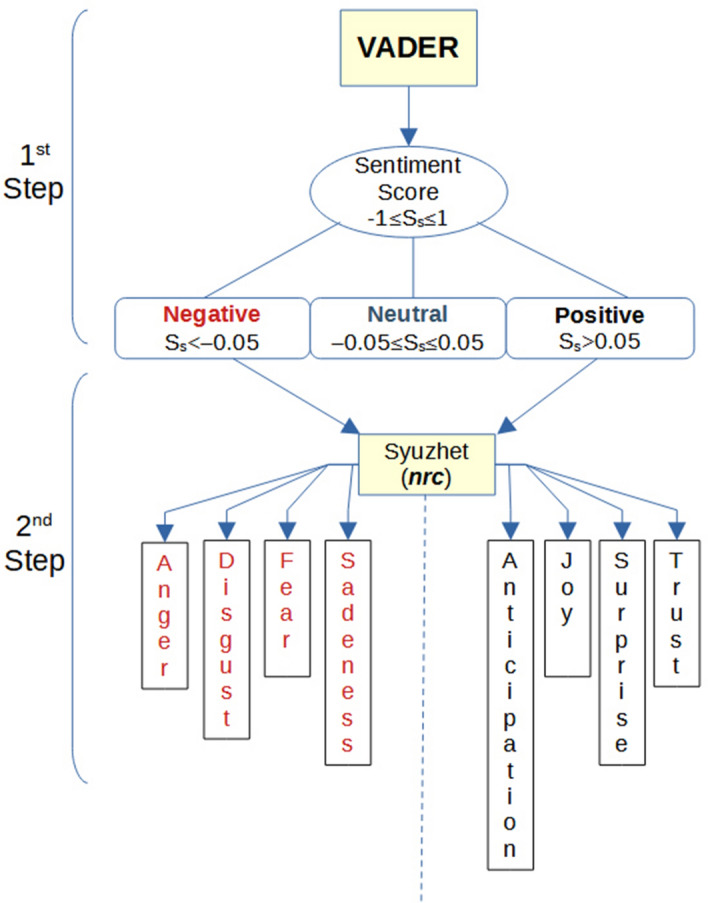
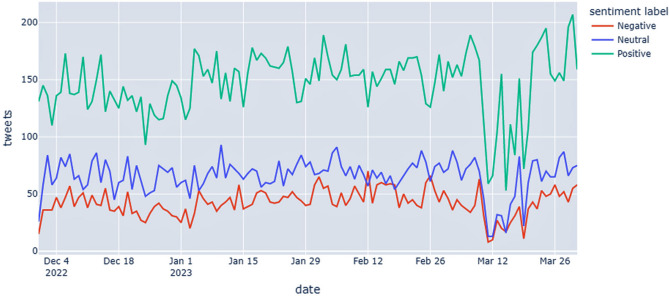
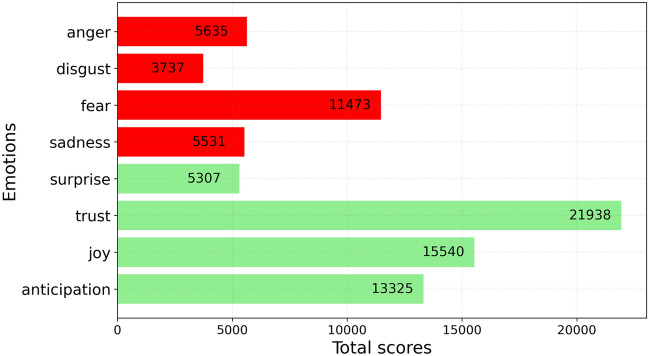
Today, teaching and learning paths increasingly intersect with technologies powered by emerging artificial intelligence (AI).This work analyses public opinions and sentiments about AI applications that affect e-learning, such as ChatGPT, virtual and augmented reality, microlearning, mobile learning, adaptive learning, and gamification. The way people perceive technologies fuelled by artificial intelligence can be tracked in real time in microblog messages promptly shared by Twitter users, who currently constitute a large and ever-increasing number of individuals. The observation period was from November 30, 2022, the date on which ChatGPT was launched, to March 31, 2023. A two-step sentiment analysis was performed on the collected English-language tweets to determine the overall sentiments and emotions. A latent Dirichlet allocation model was built to identify commonly discussed topics in tweets. The results show that the majority of opinions are positive. Among the eight emotions of the Syuzhet package, ‘trust’ and ‘joy’ are the most common positive emotions observed in the tweets, while ‘fear’ is the most common negative emotion. Among the most discussed topics with a negative outlook, two particular aspects of fear are identified: an ‘apocalyptic-fear’ that artificial intelligence could lead the end of humankind, and a fear for the ‘future of artistic and intellectual jobs’ as AI could not only destroy human art and creativity but also make the individual contributions of students and researchers not assessable. On the other hand, among the topics with a positive outlook, trust and hope in AI tools for improving efficiency in jobs and the educational world are identified. Overall, the results suggest that AI will play a significant role in the future of the world and education, but it is important to consider the potential ethical and social implications of this technology. By leveraging the positive aspects of AI while addressing these concerns, the education system can unlock the full potential of this emerging technology and provide a better learning experience for students.
Overview
The claims and statistics of this paper haven’t been checked yet.
Free: it reads the open-access text and checks the first 5 claims that cite a source we can check. Create a free account to check every claim.
Integrity signals
Registry
Cites
Statistics
Figures
Verification
Claims the paper makes
The claims and statistics of this paper haven’t been checked yet.
Free: it reads the open-access text and checks the first 5 claims that cite a source we can check. Create a free account to check every claim.
Claims other papers make about this one
Each is checked against this paper’s own text: does it say what the citing paper says it does?
The cited source says what the claim attributes to it.
In the citing paper
“Conversely, positive topics centered on the trust and hope in GenAI tools to improve job efficiency and educational outcomes.”
From Investigating the higher education institutions’ guidelines and policies regarding the use of generative AI in teaching, learning, research, and administration (2025) · cites this paper as Stracqualursi and Agati (2024)
In the citing paper
“This collective optimism mirrors the findings of Stracqualursi and Agati (2024), who analyzed public opinions and sentiments regarding various AI applications in e-learning, such as ChatGPT, virtual and augmented reality, microlearning, mobile learning, adaptive learning, and gamification.”
From Investigating the higher education institutions’ guidelines and policies regarding the use of generative AI in teaching, learning, research, and administration (2025) · cites this paper as Stracqualursi and Agati (2024)
In the citing paper
“Through a two-step sentiment analysis and LDA model, they identified that 'trust' and 'joy' were the most common positive emotions, while 'fear' was the predominant negative emotion.”
From Investigating the higher education institutions’ guidelines and policies regarding the use of generative AI in teaching, learning, research, and administration (2025) · cites this paper as Stracqualursi and Agati (2024)
In the citing paper
“Notably, the negative sentiments included concerns about the ethical implications of GenAI and its impact on future job security in artistic and intellectual fields.”
From Investigating the higher education institutions’ guidelines and policies regarding the use of generative AI in teaching, learning, research, and administration (2025) · cites this paper as Stracqualursi and Agati (2024)
Self-check
Percentages, sums and reported differences re-computed from the paper’s own numbers.
The self-check needs the paper’s full text.
Citations
Cites
1 retracted
RETRACTED: College music education and teaching based on AI techniques
Wei, J., Karuppiah, M., & Prathik, A. (2022) · Computers & Electrical Engineering · doi:10.1016/j.compeleceng.2022.107851 · Cited by 144
RetractedVADER: a parsimonious rule-based model for sentiment analysis of social media text
Hutto, C., & Gilbert, E. (2014) · Proceedings of the International AAAI Conference on Web and Social Media · doi:10.1609/icwsm.v8i1.14550 · Cited by 6,087
BAİDOO-ANU, D., & OWUSU ANSAH, L. (2023) · Journal of AI · doi:10.61969/jai.1337500 · Cited by 3,939
Baidoo-Anu, D., & Owusu Ansah, L. (2023) · doi:10.2139/ssrn.4337484 · Cited by 3,004 · cited 1×
“For example, AI-powered tools can improve students’ performance, 25 AI-powered software can help doctors diagnose diseases, 26 and chatbots can help students 27 and customer service representatives answer queries more quickly.”
Predicting Elections with Twitter: What 140 Characters Reveal about Political Sentiment
Tumasjan, A., Sprenger, T., Sandner, P., & Welpe, I. (2010) · Proceedings of the International AAAI Conference on Web and Social Media · doi:10.1609/icwsm.v4i1.14009 · Cited by 2,649
Exploring the Space of Topic Coherence Measures
Röder, M., Both, A., & Hinneburg, A. (2015) · Proceedings of the Eighth ACM International Conference on Web Search and Data Mining · doi:10.1145/2684822.2685324 · Cited by 2,224
A GENERAL PSYCHOEVOLUTIONARY THEORY OF EMOTION
PLUTCHIK, R. (1980) · Theories of Emotion · doi:10.1016/b978-0-12-558701-3.50007-7 · Cited by 1,370
LDAvis: A method for visualizing and interpreting topics
Sievert, C., & Shirley, K. (2014) · Proceedings of the Workshop on Interactive Language Learning, Visualization, and Interfaces · doi:10.3115/v1/w14-3110 · Cited by 1,366
Self-report captures 27 distinct categories of emotion bridged by continuous gradients
Cowen, A. S., & Keltner, D. (2017) · Proceedings of the National Academy of Sciences · doi:10.1073/pnas.1702247114 · Cited by 897
Addressing bias in artificial intelligence in health care
Parikh, R. B., Teeple, S., & Navathe, A. S. (2019) · JAMA · doi:10.1001/jama.2019.18058 · Cited by 764
Artificial intelligence applications in the development of autonomous vehicles: a survey
Ma, Y., Wang, Z., Yang, H., & Yang, L. (2020) · IEEE/CAA Journal of Automatica Sinica · doi:10.1109/jas.2020.1003021 · Cited by 639 · cited 1×
“For example, AI is being used to develop autonomous vehicles, which could revolutionize transportation, 34 and new methods for teaching and learning music.”
Unlocking the opportunities through ChatGPT Tool towards ameliorating the education system
Javaid, M., Haleem, A., Singh, R. P., Khan, S., & Khan, I. H. (2023) · BenchCouncil Transactions on Benchmarks, Standards and Evaluations · doi:10.1016/j.tbench.2023.100115 · Cited by 535 · cited 1×
“17 To assist students and improve their writing abilities, ChatGPT may check for grammatical and structural problems in their work and provide valuable comments.”
Economics of Artificial Intelligence: Implications for the Future of Work
Ernst, E., Merola, R., & Samaan, D. (2019) · IZA Journal of Labor Policy · doi:10.2478/izajolp-2019-0004 · Cited by 405 · cited 2×
“This fear is especially prominent in industries such as manufacturing, customer service, translation 21–23 and teaching 24 .”
Becker, B. A., Denny, P., Finnie-Ansley, J., Luxton-Reilly, A., Prather, J., & Santos, E. A. (2023) · Proceedings of the 54th ACM Technical Symposium on Computer Science Education V. 1 · doi:10.1145/3545945.3569759 · Cited by 401
ChatGPT for Education and Research: A Review of Benefits and Risks
Sok, S., & Heng, K. (2023) · doi:10.2139/ssrn.4378735 · Cited by 386
Rebooting employees: Upskilling for artificial intelligence in multinational corporations
Jaiswal, A., Arun, C. J., & Varma, A. (2022) · The International Journal of Human Resource Management · doi:10.1080/09585192.2021.1891114 · Cited by 382
Yu, H., & Guo, Y. (2023) · Frontiers in Education · doi:10.3389/feduc.2023.1183162 · Cited by 357
Yilmaz, R., & Karaoglan Yilmaz, F. G. (2023) · Computers in Human Behavior: Artificial Humans · doi:10.1016/j.chbah.2023.100005 · Cited by 344 · cited 1×
“19 AlphaCode can aid e-learning platforms focused on programming or coding courses.”
Tailored gamification in education: A literature review and future agenda
Oliveira, W., Hamari, J., Shi, L., Toda, A. M., Rodrigues, L., Palomino, P. T., & Isotani, S. (2023) · Education and Information Technologies · doi:10.1007/s10639-022-11122-4 · Cited by 341
Mobile Learning Technologies for Education: Benefits and Pending Issues
Criollo-C, S., Guerrero-Arias, A., Jaramillo-Alcázar, Á., & Luján-Mora, S. (2021) · Applied Sciences · doi:10.3390/app11094111 · Cited by 311
Tang, Y. M., Chau, K. Y., Kwok, A. P. K., Zhu, T., & Ma, X. (2022) · Educational Research Review · doi:10.1016/j.edurev.2021.100429 · Cited by 281
Raj, N. S., & Renumol, V. G. (2022) · Journal of Computers in Education · doi:10.1007/s40692-021-00199-4 · Cited by 253
The Effects of Microlearning: A Scoping Review
Taylor, A.-D., & Hung, W. (2022) · Educational Technology Research and Development · doi:10.1007/s11423-022-10084-1 · Cited by 237
How does artificial intelligence in radiology improve efficiency and health outcomes?
van Leeuwen, K. G., de Rooij, M., Schalekamp, S., van Ginneken, B., & Rutten, M. J. C. M. (2022) · Pediatric Radiology · doi:10.1007/s00247-021-05114-8 · Cited by 236
Sentiment Analysis and Topic Modeling on Tweets about Online Education during COVID-19
Mujahid, M., Lee, E., Rustam, F., Washington, P. B., Ullah, S., Reshi, A. A., & Ashraf, I. (2021) · Applied Sciences · doi:10.3390/app11188438 · Cited by 235
Inferential social learning: cognitive foundations of human social learning and teaching
Gweon, H. (2021) · Trends in Cognitive Sciences · doi:10.1016/j.tics.2021.07.008 · Cited by 234
Adaptive virtual reality-based training: a systematic literature review and framework
Zahabi, M., & Abdul Razak, A. M. (2020) · Virtual Reality · doi:10.1007/s10055-020-00434-w · Cited by 233
Prediction and analysis of Indonesia Presidential election from Twitter using sentiment analysis
Budiharto, W., & Meiliana, M. (2018) · Journal of Big Data · doi:10.1186/s40537-018-0164-1 · Cited by 233
Bizami, N. A., Tasir, Z., & Kew, S. N. (2023) · Education and Information Technologies · doi:10.1007/s10639-022-11243-w · Cited by 226
Why Not Robot Teachers: Artificial Intelligence for Addressing Teacher Shortage
Edwards, B. I., & Cheok, A. D. (2018) · Applied Artificial Intelligence · doi:10.1080/08839514.2018.1464286 · Cited by 199
How does artificial intelligence create business agility? Evidence from chatbots
Wang, X., Lin, X., & Shao, B. (2022) · International Journal of Information Management · doi:10.1016/j.ijinfomgt.2022.102535 · Cited by 197 · cited 1×
“28 • Ethical Concerns.”
Kwok, S. W. H., Vadde, S. K., & Wang, G. (2021) · Journal of Medical Internet Research · doi:10.2196/26953 · Cited by 195
Diverse approaches to learning with immersive Virtual Reality identified from a systematic review
Won, M., Ungu, D. A. K., Matovu, H., Treagust, D. F., Tsai, C.-C., Park, J., Mocerino, M., & Tasker, R. (2023) · Computers & Education · doi:10.1016/j.compedu.2022.104701 · Cited by 168
Identifying substance use risk based on deep neural networks and Instagram social media data
Hassanpour, S., Tomita, N., DeLise, T., Crosier, B., & Marsch, L. A. (2019) · Neuropsychopharmacology · doi:10.1038/s41386-018-0247-x · Cited by 125
He, L., He, C., Reynolds, T. L., Bai, Q., Huang, Y., Li, C., Zheng, K., & Chen, Y. (2021) · Journal of the American Medical Informatics Association · doi:10.1093/jamia/ocab047 · Cited by 110
Gamification of student peer review in education: A systematic literature review
Indriasari, T. D., Luxton-Reilly, A., & Denny, P. C. (2020) · Education and Information Technologies · doi:10.1007/s10639-020-10228-x · Cited by 104
The ethical and social implications of personalization technologies for e-learning
Ashman, H., Brailsford, T., Cristea, A. I., Sheng, Q. Z., Stewart, C. D., Toms, E. G., & Wade, V. (2014) · Information & Management · doi:10.1016/j.im.2014.04.003 · Cited by 89
Are Translators Afraid of Artificial Intelligence?
Kirov, V., & Malamin, B. (2022) · Societies · doi:10.3390/soc12020070 · Cited by 83
Perceptions of Learners and Instructors towards Artificial Intelligence in Personalized Learning
Al-Badi, A., Khan, A., & Eid-Alotaibi (2022) · Procedia Computer Science · doi:10.1016/j.procs.2022.03.058 · Cited by 67
Aljabri, M., Chrouf, S. M. B., Alzahrani, N. A., Alghamdi, L., Alfehaid, R., Alqarawi, R., Alhuthayfi, J., & Alduhailan, N. (2021) · Sensors · doi:10.3390/s21165431 · Cited by 66
The pandemic semesters: Examining public opinion regarding online learning amidst COVID ‐19
Asare, A. O., Yap, R., Truong, N., & Sarpong, E. O. (2021) · Journal of Computer Assisted Learning · doi:10.1111/jcal.12574 · Cited by 62
Ensemble Modeling for Sustainable Technology Transfer
Lee, J., Kang, J.-H., Jun, S., Lim, H., Jang, D., & Park, S. (2018) · Sustainability · doi:10.3390/su10072278 · Cited by 62
Wang, C., Bakhet, M., Roberts, D., Gnani, S., & El-Osta, A. (2020) · Public Health · doi:10.1016/j.puhe.2020.07.007 · Cited by 61
Characterizing Manipulation from AI Systems
Carroll, M., Chan, A., Ashton, H., & Krueger, D. (2023) · Equity and Access in Algorithms, Mechanisms, and Optimization · doi:10.1145/3617694.3623226 · Cited by 60
Incorporating immersive learning into biomedical engineering laboratories using virtual reality
Wilkerson, M., Maldonado, V. V., Sivaraman, S., Rao, R. R., & Elsaadany, M. (2022) · Journal of Biological Engineering · doi:10.1186/s13036-022-00300-0 · Cited by 57
Owning Mistakes Sincerely: Strategies for Mitigating AI Errors
Mahmood, A., Fung, J. W., Won, I., & Huang, C.-M. (2022) · CHI Conference on Human Factors in Computing Systems · doi:10.1145/3491102.3517565 · Cited by 52 · cited 1×
“Many people are still sceptical about the reliability and safety of AI technologies, especially given recent high-profile incidents of AI systems making mistakes 36 or being manipulated.”
Social Media and Sentiment Analysis: The Nigeria Presidential Election 2019
Oyebode, O., & Orji, R. (2019) · IEEE Annual Information Technology, Electronics and Mobile Communication Conference (IEMCON) · doi:10.1109/iemcon.2019.8936139 · Cited by 49
Liu, T., Oubibi, M., Zhou, Y., & Fute, A. Z. (2023) · Heliyon · doi:10.1016/j.heliyon.2023.e15053 · Cited by 47
Becker, B. A., Denny, P., Finnie-Ansley, J., Luxton-Reilly, A., Prather, J., & Santos, E. A. (2022) · arXiv · doi:10.48550/arxiv.2212.01020 · Cited by 36
Ainley, E., Witwicki, C., Tallett, A. J., & Graham, C. F. (2021) · Journal of Medical Internet Research · doi:10.2196/31101 · Cited by 35
Tweet topics and sentiments relating to distance learning among Italian Twitter users
Stracqualursi, L., & Agati, P. (2022) · Scientific Reports · doi:10.1038/s41598-022-12915-w · Cited by 31
Self-citationPsycholinguistic Markers of COVID-19 Conspiracy Tweets and Predictors of Tweet Dissemination
Rains, S. A., Leroy, G., Warner, E. L., & Harber, P. I. (2021) · Health Communication · doi:10.1080/10410236.2021.1929691 · Cited by 28
Deception in Social Learning: A Multi-Agent Reinforcement Learning PerspectivePreprint
Chelarescu, P. (2021) · arXiv (Cornell University) · doi:10.48550/arxiv.2106.05402 · Cited by 27
Electronic cigarette usage patterns: a case study combining survey and social media data
Zhan, Y., Etter, J., Leischow, S. J., & Zeng, D. D. (2018) · Journal of the American Medical Informatics Association · doi:10.1093/jamia/ocy140 · Cited by 12
Widiastuti, N. (2022) · Journal of Educational Technology and Instruction · doi:10.70290/jeti.v1i1.5 · Cited by 6
Chatbot Development for Educational Institute
Shingte, K., Chaudhari, A., Patil, A., Chaudhari, A., & Desai, S. S. (2021) · SSRN Electronic Journal · doi:10.2139/ssrn.3861241
Research works printed but not linked: 8
- Selwyn, N. Should Robots Replace Teachers?: AI and the Future of Education (John Wiley & Sons, 2019).
- Mazurek, G. & Małagocka, K. Perception of privacy and data protection in the context of the development of artificial intelligence. J. Manag. Anal. 6, 344–364 (2019).
- David, W. E. A. Ai-powered lethal autonomous weapon systems in defence transformation. Impact and challenges. In Modelling and Simulation for Autonomous Systems (eds Mazal, J. et al.) 337–350 (Springer International Publishing, 2020). · doi:10.1007/978-3-030-43890-6_27
- May, M. & George, S. Privacy concerns in e-learning: Is UsingTracking system a threat?. Int. J. Inf. Educ. Technol. 1, 1–8 (2011).
- Mohammad, S. & Turney, P. Emotions evoked by common words and phrases: Using mechanical turk to create an emotion lexicon. In Proceedings of the NAACL HLT 2010 Workshop on Computational Approaches to Analysis and Generation of Emotion in Text (LA, California, 2010).
- Řehuřek, R. & Sojka, P. Software framework for topic modelling with large corpora. In Proceedings of LREC 2010 workshop New Challenges for NLP Frameworks, 46–50 (Univerity of Malta, 2010).
- Bird, S., Klein, E. & Loper, E. Natural Language Processing with Python (O’Reilly Media, 2009).
- Blei, D. M., Ng, A. Y., Jordan, M. I. & Lafferty, J. Latent dirichlet allocation. J. Mach. Learn. Res. 3, 993–1022 (2003).
Cited by
An, Y., Yu, J. H., & James, S. (2025) · International Journal of Educational Technology in Higher Education · doi:10.1186/s41239-025-00507-3 · Cited by 403
“This collective optimism mirrors the findings of Stracqualursi and Agati (2024), who analyzed public opinions and sentiments regarding various AI applications in e-learning, such as ChatGPT, virtual and augmented reality, microlearning, mobile learning, adaptive learning, and gamification.”
Metadata
- Authors
- Stracqualursi, L., & Agati, P.
- Venue
- Scientific Reports
- Published
- 2024-03-11
- Volume
- 14
- Issue
- 1
- ISSN
- 2045-2322
- PMC
- PMC11639736
- Cited by
- 32
- References
- 56
- Language
- en
- Licence
- creativecommons.org/licenses/by/4.0 (tdm)
- creativecommons.org/licenses/by/4.0 (vor)
About these checks
Registry, retraction, Cites and statistics results are computed, not judged, with one exception: a printed reference that no index lists is read once by a model before it counts as a citation error. Claims are extracted by a model and kept only when their quote appears verbatim in the text; each cited source is then checked, with a model’s help, for whether it says what the claim relies on. Those verdicts can be wrong — read the claim’s quote and the cited source before relying on one.
Statistics and arithmetic are recomputed, not judged.
Confidence bands are shown only for fields calibrated on our annotated test set. None is calibrated yet, so no band is shown.
What counts as a claim ›How we measure confidence ›How we check this ›
Are you an author, or do you see a problem with this page? Request a review
Data sources
Bibliographic data: Semantic Scholar, OpenAlex, Crossref.
Contains information from the Semantic Scholar Academic Graph Datasets, made available under the ODC Attribution License (ODC-BY 1.0).
Semantic Scholar’s data is described in: Kinney, R., et al. (2023). The Semantic Scholar Open Data Platform. arXiv:2301.10140.
