

Semaglutide ameliorates pressure overload-induced cardiac hypertrophy by improving cardiac mitophagy to suppress the activation of NLRP3 inflammasome
Open accessThe DOI matches its Crossref record; 41 of the 42 references it cites were found in a registry or an index.
Abstract
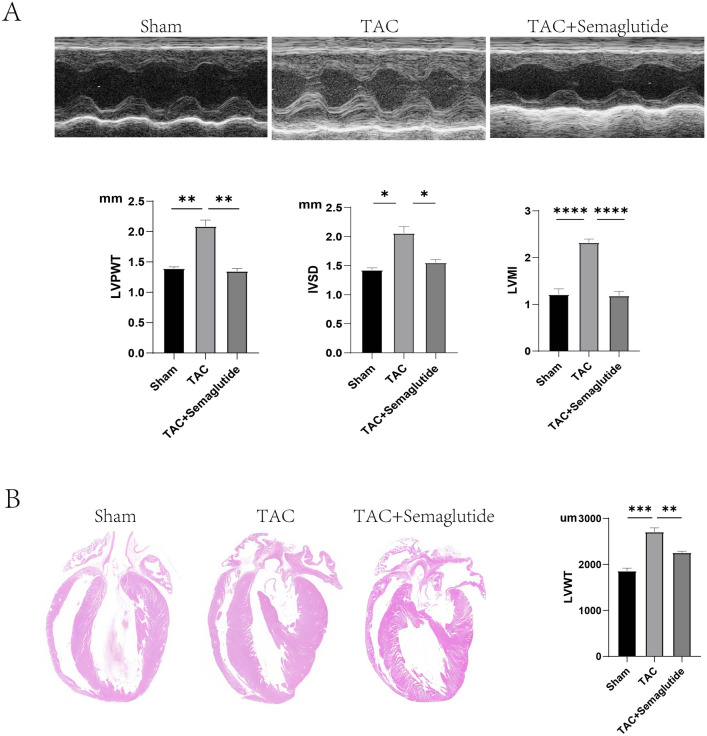
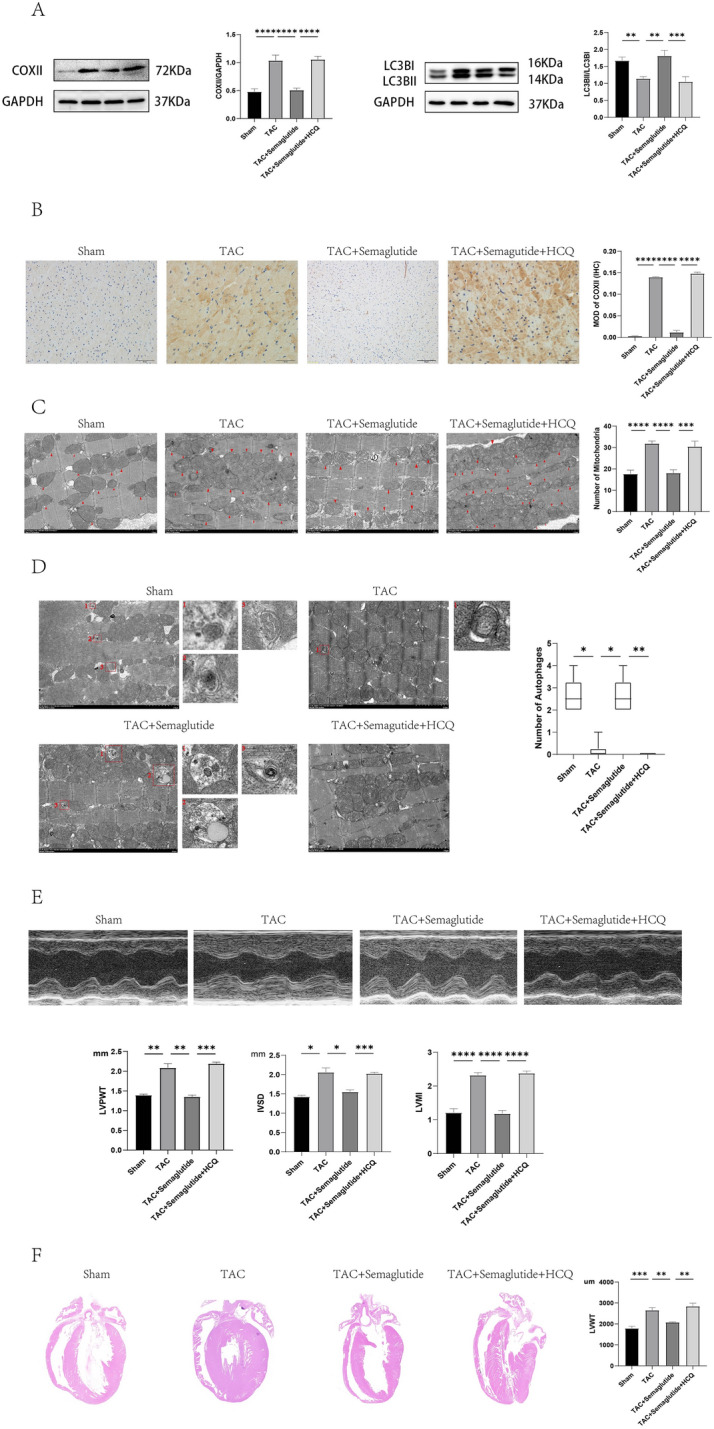
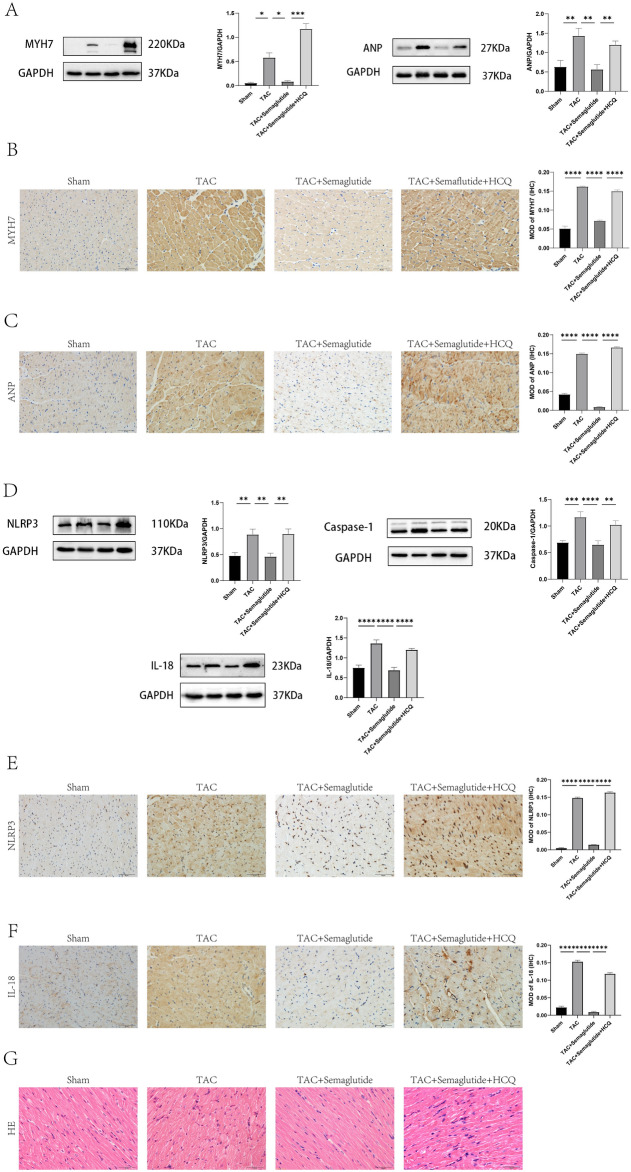
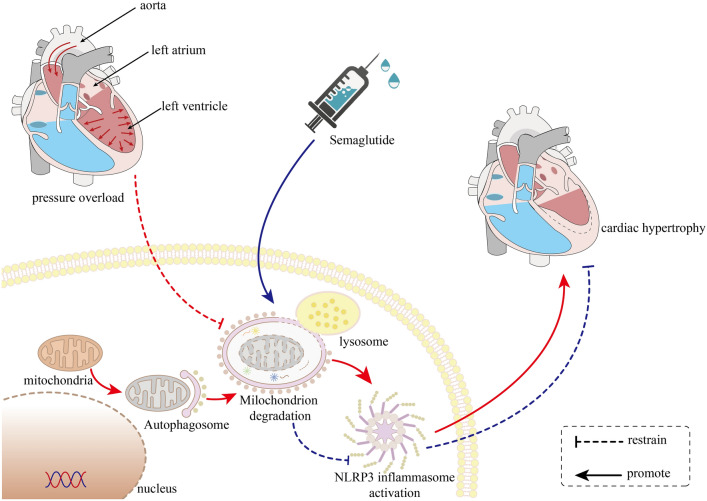
Pathological cardiac hypertrophy is an important cause of heart failure(HF). Recent studies reveal that glucagon-like peptide-1 receptor (GLP1R) agonists can improve mortality and left ventricular ejection fraction in the patients with type 2 diabetes and HF. The present study aims to investigate whether semaglutide, a long-acting GLP1R agonist, can ameliorate cardiac hypertrophy induced by pressure overload, and explore the potential mechanism. The rats were performed transverse aortic constriction (TAC) to mimic pressure overload model. The rats were divided into four groups including Sham, TAC, TAC + semaglutide, and TAC + semaglutide + HCQ (hydroxychloroquine, an inhibitor of mitophagy). The rats in each experimental group received their respective interventions for 4 weeks. The parameters of left ventricular hypertrophy(LVH) were measured by echocardiography, Hematoxylin–eosin (HE) staining, western-blot and immunohistochemistry (IHC), respectively. The changes of mitophagy were reflected by detecting cytochrome c oxidase subunit II (COXII), LC3II/LC3I, mitochondria, and autophagosomes. Meanwhile, NLRP3, Caspase-1, and interleukin-18 were detected to evaluate the activation of NLRP3 inflammasome in each group. The results suggest that LVH, impaired mitophagy, and activation of NLRP3 inflammasome were present in TAC rats. Semaglutide significantly reduced LVH, improve mitophagy, and down-regulated NLRP3 inflammatory signal pathway in TAC rats. However, the reversed effect of semaglutide on cardiac hypertrophy was abolished by HCQ, which restored the activation of NLRP3 inflammasome suppressed by improved mitophagy. In conclusion, semaglutide ameliorates the cardiac hypertrophy by improving cardiac mitophagy to suppress the activation of NLRP3 inflammasome. Semaglutide may be a novel potential option for intervention of cardiac hypertrophy induced by pressure overload.
Overview
The claims and statistics of this paper haven’t been checked yet.
Free: it reads the open-access text and checks the first 5 claims that cite a source we can check. Create a free account to check every claim.
Integrity signals
Registry
Cites
Statistics
Figures
Verification
Claims the paper makes
The claims and statistics of this paper haven’t been checked yet.
Free: it reads the open-access text and checks the first 5 claims that cite a source we can check. Create a free account to check every claim.
Claims other papers make about this one
Each is checked against this paper’s own text: does it say what the citing paper says it does?
The cited source says what the claim attributes to it.
In the citing paper
“In the transverse aortic constriction model, which causes pressure overload, ventricular compensation, and heart failure, studies have reported improvements with GLP-1 medicines in ventricular hypertrophy associated with reduced inflammation in rodents (58, 59), although none of these studies addresses the potential site(s) of GLP-1 action.”
From Antiinflammatory actions of glucagon-like peptide-1–based therapies beyond metabolic benefits (2025) · cites this paper as [59]
Self-check
Percentages, sums and reported differences re-computed from the paper’s own numbers.
The self-check needs the paper’s full text.
Citations
Cites
Heart Disease and Stroke Statistics—2023 Update: A Report From the American Heart Association
Tsao, C. W., Aday, A. W., Almarzooq, Z. I., Anderson, C. A. M., Arora, P., Avery, C. L., Baker-Smith, C. M., Beaton, A. Z., Boehme, A. K., Buxton, A. E., et al. (2023) · Circulation · doi:10.1161/cir.0000000000001123 · Cited by 8,300
A role for mitochondria in nlrp3 inflammasome activation
Zhou, R., Yazdi, A. S., Menu, P., & Tschopp, J. (2011) · Nature · doi:10.1038/nature09663 · Cited by 5,602 · cited 1×
“As previously reported, mitophagy dysfunction is closely associated with activation of NLRP3 inflammasome 19,38,39 .”
BackgroundHeart Disease and Stroke Statistics—2013 Update: A Report From the American Heart Association
Go, A. S., Mozaffarian, D., Roger, V. L., Benjamin, E. J., Berry, J. D., Borden, W. B., Bravata, D. M., Dai, S., Ford, E. S., Fox, C. S., et al. (2013) · Circulation · doi:10.1161/cir.0b013e31828124ad · Cited by 5,292
Zhou, B., Carrillo-Larco, R. M., Danaei, G., Riley, L. M., Paciorek, C. J., Stevens, G. A., Gregg, E. W., Bennett, J. E., Solomon, B., Singleton, R. K., et al. (2021) · The Lancet · doi:10.1016/s0140-6736(21)01330-1 · Cited by 3,902
Self-citationNakahira, K., Haspel, J. A., Rathinam, V. A. K., Lee, S.-J., Dolinay, T., Lam, H. C., Englert, J. A., Rabinovitch, M., Cernadas, M., Kim, H. P., et al. (2011) · Nature Immunology · doi:10.1038/ni.1980 · Cited by 3,049 · cited 1×
“As previously reported, mitophagy dysfunction is closely associated with activation of NLRP3 inflammasome 19,38,39 .”
Teichholz, L. E., Kreulen, T., Herman, M. V., & Gorlin, R. (1976) · The American Journal of Cardiology · doi:10.1016/0002-9149(76)90491-4 · Cited by 2,571
The Global Burden of Cardiovascular Diseases and Risk
Vaduganathan, M., Mensah, G. A., Turco, J. V., Fuster, V., & Roth, G. A. (2022) · Journal of the American College of Cardiology · doi:10.1016/j.jacc.2022.11.005 · Cited by 2,217
Hematoxylin and Eosin Staining of Tissue and Cell Sections
Fischer, A. H., Jacobson, K. A., Rose, J., & Zeller, R. (2008) · Cold Spring Harbor Protocols · doi:10.1101/pdb.prot4986 · Cited by 2,128 · cited 1×
“The Hematoxylin and eosin (HE) staining was performed as previous report 29 .”
MethodHernandez, A. F., Green, J. B., Janmohamed, S., D'Agostino, R. B., Granger, C. B., Jones, N. P., Leiter, L. A., Rosenberg, A. E., Sigmon, K. N., Somerville, M. C., et al. (2018) · The Lancet · doi:10.1016/s0140-6736(18)32261-x · Cited by 1,829
Semaglutide in Patients with Heart Failure with Preserved Ejection Fraction and Obesity
Kosiborod, M. N., Abildstrøm, S. Z., Borlaug, B. A., Butler, J., Rasmussen, S., Davies, M., Hovingh, G. K., Kitzman, D. W., Lindegaard, M. L., Møller, D. V., et al. (2023) · New England Journal of Medicine · doi:10.1056/nejmoa2306963 · Cited by 1,669 · cited 1×
“A recent study indicated that semaglutide led to larger reductions in symptoms and physical limitations, greater improvements in exercise function in patients with HFpEF and obesity 32 .”
Background
Cited by
Antiinflammatory actions of glucagon-like peptide-1–based therapies beyond metabolic benefits
Wong, C. K., & Drucker, D. J. (2025) · Journal of Clinical Investigation · doi:10.1172/jci194751 · Cited by 112
“…which causes pressure overload, ventricular compensation, and heart failure, studies have reported improvements with GLP-1 medicines in ventricular hypertrophy associated with reduced inflammation in rodents (58, 59), although none of these studies addresses the potential site(s) of GLP-1 action.”
Satheesan, A., Kumar, J. S., Leela, K. V., Murugesan, R., Chaithanya, V., & Angelin, M. (2024) · Inflammopharmacology · doi:10.1007/s10787-024-01556-2 · Cited by 48
“However, inhibition of mitophagy with hydroxychloroquine reverses semaglutide’s beneficial effects on hypertrophy and inflammasome activation (He et al. 2024).”
Li, Z., Sun, X., Wang, Y., Zhang, F., Wang, L., Ai, C., Zhang, X., Yin, X., Liu, C., Li, C. L., et al. (2025) · Basic Research in Cardiology · doi:10.1007/s00395-025-01138-5 · Cited by 18
NLRP3 Inflammasome: A New Target for the Treatment of CVD and Depression Comorbidity
Chen, C., Zhang, S., Sheng, M., & Shao, W. (2025) · Mediators of Inflammation · doi:10.1155/mi/4330574 · Cited by 18
Semaglutide and heart failure: Updated meta-analysis.
Barbagelata, L., Masson, W. M., Lobo, M., & Bluro, I. M. (2024) · Current Problems in Cardiology · doi:10.1016/j.cpcardiol.2024.102721 · Cited by 13
GLP-1 and the cardiovascular system
Kahles, F., Birkenfeld, A. L., & Marx, N. (2026) · Journal of Clinical Investigation · doi:10.1172/jci194748 · Cited by 14
“…diabetes, liraglutide reduced myocardial TNF-α expression and NF-κ B translocation by activating AMPK signaling (29) and augmenting myocardial glucose GLP-1 (7– 36) showed no cardiometabolic or hemodynamic effects prior Another study investigated the endogenous GLP-1 system during acute MI in mice.”
Wang, T., Yang, Q., Cheng, X.-Y., Ding, J.-C., & Hu, P.-F. (2024) · Heart Failure Reviews · doi:10.1007/s10741-024-10438-2 · Cited by 14
Sayed, N. F. E., Baraka, S. A., El-Mokadem, B. M., Elosaily, H., & Bishr, A. (2025) · Journal of Pharmacology and Experimental Therapeutics · doi:10.1016/j.jpet.2025.103629 · Cited by 6
Doğanay, S., Yanar, S., Bolat, İ., Azmammadova, I., Albayrak, M. G. B., & Nogay, F. B. (2026) · Scientific Reports · doi:10.1038/s41598-026-41954-w · Cited by 5
“Our results are consistent with those reported in previous studies demonstrating that GLP-1 agonists prevent excessive ECM degradation by suppressing cardiac fibroblast activity 61,62 .”
Danuglipron Ameliorates Pressure Overload‐Induced Cardiac Remodelling Through the AMPK Pathway
Wang, P., Guo, Z., Kong, C., Ma, Y., Wang, M., Zhang, X., & Yang, Z. (2025) · Journal of Cellular and Molecular Medicine · doi:10.1111/jcmm.70488 · Cited by 6
A novel regulator of NLRP3 inflammasome: Peptides
Zuo, Z., Wang, Y. X., Fang, Y., Zhao, M., Wang, Z., Yang, Z., Jia, B., & Sun, Y. (2025) · Peptides · doi:10.1016/j.peptides.2025.171381 · Cited by 6
Wang, S., Pan, X., Liang, R., & Chen, S. (2025) · Diabetology & Metabolic Syndrome · doi:10.1186/s13098-025-01736-2 · Cited by 4
“Previous studies have shown that GLP-1 receptor agonist can inhibit the excessive accumulation of ROS by enhancing mitochondrial autophagy, thus inhibiting NLRP3 inflammasome-induced pyroptosis and play a protective role in the heart and liver [46–47].”
Cardiomyopathy in Older Adults
O’Neill, D. E., & Forman, D. E. (2025) · Current Cardiology Reports · doi:10.1007/s11886-025-02306-8 · Cited by 5
“A recent study in mice show GLP1-RAs have the potential to reduce LVH and improve mitophagy in pressure overload states, furthering interest in the use of these agents in HFpEF and age-related left ventricular hypertrophy [ 29].”
NLRP3 inflammasome as a central target for the pleiotropic effects of GLP-1 receptor agonists
Mahmoudi, A. A., Saeedi‐Boroujeni, A., Vadizadeh, A., Kesharwani, P., & Sahebkar, A. (2026) · International Immunopharmacology · doi:10.1016/j.intimp.2026.117063 · Cited by 4
Deep learning‐enhanced 3D imaging unveils semaglutide impact on cardiac fibrosis
Ballestero, S. B., Yttergren, S. T., Hahn, M., Rosenkilde, M. B., Jensen, D. M., Christensen, M. S., Thisted, L., Holmberg, H. L., Teixeira, G., Biering‐Sørensen, T., et al. (2025) · British Journal of Pharmacology · doi:10.1111/bph.70217 · Cited by 4
“The analysis differentiates between interstitial collagen, replacement and perivascular fibrosis, providing comprehensive insights into fibrosis subtypes.”
Feng, Y., Zhu, Z., Jing, X., Zhang, Y., He, Y., & Li, X. (2025) · Revista Portuguesa de Cardiologia · doi:10.1016/j.repc.2025.05.008 · Cited by 2
Ye, L., Tang, P., Wan, H., Zhong, X., Chen, X., Liu, C., & Huang, R. (2026) · Drug Design Development and Therapy · doi:10.2147/dddt.s581491 · Cited by 3
“…Drug Design, Development and Therapy 2026:20 8 overload-induced myocardial hypertrophy mediated by NLRP3 inflammasome activation, 32 suggesting that the NLRP3 inflammasome may be one of the targets through which SEM exerts its anti-inflammatory effects and mitigates CRS4-related…”
Self-citationRong, J., Wang, Z. P., Lin, X., Lei, Z., Huang, Q., Liu, H., Luan, F., Zou, J., & Shi, Y. (2026) · MedComm · doi:10.1002/mco2.70878 · Cited by 3
Zhang, N., Cao, P., Wang, B., Yang, J., Zhao, L., & Shao, W. (2025) · International Journal of Hypertension · doi:10.1155/ijhy/2618127 · Cited by 4
“Prolonged pressure overload initiated adaptive cardiac hypertrophy, initially serving as a protective mechanism for the heart [69, 70].”
Androutsopoulou, V. A., Brecher, V., Xanthopoulos, A. V., Avgerinos, D. V., Athanasiou, T., & Magouliotis, D. E. (2026) · Journal of Cardiovascular Development and Disease · doi:10.3390/jcdd13070305 · Cited by 1
“In a pressure-overload cardiac hypertrophy model, semaglutide ameliorated pathological remodeling through NLRP3 inflammasome suppression via mitophagy enhancement [20].”
Velayati, E., Sarihi, A., Zarei, M., Komaki, A., & Ramezani‐Aliakbari, F. (2025) · BMC Cardiovascular Disorders · doi:10.1186/s12872-025-04572-4 · Cited by 1
Hao, W., Chen, C., Huang, G.-C., Lin, J.-H., Chen, H., Liu, J., Cheng, T., & Chen, J.-J. (2025) · Nutrients · doi:10.3390/nu17233680
“Comparable dose-dependent benefits have been reported for other mitophagy-enhancing agents, such as semaglutide and α -ketoglutarate, which improved cardiac function and inhibited NLRP3 inflammasome activation in pressure overload models [10,11].”
Exploring the therapeutic potential of GLP-1 receptor agonists in pulmonary arterial hypertension
Aguado, B., Lacoste-Palasset, T., Ruffenach, G., Bauer, F., Savale, L., Humbert, M. J. C., Montani, D., & Antigny, F. (2025) · ERJ Open Research · doi:10.1183/23120541.01479-2025
He, Y., Liu, T., Chen, L., Ge, Z., 常学锋, & Zou, D. (2026) · Frontiers in Cardiovascular Medicine · doi:10.3389/fcvm.2025.1676224
Zhang, B., Kong, L., Wang, Y., He, W., Yang, M., Zhang, X., Chen, X., Zhang, Y., Liu, B., Bai, M., et al. (2026) · Neural Regeneration Research · doi:10.4103/nrr.nrr-d-25-00990
Self-citationCardiac GLP1R gene expression: A cross-species single-cell transcriptomic analysis
Dostal, C., Ernst, M., Reiner, J., Snelling, R., Hu, C., Pokreisz, P., Kiss, A., & Podesser, B. K. (2026) · Advances in Translational Research · doi:10.1556/1661.2026.00113
Sun, F., Zhao, X., Chen, C., J, X., & Liu, F. (2026) · Frontiers in Immunology · doi:10.3389/fimmu.2026.1780542
“Current management therefore emphasizes early and sustained blood-pressure control combined with guideline-directed heart failure therapy to reduce hospitalization and mortality (3).”
Liu, Z., Zhang, S., & Zeng, T. (2026) · Inflammation · doi:10.1007/s10753-026-02548-w · Cited by 1
Балыкова, Л. А., Владимировна, С. В., Orlova, D. A., Shokina, S. V., Esina, M. V., Yamashkina, E. I., Surina, T. A., Zorina, L. A., Shcherbakova, V. S., Zaslavskaya, K. Y., et al. (2026) · Pharmacy & Pharmacology · doi:10.19163/2307-9266-2026-14-4-410-422
The Co-Regulation of NLRP3 Inflammasome and Autophagy for Cardiovascular Diseases
Zheng, S., Dou, H., Zhang, X. F., Chen, R., Wang, Y., Zheng, A., Lu, L., Rafiq, M., Xiao, Q., & Chen, X. (2026) · Pharmacology · doi:10.1159/000549572
Metadata
- Authors
- He, W., Wei, J., Liu, X., Zhang, Z., Huang, R., & Jiang, Z.
- Affiliations
- Guangxi Medical University (CN)
- Corresponding author
- Huang, Rongjie
- Jiang, Zhiyuan
- Venue
- Scientific Reports
- Published
- 2024-05-23
- Volume
- 14
- Issue
- 1
- Pages
- 11824-11824
- ISSN
- 2045-2322 (ISSN-L)
- PMC
- PMC11116553
- OpenAlex
- W4398251241
- Cited by
- 30
- References
- 42
- Citations by year
- 2026: 13 · 2025: 14 · 2024: 3
- FWCI
- 9.03
- Type
- journal article
- Language
- en
- Open access
- gold
- doi.org
- Licence
- cc-by
- creativecommons.org/licenses/by/4.0 (tdm)
- creativecommons.org/licenses/by/4.0 (vor)
- Locations
- Scientific Reports (publishedVersion, cc-by)
- PubMed Central (publishedVersion, cc-by)
- PubMed (publishedVersion)
- DOAJ (DOAJ: Directory of Open Access Journals) (submittedVersion, cc-by-sa)
- Funders
- National Natural Science Foundation of China (NO. 82160066)
- Topics
- Health Sciences › Medicine › Cardiology and Cardiovascular Medicine › Cardiac Fibrosis and Remodeling
- Life Sciences › Biochemistry, Genetics and Molecular Biology › Cell Biology › Autophagy in Disease and Therapy
- Health Sciences › Medicine › Cardiology and Cardiovascular Medicine › Cardiovascular Function and Risk Factors
- Keywords
- semaglutide, cardiac hypertrophy, pressure overload, mitophagy, NLRP3 inflammasome, GLP-1 receptor agonists, transverse aortic constriction, hydroxychloroquine, left ventricular hypertrophy, heart failure, autophagy, caspase-1, IL-18
- MeSH terms
- Glucagon-Like Peptide-1 Receptor, NLR Family, Pyrin Domain-Containing 3 Protein, Glucagon-Like Peptide-1 Receptor Agonists, Semaglutide, Animals, Disease Models, Animal, Glucagon-Like Peptides, Cardiomegaly, Male, Rats, Sprague-Dawley, Hypertrophy, Left Ventricular, Rats, Inflammasomes, Mitophagy
About these checks
Registry, retraction, Cites and statistics results are computed, not judged, with one exception: a printed reference that no index lists is read once by a model before it counts as a citation error. Claims are extracted by a model and kept only when their quote appears verbatim in the text; each cited source is then checked, with a model’s help, for whether it says what the claim relies on. Those verdicts can be wrong — read the claim’s quote and the cited source before relying on one.
Statistics and arithmetic are recomputed, not judged.
Confidence bands are shown only for fields calibrated on our annotated test set. None is calibrated yet, so no band is shown.
What counts as a claim ›How we measure confidence ›How we check this ›
Are you an author, or do you see a problem with this page? Request a review
Data sources
Bibliographic data: Semantic Scholar, OpenAlex, Crossref.
Contains information from the Semantic Scholar Academic Graph Datasets, made available under the ODC Attribution License (ODC-BY 1.0).
Semantic Scholar’s data is described in: Kinney, R., et al. (2023). The Semantic Scholar Open Data Platform. arXiv:2301.10140.
