

Decisional conflict among Chinese family caregivers prior to ECMO initiation: a cross-sectional study
Open accessPublished version of a preprint
The DOI matches its Crossref record; 25 of the 34 references it cites were found in a registry or an index; 11 of the 35 sources its claims cite were checked for support.
Abstract
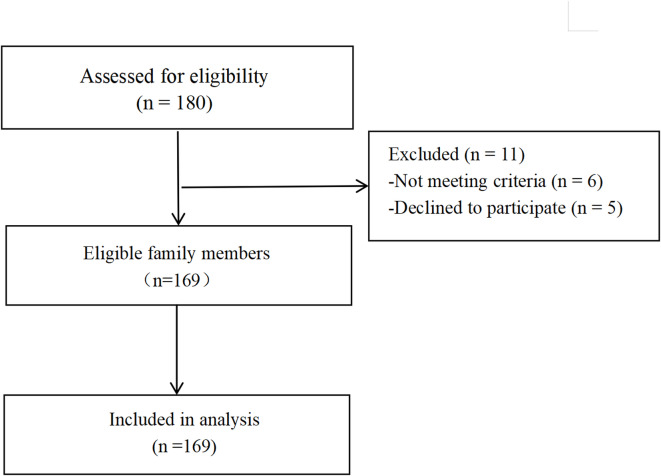
The initiation of extracorporeal membrane oxygenation (ECMO) therapy for critically ill patients often requires complex and high-stakes decision-making by family members, who are frequently unprepared for such situations. This study aimed to determine the prevalence of decisional conflict among Chinese family caregivers prior to ECMO initiation and to examine associated biopsychosocial factors. A convenience sample of 169 family members of patients for whom ECMO initiation was deemed necessary by the treating team was recruited from a tertiary hospital in Jiangxi Province, China. Data were collected using validated instruments, including the Decisional Conflict Scale, Decision Preparedness Scale, Decision Fatigue Scale, Social Support Scale, and Wake Forest Physician Trust Scale. Univariate and multivariate logistic regression analyses were used to identify factors associated with decisional conflict. Decisional conflict was reported by 63.3% of participants. In univariate analyses, conflict was associated with family income, understanding of the patient’s condition and ECMO, decision fatigue, decision preparedness, physician trust, and social support (all P < 0.05). In multivariate analyses, higher decision fatigue was associated with greater decisional conflict (OR = 1.44, 95% CI 1.00–2.06). Lower understanding of ECMO (OR = 0.18, 95% CI 0.06–0.58), lower physician trust scores (indicating higher trust; OR = 3.15, 95% CI 1.51–6.57), and lower social support (OR = 0.443, 95% CI 0.280–0.70) were significantly associated with increased decisional conflict. A substantial proportion of Chinese family caregivers of ECMO patients experience decisional conflict prior to treatment initiation. Clinical practice must uphold the ethical obligation of providing complete and comprehensible information to patients or surrogates. Beyond this baseline, structured communication strategies (e.g., family meetings, standardized ECMO information sheets) and decision-support tools may help families understand patients’ presumed wishes and reduce decisional conflict under time-pressured ICU conditions. Where feasible, interventions to alleviate decision fatigue, strengthen physician–family trust, and reinforce available social support resources may further support surrogate decision-making. Clinical trial number Not applicable.
Overview
CoChat Summary
TL;DR
In a cross-sectional study of 169 Chinese family caregivers before ECMO initiation, 63.3% reported decisional conflict. Higher decision fatigue, lower ECMO knowledge, lower physician trust, and lower social support were associated with greater decisional conflict in multivariate analysis.
Key findings
- Decisional conflict was reported by 63.3% of participants; mean Decisional Conflict Scale score was 29.63 ± 6.73.
- In multivariate analysis, higher decision fatigue was associated with greater decisional conflict (OR = 1.44, 95% CI 1.00–2.06), while higher decision preparedness was associated with lower conflict (OR = 0.85, 95% CI 0.72–0.99).
- Lower ECMO knowledge (OR = 0.18, 95% CI 0.06–0.58 in the abstract; results/Table 3 report 95% CI 0.06–0.51), lower physician trust (OR = 3.15, 95% CI 1.51–6.57), and lower social support (OR = 0.44, 95% CI 0.28–0.70) were significantly associated with increased decisional conflict.
- Univariate analyses also found significant associations with monthly household income, ECMO knowledge, decision fatigue, decision preparedness, physician trust, and social support (all P < 0.05).
Methods
- Cross-sectional convenience sample of 169 family members of patients for whom ECMO initiation was deemed necessary by treating physicians, recruited from a tertiary hospital in Jiangxi Province, China, between January 2024 and April 2025.
- Data collected using validated Chinese versions of the Decisional Conflict Scale, Decision Preparedness Scale, Decision Fatigue Scale, Perceived Social Support Scale, and Wake Forest Physician Trust Scale, plus a self-designed demographic/clinical questionnaire.
- Univariate analyses used Mann-Whitney U tests, independent samples t-tests, and Pearson’s chi-square tests; variables significant at P < 0.05 were entered into binary logistic regression.
Limitations
- Stated: single tertiary hospital and convenience sampling limit generalizability; mixed VV and VA ECMO populations represent clinically distinct groups; collective Chinese surrogate decision-making was captured through a primary family respondent, risking respondent bias; cross-sectional design precludes causal inference.
- Evident: all key measures were self-reported, and missing values were handled by listwise deletion, which may affect estimates.
Model-written summary. Check it against the paper before relying on it.
Integrity signals
Registry
Cites
Statistics
Figures
Verification
Claims the paper makes
9 Valid · 1 Not valid · 14 Not checked · 42 Own results and interpretations
The cited sources support only part of this claim — read each source’s verdict below.
In the paper
“Insufficient comprehension of ECMO’s potential benefits, risks, complications, and prognosis can heighten uncertainty and anxiety34.”
§ Decisional conflict among Chinese family caregivers prior to ECMO initiation: a cross-sectional study > Discussion
What the sources say
- Partly supportedcites [34] Sun, W. N., Hsu, H. T., Ko, N. Y. & Huang, Y. T. Decision-making processes in surrogates of cancer patients in a Taiwan intensive care unit. Int. J. Environ. Res. Public. Health. 17 (12), 4443. 10.3390/ijerph17124443 (2020). 32575778 PMC7345805 sourceExperimental — accuracy not yet measured
The Results (§§3.3–3.4; page not provided) describe limited medical understanding, uncertainty about treatment outcomes, and surrogates’ distress and fear. The paper does not address ECMO or link comprehension of its specific benefits, risks, complications, and prognosis to heightened uncertainty and anxiety. (LLM, conf=0.84)
plainstates a possible cause- Asserted: passes — The authors put it forward as true.
- Checkable: passes — It can be checked against evidence.
- Load-bearing: passes — The paper’s conclusions depend on it.
- Based: passes — The paper gives a reason why it holds.
- Partly supported
The cited sources support only part of this claim — read each source’s verdict below.
In the paper
“Qualitative studies reveal that families often experience information overload, emotional distress, and value conflicts when confronted with ECMO decisions12, conditions that may exacerbate decisional conflict, delay initiation, or complicate clinician–family communication13.”
§ Decisional conflict among Chinese family caregivers prior to ECMO initiation: a cross-sectional study > Background
What the sources say
- Supportedcites [12] Yang, X. et al. Tough choices: the experience of family members of critically ill patients participating in ECMO treatment decision-making: a descriptive qualitative study. BMC Med. Inf. Decis. Mak. 25 (1), 65. 10.1186/s12911-025-02876-1 (2025). PMC11806576 39920721 source
The Discussion (page not provided) describes ECMO decisions as a high-information-load context and reports significant psychological pressure among family decision-makers. The Results (Theme 1, page not provided) document nervousness and conflicts between hopes of saving the patient and concerns about cost, likely outcomes, and suffering. (LLM, conf=0.89)
- Could not verifycites [13] Childress, A. M. COUNTERPOINT: is it ethically justifiable to withdraw extracorporeal membrane oxygenation against the wishes of a patient with Decision-Making capacity when cure is not possible? No. Chest 166 (6), 1283–1285. 10.1016/j.chest.2024.07.174 (2024). 39663031 sourceExperimental — accuracy not yet measured
Our copy of the Childress COUNTERPOINT (CHEST 2024) is a normative ethics argument, not a report of empirical work: the Abstract, 'Precedent of Prior Agreement,' 'Avoiding Cruelty in Medicine,' 'Practical Implications of Continuing ECMO Support,' and Conclusion sections argue about futility, quality of life, nonmaleficence and informed consent when a capacitated patient objects to ECMO withdrawal. Searches for 'qualitative studies', 'information overload', 'value conflicts', and families' distress in ECMO decision-making returned no passage reporting such findings; the nearest text is the author's own claim that withdrawing ECMO would cause 'psychological harm to both the patient and the family' (Avoiding Cruelty in Medicine) and that CLINICIANS may experience moral distress (Practical Implications of Continuing ECMO Support, p. n/a) — neither is a qualitative-study result about families. Nothing in our copy contradicts the claim either, so the attribution cannot be checked against this source. (LLM, conf=0.72)
plain- Asserted: passes — The authors put it forward as true.
- Checkable: passes — It can be checked against evidence.
- Load-bearing: passes — The paper’s conclusions depend on it.
- Based: passes — The paper gives a reason why it holds.
- Supported
Every source the paper cites for this claim was checked and supports it.
In the paper
“Higher social support was associated with lower decisional conflict, in line with Lee et al.37.”
- Also stated in: § Univariate analysis · plain
“| Social support | − 0.814 | 0.233 | 12.171 | 0.000 | 0.443 | 0.280 | 0.70 |”
§ Decisional conflict among Chinese family caregivers prior to ECMO initiation: a cross-sectional study > Discussion
What the sources say
- Supportedcites Lee et al.37 Lee, J., Jung, D. & Choi, M. Relationship of social support and decisional conflict to advance directives attitude in Korean older adults: a community-based cross-sectional study. Jpn. J. Nurs. Sci. 13 (1), 29–37. 10.1111/jjns.12086 (2016). 26018984 source
The paper’s ‘Relationship between the main variables’ section reports that social support was significantly negatively related to decisional conflict (P < 0.001). Table 3 reports the correlation as −0.250. The citing sentence attributes the direction of the association to Lee et al., not the OR and confidence interval in the supplied quote. (LLM, conf=0.94)
plainstates an association- Asserted: passes — The authors put it forward as true.
- Checkable: passes — It can be checked against evidence.
- Load-bearing: passes — The paper’s conclusions depend on it.
- Based: passes — The paper gives a reason why it holds.
- Also stated in: § Univariate analysis · plain
The cited sources that could be checked couldn’t confirm or dispute this claim.
In the paper
“Lower preparedness for decision-making was also associated with higher decisional conflict, consistent with prior ICU studies28.”
- Also stated in: § Univariate analysis · plain
“| Decision readiness | − 0.168 | 0.081 | 4.245 | 0.039 | 0.846 | 0.721 | 0.992 |”
§ Decisional conflict among Chinese family caregivers prior to ECMO initiation: a cross-sectional study > Discussion
What the sources say
- Could not verifycites [28] Hall, A. et al. Measuring patients’ trust in their primary care providers. Med. Care Res. Rev. 59 (3), 293–318. 10.1177/1077558702059003004 (2002). 12205830 sourceExperimental — accuracy not yet measured
Our copy of Hall et al. (2002) is entirely a scale-development and validation paper on the 10-item Wake Forest physician-trust scale (Factor Structure and Item Selection; Validation; Discussion, Tables 1–6), with samples of 959 national and regional HMO respondents. No passage addresses preparedness for decision-making, decisional conflict, ICU patients, or odds-ratio estimates; searches on 'decisional conflict preparedness for decision making' and 'odds ratio logistic regression association confidence interval' returned only trust-scale psychometrics and correlation/t-test validations (Statistical Methods; Validation). The cited association therefore cannot be checked against this source. (LLM, conf=0.78)
plainstates an association- Asserted: passes — The authors put it forward as true.
- Checkable: passes — It can be checked against evidence.
- Load-bearing: passes — The paper’s conclusions depend on it.
- Based: passes — The paper gives a reason why it holds.
- Also stated in: § Univariate analysis · plain
A result the paper reports from its own data — it cites no other source for it, so there is none to check. The quote shows it is in the paper.
In the paper
“Lower physician trust (note: higher WFPTS scores indicate lower trust) was associated with greater conflict (OR = 3.15, 95% CI 1.51–6.57).”
§ Decisional conflict among Chinese family caregivers prior to ECMO initiation: a cross-sectional study > Results > Univariate analysis
plainstates an association- Asserted: passes — The authors put it forward as true.
- Checkable: passes — It can be checked against evidence.
- Load-bearing: passes — The paper’s conclusions depend on it.
- Based: passes — The paper gives a reason why it holds.
27 more claims
Create a free account to see all 66 claims and to verify the 2 references still open.
- It may state two separate claims as one. 29
- Probably not a substantial claim. 17
Self-check
Percentages, sums and reported differences re-computed from the paper’s own numbers.
Each contradiction between two passages listed here was confirmed by an independent check.
Rated major: it would touch a result — a value a result rests on, reported and recomputed p-values on opposite sides of the significance level, two passages that conflict with no sign which is right, or a cited work retracted before this paper was published.
In the paper
§ Decisional conflict among Chinese family caregivers prior to ECMO initiation: a cross-sectional study > Methods > Measurements
“Higher scores indicate greater trust.”
§ Decisional conflict among Chinese family caregivers prior to ECMO initiation: a cross-sectional study > Methods > Measurements
“higher scores indicate lower trust.”
Rated major: it would touch a result — a value a result rests on, reported and recomputed p-values on opposite sides of the significance level, two passages that conflict with no sign which is right, or a cited work retracted before this paper was published.
In the paper
§ Decisional conflict among Chinese family caregivers prior to ECMO initiation: a cross-sectional study > Abstract
“Lower physician trust scores (indicating higher trust; OR = 3.15, 95% CI 1.51–6.57), and lower social support (OR = 0.443, 95% CI 0.280–0.70) were significantly associated with increased decisional conflict.”
§ Decisional conflict among Chinese family caregivers prior to ECMO initiation: a cross-sectional study > Results > Univariate analysis
“Lower physician trust (note: higher WFPTS scores indicate lower trust) was associated with greater conflict (OR = 3.15, 95% CI 1.51–6.57).”
Citations
Cites
The Multidimensional Scale of Perceived Social Support
Zimet, G. D., Dahlem, N. W., Zimet, S. G., & Farley, G. K. (1988) · Journal of Personality Assessment · doi:10.1207/s15327752jpa5201_2 · Cited by 13,339 · cited 1×
“Perceived social support was assessed with the 12-item PSSS developed by Zimet et al. 26 and translated and validated by Jiang Qianjin et al. 27 .”
A simulation study of the number of events per variable in logistic regression analysis
Peduzzi, P., Concato, J., Kemper, E., Holford, T. R., & Feinstein, A. R. (1996) · Journal of Clinical Epidemiology · doi:10.1016/s0895-4356(96)00236-3 · Cited by 9,655 · cited 1×
“It recommends that at least 10 outcome events be included for each predictor variable to ensure model stability and reduce the risk of overfitting 19 .”
Validation of a Decisional Conflict Scale
O'Connor, A. M. (1995) · Medical Decision Making · doi:10.1177/0272989x9501500105 · Cited by 2,452 · cited 2×
“Preparedness for decision-making was assessed with the 10-item DPS, originally developed by O’Connor and revised by Bennett 24 .”
A three-talk model for shared decision making: multistage consultation process
Elwyn, G., Durand, M. A., Song, J., Aarts, J., Barr, P. J., Berger, Z., Cochran, N., Frosch, D., Galasiński, D., Gulbrandsen, P., et al. (2017) · BMJ · doi:10.1136/bmj.j4891 · Cited by 1,018 · cited 1×
“Ethical issues, such as informed consent, resource allocation, and continuation or withdrawal of support, further complicate the process 14,15 .”
Extracorporeal Membrane Oxygenation for ARDS in Adults
Brodie, D., & Bacchetta, M. (2011) · New England Journal of Medicine · doi:10.1056/nejmct1103720 · Cited by 836
Measuring Patients’ Trust in their Primary Care Providers
Hall, M. A., Zheng, B., Dugan, E., Camacho, F., Kidd, K. E., Mishra, A., & Balkrishnan, R. (2002) · Medical Care Research and Review · doi:10.1177/1077558702059003004 · Cited by 661 · cited 2×
“Trust in physicians was measured using the WFPTS developed by Hall et al. 28 and validated in Chinese by Dong Enhong et al. 29 .”
A randomized trial of a family-support intervention in intensive care units
White, D. B., Angus, D. C., Shields, A.-M., Buddadhumaruk, P., Pidro, C., Paner, C., Chaitin, E., Chang, C.-C. H., Pike, F., Weissfeld, L., et al. (2018) · New England Journal of Medicine · doi:10.1056/nejmoa1802637 · Cited by 524
Position paper for the organization of ECMO programs for cardiac failure in adults
Abrams, D., Garan, A. R., Abdelbary, A., Bacchetta, M., Bartlett, R. H., Beck, J., Belohlavek, J., Chen, Y.-S., Fan, E., Ferguson, N. D., et al. (2018) · Intensive Care Medicine · doi:10.1007/s00134-018-5064-5 · Cited by 316 · cited 1×
“Despite their central role, few studies have examined decisional conflict among family members during ECMO initiation, particularly in non-Western contexts where cultural norms and family dynamics strongly shape decision-making 17,18 .”
Validation of a Preparation for Decision Making scale
Bennett, C., Graham, I. D., Kristjansson, E., Kearing, S. A., Clay, K. F., & O’Connor, A. M. (2010) · Patient Education and Counseling · doi:10.1016/j.pec.2009.05.012 · Cited by 305 · cited 1×
“Preparedness for decision-making was assessed with the 10-item DPS, originally developed by O’Connor and revised by Bennett 24 .”
The decisional conflict scale: further validation in two samples of Dutch oncology patients
Koedoot, N., Molenaar, S., Oosterveld, P., Bakker, P. J. M., de Graeff, A., Nooy, M. A., Varekamp, I., & de Haes, J. C. J. M. (2001) · Patient Education and Counseling · doi:10.1016/s0738-3991(01)00120-3 · Cited by 168
Research works printed but not linked: 11
- Janis, I. L. & Mann, L. Decision making: a psychological analysis of conflict, choice, and commitment. Science 197 (4308), 1355–1356 (1977).17747001
- Li, Y. Construction and application research of treatment decision aid program for early primary liver cancer patients [dissertation]. (Second Military Medical University, Shanghai, 2017).
- Pan, G. C. & Li, M. Chinese translation of the decision fatigue scale and evaluation of its reliability and validity in ICU patients’ family members. Nurs. J. 27 (12), 38–41 (2020).
- Wan, J. L. et al. Reliability and validity of the Chinese version of the decision preparedness scale in visually impaired patients. China Med. Her. 17 (9), 49–52 (2020).
- Wang, X. D., Wang, X. L. & Ma, H. Mental Health Assessment Scale Manual (Chinese Mental Health Journal, 1999).
- Dong, E. H. & Bao, Y. Reliability and validity of the Chinese revised version of the wake forest physician trust scale. Chin. Ment. Health J. 26 (3), 171–175 (2012).
- Qiao, X. T. et al. Status and influencing factors of decisional conflict among ICU patients’ family members. Chin. J. Emerg. Crit. Care Nurs. 5 (8), 677–683 (2024).
- Jia, X. L. et al. Analysis of decisional conflict among ICU patient proxy decision makers. J. Nurs. 39 (22), 92–97 (2024).
- Yang, X. Y. et al. A qualitative study on family members’ experiences of ECMO decision-making. Chin. J. Emerg. Crit. Care Nurs. 5 (12), 1068–1073 (2024).
- Gao, Y. J. et al. Shared decision-making communication: research progress. Chin. Nurs. Manag. 21 (1), 156–160 (2021).
- Zheng, H. Y. et al. Theoretical models related to shared decision-making among medical staff, nurses, and patients: research progress. Chin. Nurs. Manag. 18 (11), 1575–1580 (2018).
Cited by
Jiang, Y., Ma, L., Qiao, P. E. N. G., Wang, C., Wang, X., & Zhao, J. (2026) · Intensive and Critical Care Nursing · doi:10.1016/j.iccn.2026.104576 · Cited by 1
Metadata
- Authors
- Xiao, S., Liu, H., Tang, L., Xiong, Q., Jiang, R., & Hong, D.
- Affiliations
- First Affiliated Hospital of Nanchang University (CN)
- Corresponding author
- Liu, Hongsuo
- Jiang, Rong
- Venue
- Scientific Reports
- Published
- 2025-12-11
- Volume
- 16
- Issue
- 1
- Pages
- 44-44
- ISSN
- 2045-2322 (ISSN-L)
- PMC
- PMC12765869
- OpenAlex
- W4417239198
- Cited by
- 1
- References
- 24
- Citations by year
- 2026: 1
- FWCI
- 0.90
- Type
- journal article
- Language
- en
- Open access
- gold
- doi.org
- Licence
- cc-by-nc-nd
- creativecommons.org/licenses/by-nc-nd/4.0 (tdm)
- creativecommons.org/licenses/by-nc-nd/4.0 (vor, 23 d)
- Locations
- Scientific Reports (publishedVersion, cc-by-nc-nd)
- Research Square (acceptedVersion, cc-by)
- PubMed (publishedVersion)
- PubMed Central (publishedVersion, cc-by-nc-nd)
- DOAJ (DOAJ: Directory of Open Access Journals) (submittedVersion, cc-by-sa)
- Funders
- Nanchang University
- Topics
- Health Sciences › Medicine › Public Health, Environmental and Occupational Health › Palliative Care and End-of-Life Issues
- Health Sciences › Medicine › Critical Care and Intensive Care Medicine › Family and Patient Care in Intensive Care Units
- Health Sciences › Medicine › Pediatrics, Perinatology and Child Health › Ethics and Legal Issues in Pediatric Healthcare
- Keywords
- decisional conflict, extracorporeal membrane oxygenation, family caregivers, surrogate decision-making, decision fatigue, trust in physicians, social support, critically ill patients, Chinese family
- MeSH terms
- East Asian People, Adult, China, Conflict, Psychological, Cross-Sectional Studies, Decision Making, Family, Female, Humans, Male, Middle Aged, Extracorporeal Membrane Oxygenation, Caregivers
About these checks
Registry, retraction, Cites and statistics results are computed, not judged, with one exception: a printed reference that no index lists is read once by a model before it counts as a citation error. Claims are extracted by a model and kept only when their quote appears verbatim in the text; each cited source is then checked, with a model’s help, for whether it says what the claim relies on. Those verdicts can be wrong — read the claim’s quote and the cited source before relying on one.
The claim verdicts this report counts are experimental: their accuracy is not yet measured.
A language model drew the claims from the paper on 2026-10-10, under version 3 of the claim definition (model deepseek-v4.1-flash, prompt extract-v3).
A second model labelled each claim on 2026-10-10 (model jev-1.13-20260917, definition revision gold-guideline-v0.2).
Cited sources are checked with a language model’s help (gpt-6-sol and qwen3.8-omni-flash).
Statistics and arithmetic are recomputed, not judged.
Confidence bands are shown only for fields calibrated on our annotated test set. None is calibrated yet, so no band is shown.
What counts as a claim ›How we measure confidence ›How we check this ›
Are you an author, or do you see a problem with this page? Request a review
Data sources
Bibliographic data: Semantic Scholar, OpenAlex, Crossref.
Contains information from the Semantic Scholar Academic Graph Datasets, made available under the ODC Attribution License (ODC-BY 1.0).
Semantic Scholar’s data is described in: Kinney, R., et al. (2023). The Semantic Scholar Open Data Platform. arXiv:2301.10140.
