

Comprehensive pan-cancer genomic landscape of KRAS altered cancers and real-world outcomes in solid tumors
Open accessThe DOI matches its Crossref record; 51 of the 51 references it cites were found in a registry or an index.
Abstract
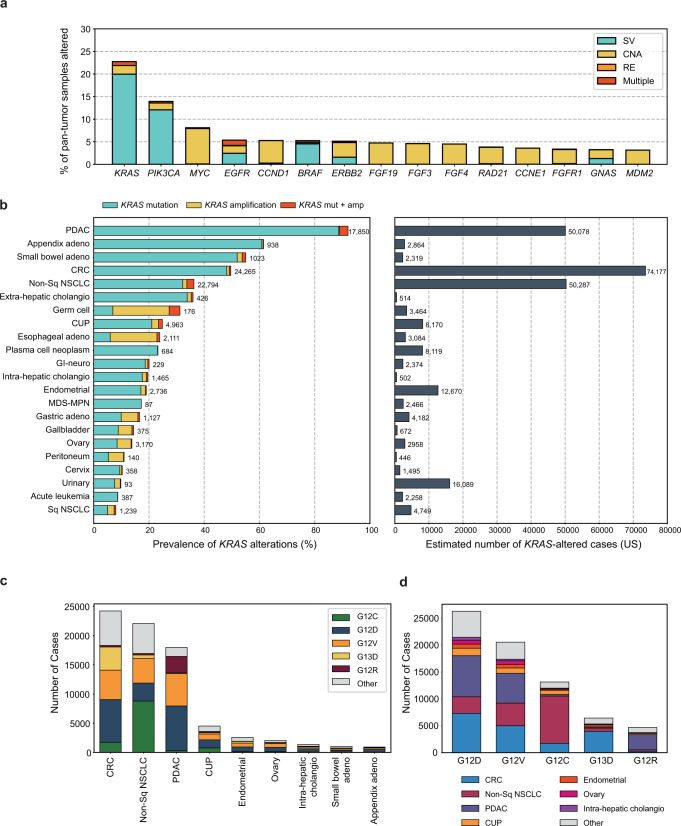
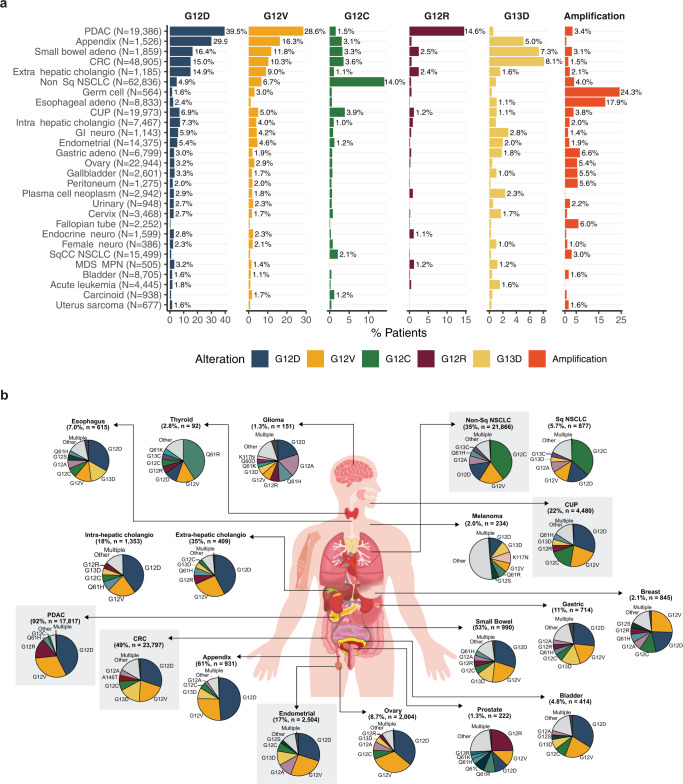
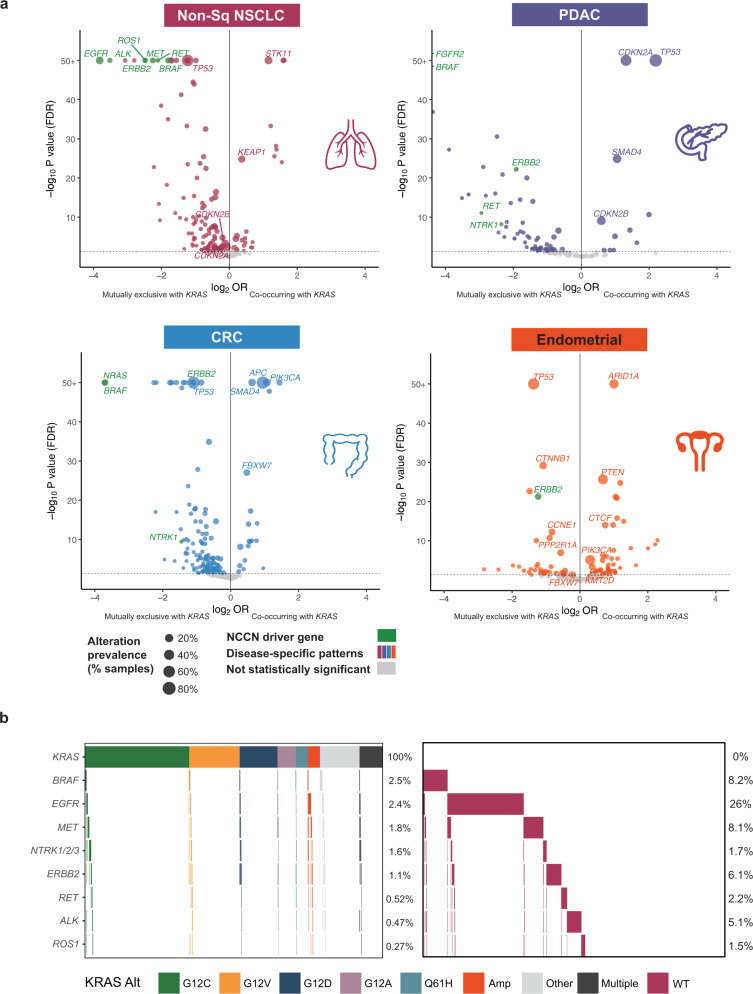
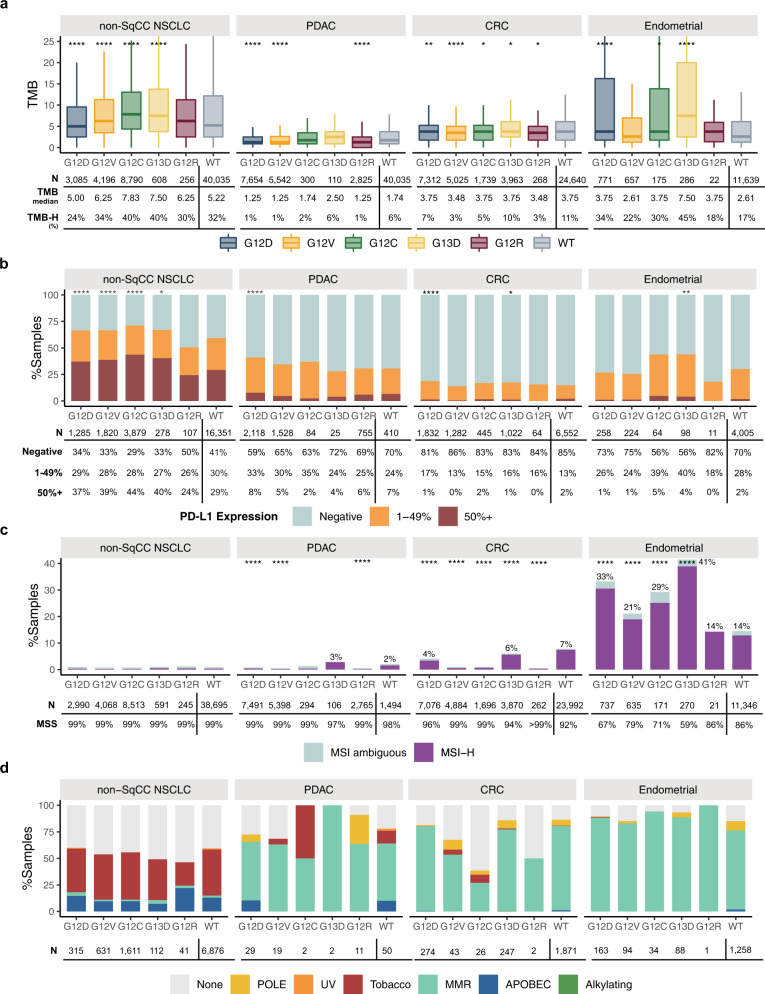
Recent clinical development of KRAS inhibitors has heightened interest in the genomic landscape of KRAS -altered cancers. We performed a pan-cancer analysis of KRAS -altered samples from 426,706 adult patients with solid or hematologic malignancies using comprehensive genomic profiling; additional analyses included 62,369 liquid biopsy and 7241 pediatric samples. 23% of adult pan-cancer samples had KRAS alterations; 88% were mutations, most commonly G12D/G12V/G12C/G13D/G12R , and prevalence was similar in liquid biopsies. Co-alteration landscapes were largely similar across KRAS mutations but distinct from KRAS wild-type, though differences were observed in some tumor types for tumor mutational burden, PD-L1 expression, microsatellite instability, and other mutational signatures. Prognosis of KRAS- mutant versus other genomic cohorts of lung, pancreatic, and colorectal cancer were assessed using a real-world clinicogenomic database. As specific KRAS inhibitors and combination therapeutic strategies are being developed, genomic profiling to understand co-alterations and other biomarkers that may modulate response to targeted or immunotherapies will be imperative.
Overview
The claims and statistics of this paper haven’t been checked yet.
Free: it reads the open-access text and checks the first 5 claims that cite a source we can check. Create a free account to check every claim.
Integrity signals
Registry
Cites
Statistics
Figures
Verification
Claims the paper makes
The claims and statistics of this paper haven’t been checked yet.
Free: it reads the open-access text and checks the first 5 claims that cite a source we can check. Create a free account to check every claim.
Claims other papers make about this one
Each is checked against this paper’s own text: does it say what the citing paper says it does?
The source backs part of the claim, not all of it — or backs it for a different population, condition or comparison.
In the citing paper
“KRAS is the most frequently mutated oncogene, accounting for approximately 85% of all RAS mutations in 20–25% of all cancers [8–10].”
From Differential Response and Resistance to KRAS-Targeted Therapy (2025) · cites this paper as [10]
Experimental — accuracy not yet measuredThe source backs part of the claim, not all of it — or backs it for a different population, condition or comparison.
In the citing paper
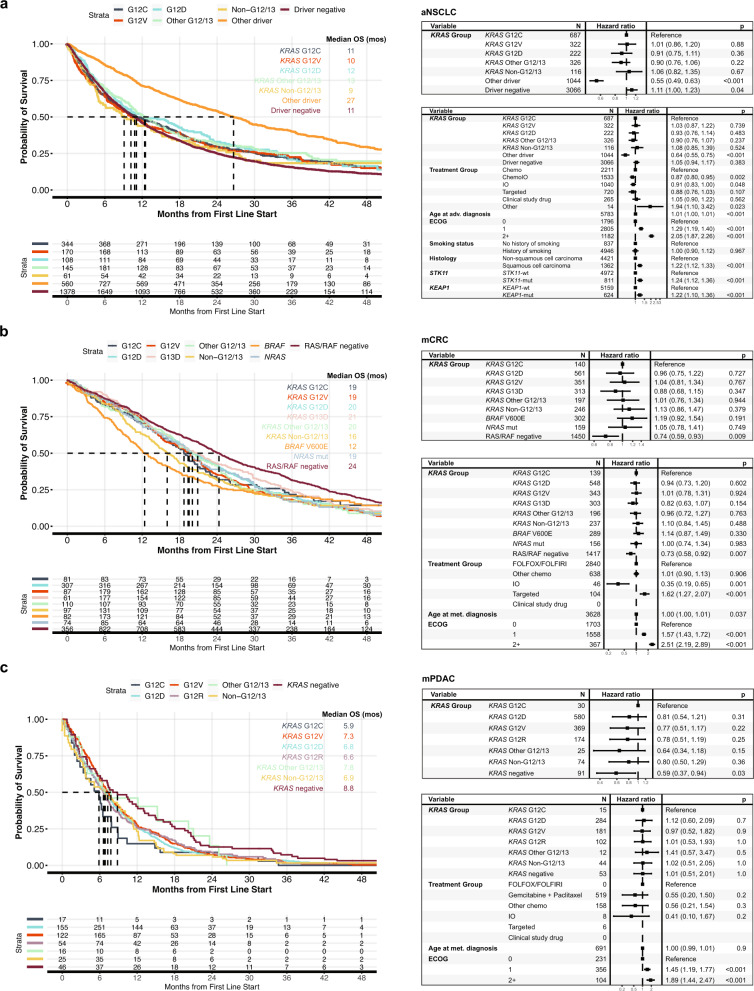
“Another study comparing KRASG12C (n = 30) and other KRAS mutations reported longer median OS (starting from the first line therapy, p = 0.03) for KRAS wildtype tumors (n = 91) in patients with metastatic PDAC, which was consistent with our findings of better survival in KRAS wildtype patients12”
From Impact of KRAS mutations and co-mutations on clinical outcomes in pancreatic ductal adenocarcinoma (2024) · cites this paper as [12]
Experimental — accuracy not yet measuredThe source backs part of the claim, not all of it — or backs it for a different population, condition or comparison.
In the citing paper
“Unlike NSCLC, genetic alterations in the PI3K/AKT pathway, especially mutation of PIK3CA and PTEN, are prevalent in CRC and frequently co-occur with KRAS mutations [10, 112].”
From Differential Response and Resistance to KRAS-Targeted Therapy (2025) · cites this paper as [10]
Experimental — accuracy not yet measuredThe cited source says what the claim attributes to it.
In the citing paper
“KRAS G12D mutations occur in nearly 40% of PDAC (25)”
From Mechanisms of Resistance to Oncogenic KRAS Inhibition in Pancreatic Cancer (2024) · cites this paper as [25]
The cited source says what the claim attributes to it.
In the citing paper
“KRASG12R was more common in PDAC (~15%) than in other cancer types12.”
From Impact of KRAS mutations and co-mutations on clinical outcomes in pancreatic ductal adenocarcinoma (2024) · cites this paper as [12]
8 more claims about this paper
Create a free account to see every claim other papers make about this one.
Self-check
Percentages, sums and reported differences re-computed from the paper’s own numbers.
The self-check needs the paper’s full text.
Citations
Cites
A global reference for human genetic variation
The 1000 Genomes Project Consortium, authors, C., Auton, A., Abecasis, G. R., Steering committee, Altshuler, D. M., Durbin, R. M., Abecasis, G. R., Bentley, D. R., Chakravarti, A., et al. (2015) · Nature · doi:10.1038/nature15393 · Cited by 18,247
Analysis of protein-coding genetic variation in 60,706 humans
Exome Aggregation Consortium, Lek, M., Karczewski, K. J., Minikel, E. V., Samocha, K. E., Banks, E., Fennell, T., O’Donnell-Luria, A. H., Ware, J. S., Hill, A. J., et al. (2016) · Nature · doi:10.1038/nature19057 · Cited by 9,587
Analysis of 100,000 human cancer genomes reveals the landscape of tumor mutational burden
Chalmers, Z. R., Connelly, C. F., Fabrizio, D., Gay, L., Ali, S. M., Ennis, R., Schrock, A., Campbell, B., Shlien, A., Chmielecki, J., et al. (2017) · Genome Medicine · doi:10.1186/s13073-017-0424-2 · Cited by 3,519
Self-citationZehir, A., Benayed, R., Shah, R. H., Syed, A., Middha, S., Kim, H. R., Srinivasan, P., Gao, J., Chakravarty, D., Devlin, S. M., et al. (2017) · Nature Medicine · doi:10.1038/nm.4333 · Cited by 3,380
K-Ras(G12C) inhibitors allosterically control GTP affinity and effector interactions
Ostrem, J. M., Peters, U., Sos, M. L., Wells, J. A., & Shokat, K. M. (2013) · Nature · doi:10.1038/nature12796 · Cited by 2,557
Frampton, G. M., Fichtenholtz, A., Otto, G. A., Wang, K., Downing, S. R., He, J., Schnall-Levin, M., White, J., Sanford, E. M., An, P., et al. (2013) · Nature Biotechnology · doi:10.1038/nbt.2696 · Cited by 2,157
Self-citationSotorasib for Lung Cancers with KRAS p.G12C Mutation
Skoulidis, F., Li, B. T., Dy, G. K., Price, T. J., Falchook, G. S., Wolf, J., Italiano, A., Schuler, M., Borghaei, H., Barlesi, F., et al. (2021) · New England Journal of Medicine · doi:10.1056/nejmoa2103695 · Cited by 1,849
KRAS G12C Inhibition with Sotorasib in Advanced Solid Tumors
Hong, D. S., Fakih, M. G., Strickler, J. H., Desai, J., Durm, G. A., Shapiro, G. I., Falchook, G. S., Price, T. J., Sacher, A., Denlinger, C. S., et al. (2020) · New England Journal of Medicine · doi:10.1056/nejmoa1917239 · Cited by 1,733
STK11/LKB1 Mutations and PD-1 Inhibitor Resistance in KRAS -Mutant Lung Adenocarcinoma
Skoulidis, F., Goldberg, M. E., Greenawalt, D. M., Hellmann, M. D., Awad, M. M., Gainor, J. F., Schrock, A. B., Hartmaier, R. J., Trabucco, S. E., Gay, L., et al. (2018) · Cancer Discovery · doi:10.1158/2159-8290.cd-18-0099 · Cited by 1,641
Self-citationT-Cell Transfer Therapy Targeting Mutant KRAS in Cancer
Tran, E., Robbins, P. F., Lu, Y.-C., Prickett, T. D., Gartner, J. J., Jia, L., Pasetto, A., Zheng, Z., Ray, S., Groh, E. M., et al. (2016) · New England Journal of Medicine · doi:10.1056/nejmoa1609279 · Cited by 1,368
Cited by
Sotorasib plus Panitumumab in Refractory Colorectal Cancer with Mutated KRAS G12C
Fakih, M. G., Salvatore, L., Esaki, T., Modest, D. P., Lopez-Bravo, D. P., Taieb, J., Karamouzis, M. V., Ruiz-Garcia, E., Kim, T.-W., Kuboki, Y., et al. (2023) · New England Journal of Medicine · doi:10.1056/nejmoa2308795 · Cited by 398
Concurrent inhibition of oncogenic and wild-type RAS-GTP for cancer therapy
Holderfield, M., Lee, B. J., Jiang, J., Tomlinson, A., Seamon, K. J., Mira, A., Patrucco, E., Goodhart, G., Dilly, J., Gindin, Y., et al. (2024) · Nature · doi:10.1038/s41586-024-07205-6 · Cited by 369
Single-Agent Divarasib (GDC-6036) in Solid Tumors with a KRAS G12C Mutation
Sacher, A., LoRusso, P., Patel, M. R., Miller, W. H., Garralda, E., Forster, M. D., Santoro, A., Falcon, A., Kim, T. W., Paz-Ares, L., et al. (2023) · New England Journal of Medicine · doi:10.1056/nejmoa2303810 · Cited by 328
Self-citationMechanisms of Resistance to Oncogenic KRAS Inhibition in Pancreatic Cancer
Dilly, J., Hoffman, M. T., Abbassi, L., Li, Z., Paradiso, F., Parent, B. D., Hennessey, C. J., Jordan, A. C., Morgado, M., Dasgupta, S., et al. (2024) · Cancer Discovery · doi:10.1158/2159-8290.cd-24-0177 · Cited by 308
“KRAS G12D mutations occur in nearly 40% of PDAC (25) and the recent development of selective inhibitors of the KRAS G12D mutant protein may have substantial clinical impact on the treatment of patients with PDAC (30, 31).”
BackgroundKRAS inhibitors: resistance drivers and combinatorial strategies
Isermann, T., Sers, C., Der, C. J., & Papke, B. (2025) · Trends in Cancer · doi:10.1016/j.trecan.2024.11.009 · Cited by 196
Divarasib plus cetuximab in KRAS G12C-positive colorectal cancer: a phase 1b trial
Desai, J., Alonso, G., Kim, S. H., Cervantes, A., Karasic, T., Medina, L., Shacham-Shmueli, E., Cosman, R., Falcon, A., Gort, E., et al. (2024) · Nature Medicine · doi:10.1038/s41591-023-02696-8 · Cited by 144
Self-citationKuboki, Y., Fakih, M., Strickler, J., Yaeger, R., Masuishi, T., Kim, E. J., Bestvina, C. M., Kopetz, S., Falchook, G. S., Langer, C., et al. (2024) · Nature Medicine · doi:10.1038/s41591-023-02717-6 · Cited by 103
Impact of KRAS mutations and co-mutations on clinical outcomes in pancreatic ductal adenocarcinoma
Yousef, A., Yousef, M., Chowdhury, S., Abdilleh, K., Knafl, M., Edelkamp, P., Alfaro-Munoz, K., Chacko, R., Peterson, J., Smaglo, B. G., et al. (2024) · npj Precision Oncology · doi:10.1038/s41698-024-00505-0 · Cited by 93
“4b) 12 .”
BackgroundResultInfluentialDaraxonrasib in Previously Treated Advanced RAS -Mutated Pancreatic Cancer
Wolpin, B. M., Park, W., Garrido-Laguna, I., Spira, A., Starodub, A., Sommerhalder, D., Punekar, S. R., Barve, M., Pelster, M., Herzberg, B., et al. (2026) · New England Journal of Medicine · doi:10.1056/nejmoa2505783 · Cited by 90
Self-citationDigestive cancers: mechanisms, therapeutics and management
Zhan, T., Betge, J., Schulte, N., Dreikhausen, L., Hirth, M., Li, M., Weidner, P., Leipertz, A., Teufel, A., & Ebert, M. P. A. (2025) · Signal Transduction and Targeted Therapy · doi:10.1038/s41392-024-02097-4 · Cited by 100
Discovery of KRAS(G12D) selective degrader ASP3082
Yoshinari, T., Nagashima, T., Ishioka, H., Inamura, K., Nishizono, Y., Tasaki, M., Iguchi, K., Suzuki, A., Sato, C., Nakayama, A., et al. (2025) · Communications Chemistry · doi:10.1038/s42004-025-01662-4 · Cited by 89
“%) in KRAS-mutated cancer and is found in 4.9% of lung adenocarcinoma, 15.0% of colorectal cancer, 39.5% of pancreatic cancer, and in other solidtumors 6 .”
InfluentialA neomorphic protein interface catalyzes covalent inhibition of RAS G12D aspartic acid in tumors
Weller, C. E., Burnett, G. L., Jiang, L., Chakraborty, S., Zhang, D., Vita, N. A., Dilly, J., Kim, E., Maldonato, B. J., Seamon, K. J., et al. (2025) · Science · doi:10.1126/science.ads0239 · Cited by 78
Targeting KRAS mutations: orchestrating cancer evolution and therapeutic challenges
Choucair, K., Imtiaz, H., Uddin, M. H., Nagasaka, M., Al-Hallak, M. N., Philip, P. A., El-Rayes, B., Pasche, B., & Azmi, A. S. (2025) · Signal Transduction and Targeted Therapy · doi:10.1038/s41392-025-02473-8 · Cited by 83
“181 Another challenge is poor blood-brain barrier (BBB) penetration.”
Self-citationPredictive Biomarkers and Resistance Mechanisms of Checkpoint Inhibitors in Malignant Solid Tumors
Pavelescu, L. A., Enache, R. M., Roşu, O. A., Profir, M., Creţoiu, S. M., & Gașpar, B. S. (2024) · International Journal of Molecular Sciences · doi:10.3390/ijms25179659 · Cited by 66
“This goal was achieved by the creation of new methods for re-creating lipid bilayer systems in vitro and by conducting experiments in cell cultures [154].”
MethodTargeting KRAS mutations in pancreatic cancer: opportunities for future strategies
Linehan, A., O’Reilly, M., McDermott, R., & O'Kane, G. M. (2024) · Frontiers in Medicine · doi:10.3389/fmed.2024.1369136 · Cited by 60
Targeting KRAS G12C Mutation in Colorectal Cancer, A Review: New Arrows in the Quiver
Ros, J., Vaghi, C., Baraibar, I., Gonzalez, N. S., Rodríguez-Castells, M., García, A., Alcaráz, A., Salvà, F., Tabernero, J. M., & Élez, E. (2024) · International Journal of Molecular Sciences · doi:10.3390/ijms25063304 · Cited by 62
KRAS Mutation Status and Treatment Outcomes in Patients With Metastatic Pancreatic Adenocarcinoma
Norton, C., Shaw, M. S., Rubnitz, Z., Smith, J. L., Soares, H. P., Nevala-Plagemann, C., Garrido‐Laguna, I., & Florou, V. (2025) · JAMA Network Open · doi:10.1001/jamanetworkopen.2024.53588 · Cited by 59
Setidegrasib in Advanced Non–Small-Cell Lung Cancer and Pancreatic Cancer
Park, W., Kasi, A., Spira, A. I., Rodríguez, L. P.-A., Herzberg, B. O., Pelster, M. S., Tolcher, A. W., Kuboki, Y., Kitano, S., Shoji, H., et al. (2026) · New England Journal of Medicine · doi:10.1056/nejmoa2600752 · Cited by 50
From Concepts to Inhibitors: A Blueprint for Targeting Protein–Protein Interactions
Hong, S. H., Nguyễn, T. T., Ongkingco, J. F., Nazzaro, A., & Arora, P. S. (2025) · Chemical Reviews · doi:10.1021/acs.chemrev.5c00046 · Cited by 46
Sudhakar, N., Yan, L., Qiryaqos, F., Engstrom, L. D., Laguer, J., Calinisan, A., Hebbert, A., Waters, L. M., Moya, K., Bowcut, V., et al. (2024) · Molecular Cancer Therapeutics · doi:10.1158/1535-7163.mct-23-0870 · Cited by 43
“19–21 ).”
Mutant KRAS peptide targeted CAR-T cells engineered for cancer therapy
Benton, A., Liu, J., Poussin, M., Goldgewicht, A. L., Udawela, M., Bear, A. S., Wellhausen, N., Carreno, B. M., Smith, P. M., Beasley, M. D., et al. (2025) · Cancer Cell · doi:10.1016/j.ccell.2025.05.006 · Cited by 38
Genomic characterization of thymic epithelial tumors in a real-world dataset
Kurokawa, K., Shukuya, T., Greenstein, R. A., Kaplan, B. G., Wakelee, H. A., Ross, J. S., Miura, K., Furuta, K., Kato, S., Suh, J. H., et al. (2023) · ESMO Open · doi:10.1016/j.esmoop.2023.101627 · Cited by 42
“17 For the C-CAT cohort, we assessed all classes of alterations in 324 genes targeted with the FoundationO-ne®CDx assay.”
Self-citationDeep-Learning Model for Tumor-Type Prediction Using Targeted Clinical Genomic Sequencing Data
Darmofal, M., Suman, S., Atwal, G., Chen, J.-F., Chen, J., Toomey, M., Vakiani, E., Varghese, A. M., Rema, A. B., Syed, A., et al. (2024) · Cancer Discovery · doi:10.1158/2159-8290.cd-23-0996 · Cited by 40
“Overall, 66% of samples were predicted within the expected organ system (288/435), indicating that high-confidence predictions on rare cancer samples can still guide predictions for the majority of cancer types and organ systems”
Sacher, A. G., Miller, W. H., Patel, M. R., Paz-Ares, L. G., Santoro, A., Ahn, M., Dziadziuszko, R., Frères, P., Luo, J., Bowyer, S. E., et al. (2025) · Journal of Clinical Oncology · doi:10.1200/jco-25-00040 · Cited by 39
Self-citationA first-in-class EGFR-directed KRAS G12V selective inhibitor
Stanland, L. J., Huggins, H. P., Sahoo, S. S., Porrello, A., Chareddy, Y. S., Azam, S. H., Perry, J. L., Pallan, P. S., Whately, K. M., Edatt, L., et al. (2025) · Cancer Cell · doi:10.1016/j.ccell.2025.05.016 · Cited by 42
KRAS Allelic Variants in Biliary Tract Cancers
Moffat, G. T., Hu, Z. I., Meric‐Bernstam, F., Kong, E., Pavlick, D., Ross, J. S., Murugesan, K., Kwong, L. N., Armas, A. D. D., Korkut, A., et al. (2024) · JAMA Network Open · doi:10.1001/jamanetworkopen.2024.9840 · Cited by 35
Self-citationTedeschi, A., Schischlik, F., Rocchetti, F., Popow, J., Ebner, F., Gerlach, D., Geyer, A., Santoro, V., Boghossian, A. S., Rees, M. G., et al. (2024) · Molecular Cancer Therapeutics · doi:10.1158/1535-7163.mct-24-0386 · Cited by 36
“Gain-of-function missense mutations in KRAS are particularly frequent in pancreatic and colorectal cancer and lung adenocarcinoma (2, 3).”
Bandi, D. S. R., Nagaraju, G. P., Sarvesh, S., Carstens, J. L., Foote, J. B., Graff, E. C., Fang, Y.-H. D., Keeton, A. B., Chen, X., Valiyaveettil, J., et al. (2025) · Molecular Cancer · doi:10.1186/s12943-025-02288-9 · Cited by 32
Šereš, M., Spacayova, K., Sulová, Z., Špaldová, J., Breier, A., & Pavlíková, L. (2025) · Cancers · doi:10.3390/cancers17020248 · Cited by 31
RNA structure modulates Cas13 activity and enables mismatch detection
Larsen, B. B., Kimchi, O., Dunkley, O. R. S., Grimm, M. S., Siegers, J. Y., Huang, Y., Vandavasi, V. G., Nguyễn, L. T., Lamb, C. H., Aranovich, I., et al. (2025) · Nature Biotechnology · doi:10.1038/s41587-025-02868-6 · Cited by 43
“Its mutants are associated with negative outcomes for cancer survival, although different mutations have differential prognoses https://doi.org/10.1038/s41587-025-02868-6 and treatment options, highlighting the importance of correct variant diagnosis 39,40 .”
InfluentialAlsaed, B., Bobik, N., Laitinen, H. K., Nandikonda, T., Ilonen, I., & Haikala, H. M. (2025) · Cancer and Metastasis Reviews · doi:10.1007/s10555-025-10272-4 · Cited by 30
“Among KRAS -mutant subgroups, tumors with the G12D mutation have been associated with the lowest TMB whereas those with G12 C or G13 mutations tend to exhibit higher TMB [20–22].”
Passiglia, F., Reale, M. L., Russo, G. L., Pasello, G., Minuti, G., Bulotta, A., Galetta, D., Pelizzari, G., Sini, C., Bria, E., et al. (2023) · Lung Cancer · doi:10.1016/j.lungcan.2023.107444 · Cited by 30
Pecci, F., Nakazawa, S., Ricciuti, B., Harada, G., Lee, J., Alessi, J. V., Barrichello, A. P. D. C., Vaz, V. R., Lamberti, G., Federico, A. D., et al. (2024) · Cancer Discovery · doi:10.1158/2159-8290.cd-23-1217 · Cited by 25
“For tissue samples ( N = 426,427), CGP of formalin-fixed, paraffin-embedded sections was performed using FoundationOne or FoundationOne CDx, as previously described (34–38).”
Self-citationTreatment of KRAS-Mutated Pancreatic Cancer: New Hope for the Patients?
Krupa, K., Fudalej, M. M., Włoszek, E., Miski, H., Badowska-Kozakiewicz, A. M., Mękal, D., Budzik, M. P., Czerw, A. I., & Deptała, A. (2025) · Cancers · doi:10.3390/cancers17152453 · Cited by 25
“Less common mutations affect codons 13 and 61, with KRAS Q61H found in about 5% of cases and associated with improved survival, while KRAS G12D is linked to poorer outcomes [44,45].”
Aronchik, I., Kar, S., Zhuang, Y., Ahler, E., Lai, L., Seshadri, V., Yang, Y. C., Bulle, A. S., Ménard, M., Nayak, B., et al. (2026) · Nature Medicine · doi:10.1038/s41591-026-04537-w · Cited by 34
“Mutated RAS is an oncogenic driver in over 90% of PDAC cases 1,2 .”
Li, C., Tang, Y., Li, Q., Liu, H., Ma, X., Liu, H., & Shi, H. (2023) · Frontiers in Immunology · doi:10.3389/fimmu.2023.1131870 · Cited by 25
Divarasib in the Evolving Landscape of KRAS G12C Inhibitors for NSCLC
Brazel, D., & Nagasaka, M. (2024) · Targeted Oncology · doi:10.1007/s11523-024-01055-y · Cited by 28
“Kristen Rat Sarcoma viral oncogene ( KRAS ) mutations are one of the most common oncogenic drivers found in 12–14% of non-small cell lung cancer (NSCLC) and 4% of colorectal cancer (CRC) tumors [1, 2].”
BackgroundSelf-citationChoi, Y., Dharia, N. V., Jun, T., Chang, J., Royer-Joo, S., Yau, K. K., Assaf, Z. J., Aimi, J., Sivakumar, S., Montesion, M., et al. (2024) · Clinical Cancer Research · doi:10.1158/1078-0432.ccr-24-0255 · Cited by 23
Self-citationVitello, D. J., Shah, D., Wells, A., Masnyk, L., Cox, M. C., Janczewski, L. M., Abad, J., Dawravoo, K., D’Souza, A., Suh, G. K., et al. (2024) · Annals of Surgery · doi:10.1097/sla.0000000000006562 · Cited by 23
AXL signal mediates adaptive resistance to KRAS G12C inhibitors in KRAS G12C-mutant tumor cells
Morimoto, K., Yamada, T., Hirai, S., Katayama, Y., Fukui, S., Sawada, R., Tachibana, Y., Matsui, Y., Nakamura, R., Ishida, M., et al. (2024) · Cancer Letters · doi:10.1016/j.canlet.2024.216692 · Cited by 20
Li, J., Deng, T., Gu, Y., Calles, A., Li, Z., Bai, C., Wu, L., Huang, J., Li, X., Yao, Y., et al. (2025) · 癌症:英文版 · doi:10.1002/cac2.70056 · Cited by 21
“KRAS G12C mutations are relatively less frequent in solid tumors other than non-small-cell lung cancer (NSCLC) and colorectal cancer (CRC), where the incidence is approximately 14% and 3.6%, respectively (in Western countries) [2].”
InfluentialTargeted degradation of oncogenic KRASG12V triggers antitumor immunity in lung cancer models
Li, D., Geng, K., Yuan, H., Gu, J., Kumar, S., Olson, A. T., Kuismi, C. C., Kim, H. M., Pan, Y., Sherman, F., et al. (2024) · Journal of Clinical Investigation · doi:10.1172/jci174249 · Cited by 21
Ma, J., Fu, S., Tan, J., Han, Y., Chen, Y., Deng, X., Shen, H., Zeng, S., Peng, Y., & Cai, C. (2025) · Advanced Science · doi:10.1002/advs.202502714 · Cited by 23
Till, J. E., McDaniel, L., Chang, C., Long, Q., Pfeiffer, S. M., Lyman, J. P., Padrón, L., Maurer, D. M., Yu, J. X., Spencer, C. N., et al. (2024) · Nature Communications · doi:10.1038/s41467-024-49915-5 · Cited by 19
“Additional studies will extend thisanalysistodeterminewhetherctKRASvariant-speci fi cassociations exist in other solid tumors such as lung and colorectal cancer where KRAS mutations are frequently detected 14 .”
InfluentialUnique Spectrum of Activating BRAF Alterations in Prostate Cancer
Chehrazi‐Raffle, A., Tukachinsky, H., Toye, E., Sivakumar, S., Schrock, A. B., Bergom, H. E., Ebrahimi, H., Pal, S. K., Dorff, T. B., Agarwal, N., et al. (2023) · Clinical Cancer Research · doi:10.1158/1078-0432.ccr-23-1393 · Cited by 22
“Activating BRAF mutations were included if characterized as pathogenic using a multistep approach, including existing literature support (20).”
BackgroundSelf-citationJiang, Y., Mai, G., Zhao, X., Tang, M. X., Yang, P., Cheng, Q., Tian, H., Niu, Z., Wang, X., Wang, J., et al. (2025) · npj Precision Oncology · doi:10.1038/s41698-025-01087-1 · Cited by 19
“Other studies have also indicated that different KRAS mutations have varying impacts on prognosis 13,14 .”
Identification of a Highly Cooperative PROTAC Degrader Targeting GTP-Loaded KRAS(On) Alleles
Vetma, V., Puoti, I., Karolak, N. K., Chakraborti, S., Diers, E., Girardi, E., Khan, S., Kidd, G., Kropatsch, K., McLennan, R., et al. (2025) · Journal of the American Chemical Society · doi:10.1021/jacs.5c10354 · Cited by 21
Barroso‐Sousa, R., Zañudo, J. G. T., Li, T., Reddy, S. M., Emens, L. A., Kuntz, T. M., Silva, C. A. C., AlDubayan, S. H., Chu, H., Overmoyer, B. A., et al. (2025) · Nature Communications · doi:10.1038/s41467-025-59695-1 · Cited by 18
Self-citationZaidh, S. M., Vengateswaran, H. T., Habeeb, M., Aher, K. B., Bhavar, G. B., Irfan, N., & Lakshmi, K. N. V. C. (2025) · Scientific Reports · doi:10.1038/s41598-025-91568-x · Cited by 15
A tumour-derived organoid biobank maps cancer gene dependencies
Herranz‐Ors, C., Bhosle, S. G., Beck, A. E., Gilbert, J. G. R., Picco, G., Valle-Inclán, J. E., Muyas, F., Valentini, S., Andres, A. E., Ansari, R., et al. (2026) · Nature · doi:10.1038/s41586-026-10830-y · Cited by 18
“Our biobank includes 94 KRAS -altered organoids, including specific variant alleles that varied in frequency by tumour type, consistent with patient tumours 29 , thereby enabling the study of this clinically important molecular cohort (Extended Data Fig.”
Guo, Y., Hu, C., Cai, K., Long, G., Cai, D., Yu, Z., Huang, X., Cai, Z., Hu, P., Chen, Y., et al. (2024) · Molecular Medicine Reports · doi:10.3892/mmr.2024.13389 · Cited by 14
“KraS is an oncogene with the highest mutation frequency in crc, with a cumulative mutation rate of 49% reported in a recent study (47). ample evidence suggests an asso‑ ciation between KraS mutation and crc metastasis, with KraS‑MuT associated with higher incidence of stage iV crc compared with…”
The complex journey of targeting RAS in oncology
Wasiak, K., Ciunowicz, D., Kierasińska, A., Węgierska, M., Pacholczyk, M., Rieske, P., & Stoczyńska-Fidelus, E. (2025) · BMC Cancer · doi:10.1186/s12885-025-14033-y · Cited by 15
“Although, there is plenty of approaches at targeting KRAS G12C, KRAS G12D is the most frequently mutated KRAS subtype in solid tumors and remains“undruggable” in clinical settings [76, 77].”
Chaki, M., Benrashid, M., Puri, S., Sivakumar, S., Sokol, E. S., Briceño, J. M., & Vasan, N. (2025) · Breast Cancer Research · doi:10.1186/s13058-025-02055-0 · Cited by 17
“Genomic alterations in PIK3CA , AKT1 , AKT2 , AKT3 , and PTEN were designated as pathogenic, as described previously [28], using multiple annotations such as: 1) presence in the COSMIC database, 2) additional knowledge about the gene affected, such as truncations and deletions in known tumor…”
Self-citationTargeting KRAS G12D : Advances in Inhibitor Design
Shi, K., & Li, A. (2025) · Thoracic Cancer · doi:10.1111/1759-7714.70203 · Cited by 15
“Tumor cells develop resistance to inhibitors through various pathways, including secondary KRAS mutations [25], KRAS gene amplification [61], and activation of bypass signaling pathways such as PI3K [62], as well as persistent activity of downstream MAPK or PI3K/AKT pathways sustaining cell…”
Ancestry-associated co-alteration landscape of KRAS and EGFR-altered non-squamous NSCLC
Sisoudiya, S. D., Houle, A. A., Fernando, T. M., Wilson, T. R., Schutzman, J. L., Lee, J., Schrock, A. B., Sokol, E. S., Sivakumar, S., Shi, Z., et al. (2024) · npj Precision Oncology · doi:10.1038/s41698-024-00644-4 · Cited by 13
“As expected, KRAS alterations were mutually exclusive with alterations in other clinically actionable driver genes such as EGFR , ERBB2 , RET , ALK , MET , ROS1, and BRAF across all ancestries 26 (Fig.”
InfluentialSelf-citationSisoudiya, S. D., Tukachinsky, H., Keller-Evans, R. B., Schrock, A. B., Huang, R. S. P., Gjoerup, O. V., Pishvaian, M. J., Shroff, R. T., Sokol, E. S., Dennis, L. M., et al. (2025) · npj Precision Oncology · doi:10.1038/s41698-025-00991-w · Cited by 13
“…additional knowledge about the gene affected (e.g., truncations and deletions in known tumor suppressor genes), or mutations that have been characterized as pathogenic in the scienti fi c literature; all other uncharacterized alterations were denoted as variants of unknown signi fi cance 62,64 .”
Self-citationLin, B., Lv, R., Ju, Z., & Ansari, A. A. (2025) · Coordination Chemistry Reviews · doi:10.1016/j.ccr.2025.217251 · Cited by 12
Gastric cancer: from biomarkers to functional precision medicine
Albrecht, P., Karabati, E., Ebert, M., & Betge, J. (2025) · Trends in Molecular Medicine · doi:10.1016/j.molmed.2025.05.007 · Cited by 16
Min, J., Schweizer, L., Zonderland, G., Selvanesan, B. C., Thomsen, J. H., Oldenburg, L., Bae, S.-W., Kim, B., Hernandez, S. D., Jez, G., et al. (2026) · Cancer Discovery · doi:10.1158/2159-8290.cd-25-1119 · Cited by 13
Xiao, S., Alshahrani, M., Hu, G., Tao, P., & Verkhivker, G. M. (2025) · Protein Science · doi:10.1002/pro.70228 · Cited by 11
“The GTPase Kirsten rat sarcoma viral oncogene homolog (KRAS) is a critical oncogene that is mutated in many human cancers (Alawieh et al., 2024; Lee et al., 2022; Prior et al., 2020; Timar & Kashofer, 2020; Yang et al., 2023).”
Kamel, E. M., Khadrawy, S. M., Allam, A. A., Ahmed, N. A., Alkhayl, F. F. A., & Lamsabhi, A. M. (2025) · Pathology - Research and Practice · doi:10.1016/j.prp.2025.156156 · Cited by 12
Pancreatic Cancer Organoids: Modeling Disease and Guiding Therapy
Morceau, F., El‐Khoury, V., Lee, K., Berna, M. J., & Kwon, Y. (2025) · Cancers · doi:10.3390/cancers17233850 · Cited by 12
Targeting of SOS1: from SOS1 Activators to Proteolysis Targeting Chimeras
Hamilton, G., Stickler, S., & Rath, B. (2023) · Current Pharmaceutical Design · doi:10.2174/1381612829666230418114520 · Cited by 13
RAS and Other Molecular Targets in Pancreatic Cancer: The Next Wave Is Coming
Miller‐Phillips, L., & Collisson, E. A. (2023) · Current Treatment Options in Oncology · doi:10.1007/s11864-023-01096-x · Cited by 11
“The effect of KRAS mutations on human health is hard to overstate from the magnitude of the impact these deadly cancers have [9].”
BackgroundAntibody-Drug Conjugates and Their Potential in the Treatment of Patients with Biliary Tract Cancer
Alexander, S., Aleem, U., Jacobs, T., Frizziero, M., Foy, V., Hubner, R. A., & McNamara, M. G. (2024) · Cancers · doi:10.3390/cancers16193345 · Cited by 10
“TP53 and KRAS are well-known oncogenes, and their mutations are common in aggressive cancers like BTC. KRAS mutations are found in approximately 90% of patients with metastatic PDAC, specifically KRAS G12D and KRAS G12V comprising the majority of these identified mutations [108].”
BackgroundDiscovery and Characterization of Divarasib (GDC-6036), a Potent Covalent Inhibitor of KRAS G12C
Endres, N., Do, S., Mroue, R. M., Terrett, J. A., Saabye, M., Oh, A., Hunsaker, T., Chan, E., (1471192), J. C. T., Nguyen, L. K., et al. (2026) · Journal of Medicinal Chemistry · doi:10.1021/acs.jmedchem.5c02272 · Cited by 12
Self-citationZhang, J., Kang, F., Wang, X., Chen, X., Yang, X., Yang, Z., & Wang, J. (2024) · Journal of Nuclear Medicine · doi:10.2967/jnumed.123.266314 · Cited by 10
Doi, T., Ishikawa, T., Sakakida, T., Itani, J., Sone, D., Morita, R., Kataoka, S., Miyake, H., Seko, Y., Yamaguchi, K., et al. (2024) · Cancer Science · doi:10.1111/cas.16329 · Cited by 9
Conn, B. P., Dietze, J. L., Yee, C. J., Hallisey, M., Ortiz-Caraveo, I., van Buuren, M. M., Gaynor, R. B., Foley, K. C., Choi, J., & Juneja, V. R. (2025) · Cell Reports Methods · doi:10.1016/j.crmeth.2025.101049 · Cited by 12
Emerging Tumor-Agnostic Molecular Targets
Bhamidipati, D., & Schram, A. M. (2024) · Molecular Cancer Therapeutics · doi:10.1158/1535-7163.mct-23-0725 · Cited by 11
Sewastianik, T., Roy, C., Gormally, M. V., Montesion, M., Halvey, P. J., Jindal, A., Lam, H., Schoenfeld, A. J., Klebanoff, C. A., Opiteck, G. J., et al. (2025) · Journal for ImmunoTherapy of Cancer · doi:10.1136/jitc-2025-012435 · Cited by 8
Self-citationXie, L., Xu, C., Si, H., Fu, X., Yang, X., Jin, J., Yu, X., Shao, Z., Wang, Y., Chu, T., et al. (2026) · Cancer Discovery · doi:10.1158/2159-8290.cd-25-1346 · Cited by 9
CodeBreaK 200: Sotorasib (AMG510) Has Broken the KRAS G12C+ NSCLC Enigma Code
Brazel, D., Kim, J., & Ou, S. I. (2023) · Lung Cancer Targets and Therapy · doi:10.2147/lctt.s403614 · Cited by 8
“KRAS G12C+ NSCLC is more commonly found in current/former smokers whose tumors are high expressers of PD-L1.(1) Importantly, the percentage of KRAS G12C+ NSCLC which had PD-L1 expression of >1% were 72% (non-SqCC NSCLC) and 81% (SqCC NSCLC), respectively.”
BackgroundInfluentialSelf-citationOvercoming resistance in small-cell lung cancer
Hamilton, G., Hochmair, M. J., & Stickler, S. (2024) · Expert Review of Respiratory Medicine · doi:10.1080/17476348.2024.2388288 · Cited by 9
“In principle, genomes of the permanent SCLC cell lines should be validated by comparison to the genomic landscapes of real tumor tissues [37,38].”
Exploiting acquired vulnerability to develop novel treatments for cholangiocarcinoma
Areewong, S., Suppramote, O., Prasopporn, S., & Jirawatnotai, S. (2024) · Cancer Cell International · doi:10.1186/s12935-024-03548-2 · Cited by 8
Jameson, N. M., Kim, D., Lee, C., Skrable, B., Shea, A., Guo, X., Izadi, H., Abed, M., Harismendy, O., Ma, J., et al. (2025) · Cancer Research Communications · doi:10.1158/2767-9764.crc-24-0411 · Cited by 9
“KRAS G12C is also present in other tumor types including ∼ 3% of colorectal cancer, ∼ 1% of pancreatic ductal adenocarcinoma (PDAC), and ∼ 1% to 3% of other solid tumors (3).”
Begovich, K., Schoolmeesters, A., Rajapakse, N., Martínez‐Terroba, E., Kumar, M., Shakya, A., Lai, C., Greene, S., Whitefield, B., Okano, A., et al. (2024) · Molecular Cancer Therapeutics · doi:10.1158/1535-7163.mct-23-0513 · Cited by 8
Differential Response and Resistance to KRAS-Targeted Therapy
Liu, Z., Lenz, H., Yu, J., & Zhang, L. (2025) · Molecular Carcinogenesis · doi:10.1002/mc.23908 · Cited by 7
“While G12D and G12V are most dominant in CRC and PDAC, G12C and G12V are most prevalent in NSCLC [10].”
InfluentialIND-Enabling Studies for a TCR-T Targeting a Pancreatic Cancer KRASG12V Mutation
Wang, S., Yu, G., Dai, Y., Gan, C., Qiu, S., Zhang, X., Jiang, X., Wei, R., Yang, J., Wu, D., et al. (2025) · Clinical Cancer Research · doi:10.1158/1078-0432.ccr-24-3086 · Cited by 8
Wild-type RAS signaling is an essential therapeutic target in RAS -mutated cancers
Sealover, N. E., Finniff, B. A., Hughes, J. M., Sheffels, E., Lee, H., LaMorte, J. P., Gambhir, V., Beckley, Z., Linke, A. J., Wilkerson, M. D., et al. (2025) · Science Signaling · doi:10.1126/scisignal.adx5186 · Cited by 7
Anatomic subsets of cholangiocarcinoma: More different than alike
Dong, Y., Stumpf, H. E., Smoot, R. L., Starlinger, P. P., Yarchoan, M. M., Gores, G. J., & Ilyas, S. I. (2026) · Hepatology · doi:10.1097/hep.0000000000001672 · Cited by 8
Huang, H.-C., Deng, Q., Guo, L., Gorría, T., Pecci, F., Yang, D., Rodig, S. J., Casas, L. E. D. L., Hallin, J. F., Christensen, J. G., et al. (2026) · Science Translational Medicine · doi:10.1126/scitranslmed.adq6647 · Cited by 8
Effects of KRAS Genetic Interactions on Outcomes in Cancers of the Lung, Pancreas, and Colorectum
Grabski, I. N., Heymach, J. V., Kehl, K. L., Kopetz, S., Lau, K. S., Riely, G. J., Schrag, D., Yaeger, R. D., Irizarry, R. A., & Haigis, K. M. (2023) · Cancer Epidemiology Biomarkers & Prevention · doi:10.1158/1055-9965.epi-23-0262 · Cited by 8
IRE1 is a promising therapeutic target in pancreatic cancer
Lucas, D., Sarkar, T., Niemeyer, C. Y., Harnoss, J. C., Schneider, M., Strowitzki, M. J., & Harnoss, J. M. (2025) · American Journal of Physiology-Cell Physiology · doi:10.1152/ajpcell.00551.2024 · Cited by 7
Spatial iTME analysis of KRAS mutant NSCLC and immunotherapy outcome
Zhao, D., Li, H., Mambetsariev, I., Mirzapoiazova, T., Chen, C., Fricke, J., Wheeler, D. L., Arvanitis, L. D., Pillai, R. K., Afkhami, M., et al. (2024) · npj Precision Oncology · doi:10.1038/s41698-024-00626-6 · Cited by 10
“Kirsten Rat Sarcoma virus ( KRAS ) gene is one of the most commonly mutated oncogenes in lung cancer 1,2 .”
BackgroundAnticancer activity of RAS-GTP inhibition in cholangiocarcinoma
Entrialgo‐Cadierno, R., Morali, K., Feliu, I., Wang, Y., Evans, J., Yáñez-Bartolomé, M., López, I., Macaya, I., Cueto‐Ureña, C., Sin-Coscujuela, D., et al. (2026) · Cancer Cell · doi:10.1016/j.ccell.2026.03.020 · Cited by 8
Sianoya, A. C., Zuo, Y., Pagba, C. V., Jakubec, J. L., Planque, S. A., Frost, J. A., Medina, P. M. B., & Gorfe, A. A. (2026) · Molecular Cancer Therapeutics · doi:10.1158/1535-7163.mct-25-1087 · Cited by 6
Lou, E., Xiu, J., Baca, Y., Saeed, A., Prakash, A., Gholami, S., Subramanian, S., Starr, T. K., Fontana, E., Pandey, R., et al. (2024) · Molecular Therapy Oncology · doi:10.1016/j.omton.2024.200786 · Cited by 6
Analysis of the immune microenvironment in colorectal cancer with different KRAS gene subtypes
Huang, J., Gong, Q., Li, Q., Xiao, M., Li, M., Zhang, S., Wang, Y., & Tang, Y. (2025) · BMC Cancer · doi:10.1186/s12885-025-14660-5 · Cited by 7
“With the development of gene detection technology, more and more KRAS mutation subtypes have been found [7, 8], among which the most common mutations are KRAS 12 and 13 codons [9].”
KRAS Inhibition Activates an Actionable CD24 “Do Not Eat Me” Signal in Pancreatic Cancer
Wei, Y., Liu, M., Yen, E.-Y., Yao, J., Xun, Z., Nguyen, P. T.-M., Wang, X., Yang, Z., Yousef, A. M. G., Pan, D. N., et al. (2025) · Cancer Research · doi:10.1158/0008-5472.can-25-2024 · Cited by 7
Wu, L., Xu, M., Li, X., Aierken, D., Yu, J., & Qin, T. (2024) · Frontiers in Pharmacology · doi:10.3389/fphar.2024.1418469 · Cited by 9
Synthetic approaches and clinical application of KRAS inhibitors for cancer therapy
Jiang, M., Ma, S., Xuan, Y., & Chen, K. (2025) · European Journal of Medicinal Chemistry · doi:10.1016/j.ejmech.2025.117626 · Cited by 6
Lee, A. T., & Nagasaka, M. (2024) · Lung Cancer Targets and Therapy · doi:10.2147/lctt.s492126 · Cited by 7
Self-citationAn overview of PROTACs targeting KRAS and SOS1 as antitumor agents
Han, Z., Wu, Q., Rao, H., Xu, T., & Zhou, C. (2025) · Bioorganic & Medicinal Chemistry Letters · doi:10.1016/j.bmcl.2025.130283 · Cited by 5
Shen, M., Hao, Y., Han, X., Wang, B., Luo, L., Chen, T., Chen, S., Zou, L., Huang, J., Wang, W., et al. (2025) · Journal for ImmunoTherapy of Cancer · doi:10.1136/jitc-2025-011863 · Cited by 6
Paulsohn, M.-B., Frahnert, K. H., Schlösser, D., Oschwald, J., Kopp, W., Fang, X., Schneider, C., Contreras, C. T., Danieli‐Mackay, A., Ludewig, F., et al. (2025) · Cell Death and Disease · doi:10.1038/s41419-025-08362-w · Cited by 6
“The majority of KRAS mutations occur at codon 12, with G12D, G12V, and G12C being the most prevalent [4].”
Clamp the LAMP: a photoelectrochemical platform for KRAS mutation detection via wild-type blocking
Strmisková, J., Valverde, A., Moráňová, L., Arnouts, J., Zavadil-Kokas, F., Koljenovic, S., Zwaenepoel, K., Vandamme, T., Bartošík, M., & Wael, K. D. (2026) · Biosensors and Bioelectronics · doi:10.1016/j.bios.2026.118617 · Cited by 5
Emerging and Established Targets in Colorectal Cancer: Translating Biology Into Therapeutics
Grochot, R. M., Bartolini, M., Algaze, S. D., Reimann, P., Winder, T., Lenz, H., & Fontana, E. (2026) · American Society of Clinical Oncology Educational Book · doi:10.1200/edbk-26-516576 · Cited by 5
Immunogenomic precision medicine: a personalized approach based on immunogenomic cancer evolution
Momoi, Y., Kumagai, S., & Nishikawa, H. (2025) · International Immunology · doi:10.1093/intimm/dxaf020 · Cited by 5
Biochemical, Biophysical, and Digital Biomarkers in Precision Healthcare
Sharma, R., Ghosh, G., Abbas, A. K., & Mahato, K. (2025) · Springer eBooks · doi:10.1007/978-981-95-2117-3_4 · Cited by 6
Metadata
- Authors
- Lee, J. K., Sivakumar, S., Schrock, A. B., Madison, R., Fabrizio, D., Gjoerup, O., Ross, J. S., Frampton, G. M., Napalkov, P., Montesion, M., Schutzman, J. L., Ye, X., Hegde, P. S., Nagasaka, M., Oxnard, G. R., Sokol, E. S., Ou, S.-H. I., & Shi, Z.
- Affiliations
- Foundation Medicine (United States) (US)
- SUNY Upstate Medical University (US)
- Genentech (US)
- University of California, Irvine (US)
- Corresponding author
- Ou, Sai-Hong Ignatius
- Shi, Zhen
- ORCID
- Venue
- npj Precision Oncology
- Published
- 2022-12-09
- Volume
- 6
- Issue
- 1
- Pages
- 91-91
- ISSN
- 2397-768X (ISSN-L)
- PMC
- PMC9734185
- OpenAlex
- W4311292692
- Cited by
- 187
- References
- 51
- Citations by year
- 2026: 55 · 2025: 66 · 2024: 51 · 2023: 15
- FWCI
- 13.91
- Type
- journal article
- Language
- en
- Open access
- gold
- doi.org
- Licence
- cc-by
- creativecommons.org/licenses/by/4.0 (tdm)
- creativecommons.org/licenses/by/4.0 (vor)
- Locations
- npj Precision Oncology (publishedVersion, cc-by)
- PubMed Central (publishedVersion, cc-by)
- PubMed (publishedVersion)
- DOAJ (DOAJ: Directory of Open Access Journals) (submittedVersion, cc-by-sa)
- eScholarship (California Digital Library) (submittedVersion, cc-by)
- Funders
- Foundation Medicine, Inc.
- Topics
- Life Sciences › Biochemistry, Genetics and Molecular Biology › Cancer Research › Cancer Genomics and Diagnostics
- Life Sciences › Biochemistry, Genetics and Molecular Biology › Molecular Biology › Protein Kinase Regulation and GTPase Signaling
- Health Sciences › Medicine › Oncology › Pancreatic and Hepatic Oncology Research
- Keywords
- KRAS mutation, liquid biopsy, tumor mutational burden, PD-L1 expression, microsatellite instability, mutational signatures, KRAS inhibitors, lung cancer, pancreatic cancer, colorectal cancer, clinicogenomics, real-world outcomes, childhood cancer, hematologic malignancies, immunotherapy response
About these checks
Registry, retraction, Cites and statistics results are computed, not judged, with one exception: a printed reference that no index lists is read once by a model before it counts as a citation error. Claims are extracted by a model and kept only when their quote appears verbatim in the text; each cited source is then checked, with a model’s help, for whether it says what the claim relies on. Those verdicts can be wrong — read the claim’s quote and the cited source before relying on one.
Statistics and arithmetic are recomputed, not judged.
Confidence bands are shown only for fields calibrated on our annotated test set. None is calibrated yet, so no band is shown.
What counts as a claim ›How we measure confidence ›How we check this ›
Are you an author, or do you see a problem with this page? Request a review
Data sources
Bibliographic data: Semantic Scholar, OpenAlex, Crossref.
Contains information from the Semantic Scholar Academic Graph Datasets, made available under the ODC Attribution License (ODC-BY 1.0).
Semantic Scholar’s data is described in: Kinney, R., et al. (2023). The Semantic Scholar Open Data Platform. arXiv:2301.10140.
