

High risk clear cell renal cell carcinoma microenvironments contain protumour immunophenotypes lacking specific immune checkpoints
Open accessThe DOI matches its Crossref record; 61 of the 61 references it cites were found in a registry or an index.
Abstract
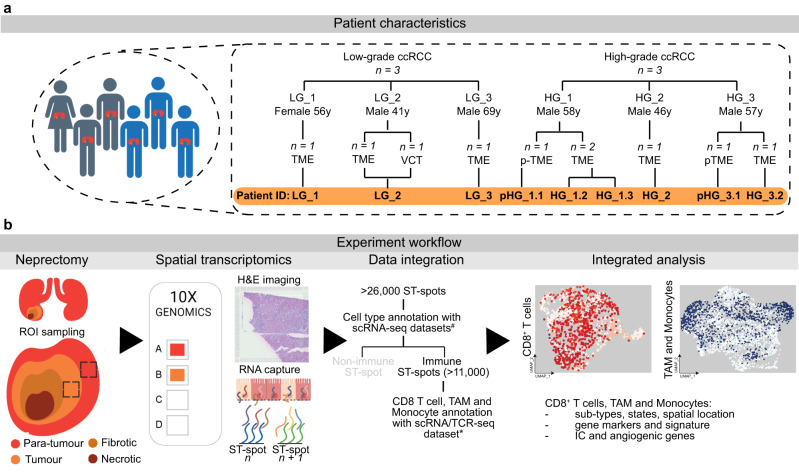
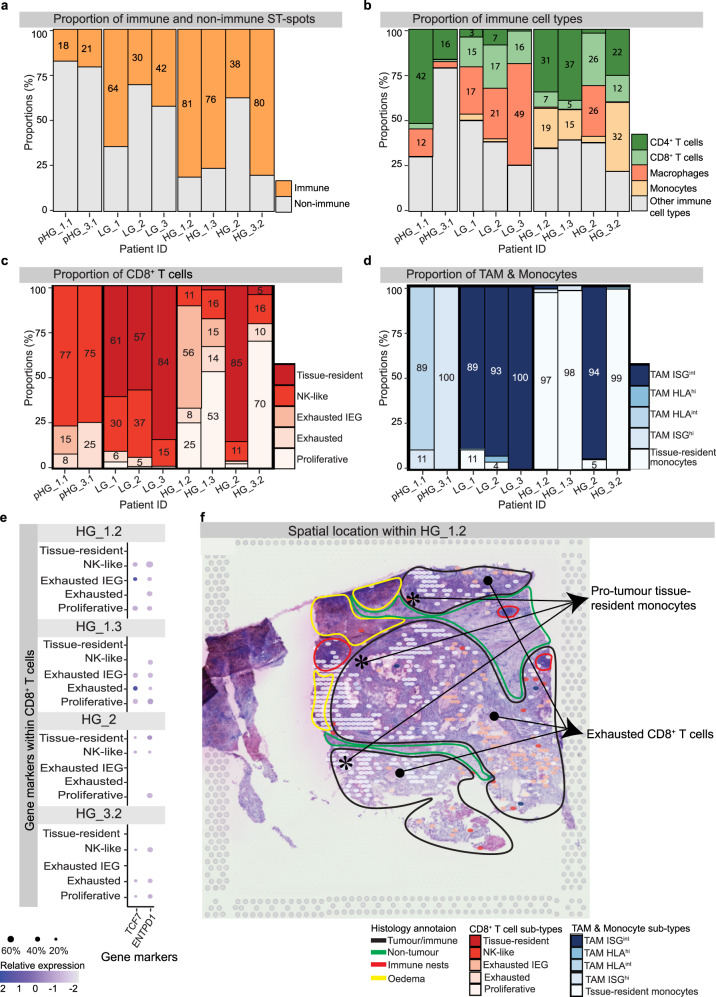
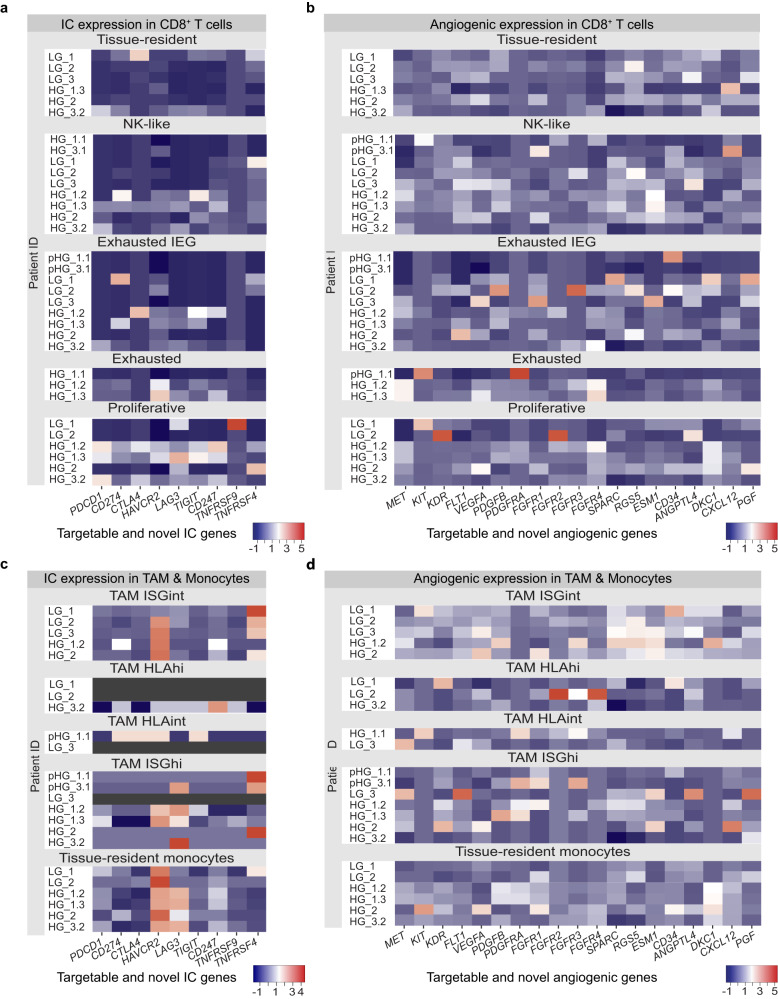
Abstract Perioperative immune checkpoint inhibitor (ICI) trials for intermediate high-risk clear cell renal cell carcinoma (ccRCC) have failed to consistently demonstrate improved patient outcomes. These unsuccessful ICI trials suggest that the tumour infiltrating immunophenotypes, termed here as the immune cell types, states and their spatial location within the tumour microenvironment (TME), were unfavourable for ICI treatment. Defining the tumour infiltrating immune cells may assist with the identification of predictive immunophenotypes within the TME that are favourable for ICI treatment. To define the immunophenotypes within the ccRCC TME, fresh para-tumour (pTME, n = 2), low-grade (LG, n = 4, G1-G2) and high-grade (HG, n = 4, G3-G4) tissue samples from six patients with ccRCC presenting at a tertiary referral hospital underwent spatial transcriptomics sequencing (ST-seq). Within the generated ST-seq datasets, immune cell types and states, termed here as exhausted/pro-tumour state or non-exhausted/anti-tumour state, were identified using multiple publicly available single-cell RNA and T-cell receptor sequencing datasets as references. HG TMEs revealed abundant exhausted/pro-tumour immune cells with no consistent increase in expression of PD-1, PD-L1 and CTLA4 checkpoints and angiogenic genes. Additional HG TME immunophenotype characteristics included: pro-tumour tissue-resident monocytes with consistently increased expression of HAVCR2 and LAG3 checkpoints; an exhausted CD8 + T cells sub-population with stem-like progenitor gene expression; and pro-tumour tumour-associated macrophages and monocytes within the recurrent TME with the expression of TREM2 . Whilst limited by a modest sample size, this study represents the largest ST-seq dataset on human ccRCC. Our study reveals that high-risk ccRCC TMEs are infiltrated by exhausted/pro-tumour immunophenotypes lacking specific checkpoint gene expression confirming that HG ccRCC TME are immunogenic but not ICI favourable.
Overview
The claims and statistics of this paper haven’t been checked yet.
Free: it reads the open-access text and checks the first 5 claims that cite a source we can check. Create a free account to check every claim.
Integrity signals
Registry
Cites
Statistics
Figures
Verification
Claims the paper makes
The claims and statistics of this paper haven’t been checked yet.
Free: it reads the open-access text and checks the first 5 claims that cite a source we can check. Create a free account to check every claim.
Claims other papers make about this one
Each is checked against this paper’s own text: does it say what the citing paper says it does?
The cited source says what the claim attributes to it.
In the citing paper
“Additionally, outcomes from adjuvant ICI trials for localized ccRCC have not shown improvements in survival (Raghubar et al., 2023).”
From Microphysiological systems as models for immunologically ‘cold’ tumors (2024) · cites this paper as Raghubar et al., 2023
Self-check
Percentages, sums and reported differences re-computed from the paper’s own numbers.
The self-check needs the paper’s full text.
Citations
Cites
Nivolumab versus Everolimus in Advanced Renal-Cell Carcinoma
Motzer, R. J., Escudier, B., McDermott, D. F., George, S., Hammers, H. J., Srinivas, S., Tykodi, S. S., Sosman, J. A., Procopio, G., Plimack, E. R., et al. (2015) · New England Journal of Medicine · doi:10.1056/nejmoa1510665 · Cited by 5,807 · cited 1×
“These con fl icting trial outcomes of ICIs within intermediate high-risk ccRCC do not diminish the reported improved survival outcomes within the metastatic setting 42 – 44 .”
Nivolumab plus Ipilimumab versus Sunitinib in Advanced Renal-Cell Carcinoma
Motzer, R. J., Tannir, N. M., McDermott, D. F., Arén Frontera, O., Melichar, B., Choueiri, T. K., Plimack, E. R., Barthélémy, P., Porta, C., George, S., et al. (2018) · New England Journal of Medicine · doi:10.1056/nejmoa1712126 · Cited by 4,656 · cited 1×
“Approved fi rst-line systemic therapy for metastatic ccRCC includes immunotherapies such as immune checkpoint inhibitors (ICIs) that serve to reactivate anti-tumour immune responses 1,3 – 10 .”
Hafemeister, C., & Satija, R. (2019) · Genome Biology · doi:10.1186/s13059-019-1874-1 · Cited by 4,479 · cited 2×
“Then, we merged all the individual ST-seq datasets and removed batch effects due to individual patient samples using the SCTransformfunction in Seurat 58 .”
InfluentialPembrolizumab plus axitinib versus sunitinib for advanced renal-cell carcinoma
Rini, B. I., Plimack, E. R., Stus, V., Gafanov, R., Hawkins, R., Nosov, D., Pouliot, F., Alekseev, B., Soulières, D., Melichar, B., et al. (2019) · New England Journal of Medicine · doi:10.1056/nejmoa1816714 · Cited by 3,403
Fundamental Mechanisms of Immune Checkpoint Blockade Therapy
Wei, S. C., Duffy, C. R., & Allison, J. P. (2018) · Cancer Discovery · doi:10.1158/2159-8290.cd-18-0367 · Cited by 3,088 · cited 1×
“Approved fi rst-line systemic therapy for metastatic ccRCC includes immunotherapies such as immune checkpoint inhibitors (ICIs) that serve to reactivate anti-tumour immune responses 1,3 – 10 .”
Avelumab plus Axitinib versus Sunitinib for Advanced Renal-Cell Carcinoma
Motzer, R. J., Penkov, K., Haanen, J., Rini, B., Albiges, L., Campbell, M. T., Venugopal, B., Kollmannsberger, C., Negrier, S., Uemura, M., et al. (2019) · New England Journal of Medicine · doi:10.1056/nejmoa1816047 · Cited by 2,503
Hsieh, J. J., Purdue, M. P., Signoretti, S., Swanton, C., Albiges, L., Schmidinger, M., Heng, D. Y., Larkin, J., & Ficarra, V. (2017) · Nature Reviews Disease Primers · doi:10.1038/nrdp.2017.9 · Cited by 2,426
Miller, B. C., Sen, D. R., Al Abosy, R., Bi, K., Virkud, Y. V., LaFleur, M. W., Yates, K. B., Lako, A., Felt, K., Naik, G. S., et al. (2019) · Nature Immunology · doi:10.1038/s41590-019-0312-6 · Cited by 2,087 · cited 1×
“It will be of interest to investigate within ex vivo studies, if these exhausted stem-like progenitors CD8 + T cells can be switched to an anti-tumour mode with ICI, as reported in other cancers 34 – 39 .”
Defining T Cell States Associated with Response to Checkpoint Immunotherapy in Melanoma
Sade-Feldman, M., Yizhak, K., Bjorgaard, S. L., Ray, J. P., de Boer, C. G., Jenkins, R. W., Lieb, D. J., Chen, J. H., Frederick, D. T., Barzily-Rokni, M., et al. (2018) · Cell · doi:10.1016/j.cell.2018.10.038 · Cited by 2,053 · cited 1×
“It will be of interest to investigate within ex vivo studies, if these exhausted stem-like progenitors CD8 + T cells can be switched to an anti-tumour mode with ICI, as reported in other cancers 34 – 39 .”
Siddiqui, I., Schaeuble, K., Chennupati, V., Fuertes Marraco, S. A., Calderon-Copete, S., Pais Ferreira, D., Carmona, S. J., Scarpellino, L., Gfeller, D., Pradervand, S., et al. (2019) · Immunity · doi:10.1016/j.immuni.2018.12.021 · Cited by 1,679
Blank, C. U., Haining, W. N., Held, W., Hogan, P. G., Kallies, A., Lugli, E., Lynn, R. C., Philip, M., Rao, A., Restifo, N. P., et al. (2019) · Nature Reviews Immunology · doi:10.1038/s41577-019-0221-9 · Cited by 1,603
An Immune Atlas of Clear Cell Renal Cell Carcinoma
Chevrier, S., Levine, J. H., Zanotelli, V. R. T., Silina, K., Schulz, D., Bacac, M., Ries, C. H., Ailles, L., Jewett, M. A. S., Moch, H., et al. (2017) · Cell · doi:10.1016/j.cell.2017.04.016 · Cited by 1,004
Braun, D. A., Hou, Y., Bakouny, Z., Ficial, M., Sant’ Angelo, M., Forman, J., Ross-Macdonald, P., Berger, A. C., Jegede, O. A., Elagina, L., et al. (2020) · Nature Medicine · doi:10.1038/s41591-020-0839-y · Cited by 992
Şenbabaoğlu, Y., Gejman, R. S., Winer, A. G., Liu, M., Van Allen, E. M., de Velasco, G., Miao, D., Ostrovnaya, I., Drill, E., Luna, A., et al. (2016) · Genome Biology · doi:10.1186/s13059-016-1092-z · Cited by 968
An intra-tumoral niche maintains and differentiates stem-like CD8 T cells
Jansen, C. S., Prokhnevska, N., Master, V. A., Sanda, M. G., Carlisle, J. W., Bilen, M. A., Cardenas, M., Wilkinson, S., Lake, R., Sowalsky, A. G., et al. (2019) · Nature · doi:10.1038/s41586-019-1836-5 · Cited by 817
Adjuvant Pembrolizumab after Nephrectomy in Renal-Cell Carcinoma
Choueiri, T. K., Tomczak, P., Park, S. H., Venugopal, B., Ferguson, T., Chang, Y.-H., Hajek, J., Symeonides, S. N., Lee, J. L., Sarwar, N., et al. (2021) · New England Journal of Medicine · doi:10.1056/nejmoa2106391 · Cited by 785 · cited 1×
“The ef fi cacy of perioperative ICIs within intermediate high-risk ccRCC patients has been assessed in randomised phase III clinical trials 4,5,14 – 17 .”
Single-cell transcriptomes from human kidneys reveal the cellular identity of renal tumors
Young, M. D., Mitchell, T. J., Vieira Braga, F. A., Tran, M. G. B., Stewart, B. J., Ferdinand, J. R., Collord, G., Botting, R. A., Popescu, D.-M., Loudon, K. W., et al. (2018) · Science · doi:10.1126/science.aat1699 · Cited by 762 · cited 1×
“These clusters were then annotated as immune and non-immune using published kidney (healthy 47,48 , in fl ammed 49,50 and renal tumour 51 ) and tumour immune atlas 52 scRNA-seq datasets.”
Powles, T., Plimack, E. R., Soulières, D., Waddell, T., Stus, V., Gafanov, R., Nosov, D., Pouliot, F., Melichar, B., Vynnychenko, I., et al. (2020) · The Lancet Oncology · doi:10.1016/s1470-2045(20)30436-8 · Cited by 751
Role of tumor associated macrophages in tumor angiogenesis and lymphangiogenesis
Riabov, V., Gudima, A., Wang, N., Mickley, A., Orekhov, A., & Kzhyshkowska, J. (2014) · Frontiers in Physiology · doi:10.3389/fphys.2014.00075 · Cited by 628 · cited 1×
“…a singular exhausted/pro-tumour or non-exhausted/anti-tumour immune cell states within individual specimens, suggesting that lymphoid and myeloid cells behave in unison, possibly through cellular interactions between the immune cell sub-types, as identi fi ed in previous studies 23,26,33 .”
Tumor and immune reprogramming during immunotherapy in advanced renal cell carcinoma
Bi, K., He, M. X., Bakouny, Z., Kanodia, A., Napolitano, S., Wu, J., Grimaldi, G., Braun, D. A., Cuoco, M. S., Mayorga, A., et al. (2021) · Cancer Cell · doi:10.1016/j.ccell.2021.02.015 · Cited by 618 · cited 1×
“Both sub-populations of exhausted and non-exhausted CD8 + T-cell sub-types express immunomodulatory ( ENTPD1 ) genes 27 – 29 .”
McDermott, D. F., Sosman, J. A., Sznol, M., Massard, C., Gordon, M. S., Hamid, O., Powderly, J. D., Infante, J. R., Fassò, M., Wang, Y. V., et al. (2016) · Journal of Clinical Oncology · doi:10.1200/jco.2015.63.7421 · Cited by 557 · cited 1×
“These con fl icting trial outcomes of ICIs within intermediate high-risk ccRCC do not diminish the reported improved survival outcomes within the metastatic setting 42 – 44 .”
Progressive immune dysfunction with advancing disease stage in renal cell carcinoma
Braun, D. A., Street, K., Burke, K. P., Cookmeyer, D. L., Denize, T., Pedersen, C. B., Gohil, S. H., Schindler, N., Pomerance, L., Hirsch, L., et al. (2021) · Cancer Cell · doi:10.1016/j.ccell.2021.02.013 · Cited by 504 · cited 1×
“The pro-tumour TAM and monocyte sub-types express an anti-in fl ammatory gene signature 28,30 .”
Macrophage-secreted granulin supports pancreatic cancer metastasis by inducing liver fibrosis
Nielsen, S. R., Quaranta, V., Linford, A., Emeagi, P., Rainer, C., Santos, A., Ireland, L., Sakai, T., Sakai, K., Kim, Y.-S., et al. (2016) · Nature Cell Biology · doi:10.1038/ncb3340 · Cited by 441 · cited 1×
“Furthermore, within distinct tumour/immune admixed regions, the tissue-resident monocytes surround the exhausted CD8 + T cells, suggestive of anti-in fl ammatory activity and/or an exclusion zone along the tumour margins in HG TME, as identi fi ed in other studies 26,31,32 .”
Krishna, C., DiNatale, R. G., Kuo, F., Srivastava, R. M., Vuong, L., Chowell, D., Gupta, S., Vanderbilt, C., Purohit, T. A., Liu, M., et al. (2021) · Cancer Cell · doi:10.1016/j.ccell.2021.03.007 · Cited by 432
Wu, H., Malone, A. F., Donnelly, E. L., Kirita, Y., Uchimura, K., Ramakrishnan, S. M., Gaut, J. P., & Humphreys, B. D. (2018) · Journal of the American Society of Nephrology · doi:10.1681/asn.2018020125 · Cited by 417
propeller: testing for differences in cell type proportions in single cell data
Phipson, B., Sim, C. B., Porrello, E. R., Hewitt, A. W., Powell, J., & Oshlack, A. (2022) · Bioinformatics · doi:10.1093/bioinformatics/btac582 · Cited by 373
Mapping the immune environment in clear cell renal carcinoma by single-cell genomics
Borcherding, N., Vishwakarma, A., Voigt, A. P., Bellizzi, A., Kaplan, J., Nepple, K., Salem, A. K., Jenkins, R. W., Zakharia, Y., & Zhang, W. (2021) · Communications Biology · doi:10.1038/s42003-020-01625-6 · Cited by 364
Single-cell protein activity analysis identifies recurrence-associated renal tumor macrophages
Obradovic, A., Chowdhury, N., Haake, S. M., Ager, C., Wang, V., Vlahos, L., Guo, X. V., Aggen, D. H., Rathmell, W. K., Jonasch, E., et al. (2021) · Cell · doi:10.1016/j.cell.2021.04.038 · Cited by 349 · cited 2×
“Similarly, TREM2 , an established marker for post-surgical recurrence of ccRCC 30 , shows higher expression in a large proportion of the pro-tumour TAM and tissue-resident monocytes for patient HG_3 with recurrent ccRCC.”
Immunomodulatory Activity of Nivolumab in Metastatic Renal Cell Carcinoma
Choueiri, T. K., Fishman, M. N., Escudier, B., McDermott, D. F., Drake, C. G., Kluger, H., Stadler, W. M., Perez-Gracia, J. L., McNeel, D. G., Curti, B., et al. (2016) · Clinical Cancer Research · doi:10.1158/1078-0432.ccr-15-2839 · Cited by 295
Powles, T., Tomczak, P., Park, S. H., Venugopal, B., Ferguson, T., Symeonides, S. N., Hajek, J., Gurney, H., Chang, Y.-H., Lee, J. L., et al. (2022) · The Lancet Oncology · doi:10.1016/s1470-2045(22)00487-9 · Cited by 294 · cited 1×
“However, these trial fi ndings are in contrast with the Keynote-564 trial 41 .”
SCINA: A Semi-Supervised Subtyping Algorithm of Single Cells and Bulk Samples
Zhang, Z., Luo, D., Zhong, X., Choi, J. H., Ma, Y., Wang, S., Mahrt, E., Guo, W., Stawiski, E. W., Modrusan, Z., et al. (2019) · Genes · doi:10.3390/genes10070531 · Cited by 287 · cited 1×
“Based on these signatures, we annotated the cell states of the T cells, macrophages and monocytes using the Semi-supervised Category Identi fi cation and Assignment (SCINA) algorithm 59 .”
Lake, B. B., Chen, S., Hoshi, M., Plongthongkum, N., Salamon, D., Knoten, A., Vijayan, A., Venkatesh, R., Kim, E. H., Gao, D., et al. (2019) · Nature Communications · doi:10.1038/s41467-019-10861-2 · Cited by 280 · cited 2×
“These clusters were then annotated as immune and non-immune using published kidney (healthy 47,48 , in fl ammed 49,50 and renal tumour 51 ) and tumour immune atlas 52 scRNA-seq datasets.”
Alevin efficiently estimates accurate gene abundances from dscRNA-seq data
Srivastava, A., Malik, L., Smith, T., Sudbery, I., & Patro, R. (2019) · Genome Biology · doi:10.1186/s13059-019-1670-y · Cited by 273 · cited 1×
“1.0) R packages 56,57 .”
InfluentialSingle-cell RNA sequencing of human kidney
Liao, J., Yu, Z., Chen, Y., Bao, M., Zou, C., Zhang, H., Liu, D., Li, T., Zhang, Q., Li, J., et al. (2020) · Scientific Data · doi:10.1038/s41597-019-0351-8 · Cited by 266 · cited 1×
“These clusters were then annotated as immune and non-immune using published kidney (healthy 47,48 , in fl ammed 49,50 and renal tumour 51 ) and tumour immune atlas 52 scRNA-seq datasets.”
Seamless integration of image and molecular analysis for spatial transcriptomics workflows
Bergenstråhle, J., Larsson, L., & Lundeberg, J. (2020) · BMC Genomics · doi:10.1186/s12864-020-06832-3 · Cited by 263 · cited 1×
“1.0) 55 and Seurat (v4.”
InfluentialHsieh, J. J., Le, V. H., Oyama, T., Ricketts, C. J., Ho, T. H., & Cheng, E. H. (2018) · Journal of Clinical Oncology · doi:10.1200/jco.2018.79.2549 · Cited by 182 · cited 1×
“Clear cell renal cell carcinoma (ccRCC) accounts for the majority of kidney cancer-related deaths due to the presence or development of metastatic disease 1,2 .”
Immune signature of tumor infiltrating immune cells in renal cancer
Geissler, K., Fornara, P., Lautenschläger, C., Holzhausen, H.-J., Seliger, B., & Riemann, D. (2015) · OncoImmunology · doi:10.4161/2162402x.2014.985082 · Cited by 175 · cited 1×
“Consistent with previous bulk RNA-seq, single-cell RNA-seq (scRNA-seq) and single-nuclei RNA-seq (snRNA-seq) studies, we show abundant immune cell in fi ltration within the TME, dominated by T cells and monocytes 20 – 26 .”
A single-cell tumor immune atlas for precision oncology
Nieto, P., Elosua-Bayes, M., Trincado, J. L., Marchese, D., Massoni-Badosa, R., Salvany, M., Henriques, A., Nieto, J., Aguilar-Fernández, S., Mereu, E., et al. (2021) · Genome Research · doi:10.1101/gr.273300.120 · Cited by 169 · cited 2×
“These clusters were then annotated as immune and non-immune using published kidney (healthy 47,48 , in fl ammed 49,50 and renal tumour 51 ) and tumour immune atlas 52 scRNA-seq datasets.”
Quaranta, V., Rainer, C., Nielsen, S. R., Raymant, M. L., Ahmed, M. S., Engle, D. D., Taylor, A., Murray, T., Campbell, F., Palmer, D. H., et al. (2018) · Cancer Research · doi:10.1158/0008-5472.can-17-3876 · Cited by 168
Menon, R., Otto, E. A., Hoover, P., Eddy, S. F., Mariani, L. H., Godfrey, B., Berthier, C. C., Eichinger, F. H., Subramanian, L., Harder, J. L., et al. (2020) · JCI Insight · doi:10.1172/jci.insight.133267 · Cited by 155
Systematic Pan-Cancer Analysis Reveals Immune Cell Interactions in the Tumor Microenvironment
Varn, F. S., Wang, Y., Mullins, D. W., Fiering, S., & Cheng, C. (2017) · Cancer Research · doi:10.1158/0008-5472.can-16-2490 · Cited by 153 · cited 1×
“…a singular exhausted/pro-tumour or non-exhausted/anti-tumour immune cell states within individual specimens, suggesting that lymphoid and myeloid cells behave in unison, possibly through cellular interactions between the immune cell sub-types, as identi fi ed in previous studies 23,26,33 .”
A Close Encounter of the Third Kind
Mildner, A., Yona, S., & Jung, S. (2013) · Advances in immunology · doi:10.1016/b978-0-12-417028-5.00003-x · Cited by 141
Bedke, J., Albiges, L. K., Umberto Capitanio, A., Giles, R. H., Hora, M., Lam, T. B. L., Ljungberg, B., Marconi, L. S., Klatte, T., Volpe, A., et al. (2020) · European Urology · doi:10.1016/j.eururo.2020.12.005 · Cited by 133 · cited 1×
“The ef fi cacy of perioperative ICIs within intermediate high-risk ccRCC patients has been assessed in randomised phase III clinical trials 4,5,14 – 17 .”
Choueiri, T. K., Powles, T. B., Burotto, M., Bourlon, M. T., Żurawski, B. A., Oyervides-Juárez, V. M., Hsieh, J. J.-D., Basso, U., Shah, A. Y., Suárez, C., et al. (2020) · Annals of Oncology · doi:10.1016/j.annonc.2020.08.2257 · Cited by 116
Zero-preserving imputation of scRNA-seq data using low-rank approximation
Linderman, G. C., Zhao, J., & Kluger, Y. (2018) · bioRxiv (Cold Spring Harbor Laboratory) · doi:10.1101/397588 · Cited by 104 · cited 1×
“1.0) R packages 56,57 .”
InfluentialHLA-dependent tumour development: a role for tumour associate macrophages?
Marchesi, M., Andersson, E. K., Villabona, L. E. E., Seliger, B., Lundqvist, A., Kiessling, R. W., & Masucci, G. V. (2013) · Journal of Translational Medicine · doi:10.1186/1479-5876-11-247 · Cited by 84 · cited 1×
“…proportion of pro-tumour TAM sub-types in HG_3 TME; whilst an absence of immunosuppression markers human leucocyte antigen G ( HLA-G) and cysteine protease cathepsin S ( CTSS ) 18,19 was observed within TAM ISG high expression (TAM ISG hi ) in HG_3 and HG_2 TME, respectively (Supplementary Fig.”
Cotechini, T., Atallah, A., & Grossman, A. (2021) · Cells · doi:10.3390/cells10040960 · Cited by 82 · cited 1×
“Mouse model studies have demonstrated that tissue-resident monocyte-and macrophage-derived TAM respond very differently to cancer treatment 46 .”
Wang, D., Fang, J., Wen, S., Li, Q., Wang, J., Yang, L., Dai, W., Lu, H., Guo, J., Shan, Z., et al. (2022) · International Journal of Oral Science · doi:10.1038/s41368-022-00160-w · Cited by 82
Allaf, M., Kim, S. E., Harshman, L. C., McDermott, D. F., Master, V. A., Signoretti, S., Cole, S., Moon, H., Adra, N., Singer, E. A., et al. (2022) · Annals of Oncology · doi:10.1016/j.annonc.2022.08.072 · Cited by 75 · cited 2×
“Targetable IC genes show no increase in expression within CD8 + T cells, TAM and monocytes, potentially explaining the limited ef fi cacy of ICI 40 observed in three adjuvant ICI trials 11 – 13 .”
Carlo, M. I., Attalla, K., Mazaheri, Y., Gupta, S., Yıldırım, O., Murray, S. J., Coskey, D. T., Kotecha, R. R., Lee, C., Feldman, D. R., et al. (2022) · European Urology · doi:10.1016/j.eururo.2022.01.043 · Cited by 68 · cited 1×
“A recent neoadjuvant nivolumab trial for localised ccRCC reported no delays in surgery 16 .”
Hartana, C. A., Ahlén Bergman, E., Broomé, A., Berglund, S., Johansson, M., Alamdari, F., Jakubczyk, T., Huge, Y., Aljabery, F., Palmqvist, K., et al. (2018) · Clinical and Experimental Immunology · doi:10.1111/cei.13183 · Cited by 60
Bedke, J., Albiges, L., Capitanio, U., Giles, R. H., Hora, M., Ljungberg, B., Marconi, L., Klatte, T., Volpe, A., Abu-Ghanem, Y., et al. (2023) · European Urology · doi:10.1016/j.eururo.2022.10.010 · Cited by 53 · cited 1×
“Targetable IC genes show no increase in expression within CD8 + T cells, TAM and monocytes, potentially explaining the limited ef fi cacy of ICI 40 observed in three adjuvant ICI trials 11 – 13 .”
A Novel Role for Cathepsin S as a Potential Biomarker in Triple Negative Breast Cancer
Wilkinson, R. D. A., Burden, R. E., McDowell, S. H., McArt, D. G., McQuaid, S., Bingham, V., Williams, R. D., Cox, Ó. T., O’Connor, R., McCabe, N., et al. (2019) · Journal of Oncology · doi:10.1155/2019/3980273 · Cited by 37 · cited 1×
“…proportion of pro-tumour TAM sub-types in HG_3 TME; whilst an absence of immunosuppression markers human leucocyte antigen G ( HLA-G) and cysteine protease cathepsin S ( CTSS ) 18,19 was observed within TAM ISG high expression (TAM ISG hi ) in HG_3 and HG_2 TME, respectively (Supplementary Fig.”
Motzer, R. J., Russo, P., Gruenwald, V., Tomita, Y., Zurawski, B., Parikh, O., Buti, S., Barthélémy, P., Goh, J. C. H., Ye, D., et al. (2022) · Annals of Oncology · doi:10.1016/j.annonc.2022.08.069 · Cited by 37
A Single-Cell Tumor Immune Atlas for Precision Oncology
Nieto, P., Elosua-Bayes, M., Trincado, J. L., Marchese, D., Massoni-Badosa, R., Salvany, M., Henriques, A., Mereu, E., Moutinho, C., Ruiz, S., et al. (2020) · bioRxiv (Cold Spring Harbor Laboratory) · doi:10.1101/2020.10.26.354829 · Cited by 30
Raghubar, A. M., Pham, D. T., Tan, X., Grice, L. F., Crawford, J., Lam, P. Y., Andersen, S. B., Yoon, S., Ng, M. S. Y., Teoh, S. M., et al. (2022) · Frontiers in Medicine · doi:10.3389/fmed.2022.873923 · Cited by 28
Self-citationCellular milieu in clear cell renal cell carcinoma
Raghubar, A. M., Roberts, M. J., Wood, S., Healy, H. G., Kassianos, A. J., & Mallett, A. J. (2022) · Frontiers in Oncology · doi:10.3389/fonc.2022.943583 · Cited by 27 · cited 1×
“Indeed, a spectrum of immune cell states is being recognised 60 .”
Self-citationNeoadjuvant Immunotherapy: An Evolving Paradigm Shift?
Bilušić, M., & Gulley, J. L. (2020) · JNCI Journal of the National Cancer Institute · doi:10.1093/jnci/djaa217 · Cited by 22
Neoadjuvant Treatment in Renal Cell Carcinoma: Transforming Challenges into Opportunities
Marandino, L., Raggi, D., Necchi, A., & Umberto Capitanio, A. (2022) · European Urology · doi:10.1016/j.eururo.2022.02.013 · Cited by 15 · cited 2×
“These perioperative (or neoadjuvant) ICIs are aimed at priming the anti-tumour immune response without delaying surgical intervention 15,17 .”
Bex, A., Uzzo, R., Karam, J. A., Master, V. A., Donskov, F. N., Suárez, C., Albiges, L. K., Rini, B. I., Tomita, Y., Kann, A., et al. (2022) · Annals of Oncology · doi:10.1016/j.annonc.2022.08.071 · Cited by 14 · cited 2×
“Targetable IC genes show no increase in expression within CD8 + T cells, TAM and monocytes, potentially explaining the limited ef fi cacy of ICI 40 observed in three adjuvant ICI trials 11 – 13 .”
Spatial Transcriptomics in Kidney Tissue
Raghubar, A. M., Crawford, J., Jones, K., Lam, P. Y., Andersen, S. B., Matigian, N., Ng, M. S. Y., Healy, H. G., Kassianos, A. J., & Mallett, A. J. (2023) · Methods in molecular biology · doi:10.1007/978-1-0716-3179-9_17 · Cited by 3 · cited 12×
“2b) and immune ST-spots (Fig.”
InfluentialSelf-citation
Cited by
Zhu, Z., Jin, Y., Zhou, J., Chen, F., Chen, M., Gao, Z., Hu, L., Xuan, J., Li, X., Song, Z., et al. (2024) · Molecular Cancer · doi:10.1186/s12943-024-02059-y · Cited by 100
“The types and status of immune cells infiltrating tumors may help predict responses to ICI therapy [133].”
BackgroundSpatial transcriptomics in cancer research and potential clinical impact: a narrative review
Cilento, M. A., Sweeney, C. J., & Butler, L. M. (2024) · Journal of Cancer Research and Clinical Oncology · doi:10.1007/s00432-024-05816-0 · Cited by 103
“…into the immunogenic TME of tumors that have abundant exhausted/pro-tumor immune cells and provided clues to mechanisms explaining the infrequent lack of response to immunotherapy, including exhausted immune cells and lack of expression of the PD-1 , PD-L1 and CTLA4 genes (Raghubar et al. 2023).”
BackgroundTREM2+ macrophages: a key role in disease development
Wang, X., Wang, Y., Yang, L. X., Zhang, Y., & Yang, L. (2025) · Frontiers in Immunology · doi:10.3389/fimmu.2025.1550893 · Cited by 44
Current understanding on TREM-2 molecular biology and physiopathological functions
Bharadwaj, S., Groza, Y., Mierzwicka, J. M., & Malý, P. (2024) · International Immunopharmacology · doi:10.1016/j.intimp.2024.112042 · Cited by 25
Choi, S.-W., Kim, J. H., Hong, J., & Kwon, M. (2025) · Frontiers in Immunology · doi:10.3389/fimmu.2025.1568590 · Cited by 25
Metadata
- Authors
- Raghubar, A. M., Matigian, N. A., Crawford, J., Francis, L., Ellis, R., Healy, H. G., Kassianos, A. J., Ng, M. S. Y., Roberts, M. J., Wood, S., & Mallett, A. J.
- Affiliations
- Queensland Health (AU)
- The University of Queensland (AU)
- Corresponding author
- Mallett, Andrew J.
- ORCID
- Venue
- npj Precision Oncology
- Published
- 2023-09-11
- Volume
- 7
- Issue
- 1
- Pages
- 88-88
- ISSN
- 2397-768X (ISSN-L)
- PMC
- PMC10495390
- OpenAlex
- W4386603347
- Cited by
- 26
- References
- 61
- Citations by year
- 2026: 12 · 2025: 7 · 2024: 6 · 2023: 1
- FWCI
- 3.17
- Type
- journal article
- Language
- en
- Open access
- gold
- doi.org
- Licence
- cc-by
- creativecommons.org/licenses/by/4.0 (tdm)
- creativecommons.org/licenses/by/4.0 (vor)
- Locations
- npj Precision Oncology (publishedVersion, cc-by)
- PubMed Central (publishedVersion, cc-by)
- PubMed (publishedVersion)
- ResearchOnline - JCU (James Cook University) (submittedVersion)
- DOAJ (DOAJ: Directory of Open Access Journals) (submittedVersion, cc-by-sa)
- Funders
- Queensland Health Advancing Clinical Research Fellowship
- Australian Government Research Training Program Scholarship
- Royal Brisbane and Women’s Hospital Foundation 2020 Robert and Janelle Bird Postdoctoral Research Fellowship
- Metro North Hospital and Health Service Clinical Research Fellowship
- Topics
- Health Sciences › Medicine › Oncology › Cancer Immunotherapy and Biomarkers
- Health Sciences › Medicine › Oncology › Renal cell carcinoma treatment
- Life Sciences › Biochemistry, Genetics and Molecular Biology › Cancer Research › Ferroptosis and cancer prognosis
- Keywords
- clear cell renal cell carcinoma, tumor microenvironment, immune checkpoint inhibitors, immune exhaustion, spatial transcriptomics, tumour-associated macrophages, CD8+ T cells, PD-1, PD-L1, CTLA-4, TIM-3, LAG-3, TREM2, tumor grade, immunogenicity, predictive biomarkers
About these checks
Registry, retraction, Cites and statistics results are computed, not judged, with one exception: a printed reference that no index lists is read once by a model before it counts as a citation error. Claims are extracted by a model and kept only when their quote appears verbatim in the text; each cited source is then checked, with a model’s help, for whether it says what the claim relies on. Those verdicts can be wrong — read the claim’s quote and the cited source before relying on one.
Statistics and arithmetic are recomputed, not judged.
Confidence bands are shown only for fields calibrated on our annotated test set. None is calibrated yet, so no band is shown.
What counts as a claim ›How we measure confidence ›How we check this ›
Are you an author, or do you see a problem with this page? Request a review
Data sources
Bibliographic data: Semantic Scholar, OpenAlex, Crossref.
Contains information from the Semantic Scholar Academic Graph Datasets, made available under the ODC Attribution License (ODC-BY 1.0).
Semantic Scholar’s data is described in: Kinney, R., et al. (2023). The Semantic Scholar Open Data Platform. arXiv:2301.10140.
