

Impact of remote patient monitoring on clinical outcomes: an updated meta-analysis of randomized controlled trials
Open accessThe DOI matches its Crossref record; 55 of the 55 references it cites were found in a registry or an index.
Abstract
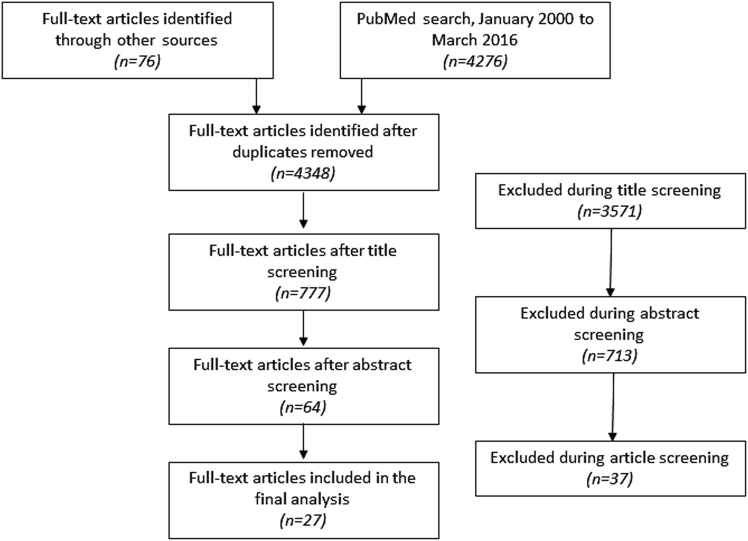
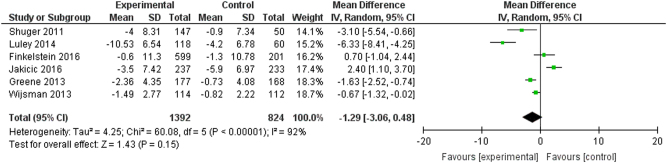
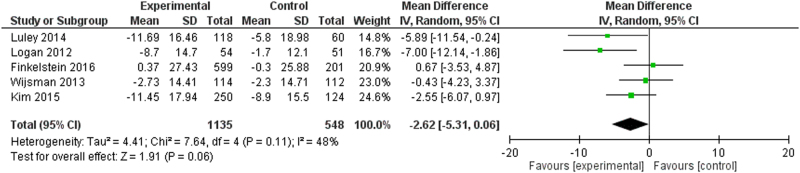
Despite growing interest in remote patient monitoring, limited evidence exists to substantiate claims of its ability to improve outcomes. Our aim was to evaluate randomized controlled trials (RCTs) that assess the effects of using wearable biosensors (e.g. activity trackers) for remote patient monitoring on clinical outcomes. We expanded upon prior reviews by assessing effectiveness across indications and presenting quantitative summary data. We searched for articles from January 2000 to October 2016 in PubMed, reviewed 4,348 titles, selected 777 for abstract review, and 64 for full text review. A total of 27 RCTs from 13 different countries focused on a range of clinical outcomes and were retained for final analysis; of these, we identified 16 high-quality studies. We estimated a difference-in-differences random effects meta-analysis on select outcomes. We weighted the studies by sample size and used 95% confidence intervals (CI) around point estimates. Difference-in-difference point estimation revealed no statistically significant impact of remote patient monitoring on any of six reported clinical outcomes, including body mass index (−0.73; 95% CI: −1.84, 0.38), weight (−1.29; −3.06, 0.48), waist circumference (−2.41; −5.16, 0.34), body fat percentage (0.11; −1.56, 1.34), systolic blood pressure (−2.62; −5.31, 0.06), and diastolic blood pressure (−0.99; −2.73, 0.74). Studies were highly heterogeneous in their design, device type, and outcomes. Interventions based on health behavior models and personalized coaching were most successful. We found substantial gaps in the evidence base that should be considered before implementation of remote patient monitoring in the clinical setting.
Overview
The claims and statistics of this paper haven’t been checked yet.
Free: it reads the open-access text and checks the first 5 claims that cite a source we can check. Create a free account to check every claim.
Integrity signals
Registry
Cites
Statistics
Figures




Verification
Claims the paper makes
The claims and statistics of this paper haven’t been checked yet.
Free: it reads the open-access text and checks the first 5 claims that cite a source we can check. Create a free account to check every claim.
Claims other papers make about this one
Each is checked against this paper’s own text: does it say what the citing paper says it does?
The cited source doesn’t support the claim as written.
In the citing paper
“Over recent years, GP practices have been encouraged to utilise digital health technology as extensive research has demonstrated the value of mobile health (mHealth) solutions in primary care and in the management of chronic conditions [11].”
From A prospective observational real world feasibility study assessing the role of app-based remote patient monitoring in reducing primary care clinician workload during the COVID pandemic (2021) · cites this paper as [11]
Checked by a reasoning model — may be wrong.
Experimental — accuracy not yet measuredThe source backs part of the claim, not all of it — or backs it for a different population, condition or comparison.
In the citing paper
“Several randomized controlled trials have demonstrated that RPM-HTN can be effective and cost-effective in managing hypertension, enhancing BP control, and mitigating cardiovascular disease events.7–12”
From Program cost and return on investment analysis of remote patient monitoring for hypertension management in the cardiology department of a large healthcare system (2026) · cites this paper as [9]
Experimental — accuracy not yet measuredThe source backs part of the claim, not all of it — or backs it for a different population, condition or comparison.
In the citing paper
“This offers the promise of marked reduction of cost, less requirement for healthcare workforce, avoidance of nosocomial infections and medical errors that occur in medical facilities, along with the comfort, convenience and emotional support of being with family members 48 .”
From Multimodal biomedical AI (2022) · cites this paper as [48]
Experimental — accuracy not yet measuredThe source backs part of the claim, not all of it — or backs it for a different population, condition or comparison.
In the citing paper
“Recent progress with biosensors, continuous monitoring and analytics raises the possibility of simulating the hospital setting in a person's home.”
From Multimodal biomedical AI (2022) · cites this paper as [48]
Experimental — accuracy not yet measuredThe cited source says what the claim attributes to it.
In the citing paper
“Randomized clinical trials of RPM showed mixed results overall, but some targeted use cases showed promise.5”
From Trends in Remote Patient Monitoring Use in Traditional Medicare (2022) · cites this paper as [5]
1 more claim about this paper
Create a free account to see every claim other papers make about this one.
Self-check
Percentages, sums and reported differences re-computed from the paper’s own numbers.
The self-check needs the paper’s full text.
Citations
Cites
The theory of planned behavior
Ajzen, I. (1991) · Organizational Behavior and Human Decision Processes · doi:10.1016/0749-5978(91)90020-t · Cited by 134,657
Quantifying heterogeneity in a meta‐analysis
Higgins, J. P. T., & Thompson, S. G. (2002) · Statistics in Medicine · doi:10.1002/sim.1186 · Cited by 36,763 · cited 2×
“We also assessed for heterogeneity using the I(2) statistic and calculated the 95% confidence intervals using the standard methods described by Higgins et al.(51) We did not perform tests for funnel plot asymmetry to examine publication bias given that this type of analysis is not recommended for meta-analyses with fe…”
MethodInterrater reliability: The kappa statistic
McHugh, M. L. (2012) · Biochemia Medica · doi:10.11613/bm.2012.031 · Cited by 19,877 · cited 1×
“85.(49) For studies identified in the second review process, a second independent review was performed.”
BackgroundOlder Adults' Reasons for Using Technology while Aging in Place
Peek, S. T. M., Luijkx, K. G., Rijnaard, M. D., Nieboer, M. E., van der Voort, C. S., Aarts, S., van Hoof, J., Vrijhoef, H. J. M., & Wouters, E. J. M. (2016) · Gerontology · doi:10.1159/000430949 · Cited by 19,690
Assessing the quality of reports of randomized clinical trials: Is blinding necessary?
Jadad, A. R., Moore, R. A., Carroll, D., Jenkinson, C., Reynolds, D. J. M., Gavaghan, D. J., & McQuay, H. J. (1996) · Controlled Clinical Trials · doi:10.1016/0197-2456(95)00134-4 · Cited by 17,582
Zhang, Q., Wang, C., Zheng, M., Li, Y., Li, J., Zhang, L., Shang, X., & Yan, C. (2015) · Cerebrovascular Diseases · doi:10.1159/000369778 · Cited by 11,533
In search of how people change: Applications to addictive behaviors.
Prochaska, J. O., DiClemente, C. C., & Norcross, J. C. (1992) · American Psychologist · doi:10.1037/0003-066x.47.9.1102 · Cited by 8,596
Sterne, J. A. C., Sutton, A. J., Ioannidis, J. P. A., Terrin, N., Jones, D. R., Lau, J., Carpenter, J., Rucker, G., Harbord, R. M., Schmid, C. H., et al. (2011) · BMJ · doi:10.1136/bmj.d4002 · Cited by 7,709
Dong, Y., Hao, L., Shi, Z., Wang, G., Zhang, Z., & Han, C. (2013) · Urologia Internationalis · doi:10.1159/000351405 · Cited by 4,540
The Health Belief Model and Preventive Health Behavior
Rosenstock, I. M. (1974) · Health Education Monographs · doi:10.1177/109019817400200405 · Cited by 3,643
Cited by
Items 201–280 of 280
Dunn, P. J., Charbonneau, R., Ozemek, C., Arena, R. A., & Wisløff, U. (2026) · Progress in Cardiovascular Diseases · doi:10.1016/j.pcad.2026.04.002 · Cited by 3
Mobile information system for monitoring the spread of viruses in smart cities
Дуда, О., Dzhydzhora, L., Matsiuk, O., Stanko, A., Kunanets, N. E., Pasichnyk, V. V., & Kunanets, O. (2020) · Vìsnik Nacìonalʹnogo unìversitetu Lʹvìvsʹka polìtehnìka Serìâ Ìnformacìjnì sistemi ta merežì · doi:10.23939/sisn2020.08.065 · Cited by 2
“The authors of papers [3, 4] consider non-invasive biosensors and sensors providing patients health status monitoring in real time, as well as performing of non-invasive and convenient physiological measurements by replacing usual methods.”
BackgroundMethodTechnological Solutions for Low Back Pain Physical Therapy Real-time Monitoring with Feedback
Lancere, L. (2021) · Baltic Journal of Modern Computing · doi:10.22364/bjmc.2021.9.4.04 · Cited by 2
The Changing Healthcare Environment
Armstrong, S. M., & Lamm, S. L. (2024) · Wiley eBooks · doi:10.1002/9781683673941.ch4 · Cited by 5
El‐Toukhy, S., Hegeman, P., Zuckerman, G., Das, A. R., Moses, N., Troendle, J. F., & Powell‐Wiley, T. M. (2024) · JMIR Research Protocols · doi:10.2196/57382 · Cited by 2
“When integrated with remote monitoring platforms, patient-generated data can support real-time feedback to patients and physicians that is calibrated to a patient’s baseline data and has the potential to improve individual-level health outcomes [146,147] (compare [148]).”
BackgroundWu, J., Graham, R., Çelebi, J., Fraser, K., Gin, G. T., Dang, L. K., Hatamy, E., Walker, A., Barbato, C., Lunde, O., et al. (2025) · Journal of Medical Internet Research · doi:10.2196/64933 · Cited by 2
Veterinary Informatics: State-of-the-Art and the Role of Librarians
Fricke, S. (2018) · Research Exchange (Washington State University) · doi:10.7273/000001562 · Cited by 2
Putrino, D. F., Bijlani, T., Tosto-Mancuso, J. M., & TABACOF, L. R. (2023) · Springer eBooks · doi:10.1007/978-3-031-16873-4_1 · Cited by 2
Encantado, J., Palmeira, A. L., Silva, C. C., Sniehotta, F. F., Stubbs, R. J., Gouveia, M. J., Teixeira, P. J., Heitmann, B. L., & Marques, M. M. (2021) · PsyArXiv (OSF Preprints) · doi:10.31234/osf.io/4rjpa · Cited by 3
The application of digital health to fight against COVID-19
Muniandy, Y., & Pillai, S. G. K. (2024) · Elsevier eBooks · doi:10.1016/b978-0-443-22270-2.00019-8 · Cited by 2
Zinzuwadia, A. N., Goldberg, J. M., Hanson, M. A., Mandrayar, L., Pratt, S., Jain, N., Littleton, S., Levine, H., Prescott, K., Truong, H. P., et al. (2024) · BMJ Innovations · doi:10.1136/bmjinnov-2024-001293 · Cited by 2
“33 A significant limitation of this study is the lack of socio-economic data, which prevents analysis of potential disparities in programme outcomes.”
Mahashabde, R. V., Pandit, A. A., Acharya, M., Ali, M. M., BOGULSKI, C. A., Eswaran, H., & Hayes, C. J. (2025) · Telemedicine Journal and e-Health · doi:10.1089/tmj.2025.0071 · Cited by 1
Remote Patient Monitoring to Support Rapid Discharge-Wearables
Rowland, B., Sunkara, P., Hicks, M. H., & Khanna, A. K. (2025) · Advances in Anesthesia · doi:10.1016/j.aan.2025.07.010 · Cited by 1
Tang, M., Stern, A. D., Marcondes, F. O., & Mehrotra, A. (2025) · Health Affairs · doi:10.1377/hlthaff.2025.00683 · Cited by 1
Computer-Assisted Diagnosis of Obstructive Sleep Apnea in Adults: A Narrative Review
Jiang, Y., LUO, H., Yerbolat, M., & Tao, J. (2026) · IRBM · doi:10.1016/j.irbm.2026.100928 · Cited by 1
Wearable Biosensors and AI Analytics for Continuous Health Monitoring and Early Disease Detection
Mohmmed, H. A. (2024) · Academic International Journal of Engineering Science · doi:10.59675/e225 · Cited by 1
“Safe messaging allowed patients and health care providers to communicate [43].”
Winberg, D., Stoecker, C., Li, J., & Shi, L. (2026) · Journal of Medical Internet Research · doi:10.2196/80782 · Cited by 1
OuYang, T., & Ala, M. B. D. (2026) · Health Medicine and Therapeutics · doi:10.63313/hmt.9019 · Cited by 1
Sim, S., & Kim, C. (2026) · Applied Sciences · doi:10.3390/app16073272 · Cited by 1
Technological innovation in healthcare: challenges, opportunities and impact on sustainability
Vallet‐Regí, M., Doblaré, M., Garrido, J. A., Fuster-Matanzo, A., Alberich‐Bayarri, Á., Hernando, M. E., Cena, C. E. G., Destarac, M. A., & Bouza, E. (2026) · Frontiers in Digital Health · doi:10.3389/fdgth.2026.1720615 · Cited by 1
“In this context, telemedicine and digital health platforms have expanded opportunities for remote consultations, continuous patient follow-up, chronic disease management, and proactive health monitoring, particularly highlighted during the COVID-19 pandemic (4 – 6).”
Internet of Things: Vision, Architecture, and Applications in Healthcare
Dash, Y., Jajoria, P., Kumar, S., Singh, D., & Sarangi, S. C. (2026) · Procedia Computer Science · doi:10.1016/j.procs.2026.05.076 · Cited by 4
Wearable devices and the Internet of Things
Collecchia, G., & Gobbi, R. D. (2024) · Elsevier eBooks · doi:10.1016/b978-0-443-14054-9.00024-7 · Cited by 1
Phạm, Q., Wong, D., Pfisterer, K. J., Aleman, D. M., Bansback, N. J., Cafazzo, J. A., Casson, A. J., Chan, B., Dixon, W. G., Kakaroumpas, G., et al. (2023) · Journal of Medical Internet Research · doi:10.2196/46873 · Cited by 2
“After authenticating themselves using the login functionality of the National Health Service (NHS) (2), they start tracking their symptoms.”
InfluentialWoolliscroft, J. O. (2020) · Elsevier eBooks · doi:10.1016/b978-0-12-819620-5.00008-4 · Cited by 1
Digital therapeutics in the primary healthcare setting
Bedbrook, R., & Byfield, Z. (2018) · Contemporary Nurse · doi:10.1080/10376178.2018.1512373 · Cited by 1
“It has taken over a decade for the fi rst promises of wearable technologies to make the transition into effective interventions (Ferguson & Jackson, 2017; Noah et al., 2018).”
BackgroundMethodInfluentialZhang, D. S., Millet, L., Bellows, B. K., Lee, S., & Mann, D. (2026) · Journal of Telemedicine and Telecare · doi:10.1177/1357633x251403059
Definition of Organic Processes via Digital Monitoring Systems
Martynova, S., & Bugaev, D. (2019) · Lecture notes in computer science · doi:10.1007/978-3-030-17935-9_12
Baril, J.-F. (2018) · TSpace (University of Toronto)
Mobile Technology Deployment Strategies for Improving the Quality of Healthcare
Song, W. K. (2019) · ScholarWorks (Walden University)
Technology, Population Health, and Human Wellness
Bhat, S. (2020) · Journal of the Indian Institute of Science · doi:10.1007/s41745-020-00207-z
Economic Evaluation of Remote Patient Monitoring System in Patients With Type 2 DiabetesPreprint
Salehi, S., Olyaeemanesh, A., Mobinizadeh, M., Nasli‐Esfahani, E., Riazi, H., Hezaveh, A. M., Azadbakht, M., pour, E. B., & Jamali, M. (2021) · Research Square · doi:10.21203/rs.3.rs-132385/v1
“With RPM, resources are used more e ciently [10–13] and the patient's quality of life is increased remarkably [13].”
MethodRemote Patient Monitoring: Delegation of Responsibility
Krupinski, E. A., & Pagliaro, J. A. (2021) · Health informatics · doi:10.1007/978-3-030-81030-6_3
(2019) · Elsevier eBooks · doi:10.1016/b978-0-12-817638-2.09988-0
It is Time to Routinely Employ Accelerometers and Step-Counters?
(2018) · The Back Letter · doi:10.1097/01.back.0000531033.06221.d0
Health Services and Applications Powered by the Internet of Medical Things
Premnath, B. J., & Nalini, N. (2023) · BENTHAM SCIENCE PUBLISHERS eBooks · doi:10.2174/9789815080445123020005
Sinnige, A. (2022) · Research Publications (Maastricht University) · doi:10.26481/dis.20220907as · Cited by 1
Eze, C. E. (2023) · Deep Blue (University of Michigan) · doi:10.7302/8358
An analysis of the effects of certified electronic health records on organizations and patients.
Elzie, P. (2023) · ThinkIR: The University of Louisville's Institutional Repository (University of Louisville) · doi:10.18297/etd/4067
On the detection of acute coronary occlusion with the miniECG
Zepeda-Echavarria, A., van de Leur, R. R., & Doevendans, P. A. (2024) · European Heart Journal - Digital Health · doi:10.1093/ehjdh/ztae065
Letzelter, P., Vittrant, B., & Tunis, R. (2024) · medRxiv · doi:10.1101/2024.10.28.24315321
“Paired t-tests were used to compare differences in users’ mean SBP between weeks 1 and weeks 6, 12, and 24.”
MethodResultHafeez, A., Farouk, O. A., Abdelnasser, M. K., & Moustafa, M. T. A. (2024) · The Egyptian Orthopaedic Journal · doi:10.4103/eoj.eoj_76_24
Innovation tools and technologies in cardio-oncology
Jumbo, U. E., Otto, C., Rickards, J., MacLeod, J., Olson, J. M. G., & Brown, S.-A. N. (2025) · Elsevier eBooks · doi:10.1016/b978-0-443-29829-5.00010-4
IoT in healthcare: Trends, opportunities, and challenges
Wong, B. K. M., Law, F. L., & Bastrygina, T. (2025) · Elsevier eBooks · doi:10.1016/b978-0-443-27444-2.00010-1 · Cited by 1
Primary Care and Chronic Disease Management
Quinn, C. E. (2025) · Springer eBooks · doi:10.1007/978-3-032-01613-3_5
Remote Patient Monitoring: A Paradigm Shift
Tomar, D. S., Sharma, S., Sharma, A., Dinesh, G., & Sharma, A. (2025) · BENTHAM SCIENCE PUBLISHERS eBooks · doi:10.2174/9789815324457125010007 · Cited by 1
Agile by adaptive design: An algorithm for decentralized trials
Bakar, K. S. (2025) · Contemporary Clinical Trials · doi:10.1016/j.cct.2025.108169
Hou, L., Li, H., & Zhang, D. (2025) · Frontiers in Surgery · doi:10.3389/fsurg.2025.1688387
Vilendrer, S. M., Lessios, A. S., Artandi, M. K., Barman, L., Cannon, K., Garvert, D. W., Halket, D., Holdsworth, L. M., Singer, S. J., Vaughan, L., et al. (2022) · Figshare · doi:10.6084/m9.figshare.20064455
Harris, S., Paynter, K., Guinn, M., Fox, J., Moore, N. H., Maddox, T. M., & Lyons, P. G. (2024) · Figshare · doi:10.6084/m9.figshare.24995514
Market Entry Strategy for Wearable Technology entering the South Korean Market: Case Ouraring
Haapala, N. (2024) · Theseus (Ammattikorkeakoulujen) · Cited by 1
Caregiver self-monitoring strategies in early childhood health care interventions: a scoping review
Pidjadee, C., Soh, K. L., Saidi, H. I., Attharos, T., Soh, K. G., & Siricharoenwong, K. (2026) · Child Health Nursing Research · doi:10.4094/chnr.2026.012
Fath, M., Klein, G., & Otieno, Y. E. (2025) · SSRN Electronic Journal · doi:10.2139/ssrn.5396136
Real-time smart infants health monitoring system
Hussien, S. H. T., Razak, N. F. H. A., Pazil, A. F. M., & Hussien, N. H. T. (2025) · AIP conference proceedings · doi:10.1063/5.0290255
Nwaogwugwu, C. J., Olutunde, O. K., Onwuegbuchulam, A. J., Jessica, O. C., & Osiegbu, E. U. (2023) · Iconic Research and Engineering Journals · doi:10.64388/irev7i6-1713179
Post-Discharge Transition and Readmission Prevention: The Role of Follow-Up and Remote Monitoring
Alshahrani, A. A. M., Alhuwaymil, S. A., Aldawsari, S. N., BInsaeed, M. K., Khalil, E. A. H., Al-Qahtani, A. M. S., Alnujaidi, A. M., Almazroi, M. M. A., Alnkhali, M. H. A., Alnakhli, H., et al. (2024) · Saudi Journal of Medicine and Public Health · doi:10.64483/202412538
“Data flows to a centralized dashboard monitored by nurses, who can identify clinical deterioration—such as rising daily weights in a heart failure patient—and intervene before a crisis necessitates an ED visit (Noah et al., 2018).”
Karamagioli, E., Pikouli, A., Antonopoulou, I., & Chatzi, E. (2026) · Hot topics in acute care surgery and trauma · doi:10.1007/978-3-032-09357-8_10
Foundations of Artificial Intelligence and Machine Learning in Modern Healthcare
Kaniwa, F., & Dinakenyane, O. (2026) · Artificial intelligence · doi:10.5772/intechopen.1010326
Safeguarding Data Privacy and Security in Healthcare IoT
Dehankar, P., Chaturvedi, K., Das, S., & Shaikh, R. (2026) · Advances in computational intelligence and robotics book series · doi:10.4018/979-8-3693-3864-3.ch009
Beyond the Clock: Reconciling Efficiency with Comprehensive Care in the 15-Minute Visit
Alamodi, L. A., Daafi, A. A., Hindi, W. S., Sherah, K. M. I., Mubaraki, T. D. A., Omaysh, K. A., Alsalem, W. S., Otayf, S. Y., Majrabi, F. A., Shubayli, A. A., et al. (2024) · Saudi Journal of Medicine and Public Health · doi:10.64483/202412640
THE IMPACT OF VITAL SIGN MONITORING DEVICES ON THE QUALITY AND SAFETY OF CARE FOR OLDER ADULTS
Pelczar, R., Dybiak, P., Słoma, P., Morawiec, A. G., Zachara, M., Bartoszek, M., Harnicki, P., Grodzki, M., Minas, J., Grzegorzak, E., et al. (2026) · International Journal of Innovative Technologies in Social Science · doi:10.31435/ijitss.1(49).2026.4680
Karboub, K. (2022) · theses.fr (ABES) · doi:10.70675/c8b638daz5fbcz4524za62dz27eee11ca094 · Cited by 1
Freires, R. A., de Aguiar, G. B., Dutra, J. L., Tannus, L. D. O., de Sousa, L. G., Cantão, B. D. C. G., Júnior, F. A. L., & de Lima, A. B. (2026) · Pará Research Medical Journal · doi:10.5327/prmj.969
Digital therapeutics in cancer management and the emerging role of digital phenotyping
Cong, B., Xu, B., Chen, X., Ou, Y., Li, X., Liu, K., Zhang, S., Fu, C., Fan, J., Liu, Z., et al. (2026) · Displays · doi:10.1016/j.displa.2026.103502 · Cited by 1
Freires, R. A., de Sousa, L. G., Paulo, T. D. S., de Brito, M. F., Brito, M. V. H., & Sabbá, A. D. C. S. (2026) · Pará Research Medical Journal · doi:10.5327/prmj.991
Awadallah, C., Atrash, S., Paul, B. A., Khan, A., Shaikh, H. G., Strouse, C. S., Chahine, Z., Mazloom, A., Faisal, M. S., Al-Juhaishi, T. M. S., et al. (2026) · Expert Review of Hematology · doi:10.1080/17474086.2026.2681764
“Emerging evidence suggests RPM may reduce hospitalizations and improve quality of life in oncology populations, although RRMM-specific evidence remains limited [32].”
Kurtidu, C. E. M. (2026) · Enlighten: Theses (The University of Glasgow) · doi:10.5525/gla.thesis.85995
Embracing Digital as a Paradigm Shift in Medical Affairs
Lalwani, A., Zdon, J., Addicks, M., Marzouki, Y., Seo, D., & Chisholm, O. (2026) · Pharmaceutical Medicine · doi:10.1007/s40290-026-00623-z
“The COVID-19 pandemic accelerated the adoption of digital health solutions across healthcare systems, accelerating the shift towards patient-centred, digitally enabled models of care and redefining how HCPs and patients interact with health services [61–64].”
Remote Patient Monitoring Adoption for Hypertension Management Among Medicare Beneficiaries
Zhang, D. S., Hong, K., Pollack, L. M., Luo, F., Zhang, H., Ying, M., Zhang, Z., Schoenthaler, A., Lawrence, K., & Mann, D. M. (2026) · JAMA Network Open · doi:10.1001/jamanetworkopen.2026.26522
Flores, M. D. H., Tibanta, M. E. A., Arias, A. L. A., Acosta, M. P. S., & Feijoo, A. M. B. (2026) · ASCE MAGAZINE · doi:10.70577/asce.v5i3.1046
Haddad, L., Andersen, L., Hao, C., Adeyemi, S., Wilson, O., Álvarez, D., & Al-Rashid, O. (2026) · International Journal of Applied Technology in Medical Sciences · doi:10.54878/sv3g3g03
Technology and Obesity: A Year in Review
Patra, S., Bhandarkar, A. P., Kapoor, N., & Kalra, S. (2026) · Advances in Therapy · doi:10.1007/s12325-026-03775-1
Kiggundu, R., Waswa, J. P., Lwigale, F., Mwanja, H., Mackline, H., Tumwine, C., Ayebare, R. R., Kambugu, A., Byonanebye, D. M., & Kakooza, F. (2026) · Frontiers in Public Health · doi:10.3389/fpubh.2026.1782858
“Telehealth providers should integrate prompts and red-flag alerts into their platforms to guide users and enable early recognition of complications and timely escalation of care (249, 250).”
JASAL: A remote patient health monitoring system driven by federated learning
Alif, M. L. A., Ahmed, J., Ahmed, S., Lubaba, N., & Islam, A. (2026) · BRAC University Institutional Repository (BRAC University) · Cited by 1
Lifestyle determinants of health and well-being in middle-aged and older adults: A narrative review
Kumagai, N. (2026) · Global Health Economics and Sustainability · doi:10.36922/ghes026240036
Vallet‐Regí, M., Doblaré, M., Garrido, J. A., Fuster-Matanzo, A., Alberich‐Bayarri, Á., Hernando, M. E., Cena, C. E. G., Destarac, M. A., & Bouza, E. (2026) · Frontiers in Digital Health · doi:10.3389/fdgth.2026.1936077
Panova, A. L., Анатольевна, Ж. Е., Pavlov, N. A., Kozhevnikova, M. V., & Belenkov, Y. N. (2026) · CARDIOVASCULAR THERAPY AND PREVENTION · doi:10.15829/1728-8800-2026-4759
Mental health monitoring in the workplace using artificial intelligence: A scoping review
Lodewyk, K., Tian, J., Kurkova, V., Modanloo, S., Dennett, L., Noble, J., Greenshaw, A., & Hayward, J. (2026) · PLOS Digital Health · doi:10.1371/journal.pdig.0001743
“There is high variability in terminology used in this field [62], so it was difficult to generate a comprehensive search strategy.”
Salmatani, E., Dimitriou, G., Dafoulas, G., Katehakis, D. G., Karampatea, A., Gijssel, M., Wacławczyk, D., Vertelkiené, D., Zilidou, V. I., Tsormpatzoudi, S.-O., et al. (2026) · Healthcare · doi:10.3390/healthcare14193147
“Among remote care modalities, remote patient monitoring (RPM) has attracted particular attention because it enables the continuous or periodic collection and transmission of physiological and patient-reported data from outside conventional clinical settings [2].”
Owida, H. A., & Arabiat, A. M. (2026) · Bulletin of Electrical Engineering and Informatics · doi:10.11591/eei.v15i5.12640
“A clinically useful IoMT system is therefore not a single device; it is a socio-technical chain in which signal quality, secure transmission, semantic interpretation, algorithmic processing, clinical review, and action must remain reliable across the technology lifecycle [1]–[4].”
Validating a Wearable Bluetooth Oximeter for Infants in the Neonatal Intensive Care Unit
COURTNEY, A., & Oei, J. L. (2026) · Journal of Paediatrics and Child Health · doi:10.1111/jpc.70622
Metadata
- Authors
- Noah, B., Keller, M. S., Mosadeghi, S., Stein, L., Johl, S., Delshad, S., Tashjian, V. C., Lew, D., Kwan, J. T., Jusufagic, A., & Spiegel, B. M. R.
- Affiliations
- Cedars-Sinai Medical Center (US)
- University of Arizona (US)
- Corresponding author
- Spiegel, Brennan M. R.
- ORCID
- Venue
- npj Digital Medicine
- Published
- 2018-01-15
- Volume
- 1
- Issue
- 1
- Pages
- 20172-20172
- ISSN
- 2398-6352 (ISSN-L)
- PMC
- PMC6550143
- OpenAlex
- W2771061271
- Cited by
- 273
- References
- 55
- Citations by year
- 2026: 30 · 2025: 30 · 2024: 37 · 2023: 32 · 2022: 34 · 2021: 30 · 2020: 37 · 2019: 23 · 2018: 19
- FWCI
- 3.80
- Type
- journal article
- Language
- en
- Update notices
- correction (2018-04-09)
- Open access
- hybrid
- doi.org
- Licence
- cc-by
- creativecommons.org/licenses/by/4.0 (tdm)
- creativecommons.org/licenses/by/4.0 (vor)
- Locations
- npj Digital Medicine (publishedVersion, cc-by)
- Europe PMC (PubMed Central) (publishedVersion, cc-by)
- PubMed Central (publishedVersion, cc-by)
- PubMed (publishedVersion)
- DOAJ (DOAJ: Directory of Open Access Journals) (submittedVersion)
- eScholarship (California Digital Library) (submittedVersion, cc-by)
- eScholarship (California Digital Library) (submittedVersion, cc-by-nc-nd)
- Topics
- Health Sciences › Health Professions › General Health Professions › Mobile Health and mHealth Applications
- Health Sciences › Medicine › Public Health, Environmental and Occupational Health › Telemedicine and Telehealth Implementation
- Physical Sciences › Engineering › Biomedical Engineering › Non-Invasive Vital Sign Monitoring
- Keywords
- remote patient monitoring, wearable biosensors, wearable activity trackers, clinical outcomes, body mass index, waist circumference, body fat percentage, blood pressure, weight loss, personalized coaching, health behavior models, evidence gaps
About these checks
Registry, retraction, Cites and statistics results are computed, not judged, with one exception: a printed reference that no index lists is read once by a model before it counts as a citation error. Claims are extracted by a model and kept only when their quote appears verbatim in the text; each cited source is then checked, with a model’s help, for whether it says what the claim relies on. Those verdicts can be wrong — read the claim’s quote and the cited source before relying on one.
Statistics and arithmetic are recomputed, not judged.
Confidence bands are shown only for fields calibrated on our annotated test set. None is calibrated yet, so no band is shown.
What counts as a claim ›How we measure confidence ›How we check this ›
Are you an author, or do you see a problem with this page? Request a review
Data sources
Bibliographic data: Semantic Scholar, OpenAlex, Crossref.
Contains information from the Semantic Scholar Academic Graph Datasets, made available under the ODC Attribution License (ODC-BY 1.0).
Semantic Scholar’s data is described in: Kinney, R., et al. (2023). The Semantic Scholar Open Data Platform. arXiv:2301.10140.
