

Impact of remote patient monitoring on clinical outcomes: an updated meta-analysis of randomized controlled trials
Open accessThe DOI matches its Crossref record; 55 of the 55 references it cites were found in a registry or an index.
Abstract
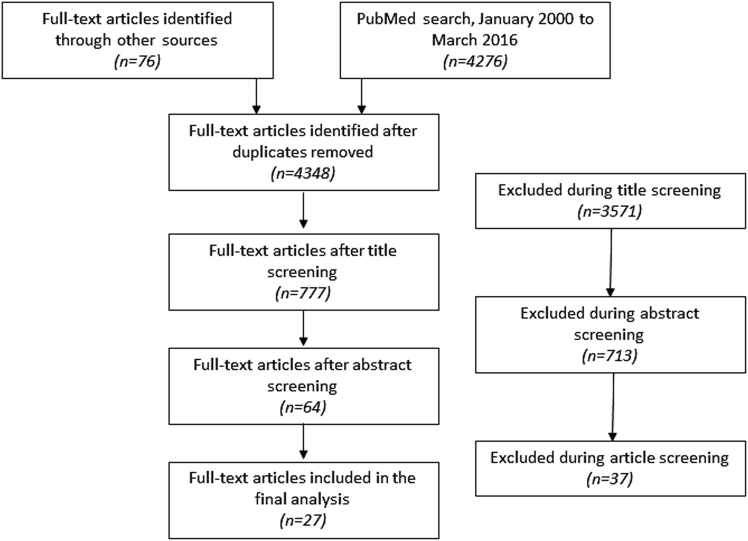
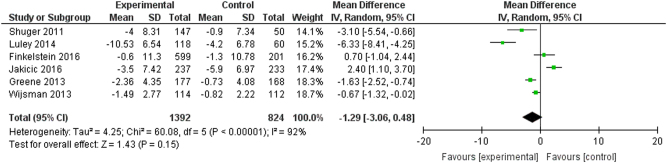
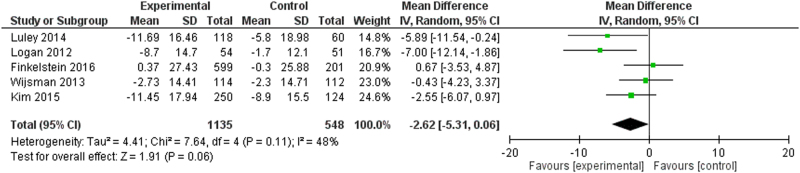
Despite growing interest in remote patient monitoring, limited evidence exists to substantiate claims of its ability to improve outcomes. Our aim was to evaluate randomized controlled trials (RCTs) that assess the effects of using wearable biosensors (e.g. activity trackers) for remote patient monitoring on clinical outcomes. We expanded upon prior reviews by assessing effectiveness across indications and presenting quantitative summary data. We searched for articles from January 2000 to October 2016 in PubMed, reviewed 4,348 titles, selected 777 for abstract review, and 64 for full text review. A total of 27 RCTs from 13 different countries focused on a range of clinical outcomes and were retained for final analysis; of these, we identified 16 high-quality studies. We estimated a difference-in-differences random effects meta-analysis on select outcomes. We weighted the studies by sample size and used 95% confidence intervals (CI) around point estimates. Difference-in-difference point estimation revealed no statistically significant impact of remote patient monitoring on any of six reported clinical outcomes, including body mass index (−0.73; 95% CI: −1.84, 0.38), weight (−1.29; −3.06, 0.48), waist circumference (−2.41; −5.16, 0.34), body fat percentage (0.11; −1.56, 1.34), systolic blood pressure (−2.62; −5.31, 0.06), and diastolic blood pressure (−0.99; −2.73, 0.74). Studies were highly heterogeneous in their design, device type, and outcomes. Interventions based on health behavior models and personalized coaching were most successful. We found substantial gaps in the evidence base that should be considered before implementation of remote patient monitoring in the clinical setting.
Overview
The claims and statistics of this paper haven’t been checked yet.
Free: it reads the open-access text and checks the first 5 claims that cite a source we can check. Create a free account to check every claim.
Integrity signals
Registry
Cites
Statistics
Figures




Verification
Claims the paper makes
The claims and statistics of this paper haven’t been checked yet.
Free: it reads the open-access text and checks the first 5 claims that cite a source we can check. Create a free account to check every claim.
Claims other papers make about this one
Each is checked against this paper’s own text: does it say what the citing paper says it does?
The cited source doesn’t support the claim as written.
In the citing paper
“Over recent years, GP practices have been encouraged to utilise digital health technology as extensive research has demonstrated the value of mobile health (mHealth) solutions in primary care and in the management of chronic conditions [11].”
From A prospective observational real world feasibility study assessing the role of app-based remote patient monitoring in reducing primary care clinician workload during the COVID pandemic (2021) · cites this paper as [11]
Checked by a reasoning model — may be wrong.
Experimental — accuracy not yet measuredThe source backs part of the claim, not all of it — or backs it for a different population, condition or comparison.
In the citing paper
“Several randomized controlled trials have demonstrated that RPM-HTN can be effective and cost-effective in managing hypertension, enhancing BP control, and mitigating cardiovascular disease events.7–12”
From Program cost and return on investment analysis of remote patient monitoring for hypertension management in the cardiology department of a large healthcare system (2026) · cites this paper as [9]
Experimental — accuracy not yet measuredThe source backs part of the claim, not all of it — or backs it for a different population, condition or comparison.
In the citing paper
“This offers the promise of marked reduction of cost, less requirement for healthcare workforce, avoidance of nosocomial infections and medical errors that occur in medical facilities, along with the comfort, convenience and emotional support of being with family members 48 .”
From Multimodal biomedical AI (2022) · cites this paper as [48]
Experimental — accuracy not yet measuredThe source backs part of the claim, not all of it — or backs it for a different population, condition or comparison.
In the citing paper
“Recent progress with biosensors, continuous monitoring and analytics raises the possibility of simulating the hospital setting in a person's home.”
From Multimodal biomedical AI (2022) · cites this paper as [48]
Experimental — accuracy not yet measuredThe cited source says what the claim attributes to it.
In the citing paper
“Randomized clinical trials of RPM showed mixed results overall, but some targeted use cases showed promise.5”
From Trends in Remote Patient Monitoring Use in Traditional Medicare (2022) · cites this paper as [5]
1 more claim about this paper
Create a free account to see every claim other papers make about this one.
Self-check
Percentages, sums and reported differences re-computed from the paper’s own numbers.
The self-check needs the paper’s full text.
Citations
Cites
The theory of planned behavior
Ajzen, I. (1991) · Organizational Behavior and Human Decision Processes · doi:10.1016/0749-5978(91)90020-t · Cited by 90,587
Quantifying heterogeneity in a meta‐analysis
Higgins, J. P. T., & Thompson, S. G. (2002) · Statistics in Medicine · doi:10.1002/sim.1186 · Cited by 36,763 · cited 2×
“We also assessed for heterogeneity using the I(2) statistic and calculated the 95% confidence intervals using the standard methods described by Higgins et al.(51) We did not perform tests for funnel plot asymmetry to examine publication bias given that this type of analysis is not recommended for meta-analyses with fe…”
MethodInterrater reliability: The kappa statistic
McHugh, M. L. (2012) · Biochemia Medica · doi:10.11613/bm.2012.031 · Cited by 19,877 · cited 1×
“85.(49) For studies identified in the second review process, a second independent review was performed.”
BackgroundOlder Adults' Reasons for Using Technology while Aging in Place
Peek, S. T. M., Luijkx, K. G., Rijnaard, M. D., Nieboer, M. E., van der Voort, C. S., Aarts, S., van Hoof, J., Vrijhoef, H. J. M., & Wouters, E. J. M. (2016) · Gerontology · doi:10.1159/000430949 · Cited by 19,690
Assessing the quality of reports of randomized clinical trials: Is blinding necessary?
Jadad, A. R., Moore, R. A., Carroll, D., Jenkinson, C., Reynolds, D. J. M., Gavaghan, D. J., & McQuay, H. J. (1996) · Controlled Clinical Trials · doi:10.1016/0197-2456(95)00134-4 · Cited by 17,582
Zhang, Q., Wang, C., Zheng, M., Li, Y., Li, J., Zhang, L., Shang, X., & Yan, C. (2015) · Cerebrovascular Diseases · doi:10.1159/000369778 · Cited by 11,533
In search of how people change: Applications to addictive behaviors.
Prochaska, J. O., DiClemente, C. C., & Norcross, J. C. (1992) · American Psychologist · doi:10.1037/0003-066x.47.9.1102 · Cited by 8,596
Sterne, J. A. C., Sutton, A. J., Ioannidis, J. P. A., Terrin, N., Jones, D. R., Lau, J., Carpenter, J., Rucker, G., Harbord, R. M., Schmid, C. H., et al. (2011) · BMJ · doi:10.1136/bmj.d4002 · Cited by 7,709
Dong, Y., Hao, L., Shi, Z., Wang, G., Zhang, Z., & Han, C. (2013) · Urologia Internationalis · doi:10.1159/000351405 · Cited by 4,540
The Health Belief Model and Preventive Health Behavior
Rosenstock, I. M. (1974) · Health Education Monographs · doi:10.1177/109019817400200405 · Cited by 3,643
Hibbard, J. H., Stockard, J., Mahoney, E. R., & Tusler, M. (2004) · Health Services Research · doi:10.1111/j.1475-6773.2004.00269.x · Cited by 2,748
McCambridge, J., Witton, J., & Elbourne, D. R. (2014) · Journal of Clinical Epidemiology · doi:10.1016/j.jclinepi.2013.08.015 · Cited by 2,748
What Is eHealth (3): A Systematic Review of Published Definitions
Oh, H., Jadad, A., Rizo, C., Enkin, M., Powell, J., & Pagliari, C. (2005) · Journal of Medical Internet Research · doi:10.2196/jmir.7.1.e1 · Cited by 1,015 · cited 2×
“The passive gathering of data may also permit clinicians to focus their efforts on diagnosing, educating, and treating patients, theoretically improving productivity and efficiency of the care provided.(8) However, despite anecdotal reports of RPM efficacy and growing interest in these new health technologies by resea…”
BackgroundThe emerging field of mobile health
Steinhubl, S. R., Muse, E. D., & Topol, E. J. (2015) · Science Translational Medicine · doi:10.1126/scitranslmed.aaa3487 · Cited by 822 · cited 2×
“Biosensors have been integrated into a variety of platforms, including watches, wristbands, skin patches, shoes, belts, textiles, and smartphones.(2,3) Patients have the option to share data obtained by biosensors with their providers or social networks to support clinical treatment decisions and disease selfmanagemen…”
BackgroundOng, M. K., Romano, P. S., Edgington, S., Aronow, H. U., Auerbach, A. D., Black, J. T., De Marco, T., Escarce, J. J., Evangelista, L. S., Hanna, B., et al. (2016) · JAMA Internal Medicine · doi:10.1001/jamainternmed.2015.7712 · Cited by 695 · cited 2×
“followed 1437 participants hospitalized with heart failure who were randomized to RPM or usual care.(16) Centralized nurses actively monitored the RPM data.”
BackgroundKvedar, J., Coye, M. J., & Everett, W. (2014) · Health Affairs · doi:10.1377/hlthaff.2013.0992 · Cited by 629 · cited 1×
“This approach seeks to optimize applications and sensors within a biopsychosocial framework.(44) By using validated behavior-based models from the psychological and public health literature that integrate a variety of data from time of day to step counts, to the local weather, to levels of depression or anxiety, these…”
BackgroundWhat Is Telemedicine? A Collection of 104 Peer-Reviewed Perspectives and Theoretical Underpinnings
Sood, S., Mbarika, V., Jugoo, S., Dookhy, R., Doarn, C. R., Prakash, N., & Merrell, R. C. (2007) · Telemedicine and e-Health · doi:10.1089/tmj.2006.0073 · Cited by 627 · cited 1×
“Non-invasive biosensors that allow for RPM offer patients and clinicians real-time data that has the potential to improve the timeliness of care, boost treatment adherence, and drive improved health outcomes.(4,9) The passive gathering of data may also permit clinicians to focus their efforts on diagnosing, educating,…”
BackgroundJakicic, J. M., Davis, K. K., Rogers, R. J., King, W. C., Marcus, M. D., Helsel, D., Rickman, A. D., Wahed, A. S., & Belle, S. H. (2016) · JAMA · doi:10.1001/jama.2016.12858 · Cited by 621 · cited 1×
“received a low-calorie diet, prescription for physical activity, text message prompts, group counseling sessions, telephone counseling sessions, and access to materials on a website; the enhanced intervention group also received an activity tracker (FIT Core) that displayed data via the device interface or a website.(…”
MethodBanaee, H., Ahmed, M., & Loutfi, A. (2013) · Sensors · doi:10.3390/s131217472 · Cited by 452 · cited 1×
“A 2005 systematic review uncovered over 50 unique and disparate definitions for the term e-health in the literature.(6) A similar 2007 study found 104 individual definitions for the term telemedicine.”
BackgroundHow to evaluate technologies for health behavior change in HCI research
Klasnja, P., Consolvo, S., & Pratt, W. (2011) · Proceedings of the SIGCHI Conference on Human Factors in Computing Systems · doi:10.1145/1978942.1979396 · Cited by 414
Remote Patient Monitoring via Non-Invasive Digital Technologies: A Systematic Review
Vegesna, A., Tran, M., Angelaccio, M., & Arcona, S. (2017) · Telemedicine and e-Health · doi:10.1089/tmj.2016.0051 · Cited by 404
Finkelstein, E. A., Haaland, B. A., Bilger, M., Sahasranaman, A., Sloan, R. A., Nang, E. E. K., & Evenson, K. R. (2016) · The Lancet Diabetes & Endocrinology · doi:10.1016/s2213-8587(16)30284-4 · Cited by 402 · cited 2×
“employed a behavioral economics study design, randomizing 800 participants from 13 companies in Singapore to one of four groups: (1) the control group, (2) Fitbit Zip activity tracker alone, (3) Fitbit Zip plus charity incentives, or (4) Fitbit Zip plus cash incentives.(36) At 12 months, the Fitbit-only group and the…”
BackgroundMethodFrom Wearable Sensors to Smart Implants-–Toward Pervasive and Personalized Healthcare
Andreu-Perez, J., Leff, D. R., Ip, H. M. D., & Yang, G.-Z. (2015) · IEEE Transactions on Biomedical Engineering · doi:10.1109/tbme.2015.2422751 · Cited by 383 · cited 2×
“INTRODUCTION Wearable biosensors are non-invasive devices used to acquire, transmit, process, store, and retrieve health-related data.(1) Biosensors have been integrated into a variety of platforms, including watches, wristbands, skin patches, shoes, belts, textiles, and smartphones.”
BackgroundUse and Adoption Challenges of Wearable Activity Trackers
Shih, P. C., Han, K., Poole, E. S., Rosson, M. B., & Carroll, J. M. (2015) · Illinois Digital Environment for Access to Learning and Scholarship (University of Illinois at Urbana-Champaign) · Cited by 316
Wang, J. B., Cadmus-Bertram, L. A., Natarajan, L., White, M. M., Madanat, H., Nichols, J. F., Ayala, G. X., & Pierce, J. P. (2015) · Telemedicine and e-Health · doi:10.1089/tmj.2014.0176 · Cited by 308 · cited 1×
“, 67 participants who were overweight or obese were randomly assigned to wear a Fitbit One activity tracker alone or to wear the activity tracker combined with receiving physical activity prompts three times a day via text messages.(32) The researchers found that both groups wearing the Fitbit devices saw a small incr…”
MethodThe Promise of mHealth: Daily Activity Monitoring and Outcome Assessments by Wearable Sensors
Dobkin, B. H., & Dorsch, A. (2011) · Neurorehabilitation and Neural Repair · doi:10.1177/1545968311425908 · Cited by 291
Ginis, P., Nieuwboer, A., Dorfman, M., Ferrari, A., Gazit, E., Canning, C. G., Rocchi, L., Chiari, L., Hausdorff, J. M., & Mirelman, A. (2016) · Parkinsonism & Related Disorders · doi:10.1016/j.parkreldis.2015.11.004 · Cited by 225 · cited 2×
“, 40 participants with Parkinson’s disease undergoing gait training were randomized to home visits from the researcher who provided training on using a smartphone application and ankle-based wireless devices that offered positive and corrective feedback on gait, or an active control, in which they received personalize…”
BackgroundMethodLogan, A. G., Irvine, M. J., McIsaac, W. J., Tisler, A., Rossos, P. G., Easty, A., Feig, D. S., & Cafazzo, J. A. (2012) · Hypertension · doi:10.1161/hypertensionaha.111.188409 · Cited by 210
Shuger, S. L., Barry, V. W., Sui, X., McClain, A., Hand, G. A., Wilcox, S., Meriwether, R. A., Hardin, J. W., & Blair, S. N. (2011) · International Journal of Behavioral Nutrition and Physical Activity · doi:10.1186/1479-5868-8-41 · Cited by 198 · cited 1×
“randomized 197 overweight or obese participants between four groups: (1) a control group that received a self-directed weight loss program via a manual, (2) a group that participated in a group-based behavioral weight loss program, (3) a group that received an armband (the SenseWear Armband) that monitored energy bala…”
MethodFox, N., Hirsch-Allen, A., Goodfellow, E., Wenner, J., Fleetham, J., Ryan, C. F., Kwiatkowska, M., & Ayas, N. T. (2012) · Sleep · doi:10.5665/sleep.1728 · Cited by 197
Ryan, D., Price, D., Musgrave, S. D., Malhotra, S., Lee, A. J., Ayansina, D., Sheikh, A., Tarassenko, L., Pagliari, C., & Pinnock, H. (2012) · BMJ · doi:10.1136/bmj.e1756 · Cited by 197
Telehome monitoring in patients with cardiac disease who are at high risk of readmission
Woodend, A. K., Sherrard, H., Fraser, M., Stuewe, L., Cheung, T., & Struthers, C. (2008) · Heart & Lung · doi:10.1016/j.hrtlng.2007.04.004 · Cited by 176
Features and application of wearable biosensors in medical care
Ajami, S., & Teimouri, F. (2015) · Journal of Research in Medical Sciences · doi:10.4103/1735-1995.172991 · Cited by 159 · cited 2×
“Biosensors have been integrated into a variety of platforms, including watches, wristbands, skin patches, shoes, belts, textiles, and smartphones.(2,3) Patients have the option to share data obtained by biosensors with their providers or social networks to support clinical treatment decisions and disease selfmanagemen…”
BackgroundWijsman, C. A., Westendorp, R. G., Verhagen, E. A., Catt, M., Slagboom, P. E., de Craen, A. J., Broekhuizen, K., van Mechelen, W., van Heemst, D., van der Ouderaa, F., et al. (2013) · Journal of Medical Internet Research · doi:10.2196/jmir.2843 · Cited by 156
Pedone, C., Chiurco, D., Scarlata, S., & Incalzi, R. A. (2013) · BMC Health Services Research · doi:10.1186/1472-6963-13-82 · Cited by 131 · cited 2×
“followed 99 participants with COPD randomized to RPM or usual care, and found that the number of exacerbations and exacerbation-related hospitalizations dropped in the intervention group, but neither result was significant.(35) The BEAT-HF trial by Ong et al.”
BackgroundResultChau, J. P.-C., Lee, D. T.-F., Yu, D. S.-F., Chow, A. Y.-M., Yu, W.-C., Chair, S.-Y., Lai, A. S. F., & Chick, Y.-L. (2012) · International Journal of Medical Informatics · doi:10.1016/j.ijmedinf.2012.06.003 · Cited by 125 · cited 2×
“, 40 participants with a previous hospitalization and diagnosed with moderate or severe COPD were randomized to usual care or a telecare device kit that provided patient feedback and was monitored by a community nurse.(11) Although several participants experienced technical problems using the device kit, participants…”
BackgroundMethodDinesen, B., Haesum, L. K., Soerensen, N., Nielsen, C., Grann, O., Hejlesen, O., Toft, E., & Ehlers, L. (2012) · Journal of Telemedicine and Telecare · doi:10.1258/jtt.2012.110704 · Cited by 118 · cited 2×
“used a similar study design: 111 participants with COPD were randomized to receive telecare kits or usual care.(31) The study found reductions in hospital admissions and lower costs of admissions in the intervention group, but only the mean hospital admission rate was statistically significant.”
BackgroundMethodKent, P., Laird, R., & Haines, T. (2015) · BMC Musculoskeletal Disorders · doi:10.1186/s12891-015-0591-5 · Cited by 109 · cited 2×
“randomized 112 participants in eight clinics between wearing active wireless motion sensors placed along the spine, and placebo sensors while receiving physical therapy and guideline-based care.(28) Participants received six to eight physical therapy treatment sessions over 10 weeks and were followed for a year.”
BackgroundDe San Miguel, K., Smith, J., & Lewin, G. (2013) · Telemedicine and e-Health · doi:10.1089/tmj.2012.0244 · Cited by 107 · cited 2×
“, the intervention was similar: 80 participants received telehealth equipment that monitored vital signs daily and was observed by a telehealth nurse.(25) Patients in the intervention group experienced reductions in hospitalizations, emergency department visits, and length of stay, but none of the reductions were stat…”
BackgroundBloss, C. S., Wineinger, N. E., Peters, M., Boeldt, D. L., Ariniello, L., Kim, J. Y., Sheard, J., Komatireddy, R., Barrett, P., & Topol, E. J. (2016) · PeerJ · doi:10.7717/peerj.1554 · Cited by 107
Dorsch, A. K., Thomas, S., Xu, X., Kaiser, W., Dobkin, B. H., Emara, T., Edwards, D. J., Fonzetti, P., Maasch, J., Lee, S., et al. (2014) · Neurorehabilitation and neural repair · doi:10.1177/1545968314550369 · Cited by 101
Impact of Telehealth on Clinical Outcomes in Patients With Heart Failure
Dansky, K. H., Vasey, J., & Bowles, K. (2008) · Clinical Nursing Research · doi:10.1177/1054773808320837 · Cited by 94
Kim, Y.-N., Shin, D. G., Park, S., & Lee, C. H. (2015) · Hypertension Research · doi:10.1038/hr.2015.32 · Cited by 64 · cited 2×
“Two high-quality studies focused on hypertension.(15,23) Kim et al.”
BackgroundMethodLuley, C., Blaik, A., Götz, A., Kicherer, F., Kropf, S., Isermann, B., Stumm, G., & Westphal, S. (2014) · Journal of the American College of Nutrition · doi:10.1080/07315724.2013.875437 · Cited by 64
Pedone, C., Rossi, F. F., Cecere, A., Costanzo, L., & Antonelli Incalzi, R. (2015) · Journal of the American Geriatrics Society · doi:10.1111/jgs.13432 · Cited by 57
Pevnick, J. M., Fuller, G., Duncan, R., & Spiegel, B. M. R. (2016) · PLOS ONE · doi:10.1371/journal.pone.0165908 · Cited by 57 · cited 3×
“Non-invasive biosensors that allow for RPM offer patients and clinicians real-time data that has the potential to improve the timeliness of care, boost treatment adherence, and drive improved health outcomes.(4,9) The passive gathering of data may also permit clinicians to focus their efforts on diagnosing, educating,…”
BackgroundInfluentialSelf-citationGreene, J., Sacks, R., Piniewski, B., Kil, D., & Hahn, J. S. (2013) · Journal of Primary Care & Community Health · doi:10.1177/2150131912469546 · Cited by 55
Can pervasive sensing address current challenges in global healthcare?
Atallah, L., Lo, B. P. L., & Yang, G. (2012) · Journal of Epidemiology and Global Health · doi:10.1016/j.jegh.2011.11.005 · Cited by 54 · cited 1×
“0, eHealth, quantified self, self-tracking, telehealth, telemedicine, precision medicine, personalized medicine, and connected health are among those that are often used synonymously.(5) A 2005 systematic review uncovered over 50 unique and disparate definitions for the term e-health in the literature.”
BackgroundPiga, M., Tradori, I., Pani, D., Barabino, G., Dessì, A., Raffo, L., & Mathieu, A. (2014) · The Journal of Rheumatology · doi:10.3899/jrheum.130912 · Cited by 54 · cited 2×
“Four high-quality studies focused on providing feedback regarding various aspects of mobility rehabilitation, including stroke or Parkinson’s disease rehabilitation, low back pain physiotherapy, or hand function physical therapy.(20,24,27,28) Dorsch et al.”
BackgroundMethodLee, Y.-H., Hur, S.-H., Sohn, J., Lee, H.-M., Park, N.-H., Cho, Y.-K., Park, H.-S., Yoon, H.-J., Kim, H., Nam, C.-W., et al. (2013) · Journal of Korean Medical Science · doi:10.3346/jkms.2013.28.4.564 · Cited by 50
Scalvini, S., Zanelli, E., Martinelli, G., Baratti, D., Giordano, A., & Glisenti, F. (2005) · Journal of Telemedicine and Telecare · doi:10.1258/1357633054461930 · Cited by 45
Agboola, S., Flanagan, C., Searl, M., Elfiky, A., Kvedar, J., & Jethwani, K. (2014) · JMIR Research Protocols · doi:10.2196/resprot.4041 · Cited by 35
Pain Management in Cancer Patients Using a Mobile App: Study Design of a Randomized Controlled Trial
Agboola, S. O., Kamdar, M. M., Flanagan, C. F., Searl, M. M., Traeger, L. N., Kvedar, J. C., & Jethwani, K. (2014) · JMIR Research Protocols · doi:10.2196/resprot.3957 · Cited by 34
Agboola, S., Palacholla, R. S., Centi, A., Kvedar, J., & Jethwani, K. (2016) · JMIR Research Protocols · doi:10.2196/resprot.5489 · Cited by 11
Novel electrogram device with web-based service centre for ambulatory ECG monitoring.
Tan, B. Y., Ho, K. L., Ching, C. K., & Teo, W. S. (2010) · PubMed · Cited by 3
Cited by
Zhou, B., Perel, P., Mensah, G. A., & Ezzati, M. (2021) · Nature Reviews Cardiology · doi:10.1038/s41569-021-00559-8 · Cited by 1,521
Acosta, J. N., Falcone, G. J., Rajpurkar, P., & Topol, E. J. (2022) · Nature Medicine · doi:10.1038/s41591-022-01981-2 · Cited by 1,365
Hakkarainen, J., Kuhlmann, G., Koene, E. F. M., Santaren, D., Meier, S., Krol, M., van Stratum, B., Ialongo, I., Chevallier, F., Tamminen, J., et al. (2016) · Pakistan Journal of Medical & Cardiological Review · doi:10.5281//zenodo · Cited by 1,154
Healthcare blockchain system using smart contracts for secure automated remote patient monitoring
Griggs, K. N., Ossipova, O., Kohlios, C. P., Baccarini, A. N., Howson, E. A., & Hayajneh, T. (2018) · Journal of Medical Systems · doi:10.1007/s10916-018-0982-x · Cited by 926
Accuracy of Fitbit Devices: Systematic Review and Narrative Syntheses of Quantitative Data
Feehan, L. M., Geldman, J., Sayre, E. C., Park, C., Ezzat, A. M., Yoo, J. Y., Hamilton, C. B., & Li, L. C. (2018) · JMIR mHealth and uHealth · doi:10.2196/10527 · Cited by 616
“Although designed as a consumer product to help motivate individuals to be physically active, Fitbit devices are becoming increasingly popular as measurement tools in physical activity and health promotion research and are also commonly used to inform patient–health professional interactions [3-7].”
Background
Metadata
- Authors
- Noah, B., Keller, M. S., Mosadeghi, S., Stein, L., Johl, S., Delshad, S., Tashjian, V. C., Lew, D., Kwan, J. T., Jusufagic, A., & Spiegel, B. M. R.
- Affiliations
- Cedars-Sinai Medical Center (US)
- University of Arizona (US)
- Corresponding author
- Spiegel, Brennan M. R.
- ORCID
- Venue
- npj Digital Medicine
- Published
- 2018-01-15
- Volume
- 1
- Issue
- 1
- Pages
- 20172-20172
- ISSN
- 2398-6352 (ISSN-L)
- PMC
- PMC6550143
- OpenAlex
- W2771061271
- Cited by
- 273
- References
- 55
- Citations by year
- 2026: 30 · 2025: 30 · 2024: 37 · 2023: 32 · 2022: 34 · 2021: 30 · 2020: 37 · 2019: 23 · 2018: 19
- FWCI
- 3.80
- Type
- journal article
- Language
- en
- Update notices
- correction (2018-04-09)
- Open access
- hybrid
- doi.org
- Licence
- cc-by
- creativecommons.org/licenses/by/4.0 (tdm)
- creativecommons.org/licenses/by/4.0 (vor)
- Locations
- npj Digital Medicine (publishedVersion, cc-by)
- Europe PMC (PubMed Central) (publishedVersion, cc-by)
- PubMed Central (publishedVersion, cc-by)
- PubMed (publishedVersion)
- DOAJ (DOAJ: Directory of Open Access Journals) (submittedVersion)
- eScholarship (California Digital Library) (submittedVersion, cc-by)
- eScholarship (California Digital Library) (submittedVersion, cc-by-nc-nd)
- Topics
- Health Sciences › Health Professions › General Health Professions › Mobile Health and mHealth Applications
- Health Sciences › Medicine › Public Health, Environmental and Occupational Health › Telemedicine and Telehealth Implementation
- Physical Sciences › Engineering › Biomedical Engineering › Non-Invasive Vital Sign Monitoring
- Keywords
- remote patient monitoring, wearable biosensors, wearable activity trackers, clinical outcomes, body mass index, waist circumference, body fat percentage, blood pressure, weight loss, personalized coaching, health behavior models, evidence gaps
About these checks
Registry, retraction, Cites and statistics results are computed, not judged, with one exception: a printed reference that no index lists is read once by a model before it counts as a citation error. Claims are extracted by a model and kept only when their quote appears verbatim in the text; each cited source is then checked, with a model’s help, for whether it says what the claim relies on. Those verdicts can be wrong — read the claim’s quote and the cited source before relying on one.
Statistics and arithmetic are recomputed, not judged.
Confidence bands are shown only for fields calibrated on our annotated test set. None is calibrated yet, so no band is shown.
What counts as a claim ›How we measure confidence ›How we check this ›
Are you an author, or do you see a problem with this page? Request a review
Data sources
Bibliographic data: Semantic Scholar, OpenAlex, Crossref.
Contains information from the Semantic Scholar Academic Graph Datasets, made available under the ODC Attribution License (ODC-BY 1.0).
Semantic Scholar’s data is described in: Kinney, R., et al. (2023). The Semantic Scholar Open Data Platform. arXiv:2301.10140.
