

Randomized controlled trial of a 12-week digital care program in improving low back pain
Open accessThe DOI matches its Crossref record; 38 of the 38 references it cites were found in a registry or an index.
Abstract
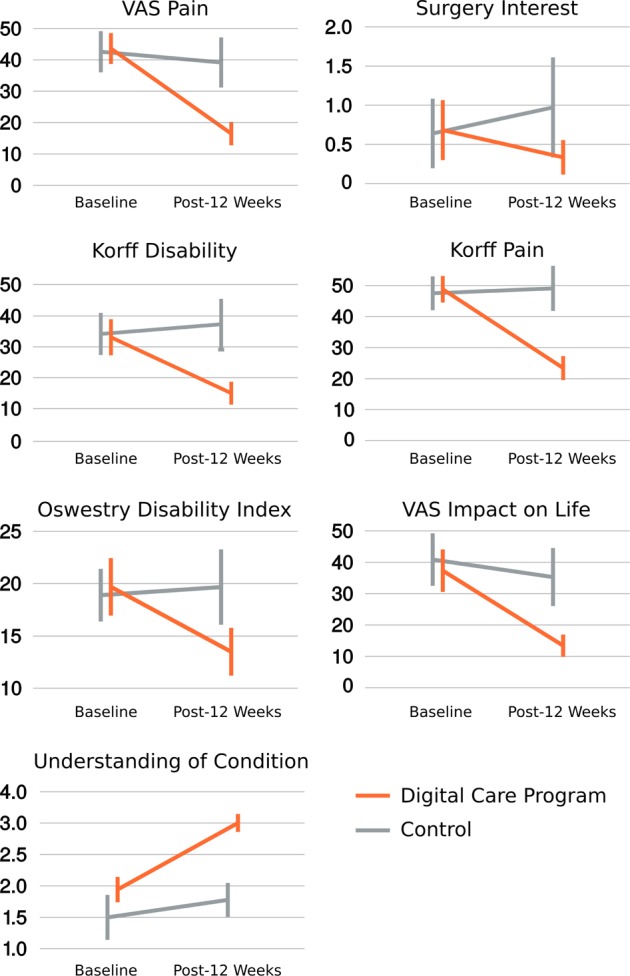
Low back pain (LBP) is the leading cause of disability throughout the world and is economically burdensome. The recommended first line treatment for non-specific LBP is non-invasive care. A digital care program (DCP) delivering evidence-based non-invasive treatment for LBP can aid self-management by engaging patients and scales personalized therapy for patient-specific needs. We assessed the efficacy of a 12-week DCP for LBP in a two-armed, pre-registered, randomized, controlled trial (RCT). Participants were included based on self-reported duration of LBP, but those with surgery or injury to the lower back in the previous three months were excluded. The treatment group (DCP) received the 12-week DCP, consisting of sensor-guided exercise therapy, education, cognitive behavioral therapy, team and individual behavioral coaching, activity tracking, and symptom tracking – all administered remotely via an app. The control group received three digital education articles only. All participants maintained access to treatment-as-usual. At 12 weeks, an intention-to-treat analysis showed each primary outcome—Oswestry Disability Index ( p < 0.001), Korff Pain ( p < 0.001) and Korff Disability ( p < 0.001)—as well as each secondary outcome improved more for participants in the DCP group compared to control group. For participants who completed the DCP (per protocol), average improvement in pain outcomes ranged 52-64% (Korff: 48.8–23.4, VAS: 43.6–16.5, VAS impact on daily life: 37.3–13.4; p < 0.01 for all) and average improvement in disability outcomes ranged 31–55% (Korff: 33.1–15, ODI: 19.7–13.5; p < 0.01 for both). Surgical interest significantly reduced in the DCP group. Participants that completed the DCP had an average engagement, each week, of 90%. Future studies will further explore the effectiveness of the DCP for long-term outcomes beyond 12 weeks and for a LBP patient population with possibly greater baseline pain and disability. In conclusion, the DCP resulted in improved LBP outcomes compared to treatment-as-usual and has potential to scale personalized evidence-based non-invasive treatment for LBP patients.
Overview
The claims and statistics of this paper haven’t been checked yet.
Free: it reads the open-access text and checks the first 5 claims that cite a source we can check. Create a free account to check every claim.
Integrity signals
Registry
Cites
Statistics
Figures
Verification
Claims the paper makes
The claims and statistics of this paper haven’t been checked yet.
Free: it reads the open-access text and checks the first 5 claims that cite a source we can check. Create a free account to check every claim.
Claims other papers make about this one
Each is checked against this paper’s own text: does it say what the citing paper says it does?
The check wasn’t confident either way, so it gives no verdict — never disputed.
In the citing paper
“In fact, DL has the ability to enhance human lives by providing additional accuracy in diagnosis, including estimating natural disasters [40], the discovery of new drugs [41], and cancer diagnosis [42–44].”
From Review of deep learning: concepts, CNN architectures, challenges, applications, future directions (2021) · cites this paper as [44]
Experimental — accuracy not yet measuredThe check wasn’t confident either way, so it gives no verdict — never disputed.
In the citing paper
“Furthermore, in grading prostate cancer, US board-certified general pathologists achieved an average accuracy of 61%, while the Google AI [44] outperformed these specialists by achieving an average accuracy of 70%.”
From Review of deep learning: concepts, CNN architectures, challenges, applications, future directions (2021) · cites this paper as [44]
Experimental — accuracy not yet measuredThe check wasn’t confident either way, so it gives no verdict — never disputed.
In the citing paper
“Finally, the application of DHT sensor-outcomes to monitor RA during daily life remains yet to be validated against standard in-clinic administered assessments of RA impact24.”
From Digital health technologies and machine learning augment patient reported outcomes to remotely characterise rheumatoid arthritis (2024) · cites this paper as [24]
Experimental — accuracy not yet measuredThe check wasn’t confident either way, so it gives no verdict — never disputed.
In the citing paper
“Particular issues are presented by the use of published data, which can be unvalidated or incomplete due to selective reporting26,27.”
From Machine intelligence in healthcare—perspectives on trustworthiness, explainability, usability, and transparency (2020) · cites this paper as [26]
Experimental — accuracy not yet measured
Self-check
Percentages, sums and reported differences re-computed from the paper’s own numbers.
The self-check needs the paper’s full text.
Citations
Cites
Fitting Linear Mixed-Effects Models Using lme4
Bates, D., Mächler, M., Bolker, B., & Walker, S. (2015) · Journal of Statistical Software · doi:10.18637/jss.v067.i01 · Cited by 86,835
Vos, T., Abajobir, A. A., Abate, K. H., Abbafati, C., Abbas, K. M., Abd-Allah, F., Abdulkader, R. S., Abdulle, A. M., Abebo, T. A., Abera, S. F., et al. (2017) · The Lancet · doi:10.1016/s0140-6736(17)32154-2 · Cited by 13,220
‘Small Changes' to Diet and Physical Activity Behaviors for Weight Management
Hills, A. P., Byrne, N. M., Lindstrom, R., & Hill, J. O. (2013) · Obesity Facts · doi:10.1159/000345030 · Cited by 9,493
Fairbank, J. C. T., & Pynsent, P. B. (2000) · Spine · doi:10.1097/00007632-200011150-00017 · Cited by 5,851
Qaseem, A., Wilt, T. J., McLean, R. M., Forciea, M. A., & for the Clinical Guidelines Committee of the American College of Physicians* (2017) · Annals of Internal Medicine · doi:10.7326/m16-2367 · Cited by 3,234
Epidemiological features of chronic low-back pain
Andersson, G. B. (1999) · The Lancet · doi:10.1016/s0140-6736(99)01312-4 · Cited by 3,181
Prevention and treatment of low back pain: evidence, challenges, and promising directions
Foster, N. E., Anema, J. R., Cherkin, D., Chou, R., Cohen, S. P., Gross, D. P., Ferreira, P. H., Fritz, J. M., Koes, B. W., Peul, W., et al. (2018) · The Lancet · doi:10.1016/s0140-6736(18)30489-6 · Cited by 2,398
Ostelo, R. W. J. G., Deyo, R. A., Stratford, P., Waddell, G., Croft, P., Von Korff, M., Bouter, L. M., & de Vet, H. C. (2008) · Spine · doi:10.1097/brs.0b013e31815e3a10 · Cited by 2,009
Lumbar Disc Disorders and Low-Back Pain: Socioeconomic Factors and Consequences
Katz, J. N. (2006) · Journal of Bone and Joint Surgery · doi:10.2106/jbjs.e.01273 · Cited by 1,645
A primary care back pain screening tool: identifying patient subgroups for initial treatment
Hill, J. C., Dunn, K. M., Lewis, M., Mullis, R., Main, C. J., Foster, N. E., & Hay, E. M. (2008) · Arthritis Care & Research · doi:10.1002/art.23563 · Cited by 1,052
Cited by
Review of deep learning: concepts, CNN architectures, challenges, applications, future directions
Alzubaidi, L., Zhang, J., Humaidi, A. J., Al-Dujaili, A., Duan, Y., Al-Shamma, O., Santamaría, J., Fadhel, M. A., Al-Amidie, M., & Farhan, L. (2021) · Journal of Big Data · doi:10.1186/s40537-021-00444-8 · Cited by 7,906
Use of AI-based tools for healthcare purposes: a survey study from consumers’ perspectives
Esmaeilzadeh, P. (2020) · BMC Medical Informatics and Decision Making · doi:10.1186/s12911-020-01191-1 · Cited by 507
Real-world data: A brief review of the methods, applications, challenges and opportunities
Liu, F., & Panagiotakos, D. (2022) · BMC Medical Research Methodology · doi:10.1186/s12874-022-01768-6 · Cited by 496
Exercise therapy for chronic low back pain
Hayden, J. A., Ellis, J., Ogilvie, R., Malmivaara, A., & van Tulder, M. W. (2021) · Cochrane Database of Systematic Reviews · doi:10.1002/14651858.cd009790.pub2 · Cited by 589
Cutillo, C. M., Sharma, K. R., Foschini, L., Kundu, S., Mackintosh, M., Mandl, K. D., MI in Healthcare Workshop Working Group, Beck, T., Collier, E., Colvis, C., et al. (2020) · npj Digital Medicine · doi:10.1038/s41746-020-0254-2 · Cited by 337
Guo, C., Ashrafian, H., Ghafur, S., Fontana, G., Gardner, C., & Prime, M. (2020) · npj Digital Medicine · doi:10.1038/s41746-020-00314-2 · Cited by 316
Non-invasive decision support for NSCLC treatment using PET/CT radiomics
Mu, W., Jiang, L., Zhang, J., Shi, Y., Gray, J. E., Tunali, I., Gao, C., Sun, Y., Tian, J., Zhao, X., et al. (2020) · Nature Communications · doi:10.1038/s41467-020-19116-x · Cited by 289
Scheetz, J., Rothschild, P., McGuinness, M., Hadoux, X., Soyer, H. P., Janda, M., Condon, J. J. J., Oakden-Rayner, L., Palmer, L. J., Keel, S., et al. (2021) · Scientific Reports · doi:10.1038/s41598-021-84698-5 · Cited by 273
Marwaha, J. S., Landman, A. B., Brat, G. A., Dunn, T., & Gordon, W. J. (2022) · npj Digital Medicine · doi:10.1038/s41746-022-00557-1 · Cited by 241
The role of data science in healthcare advancements: applications, benefits, and future prospects
Subrahmanya, S. V. G., Shetty, D. K., Patil, V., Hameed, B. M. Z., Paul, R., Smriti, K., Naik, N., & Somani, B. K. (2022) · Irish Journal of Medical Science (1971 -) · doi:10.1007/s11845-021-02730-z · Cited by 228
The state of the art of deep learning models in medical science and their challenges
Bhatt, C., Kumar, I., Vijayakumar, V., Singh, K. U., & Kumar, A. (2021) · Multimedia Systems · doi:10.1007/s00530-020-00694-1 · Cited by 222
Deep representation learning of electronic health records to unlock patient stratification at scale
Landi, I., Glicksberg, B. S., Lee, H.-C., Cherng, S., Landi, G., Danieletto, M., Dudley, J. T., Furlanello, C., & Miotto, R. (2020) · npj Digital Medicine · doi:10.1038/s41746-020-0301-z · Cited by 213
Intelligent In‐Vehicle Interaction Technologies
Murali, P. K., Kaboli, M., & Dahiya, R. (2022) · Advanced Intelligent Systems · doi:10.1002/aisy.202100122 · Cited by 197
Toelle, T. R., Utpadel-Fischler, D. A., Haas, K.-K., & Priebe, J. A. (2019) · npj Digital Medicine · doi:10.1038/s41746-019-0109-x · Cited by 164
Deep learning in digital pathology image analysis: a survey
Deng, S., Zhang, X., Yan, W., Chang, E. I.-C., Fan, Y., Lai, M., & Xu, Y. (2020) · Frontiers of Medicine · doi:10.1007/s11684-020-0782-9 · Cited by 160
Human and Machine: The Impact of Machine Input on Decision Making Under Cognitive Limitations
Boyacı, T., Canyakmaz, C., & de Véricourt, F. (2024) · Management Science · doi:10.1287/mnsc.2023.4744 · Cited by 150
Utilizing Digital Health Technologies for Patient Education in Lifestyle Medicine
Kuwabara, A. M., Su, S., & Krauss, J. (2019) · American Journal of Lifestyle Medicine · doi:10.1177/1559827619892547 · Cited by 181
“For example, a randomized control trial demonstrated a 12-week remote digital care program improved low back pain by providing sensor-guided exercise therapy, education, cognitive behavioral therapy, behavioral coaching and tracking.(50) Other programs providing patient education have shown benefit in improving sleep,…”
BackgroundRemote smartphone monitoring of Parkinson’s disease and individual response to therapy
Omberg, L., Neto, E. C., Perumal, T. M., Pratap, A., Tediarjo, A., Adams, J., Bloem, B. R., Bot, B. M., Elson, M. J., Goldman, S. M., et al. (2021) · Nature Biotechnology · doi:10.1038/s41587-021-00974-9 · Cited by 151
Shreve, J. T., Khanani, S. A., & Haddad, T. C. (2022) · American Society of Clinical Oncology Educational Book · doi:10.1200/edbk_350652 · Cited by 172
Explaining Models by Propagating Shapley Values of Local Components
Chen, H., Lundberg, S., & Lee, S. (2020) · Studies in computational intelligence · doi:10.1007/978-3-030-53352-6_24 · Cited by 184
Rajpurkar, P., O’Connell, C., Schechter, A., Asnani, N., Li, J., Kiani, A., Ball, R. L., Mendelson, M., Maartens, G., van Hoving, D. J., et al. (2020) · npj Digital Medicine · doi:10.1038/s41746-020-00322-2 · Cited by 137
Anan, T., Kajiki, S., Oka, H., Fujii, T., Kawamata, K., Mori, K., & Matsudaira, K. (2021) · JMIR mHealth and uHealth · doi:10.2196/27535 · Cited by 126
Moon, S., Song, H.-J., Sharma, V. D., Lyons, K. E., Pahwa, R., Akinwuntan, A., & Devos, H. (2020) · Journal of NeuroEngineering and Rehabilitation · doi:10.1186/s12984-020-00756-5 · Cited by 153
Diabetes detection based on machine learning and deep learning approaches
Wee, B. F., Sivakumar, S., Lim, K. H., Wong, W. K., & Juwono, F. H. (2023) · Multimedia Tools and Applications · doi:10.1007/s11042-023-16407-5 · Cited by 168
Machine and deep learning for longitudinal biomedical data: a review of methods and applications
Cascarano, A., Mur-Petit, J., Hernández-González, J., Camacho, M., Eadie, N. D. T., Gkontra, P., Chadeau‐Hyam, M., Vitria, J. M., & Lekadir, K. (2023) · Artificial Intelligence Review · doi:10.1007/s10462-023-10561-w · Cited by 185
Review—The Development of Wearable Polymer-Based Sensors: Perspectives
Harito, C., Utari, L., Putra, B. R., Yuliarto, B., Purwanto, S., Zaidi, S. Z. J., Bavykin, D. V., Marken, F., & Walsh, F. C. (2020) · Journal of The Electrochemical Society · doi:10.1149/1945-7111/ab697c · Cited by 130
Harnessing consumer smartphone and wearable sensors for clinical cancer research
Low, C. A. (2020) · npj Digital Medicine · doi:10.1038/s41746-020-00351-x · Cited by 120
Hewitt, S., Sephton, R., & Yeowell, G. (2020) · Journal of Medical Internet Research · doi:10.2196/15617 · Cited by 116
“In all, 16 of the included studies [6,14-16,18-27,29-33] used outcomes that assessed functional disability.”
BackgroundResultInfluentialAutomated bone marrow cytology using deep learning to generate a histogram of cell types
Tayebi, R. M., Mu, Y., Dehkharghanian, T., Ross, C. A., Sur, M., Foley, R., Tizhoosh, H. R., & Campbell, C. J. V. (2022) · Communications Medicine · doi:10.1038/s43856-022-00107-6 · Cited by 137
Gohir, S. A., Eek, F., Kelly, A., Abhishek, A., & Valdes, A. M. (2021) · JAMA Network Open · doi:10.1001/jamanetworkopen.2021.0012 · Cited by 136
Jayakumar, S., Sounderajah, V., Normahani, P., Harling, L., Markar, S. R., Ashrafian, H., & Darzi, A. (2022) · npj Digital Medicine · doi:10.1038/s41746-021-00544-y · Cited by 110
Digital Care for Chronic Musculoskeletal Pain: 10,000 Participant Longitudinal Cohort Study
Bailey, J. F., Agarwal, V., Zheng, P., Smuck, M., Fredericson, M., Kennedy, D. J., & Krauss, J. (2020) · Journal of Medical Internet Research · doi:10.2196/18250 · Cited by 109
“For chronic musculoskeletal pain specifically, the DCP in this study was previously evaluated in two randomized control trials and demonstrated effectiveness for improving pain and disability associated with knee pain [17] and low back pain [18].”
BackgroundSelf-citationÖzden, F., Sarı, Z., Karaman, Ö., & Aydoğmuş, H. (2021) · Irish Journal of Medical Science (1971 -) · doi:10.1007/s11845-021-02727-8 · Cited by 129
Pfeifer, A.-C., Uddin, R., Schröder-Pfeifer, P., Holl, F., Swoboda, W., & Schiltenwolf, M. (2020) · Journal of Clinical Medicine · doi:10.3390/jcm9113557 · Cited by 108
“The other 11 RCTs compared their app-based intervention with active control groups that received either physiotherapy [46,47], educational reading material or other such information [36,40,42,44], recommendations to stay active [37,38], access to a self-help website [41,59], a wearable activity tracker without smartph…”
BackgroundMethodResultInfluentialPredicting Sports Injuries with Wearable Technology and Data Analysis
Zadeh, A. H., Taylor, D., Bertsos, M., Tillman, T., Nosoudi, N., & Bruce, S. (2020) · Information Systems Frontiers · doi:10.1007/s10796-020-10018-3 · Cited by 160
Polhemus, A., Delgado-Ortiz, L., Brittain, G., Chynkiamis, N., Salis, F., Gaßner, H., Gross, M., Kirk, C., Rossanigo, R., Taraldsen, K., et al. (2021) · npj Digital Medicine · doi:10.1038/s41746-021-00513-5 · Cited by 101
Novel deep transfer learning model for COVID-19 patient detection using X-ray chest images
Kumar, N., Gupta, M., Gupta, D., & Tiwari, S. (2021) · Journal of Ambient Intelligence and Humanized Computing · doi:10.1007/s12652-021-03306-6 · Cited by 109
The prospect of artificial intelligence to personalize assisted reproductive technology
Hanassab, S., Abbara, A., Yeung, A. C., Voliotis, M., Tsaneva-Atanasova, K. T., Kelsey, T., Trew, G. H., Nelson, S. M., Heinis, T., & Dhillo, W. S. (2024) · npj Digital Medicine · doi:10.1038/s41746-024-01006-x · Cited by 130
AI-enabled remote monitoring of vital signs for COVID-19: methods, prospects and challenges
Rohmetra, H., Raghunath, N., Narang, P., Chamola, V., Guizani, M., & Lakkaniga, N. R. (2021) · Computing · doi:10.1007/s00607-021-00937-7 · Cited by 122
Eaton, C. K., Vallejo, N., McDonald, X., Wu, J., Rodríguez, R., Muthusamy, N., Mathioudakis, N. N., & Riekert, K. A. (2024) · Journal of Medical Internet Research · doi:10.2196/50508 · Cited by 142
Quality checkpoints in the MRI-directed prostate cancer diagnostic pathway
Barrett, T., de Rooij, M., Giganti, F., Allen, C., Barentsz, J. O., & Padhani, A. R. (2022) · Nature Reviews Urology · doi:10.1038/s41585-022-00648-4 · Cited by 102
A systematic review on AI/ML approaches against COVID-19 outbreak
Dogan, O., Tiwari, S., Jabbar, M. A., & Guggari, S. (2021) · Complex & Intelligent Systems · doi:10.1007/s40747-021-00424-8 · Cited by 87
Ryu, G., Lee, K., Park, D., Park, S. H., & Sagong, M. (2021) · Scientific Reports · doi:10.1038/s41598-021-02479-6 · Cited by 87
Non-Invasive Diagnosis of Deep Vein Thrombosis From Ultrasound With Machine Learning
Kainz, B., Heinrich, M. P., Makropoulos, A., Oppenheimer, J., Mandegaran, R., Sankar, S., Deane, C., Mischkewitz, S., Al-Noor, F., Rawdin, A., et al. (2020) · npj Digital Medicine · doi:10.1038/s41746-021-00503-7 · Cited by 92
Valentijn, P., Tymchenko, L., Jacobson, T., Kromann, J., Biermann, C. W., AlMoslemany, M. A., & Arends, R. (2022) · Journal of Medical Internet Research · doi:10.2196/37869 · Cited by 102
Connolly, S. L., Hogan, T. P., Shimada, S. L., & Miller, C. J. (2020) · Journal of Technology in Behavioral Science · doi:10.1007/s41347-020-00165-4 · Cited by 95
Design of hydrogel-based wearable EEG electrodes for medical applications
Hsieh, J.-C., Li, Y., Wang, H., Perz, M., Tang, Q., Tang, K. W. K., Pyatnitskiy, I., Reyes, R., Ding, H. Q., & Wang, H. (2022) · Journal of Materials Chemistry B · doi:10.1039/d2tb00618a · Cited by 86
Priebe, J. A., Haas, K. K., Sanchez, L. F. M., Schoefmann, K., Utpadel-Fischler, D., Stockert, P., Thoma, R., Schießl, C., Kerkemeyer, L., Amelung, V. E., et al. (2020) · Journal of Pain Research · doi:10.2147/jpr.s260761 · Cited by 88
Toilet-based continuous health monitoring using urine
Taşoğlu, S. (2022) · Nature Reviews Urology · doi:10.1038/s41585-021-00558-x · Cited by 87
Agarwal, M., Pasupathy, P., Wu, X., Recchia, S. S., & Pelegri, A. A. (2024) · Small Science · doi:10.1002/smsc.202300185 · Cited by 93
Swiderska-Chadaj, Z., de Bel, T., Blanchet, L., Baidoshvili, A., Vossen, D., van der Laak, J., & Litjens, G. (2020) · Scientific Reports · doi:10.1038/s41598-020-71420-0 · Cited by 69
Creagh, A. P., Hamy, V., Yuan, H., Mertes, G., Tomlinson, R., Chen, W.-H., Williams, R., Llop, C., Yee, C., Duh, M. S., et al. (2024) · npj Digital Medicine · doi:10.1038/s41746-024-01013-y · Cited by 64
Creagh, A. P., Hamy, V., Yuan, H., Mertes, G., Tomlinson, R., Chen, W.-H., Williams, R., Llop, C., Yee, C., Duh, M. S., et al. (2022) · doi:10.1101/2022.11.18.22282305 · Cited by 64
Keogh, A., Argent, R., Anderson, A., Caulfield, B., & Johnston, W. (2021) · Journal of NeuroEngineering and Rehabilitation · doi:10.1186/s12984-021-00931-2 · Cited by 79
Daniore, P., Nittas, V., Haag, C., Bernard, J., Gonzenbach, R. R., & von Wyl, V. (2024) · npj Digital Medicine · doi:10.1038/s41746-024-01151-3 · Cited by 89
Alhussein, G., & Hadjileontiadis, L. J. (2021) · JMIR mhealth and uhealth · doi:10.2196/32557 · Cited by 82
“This might be explained by the fact that patients self-reported these outcomes in all the evaluated studies without any validation [37,39,44,47,50,54,71], and in many cases, they tended to exaggerate their symptoms in an attempt to prolong the intervention period [50].”
BackgroundMethodInfluentialA scoping review of causal methods enabling predictions under hypothetical interventions
Lin, L., Sperrin, M., Jenkins, D. A., Martin, G. P., & Peek, N. B. (2021) · Diagnostic and Prognostic Research · doi:10.1186/s41512-021-00092-9 · Cited by 92
Lara‐Palomo, I. C., Gil-Martínez, E., Ramírez-García, J. D., Capel-Alcaraz, A. M., García‐López, H., Castro‐Sánchez, A. M., & Antequera-Soler, E. (2022) · Telemedicine Journal and e-Health · doi:10.1089/tmj.2021.0599 · Cited by 63
“40 In terms of follow-up, five studies 35,38–40 followed up at two points in time: at baseline and at 12 weeks 38,39,40 ; and at baseline and at 6 months.”
InfluentialSandal, L. F., Stochkendahl, M. J., Svendsen, M. J., Wood, K., Øverås, C. K., Nordstoga, A. L., Villumsen, M., Rasmussen, C. D. N., Nicholl, B., Cooper, K., et al. (2019) · JMIR Research Protocols · doi:10.2196/14720 · Cited by 59
“Only the study by Shebib and colleagues [63] reported greater improvements for the intervention group than the control group.”
Kanzler, C. M., Rinderknecht, M. D., Schwarz, A., Lamers, I., Gagnon, C., Held, J. P. O., Feys, P., Luft, A. R., Gassert, R., & Lambercy, O. (2020) · npj Digital Medicine · doi:10.1038/s41746-020-0286-7 · Cited by 58
Itoh, N., Mishima, H., Yoshida, Y., Yoshida, M., Oka, H., & Matsudaira, K. (2022) · JMIR mhealth and uhealth · doi:10.2196/35867 · Cited by 69
Webb, J., Peerbux, S., Smittenaar, P., Siddiqui, S., Sherwani, Y., Ahmed, M., MacRae, H., Puri, H., Bhalla, S., & Majeed, A. (2020) · JMIR Mental Health · doi:10.2196/22833 · Cited by 62
“They have been used successfully across a multitude of therapeutic areas, including chronic conditions [13-15] and the promotion of healthy behaviors [16-22].”
BackgroundSelf-citationMarques, A., Bösch, P., de Thurah, A. L., Meißner, Y., Falzon, L., Mukhtyar, C. B., Bijlsma, J. W. J., Dejaco, C., & Stamm, T. (2022) · RMD Open · doi:10.1136/rmdopen-2022-002290 · Cited by 61
AI-Assisted Decision-making: a Cognitive Modeling Approach to Infer Latent Reliance Strategies
Tejeda, H., Kumar, A., Smyth, P., & Steyvers, M. (2022) · Computational Brain & Behavior · doi:10.1007/s42113-022-00157-y · Cited by 53
Escriche-Escuder, A., De-Torres, I., Roldán‐Jiménez, C., Martín‐Martín, J., Muro-Culebras, A., González‐Sánchez, M., Ruiz‐Muñoz, M., Mayoral, F., Biró, A., Tang, W. J., et al. (2020) · International Journal of Environmental Research and Public Health · doi:10.3390/ijerph17249209 · Cited by 55
Aluminum Casting Inspection using Deep Object Detection Methods and Simulated Ellipsoidal Defects
Mery, D. (2021) · Machine Vision and Applications · doi:10.1007/s00138-021-01195-5 · Cited by 66
Dell’Isola, A., Jönsson, T., Ranstam, J., Dahlberg, L., & Hansson, E. E. (2019) · Arthritis Care & Research · doi:10.1002/acr.24033 · Cited by 56
Sousa‐Silva, R., Smargiassi, A., Kneeshaw, D., Dupras, J., Zinszer, K., & Paquette, A. (2021) · Scientific Reports · doi:10.1038/s41598-021-89353-7 · Cited by 69
Werneke, M. W., Deutscher, D., Hayes, D., Grigsby, D., Mioduski, J. E., & Resnik, L. J. (2022) · Physical Therapy · doi:10.1093/ptj/pzac020 · Cited by 56
Web- and app-based tools for remote hearing assessment: a scoping review
Almufarrij, I., Dillon, H., Dawes, P., Moore, D. R., Yeung, W. K., Charalambous, A.-P., Thodi, C., & Munro, K. J. (2022) · International Journal of Audiology · doi:10.1080/14992027.2022.2075798 · Cited by 57
Weise, H., Zenner, B. P., Schmiedchen, B., Benning, L., Bulitta, M., Schmitz, D., & Weise, K. (2022) · Journal of Medical Internet Research · doi:10.2196/41899 · Cited by 58
“3% and −81% have been described in several studies assessing the effectiveness of digital therapeutics for musculoskeletal conditions [25-29].”
BackgroundResultInfluentialMerrigan, J. J., Stovall, J. H., Stone, J. D., Stephenson, M., Finomore, V. S., & Hagen, J. A. (2022) · Measurement in Physical Education and Exercise Science · doi:10.1080/1091367x.2022.2161820 · Cited by 59
Park, S., & Schott, N. (2021) · Applied Neuropsychology Adult · doi:10.1080/23279095.2020.1864374 · Cited by 58
Lewkowicz, D., Slosarek, T., Wernicke, S., Winne, A., Wohlbrandt, A. M., & Böttinger, E. P. (2021) · JMIR Rehabilitation and Assistive Technologies · doi:10.2196/26612 · Cited by 46
“moreover, 2 (17%) each were conducted in the United States [30,34], Germany [28,31], and China [29,38], 1 (8%) in India [32], and 1 (8%) in Jordan [33], whereas the remaining 3 (25%) were conducted in multiple countries.”
BackgroundInfluentialTan, T., Gatti, A. A., Fan, B., Shea, K. G., Sherman, S. L., Uhlrich, S. D., Hicks, J. L., Delp, S. L., Shull, P. B., & Chaudhari, A. S. (2023) · npj Digital Medicine · doi:10.1038/s41746-023-00782-2 · Cited by 63
Han, T., Nebelung, S., Pedersoli, F., Zimmermann, M. N., Schulze-Hagen, M. F., Ho, M., Haarburger, C., Kiessling, F. M., Kuhl, C. K., Schulz, V., et al. (2021) · Nature Communications · doi:10.1038/s41467-021-24464-3 · Cited by 46
Modeling multiple sclerosis using mobile and wearable sensor data
Gashi, S., Oldrati, P., Moebus, M., Hilty, M., Barrios, L., Özdemir, F., Kana, V., Lutterotti, A., Rätsch, G., & Holz, C. (2024) · npj Digital Medicine · doi:10.1038/s41746-024-01025-8 · Cited by 46
Automatic Operating Room Surgical Activity Recognition for Robot-Assisted Surgery
Sharghi, A., Haugerud, H., Oh, D. S., & Mohareri, O. (2020) · Lecture notes in computer science · doi:10.1007/978-3-030-59716-0_37 · Cited by 55
El-Bana, S., Al-Kabbany, A., & Sharkas, M. (2020) · PeerJ Computer Science · doi:10.7717/peerj-cs.303 · Cited by 45
Kwaśnicka, D., Keller, J., Perski, O., Potthoff, S., ten Hoor, G. A., Ainsworth, B., Crutzen, R., Dohle, S., van Dongen, A., Heino, M. T. J., et al. (2022) · Health Psychology Review · doi:10.1080/17437199.2022.2046482 · Cited by 47
Predicting Driver Fatigue in Monotonous Automated Driving with Explanation using GPBoost and SHAP
Zhou, F., Alsaid, A., Blommer, M., Curry, R., Swaminathan, R., Kochhar, D. S., Talamonti, W. J., & Tijerina, L. (2021) · International Journal of Human-Computer Interaction · doi:10.1080/10447318.2021.1965774 · Cited by 47
Automatic classification of kidney CT images with relief based novel hybrid deep model
Bingöl, H., Yıldırım, M., Yıldırım, K., & Alataş, B. (2023) · PeerJ Computer Science · doi:10.7717/peerj-cs.1717 · Cited by 47
Future possibilities for artificial intelligence in the practical management of hypertension
Koshimizu, H., Kojima, R., & Okuno, Y. (2020) · Hypertension Research · doi:10.1038/s41440-020-0498-x · Cited by 51
Digital health in pain assessment, diagnosis, and management: Overview and perspectives
Hadjiat, Y., & Arendt‐Nielsen, L. (2023) · Frontiers in Pain Research · doi:10.3389/fpain.2023.1097379 · Cited by 45
“The assessment, diagnosis, and management of pain is a multi-modal approach (22, 37).”
BackgroundRetinal fundus image classification for diabetic retinopathy using transfer learning technique
Kallel, F., & Echtioui, A. (2023) · Signal Image and Video Processing · doi:10.1007/s11760-023-02820-8 · Cited by 35
Biebl, J. T., Rykala, M., Strobel, M., Bollinger, P. K., Ulm, B., Kraft, E., Huber, S., & Lorenz, A. (2021) · Journal of Medical Internet Research · doi:10.2196/26658 · Cited by 47
“Other digital rehabilitation tools for musculoskeletal pain use external inertial sensors attached to specific limbs or joints to detect exercise poses [22-24].”
BackgroundEcological Momentary Interventions in Public Mental Health Provision
Schulte‐Strathaus, J. C. C., Rauschenberg, C., Baumeister, H., & Reininghaus, U. (2022) · Studies in neuroscience, psychology and behavioral economics · doi:10.1007/978-3-030-98546-2_25 · Cited by 34
Baines, R., Hoogendoorn, P., Stevens, S., Chatterjee, A., Ashall-Payne, L., Andrews, T., & Leigh, S. (2022) · Therapeutic Innovation & Regulatory Science · doi:10.1007/s43441-022-00463-4 · Cited by 41
Argent, R., Bevilacqua, A., Keogh, A., Daly, A., & Caulfield, B. (2021) · Sensors · doi:10.3390/s21072346 · Cited by 37
Lewkowicz, D., Wohlbrandt, A. M., & Böttinger, E. P. (2022) · JMIR mhealth and uhealth · doi:10.2196/35042 · Cited by 39
“Hence, these apps can further induce positive reinforcement through personalized decision support that entail motivational automated push notifications or tailored exercise recommendations based on personal preferences [19,20].”
BackgroundZhdanovich, Y., Ackermann, J., Wild, P. J., Köllermann, J. W., Bankov, K., Döring, C., Flinner, N., Reis, H., Wenzel, M., Hoeh, B., et al. (2023) · BMC Bioinformatics · doi:10.1186/s12859-022-05124-9 · Cited by 33
Deep learning-based smart speaker to confirm surgical sites for cataract surgeries: A pilot study
Yoo, T. K., Oh, E., Kim, H. K., Ryu, I. H., Lee, I. S., Kim, J. S., & Kim, J. K. (2020) · PLoS ONE · doi:10.1371/journal.pone.0231322 · Cited by 33
Classifying Upper Limb Activities Using Deep Neural Networks
Elkholy, H. A., Azar, A. T., Aly, A. M., Marzouk, H., & Ammar, H. H. (2020) · Advances in intelligent systems and computing · doi:10.1007/978-3-030-44289-7_26 · Cited by 34
Naslund, J. A., & Aschbrenner, K. A. (2021) · Journal of Affective Disorders Reports · doi:10.1016/j.jadr.2021.100227 · Cited by 37
Davergne, T., Meidinger, P., Dechartres, A., & Gossec, L. (2023) · Journal of Medical Internet Research · doi:10.2196/45207 · Cited by 55
Maldaner, N., & Stienen, M. N. (2020) · Arthritis Care & Research · doi:10.1002/acr.24210 · Cited by 30
“Psychometric information The ODI has been used in multiple clinical trials (32,80,81).”
MethodGroef, A. D., Evenepoel, M., Dijck, S. V., Dams, L., Haenen, V., Wiles, L., Catley, M. J., Vogelzang, A. R., Olver, I., Hibbert, P. D., et al. (2023) · Supportive Care in Cancer · doi:10.1007/s00520-022-07557-7 · Cited by 31
A comprehensive AI model development framework for consistent Gleason grading
Huo, X., Ong, K. H., Lau, K. W., Golé, L., Young, D. M., Tan, C. L., Zhu, X., Zhang, C., Zhang, Y., Li, L., et al. (2024) · Communications Medicine · doi:10.1038/s43856-024-00502-1 · Cited by 51
Bulaj, G. W., Clark, J. E., Ebrahimi, M., & Bald, E. M. (2021) · Frontiers in Pharmacology · doi:10.3389/fphar.2021.612602 · Cited by 32
“Positive results from testing mobile apps delivering physical therapies and mindfulness training to treat chronic back pain (Shebib et al., 2019; Huber et al., 2017; Priebe et al., 2020) support development of such precision digital technologies for pain indications.”
BackgroundRohaj, A., & Bulaj, G. W. (2023) · Healthcare · doi:10.3390/healthcare11101469 · Cited by 36
Metadata
- Authors
- Shebib, R., Bailey, J. F., Smittenaar, P., Perez, D. A., Mecklenburg, G., & Hunter, S.
- Affiliations
- Kaiser Permanente (US)
- University of California, San Francisco (US)
- Hinge Health (US)
- Corresponding author
- Shebib, Raad
- Venue
- npj Digital Medicine
- Published
- 2019-01-07
- Volume
- 2
- Issue
- 1
- Pages
- 1-1
- ISSN
- 2398-6352 (ISSN-L)
- PMC
- PMC6550254
- OpenAlex
- W2907378463
- Cited by
- 341
- References
- 38
- Citations by year
- 2026: 14 · 2025: 32 · 2024: 52 · 2023: 63 · 2022: 67 · 2021: 61 · 2020: 44 · 2019: 7
- FWCI
- 18.07
- Type
- journal article
- Language
- en
- Open access
- gold
- doi.org
- Licence
- cc-by
- creativecommons.org/licenses/by/4.0 (tdm)
- creativecommons.org/licenses/by/4.0 (vor)
- Locations
- npj Digital Medicine (publishedVersion, cc-by)
- Europe PMC (PubMed Central) (publishedVersion, cc-by)
- PubMed Central (publishedVersion, cc-by)
- PubMed (publishedVersion)
- DOAJ (DOAJ: Directory of Open Access Journals) (submittedVersion)
- eScholarship (California Digital Library) (submittedVersion, cc-by)
- Topics
- Health Sciences › Health Professions › Physical Therapy, Sports Therapy and Rehabilitation › Musculoskeletal pain and rehabilitation
- Health Sciences › Health Professions › General Health Professions › Mobile Health and mHealth Applications
- Social Sciences › Psychology › Applied Psychology › Digital Mental Health Interventions
- Keywords
- low back pain, non-specific low back pain, mobile health apps, cognitive behavioral therapy, behavioral coaching, self-management, Oswestry Disability Index, disability, patient engagement, non-invasive treatment
About these checks
Registry, retraction, Cites and statistics results are computed, not judged, with one exception: a printed reference that no index lists is read once by a model before it counts as a citation error. Claims are extracted by a model and kept only when their quote appears verbatim in the text; each cited source is then checked, with a model’s help, for whether it says what the claim relies on. Those verdicts can be wrong — read the claim’s quote and the cited source before relying on one.
Statistics and arithmetic are recomputed, not judged.
Confidence bands are shown only for fields calibrated on our annotated test set. None is calibrated yet, so no band is shown.
What counts as a claim ›How we measure confidence ›How we check this ›
Are you an author, or do you see a problem with this page? Request a review
Data sources
Bibliographic data: Semantic Scholar, OpenAlex, Crossref.
Contains information from the Semantic Scholar Academic Graph Datasets, made available under the ODC Attribution License (ODC-BY 1.0).
Semantic Scholar’s data is described in: Kinney, R., et al. (2023). The Semantic Scholar Open Data Platform. arXiv:2301.10140.
