

Outcome measures based on digital health technology sensor data: data- and patient-centric approaches
Open accessThe DOI matches its Crossref record; 34 of the 34 references it cites were found in a registry or an index.
Abstract
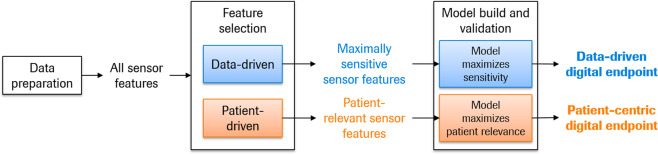
Digital health technology tools (DHTTs) are digital tools that remotely and frequently acquire health and disease-related data from individuals (see Table 1 for a list of terms and definitions used here). DHTTs are becoming a standard part of clinical research studies in which patients collect two basic modalities of sensor data 1 , 2 , 3 , 4 , 5 , 6 , 7 : (1) sensor data can be captured while patients perform specific tasks designed to measure key symptoms (“active tests”) and (2) sensors may monitor human behavior passively (“passive monitoring”). Active tests can be administered, e.g., using tablets, smartphones, and to a limited extent also smartwatches. Passive data can be collected using a wide range of devices such as smartphones, smartwatches, wearables, beacons, nearables, and smart patches. Digital sensors can sample behavior at a frequency many times higher than is possible during traditional in-clinic testing. Thus, there are many advantages to the use of this technology in clinical research. Firstly, information is collected from patients much more frequently than would be possible at infrequent clinic visits, with the potential to increase the signal to noise and increasing reliability and validity 8 and the measures’ ability to detect change over time 9 . Secondly, the acquired data are objective: while trained healthcare professionals have a wealth of knowledge with which to characterize and treat patients’ symptoms, the reliance on such ratings necessarily adds a subjective component to assessments including possible increased interrater variability and decreased reliability (e.g., see ref. 10 ). Thirdly, data are collected in the environment in which individuals actually live and work, generating ecologically valid measurements, i.e., ones which approximate the real world. A fourth key advantage is the amount of sensor data generated (e.g., via continuous 50 Hz sampling), promising the phenotypic characterization of patients with an unprecedented breadth and precision. These advantages have led to DHTTs being used with increasing frequency in clinical trials and observational studies to complement traditional clinical outcome assessments (COA) and biomarkers. However, one of the chief open questions now facing the field is what to do with this vast amount of sensor data, i.e., how can patients’ sensor data be integrated into one or several outcome measures which meaningfully recapitulate the clinical status of the patient 5 , 11 ?
Overview
The claims and statistics of this paper haven’t been checked yet.
Free: it reads the open-access text and checks the first 5 claims that cite a source we can check. Create a free account to check every claim.
Integrity signals
Registry
Cites
Statistics
Figures
Verification
Claims the paper makes
The claims and statistics of this paper haven’t been checked yet.
Free: it reads the open-access text and checks the first 5 claims that cite a source we can check. Create a free account to check every claim.
Claims other papers make about this one
Each is checked against this paper’s own text: does it say what the citing paper says it does?
In the citing paper
“In recent years, consumer-grade mobile applications (app.) and wearable devices have shown promise to objectively measure participants’ symptoms during daily life7; these digital health technologies (DHT) tools8 have shown to increase study engagement, improve patient convenience, streamline collection of PROs9, and potentially generate more frequent and accurate data that can characterise disease”
From Digital health technologies and machine learning augment patient reported outcomes to remotely characterise rheumatoid arthritis (2024) · cites this paper as [8]
Self-check
Percentages, sums and reported differences re-computed from the paper’s own numbers.
The self-check needs the paper’s full text.
Citations
Cites
Using thematic analysis in psychology
Braun, V., & Clarke, V. (2006) · Qualitative Research in Psychology · doi:10.1191/1478088706qp063oa · Cited by 194,414
A survey of cross-validation procedures for model selection
Arlot, S., & Célisse, A. (2010) · LillOA (Université de Lille (University Of Lille)) · Cited by 3,664
A survey of cross-validation procedures for model selection
Arlot, S., & Celisse, A. (2010) · Statistics Surveys · doi:10.1214/09-ss054 · Cited by 3,522 · cited 1×
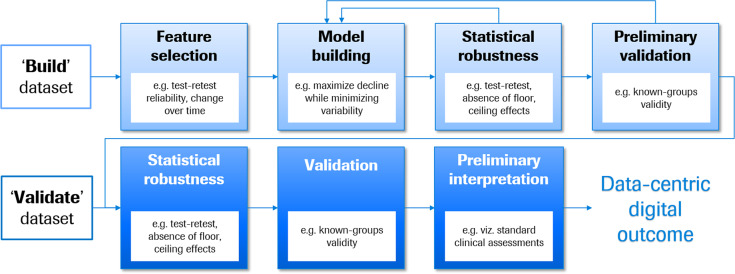
“Cross-validation and boot-strapping assess the robustness of each candidate model and generate estimates of variability to facilitate model selection 27 , which can be based on two criteria: minimizing variability of the cross-validation (minimization criterion) and maximizing the change over time…”
MethodThe role and validity of actigraphy in sleep medicine: an update
Sadeh, A. (2011) · Sleep Medicine Reviews · doi:10.1016/j.smrv.2010.10.001 · Cited by 1,415 · cited 2×
“We note that this approach can be applied to any DHTT and corresponding disease area, e.g., actigraphy data to quantify sleep quality 21 or photoplethysmography data from, e.g., the Apple Watch to quantify cardiovascular health 22 , as described in the Conclusions section.”
MethodGhamari, M. (2018) · International Journal of Biosensors & Bioelectronics · doi:10.15406/ijbsbe.2018.04.00125 · Cited by 945 · cited 2×
“We note that this approach can be applied to any DHTT and corresponding disease area, e.g., actigraphy data to quantify sleep quality 21 or photoplethysmography data from, e.g., the Apple Watch to quantify cardiovascular health 22 , as described in the Conclusions section.”
MethodTechnology in Parkinson’s disease: challenges and opportunities
Espay, A. J., Bonato, P., Nahab, F. B., Maetzler, W., Dean, J. M., Klucken, J., Eskofier, B. M., Merola, A., Horak, F., Lang, A. E., et al. (2016) · Movement Disorders · doi:10.1002/mds.26642 · Cited by 654
The mPower study, Parkinson disease mobile data collected using ResearchKit
Bot, B. M., Suver, C., Neto, E. C., Kellen, M., Klein, A., Bare, C., Doerr, M., Pratap, A., Wilbanks, J., Dorsey, E. R., et al. (2016) · Scientific Data · doi:10.1038/sdata.2016.11 · Cited by 630
Turakhia, M. P., Desai, M., Hedlin, H., Rajmane, A., Talati, N., Ferris, T., Desai, S., Nag, D., Patel, M., Kowey, P., et al. (2019) · American Heart Journal · doi:10.1016/j.ahj.2018.09.002 · Cited by 474 · cited 1×
“For example, such approaches are underway with smartwatch photoplethysmogra-phy data to identify individuals with potentially undiagnosed atrial fi brillation 35 , e.g., in the Apple Watch Study 36 , and to identify perceived stress levels 37 .”
BackgroundDetecting and monitoring the symptoms of Parkinson's disease using smartphones: A pilot study
Arora, S., Venkataraman, V., Zhan, A., Donohue, S., Biglan, K. M., Dorsey, E. R., & Little, M. A. (2015) · Parkinsonism & Related Disorders · doi:10.1016/j.parkreldis.2015.02.026 · Cited by 387
Zhan, A., Mohan, S., Tarolli, C., Schneider, R. B., Adams, J. L., Sharma, S., Elson, M. J., Spear, K. L., Glidden, A. M., Little, M. A., et al. (2018) · JAMA Neurology · doi:10.1001/jamaneurol.2018.0809 · Cited by 381
Research works printed but not linked: 2
- Yang, J. & Honavar, V. In: Liu, H., Motoda, H. (eds) Feature Extraction, Construction and Selection453 (Springer, 1998).
- Food and Drug Administration. Patient-Focused Drug Development Guidance Public Workshop: Incorporating Clinical Outcome Assessments into Endpoints for Regulatory Decision-Making, Silver Spring, MD, 6 December (FDA, 2019). https://globalforum.diaglobal.org/issue/june-2019/regulatory-perspective-digital-health-technology-tools/.
Cited by
Powers, R., Etezadi-Amoli, M., Arnold, E. M., Kianian, S., Mance, I., Gibiansky, M., Trietsch, D., Alvarado, A. S., Kretlow, J. D., Herrington, T. M., et al. (2021) · Science Translational Medicine · doi:10.1126/scitranslmed.abd7865 · Cited by 200
Smart Home Sensing and Monitoring in Households With Dementia: User-Centered Design Approach
Tiersen, F., Batey, P., Harrison, M., Naar, L., Serban, A., Daniels, S., & Calvo, R. A. (2021) · JMIR Aging · doi:10.2196/27047 · Cited by 138
A smartphone sensor-based digital outcome assessment of multiple sclerosis
Montalbán, X., Graves, J., Midaglia, L. S., Mulero, P., Julian, L. J., Baker, M., Schadrack, J., Gossens, C., Ganzetti, M., Scotland, A., et al. (2021) · Multiple Sclerosis Journal · doi:10.1177/13524585211028561 · Cited by 123
Self-citationEstimating Parkinsonism Severity in Natural Gait Videos of Older Adults With Dementia
Sabo, A., Mehdizadeh, S., Iaboni, A., & Taati, B. (2022) · IEEE Journal of Biomedical and Health Informatics · doi:10.1109/jbhi.2022.3144917 · Cited by 112
Lipsmeier, F., Taylor, K. I., Postuma, R. B., Volkova-Volkmar, E., Kilchenmann, T., Mollenhauer, B., Bamdadian, A., Popp, W. L., Cheng, W.-Y., Zhang, Y.-P., et al. (2022) · Scientific Reports · doi:10.1038/s41598-022-15874-4 · Cited by 109
Self-citationPagano, G., Boess, F., Taylor, K. I., Ricci, B., Mollenhauer, B., Poewe, W. H., Boulay, A., Anzures‐Cabrera, J., Vogt, A., Marchesi, M., et al. (2021) · Frontiers in Neurology · doi:10.3389/fneur.2021.705407 · Cited by 98
Self-citationBurq, M., Rainaldi, E., Ho, K. C., Chen, C., Bloem, B. R., Evers, L. J. W., Helmich, R. C. G., Myers, L. J., Marks, W. J., & Kapur, R. (2022) · npj Digital Medicine · doi:10.1038/s41746-022-00607-8 · Cited by 95
Compassionate nursing care and the use of digital health technologies: A scoping review
Ali, S., Kleib, M., Paul, P., Petrovskaya, O., & Kennedy, M. (2021) · International Journal of Nursing Studies · doi:10.1016/j.ijnurstu.2021.104161 · Cited by 90
Digital Approaches to Automated and Machine Learning Assessments of Hearing: Scoping Review
Wasmann, J.-W. A., Pragt, L., Eikelboom, R. H., & Swanepoel, D. W. (2022) · Journal of Medical Internet Research · doi:10.2196/32581 · Cited by 72
Digital biomarkers for non-motor symptoms in Parkinson’s disease: the state of the art
Daalen, J. M. J., van den Bergh, R., Prins, E. M., Moghadam, M. S. C., van den Heuvel, R., Veen, J., Mathur, S., Meijerink, H., Mirelman, A., Darweesh, S. K. L., et al. (2024) · npj Digital Medicine · doi:10.1038/s41746-024-01144-2 · Cited by 69
Daniore, P., Nittas, V., & von Wyl, V. (2022) · Journal of Medical Internet Research · doi:10.2196/39910 · Cited by 69
Creagh, A. P., Hamy, V., Yuan, H., Mertes, G., Tomlinson, R., Chen, W.-H., Williams, R., Llop, C., Yee, C., Duh, M. S., et al. (2024) · npj Digital Medicine · doi:10.1038/s41746-024-01013-y · Cited by 64
“3b (expanded in Supplementary Table 6).”
BackgroundMethodInfluentialCreagh, A. P., Hamy, V., Yuan, H., Mertes, G., Tomlinson, R., Chen, W.-H., Williams, R., Llop, C., Yee, C., Duh, M. S., et al. (2022) · doi:10.1101/2022.11.18.22282305 · Cited by 64
Stephenson, D., Alexander, R., Aggarwal, V., Badawy, R., Bain, L., Bhatnagar, R., Bloem, B. R., Boroojerdi, B., Burton, J., Cedarbaum, J. M., et al. (2020) · Digital Biomarkers · doi:10.1159/000512500 · Cited by 63
Self-citationPatient-Centric Product Development: A Summary of Select Regulatory CMC and Device Considerations
Algorri, M., Cauchon, N. S., Christian, T. R., O'Connell, C., & Vaidya, P. (2023) · Journal of Pharmaceutical Sciences · doi:10.1016/j.xphs.2023.01.029 · Cited by 57
Smartphone video nystagmography using convolutional neural networks: ConVNG
Friedrich, M. U., Schneider, E., Bürklein, M., Taeger, J., Hartig, J., Volkmann, J., Peach, R. L., & Zeller, D. (2022) · Journal of Neurology · doi:10.1007/s00415-022-11493-1 · Cited by 46
Recommendations for Successful Development and Implementation of Digital Health Technology Tools
Loo, R. T. J., Nasta, F., Macchi, M., Baudot, A., Burstein, F. V., Bove, R. M., Greve, M., Fröhlich, H., Khalid, S., Küderle, A., et al. (2025) · Journal of Medical Internet Research · doi:10.2196/56747 · Cited by 45
Lipsmeier, F., Simillion, C., Bamdadian, A., Tortelli, R., Byrne, L. M., Zhang, Y., Wolf, D., Smith, A. V., Czech, C., Gossens, C., et al. (2022) · Journal of Medical Internet Research · doi:10.2196/32997 · Cited by 44
Self-citationMammen, J. R., Speck, R. M., Stebbins, G. M., Müller, M. L. T. M., Yang, P. T., Campbell, M., Cosman, J., Crawford, J. E., Dam, T., Hellsten, J., et al. (2023) · Journal of Parkinson’s Disease · doi:10.3233/jpd-225122 · Cited by 38
Torrado, J. C., Husebo, B. S., Allore, H. G., Erdal, A., Fæø, S. E., Reithe, H., Førsund, E., Tzoulis, C., & Pătraşcu, M. (2022) · PLoS ONE · doi:10.1371/journal.pone.0275747 · Cited by 38
Quantifying Quality of Life: Incorporating Daily Life into Medicine
Wac, K., & Wulfovich, S. (2022) · Health informatics · doi:10.1007/978-3-030-94212-0 · Cited by 39
Hurvitz, N., & Ilan, Y. (2023) · Clinics and Practice · doi:10.3390/clinpract13040089 · Cited by 37
Creagh, A. P., Lipsmeier, F., Lindemann, M., & Vos, M. D. (2021) · Scientific Reports · doi:10.1038/s41598-021-92776-x · Cited by 35
Self-citationRibba, B., Bräm, D. S., Baverel, P., & Peck, R. (2022) · CPT Pharmacometrics & Systems Pharmacology · doi:10.1002/psp4.12858 · Cited by 33
Digital health technology derived measures: Biomarkers or clinical outcome assessments?
Izmailova, E. S., Demanuele, C., & Carthy, M. M. (2023) · Clinical and Translational Science · doi:10.1111/cts.13529 · Cited by 32
Hackett, K., & Giovannetti, T. (2022) · JMIR Aging · doi:10.2196/38130 · Cited by 29
Roussos, G., Herrero, T. R., Hill, D. L., Dowling, A. V., L. T. M. Müller, M., Evers, L. J. W., Burton, J., Derungs, A., Fisher, K., Kilambi, K. P., et al. (2022) · npj Digital Medicine · doi:10.1038/s41746-022-00643-4 · Cited by 28
“In this regard, Taylor, et al. 10 outlined the importance of distinguishing between data-and patient-centric approaches: While either approach could in fl uence the assessment of motor experiences in PD due to a variety of SoVs, appropriate mitigation strategies such as test-retest studies are…”
BackgroundTaylor, K. I., Lipsmeier, F., Scelsi, M. A., Volkova-Volkmar, E., Rukina, D., Popp, W., Lambrecht, S., Anzures‐Cabrera, J., Summers, D. M., Abt, M., et al. (2025) · npj Digital Medicine · doi:10.1038/s41746-025-01572-8 · Cited by 24
Self-citationA hands-free stool sampling system for monitoring intestinal health and disease
Grego, S., Welling, C. M., Miller, G. H., Coggan, P. F., Sellgren, K. L., Hawkins, B. T., Ginsburg, G. S., Ruiz, J. R., Fisher, D. A., & Stoner, B. R. (2022) · Scientific Reports · doi:10.1038/s41598-022-14803-9 · Cited by 23
Digital outcome measures from smartwatch data relate to non-motor features of Parkinson’s disease
Schalkamp, A., Harrison, N. A., Peall, K. J., & Sandor, C. (2024) · npj Parkinson's Disease · doi:10.1038/s41531-024-00719-w · Cited by 23
Sensor-Based Quantification of MDS-UPDRS III Subitems in Parkinson’s Disease Using Machine Learning
Bremm, R. P., Pavelka, L., Garcia, M. M., Mombaerts, L., Krüger, R., & Hertel, F. (2024) · Sensors · doi:10.3390/s24072195 · Cited by 24
Wasmann, J.-W. A., Huinck, W. J., & Lanting, C. (2023) · Ear and Hearing · doi:10.1097/aud.0000000000001422 · Cited by 21
Citizen data sovereignty is key to wearables and wellness data reuse for the common good
Gilbert, S., Baca-Motes, K., Quer, G., Wiedermann, M., & Brockmann, D. (2024) · npj Digital Medicine · doi:10.1038/s41746-024-01004-z · Cited by 21
McGagh, D., Song, K., Yuan, H., Creagh, A. P., Fenton, S. A. M., Ng, W., Goldsack, J. C., Dixon, W. G., Doherty, A., & Coates, L. C. (2024) · The Lancet Rheumatology · doi:10.1016/s2665-9913(24)00186-3 · Cited by 17
O'Connor, S. R., Treanor, C., Ward, E., Wickens, R. A., O’Connell, A., Culliford, L. A., Rogers, C. A., Gidman, E., Pető, T., Knox, P. C., et al. (2022) · International Journal of Environmental Research and Public Health · doi:10.3390/ijerph192013714 · Cited by 17
Ali, A., Lee, J., Kim, K., Oh, H., & Yi, G. (2024) · Advanced Healthcare Materials · doi:10.1002/adhm.202304140 · Cited by 17
de Angel, V., Lewis, S., White, K. M., Matcham, F., & Hotopf, M. H. (2022) · JMIR Mental Health · doi:10.2196/38934 · Cited by 16
Nobbs, D., Piwko, W., Bull, C., Cormack, F. K., Ahmaniemi, T., Holst, S. C., Chatterjee, M., Maetzler, W., Avey, S., & Ng, W. (2023) · Digital Biomarkers · doi:10.1159/000533189 · Cited by 16
Self-citationInsights from the European Medicines Agency on digital health technology derived endpoints
Jadoenathmisier, K. D., Gardarsdóttir, H., Mol, P. G. M., & Pasmooij, A. M. G. (2025) · Drug Discovery Today · doi:10.1016/j.drudis.2025.104388 · Cited by 16
Patient-Centric Paradigm: A Systems Thinking Approach to Enhance Healthcare
Adeogun, A. A., & Faezipour, M. (2025) · Healthcare · doi:10.3390/healthcare13030213 · Cited by 15
O’Hanlon, C. E., Farmer, C. M., Ryan, J., & Ernecoff, N. C. (2023) · Rand health quarterly · doi:10.7249/cfa2550-1 · Cited by 13
Carthy, M. M., Burrows, K., Griffiths, P., Black, P. M., Demanuele, C., Karlsson, N., Buenconsejo, J., Patel, N., Chen, W.-H., & Cappelleri, J. C. (2023) · Therapeutic Innovation & Regulatory Science · doi:10.1007/s43441-023-00502-8 · Cited by 13
Kernebeck, S., Scheibe, M., Sinha, M., Fischer, F., Knapp, A., Timpel, P., Harst, L., Reininghaus, U., & Vollmar, H. C. (2022) · Das Gesundheitswesen · doi:10.1055/a-1915-4371 · Cited by 12
Finding Meaningful Bayesian Confirmation Measures
Greco, S., Słowiński, R., & Szczęch, I. (2013) · Fundamenta Informaticae · doi:10.3233/fi-2013-902 · Cited by 12
Freeman, T., Rodriguez‐Esteban, R., Gottowik, J., Yang, X., Erpenbeck, V. J., & Leddin, M. (2021) · JMIR Medical Informatics · doi:10.2196/26272 · Cited by 12
Izmailova, E. S., Middleton, D., Yunis, R., Lakeland, J., Sowalsky, K. L., Kling, J., Ritchie, A., Guo, C. C., Byrom, B., & Kern, S. (2024) · Clinical and Translational Science · doi:10.1111/cts.70054 · Cited by 11
Wearable technologies in clinical trials for drug development: trends and emerging opportunities
Fayad, Z. A., Hirten, R. P., Nadkarni, G. N., & Kim, Y. (2026) · Nature Reviews Drug Discovery · doi:10.1038/s41573-026-01403-9 · Cited by 11
Domingo, S. Z., Alonso, J., Ferrer, M., Acosta, M. T., Alphs, L. D., Annas, P., Balabanov, P. P., Berger, A., Bishop, K. I., Butlen‐Ducuing, F., et al. (2024) · European Neuropsychopharmacology · doi:10.1016/j.euroneuro.2024.02.009 · Cited by 10
Perumal, T. M., Wolf, D., Berchtold, D., Pointeau, G., Zhang, Y., Cheng, W., Lipsmeier, F., Sprengel, J., Czech, C., Chiriboga, C. A., et al. (2023) · Neuromuscular Disorders · doi:10.1016/j.nmd.2023.07.008 · Cited by 8
Self-citationCoproduction and Usability of a Smartphone App for Falls Reporting in Parkinson Disease
Wales, J., Moore, J., Naisby, J., Ratcliffe, N., Barry, G., Amjad, A., Godfrey, A., Standerline, G., Webster, E., & Morris, R. (2023) · Physical Therapy · doi:10.1093/ptj/pzad076 · Cited by 8
Statistical Considerations in the Design of Clinical Trials Targeting Prodromal Parkinson Disease
Macklin, E. A., Coffey, C. S., Brumm, M. C., & Seibyl, J. P. (2022) · Neurology · doi:10.1212/wnl.0000000000200897 · Cited by 8
Bogaarts, G., Zanon, M., Dondelinger, F., Derungs, A., Lipsmeier, F., Gossens, C., & Lindemann, M. (2021) · Annual International Conference of the IEEE Engineering in Medicine and Biology Society (EMBC) · doi:10.1109/embc46164.2021.9630594 · Cited by 6
Self-citationBiases in digital health measures
Mellino, S., Morey, C., & Rohner, C. (2022) · Elsevier eBooks · doi:10.1016/b978-0-12-821392-6.00001-7 · Cited by 6
Poleur, M., Willekens, B. M. P., Degos, B., Ricard, D., Pesch, V. V., Melin, A., Piquet, O., Tricot, A., Médard, L., Michaud, M., et al. (2026) · EClinicalMedicine · doi:10.1016/j.eclinm.2026.103823 · Cited by 6
Lewis, A., Valla, V., Charitou, P., Karapatsia, A., Koukoura, A., Tzelepi, K., Bergsteinsson, J. I., Ouzounelli, M., & Vassiliadis, E. (2022) · International Journal of Digital Health · doi:10.29337/ijdh.49 · Cited by 6
Garcia, J., Mordin, M., Banjara, B., Saande, C., Keyloun, K. R., Abel, J. L., Gnanasakthy, A., & Byrom, B. (2026) · npj Digital Medicine · doi:10.1038/s41746-026-02512-w · Cited by 5
The Future of Quantifying Behaviors, Health, and Quality of Life
Wac, K. (2022) · Health informatics · doi:10.1007/978-3-030-94212-0_25 · Cited by 5
Alves, I., Westerheim, I., Hsiao, E. C., Upadhyay, J., Sangiorgi, L., Artyomenko, A., Croskery, K., Johns, J., Warnants, E., & Barton, G. (2025) · Therapeutic Advances in Musculoskeletal Disease · doi:10.1177/1759720x251369963 · Cited by 4
Toward Patient-Centric Digital Monitoring of Obstructive Sleep Apnea: Mixed Methods Study
Timmis, J. K., Schorr, K. A., Yüksel, R., van den Broek, T., Overeem, S., Smid, D. J., van den Brink, W. J., & Haring, N. L. (2026) · Journal of Medical Internet Research · doi:10.2196/82460 · Cited by 4
Doğu, E., Paredes, J. A., Alomainy, A., Jones, J. M., & Rajab, K. Z. (2025) · Scientific Reports · doi:10.1038/s41598-025-14416-y · Cited by 4
Maus, B., Ymeri, G., Wassenburg, M., Glöss, M., Olsson, C. M., Salvi, D., & Svenningsson, P. (2026) · ACM Transactions on Computing for Healthcare · doi:10.1145/3779306 · Cited by 3
A scoping review on using real-world data to evaluate the effectiveness of mHealth applications
Gehder, S., Brückner, S., Gilbert, S., & Goeldner, M. (2026) · npj Digital Medicine · doi:10.1038/s41746-026-02562-0 · Cited by 3
Knights, J., Bangieva, V., Passoni, M., Donegan, M. L., Shen, J., Klein, A. A., Baker, J. T., & Dubois, H. C. (2023) · International Journal of Mental Health Systems · doi:10.1186/s13033-023-00581-y · Cited by 3
Ghafar, Z. N. (2024) · International Journal of Applied and Scientific Research · doi:10.59890/ijasr.v2i3.1558 · Cited by 3
Rahimi, M., Abrishamifar, K., Hazhir, S., Valizadeh, H., Nourani, A., & Rahimi, B. (2026) · Health Science Reports · doi:10.1002/hsr2.71743 · Cited by 2
CoCAI: Copula-Based Conformal Anomaly Identification for Multivariate Time-Series
Pearson, N. A., Zanello, F., Russo, D., Bortolussi, L., & Cairoli, F. (2025) · Lecture notes in computer science · doi:10.1007/978-3-032-05435-7_17 · Cited by 2
Promises and Pitfalls of the New Era of Computational Behavioral Neuroscience
Schmidt, M. V., & Koutsouleris, N. (2021) · Biological Psychiatry · doi:10.1016/j.biopsych.2021.02.965 · Cited by 2
Vilches, J. R., Puthusserypady, S. K., Biering‐Sørensen, B., Thomsen, T. H., & Tolu, S. (2026) · Frontiers in Aging Neuroscience · doi:10.3389/fnagi.2026.1774177 · Cited by 2
The long-term clinical impact of digital endpoints and biomarkers in data collection
Meslamani, A. Z. A. (2024) · Expert Review of Pharmacoeconomics & Outcomes Research · doi:10.1080/14737167.2024.2320233 · Cited by 2
DENİZ, E. (2024) · eArsiv - Adu (Adnan Menderes University) · Cited by 2
Yunus, M., Wahyudi, N. T., Aditya, R. S., Puriastuti, A. C., Alrazeeni, D. M., Sari, G. M., Septiananda, F. H., & Manggolono, L. N. G. (2025) · Indonesian Journal of Research in Physical Education Sport and Health · doi:10.17977/um086v3i12025p45-55 · Cited by 2
Introduction to emerging technologies in healthcare
Rehman, S. U., & Khondakar, K. R. (2025) · Elsevier eBooks · doi:10.1016/b978-0-443-26492-4.00010-4 · Cited by 1
Advancing the Integration of Digital Health Technologies in the Drug Development Ecosystem
Sardar, S., Coon, C. D., Kern, S., Huynh, H., Stephenson, D. T., Abrams, J. R., Lee, G. V., Ollivier, C., Hedrick, J. A., Müller, M. L. T. M., et al. (2025) · Journal of Medical Internet Research · doi:10.2196/67052 · Cited by 1
Digital Phenotyping of Sensation Seeking: A Machine Learning Approach Using Gait Analysis
Li, A., & Yang, K. (2025) · Behavioral Sciences · doi:10.3390/bs15091222 · Cited by 1
Wasmann, J.-W. A. (2025) · Radboud University Press eBooks · doi:10.54195/9789493296657 · Cited by 1
A hybrid, iterative approach, to support the development of fit-for-purpose sensor-derived measures
Ballester, B. R., Reaney, M., Mack, C., & Ajraoui, S. (2025) · Frontiers in Medical Technology · doi:10.3389/fmedt.2025.1567537 · Cited by 1
DENİZ, E. (2024) · Journal of Academic Tourism Studies · doi:10.29228/jatos.79002 · Cited by 1
Drug development for movement disorders
Nobbs, D., & Leyens, L. (2024) · Elsevier eBooks · doi:10.1016/b978-0-323-99494-1.00011-3
Self-citationFehlmann, B., Thomann, A. E., Lambrecht, S., Davies, E., Trundell, D., Gazizova, Y., Kwaśny, D., Bamdadian, A., Pagano, G., Lipsmeier, F., et al. (2026) · doi:10.2196/preprints.104311
Self-citationPapadopetraki, D., Cools, R., Taylor, K. I., Popp, W., Siderowf, A. D., Weintraub, D. A., & Kurniawan, I. T. (2025) · JMIR Formative Research · doi:10.2196/81913
Self-citationWolkorte, R., Vonkeman, H. E., & Tuijthof, G. J. M. (2025) · Rheumatology International · doi:10.1007/s00296-025-06041-9
Wang, Y., Li, Y., Zhang, C., Li, C., Li, L., & Huang, M. (2026) · Digital Health · doi:10.1177/20552076261456888
Burks, J. H., Hartogensis, W., Dilchert, S., Mason, A. E., & Smarr, B. L. (2025) · Algorithms · doi:10.3390/a18090577
Framroze, Z., Rinaldo, F. M., Lewis, E., Steels, J.-C., & Dickinson, H. A. (2023) · doi:10.2196/preprints.46416
Knights, J., Bangieva, V., Passoni, M., Donegan, M. L., Shen, J., Klein, A. A., Baker, J., & Dubois, H. C. (2024) · Figshare · doi:10.6084/m9.figshare.26602207
Knights, J., Bangieva, V., Passoni, M., Donegan, M. L., Shen, J., Klein, A. A., Baker, J., & Dubois, H. C. (2024) · Figshare · doi:10.6084/m9.figshare.26602198
Knights, J., Bangieva, V., Passoni, M., Donegan, M. L., Shen, J., Klein, A. A., Baker, J., & Dubois, H. C. (2024) · Figshare · doi:10.6084/m9.figshare.26602201
Knights, J., Bangieva, V., Passoni, M., Donegan, M. L., Shen, J., Klein, A. A., Baker, J., & Dubois, H. C. (2024) · Figshare · doi:10.6084/m9.figshare.26602204
O'Connor, S. R., Treanor, C., Ward, E., Wickens, R. A., O’Connell, A., Culliford, L. A., Rogers, C. A., Gidman, E., Pető, T., Knox, P. C., et al. (2024) · Studies in health technology and informatics · doi:10.3233/shti240182
Jiang, L., Shu, H., Wiloth, S., Hüsler, S.-S., Zhang, P., Shen, C., Wang, R., & Kasahara, S. (2026) · Journal of NeuroEngineering and Rehabilitation · doi:10.1186/s12984-026-02109-0
Ezekiel, L. (2020) · Radar (Oxford Brookes University) · doi:10.24384/2zdw-pz12
A Clinician’s Guide to Performance Outcome Measurements
Mayhew, A. G. (2022) · Springer series in measurement science and technology · doi:10.1007/978-3-031-07465-3_2
Application of Low Pass Filter in Pulse Monitoring with Arduino-Based Pulse Sensor
Zakhy, F. S., Shhobur, A. A., Azhiim, F., & Arifin, F. (2025) · Journal of Science Technology and Education · doi:10.63980/jste.v2i2.212
Pagano, G., Boess, F. G., Taylor, K. I., Ricci, B., Mollenhauer, B., Poewe, W., Boulay, A., Anzures-Cabrera, J., Vogt, A., Marchesi, M., et al. (2021) · doi:10.3389/fneur.2021.705407.s001
Self-citationLausch, A., Kirsten, T., Selsam, P., & Bumberger, J. (2026) · Frontiers in Digital Health · doi:10.3389/fdgth.2026.1952373
Thakur, H. P. (2022) · International Journal of Health Technology and Innovation · doi:10.60142/ijhti.v1i01.16
Kuzu, T. E. (2025) · Akademisyen Kitabevi eBooks · doi:10.37609/akya.3814.c714
Cho, S. J., Cho, S. W., Yu, M. H., You, S. C., Ahn, S. H., Rhee, Y., & Hong, N. (2026) · Osteoporosis International · doi:10.1007/s00198-026-08172-6
Lévi, F., Viaro, C., Ulusakarya, A., Dulong, S., Bossevot, R., Boudriche, D., Li, X., Hadj-Naceur, I., Colle, E., Bathily, T., et al. (2026) · Research Square · doi:10.21203/rs.3.rs-10805684/v1
Metadata
- Authors
- Taylor, K. I., Staunton, H., Lipsmeier, F., Nobbs, D., & Lindemann, M.
- Affiliations
- F. Hoffmann-La Roche AG (CH)
- Roche (United Kingdom) (GB)
- Corresponding author
- Taylor, Kirsten I.
- Venue
- npj Digital Medicine
- Published
- 2020-07-23
- Volume
- 3
- Issue
- 1
- Pages
- 97-97
- ISSN
- 2398-6352 (ISSN-L)
- PMC
- PMC7378210
- OpenAlex
- W3044978152
- Cited by
- 85
- References
- 34
- Citations by year
- 2026: 9 · 2025: 16 · 2024: 16 · 2023: 12 · 2022: 20 · 2021: 10 · 2020: 1
- FWCI
- 11.21
- Type
- journal article
- Language
- en
- Open access
- gold
- doi.org
- Licence
- cc-by
- creativecommons.org/licenses/by/4.0 (tdm)
- creativecommons.org/licenses/by/4.0 (vor)
- Locations
- npj Digital Medicine (publishedVersion, cc-by)
- PubMed Central (publishedVersion, cc-by)
- PubMed (publishedVersion)
- DOAJ (DOAJ: Directory of Open Access Journals) (submittedVersion, cc-by-sa)
- Funders
- F. Hoffmann-La Roche
- Prothena
- Topics
- Health Sciences › Health Professions › General Health Professions › Mobile Health and mHealth Applications
- Social Sciences › Psychology › Experimental and Cognitive Psychology › Mental Health Research Topics
- Physical Sciences › Computer Science › Computer Vision and Pattern Recognition › Context-Aware Activity Recognition Systems
- Keywords
- digital health technologies, sensor data, outcome measures, passive monitoring, wearable devices, smartphone sensors, clinical outcome assessment, clinical trials, phenotypic characterization
About these checks
Registry, retraction, Cites and statistics results are computed, not judged, with one exception: a printed reference that no index lists is read once by a model before it counts as a citation error. Claims are extracted by a model and kept only when their quote appears verbatim in the text; each cited source is then checked, with a model’s help, for whether it says what the claim relies on. Those verdicts can be wrong — read the claim’s quote and the cited source before relying on one.
Statistics and arithmetic are recomputed, not judged.
Confidence bands are shown only for fields calibrated on our annotated test set. None is calibrated yet, so no band is shown.
What counts as a claim ›How we measure confidence ›How we check this ›
Are you an author, or do you see a problem with this page? Request a review
Data sources
Bibliographic data: Semantic Scholar, OpenAlex, Crossref.
Contains information from the Semantic Scholar Academic Graph Datasets, made available under the ODC Attribution License (ODC-BY 1.0).
Semantic Scholar’s data is described in: Kinney, R., et al. (2023). The Semantic Scholar Open Data Platform. arXiv:2301.10140.
