

Outcome measures based on digital health technology sensor data: data- and patient-centric approaches
Open accessThe DOI matches its Crossref record; 34 of the 34 references it cites were found in a registry or an index.
Abstract
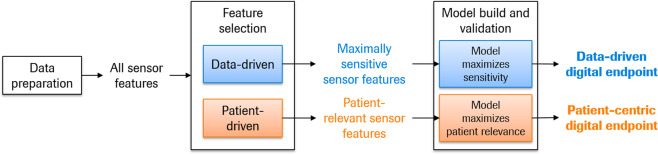
Digital health technology tools (DHTTs) are digital tools that remotely and frequently acquire health and disease-related data from individuals (see Table 1 for a list of terms and definitions used here). DHTTs are becoming a standard part of clinical research studies in which patients collect two basic modalities of sensor data 1 , 2 , 3 , 4 , 5 , 6 , 7 : (1) sensor data can be captured while patients perform specific tasks designed to measure key symptoms (“active tests”) and (2) sensors may monitor human behavior passively (“passive monitoring”). Active tests can be administered, e.g., using tablets, smartphones, and to a limited extent also smartwatches. Passive data can be collected using a wide range of devices such as smartphones, smartwatches, wearables, beacons, nearables, and smart patches. Digital sensors can sample behavior at a frequency many times higher than is possible during traditional in-clinic testing. Thus, there are many advantages to the use of this technology in clinical research. Firstly, information is collected from patients much more frequently than would be possible at infrequent clinic visits, with the potential to increase the signal to noise and increasing reliability and validity 8 and the measures’ ability to detect change over time 9 . Secondly, the acquired data are objective: while trained healthcare professionals have a wealth of knowledge with which to characterize and treat patients’ symptoms, the reliance on such ratings necessarily adds a subjective component to assessments including possible increased interrater variability and decreased reliability (e.g., see ref. 10 ). Thirdly, data are collected in the environment in which individuals actually live and work, generating ecologically valid measurements, i.e., ones which approximate the real world. A fourth key advantage is the amount of sensor data generated (e.g., via continuous 50 Hz sampling), promising the phenotypic characterization of patients with an unprecedented breadth and precision. These advantages have led to DHTTs being used with increasing frequency in clinical trials and observational studies to complement traditional clinical outcome assessments (COA) and biomarkers. However, one of the chief open questions now facing the field is what to do with this vast amount of sensor data, i.e., how can patients’ sensor data be integrated into one or several outcome measures which meaningfully recapitulate the clinical status of the patient 5 , 11 ?
Overview
The claims and statistics of this paper haven’t been checked yet.
Free: it reads the open-access text and checks the first 5 claims that cite a source we can check. Create a free account to check every claim.
Integrity signals
Registry
Cites
Statistics
Figures
Verification
Claims the paper makes
The claims and statistics of this paper haven’t been checked yet.
Free: it reads the open-access text and checks the first 5 claims that cite a source we can check. Create a free account to check every claim.
Claims other papers make about this one
Each is checked against this paper’s own text: does it say what the citing paper says it does?
In the citing paper
“In recent years, consumer-grade mobile applications (app.) and wearable devices have shown promise to objectively measure participants’ symptoms during daily life7; these digital health technologies (DHT) tools8 have shown to increase study engagement, improve patient convenience, streamline collection of PROs9, and potentially generate more frequent and accurate data that can characterise disease”
From Digital health technologies and machine learning augment patient reported outcomes to remotely characterise rheumatoid arthritis (2024) · cites this paper as [8]
Self-check
Percentages, sums and reported differences re-computed from the paper’s own numbers.
The self-check needs the paper’s full text.
Citations
Cites
Using thematic analysis in psychology
Braun, V., & Clarke, V. (2006) · Qualitative Research in Psychology · doi:10.1191/1478088706qp063oa · Cited by 194,414
A survey of cross-validation procedures for model selection
Arlot, S., & Célisse, A. (2010) · LillOA (Université de Lille (University Of Lille)) · Cited by 3,662
A survey of cross-validation procedures for model selection
Arlot, S., & Celisse, A. (2010) · Statistics Surveys · doi:10.1214/09-ss054 · Cited by 3,522 · cited 1×
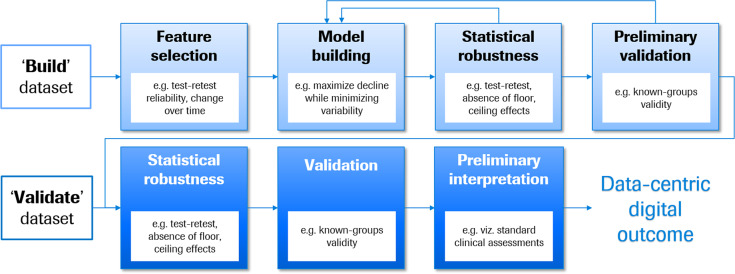
“Cross-validation and boot-strapping assess the robustness of each candidate model and generate estimates of variability to facilitate model selection 27 , which can be based on two criteria: minimizing variability of the cross-validation (minimization criterion) and maximizing the change over time…”
MethodThe role and validity of actigraphy in sleep medicine: an update
Sadeh, A. (2011) · Sleep Medicine Reviews · doi:10.1016/j.smrv.2010.10.001 · Cited by 1,415 · cited 2×
“We note that this approach can be applied to any DHTT and corresponding disease area, e.g., actigraphy data to quantify sleep quality 21 or photoplethysmography data from, e.g., the Apple Watch to quantify cardiovascular health 22 , as described in the Conclusions section.”
MethodGhamari, M. (2018) · International Journal of Biosensors & Bioelectronics · doi:10.15406/ijbsbe.2018.04.00125 · Cited by 945 · cited 2×
“We note that this approach can be applied to any DHTT and corresponding disease area, e.g., actigraphy data to quantify sleep quality 21 or photoplethysmography data from, e.g., the Apple Watch to quantify cardiovascular health 22 , as described in the Conclusions section.”
MethodTechnology in Parkinson’s disease: challenges and opportunities
Espay, A. J., Bonato, P., Nahab, F. B., Maetzler, W., Dean, J. M., Klucken, J., Eskofier, B. M., Merola, A., Horak, F., Lang, A. E., et al. (2016) · Movement Disorders · doi:10.1002/mds.26642 · Cited by 654
The mPower study, Parkinson disease mobile data collected using ResearchKit
Bot, B. M., Suver, C., Neto, E. C., Kellen, M., Klein, A., Bare, C., Doerr, M., Pratap, A., Wilbanks, J., Dorsey, E. R., et al. (2016) · Scientific Data · doi:10.1038/sdata.2016.11 · Cited by 630
Turakhia, M. P., Desai, M., Hedlin, H., Rajmane, A., Talati, N., Ferris, T., Desai, S., Nag, D., Patel, M., Kowey, P., et al. (2019) · American Heart Journal · doi:10.1016/j.ahj.2018.09.002 · Cited by 474 · cited 1×
“For example, such approaches are underway with smartwatch photoplethysmogra-phy data to identify individuals with potentially undiagnosed atrial fi brillation 35 , e.g., in the Apple Watch Study 36 , and to identify perceived stress levels 37 .”
BackgroundDetecting and monitoring the symptoms of Parkinson's disease using smartphones: A pilot study
Arora, S., Venkataraman, V., Zhan, A., Donohue, S., Biglan, K. M., Dorsey, E. R., & Little, M. A. (2015) · Parkinsonism & Related Disorders · doi:10.1016/j.parkreldis.2015.02.026 · Cited by 387
Zhan, A., Mohan, S., Tarolli, C., Schneider, R. B., Adams, J. L., Sharma, S., Elson, M. J., Spear, K. L., Glidden, A. M., Little, M. A., et al. (2018) · JAMA Neurology · doi:10.1001/jamaneurol.2018.0809 · Cited by 381
Espay, A. J., Hausdorff, J. M., Sánchez‐Ferro, Á., Klucken, J., Merola, A., Bonato, P., Paul, S. S., Horak, F. B., Vizcarra, J. A., Mestre, T. A., et al. (2019) · Movement Disorders · doi:10.1002/mds.27671 · Cited by 321
Lipsmeier, F., Taylor, K. I., Kilchenmann, T., Wolf, D., Scotland, A., Schjodt‐Eriksen, J., Cheng, W., Fernandez‐Garcia, I., Siebourg‐Polster, J., Jin, L., et al. (2018) · Movement Disorders · doi:10.1002/mds.27376 · Cited by 266
Self-citationWearable devices in clinical trials: hype and hypothesis
Izmailova, E. S., Wagner, J. A., & Perakslis, E. D. (2018) · Clinical Pharmacology & Therapeutics · doi:10.1002/cpt.966 · Cited by 265 · cited 2×
“…to combine the abundance of sensor data in a meaningful way to produce a score that is tailored to both the symptoms under investigation (e.g., core motor symptoms of PD) and the context in which the score will be used (e.g., monitoring disease progression and evaluating treatment response) 14,15 .”
BackgroundMartinez-Martin, P., Rodriguez-Blazquez, C., Alvarez-Sanchez, M., Arakaki, T., Bergareche-Yarza, A., Chade, A., Garretto, N., Gershanik, O., Kurtis, M. M., Martinez-Castrillo, J. C., et al. (2013) · Journal of Neurology · doi:10.1007/s00415-012-6624-1 · Cited by 252
Hard to swallow: dysphagia in Parkinson’s disease
Miller, N., Noble, E., Jones, D., & Burn, D. (2006) · Age and Ageing · doi:10.1093/ageing/afl105 · Cited by 231
Continuous monitoring of turning in Parkinson’s disease: Rehabilitation potential
Mancini, M., El-Gohary, M., Pearson, S., McNames, J., Schlueter, H., Nutt, J. G., King, L. A., & Horak, F. B. (2015) · NeuroRehabilitation · doi:10.3233/nre-151236 · Cited by 175
Apple watch, wearables, and heart rhythm: where do we stand?
Raja, J. M., Elsakr, C., Roman, S., Cave, B., Pour-Ghaz, I., Nanda, A., Maturana, M., & Khouzam, R. N. (2019) · Annals of Translational Medicine · doi:10.21037/atm.2019.06.79 · Cited by 175 · cited 1×
“For example, such approaches are underway with smartwatch photoplethysmogra-phy data to identify individuals with potentially undiagnosed atrial fi brillation 35 , e.g., in the Apple Watch Study 36 , and to identify perceived stress levels 37 .”
BackgroundDigital Medicine: A Primer on Measurement
Coravos, A., Goldsack, J. C., Karlin, D. R., Nebeker, C., Perakslis, E., Zimmerman, N., & Erb, M. K. (2019) · Digital Biomarkers · doi:10.1159/000500413 · Cited by 159
Smartphone motor testing to distinguish idiopathic REM sleep behavior disorder, controls, and PD
Arora, S., Baig, F., Lo, C., Barber, T. R., Lawton, M. A., Zhan, A., Rolinski, M., Ruffmann, C., Klein, J. C., Rumbold, J., et al. (2018) · Neurology · doi:10.1212/wnl.0000000000006366 · Cited by 143
Bloem, B. R., Marks, W. J., Silva de Lima, A. L., Kuijf, M. L., van Laar, T., Jacobs, B. P. F., Verbeek, M. M., Helmich, R. C., van de Warrenburg, B. P., Evers, L. J. W., et al. (2019) · BMC Neurology · doi:10.1186/s12883-019-1394-3 · Cited by 117
Actigraphy for evaluation of mood disorders: A systematic review and meta-analysis
Tazawa, Y., Wada, M., Mitsukura, Y., Takamiya, A., Kitazawa, M., Yoshimura, M., Mimura, M., & Kishimoto, T. (2019) · Journal of Affective Disorders · doi:10.1016/j.jad.2019.04.087 · Cited by 115 · cited 1×
“For example, the roadmaps could be applied in the well-established fi eld of actigraphy to generate digital outcome measures to quantify sleep quality 21 and symptom severity in mood-disordered patients 34 .”
MethodReducing noise by repetition: introduction to signal averaging
Hassan, U., & Anwar, M. S. (2010) · European Journal of Physics · doi:10.1088/0143-0807/31/3/003 · Cited by 113
Use of High-Frequency In-Home Monitoring Data May Reduce Sample Sizes Needed in Clinical Trials
Dodge, H. H., Zhu, J., Mattek, N. C., Austin, D., Kornfeld, J., & Kaye, J. A. (2015) · PLOS ONE · doi:10.1371/journal.pone.0138095 · Cited by 99 · cited 1×
“Firstly, information is collected from patients much more frequently than would be possible at infrequent clinic visits, with the potential to increase the signal to noise and increasing reliability and validity 8 and the measures ’ ability to detect change over time 9 .”
BackgroundByrom, B., Watson, C., Doll, H., Coons, S. J., Eremenco, S., Ballinger, R., Mc Carthy, M., Crescioni, M., O’Donohoe, P., & Howry, C. (2018) · Value in Health · doi:10.1016/j.jval.2017.09.012 · Cited by 79
Coran, P., Goldsack, J. C., Grandinetti, C. A., Bakker, J. P., Bolognese, M., Dorsey, E. R., Vasisht, K., Amdur, A., Dell, C., Helfgott, J., et al. (2019) · Digital Biomarkers · doi:10.1159/000503957 · Cited by 68
Predicting motor, cognitive & functional impairment in Parkinson's
Lo, C., Arora, S., Baig, F., Lawton, M., Mouden, C. E., Barber, T. R., Ruffmann, C., Klein, J. C., Brown, P., Ben‐Shlomo, Y., et al. (2019) · Annals of Clinical and Translational Neurology · doi:10.1002/acn3.50853 · Cited by 66
Large-Scale Wearable Sensor Deployment in Parkinson’s Patients: The Parkinson@Home Study Protocol
Silva de Lima, A. L., Hahn, T., de Vries, N. M., Cohen, E., Bataille, L., Little, M. A., Baldus, H., Bloem, B. R., & Faber, M. J. (2016) · JMIR Research Protocols · doi:10.2196/resprot.5990 · Cited by 63
Teshuva, I., Hillel, I., Gazit, E., Giladi, N., Mirelman, A., & Hausdorff, J. M. (2019) · Journal of Neural Transmission · doi:10.1007/s00702-019-02017-9 · Cited by 63
Nwe, K., Larsen, M. E., Nelissen, N., & Wong, D. (2020) · Journal of Medical Internet Research · doi:10.2196/17457 · Cited by 58
Quantifying Motor Impairment in Movement Disorders
FitzGerald, J. J., Lu, Z., Jareonsettasin, P., & Antoniades, C. A. (2018) · Frontiers in Neuroscience · doi:10.3389/fnins.2018.00202 · Cited by 57
Walton, M. K., Cappelleri, J. C., Byrom, B., Goldsack, J. C., Eremenco, S., Harris, D. A., Potero, E., Patel, N., Flood, E. M., & Däumer, M. (2020) · Contemporary Clinical Trials · doi:10.1016/j.cct.2020.105962 · Cited by 54
Humphrey, L., Willgoss, T. G., Trigg, A., Meysner, S., Kane, M., Dickinson, S., & Kitchen, H. (2017) · Journal of Patient-Reported Outcomes · doi:10.1186/s41687-017-0013-6 · Cited by 41
cHRV Uncovering Daily Stress Dynamics Using Bio-Signal from Consumer Wearables
Tian, H., Chang, H., Ball, M. J., Kun, L., & Zhu, X. (2017) · Studies in health technology and informatics · doi:10.3233/978-1-61499-830-3-98 · Cited by 15
Cheng, W.-Y., Lipsmeier, F., Scotland, A., Creagh, A., Kilchenmann, T., Jin, L., Schjodt-Eriksen, J., Wolf, D., Zhang-Schaerer, Y.-P., Garcia, I. F., et al. (2017) · 2017 IEEE Life Sciences Conference (LSC) · doi:10.1109/lsc.2017.8268169 · Cited by 13
Self-citation
Research works printed but not linked: 2
- Yang, J. & Honavar, V. In: Liu, H., Motoda, H. (eds) Feature Extraction, Construction and Selection453 (Springer, 1998).
- Food and Drug Administration. Patient-Focused Drug Development Guidance Public Workshop: Incorporating Clinical Outcome Assessments into Endpoints for Regulatory Decision-Making, Silver Spring, MD, 6 December (FDA, 2019). https://globalforum.diaglobal.org/issue/june-2019/regulatory-perspective-digital-health-technology-tools/.
Cited by
Powers, R., Etezadi-Amoli, M., Arnold, E. M., Kianian, S., Mance, I., Gibiansky, M., Trietsch, D., Alvarado, A. S., Kretlow, J. D., Herrington, T. M., et al. (2021) · Science Translational Medicine · doi:10.1126/scitranslmed.abd7865 · Cited by 200
Smart Home Sensing and Monitoring in Households With Dementia: User-Centered Design Approach
Tiersen, F., Batey, P., Harrison, M., Naar, L., Serban, A., Daniels, S., & Calvo, R. A. (2021) · JMIR Aging · doi:10.2196/27047 · Cited by 138
A smartphone sensor-based digital outcome assessment of multiple sclerosis
Montalbán, X., Graves, J., Midaglia, L. S., Mulero, P., Julian, L. J., Baker, M., Schadrack, J., Gossens, C., Ganzetti, M., Scotland, A., et al. (2021) · Multiple Sclerosis Journal · doi:10.1177/13524585211028561 · Cited by 123
Self-citationEstimating Parkinsonism Severity in Natural Gait Videos of Older Adults With Dementia
Sabo, A., Mehdizadeh, S., Iaboni, A., & Taati, B. (2022) · IEEE Journal of Biomedical and Health Informatics · doi:10.1109/jbhi.2022.3144917 · Cited by 112
Lipsmeier, F., Taylor, K. I., Postuma, R. B., Volkova-Volkmar, E., Kilchenmann, T., Mollenhauer, B., Bamdadian, A., Popp, W. L., Cheng, W.-Y., Zhang, Y.-P., et al. (2022) · Scientific Reports · doi:10.1038/s41598-022-15874-4 · Cited by 109
Self-citation
Metadata
- Authors
- Taylor, K. I., Staunton, H., Lipsmeier, F., Nobbs, D., & Lindemann, M.
- Affiliations
- F. Hoffmann-La Roche AG (CH)
- Roche (United Kingdom) (GB)
- Corresponding author
- Taylor, Kirsten I.
- Venue
- npj Digital Medicine
- Published
- 2020-07-23
- Volume
- 3
- Issue
- 1
- Pages
- 97-97
- ISSN
- 2398-6352 (ISSN-L)
- PMC
- PMC7378210
- OpenAlex
- W3044978152
- Cited by
- 85
- References
- 34
- Citations by year
- 2026: 9 · 2025: 16 · 2024: 16 · 2023: 12 · 2022: 20 · 2021: 10 · 2020: 1
- FWCI
- 11.21
- Type
- journal article
- Language
- en
- Open access
- gold
- doi.org
- Licence
- cc-by
- creativecommons.org/licenses/by/4.0 (tdm)
- creativecommons.org/licenses/by/4.0 (vor)
- Locations
- npj Digital Medicine (publishedVersion, cc-by)
- PubMed Central (publishedVersion, cc-by)
- PubMed (publishedVersion)
- DOAJ (DOAJ: Directory of Open Access Journals) (submittedVersion, cc-by-sa)
- Funders
- F. Hoffmann-La Roche
- Prothena
- Topics
- Health Sciences › Health Professions › General Health Professions › Mobile Health and mHealth Applications
- Social Sciences › Psychology › Experimental and Cognitive Psychology › Mental Health Research Topics
- Physical Sciences › Computer Science › Computer Vision and Pattern Recognition › Context-Aware Activity Recognition Systems
- Keywords
- digital health technologies, sensor data, outcome measures, passive monitoring, wearable devices, smartphone sensors, clinical outcome assessment, clinical trials, phenotypic characterization
About these checks
Registry, retraction, Cites and statistics results are computed, not judged, with one exception: a printed reference that no index lists is read once by a model before it counts as a citation error. Claims are extracted by a model and kept only when their quote appears verbatim in the text; each cited source is then checked, with a model’s help, for whether it says what the claim relies on. Those verdicts can be wrong — read the claim’s quote and the cited source before relying on one.
Statistics and arithmetic are recomputed, not judged.
Confidence bands are shown only for fields calibrated on our annotated test set. None is calibrated yet, so no band is shown.
What counts as a claim ›How we measure confidence ›How we check this ›
Are you an author, or do you see a problem with this page? Request a review
Data sources
Bibliographic data: Semantic Scholar, OpenAlex, Crossref.
Contains information from the Semantic Scholar Academic Graph Datasets, made available under the ODC Attribution License (ODC-BY 1.0).
Semantic Scholar’s data is described in: Kinney, R., et al. (2023). The Semantic Scholar Open Data Platform. arXiv:2301.10140.
