

Deep transfer learning and data augmentation improve glucose levels prediction in type 2 diabetes patients
Open accessThe DOI matches its Crossref record; 65 of the 65 references it cites were found in a registry or an index.
Abstract
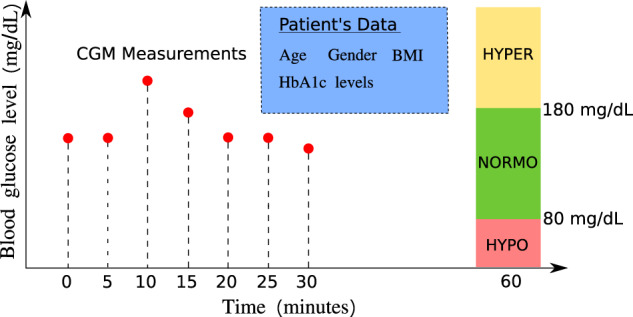
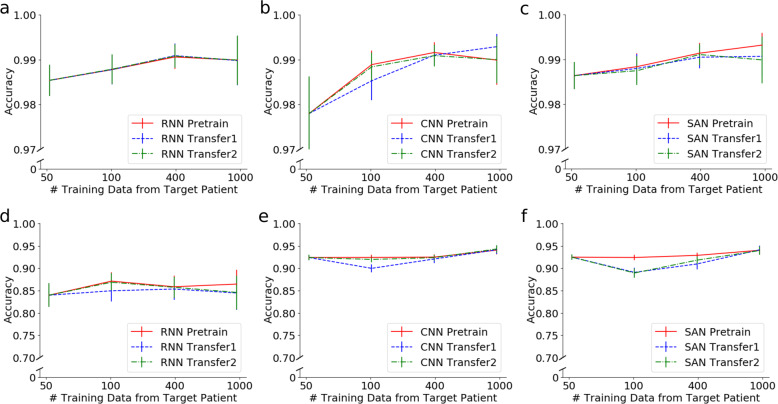
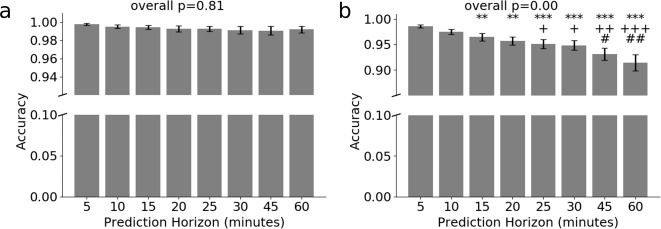
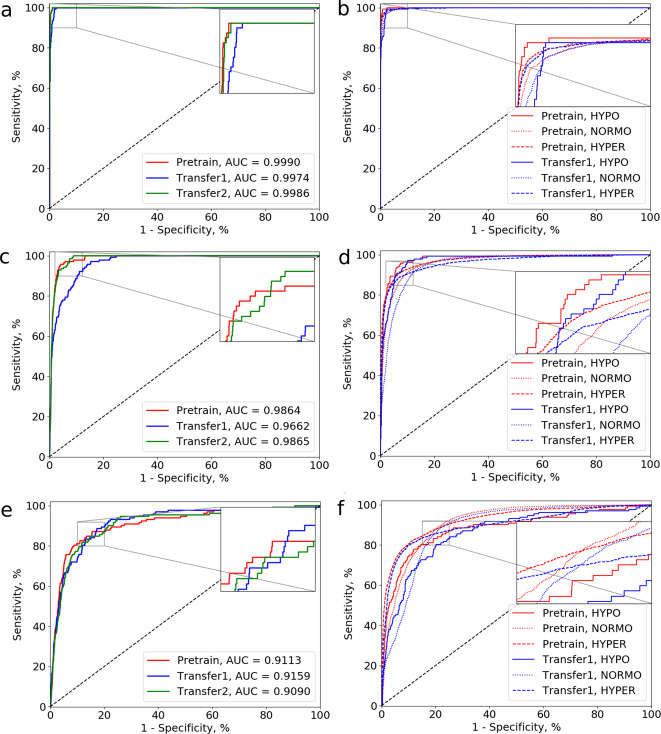
Accurate prediction of blood glucose variations in type 2 diabetes (T2D) will facilitate better glycemic control and decrease the occurrence of hypoglycemic episodes as well as the morbidity and mortality associated with T2D, hence increasing the quality of life of patients. Owing to the complexity of the blood glucose dynamics, it is difficult to design accurate predictive models in every circumstance, i.e., hypo/normo/hyperglycemic events. We developed deep-learning methods to predict patient-specific blood glucose during various time horizons in the immediate future using patient-specific every 30-min long glucose measurements by the continuous glucose monitoring (CGM) to predict future glucose levels in 5 min to 1 h. In general, the major challenges to address are (1) the dataset of each patient is often too small to train a patient-specific deep-learning model, and (2) the dataset is usually highly imbalanced given that hypo- and hyperglycemic episodes are usually much less common than normoglycemia. We tackle these two challenges using transfer learning and data augmentation, respectively. We systematically examined three neural network architectures, different loss functions, four transfer-learning strategies, and four data augmentation techniques, including mixup and generative models. Taken together, utilizing these methodologies we achieved over 95% prediction accuracy and 90% sensitivity for a time period within the clinically useful 1 h prediction horizon that would allow a patient to react and correct either hypoglycemia and/or hyperglycemia. We have also demonstrated that the same network architecture and transfer-learning methods perform well for the type 1 diabetes OhioT1DM public dataset.
Overview
The claims and statistics of this paper haven’t been checked yet.
Free: it reads the open-access text and checks the first 5 claims that cite a source we can check. Create a free account to check every claim.
Integrity signals
Registry
Cites
Statistics
Figures
Verification
Claims the paper makes
The claims and statistics of this paper haven’t been checked yet.
Free: it reads the open-access text and checks the first 5 claims that cite a source we can check. Create a free account to check every claim.
Self-check
Percentages, sums and reported differences re-computed from the paper’s own numbers.
The self-check needs the paper’s full text.
Citations
Cites
Vaswani, A., Shazeer, N., Parmar, N., Uszkoreit, J., Jones, L., Gomez, A. N., Kaiser, L., & Polosukhin, I. (2017) · arXiv · doi:10.48550/arxiv.1706.03762 · Cited by 120,404
Hochreiter, S., & Schmidhuber, J. (1997) · Neural Computation · doi:10.1162/neco.1997.9.8.1735 · Cited by 102,318
Scikit-learn: Machine Learning in Python
Pedregosa, F., Varoquaux, G., Gramfort, A., Michel, V., Thirion, B., Grisel, O., Blondel, M., Müller, A., Nothman, J., Louppe, G., et al. (2012) · arXiv · doi:10.48550/arxiv.1201.0490 · Cited by 71,016
Pan, S. J., & Yang, Q. (2010) · IEEE Transactions on Knowledge and Data Engineering · doi:10.1109/tkde.2009.191 · Cited by 23,387
Saeedi, P., Petersohn, I., Salpea, P., Malanda, B., Karuranga, S., Unwin, N., Colagiuri, S., Guariguata, L., Motala, A. A., Ogurtsova, K., et al. (2019) · Diabetes Research and Clinical Practice · doi:10.1016/j.diabres.2019.107843 · Cited by 10,792
He, H., & Garcia, E. A. (2009) · IEEE Transactions on Knowledge and Data Engineering · doi:10.1109/tkde.2008.239 · Cited by 10,359
Effects of Intensive Glucose Lowering in Type 2 Diabetes
(2008) · New England Journal of Medicine · doi:10.1056/nejmoa0802743 · Cited by 7,888
10-year follow-up of intensive glucose control in type 2 diabetes
Holman, R. R., Paul, S. K., Bethel, M. A., Matthews, D. R., & Neil, H. A. W. (2008) · New England Journal of Medicine · doi:10.1056/nejmoa0806470 · Cited by 7,751
IDF Diabetes Atlas: Global estimates for the prevalence of diabetes for 2015 and 2040
Ogurtsova, K., da Rocha Fernandes, J. D., Huang, Y., Linnenkamp, U., Guariguata, L., Cho, N. H., Cavan, D., Shaw, J. E., & Makaroff, L. E. (2017) · Diabetes Research and Clinical Practice · doi:10.1016/j.diabres.2017.03.024 · Cited by 6,966
A Comprehensive Survey on Transfer Learning
Zhuang, F., Qi, Z., Duan, K., Xi, D., Zhu, Y., Zhu, H., Xiong, H., & He, Q. (2021) · Proceedings of the IEEE · doi:10.1109/jproc.2020.3004555 · Cited by 6,678
Research works printed but not linked: 13
- van den Oord, A. et al. WaveNet: a generative model for raw audio. 9th ISCA Speech Synthesis Workshop 125.
- Zhu, T., Li, K., Herrero, P., Chen, J. & Georgiou, P. in A Deep Learning Algorithm for Personalized Blood Glucose Prediction. 64-78 (KHD@ IJCAI, 2018).
- Chung, J., Gulcehre, C., Cho, K. & Bengio, Y. Empirical evaluation of gated recurrent neural networks on sequence modeling. NIPS 2014 Workshop on Deep Learning, December 2014 (2014).
- Zhang, H., Cisse, M., Dauphin, Y. N. & Lopez-Paz, D. Mixup: beyond empirical risk minimization. In International Conference on Learning Representations (Pro- ceedings of Machine Learning Research, Stockholmsmässan, Stockholm, Swe- den. 2018).
- Yoon, J., Jarrett, D. & van der Schaar, M. Time-series generative adversarial net- works. 33rd Conference on Neural Information Processing Systems (NeurIPS 2019) 5508-5518 (Vancouver, Canada, 2019).
- Wu, S., Zhang, H., Valiant, G. & Re, C. the generalization effects of linear trans- formations in data augmentation. International Conference on Machine Learning 10410-10420 (PMLR, 2020).
- Rajpurkar, P., Hannun, A. Y., Haghpanahi, M., Bourn, C. & Ng, A. Y. Cardiologist- level arrhythmia detection with convolutional neural networks. Preprint at https://arxiv.org/abs/1707.01836arXiv (2017).
- Khadem, H., Nemat, H., Elliott, J. & Benaissa, M. In (eds Bach, K., Bunescu, R., Marling, C. & Wiratunga, N.) Knowledge Discovery in Healthcare Data 2020, Vol. 2675, 152-156 (CEUR Workshop Proceedings, 2020).
- Bevan, R. & Coenen, F. In (eds Bach, K., Bunescu, R., Marling, C. & Wiratunga, N.) Knowledge Discovery in Healthcare Data 2020, Vol. 2675, 100-104 (CEUR Work- shop Proceedings, 2020).
- Joedicke, D. et al. In (eds Bach, K., Bunescu, R., Marling, C. & Wiratunga, N.) Knowledge Discovery in Healthcare Data 2020, Vol. 2675, 147-151 (CEUR Work- shop Proceedings, 2020).
- Ma, N. et al. In (eds Bach, K., Bunescu, R., Marling, C. & Wiratunga, N.) Knowledge Discovery in Healthcare Data 2020, Vol. 2675, 157-161 (CEUR Workshop Pro- ceedings, 2020).
- Bahdanau, D., Cho, K. & Bengio, Y. Neural machine translation by jointly learning to align and translate. 3rd International Conference on Learning Representations, ICLR 2015
- Bahdanau, D., Cho, K. & Bengio, Y. Neural machine translation by jointly learning to align and translate. 3rd International Conference on Learning Representations, ICLR 2015; Conference date: 07-05-2015 through 09-05-2015 (2015).
Cited by
Items 101–153 of 153
Zheng, Y., Liang, J., Liu, L., Li, Y., Zhu, J., Song, J., & Zhang, L. (2025) · Biomedical Signal Processing and Control · doi:10.1016/j.bspc.2025.108468 · Cited by 3
Ma, S., Sengupta, S., Lee, Y., Gu, B., Chen, X., Wang, X., Liu, Y., Xu, M., Frydman, G. H., & Li, H. (2025) · Engineering Applications of Artificial Intelligence · doi:10.1016/j.engappai.2025.113401 · Cited by 3
Khoulqi, I., & Ouazzani, Z. E. (2025) · Journal of Imaging · doi:10.3390/jimaging12010017 · Cited by 1
“…deep learning models can leverage valuable transfer learning via fine-tuning and external datasets to resolve issues such as data insufficiency, hardware acceleration, and generalization when encountering relatively lower economic resources, small sample size, and finite computation power [47,48].”
Li, J., Wang, R., Chen, C., Huang, X., Xian, B., Lv, T., Ren, C., Wu, Q., Wen, F., Yan, J., et al. (2026) · PLoS ONE · doi:10.1371/journal.pone.0339180 · Cited by 1
Okyay, T. M., Yilmaz, I., & Koldaş, M. (2026) · Scientific Reports · doi:10.1038/s41598-025-20234-z · Cited by 2
“A study demonstrated that deep transfer learning combined with data augmentation improved glucose level prediction accuracy for only classification task in Type 2 diabetes mellitus patients by overcoming limitations of small, imbalanced datasets within a clinically relevant 1-h horizon 28 .”
Deng, G., & Chengshi, W. (2026) · Science Progress · doi:10.1177/00368504261418899 · Cited by 1
Mohammed, M. A., Ghani, M. K. A., Memon, S., Lakhan, A. R., Marhoon, H. A., Radhi, A. D., Danys, L., & Martínek, R. (2026) · Scientific Reports · doi:10.1038/s41598-026-35419-3 · Cited by 6
“In contrast, newer deep learning–based frameworks consider early warning mechanisms and transfer learning for continuous glucose monitor datasets 5,8 .”
Predicting disease outcomes from remote monitoring using machine learning: a systematic review
Wolber, J., Schuppert, A., Mücke, M., & Sellin, J. (2026) · BMC Medical Informatics and Decision Making · doi:10.1186/s12911-026-03495-0 · Cited by 4
“…DE 1 SVM Maritsch [41] 2020 DE 1 GB Bertachi [42] 2020 DE 10 SVM Jahromi [43] 2023 DE 33 EM Gu [44] 2017 DE 112 RNN Elhadd [45] 2020 DE 13 GB Deng [46] 2021 DE 40 CNN Lehmann [47] 2023 DE 22 DT Aljihmani [48] 2022 DE 32 EM Montaser [49] 2024 DR 42 SVM Khalilnejad [50] 2024 DR 200,000 GB Heart…”
InfluentialWang, J., Faruqui, S. H. A., Alaeddini, A., Du, Y. N., Li, S., Yang, Y., & Sharma, K. (2026) · npj Health Systems · doi:10.1038/s44401-026-00118-8 · Cited by 3
“Most algorithmic approaches in diabetes management have focused on predicting glucose trajectories or automating insulin delivery 10 – 12 , with relatively limited studies integrating AI-based prediction designed to support lifestyle behavior change in real-world care delivery contexts 13,14 .”
Exploring Tree-Based Machine Learning for Multi-Illness Prediction
Roseline, S. A., & Pearline, S. A. (2024) · International Conference on Knowledge Engineering and Communication Systems (ICKECS) · doi:10.1109/ickecs61492.2024.10616981 · Cited by 1
Enhancing Diabetes Management: A Machine Learning-Enabled IoT Framework for Early Detection
Kulshrestha, D., Singh, A., Chaturvedi, R., Tiwari, A., Garg, M., & Yadav, R. (2024) · IEEE International Conference on Electrical Power and Energy Systems (ICEPES) · doi:10.1109/icepes60647.2024.10653483 · Cited by 1
“Carter (2019)[12] examined the use of machine learning and predictive modelling to the chemical composition of toenail samples in order to identify diabetes.”
BackgroundDeep Transfer Learning for Glucose Prediction Adding Physical Activity Data in Type 1 Diabetes
Gallardo, C., García-Sáez, G., Subías, D., Rigla, M., & Hernando, M. E. (2025) · Proceedings - IEEE Symposium on Computer-Based Medical Systems · doi:10.1109/cbms65348.2025.00070 · Cited by 1
Phillips, N. E., Collet, T., & Naef, F. (2022) · medRxiv · doi:10.1101/2022.08.20.22278813 · Cited by 1
“More complex nonlinear dependencies and long-range memory could be captured for example with flexible neural networks 51–54 .”
BackgroundNorgeot, B., Tesei, G., Jankovic, I., Giampanis, S., Shi, J., Wang, D., & Kale, R. P. (2023) · Research Square · doi:10.21203/rs.3.rs-2557547/v1 · Cited by 1
Long-term Prediction of Severe Hypoglycemia in Type 2 Diabetes Based on Multi-view Co-trainingPreprint
Ağraz, M., Deng, Y., Karniadakis, G. E., & Mantzoros, C. S. (2023) · medRxiv · doi:10.1101/2023.08.08.23293518 · Cited by 1
“…data is used in the training process to make decisions or make predictions such as in classification problems in pediatrics [20], early diagnosis of cancer [21], identification of drug candidates [22], predicting 1-year cardiovascular events [23], and predicting blood glucose level in T2D [24].”
MethodSelf-citationEmpowering digital health management with on-device large language models for glucose predictionPreprint
Zhu, T., Howson, J. M. M., & Nevado‐Holgado, A. J. (2025) · medRxiv · doi:10.1101/2025.07.12.25331188 · Cited by 1
“Furthermore, many studies have adopted single prediction horizon frameworks (i.e., sequence-to-one) [15,17,19,20,22], which limit their effectiveness in supporting decision-making processes [23].”
Wang, J., Faruqui, S. H. A., Alaeddini, A., Du, Y. N., Li, S., Yang, Y., & Sharma, K. (2026) · Research Square · doi:10.21203/rs.3.rs-8960634/v1 · Cited by 1
Macrophage and cardiovascular diseases
Zhao, W., Zhang, M., & Zhang, M. (2022) · Elsevier eBooks · doi:10.1016/b978-0-12-822368-0.00011-6
Machine learning characterization of a novel panel for metastatic prediction in breast cancer
Ağraz, M., Ağyüz, U., Celeste, W. E., Birol, K., & Furkan, B. M. (2022) · Global Journal of Perioperative Medicine · doi:10.17352/gjpm.000011 · Cited by 1
Artificial Intelligence Approaches in Diabetic Prediction
Sabitha, E. (2023) · Advances in computer and electrical engineering book series · doi:10.4018/978-1-6684-6937-8.ch021
EAPR: explainable and augmented patient representation learning for disease prediction
Zhang, J., Xu, Y., Ye, B., Zhao, Y., Sun, X., Meng, Q., Zhang, Y., & Cui, L. (2023) · Health Information Science and Systems · doi:10.1007/s13755-023-00256-5
“Later, [20] used transfer learning and data augmentation to enhance EHR data.”
Literature Review of Deep Learning for Physiological signal AnalysisPreprint
Ortiz, N., Beleño, R. D. H., Pérez, M. A., & Suárez, P. A. N. (2023) · Authorea · doi:10.22541/au.170121283.33310565/v1
Satoto, B. D., Indriyani, T. D., Irmawati, B., Yusuf, M., Sophan, M. K., & Anamisa, D. R. (2023) · International Conference on Informatics and Computing (ICIC) · doi:10.1109/icic60109.2023.10381931
“The available methods are scaling, rotation, shears, and reflection [23]. where: , =Position of initial x and y / , / = Position of next x and y”
MethodAlike, Y., Li, C., Hou, J., Zhou, C., Long, Y., Zhang, Z., Zeng, W., Zhang, Y., Wang, D. M., Ye, M., et al. (2024) · Quantitative Imaging in Medicine and Surgery · doi:10.21037/qims-23-610 · Cited by 2
“Most earlier studies used medical data sets that were not balanced in terms of the class labels, which resulted in low predictive accuracy for the minority class (23,24).”
Wang, J., Jin, Y., Jiang, A., Chen, W., Shan, G., Gu, Y., Ming, Y., Li, J., Yue, C., Huang, Z., et al. (2024) · Research Square · doi:10.21203/rs.3.rs-4008354/v1
Meta-optimised Time-index Modeling for Glucose Excursion Prediction
Cui, R., Suominen, H., Nolan, C. J., & Daskalaki, E. (2024) · IEEE International Conference on Bioinformatics and Biomedicine (BIBM) · doi:10.1109/bibm62325.2024.10822258 · Cited by 1
Machine learning for Forecasting quality of life variations in hemodialysis patients
Jamuna, K. V., Bhardwaj, U., Gohil, J. T., Biswal, J., Raj, N., Dhingra, L., & Patil, V. C. (2024) · Health Leadership and Quality of Life · doi:10.56294/hl2024.395
Chui, K. T., Gupta, B. B., Vasant, P., & Thomas, J. J. (2025) · Advances in intelligent systems and computing · doi:10.1007/978-3-031-40905-9_9
Wang, C., Guo, J., Lu, L., Liu, X., Shi, L., & Jiang, P. (2025) · International Conference on Educational and Information Technology · doi:10.1109/iceit64364.2025.10976202
Self-citationModelling type 2 diabetic patients’ glucose metabolism for real-time predictive healthcare service
Zhang, Q., Chang, Z., & Liang Ma, A. (2025) · International Journal of Industrial Ergonomics · doi:10.1016/j.ergon.2025.103802 · Cited by 1
Blood Glucose Prediction Algorithm via TimesNet-MPINN
Zhang, H., Wang, M., & Song, R. (2025) · International Annual Conference on Complex Systems and Intelligent Science (CSIS-IAC) · doi:10.1109/csis-iac65538.2025.11161359
“Aiming at the problems of small datasets and data imbalance faced by RNN in blood glucose prediction, the results of the article show that transfer learning and data augmentation can improve the prediction accuracy of the RNN model Rate and sensitivity [6].”
Tiryaki, Ş. C., Kavak, A., & İnner, A. B. (2025) · Medical Technologies Congress (TIPTEKNO) · doi:10.1109/tiptekno68206.2025.11270130
“A deep transfer learning model is explored to improve blood glucose prediction in [6].”
Belinda, C. M., Kannan, David, A., Ruth Naveena, N., Ravikumar, & Kannan, S. (2026) · AIP conference proceedings · doi:10.1063/5.0298097
Devi, B. A., Karthik, N., & Prabakaran, N. (2026) · SN Computer Science · doi:10.1007/s42979-025-04701-y
“Transfer learning and data augmentation methods like mixup and generative models are used in study [11] to address dataset problems.”
MT1DCNN: a personalised method for predicting adverse glycaemic events in small samples
Zheng, Y., Liang, J., Liu, L., Li, Y., Zhu, J., & Zhang, L. (2025) · International Conference on Computational Intelligence and Applications (ICCIA) · doi:10.1109/iccia67866.2025.00029
“However, the complexity of physiological and pathological mechanisms underlying glucose regulation presents significant challenges in developing a generalized model capable of accurately predicting hypoglycemia, normo-glycemia, and hyperglycemia concurrently [4].”
InfluentialFranzén, S., Chandakas, E., Hillman, S., Rhodes, K. M., & Nordon, C. (2026) · Pharmacoepidemiology and Drug Safety · doi:10.1002/pds.70322
Glucose Forecasting Through Physiological Modelling
Lyttinen, D., Sequeira, I. R., Miles-Chan, J. L., & Koh, Y. S. (2026) · Communications in computer and information science · doi:10.1007/978-981-95-6888-8_16
Li, J., Pang, C., Zhou, W., Luo, X., Zhang, X., Li, Y., & Liu, J. D. (2026) · Biomedical Signal Processing and Control · doi:10.1016/j.bspc.2026.109964
Glucose forecasting and hypoglycemia forewarning in type 1 and type 2 diabetes using deep learning
Fang, S., Zhang, H., Hu, D., Yu, X., Liu, Z., Ma, D., Xu, W., Lin, F., Xie, Q., Liu, F., et al. (2026) · iScience · doi:10.1016/j.isci.2026.115294 · Cited by 2
“27 All models share the same backbone architecture and training data, differing only in task formulation and loss design, ensuring a fair comparison.”
Causal mediation pathways in continuous postprandial glucose monitoring for type 1 diabetes patients
Hilligoss, S., & Qu, A. (2026) · npj Metabolic Health and Disease · doi:10.1038/s44324-026-00127-z
Floc image recognition based on multimodal fusion to provide predictive feedback in coagulation
Li, B., Lin, P., Liu, F., Liu, Z., Liu, L., & Li, K. (2026) · Journal of Water Process Engineering · doi:10.1016/j.jwpe.2026.109966
Recent Advances in Modeling and Prediction of Blood Glucose in Type 1 Diabetes
Deng, Y., Kong, Y., Wang, X., & Li, H. (2026) · Delaware Journal of Public Health · doi:10.32481/djph.2026.03.09 · Cited by 1
“Deng et al. 32 introduced transfer learning and data augmentation to improve patient-specific forecasting under limited data.”
Self-citationPersonalized Blood Glucose Prediction Using Physiology- Informed Machine Learning
Ghimire, S., Çelik, T., Gerdes, M. W., & Omlin, C. W. P. (2026) · Machine Learning and Knowledge Extraction · doi:10.3390/make8040096 · Cited by 3
“Accurate and timely predictions enable proactive decision-making to mitigate the risks of hyperglycemia and hypoglycemia while optimizing dietary choices, exercise routines, and treatment plans [7,8].”
Deep autoregressive networks for blood glucose forecasting for multi-step prediction horizons
Johnson, E. S., Gandhi, U., & Umapathy, M. (2026) · IISE Transactions on Healthcare Systems Engineering · doi:10.1080/24725579.2026.2655715
Ghimire, S., Çelik, T., Gerdes, M. W., & Omlin, C. W. P. (2026) · Machine Learning and Knowledge Extraction · doi:10.3390/make8060145
“For instance, studies [9,16,26] have leveraged attention-augmented recurrent architectures to boost prediction accuracy, while other works [14,27] have specifically evaluated the performance of self-attention models for BGL predictions.”
Spare Parts Demand Forecasting under Multi-Demand Patterns
Deng, J., Li, J., Qin, W., Xu, P., & Wang, S. (2025) · International Conference on Mechanical Engineering and Aerospace Engineering (MEAE) · doi:10.1109/meae68077.2025.11558076
“Yoon et al. proposed TimeGAN for effective time series generation [11], while Deng et al. demonstrated successful applications in medical data classification [12].”
Arshad, F., Beigh, N. T., Alcheikh, N., & Naikoo, G. A. (2026) · Sensors and Actuators Reports · doi:10.1016/j.snr.2026.100481 · Cited by 1
Mukherjee, M., Khan, T. A., & Ali, R. H. (2026) · Healthcare · doi:10.3390/healthcare14142144 · Cited by 1
Lu, B., Wagle, B., Zhaohui, L., Cui, Y., & Prioleau, T. (2026) · PLOS Digital Health · doi:10.1371/journal.pdig.0001633 · Cited by 2
“For LSTM-and CNN-based models or models using shorter input horizons with CGM-only inputs [20,21,23,25], predictions were limited to available continuous CGM segments to preserve temporal consistency.”
Kumar, U., & Kumar, T. (2026) · Lecture notes in networks and systems · doi:10.1007/978-3-032-30963-1_7
Footprint to prediction: low-cost, three-class foot arch screening using a Harris mat
Ramachandran, H., Balu, S., Haran, K. R., Selvi, S. M., & Nageswaran, S. (2026) · Frontiers in Artificial Intelligence · doi:10.3389/frai.2026.1849098
Khan, M. F. I., Uddin, M. Z., Alam, M. S., Baselizadeh, A., & Masum, A. K. M. (2026) · Frontiers in Digital Health · doi:10.3389/fdgth.2026.1932366
“Deng et al. (79) reported that a single network family and transfer strategy performed well both on a type 2 diabetes cohort and on OhioT1DM, and Yu et al. (80)”
Ali, M. N. B., Lassoued, N., Amor, B. B., Nasr, S., & Aouididi, M. A. (2026) · medRxiv · doi:10.64898/2026.10.15.26365634
Metadata
- Authors
- Deng, Y., Lu, L., Aponte, L., Angelidi, A. M., Novak, V., Karniadakis, G. E., & Mantzoros, C. S.
- Affiliations
- Brown University (US)
- University of Pennsylvania (US)
- Beth Israel Deaconess Medical Center (US)
- Corresponding author
- Karniadakis, George Em
- Mantzoros, Christos S.
- ORCID
- Venue
- npj Digital Medicine
- Published
- 2021-07-14
- Volume
- 4
- Issue
- 1
- Pages
- 109-109
- ISSN
- 2398-6352 (ISSN-L)
- PMC
- PMC8280162
- OpenAlex
- W3178109510
- Cited by
- 152
- References
- 63
- Citations by year
- 2026: 30 · 2025: 41 · 2024: 35 · 2023: 28 · 2022: 16 · 2021: 2
- FWCI
- 15.10
- Type
- journal article
- Language
- en
- Open access
- gold
- doi.org
- Licence
- cc-by
- creativecommons.org/licenses/by/4.0 (tdm)
- creativecommons.org/licenses/by/4.0 (vor)
- Locations
- npj Digital Medicine (publishedVersion, cc-by)
- PubMed Central (publishedVersion, cc-by)
- PubMed (publishedVersion)
- DOAJ (DOAJ: Directory of Open Access Journals) (submittedVersion, cc-by-sa)
- Funders
- U.S. Department of Health & Human Services | NIH | National Heart, Lung, and Blood Institute (R01HL154150, U01HL142518)
- U.S. Department of Health & Human Services | NIH | National Institute of Diabetes and Digestive and Kidney Diseases (DK081913)
- U.S. Department of Health & Human Services | NIH | National Institute on Aging (1R01-AG-0287601)
- Topics
- Health Sciences › Medicine › Endocrinology, Diabetes and Metabolism › Diabetes Management and Research
- Physical Sciences › Computer Science › Artificial Intelligence › Machine Learning in Healthcare
- Health Sciences › Health Professions › Health Information Management › Artificial Intelligence in Healthcare
- Keywords
- type 2 diabetes, blood glucose prediction, continuous glucose monitoring, transfer learning, data augmentation, patient-specific prediction, hypoglycemia, hyperglycemia, class imbalance, mixup, generative models, type 1 diabetes, neural network architecture, loss functions
About these checks
Registry, retraction, Cites and statistics results are computed, not judged, with one exception: a printed reference that no index lists is read once by a model before it counts as a citation error. Claims are extracted by a model and kept only when their quote appears verbatim in the text; each cited source is then checked, with a model’s help, for whether it says what the claim relies on. Those verdicts can be wrong — read the claim’s quote and the cited source before relying on one.
Statistics and arithmetic are recomputed, not judged.
Confidence bands are shown only for fields calibrated on our annotated test set. None is calibrated yet, so no band is shown.
What counts as a claim ›How we measure confidence ›How we check this ›
Are you an author, or do you see a problem with this page? Request a review
Data sources
Bibliographic data: Semantic Scholar, OpenAlex, Crossref.
Contains information from the Semantic Scholar Academic Graph Datasets, made available under the ODC Attribution License (ODC-BY 1.0).
Semantic Scholar’s data is described in: Kinney, R., et al. (2023). The Semantic Scholar Open Data Platform. arXiv:2301.10140.
