

Deep transfer learning and data augmentation improve glucose levels prediction in type 2 diabetes patients
Open accessThe DOI matches its Crossref record; 65 of the 65 references it cites were found in a registry or an index.
Abstract
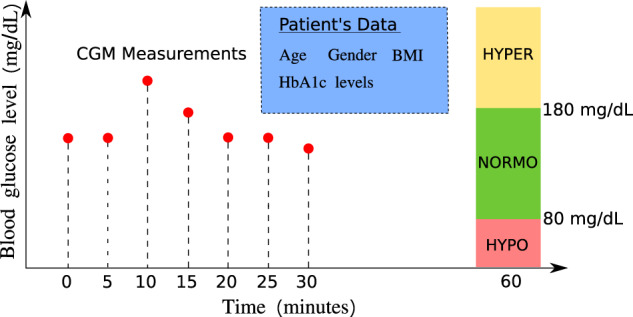
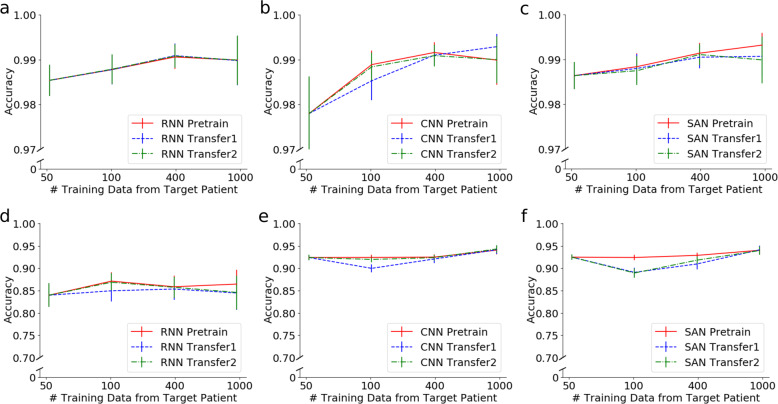
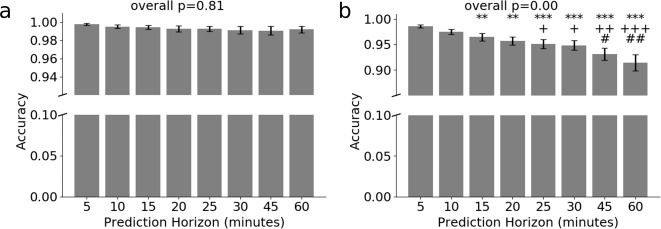
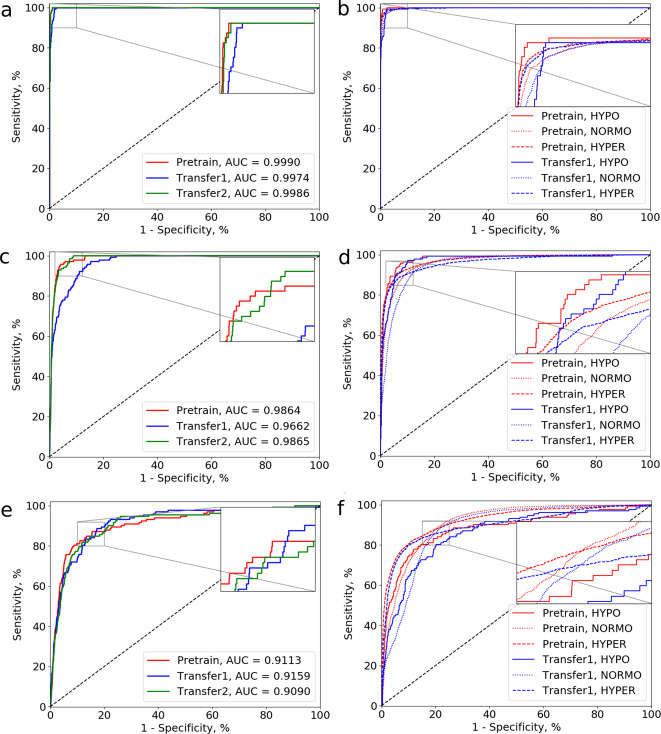
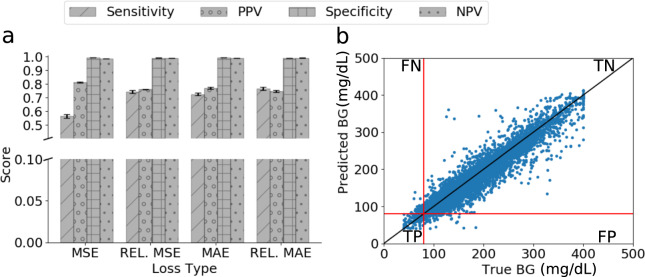
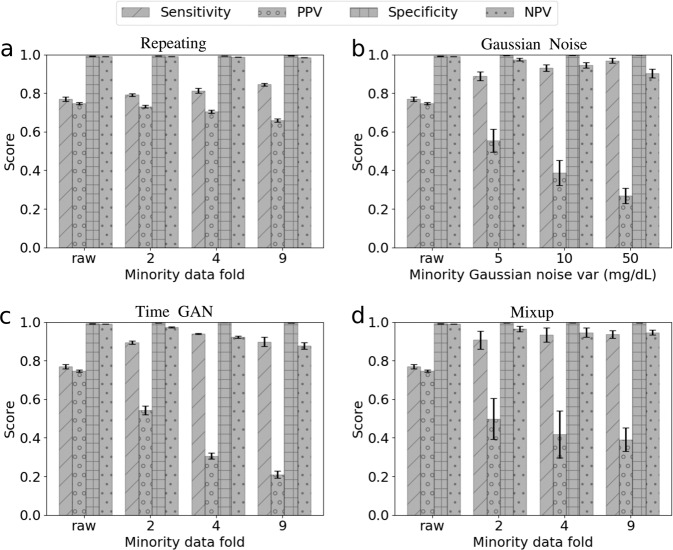
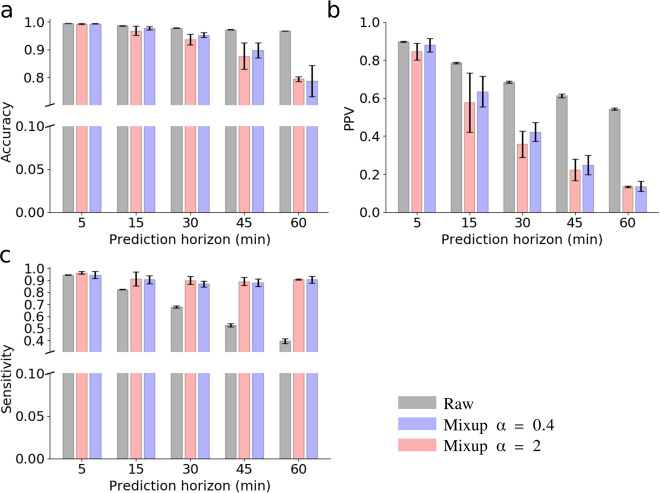
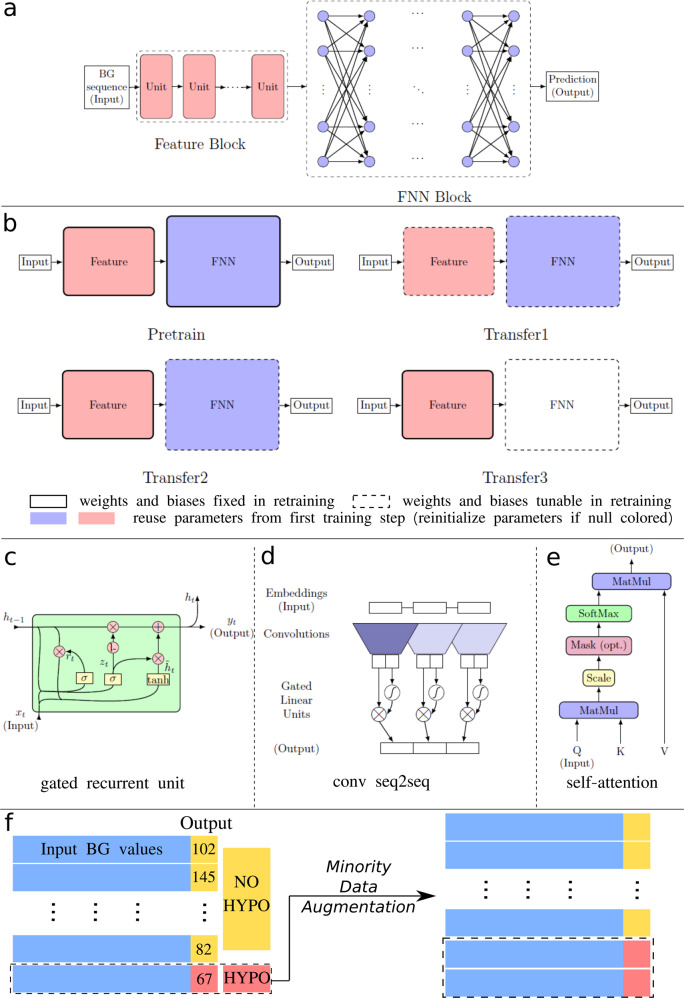
Accurate prediction of blood glucose variations in type 2 diabetes (T2D) will facilitate better glycemic control and decrease the occurrence of hypoglycemic episodes as well as the morbidity and mortality associated with T2D, hence increasing the quality of life of patients. Owing to the complexity of the blood glucose dynamics, it is difficult to design accurate predictive models in every circumstance, i.e., hypo/normo/hyperglycemic events. We developed deep-learning methods to predict patient-specific blood glucose during various time horizons in the immediate future using patient-specific every 30-min long glucose measurements by the continuous glucose monitoring (CGM) to predict future glucose levels in 5 min to 1 h. In general, the major challenges to address are (1) the dataset of each patient is often too small to train a patient-specific deep-learning model, and (2) the dataset is usually highly imbalanced given that hypo- and hyperglycemic episodes are usually much less common than normoglycemia. We tackle these two challenges using transfer learning and data augmentation, respectively. We systematically examined three neural network architectures, different loss functions, four transfer-learning strategies, and four data augmentation techniques, including mixup and generative models. Taken together, utilizing these methodologies we achieved over 95% prediction accuracy and 90% sensitivity for a time period within the clinically useful 1 h prediction horizon that would allow a patient to react and correct either hypoglycemia and/or hyperglycemia. We have also demonstrated that the same network architecture and transfer-learning methods perform well for the type 1 diabetes OhioT1DM public dataset.
Overview
The claims and statistics of this paper haven’t been checked yet.
Free: it reads the open-access text and checks the first 5 claims that cite a source we can check. Create a free account to check every claim.
Integrity signals
Registry
Cites
Statistics
Figures
Verification
Claims the paper makes
The claims and statistics of this paper haven’t been checked yet.
Free: it reads the open-access text and checks the first 5 claims that cite a source we can check. Create a free account to check every claim.
Self-check
Percentages, sums and reported differences re-computed from the paper’s own numbers.
The self-check needs the paper’s full text.
Citations
Cites
Vaswani, A., Shazeer, N., Parmar, N., Uszkoreit, J., Jones, L., Gomez, A. N., Kaiser, L., & Polosukhin, I. (2017) · arXiv · doi:10.48550/arxiv.1706.03762 · Cited by 120,404
Hochreiter, S., & Schmidhuber, J. (1997) · Neural Computation · doi:10.1162/neco.1997.9.8.1735 · Cited by 102,318
Scikit-learn: Machine Learning in Python
Pedregosa, F., Varoquaux, G., Gramfort, A., Michel, V., Thirion, B., Grisel, O., Blondel, M., Müller, A., Nothman, J., Louppe, G., et al. (2012) · arXiv · doi:10.48550/arxiv.1201.0490 · Cited by 71,016
Pan, S. J., & Yang, Q. (2010) · IEEE Transactions on Knowledge and Data Engineering · doi:10.1109/tkde.2009.191 · Cited by 23,387
Saeedi, P., Petersohn, I., Salpea, P., Malanda, B., Karuranga, S., Unwin, N., Colagiuri, S., Guariguata, L., Motala, A. A., Ogurtsova, K., et al. (2019) · Diabetes Research and Clinical Practice · doi:10.1016/j.diabres.2019.107843 · Cited by 10,792
He, H., & Garcia, E. A. (2009) · IEEE Transactions on Knowledge and Data Engineering · doi:10.1109/tkde.2008.239 · Cited by 10,359
Effects of Intensive Glucose Lowering in Type 2 Diabetes
(2008) · New England Journal of Medicine · doi:10.1056/nejmoa0802743 · Cited by 7,888
10-year follow-up of intensive glucose control in type 2 diabetes
Holman, R. R., Paul, S. K., Bethel, M. A., Matthews, D. R., & Neil, H. A. W. (2008) · New England Journal of Medicine · doi:10.1056/nejmoa0806470 · Cited by 7,751
IDF Diabetes Atlas: Global estimates for the prevalence of diabetes for 2015 and 2040
Ogurtsova, K., da Rocha Fernandes, J. D., Huang, Y., Linnenkamp, U., Guariguata, L., Cho, N. H., Cavan, D., Shaw, J. E., & Makaroff, L. E. (2017) · Diabetes Research and Clinical Practice · doi:10.1016/j.diabres.2017.03.024 · Cited by 6,966
A Comprehensive Survey on Transfer Learning
Zhuang, F., Qi, Z., Duan, K., Xi, D., Zhu, Y., Zhu, H., Xiong, H., & He, Q. (2021) · Proceedings of the IEEE · doi:10.1109/jproc.2020.3004555 · Cited by 6,678
Weiss, K., Khoshgoftaar, T. M., & Wang, D. (2016) · Journal of Big Data · doi:10.1186/s40537-016-0043-6 · Cited by 6,260
Global and societal implications of the diabetes epidemic
Zimmet, P., Alberti, K. G. M. M., & Shaw, J. (2001) · Nature · doi:10.1038/414782a · Cited by 5,883
The Pathobiology of Diabetic Complications
Brownlee, M. (2005) · Diabetes · doi:10.2337/diabetes.54.6.1615 · Cited by 5,339
The Emerging Risk Factors Collaboration (2010) · The Lancet · doi:10.1016/s0140-6736(10)60484-9 · Cited by 5,125
IDF Diabetes Atlas: Global estimates of the prevalence of diabetes for 2011 and 2030
Whiting, D. R., Guariguata, L., Weil, C., & Shaw, J. (2011) · Diabetes Research and Clinical Practice · doi:10.1016/j.diabres.2011.10.029 · Cited by 3,994
A Survey on Deep Transfer Learning
Tan, C., Sun, F., Kong, T., Zhang, W., Yang, C., & Liu, C. (2018) · Lecture Notes in Computer Science · doi:10.1007/978-3-030-01424-7_27 · Cited by 3,165
Mechanisms of Diabetic Complications
Forbes, J. M., & Cooper, M. E. (2013) · Physiological Reviews · doi:10.1152/physrev.00045.2011 · Cited by 2,890
Convolutional Sequence to Sequence Learning
Gehring, J., Auli, M., Grangier, D., Yarats, D., & Dauphin, Y. N. (2017) · arXiv · doi:10.48550/arxiv.1705.03122 · Cited by 2,850
Diabetes Mellitus, Fasting Glucose, and Risk of Cause-Specific Death
The Emerging Risk Factors Collaboration (2011) · New England Journal of Medicine · doi:10.1056/nejmoa1008862 · Cited by 2,726
Learning from imbalanced data: open challenges and future directions
Krawczyk, B. (2016) · Progress in Artificial Intelligence · doi:10.1007/s13748-016-0094-0 · Cited by 2,459
Learning from class-imbalanced data: Review of methods and applications
Haixiang, G., Yijing, L., Shang, J., Mingyun, G., Yuanyue, H., & Bing, G. (2017) · Expert Systems with Applications · doi:10.1016/j.eswa.2016.12.035 · Cited by 2,377
International consensus on use of continuous glucose monitoring
Danne, T., Nimri, R., Battelino, T., Bergenstal, R. M., Close, K. L., DeVries, J. H., Garg, S., Heinemann, L., Hirsch, I., Amiel, S. A., et al. (2017) · Diabetes Care · doi:10.2337/dc17-1600 · Cited by 2,069
Acharya, U. R., Oh, S. L., Hagiwara, Y., Tan, J. H., & Adeli, H. (2018) · Computers in Biology and Medicine · doi:10.1016/j.compbiomed.2017.09.017 · Cited by 1,647
Severe hypoglycemia and risks of vascular events and death
Zoungas, S., Patel, A., Chalmers, J., de Galan, B. E., Li, Q., Billot, L., Woodward, M., Ninomiya, T., Neal, B., MacMahon, S., et al. (2010) · New England Journal of Medicine · doi:10.1056/nejmoa1003795 · Cited by 1,471
Machine learning and data mining methods in diabetes research
Kavakiotis, I., Tsave, O., Salifoglou, A., Maglaveras, N., Vlahavas, I., & Chouvarda, I. (2017) · Computational and Structural Biotechnology Journal · doi:10.1016/j.csbj.2016.12.005 · Cited by 1,445
Cost-sensitive boosting for classification of imbalanced data
Sun, Y., Kamel, M. S., Wong, A. K. C., & Wang, Y. (2007) · Pattern Recognition · doi:10.1016/j.patcog.2007.04.009 · Cited by 1,423
Learning from Imbalanced Data Sets
Fernández, A., García, S., Galar, M., Prati, R. C., Krawczyk, B., & Herrera, F. (2018) · doi:10.1007/978-3-319-98074-4 · Cited by 1,349
Cryer, P. E., Davis, S. N., & Shamoon, H. (2003) · Diabetes Care · doi:10.2337/diacare.26.6.1902 · Cited by 1,160
Excess Mortality among Persons with Type 2 Diabetes
Tancredi, M., Rosengren, A., Svensson, A.-M., Kosiborod, M., Pivodic, A., Gudbjörnsdottir, S., Wedel, H., Clements, M., Dahlqvist, S., & Lind, M. (2015) · New England Journal of Medicine · doi:10.1056/nejmoa1504347 · Cited by 996
Um, T. T., Pfister, F. M. J., Pichler, D., Endo, S., Lang, M., Hirche, S., Fietzek, U., & Kulić, D. (2017) · Proceedings of the 19th ACM International Conference on Multimodal Interaction · doi:10.1145/3136755.3136817 · Cited by 729
Follow-up of glycemic control and cardiovascular outcomes in type 2 diabetes
Hayward, R. A., Reaven, P. D., Wiitala, W. L., Bahn, G. D., Reda, D. J., Ge, L., McCarren, M., Duckworth, W. C., & Emanuele, N. V. (2015) · New England Journal of Medicine · doi:10.1056/nejmoa1414266 · Cited by 668
Um, T. T. (n.d.) · mediaTUM – the media and publications repository of the Technical University Munich (Technical University Munich) · Cited by 602
Long-term Glycemic Variability and Risk of Adverse Outcomes: A Systematic Review and Meta-analysis
Gorst, C., Kwok, C. S., Aslam, S., Buchan, I., Kontopantelis, E., Myint, P. K., Heatlie, G., Loke, Y., Rutter, M. K., & Mamas, M. A. (2015) · Diabetes Care · doi:10.2337/dc15-1188 · Cited by 530
SpotTune: Transfer Learning Through Adaptive Fine-Tuning
Guo, Y., Shi, H., Kumar, A., Grauman, K., Rosing, T., & Feris, R. (2019) · 2019 IEEE/CVF Conference on Computer Vision and Pattern Recognition (CVPR) · doi:10.1109/cvpr.2019.00494 · Cited by 506
A Systematic Review on Imbalanced Data Challenges in Machine Learning: Applications and Solutions
Kaur, H., Pannu, H. S., & Malhi, A. K. (2020) · ACM Computing Surveys · doi:10.1145/3343440 · Cited by 488
The OhioT1DM Dataset for Blood Glucose Level Prediction: Update 2020.
Marling, C., & Bunescu, R. (2020) · PubMed · Cited by 438
Woldaregay, A. Z., Årsand, E., Walderhaug, S., Albers, D., Mamykina, L., Botsis, T., & Hartvigsen, G. (2019) · Artificial Intelligence in Medicine · doi:10.1016/j.artmed.2019.07.007 · Cited by 358
Convolutional Recurrent Neural Networks for Glucose Prediction
Li, K., Daniels, J., Liu, C., Herrero, P., & Georgiou, P. (2020) · IEEE Journal of Biomedical and Health Informatics · doi:10.1109/jbhi.2019.2908488 · Cited by 310
A review of personalized blood glucose prediction strategies for T1DM patients
Oviedo, S., Vehí, J., Calm, R., & Armengol, J. (2017) · International Journal for Numerical Methods in Biomedical Engineering · doi:10.1002/cnm.2833 · Cited by 279
GluNet: A Deep Learning Framework for Accurate Glucose Forecasting
Li, K., Liu, C., Zhu, T., Herrero, P., & Georgiou, P. (2020) · IEEE Journal of Biomedical and Health Informatics · doi:10.1109/jbhi.2019.2931842 · Cited by 206
Hypoglycemia Prediction Using Machine Learning Models for Patients With Type 2 Diabetes
Sudharsan, B., Peeples, M., & Shomali, M. (2015) · Journal of Diabetes Science and Technology · doi:10.1177/1932296814554260 · Cited by 162
Xie, J., & Wang, Q. (2020) · IEEE Transactions on Biomedical Engineering · doi:10.1109/tbme.2020.2975959 · Cited by 158
A Multi-Patient Data-Driven Approach to Blood Glucose Prediction
Aliberti, A., Pupillo, I., Terna, S., Macii, E., Cataldo, S. D., Patti, E., & Acquaviva, A. (2019) · IEEE Access · doi:10.1109/access.2019.2919184 · Cited by 154
Multi-task deep learning for cardiac rhythm detection in wearable devices
Torres-Soto, J., & Ashley, E. A. (2020) · npj Digital Medicine · doi:10.1038/s41746-020-00320-4 · Cited by 136
Prediction of Severe Hypoglycemia
Cox, D. J., Gonder-Frederick, L., Ritterband, L., Clarke, W., & Kovatchev, B. P. (2007) · Diabetes Care · doi:10.2337/dc06-1386 · Cited by 129
A Deep Learning Approach to Diabetic Blood Glucose Prediction
Mhaskar, H. N., Pereverzyev, S. V., & van der Walt, M. D. (2017) · Frontiers in Applied Mathematics and Statistics · doi:10.3389/fams.2017.00014 · Cited by 115
Abedin, A., Ehsanpour, M., Shi, Q., Rezatofighi, H., & Ranasinghe, D. C. (2021) · Proceedings of the ACM on Interactive, Mobile, Wearable and Ubiquitous Technologies · doi:10.1145/3448083 · Cited by 107
Mirshekarian, S., Shen, H., Bunescu, R., & Marling, C. (2019) · Annual International Conference of the IEEE Engineering in Medicine and Biology Society (EMBC) · doi:10.1109/embc.2019.8856940 · Cited by 101
Using LSTMs to learn physiological models of blood glucose behavior
Mirshekarian, S., Bunescu, R., Marling, C., & Schwartz, F. (2017) · 2017 39th Annual International Conference of the IEEE Engineering in Medicine and Biology Society (EMBC) · doi:10.1109/embc.2017.8037460 · Cited by 95
Faruqui, S. H. A., Du, Y., Meka, R., Alaeddini, A., Li, C., Shirinkam, S., & Wang, J. (2019) · JMIR mHealth and uHealth · doi:10.2196/14452 · Cited by 82
Transfer Learning for Clinical Time Series Analysis Using Deep Neural Networks
Gupta, P., Malhotra, P., Narwariya, J., Vig, L., & Shroff, G. (2020) · Journal of Healthcare Informatics Research · doi:10.1007/s41666-019-00062-3 · Cited by 81
Contreras, I., Oviedo, S., Vettoretti, M., Visentin, R., & Vehí, J. (2017) · PLOS ONE · doi:10.1371/journal.pone.0187754 · Cited by 80
Wang, Y., Fu, H., & Zeng, D. (2018) · Journal of the American Statistical Association · doi:10.1080/01621459.2017.1303386 · Cited by 78
Detection of Early Stage Alzheimer’s Disease using EEG Relative Power with Deep Neural Network
Kim, D., & Kim, K. (2018) · 2018 40th Annual International Conference of the IEEE Engineering in Medicine and Biology Society (EMBC) · doi:10.1109/embc.2018.8512231 · Cited by 76
Subject-Aware Contrastive Learning for Biosignals
Cheng, J. Y., Goh, H., Dogrusoz, K., Tuzel, O., & Azemi, E. (2020) · arXiv · doi:10.48550/arxiv.2007.04871 · Cited by 74
LSTM DSS Automatism and Dataset Optimization for Diabetes Prediction
Massaro, A. S., Maritati, V., Giannone, D., Convertini, D., & Galiano, A. M. (2019) · Applied Sciences · doi:10.3390/app9173532 · Cited by 70
Uncovering undetected hypoglycemic events
Unger, J. (2012) · Diabetes, Metabolic Syndrome and Obesity: Targets and Therapy · doi:10.2147/dmso.s29367 · Cited by 62
Bois, M. D., El‐Yacoubi, M. A., & Ammi, M. (2020) · Computer Methods and Programs in Biomedicine · doi:10.1016/j.cmpb.2020.105874 · Cited by 55
Short Term Blood Glucose Prediction based on Continuous Glucose Monitoring Data
Mohebbi, A., Johansen, A. R., Hansen, N., Christensen, P. E., Tarp, J. M., Jensen, M. L., Bengtsson, H. L., & Mørup, M. (2020) · Annual International Conference of the IEEE Engineering in Medicine and Biology Society (EMBC) · doi:10.1109/embc44109.2020.9176695 · Cited by 47
A Survey on Power Management Techniques for Oversubscription of Multi-Tenant Data Centers
Malla, S., & Christensen, K. J. (2019) · ACM Computing Surveys · doi:10.1145/3291049 · Cited by 40
Application of Machine Learning Models to Evaluate Hypoglycemia Risk in Type 2 Diabetes
Mueller, L., Berhanu, P., Bouchard, J. R., Alas, V., Elder, K., Thai, N., Hitchcock, C., Hadzi, T. C., Khalil, I. G., & Miller‐Wilson, L. (2020) · Diabetes Therapy · doi:10.1007/s13300-020-00759-4 · Cited by 26
Gaussian Process Regression with Categorical Inputs for Predicting the Blood Glucose Level
Tomczak, J. M. (2016) · Advances in intelligent systems and computing · doi:10.1007/978-3-319-48944-5_10 · Cited by 23
Boulin, M., Diaby, V., & Tannenbaum, C. (2016) · PLoS ONE · doi:10.1371/journal.pone.0162951 · Cited by 22
Farrell, C. M., McNeilly, A. D., Hapca, S. M., & McCrimmon, R. J. (2020) · Diabetes Care · doi:10.2337/dc20-0882 · Cited by 17
Misra‐Hebert, A. D., Milinovich, A., Zajichek, A., Ji, X., Hobbs, T. D., Weng, W., Petraro, P., Kong, S. X., Mocarski, M., Ganguly, R., et al. (2020) · Diabetes Care · doi:10.2337/dc19-1791 · Cited by 14
Research works printed but not linked: 13
- van den Oord, A. et al. WaveNet: a generative model for raw audio. 9th ISCA Speech Synthesis Workshop 125.
- Zhu, T., Li, K., Herrero, P., Chen, J. & Georgiou, P. in A Deep Learning Algorithm for Personalized Blood Glucose Prediction. 64-78 (KHD@ IJCAI, 2018).
- Chung, J., Gulcehre, C., Cho, K. & Bengio, Y. Empirical evaluation of gated recurrent neural networks on sequence modeling. NIPS 2014 Workshop on Deep Learning, December 2014 (2014).
- Zhang, H., Cisse, M., Dauphin, Y. N. & Lopez-Paz, D. Mixup: beyond empirical risk minimization. In International Conference on Learning Representations (Pro- ceedings of Machine Learning Research, Stockholmsmässan, Stockholm, Swe- den. 2018).
- Yoon, J., Jarrett, D. & van der Schaar, M. Time-series generative adversarial net- works. 33rd Conference on Neural Information Processing Systems (NeurIPS 2019) 5508-5518 (Vancouver, Canada, 2019).
- Wu, S., Zhang, H., Valiant, G. & Re, C. the generalization effects of linear trans- formations in data augmentation. International Conference on Machine Learning 10410-10420 (PMLR, 2020).
- Rajpurkar, P., Hannun, A. Y., Haghpanahi, M., Bourn, C. & Ng, A. Y. Cardiologist- level arrhythmia detection with convolutional neural networks. Preprint at https://arxiv.org/abs/1707.01836arXiv (2017).
- Khadem, H., Nemat, H., Elliott, J. & Benaissa, M. In (eds Bach, K., Bunescu, R., Marling, C. & Wiratunga, N.) Knowledge Discovery in Healthcare Data 2020, Vol. 2675, 152-156 (CEUR Workshop Proceedings, 2020).
- Bevan, R. & Coenen, F. In (eds Bach, K., Bunescu, R., Marling, C. & Wiratunga, N.) Knowledge Discovery in Healthcare Data 2020, Vol. 2675, 100-104 (CEUR Work- shop Proceedings, 2020).
- Joedicke, D. et al. In (eds Bach, K., Bunescu, R., Marling, C. & Wiratunga, N.) Knowledge Discovery in Healthcare Data 2020, Vol. 2675, 147-151 (CEUR Work- shop Proceedings, 2020).
- Ma, N. et al. In (eds Bach, K., Bunescu, R., Marling, C. & Wiratunga, N.) Knowledge Discovery in Healthcare Data 2020, Vol. 2675, 157-161 (CEUR Workshop Pro- ceedings, 2020).
- Bahdanau, D., Cho, K. & Bengio, Y. Neural machine translation by jointly learning to align and translate. 3rd International Conference on Learning Representations, ICLR 2015
- Bahdanau, D., Cho, K. & Bengio, Y. Neural machine translation by jointly learning to align and translate. 3rd International Conference on Learning Representations, ICLR 2015; Conference date: 07-05-2015 through 09-05-2015 (2015).
Cited by
Islam, T., Hafiz, M. S., Jim, J. R., Kabir, M. M., & Mridha, M. F. (2024) · Healthcare Analytics · doi:10.1016/j.health.2024.100340 · Cited by 185
Zhu, T., Li, K., Herrero, P., & Georgiou, P. (2023) · IEEE Transactions on Biomedical Engineering · doi:10.1109/tbme.2022.3187703 · Cited by 135
“It is to be noted that, in the literature, the sensitivity of 75% and precision of 51% [61], and the sensitivity of 59% and precision of 68% [55], were obtained for a 30-minute PH, while an MCC score of 0.51 with the sensitivity of 48.5% was achieved for a 60-minute PH [62].”
MethodInfluentialReliable Extrapolation of Deep Neural Operators Informed by Physics or Sparse Observations
Zhu, M., Zhang, H., Jiao, A., Karniadakis, G. E., & Lu, L. (2023) · Computer Methods in Applied Mechanics and Engineering · doi:10.1016/j.cma.2023.116064 · Cited by 188
“The idea of first pre-training and then fine-tuning is also relevant to the field of transfer learning (TL) [37, 38, 39], which aims to extract the knowledge from one or more source tasks and then apply the knowledge to a target task.”
BackgroundSelf-citationJacobs, P. G., Herrero, P., Facchinetti, A., Vehi, J., Kovatchev, B., Breton, M. D., Cinar, A., Nikita, K. S., Doyle, F. J., Bondia, J., et al. (2024) · IEEE Reviews in Biomedical Engineering · doi:10.1109/rbme.2023.3331297 · Cited by 113
“Population models can be personalized using transfer learning [81], [82] or meta learning [83], [84], [85], [86] approaches.”
BackgroundEnhancing self-management in type 1 diabetes with wearables and deep learning
Zhu, T., Uduku, C., Li, K., Herrero, P., Oliver, N., & Georgiou, P. (2022) · npj Digital Medicine · doi:10.1038/s41746-022-00626-5 · Cited by 97
Metadata
- Authors
- Deng, Y., Lu, L., Aponte, L., Angelidi, A. M., Novak, V., Karniadakis, G. E., & Mantzoros, C. S.
- Affiliations
- Brown University (US)
- University of Pennsylvania (US)
- Beth Israel Deaconess Medical Center (US)
- Corresponding author
- Karniadakis, George Em
- Mantzoros, Christos S.
- ORCID
- Venue
- npj Digital Medicine
- Published
- 2021-07-14
- Volume
- 4
- Issue
- 1
- Pages
- 109-109
- ISSN
- 2398-6352 (ISSN-L)
- PMC
- PMC8280162
- OpenAlex
- W3178109510
- Cited by
- 152
- References
- 63
- Citations by year
- 2026: 30 · 2025: 41 · 2024: 35 · 2023: 28 · 2022: 16 · 2021: 2
- FWCI
- 15.10
- Type
- journal article
- Language
- en
- Open access
- gold
- doi.org
- Licence
- cc-by
- creativecommons.org/licenses/by/4.0 (tdm)
- creativecommons.org/licenses/by/4.0 (vor)
- Locations
- npj Digital Medicine (publishedVersion, cc-by)
- PubMed Central (publishedVersion, cc-by)
- PubMed (publishedVersion)
- DOAJ (DOAJ: Directory of Open Access Journals) (submittedVersion, cc-by-sa)
- Funders
- U.S. Department of Health & Human Services | NIH | National Heart, Lung, and Blood Institute (R01HL154150, U01HL142518)
- U.S. Department of Health & Human Services | NIH | National Institute of Diabetes and Digestive and Kidney Diseases (DK081913)
- U.S. Department of Health & Human Services | NIH | National Institute on Aging (1R01-AG-0287601)
- Topics
- Health Sciences › Medicine › Endocrinology, Diabetes and Metabolism › Diabetes Management and Research
- Physical Sciences › Computer Science › Artificial Intelligence › Machine Learning in Healthcare
- Health Sciences › Health Professions › Health Information Management › Artificial Intelligence in Healthcare
- Keywords
- type 2 diabetes, blood glucose prediction, continuous glucose monitoring, transfer learning, data augmentation, patient-specific prediction, hypoglycemia, hyperglycemia, class imbalance, mixup, generative models, type 1 diabetes, neural network architecture, loss functions
About these checks
Registry, retraction, Cites and statistics results are computed, not judged, with one exception: a printed reference that no index lists is read once by a model before it counts as a citation error. Claims are extracted by a model and kept only when their quote appears verbatim in the text; each cited source is then checked, with a model’s help, for whether it says what the claim relies on. Those verdicts can be wrong — read the claim’s quote and the cited source before relying on one.
Statistics and arithmetic are recomputed, not judged.
Confidence bands are shown only for fields calibrated on our annotated test set. None is calibrated yet, so no band is shown.
What counts as a claim ›How we measure confidence ›How we check this ›
Are you an author, or do you see a problem with this page? Request a review
Data sources
Bibliographic data: Semantic Scholar, OpenAlex, Crossref.
Contains information from the Semantic Scholar Academic Graph Datasets, made available under the ODC Attribution License (ODC-BY 1.0).
Semantic Scholar’s data is described in: Kinney, R., et al. (2023). The Semantic Scholar Open Data Platform. arXiv:2301.10140.
