

Machine learning generalizability across healthcare settings: insights from multi-site COVID-19 screening
Open accessPublished version of a preprint
The DOI matches its Crossref record; 29 of the 29 references it cites were found in a registry or an index.
Abstract
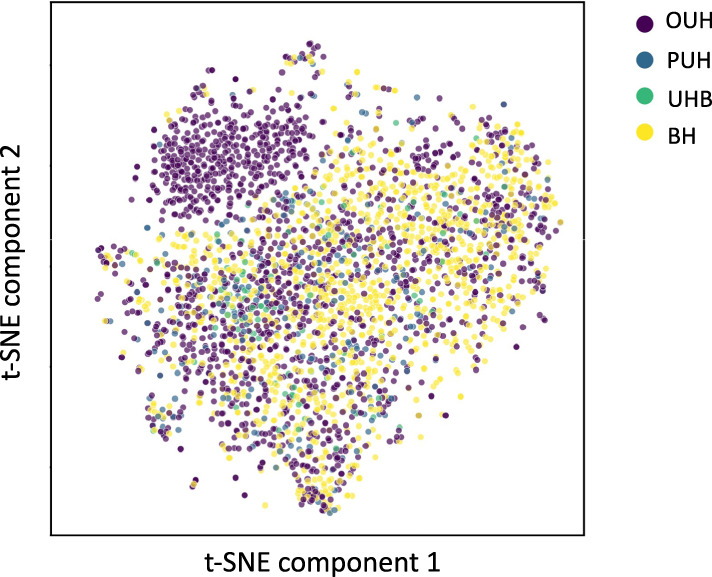
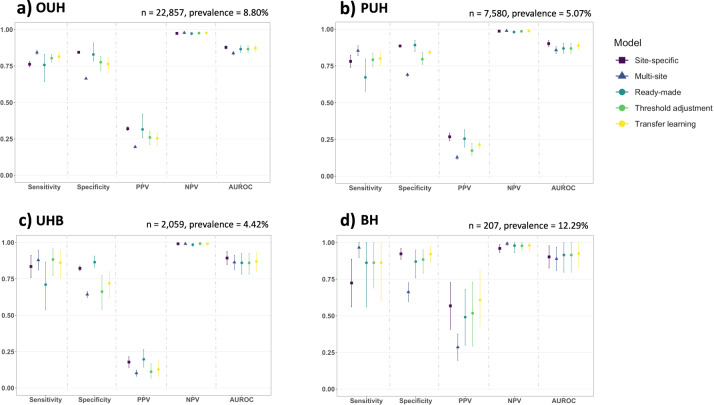
As patient health information is highly regulated due to privacy concerns, most machine learning (ML)-based healthcare studies are unable to test on external patient cohorts, resulting in a gap between locally reported model performance and cross-site generalizability. Different approaches have been introduced for developing models across multiple clinical sites, however less attention has been given to adopting ready-made models in new settings. We introduce three methods to do this—(1) applying a ready-made model “as-is” (2); readjusting the decision threshold on the model’s output using site-specific data and (3); finetuning the model using site-specific data via transfer learning. Using a case study of COVID-19 diagnosis across four NHS Hospital Trusts, we show that all methods achieve clinically-effective performances (NPV > 0.959), with transfer learning achieving the best results (mean AUROCs between 0.870 and 0.925). Our models demonstrate that site-specific customization improves predictive performance when compared to other ready-made approaches.
Overview
The claims and statistics of this paper haven’t been checked yet.
Free: it reads the open-access text and checks the first 5 claims that cite a source we can check. Create a free account to check every claim.
Integrity signals
Registry
Cites
Statistics
Figures
Verification
Claims the paper makes
The claims and statistics of this paper haven’t been checked yet.
Free: it reads the open-access text and checks the first 5 claims that cite a source we can check. Create a free account to check every claim.
Claims other papers make about this one
Each is checked against this paper’s own text: does it say what the citing paper says it does?
The source backs part of the claim, not all of it — or backs it for a different population, condition or comparison.
In the citing paper
“Transfer learning is an approach that can be used to efficiently train models to perform tasks leveraging knowledge gained from historic models trained to perform similar or unique tasks. This can be used to fine-tune externally trained models using smaller quantities of local data, reducing the potential for external algorithmic bias.”
From Bias recognition and mitigation strategies in artificial intelligence healthcare applications (2025) · cites this paper as [53]
Experimental — accuracy not yet measuredThe cited source says what the claim attributes to it.
In the citing paper
“However, it must be recognized this may transfer unrecognized biases inherent to the original environment’s dataset, potentially perpetuating these biases into new healthcare systems53.”
From Bias recognition and mitigation strategies in artificial intelligence healthcare applications (2025) · cites this paper as [53]
The cited source says what the claim attributes to it.
In the citing paper
“Advanced techniques like federated learning [24] or transfer learning [25] aim to improve model performance across sites, especially when local data is limited.”
From Toward generalizable and interpretable machine learning models in healthcare: Insights from ICU outcome predictions (2026) · cites this paper as [25]
The cited source says what the claim attributes to it.
In the citing paper
“and transfer learning, which adapts models trained at one hospital for use at another using small amounts of local data [25, 59].”
From Toward generalizable and interpretable machine learning models in healthcare: Insights from ICU outcome predictions (2026) · cites this paper as [25]
In the citing paper
“The size and number of unique cohorts required for external validation varies based on the model’s application and target population’s diversity, but remains central to confirming performance consistency53.”
From Bias recognition and mitigation strategies in artificial intelligence healthcare applications (2025) · cites this paper as [53]
Self-check
Percentages, sums and reported differences re-computed from the paper’s own numbers.
The self-check needs the paper’s full text.
Citations
Cites
The meaning and use of the area under a receiver operating characteristic (ROC) curve.
Hanley, J. A., & McNeil, B. J. (1982) · Radiology · doi:10.1148/radiology.143.1.7063747 · Cited by 21,856
Federated learning for predicting clinical outcomes in patients with COVID-19
Dayan, I., Roth, H. R., Zhong, A., Harouni, A., Gentili, A., Abidin, A. Z., Liu, A., Costa, A. B., Wood, B. J., Tsai, C.-S., et al. (2021) · Nature Medicine · doi:10.1038/s41591-021-01506-3 · Cited by 842
AI can be sexist and racist — it’s time to make it fair
Zou, J., & Schiebinger, L. (2018) · Nature · doi:10.1038/d41586-018-05707-8 · Cited by 765
A Brief Review of Domain Adaptation
Farahani, A., Voghoei, S., Rasheed, K., & Arabnia, H. R. (2021) · Transactions on Computational Science and Computational Intelligence · doi:10.1007/978-3-030-71704-9_65 · Cited by 615
Transparency and reproducibility in artificial intelligence
Haibe-Kains, B., Adam, G. A., Hosny, A., Khodakarami, F., Massive Analysis Quality Control (MAQC) Society Board of Directors, Shraddha, T., Kusko, R., Sansone, S.-A., Tong, W., Wolfinger, R. D., et al. (2020) · Nature · doi:10.1038/s41586-020-2766-y · Cited by 540 · cited 1×
“Furthermore, the sharing of code and data is widely seen as being crucial to reproducibility; however, in many medical fields, they are rarely made available, as patient health information is highly regulated due to privacy concerns (Haibe-Kains et al., 2020).”
BackgroundDeep Transfer Learning Based Classification Model for COVID-19 Disease
Pathak, Y., Shukla, P. K., Tiwari, A., Stalin, S., Singh, S., & Shukla, P. K. (2022) · IRBM · doi:10.1016/j.irbm.2020.05.003 · Cited by 460
CNN-based transfer learning–BiLSTM network: A novel approach for COVID-19 infection detection
Aslan, M. F., Unlersen, M. F., Sabanci, K., & Durdu, A. (2021) · Applied Soft Computing · doi:10.1016/j.asoc.2020.106912 · Cited by 354
Automated Deep Transfer Learning-Based Approach for Detection of COVID-19 Infection in Chest X-rays
Narayan Das, N., Kumar, N., Kaur, M., Kumar, V., & Singh, D. (2022) · IRBM · doi:10.1016/j.irbm.2020.07.001 · Cited by 351
Smith, J., & Noble, H. (2014) · Evidence Based Nursing · doi:10.1136/eb-2014-101946 · Cited by 293
State of the Art: Reproducibility in Artificial Intelligence
Gundersen, O. E., & Kjensmo, S. (2018) · Proceedings of the AAAI Conference on Artificial Intelligence · doi:10.1609/aaai.v32i1.11503 · Cited by 293
Cited by
The Role of AI in Hospitals and Clinics: Transforming Healthcare in the 21st Century
Maleki Varnosfaderani, S., & Forouzanfar, M. (2024) · Bioengineering · doi:10.3390/bioengineering11040337 · Cited by 931
“Techniques such as domain adaptation and transfer learning stand out as effective solutions, enabling AI models trained on one dataset to adjust and perform accurately on another with little need for retraining [194].”
BackgroundBias recognition and mitigation strategies in artificial intelligence healthcare applications
Hasanzadeh, F., Josephson, C. B., Waters, G., Adedinsewo, D., Azizi, Z., & White, J. A. (2025) · npj Digital Medicine · doi:10.1038/s41746-025-01503-7 · Cited by 320
“However,itmustberecognizedthis maytransferunrecognizedbiasesinherenttotheoriginalenvironment ’ s dataset, potentially perpetuating these biases into new healthcare systems 53 .”
InfluentialDeep Learning in Breast Cancer Imaging: State of the Art and Recent Advancements in Early 2024
Carriero, A., Groenhoff, L., Vologina, E., Basile, P., & Albera, M. (2024) · Diagnostics · doi:10.3390/diagnostics14080848 · Cited by 166
“It is still debated which of the two solutions is the most suitable to improve results in final applications, but local retraining by transfer learning seems to be an effective approach [52].”
BackgroundAn adversarial training framework for mitigating algorithmic biases in clinical machine learning
Yang, J., Soltan, A. A. S., Eyre, D. W., Yang, Y., & Clifton, D. A. (2023) · npj Digital Medicine · doi:10.1038/s41746-023-00805-y · Cited by 159
Self-citationYang, J., Soltan, A. A. S., Eyre, D. W., & Clifton, D. A. (2023) · Nature Machine Intelligence · doi:10.1038/s42256-023-00697-3 · Cited by 140
Self-citationMalBoT-DRL: Malware Botnet Detection Using Deep Reinforcement Learning in IoT Networks
Al-Fawa’reh, M., Abu-Khalaf, J., Szewczyk, P., & Kang, J. J. (2023) · IEEE Internet of Things Journal · doi:10.1109/jiot.2023.3324053 · Cited by 144
“Generalizability refers to a model’s capacity to effectively apply its learned knowledge from training data to new, unseen contexts, such as zero-day attacks [28].”
BackgroundGeneralizability assessment of AI models across hospitals in a low-middle and high income country
Yang, J., Dung, N. T., Thạch, P. N., Phong, N. T., Phu, V. D., Dong, P. K., Yen, L. M., Thy, D. B. X., Soltan, A. A. S., Thwaites, L., et al. (2024) · Nature Communications · doi:10.1038/s41467-024-52618-6 · Cited by 136
Self-citationScientific evidence for clinical text summarization using large language models: scoping review
Bednarczyk, L., Reichenpfader, D., Gaudet-Blavignac, C., Ette, A. K., Zaghir, J., Zheng, Y., Bensahla, A., Bjelogrlic, M., & Lovis, C. (2025) · Journal of Medical Internet Research · doi:10.2196/68998 · Cited by 83
“In addition, model generalizability, referring to the model’s ability to perform effectively across diverse clinical settings, populations, or conditions beyond those on which it was originally trained [55], was frequently overlooked in the analyzed studies.”
Nickson, D., Meyer, C., Walasek, L., & Toro, C. T. (2023) · BMC Medical Informatics and Decision Making · doi:10.1186/s12911-023-02341-x · Cited by 108
“This is a significant consideration for medical ML applications, whilst a model may work well in their development and testing environments, this does not guarantees that they will work in a new context [73, 74].”
BackgroundGolder, S., Xu, D., O’Connor, K., Wang, Y., Batra, M., & Gonzalez‐Hernandez, G. (2025) · Drug Safety · doi:10.1007/s40264-024-01505-6 · Cited by 102
Machine learning in infectious diseases: potential applications and limitations
Meslamani, A. Z. A., Sobrino, I., & de la Fuente, J. (2024) · Annals of Medicine · doi:10.1080/07853890.2024.2362869 · Cited by 85
“…of agents and the variability in disease presentation, models can quickly become outdated, thus requiring continuous updates and validation [5,6]. the aim of this commentary is to explore the potential applications and barriers to mL, specifically in the context of infectious disease…”
BackgroundSynthetically enhanced: unveiling synthetic data's potential in medical imaging research
Khosravi, B., Li, F., Dapamede, T., Rouzrokh, P., Gamble, C. U., Trivedi, H., Wyles, C. C., Sellergren, A., Purkayastha, S., Erickson, B. J., et al. (2024) · EBioMedicine · doi:10.1016/j.ebiom.2024.105174 · Cited by 96
“5,6 The former requires combining data from various institutions, but this can be dif fi cult due to concerns about patient privacy.”
BackgroundDeep reinforcement learning for multi-class imbalanced training: applications in healthcare
Yang, J., El-Bouri, R., O’Donoghue, O., Lachapelle, A. S., Soltan, A. A. S., Eyre, D. W., Lü, L., & Clifton, D. A. (2023) · Machine Learning · doi:10.1007/s10994-023-06481-z · Cited by 73
“…achieved reasonably high AUROC scores across all test sets, comparable to those reported in previous studies, using the same patient cohorts (Miller et al., 2020; Soltan et al., 2022; Yang et al., 2022, 2023) (Supplementary Table 3), demonstrating that we have trained strong models to begin with.”
Self-citationMatyukira, C., & Mhangara, P. (2024) · European Journal of Remote Sensing · doi:10.1080/22797254.2024.2422330 · Cited by 69
“This necessitates ongoing model tuning and adaptation to ensure accuracy across diverse landscapes (Ayhan et al., 2020; Turner et al., 2019; Yang et al., 2022).”
Rajendran, S., Pan, W., Sabuncu, M. R., Chen, Y., Zhou, J., & Wang, F. (2024) · Patterns · doi:10.1016/j.patter.2023.100913 · Cited by 47
Rajendran, S., Xu, Z., Pan, W., Ghosh, A., & Wang, F. (2023) · PLOS Digital Health · doi:10.1371/journal.pdig.0000117 · Cited by 61
Cunningham, J. W., Singh, P., Reeder, C., Claggett, B., Marti-Castellote, P. M., Lau, E. S., Khurshid, S., Batra, P., Lubitz, S. A., Maddah, M., et al. (2024) · JAMA Cardiology · doi:10.1001/jamacardio.2023.4859 · Cited by 38
Yang, J., Eyre, D. W., Lü, L., & Clifton, D. A. (2023) · npj Antimicrobials and Resistance · doi:10.1038/s44259-023-00015-2 · Cited by 48
“Through the acquisition of more/new data, the weights of a neural network-based model can be fi netuned, rather than fully retrained, in order to keep models up-to-date 10 .”
InfluentialSelf-citationThe challenges of using machine learning models in psychiatric research and clinical practice
Ostojic, D., Lalousis, P. A., Donohoe, G. J., & Morris, D. W. (2024) · European Neuropsychopharmacology · doi:10.1016/j.euroneuro.2024.08.005 · Cited by 51
“Consequently, this can lead to reduced accuracy and diminished ability to generalise risk predictions of models as they might not have effectively captured the true relationship between the features and the target outcome (Tokada et al., 2021; Yang et al., 2022).”
BackgroundKim, T., Makutonin, M., Sirous, R., & Javan, R. (2025) · Radiographics · doi:10.1148/rg.240073 · Cited by 45
Artificial Intelligence (AI) in Pharmaceutical Formulation and Dosage Calculations
Joshi, S., & Sheth, S. (2025) · Pharmaceutics · doi:10.3390/pharmaceutics17111440 · Cited by 42
Pan, W., Xu, Z., Rajendran, S., & Wang, F. (2023) · Patterns · doi:10.1016/j.patter.2023.100898 · Cited by 49
Yang, J., Clifton, L., Dung, N. T., Phong, N. T., Yen, L. M., Thy, D. B. X., Soltan, A. A. S., Thwaites, L., & Clifton, D. A. (2024) · Scientific Reports · doi:10.1038/s41598-024-64210-5 · Cited by 27
“Therefore, despite a high AUROC at external sites, it may be crucial to tailor the classification threshold (i.e., the criterion for categorizing COVID-19 status as positive or negative) independently for each site to uphold desired levels of sensitivity and specificity 17 .”
InfluentialSelf-citationGeneralizability of clinical prediction models in mental health
Richter, M., Emden, D., Leenings, R., Winter, N. R., Mikolajczyk, R., Massag, J., Zwiky, E., Borgers, T., Redlich, R., Koutsouleris, N., et al. (2025) · Molecular Psychiatry · doi:10.1038/s41380-025-02950-0 · Cited by 45
Exploring explainable AI features in the vocal biomarkers of lung disease
Chen, Z., Liang, N., Li, H., Zhang, H., Li, H., Yan, L., Hu, Z., Chen, Y., Zhang, Y., Wang, Y., et al. (2024) · Computers in Biology and Medicine · doi:10.1016/j.compbiomed.2024.108844 · Cited by 26
Oettl, F. C., Pareek, A., Winkler, P. W., Zsidai, B., Pruneski, J. A., Senorski, E. H., Kopf, S., Ley, C., Herbst, E., Oeding, J. F., et al. (2024) · Journal of Experimental Orthopaedics · doi:10.1002/jeo2.12039 · Cited by 33
Ramakrishnaiah, Y., Maćešić, N., Webb, G. I., Peleg, A. Y., & Tyagi, S. (2025) · International Journal of Medical Informatics · doi:10.1016/j.ijmedinf.2025.105816 · Cited by 39
Recent Advances in Decoupling Strategies for Soft Sensors
Yuan, Y., Zhang, W., Yang, J., Peng, M., & Cheng, H. (2026) · Advanced Science · doi:10.1002/advs.202514499 · Cited by 29
“For user-interactive applications, data should span multiple individuals, postures, activities, and wearing styles [ 123 ].”
Self-citationOikonomou, E. K., & Khera, R. (2024) · Hellenic Journal of Cardiology · doi:10.1016/j.hjc.2024.07.003 · Cited by 36
Mahmood, S., Hasan, R., Hussain, S., & Adhikari, R. (2025) · World · doi:10.3390/world6010015 · Cited by 30
The Dawn of a New Pharmaceutical Epoch: Can AI and Robotics Reshape Drug Formulation?
Bannigan, P., Hickman, R. J., Aspuru‐Guzik, A., & Allen, C. J. (2024) · Advanced Healthcare Materials · doi:10.1002/adhm.202401312 · Cited by 29
Automatic Classification of Cardiac Arrhythmias Using Deep Learning Techniques: A Systematic Review
Vásquez-Iturralde, F., Flores-Calero, M. J., Grijalva, F., & Rosales, A. (2024) · IEEE Access · doi:10.1109/access.2024.3408282 · Cited by 28
“Although encouraged, validation on more datasets than the original development dataset is not always feasible, as there may be ethical, technical, or financial challenges in sharing clinical data [118] and [119].”
BackgroundJaotombo, F., Adorni, L., Ghattas, B., & Boyer, L. (2023) · PLoS ONE · doi:10.1371/journal.pone.0289795 · Cited by 30
“The specificity of each hospital may be accounted for through usage of ready to use models retrained on each local site data through threshold adjustment and transfer learning [73].”
MethodMeta-learning in Healthcare: A Survey
Rafiei, A., Moore, R., Jahromi, S., Hajati, F., & Kamaleswaran, R. (2024) · SN Computer Science · doi:10.1007/s42979-024-03166-9 · Cited by 43
“Generalizability refers to the ability of a model to perform well on unseen data across a range of tasks, conditions, and populations [196].”
Updating methods for artificial intelligence–based clinical prediction models: a scoping review
Meijerink, L., Dunias, Z. S., Leeuwenberg, A., de Hond, A., Jenkins, D. A., Martin, G. P., Sperrin, M., Peek, N. B., Spijker, R., Hooft, L., et al. (2024) · Journal of Clinical Epidemiology · doi:10.1016/j.jclinepi.2024.111636 · Cited by 27
Yang, H. S., Pan, W., Wang, Y., Zaydman, M. A., Spies, N. C., Zhao, Z., Guise, T. A., Meng, Q. H., & Wang, F. (2023) · Clinical Chemistry · doi:10.1093/clinchem/hvad141 · Cited by 22
Heterogeneity in Antidepressant Treatment and Major Depressive Disorder Outcomes Among Clinicians
Rathnam, S., Hart, K. L., Sharma, A., Verhaak, P. F., McCoy, T. H., Doshi‐Velez, F., & Perlis, R. H. (2024) · JAMA Psychiatry · doi:10.1001/jamapsychiatry.2024.1778 · Cited by 22
Monteith, S., Glenn, T., Geddes, J. R., Achtyes, E. D., Whybrow, P. C., & Bauer, M. (2023) · Pharmacopsychiatry · doi:10.1055/a-2142-9325 · Cited by 23
“When a clinical AI prediction tool is implemented in a setting where the patient population char - acteristics differs from the training data, AI often does not perform well [28–30].”
MethodDeshmukh, M. T., Thakre, Y., Bisen, W. H., Sankar, K., Avthankar, A., Shahade, A. K., Bhaiyya, M. L., & Kulkarni, M. B. (2025) · Analytical Chemistry · doi:10.1021/acs.analchem.5c06356 · Cited by 19
“117,118 External validation on independent data sets or with other cohorts of hospitals is, therefore, required to prove robustness.”
Yang, H. S., Çubukçu, H. C., Ben, F. D., Duan, X., Feng, J., Frans, G., Gruson, D., King, M. C., Nieto, J., Wang, B., et al. (2026) · Clinical Chemistry and Laboratory Medicine (CCLM) · doi:10.1515/cclm-2025-1322 · Cited by 19
“…model drift, retraining triggers) and transferability (data of external validation, applicability across sites and work areas) should also be included [31, 32], together with details of validation cohorts and, where appropriate, comparisons against established systems or manual methods [33].”
Sacca, L., Lobaina, D., Burgoa, S., Lotharius, K. C., Moothedan, E., Gilmore, N., Xie, J. F., Mohler, R., Scharf, G., Knecht, M. K., et al. (2024) · Journal of Clinical Medicine · doi:10.3390/jcm13092525 · Cited by 21
“The issue underscores the need for additional funding to support the collection of data that accurately represents diverse populations globally, ensuring inclusivity in risk assessment models and their application across larger and more diverse sample sizes [49,50].”
BackgroundAdaptive Cancer Therapy in the Age of Generative Artificial Intelligence
Derbal, Y. M. (2024) · Cancer Control: Journal of the Moffitt Cancer Cente · doi:10.1177/10732748241264704 · Cited by 16
“45,46 Not-withstanding the generalizability question and the challenges of integrating AI in real-world clinical setting, 32,38,47-49 data-driven AI may in the long run be pivotal to optimizing cancer treatments.”
BackgroundHuang, Z., Deng, Z., Jin, Y., Wang, H., Su, Y., Li, T., Sun, H., Cheng, J., Chen, J., He, J., et al. (2025) · Medical Image Analysis · doi:10.1016/j.media.2025.103499 · Cited by 28
“Generalizability, the ability of a machine learning model to perform effectively on unseen data, is critical for medical image analysis models due to their anticipated applications in diverse real-world clinical scenarios [3, 26, 44].”
Guerreiro, J., Garriga, R., Bagén, T. L., Sharma, B., Karnik, N. S., & Matic, A. (2024) · npj Digital Medicine · doi:10.1038/s41746-024-01203-8 · Cited by 19
“Despite the pivotal role of understanding whether a model can be transferred or replicated and how well it would perform, only a handful of studies touched upon the replication of machine learning models 16 or their transfer 17 – 24 across different hospitals.”
Plant disease epidemiology in the age of artificial intelligence and machine learning
Neik, T. X., Dolatabadian, A., Danilevicz, M. F., Upadhyaya, S. R., Zhang, F., Batley, J., & Edwards, D. (2025) · Agriculture Communications · doi:10.1016/j.agrcom.2025.100089 · Cited by 28
Naderalvojoud, B., Curtin, C. M., Yanover, C., El‐Hay, T., Choi, B., Park, R. W., Tabuenca, J. G., Reeve, M. P., Falconer, T., Humphreys, K. N., et al. (2024) · Journal of the American Medical Informatics Association · doi:10.1093/jamia/ocae028 · Cited by 16
Addressing label noise for electronic health records: insights from computer vision for tabular data
Yang, J., Triendl, H., Soltan, A. A. S., Prakash, M., & Clifton, D. A. (2024) · BMC Medical Informatics and Decision Making · doi:10.1186/s12911-024-02581-5 · Cited by 21
“As a baseline, we use the same general neural network architecture using cross-entropy loss shown to be successful in (50; 51; 52; 53) for the COVID-19 classification task (varying hyperparameters depending on the best results obtained during grid search).”
BackgroundMethodInfluentialSelf-citationVos, G., van Eijk, L., Sarnyai, Z., & Azghadi, M. R. (2025) · Computer Methods and Programs in Biomedicine · doi:10.1016/j.cmpb.2025.108899 · Cited by 21
The role of artificial intelligence in advancing urologic care: From diagnostics to therapeutics
Samenezhad, S., & Rafighi, D. (2025) · Surgery in Practice and Science · doi:10.1016/j.sipas.2025.100322 · Cited by 18
“Transfer learning as well as fine-tune AI systems to local-specific conditions can tackle these challenges [47,48].”
Artificial intelligence in nephrology: predicting CKD progression and personalizing treatment
Yuan, S., Guo, L., & Xu, F. (2025) · International Urology and Nephrology · doi:10.1007/s11255-025-04878-4 · Cited by 20
The Diagnostic Classification of the Pathological Image Using Computer Vision
Matsuzaka, Y., & Yashiro, R. (2025) · Algorithms · doi:10.3390/a18020096 · Cited by 19
Zhuparris, A., de Goede, A. A., Yocarini, I. E., Kraaij, W., Groeneveld, G. J., & Doll, R. J. (2023) · Sensors · doi:10.3390/s23115243 · Cited by 18
Evaluating the Performance and Clinical Utility of AI-driven Diagnostic Tools in Radiology
Mercaldo, S., Hillis, J. M., & Blume, J. D. (2025) · Radiology · doi:10.1148/radiol.243935 · Cited by 14
Developing a data-driven modeling framework for simulating a chemical accident in freshwater
Kim, S., Abbas, A., Pyo, J., Kim, H., Hong, S. M., Baek, S., & Cho, K. H. (2023) · Journal of Cleaner Production · doi:10.1016/j.jclepro.2023.138842 · Cited by 13
Wang, F., Li, S., Gao, Y., & Li, S. (2024) · MedComm – Future Medicine · doi:10.1002/mef2.73 · Cited by 13
Transforming Physiology and Healthcare through Foundation Models
Godwin, R. C., Tung, A., Berkowitz, D. E., & Melvin, R. L. (2025) · Physiology · doi:10.1152/physiol.00048.2024 · Cited by 14
Pawelczyk, J., Kraus, M., Voigtlaender, S., Siebenlist, S., & Rupp, M. (2025) · HSS Journal® The Musculoskeletal Journal of Hospital for Special Surgery · doi:10.1177/15563316251341321 · Cited by 21
“Technical limitations—such as performance decay under distribution shifts and limited generalizability—combined with insufficient external validation, further compromise reliability [17,70].”
Millarch, A. S., Bonde, A., Bonde, M., Klein, K. V., Folke, F., Rudolph, S. S., & Sillesen, M. (2023) · Frontiers in Digital Health · doi:10.3389/fdgth.2023.1249258 · Cited by 10
Dumkrieger, G. M., Chiang, C., Zhang, P., Minen, M. T., Cohen, F., & Hranilovich, J. A. (2024) · Headache The Journal of Head and Face Pain · doi:10.1111/head.14880 · Cited by 11
“40 The lack of generalizability in AI models is a common problem even when no obvious issue can be identified.”
Duta, I., Kariuki, S. M., Ngugi, A. K., Kakooza‐Mwesige, A., Masanja, H., Mwanga, D. M., Owusu‐Agyei, S., Wagner, R. G., Cross, J. H., Sander, J. W. A. S., et al. (2025) · PLOS Digital Health · doi:10.1371/journal.pdig.0000491 · Cited by 13
“We also caution against generic deployment of models developed and tested in one region into a new area without careful, thorough testing and authentication.”
InfluentialWang, J., Jin, Y., Jiang, A., Chen, W., Shan, G., Gu, Y., Ming, Y., Li, J., Yue, C., Huang, Z., et al. (2024) · Reproductive Biology and Endocrinology · doi:10.1186/s12958-024-01232-8 · Cited by 12
What’s next for computational systems biology?
Voit, E. O., Shah, A. M., Olivença, D. V., & Vodovotz, Y. (2023) · Frontiers in Systems Biology · doi:10.3389/fsysb.2023.1250228 · Cited by 15
“…aggregated data regarding the COVID-19 status of patients presenting to the emergency departments at four different hospitals in the United Kingdom, ML models performed best at predicting COVID-19 in patients when the parameters were tuned speci fi cally to each hospital site (Yang et al., 2022).”
Gallano, G., Giglio, A., & Ferre, A. (2025) · Journal of Voice · doi:10.1016/j.jvoice.2025.04.010 · Cited by 9
Abdulkareem, M., Brahier, M. S., Zou, F., Rauseo, E., Uchegbu, I., Taylor, A. A., Thomaides, A. X., Bergquist, P. J., Srichai, M. B., Lee, A. M., et al. (2022) · Reviews in Cardiovascular Medicine · doi:10.31083/j.rcm2312412 · Cited by 10
“Approaches that may be explored to address model generalization issues include transfer learning and federated-learning [53].”
BackgroundComputational Approaches for Predicting Preterm Birth and Newborn Outcomes
Seong, D., Espinosa, C. A., & Aghaeepour, N. (2024) · Clinics in Perinatology · doi:10.1016/j.clp.2024.02.005 · Cited by 9
Truong, E., Lyu, Y., Ihdayhid, A. R., Lan, N. S. R., & Dwivedi, G. (2024) · Journal of Cardiovascular Development and Disease · doi:10.3390/jcdd11090291 · Cited by 11
“Therefore, training on smaller datasets conducted in single centres can produce biased models that demonstrate poor performance when applied to external contexts and new patient populations [95].”
BackgroundPhillips, E., O’Donoghue, O., Zhang, Y., Tsimpos, P., Mallinger, L. A., Chatzidakis, S., Pohlmann, J. E., Du, Y., Kim, I. S. Y., Song, J. J., et al. (2025) · npj Digital Medicine · doi:10.1038/s41746-025-01687-y · Cited by 9
Deuster, E., & Khalil, A. A. (2025) · Clinical Obstetrics & Gynecology · doi:10.1097/grf.0000000000000980 · Cited by 12
Editorial: Machine Learning in Action: Stroke Diagnosis and Outcome Prediction
Abedi, V., Kawamura, Y. I., Li, J., Phan, T. G., & Zand, R. (2022) · Frontiers in Neurology · doi:10.3389/fneur.2022.984467 · Cited by 8
“In addition to curating better datasets, models can also be adjusted for better generalizability; fine-tuning of pre-trained algorithms via transfer learning using site-specific data achieved superior results for external cohorts (20), and continuous domain adaptation has been explored to tackle temporal drifts in dat…”
BackgroundYang, J., Dung, N. T., Thach, P. N., Phong, N. T., Phu, V. D., Phu, K. D., Yen, L. M., Thy, D. B. X., Soltan, A. A. S., Thwaites, L., et al. (2023) · medRxiv · doi:10.1101/2023.11.05.23298109 · Cited by 11
“Previously, we developed an AI-driven rapid COVID-19 triaging tool using data across four United Kingdom (UK) National Health Service (NHS) Trusts (12; 13; 19; 20; 21; 22).”
InfluentialSelf-citationMulticenter Validation of a Machine Learning Model for Surgical Transfusion Risk at 45 US Hospitals
Lou, S. S., Kumar, S., Goss, C. W., Avidan, M. S., Kheterpal, S., Kannampallil, T., Freundlich, R. E., Mathis, M. R., O’Reilly-Shah, V. N., & Karamchandani, K. (2025) · JAMA Network Open · doi:10.1001/jamanetworkopen.2025.17760 · Cited by 10
Yang, J., Soltan, A. A. S., & Clifton, D. A. (2022) · medRxiv · doi:10.1101/2022.06.24.22276853 · Cited by 9
“Previous works have shown that machine learning-based methods can identify patients presenting with COVID-19 up to 90% sooner than Polymerase Chain Assay (PCR) testing, achieving high sensitivities and performing effectively as a rapid test-of-exclusion [6,12,21,22].”
BackgroundMethodResultInfluentialSelf-citationSueaseenak, D., Boonsat, P., Tantisatirapong, S., Rujipong, P., Tulatamakit, S., & Phokaewvarangkul, O. (2025) · Biomedicines · doi:10.3390/biomedicines13020354 · Cited by 9
Jafrasteh, B., Adeli, E., Pohl, K. M., Kuceyeski, A. F., Sabuncu, M. R., & Zhao, Q. (2025) · Scientific Reports · doi:10.1038/s41598-025-12026-2 · Cited by 14
“However, several challenges arise when using external datasets, such as obtaining access to data specific to the clinical cohort of interest and aligning and standardizing data obtained from different studies 13–15 .”
Moorthy, C., Shafeek, A., Gurunathan, V., & Sudhakar, R. (2026) · Scientific Reports · doi:10.1038/s41598-026-37847-7 · Cited by 6
“In this work, datasets corresponding to different imaging modalities are collected from independent patient populations and processed separately, and the proposed design is consistent with standard practice in medical imaging research 36,37 .”
Quality over quantity? The role of data quality and uncertainty for AI in surgery
Jogan, M., Kurada, S., Vasisht, S., Singh, V., & Hashimoto, D. A. (2024) · Global Surgical Education - Journal of the Association for Surgical Education · doi:10.1007/s44186-024-00276-z · Cited by 13
“Overfitting during the validation phase raises concerns about generalizability to populations that are poorly represented in the training dataset [13, 29].”
Predicting adolescent psychopathology from early life factors: A machine learning tutorial
Siddique, F., & Lee, B. K. (2024) · Global Epidemiology · doi:10.1016/j.gloepi.2024.100161 · Cited by 7
“It is also known that ML predictions within certain samples may not generalize well across other sample populations, thus validation of prediction models across different samples is necessary [99].”
Malik, S., Frey, L. J., Gutman, J., Mushtaq, A., Warraich, F. Z., & Qureshi, K. (2024) · The American Journal of Gastroenterology · doi:10.14309/ajg.0000000000003255 · Cited by 11
Review of Time Domain Electronic Medical Record Taxonomies in the Application of Machine Learning
Ali, H., Niazi, I. K., Russell, B. K., Crofts, C. A. P., Madanian, S., & White, D. E. (2023) · Electronics · doi:10.3390/electronics12030554 · Cited by 10
Dost, S., Rivas, A., Begali, H., Ziegler, A., Aliabadi, E., Cornberg, M., Kraft, A. R. M., & Vidal, M.-E. (2023) · International Conference on Knowledge Capture · doi:10.1145/3587259.3627558 · Cited by 6
“While ML techniques hold significant promise, achieving precise model training and reproducibility often requires substantial population sizes [29].”
BackgroundProduction flow analysis: a tool for designing a lean hospital.
Karvonen, S., Korvenranta, H., Paatela, M., & Seppälä, T. (2007) · PubMed · Cited by 6
Machine learning in cancer-associated thrombosis: hype or hope in untangling the clot
Patell, R. D., Zwicker, J. I., Singh, R. K., & Mantha, S. H. (2024) · Bleeding Thrombosis and Vascular Biology · doi:10.4081/btvb.2024.123 · Cited by 8
Machine‐Learning‐Based Design of Metallocene Catalysts for Controlled Olefin Copolymerization
Kim, Y., Kim, Y., Kim, H., Kang, S., Kim, J., Lee, K.-H., Jeong, W., Lee, W. J., Ryu, H., Kim, K., et al. (2025) · Chemistry - A European Journal · doi:10.1002/chem.202500316 · Cited by 7
Adaptable graph neural networks design to support generalizability for clinical event prediction
Tariq, A., Kaur, G., Su, L., Gichoya, J. W., Patel, B. N., & Banerjee, I. (2025) · Journal of Biomedical Informatics · doi:10.1016/j.jbi.2025.104794 · Cited by 9
Cunningham, J. W., Singh, P., Reeder, C., Claggett, B. L., Castellote, P.-M. M., Lau, E. S., Khurshid, S. S., Batra, P., Lubitz, S. A., Maddah, M., et al. (2023) · medRxiv · doi:10.1101/2023.08.17.23294234 · Cited by 5
Xie, H., Gan, W., Bayerlein, R., Zhou, B., Chen, M.-K., Kulon, M. E., Boustani, A., Ko, K., Wang, D.-S., Spencer, B. A., et al. (2026) · Medical Image Analysis · doi:10.1016/j.media.2026.104039 · Cited by 33
“In previous literature, about 77% of deep-learning-based healthcare papers are limited to institutional or regionally distributed dataset [51].”
Artificial Intelligence in Temporal Bone Imaging: A Systematic Review
Spinos, D., Martinos, A., Petsiou, D., Mistry, N., & Garas, G. (2024) · The Laryngoscope · doi:10.1002/lary.31809 · Cited by 7
“86 Comparison of Groups A and B based on their publication dates, before and after the availability of CONSORT-AI, revealed no statistically signi fi cant difference in study quality between the two groups.”
Shi, Y., Zhou, T., You, Z., Chu, J., & Li, T. (2022) · IEEE International Conference on Cloud Computing and Intelligence Systems (CCIS) · doi:10.1109/ccis57298.2022.10016401 · Cited by 4
Hwang, G. W., Hejazian, S. S., Sadr, A. V., Wagner, J. K., Hao, P., Vemuri, A. K., Kawamura, Y., Nawab, K., Hijjawi, S. B., Zand, R., et al. (2025) · Bioengineering · doi:10.3390/bioengineering12121363 · Cited by 5
“Additional concerns include legal uncertainty, erosion of the physician-patient relationship, algorithmic bias, and workflow integration and technical challenges [2,3].”
Enhancement Without Contrast: Stability-Aware Multicenter Machine Learning for Glioma MRI Imaging
Amiri, S., Taeb, S., Gharibi, S., Dehghanfard, S., Mehrnia, S. S., Oveisi, M., Hacihaliloglu, I., Rahmim, A., & Salmanpour, M. R. (2026) · Inventions · doi:10.3390/inventions11010011 · Cited by 3
Large Language Models and Otolaryngology: A Review
Bao, J. W., Jawad, M., Pavelchek, C., Powell, W. J. B., Oh, I. Y., Gupta, A., & Shew, M. A. (2026) · JAMA Otolaryngology–Head & Neck Surgery · doi:10.1001/jamaoto.2025.5335 · Cited by 6
Multiplex Targeted Proteomic Analysis of Cytokine Ratios for ICU Mortality in Severe COVID-19
Araújo, R., Rekowski, C. P. V., Fonseca, T. A. H., Calado, C. R. C., Ramalhete, L., & Bento, L. F. N. (2025) · Proteomes · doi:10.3390/proteomes13030035 · Cited by 3
“At the same time, models need to be flexible— retraining with a small amount of local data or adjusting thresholds can recover lost accuracy when moving to a new hospital, as seen in COVID-19 screening studies where even small site-specific tweaks made a big difference [159].”
Li, C., Liu, W., Zhu, Z., Wang, X., & Zhang, Y. (2023) · International Journal of Surgery · doi:10.1097/js9.0000000000000626 · Cited by 3
“Data from one institution or regionally distributed samples can be demographically skewed, and deep learning algorithms can unintentionally encode biases that are not representative of the general population, which makes it challenging for cross-center generalizability [4] .”
BackgroundAdvancing the Collaboration Between Imaging and Radiation Oncology
Jia, X., Carter, B. W., Duffton, A., Harris, E., Hobbs, R. F., & Li, H. (2024) · Seminars in Radiation Oncology · doi:10.1016/j.semradonc.2024.07.005 · Cited by 8
Shenouda, M., Flerlage, I., Kaveti, A., Giger, M. L., & Armato, S. G. (2023) · Journal of medical imaging · doi:10.1117/1.jmi.10.6.064504 · Cited by 2
“11 If the performance on independent test sets is comparable to the performance on the original test set, then the model is deemed robust.”
MethodRichter, M. F., Emden, D., Leenings, R., Winter, N. R., Mikolajczyk, R., Massag, J., Zwiky, E., Borgers, T., Redlich, R., Koutsouleris, N., et al. (2024) · medRxiv · doi:10.1101/2024.04.04.24305250 · Cited by 3
“…of medicine, such as predicting positive COVID-19 screenings, reveal that site-specific model customization can improve predictive performance, the approach of applying a ready-made model “as-is” has been found to be effective ( 23 ) and appears to also be feasible in the context of mental health.”
BackgroundClark, S. E., Mathur, S., Barrado‐Martín, Y., El-Sayed, A., Zhao, Y., Khadjesari, Z., Stevenson, F. A., Lovat, L. B., & Vindrola‐Padros, C. (2025) · medRxiv · doi:10.1101/2025.06.19.25329916 · Cited by 3
Yao, H., Cao, Z., Huang, L., Pan, H., Xu, X., Sun, F., Ding, X., & Wu, W. (2025) · BMC Oral Health · doi:10.1186/s12903-025-06095-y · Cited by 4
“Factors such as demographic variability, regional differences in disease prevalence, and variations in clinical settings could significantly impact its generalizability [58, 59].”
Yin, M. S., Haddawy, P., Meth, P., Srikaew, A., Wavemanee, C., Niyom, S. L., Sriraksa, K., Limpitikul, W., Kittirat, P., Angkasekwinai, N., et al. (2025) · PLoS ONE · doi:10.1371/journal.pone.0327360 · Cited by 5
“Data from different clinical sites can differ due to differences in how clinical features are defined or collected and due to differences in patient populations [30].”
Duan, M.-M., Qi, H., & Tu, X. (2025) · Frontiers in Cell and Developmental Biology · doi:10.3389/fcell.2025.1703606 · Cited by 2
“First, the training dataset contained fewer examples of PDR and NPDR compared to VO and nAMD, creating a data imbalance that could impede learning, a common challenge in medical AI development (Gan et al., 2025a; Gan et al., 2025b; Li et al., 2021).”
Influential
Metadata
- Authors
- Yang, J., Soltan, A. A. S., & Clifton, D. A.
- Affiliations
- University of Oxford (GB)
- John Radcliffe Hospital (GB)
- Corresponding author
- Yang, Jenny
- Venue
- npj Digital Medicine
- Published
- 2022-06-07
- Volume
- 5
- Issue
- 1
- Pages
- 69-69
- ISSN
- 2398-6352 (ISSN-L)
- PMC
- PMC9174159
- OpenAlex
- W4281920142
- Cited by
- 181
- References
- 28
- Citations by year
- 2026: 55 · 2025: 48 · 2024: 46 · 2023: 27 · 2022: 4
- FWCI
- 10.28
- Type
- journal article
- Language
- en
- Open access
- gold
- doi.org
- Licence
- cc-by
- creativecommons.org/licenses/by/4.0 (tdm)
- creativecommons.org/licenses/by/4.0 (vor)
- Locations
- npj Digital Medicine (publishedVersion, cc-by)
- medRxiv (acceptedVersion, cc-by)
- PubMed Central (publishedVersion, cc-by)
- PubMed (publishedVersion)
- DOAJ (DOAJ: Directory of Open Access Journals) (submittedVersion, cc-by-sa)
- Funders
- Wellcome Trust (0009350)
- University Hospitals Birmingham NHS Foundation Trust
- National Institute for Health and Care Research (ACF-2020-13-015)
- University of Oxford
- European Commission (HORIZON2020, 955681)
- Oxford University Hospitals NHS Foundation Trust
- Medical Research Council (MC_PC_19049)
- Topics
- Physical Sciences › Computer Science › Artificial Intelligence › Machine Learning in Healthcare
- Health Sciences › Medicine › Radiology, Nuclear Medicine and Imaging › COVID-19 diagnosis using AI
- Health Sciences › Medicine › Health Informatics › Artificial Intelligence in Healthcare and Education
- Keywords
- model generalization, COVID-19 diagnosis, clinical decision support, model finetuning, external validation, NHS hospital trusts, predictive performance
About these checks
Registry, retraction, Cites and statistics results are computed, not judged, with one exception: a printed reference that no index lists is read once by a model before it counts as a citation error. Claims are extracted by a model and kept only when their quote appears verbatim in the text; each cited source is then checked, with a model’s help, for whether it says what the claim relies on. Those verdicts can be wrong — read the claim’s quote and the cited source before relying on one.
Statistics and arithmetic are recomputed, not judged.
Confidence bands are shown only for fields calibrated on our annotated test set. None is calibrated yet, so no band is shown.
What counts as a claim ›How we measure confidence ›How we check this ›
Are you an author, or do you see a problem with this page? Request a review
Data sources
Bibliographic data: Semantic Scholar, OpenAlex, Crossref.
Contains information from the Semantic Scholar Academic Graph Datasets, made available under the ODC Attribution License (ODC-BY 1.0).
Semantic Scholar’s data is described in: Kinney, R., et al. (2023). The Semantic Scholar Open Data Platform. arXiv:2301.10140.
