

From virtual patients to digital twins in immuno-oncology: lessons learned from mechanistic quantitative systems pharmacology modeling
Open accessThe DOI matches its Crossref record; 67 of the 67 references it cites were found in a registry or an index.
Abstract
Virtual patients and digital patients/twins are two similar concepts gaining increasing attention in health care with goals to accelerate drug development and improve patients’ survival, but with their own limitations. Although methods have been proposed to generate virtual patient populations using mechanistic models, there are limited number of applications in immuno-oncology research. Furthermore, due to the stricter requirements of digital twins, they are often generated in a study-specific manner with models customized to particular clinical settings (e.g., treatment, cancer, and data types). Here, we discuss the challenges for virtual patient generation in immuno-oncology with our most recent experiences, initiatives to develop digital twins, and how research on these two concepts can inform each other.
Overview
The claims and statistics of this paper haven’t been checked yet.
Free: it reads the open-access text and checks the first 5 claims that cite a source we can check. Create a free account to check every claim.
Integrity signals
Registry
Cites
Statistics
Figures
Verification
Claims the paper makes
The claims and statistics of this paper haven’t been checked yet.
Free: it reads the open-access text and checks the first 5 claims that cite a source we can check. Create a free account to check every claim.
Claims other papers make about this one
Each is checked against this paper’s own text: does it say what the citing paper says it does?
The cited source says what the claim attributes to it.
In the citing paper
“calibration requires data from diverse sources including targeted experimental studies and clinical endpoints2,3.”
From Structured Schemas for Provenance-Rich, LLM-Assisted QSP Model Calibration (2026) · cites this paper as [3]
The cited source says what the claim attributes to it.
In the citing paper
“calibration requires data from diverse sources including targeted experimental studies and clinical endpoints [2, 3].”
From Structured Schemas for Provenance‐Rich, LLM ‐Assisted QSP Model Calibration (2026) · cites this paper as [3]
Self-check
Percentages, sums and reported differences re-computed from the paper’s own numbers.
The self-check needs the paper’s full text.
Citations
Cites
Oncology meets immunology: the cancer-immunity cycle.
Chen, D. S., & Mellman, I. (2013) · Immunity · doi:10.1016/j.immuni.2013.07.012 · Cited by 6,929 · cited 1×
“In immuno-oncology, this is particularly challenging because: (1) the mechanisms involved in the cancer-immunity cycle 17,18 , including mechanism of action (MoA) of newly discovered therapeutics, are sometimes not fully understood (thus their effects are approximated by Hill functions rather than…”
BackgroundThe Immune Landscape of Cancer
Thorsson, V., Gibbs, D. L., Brown, S. D., Wolf, D., Bortone, D. S., Ou Yang, T.-H., Porta-Pardo, E., Gao, G. F., Plaisier, C. L., Eddy, J. A., et al. (2018) · Immunity · doi:10.1016/j.immuni.2018.03.023 · Cited by 5,870 · cited 1×
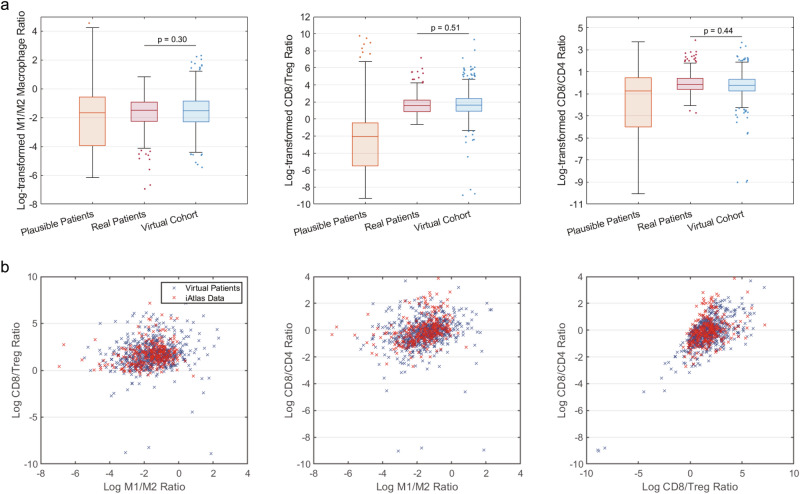
“Withtheunprecedentedincreaseinomicsdataonspeci fi ccancertypes from collaborative studies, such as the TCGA 45 , AURORA 46 , Human Tumor Atlas Network (HTAN) 47 , and iAtlas 48 , it is possible to use the immune cell proportions derived from omics data for virtual patient generation.”
BackgroundLog-normal distributions across the sciences: keys and clues
LIMPERT, E., STAHEL, W. A., & ABBT, M. (2001) · BioScience · doi:10.1641/0006-3568(2001)051[0341:lndats]2.0.co;2 · Cited by 2,621
Estimation of clinical trial success rates and related parameters
Wong, C. H., Siah, K. W., & Lo, A. W. (2019) · Biostatistics · doi:10.1093/biostatistics/kxx069 · Cited by 1,585
Finotello, F., Mayer, C., Plattner, C., Laschober, G., Rieder, D., Hackl, H., Krogsdam, A., Loncova, Z., Posch, W., Wilflingseder, D., et al. (2019) · Genome Medicine · doi:10.1186/s13073-019-0638-6 · Cited by 1,542 · cited 1×
“Usingimmunecelldeconvolution methods EPIC 50 and quanTIseq 51 , we were able to estimate the immune cell proportions and calculate the ratios of immune cell subset proportions betweenprimary breasttumorsand speci fi cmetastatic sites(e.g., lung, liver, and bone).”
MethodSimultaneous enumeration of cancer and immune cell types from bulk tumor gene expression data
Racle, J., de Jonge, K., Baumgaertner, P., Speiser, D. E., & Gfeller, D. (2017) · eLife · doi:10.7554/elife.26476 · Cited by 1,384
The cancer-immunity cycle: Indication, genotype, and immunotype
Mellman, I., Chen, D. S., Powles, T., & Turley, S. J. (2023) · Immunity · doi:10.1016/j.immuni.2023.09.011 · Cited by 953 · cited 1×
“In immuno-oncology, this is particularly challenging because: (1) the mechanisms involved in the cancer-immunity cycle 17,18 , including mechanism of action (MoA) of newly discovered therapeutics, are sometimes not fully understood (thus their effects are approximated by Hill functions rather than…”
BackgroundDigital twins for health: a scoping review
Katsoulakis, E., Wang, Q., Wu, H., Shahriyari, L., Fletcher, R., Liu, J., Achenie, L., Liu, H., Jackson, P., Xiao, Y., et al. (2024) · npj Digital Medicine · doi:10.1038/s41746-024-01073-0 · Cited by 760 · cited 1×
“On the other hand, health or medical digital twins are often developed for personalized medicine,which emphasize the correspondence with their physical counterparts in the real world 52 – 54 .”
BackgroundAlber, M., Buganza Tepole, A., Cannon, W. R., De, S., Dura-Bernal, S., Garikipati, K., Karniadakis, G., Lytton, W. W., Perdikaris, P., Petzold, L., et al. (2019) · npj Digital Medicine · doi:10.1038/s41746-019-0193-y · Cited by 639
How to tell the difference between a model and a digital twin
Wright, L., & Davidson, S. (2020) · Advanced Modeling and Simulation in Engineering Sciences · doi:10.1186/s40323-020-00147-4 · Cited by 601 · cited 2×
“Wrightand Davidson 57 discussed optimal properties of a model and data required tobuild digital twins.”
BackgroundMethodRozenblatt-Rosen, O., Regev, A., Oberdoerffer, P., Nawy, T., Hupalowska, A., Rood, J. E., Ashenberg, O., Cerami, E., Coffey, R. J., Demir, E., et al. (2020) · Cell · doi:10.1016/j.cell.2020.03.053 · Cited by 564 · cited 1×
“Withtheunprecedentedincreaseinomicsdataonspeci fi ccancertypes from collaborative studies, such as the TCGA 45 , AURORA 46 , Human Tumor Atlas Network (HTAN) 47 , and iAtlas 48 , it is possible to use the immune cell proportions derived from omics data for virtual patient generation.”
BackgroundDigital twin in healthcare: Recent updates and challenges
Sun, T., He, X., & Li, Z. (2023) · DIGITAL HEALTH · doi:10.1177/20552076221149651 · Cited by 409
Cimino-Mathews, A., Thompson, E., Taube, J. M., Ye, X., Lu, Y., Meeker, A., Xu, H., Sharma, R., Lecksell, K., Cornish, T. C., et al. (2016) · Human Pathology · doi:10.1016/j.humpath.2015.09.003 · Cited by 336 · cited 1×
“For example, in a digital pathology analysis of tumor tissue samples from 43 patients with breast cancer, the density of CD8 T cells can differ with more than 3 orders of magnitude 38 .”
BackgroundDigital twin for healthcare systems
Vallée, A. (2023) · Frontiers in Digital Health · doi:10.3389/fdgth.2023.1253050 · Cited by 335
The total mass, number, and distribution of immune cells in the human body
Sender, R., Weiss, Y., Navon, Y., Milo, I., Azulay, N., Keren, L., Fuchs, S., Ben-Zvi, D., Noor, E., & Milo, R. (2023) · Proceedings of the National Academy of Sciences · doi:10.1073/pnas.2308511120 · Cited by 300 · cited 2×
“Measurementsfromhealthyindividualscanassistestimationofthese baselinepatientcharacteristics 43,44 .”
BackgroundHolford, N. H. G., Kimko, H. C., Monteleone, J. P. R., & Peck, C. C. (2000) · Annual Review of Pharmacology and Toxicology · doi:10.1146/annurev.pharmtox.40.1.209 · Cited by 289
Laubenbacher, R., Mehrad, B., Shmulevich, I., & Trayanova, N. (2024) · Nature Computational Science · doi:10.1038/s43588-024-00607-6 · Cited by 239
Autissier, P., Soulas, C., Burdo, T. H., & Williams, K. C. (2010) · Cytometry Part A · doi:10.1002/cyto.a.20859 · Cited by 236 · cited 1×
“Measurementsfromhealthyindividualscanassistestimationofthese baselinepatientcharacteristics 43,44 .”
Venkatesh, K. P., Raza, M. M., & Kvedar, J. C. (2022) · npj Digital Medicine · doi:10.1038/s41746-022-00694-7 · Cited by 232 · cited 1×
“On the other hand, health or medical digital twins are often developed for personalized medicine,which emphasize the correspondence with their physical counterparts in the real world 52 – 54 .”
BackgroundShiao, S. L., Gouin, K. H., Ing, N., Ho, A., Basho, R., Shah, A., Mebane, R. H., Zitser, D., Martinez, A., Mevises, N.-Y., et al. (2024) · Cancer Cell · doi:10.1016/j.ccell.2023.12.012 · Cited by 199
García‐Recio, S., Hinoue, T., Wheeler, G. L., Kelly, B., Garrido-Castro, A. C., Pascual, T., de Cubas, A. A., Xia, Y., Felsheim, B., McClure, M. B., et al. (2022) · Nature Cancer · doi:10.1038/s43018-022-00491-x · Cited by 193 · cited 1×
“Withtheunprecedentedincreaseinomicsdataonspeci fi ccancertypes from collaborative studies, such as the TCGA 45 , AURORA 46 , Human Tumor Atlas Network (HTAN) 47 , and iAtlas 48 , it is possible to use the immune cell proportions derived from omics data for virtual patient generation.”
BackgroundFoundational Research Gaps and Future Directions for Digital Twins
Committee on Foundational Research Gaps and Future Directions for Digital Twins, Board on Mathematical Sciences and Analytics, Committee on Applied and Theoretical Statistics, Computer Science and Telecommunications Board, Board on Life Sciences, Board on Atmospheric Sciences and Climate, Sciences, D. O. E. A. P., Studies, D. O. E. A. L., National Academy of Engineering, & National Academies of Sciences, E. (2024) · National Academies Press eBooks · doi:10.17226/26894 · Cited by 192
Madabushi, R., Seo, P., Zhao, L., Tegenge, M., & Zhu, H. (2022) · Pharmaceutical Research · doi:10.1007/s11095-022-03288-w · Cited by 188
Integrated RNA and DNA sequencing reveals early drivers of metastatic breast cancer
Siegel, M. B., He, X., Hoadley, K. A., Hoyle, A., Pearce, J. B., Garrett, A. L., Kumar, S., Moylan, V. J., Brady, C. M., Van Swearingen, A. E. D., et al. (2018) · Journal of Clinical Investigation · doi:10.1172/jci96153 · Cited by 183
Allen, R., Rieger, T., & Musante, C. (2016) · CPT: Pharmacometrics & Systems Pharmacology · doi:10.1002/psp4.12063 · Cited by 179 · cited 3×
“InourrecentQSPstudies 28,29 ,weselectedvirtualpatientswhosepre-treatment characteristics statistically matched the patient data using the Probability of Inclusion by Allen et al. 35 .”
MethodBuilding digital twins of the human immune system: toward a roadmap
Laubenbacher, R., Niarakis, A., Helikar, T., An, G., Shapiro, B., Malik-Sheriff, R. S., Sego, T. J., Knapp, A., Macklin, P., & Glazier, J. A. (2022) · npj Digital Medicine · doi:10.1038/s41746-022-00610-z · Cited by 166 · cited 3×
“Meeting these challenges, Laubenbacher et al. proposed a 4-stage method speci fi cally for generating digital twins of the human immune system 59 .”
BackgroundMethodInfluentialMoingeon, P., Chenel, M., Rousseau, C., Voisin, E., & Guedj, M. (2023) · Drug Discovery Today · doi:10.1016/j.drudis.2023.103605 · Cited by 121 · cited 1×
“In practice, virtual patients can be generated from data compiled from multiple patients (e.g., summary statistics), which provides a realistic representation of a complex disease and allows clinical trial simulation to make population level predictions and assist drug developers 55 .”
BackgroundStahlberg, E. A., Abdel-Rahman, M., Aguilar, B., Asadpoure, A., Beckman, R. A., Borkon, L. L., Bryan, J. N., Cebulla, C. M., Chang, Y. H., Chatterjee, A., et al. (2022) · Frontiers in Digital Health · doi:10.3389/fdgth.2022.1007784 · Cited by 117 · cited 2×
“Inparallelwiththeefforttogeneratevirtualpatientsthatresemble realpatients ’ characteristics, digital twins are being developed in precision oncology with a goal to monitor and optimize treatment for individual patients through personalized models 15 .”
BackgroundCreation and application of virtual patient cohorts of heart models
Niederer, S. A., Aboelkassem, Y., Cantwell, C. D., Corrado, C., Coveney, S., Cherry, E. M., Delhaas, T., Fenton, F. H., Panfilov, A. V., Pathmanathan, P., et al. (2020) · Philosophical Transactions of the Royal Society A: Mathematical, Physical and Engineering Sciences · doi:10.1098/rsta.2019.0558 · Cited by 103
Lorenzo, G., Ahmed, S. R., Hormuth, D. A., Vaughn, B., Kalpathy–Cramer, J., Solorio, L., Yankeelov, T. E., & Gómez, H. (2024) · Annual Review of Biomedical Engineering · doi:10.1146/annurev-bioeng-081623-025834 · Cited by 99
Rieger, T. R., Allen, R. J., Bystricky, L., Chen, Y., Colopy, G. W., Cui, Y., Gonzalez, A., Liu, Y., White, R. D., Everett, R. A., et al. (2018) · Progress in Biophysics and Molecular Biology · doi:10.1016/j.pbiomolbio.2018.06.002 · Cited by 94
Azer, K., Kaddi, C. D., Barrett, J. S., Bai, J. P. F., McQuade, S. T., Merrill, N. J., Piccoli, B., Neves-Zaph, S., Marchetti, L., Lombardo, R., et al. (2021) · Frontiers in Physiology · doi:10.3389/fphys.2021.637999 · Cited by 87 · cited 1×
“…fi rst to accompany regulatory submissions, and, with advancing mechanistic understanding of pathophysiology and increasing computational power, mechanistic models, such as physiologically-based pharmacokinetic (PBPK) and quantitative systems pharmacology (QSP) models, were developed 2,3 .”
BackgroundSusilo, M. E., Li, C., Gadkar, K., Hernandez, G., Huw, L., Jin, J. Y., Yin, S., Wei, M. C., Ramanujan, S., & Hosseini, I. (2023) · Clinical and Translational Science · doi:10.1111/cts.13501 · Cited by 78
Chelliah, V., Lazarou, G., Bhatnagar, S., Gibbs, J. P., Nijsen, M., Ray, A., Stoll, B., Thompson, R. A., Gulati, A., Soukharev, S., et al. (2021) · Clinical Pharmacology & Therapeutics · doi:10.1002/cpt.1987 · Cited by 76 · cited 1×
“By generating a virtual patient population with similar characteristics to the target patient cohort, mechanistic models can compare different therapy combinations and potential biomarkers for patient strati fi cation 9 .”
MethodSelf-citationWu, C., Jarrett, A. M., Zhou, Z., Elshafeey, N., Adrada, B. E., Candelaria, R. P., Mohamed, R. M. M., Boge, M., Huo, L., White, J. B., et al. (2022) · Cancer Research · doi:10.1158/0008-5472.can-22-1329 · Cited by 74 · cited 3×
“It was applied to generate digital twins for patients with triple-negative breast cancer to predict patient-speci fi c response to a neoadjuvant chemotherapy 60 .”
BackgroundMethodRuiz-Martínez, Á., Gong, C., Wang, H., Sové, R. J., Mi, H., Kimko, H. H. C., & Popel, A. S. (2022) · PLoS Computational Biology · doi:10.1371/journal.pcbi.1010254 · Cited by 70
Self-citationAn, G. C., & Cockrell, C. (2022) · Frontiers in Systems Biology · doi:10.3389/fsysb.2022.928387 · Cited by 68 · cited 2×
“When adopting these principles to build medical digital twins, An and Cockrell 58 pointed out the challenges, including the lack of mechanistic understanding in biology, dif fi culties to acquire quantitative data to periodically update model parameters, and measurement uncertainties commonly observed in biological exp…”
MethodCRI iAtlas: an interactive portal for immuno-oncology research
Eddy, J. A., Thórsson, V., Lamb, A. E., Gibbs, D. L., Heimann, C., Yu, J. X., Chung, V., Chae, Y., Dang, K. K., Vincent, B. G., et al. (2020) · F1000Research · doi:10.12688/f1000research.25141.1 · Cited by 63
A Computational Model of Neoadjuvant PD-1 Inhibition in Non-Small Cell Lung Cancer
Jafarnejad, M., Gong, C., Gabrielson, E., Bartelink, I. H., Vicini, P., Wang, B., Narwal, R., Roskos, L., & Popel, A. S. (2019) · The AAPS Journal · doi:10.1208/s12248-019-0350-x · Cited by 62
Self-citationMa, H., Wang, H., Sové, R. J., Wang, J., Giragossian, C., & Popel, A. S. (2020) · Journal for ImmunoTherapy of Cancer · doi:10.1136/jitc-2020-001141 · Cited by 59
Self-citationJenner, A. L., Cassidy, T., Belaid, K., Bourgeois‐Daigneault, M., & Craig, M. (2021) · Journal for ImmunoTherapy of Cancer · doi:10.1136/jitc-2020-001387 · Cited by 59 · cited 1×
“Inour model and other QSP studies in immuno-oncology, parameter distributions are often estimated by published experimental or clinical data 27 – 30, 40 , 41 .”
MethodSové, R. J., Jafarnejad, M., Zhao, C., Wang, H., Ma, H., & Popel, A. S. (2020) · CPT: Pharmacometrics & Systems Pharmacology · doi:10.1002/psp4.12546 · Cited by 57 · cited 2×
“Asequence of QSP-IO models with progressively more detail of the tumorimmunemicroenvironment(TiME),suchascelltypesandcytokines, havebeendevelopedbyourgroupwithagoaltopredicteffectivenessof immunecheckpointinhibitorsincombinationwithothertherapiesin multiplecancertypes 20 – 27 .”
MethodSelf-citationVirtual Populations for Quantitative Systems Pharmacology Models
Cheng, Y., Straube, R., Alnaif, A. E., Huang, L., Leil, T. A., & Schmidt, B. J. (2022) · Methods in Molecular Biology · doi:10.1007/978-1-0716-2265-0_8 · Cited by 54
Zhang, S., Deshpande, A. M., Verma, B. K., Wang, H., Mi, H., Yuan, L., Ho, W. J., Jaffee, E. M., Zhu, Q., Anders, R. A., et al. (2024) · Cancer Research · doi:10.1158/0008-5472.can-24-0943 · Cited by 54 · cited 1×
“Furthermore, to account for spatio-temporal heterogeneity, the QSP model was also integrated with an agent-based model (spQSP-IO), which was calibrated by multiplex digital pathology 31 – 33 and spatial transcriptomics 34 .”
MethodSelf-citationWang, H., Ma, H., Sové, R. J., Emens, L. A., & Popel, A. S. (2021) · Journal for ImmunoTherapy of Cancer · doi:10.1136/jitc-2020-002100 · Cited by 53
Self-citationBai, J. P. F., Earp, J. C., Florian, J., Madabushi, R., Strauss, D. G., Wang, Y., & Zhu, H. (2021) · CPT: Pharmacometrics & Systems Pharmacology · doi:10.1002/psp4.12709 · Cited by 53 · cited 2×
“Therefore, hypothesis-drivenmechanisticQSPmodelinghasbeguntoplayacriticalrole inpredictingeffectivenessofnewlydiscovereddrugsanddeterminingthe optimal dosagetoassistclinicaltrial designviaclinicaltrialsimulation(i.e.,in silico/virtual clinical trial) 4 – 7 with virtual patients.”
BackgroundA practical guide for the generation of model-based virtual clinical trials
Craig, M., Gevertz, J. L., Kareva, I., & Wilkie, K. P. (2023) · Frontiers in Systems Biology · doi:10.3389/fsysb.2023.1174647 · Cited by 52
Wang, H., Sové, R. J., Jafarnejad, M., Rahmeh, S., Jaffee, E. M., Stearns, V., Torres, E. T. R., Connolly, R. M., & Popel, A. S. (2020) · Frontiers in Bioengineering and Biotechnology · doi:10.3389/fbioe.2020.00141 · Cited by 51
Self-citationA Quantitative Systems Pharmacology Model of T Cell Engager Applied to Solid Tumor
Ma, H., Wang, H., Sové, R. J., Jafarnejad, M., Tsai, C.-H., Wang, J., Giragossian, C., & Popel, A. S. (2020) · The AAPS Journal · doi:10.1208/s12248-020-00450-3 · Cited by 50
Self-citationWang, H., Zhao, C., Santa-Maria, C. A., Emens, L. A., & Popel, A. S. (2022) · iScience · doi:10.1016/j.isci.2022.104702 · Cited by 49 · cited 2×
“Asequence of QSP-IO models with progressively more detail of the tumorimmunemicroenvironment(TiME),suchascelltypesandcytokines, havebeendevelopedbyourgroupwithagoaltopredicteffectivenessof immunecheckpointinhibitorsincombinationwithothertherapiesin multiplecancertypes 20 – 27 .”
MethodSelf-citationJarrett, A. M., Kazerouni, A. S., Wu, C., Virostko, J. M., Sorace, A. G., DiCarlo, J. C., Hormuth, D. A., Ekrut, D. A., Patt, D. A., Goodgame, B. W., et al. (2021) · Nature Protocols · doi:10.1038/s41596-021-00617-y · Cited by 49 · cited 1×
“D mathematical model of tumor growth and response to treatments, which was governed by a partial differential equation, allowing for model calibration by routine MRI datafrom individual patients 63 .”
MethodLazarou, G., Chelliah, V., Small, B. G., Walker, M., van der Graaf, P. H., & Kierzek, A. M. (2020) · Clinical Pharmacology & Therapeutics · doi:10.1002/cpt.1786 · Cited by 40 · cited 1×
“Thischallengemaybe resolvedbyemergingmulti-omicsdata 13,14 , which involve a large number of .”
BackgroundHormuth, D. A., Jarrett, A. M., Lima, E. A. B. F., McKenna, M. T., Fuentes, D., & Yankeelov, T. E. (2019) · JCO Clinical Cancer Informatics · doi:10.1200/cci.18.00055 · Cited by 40 · cited 1×
“In the past few years, virtual patients in immuno-oncology are commonly generated via random sampling from chosen distributions 10,11 or by models whose variables can be relatively easy to measure in clinical settings, such as imaging-based models 12 .”
BackgroundGong, C., Ruiz-Martinez, A., Kimko, H., & Popel, A. S. (2021) · Cancers · doi:10.3390/cancers13153751 · Cited by 39 · cited 1×
“Furthermore, to account for spatio-temporal heterogeneity, the QSP model was also integrated with an agent-based model (spQSP-IO), which was calibrated by multiplex digital pathology 31 – 33 and spatial transcriptomics 34 .”
MethodSelf-citationWang, H., Arulraj, T., Kimko, H. H. C., & Popel, A. S. (2023) · npj Precision Oncology · doi:10.1038/s41698-023-00405-9 · Cited by 37 · cited 6×
“Although summary statistics can provide guidance on generating physiologically plausible virtual patients, patient-speci fi c data retain the information on correlations between variables (as demonstrated above), thus improving the model ’ s predictive power 28,29 .”
BackgroundMethodResultInfluentialSelf-citationAnbari, S., Wang, H., Zhang, Y., Wang, J., Pilvankar, M., Nickaeen, M., Hansel, S. B., & Popel, A. S. (2023) · Frontiers in Pharmacology · doi:10.3389/fphar.2023.1163432 · Cited by 37
Self-citationArulraj, T., Wang, H., Emens, L. A., Santa-Maria, C. A., & Popel, A. S. (2023) · Science Advances · doi:10.1126/sciadv.adg0289 · Cited by 29 · cited 3×
“49 . inour recentstudyofmetastaticbreastcancer 30 .”
BackgroundMethodSelf-citationLeveraging multi-omics data to empower quantitative systems pharmacology in immuno-oncology
Arulraj, T., Wang, H., Ippolito, A., Zhang, S., Fertig, E. J., & Popel, A. S. (2024) · Briefings in Bioinformatics · doi:10.1093/bib/bbae131 · Cited by 26 · cited 1×
“Thischallengemaybe resolvedbyemergingmulti-omicsdata 13,14 , which involve a large number of .”
BackgroundSelf-citationThe impact of systems biology and biosimulation on drug discovery and development
Michelson, S. (2006) · Molecular BioSystems · doi:10.1039/b602194h · Cited by 23 · cited 1×
“Virtual patients are usually de fi ned as model parameterizations that generate physiologically plausible outputs 8 .”
BackgroundNikfar, M., Mi, H., Gong, C., Kimko, H. H. C., & Popel, A. S. (2023) · Cancers · doi:10.3390/cancers15102750 · Cited by 20 · cited 1×
“Furthermore, to account for spatio-temporal heterogeneity, the QSP model was also integrated with an agent-based model (spQSP-IO), which was calibrated by multiplex digital pathology 31 – 33 and spatial transcriptomics 34 .”
MethodSelf-citationApproaches to Generating Virtual Patient Cohorts with Applications in Oncology
Surendran, A., Sauteur-Robitaille, J. L., Kleimeier, D., Gevertz, J. L., Wilkie, K. P., Jenner, A. L., & Craig, M. (2023) · Springer eBooks · doi:10.1007/978-3-031-32614-1_8 · Cited by 19
Cardinal, O., Burlot, C., Fu, Y., Crosley, P., Hitt, M., Craig, M., & Jenner, A. L. (2022) · Computational and Systems Oncology · doi:10.1002/cso2.1035 · Cited by 17
Opportunities and Challenges for Digital Twins in Biomedical Research
Board on Mathematical Sciences and Analytics, Computer Science and Telecommunications Board, Board on Atmospheric Sciences and Climate, Board on Life Sciences, Sciences, D. O. E. A. P., Studies, D. O. E. A. L., & National Academies of Sciences, E. (2023) · National Academies Press eBooks · doi:10.17226/26922 · Cited by 16
Brown, L., Gaffney, E. A., Wagg, J., & Coles, M. C. (2018) · Clinical & Experimental Immunology · doi:10.1111/cei.13182 · Cited by 13
Virtual Patient Generation using Physiological Models through a Compressed Latent Parameterization
Tivay, A., Kramer, G. C., & Hahn, J.-O. (2020) · 2020 American Control Conference (ACC) · doi:10.23919/acc45564.2020.9147298 · Cited by 12 · cited 1×
“Tivayetal.suggestedusingcompressedlatent parameterizationtogeneraterealisticvirtualpatientsfromparametervalues fi tted to real patient data (i.e., digital twins) 67 .”
MethodIppolito, A., Wang, H., Zhang, Y., Vakil, V., Bazzazi, H., & Popel, A. S. (2023) · CPT Pharmacometrics & Systems Pharmacology · doi:10.1002/psp4.13060 · Cited by 11 · cited 3×
“The latest model version was used for a retrospective analysis of anti-PD-L1 treatment in non-small cell lung cancer 28 , as wellasaprospectivepredictionfortheeffectivenessofamaskedantibodyintriple-negativebreastcancer 29 .”
BackgroundMethodSelf-citationMi, H., Varadhan, R., Cimino‐Mathews, A., Emens, L. A., Santa-Maria, C. A., & Popel, A. S. (2023) · bioRxiv (Cold Spring Harbor Laboratory) · doi:10.1101/2023.12.18.572234 · Cited by 10 · cited 1×
“These variables often have wide ranges observed in patients 37 – 39 .”
BackgroundSelf-citation
Research works printed but not linked: 1
- Sorger, P. K. et al. Quantitative and systems pharmacology in the post‐genomic era: new approaches to discovering drugs and understanding therapeutic mechanisms. An NIH White Paper by the QSP Workshop Group (2011).
Cited by
From virtual to reality: innovative practices of digital twins in tumor therapy
Shen, S., Qi, W., Liu, X., Zeng, J., Li, S., Zhu, X., Dong, C., Wang, B., Shi, Y., Yao, J., et al. (2025) · Journal of Translational Medicine · doi:10.1186/s12967-025-06371-z · Cited by 135
“Specifically, physiological data were widely applied in 16 studies, primarily used to dynamically adjust personalized treatment strategies [47, 61, 84].”
InfluentialExploring the Potential of Digital Twins in Cancer Treatment: A Narrative Review of Reviews
Giansanti, D., & Morelli, S. (2025) · Journal of Clinical Medicine · doi:10.3390/jcm14103574 · Cited by 103
“[28] identified issues in generating spatially resolved generative digital twins, and [30] explored the difficulties in customizing immuno-oncology-specific models for patient treatment.”
InfluentialVallée, A. (2025) · Journal of Medical Internet Research · doi:10.2196/72411 · Cited by 95
“By aggregating anonymized DT data from populations, health care providers and researchers can identify emerging disease patterns, optimize resource allocation, and develop targeted intervention strategies [7,8].”
Digital Twins Generated by Artificial Intelligence in Personalized Healthcare
Łukaniszyn, M., Majka, Ł., Grochowicz, B., Mikołajewski, D., & Kawala‐Sterniuk, A. (2024) · Applied Sciences · doi:10.3390/app14209404 · Cited by 87
Chaparro-Cárdenas, S. L., Ramirez-Bautista, J. A., Terven, J. R., Esparza, D. M. C., Romero-González, J.-A., Ramírez-Pedraza, A., & Chávez‐Urbiola, E. A. (2025) · Healthcare · doi:10.3390/healthcare13141763 · Cited by 101
Metadata
- Authors
- Wang, H., Arulraj, T., Ippolito, A., & Popel, A. S.
- Affiliations
- Johns Hopkins University (US)
- Corresponding author
- Wang, Hanwen
- Venue
- npj Digital Medicine
- Published
- 2024-07-16
- Volume
- 7
- Issue
- 1
- Pages
- 189-189
- ISSN
- 2398-6352 (ISSN-L)
- PMC
- PMC11252162
- OpenAlex
- W4392575396
- Cited by
- 122
- References
- 67
- Citations by year
- 2026: 67 · 2025: 50 · 2024: 5
- FWCI
- 8.07
- Type
- journal article
- Language
- en
- Open access
- gold
- doi.org
- Licence
- cc-by
- creativecommons.org/licenses/by/4.0 (tdm)
- creativecommons.org/licenses/by/4.0 (vor)
- Locations
- npj Digital Medicine (publishedVersion, cc-by)
- PubMed Central (publishedVersion, cc-by)
- PubMed (publishedVersion)
- arXiv (Cornell University) (submittedVersion)
- PubMed Central (submittedVersion)
- DOAJ (DOAJ: Directory of Open Access Journals) (submittedVersion)
- arXiv (Cornell University)
- Funders
- U.S. Department of Health & Human Services | NIH | National Cancer Institute (R01CA138264)
- Topics
- Physical Sciences › Mathematics › Statistics and Probability › Statistical Methods in Clinical Trials
- Physical Sciences › Mathematics › Modeling and Simulation › Mathematical Biology Tumor Growth
- Health Sciences › Medicine › Health Informatics › Artificial Intelligence in Healthcare and Education
- Keywords
- virtual patients, digital twin, cancer immunotherapy, quantitative systems pharmacology, mechanistic modeling, drug development
About these checks
Registry, retraction, Cites and statistics results are computed, not judged, with one exception: a printed reference that no index lists is read once by a model before it counts as a citation error. Claims are extracted by a model and kept only when their quote appears verbatim in the text; each cited source is then checked, with a model’s help, for whether it says what the claim relies on. Those verdicts can be wrong — read the claim’s quote and the cited source before relying on one.
Statistics and arithmetic are recomputed, not judged.
Confidence bands are shown only for fields calibrated on our annotated test set. None is calibrated yet, so no band is shown.
What counts as a claim ›How we measure confidence ›How we check this ›
Are you an author, or do you see a problem with this page? Request a review
Data sources
Bibliographic data: Semantic Scholar, OpenAlex, Crossref.
Contains information from the Semantic Scholar Academic Graph Datasets, made available under the ODC Attribution License (ODC-BY 1.0).
Semantic Scholar’s data is described in: Kinney, R., et al. (2023). The Semantic Scholar Open Data Platform. arXiv:2301.10140.
