

A scoping review of reporting gaps in FDA-approved AI medical devices
Open accessThe DOI matches its Crossref record; 55 of the 55 references it cites were found in a registry or an index.
Abstract
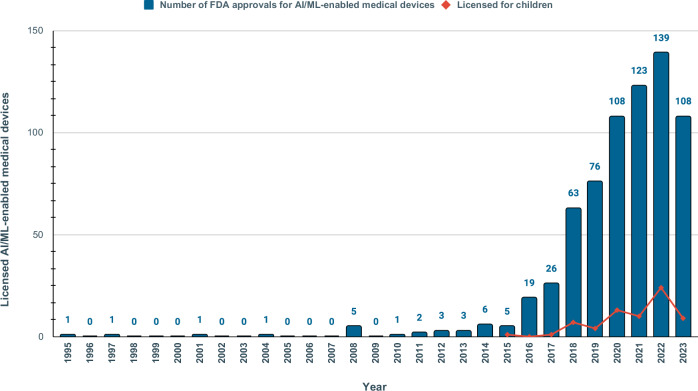
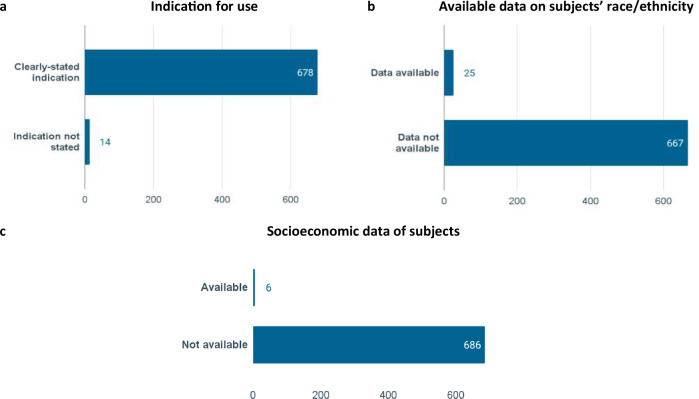
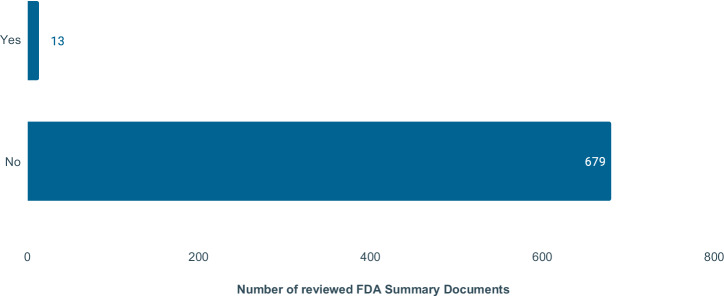
Machine learning and artificial intelligence (AI/ML) models in healthcare may exacerbate health biases. Regulatory oversight is critical in evaluating the safety and effectiveness of AI/ML devices in clinical settings. We conducted a scoping review on the 692 FDA-approved AI/ML-enabled medical devices approved from 1995-2023 to examine transparency, safety reporting, and sociodemographic representation. Only 3.6% of approvals reported race/ethnicity, 99.1% provided no socioeconomic data. 81.6% did not report the age of study subjects. Only 46.1% provided comprehensive detailed results of performance studies; only 1.9% included a link to a scientific publication with safety and efficacy data. Only 9.0% contained a prospective study for post-market surveillance. Despite the growing number of market-approved medical devices, our data shows that FDA reporting data remains inconsistent. Demographic and socioeconomic characteristics are underreported, exacerbating the risk of algorithmic bias and health disparity.
Overview
The claims and statistics of this paper haven’t been checked yet.
Free: it reads the open-access text and checks the first 5 claims that cite a source we can check. Create a free account to check every claim.
Integrity signals
Registry
Cites
Statistics
Figures
Verification
Claims the paper makes
The claims and statistics of this paper haven’t been checked yet.
Free: it reads the open-access text and checks the first 5 claims that cite a source we can check. Create a free account to check every claim.
Claims other papers make about this one
Each is checked against this paper’s own text: does it say what the citing paper says it does?
The source backs part of the claim, not all of it — or backs it for a different population, condition or comparison.
In the citing paper
“Regulatory bodies such as the U.S. Food and Drug Administration (FDA) and the European Medicines Agency (EMA) are increasingly emphasizing the need for transparency and accountability in AI-based medical devices [17,18].”
From Explainable AI in Clinical Decision Support Systems: A Meta-Analysis of Methods, Applications, and Usability Challenges (2025) · cites this paper as [18]
Experimental — accuracy not yet measuredThe source backs part of the claim, not all of it — or backs it for a different population, condition or comparison.
In the citing paper
“Most AI models therefore had not yet undergone the clinical scrutiny necessary for safe translation into practice13.”
From A quantitative analysis of global AI medical studies: gaps in randomized controlled trials (2026) · cites this paper as [13]
Experimental — accuracy not yet measuredThe check wasn’t confident either way, so it gives no verdict — never disputed.
In the citing paper
“A diagnostic pipeline that mimics the clinical process/reasoning of a physician, including chain of thought reasoning with LLM prompts, has shown performance boosts.22”
From Review of Artificial Intelligence for Clinical Use in Alzheimer's Disease and Related Dementias (2026) · cites this paper as [22]
Experimental — accuracy not yet measured
Self-check
Percentages, sums and reported differences re-computed from the paper’s own numbers.
The self-check needs the paper’s full text.
Citations
Cites
PRISMA Extension for Scoping Reviews (PRISMA-ScR): Checklist and Explanation
Tricco, A. C., Lillie, E., Zarin, W., O'Brien, K. K., Colquhoun, H., Levac, D., Moher, D., Peters, M. D. J., Horsley, T., Weeks, L., et al. (2018) · Annals of Internal Medicine · doi:10.7326/m18-0850 · Cited by 43,565 · cited 1×
“Thisscopingreviewwasconductedin accordancewiththePreferredReportingItemsforSystematicReviewsand Meta-AnalysesExtensionforScopingReviews(PRISMA-ScR)guidelines 71 .”
Zhang, Q., Wang, C., Zheng, M., Li, Y., Li, J., Zhang, L., Shang, X., & Yan, C. (2015) · Cerebrovascular Diseases · doi:10.1159/000369778 · Cited by 11,533
Projections of Global Mortality and Burden of Disease from 2002 to 2030
Mathers, C. D., & Loncar, D. (2006) · PLoS Medicine · doi:10.1371/journal.pmed.0030442 · Cited by 11,386
Dissecting racial bias in an algorithm used to manage the health of populations
Obermeyer, Z., Powers, B., Vogeli, C., & Mullainathan, S. (2019) · Science · doi:10.1126/science.aax2342 · Cited by 7,137 · cited 1×
“Initiatives promoting diversity in data collection and consideration of model performance across socioeconomic groups are paramount and must be incorporated in the assessment of market approval for emerging technologies 32 .”
BackgroundKey challenges for delivering clinical impact with artificial intelligence
Kelly, C. J., Karthikesalingam, A., Suleyman, M., Corrado, G., & King, D. (2019) · BMC Medicine · doi:10.1186/s12916-019-1426-2 · Cited by 3,136
Implementing Machine Learning in Health Care — Addressing Ethical Challenges
Char, D. S., Shah, N. H., & Magnus, D. (2018) · New England Journal of Medicine · doi:10.1056/nejmp1714229 · Cited by 1,857 · cited 1×
“Including ethics methods in both study protocols and future regulatory documents may minimize privacy concerns arising from the potential misuse, and increase end-user con fi dence 62,63 .”
MethodThe World Health Organization (WHO) approach to healthy ageing
Rudnicka, E., Napierała, P., Podfigurna, A., Męczekalski, B., Smolarczyk, R., & Grymowicz, M. (2020) · Maturitas · doi:10.1016/j.maturitas.2020.05.018 · Cited by 1,750 · cited 1×
“…National Institutes of Health (NIH) Inclusion Across the Lifespan policy aim to promote the participation of older adults in research studies, which may help equitize the potential impacts of algorithmic development for this population, considering unique ethical and clinical considerations 44,45 .”
BackgroundLiu, X., Cruz Rivera, S., Moher, D., Calvert, M. J., Denniston, A. K., The SPIRIT-AI and CONSORT-AI Working Group, SPIRIT-AI and CONSORT-AI Steering Group, Chan, A.-W., Darzi, A., Holmes, C., et al. (2020) · Nature Medicine · doi:10.1038/s41591-020-1034-x · Cited by 1,421
Do no harm: a roadmap for responsible machine learning for health care
Wiens, J., Saria, S., Sendak, M., Ghassemi, M., Liu, V. X., Doshi-Velez, F., Jung, K., Heller, K., Kale, D., Saeed, M., et al. (2019) · Nature Medicine · doi:10.1038/s41591-019-0548-6 · Cited by 1,266 · cited 1×
“Recentliterature strongly emphasizes the risks of increasing racial health disparity through the propagation of algorithmic bias 14 – 16 .”
BackgroundAddressing bias in big data and AI for health care: A call for open science
Norori, N., Hu, Q., Aellen, F. M., Faraci, F. D., & Tzovara, A. (2021) · Patterns · doi:10.1016/j.patter.2021.100347 · Cited by 903
Ferrara, E. (2023) · Sci · doi:10.3390/sci6010003 · Cited by 875
Algorithmic fairness in artificial intelligence for medicine and healthcare
Chen, R. J., Wang, J. J., Williamson, D. F. K., Chen, T. Y., Lipkova, J., Lu, M. Y., Sahai, S., & Mahmood, F. (2023) · Nature Biomedical Engineering · doi:10.1038/s41551-023-01056-8 · Cited by 750
Liu, X., Rivera, S. C., Moher, D., Calvert, M. J., & Denniston, A. K. (2020) · BMJ · doi:10.1136/bmj.m3164 · Cited by 702
Bias in artificial intelligence algorithms and recommendations for mitigation
Nazer, L. H., Zatarah, R., Waldrip, S., Ke, J. X. C., Moukheiber, M., Khanna, A. K., Hicklen, R. S., Moukheiber, L., Moukheiber, D., Ma, H., et al. (2023) · PLOS Digital Health · doi:10.1371/journal.pdig.0000278 · Cited by 621
Artificial intelligence and algorithmic bias: implications for health systems
Panch, T., Mattie, H., & Atun, R. (2019) · Journal of Global Health · doi:10.7189/jogh.09.020318 · Cited by 533
de Hond, A. A. H., Leeuwenberg, A. M., Hooft, L., Kant, I. M. J., Nijman, S. W. J., van Os, H. J. A., Aardoom, J. J., Debray, T. P. A., Schuit, E., van Smeden, M., et al. (2022) · npj Digital Medicine · doi:10.1038/s41746-021-00549-7 · Cited by 499
Wu, E., Wu, K., Daneshjou, R., Ouyang, D., Ho, D. E., & Zou, J. (2021) · Nature Medicine · doi:10.1038/s41591-021-01312-x · Cited by 494 · cited 1×
“Our retrospective evaluations; prospective studies did not evaluate high-risk devices; 72% did not publicly report whether the algorithm was tested on more than one site; and 45% did not report basic descriptive data such as sample size 10,11 .”
BackgroundSelf-citationThe Promise of Digital Health: Then, Now, and the Future
Verily, Abernethy, A., Adams, L., National Academy of Medicine, Barrett, M., ResMed, Bechtel, C., Health, X., Brennan, P., Medicine, N. L. O., et al. (2022) · NAM Perspectives · doi:10.31478/202206e · Cited by 477 · cited 1×
“The FDA has recognized the potential for bias in AI/ML-based medical devices and has initiated action plans ( “ Arti fi cial Intelligence/Machine Learning (AI/ML)-Based Software as a Medical Device(SaMD)ActionPlan ” )inJanuary2021toaddresstheseconcerns 19,20 .”
BackgroundBias in AI-based models for medical applications: challenges and mitigation strategies
Mittermaier, M., Raza, M. M., & Kvedar, J. C. (2023) · npj Digital Medicine · doi:10.1038/s41746-023-00858-z · Cited by 372 · cited 1×
“However, despite these efforts, our study highlights reporting inconsistencies that may continue to propagate racial health disparities 21 .”
BackgroundA Systematic Review of the Barriers to the Implementation of Artificial Intelligence in Healthcare
Ahmed, M. I., Spooner, B., Isherwood, J., Lane, M., Orrock, E., & Dennison, A. (2023) · Cureus · doi:10.7759/cureus.46454 · Cited by 364
Considerations for addressing bias in artificial intelligence for health equity
Abràmoff, M. D., Tarver, M. E., Loyo-Berrios, N., Trujillo, S., Char, D., Obermeyer, Z., Eydelman, M. B., Foundational Principles of Ophthalmic Imaging and Algorithmic Interpretation Working Group of the Collaborative Community for Ophthalmic Imaging Foundation, W., & Maisel, W. H. (2023) · npj Digital Medicine · doi:10.1038/s41746-023-00913-9 · Cited by 349
Ciecierski-Holmes, T., Singh, R., Axt, M., Brenner, S., & Barteit, S. (2022) · npj Digital Medicine · doi:10.1038/s41746-022-00700-y · Cited by 343
The value of standards for health datasets in artificial intelligence-based applications
Arora, A., Alderman, J. E., Palmer, J., Ganapathi, S., Laws, E., McCradden, M. D., Oakden-Rayner, L., Pfohl, S. R., Ghassemi, M., McKay, F., et al. (2023) · Nature Medicine · doi:10.1038/s41591-023-02608-w · Cited by 294
Joshi, G., Jain, A., Araveeti, S. R., Adhikari, S., Garg, H., & Bhandari, M. (2024) · Electronics · doi:10.3390/electronics13030498 · Cited by 294
Elderly patients' participation in clinical trials
Shenoy, P., & Harugeri, A. (2015) · Perspectives in Clinical Research · doi:10.4103/2229-3485.167099 · Cited by 257 · cited 1×
“Despite having the highest proportion of healthcare utilization, geriatric patients are traditionally under-represented in clinical research 42 .”
BackgroundUnraveling the Ethical Enigma: Artificial Intelligence in Healthcare
Jeyaraman, M., Balaji, S., Jeyaraman, N., & Yadav, S. (2023) · Cureus · doi:10.7759/cureus.43262 · Cited by 254 · cited 1×
“Further ethical considerations encompass a range of issues, including patient privacy, consent, fairness, accountability, and algorithmic transparency 61 .”
BackgroundAmann, J., Vetter, D., Blomberg, S. N., Christensen, H. C., Coffee, M., Gerke, S., Gilbert, T. K., Hagendorff, T., Holm, S., Livne, M., et al. (2022) · PLOS Digital Health · doi:10.1371/journal.pdig.0000016 · Cited by 251
Clinical Applications of Artificial Intelligence—An Updated Overview
Busnatu, Ș., Niculescu, A.-G., Bolocan, A., Petrescu, G. E. D., Păduraru, D. N., Năstasă, I., Lupușoru, M., Geantă, M., Andronic, O., Grumezescu, A. M., et al. (2022) · Journal of Clinical Medicine · doi:10.3390/jcm11082265 · Cited by 172
Welcoming new guidelines for AI clinical research
Topol, E. J. (2020) · Nature Medicine · doi:10.1038/s41591-020-1042-x · Cited by 136 · cited 1×
“Studies have underscored disparities rooted in socioeconomic factors, impacting the performance of AI/ML technologies 4,30,31 .”
BackgroundClinical trials in older people
Pitkala, K. H., & Strandberg, T. E. (2022) · Age and Ageing · doi:10.1093/ageing/afab282 · Cited by 136 · cited 1×
“…propose that regulatory bodies encourage market approval documents to make clear intentions to test and train on a geriatric population and ensure that appropriate validation methods are in place to ensure the appropriate generalization of model outputs to speci fi c geriatric health needs 46 – 49 .”
Backgroundd'Elia, A., Gabbay, M., Rodgers, S., Kierans, C., Jones, E., Durrani, I., Thomas, A., & Frith, L. (2022) · Family Medicine and Community Health · doi:10.1136/fmch-2022-001670 · Cited by 126
Muralidharan, V., Burgart, A. M., Daneshjou, R., & Rose, S. (2023) · npj Digital Medicine · doi:10.1038/s41746-023-00898-5 · Cited by 120
Self-citationAdvancing health equity with artificial intelligence
Thomasian, N. M., Eickhoff, C., & Adashi, E. Y. (2021) · Journal of Public Health Policy · doi:10.1057/s41271-021-00319-5 · Cited by 117
Bernard, M., Clayton, J. A., & Lauer, M. S. (2018) · JAMA · doi:10.1001/jama.2018.12368 · Cited by 113
Algorithm Change Protocols in the Regulation of Adaptive Machine Learning–Based Medical Devices
Gilbert, S., Fenech, M., Hirsch, M., Upadhyay, S., Biasiucci, A., & Starlinger, J. (2021) · Journal of Medical Internet Research · doi:10.2196/30545 · Cited by 100 · cited 1×
“…of AI/ ML-based medical devices 20 , including initiatives to improve transparency, post-market surveillance, and real-world performance monitoring 66 , our study highlights that there remain several clinically relevant inconsistencies in market approval data that may exacerbate algorithmic…”
BackgroundEquity within AI systems: What can health leaders expect?
Gurevich, E., El Hassan, B., & El Morr, C. (2023) · Healthcare Management Forum · doi:10.1177/08404704221125368 · Cited by 97
Ndubuisi, N. E. (2021) · INQUIRY: The Journal of Health Care Organization, Provision, and Financing · doi:10.1177/0046958020927885 · Cited by 96
Cary, M. P., Zink, A., Wei, S., Olson, A., Yan, M., Senior, R., Bessias, S., Gadhoumi, K., Jean-Pierre, G., Wang, D., et al. (2023) · Health Affairs · doi:10.1377/hlthaff.2023.00553 · Cited by 94
Choudhury, A., Renjilian, E., & Asan, O. (2020) · JAMIA Open · doi:10.1093/jamiaopen/ooaa034 · Cited by 91 · cited 2×
“…propose that regulatory bodies encourage market approval documents to make clear intentions to test and train on a geriatric population and ensure that appropriate validation methods are in place to ensure the appropriate generalization of model outputs to speci fi c geriatric health needs 46 – 49 .”
BackgroundThe Evolving Regulatory Paradigm of AI in MedTech: A Review of Perspectives and Where We Are Today
Zhou, K., & Gattinger, G. (2024) · Therapeutic Innovation & Regulatory Science · doi:10.1007/s43441-024-00628-3 · Cited by 89
Lau, S. W. J., Huang, Y., Hsieh, J., Wang, S., Liu, Q., Slattum, P. W., Schwartz, J. B., Huang, S.-M., & Temple, R. (2022) · JAMA Network Open · doi:10.1001/jamanetworkopen.2022.36149 · Cited by 88
Reddy, C. D., Lopez, L., Ouyang, D., Zou, J., & He, B. D. (2023) · Journal of the American Society of Echocardiography · doi:10.1016/j.echo.2023.01.015 · Cited by 88
Jain, A., Brooks, J. R., Alford, C. C., Chang, C. S., Mueller, N. M., Umscheid, C. A., & Bierman, A. S. (2023) · JAMA Health Forum · doi:10.1001/jamahealthforum.2023.1197 · Cited by 79 · cited 2×
“Additional focus must be given to under-represented groups who are most vulnerable to health disparities as a consequence of algorithmic bias 33,69 .”
BackgroundAccelerating health disparities research with artificial intelligence
Green, B. L., Murphy, A., & Robinson, E. J. (2024) · Frontiers in Digital Health · doi:10.3389/fdgth.2024.1330160 · Cited by 76
Farah, L., Murris, J. M., Borget, I., Guilloux, A., Martelli, N. M., & Katsahian, S. I. M. (2023) · Mayo Clinic Proceedings: Digital Health · doi:10.1016/j.mcpdig.2023.02.004 · Cited by 72
Bias in algorithms of AI systems developed for COVID-19: A scoping review
Delgado, J., de Manuel, A., Parra, I., Moyano, C., Rueda, J., Guersenzvaig, A., Ausin, T., Cruz, M., Casacuberta, D., & Puyol, A. (2022) · Journal of Bioethical Inquiry · doi:10.1007/s11673-022-10200-z · Cited by 70
Tappero, J. W., Cassell, C. H., Bunnell, R. E., Angulo, F. J., Craig, A. S., Pesik, N., Dahl, B. A., Ijaz, K., Jafari, H. S., Martin, R., et al. (2017) · Emerging infectious diseases · doi:10.3201/eid2313.170946 · Cited by 61
Paik, K., Hicklen, R., Kaggwa, F., Puyat, C. V. M., Nakayama, L. F., Ong, B., Shropshire, J., & Villanueva, C. (2023) · PLOS Digital Health · doi:10.1371/journal.pdig.0000313 · Cited by 57
van Kolfschooten, H. (2023) · Journal of Law and the Biosciences · doi:10.1093/jlb/lsad031 · Cited by 52 · cited 1×
“A lack of transparent age reporting, therefore, risks propagating age-related algorithmic bias, with potential clinical, ethical, and societal implications on the target population 33,36 .”
BackgroundBerghea, E. C., Ionescu, M. D., Gheorghiu, R. M., Ţincu, I. F., Cobilinschi, C. O., Craiu, M., Bălgrădean, M., & Berghea, F. (2024) · Children · doi:10.3390/children11020240 · Cited by 51
Diversity in Medical Device Clinical Trials: Do We Know What Works for Which Patients?
FOX‐RAWLINGS, S. R., Gottschalk, L., Doamekpor, L. A., & Zuckerman, D. M. (2018) · Milbank Quarterly · doi:10.1111/1468-0009.12344 · Cited by 42 · cited 1×
“A lack of racial and ethnic pro fi ling in publicly available regulatory documents risks further exacerbating this important health issue 17,18 .”
BackgroundMashar, M., Chawla, S., Chen, F., Lubwama, B., Patel, K., Kelshiker, M. A., Bächtiger, P., & Peters, N. S. (2023) · JMIR AI · doi:10.2196/42940 · Cited by 26
Ageism and Artificial Intelligence: Protocol for a Scoping Review
Chu, C. H., Leslie, K., Shi, J., Nyrup, R., Bianchi, A., Khan, S. S., Rahimi, S. A., Lyn, A., & Grenier, A. M. (2022) · JMIR Research Protocols · doi:10.2196/33211 · Cited by 21
Sounderajah, V., McCradden, M. D., Liu, X., Rose, S., Ashrafian, H., Collins, G. S., Anderson, J. A., Bossuyt, P. M., Moher, D., & Darzi, A. W. (2022) · Nature Machine Intelligence · doi:10.1038/s42256-022-00479-3 · Cited by 15
An extension to the FDA approval process is needed to achieve AI equity
Hammond, A., Jain, B., Celi, L. A., & Stanford, F. C. (2023) · Nature Machine Intelligence · doi:10.1038/s42256-023-00614-8 · Cited by 12
Research works printed but not linked: 1
- Jiang, H. & Nachum, O. Identifying and correcting label bias in machine learning. Proc. Mach. Learn. Res. 108, 4621–4630 (2020).
Cited by
Abbas, Q., Jeong, W., & Lee, S. W. (2025) · Healthcare · doi:10.3390/healthcare13172154 · Cited by 236
“Regulatory bodies such as the U.S. Food and Drug Administration (FDA) and the European Medicines Agency (EMA) are increasingly emphasizing the need for transparency and accountability in AI-based medical devices [17,18].”
AI, Health, and Health Care Today and Tomorrow: The JAMA Summit Report on Artificial Intelligence
Angus, D. C., Khera, R., Lieu, T., Liu, V., Ahmad, F. S., Anderson, B., Bhavani, S. V., Bindman, A., Brennan, T., Celi, L. A., et al. (2025) · JAMA · doi:10.1001/jama.2025.18490 · Cited by 195
Poon, E. G., Lemak, C. H., Rojas, J. C., Guptill, J., & Classen, D. (2025) · Journal of the American Medical Informatics Association · doi:10.1093/jamia/ocaf065 · Cited by 143
Jacob, C., Brasier, N., Laurenzi, E., Heuss, S., Mougiakakou, S. G., Çöltekin, A., & Peter, M. K. (2025) · Journal of Medical Internet Research · doi:10.2196/67485 · Cited by 147
“In addition, only 46.1% of devices provided detailed performance results and only 1.9% were linked to scientific publications on safety and efficacy [90].”
InfluentialBerkhout, W. E. M., van Wijngaarden, J. J., Workum, J. D., van de Sande, D., Hilling, D. E., Jung, C., Meyfroidt, G., Gommers, D., Buijsman, S. N. R., & van Genderen, M. E. (2025) · JAMA Network Open · doi:10.1001/jamanetworkopen.2025.22866 · Cited by 75
Metadata
- Authors
- Muralidharan, V., Adewale, B. A., Huang, C. J., Nta, M. T., Ademiju, P. O., Pathmarajah, P., Hang, M. K., Adesanya, O., Abdullateef, R. O., Babatunde, A. O., Ajibade, A., Onyeka, S., Cai, Z. R., Daneshjou, R., & Olatunji, T.
- Affiliations
- Stanford Medicine (US)
- University of Ibadan (NG)
- Afe Babalola University (NG)
- University College London (GB)
- University of Illinois Urbana-Champaign (US)
- Corresponding author
- Muralidharan, Vijaytha
- ORCID
- Venue
- npj Digital Medicine
- Published
- 2024-10-03
- Volume
- 7
- Issue
- 1
- Pages
- 273-273
- ISSN
- 2398-6352 (ISSN-L)
- PMC
- PMC11450195
- OpenAlex
- W4403107901
- Semantic Scholar
- bf51921bf8338d93e3006f7d46300b3f3b475470
- Cited by
- 201
- References
- 54
- Citations by year
- 2026: 108 · 2025: 87 · 2024: 6
- FWCI
- 4.53
- Type
- journal article
- Language
- en
- Open access
- gold
- doi.org
- Licence
- cc-by-nc-nd
- creativecommons.org/licenses/by-nc-nd/4.0 (tdm)
- creativecommons.org/licenses/by-nc-nd/4.0 (vor)
- Locations
- npj Digital Medicine (publishedVersion, cc-by-nc-nd)
- PubMed Central (publishedVersion, cc-by-nc-nd)
- PubMed (publishedVersion)
- DOAJ (DOAJ: Directory of Open Access Journals) (submittedVersion, cc-by-sa)
- Topics
- Health Sciences › Medicine › Health Informatics › Artificial Intelligence in Healthcare and Education
- Physical Sciences › Computer Science › Artificial Intelligence › Ethics and Social Impacts of AI
- Health Sciences › Medicine › Public Health, Environmental and Occupational Health › Healthcare Regulation
- Keywords
- AI medical devices, FDA device approval, reporting gaps, algorithmic bias, health disparities, race and ethnicity, socioeconomic status, post-marketing surveillance, performance studies, transparency, machine learning in healthcare, regulatory oversight
About these checks
Registry, retraction, Cites and statistics results are computed, not judged, with one exception: a printed reference that no index lists is read once by a model before it counts as a citation error. Claims are extracted by a model and kept only when their quote appears verbatim in the text; each cited source is then checked, with a model’s help, for whether it says what the claim relies on. Those verdicts can be wrong — read the claim’s quote and the cited source before relying on one.
Statistics and arithmetic are recomputed, not judged.
Confidence bands are shown only for fields calibrated on our annotated test set. None is calibrated yet, so no band is shown.
What counts as a claim ›How we measure confidence ›How we check this ›
Are you an author, or do you see a problem with this page? Request a review
Data sources
Bibliographic data: Semantic Scholar, OpenAlex, Crossref.
Contains information from the Semantic Scholar Academic Graph Datasets, made available under the ODC Attribution License (ODC-BY 1.0).
Semantic Scholar’s data is described in: Kinney, R., et al. (2023). The Semantic Scholar Open Data Platform. arXiv:2301.10140.
